Clay Higgins: Here's Why I Voted No on Epstein Files
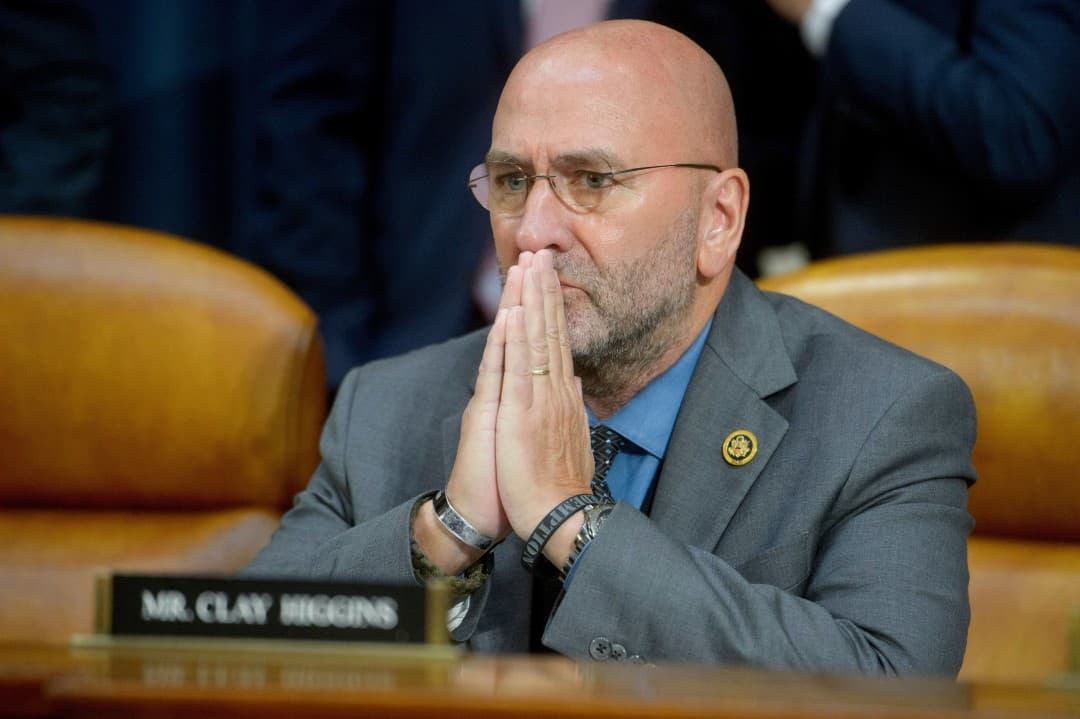
Higgins cast the sole House vote against the bill, citing concerns that disclosure could harm innocent people.
SOURCE CHECK
TAP FOR WHYNewser is an attributed news aggregator rather than a major original-reporting institution. The article names its author and identifies reporting by several established outlets, but provides little original sourcing of its own.
- Source type — Aggregator-style outlet; institutional credibility is lower than that of a newsroom doing the cited reporting.
- Transparency — The article attributes information to Politico, AP, The New York Times and NBC News.
- Author attribution — A named author is credited.
- Original reporting — The short report relies substantially on other outlets and quoted statements.
The report includes Higgins’s direct explanation, identifies the vote and its tally, and supplies context about the bill’s privacy protections and the subcommittee’s earlier work. It is concise and relies substantially on other outlets for reporting.
HOW WE SCORE ↗The article gives Higgins’s privacy rationale and notes both Johnson’s concerns and the law’s authority to redact victim-identifying information. It offers limited detail about competing views on disclosure beyond those points.
- Counterarguments presented — It reports privacy concerns while noting the law’s withholding and redaction provisions.
- Source diversity — The report cites several news organizations and quotes Higgins’s own post.
- Omitted context — The short article does not provide extensive arguments from supporters of disclosure.
- Loaded language — Some pointed descriptions are attributed to the AP rather than presented as the article’s own judgment.
The article uses mostly neutral reporting language, attributes Higgins’s claims and other outlets’ descriptions, and presents both his privacy concerns and the law’s redaction provision.
- Language tone — The narration is largely factual and does not use conspicuously partisan language in its own voice.
- Source selection — Higgins’s explanation is included alongside reporting about the bill’s protections and other coverage.
- Framing — The headline foregrounds Higgins’s explanation, while the article also supplies context about the vote and the legislation.
Rep. Clay Higgins was the sole House member to vote against the Epstein Files Transparency Act, citing privacy risks to people named in the investigative files. The article also notes that the law allows victim-identifying information to be withheld or redacted.
The House and Senate approved the Epstein Files Transparency Act, and Higgins, a Louisiana Republican, cast the House’s only “Nay” in a 427-1 vote. He said the bill could harm witnesses, people who provided alibis and family members by exposing investigative files, and said he would support a version that addressed privacy concerns.
The article reports that Higgins chairs the House Oversight subcommittee that subpoenaed the Justice Department for Epstein-related files, and that the initial subpoena focused on Bill and Hillary Clinton. Speaker Mike Johnson voted for the legislation but also raised privacy concerns. The article notes that the law permits the attorney general to withhold or redact information identifying victims.
Community verdict
25 VOTES
Counts every outlet’s report of this story. See all 42
Votes cast on this page
Votes cast on this page: ▲ 0 · ◆ 0 · ▼ 0
People in this story
SWIPE →Representative who cast the sole House vote against the Epstein Files Transparency Act

House Speaker who voted for the legislation and raised privacy concerns

President to whom the Senate sent the bill
Part of a bigger story
33 OUTLETSThe House passed the Epstein Files Transparency Act 427-1, with Clay Higgins casting the sole no vote. Left-leaning outlets present Higgins’s vote as grounds for criticism, highlighting public backlash or his broader record. Center outlets mostly explain his stated privacy and due-process concerns while recounting the vote. Right-leaning outlets emphasize his privacy rationale, while some frame the disclosure push as a partisan fight.
- ARTICLES
- 42
- OUTLETS
- 33
- AVG CRED
- 66
Discussion · 0
Loading comments…