119TH CONGRESS · BILLS HUB
Track every bill in Congress.
Plain-English summaries, AI passage outlooks, and floor-vote breakdowns — free of media spin. Search the full catalog or browse what’s moving.
TOTAL BILLS
19,255
PASSED A CHAMBER
1,538
BECAME LAW
110
0.6%
IN COMMITTEE
16,623
TOP POLICY AREA
Health
139 bills
BECAME LAW
4 RECENT
BECAME LAW·H.R. 1043
La Paz County Solar Energy and Job Creation Act
This bill directs the U.S. Secretary of the Interior to transfer approximately 3,400 acres of federal land in Arizona to La Paz County. This land is currently managed by the Bureau of Land Management (BLM). The transfer will happen once the county formally requests it, and it will bypass some standard land planning requirements to make the process quicker. La Paz County will have to pay the fair market value for the land, which will be determined by an appraisal, and also cover all costs related to the transfer, such as surveys and administrative fees. However, the Secretary of the Interior will not transfer any parts of the land that contain important cultural, environmental, wildlife, or recreational resources. As a condition of owning the land, La Paz County, and any future owners, must try to avoid disturbing Native American artifacts, minimize harm if they are disturbed, work with the Colorado River Indian Tribes, and allow Tribal representatives to rebury any unearthed artifacts.
 Paul A. Gosar(R)· 2 COSPONSORSPublic Lands and Natural Resources
BECAME LAW·H.R. 7211
To authorize the President to award the Medal of Honor to John W. Ripley for acts of valor during the Vietnam War, and for other purposes.
This bill allows the President of the United States to award the Medal of Honor to John W. Ripley for his exceptional bravery as a member of the Marine Corps during the Vietnam War. Normally, there are strict deadlines for when military awards, especially the Medal of Honor, can be officially presented after an act of heroism. This bill specifically bypasses those time restrictions so that Ripley can be considered for the award, even though his actions took place on April 2, 1972. Ripley was already recognized for these courageous actions with the Navy Cross, which is the second-highest medal for valor. This bill clears the legal path, removing the hurdle of elapsed time, for his actions to be reconsidered for the nation's highest military decoration, the Medal of Honor.
 H. Morgan Griffith(R)Armed Forces and National Security
BECAME LAW·H.J.Res. 88
Providing congressional disapproval under chapter 8 of title 5, United States Code, of the rule submitted by the Environmental Protection Agency relating to "California State Motor Vehicle and Engine Pollution Control Standards; Advanced Clean Cars II; Waiver of Preemption; Notice of Decision".
This bill is a resolution from Congress that aims to cancel a specific environmental regulation put forward by the Environmental Protection Agency (EPA). The EPA rule in question is about allowing California to set its own stricter standards for motor vehicle pollution, specifically a program called "Advanced Clean Cars II." Historically, California has had special permission, known as a "waiver of preemption," to create its own vehicle emission standards that are tougher than federal ones, and other states can choose to adopt these California rules. If this bill passes, it would undo the EPA's decision to grant California this special permission, or waiver. This means that California's "Advanced Clean Cars II" standards, which include requirements for more zero-emission vehicles, would not be allowed to proceed under the EPA's approval. As a result, other states would also lose the pathway to adopt these stricter California standards based on that EPA decision, effectively blocking the implementation of those specific clean car rules nationwide through the waiver mechanism.
 John Joyce(R)· 41 COSPONSORSEnvironmental Protection
BECAME LAW·H.R. 2483
SUPPORT for Patients and Communities Reauthorization Act of 2025
This bill, called the SUPPORT for Patients and Communities Reauthorization Act of 2025, continues and updates many federal programs aimed at preventing, treating, and helping people recover from opioid and other substance use disorders. It extends funding for these efforts from 2026 through 2030 and makes changes to how some programs operate. For example, it broadens the scope of some overdose prevention programs to address all substances that cause overdoses, not just opioids, and allows for new ways to detect drug use patterns, like checking wastewater. The bill also creates new initiatives and strengthens existing ones. It establishes a comprehensive program for Fetal Alcohol Spectrum Disorders (FASD), including public awareness, research, and support services for affected families. It also includes measures to improve access to addiction medicine specialists, offer loan repayment for healthcare workers in this field, and enhance training for first responders and prescribers of controlled substances. Overall, it seeks to improve the nation's response to the ongoing challenges of substance abuse and related health issues.
 Brett Guthrie(R)· 1 COSPONSORSHealth
ACTIVE LEGISLATION
LAST 14 DAYS
IN COMMITTEE·H.R. 10530
To support educators.
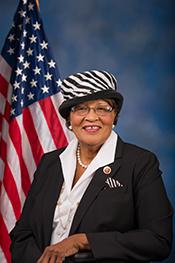 Alma S. Adams(D)· SEP 24, 2026
IN COMMITTEE·H.R. 10531
To establish a program to address sickle cell disease and other heritable hemoglobinopathies.
Alma S. Adams(D)· SEP 24, 2026IN COMMITTEE·H.Con.Res. 120
Supporting the designation of the week of September 21 through September 25, 2026, as "National Falls Prevention Awareness Week" to raise awareness and encourage the prevention of falls among older adults.
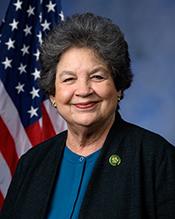 Lois Frankel(D)· SEP 24, 2026
IN COMMITTEE·H.R. 10533
To amend the Water Resources Development Act of 1992 to authorize assistance for the project for water and wastewater infrastructure, Newton County, Georgia.
 Everton Blair Jr.(D)· SEP 24, 2026
IN COMMITTEE·H.R. 10534
To preserve and protect multifamily housing properties assisted by the Secretary of Housing and Urban Development.
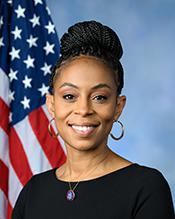 Shontel M. Brown(D)· SEP 24, 2026
IN COMMITTEE·H.Res. 1577
Expressing support for the designation of September 2026 as "Sickle Cell Disease Awareness Month" in order to educate communities across the United States about sickle cell disease and the need for research, early detection methods, effective treatments, and preventative care programs with respect to complications from sickle cell disease and conditions related to sickle cell disease.
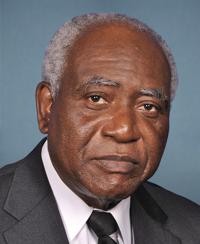 Danny K. Davis(D)· SEP 24, 2026
IN COMMITTEE·H.R. 10537
To require the development of a workforce plan for the Federal Emergency Management Agency.
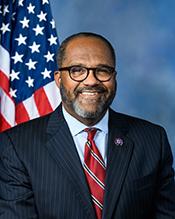 Troy A. Carter(D)· SEP 24, 2026
IN COMMITTEE·H.R. 10544
To modernize and strengthen Federal efforts to improve ovarian cancer awareness, hereditary cancer risk assessment, access to genetic counseling and testing, and access to specialty care, and for other purposes.
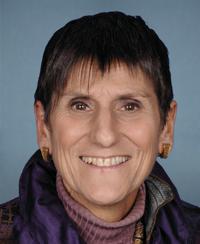 Rosa L. DeLauro(D)· SEP 24, 2026
FROM YOUR FOLLOWED REPS
HEATING UP
MOST ENGAGEMENT · 14D
ON THE FLOOR
LAST 7 DAYS
BIPARTISAN SPOTLIGHT
SCORE ≥ 70
PARTY-LINE PASSAGES
CONTROVERSIAL
BROWSE BY TOPIC
24 TOPICS