Clay Higgins Voted Not To Release Epstein Files — Here's Why
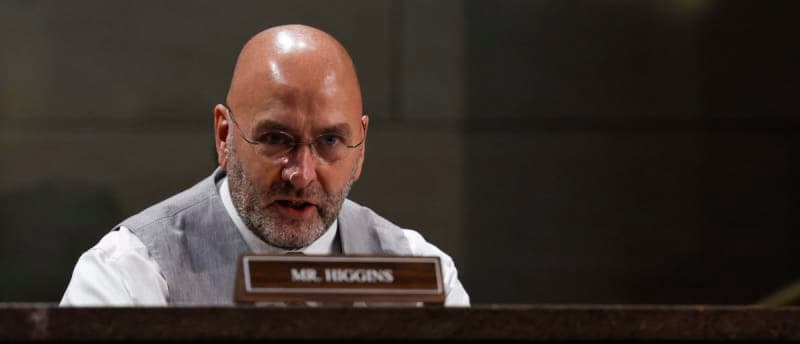
Higgins opposed the bill, saying its disclosure requirements could harm innocent people.
SOURCE CHECK
TAP FOR WHYCredibility rates AOL.com, which republished this story. The other scores rate the article itself.
AOL is an established national news platform, but this short article is credited to AOL Staff and offers limited detail about its reporting process. It provides a direct quotation and identifies congressional sources for some claims, though it does not present an opposing argument in depth.
- Source type — An established national news platform, though this page provides limited information about the specific newsroom behind the report.
- Author attribution — Credited generically to AOL Staff rather than a named reporter.
- Editorial standards — The report attributes Higgins's rationale and identifies a congressional summary and committee Republicans as sources for other details.
- Transparency — The article gives little information about reporting methods or corrections practices.
The article gives the vote tally, explains the bill's basic scope, and quotes Higgins's stated reason for opposing it. It includes some context about the bill's proponents and privacy concerns, but provides little direct explanation from supporters or independent analysis of the competing claims.
HOW WE SCORE ↗The article explains Higgins's privacy concerns and describes the bill's scope, safeguards, and support, but does not include a direct response from the bill's proponents or a fuller account of the arguments for disclosure.
- Counterarguments presented — Higgins's objections are detailed, while the case for disclosure is not directly represented.
- Source diversity — Includes Higgins's statement, a congressional summary, and information attributed to committee Republicans, but few distinct perspectives.
- Omitted context — The article does not explain the proponents' response to Higgins's concerns about harm to innocent people.
- Loaded language — The article's own narration is generally neutral.
The article reports the vote and Higgins's explanation in direct, largely factual language. It gives brief context for the bill and its proponents without adopting a clear partisan argument.
- Language tone — Mostly straightforward, attributed language without evident partisan labels.
- Framing — The headline foregrounds Higgins's opposing vote, while the article also explains his stated rationale.
- Source selection — Includes Higgins's own explanation and some contextual information about the bill and its supporters.
Republished
Republished from The Daily Caller. The relationship between the two publishers has not been determined.
1,014 stories · 53.6–54.1 · updated Oct 13, 2026
This is The Daily Caller's own score, and this article is credited to The Daily Caller. The host score in the Source Check is AOL.com's.
The House voted 427-1 to require the Justice Department to release unclassified Epstein-related records, with Clay Higgins casting the sole “no” vote. Higgins said the bill could harm innocent people and said he would support a version with stronger privacy protections.
The House passed the Epstein Files Transparency Act by a 427-1 vote. The article says it would require the Justice Department to publish unclassified records tied to the Epstein investigations, while allowing protection for classified material and active probes.
Higgins said the bill’s broad disclosure could hurt innocent people and said he would support a Senate-amended version with stronger safeguards for victims and uncharged people. The article also reports that Thomas Massie and Ro Khanna led the months-long push, and that Speaker Mike Johnson backed passage while urging stronger privacy protections.
Community verdict
25 VOTES
Counts every outlet’s report of this story. See all 42
Votes cast on this page
Votes cast on this page: ▲ 0 · ◆ 0 · ▼ 0
People in this story
SWIPE →
Speaker of the House who backed passage and urged stronger privacy protections

President who would receive the bill after Senate action

Kentucky representative described as a leader of the push for the bill

California representative described as a leader of the push for the bill
Part of a bigger story
33 OUTLETSThe House passed the Epstein Files Transparency Act 427-1, with Clay Higgins casting the sole no vote. Left-leaning outlets present Higgins’s vote as grounds for criticism, highlighting public backlash or his broader record. Center outlets mostly explain his stated privacy and due-process concerns while recounting the vote. Right-leaning outlets emphasize his privacy rationale, while some frame the disclosure push as a partisan fight.
- ARTICLES
- 42
- OUTLETS
- 33
- AVG CRED
- 66
Discussion · 0
Loading comments…