37 stories credited to ZeroHedge (26 on zerohedge.com, 11 reproduced by other sites)
Latest story Apr 22, 2026 · on ChamberLight since Apr 2026
A story can appear as several articles (copies of the same piece), so counts of stories and of articles differ.
Scores for ZeroHedge
Political lean
15 stories · 95% range 57.4–73.7 · updated Sep 25, 2026
Originality
23 of those 26 carry an unconfirmed copying flag, which is not evidence either way.
26 stories · updated Sep 24, 2026
Writing quality not enough rated stories yet: 5 of 10. How it is measured
Scores last checked Sep 25, 2026.
Stories ChamberLight collected, by month
Stories credited to ZeroHedge, by publication date. ChamberLight collects articles that mention the officials it tracks, so this shows its own coverage of this source, not how much the source publishes.
- Stories from ZeroHedge
- Shaded: ChamberLight collected no stories, or almost none, from any outlet (a gap in its collection, not in the outlet’s publishing)
Show as a table
| Month | Stories | All outlets |
|---|---|---|
| November 2025 | 1 | 35 |
| December 2025 | 1 | 27 |
| January 2026 | 2 | 87 |
| February 2026 | 4 | 180 |
| March 2026 | 6 | 1,094 |
| April 2026 | 23 | 4,538 |
| May 2026 | 0 | none collected |
| June 2026 | 0 | none collected |
| July 2026 | 0 | none collected |
| August 2026 | 0 | 1 (collection gap) |
| September 2026 | 0 | 1,320 |
Top topics
Share of this source’s stories tagged with each topic. A story can carry several topics, so the shares do not add up to 100%.
- Ethics/Corruption18
49% of 37 stories · 58% across all outlets
- Defense/Military17
46% of 37 stories · 25% across all outlets
- Foreign Policy17
46% of 37 stories · 29% across all outlets
- Budget/Spending14
38% of 37 stories · 31% across all outlets
- Criminal Justice13
35% of 37 stories · 19% across all outlets
- Immigration8
22% of 37 stories · 13% across all outlets
- Economy5
14% of 37 stories · 26% across all outlets
- Technology/Privacy5
14% of 37 stories · 10% across all outlets
The thin mark on each bar is the topic’s share across all outlets.
Who they cover
Party of the officials these stories are mainly about, across all 43 officials named. A story counts once for each official it is mainly about, so the split is over 76 story–official pairs, from 37 stories.
- Republican62% · 47 pairs
- Democrat32% · 24 pairs
- Party not recorded4% · 3 pairs
- Independent3% · 2 pairs
Most covered
Stories mainly about each official, and their share of the source’s 37 stories.
- 1Donald TrumpR12 stories · 32%
- 2Charles SchumerD5 stories · 14%
- 3Hakeem JeffriesD4 stories · 11%
- 4Marco RubioR4 stories · 11%
- 5Thomas MassieR4 stories · 11%
- 6Mike JohnsonR3 stories · 8%
- 7Ron JohnsonR3 stories · 8%
- 8Alexandria Ocasio-CortezD2 stories · 5%
- 9Bernard SandersI2 stories · 5%
- 10Gregory MeeksD2 stories · 5%
+ 33 other officials (35 story–official pairs)
Article tone
ChamberLight’s article analysis assigns each story a tone toward the official it covers. It describes the coverage of that official, not ZeroHedge’s stance, and reader votes do not change it. 37 stories.
- Good Look
- 3 (8%)
- Mixed
- 29 (78%)
- Informational
- 2 (5%)
- Bad Look
- 3 (8%)
Related sources
Lean 95% range 64–68 · updated Sep 25, 2026
Similar lean · 3 shared topics
Lean 95% range 62.1–71.2 · updated Sep 25, 2026
Similar lean · 3 shared topics
Lean 95% range 58–69 · updated Sep 25, 2026
Similar lean · 3 shared topics
Lean 95% range 65–74 · updated Sep 25, 2026
Similar lean · 3 shared topics
Lean 95% range 65–75 · updated Sep 25, 2026
Similar lean · 3 shared topics
Lean 95% range 64–76 · updated Sep 25, 2026
Similar lean · 3 shared topics
Challenges to these scores
No one has challenged a score on this page yet. Anyone can; editors publish every outcome here.
Articles served from zerohedge.com
57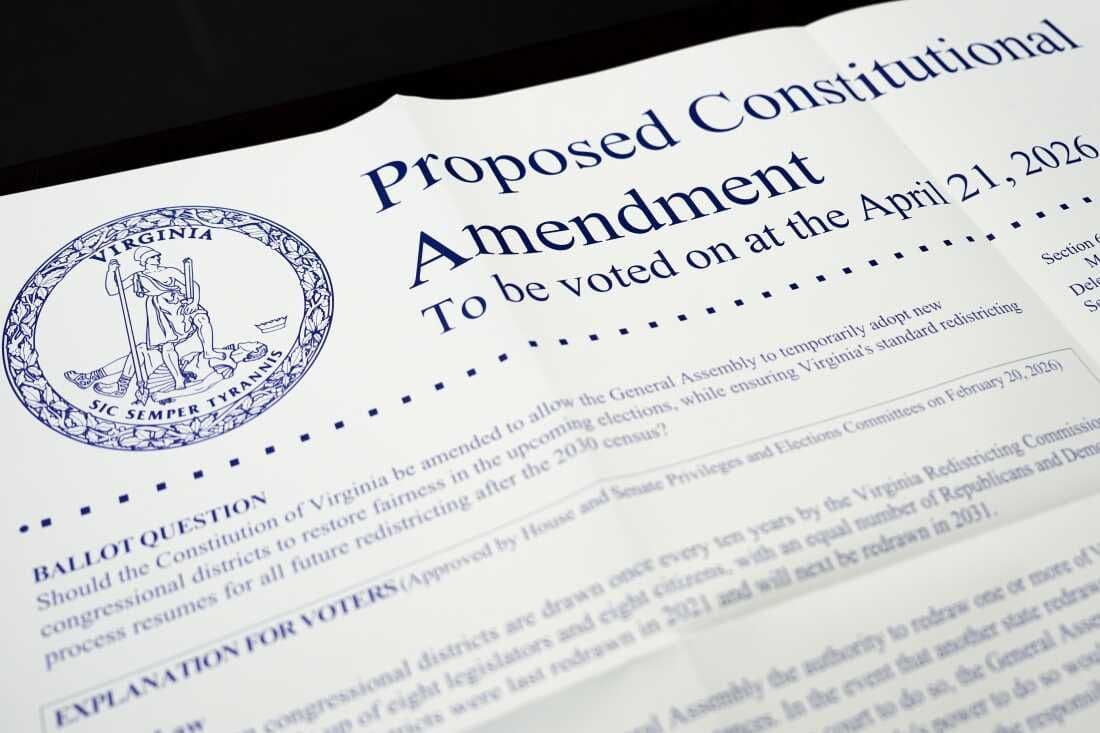
Virginia Redistricting Rout Deals Major Blow To House Republicans
Virginia Redistricting Rout Deals Major Blow To House Republicans Democrats’ decisive win in Virginia Tuesday night has dealt a significant blow to Republican hopes of retaining control of the House. By persuading voters to dismantle the state's independent redistricting commission - created just six years ago - Democrats wiped out four Republican-held congressional districts. This means Virginia's House delegation is now on track to shift to a 10-to-1 Democratic advantage, a dramatic reversal for a state that remained firmly in GOP hands not long ago. That said, Democrats dropped $65 million on the races (though the final tally was uncomfortably close), while Punchbowl reports that Republicans are trading blame internally - second-guessing whether they let a chance slip away to blunt the Democratic surge. And with midterms right around the corner, there are few indications that President Trump or House Republican leadership possesses either the strategic focus or message discipline needed to protect their narrow majority. Fresh off Trump's 2024 presidential win, Republicans, led by Speaker Mike Johnson, clung to control by the slimmest of margins. Pulling off a repeat performance now looks considerably tougher. Betting markets are already pricing in a Democratic win in the House. Will the Democratic Party control the House after the 2026 Midterm elections? Yes 85% · No 16% View full market & trade on Polymarket While party leaders insist a third Trump impeachment is off the table, the shift would almost certainly unleash a barrage of investigations and subpoenas aimed at the White House and Cabinet agencies - with major legal and political ripple effects. Lawmakers could also face even more protracted government shutdowns than the record-length appropriations lapses seen in the current Congress. "I told Mike Johnson in July of last year that, 'If you go down this road, it's not going to work out for you,'" Jeffries told Punchbowl Tuesday night. He added: "And at the end of the day, his best-case scenario was that he would net zero seats, but force at least 10 Republicans, who are incumbent members of his conference, into premature retirement. And that is exactly what has happened." Jeffries earned significant credit for orchestrating Tuesday's outcome - as Virginia Democrats first had to steer the ballot measure through the state legislature twice, beat back multiple court challenges, and then win over voters. A nonprofit aligned with Jeffries poured $38 million into the effort to secure passage, and he personally managed the operation from beginning to end - designing the referendum strategy, recruiting staff and directing on-the-ground coordination. Many Virginia Democrats initially resisted the high-stakes gamble, requiring Jeffries to personally persuade both the state delegation and the warring legislative chambers to fall in line. True to form, Jeffries remained measured when asked whether Tuesday's result clinched the majority or signaled an impending blue wave. He did, however, declare victory in the broader redistricting battle. "When you line up the congressional map in Texas and compare it with the response in California, they're going to lose seats and would be fortunate if in Texas, they win two or three of the five seats that they claimed they were going to steal from Democrats," Jeffries said. The biggest wild cards left for both sides are Florida and the future of the Voting Rights Act, which is up to the Supreme Court. Tuesday's result intensifies pressure on Florida Gov. Ron DeSantis to advance an ambitious congressional map next week capable of delivering Republicans a net gain of three to five seats. Yet DeSantis is encountering pushback from the state's Republican congressional delegation and the GOP-controlled legislature, many of whom doubt such an aggressive redraw is feasible. Several Florida Republicans caution that Latino voters are not reliably in the GOP column and may not show up for the party the way they did in 2024, urging caution. Spending in Virginia was wildly lopsided. Democrats poured $56.4 million into television and digital ads; Republicans mustered just $24.6 million. Republicans still lost by fewer than 90,000 votes out of more than 3 million cast. According to the report, GOP strategists insist they deliberately avoided nationalizing the contest to keep from energizing the Democratic base. They argue that heavier spending would simply have provoked an even larger Democratic response. They also note that the "No" side outperformed Trump's 2024 numbers in the state. Former Virginia Attorney General Jason Miyares and onetime House Majority Leader Eric Cantor, who helmed the opposition effort, pledged to keep fighting the new map in court. House Republicans, however, were already firing off frantic messages Tuesday night. Several told reporters they had been assured that additional money would make no difference in Virginia - yet the narrow margin suggests otherwise. The American Action Network, a nonprofit close to Johnson, quietly funneled money to the group bankrolling the "No" campaign, according to a person familiar with the transaction. Meanwhile, only one solidly Republican seat remains, in the state's southwest corner. GOP Reps. Ben Cline and Morgan Griffith may find themselves forced into a member-versus-member primary. Tyler Durden Wed, 04/22/2026 - 13:00
Virginia Redistricting Rout Deals Major Blow To House Republicans
Virginia Redistricting Rout Deals Major Blow To House Republicans Democrats’ decisive win in Virginia Tuesday night has dealt a significant blow to Republican hopes of retaining control of the House. By persuading voters to dismantle the state's independent redistricting commission - created just six years ago - Democrats wiped out four Republican-held congressional districts. This means Virginia's House delegation is now on track to shift to a 10-to-1 Democratic advantage, a dramatic reversal for a state that remained firmly in GOP hands not long ago. That said, Democrats dropped $65 million on the races (though the final tally was uncomfortably close), while Punchbowl reports that Republicans are trading blame internally - second-guessing whether they let a chance slip away to blunt the Democratic surge. And with midterms right around the corner, there are few indications that President Trump or House Republican leadership possesses either the strategic focus or message discipline needed to protect their narrow majority. Fresh off Trump's 2024 presidential win, Republicans, led by Speaker Mike Johnson, clung to control by the slimmest of margins. Pulling off a repeat performance now looks considerably tougher. Betting markets are already pricing in a Democratic win in the House. Will the Democratic Party control the House after the 2026 Midterm elections? Yes 85% · No 16% View full market & trade on Polymarket While party leaders insist a third Trump impeachment is off the table, the shift would almost certainly unleash a barrage of investigations and subpoenas aimed at the White House and Cabinet agencies - with major legal and political ripple effects. Lawmakers could also face even more protracted government shutdowns than the record-length appropriations lapses seen in the current Congress. "I told Mike Johnson in July of last year that, 'If you go down this road, it's not going to work out for you,'" Jeffries told Punchbowl Tuesday night. He added: "And at the end of the day, his best-case scenario was that he would net zero seats, but force at least 10 Republicans, who are incumbent members of his conference, into premature retirement. And that is exactly what has happened." Jeffries earned significant credit for orchestrating Tuesday's outcome - as Virginia Democrats first had to steer the ballot measure through the state legislature twice, beat back multiple court challenges, and then win over voters. A nonprofit aligned with Jeffries poured $38 million into the effort to secure passage, and he personally managed the operation from beginning to end - designing the referendum strategy, recruiting staff and directing on-the-ground coordination. Many Virginia Democrats initially resisted the high-stakes gamble, requiring Jeffries to personally persuade both the state delegation and the warring legislative chambers to fall in line. True to form, Jeffries remained measured when asked whether Tuesday's result clinched the majority or signaled an impending blue wave. He did, however, declare victory in the broader redistricting battle. "When you line up the congressional map in Texas and compare it with the response in California, they're going to lose seats and would be fortunate if in Texas, they win two or three of the five seats that they claimed they were going to steal from Democrats," Jeffries said. The biggest wild cards left for both sides are Florida and the future of the Voting Rights Act, which is up to the Supreme Court. Tuesday's result intensifies pressure on Florida Gov. Ron DeSantis to advance an ambitious congressional map next week capable of delivering Republicans a net gain of three to five seats. Yet DeSantis is encountering pushback from the state's Republican congressional delegation and the GOP-controlled legislature, many of whom doubt such an aggressive redraw is feasible. Several Florida Republicans caution that Latino voters are not reliably in the GOP column and may not show up for the party the way they did in 2024, urging caution. Spending in Virginia was wildly lopsided. Democrats poured $56.4 million into television and digital ads; Republicans mustered just $24.6 million. Republicans still lost by fewer than 90,000 votes out of more than 3 million cast. According to the report, GOP strategists insist they deliberately avoided nationalizing the contest to keep from energizing the Democratic base. They argue that heavier spending would simply have provoked an even larger Democratic response. They also note that the "No" side outperformed Trump's 2024 numbers in the state. Former Virginia Attorney General Jason Miyares and onetime House Majority Leader Eric Cantor, who helmed the opposition effort, pledged to keep fighting the new map in court. House Republicans, however, were already firing off frantic messages Tuesday night. Several told reporters they had been assured that additional money would make no difference in Virginia - yet the narrow margin suggests otherwise. The American Action Network, a nonprofit close to Johnson, quietly funneled money to the group bankrolling the "No" campaign, according to a person familiar with the transaction. Meanwhile, only one solidly Republican seat remains, in the state's southwest corner. GOP Reps. Ben Cline and Morgan Griffith may find themselves forced into a member-versus-member primary. Tyler Durden Wed, 04/22/2026 - 13:00
Virginia Redistricting Rout Deals Major Blow To House Republicans
Virginia Redistricting Rout Deals Major Blow To House Republicans Democrats’ decisive win in Virginia Tuesday night has dealt a significant blow to Republican hopes of retaining control of the House. By persuading voters to dismantle the state's independent redistricting commission - created just six years ago - Democrats wiped out four Republican-held congressional districts. This means Virginia's House delegation is now on track to shift to a 10-to-1 Democratic advantage, a dramatic reversal for a state that remained firmly in GOP hands not long ago. That said, Democrats dropped $65 million on the races (though the final tally was uncomfortably close), while Punchbowl reports that Republicans are trading blame internally - second-guessing whether they let a chance slip away to blunt the Democratic surge. And with midterms right around the corner, there are few indications that President Trump or House Republican leadership possesses either the strategic focus or message discipline needed to protect their narrow majority. Fresh off Trump's 2024 presidential win, Republicans, led by Speaker Mike Johnson, clung to control by the slimmest of margins. Pulling off a repeat performance now looks considerably tougher. Betting markets are already pricing in a Democratic win in the House. Will the Democratic Party control the House after the 2026 Midterm elections? Yes 85% · No 16% View full market & trade on Polymarket While party leaders insist a third Trump impeachment is off the table, the shift would almost certainly unleash a barrage of investigations and subpoenas aimed at the White House and Cabinet agencies - with major legal and political ripple effects. Lawmakers could also face even more protracted government shutdowns than the record-length appropriations lapses seen in the current Congress. "I told Mike Johnson in July of last year that, 'If you go down this road, it's not going to work out for you,'" Jeffries told Punchbowl Tuesday night. He added: "And at the end of the day, his best-case scenario was that he would net zero seats, but force at least 10 Republicans, who are incumbent members of his conference, into premature retirement. And that is exactly what has happened." Jeffries earned significant credit for orchestrating Tuesday's outcome - as Virginia Democrats first had to steer the ballot measure through the state legislature twice, beat back multiple court challenges, and then win over voters. A nonprofit aligned with Jeffries poured $38 million into the effort to secure passage, and he personally managed the operation from beginning to end - designing the referendum strategy, recruiting staff and directing on-the-ground coordination. Many Virginia Democrats initially resisted the high-stakes gamble, requiring Jeffries to personally persuade both the state delegation and the warring legislative chambers to fall in line. True to form, Jeffries remained measured when asked whether Tuesday's result clinched the majority or signaled an impending blue wave. He did, however, declare victory in the broader redistricting battle. "When you line up the congressional map in Texas and compare it with the response in California, they're going to lose seats and would be fortunate if in Texas, they win two or three of the five seats that they claimed they were going to steal from Democrats," Jeffries said. The biggest wild cards left for both sides are Florida and the future of the Voting Rights Act, which is up to the Supreme Court. Tuesday's result intensifies pressure on Florida Gov. Ron DeSantis to advance an ambitious congressional map next week capable of delivering Republicans a net gain of three to five seats. Yet DeSantis is encountering pushback from the state's Republican congressional delegation and the GOP-controlled legislature, many of whom doubt such an aggressive redraw is feasible. Several Florida Republicans caution that Latino voters are not reliably in the GOP column and may not show up for the party the way they did in 2024, urging caution. Spending in Virginia was wildly lopsided. Democrats poured $56.4 million into television and digital ads; Republicans mustered just $24.6 million. Republicans still lost by fewer than 90,000 votes out of more than 3 million cast. According to the report, GOP strategists insist they deliberately avoided nationalizing the contest to keep from energizing the Democratic base. They argue that heavier spending would simply have provoked an even larger Democratic response. They also note that the "No" side outperformed Trump's 2024 numbers in the state. Former Virginia Attorney General Jason Miyares and onetime House Majority Leader Eric Cantor, who helmed the opposition effort, pledged to keep fighting the new map in court. House Republicans, however, were already firing off frantic messages Tuesday night. Several told reporters they had been assured that additional money would make no difference in Virginia - yet the narrow margin suggests otherwise. The American Action Network, a nonprofit close to Johnson, quietly funneled money to the group bankrolling the "No" campaign, according to a person familiar with the transaction. Meanwhile, only one solidly Republican seat remains, in the state's southwest corner. GOP Reps. Ben Cline and Morgan Griffith may find themselves forced into a member-versus-member primary. Tyler Durden Wed, 04/22/2026 - 13:00

Wall Or Sieve? Attacks Raise Doubts About U.S. Immigration System
Wall Or Sieve? Attacks Raise Doubts About U.S. Immigration System Authored by Benjamin Weingarten via RealClearPolitics, In the wee hours of Sunday, March 1, a Senegalese immigrant clad in a sweatshirt bearing the words “Property of Allah” opened fire outside an Austin, Texas beer garden, killing three and leaving 14 others wounded. On March 12, at Old Dominion University, a former Virginia National Guard member from Sierra Leone – released early from an 11-year prison sentence for attempting to provide material support to the ISIL – yelled “Allahu Akbar” before shooting and killing a beloved college professor and wounding two other people. That same day, a Lebanese immigrant plowed a pickup truck filled with fireworks and gasoline into a large synagogue in West Bloomfield, Michigan. After exchanging gunfire with security staff, he killed himself. His brother, it turned out, was a recently eliminated Hezbollah commander in Lebanon. Amidst the emerging threat environment of the Iran war, these and other attacks on U.S. soil have reignited questions about the U.S. immigration system’s vetting and screening standards. Republican leaders are increasingly asking how, for example, foreign nationals like the Afghan evacuee who shot two National Guard members in Washington, D.C. – killing one of them – or the Egyptian national overstaying his tourism visa who firebombed pro-Israel demonstrators in Colorado last year were able to come here and commit such acts. They are also asking how close relatives of top Iranian officials, including avowed supporters of that country’s regime, have been allowed to live and work in the United States. Earlier this month, Secretary of State Marco Rubio announced that he had terminated the legal status of the niece of Iranian Major General Qasem Soleimani, who was killed by the U.S. in a targeted attack in 2020, and her daughter. Rubio described the niece on X as “an outspoken supporter of the Iranian regime who celebrated attacks on Americans and referred to our country as the ‘Great Satan.’ ” While the Trump administration has effectively closed the southern border, the U.S. Citizenship and Immigration Services has concluded that “prior screening and vetting measures” of people who cross the border legally “were wholly inadequate,” creating “significant national security and public safety risks [that] compromise the integrity of the immigration system.” Administration critics argue that fears of foreign-born terrorism are vastly overblown. Alex Nowrasteh of the Cato Institute told RealClearInvestigations that the annual chance of being murdered in a terrorist attack on U.S. soil by a foreign-born attacker is “about one in 165 million per year. All politically motivated violence is a tiny threat,” he said. “Exaggerating the threat does not bring us closer to delivering justice to the victims of every violent or property crime who deserve it.” RCI’s review of congressional testimony and research, and interviews with immigration and national security experts, uncovered long-standing flaws in the system – some of which were exacerbated by the Biden administration’s lax immigration policies. Challenges run the gamut from incomplete information about applicants to inconsistent enforcement of the law. Even if relatively few immigrants commit deadly attacks, the vetting system has routinely permitted people with obscure backgrounds and hostile views to visit and live in the U.S. Robust Design America’s immigration system is complex and multilayered, involving a range of departments and agencies that provide different levels of scrutiny depending on which of the dozens of categories would-be entrants fall into, from tourists to asylum seekers. As with most laws and rules, different administrations vet applicants with varying levels of vigor depending on whether they want to encourage or discourage immigration. Three agencies lead the vetting process. The State Department issues visas; U.S. Citizenship and Immigration Services reviews petitions for immigrants seeking benefits such as citizenship or permanent residency, refugee and asylum claims, and other protections; Customs and Border Protection provides defense at the point at which aliens attempt to enter the country. Across these processes, sometimes with redundancy, authorities conduct biographic and biometric screenings, run name checks across U.S. security databases to search for red flags such as criminal histories or inclusion on terror watchlists, and interview would-be visitors. As designed, the immigration system requires nearly all noncitizens seeking to enter the U.S. to obtain a visa. Nonimmigrant visas cover temporary trips for business or tourism, whereas immigrant visas cover permanent stays that may be family-, employment-, or education-based. Those seeking long-term stays are subject to more rigorous scrutiny. While undergoing detailed background checks, they are generally required to file petitions, secure sponsors, and meet incremental thresholds and standards necessary, for example, to unite with family or work full-time. In 2024, the U.S. issued about 600,000 visas for long-term stay. The vast majority of visas are issued to tourists and other temporary visitors – nearly 11 million in 2024. They are generally subject to less scrutiny. In theory, those millions of temporary visitors will leave before their visas expire. In practice, a reported 40% of illegal aliens currently in the U.S. – amounting to millions of people – are visa overstayers, illustrating one of the myriad security-related issues plaguing the U.S. Homeland Security system. “The vetting system is robust,” former senior INS official and immigration judge Andrew Arthur told RCI. But, he added, it “is only as good as the intelligence that the USG possesses and the access that the individual consular officer or OFO [CBP Office of Field Operations] officer has to that intelligence.” To that end, our “biggest vulnerability,” in the words of the Heritage Foundation’s Simon Hankinson, is that officers often lack access to derogatory information held by foreign countries. As Hankinson, a longtime former foreign service officer, recently detailed, this problem pervades even the U.S. Visa Waiver Program, where the citizens of several dozen generally safe and friendly countries – including most EU countries and Japan – may visit America visa-free for up to 90 days. Those waivers come in exchange for security cooperation, including sharing their citizens’ criminal records. Cracks in the System Critics note that only a few U.S. counterparts automatically check their visiting citizens’ criminal records. The U.S. otherwise must request that home countries run queries. Meanwhile, America lacks information-sharing agreements with many countries altogether. These problems only grow when other nations lack reliable data, or where their authoritative documents may be easily fabricated – one of the justifications for Trump’s travel bans disproportionately hitting the Middle East and Africa. “I worked in India, I worked in Ghana, [where] right outside the consulate, there were stores selling fake degrees, fake passports. I mean, they didn’t even hide it,” Hankinson said. Incomplete data or suspect documents aside, authorities have also highlighted that U.S. databases may not always talk to each other. A June 2024 DHS Inspector General report indicated that “DHS’ biometric system…could not access all data from Federal partners to ensure complete screening and vetting of noncitizens seeking admission into the United States” due to “ongoing technical limitations.” The inspector general also found that border patrol officers lacked the hardware necessary to perform biometric screenings of people arriving by car or truck. Federal authorities have also not always vigorously enforced their own security protocols. A September 2025 DHS IG report detailed that from March 2020 to March 2024, the State Department issued 12 million nonimmigrant visas without conducting in-person interviews or collecting fingerprints. CBP officers encountering foreign nationals at points of entry were unaware that the State had not fully screened some of them. Subpar vetting was common regarding the tens of thousands of Afghans admitted to the U.S. in the wake of the Biden administration’s pullout from the country in 2021. In a January 2026 hearing, DHS Deputy Inspector General for Audits, Craig Adelman, submitted written testimony indicating that under Operation Allies Welcome, in several instances “DHS could not demonstrate that it accurately knew who individuals were, where they were located, whether parole conditions were being met, or whether individuals had unresolved risk indicators.” CBP sometimes lacked “access to critical data to properly screen, vet, or inspect” them. Adelman’s testimony came following the National Guardsman shooting by evacuee Rahmanullah Lakanwal, and the prosecution of Nasir Ahmed Tawhedi, another evacuee who would plead guilty to plotting a mass-casualty attack on behalf of ISIS around Election Day 2024. More broadly, the Government Accountability Office has found that the humanitarian parole processes have generally lacked sufficient anti-fraud measures, making it hard to ensure those fleeing warzones or failed states pose no threat to the U.S. homeland. These findings also come on top of the millions who entered the country illegally during the Biden administration – and related immigrant overstays and backlogs creating security risks all their own. Hundreds of thousands of asylum claimants, for example, have been insufficiently screened historically during prolonged adjudication periods, DHS’ watchdog has found. Hankinson is adamant that “we have not been enforcing our own rules with anything like the tenacity that we should have been. We’ve been really giving the benefit of the doubt to the alien in every circumstance.” Ironically, the president’s opponents also agree that the immigration system is broken. But instead of tweaking the current system, many Democrats and their allies have floated the idea of abolishing the Immigration and Customs Enforcement (ICE) agency. Good Questions, ‘Bad Odor’ Another potential issue that recent security incidents have raised is whether authorities are properly vetting and screening for indicators associated with the actual threats faced. Federal law, drafted in the shadow of World War II and during the Cold War, generally deemed inadmissible immigrant members or affiliates of totalitarian political parties. Laws later expanded to encompass terrorists and their supporters. But records may not exist of terrorist activities or support among those hailing from failed states. Despite this potential vulnerability, those with whom RCI spoke indicated that immigration officers do not tailor questions to unearth whether visitors harbor a terrorist worldview that could suggest future trouble or merit further scrutiny. Authorities are “looking for Communists and Nazis,” Hankinson told RCI, not “Islamic fanatics…people who believe in Sharia law, who want to cut the hands off criminals, or have women dressed in burkas.” Dan Cadman, a retired INS/ICE official now at the Center for Immigration Studies, told RCI that “the vetting procedures have not captured Islamist/ adversarial/ subversive ideologies among family members and close associates.” Were such affiliations known, for example, in the case of the would-be Michigan synagogue attacker Ayman Mohamed Ghazali, whose brother was a Hezbollah commander, immigration authorities likely would have subjected him to heightened scrutiny – and perhaps denied him entry. Cadman attributes the lack of ideological bar to the “bad odor” to which such tests are held, and the fact that they lead to “thorny questions” about when religiously-based views “cross into the arena of politics” and constitutional rights. Progressive groups and others panned the blanket travel restrictions Trump pursued during his first administration sought to impose on myriad Muslim-majority countries as “Muslim bans.” Nevertheless, some analysts have proposed bans of those affiliated with Islamist groups analogous to those of totalitarian political parties already on the books to satisfy such concerns. Several members of Congress appear receptive to this idea as well. Legislation is currently pending before the House and Senate to amend the Immigration and Nationality Act to render “advocates for the imposition of Sharia law” inadmissible, and remove Sharia adherents accordingly. Even if such questions could survive First Amendment challenges, some observers doubt they would provide useful answers. David Bier of the Cato Institute told RCI, “There is no evidence that asking people general questions like whether they support terrorism or Sharia law would be an effective way to prevent attacks in the United States.” Arthur, Cadman’s colleague at the Center for Immigration Studies, added that “identifying those who hold hostile beliefs is a difficult endeavor, and one that even the best adjudication and screening system will struggle to achieve.” Whether a change in standards or their implementation might have prevented the recent attacks on U.S. soil by immigrants who became naturalized citizens remains unclear. Arthur says these incidents show “a decline in assimilation on the part of the naturalized citizen and in integration on the part of the United States” – a transcendent problem all its own. Crackdown and Pushback The Trump administration has sought to significantly enhance vetting standards, mitigate risks, and more vigorously enforce the law. The president kicked off his second term with an executive order directing national security authorities to ensure that all aliens are “vet[ted] and screen[ed] to the maximum degree possible,” including for those threatening national security and bearing “hostile attitudes” toward America, its people, and institutions. In June, the president fully or partially restricted and limited the entry of nationals from 19 countries it deemed to pose security risks, some Muslim-majority, via executive order – a broad measure to mitigate screening and vetting risks. Democrats assailed these efforts as “bigoted” and “Islamophobic.” “This discriminatory policy, which limits legal immigration, not only flies in the face of what our country is supposed to stand for, it will be harmful to our economy and communities that rely on the contributions of people who come to America from this wide range of countries,” Democratic Washington state Rep. Pramila Jayapal has said. “Banning a whole group of people because you disagree with the structure or function of their government not only lays blame in the wrong place, it creates a dangerous precedent.” Later that year, in August, USCIS updated its policy guidance to ensure that when immigration officers are evaluating immigration benefit requests, aliens’ support or espousal of the views of terrorist groups, including anti-Americanism, and Jew-hatred, ought to weigh heavily against applicants. Last December, USCIS paused all pending asylum and benefit applications from the 19 “high-risk countries” identified in the June executive order while conducting a “re-review of approved benefit requests” for all aliens from those countries entering the U.S. on or after the first day of the Biden administration. The administration also extended travel restrictions to 20 additional countries. Among other initiatives, the second Trump administration is also “re-vetting” previously admitted aliens, and engaging in “continuous vetting” of all U.S. visa holders – some 55 million at the time it announced the policy – for violations that could lead to their deportation. It has reportedly revoked 100,000 visas – a 150% increase versus 2024. DHS says that ICE has arrested more than 43,000 potential national security risks, including 1,416 known or suspected terrorists, some 1,392 of which have been removed. It did so in announcing the recent arrest of Salah Salem Sarsour, a Jordanian national who the U.S. asserts was convicted decades ago in Israel of throwing a Molotov cocktail at the homes of Israeli military personnel and illegally attempting to possess weapons. DHS claims Sarsour is “suspected of funding terror organizations and lying on immigration forms” to enter the country, after which he became a green card holder back in 1998. The arrest of the Islamic Society of Milwaukee president generated strong pushback from the ACLU and the Council on American-Islamic Relations, with the former suggesting Sarsour may have been targeted for being “outspoken in his support for Palestinian rights” in violation of the First Amendment – a microcosm of the debates simmering over the president’s immigration policies. Last month, the U.S. Intelligence Community assessed that “increased border security, stricter screening and vetting, and improved international information sharing” have led jihadist groups to focus “more on virtually recruiting U.S.-based aspirants to encourage and enable potential attacks.” With the Trump administration already planning to significantly ramp up denaturalization efforts in response to revelations of fraud perpetrated by immigrants, this assessment and recent attacks from the naturalized population may only further fuel such efforts. Tyler Durden Thu, 04/16/2026 - 16:20
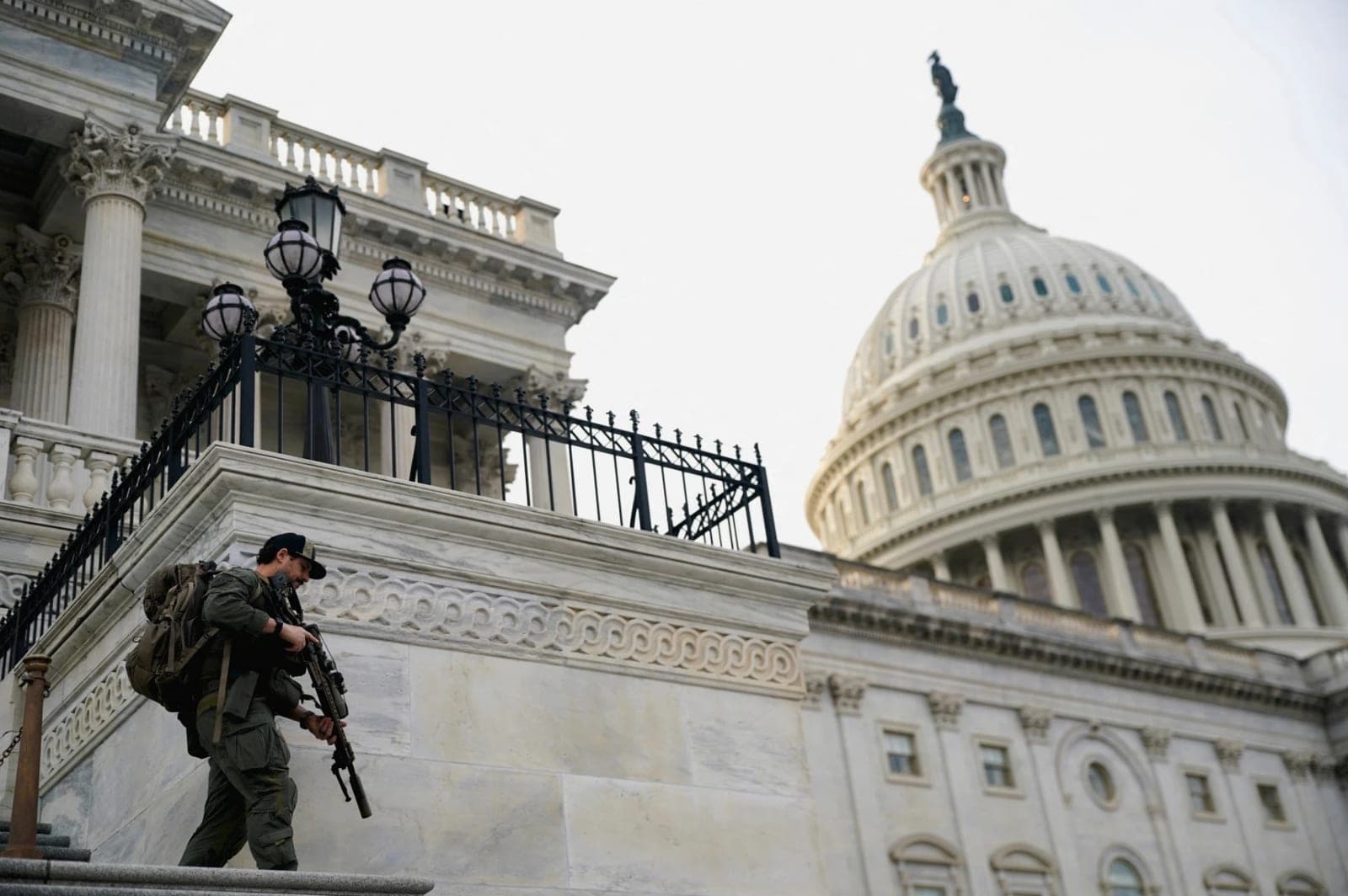
House Effort To End Trump's Iran War Fails By One Vote: Guess The Lone GOP Dissenter
House Effort To End Trump's Iran War Fails By One Vote: Guess The Lone GOP Dissenter Two parallel war-related votes in the House and Senate reveal growing dismay and political fractures over President Trump's Iran war, as the Strait of Hormuz remains locked down and ceasefire still seems distant. The Republican-controlled House voted Thursday to reject a resolution ordering the White House to end the war with Iran, as Memorial Day approaches and Americans are anxious over gas prices and general rising costs at the grocery store. The vote was 213-214, almost entirely along party lines, with dominant Republicans overwhelmingly sticking with Trump - not so much as allowing formal robust Congressional debate. There was one notable exception who broke ranks. via Reuters The lone Republican outlier was Rep. Thomas Massie of Kentucky, who voted for the measure to impose Constitutional guardrails over what the Executive can do in terms of waging war overseas. But on the other side, a lone Democrat, Rep. Jared Golden of Maine, voted against it. Additionally, Rep. Warren Davidson, R-Ohio, merely registered a vote of "present" while three Republicans did not vote at all. Rep. Gregory Meeks of NY (Dem) pushed the measure which "directs the President to remove United States Armed Forces from hostilities against the Islamic Republic of Iran." "Donald Trump has dragged the American people into a war of choice, launched without congressional authorization. The president has no coherent strategy, and this open-ended, undefined military engagement is precisely what the War Powers Resolution was designed to restrain," Meeks said on the floor before the vote. “Every day we delay, we inch closer to a conflict with no exit ramp.” --NBC But it shows waning support amid fears the US is getting bogged down in a new quagmire in the Middle East (which we should note Trump strongly and eloquently campaigned against). Per Politico: It marks the second time the House has declined to intervene since the war began. But the 213-214 vote was even tighter than the last attempt in early March, as several Democrats who previously broke ranks to support the military campaign switched their votes to oppose it. Parallel to the House side, the Senate also just swatted down an effort to choke off US weapons flows to Israel. In the opening days of Operation Epic Fury, statements by President Trump and White House officials including Rubio strongly suggested that they moved in Israel's interests, as the Netanyahu government made the case that a nuclear-armed Iran must face preemptive attack or else Israel would be in the crosshairs. Two Senate resolutions led by Bernie Sanders aiming to block arms sales to Israel failed Wednesday, even as they pulled backing from roughly 75% of Democrats. Republicans, however, closed ranks and almost unanimously voted them down. Massie is in a reelection bid which will decide his political future, even as Trump has ramped up the personal attacks: 🚨EXCLUSIVE: Republican Kentucky Rep. Thomas Massie raised more than $2.5 million in the first quarter of 2026, according to figures shared with the Daily Caller. Of Massie’s 20,665 donors in the first quarter, approximately 76% were first-time contributors while 993 donors from… https://t.co/70jjA4bahn pic.twitter.com/caF0t7MsWE — Daily Caller (@DailyCaller) April 13, 2026 Sanders had targeted specific packages, including a $295 million sale of bulldozers and a $151.8 million shipment of 12,000 1,000-pound "dumb bombs". But both measures went down: 59-40 and 63-36. But what the Senate vote reveals is that what previously used to be automatic, bipartisan support for arming Israel is starting to fracture, with Democrats increasingly uneasy since Israel's high casualty Gaza campaign following the October 7, 2023 Hamas terror attack, and the more recent Israeli official admissions that the death toll was over 70,000 killed. However, the Israeli stance is that at least a few tens of thousands of these were Hamas militants or 'Hamas-linked'. Tyler Durden Thu, 04/16/2026 - 14:45
House Effort To End Trump's Iran War Fails By One Vote: Guess The Lone GOP Dissenter
House Effort To End Trump's Iran War Fails By One Vote: Guess The Lone GOP Dissenter Two parallel war-related votes in the House and Senate reveal growing dismay and political fractures over President Trump's Iran war, as the Strait of Hormuz remains locked down and ceasefire still seems distant. The Republican-controlled House voted Thursday to reject a resolution ordering the White House to end the war with Iran, as Memorial Day approaches and Americans are anxious over gas prices and general rising costs at the grocery store. The vote was 213-214, almost entirely along party lines, with dominant Republicans overwhelmingly sticking with Trump - not so much as allowing formal robust Congressional debate. There was one notable exception who broke ranks. via Reuters The lone Republican outlier was Rep. Thomas Massie of Kentucky, who voted for the measure to impose Constitutional guardrails over what the Executive can do in terms of waging war overseas. But on the other side, a lone Democrat, Rep. Jared Golden of Maine, voted against it. Additionally, Rep. Warren Davidson, R-Ohio, merely registered a vote of "present" while three Republicans did not vote at all. Rep. Gregory Meeks of NY (Dem) pushed the measure which "directs the President to remove United States Armed Forces from hostilities against the Islamic Republic of Iran." "Donald Trump has dragged the American people into a war of choice, launched without congressional authorization. The president has no coherent strategy, and this open-ended, undefined military engagement is precisely what the War Powers Resolution was designed to restrain," Meeks said on the floor before the vote. “Every day we delay, we inch closer to a conflict with no exit ramp.” --NBC But it shows waning support amid fears the US is getting bogged down in a new quagmire in the Middle East (which we should note Trump strongly and eloquently campaigned against). Per Politico: It marks the second time the House has declined to intervene since the war began. But the 213-214 vote was even tighter than the last attempt in early March, as several Democrats who previously broke ranks to support the military campaign switched their votes to oppose it. Parallel to the House side, the Senate also just swatted down an effort to choke off US weapons flows to Israel. In the opening days of Operation Epic Fury, statements by President Trump and White House officials including Rubio strongly suggested that they moved in Israel's interests, as the Netanyahu government made the case that a nuclear-armed Iran must face preemptive attack or else Israel would be in the crosshairs. Two Senate resolutions led by Bernie Sanders aiming to block arms sales to Israel failed Wednesday, even as they pulled backing from roughly 75% of Democrats. Republicans, however, closed ranks and almost unanimously voted them down. Massie is in a reelection bid which will decide his political future, even as Trump has ramped up the personal attacks: 🚨EXCLUSIVE: Republican Kentucky Rep. Thomas Massie raised more than $2.5 million in the first quarter of 2026, according to figures shared with the Daily Caller. Of Massie’s 20,665 donors in the first quarter, approximately 76% were first-time contributors while 993 donors from… https://t.co/70jjA4bahn pic.twitter.com/caF0t7MsWE — Daily Caller (@DailyCaller) April 13, 2026 Sanders had targeted specific packages, including a $295 million sale of bulldozers and a $151.8 million shipment of 12,000 1,000-pound "dumb bombs". But both measures went down: 59-40 and 63-36. But what the Senate vote reveals is that what previously used to be automatic, bipartisan support for arming Israel is starting to fracture, with Democrats increasingly uneasy since Israel's high casualty Gaza campaign following the October 7, 2023 Hamas terror attack, and the more recent Israeli official admissions that the death toll was over 70,000 killed. However, the Israeli stance is that at least a few tens of thousands of these were Hamas militants or 'Hamas-linked'. Tyler Durden Thu, 04/16/2026 - 14:45
House Effort To End Trump's Iran War Fails By One Vote: Guess The Lone GOP Dissenter
House Effort To End Trump's Iran War Fails By One Vote: Guess The Lone GOP Dissenter Two parallel war-related votes in the House and Senate reveal growing dismay and political fractures over President Trump's Iran war, as the Strait of Hormuz remains locked down and ceasefire still seems distant. The Republican-controlled House voted Thursday to reject a resolution ordering the White House to end the war with Iran, as Memorial Day approaches and Americans are anxious over gas prices and general rising costs at the grocery store. The vote was 213-214, almost entirely along party lines, with dominant Republicans overwhelmingly sticking with Trump - not so much as allowing formal robust Congressional debate. There was one notable exception who broke ranks. via Reuters The lone Republican outlier was Rep. Thomas Massie of Kentucky, who voted for the measure to impose Constitutional guardrails over what the Executive can do in terms of waging war overseas. But on the other side, a lone Democrat, Rep. Jared Golden of Maine, voted against it. Additionally, Rep. Warren Davidson, R-Ohio, merely registered a vote of "present" while three Republicans did not vote at all. Rep. Gregory Meeks of NY (Dem) pushed the measure which "directs the President to remove United States Armed Forces from hostilities against the Islamic Republic of Iran." "Donald Trump has dragged the American people into a war of choice, launched without congressional authorization. The president has no coherent strategy, and this open-ended, undefined military engagement is precisely what the War Powers Resolution was designed to restrain," Meeks said on the floor before the vote. “Every day we delay, we inch closer to a conflict with no exit ramp.” --NBC But it shows waning support amid fears the US is getting bogged down in a new quagmire in the Middle East (which we should note Trump strongly and eloquently campaigned against). Per Politico: It marks the second time the House has declined to intervene since the war began. But the 213-214 vote was even tighter than the last attempt in early March, as several Democrats who previously broke ranks to support the military campaign switched their votes to oppose it. Parallel to the House side, the Senate also just swatted down an effort to choke off US weapons flows to Israel. In the opening days of Operation Epic Fury, statements by President Trump and White House officials including Rubio strongly suggested that they moved in Israel's interests, as the Netanyahu government made the case that a nuclear-armed Iran must face preemptive attack or else Israel would be in the crosshairs. Two Senate resolutions led by Bernie Sanders aiming to block arms sales to Israel failed Wednesday, even as they pulled backing from roughly 75% of Democrats. Republicans, however, closed ranks and almost unanimously voted them down. Massie is in a reelection bid which will decide his political future, even as Trump has ramped up the personal attacks: 🚨EXCLUSIVE: Republican Kentucky Rep. Thomas Massie raised more than $2.5 million in the first quarter of 2026, according to figures shared with the Daily Caller. Of Massie’s 20,665 donors in the first quarter, approximately 76% were first-time contributors while 993 donors from… https://t.co/70jjA4bahn pic.twitter.com/caF0t7MsWE — Daily Caller (@DailyCaller) April 13, 2026 Sanders had targeted specific packages, including a $295 million sale of bulldozers and a $151.8 million shipment of 12,000 1,000-pound "dumb bombs". But both measures went down: 59-40 and 63-36. But what the Senate vote reveals is that what previously used to be automatic, bipartisan support for arming Israel is starting to fracture, with Democrats increasingly uneasy since Israel's high casualty Gaza campaign following the October 7, 2023 Hamas terror attack, and the more recent Israeli official admissions that the death toll was over 70,000 killed. However, the Israeli stance is that at least a few tens of thousands of these were Hamas militants or 'Hamas-linked'. Tyler Durden Thu, 04/16/2026 - 14:45

Major Israeli PAC Flips: Tel Aviv Should Pay Out-Of-Pocket If It Wants US Weapons
Major Israeli PAC Flips: Tel Aviv Should Pay Out-Of-Pocket If It Wants US Weapons via Middle East Eye The pro-Israel advocacy group J Street is now calling for an end to "direct" US military support to Israel, per a new policy document published this week. The group had previously backed Washington's continued provision of defensive weapons systems, such as the replenishment of Israel's Iron Dome, at no cost to Israelis. Now, it says the US "should continue to sell" short-range air and ballistic missile defense capabilities to Israel, but Israel should use its own money to pay for them. Source: Times of Israel "Israel faces real security challenges that require a significant defense investment. With a per capita GDP comparable to leading US allies such as the United Kingdom, France and Japan, as well as an annual defense budget of over $45 billion, it has the financial means to address these challenges," J Street said. "It does not require almost $4 billion per year in US financial subsidies to purchase weapons," it added. "Continuing this assistance is both unnecessary and politically counterproductive, creating avoidable tensions in US domestic politics and in the bilateral relationship." The way the current military aid package operates is that the US provides Israel with American taxpayer funds, and those funds are put into US weapons companies to acquire equipment. On its website, J Street says that it "organizes pro-Israel, pro-peace, pro-democracy Americans to promote US policies that embody our deeply held Jewish and democratic values and that help secure the State of Israel as a democratic homeland for the Jewish people". Political tide turns J Street's shift follows a distinct change in attitudes towards Israel among the American public after what has been widely labeled genocide in Gaza, where over 72,000 Palestinians have been killed since Israel's war on the enclave broke out in October 2023. But perhaps more importantly for the group, whose support base is made up of Democrats, the party's future is changing course. Progressive New York Congresswoman Alexandria Ocasio-Cortez, who is widely believed to be seeking higher office, announced earlier this month that she would no longer vote for any US military support to Israel, despite having previously backed the provision of defensive weapons, much to the disappointment of many of her supporters. It is notable, however, that her statement followed Israeli Prime Minister Benjamin Netanyahu's surprise declaration earlier this year that Israel will not seek to renew its military aid package with the US in 2028. "I want to taper off the military aid within the next 10 years," all the way down to zero, Netanyahu told The Economist in January. J Street's new position demands that any future US arms sales that Israel pays for out-of-pocket "be fully consistent with American law", which echoed Ocasio-Cortez's statement. US law prohibits security assistance to any country whose government engages in a consistent pattern of gross human rights violations or blocks or restricts the transport or delivery of US-backed humanitarian aid. This moment demands a reset. J Street is calling for the U.S. to end unconditional financial military subsidies to Israel and to move towards a relationship where we treat Israel like any other ally. J Street supports: – Phasing out taxpayer-funded military aid by 2028, when the… — J Street (@jstreetdotorg) April 13, 2026 "US arms sales to Israel should be further conditioned to incentivize alignment with American interests and laws - as has been the case with other allies and partners – when their behavior is inconsistent with US interests," J Street said. At the same time, the group acknowledges that Washington and Israel generally share the same interests anyway. "The US also benefits meaningfully from the relationship. Intelligence sharing has been critical in campaigns such as the fight against ISIS, while joint operations such as Israel’s 2006 strike on Syria’s secret nuclear facility have advanced shared security goals." It added that because "approximately 500,000 American citizens live in Israel", selling it weapons should continue to be a US national security priority. Tyler Durden Wed, 04/15/2026 - 20:05

US Prosecutors Make Surprise Visit To Fed HQ Renovation Project
US Prosecutors Make Surprise Visit To Fed HQ Renovation Project Federal prosecutors on Tuesday made a surprise visit to the Federal Reserve headquarters building that's undergoing a $2.5 billion renovation, as they continue to investigate whether Fed Chair Jerome Powell lied to Congress about the cost and scope of the project. Construction workers told the prosecutors they couldn't come on the site without prior authorization, the Wall Street Journal reported. Instead, they were referred to the Fed's lawyers to coordinate a return visit. A worker at a construction gate outside the Federal Reserve's Eccles Building in July 2025 (Jonathan Ernst, Reuters via ) The provocative move is the latest chapter in a months-long legal drama over the enormously expensive renovation of two Fed office buildings built in the 1930s, and whether Powell made false statements about the project in a congressional hearing last June. Specifically, Powell disputed media reports and accusations from administration officials and congressional Republicans that the project had extravagant design features, such as a VIP dining room, premium marble, water features and a rooftop terrace garden. Last year, Office of Management and Budget Director Russell Vought reported that the $2.5 billion cost was $700 million over budget. President Trump, who has repeatedly criticized Powell for not pushing interest even lower than they are, was quick to condemn the Fed director for the steep price of the project. “When you spend $2.5 billion on, really, a renovation, I think it’s really disgraceful,” he said last year. More recently, he said the lead contractor "is probably one of the richest men in the country right now." The ongoing drama had a moment of comic relief in July, when Trump joined Powell in touring the construction site with reporters tagging along: JUST IN: President Trump starts arguing with a clearly uncomfortable Jerome Powell as the two wear their hard hats. Trump: So we're taking a look and it looks like it's about 3.1 billion. Powell: I'm not aware of that. Trump: Yeah, it just came out. Powell: Yeah, I haven't… pic.twitter.com/CKAAvd0lvp — Collin Rugg (@CollinRugg) July 24, 2025 Last month, US District Judge James Boasberg threw out two subpoenas that federal prosecutors had issued to the Fed. “There is abundant evidence that the subpoenas’ dominant (if not sole) purpose is to harass and pressure Powell either to yield to the President or to resign and make way for a Fed Chair who will,” wrote Boasberg, an Obama appointee. Tuesday's surprise visit to the construction zone signals the DOJ's dedication to chasing the case. An excavator claws the earth beneath the Fed's 1951 Constitution Ave building in July 2025 (Reuters via ) “Any construction project that has cost overruns of almost 80 percent over the original construction budget deserves some serious review,” US Attorney for the District of Columbia Jeanine Pirro told the Journal on Tuesday. “And these people are in charge of monetary policy in the United States?” Pirro, a long-time Trump ally, gave a green light to the investigation in November. Powell’s term as chair will expire on May 15, though his underlying seat on the Fed’s Board of Governors doesn’t end until 2028. In January, Trump nominated Kevin Warsh to replace him, but his Senate confirmation is being held up by Republican North Carolina Sen. Thom Tillis, who said he won't vote to advance Warsh's nomination until the DOJ investigation of Powell and the Fed is complete. Powell has said he'll stay on as chair until his successor is confirmed. Fed chairs usually give up their Board of Governors seat after leaving the top job, but Powell has said he will make a decision on that "based on what I think is best for our institution and the people we serve.” Tyler Durden Wed, 04/15/2026 - 10:05
US Prosecutors Make Surprise Visit To Fed HQ Renovation Project
US Prosecutors Make Surprise Visit To Fed HQ Renovation Project Federal prosecutors on Tuesday made a surprise visit to the Federal Reserve headquarters building that's undergoing a $2.5 billion renovation, as they continue to investigate whether Fed Chair Jerome Powell lied to Congress about the cost and scope of the project. Construction workers told the prosecutors they couldn't come on the site without prior authorization, the Wall Street Journal reported. Instead, they were referred to the Fed's lawyers to coordinate a return visit. A worker at a construction gate outside the Federal Reserve's Eccles Building in July 2025 (Jonathan Ernst, Reuters via ) The provocative move is the latest chapter in a months-long legal drama over the enormously expensive renovation of two Fed office buildings built in the 1930s, and whether Powell made false statements about the project in a congressional hearing last June. Specifically, Powell disputed media reports and accusations from administration officials and congressional Republicans that the project had extravagant design features, such as a VIP dining room, premium marble, water features and a rooftop terrace garden. Last year, Office of Management and Budget Director Russell Vought reported that the $2.5 billion cost was $700 million over budget. President Trump, who has repeatedly criticized Powell for not pushing interest even lower than they are, was quick to condemn the Fed director for the steep price of the project. “When you spend $2.5 billion on, really, a renovation, I think it’s really disgraceful,” he said last year. More recently, he said the lead contractor "is probably one of the richest men in the country right now." The ongoing drama had a moment of comic relief in July, when Trump joined Powell in touring the construction site with reporters tagging along: JUST IN: President Trump starts arguing with a clearly uncomfortable Jerome Powell as the two wear their hard hats. Trump: So we're taking a look and it looks like it's about 3.1 billion. Powell: I'm not aware of that. Trump: Yeah, it just came out. Powell: Yeah, I haven't… pic.twitter.com/CKAAvd0lvp — Collin Rugg (@CollinRugg) July 24, 2025 Last month, US District Judge James Boasberg threw out two subpoenas that federal prosecutors had issued to the Fed. “There is abundant evidence that the subpoenas’ dominant (if not sole) purpose is to harass and pressure Powell either to yield to the President or to resign and make way for a Fed Chair who will,” wrote Boasberg, an Obama appointee. Tuesday's surprise visit to the construction zone signals the DOJ's dedication to chasing the case. An excavator claws the earth beneath the Fed's 1951 Constitution Ave building in July 2025 (Reuters via ) “Any construction project that has cost overruns of almost 80 percent over the original construction budget deserves some serious review,” US Attorney for the District of Columbia Jeanine Pirro told the Journal on Tuesday. “And these people are in charge of monetary policy in the United States?” Pirro, a long-time Trump ally, gave a green light to the investigation in November. Powell’s term as chair will expire on May 15, though his underlying seat on the Fed’s Board of Governors doesn’t end until 2028. In January, Trump nominated Kevin Warsh to replace him, but his Senate confirmation is being held up by Republican North Carolina Sen. Thom Tillis, who said he won't vote to advance Warsh's nomination until the DOJ investigation of Powell and the Fed is complete. Powell has said he'll stay on as chair until his successor is confirmed. Fed chairs usually give up their Board of Governors seat after leaving the top job, but Powell has said he will make a decision on that "based on what I think is best for our institution and the people we serve.” Tyler Durden Wed, 04/15/2026 - 10:05
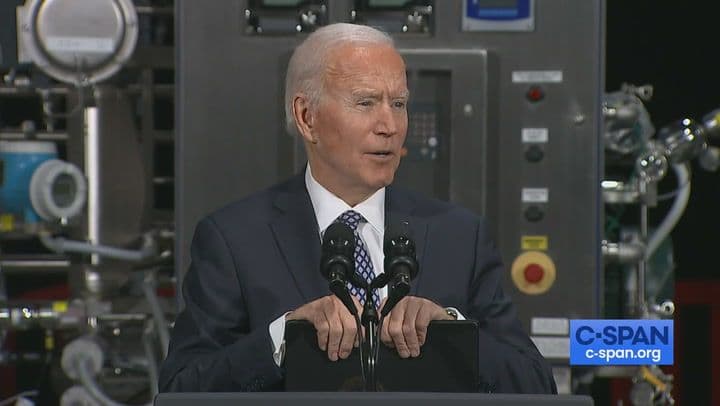
Biden FDA Knew About COVID Vaccine Stroke Risk And Kept Americans In The Dark
Biden FDA Knew About COVID Vaccine Stroke Risk And Kept Americans In The Dark Senate investigators spent months reviewing roughly 2,000 pages of federal records. What they found is damning. FDA and CDC officials under the Biden administration identified a significant stroke risk tied to Pfizer's COVID-19 bivalent booster in seniors - and never breathed a word to the public. Sen. Ron Johnson (R-WI), chairman of the Senate's Permanent Subcommittee on Investigations, sent a formal letter to HHS Secretary Robert F. Kennedy Jr. laying out the evidence. He wasn't speculating. He was citing the government's own files. "HHS records show that as early as October 2022, federal health officials identified a potential connection between the Pfizer-BioNTech COVID-19 bivalent booster and ischemic stroke for individuals over the age of 65," Johnson wrote. An ischemic stroke means a blockage of blood to the brain. Between November 2022 and March 2023, seven separate analyses of incoming data flagged the same stroke signal — specifically in adults over 65. CDC data cited by Johnson shows 226 stroke cases reported between August 2022 and February 2023, with additional cases surfacing throughout 2023 and 2024. Despite the risk, the Biden administration issued no formal warnings. No Health Alert Network message. No changes to booster recommendations for seniors. Nothing. Instead, in February 2023, HHS quietly hired a private contractor, Lukos LLC, to conduct a deeper internal investigation, dubbed "The Stroke Project." Publicly, officials kept insisting the vaccines were safe. "From the initial detection of the safety signal in late 2022 … health officials continued to say the vaccine was safe while simultaneously searching for evidence to support that assertion,” Johnson said. It gets worse. Federal officials drafted a communications plan about the stroke risk that included a "Tough Questions and Answers" section prepared for President-ish Biden and his White House team. During final edits, the description of the stroke signal was quietly changed from "moderately elevated" to "slightly elevated." Who made that change? Nobody knows. The language softened, the edit went unattributed, and the public remained in the dark. The pattern is consistent. Senate investigators previously established that Biden officials also downplayed the risk of vaccine-induced myocarditis and kept that from the public. This wasn't a one-time failure. It was a system. Here's what makes this cover-up even more infuriating. The Biden administration showed it was more than willing to pull the plug on a vaccine when it wanted to. In April 2021, officials paused the Johnson & Johnson (Janssen) vaccine due to blood clot concerns. The controversial move was pitched as proof of the administration’s commitment to safety. At the time of the pause, six cases of severe blood clots had been reported out of nearly 7 million doses administered. So when 226 stroke cases surfaced tied to Pfizer's bivalent booster in the most vulnerable seniors, the same administration did nothing. That double standard wasn't accidental; it was deliberate. The fallout from that kind of institutional betrayal is hard to overstate. According to the Kaiser Family Foundation, fewer than half of all Americans now trust the CDC and FDA to operate free from political or special-interest influence. Tyler Durden Mon, 04/13/2026 - 18:50
Biden FDA Knew About COVID Vaccine Stroke Risk And Kept Americans In The Dark
Biden FDA Knew About COVID Vaccine Stroke Risk And Kept Americans In The Dark Senate investigators spent months reviewing roughly 2,000 pages of federal records. What they found is damning. FDA and CDC officials under the Biden administration identified a significant stroke risk tied to Pfizer's COVID-19 bivalent booster in seniors - and never breathed a word to the public. Sen. Ron Johnson (R-WI), chairman of the Senate's Permanent Subcommittee on Investigations, sent a formal letter to HHS Secretary Robert F. Kennedy Jr. laying out the evidence. He wasn't speculating. He was citing the government's own files. "HHS records show that as early as October 2022, federal health officials identified a potential connection between the Pfizer-BioNTech COVID-19 bivalent booster and ischemic stroke for individuals over the age of 65," Johnson wrote. An ischemic stroke means a blockage of blood to the brain. Between November 2022 and March 2023, seven separate analyses of incoming data flagged the same stroke signal — specifically in adults over 65. CDC data cited by Johnson shows 226 stroke cases reported between August 2022 and February 2023, with additional cases surfacing throughout 2023 and 2024. Despite the risk, the Biden administration issued no formal warnings. No Health Alert Network message. No changes to booster recommendations for seniors. Nothing. Instead, in February 2023, HHS quietly hired a private contractor, Lukos LLC, to conduct a deeper internal investigation, dubbed "The Stroke Project." Publicly, officials kept insisting the vaccines were safe. "From the initial detection of the safety signal in late 2022 … health officials continued to say the vaccine was safe while simultaneously searching for evidence to support that assertion,” Johnson said. It gets worse. Federal officials drafted a communications plan about the stroke risk that included a "Tough Questions and Answers" section prepared for President-ish Biden and his White House team. During final edits, the description of the stroke signal was quietly changed from "moderately elevated" to "slightly elevated." Who made that change? Nobody knows. The language softened, the edit went unattributed, and the public remained in the dark. The pattern is consistent. Senate investigators previously established that Biden officials also downplayed the risk of vaccine-induced myocarditis and kept that from the public. This wasn't a one-time failure. It was a system. Here's what makes this cover-up even more infuriating. The Biden administration showed it was more than willing to pull the plug on a vaccine when it wanted to. In April 2021, officials paused the Johnson & Johnson (Janssen) vaccine due to blood clot concerns. The controversial move was pitched as proof of the administration’s commitment to safety. At the time of the pause, six cases of severe blood clots had been reported out of nearly 7 million doses administered. So when 226 stroke cases surfaced tied to Pfizer's bivalent booster in the most vulnerable seniors, the same administration did nothing. That double standard wasn't accidental; it was deliberate. The fallout from that kind of institutional betrayal is hard to overstate. According to the Kaiser Family Foundation, fewer than half of all Americans now trust the CDC and FDA to operate free from political or special-interest influence. Tyler Durden Mon, 04/13/2026 - 18:50
Congress Returns From Recess - Here's What's On Its To-Do List
Congress Returns From Recess - Here's What's On Its To-Do List Authored by Joseph Lord via The Epoch Times, Lawmakers will return to Capitol Hill this week with a long to-do list as the Department of Homeland Security (DHS) remains in a partial shutdown. Ending that shutdown—which as of April 13 reached its 58th day—will be a top priority for lawmakers, even as they remain divided along party lines on how to move forward with the funding. Lawmakers will also work on reauthorizing Section 702 of the Foreign Intelligence Surveillance Act (FISA), a controversial surveillance law that includes the collection of American citizens’ personal data which is set to expire on April 20. They'll also consider a budget request from the White House raising the Pentagon’s budget to $1.5 trillion—by far the largest military budget ever requested. Here’s what to know. DHS Funding Congress’s No. 1 priority will be to find a way forward as DHS remains shut down—though at present, a compromise still seems distant as the two chambers remain at odds on how to move forward. Democrats have demanded significant reforms to Immigration and Customs Enforcement (ICE) and parts of Customs and Border Patrol (CBP)—both subsidiaries of DHS—in exchange for supporting new funding for the department. They have tied these demands to the fatal shootings of Alex Pretti and Nicole Renée Good in Minneapolis during altercations with immigration enforcement agents. Republicans have rejected parts of these demands, particularly a proposed prohibition on agents wearing masks while in the field, citing the need to protect officers from being doxed by activists. Some House Republicans have also pushed for the passage of the Safeguarding American Voter Eligibility (SAVE) Act, a voting bill, as a condition of any reforms to ICE and CBP. However, Senate Democrats have consistently opposed the bill, which doesn’t seem to have a clear path forward in Congress. Before leaving for the spring recess, the Senate passed a bill that would have fully funded DHS with the exception of ICE and CBP, whose immigration enforcement operations have already been funded through September 2029 by the One Big Beautiful Bill Act. House Speaker Mike Johnson (R-La.) rejected this deal as a “joke.” Instead, the House passed a 60-day stopgap that would have fully funded DHS. That bill has been rejected by Senate Democrats for its lack of reforms. Ahead of Congress’s recess, President Donald Trump signed an executive order granting full pay to agents of the Transportation Security Administration (TSA), whose increasing employee absences had led to record-breaking security queues at airports across the country. FISA Section 702 Another top priority for lawmakers will be passing a reauthorization of Section 702 of FISA, a surveillance law that’s due to expire on April 20. On March 25, Trump—a former critic of Section 702—requested that Congress pass a “clean” reauthorization of the law. “I have called for a clean 18-month extension,” Trump wrote in a post on Truth Social. Section 702 targets intelligence from foreign nationals thought to be outside the United States. Yet, it also enables intelligence agencies to gather “incidental” information from Americans who are in contact with targeted non-U.S. persons—all without a warrant. Although intelligence officials must obtain a warrant to access Americans’ data directly, Section 702 has long caused bipartisan discomfort on Capitol Hill and beyond. Previously, Congress had approved a two-year extension of the program with 56 major reforms designed primarily to prevent misuse of Americans’ data by agents with access to Section 702 data. It was signed into law by former President Joe Biden in April 2024. Trump acknowledged his previous opposition to—and run-ins with—Section 702. Nevertheless, Trump said, “When used properly, FISA is an effective tool to keep Americans safe.” Trump’s $1.5 Billion Pentagon Budget Request Another top issue for lawmakers this week will be Trump’s request for a $1.5 trillion military budget—the largest increase in military spending since World War 2. In the April 3 budget proposal, the White House formally requested the historic Pentagon budget increase, though the amount had been floated by Trump for weeks. The proposal suggests that this amount could be passed through a two-track process. The bulk of the funding, $1.1 trillion, would be passed through the normal appropriations process. This amount could likely pass easily, as it’s aligned with the gradual increases seen over recent years. The second track in the White House proposal would come through a $350 billion reconciliation package—allowing Republicans to bypass a filibuster from Senate Democrats entirely. It would fund this in part, the proposal states, through a $73 billion reduction in non-defense spending, White House Office of Management and the Budget Director Russ Vought is scheduled to testify before the House Budget Committee on April 15, and to testify before its Senate counterpart on April 16. Iran War While the U.S. and Iran are currently in a ceasefire, signs of its fragility are already becoming clear—meaning that the issue will be a key focus for lawmakers this week. On Friday, peace talks between the United States and Iran in Islamabad, Pakistan, fell apart after Iran refused U.S. demands to dismantle its nuclear program. The United States demanded as well that Iran turn over its supply of enriched uranium. After the peace talks failed, Trump stated that, beginning at 10 a.m. ET on Monday, the U.S. will set up a blockade in the Strait of Hormuz, as U.S. ships have already begun sweeping the area for Iranian mines. Meanwhile, Democrats—with the support of some Republicans—have vowed to take action under the War Powers Resolution of 1973, which curbs a president’s power to wage war without explicit congressional approval. Before the break, a bid by House Minority Leader Hakeem Jeffries (D-N.Y.) to take action under the War Powers Resolution via unanimous consent was blocked by Republicans. However, Jeffries has vowed to force another vote on the issue this week. Senate Minority Leader Chuck Schumer (D-N.Y.) has also stated that Senate Democrats will attempt to force a vote on the matter this week. “Congress must reassert its authority” over war-making powers, Schumer said at a news conference on April 8. Sen. Rand Paul (R-Ky.) and Rep. Thomas Massie (R-Ky.) have consistently backed action under the War Powers Resolution related to the Iran conflict, citing Congress’s constitutional role in declaring wars. Meanwhile, a contingent of Republican lawmakers in both chambers—including Sen. John Curtis (R-Utah)—have stated that they will throw their support behind such a measure if hostilities continue after the statutory 60-day window laid out in the War Powers Resolution. Tyler Durden Mon, 04/13/2026 - 09:35
Congress Returns From Recess - Here's What's On Its To-Do List
Congress Returns From Recess - Here's What's On Its To-Do List Authored by Joseph Lord via The Epoch Times, Lawmakers will return to Capitol Hill this week with a long to-do list as the Department of Homeland Security (DHS) remains in a partial shutdown. Ending that shutdown—which as of April 13 reached its 58th day—will be a top priority for lawmakers, even as they remain divided along party lines on how to move forward with the funding. Lawmakers will also work on reauthorizing Section 702 of the Foreign Intelligence Surveillance Act (FISA), a controversial surveillance law that includes the collection of American citizens’ personal data which is set to expire on April 20. They'll also consider a budget request from the White House raising the Pentagon’s budget to $1.5 trillion—by far the largest military budget ever requested. Here’s what to know. DHS Funding Congress’s No. 1 priority will be to find a way forward as DHS remains shut down—though at present, a compromise still seems distant as the two chambers remain at odds on how to move forward. Democrats have demanded significant reforms to Immigration and Customs Enforcement (ICE) and parts of Customs and Border Patrol (CBP)—both subsidiaries of DHS—in exchange for supporting new funding for the department. They have tied these demands to the fatal shootings of Alex Pretti and Nicole Renée Good in Minneapolis during altercations with immigration enforcement agents. Republicans have rejected parts of these demands, particularly a proposed prohibition on agents wearing masks while in the field, citing the need to protect officers from being doxed by activists. Some House Republicans have also pushed for the passage of the Safeguarding American Voter Eligibility (SAVE) Act, a voting bill, as a condition of any reforms to ICE and CBP. However, Senate Democrats have consistently opposed the bill, which doesn’t seem to have a clear path forward in Congress. Before leaving for the spring recess, the Senate passed a bill that would have fully funded DHS with the exception of ICE and CBP, whose immigration enforcement operations have already been funded through September 2029 by the One Big Beautiful Bill Act. House Speaker Mike Johnson (R-La.) rejected this deal as a “joke.” Instead, the House passed a 60-day stopgap that would have fully funded DHS. That bill has been rejected by Senate Democrats for its lack of reforms. Ahead of Congress’s recess, President Donald Trump signed an executive order granting full pay to agents of the Transportation Security Administration (TSA), whose increasing employee absences had led to record-breaking security queues at airports across the country. FISA Section 702 Another top priority for lawmakers will be passing a reauthorization of Section 702 of FISA, a surveillance law that’s due to expire on April 20. On March 25, Trump—a former critic of Section 702—requested that Congress pass a “clean” reauthorization of the law. “I have called for a clean 18-month extension,” Trump wrote in a post on Truth Social. Section 702 targets intelligence from foreign nationals thought to be outside the United States. Yet, it also enables intelligence agencies to gather “incidental” information from Americans who are in contact with targeted non-U.S. persons—all without a warrant. Although intelligence officials must obtain a warrant to access Americans’ data directly, Section 702 has long caused bipartisan discomfort on Capitol Hill and beyond. Previously, Congress had approved a two-year extension of the program with 56 major reforms designed primarily to prevent misuse of Americans’ data by agents with access to Section 702 data. It was signed into law by former President Joe Biden in April 2024. Trump acknowledged his previous opposition to—and run-ins with—Section 702. Nevertheless, Trump said, “When used properly, FISA is an effective tool to keep Americans safe.” Trump’s $1.5 Billion Pentagon Budget Request Another top issue for lawmakers this week will be Trump’s request for a $1.5 trillion military budget—the largest increase in military spending since World War 2. In the April 3 budget proposal, the White House formally requested the historic Pentagon budget increase, though the amount had been floated by Trump for weeks. The proposal suggests that this amount could be passed through a two-track process. The bulk of the funding, $1.1 trillion, would be passed through the normal appropriations process. This amount could likely pass easily, as it’s aligned with the gradual increases seen over recent years. The second track in the White House proposal would come through a $350 billion reconciliation package—allowing Republicans to bypass a filibuster from Senate Democrats entirely. It would fund this in part, the proposal states, through a $73 billion reduction in non-defense spending, White House Office of Management and the Budget Director Russ Vought is scheduled to testify before the House Budget Committee on April 15, and to testify before its Senate counterpart on April 16. Iran War While the U.S. and Iran are currently in a ceasefire, signs of its fragility are already becoming clear—meaning that the issue will be a key focus for lawmakers this week. On Friday, peace talks between the United States and Iran in Islamabad, Pakistan, fell apart after Iran refused U.S. demands to dismantle its nuclear program. The United States demanded as well that Iran turn over its supply of enriched uranium. After the peace talks failed, Trump stated that, beginning at 10 a.m. ET on Monday, the U.S. will set up a blockade in the Strait of Hormuz, as U.S. ships have already begun sweeping the area for Iranian mines. Meanwhile, Democrats—with the support of some Republicans—have vowed to take action under the War Powers Resolution of 1973, which curbs a president’s power to wage war without explicit congressional approval. Before the break, a bid by House Minority Leader Hakeem Jeffries (D-N.Y.) to take action under the War Powers Resolution via unanimous consent was blocked by Republicans. However, Jeffries has vowed to force another vote on the issue this week. Senate Minority Leader Chuck Schumer (D-N.Y.) has also stated that Senate Democrats will attempt to force a vote on the matter this week. “Congress must reassert its authority” over war-making powers, Schumer said at a news conference on April 8. Sen. Rand Paul (R-Ky.) and Rep. Thomas Massie (R-Ky.) have consistently backed action under the War Powers Resolution related to the Iran conflict, citing Congress’s constitutional role in declaring wars. Meanwhile, a contingent of Republican lawmakers in both chambers—including Sen. John Curtis (R-Utah)—have stated that they will throw their support behind such a measure if hostilities continue after the statutory 60-day window laid out in the War Powers Resolution. Tyler Durden Mon, 04/13/2026 - 09:35
Congress Returns From Recess - Here's What's On Its To-Do List
Congress Returns From Recess - Here's What's On Its To-Do List Authored by Joseph Lord via The Epoch Times, Lawmakers will return to Capitol Hill this week with a long to-do list as the Department of Homeland Security (DHS) remains in a partial shutdown. Ending that shutdown—which as of April 13 reached its 58th day—will be a top priority for lawmakers, even as they remain divided along party lines on how to move forward with the funding. Lawmakers will also work on reauthorizing Section 702 of the Foreign Intelligence Surveillance Act (FISA), a controversial surveillance law that includes the collection of American citizens’ personal data which is set to expire on April 20. They'll also consider a budget request from the White House raising the Pentagon’s budget to $1.5 trillion—by far the largest military budget ever requested. Here’s what to know. DHS Funding Congress’s No. 1 priority will be to find a way forward as DHS remains shut down—though at present, a compromise still seems distant as the two chambers remain at odds on how to move forward. Democrats have demanded significant reforms to Immigration and Customs Enforcement (ICE) and parts of Customs and Border Patrol (CBP)—both subsidiaries of DHS—in exchange for supporting new funding for the department. They have tied these demands to the fatal shootings of Alex Pretti and Nicole Renée Good in Minneapolis during altercations with immigration enforcement agents. Republicans have rejected parts of these demands, particularly a proposed prohibition on agents wearing masks while in the field, citing the need to protect officers from being doxed by activists. Some House Republicans have also pushed for the passage of the Safeguarding American Voter Eligibility (SAVE) Act, a voting bill, as a condition of any reforms to ICE and CBP. However, Senate Democrats have consistently opposed the bill, which doesn’t seem to have a clear path forward in Congress. Before leaving for the spring recess, the Senate passed a bill that would have fully funded DHS with the exception of ICE and CBP, whose immigration enforcement operations have already been funded through September 2029 by the One Big Beautiful Bill Act. House Speaker Mike Johnson (R-La.) rejected this deal as a “joke.” Instead, the House passed a 60-day stopgap that would have fully funded DHS. That bill has been rejected by Senate Democrats for its lack of reforms. Ahead of Congress’s recess, President Donald Trump signed an executive order granting full pay to agents of the Transportation Security Administration (TSA), whose increasing employee absences had led to record-breaking security queues at airports across the country. FISA Section 702 Another top priority for lawmakers will be passing a reauthorization of Section 702 of FISA, a surveillance law that’s due to expire on April 20. On March 25, Trump—a former critic of Section 702—requested that Congress pass a “clean” reauthorization of the law. “I have called for a clean 18-month extension,” Trump wrote in a post on Truth Social. Section 702 targets intelligence from foreign nationals thought to be outside the United States. Yet, it also enables intelligence agencies to gather “incidental” information from Americans who are in contact with targeted non-U.S. persons—all without a warrant. Although intelligence officials must obtain a warrant to access Americans’ data directly, Section 702 has long caused bipartisan discomfort on Capitol Hill and beyond. Previously, Congress had approved a two-year extension of the program with 56 major reforms designed primarily to prevent misuse of Americans’ data by agents with access to Section 702 data. It was signed into law by former President Joe Biden in April 2024. Trump acknowledged his previous opposition to—and run-ins with—Section 702. Nevertheless, Trump said, “When used properly, FISA is an effective tool to keep Americans safe.” Trump’s $1.5 Billion Pentagon Budget Request Another top issue for lawmakers this week will be Trump’s request for a $1.5 trillion military budget—the largest increase in military spending since World War 2. In the April 3 budget proposal, the White House formally requested the historic Pentagon budget increase, though the amount had been floated by Trump for weeks. The proposal suggests that this amount could be passed through a two-track process. The bulk of the funding, $1.1 trillion, would be passed through the normal appropriations process. This amount could likely pass easily, as it’s aligned with the gradual increases seen over recent years. The second track in the White House proposal would come through a $350 billion reconciliation package—allowing Republicans to bypass a filibuster from Senate Democrats entirely. It would fund this in part, the proposal states, through a $73 billion reduction in non-defense spending, White House Office of Management and the Budget Director Russ Vought is scheduled to testify before the House Budget Committee on April 15, and to testify before its Senate counterpart on April 16. Iran War While the U.S. and Iran are currently in a ceasefire, signs of its fragility are already becoming clear—meaning that the issue will be a key focus for lawmakers this week. On Friday, peace talks between the United States and Iran in Islamabad, Pakistan, fell apart after Iran refused U.S. demands to dismantle its nuclear program. The United States demanded as well that Iran turn over its supply of enriched uranium. After the peace talks failed, Trump stated that, beginning at 10 a.m. ET on Monday, the U.S. will set up a blockade in the Strait of Hormuz, as U.S. ships have already begun sweeping the area for Iranian mines. Meanwhile, Democrats—with the support of some Republicans—have vowed to take action under the War Powers Resolution of 1973, which curbs a president’s power to wage war without explicit congressional approval. Before the break, a bid by House Minority Leader Hakeem Jeffries (D-N.Y.) to take action under the War Powers Resolution via unanimous consent was blocked by Republicans. However, Jeffries has vowed to force another vote on the issue this week. Senate Minority Leader Chuck Schumer (D-N.Y.) has also stated that Senate Democrats will attempt to force a vote on the matter this week. “Congress must reassert its authority” over war-making powers, Schumer said at a news conference on April 8. Sen. Rand Paul (R-Ky.) and Rep. Thomas Massie (R-Ky.) have consistently backed action under the War Powers Resolution related to the Iran conflict, citing Congress’s constitutional role in declaring wars. Meanwhile, a contingent of Republican lawmakers in both chambers—including Sen. John Curtis (R-Utah)—have stated that they will throw their support behind such a measure if hostilities continue after the statutory 60-day window laid out in the War Powers Resolution. Tyler Durden Mon, 04/13/2026 - 09:35
Congress Returns From Recess - Here's What's On Its To-Do List
Congress Returns From Recess - Here's What's On Its To-Do List Authored by Joseph Lord via The Epoch Times, Lawmakers will return to Capitol Hill this week with a long to-do list as the Department of Homeland Security (DHS) remains in a partial shutdown. Ending that shutdown—which as of April 13 reached its 58th day—will be a top priority for lawmakers, even as they remain divided along party lines on how to move forward with the funding. Lawmakers will also work on reauthorizing Section 702 of the Foreign Intelligence Surveillance Act (FISA), a controversial surveillance law that includes the collection of American citizens’ personal data which is set to expire on April 20. They'll also consider a budget request from the White House raising the Pentagon’s budget to $1.5 trillion—by far the largest military budget ever requested. Here’s what to know. DHS Funding Congress’s No. 1 priority will be to find a way forward as DHS remains shut down—though at present, a compromise still seems distant as the two chambers remain at odds on how to move forward. Democrats have demanded significant reforms to Immigration and Customs Enforcement (ICE) and parts of Customs and Border Patrol (CBP)—both subsidiaries of DHS—in exchange for supporting new funding for the department. They have tied these demands to the fatal shootings of Alex Pretti and Nicole Renée Good in Minneapolis during altercations with immigration enforcement agents. Republicans have rejected parts of these demands, particularly a proposed prohibition on agents wearing masks while in the field, citing the need to protect officers from being doxed by activists. Some House Republicans have also pushed for the passage of the Safeguarding American Voter Eligibility (SAVE) Act, a voting bill, as a condition of any reforms to ICE and CBP. However, Senate Democrats have consistently opposed the bill, which doesn’t seem to have a clear path forward in Congress. Before leaving for the spring recess, the Senate passed a bill that would have fully funded DHS with the exception of ICE and CBP, whose immigration enforcement operations have already been funded through September 2029 by the One Big Beautiful Bill Act. House Speaker Mike Johnson (R-La.) rejected this deal as a “joke.” Instead, the House passed a 60-day stopgap that would have fully funded DHS. That bill has been rejected by Senate Democrats for its lack of reforms. Ahead of Congress’s recess, President Donald Trump signed an executive order granting full pay to agents of the Transportation Security Administration (TSA), whose increasing employee absences had led to record-breaking security queues at airports across the country. FISA Section 702 Another top priority for lawmakers will be passing a reauthorization of Section 702 of FISA, a surveillance law that’s due to expire on April 20. On March 25, Trump—a former critic of Section 702—requested that Congress pass a “clean” reauthorization of the law. “I have called for a clean 18-month extension,” Trump wrote in a post on Truth Social. Section 702 targets intelligence from foreign nationals thought to be outside the United States. Yet, it also enables intelligence agencies to gather “incidental” information from Americans who are in contact with targeted non-U.S. persons—all without a warrant. Although intelligence officials must obtain a warrant to access Americans’ data directly, Section 702 has long caused bipartisan discomfort on Capitol Hill and beyond. Previously, Congress had approved a two-year extension of the program with 56 major reforms designed primarily to prevent misuse of Americans’ data by agents with access to Section 702 data. It was signed into law by former President Joe Biden in April 2024. Trump acknowledged his previous opposition to—and run-ins with—Section 702. Nevertheless, Trump said, “When used properly, FISA is an effective tool to keep Americans safe.” Trump’s $1.5 Billion Pentagon Budget Request Another top issue for lawmakers this week will be Trump’s request for a $1.5 trillion military budget—the largest increase in military spending since World War 2. In the April 3 budget proposal, the White House formally requested the historic Pentagon budget increase, though the amount had been floated by Trump for weeks. The proposal suggests that this amount could be passed through a two-track process. The bulk of the funding, $1.1 trillion, would be passed through the normal appropriations process. This amount could likely pass easily, as it’s aligned with the gradual increases seen over recent years. The second track in the White House proposal would come through a $350 billion reconciliation package—allowing Republicans to bypass a filibuster from Senate Democrats entirely. It would fund this in part, the proposal states, through a $73 billion reduction in non-defense spending, White House Office of Management and the Budget Director Russ Vought is scheduled to testify before the House Budget Committee on April 15, and to testify before its Senate counterpart on April 16. Iran War While the U.S. and Iran are currently in a ceasefire, signs of its fragility are already becoming clear—meaning that the issue will be a key focus for lawmakers this week. On Friday, peace talks between the United States and Iran in Islamabad, Pakistan, fell apart after Iran refused U.S. demands to dismantle its nuclear program. The United States demanded as well that Iran turn over its supply of enriched uranium. After the peace talks failed, Trump stated that, beginning at 10 a.m. ET on Monday, the U.S. will set up a blockade in the Strait of Hormuz, as U.S. ships have already begun sweeping the area for Iranian mines. Meanwhile, Democrats—with the support of some Republicans—have vowed to take action under the War Powers Resolution of 1973, which curbs a president’s power to wage war without explicit congressional approval. Before the break, a bid by House Minority Leader Hakeem Jeffries (D-N.Y.) to take action under the War Powers Resolution via unanimous consent was blocked by Republicans. However, Jeffries has vowed to force another vote on the issue this week. Senate Minority Leader Chuck Schumer (D-N.Y.) has also stated that Senate Democrats will attempt to force a vote on the matter this week. “Congress must reassert its authority” over war-making powers, Schumer said at a news conference on April 8. Sen. Rand Paul (R-Ky.) and Rep. Thomas Massie (R-Ky.) have consistently backed action under the War Powers Resolution related to the Iran conflict, citing Congress’s constitutional role in declaring wars. Meanwhile, a contingent of Republican lawmakers in both chambers—including Sen. John Curtis (R-Utah)—have stated that they will throw their support behind such a measure if hostilities continue after the statutory 60-day window laid out in the War Powers Resolution. Tyler Durden Mon, 04/13/2026 - 09:35
Massie For Governor? GOP's Libertarian Firebrand Talks Political Future
Massie For Governor? GOP's Libertarian Firebrand Talks Political Future On Friday the Ron Paul Institute (RPI) has highlighted an important and fresh interview touching on the Republican Rep's political future: Governor Thomas Massie? - RPI's Adam Dick asks. "A run for governor may be in the future for Rep. Thomas Massie (R-KY), but only if he first wins his May 19 Republican primary contest — the next step in his race for reelection to the United States House of Representatives," the RPI report says. But, "If Massie loses next month, the seven-term representative says he expects he will call it quits on working in government, stating he would consider the loss as “a sign from God or the people or both that I should go back to the farm." Getty Images President Trump has on more than once occasion personally called out the Libertarian firebrand for vocally opposing the White House on various key issues, and especially most recently on the Iran war. Massie has been one of the very view GOP members to join Dems in trying to force a Congressional vote to impose limits on Trump's military actions in Iran. As a reminder: Reps. Thomas Massie (R-Ky.) and Ro Khanna (D-Calif.) brought a war powers resolution on Iran to the House floor less than a week after Trump joined Israeli leaders in launching massive strikes against Iran in late February. It failed by a vote of 212-219, with four Democrats bucking their party to oppose it: Reps. Greg Landsman (Ohio), Jared Golden (Maine), Henry Cuellar (Texas) and Juan Vargas (Calif.). He remains one of the few outspoken 'non-interventionist' Republican members of the House. On the Senate side, Rand Paul, also of Kentucky, is Libertarian-leaning and condemns foreign adventurism and 'wars of choice'. As for a potential future run for Governor of Kentucky, Massie hinted at it here. If U.S. Rep. Thomas Massie loses his upcoming primary against a Republican opponent backed by President Donald Trump, you'll see a whole lot less of him. "If I lose on May 19, I am not doing any more government ever," he told University of Louisville students April 6 at an event on campus. "... It's a sign from God or the people or both that I should go back to the farm." But if he wins, Frankfort could be on the mind of the longtime congressman from Northern Kentucky, who's emerged during Trump's second term as one of Congress' most consequential members. During a question-and-answer portion of his forum, hosted by the school's College Republicans group, an attendee asked Massie if he would ever consider running for governor. Gov. Andy Beshear is ineligible to run for a third time as he eyes a presidential campaign, leaving the seat open at the end of 2027. And then came this: Massie wouldn't run for a U.S. Senate seat — "it's the same circus with different clowns, and also they don't have a discharge petition, which is kind of a neat thing to do" — but he sees the appeal of the governor's mansion. "If I do win (the upcoming primary), I would consider it," responded Massie, who would be up for reelection in 2028 if he wins the 2026 race. He pointed to an old friend he'd served with in Congress for three terms as an example. "His name was Ron DeSantis," Massie said. "What I've seen him achieve in Florida is inspiring and a lot of people want to move to that state, so I do believe that you could make a difference." Grant County GOP put on a great Lincoln Day Dinner last night. It was great to be among so many friends, including State Representative @SavannahLMaddox, in such a beautiful venue. pic.twitter.com/cb9gmSO4JR — Thomas Massie for Congress (@MassieforKY) April 11, 2026 Massie would have a real shot, given he remains quite popular in Kentucky - but he has an uphill battle in terms of reelection to Congress given Trump's political machine has turned against him. Tyler Durden Sun, 04/12/2026 - 21:00
Rep. Tim Burchett Says "Names, Dates, People And Locations" Set To Be Revealed In UFO Briefings
Rep. Tim Burchett Says "Names, Dates, People And Locations" Set To Be Revealed In UFO Briefings Authored by Steve Watson via Modernity.news, Rep. Tim Burchett (R-TN) says he is looking forward to what he has seen in classified UFO briefings be made public next week. In a clip that’s ripping across X, Stephen A. Smith asked point-blank: “You’ve said you’ve seen UFO briefings that would, quote, set the earth on fire, end quote. And you also said publicly, you’re not su*cidal. That’s a serious statement. What exactly are you being told that the American people aren’t allowed to hear, sir, about UFOs?” Burchett responded: “I’ve been briefed and seen pictures and talked enough… If they would just release what I was briefed on just a couple weeks ago. Again, we had somebody come in there, a colleague, a friend if you will, that was basically there to disrupt. And they tried to ruffle this guy’s feathers and ask him stuff.” Stephen A. Smith: “You’ve said you’ve seen UFO briefings that would, quote, set the earth on fire, end quote. And you also said publicly, you’re not su*cidal. That’s a serious statement. What exactly are you being told that the American people aren’t allowed to hear, sir, about… pic.twitter.com/h5xBbHCZYG — RedWave Press (@RedWavePress) April 10, 2026 Burchett continued, “he named names, dates, people in the meetings, where these items, if you will, are located. It’s too much. It’s too much, sir. Too much is going on.” He doubled down on the only man who can break the logjam: “Trump’s the guy to do it. If anybody will do it, if anybody’s a disruptor, it’s Donald J. Trump, and he will disrupt with this.” “And I had a conversation with folks at the White House today, just about that. Hopefully some things will be coming out soon,” Burchett added. This bombshell comes as the pattern of mysterious deaths and disappearances among top scientists with access to NASA secrets and classified programs continues to explode – exactly the kind of experts who might know “too much” about the very topics Burchett is demanding be released. There are now 9 missing scientists tied to advanced technology and U.S. nuclear and space research. Their work overlaps closely, with connections to NASA, Los Alamos, and the defense and space research network. At the same time, reports are emerging about a potential… pic.twitter.com/loVr6uDCoK — Ben Swann (@BenSwann_) April 10, 2026 As we reported days ago, the latest victim in the string was NASA Jet Propulsion Laboratory scientist Michael David Hicks, who died under suspicious circumstances with no public cause or autopsy released. That brought the toll to nine experts tied to advanced propulsion, asteroid defense, space surveillance, and programs that blur the line between civilian NASA work and military applications. 🚨 9 top scientists have died or gone missing in less than a year. Their work closely overlaps, tied to NASA and Los Alamos, all connected through the same defense–space research web. The pattern is unsettling. The silence around it is even more so. pic.twitter.com/ZQF3Po443l — Kekius Maximus (@Kekius_Sage) April 8, 2026 FOX 32 Chicago interviewed Harvard astrophysicist Avi Loeb about the mystery. Loeb cautioned against assuming a grand coordinated plot, telling FOX: “Each of them has a different expertise, but I think it looks like these cases are unrelated… I would caution of assigning too much significance to those.” He added, “Of course, each of these cases is a mystery that has to be resolved.” Yet even Loeb acknowledged the risks: adversarial nations could be targeting individuals involved in classified Air Force technologies or nuclear fusion programs with major national security implications. These losses are hitting as President Trump pushes aggressively for UAP transparency – including a direct directive to declassify information on potential nonhuman technology. Burchett’s fresh comments to the White House signal that momentum is building fast under the current administration. For years, the deep state bureaucracy has buried this information behind layers of classification, gatekeepers, and outright disruption – exactly what Burchett described in the briefing room. Scientists and officials with firsthand knowledge of advanced propulsion, surveillance systems, and anomalous phenomena keep turning up dead or missing while the American people are kept in the dark. Your support is crucial in helping us defeat mass censorship. Please consider donating via Locals or check out our unique merch. Follow us on X @ModernityNews. * * * Tyler Durden Sat, 04/11/2026 - 14:00

Immigration Board Denies Mahmoud Khalil's Appeal
Immigration Board Denies Mahmoud Khalil's Appeal Authored by Jill McLaughlin via The Epoch Times, An immigration appeals board on April 9 denied Palestinian activist Mahmoud Khalil’s final appeal seeking to keep him from being deported from the United States. The former Columbia University student and leader of pro-Palestinian protests is now subject to an administrative final removal order, authorizing the Immigration and Customs Enforcement (ICE) to remove Khalil from the country. Khalil, 31, said the board’s decision was based on politics. “I am not surprised by this decision from the biased and politically motivated Board of Immigration Appeals,” Khalil said in a statement provided to The Epoch Times. “I have committed no crime. I have broken no law. The only thing I am guilty of is speaking out against the genocide in Palestine—and this administration has weaponized the immigration system to punish me for it.” A Department of Justice (DOJ) spokesperson told The Epoch Times the decision “speaks for itself.” The DOJ oversees the Board of Immigration Appeals Khalil was born in a Palestinian refugee camp in Syria and is a citizen of Algeria. He entered the United States on a student visa in 2022 and married an American citizen a year later, becoming a legal permanent resident following the marriage. He was arrested in March 2025 and spent 104 days in an immigration jail, missing the birth of his first child. Khalil’s detention has been criticized by progressive officials and organizations and politicians from the Democratic Party. New York Mayor Zohran Mamdani, Sen. Bernie Sanders (I-Vt.), and Rep. Alexandria Ocasio-Cortez (D-N.Y.) have all expressed support for Khalil. In March 2025, Secretary of State Marco Rubio invoked a section of the Immigration and Nationality Act that charged Khalil’s presence in the country as having “potentially serious adverse foreign policy consequences for the United States.” Department of Homeland Security spokesperson Tricia McLaughlin said in January 2026 during an appearance on the NewsNation show “Katie Pavlich Tonight” that Khalil may be removed to Algeria. “It looks like he’ll go to Algeria. That’s what the thought is right now,” McLaughlin said. “It’s a reminder for those who are in this country on a visa or on a green card. You are a guest in this country—act like it.” Khalil’s attorney, Marc Van Der Hout, a San Francisco immigration attorney, claims his client was targeted for his speech. “Federal courts have already agreed that Mahmoud was targeted for his speech, and there is likely much more evidence of the government’s unlawful retaliation that has yet to come to light,” Van Der Hout said in a statement. “This is a clear continuation of the administration’s retaliation against Mahmoud for exercising his First Amendment rights.” Khalil’s remaining federal court case is also on uncertain ground after suffering a setback earlier this year when a U.S. appeals panel ruled 2–1 that a New Jersey judge overstepped his authority by releasing him on bail and barring the government from detaining or deporting him. Khalil’s legal team has asked the full Third Circuit Court of Appeals to consider a full rehearing of his case. His attorneys said they believe Khalil can’t be removed until his appeal is resolved. The board’s decisions are not public. The government has asked for 14 days to file a response to the request. Tyler Durden Fri, 04/10/2026 - 20:55

New Jersey Governor Sherrill Lifts 40-Year Nuclear Moratorium
New Jersey Governor Sherrill Lifts 40-Year Nuclear Moratorium Governor Mikie Sherrill signed legislation that scraps New Jersey’s 40-year de facto moratorium on new nuclear power plants, clearing the way for expanded baseload generation in a state long plagued by some of the nation’s highest utility bills. The bill, S3870/A4528, amends the Coastal Area Facility Review Act to remove an outdated permitting roadblock tied to Nuclear Regulatory Commission waste-disposal rules that no modern project could satisfy. The NJ Department of Environmental Protection can now approve permits based on proven, NRC-compliant storage methods that have maintained a 100% safety record. Speaking after a tour of the Salem Nuclear Power Plant, Sherrill launched the state’s new Nuclear Task Force by executive order. The group, which includes officials from PSEG Nuclear, labor unions, business groups, and environmental stakeholders, will focus on five priorities: financing, supply chains and technology, workforce development, regulatory streamlining, and public trust. “For costs to come down, we need more energy supply,” Gov Sherrill said. “By lifting outdated barriers and bringing together leaders across government, industry, and labor, we’re setting the stage for our state to pursue new advanced nuclear power.” Existing reactors at Salem and Hope Creek already supply more than 40 percent of the state’s electricity and roughly 80 percent of its pollution-free power. A 2020 Brattle Group analysis found those plants save ratepayers more than $400 million annually while running at 90-95 percent capacity on just 740 combined acres. Tyler Durden Thu, 04/09/2026 - 12:05