34 stories credited to Off The Press
Latest story Apr 22, 2026 · on ChamberLight since Apr 2026
A story can appear as several articles (copies of the same piece), so counts of stories and of articles differ.
Scores for Off The Press
Political lean
31 stories · 95% range 65–75 · updated Sep 25, 2026
Originality
15 of those 34 carry an unconfirmed copying flag, which is not evidence either way.
34 stories · updated Sep 24, 2026
Writing quality 63 of 100: the average rating of 27 stories, each rated on its own (separate from credibility). How it is measured
Scores last checked Sep 25, 2026.
Stories ChamberLight collected, by month
Stories credited to Off The Press, by publication date. ChamberLight collects articles that mention the officials it tracks, so this shows its own coverage of this source, not how much the source publishes.
- Stories from Off The Press
- Shaded: ChamberLight collected no stories, or almost none, from any outlet (a gap in its collection, not in the outlet’s publishing)
Show as a table
| Month | Stories | All outlets |
|---|---|---|
| March 2026 | 3 | 763 |
| April 2026 | 31 | 4,538 |
| May 2026 | 0 | none collected |
| June 2026 | 0 | none collected |
| July 2026 | 0 | none collected |
| August 2026 | 0 | 1 (collection gap) |
| September 2026 | 0 | 1,320 |
Top topics
Share of this source’s stories tagged with each topic. A story can carry several topics, so the shares do not add up to 100%.
- Ethics/Corruption26
77% of 34 stories · 58% across all outlets
- Foreign Policy13
38% of 34 stories · 29% across all outlets
- Criminal Justice11
32% of 34 stories · 19% across all outlets
- Budget/Spending9
27% of 34 stories · 31% across all outlets
- Defense/Military8
24% of 34 stories · 25% across all outlets
- Immigration8
24% of 34 stories · 13% across all outlets
- Voting Rights7
21% of 34 stories · 19% across all outlets
- Economy3
9% of 34 stories · 26% across all outlets
The thin mark on each bar is the topic’s share across all outlets.
Who they cover
Party of the officials these stories are mainly about, across all 42 officials named. A story counts once for each official it is mainly about, so the split is over 56 story–official pairs, from 34 stories.
- Republican57% · 32 pairs
- Democrat30% · 17 pairs
- Party not recorded9% · 5 pairs
- Independent4% · 2 pairs
Most covered
Stories mainly about each official, and their share of the source’s 34 stories.
- 1Donald TrumpR9 stories · 26%
- 2Eric SchmittR3 stories · 9%
- 3Bernard SandersI2 stories · 6%
- 4Harriet Hageman–2 stories · 6%
- 5John FettermanD2 stories · 6%
- 6Tulsi GabbardD2 stories · 6%
- 7Alexandria Ocasio-CortezD1 story · 3%
- 8Anna Paulina Luna–1 story · 3%
- 9Ayanna PressleyD1 story · 3%
- 10Barry LoudermilkR1 story · 3%
+ 32 other officials (32 story–official pairs)
Article tone
ChamberLight’s article analysis assigns each story a tone toward the official it covers. It describes the coverage of that official, not Off The Press’s stance, and reader votes do not change it. 34 stories.
- Good Look
- 7 (21%)
- Mixed
- 23 (68%)
- Informational
- 1 (3%)
- Bad Look
- 3 (9%)
Related sources
Lean 95% range 64–76 · updated Sep 25, 2026
Similar lean · 3 shared topics
Lean 95% range 65–74 · updated Sep 25, 2026
Similar lean · 3 shared topics
Lean 95% range 64–77 · updated Sep 25, 2026
Similar lean · 3 shared topics
Lean 95% range 70–73 · updated Sep 25, 2026
Similar lean · 3 shared topics
Lean 95% range 66–80 · updated Sep 25, 2026
Similar lean · 2 shared topics
Lean 95% range 62.1–71.2 · updated Sep 25, 2026
Similar lean · 3 shared topics
Challenges to these scores
No one has challenged a score on this page yet. Anyone can; editors publish every outcome here.
Articles served from offthepress.com
56
Dem Sen. Fetterman says ‘everyone loses’ in Virginia redistricting approval
Virginia voters approving redistricting of congressional seats in the state leaves Sen. John Fetterman believing both the Democratic and Republican parties come out on the wrong end of it all. “I get the logic of doing things, but overall, we all lose at this point,” the Pennsylvania Democrat said during a “CUOMO” appearance Tuesday. “I mean, the wrong thing doesn’t make it the right thing, but that’s where we are.” The redrawn congressional districts in the state essentially give Democrats a 10-1 edge in the state’s delegation. “If we continue to just attack the other side, whether it’s a red state or whether it’s a blue state, our democracy is degraded,” Fetterman added. “It should have never come to that, honestly. The people should pick the politicians.” “The politicians should never pick their politicians. And so for me, it’s a lose. It was necessary based on what Texas decided to do, but overall, our democracy hurts through this.” Virginia is the latest state to redraw lines to give an advantage to one party. States such as Texas and Missouri have changed lines that benefit Republicans. California also redistricted, which could potentially give Democrats additional seats. Now, Virginia has done the same.

Secret ‘Witness 2’ was anti-Trump intel officer pushing Russiagate, Ukraine impeachment
Since he left the National Security Agency and the National Security Council, Gavin Wilde has hit the podcast circuit and penned articles suggesting Donald Trump parroted Russian propaganda while reportedly lamenting “MAGA conspiracy theories.” Just the News has confirmed that Wilde is the unnamed “Witness 2“ identified in the Ukraine impeachment documents released this month by Director of National Intelligence Tulsi Gabbard. The 2019 claims by Witness 2 were critical in helping the intelligence community watchdog push the whistleblower’s complaint forward, and his Russiagate-linked biases were concealed from House investigators during the impeachment saga. Wilde isn’t just your average spy agency retiree with an anti-Trump chip on his shoulder. He played critical roles inside the intelligence community in furthering the now discredited claims that Vladimir Putin helped Trump win the 2016 election, and he pushed claims that Trump later improperly tried to extort Ukraine’s president to investigate the Biden family. After leaving government in 2021, Wilde wrote for the Council on Foreign Relations in 2022 that “during the 2016 and 2020 elections, Ukraine was a key theme of Russia’s interference activities. Numerous Kremlin operatives had ties to Ukraine or to past Russian interference in Ukraine […] Members of Congress and President Trump himself parroted these narratives.” U.S. government sources familiar with the matter, who declined to be named, told Just the News that “Witness 2” was in fact Wilde, whose biography and public statements match the biographical details which Witness 2 had provided to investigators working for Intelligence Community Inspector General Michael Atkinson in August 2019. “Conspiracy theories” that turned out to be accurate It was also reported by Rolling Stone in 2024 that Wilde “says he’s concerned that the MAGA conspiracy theories and the policies they inspire could have a chilling effect on American intelligence and foreign policy going forward.” While he was inserted into the Trump NSC in 2019, Wilde as “Witness 2” told investigators he had been assisting the alleged whistle-blower with making his disclosures, and also admitted to having a connection to Peter Strzok, the FBI agent who was fired in 2019 for his misbehavior while helping lead the discredited Russia collusion probe. Witness 2 also disclosed that he had also worked on a controversial January 2017 intelligence community assessment (ICA) that claimed Vladimir Putin tried to help Trump beat Hillary Clinton in that year’s presidential race, a conclusion that the CIA now admits was based on faulty intelligence and faulty spy tradecraft. The 2017 assessment had also cited the discredited anti-Trump dossier written by British ex-spy Christopher Steele. At the time, Witness 2 said he had been a member of the NSC since September 2018, and that his home agency was the National Security Agency. He was apparently working for the Directorate of Intelligence and for the European and Russian Affairs Directorate. Wilde has listed this role on the NSC in numerous online biographies of his, including stating that he “coordinated whole-of-government efforts to counter Russian malign influence efforts — including counterintelligence, cybersecurity, and election security initiatives.” He also described himself as a “former NSA guy” during a 2024 panel, and has identified himself as an NSA alum in media interviews and online biographies. Wilde’s links to Strzok and the 2016 ICA were redacted from House investigators Wilde allied with and assisted the CIA whistleblower — identified by lawmakers and media reports as Eric Ciaramella — during the Ukraine saga and spoke with Atkinson’s team on August 21, 2019. “Witness 2” was also referenced nearly one hundred times in Atkinson’s recently-declassified October 4, 2019, session before the House Intelligence Committee. The declassified memos also recounted that “one of the jobs Witness 2 is engaged in is to secure the election in 2020.” Witness 2 disclosed in 2019 that he had also worked on a controversial January 2017 intelligence community assessment that claimed Vladimir Putin tried to help Trump beat Hillary Clinton in that year’s presidential race, an assessment that the CIA now admits included flawed spy tradecraft. The assessment also cited the discredited anti-Trump dossier written by British ex-spy Christopher Steele. The witness whose name remains redacted and who told investigators he had been assisting the alleged whistleblower with making his disclosures admitted to having a connection to Peter Strzok, the FBI agent who was fired in 2019 for his misbehavior while helping lead the discredited Russia collusion probe. Wilde was first publicly named as the possible “Witness 2” by an online sleuth who goes by “Fool Nelson” who has focused on the Russiagate saga. Wilde did not respond to requests for comment sent to him through the Carnegie Endowment, Defense Priorities, and the Alperovitch Institute, three organizations where Wilde is currently listed as working. Witness 2’s potential biases — including his involvement with the ICA and, presumably, his prior affiliation with Strzok — were recorded in interview notes by the inspector general’s team in 2019, but were redacted and hidden from congressional investigators during the watchdog’s testimony. Atkinson told House investigators in October 2019 that “on August 21st, 2019, the interviewers met in person with Witness 2” and that “we have produced a redacted version of that memorandum of investigative activity.” Rep. Mike Conaway, R-Texas, also remarked to the inspector general at the time that “in other words, Witness 2, you specifically asked for what are your biases — it is all redacted, of course.” The intel watchdog had also redacted key details related to Ciaramella’s biases as well. Witness 2’s claims were key to Atkinson’s decision to advance the whistle-blower complaint Atkinson made it clear that Witness 2 was a key source of details used in Ciaramella’s whistleblower complaint, and the intel watchdog also revealed that it was Witness 2’s comments to Atkinson’s underlings which helped convince the inspector general to push the Ukraine whistle-blower complaint forward. “Witness 2 was the main source of information contained in section 2 of the complainant’s unclassified disclosure,” Atkinson told House investigators in October 2019. The whistleblower complaint centered on a July 25, 2019, phone call between Trump and Ukrainian President Volodymyr Zelensky. The call was the day after Justice Department special counsel Robert Mueller’s congressional testimony on the findings of his investigation into whether the 2016 Trump campaign colluded with Russia. Trump was impeached by the Democrat-led House in late 2019. The president was acquitted by the Senate in early 2020. Witness 2 claimed a “moral and patriotic duty” to help Ukraine whistle-blower Witness 2 told the inspector general interviewers that he was helping Ciaramella in 2019 due to his alleged feelings of patriotism and morality, according to declassified memos. “Witness 2 is assisting Complainant in regard to the urgent concern because Witness 2 wants to be able to sleep at night, and [Redacted] wants to help Complainant sleep at night, by registering how concerning this whole thing was,” the interview memo said. The memo added that Witness 2 stated that he “feels a moral and patriotic duty to help Complainant due [sic] what is right” and said that he wanted to “sleep the sleep of the just.’’ “Witness 2 commented that what Complainant put together is a concerning set of circumstances. What was in the transcript, however, rubs Witness 2 the wrong way as both a citizen and as a voter. Witness 2 mentioned the Foreign Corrupt Practices Act,” the memo added. “Witness 2’s impression of what President Trump said during the telephone call was out of the norm and was an affront. Witness 2 opined that ‘it was not okay’ to say what President Trump said during the call,” the interview memo said. “After reading the transcript of the call, Witness 2 had a strong feeling of deep disappointment. Witness 2 also had a feeling of dejection and helplessness.” Witness 2 called it “an affront to truth, justice and the American way.” “Witness 2 made it clear that [redacted] would not have taken independent action on the information [redacted] read in the transcript for two reasons: first that [redacted] routinely deals with issues on a daily basis that are contrary to [redacted] personal beliefs; and second that [redacted] did not have the level of granular insight of details related to the Ukraine that Complainant had,” the memo said. “Witness 2 could not connect the same dots that Complainant did into the impact of what was said during the telephone call.” The interview memo also said: “However politically or ethically distasteful the information was in the transcript, Witness 2 did not have one explicit thing to point to in order to bring forward. Witness 2 mentioned again the lack of granular detail that Complainant had to bring the urgent concern forward. Witness 2 would not have been able to get from ‘point A to Z’ the way Complainant did.” Birds of a feather Ciaramella and Wilde both currently work at the Carnegie Endowment for International Peace. Wilde has written for and done podcast episodes with the anti-Trump Lawfare outlet, where Ciaramella is a contributing editor. Wilde has a “Contributor” page at Lawfare. Ciaramella, Wilde, and others co-authored a December 2023 article for the Center for New American Security on “Identifying Russian Vulnerabilities and How to Leverage Them.” Ciaramella also wrote a June 2023 piece for the Carnegie Endowment on “Envisioning a Long-Term Security Arrangement for Ukraine” — where he thanked Wilde for his “insightful comments on a draft of this paper.” “In the aftermath of Moscow’s wide-ranging attempts to influence the outcome of the 2016 U.S. presidential election cycle, U.S. officials and media trained their focus on the immediate impacts to electoral infrastructure, on potential conspiracy by U.S. citizens, and on the methodology behind Russia’s active measures,” Wilde later wrote in a piece for the Atlantic Council in March 2022. “The partisan fervor attending this focus — from the Robert Mueller investigation to the (first) impeachment trial of President Donald Trump — has obscured a common thread also woven throughout Moscow’s assaults on the U.S. political system over the past seven years: reversing Ukraine’s drift away from Russia following the 2014 Maidan Revolution and discrediting the movement’s backers in Kyiv and Washington,” Wilde wrote. “The 2020 election cycle demonstrated that the time-tested ‘active measures’ tradecraft of the KGB era is still effective,” Wilde added. Witness 2 admitted he never had access to Trump-Zelensky call transcript Atkinson revealed that, despite Witness 2’s importance in allegedly buttressing Ciaramella’s claims, Witness 2 had not certifiably read the finalized transcript of the call between Trump and Zelensky. Then-Rep. Peter Welch, D-Vt., asked Atkinson in October 2019, “When you made your determination about the urgency of this matter, you didn’t have the actual readout of the call, correct?” “I did not have the actual transcript, that’s correct,” Atkinson replied. Welch continued, “Right. So you had information that was disclosed to you from the whistle-blower about what Witness 1 and Witness 2 had told him, correct?” “That’s correct. And we also had what Witness 2 told us about Witness 2’s recollection of having read the call records,” Atkinson said. The watchdog later added that “Witness 2 had authorized access to the White House and to the White House records as part of Witness 2’s official duties.” Then-Rep. Devin Nunes, R. Calif., who is now the chair of the President’s Intelligence Advisory Board, asked Atkinson, “So Witness 2 read the transcript [of the Trump-Zelensky call] that has now been declassified?” The intelligence community watchdog admitted he wasn’t sure. “I do not know what written record Witness 2 read,” Atkinson said. “I don’t know if Witness 2 read the same transcript that was — or same memorandum that was declassified by the White House.” “Witness 2 reviewed the transcript [of the call between Trump and Zelenskyy] in order to have situational awareness of the circumstances surrounding the call, and the discussions of the call, as he was covering for the Director of Ukraine, hereafter referred to as (‘Alex’), while Alex was out of the office,” the recently-declassified memo said. The “Alex” official is not directly identified in the declassified interview memo, but Alexander Vindman — who would become a major witness in the politically-motivated Ukraine impeachment effort in 2019 — was the Director for Ukraine and European Affairs on the NSC at the time. Witness 2 said that he “read between the lines” to connect call to 2020 election The interview memo from Witness 2 stated that he had assessed that Trump had made a “request for assistance” from Zelensky, and then later changed his assessment to it having been a “quid pro quo.” The memo also said that he had “read between the lines” to connect the Trump-Zelensky conversation to the then-upcoming 2020 election, even though he didn’t remember that election actually being mentioned. The memo added: “Witness 2 had no recollection of an explicit reference to the 2020 Presidential elections, but it seemed implicit when Witness 2 ‘read between the lines’ of what was said. There was not an ‘if you want X, I need Y’ type of framework to what was said, but it was implicit.” “In aggregate, after reading the transcript and learning the context related to Ukraine, President Trump’s statements to President Zelenskyy seemed to be politically motivated solicitations,” the memo added. “Reading between the lines is an interpretation that someone has. Correct?” then-Rep. Brad Wenstrup, R-Ohio, now a member of the President’s Intelligence Advisory Board, asked Atkinson. “Reading between the lines was a phrase that Witness 2 used to describe how he came to infer from the President’s statements that there was a solicitation […] from a foreign government for assistance in a U.S. election,” the watchdog replied. Wenstrup replied, “Therefore, an interpretation. That’s really what you’re saying […] It’s not factual, it is an interpretation. I think we can all agree with that.” The inspector general added that “Witness 2 had no recollection of an explicit reference by President Trump to the 2020 Presidential elections, but that seemed implicit to Witness 2 when Witness 2, quote, ‘read between the lines,’ end quote, of what was said.” The Ukraine whistleblower complaint itself did not actually use the term “quid pro quo” — but Democrats seeking to impeach Trump did. Trump repeatedly denied that there had been any quid pro quo, pointing to the transcript of the discussion and referring to it as a “perfect call.” Witness 2’s involvement with 2016 ICA was hidden from Congress In a section on “Potential for Biases or to Be Discredited”, it was also revealed that “Witness 2” had helped with the ICA on alleged Russian election meddling. “If someone were to try to discredit information provided by Witness 2, they might focus on Witness 2 being the co-author of the 2017 ICA (Intelligence Community Assessment) on Russian Interference in the 2016 election,” the memo said, adding that “the ICA could have been, or could be looked at, as negative towards President Trump.” The ICA was written at the direction of then-President Obama and largely overseen by since-fired FBI Director James Comey, former CIA Director John Brennan, and former Director of National Intelligence James Clapper. The Senate Intelligence Committee wrongly concluded in April and August 2020 reports that British ex-spy Christopher Steele’s discredited anti-Trump dossier was not used in the body of the ICA and that the dossier claims were not used to underpin any of the ICA’s findings — a conclusion debunked by a House Intelligence Committee report declassified last year and by a CIA review released in 2025. Wilde has spoken numerous times about his role in helping formulate the 2016 ICA on Russian meddling. “Witness 2” worked with disgraced Russiagate figure Peter Strzok The memo said that “Witness 2 worked with Peter Strozk [sic], and Witness 2 knew how it would play out if [Redacted] said anything” as the intelligence community watchdog quoted him saying that “if I unilaterally try to make an issue out of it the only person impacted is me and not for the better.” It is unclear when and how Witness 2 worked with Strzok — whether in 2016, related to the Trump-Russia investigation, or in separate circumstances — but one of Wilde’s online biographies states that he spent “several years as a linguist for the Federal Bureau of Investigation.” Wilde speaks Russian, and Strzok spent many years working on Russia-related cases. Strzok was a key player throughout the FBI’s deeply flawed Crossfire Hurricane investigation, and his text messages in 2016 repeatedly displayed an anti-Trump sentiment. Strzok was so central to Crossfire Hurricane that he wrote the memo which launched the investigation and says he personally came up with its name based on the lyrics from a Rolling Stones song. The “opening electronic communication” for Crossfire Hurricane was authored by Strzok and authorized by FBI official Joe Priestap at the end of July 2016. Wilde spent years at the Defense Department, now at DC think tanks Wilde is currently a non-resident fellow in the Technology and International Affairs Program at the Carnegie Endowment for International Peace, with the think tank saying that he “applies his expertise on Russia and information warfare to examine the strategic challenges posed by cyber and information operations, propaganda, and emerging technologies.” He is also currently a non-resident fellow at the Defense Priorities think tank and is also currently listed as a teacher at the Alperovitch Institute for Cybersecurity Studies at Johns Hopkins University’s School of Advanced International Studies. Wilde’s biography at Johns Hopkins says that he “previously assessed geopolitical risk for multinational corporations as a managing consultant at Krebs Stamos Group, a cybersecurity advisory.” Christopher Krebs is a founding partner of the Krebs Stamos Group, and was the former head of the Cybersecurity and Infrastructure Security Agency. Krebs, who had been the head of CISA until he was fired by Trump after the 2020 election, testified that the election was the most secure in U.S. history.” Wilde has deleted the accounts he once had on Twitter/X and on the left-leaning social media site Mastodon. His bio for the former said “Geo-Techno-Info-Politics and [Russia] issues” and for the latter said “a [Russia]-hand on Geo-Info-Techno-Politics.” Wilde also deleted his Bluesky account. Wilde’s online resume at the Latvian Institute of International Affairs states that, beyond his NSC role in 2018 and 2019, he was a “senior analyst” at the Defense Department from 2009 to 2021, where he “directed analysis to provide impactful insights to the U.S. intelligence, policymaking, diplomatic, and military communities.” His resume also says he received a master’s degree in national security strategy from National Defense University in 2021, and that he had gotten a bachelor’s degree in Russian studies from the University of Utah in 2008, where he had spent his “final semester as a U.S. Department of State intern at the U.S. Embassy in Kyiv, Ukraine.”

Military spy budget surges 49%, details secret
President Donald Trump’s Pentagon requested $50 billion from taxpayers on Tuesday for a budget so secret that the military will only say how much it costs. The Trump administration is requesting $50 billion for the Military Intelligence Program in fiscal year 2027, a nearly 49% jump from the $33.6 billion requested in fiscal 2026 and a 79% increase from the $27.9 billion requested in fiscal 2023. The Military Intelligence Program covers intelligence activity conducted by military departments and agencies within the Department of Defense in support of tactical U.S. military operations, according to the Office of the Director of National Intelligence. The Pentagon has publicly released the MIP top line budget figure annually since February 2012. Despite the significant increase, the Pentagon said all other MIP budget figures and program information remain classified for national security reasons, leaving taxpayers with no visibility into what drove the nearly $16.4 billion single-year surge or how the money would be spent. The Military Intelligence Program budget request comes as part of Trump’s sweeping proposal to increase total defense spending to $1.5 trillion in fiscal year 2027, a 44% increase over current levels. The Department of War alone would see its budget climb to $441 billion under the plan, funding priorities including the Golden Dome missile defense system, military pay raises, new shipbuilding and the development of the F-47 sixth-generation fighter jet. The budget proposal has drawn criticism for its lack of fiscal detail. The Committee for a Responsible Federal Budget called it “an astonishing lack of information,” noting it omits key projections including total spending, expected revenue and future debt levels. The White House has defended the limited release, saying the document was intentionally restricted to near-term proposals. Republican leaders on the Senate and House Armed Services Committees praised the spending increases, arguing the U.S. faces “the most dangerous global environment since World War II.” Senate Democrats pushed back, with Sen. Jack Reed, D-Rhode Island, calling it a “bloated, undisciplined budget.”
Military spy budget surges 49%, details secret
President Donald Trump’s Pentagon requested $50 billion from taxpayers on Tuesday for a budget so secret that the military will only say how much it costs. The Trump administration is requesting $50 billion for the Military Intelligence Program in fiscal year 2027, a nearly 49% jump from the $33.6 billion requested in fiscal 2026 and a 79% increase from the $27.9 billion requested in fiscal 2023. The Military Intelligence Program covers intelligence activity conducted by military departments and agencies within the Department of Defense in support of tactical U.S. military operations, according to the Office of the Director of National Intelligence. The Pentagon has publicly released the MIP top line budget figure annually since February 2012. Despite the significant increase, the Pentagon said all other MIP budget figures and program information remain classified for national security reasons, leaving taxpayers with no visibility into what drove the nearly $16.4 billion single-year surge or how the money would be spent. The Military Intelligence Program budget request comes as part of Trump’s sweeping proposal to increase total defense spending to $1.5 trillion in fiscal year 2027, a 44% increase over current levels. The Department of War alone would see its budget climb to $441 billion under the plan, funding priorities including the Golden Dome missile defense system, military pay raises, new shipbuilding and the development of the F-47 sixth-generation fighter jet. The budget proposal has drawn criticism for its lack of fiscal detail. The Committee for a Responsible Federal Budget called it “an astonishing lack of information,” noting it omits key projections including total spending, expected revenue and future debt levels. The White House has defended the limited release, saying the document was intentionally restricted to near-term proposals. Republican leaders on the Senate and House Armed Services Committees praised the spending increases, arguing the U.S. faces “the most dangerous global environment since World War II.” Senate Democrats pushed back, with Sen. Jack Reed, D-Rhode Island, calling it a “bloated, undisciplined budget.”

Cory Mills considering expulsion resolution against Nancy Mace, who’s trying to oust him
Florida Rep. Cory Mills is reportedly considering an expulsion resolution targeting fellow GOP House member Nancy Mace, who’s trying to oust him. The resolution cites several instances that Mills apparently thinks should result in Mace being expelled from Congress including a hostile exchange with Transportation Security Administration officials at the Charleston International Airport, according to NOTUS, which cited unnamed sources. Mace, of South Carolina, allegedly stated that the officials at the airport were “f—ing incompetent” and “this is no way to treat a f—ing U.S. representative,” The Washington Post reported in October. A spokesperson for Mace, of Florida, dismissed the police reports, which were the basis for the allegations. Mace, who is running for governor of South Carolina, claimed at the time that the agents weren’t prepared for her arrival, which created a security issue. In a post on X Monday, Mace referred to allegations against Mills for lying about his military service and abusing women, and argued that he is only coming after her “because he knows he’s next.” Also on Monday, Mace, introduced a resolution on Monday to expel Mills, whom the House Ethics Committee is investigating for the allegations, which Mills has denied.
Cory Mills considering expulsion resolution against Nancy Mace, who’s trying to oust him
Florida Rep. Cory Mills is reportedly considering an expulsion resolution targeting fellow GOP House member Nancy Mace, who’s trying to oust him. The resolution cites several instances that Mills apparently thinks should result in Mace being expelled from Congress including a hostile exchange with Transportation Security Administration officials at the Charleston International Airport, according to NOTUS, which cited unnamed sources. Mace, of South Carolina, allegedly stated that the officials at the airport were “f—ing incompetent” and “this is no way to treat a f—ing U.S. representative,” The Washington Post reported in October. A spokesperson for Mace, of Florida, dismissed the police reports, which were the basis for the allegations. Mace, who is running for governor of South Carolina, claimed at the time that the agents weren’t prepared for her arrival, which created a security issue. In a post on X Monday, Mace referred to allegations against Mills for lying about his military service and abusing women, and argued that he is only coming after her “because he knows he’s next.” Also on Monday, Mace, introduced a resolution on Monday to expel Mills, whom the House Ethics Committee is investigating for the allegations, which Mills has denied.
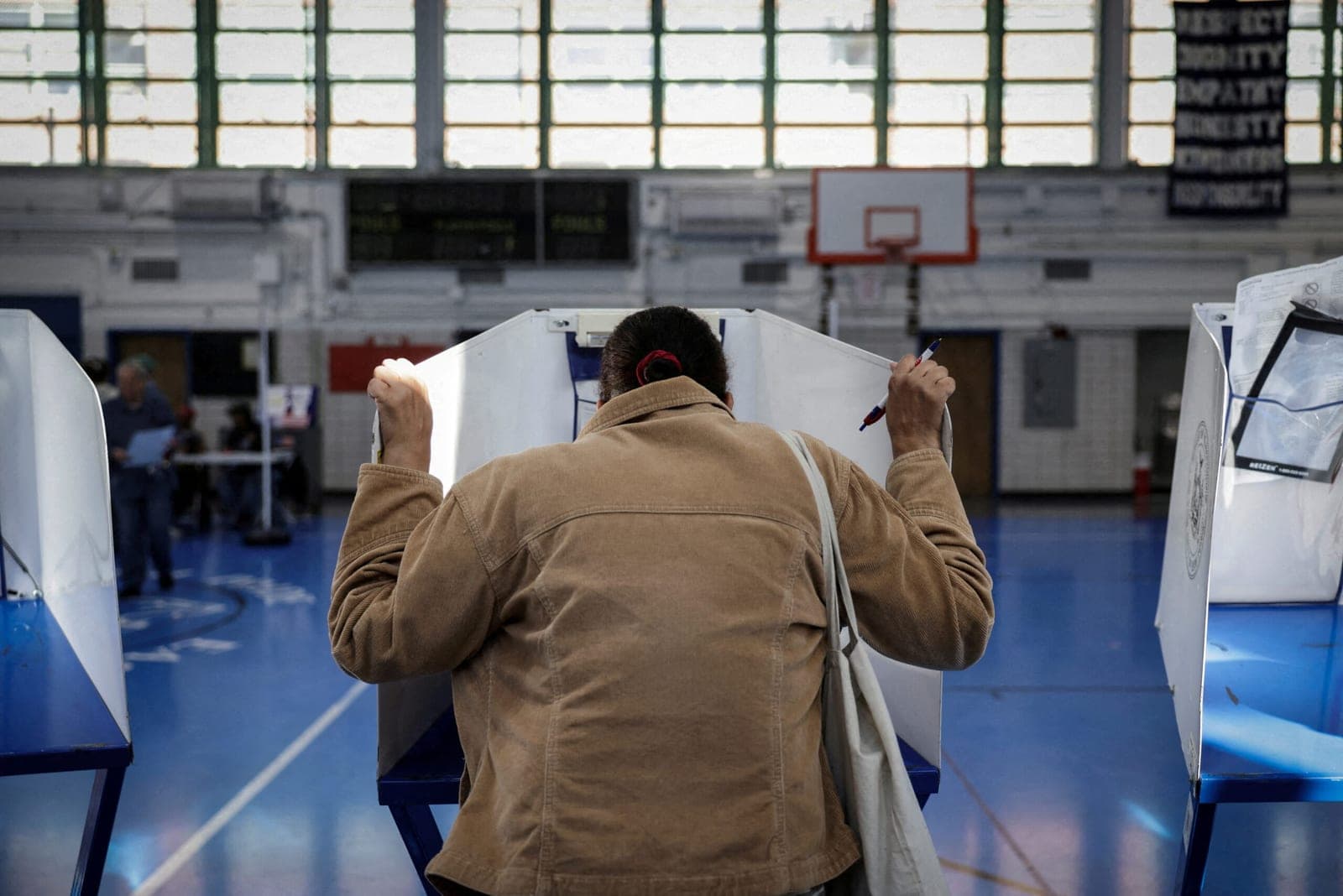
Republicans rally voters ahead of redistricting vote in Virginia
One day before Virginia voters decide a redistricting amendment, Republican leaders gathered in Richmond to urge a “no” vote in a final push ahead of the decision on a constitutional amendment with potential to shift U.S. House of Representatives representation from 6-5 Democrats to 10-5. At Shorty’s Diner on West Broad Street, former Gov. Glenn Youngkin, former Attorney General Jason Miyares, U.S. Rep. Rob Wittman and U.S. Rep. John McGuire urged voters to reject the amendment. If approved, the Legislature could redraw congressional districts for this year’s election and the regular every 10 years process would resume after the 2030 census. “We’re doing the work to make sure everybody understands the right vote is a no vote,” Youngkin said. Youngkin described the proposal as “unconstitutional, illegal and immoral,” and said voters had been misled about its purpose. “They were made promises, and they have not been kept,” he said. “Virginians don’t like to be lied to.” He also pointed to spending behind the effort, saying supporters of the amendment have spent more than $70 million backing the proposal. Campaign finance reports show a wide gap in spending between groups on both sides. Virginians for Fair Elections, which supports the amendment, reported raising more than $64 million during the filing period, while Virginians for Fair Maps, which opposes the proposal, reported raising more than $19.8 million, with additional opposition groups reporting smaller totals.
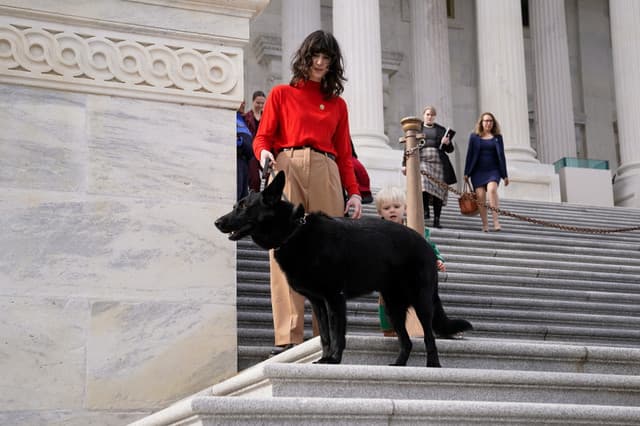
House Dem wants more Washington state sea lions euthanized
Most Americans who visit SeaWorld, a zoo, or an aquarium may come away with the impression that sea lions — which often clap or balance beach balls on their heads for treats — are lovable, fur-covered puppies of the ocean. Yet, Rep. Marie Gluesenkamp Perez (D-WA) says the reality of sea lions in the wild is far less cuddly. Gluesenkamp Perez, who represents portions of Washington’s Pacific coast, sent a letter to Commerce Secretary Howard Lutnick on Friday warning that sea lions are wreaking havoc on her district’s fishing industry. Sea lions “have eaten four times as many salmon as our fishermen and Tribes have harvested in the Columbia River in a year,” she wrote. “During the 2025 spring season, nearly one-fourth of fish at Bonneville Dam show wounds from sea lion bites.” Gluesenkamp Perez argued that current federal law does not allow for the removal and euthanization of sea lions at a fast enough pace. She noted the 2018 Marine Mammal Protection Act allowed the killing of at least “540 California sea lions and 176 Steller sea lions” from the Columbia River over a five-year period. Yet, according to Gluesenkamp Perez, individuals removed only “111 of both species, nowhere near the permissible amount.” Gluesenkamp Perez wrote it can cost “nearly $38,000” to remove and euthanize a sea lion under the “current regulatory process.”
House Dem wants more Washington state sea lions euthanized
Most Americans who visit SeaWorld, a zoo, or an aquarium may come away with the impression that sea lions — which often clap or balance beach balls on their heads for treats — are lovable, fur-covered puppies of the ocean. Yet, Rep. Marie Gluesenkamp Perez (D-WA) says the reality of sea lions in the wild is far less cuddly. Gluesenkamp Perez, who represents portions of Washington’s Pacific coast, sent a letter to Commerce Secretary Howard Lutnick on Friday warning that sea lions are wreaking havoc on her district’s fishing industry. Sea lions “have eaten four times as many salmon as our fishermen and Tribes have harvested in the Columbia River in a year,” she wrote. “During the 2025 spring season, nearly one-fourth of fish at Bonneville Dam show wounds from sea lion bites.” Gluesenkamp Perez argued that current federal law does not allow for the removal and euthanization of sea lions at a fast enough pace. She noted the 2018 Marine Mammal Protection Act allowed the killing of at least “540 California sea lions and 176 Steller sea lions” from the Columbia River over a five-year period. Yet, according to Gluesenkamp Perez, individuals removed only “111 of both species, nowhere near the permissible amount.” Gluesenkamp Perez wrote it can cost “nearly $38,000” to remove and euthanize a sea lion under the “current regulatory process.”

Jeffries says he’s ‘deeply skeptical’ of FISA extension without new privacy protections
House Minority Leader Hakeem Jeffries (D-N.Y.) suggested on Thursday that he’s ready to oppose an extension of the government’s warrantless surveillance powers unless it contains new privacy guardrails. Jeffries stopped short of saying he’ll oppose a clean extension of Section 702 of the Foreign Intelligence Surveillance Act (FISA), which GOP leaders in Congress and the White House are scrambling to pass before the spying powers expire on April 20. But he also hinted strongly that he won’t support the bill without new protections for Americans that are being demanded by privacy advocates on and off of Capitol Hill. “I am deeply skeptical of a straight-forward extension, for a wide variety of reasons,” Jeffries told reporters in the Capitol on Thursday afternoon. He added that “a significant majority” of House Democrats share that skepticism. The comments came amid an impasse over how to prevent the FISA powers from expiring next Monday. President Trump is demanding a clean, 18-month extension, but Speaker Mike Johnson (R-La.) and his leadership team ran into a wall of opposition to that plan from conservatives demanding amendments, some of them entirely unrelated to the issue of surveillance. To break the stalemate, Republicans on Thursday were eyeing a plan to shorten the length of the extension, from 18 months to one year, while including some of the reforms needed to bring more Republicans on board. Jeffries acknowledged the divisions on the issue within his own party, which were on full display a day earlier during a closed-door meeting of House Democrats in the Capitol basement. During the gathering, Rep. Jim Himes (Conn.), the senior Democrat on the Intelligence Committee, made the case that allowing the spying powers to expire would pose huge risks to national security. That argument was countered by Rep. Jamie Raskin (D-Md.), the ranking member of the Judiciary Committee, who is leading the charge for tougher guardrails to protect the communications of U.S. citizens from being swept up in the process.

China Makes Major Move To Challenge US For Key Tech Dominance
Huawei, China’s answer to Nvidia, is rapidly expanding its AI technology into other countries and signaling a rapid acceleration in the global AI race. It’s a move AI experts predicted would not occur. Singapore, Thailand, Indonesia, Brazil, Mexico, Saudi Arabia, the UAE, South Africa, and Turkey will now be able to build on Huawei’s Model-as-a-Service (MaaS) platform, which includes AI models like DeepSeek. Much like individual consumers who become dependent on Apple’s ecosystem, companies that build on Huawei’s models and cloud infrastructure risk becoming deeply tied to that platform. At scale, this creates a ripple effect — as companies that adopt Chinese technology may find it difficult to switch to American providers later. The switching costs are anything but trivial. Migrating away from Huawei would require rewriting code, transferring massive datasets, and re-optimizing systems — making it difficult for countries to later pivot to U.S. providers. But it’s not just software expansion. Rolling out its cloud compute means rolling out the underlying infrastructure — hardware and chips. Former White House AI Czar David Sacks says that’s what he wants for the United States. “You just want everybody to be building on top of your technology stack.” He says that winning the AI race looks like 80% of the world using America’s tech stack — and losing looks like 80% of the world using China’s. Before Huawei’s expansion announcement, AI experts downplayed Huawei’s technology. In January of 2025, Anthropic CEO Dario Amodei and former Trump deputy national security adviser Matt Pottinger toldthe Wall Street Journal that Huawei was “in no position to export chips at a meaningful scale.” Lennart Heim, former Lead on AI & Compute at RAND’s Technology and Security Policy Center, said, “I still don’t see Chinese AI chips being used much globally — or even in China. Not saying it won’t become an issue, but current evidence shows limited to no adoption both domestically and internationally.” Another advisor for RAND, a nonprofit think tank, Jimmy Goodrich, said China didn’t even have enough chips to meet its own demand. Previously, Sacks and President Trump condemned Washington’s bureaucracy around the American tech stack, which he said resulted in businesses applying for licenses every time they sent a regulated chip. “The last administration was obsessed with imposing restrictions on AI, including extreme restrictions on its exports,” said President Trump. “As you know, they made it very difficult to export. This alienated American partners and drove even our friends into the arms of China and other countries.” In July of 2025, President Trump signed an executive order promoting the export of the American AI tech stack, including hardware, models, software, and applications, to “America’s friends.” Some people do not want China or the United States to advance in AI adoption. On Sunday, Sen. Bernie Sanders (D-VT) hosted a rally protesting AI’s acceleration. In March, he proposed legislation along with Rep. Alexandria Ocasio-Cortez (D-NY) that called for a moratorium on AI data centers.
China Makes Major Move To Challenge US For Key Tech Dominance
Huawei, China’s answer to Nvidia, is rapidly expanding its AI technology into other countries and signaling a rapid acceleration in the global AI race. It’s a move AI experts predicted would not occur. Singapore, Thailand, Indonesia, Brazil, Mexico, Saudi Arabia, the UAE, South Africa, and Turkey will now be able to build on Huawei’s Model-as-a-Service (MaaS) platform, which includes AI models like DeepSeek. Much like individual consumers who become dependent on Apple’s ecosystem, companies that build on Huawei’s models and cloud infrastructure risk becoming deeply tied to that platform. At scale, this creates a ripple effect — as companies that adopt Chinese technology may find it difficult to switch to American providers later. The switching costs are anything but trivial. Migrating away from Huawei would require rewriting code, transferring massive datasets, and re-optimizing systems — making it difficult for countries to later pivot to U.S. providers. But it’s not just software expansion. Rolling out its cloud compute means rolling out the underlying infrastructure — hardware and chips. Former White House AI Czar David Sacks says that’s what he wants for the United States. “You just want everybody to be building on top of your technology stack.” He says that winning the AI race looks like 80% of the world using America’s tech stack — and losing looks like 80% of the world using China’s. Before Huawei’s expansion announcement, AI experts downplayed Huawei’s technology. In January of 2025, Anthropic CEO Dario Amodei and former Trump deputy national security adviser Matt Pottinger toldthe Wall Street Journal that Huawei was “in no position to export chips at a meaningful scale.” Lennart Heim, former Lead on AI & Compute at RAND’s Technology and Security Policy Center, said, “I still don’t see Chinese AI chips being used much globally — or even in China. Not saying it won’t become an issue, but current evidence shows limited to no adoption both domestically and internationally.” Another advisor for RAND, a nonprofit think tank, Jimmy Goodrich, said China didn’t even have enough chips to meet its own demand. Previously, Sacks and President Trump condemned Washington’s bureaucracy around the American tech stack, which he said resulted in businesses applying for licenses every time they sent a regulated chip. “The last administration was obsessed with imposing restrictions on AI, including extreme restrictions on its exports,” said President Trump. “As you know, they made it very difficult to export. This alienated American partners and drove even our friends into the arms of China and other countries.” In July of 2025, President Trump signed an executive order promoting the export of the American AI tech stack, including hardware, models, software, and applications, to “America’s friends.” Some people do not want China or the United States to advance in AI adoption. On Sunday, Sen. Bernie Sanders (D-VT) hosted a rally protesting AI’s acceleration. In March, he proposed legislation along with Rep. Alexandria Ocasio-Cortez (D-NY) that called for a moratorium on AI data centers.
China Makes Major Move To Challenge US For Key Tech Dominance
Huawei, China’s answer to Nvidia, is rapidly expanding its AI technology into other countries and signaling a rapid acceleration in the global AI race. It’s a move AI experts predicted would not occur. Singapore, Thailand, Indonesia, Brazil, Mexico, Saudi Arabia, the UAE, South Africa, and Turkey will now be able to build on Huawei’s Model-as-a-Service (MaaS) platform, which includes AI models like DeepSeek. Much like individual consumers who become dependent on Apple’s ecosystem, companies that build on Huawei’s models and cloud infrastructure risk becoming deeply tied to that platform. At scale, this creates a ripple effect — as companies that adopt Chinese technology may find it difficult to switch to American providers later. The switching costs are anything but trivial. Migrating away from Huawei would require rewriting code, transferring massive datasets, and re-optimizing systems — making it difficult for countries to later pivot to U.S. providers. But it’s not just software expansion. Rolling out its cloud compute means rolling out the underlying infrastructure — hardware and chips. Former White House AI Czar David Sacks says that’s what he wants for the United States. “You just want everybody to be building on top of your technology stack.” He says that winning the AI race looks like 80% of the world using America’s tech stack — and losing looks like 80% of the world using China’s. Before Huawei’s expansion announcement, AI experts downplayed Huawei’s technology. In January of 2025, Anthropic CEO Dario Amodei and former Trump deputy national security adviser Matt Pottinger toldthe Wall Street Journal that Huawei was “in no position to export chips at a meaningful scale.” Lennart Heim, former Lead on AI & Compute at RAND’s Technology and Security Policy Center, said, “I still don’t see Chinese AI chips being used much globally — or even in China. Not saying it won’t become an issue, but current evidence shows limited to no adoption both domestically and internationally.” Another advisor for RAND, a nonprofit think tank, Jimmy Goodrich, said China didn’t even have enough chips to meet its own demand. Previously, Sacks and President Trump condemned Washington’s bureaucracy around the American tech stack, which he said resulted in businesses applying for licenses every time they sent a regulated chip. “The last administration was obsessed with imposing restrictions on AI, including extreme restrictions on its exports,” said President Trump. “As you know, they made it very difficult to export. This alienated American partners and drove even our friends into the arms of China and other countries.” In July of 2025, President Trump signed an executive order promoting the export of the American AI tech stack, including hardware, models, software, and applications, to “America’s friends.” Some people do not want China or the United States to advance in AI adoption. On Sunday, Sen. Bernie Sanders (D-VT) hosted a rally protesting AI’s acceleration. In March, he proposed legislation along with Rep. Alexandria Ocasio-Cortez (D-NY) that called for a moratorium on AI data centers.
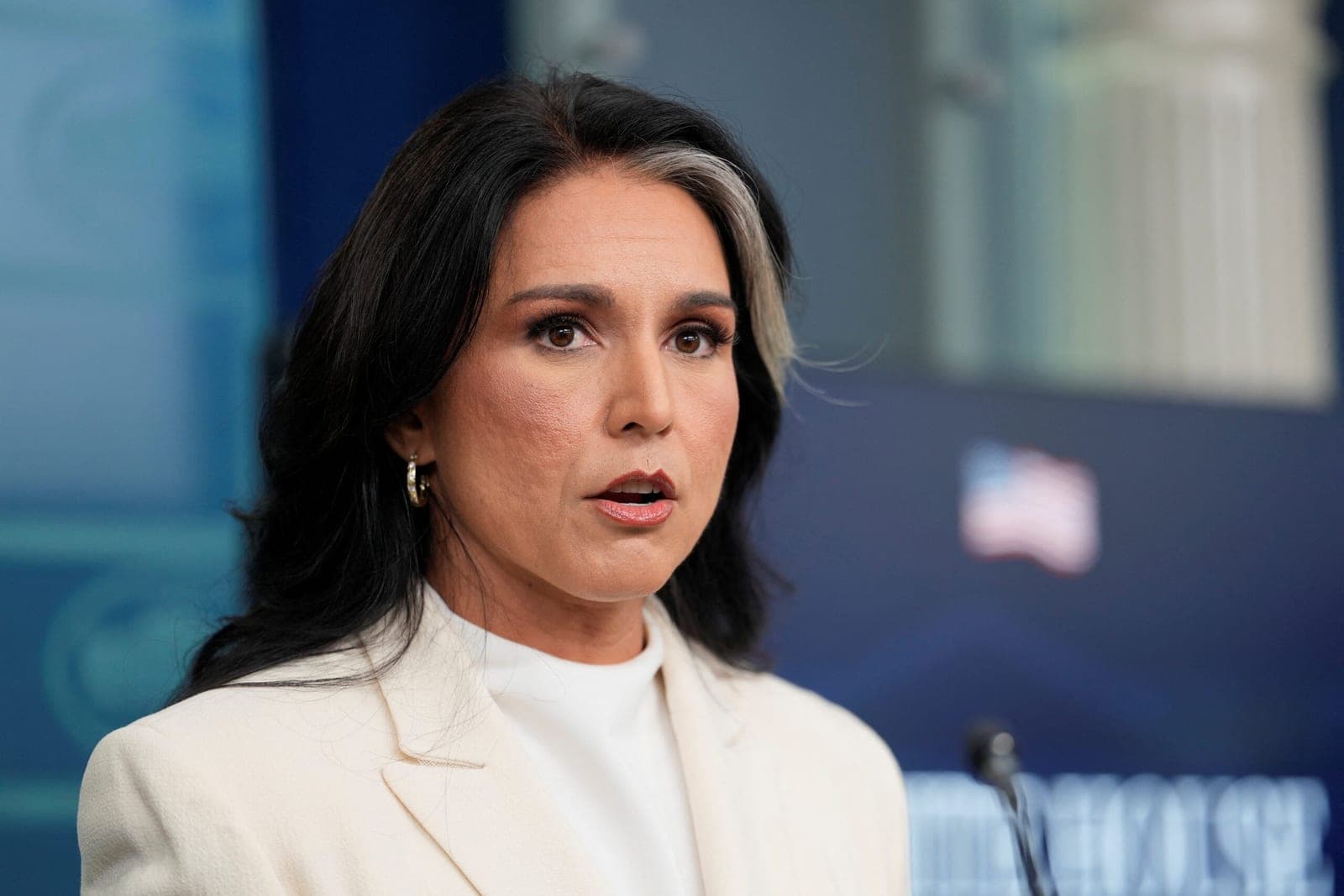
Gabbard reportedly breaks with Trump on renewing surveillance tool
Director of National Intelligence (DNI) Tulsi Gabbard reportedly disagreed with President Donald Trump during a February meeting over a clean extension of a provision within a surveillance court bill despite publicly supporting it last year. Gabbard met with the president in February over Section 702 of the Foreign Intelligence Surveillance Act (FISA) and reforms that could be proposed, Politico’s Morning Cyber newsletter reported citing two anonymous sources. The section allows for the monitoring of communications between foreigners and, in some cases, American citizens without a warrant. The meeting repeatedly ended with no meaningful compromise, with the president continuing to push for a clean extension of the provision, according to Politico. The White House and the Office of the Director of National Intelligence (ODNI) did not immediately respond to requests for comment from the Daily Caller News Foundation. Gabbard previously criticized the tool before becoming the DNI when serving as a Democratic congresswoman representing Hawaii, co-sponsoring legislation with Republican Kentucky Rep. Thomas Massie in 2020 that sought to end data collection. She had also called the FISA program “an overreach” of congressional powers. “Unfortunately Congress just passed a bill allowing continuation of intel/law enforcement agencies to infringe on your civil liberties,” Gabbard wrote in 2020. “Patriot Act & Foreign Intelligence Surveillance Act (FISA) needed real reforms to prevent these constitutional abuses. Congress failed to do this.” Upon being promoted to DNI, the former Democrat shifted her tone on Section 702 by calling the program “crucial” and that it “must be safeguarded to protect our national while ensuring the civil liberties of Americans,” Punchbowl News reported in 2025.
Gabbard reportedly breaks with Trump on renewing surveillance tool
Director of National Intelligence (DNI) Tulsi Gabbard reportedly disagreed with President Donald Trump during a February meeting over a clean extension of a provision within a surveillance court bill despite publicly supporting it last year. Gabbard met with the president in February over Section 702 of the Foreign Intelligence Surveillance Act (FISA) and reforms that could be proposed, Politico’s Morning Cyber newsletter reported citing two anonymous sources. The section allows for the monitoring of communications between foreigners and, in some cases, American citizens without a warrant. The meeting repeatedly ended with no meaningful compromise, with the president continuing to push for a clean extension of the provision, according to Politico. The White House and the Office of the Director of National Intelligence (ODNI) did not immediately respond to requests for comment from the Daily Caller News Foundation. Gabbard previously criticized the tool before becoming the DNI when serving as a Democratic congresswoman representing Hawaii, co-sponsoring legislation with Republican Kentucky Rep. Thomas Massie in 2020 that sought to end data collection. She had also called the FISA program “an overreach” of congressional powers. “Unfortunately Congress just passed a bill allowing continuation of intel/law enforcement agencies to infringe on your civil liberties,” Gabbard wrote in 2020. “Patriot Act & Foreign Intelligence Surveillance Act (FISA) needed real reforms to prevent these constitutional abuses. Congress failed to do this.” Upon being promoted to DNI, the former Democrat shifted her tone on Section 702 by calling the program “crucial” and that it “must be safeguarded to protect our national while ensuring the civil liberties of Americans,” Punchbowl News reported in 2025.
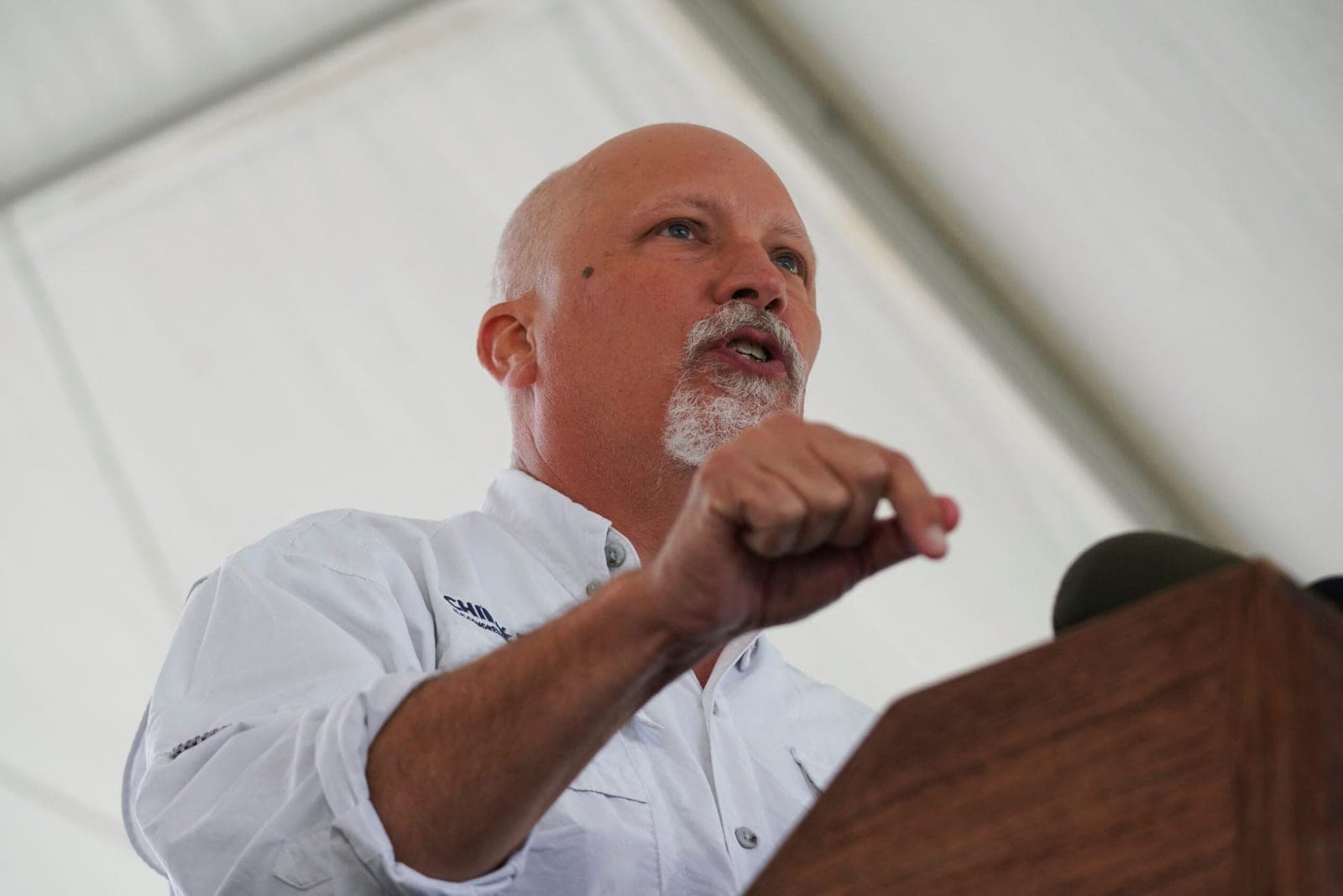
Freedom Caucus slams TPS extension for Haitians
Members of the House Freedom Caucus are urging colleagues to oppose extending Temporary Protected Status for Haitian migrants ahead of a final House vote Thursday, citing concerns about public safety. Several House Republicans, along with now-independent Rep. Kevin Kiley of California, joined Democrats in voting to bring a bill to the floor extending TPS for Haitians. Rep. Ayanna Pressley, D-Mass., secured 218 signatures to force consideration of the bill. The Department of Homeland Security in November 2025 announced that it would terminate Haiti’s TPS designation. The move revoked legal protections for more than 350,000 Haitians to ?live and work in the U.S., Reuters reported. “It is outrageous that six Republicans joined all Democrats to advance a vote extending Temporary Protected Status for illegal alien Haitians by another three years,” Rep. Chip Roy, R-Texas, told The Daily Signal. Republican Reps. Maria Elvira Salazar and Carlos Gimenez of Florida, Reps. Mike Lawler and Nicole Malliotakis of New York, Rep. Don Bacon of Nebraska, and Rep. Brian Fitzpatrick of Pennsylvania all joined Democrats on the vote. Heritage Action, a 501(c)(3) nonprofit organization who champions conservative members like Roy, told The Daily Signal, “It’s unacceptable to see some Republicans breaking ranks to advance this Democrat-led bill, betraying the mandate voters gave them and delivering de facto amnesty.” Roy pointed to the case of Rolbert Joachin, a Haitian national who entered the United States under the Biden administration. He applied for and was granted TPS after receiving a final order of removal in 2022, but was recently charged in the killing of a Florida gas station worker. Joachin pleaded not guilty to charges of homicide and property damage, the Fort Myers News-Press and Naples Daily News reported Wednesday.
Freedom Caucus slams TPS extension for Haitians
Members of the House Freedom Caucus are urging colleagues to oppose extending Temporary Protected Status for Haitian migrants ahead of a final House vote Thursday, citing concerns about public safety. Several House Republicans, along with now-independent Rep. Kevin Kiley of California, joined Democrats in voting to bring a bill to the floor extending TPS for Haitians. Rep. Ayanna Pressley, D-Mass., secured 218 signatures to force consideration of the bill. The Department of Homeland Security in November 2025 announced that it would terminate Haiti’s TPS designation. The move revoked legal protections for more than 350,000 Haitians to ?live and work in the U.S., Reuters reported. “It is outrageous that six Republicans joined all Democrats to advance a vote extending Temporary Protected Status for illegal alien Haitians by another three years,” Rep. Chip Roy, R-Texas, told The Daily Signal. Republican Reps. Maria Elvira Salazar and Carlos Gimenez of Florida, Reps. Mike Lawler and Nicole Malliotakis of New York, Rep. Don Bacon of Nebraska, and Rep. Brian Fitzpatrick of Pennsylvania all joined Democrats on the vote. Heritage Action, a 501(c)(3) nonprofit organization who champions conservative members like Roy, told The Daily Signal, “It’s unacceptable to see some Republicans breaking ranks to advance this Democrat-led bill, betraying the mandate voters gave them and delivering de facto amnesty.” Roy pointed to the case of Rolbert Joachin, a Haitian national who entered the United States under the Biden administration. He applied for and was granted TPS after receiving a final order of removal in 2022, but was recently charged in the killing of a Florida gas station worker. Joachin pleaded not guilty to charges of homicide and property damage, the Fort Myers News-Press and Naples Daily News reported Wednesday.

House Republicans narrowly reject effort to end Trump’s war with Iran
House Republicans on Thursday defeated legislation designed to end the Iran War, marking a win for President Trump and another setback for the constitutional purists fighting to reaffirm Congress’s unique powers to use military force overseas. The vote was 213 to 214, with one Republican — Rep. Thomas Massie (Ky.) — bucking GOP leaders to support the resolution. One Democrat, Rep. Jared Golden (D-Maine), joined most Republicans in opposing it. Republican Rep. Warren Davidson (Ohio) voted present. The practical effects of the vote are negligible. Even if the resolution had passed, the Senate has failed on multiple occasions to adopt a similar measure. The most recent of those votes came on Wednesday, when the upper chamber easily beat back a Democratic war powers resolution by a tally of 47 to 52, largely on partisan lines. Still, the failure of the House bill also sends the political message that both chambers of Congress — by failing to rein in Trump’s unilateral powers to conduct war with Tehran — have endorsed his authority to do so. Heading into the vote, Democrats thought they might have convinced enough Republicans to join their side. They staged the vote in part to pressure those “on the fence” GOP lawmakers to approve the measure. Their failure to peel off those Republicans reflects the outsized influence that Trump maintains over the party.

Trump-backed Julia Letlow touts fundraising haul against Sen. Bill Cassidy
Republican Louisiana Rep. Julia Letlow, vying to unseat a senator who voted to convict President Donald Trump, is expected to report more than four million dollars in fundraising for the first quarter of 2026. The congresswoman’s reported fundraising haul for Q1 2026 totals $4,378,500, including $1.9 across multiple campaign entities and an additional $2.5 million transferred from her congressional account, according to a release Letlow’s campaign first shared with the DCNF. Letlow entered the race against two-term incumbent Republican Louisiana Sen. Bill Cassidy on Jan. 20 — three days after Trump gave her a surprise endorsement on Truth Social. This figure, however, does not include the combined $3.8 million three pro-Letlow entities reported, a spokesperson for the groups told the DCNF. Therefore, the total reported amount of pro-Letlow spending is more than $8 million. “I am humbled by the support pouring in from every corner of our state. Louisianans are ready for a senator who stands with President Trump and fights for our families, our values, and the future we owe our children,” Letlow told the DCNF in a statement. “I am grateful for every supporter who has stepped up, and I will keep working to earn every vote between now and May 16.” Cassidy, whose reelection is backed by Senate Majority Leader John Thune, touted a combined $26 million war chest between his campaign and allied groups in a January press release.
Trump-backed Julia Letlow touts fundraising haul against Sen. Bill Cassidy
Republican Louisiana Rep. Julia Letlow, vying to unseat a senator who voted to convict President Donald Trump, is expected to report more than four million dollars in fundraising for the first quarter of 2026. The congresswoman’s reported fundraising haul for Q1 2026 totals $4,378,500, including $1.9 across multiple campaign entities and an additional $2.5 million transferred from her congressional account, according to a release Letlow’s campaign first shared with the DCNF. Letlow entered the race against two-term incumbent Republican Louisiana Sen. Bill Cassidy on Jan. 20 — three days after Trump gave her a surprise endorsement on Truth Social. This figure, however, does not include the combined $3.8 million three pro-Letlow entities reported, a spokesperson for the groups told the DCNF. Therefore, the total reported amount of pro-Letlow spending is more than $8 million. “I am humbled by the support pouring in from every corner of our state. Louisianans are ready for a senator who stands with President Trump and fights for our families, our values, and the future we owe our children,” Letlow told the DCNF in a statement. “I am grateful for every supporter who has stepped up, and I will keep working to earn every vote between now and May 16.” Cassidy, whose reelection is backed by Senate Majority Leader John Thune, touted a combined $26 million war chest between his campaign and allied groups in a January press release.