122 stories credited to Washington Examiner (119 on washingtonexaminer.com, 3 reproduced by other sites)
Latest story Sep 23, 2026 · on ChamberLight since Apr 2026
A story can appear as several articles (copies of the same piece), so counts of stories and of articles differ.
Scores for Washington Examiner
Political lean
111 stories · 95% range 64–68 · updated Sep 25, 2026
Originality
119 stories · updated Sep 24, 2026
Writing quality 76 of 100: the average rating of 110 stories, each rated on its own (separate from credibility). How it is measured
Scores last checked Sep 25, 2026.
Stories ChamberLight collected, by month
Stories credited to Washington Examiner, by publication date. ChamberLight collects articles that mention the officials it tracks, so this shows its own coverage of this source, not how much the source publishes.
- Stories from Washington Examiner
- Shaded: ChamberLight collected no stories, or almost none, from any outlet (a gap in its collection, not in the outlet’s publishing)
Show as a table
| Month | Stories | All outlets |
|---|---|---|
| March 2026 | 6 | 745 |
| April 2026 | 107 | 4,538 |
| May 2026 | 0 | none collected |
| June 2026 | 0 | none collected |
| July 2026 | 0 | none collected |
| August 2026 | 0 | 1 (collection gap) |
| September 2026 | 9 | 1,320 |
Top topics
Share of this source’s stories tagged with each topic. A story can carry several topics, so the shares do not add up to 100%.
- Ethics/Corruption84
69% of 122 stories · 58% across all outlets
- Budget/Spending59
48% of 122 stories · 31% across all outlets
- Voting Rights31
25% of 122 stories · 19% across all outlets
- Criminal Justice27
22% of 122 stories · 19% across all outlets
- Economy27
22% of 122 stories · 26% across all outlets
- Foreign Policy27
22% of 122 stories · 29% across all outlets
- Defense/Military26
21% of 122 stories · 25% across all outlets
- Immigration18
15% of 122 stories · 13% across all outlets
The thin mark on each bar is the topic’s share across all outlets.
Who they cover
Party of the officials these stories are mainly about, across all 118 officials named. A story counts once for each official it is mainly about, so the split is over 254 story–official pairs, from 122 stories.
- Republican61% · 154 pairs
- Democrat30% · 76 pairs
- Party not recorded9% · 24 pairs
Most covered
Stories mainly about each official, and their share of the source’s 122 stories.
- 1Donald TrumpR29 stories · 24%
- 2John ThuneR17 stories · 14%
- 3Mike JohnsonR13 stories · 11%
- 4Eric SwalwellD11 stories · 9%
- 5Charles SchumerD6 stories · 5%
- 6Cory MillsR6 stories · 5%
- 7Sheila Cherfilus-McCormickD5 stories · 4%
- 8Hakeem JeffriesD4 stories · 3%
- 9Susan CollinsR4 stories · 3%
- 10Tony GonzalesR4 stories · 3%
+ 108 other officials (155 story–official pairs)
How readers voted on this source’s articles
1 vote from 1 reader on 1 story. Only real accounts older than a day count; test accounts are excluded. Updated nightly.
- Good Look
- 1 (100%)
- Informational
- 0 (0%)
- Bad Look
- 0 (0%)
Article tone
ChamberLight’s article analysis assigns each story a tone toward the official it covers. It describes the coverage of that official, not Washington Examiner’s stance, and reader votes do not change it. 122 stories.
- Good Look
- 24 (20%)
- Mixed
- 78 (64%)
- Informational
- 1 (<1%)
- Bad Look
- 19 (16%)
Related sources
Lean 95% range 62.1–71.2 · updated Sep 25, 2026
Similar lean · 1 shared topic
Lean 95% range 65–74 · updated Sep 25, 2026
Similar lean · 1 shared topic
Lean 95% range 66–74 · updated Sep 25, 2026
Similar lean · 3 shared topics
Lean 95% range 65–75 · updated Sep 25, 2026
Similar lean · 1 shared topic
Lean 95% range 64–76 · updated Sep 25, 2026
Similar lean · 2 shared topics
Lean 95% range 70–73 · updated Sep 25, 2026
Similar lean · 3 shared topics
Challenges to these scores
No one has challenged a score on this page yet. Anyone can; editors publish every outcome here.
Articles served from washingtonexaminer.com
246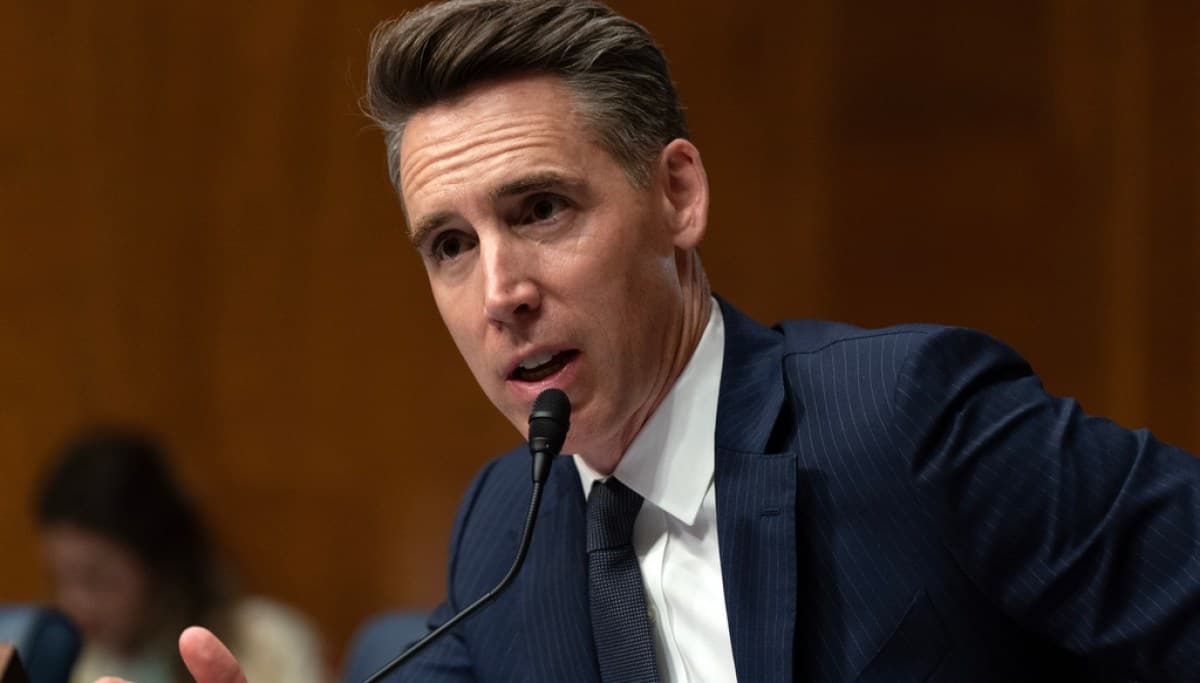
Senators unload on Flock surveillance cameras after tech CEOs skip hearing
Senators from both parties unloaded Wednesday on AI-powered automatic license plate readers capable of tracking people’s every movement, criticizing the likely infringement on privacy rights as the “surveillance network” faces backlash from communities across the country. Sen. Josh Hawley (R-MO), chairman of the Senate Judiciary Subcommittee on Crime and Counterterrorism, had invited the CEOs of Flock […]
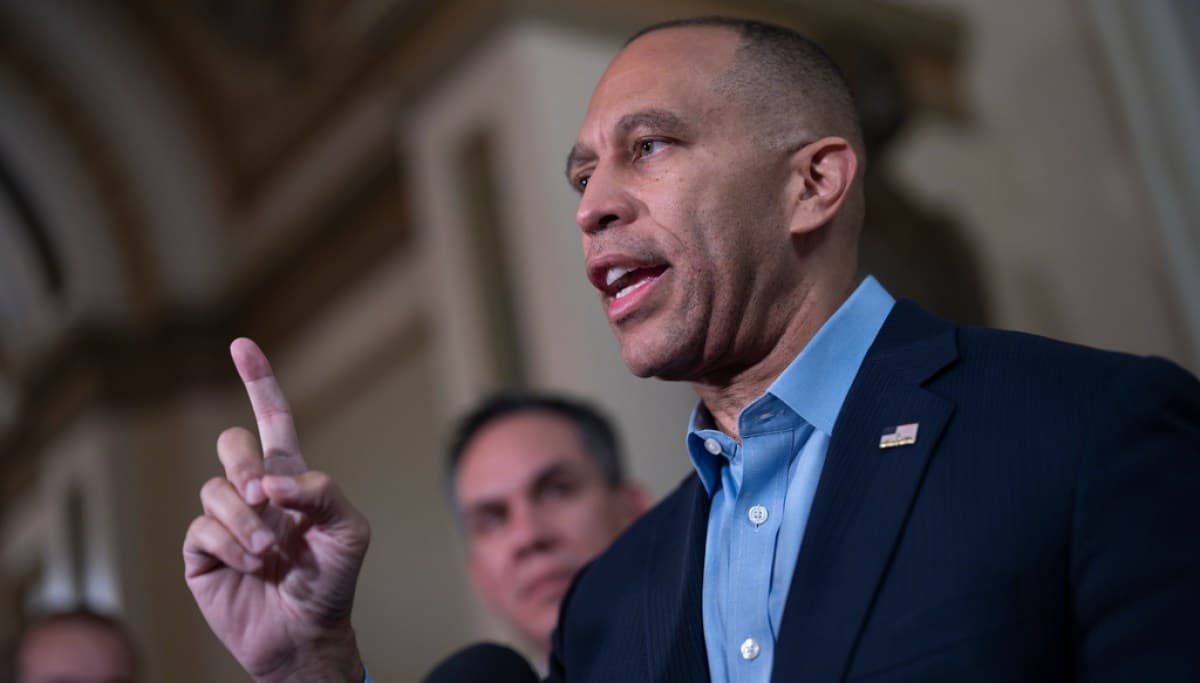
Jeffries opens door to West Bank violence sanctions bill if Democrats win House
House Minority Leader Hakeem Jeffries (D-NY) said Wednesday that Democrats should consider legislation aimed at curbing violence in the West Bank and sanctioning those responsible if they retake the House in November. The West Bank Violence Prevention Act, sponsored by Rep. Jerry Nadler (D-NY), would authorize sanctions against any foreign individual found to be endangering […]
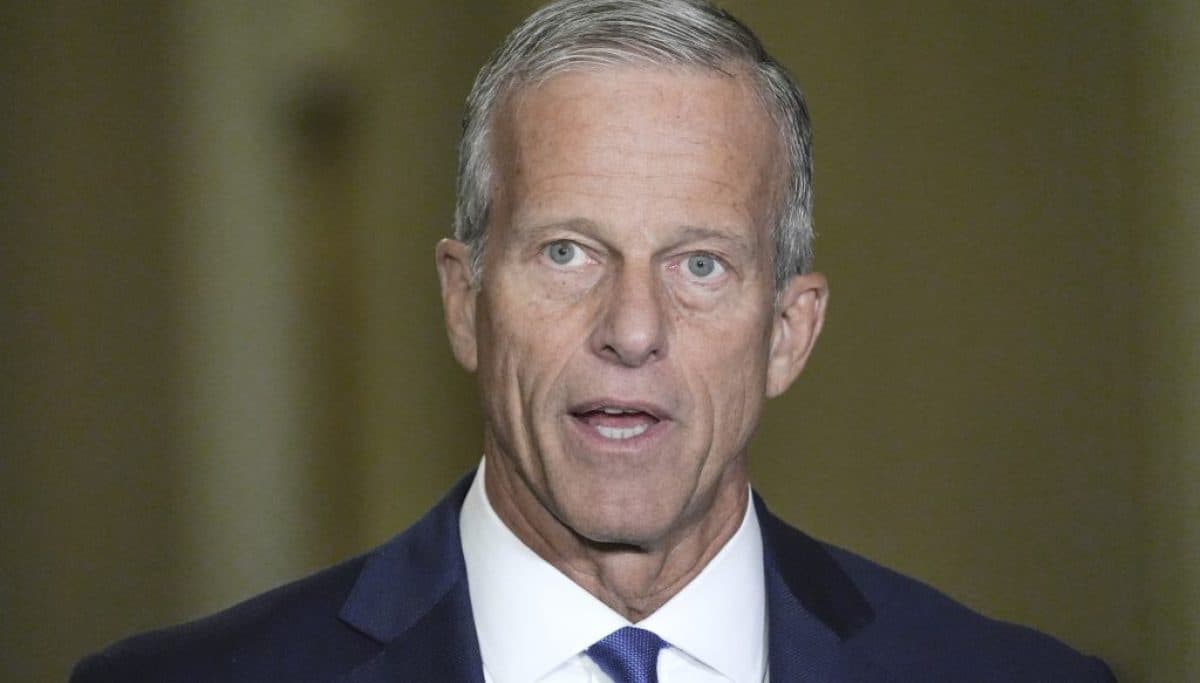
Thune swings through the South with post-Labor Day fundraising blitz
EXCLUSIVE — Senate Majority Leader John Thune (R-SD) raised more than $250,000 for Rep. Andy Barr (R-KY) and another six figures for Sen. Cindy Hyde-Smith (R-MS) in his first fundraising swing since Labor Day, the Washington Examiner has learned. Thune traveled to Lexington, Kentucky, for a Thursday evening fundraiser on behalf of Barr, the GOP […]
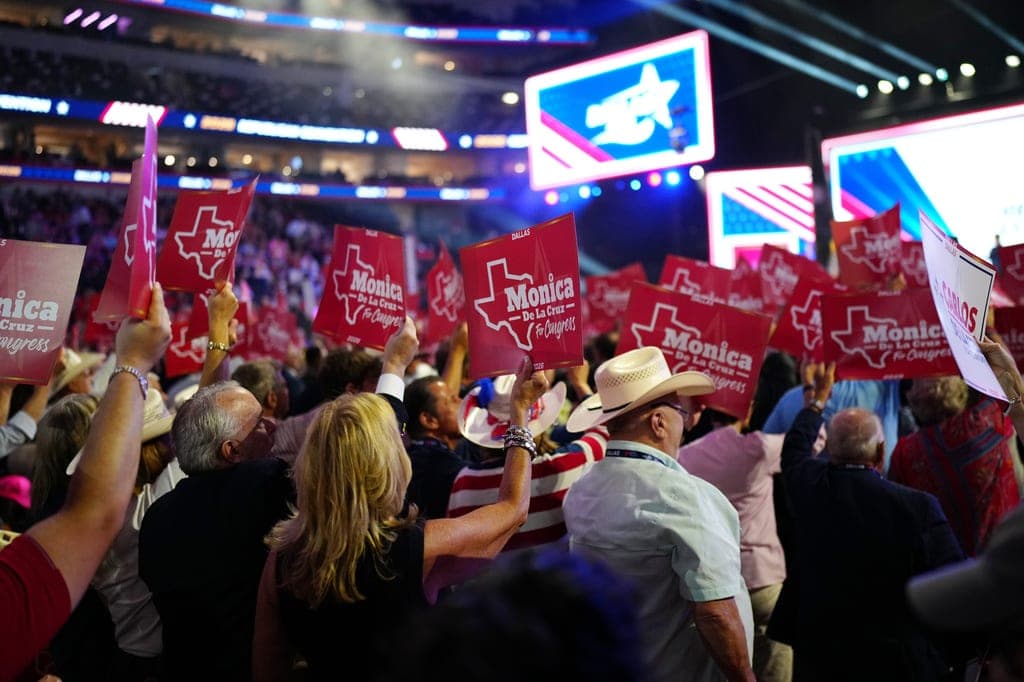
Trump faces 2026 warning as Hispanic Republicans split on border
President Donald Trump is getting fresh clues that his support from Hispanic voters may be slipping after two House Republicans broke with him on immigration enforcement. Reps. Maria Elvira Salazar (R-FL) and Monica De La Cruz (R-TX), two Hispanic members of the House GOP conference, released adver
Trump faces 2026 warning as Hispanic Republicans split on border
President Donald Trump is getting fresh clues that his support from Hispanic voters may be slipping after two House Republicans broke with him on immigration enforcement. Reps. Maria Elvira Salazar (R-FL) and Monica De La Cruz (R-TX), two Hispanic members of the House GOP conference, released adver
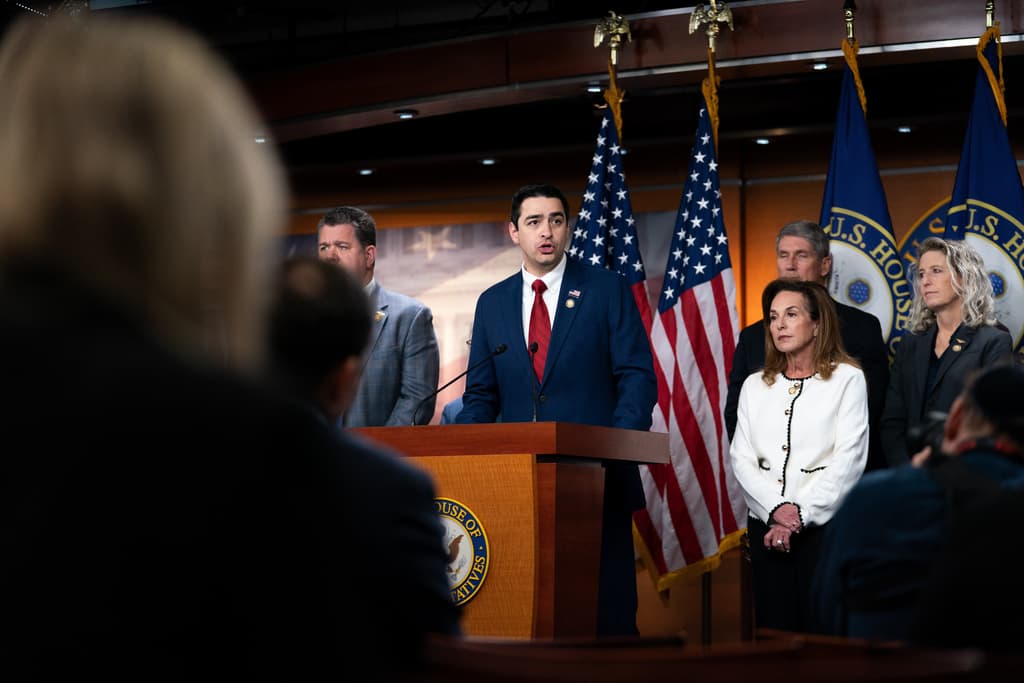
House passes bill to shield households from data center energy costs
The House of Representatives passed a bipartisan bill that would require data centers to cover the cost of grid and energy upgrades, an effort to shield households from rising energy prices and allay rising fears among voters about the industry. On Wednesday, the House voted 417-3 to pass the Ratep

Daily on Energy: Data center bill sponsor responds to leftwing calls for a ban
WHAT'S HAPPENING TODAY: Good afternoon and happy Wednesday, readers! If you're looking for an escape from the busy news cycle this fall, Season 35 of Dancing with the Stars kicked off last night. 💃🪩🕺 This season features millennial heartthrob Taylor Hanson, celebrity chef Giada De Laurentiis, Par
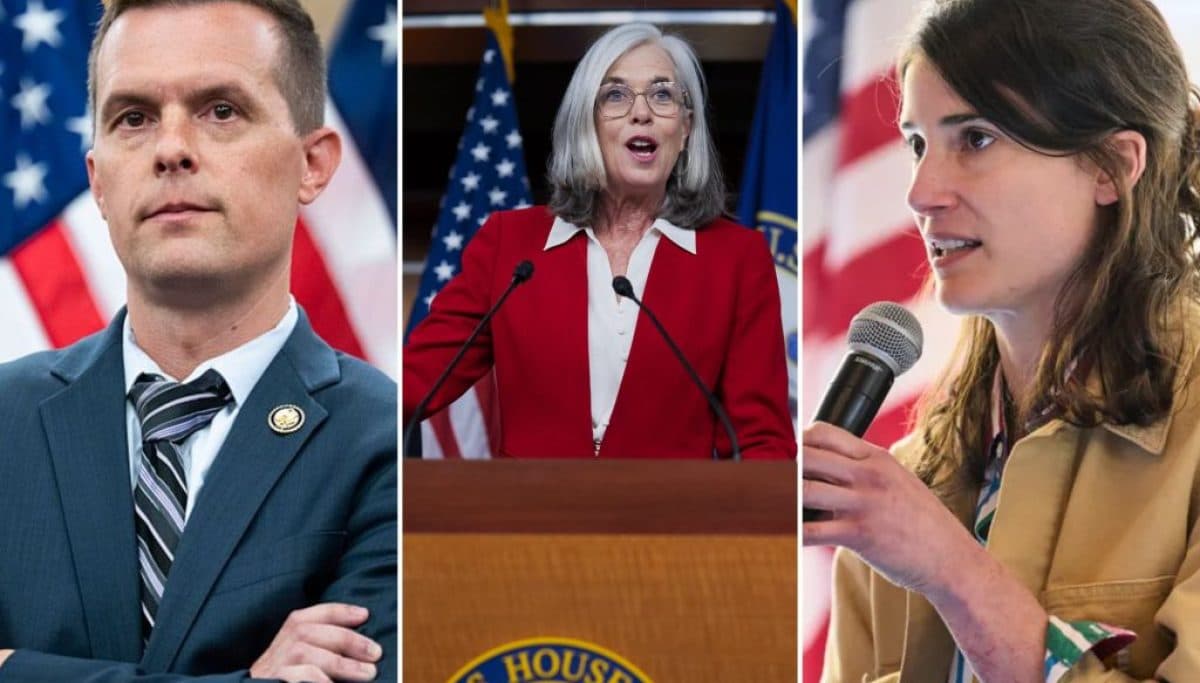
No. 2 House Democrat floats potential consequences for defectors
No. 2 House Democrat says 'team players' should sit on top committees after centrists rebel for second time House Minority Whip Katherine Clark (D-MA) said "team players" should get top committee spots after Rep. Marie Gluesenkamp Perez (D-WA) bucked Democratic leadership for the second time this m
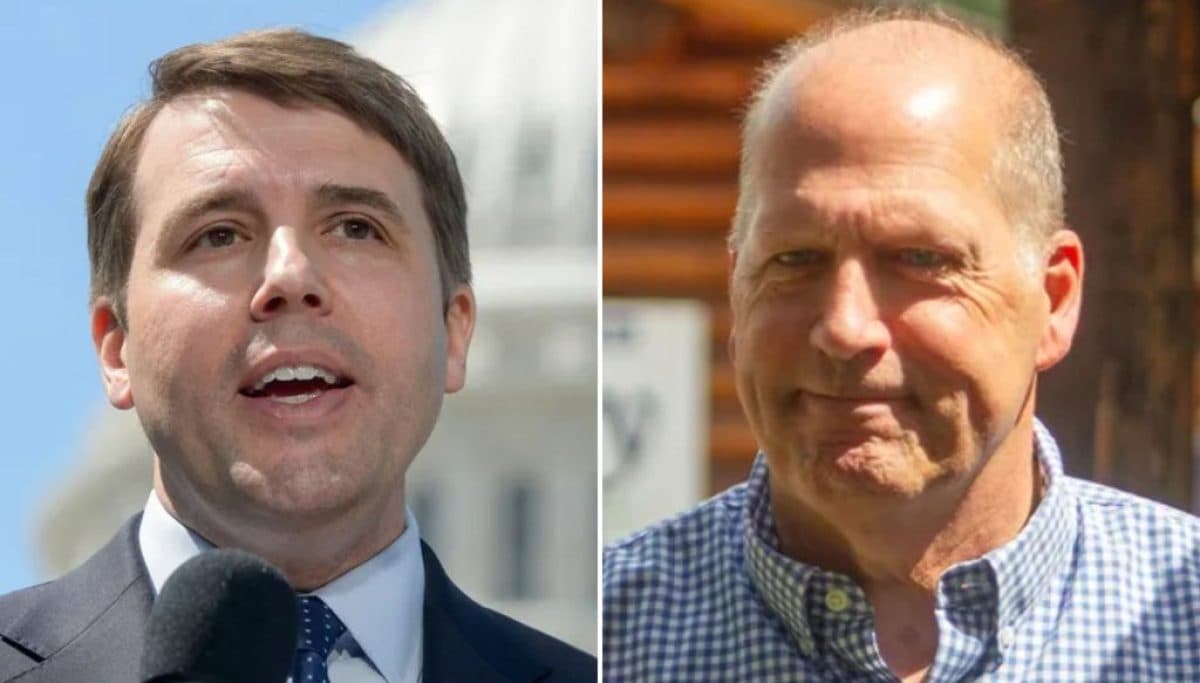
Cook Political Report moves NH Senate race to toss-up
Election forecaster Cook Political Report is moving New Hampshire's Senate race to a "toss-up" prediction, good news for Republicans. The rightward shift in the U.S. Senate race from a "leans Democrat" rating to a "toss-up" rating comes as Republican candidate and former Sen. John Sununu has gained
Cook Political Report moves NH Senate race to toss-up
Election forecaster Cook Political Report is moving New Hampshire's Senate race to a "toss-up" prediction, good news for Republicans. The rightward shift in the U.S. Senate race from a "leans Democrat" rating to a "toss-up" rating comes as Republican candidate and former Sen. John Sununu has gained
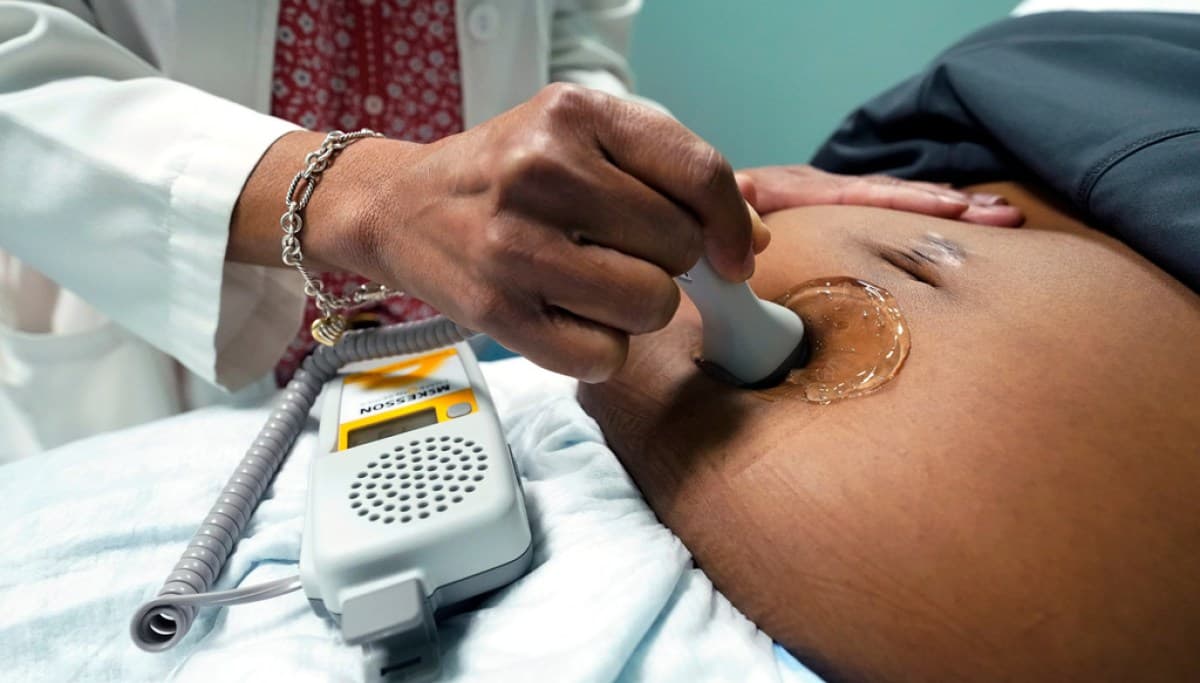
GAO finds millions of Obamacare enrollees have abortions covered
A new report from the Government Accountability Office found that federal premium tax credits have helped subsidize Affordable Care Act health plans that cover abortions for millions of enrollees this year. The GAO found that 1,719 of the 6,655 ACA plans available nationwide in 2026, or roughly 26%
Virginia House GOP hangs election survival hopes on courts after gerrymander
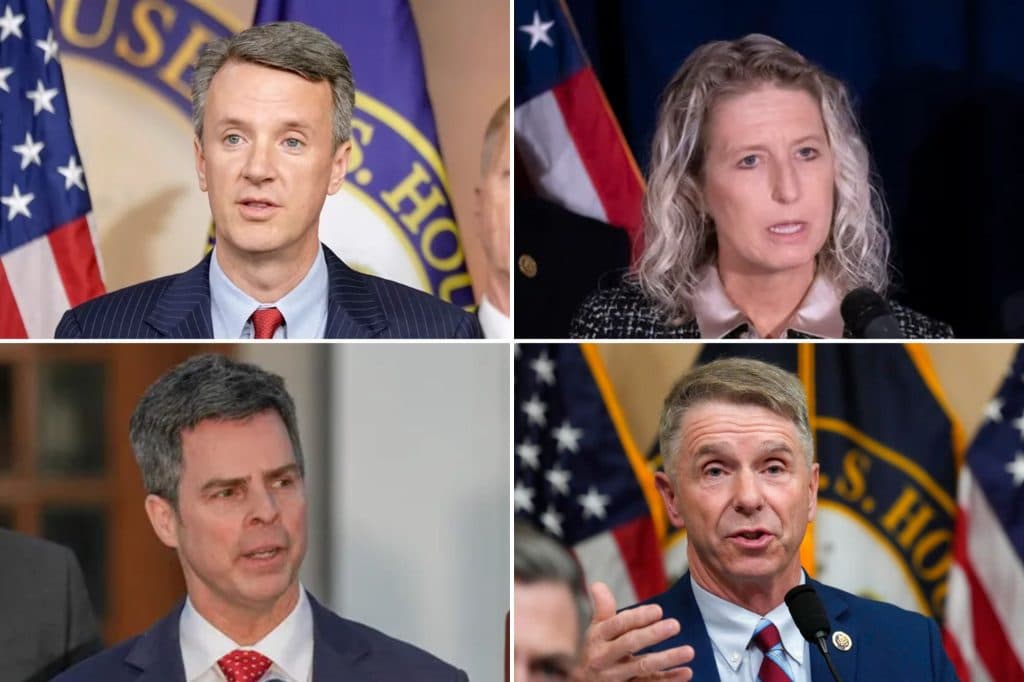
Virginia House Republicans are hanging their hopes for survival on the state Supreme Court blocking the new congressional map approved by voters on Tuesday night. Approved narrowly via referendum, the new map nixes four GOP House seats, creating a likely 10-1 Democratic lock. Reps. Rob Wittman (R-VA), John McGuire (R-VA), Jen Kiggans (R-VA), and Ben Cline’s (R-VA) seats have been chopped under the new maps. Only Rep. Morgan Griffith’s seat, in heavily Republican southwest Virginia, is still rated as safely Republican. Wittman and McGuire expressed hope that the referendum would be struck down by the courts before they had to decide their next move. “I have complete confidence that this amendment will be struck down by the courts because it is unconstitutional,” Wittman wrote in a press release. “Multiple legal challenges are already underway, including cases before the Virginia Supreme Court, and the final word on this issue is far from settled.” There are four legal challenges already in play, and the Virginia Supreme Court is expected to have the final say over the legality of the new maps. McGuire and Wittman filed a challenge to the gerrymandering measure earlier this year by targeting the wording of the ballot question. They argued that language describing the partisan map as an effort to “restore fairness” misled voters about the substance of the referendum. “I had people come up to me and say, ‘John I voted YES,’ but when I explain to them, they say: ‘Oh, well it said fair,'” McGuire told the Washington Examiner. Virginians approved new congressional districts in a special election on April 21, with 51.6% voting “yes” and 48.4% voting “no.” Trump won McGuire’s current seat by 5 percentage points over Harris in 2024. Under the new map, his district would be split between three other seats. The new 5th District, composed of Richmond’s western suburbs, would have voted for Harris by 9 percentage points in 2024. McGuire told the Washington Examiner he had “not made the decisions yet” about if he would run in 2026 and in which district. “I believe that these results were illegal and unconstitutional,” McGuire said. “I’m praying and hoping the Supreme Court will do their job, but I’m just going to keep representing the people who elected me until I get new information.” Wittman has already announced that he will run for reelection in November, but in what seat has yet to be made clear. His current district was split into two by the referendum, with both seats being linked to more blue portions of Fairfax and Arlington counties in Northern Virginia. The redrawn 1st District would have voted for Harris over Trump by 7 percentage points in 2024, according to the Virginia Public Access Project. The constituents of the new 8th Congressional District, which would include Williamsburg and many coastal communities currently represented by Wittman, would have voted for Harris by 17 percentage points over Trump in 2024. Wittman, who is a strong fundraiser, would likely be an underdog in either seat. Before the referendum, Wittman was seen as a likely contender for the top GOP spot on the House Armed Services Committee. Kiggans, a former Navy pilot and nurse, is also planning to run again in November. “My mission remains to hold leaders accountable, to serve the people who elected me, and to once again win the vote in Virginia’s Second Congressional District this November, delivering the commonsense, balanced representation our Commonwealth deserves,” Kiggans wrote in a statement. Kiggans’s seat is anchored around Virginia Beach and the state’s eastern shore and narrowly voted for Trump by 0.2% over Harris in 2024. Under the new map, the district would take in more urban areas around Norfolk, meaning Harris would have won the new seat by 4 percentage points over Trump. Although Griffith’s heavily Republican seat is the only one that would largely remain intact, it does take on new territory from Cline’s district, possibly setting up a competitive primary between the two. McGuire could also run in the new seat, which borders his old district. Members of Congress do not need to live in the district in which they run. Griffith is not sweating a primary just yet, instead hoping that the Supreme Court will invalidate the referendum. “As a plaintiff in lawsuits challenging the legitimacy of this constitutional amendment referendum process, I believe the Supreme Court of Virginia will overturn the underlying laws, thus invalidating the process,” Griffith wrote in a statement. “While the Supreme Court is making its decision, I will be proceeding to run in the 9th congressional district of Virginia, no matter where the lines will end up.” BY THE NUMBERS: HOW MANY SEATS HAS EACH PARTY GAINED IN REDISTRICTING? Last month, the Virginia Supreme Court cleared the way for the special election to take place while litigation continues. A lower court had previously struck down the amendment, as the justices emphasized they were not ruling on the amendment’s legality itself, allowing the election to proceed. While both Texas and California’s new congressional maps have faced opposing litigation, both have been upheld for the 2026 cycle and possibly beyond.
Virginia House GOP hangs election survival hopes on courts after gerrymander
Virginia House Republicans are hanging their hopes for survival on the state Supreme Court blocking the new congressional map approved by voters on Tuesday night. Approved narrowly via referendum, the new map nixes four GOP House seats, creating a likely 10-1 Democratic lock. Reps. Rob Wittman (R-VA), John McGuire (R-VA), Jen Kiggans (R-VA), and Ben Cline’s (R-VA) seats have been chopped under the new maps. Only Rep. Morgan Griffith’s seat, in heavily Republican southwest Virginia, is still rated as safely Republican. Wittman and McGuire expressed hope that the referendum would be struck down by the courts before they had to decide their next move. “I have complete confidence that this amendment will be struck down by the courts because it is unconstitutional,” Wittman wrote in a press release. “Multiple legal challenges are already underway, including cases before the Virginia Supreme Court, and the final word on this issue is far from settled.” There are four legal challenges already in play, and the Virginia Supreme Court is expected to have the final say over the legality of the new maps. McGuire and Wittman filed a challenge to the gerrymandering measure earlier this year by targeting the wording of the ballot question. They argued that language describing the partisan map as an effort to “restore fairness” misled voters about the substance of the referendum. “I had people come up to me and say, ‘John I voted YES,’ but when I explain to them, they say: ‘Oh, well it said fair,'” McGuire told the Washington Examiner. Virginians approved new congressional districts in a special election on April 21, with 51.6% voting “yes” and 48.4% voting “no.” Trump won McGuire’s current seat by 5 percentage points over Harris in 2024. Under the new map, his district would be split between three other seats. The new 5th District, composed of Richmond’s western suburbs, would have voted for Harris by 9 percentage points in 2024. McGuire told the Washington Examiner he had “not made the decisions yet” about if he would run in 2026 and in which district. “I believe that these results were illegal and unconstitutional,” McGuire said. “I’m praying and hoping the Supreme Court will do their job, but I’m just going to keep representing the people who elected me until I get new information.” Wittman has already announced that he will run for reelection in November, but in what seat has yet to be made clear. His current district was split into two by the referendum, with both seats being linked to more blue portions of Fairfax and Arlington counties in Northern Virginia. The redrawn 1st District would have voted for Harris over Trump by 7 percentage points in 2024, according to the Virginia Public Access Project. The constituents of the new 8th Congressional District, which would include Williamsburg and many coastal communities currently represented by Wittman, would have voted for Harris by 17 percentage points over Trump in 2024. Wittman, who is a strong fundraiser, would likely be an underdog in either seat. Before the referendum, Wittman was seen as a likely contender for the top GOP spot on the House Armed Services Committee. Kiggans, a former Navy pilot and nurse, is also planning to run again in November. “My mission remains to hold leaders accountable, to serve the people who elected me, and to once again win the vote in Virginia’s Second Congressional District this November, delivering the commonsense, balanced representation our Commonwealth deserves,” Kiggans wrote in a statement. Kiggans’s seat is anchored around Virginia Beach and the state’s eastern shore and narrowly voted for Trump by 0.2% over Harris in 2024. Under the new map, the district would take in more urban areas around Norfolk, meaning Harris would have won the new seat by 4 percentage points over Trump. Although Griffith’s heavily Republican seat is the only one that would largely remain intact, it does take on new territory from Cline’s district, possibly setting up a competitive primary between the two. McGuire could also run in the new seat, which borders his old district. Members of Congress do not need to live in the district in which they run. Griffith is not sweating a primary just yet, instead hoping that the Supreme Court will invalidate the referendum. “As a plaintiff in lawsuits challenging the legitimacy of this constitutional amendment referendum process, I believe the Supreme Court of Virginia will overturn the underlying laws, thus invalidating the process,” Griffith wrote in a statement. “While the Supreme Court is making its decision, I will be proceeding to run in the 9th congressional district of Virginia, no matter where the lines will end up.” BY THE NUMBERS: HOW MANY SEATS HAS EACH PARTY GAINED IN REDISTRICTING? Last month, the Virginia Supreme Court cleared the way for the special election to take place while litigation continues. A lower court had previously struck down the amendment, as the justices emphasized they were not ruling on the amendment’s legality itself, allowing the election to proceed. While both Texas and California’s new congressional maps have faced opposing litigation, both have been upheld for the 2026 cycle and possibly beyond.
Trump is right. The Virginia redistricting referendum was rigged
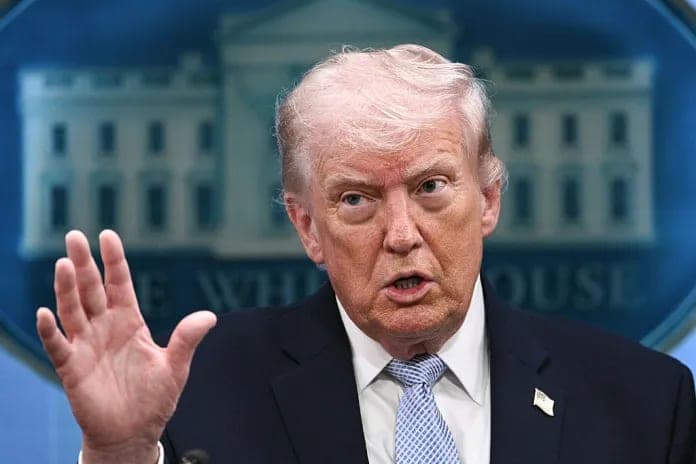
Can a ballot referendum implicitly tell you the “correct” way to vote? That’s precisely what happened this week when Virginians voted to strip nearly congressional representation from half the state in the name of “restoring fairness.” President Donald Trump reacted to the April 21 Virginia redistricting referendum on Wednesday, calling it “rigged.” He claimed there was a “massive ‘mail-in ballot drop’” and that the language on the ballot was “purposefully unintelligible and deceptive.” I don’t know about any ballot drop, but he’s absolutely correct about the ballot language. Virginia voters were literally asked whether they wanted to “restore fairness” on the ballot. That’s not at all what the ballot was about. The state voted for former Vice President Kamala Harris over Trump by a margin of about 5 points, 52% to 47%. It has congressional representation that reflects the population incredibly well, with six Democrats and five Republicans. What Virginia voters just elected to do was to allow Democrats to alter the maps to make it 10 Democrats in Congress to just one Republican. What, exactly, is fair about that? JOHNSON WANTS DESANTIS TO GERRYMANDER FLORIDA AFTER VIRGINIA REFERENDUM The way questions are framed in polls objectively impact the results. If such framing occurred in a scientific study, it would be thrown out and laughed to scorn. When you frame a referendum as “restoring fairness,” you’re impacting — if not outright predetermining — the results. Even if it were true that giving 47% of the state just 9% of congressional representation is fair, that framing taints the legitimacy of the results. Even Sen. Tim Kaine (D-VA) recognizes that the referendum’s results do not produce a congressional delegation that reflects the Virginia voting populace. He told Fox News this week, “90% of Virginians are not Democrats. That’s true. … But we need a delegation that will stand up to Donald Trump’s tyranny.” In order to stand up to Trump’s so-called “tyranny,” Virginia Democrats want to rule by the tyranny of the slight majority. Would the majority of Virginian voters really support this, even if they’re liberal? I have a hard time believing that. But with the referendum being framed in such an unfair and, as Trump put it, “deceptive” way, the winner was picked before the first ballot was cast. We would expect such electoral practices in places such as Russia or Venezuela, but never at home in the United States. Trump suggested that the courts might “fix this travesty,” and indeed, there is a good shot of that happening. There are multiple lawsuits pending in regards to Virginia’s redistricting referendum, including on the ridiculous language of the ballot. The Supreme Court ruled in 2001 that states cannot attempt to influence congressional elections through ballot designs that favor or disfavor candidates. While April 21 wasn’t a congressional election, it does directly impact the outcomes of the 2026 midterm elections. As a result, courts may apply those same neutrality principles to the language of the referendum. GOP TURNS TO FLORIDA AS NEXT REDISTRICTING BATTLEGROUND AFTER VIRGINIA MAP PASSES Republicans currently hold a four-member majority in the House of Representatives. If the results of Virginia’s redistricting referendum are ratified, the Democrats will start the 2026 midterm elections at a +4 margin — erasing the GOP majority without having to spend a dime campaigning to flip those seats. If Republicans lose the midterm elections, Trump will predictably say they were rigged, too. And if the margin of GOP defeat is four or fewer, he’ll have a point.
Rick Scott rips Democrats visiting Cuba on heels of Israel critic Hasan Piker
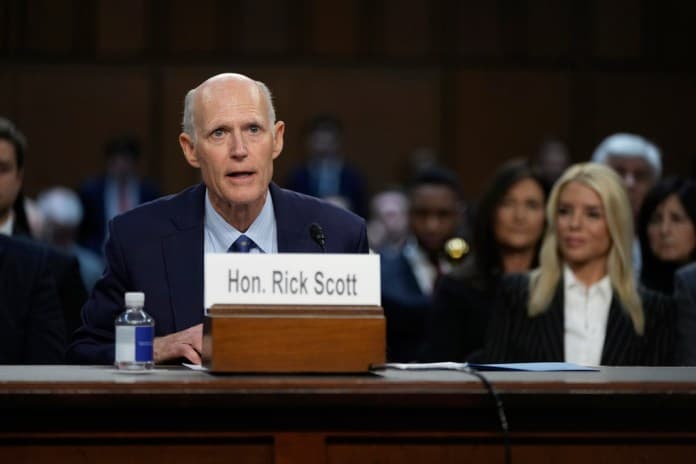
Sen. Rick Scott (R-FL) blasted congressional Democrats for visiting with the communist government in Cuba after controversial left-wing commentator Hasan Piker did the same. “One thing that’s frustrating to me is you have Democrats that go down there, stay in four-star hotels where there’s plenty of electricity while the people next door don’t have anything, and act like the Cuban regime is this wonderful group of people,” Scott said. The Florida senator and former governor is one of the most outspoken critics of communist Cuba on Capitol Hill. Scott made the comments criticizing Democrats for their Cuba policy in an In Focus interview with the Washington Examiner’s Peter Laffin. “What they’re telling you is they don’t care,” Scott told Laffin. “They don’t care about political prisoners. They don’t care about the people of Cuba. They believe in what the Castro regime has done. And so why would any American vote for something like that?” He blasted Democrats for visiting the communist island after Piker, a Twitch streamer who has said things such as “America deserved 9/11.” Piker visited Cuba with a group of Democratic Socialists of America and Code Pink activists, which also included Rep. Ilhan Omar‘s (D-MN) daughter, Isra Hirsi. Shortly thereafter, Reps. Pramila Jayapal (D-WA) and Jonathan Jackson (D-IL) visited the Cuban regime. “How is that anything about what this country believes in? He wants our form of government to fail,” Scott said. Scott told Laffin that Piker has called for the senator’s death and the deaths of all capitalists. “He’s a Democrat commentator, I guess,” Scott said of Piker. “He said I should be murdered. Then he said all capitalists should be murdered. He said we deserve 9/11. He’s antisemitic. He hates Israel. And so these Democrats went down to Cuba with him.” Piker, who has a considerable social media following on the Left, has been embraced by the left-wing of the Democratic Party, with Reps. Alexandria Ocasio-Cortez (D-NY), Ilhan Omar (D-MN), Ro Khanna (D-CA), and New York Mayor Zohran Mamdani each appearing in Piker’s content. Sen. Bernie Sanders (I-VT) and Abdul El-Sayed, a Democratic Senate candidate in Michigan, have also each publicly appeared at events with Piker. DEMOCRATS’ SHAMEFUL MAINSTREAMING OF HASAN PIKER But Piker’s controversial statements have caused headaches for centrist Democrats such as Sen. John Fetterman (D-PA), who have warned of the impacts of his rhetoric. In the interview with Laffin, Scott also discussed his aims for Cuba, saying he hopes to see free and fair elections on the island and the release of all the regime’s political prisoners.
Red-state AI regulation push has links to the Left
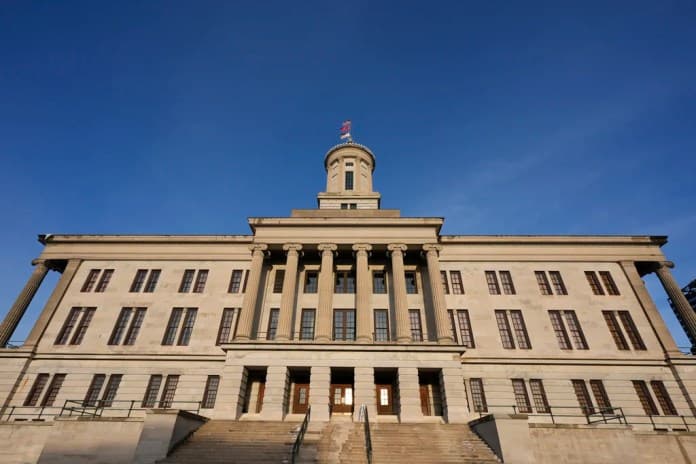
Two groups with ties to the Left are engaged in coordinated campaigns to promote artificial intelligence regulation in three Republican-controlled states, public records show. While President Donald Trump, himself generously supported by many tech interests, has voiced opposition to state-level AI regulation, some red-state leaders have nonetheless proposed laws to rein in the emerging technology. Nebraska, Tennessee, and Utah have attempted to buck the White House on this front. Encode AI and the Secure AI Project, nonprofit groups with staffing and financial ties to the Left, have had a hand in driving this divide between the Trump administration and each of these states. Encode AI was founded by activist Sneha Revanur in 2020, who continues to lead the organization. In a 2023 interview with Politico, which described Revanur as the “Greta Thunberg of AI,” she disclosed that her organization was primarily funded by the philanthropies of liberal billionaire Pierre Omidyar. Recent tax filings show that liberal grantmakers, such as those linked to Omidyar and major Democratic donors, are still cutting checks to Encode AI. Among Encode AI’s relatively short list of staffers, several have worked for Democratic lawmakers or left-of-center activist organizations. Revanur interned for former Rep. Cori Bush (D-MO), according to a previous version of her LinkedIn page. Her group previously criticized Immigration and Customs Enforcement, though the blog post containing their critiques has since been scrubbed. Despite its links to the Left, Encode AI is officially nonpartisan and promotes Democrats and Republicans whom it believes are aligned with its goals, such as Pete Buttigieg and Sen. Marsha Blackburn (R-TN). “Encode is a nonpartisan nonprofit working to advance the responsible development of AI for the benefit of all,” Adam Billen, the group’s co-executive director, told the Washington Examiner. “We partner with policymakers at every level of government, across both parties, to promote smart, effective legislation that protects the public and supports innovation.” SAIP, meanwhile, is led by Nick Beckstead, a seven-year veteran of Dustin Moskovitz’s Open Philanthropy. Moskovitz, a Facebook co-founder, is a major Democratic donor. The organization’s policy director is also an alumnus of Open Philanthropy, which has since rebranded as Coefficient Giving. SAIP does not publicly disclose its donors. “The Secure AI Project continues to be proud to support both Republican and Democratic legislators in protecting children and the public from risks of severe harm from advanced AI,” a spokesman for the group told the Washington Examiner. “In all the states where we work, the public overwhelmingly supports responsible guardrails on AI. This likely underpins much of the inbound interest we have from elected officials to support AI safety legislation.” To advance their preferred policies in GOP-led states, the duo of groups relies on a combination of political donations, lobbying, and public advocacy campaigns. In Nebraska, for instance, Encode AI and SAIP retained lobbyists within days of each other in early January. Further entangling the two groups is the fact that they retained the same law firm, Radcliffe, Gilbertson & Brady, to provide them with lobbying services. The Tennessee Capitol is seen, Jan. 22, 2024, in Nashville, Tenn. On Thursday, April 25, 2024, Tennessee’s GOP-controlled Statehouse gave their final approval to legislation criminalizing adults who help minors receive gender-affirming care without parental consent, clearing the way for the first-in-the-nation proposal to be sent to Gov. Bill Lee’s desk for his signature. (AP Photo/George Walker IV, File) These aren’t lightweight operations. Combined, the duo of organizations spent nearly $50,000, in addition to staff time, on lobbying efforts in Nebraska between January and mid-March, records show. That is a considerable sum for a state-level lobbying effort. Through this spending, the duo of groups is seeking to advance the Transparency in Artificial Intelligence Risk Management Act, a piece of legislation that would require firms operating AI chatbots to submit safety plans, implement a formal risk mitigation system, and make such materials publicly available. Interestingly, the bill was introduced by a Republican lawmaker on Jan. 15, just days after Encode AI and SAIP registered lobbyists in Nebraska. Everything happening in Nebraska follows a familiar pattern. Also in January of this year, Encode AI cut a $10,000 check to State Rep. Doug Fiefia’s (R-UT) campaign account. Once again, the GOP lawmaker introduced AI safety legislation supported by Encode AI and SAIP just days later. The two groups also registered lobbyists in Utah in the months leading up to the bill’s introduction. The bill introduced in Utah is strikingly similar to the one being pushed in Nebraska. Both require AI companies to promulgate public safety plans and impose consequences if they fail to do so. In Tennessee, Encode AI and SAIP once again registered lobbyists before a pair of Republican state lawmakers introduced legislation that, like in Utah and Nebraska, requires AI companies to publish detailed safety plans. Once again, Encode AI and SAIP appear to be working with the same law firm to aid in their lobbying efforts, suggesting coordination. The effort to get these laws across the finish line does not stop at lobbying and political contributions. In Tennessee and Utah, Encode AI and SAIP have launched public advocacy campaigns seeking to win over voters. In Utah, Encode AI commissioned a poll that found broad support for the AI safety legislation it was backing. It then used that polling data in a mass texting campaign to convince voters that they should pressure their representatives to support the bill. Based out of Washington, D.C., and San Francisco, the groups are employing a similar playbook in Tennessee, where they run a group called Tennesseans for AI Safety. One of the talking points this group has pushed most aggressively is a commissioned poll showing overwhelming support for the AI safety bill working its way through the state’s legislature. The Utah State Capitol, Sunday, Jan. 18, 2026, in Salt Lake City. (AP Photo/Sydney Schaefer) Critics of laws such as those proposed in Nebraska, Utah, and Tennessee argue that rigid safety plans could impose technical burdens that hamper technological innovation and that a patchwork of state regulations, rather than uniform federal policies, could create an uncertain business environment. Proponents, meanwhile, claim that the federal government is moving too slowly and that safety regulations are needed as soon as possible to prevent the new technologies from harming people. ORGANIZATIONS WITH STRONG TIES TO THE LEFT INFLUENCED AI POLICY IN A DEEP RED STATE Some have encouraged conservatives to be wary of other conservatives who take certain policy positions after brushes with liberal money. “There is nothing inherently wrong with a conservative organization taking funds from liberal entities or with a conservative organization dissenting from some conservative orthodoxy,” Capital Research Center director of research Mike Watson wrote in 2021. “But when nominal conservatives start rushing to the left as left-wing dollars flow into their institutions, skepticism is warranted.” Indeed, the Trump administration has attempted to clamp down on state-level AI regulation efforts in Utah, Nebraska, and Tennessee.

House expulsion feud between Nancy Mace and Cory Mills bursts into public view
Reps. Nancy Mace (R-SC) and Cory Mills (R-FL) have launched a full-out war against each other, trading barbs and accusations online as the House undergoes an ethics reckoning that has already seen three members resign. Mace has introduced a motion to expel Mills on the House floor, and Mills is weighing whether to move forward with his own against the South Carolina Republican. Both Mace and Mills are under House ethics investigations. Mills has been accused of domestic violence, stolen valor, and financial misconduct. Mace is facing allegations of financial misconduct. Both have denied wrongdoing. Mills posted a litany of statements on X on Tuesday, challenging Mace to “call the vote” against him, claiming that her motion against him is “political theatre” she is using to get donations. He wrote, “You claim to ‘hold the line,’ or is that only peacocking as well?” Mills’s posts attacking Mace include references to her drinking habits, with images and video allegedly showing the congresswoman with alcohol, as well as high turnover in her office. Mace has said she doesn’t “drink much” because of a genetic condition she has called “hemochromatosis.” “The only acceptable outcome for Cory Mills is expulsion,” Mace said in a post on X. “We didn’t come to Congress to watch people abuse their position of power and get away with it. Cory, your days are numbered. Start packing.” The back and forth between Mills and Mace comes amid a cultural reckoning on Capitol Hill, sparked by allegations of sexual misconduct by now-former Reps. Eric Swalwell and Tony Gonzales. Both men resigned last week as pressure mounted against them. A third member, former Rep. Sheila Cherfilus-McCormick, resigned Tuesday ahead of a planned House Ethics Committee sanctions hearing. The Florida Democrat, who was found guilty of 25 ethics violations by the panel last month, was accused of stealing $5 million from the Federal Emergency Management Agency and funneling a portion of it to her campaign account. Now, with all three gone, focus will likely turn to Mills. Mace has not said when she will bring up her motion, with her office saying it will likely be sometime next week. Mace’s introduction of her expulsion resolution against Mills came after reporting that he was considering bringing his own expulsion resolution against Mace. However, Mills has yet to announce a resolution against Mace, telling the Washington Examiner on Tuesday that he is “still weighing that out.” “I believe in due process,” Mills said. “I think the due process should have been the key from the very beginning. It’s the catalyst of what we run things on, and we have an ethics committee and other things because of that exact reason, committee of jurisdiction.” It’s not clear how much support an expulsion resolution against Mills would garner. To be successful, a motion to expel a member needs to reach a two-thirds majority. It’s unlikely that Speaker Mike Johnson (R-LA) would approve of Mills’s expulsion, as the speaker has previously supported letting the House Ethics Committee do its work before moving against a member. However, Rep. Kat Cammack (R-FL) has signaled she may support an effort to expel Mills, saying in a post on X, “I don’t care if you are Republican or Democrat. No one is above the law.” Mace announced her motion to oust Mills on Monday afternoon, saying in a statement that “the swamp has protected Cory Mills for far too long and we are done letting it slide. “We tried to censure him and strip him from his committee assignments,” Mace said. “Both parties blocked it, but we are not backing down.” SHEILA CHERFILUS-MCCORMICK RESIGNS AHEAD OF LIKELY HOUSE EXPULSION She continued, “The evidence against Mills is overwhelming: beating women and telling them to lie about it, cyberstalking women, lying about his military service, and profiting off his seat. Any Member who votes to keep him here is voting to protect a woman beater and a fraud. He needs to be expelled immediately.” Mace previously tried to censure Mills and remove him from the House foreign affairs and armed services committees last year. That effort was blocked on the House floor and sent to the House Ethics Committee, which has been investigating Mills since August 2024.
House expulsion feud between Nancy Mace and Cory Mills bursts into public view
Reps. Nancy Mace (R-SC) and Cory Mills (R-FL) have launched a full-out war against each other, trading barbs and accusations online as the House undergoes an ethics reckoning that has already seen three members resign. Mace has introduced a motion to expel Mills on the House floor, and Mills is weighing whether to move forward with his own against the South Carolina Republican. Both Mace and Mills are under House ethics investigations. Mills has been accused of domestic violence, stolen valor, and financial misconduct. Mace is facing allegations of financial misconduct. Both have denied wrongdoing. Mills posted a litany of statements on X on Tuesday, challenging Mace to “call the vote” against him, claiming that her motion against him is “political theatre” she is using to get donations. He wrote, “You claim to ‘hold the line,’ or is that only peacocking as well?” Mills’s posts attacking Mace include references to her drinking habits, with images and video allegedly showing the congresswoman with alcohol, as well as high turnover in her office. Mace has said she doesn’t “drink much” because of a genetic condition she has called “hemochromatosis.” “The only acceptable outcome for Cory Mills is expulsion,” Mace said in a post on X. “We didn’t come to Congress to watch people abuse their position of power and get away with it. Cory, your days are numbered. Start packing.” The back and forth between Mills and Mace comes amid a cultural reckoning on Capitol Hill, sparked by allegations of sexual misconduct by now-former Reps. Eric Swalwell and Tony Gonzales. Both men resigned last week as pressure mounted against them. A third member, former Rep. Sheila Cherfilus-McCormick, resigned Tuesday ahead of a planned House Ethics Committee sanctions hearing. The Florida Democrat, who was found guilty of 25 ethics violations by the panel last month, was accused of stealing $5 million from the Federal Emergency Management Agency and funneling a portion of it to her campaign account. Now, with all three gone, focus will likely turn to Mills. Mace has not said when she will bring up her motion, with her office saying it will likely be sometime next week. Mace’s introduction of her expulsion resolution against Mills came after reporting that he was considering bringing his own expulsion resolution against Mace. However, Mills has yet to announce a resolution against Mace, telling the Washington Examiner on Tuesday that he is “still weighing that out.” “I believe in due process,” Mills said. “I think the due process should have been the key from the very beginning. It’s the catalyst of what we run things on, and we have an ethics committee and other things because of that exact reason, committee of jurisdiction.” It’s not clear how much support an expulsion resolution against Mills would garner. To be successful, a motion to expel a member needs to reach a two-thirds majority. It’s unlikely that Speaker Mike Johnson (R-LA) would approve of Mills’s expulsion, as the speaker has previously supported letting the House Ethics Committee do its work before moving against a member. However, Rep. Kat Cammack (R-FL) has signaled she may support an effort to expel Mills, saying in a post on X, “I don’t care if you are Republican or Democrat. No one is above the law.” Mace announced her motion to oust Mills on Monday afternoon, saying in a statement that “the swamp has protected Cory Mills for far too long and we are done letting it slide. “We tried to censure him and strip him from his committee assignments,” Mace said. “Both parties blocked it, but we are not backing down.” SHEILA CHERFILUS-MCCORMICK RESIGNS AHEAD OF LIKELY HOUSE EXPULSION She continued, “The evidence against Mills is overwhelming: beating women and telling them to lie about it, cyberstalking women, lying about his military service, and profiting off his seat. Any Member who votes to keep him here is voting to protect a woman beater and a fraud. He needs to be expelled immediately.” Mace previously tried to censure Mills and remove him from the House foreign affairs and armed services committees last year. That effort was blocked on the House floor and sent to the House Ethics Committee, which has been investigating Mills since August 2024.

Takeaways from Kevin Warsh’s Fed confirmation hearing
Kevin Warsh, President Donald Trump’s nominee for chairman of the Federal Reserve Board of Governors, testified in his confirmation hearing on Tuesday. Here are the key takeaways. Warsh appeared before the Senate Banking, Housing, and Urban Affairs Committee, where he faced a number of questions, ranging from his monetary policy philosophy, the independence of the Fed, and his personal finances. WARSH TESTIMONY REVEALS DENIAL OF TRUMP INTEREST RATE PROMISE Trump nominated Warsh, 56, earlier this year to replace outgoing Fed Chairman Jerome Powell, whose term is ending in mid-May. Powell is under investigation by the Justice Department, a major point of conversation during the hearing. Other than Fed independence, Warsh was asked a number of times about interest rates and what he thinks about the country’s inflation situation. He also stressed reform at the central bank, arguing that in recent years the Fed has pushed the remits of its congressional mandate. Fed independence Fed independence was the most pressing issue on lawmakers’ minds heading into the hearing. Earlier this year, in a video statement, Powell announced he was being investigated by the Justice Department for claims he made about the Fed headquarters renovation during congressional testimony. But he argued that the inquiry is an effort by Trump to influence interest rate policy. Warsh vowed repeatedly throughout the hearing that he would remain a faithful steward of the Fed’s independence if he were confirmed as its next chairman. “Let me be very clear: Monetary policy independence is essential,” Warsh told the panel. “Monetary policy makers must act in the nation’s interest. Their decision is the product of rigor, deliberation, and unclouded decision-making.” Still, he argued that politicians, including Trump, weighing in on interest rate policy is not necessarily a threat to Fed independence. “I do not believe that independence of monetary policy is threatened when elected officials state their views on rates,” he said. “Fed independence is up to the Fed.” But Sen. Elizabeth Warren (D-MA), the banking committee ranking member, pushed back on that assertion. She said Trump has been trying to fire Fed governor Lisa Cook over disagreements, with the case now winding through the Supreme Court. Warren described Warsh as a “sock puppet” who will simply do the president’s bidding. “Why try to end the independence of the Fed? Because Trump’s economic failures are causing him political problems,” the Massachusetts senator said, “and he wants the Fed to use monetary policies to artificially juice the economy in the short term, and this is his last chance to do that before the November elections.” Sen. John Kennedy (R-LA) later pushed Warsh on Warren’s comments. “Are you going to be the president’s human sock puppet?” Kennedy asked. “Senator, absolutely not,” Warsh responded. “I’m honored the president nominated me for the position, and I’ll be an independent actor if confirmed as chairman.” Throughout the hearing, Republicans on the panel also affirmed that Fed independence is crucial. “I think Fed independence is critical, and I think that’s an item that you and I agree on wholeheartedly,” Sen. Mike Rounds (R-SD) said. Sen. Thom Tillis (R-NC), a member of the banking committee, has threatened to block Warsh until the legal investigation into Powell has concluded. He reiterated that stance during the Tuesday hearing. Still, Tillis said he is supportive of Warsh and believes him when he says he intends to lead the central bank independently of the president. “Let’s get rid of this investigation so I can support your confirmation,” Tillis said. Interest rates Going hand in hand with the theme of Fed independence were questions about Warsh and interest rates. Some Democrats have alleged that Warsh was nominated to do Trump’s bidding and lower interest rates. But Warsh said Trump never asked him to commit to any interest rate decisions during his vetting process. Kennedy asked specifically whether he agreed with the president to lower interest rates if he is confirmed and becomes head of the central bank. “Senator, I’m glad you framed it that way — the president never asked me to predetermine, commit, fix, decide on any interest rate decision in any of our discussions, nor would I ever agree to do so,” Warsh testified. “The president never once asked me to commit to any particular interest rate decision, period. And nor would I ever agree to do so if he had, but he never did,” Warsh added after further questioning. Warsh also blamed too-high inflation on “a legacy of the policy errors” that happened in 2021 and 2022 as the country was emerging from the pandemic. “Once you let inflation take hold in the economy, it’s more expensive and harder to bring it down, and so the fatal policy error going back four or five years is still a legacy that we’re dealing with,” Warsh said. The Fed nominee said there needs to be a “regime change in the conduct of policy” at the Fed and that means “a different, new inflation framework.” Democrats also questioned Warsh about how he was seen as more of an inflation hawk when he was a Fed governor and now is taking a more dovish tack toward monetary policy. Warren tried to characterize him as a flip-flopper on interest rate policy. “When the job of Fed chair became available during Trump’s first term as president, Warsh held on to his high-interest-rate, inflation-hawk views, and Trump passed him by,” Warren said. “Regretful, he soon reversed course and called for the Fed to pause interest rate hikes. Then once Trump left office, Mr. Warsh flipped again, and was even criticizing the Fed for cutting rates in the fall of 2024.” Financial disclosures Democrats also, particularly early in the hearing, attacked Warsh over his financial disclosures. Ahead of the meeting, Warsh disclosed financial interests exceeding $100 million. He is married to Jane Lauder, who serves on the board of Estée Lauder Companies. Citing confidentiality, he declined to reveal the underlying values of the biggest investments. The Office of Government Ethics said Warsh would have to divest from several dozen holdings. Warsh has said he would divest if confirmed. “You have more than $100 million in investments that you have refused to disclose to ethics officials and to the public,” Warren said. She then asked if he is invested in any companies affiliated with Trump, companies that have facilitated money laundering, Chinese-controlled companies, or financing vehicles started by Jeffrey Epstein. Warsh repeatedly emphasized that he has worked “tirelessly” with the Office of Government Ethics regarding his financial disclosures and that he would divest if confirmed to the Fed. Fed mission creep Republicans have criticized the Fed in recent years for perceptions that it has breached the limits of its remit by looking into climate change and other areas associated with liberal causes. Warsh said the Fed needed reform and that it needed to get back to its central mission during the hearing. WARSHACH TEST: TRUMP’S FED CHAIRMAN PICK KEEPS MONETARY ANALYSTS GUESSING Committee Chairman Tim Scott (R-SC) tied such initiatives directly to Fed independence. “For example, under the Biden administration, the Fed pushed climate-focused initiatives only to reverse that climate agenda as soon as President Trump took office,” Scott said. “When actions appear to shift with changing political priorities, it can undermine confidence in the independence of this great institution.”
Takeaways from Kevin Warsh’s Fed confirmation hearing
Kevin Warsh, President Donald Trump’s nominee for chairman of the Federal Reserve Board of Governors, testified in his confirmation hearing on Tuesday. Here are the key takeaways. Warsh appeared before the Senate Banking, Housing, and Urban Affairs Committee, where he faced a number of questions, ranging from his monetary policy philosophy, the independence of the Fed, and his personal finances. WARSH TESTIMONY REVEALS DENIAL OF TRUMP INTEREST RATE PROMISE Trump nominated Warsh, 56, earlier this year to replace outgoing Fed Chairman Jerome Powell, whose term is ending in mid-May. Powell is under investigation by the Justice Department, a major point of conversation during the hearing. Other than Fed independence, Warsh was asked a number of times about interest rates and what he thinks about the country’s inflation situation. He also stressed reform at the central bank, arguing that in recent years the Fed has pushed the remits of its congressional mandate. Fed independence Fed independence was the most pressing issue on lawmakers’ minds heading into the hearing. Earlier this year, in a video statement, Powell announced he was being investigated by the Justice Department for claims he made about the Fed headquarters renovation during congressional testimony. But he argued that the inquiry is an effort by Trump to influence interest rate policy. Warsh vowed repeatedly throughout the hearing that he would remain a faithful steward of the Fed’s independence if he were confirmed as its next chairman. “Let me be very clear: Monetary policy independence is essential,” Warsh told the panel. “Monetary policy makers must act in the nation’s interest. Their decision is the product of rigor, deliberation, and unclouded decision-making.” Still, he argued that politicians, including Trump, weighing in on interest rate policy is not necessarily a threat to Fed independence. “I do not believe that independence of monetary policy is threatened when elected officials state their views on rates,” he said. “Fed independence is up to the Fed.” But Sen. Elizabeth Warren (D-MA), the banking committee ranking member, pushed back on that assertion. She said Trump has been trying to fire Fed governor Lisa Cook over disagreements, with the case now winding through the Supreme Court. Warren described Warsh as a “sock puppet” who will simply do the president’s bidding. “Why try to end the independence of the Fed? Because Trump’s economic failures are causing him political problems,” the Massachusetts senator said, “and he wants the Fed to use monetary policies to artificially juice the economy in the short term, and this is his last chance to do that before the November elections.” Sen. John Kennedy (R-LA) later pushed Warsh on Warren’s comments. “Are you going to be the president’s human sock puppet?” Kennedy asked. “Senator, absolutely not,” Warsh responded. “I’m honored the president nominated me for the position, and I’ll be an independent actor if confirmed as chairman.” Throughout the hearing, Republicans on the panel also affirmed that Fed independence is crucial. “I think Fed independence is critical, and I think that’s an item that you and I agree on wholeheartedly,” Sen. Mike Rounds (R-SD) said. Sen. Thom Tillis (R-NC), a member of the banking committee, has threatened to block Warsh until the legal investigation into Powell has concluded. He reiterated that stance during the Tuesday hearing. Still, Tillis said he is supportive of Warsh and believes him when he says he intends to lead the central bank independently of the president. “Let’s get rid of this investigation so I can support your confirmation,” Tillis said. Interest rates Going hand in hand with the theme of Fed independence were questions about Warsh and interest rates. Some Democrats have alleged that Warsh was nominated to do Trump’s bidding and lower interest rates. But Warsh said Trump never asked him to commit to any interest rate decisions during his vetting process. Kennedy asked specifically whether he agreed with the president to lower interest rates if he is confirmed and becomes head of the central bank. “Senator, I’m glad you framed it that way — the president never asked me to predetermine, commit, fix, decide on any interest rate decision in any of our discussions, nor would I ever agree to do so,” Warsh testified. “The president never once asked me to commit to any particular interest rate decision, period. And nor would I ever agree to do so if he had, but he never did,” Warsh added after further questioning. Warsh also blamed too-high inflation on “a legacy of the policy errors” that happened in 2021 and 2022 as the country was emerging from the pandemic. “Once you let inflation take hold in the economy, it’s more expensive and harder to bring it down, and so the fatal policy error going back four or five years is still a legacy that we’re dealing with,” Warsh said. The Fed nominee said there needs to be a “regime change in the conduct of policy” at the Fed and that means “a different, new inflation framework.” Democrats also questioned Warsh about how he was seen as more of an inflation hawk when he was a Fed governor and now is taking a more dovish tack toward monetary policy. Warren tried to characterize him as a flip-flopper on interest rate policy. “When the job of Fed chair became available during Trump’s first term as president, Warsh held on to his high-interest-rate, inflation-hawk views, and Trump passed him by,” Warren said. “Regretful, he soon reversed course and called for the Fed to pause interest rate hikes. Then once Trump left office, Mr. Warsh flipped again, and was even criticizing the Fed for cutting rates in the fall of 2024.” Financial disclosures Democrats also, particularly early in the hearing, attacked Warsh over his financial disclosures. Ahead of the meeting, Warsh disclosed financial interests exceeding $100 million. He is married to Jane Lauder, who serves on the board of Estée Lauder Companies. Citing confidentiality, he declined to reveal the underlying values of the biggest investments. The Office of Government Ethics said Warsh would have to divest from several dozen holdings. Warsh has said he would divest if confirmed. “You have more than $100 million in investments that you have refused to disclose to ethics officials and to the public,” Warren said. She then asked if he is invested in any companies affiliated with Trump, companies that have facilitated money laundering, Chinese-controlled companies, or financing vehicles started by Jeffrey Epstein. Warsh repeatedly emphasized that he has worked “tirelessly” with the Office of Government Ethics regarding his financial disclosures and that he would divest if confirmed to the Fed. Fed mission creep Republicans have criticized the Fed in recent years for perceptions that it has breached the limits of its remit by looking into climate change and other areas associated with liberal causes. Warsh said the Fed needed reform and that it needed to get back to its central mission during the hearing. WARSHACH TEST: TRUMP’S FED CHAIRMAN PICK KEEPS MONETARY ANALYSTS GUESSING Committee Chairman Tim Scott (R-SC) tied such initiatives directly to Fed independence. “For example, under the Biden administration, the Fed pushed climate-focused initiatives only to reverse that climate agenda as soon as President Trump took office,” Scott said. “When actions appear to shift with changing political priorities, it can undermine confidence in the independence of this great institution.”