34 stories credited to TIME (30 on time.com, 4 reproduced by other sites)
Latest story Sep 23, 2026 · on ChamberLight since Apr 2026
A story can appear as several articles (copies of the same piece), so counts of stories and of articles differ.
Scores for TIME
Political lean
31 stories · 95% range 42.4–47.5 · updated Sep 25, 2026
Originality
30 stories · updated Sep 24, 2026
Writing quality 89 of 100: the average rating of 17 stories, each rated on its own (separate from credibility). How it is measured
Scores last checked Sep 25, 2026.
Stories ChamberLight collected, by month
Stories credited to TIME, by publication date. ChamberLight collects articles that mention the officials it tracks, so this shows its own coverage of this source, not how much the source publishes.
- Stories from TIME
- Shaded: ChamberLight collected no stories, or almost none, from any outlet (a gap in its collection, not in the outlet’s publishing)
Show as a table
| Month | Stories | All outlets |
|---|---|---|
| September 2025 | 1 | 42 |
| October 2025 | 0 | 50 |
| November 2025 | 0 | 79 |
| December 2025 | 0 | 27 |
| January 2026 | 2 | 87 |
| February 2026 | 4 | 180 |
| March 2026 | 6 | 1,094 |
| April 2026 | 18 | 4,538 |
| May 2026 | 0 | none collected |
| June 2026 | 0 | none collected |
| July 2026 | 0 | none collected |
| August 2026 | 0 | 1 (collection gap) |
| September 2026 | 3 | 1,320 |
Top topics
Share of this source’s stories tagged with each topic. A story can carry several topics, so the shares do not add up to 100%.
- Ethics/Corruption22
65% of 34 stories · 58% across all outlets
- Budget/Spending16
47% of 34 stories · 31% across all outlets
- Foreign Policy16
47% of 34 stories · 29% across all outlets
- Defense/Military15
44% of 34 stories · 25% across all outlets
- Criminal Justice8
24% of 34 stories · 19% across all outlets
- Economy8
24% of 34 stories · 26% across all outlets
- Voting Rights5
15% of 34 stories · 19% across all outlets
- Healthcare3
9% of 34 stories · 8% across all outlets
The thin mark on each bar is the topic’s share across all outlets.
Who they cover
Party of the officials these stories are mainly about, across all 50 officials named. A story counts once for each official it is mainly about, so the split is over 92 story–official pairs, from 34 stories.
- Republican60% · 55 pairs
- Democrat34% · 31 pairs
- Party not recorded4% · 4 pairs
- Independent2% · 2 pairs
Most covered
Stories mainly about each official, and their share of the source’s 34 stories.
- 1Donald TrumpR15 stories · 44%
- 2Charles SchumerD4 stories · 12%
- 3Hakeem JeffriesD4 stories · 12%
- 4Mike JohnsonR4 stories · 12%
- 5Pete HegsethR4 stories · 12%
- 6Kristi NoemR3 stories · 9%
- 7Nancy MaceR3 stories · 9%
- 8Bryan SteilR2 stories · 6%
- 9Chris Van HollenD2 stories · 6%
- 10Don BaconR2 stories · 6%
+ 40 other officials (49 story–official pairs)
Article tone
ChamberLight’s article analysis assigns each story a tone toward the official it covers. It describes the coverage of that official, not TIME’s stance, and reader votes do not change it. 34 stories.
- Good Look
- 1 (3%)
- Mixed
- 27 (79%)
- Informational
- 2 (6%)
- Bad Look
- 4 (12%)
Related sources
Lean 95% range 42.1–47.5 · updated Sep 25, 2026
Similar lean · 3 shared topics
Lean 95% range 43–47 · updated Sep 25, 2026
Similar lean · 3 shared topics
Lean 95% range 42.3–48.5 · updated Sep 25, 2026
Similar lean · 3 shared topics
Lean 95% range 39–50 · updated Sep 25, 2026
Similar lean · 2 shared topics
Lean 95% range 43–46 · updated Sep 25, 2026
Similar lean · 3 shared topics
Lean 95% range 40–49 · updated Sep 25, 2026
Similar lean · 2 shared topics
Challenges to these scores
No one has challenged a score on this page yet. Anyone can; editors publish every outcome here.
Articles served from time.com
82
A Debt Ceiling Fight Looms in 2027. Could a Democratic Congress Make it the Last One?
Trump wants to scrap the debt ceiling. Rep. Brendan Boyle sees a rare chance for bipartisan reform.

How Trump Helped Put a Texas Senate Seat In Play
* Custom Feed: See the stories that matter most to you. * Smart Alerts: Get notified about major news as it happens. If the GOP squanders this fall's U.S. Senate race in Texas, some Republicans argue privately that President Donald Trump would bear part of the blame. Trump's sagging approval rati
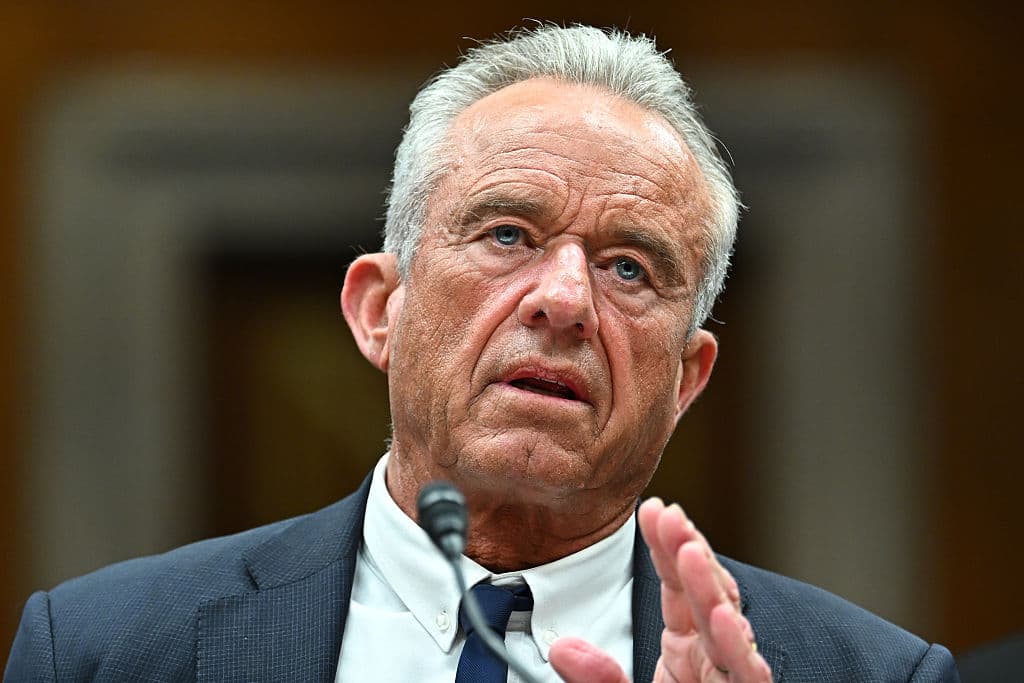
Robert F. Kennedy Jr. Defends Spending Cuts to Health Agencies
Secretary of Health and Human Services Robert F. Kennedy Jr. testifies before a Senate subcommittee on April 21, 2026. —Graeme Sloan/Bloomberg—Getty Images President Donald Trump’s 2027 budget proposes $111.1 billion for the Department of Health and Human Services (HHS), which oversees key health agencies including the Food and Drug Administration and the Centers for Disease Control and Prevention. That would be a 12.5% reduction from this year's budget, and includes continued slashing of research grants as well as programs dedicated to women’s and children’s health services. At an April 21 hearing before the Senate Appropriations Subcommittee on Labor, Health and Human Services, subcommittee vice chair Tammy Baldwin of Wisconsin opened with a prediction: “I expect Congress to reject this budget request, just like we did last year," she said. "It makes the Administration’s priorities clear: more money for war, less money for programs helping Americans here at home." Testifying before the subcommittee, HHS Secretary Robert F. Kennedy, Jr. faced questions about a range of topics, including the decreased spending on health programs. “Nobody in the agency wants to cut these programs," he said. "It’s Congress’ choice about whether to do it or not. It’s not my choice.” When Senator Patty Murray of Washington asked if he pushed back against Trump about the proposed reductions in HHS’s budget, Kennedy responded by providing justifications for the cuts at the National Institutes of Health, where he said “a lot of the money was wasted; I can read you the kind of studies, the insane studies that NIH was doing before I got there.” He went on to list a few involving “gender-affirming hormone therapy” and “transgender and gender-diverse adults.” Kennedy admitted that the cancellation of critical grants for the Substance Abuse and Mental Health Services Administration (SAMHSA) earlier this year were “a mistake...an overcorrection” that he reversed within 24 hours after learning about them. Read More: New Dietary Guidelines Urge People to Eat More Protein and Fewer Processed Foods When asked about cancellations in grants to cancer and other vaccine research, Kennedy said he authorized funding in cancer vaccines and a universal flu vaccine—“so I’m not anti-vaccine. The $500 million that we cancelled were for vaccines that don’t work...mRNA, we now know, does not work for respiratory illnesses” (a claim that not supported by scientific evidence). Baldwin later challenged Kennedy’s statement about the effectiveness of mRNA vaccines, submitting a New England Journal of Medicine paper into the record countering his claim. Senator Jeanne Shaheen of New Hampshire asked Kennedy about funds that HHS is holding that are owed to GAVI, the global public-private organization that provides vaccines for children around the world. Congress approved $300 million for the group, but “it is your department, and you personally, who is holding up funding for GAVI,” Shaheen told Kennedy. He acknowledged he had concerns about providing the funding, including that GAVI provides funds to the World Health Organization, to which the U.S. no longer belongs after Trump withdrew, and that GAVI uses an older version of the diphtheria, tetanus, and pertussis vaccine. But he agreed to appoint someone from HHS to work with Shaheen’s office to resolve the GAVI payment. “When 1.5 million children are at stake, it seems to me like those are issues that we ought to be able to resolve,” she said.
Robert F. Kennedy Jr. Defends Spending Cuts to Health Agencies
Secretary of Health and Human Services Robert F. Kennedy Jr. testifies before a Senate subcommittee on April 21, 2026. —Graeme Sloan/Bloomberg—Getty Images President Donald Trump’s 2027 budget proposes $111.1 billion for the Department of Health and Human Services (HHS), which oversees key health agencies including the Food and Drug Administration and the Centers for Disease Control and Prevention. That would be a 12.5% reduction from this year's budget, and includes continued slashing of research grants as well as programs dedicated to women’s and children’s health services. At an April 21 hearing before the Senate Appropriations Subcommittee on Labor, Health and Human Services, subcommittee vice chair Tammy Baldwin of Wisconsin opened with a prediction: “I expect Congress to reject this budget request, just like we did last year," she said. "It makes the Administration’s priorities clear: more money for war, less money for programs helping Americans here at home." Testifying before the subcommittee, HHS Secretary Robert F. Kennedy, Jr. faced questions about a range of topics, including the decreased spending on health programs. “Nobody in the agency wants to cut these programs," he said. "It’s Congress’ choice about whether to do it or not. It’s not my choice.” When Senator Patty Murray of Washington asked if he pushed back against Trump about the proposed reductions in HHS’s budget, Kennedy responded by providing justifications for the cuts at the National Institutes of Health, where he said “a lot of the money was wasted; I can read you the kind of studies, the insane studies that NIH was doing before I got there.” He went on to list a few involving “gender-affirming hormone therapy” and “transgender and gender-diverse adults.” Kennedy admitted that the cancellation of critical grants for the Substance Abuse and Mental Health Services Administration (SAMHSA) earlier this year were “a mistake...an overcorrection” that he reversed within 24 hours after learning about them. Read More: New Dietary Guidelines Urge People to Eat More Protein and Fewer Processed Foods When asked about cancellations in grants to cancer and other vaccine research, Kennedy said he authorized funding in cancer vaccines and a universal flu vaccine—“so I’m not anti-vaccine. The $500 million that we cancelled were for vaccines that don’t work...mRNA, we now know, does not work for respiratory illnesses” (a claim that not supported by scientific evidence). Baldwin later challenged Kennedy’s statement about the effectiveness of mRNA vaccines, submitting a New England Journal of Medicine paper into the record countering his claim. Senator Jeanne Shaheen of New Hampshire asked Kennedy about funds that HHS is holding that are owed to GAVI, the global public-private organization that provides vaccines for children around the world. Congress approved $300 million for the group, but “it is your department, and you personally, who is holding up funding for GAVI,” Shaheen told Kennedy. He acknowledged he had concerns about providing the funding, including that GAVI provides funds to the World Health Organization, to which the U.S. no longer belongs after Trump withdrew, and that GAVI uses an older version of the diphtheria, tetanus, and pertussis vaccine. But he agreed to appoint someone from HHS to work with Shaheen’s office to resolve the GAVI payment. “When 1.5 million children are at stake, it seems to me like those are issues that we ought to be able to resolve,” she said.
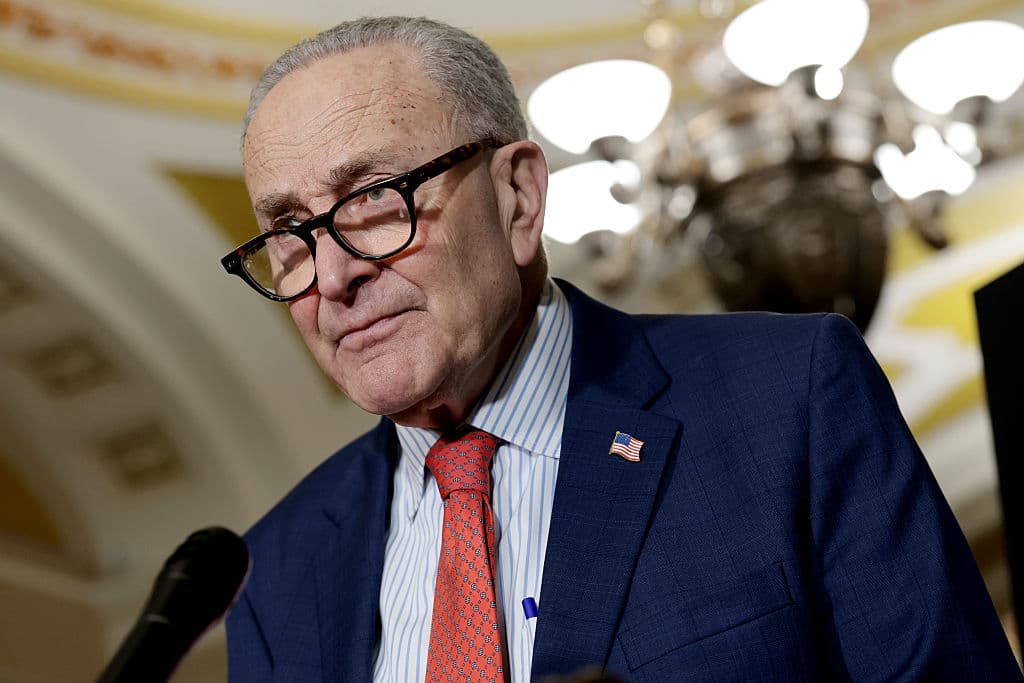
The Seven Democrats Who Joined Republicans in Opposing Measure to Block Arms Sales to Israel
U.S. Senate Minority Leader Chuck Schumer speaks during a news conference following a weekly Democrat policy luncheon at the U.S. Capitol on April 14, 2026 in Washington, D.C. —Anna Moneymaker–Getty Images) The Senate rejected a measure to block the sale of military equipment to Israel after seven Democrats joined Republicans in opposing the resolution in a 40–59 vote. The bill, a joint resolution introduced by Senator Bernie Sanders, independent of Vermont, who caucuses with Democrats, would have halted the sale of military bulldozers to Israel. In total, 40 senators supported the resolution late Wednesday. The seven Democrat Senators who voted against the measure were Richard Blumenthal of Connecticut, Chris Coons of Delaware, Catherine Cortez Masto of Nevada, John Fetterman of Pennsylvania, Kirsten Gillibrand of New York, Jacky Rosen of Nevada, and Senate Minority Leader Chuck Schumer of New York. A second measure, which sought to block the sale of 12,000 1,000-pound bombs to Israel, drew 36 votes in favor and 63 against. The results underscored a broader shift among Senate Democrats, as a growing number have broken with the party’s traditional support for Israel. The shift comes as the United States and Israel have carried out coordinated strikes on Iran, and as Israel’s military campaign in Lebanon has continued despite cease-fire claims—conflicts that have fueled concerns among many Democrats about civilian casualties, regional escalation and continued U.S. involvement. The votes came shortly after a separate War Powers resolution aimed at ending U.S. military involvement in Iran failed 47–52, with lawmakers largely voting along party lines. Sanders described the level of Democratic support for the resolutions as a “shift” that “reflects where the American people are.” “Americans, whether they are Democrats, Republicans or independents, want to see our tax money invested in improving lives here at home – not used to kill innocent women and children in the Middle East and put American troops in harm’s way as part of Netanyahu’s illegal wars of expansion,” he said in a statement late Wednesday. Sanders has introduced similar measures in the past. A November 2024 effort drew support from 18 senators, while a July 2025 resolution garnered 27 Democratic votes, at the time, more than half the caucus, to block the sale of assault rifles to Israel. “Being a stalwart friend of Israel, however, does not mean agreeing with all decisions of the Israeli Government or Prime Minister Benjamin Netanyahu, just like being a patriot of the United States does not require unquestioning agreement with the policy decisions of President Donald Trump and his administration,” California Sen. Adam Schiff and Sen. Alex Padilla said in a joint statement after voting in favor of the resolutions. Both had previously opposed similar measures. Sanders said the votes reflected growing unease among Democratic voters over Israeli Prime Minister Benjamin Netanyahu’s leadership and the widening scope of the conflicts in Gaza, Iran and Lebanon. “In strong and growing numbers they do not want us to continue spending billions of their taxpayer dollars in support of the illegal, horrific and expansionist war policies of the Netanyahu government in Israel,” Sanders said on the Senate floor, citing a Pew Research Center survey released earlier in April finding that 80% of Democrats and 41% of Republicans view Israel negatively. Sen. Mark Kelly of Arizona also voted in support of the resolutions after opposing some of Sanders’ earlier efforts. Speaking before the vote, Kelly said his position was shaped by the actions of Netanyahu and Trump. “The United States and Israel are fighting a war against Iran without a clear strategy or goal. I’ve been clear that I oppose this war in Iran and the reckless decisions being made by Prime Minister Netanyahu and President Trump,” he said during remarks on the Senate floor. Republican Sen. Jim Risch of Idaho, the Republican chairman of the Foreign Relations Committee, said he would oppose these measures as they would “embolden” Iran. “It would send the message that the United States is prepared to leave our ally Israel vulnerable to further Iranian attacks and put the tens of thousands of Americans living there at risk,” he said on the Senate floor. Here’s what the seven Democrats who voted against the measure said. TIME has contacted each of their offices for further comment. Sen. Chuck Schumer of New York Senate Minority Leader Chuck Schumer was one of the most prominent Democrats to break with his party on the Senate floor. He did not immediately comment on his opposition to the measures. Despite being a strong voice of opposition to Trump’s war in Iran, Schumer did not support the motion to suspend arms sales to Israel. He has faced growing pressure to shift his stance, with protesters arrested during a demonstration Monday near his office calling on him to support blocking the sale of U.S. weapons to Israel. Sen. Kirsten Gillibrand of New York Like Schumer, Gillibrand also faced the same protests this week near her offices in New York, with demonstrators urging her to support Sanders’ measures.The demonstrations were led by the antiwar group Jewish Voice for Peace. Gillibrand also has not yet commented on why she opposed the measures. Sen. Chris Coons of Delaware Coons said that, while he supported efforts to end the Iran war, he opposed Sanders’ resolutions on Israel because he did not want to “abandon” the country. “My votes should be taken neither as an endorsement of the actions of the Netanyahu government nor as an abandonment of the state of Israel, the Jewish people, or the US-Israel relationship,” he said in a statement after the vote. Sen. John Fetterman of Pennsylvania Fetterman has often been a staunch supporter of Israel and has frequently broken from party lines, including as the sole Democrat to vote against curbing Trump’s authority to continue the conflict in the Middle East. He confirmed in an interview this week on Fox News’ Sunday Morning Futures with Maria Bartiromo that he would oppose the measures. “It's the right side to stand for Israel. It's the right side to stand for the side of our military and confronting the Iranian regime,” he said. Sen. Richard Blumenthal of Connecticut Blumenthal did not immediately comment on his decision to oppose the measure. The Democratic senator has previously supported Israel’s military strikes on Iran carried out last June. Sen. Catherine Cortez Masto of Nevada Cortez Masto did not initially comment on her opposition to Sanders’ measure. However, she said to have supported the War Powers resolution aimed at “stop Trump's war of choice in Iran.” Sen. Jacky Rosen of Nevada Rosen has also not commented on her vote against both measures, although she has been a prominent voice in supporting Trump’s cease-fire deal in Gaza between Israel and Hamas.
The Seven Democrats Who Joined Republicans in Opposing Measure to Block Arms Sales to Israel
U.S. Senate Minority Leader Chuck Schumer speaks during a news conference following a weekly Democrat policy luncheon at the U.S. Capitol on April 14, 2026 in Washington, D.C. —Anna Moneymaker–Getty Images) The Senate rejected a measure to block the sale of military equipment to Israel after seven Democrats joined Republicans in opposing the resolution in a 40–59 vote. The bill, a joint resolution introduced by Senator Bernie Sanders, independent of Vermont, who caucuses with Democrats, would have halted the sale of military bulldozers to Israel. In total, 40 senators supported the resolution late Wednesday. The seven Democrat Senators who voted against the measure were Richard Blumenthal of Connecticut, Chris Coons of Delaware, Catherine Cortez Masto of Nevada, John Fetterman of Pennsylvania, Kirsten Gillibrand of New York, Jacky Rosen of Nevada, and Senate Minority Leader Chuck Schumer of New York. A second measure, which sought to block the sale of 12,000 1,000-pound bombs to Israel, drew 36 votes in favor and 63 against. The results underscored a broader shift among Senate Democrats, as a growing number have broken with the party’s traditional support for Israel. The shift comes as the United States and Israel have carried out coordinated strikes on Iran, and as Israel’s military campaign in Lebanon has continued despite cease-fire claims—conflicts that have fueled concerns among many Democrats about civilian casualties, regional escalation and continued U.S. involvement. The votes came shortly after a separate War Powers resolution aimed at ending U.S. military involvement in Iran failed 47–52, with lawmakers largely voting along party lines. Sanders described the level of Democratic support for the resolutions as a “shift” that “reflects where the American people are.” “Americans, whether they are Democrats, Republicans or independents, want to see our tax money invested in improving lives here at home – not used to kill innocent women and children in the Middle East and put American troops in harm’s way as part of Netanyahu’s illegal wars of expansion,” he said in a statement late Wednesday. Sanders has introduced similar measures in the past. A November 2024 effort drew support from 18 senators, while a July 2025 resolution garnered 27 Democratic votes, at the time, more than half the caucus, to block the sale of assault rifles to Israel. “Being a stalwart friend of Israel, however, does not mean agreeing with all decisions of the Israeli Government or Prime Minister Benjamin Netanyahu, just like being a patriot of the United States does not require unquestioning agreement with the policy decisions of President Donald Trump and his administration,” California Sen. Adam Schiff and Sen. Alex Padilla said in a joint statement after voting in favor of the resolutions. Both had previously opposed similar measures. Sanders said the votes reflected growing unease among Democratic voters over Israeli Prime Minister Benjamin Netanyahu’s leadership and the widening scope of the conflicts in Gaza, Iran and Lebanon. “In strong and growing numbers they do not want us to continue spending billions of their taxpayer dollars in support of the illegal, horrific and expansionist war policies of the Netanyahu government in Israel,” Sanders said on the Senate floor, citing a Pew Research Center survey released earlier in April finding that 80% of Democrats and 41% of Republicans view Israel negatively. Sen. Mark Kelly of Arizona also voted in support of the resolutions after opposing some of Sanders’ earlier efforts. Speaking before the vote, Kelly said his position was shaped by the actions of Netanyahu and Trump. “The United States and Israel are fighting a war against Iran without a clear strategy or goal. I’ve been clear that I oppose this war in Iran and the reckless decisions being made by Prime Minister Netanyahu and President Trump,” he said during remarks on the Senate floor. Republican Sen. Jim Risch of Idaho, the Republican chairman of the Foreign Relations Committee, said he would oppose these measures as they would “embolden” Iran. “It would send the message that the United States is prepared to leave our ally Israel vulnerable to further Iranian attacks and put the tens of thousands of Americans living there at risk,” he said on the Senate floor. Here’s what the seven Democrats who voted against the measure said. TIME has contacted each of their offices for further comment. Sen. Chuck Schumer of New York Senate Minority Leader Chuck Schumer was one of the most prominent Democrats to break with his party on the Senate floor. He did not immediately comment on his opposition to the measures. Despite being a strong voice of opposition to Trump’s war in Iran, Schumer did not support the motion to suspend arms sales to Israel. He has faced growing pressure to shift his stance, with protesters arrested during a demonstration Monday near his office calling on him to support blocking the sale of U.S. weapons to Israel. Sen. Kirsten Gillibrand of New York Like Schumer, Gillibrand also faced the same protests this week near her offices in New York, with demonstrators urging her to support Sanders’ measures.The demonstrations were led by the antiwar group Jewish Voice for Peace. Gillibrand also has not yet commented on why she opposed the measures. Sen. Chris Coons of Delaware Coons said that, while he supported efforts to end the Iran war, he opposed Sanders’ resolutions on Israel because he did not want to “abandon” the country. “My votes should be taken neither as an endorsement of the actions of the Netanyahu government nor as an abandonment of the state of Israel, the Jewish people, or the US-Israel relationship,” he said in a statement after the vote. Sen. John Fetterman of Pennsylvania Fetterman has often been a staunch supporter of Israel and has frequently broken from party lines, including as the sole Democrat to vote against curbing Trump’s authority to continue the conflict in the Middle East. He confirmed in an interview this week on Fox News’ Sunday Morning Futures with Maria Bartiromo that he would oppose the measures. “It's the right side to stand for Israel. It's the right side to stand for the side of our military and confronting the Iranian regime,” he said. Sen. Richard Blumenthal of Connecticut Blumenthal did not immediately comment on his decision to oppose the measure. The Democratic senator has previously supported Israel’s military strikes on Iran carried out last June. Sen. Catherine Cortez Masto of Nevada Cortez Masto did not initially comment on her opposition to Sanders’ measure. However, she said to have supported the War Powers resolution aimed at “stop Trump's war of choice in Iran.” Sen. Jacky Rosen of Nevada Rosen has also not commented on her vote against both measures, although she has been a prominent voice in supporting Trump’s cease-fire deal in Gaza between Israel and Hamas.
The Seven Democrats Who Joined Republicans in Opposing Measure to Block Arms Sales to Israel
U.S. Senate Minority Leader Chuck Schumer speaks during a news conference following a weekly Democrat policy luncheon at the U.S. Capitol on April 14, 2026 in Washington, D.C. —Anna Moneymaker–Getty Images) The Senate rejected a measure to block the sale of military equipment to Israel after seven Democrats joined Republicans in opposing the resolution in a 40–59 vote. The bill, a joint resolution introduced by Senator Bernie Sanders, independent of Vermont, who caucuses with Democrats, would have halted the sale of military bulldozers to Israel. In total, 40 senators supported the resolution late Wednesday. The seven Democrat Senators who voted against the measure were Richard Blumenthal of Connecticut, Chris Coons of Delaware, Catherine Cortez Masto of Nevada, John Fetterman of Pennsylvania, Kirsten Gillibrand of New York, Jacky Rosen of Nevada, and Senate Minority Leader Chuck Schumer of New York. A second measure, which sought to block the sale of 12,000 1,000-pound bombs to Israel, drew 36 votes in favor and 63 against. The results underscored a broader shift among Senate Democrats, as a growing number have broken with the party’s traditional support for Israel. The shift comes as the United States and Israel have carried out coordinated strikes on Iran, and as Israel’s military campaign in Lebanon has continued despite cease-fire claims—conflicts that have fueled concerns among many Democrats about civilian casualties, regional escalation and continued U.S. involvement. The votes came shortly after a separate War Powers resolution aimed at ending U.S. military involvement in Iran failed 47–52, with lawmakers largely voting along party lines. Sanders described the level of Democratic support for the resolutions as a “shift” that “reflects where the American people are.” “Americans, whether they are Democrats, Republicans or independents, want to see our tax money invested in improving lives here at home – not used to kill innocent women and children in the Middle East and put American troops in harm’s way as part of Netanyahu’s illegal wars of expansion,” he said in a statement late Wednesday. Sanders has introduced similar measures in the past. A November 2024 effort drew support from 18 senators, while a July 2025 resolution garnered 27 Democratic votes, at the time, more than half the caucus, to block the sale of assault rifles to Israel. “Being a stalwart friend of Israel, however, does not mean agreeing with all decisions of the Israeli Government or Prime Minister Benjamin Netanyahu, just like being a patriot of the United States does not require unquestioning agreement with the policy decisions of President Donald Trump and his administration,” California Sen. Adam Schiff and Sen. Alex Padilla said in a joint statement after voting in favor of the resolutions. Both had previously opposed similar measures. Sanders said the votes reflected growing unease among Democratic voters over Israeli Prime Minister Benjamin Netanyahu’s leadership and the widening scope of the conflicts in Gaza, Iran and Lebanon. “In strong and growing numbers they do not want us to continue spending billions of their taxpayer dollars in support of the illegal, horrific and expansionist war policies of the Netanyahu government in Israel,” Sanders said on the Senate floor, citing a Pew Research Center survey released earlier in April finding that 80% of Democrats and 41% of Republicans view Israel negatively. Sen. Mark Kelly of Arizona also voted in support of the resolutions after opposing some of Sanders’ earlier efforts. Speaking before the vote, Kelly said his position was shaped by the actions of Netanyahu and Trump. “The United States and Israel are fighting a war against Iran without a clear strategy or goal. I’ve been clear that I oppose this war in Iran and the reckless decisions being made by Prime Minister Netanyahu and President Trump,” he said during remarks on the Senate floor. Republican Sen. Jim Risch of Idaho, the Republican chairman of the Foreign Relations Committee, said he would oppose these measures as they would “embolden” Iran. “It would send the message that the United States is prepared to leave our ally Israel vulnerable to further Iranian attacks and put the tens of thousands of Americans living there at risk,” he said on the Senate floor. Here’s what the seven Democrats who voted against the measure said. TIME has contacted each of their offices for further comment. Sen. Chuck Schumer of New York Senate Minority Leader Chuck Schumer was one of the most prominent Democrats to break with his party on the Senate floor. He did not immediately comment on his opposition to the measures. Despite being a strong voice of opposition to Trump’s war in Iran, Schumer did not support the motion to suspend arms sales to Israel. He has faced growing pressure to shift his stance, with protesters arrested during a demonstration Monday near his office calling on him to support blocking the sale of U.S. weapons to Israel. Sen. Kirsten Gillibrand of New York Like Schumer, Gillibrand also faced the same protests this week near her offices in New York, with demonstrators urging her to support Sanders’ measures.The demonstrations were led by the antiwar group Jewish Voice for Peace. Gillibrand also has not yet commented on why she opposed the measures. Sen. Chris Coons of Delaware Coons said that, while he supported efforts to end the Iran war, he opposed Sanders’ resolutions on Israel because he did not want to “abandon” the country. “My votes should be taken neither as an endorsement of the actions of the Netanyahu government nor as an abandonment of the state of Israel, the Jewish people, or the US-Israel relationship,” he said in a statement after the vote. Sen. John Fetterman of Pennsylvania Fetterman has often been a staunch supporter of Israel and has frequently broken from party lines, including as the sole Democrat to vote against curbing Trump’s authority to continue the conflict in the Middle East. He confirmed in an interview this week on Fox News’ Sunday Morning Futures with Maria Bartiromo that he would oppose the measures. “It's the right side to stand for Israel. It's the right side to stand for the side of our military and confronting the Iranian regime,” he said. Sen. Richard Blumenthal of Connecticut Blumenthal did not immediately comment on his decision to oppose the measure. The Democratic senator has previously supported Israel’s military strikes on Iran carried out last June. Sen. Catherine Cortez Masto of Nevada Cortez Masto did not initially comment on her opposition to Sanders’ measure. However, she said to have supported the War Powers resolution aimed at “stop Trump's war of choice in Iran.” Sen. Jacky Rosen of Nevada Rosen has also not commented on her vote against both measures, although she has been a prominent voice in supporting Trump’s cease-fire deal in Gaza between Israel and Hamas.
The Seven Democrats Who Joined Republicans in Opposing Measure to Block Arms Sales to Israel
U.S. Senate Minority Leader Chuck Schumer speaks during a news conference following a weekly Democrat policy luncheon at the U.S. Capitol on April 14, 2026 in Washington, D.C. —Anna Moneymaker–Getty Images) The Senate rejected a measure to block the sale of military equipment to Israel after seven Democrats joined Republicans in opposing the resolution in a 40–59 vote. The bill, a joint resolution introduced by Senator Bernie Sanders, independent of Vermont, who caucuses with Democrats, would have halted the sale of military bulldozers to Israel. In total, 40 senators supported the resolution late Wednesday. The seven Democrat Senators who voted against the measure were Richard Blumenthal of Connecticut, Chris Coons of Delaware, Catherine Cortez Masto of Nevada, John Fetterman of Pennsylvania, Kirsten Gillibrand of New York, Jacky Rosen of Nevada, and Senate Minority Leader Chuck Schumer of New York. A second measure, which sought to block the sale of 12,000 1,000-pound bombs to Israel, drew 36 votes in favor and 63 against. The results underscored a broader shift among Senate Democrats, as a growing number have broken with the party’s traditional support for Israel. The shift comes as the United States and Israel have carried out coordinated strikes on Iran, and as Israel’s military campaign in Lebanon has continued despite cease-fire claims—conflicts that have fueled concerns among many Democrats about civilian casualties, regional escalation and continued U.S. involvement. The votes came shortly after a separate War Powers resolution aimed at ending U.S. military involvement in Iran failed 47–52, with lawmakers largely voting along party lines. Sanders described the level of Democratic support for the resolutions as a “shift” that “reflects where the American people are.” “Americans, whether they are Democrats, Republicans or independents, want to see our tax money invested in improving lives here at home – not used to kill innocent women and children in the Middle East and put American troops in harm’s way as part of Netanyahu’s illegal wars of expansion,” he said in a statement late Wednesday. Sanders has introduced similar measures in the past. A November 2024 effort drew support from 18 senators, while a July 2025 resolution garnered 27 Democratic votes, at the time, more than half the caucus, to block the sale of assault rifles to Israel. “Being a stalwart friend of Israel, however, does not mean agreeing with all decisions of the Israeli Government or Prime Minister Benjamin Netanyahu, just like being a patriot of the United States does not require unquestioning agreement with the policy decisions of President Donald Trump and his administration,” California Sen. Adam Schiff and Sen. Alex Padilla said in a joint statement after voting in favor of the resolutions. Both had previously opposed similar measures. Sanders said the votes reflected growing unease among Democratic voters over Israeli Prime Minister Benjamin Netanyahu’s leadership and the widening scope of the conflicts in Gaza, Iran and Lebanon. “In strong and growing numbers they do not want us to continue spending billions of their taxpayer dollars in support of the illegal, horrific and expansionist war policies of the Netanyahu government in Israel,” Sanders said on the Senate floor, citing a Pew Research Center survey released earlier in April finding that 80% of Democrats and 41% of Republicans view Israel negatively. Sen. Mark Kelly of Arizona also voted in support of the resolutions after opposing some of Sanders’ earlier efforts. Speaking before the vote, Kelly said his position was shaped by the actions of Netanyahu and Trump. “The United States and Israel are fighting a war against Iran without a clear strategy or goal. I’ve been clear that I oppose this war in Iran and the reckless decisions being made by Prime Minister Netanyahu and President Trump,” he said during remarks on the Senate floor. Republican Sen. Jim Risch of Idaho, the Republican chairman of the Foreign Relations Committee, said he would oppose these measures as they would “embolden” Iran. “It would send the message that the United States is prepared to leave our ally Israel vulnerable to further Iranian attacks and put the tens of thousands of Americans living there at risk,” he said on the Senate floor. Here’s what the seven Democrats who voted against the measure said. TIME has contacted each of their offices for further comment. Sen. Chuck Schumer of New York Senate Minority Leader Chuck Schumer was one of the most prominent Democrats to break with his party on the Senate floor. He did not immediately comment on his opposition to the measures. Despite being a strong voice of opposition to Trump’s war in Iran, Schumer did not support the motion to suspend arms sales to Israel. He has faced growing pressure to shift his stance, with protesters arrested during a demonstration Monday near his office calling on him to support blocking the sale of U.S. weapons to Israel. Sen. Kirsten Gillibrand of New York Like Schumer, Gillibrand also faced the same protests this week near her offices in New York, with demonstrators urging her to support Sanders’ measures.The demonstrations were led by the antiwar group Jewish Voice for Peace. Gillibrand also has not yet commented on why she opposed the measures. Sen. Chris Coons of Delaware Coons said that, while he supported efforts to end the Iran war, he opposed Sanders’ resolutions on Israel because he did not want to “abandon” the country. “My votes should be taken neither as an endorsement of the actions of the Netanyahu government nor as an abandonment of the state of Israel, the Jewish people, or the US-Israel relationship,” he said in a statement after the vote. Sen. John Fetterman of Pennsylvania Fetterman has often been a staunch supporter of Israel and has frequently broken from party lines, including as the sole Democrat to vote against curbing Trump’s authority to continue the conflict in the Middle East. He confirmed in an interview this week on Fox News’ Sunday Morning Futures with Maria Bartiromo that he would oppose the measures. “It's the right side to stand for Israel. It's the right side to stand for the side of our military and confronting the Iranian regime,” he said. Sen. Richard Blumenthal of Connecticut Blumenthal did not immediately comment on his decision to oppose the measure. The Democratic senator has previously supported Israel’s military strikes on Iran carried out last June. Sen. Catherine Cortez Masto of Nevada Cortez Masto did not initially comment on her opposition to Sanders’ measure. However, she said to have supported the War Powers resolution aimed at “stop Trump's war of choice in Iran.” Sen. Jacky Rosen of Nevada Rosen has also not commented on her vote against both measures, although she has been a prominent voice in supporting Trump’s cease-fire deal in Gaza between Israel and Hamas.
The Seven Democrats Who Joined Republicans in Opposing Measure to Block Arms Sales to Israel
U.S. Senate Minority Leader Chuck Schumer speaks during a news conference following a weekly Democrat policy luncheon at the U.S. Capitol on April 14, 2026 in Washington, D.C. —Anna Moneymaker–Getty Images) The Senate rejected a measure to block the sale of military equipment to Israel after seven Democrats joined Republicans in opposing the resolution in a 40–59 vote. The bill, a joint resolution introduced by Senator Bernie Sanders, independent of Vermont, who caucuses with Democrats, would have halted the sale of military bulldozers to Israel. In total, 40 senators supported the resolution late Wednesday. The seven Democrat Senators who voted against the measure were Richard Blumenthal of Connecticut, Chris Coons of Delaware, Catherine Cortez Masto of Nevada, John Fetterman of Pennsylvania, Kirsten Gillibrand of New York, Jacky Rosen of Nevada, and Senate Minority Leader Chuck Schumer of New York. A second measure, which sought to block the sale of 12,000 1,000-pound bombs to Israel, drew 36 votes in favor and 63 against. The results underscored a broader shift among Senate Democrats, as a growing number have broken with the party’s traditional support for Israel. The shift comes as the United States and Israel have carried out coordinated strikes on Iran, and as Israel’s military campaign in Lebanon has continued despite cease-fire claims—conflicts that have fueled concerns among many Democrats about civilian casualties, regional escalation and continued U.S. involvement. The votes came shortly after a separate War Powers resolution aimed at ending U.S. military involvement in Iran failed 47–52, with lawmakers largely voting along party lines. Sanders described the level of Democratic support for the resolutions as a “shift” that “reflects where the American people are.” “Americans, whether they are Democrats, Republicans or independents, want to see our tax money invested in improving lives here at home – not used to kill innocent women and children in the Middle East and put American troops in harm’s way as part of Netanyahu’s illegal wars of expansion,” he said in a statement late Wednesday. Sanders has introduced similar measures in the past. A November 2024 effort drew support from 18 senators, while a July 2025 resolution garnered 27 Democratic votes, at the time, more than half the caucus, to block the sale of assault rifles to Israel. “Being a stalwart friend of Israel, however, does not mean agreeing with all decisions of the Israeli Government or Prime Minister Benjamin Netanyahu, just like being a patriot of the United States does not require unquestioning agreement with the policy decisions of President Donald Trump and his administration,” California Sen. Adam Schiff and Sen. Alex Padilla said in a joint statement after voting in favor of the resolutions. Both had previously opposed similar measures. Sanders said the votes reflected growing unease among Democratic voters over Israeli Prime Minister Benjamin Netanyahu’s leadership and the widening scope of the conflicts in Gaza, Iran and Lebanon. “In strong and growing numbers they do not want us to continue spending billions of their taxpayer dollars in support of the illegal, horrific and expansionist war policies of the Netanyahu government in Israel,” Sanders said on the Senate floor, citing a Pew Research Center survey released earlier in April finding that 80% of Democrats and 41% of Republicans view Israel negatively. Sen. Mark Kelly of Arizona also voted in support of the resolutions after opposing some of Sanders’ earlier efforts. Speaking before the vote, Kelly said his position was shaped by the actions of Netanyahu and Trump. “The United States and Israel are fighting a war against Iran without a clear strategy or goal. I’ve been clear that I oppose this war in Iran and the reckless decisions being made by Prime Minister Netanyahu and President Trump,” he said during remarks on the Senate floor. Republican Sen. Jim Risch of Idaho, the Republican chairman of the Foreign Relations Committee, said he would oppose these measures as they would “embolden” Iran. “It would send the message that the United States is prepared to leave our ally Israel vulnerable to further Iranian attacks and put the tens of thousands of Americans living there at risk,” he said on the Senate floor. Here’s what the seven Democrats who voted against the measure said. TIME has contacted each of their offices for further comment. Sen. Chuck Schumer of New York Senate Minority Leader Chuck Schumer was one of the most prominent Democrats to break with his party on the Senate floor. He did not immediately comment on his opposition to the measures. Despite being a strong voice of opposition to Trump’s war in Iran, Schumer did not support the motion to suspend arms sales to Israel. He has faced growing pressure to shift his stance, with protesters arrested during a demonstration Monday near his office calling on him to support blocking the sale of U.S. weapons to Israel. Sen. Kirsten Gillibrand of New York Like Schumer, Gillibrand also faced the same protests this week near her offices in New York, with demonstrators urging her to support Sanders’ measures.The demonstrations were led by the antiwar group Jewish Voice for Peace. Gillibrand also has not yet commented on why she opposed the measures. Sen. Chris Coons of Delaware Coons said that, while he supported efforts to end the Iran war, he opposed Sanders’ resolutions on Israel because he did not want to “abandon” the country. “My votes should be taken neither as an endorsement of the actions of the Netanyahu government nor as an abandonment of the state of Israel, the Jewish people, or the US-Israel relationship,” he said in a statement after the vote. Sen. John Fetterman of Pennsylvania Fetterman has often been a staunch supporter of Israel and has frequently broken from party lines, including as the sole Democrat to vote against curbing Trump’s authority to continue the conflict in the Middle East. He confirmed in an interview this week on Fox News’ Sunday Morning Futures with Maria Bartiromo that he would oppose the measures. “It's the right side to stand for Israel. It's the right side to stand for the side of our military and confronting the Iranian regime,” he said. Sen. Richard Blumenthal of Connecticut Blumenthal did not immediately comment on his decision to oppose the measure. The Democratic senator has previously supported Israel’s military strikes on Iran carried out last June. Sen. Catherine Cortez Masto of Nevada Cortez Masto did not initially comment on her opposition to Sanders’ measure. However, she said to have supported the War Powers resolution aimed at “stop Trump's war of choice in Iran.” Sen. Jacky Rosen of Nevada Rosen has also not commented on her vote against both measures, although she has been a prominent voice in supporting Trump’s cease-fire deal in Gaza between Israel and Hamas.
The Seven Democrats Who Joined Republicans in Opposing Measure to Block Arms Sales to Israel
U.S. Senate Minority Leader Chuck Schumer speaks during a news conference following a weekly Democrat policy luncheon at the U.S. Capitol on April 14, 2026 in Washington, D.C. —Anna Moneymaker–Getty Images) The Senate rejected a measure to block the sale of military equipment to Israel after seven Democrats joined Republicans in opposing the resolution in a 40–59 vote. The bill, a joint resolution introduced by Senator Bernie Sanders, independent of Vermont, who caucuses with Democrats, would have halted the sale of military bulldozers to Israel. In total, 40 senators supported the resolution late Wednesday. The seven Democrat Senators who voted against the measure were Richard Blumenthal of Connecticut, Chris Coons of Delaware, Catherine Cortez Masto of Nevada, John Fetterman of Pennsylvania, Kirsten Gillibrand of New York, Jacky Rosen of Nevada, and Senate Minority Leader Chuck Schumer of New York. A second measure, which sought to block the sale of 12,000 1,000-pound bombs to Israel, drew 36 votes in favor and 63 against. The results underscored a broader shift among Senate Democrats, as a growing number have broken with the party’s traditional support for Israel. The shift comes as the United States and Israel have carried out coordinated strikes on Iran, and as Israel’s military campaign in Lebanon has continued despite cease-fire claims—conflicts that have fueled concerns among many Democrats about civilian casualties, regional escalation and continued U.S. involvement. The votes came shortly after a separate War Powers resolution aimed at ending U.S. military involvement in Iran failed 47–52, with lawmakers largely voting along party lines. Sanders described the level of Democratic support for the resolutions as a “shift” that “reflects where the American people are.” “Americans, whether they are Democrats, Republicans or independents, want to see our tax money invested in improving lives here at home – not used to kill innocent women and children in the Middle East and put American troops in harm’s way as part of Netanyahu’s illegal wars of expansion,” he said in a statement late Wednesday. Sanders has introduced similar measures in the past. A November 2024 effort drew support from 18 senators, while a July 2025 resolution garnered 27 Democratic votes, at the time, more than half the caucus, to block the sale of assault rifles to Israel. “Being a stalwart friend of Israel, however, does not mean agreeing with all decisions of the Israeli Government or Prime Minister Benjamin Netanyahu, just like being a patriot of the United States does not require unquestioning agreement with the policy decisions of President Donald Trump and his administration,” California Sen. Adam Schiff and Sen. Alex Padilla said in a joint statement after voting in favor of the resolutions. Both had previously opposed similar measures. Sanders said the votes reflected growing unease among Democratic voters over Israeli Prime Minister Benjamin Netanyahu’s leadership and the widening scope of the conflicts in Gaza, Iran and Lebanon. “In strong and growing numbers they do not want us to continue spending billions of their taxpayer dollars in support of the illegal, horrific and expansionist war policies of the Netanyahu government in Israel,” Sanders said on the Senate floor, citing a Pew Research Center survey released earlier in April finding that 80% of Democrats and 41% of Republicans view Israel negatively. Sen. Mark Kelly of Arizona also voted in support of the resolutions after opposing some of Sanders’ earlier efforts. Speaking before the vote, Kelly said his position was shaped by the actions of Netanyahu and Trump. “The United States and Israel are fighting a war against Iran without a clear strategy or goal. I’ve been clear that I oppose this war in Iran and the reckless decisions being made by Prime Minister Netanyahu and President Trump,” he said during remarks on the Senate floor. Republican Sen. Jim Risch of Idaho, the Republican chairman of the Foreign Relations Committee, said he would oppose these measures as they would “embolden” Iran. “It would send the message that the United States is prepared to leave our ally Israel vulnerable to further Iranian attacks and put the tens of thousands of Americans living there at risk,” he said on the Senate floor. Here’s what the seven Democrats who voted against the measure said. TIME has contacted each of their offices for further comment. Sen. Chuck Schumer of New York Senate Minority Leader Chuck Schumer was one of the most prominent Democrats to break with his party on the Senate floor. He did not immediately comment on his opposition to the measures. Despite being a strong voice of opposition to Trump’s war in Iran, Schumer did not support the motion to suspend arms sales to Israel. He has faced growing pressure to shift his stance, with protesters arrested during a demonstration Monday near his office calling on him to support blocking the sale of U.S. weapons to Israel. Sen. Kirsten Gillibrand of New York Like Schumer, Gillibrand also faced the same protests this week near her offices in New York, with demonstrators urging her to support Sanders’ measures.The demonstrations were led by the antiwar group Jewish Voice for Peace. Gillibrand also has not yet commented on why she opposed the measures. Sen. Chris Coons of Delaware Coons said that, while he supported efforts to end the Iran war, he opposed Sanders’ resolutions on Israel because he did not want to “abandon” the country. “My votes should be taken neither as an endorsement of the actions of the Netanyahu government nor as an abandonment of the state of Israel, the Jewish people, or the US-Israel relationship,” he said in a statement after the vote. Sen. John Fetterman of Pennsylvania Fetterman has often been a staunch supporter of Israel and has frequently broken from party lines, including as the sole Democrat to vote against curbing Trump’s authority to continue the conflict in the Middle East. He confirmed in an interview this week on Fox News’ Sunday Morning Futures with Maria Bartiromo that he would oppose the measures. “It's the right side to stand for Israel. It's the right side to stand for the side of our military and confronting the Iranian regime,” he said. Sen. Richard Blumenthal of Connecticut Blumenthal did not immediately comment on his decision to oppose the measure. The Democratic senator has previously supported Israel’s military strikes on Iran carried out last June. Sen. Catherine Cortez Masto of Nevada Cortez Masto did not initially comment on her opposition to Sanders’ measure. However, she said to have supported the War Powers resolution aimed at “stop Trump's war of choice in Iran.” Sen. Jacky Rosen of Nevada Rosen has also not commented on her vote against both measures, although she has been a prominent voice in supporting Trump’s cease-fire deal in Gaza between Israel and Hamas.
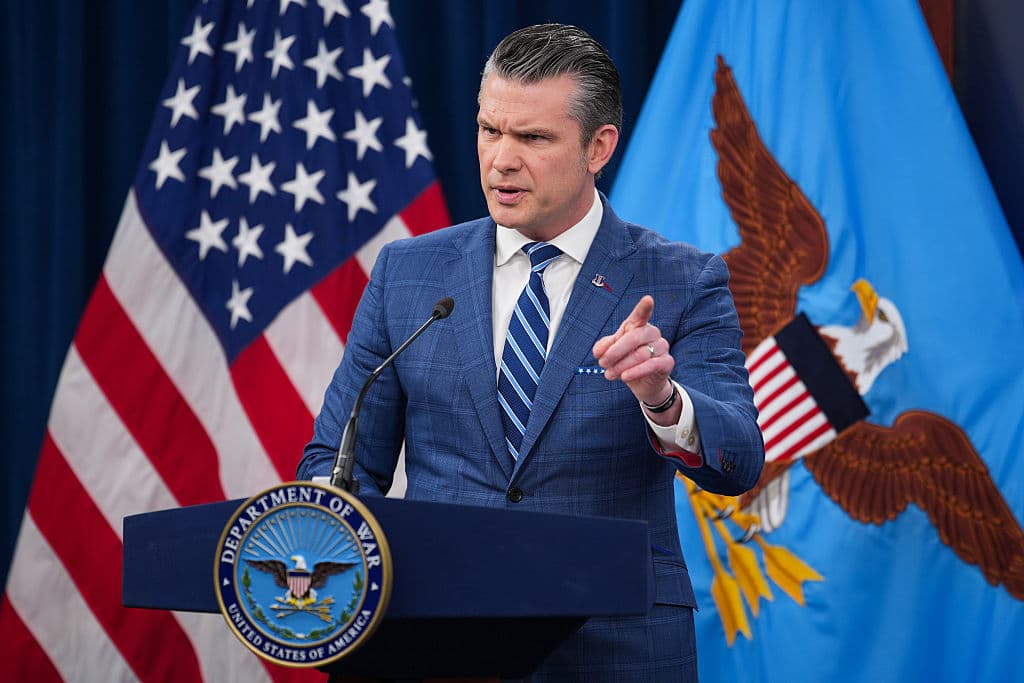
House Democrats Move to Impeach Defense Secretary Hegseth
Secretary of Defense Pete Hegseth speaks during a press briefing at the Pentagon in Arlington, Virginia, on April 8, 2026. —Andrew Harnik—Getty Images Democratic lawmakers on Wednesday introduced a resolution to impeach Defense Secretary Pete Hegseth, accusing him of abuse of power and war crimes, among other allegations. The six articles of impeachment, which have almost no chance of passing due to Republicans’ slim majority in the House, were first reported by Axios. The resolution is led by Democratic Rep. Yassamin Ansari of Arizona, the first Iranian-American Democrat elected to Congress. The eight Democratic co-sponsors of the bill include Reps. Steve Cohen of Tennessee, Jasmine Crockett of Texas, Nikema Williams of Georgia, Dina Titus of Nevada, David Min of California, Shri Thanedar of Michigan, Brittany Pettersen of Colorado, and Sarah McBride of Delaware. Ansari last week accused Trump of “escalating a devastating, illegal war, threatening massive war crimes and targeting civilian infrastructure in Iran” and said she would be introducing impeachment articles against Hegseth. In response to the resolution, White House spokesperson Anna Kelly told TIME that “Secretary Hegseth is doing an outstanding job leading the Pentagon – as evidenced by the unprecedented military success of Operation Epic Fury. This is a totally unserious act by backbencher Democrats who are desperate for headlines, and no media outlet should grant them the attention they obviously crave.” The Defense Department has also disparaged the resolution, with Pentagon Press Secretary Kingsley Wilson describing the effort in a statement to news outlets as "just another Democrat trying to make headlines as the Department of War decisively and overwhelmingly achieved the Presidents' objectives in Iran." “Secretary Hegseth will continue to protect the homeland and project peace through strength,” Wilson said. “This is just another charade in an attempt to distract the American people from the major successes we have had here at the Department of War.” The first article of impeachment in the resolution accuses Hegseth of violating his oath of office and his constitutional duty over his role in the "unauthorized war against Iran and reckless endangerment of United States service members.” The article cites Hegseth’s participation in launching hostilities against Iran without congressional approval and facilitating operations that posed “extreme and unnecessary” risk to U.S. forces and interests, including “potential ground operations.” The second article alleges Hegseth further violated his oath and constitutional duties by engaging in “violations of the law of armed conflict and targeting of civilians.” It points to the destruction of civilian infrastructure in Iran, including a school for girls in Minab, and what it describes as the “illegal ‘double tap’” strikes on boats in the Caribbean that were allegedly transporting drugs to the U.S., as well as Hegseth’s comment last month that the U.S. would have “no quarter, no mercy for our enemies.” The resolution then goes on to allege in the third article that Hegseth "has demonstrated gross negligence in the handling of sensitive and classified military information.” It cites as an example the use of the messaging app Signal to communicate sensitive information related to operations, which became the subject of a scandal last year after the editor-in-chief of The Atlantic reported that he was added to a private Signal chat in which Hegseth and other officials discussed upcoming military strikes in Yemen. The fourth article outlines accusations that Hegseth engaged in “efforts to obstruct the constitutional oversight responsibilities of Congress” by not providing details on military operations and withholding facts on civilian casualties, among other things. In the fifth article, lawmakers allege that Hegseth abused his power as Defense Secretary by “using his position to influence military decisions for improper political purposes,” “intervening in military disciplinary or personnel matters in a manner inconsistent with established law and practice,” and “undermining the principle of a nonpartisan and professional Armed Forces.” It points to what it calls “bogus investigations” against elected officials, an apparent reference to the Defense Department’s inquiry into Sen. Mark Kelly of Arizona over his participation in a video urging U.S. troops to refuse unlawful orders. Finally, in the sixth article, the lawmakers accuse Hegseth of “conduct bringing disrepute upon the U.S. and its armed forces,” alleging among other things that as a result of the actions described throughout the resolution he has “shaken public confidence in the integrity and ability” of the Defense Department. The article cites as an example Hegseth “undermining” the U.S.’s commitment to the North Atlantic Treaty Organization (NATO), which Trump has repeatedly threatened to leave, most recently in response to European allies’ resistance to getting involved in the war against Iran. Hegseth has joined Trump in criticizing the country’s allies in Europe amid the conflict, calling them “ungrateful,” and last month declined to affirm the U.S.’s commitment to the alliance’s collective defense obligations when asked by reporters, saying that “as far as NATO is concerned, that's a decision that will be left to the president.” A number of Democratic lawmakers have also called for Trump to be removed from office amid the Iran war, whether through impeachment or via the 25th Amendment. But party leaders are showing little appetite for pursuing either ahead of this year's midterm elections.
House Democrats Move to Impeach Defense Secretary Hegseth
Secretary of Defense Pete Hegseth speaks during a press briefing at the Pentagon in Arlington, Virginia, on April 8, 2026. —Andrew Harnik—Getty Images Democratic lawmakers on Wednesday introduced a resolution to impeach Defense Secretary Pete Hegseth, accusing him of abuse of power and war crimes, among other allegations. The six articles of impeachment, which have almost no chance of passing due to Republicans’ slim majority in the House, were first reported by Axios. The resolution is led by Democratic Rep. Yassamin Ansari of Arizona, the first Iranian-American Democrat elected to Congress. The eight Democratic co-sponsors of the bill include Reps. Steve Cohen of Tennessee, Jasmine Crockett of Texas, Nikema Williams of Georgia, Dina Titus of Nevada, David Min of California, Shri Thanedar of Michigan, Brittany Pettersen of Colorado, and Sarah McBride of Delaware. Ansari last week accused Trump of “escalating a devastating, illegal war, threatening massive war crimes and targeting civilian infrastructure in Iran” and said she would be introducing impeachment articles against Hegseth. In response to the resolution, White House spokesperson Anna Kelly told TIME that “Secretary Hegseth is doing an outstanding job leading the Pentagon – as evidenced by the unprecedented military success of Operation Epic Fury. This is a totally unserious act by backbencher Democrats who are desperate for headlines, and no media outlet should grant them the attention they obviously crave.” The Defense Department has also disparaged the resolution, with Pentagon Press Secretary Kingsley Wilson describing the effort in a statement to news outlets as "just another Democrat trying to make headlines as the Department of War decisively and overwhelmingly achieved the Presidents' objectives in Iran." “Secretary Hegseth will continue to protect the homeland and project peace through strength,” Wilson said. “This is just another charade in an attempt to distract the American people from the major successes we have had here at the Department of War.” The first article of impeachment in the resolution accuses Hegseth of violating his oath of office and his constitutional duty over his role in the "unauthorized war against Iran and reckless endangerment of United States service members.” The article cites Hegseth’s participation in launching hostilities against Iran without congressional approval and facilitating operations that posed “extreme and unnecessary” risk to U.S. forces and interests, including “potential ground operations.” The second article alleges Hegseth further violated his oath and constitutional duties by engaging in “violations of the law of armed conflict and targeting of civilians.” It points to the destruction of civilian infrastructure in Iran, including a school for girls in Minab, and what it describes as the “illegal ‘double tap’” strikes on boats in the Caribbean that were allegedly transporting drugs to the U.S., as well as Hegseth’s comment last month that the U.S. would have “no quarter, no mercy for our enemies.” The resolution then goes on to allege in the third article that Hegseth "has demonstrated gross negligence in the handling of sensitive and classified military information.” It cites as an example the use of the messaging app Signal to communicate sensitive information related to operations, which became the subject of a scandal last year after the editor-in-chief of The Atlantic reported that he was added to a private Signal chat in which Hegseth and other officials discussed upcoming military strikes in Yemen. The fourth article outlines accusations that Hegseth engaged in “efforts to obstruct the constitutional oversight responsibilities of Congress” by not providing details on military operations and withholding facts on civilian casualties, among other things. In the fifth article, lawmakers allege that Hegseth abused his power as Defense Secretary by “using his position to influence military decisions for improper political purposes,” “intervening in military disciplinary or personnel matters in a manner inconsistent with established law and practice,” and “undermining the principle of a nonpartisan and professional Armed Forces.” It points to what it calls “bogus investigations” against elected officials, an apparent reference to the Defense Department’s inquiry into Sen. Mark Kelly of Arizona over his participation in a video urging U.S. troops to refuse unlawful orders. Finally, in the sixth article, the lawmakers accuse Hegseth of “conduct bringing disrepute upon the U.S. and its armed forces,” alleging among other things that as a result of the actions described throughout the resolution he has “shaken public confidence in the integrity and ability” of the Defense Department. The article cites as an example Hegseth “undermining” the U.S.’s commitment to the North Atlantic Treaty Organization (NATO), which Trump has repeatedly threatened to leave, most recently in response to European allies’ resistance to getting involved in the war against Iran. Hegseth has joined Trump in criticizing the country’s allies in Europe amid the conflict, calling them “ungrateful,” and last month declined to affirm the U.S.’s commitment to the alliance’s collective defense obligations when asked by reporters, saying that “as far as NATO is concerned, that's a decision that will be left to the president.” A number of Democratic lawmakers have also called for Trump to be removed from office amid the Iran war, whether through impeachment or via the 25th Amendment. But party leaders are showing little appetite for pursuing either ahead of this year's midterm elections.

Senate Blocks Iran War Powers Resolution for Fourth Time
U.S. Sen. Tim Kaine (D-VA) speaks alongside Senate Democrats at a press conference on the Iran War Powers Resolution at the U.S. Capitol Building on April 13, 2026. —Anna Moneymaker–Getty Images The Senate on Wednesday rejected a Democratic effort to force an end to U.S. military involvement in Iran, voting largely along party lines for the fourth time this year to block a war powers resolution aimed at curbing President Donald Trump’s authority to continue the conflict without congressional approval. The measure failed 47-52, with Sen. Rand Paul, Republican of Kentucky, joining Democrats in voting for the resolution and Sen. John Fetterman, Democrat of Pennsylvania, opposing it. Sen. Jim Justice, Republican of West Virginia, did not vote. Aside from Justice’s abstention, the vote was identical to the previous war powers vote in the Senate on March 24, despite some Republican lawmakers growing increasingly vocal with their concerns about the war and the timeline to end it. Read more: Republicans Face Crucial Test on Iran War as 60-Day Deadline Looms The resolution would have required the Trump Administration to withdraw U.S. forces from hostilities with Iran unless Congress explicitly authorized the mission. Its defeat marked the latest in a series of unsuccessful attempts by Democrats to reassert Congress’s constitutional authority over decisions of war as the conflict with Iran approaches a crucial two-month mark. The War Powers Resolution of 1973, a statute passed in the aftermath of the Vietnam War to limit unilateral military action by the president, requires the executive branch to notify Congress within 48 hours of introducing U.S. forces into hostilities. It also mandates that those forces be withdrawn within 60 days unless Congress declares war or passes an authorization for the use of military force. A single 30-day extension is permitted if the president certifies that additional time is needed to safely withdraw troops. That 60-day clock is now rapidly running down. The U.S. campaign against Iran began Feb. 28, and the legal deadline based on the Administration’s formal notification to Congress in early March is expected to arrive by May 1. The date has emerged as a pivotal moment for lawmakers, who will soon face a stark choice: approve the war, force its end, or risk allowing the Administration to proceed in defiance of the statute. "By law, we got to either approve continued operations or stop,” Rep. Don Bacon, a Nebraska Republican, previously told TIME. “If it’s not approved, by law they have to stop their operations.” So far, Congress has done none of the above. The Senate has now voted four times this year to block resolutions invoking the War Powers Act, effectively allowing the conflict to continue without formal authorization. Republicans have largely argued that cutting off military operations abruptly could endanger U.S. forces and embolden Iran. But Democrats are approaching the May 1 deadline as a moment when Republicans can no longer sidestep questions about Congress’ oversight role over the war. Sen. Tim Kaine of Virginia, who has spearheaded Democrats’ recent efforts to push War Powers resolutions, told TIME this week that Senate Democrats are preparing to force additional such votes before and after the 60-day deadline. “Some are suggesting that this is a watershed moment for them and I hope that that's true,” Kaine says of the GOP. The debate has been sharpened by the Administration’s shifting portrayal of the conflict. Trump initially suggested the campaign would be brief, lasting only weeks, but has since sent mixed signals, at times describing the operation as nearing completion while simultaneously escalating military pressure on Iran. A White House official said the Administration was in "active conversations with the Hill” on the war powers deadline and added that members of Congress "who try to score political points by usurping the Commander-in-Chief’s authority would only undermine the United States Military abroad, which no elected official should want to do.”
Senate Blocks Iran War Powers Resolution for Fourth Time
U.S. Sen. Tim Kaine (D-VA) speaks alongside Senate Democrats at a press conference on the Iran War Powers Resolution at the U.S. Capitol Building on April 13, 2026. —Anna Moneymaker–Getty Images The Senate on Wednesday rejected a Democratic effort to force an end to U.S. military involvement in Iran, voting largely along party lines for the fourth time this year to block a war powers resolution aimed at curbing President Donald Trump’s authority to continue the conflict without congressional approval. The measure failed 47-52, with Sen. Rand Paul, Republican of Kentucky, joining Democrats in voting for the resolution and Sen. John Fetterman, Democrat of Pennsylvania, opposing it. Sen. Jim Justice, Republican of West Virginia, did not vote. Aside from Justice’s abstention, the vote was identical to the previous war powers vote in the Senate on March 24, despite some Republican lawmakers growing increasingly vocal with their concerns about the war and the timeline to end it. Read more: Republicans Face Crucial Test on Iran War as 60-Day Deadline Looms The resolution would have required the Trump Administration to withdraw U.S. forces from hostilities with Iran unless Congress explicitly authorized the mission. Its defeat marked the latest in a series of unsuccessful attempts by Democrats to reassert Congress’s constitutional authority over decisions of war as the conflict with Iran approaches a crucial two-month mark. The War Powers Resolution of 1973, a statute passed in the aftermath of the Vietnam War to limit unilateral military action by the president, requires the executive branch to notify Congress within 48 hours of introducing U.S. forces into hostilities. It also mandates that those forces be withdrawn within 60 days unless Congress declares war or passes an authorization for the use of military force. A single 30-day extension is permitted if the president certifies that additional time is needed to safely withdraw troops. That 60-day clock is now rapidly running down. The U.S. campaign against Iran began Feb. 28, and the legal deadline based on the Administration’s formal notification to Congress in early March is expected to arrive by May 1. The date has emerged as a pivotal moment for lawmakers, who will soon face a stark choice: approve the war, force its end, or risk allowing the Administration to proceed in defiance of the statute. "By law, we got to either approve continued operations or stop,” Rep. Don Bacon, a Nebraska Republican, previously told TIME. “If it’s not approved, by law they have to stop their operations.” So far, Congress has done none of the above. The Senate has now voted four times this year to block resolutions invoking the War Powers Act, effectively allowing the conflict to continue without formal authorization. Republicans have largely argued that cutting off military operations abruptly could endanger U.S. forces and embolden Iran. But Democrats are approaching the May 1 deadline as a moment when Republicans can no longer sidestep questions about Congress’ oversight role over the war. Sen. Tim Kaine of Virginia, who has spearheaded Democrats’ recent efforts to push War Powers resolutions, told TIME this week that Senate Democrats are preparing to force additional such votes before and after the 60-day deadline. “Some are suggesting that this is a watershed moment for them and I hope that that's true,” Kaine says of the GOP. The debate has been sharpened by the Administration’s shifting portrayal of the conflict. Trump initially suggested the campaign would be brief, lasting only weeks, but has since sent mixed signals, at times describing the operation as nearing completion while simultaneously escalating military pressure on Iran. A White House official said the Administration was in "active conversations with the Hill” on the war powers deadline and added that members of Congress "who try to score political points by usurping the Commander-in-Chief’s authority would only undermine the United States Military abroad, which no elected official should want to do.”
Senate Blocks Iran War Powers Resolution for Fourth Time
U.S. Sen. Tim Kaine (D-VA) speaks alongside Senate Democrats at a press conference on the Iran War Powers Resolution at the U.S. Capitol Building on April 13, 2026. —Anna Moneymaker–Getty Images The Senate on Wednesday rejected a Democratic effort to force an end to U.S. military involvement in Iran, voting largely along party lines for the fourth time this year to block a war powers resolution aimed at curbing President Donald Trump’s authority to continue the conflict without congressional approval. The measure failed 47-52, with Sen. Rand Paul, Republican of Kentucky, joining Democrats in voting for the resolution and Sen. John Fetterman, Democrat of Pennsylvania, opposing it. Sen. Jim Justice, Republican of West Virginia, did not vote. Aside from Justice’s abstention, the vote was identical to the previous war powers vote in the Senate on March 24, despite some Republican lawmakers growing increasingly vocal with their concerns about the war and the timeline to end it. Read more: Republicans Face Crucial Test on Iran War as 60-Day Deadline Looms The resolution would have required the Trump Administration to withdraw U.S. forces from hostilities with Iran unless Congress explicitly authorized the mission. Its defeat marked the latest in a series of unsuccessful attempts by Democrats to reassert Congress’s constitutional authority over decisions of war as the conflict with Iran approaches a crucial two-month mark. The War Powers Resolution of 1973, a statute passed in the aftermath of the Vietnam War to limit unilateral military action by the president, requires the executive branch to notify Congress within 48 hours of introducing U.S. forces into hostilities. It also mandates that those forces be withdrawn within 60 days unless Congress declares war or passes an authorization for the use of military force. A single 30-day extension is permitted if the president certifies that additional time is needed to safely withdraw troops. That 60-day clock is now rapidly running down. The U.S. campaign against Iran began Feb. 28, and the legal deadline based on the Administration’s formal notification to Congress in early March is expected to arrive by May 1. The date has emerged as a pivotal moment for lawmakers, who will soon face a stark choice: approve the war, force its end, or risk allowing the Administration to proceed in defiance of the statute. "By law, we got to either approve continued operations or stop,” Rep. Don Bacon, a Nebraska Republican, previously told TIME. “If it’s not approved, by law they have to stop their operations.” So far, Congress has done none of the above. The Senate has now voted four times this year to block resolutions invoking the War Powers Act, effectively allowing the conflict to continue without formal authorization. Republicans have largely argued that cutting off military operations abruptly could endanger U.S. forces and embolden Iran. But Democrats are approaching the May 1 deadline as a moment when Republicans can no longer sidestep questions about Congress’ oversight role over the war. Sen. Tim Kaine of Virginia, who has spearheaded Democrats’ recent efforts to push War Powers resolutions, told TIME this week that Senate Democrats are preparing to force additional such votes before and after the 60-day deadline. “Some are suggesting that this is a watershed moment for them and I hope that that's true,” Kaine says of the GOP. The debate has been sharpened by the Administration’s shifting portrayal of the conflict. Trump initially suggested the campaign would be brief, lasting only weeks, but has since sent mixed signals, at times describing the operation as nearing completion while simultaneously escalating military pressure on Iran. A White House official said the Administration was in "active conversations with the Hill” on the war powers deadline and added that members of Congress "who try to score political points by usurping the Commander-in-Chief’s authority would only undermine the United States Military abroad, which no elected official should want to do.”
Senate Blocks Iran War Powers Resolution for Fourth Time
U.S. Sen. Tim Kaine (D-VA) speaks alongside Senate Democrats at a press conference on the Iran War Powers Resolution at the U.S. Capitol Building on April 13, 2026. —Anna Moneymaker–Getty Images The Senate on Wednesday rejected a Democratic effort to force an end to U.S. military involvement in Iran, voting largely along party lines for the fourth time this year to block a war powers resolution aimed at curbing President Donald Trump’s authority to continue the conflict without congressional approval. The measure failed 47-52, with Sen. Rand Paul, Republican of Kentucky, joining Democrats in voting for the resolution and Sen. John Fetterman, Democrat of Pennsylvania, opposing it. Sen. Jim Justice, Republican of West Virginia, did not vote. Aside from Justice’s abstention, the vote was identical to the previous war powers vote in the Senate on March 24, despite some Republican lawmakers growing increasingly vocal with their concerns about the war and the timeline to end it. Read more: Republicans Face Crucial Test on Iran War as 60-Day Deadline Looms The resolution would have required the Trump Administration to withdraw U.S. forces from hostilities with Iran unless Congress explicitly authorized the mission. Its defeat marked the latest in a series of unsuccessful attempts by Democrats to reassert Congress’s constitutional authority over decisions of war as the conflict with Iran approaches a crucial two-month mark. The War Powers Resolution of 1973, a statute passed in the aftermath of the Vietnam War to limit unilateral military action by the president, requires the executive branch to notify Congress within 48 hours of introducing U.S. forces into hostilities. It also mandates that those forces be withdrawn within 60 days unless Congress declares war or passes an authorization for the use of military force. A single 30-day extension is permitted if the president certifies that additional time is needed to safely withdraw troops. That 60-day clock is now rapidly running down. The U.S. campaign against Iran began Feb. 28, and the legal deadline based on the Administration’s formal notification to Congress in early March is expected to arrive by May 1. The date has emerged as a pivotal moment for lawmakers, who will soon face a stark choice: approve the war, force its end, or risk allowing the Administration to proceed in defiance of the statute. "By law, we got to either approve continued operations or stop,” Rep. Don Bacon, a Nebraska Republican, previously told TIME. “If it’s not approved, by law they have to stop their operations.” So far, Congress has done none of the above. The Senate has now voted four times this year to block resolutions invoking the War Powers Act, effectively allowing the conflict to continue without formal authorization. Republicans have largely argued that cutting off military operations abruptly could endanger U.S. forces and embolden Iran. But Democrats are approaching the May 1 deadline as a moment when Republicans can no longer sidestep questions about Congress’ oversight role over the war. Sen. Tim Kaine of Virginia, who has spearheaded Democrats’ recent efforts to push War Powers resolutions, told TIME this week that Senate Democrats are preparing to force additional such votes before and after the 60-day deadline. “Some are suggesting that this is a watershed moment for them and I hope that that's true,” Kaine says of the GOP. The debate has been sharpened by the Administration’s shifting portrayal of the conflict. Trump initially suggested the campaign would be brief, lasting only weeks, but has since sent mixed signals, at times describing the operation as nearing completion while simultaneously escalating military pressure on Iran. A White House official said the Administration was in "active conversations with the Hill” on the war powers deadline and added that members of Congress "who try to score political points by usurping the Commander-in-Chief’s authority would only undermine the United States Military abroad, which no elected official should want to do.”
Senate Blocks Iran War Powers Resolution for Fourth Time
U.S. Sen. Tim Kaine (D-VA) speaks alongside Senate Democrats at a press conference on the Iran War Powers Resolution at the U.S. Capitol Building on April 13, 2026. —Anna Moneymaker–Getty Images The Senate on Wednesday rejected a Democratic effort to force an end to U.S. military involvement in Iran, voting largely along party lines for the fourth time this year to block a war powers resolution aimed at curbing President Donald Trump’s authority to continue the conflict without congressional approval. The measure failed 47-52, with Sen. Rand Paul, Republican of Kentucky, joining Democrats in voting for the resolution and Sen. John Fetterman, Democrat of Pennsylvania, opposing it. Sen. Jim Justice, Republican of West Virginia, did not vote. Aside from Justice’s abstention, the vote was identical to the previous war powers vote in the Senate on March 24, despite some Republican lawmakers growing increasingly vocal with their concerns about the war and the timeline to end it. Read more: Republicans Face Crucial Test on Iran War as 60-Day Deadline Looms The resolution would have required the Trump Administration to withdraw U.S. forces from hostilities with Iran unless Congress explicitly authorized the mission. Its defeat marked the latest in a series of unsuccessful attempts by Democrats to reassert Congress’s constitutional authority over decisions of war as the conflict with Iran approaches a crucial two-month mark. The War Powers Resolution of 1973, a statute passed in the aftermath of the Vietnam War to limit unilateral military action by the president, requires the executive branch to notify Congress within 48 hours of introducing U.S. forces into hostilities. It also mandates that those forces be withdrawn within 60 days unless Congress declares war or passes an authorization for the use of military force. A single 30-day extension is permitted if the president certifies that additional time is needed to safely withdraw troops. That 60-day clock is now rapidly running down. The U.S. campaign against Iran began Feb. 28, and the legal deadline based on the Administration’s formal notification to Congress in early March is expected to arrive by May 1. The date has emerged as a pivotal moment for lawmakers, who will soon face a stark choice: approve the war, force its end, or risk allowing the Administration to proceed in defiance of the statute. "By law, we got to either approve continued operations or stop,” Rep. Don Bacon, a Nebraska Republican, previously told TIME. “If it’s not approved, by law they have to stop their operations.” So far, Congress has done none of the above. The Senate has now voted four times this year to block resolutions invoking the War Powers Act, effectively allowing the conflict to continue without formal authorization. Republicans have largely argued that cutting off military operations abruptly could endanger U.S. forces and embolden Iran. But Democrats are approaching the May 1 deadline as a moment when Republicans can no longer sidestep questions about Congress’ oversight role over the war. Sen. Tim Kaine of Virginia, who has spearheaded Democrats’ recent efforts to push War Powers resolutions, told TIME this week that Senate Democrats are preparing to force additional such votes before and after the 60-day deadline. “Some are suggesting that this is a watershed moment for them and I hope that that's true,” Kaine says of the GOP. The debate has been sharpened by the Administration’s shifting portrayal of the conflict. Trump initially suggested the campaign would be brief, lasting only weeks, but has since sent mixed signals, at times describing the operation as nearing completion while simultaneously escalating military pressure on Iran. A White House official said the Administration was in "active conversations with the Hill” on the war powers deadline and added that members of Congress "who try to score political points by usurping the Commander-in-Chief’s authority would only undermine the United States Military abroad, which no elected official should want to do.”

‘It Beats Pitchfork Rebellions and the Guillotine’: Why These Super-Rich Americans Are Asking For Higher Taxes
A mobile billboard by the group Patriotic Millionaires," featuring Jeff Bezos and calling for higher taxes on the ultra-wealthy, near the U.S. Capitol in Washington, DC, on May 17, 2021 —Drew Angerer—Getty Images This article is part of The D.C. Brief, TIME’s politics newsletter. Sign up here to get stories like this sent to your inbox. As far as political protest goes, this was among the most civilized I have ever witnessed. The organizers did not make any noise beyond the idling truck covered in changing digital billboards. There were no chants on the sidewalks, no signs to leave behind as litter. The workers at the estate of billionaire Jeff Bezos looked with curiosity that quickly gave way to indifference as the visitors’ vehicle flipped through a three-minute slide deck mocking the Amazon founder: “Congratulations! You won capitalism! Now pay your damn taxes.” What was most notable about this protest were the people behind it: the type of folks who share slips at the yacht club, flight paths for their private jets, and memberships in elite schools’ alumni groups. The self-described Patriotic Millionaires were making their latest foray into Washington, D.C., on April 15, also known as Tax Day, to shame Congress into taxing people like them a whole lot more, and mock some of their own for their differing opinions. “Taxation is a nice compromise,” says Chuck Collins, an inequality foe whose great-grandfather was the ubiquitous meat magnate Oscar Mayer. “It totally beats economic, social collapse. It beats pitchfork rebellions and the guillotine.” Extreme, maybe. But it’s that rationality that pervades the couple of dozen Patriotic Millionaires and their advisers who spent Tuesday talking policy in Dupont Circle and Wednesday trolling Bezos before going to the Capitol to lobby lawmakers. The surnames are as familiar as they are linked to Americana, including Abigail Disney, the granddaughter of Roy Disney and grandniece of Walt. And they’re getting face time with likeminded lawmakers, such as Sen. Chris Van Hollen of Maryland who attended the Tuesday session and Sen. Ed Markey of Massachusetts who joined a Wednesday event on Capitol Hill. For Democrats, nothing dovetails better with their party’s midterm messaging than some of the richest people in the country framing a tax hike on themselves as not only manageable, but the ultimate champagne problem. But in a federal government controlled by Republicans and led by Donald Trump, it’s hard to see this pitch penetrating those actually deciding tax policy. As we chatted in a conference room on the sidelines of the group’s two-day policy meeting here in Washington, Collins argued the public is moving toward the Patriotic Millionaires’ thinking. “Attitudes about inequality are starting to shift and are shifting in our favor in terms of a wider understanding about the harms, and why you should tax high wealth and invest it in things that matter,” he says. Scott Ellis, an ed-tech executive and former management consultant at McKinsey, described the concentration of wealth as “the single most important root cause” of the world’s problems. His modest proposal: a $100 million cap on household wealth and a 50% wealth tax starting above $30 million. “It’s hard to argue that $100 million is not enough. … How do you get your trophy for winning capitalism?” he said. It’s a tough sell beyond these take-my-money activists. But as Morris Pearl, a founding member of the club and a former managing director at BlackRock, put it bluntly: “People are saying millionaires like me are going to move out of the city if they raise our taxes. That’s absurd. The whole point of being a millionaire is so you can live wherever you want to live. … I’m not going to move somewhere else because of my taxes. People who don’t want to pay taxes don’t live in New York.” Again, it is the privilege of indifference. But there’s another version of it—that of the masses, resigned to the status quo, which was on display at Bezos’ compound. The driver arrived promptly at 11 a.m. in the tony section of Washington where the Obamas are neighbors. It idled outside the estate, which combined two mansions into one but is seldom host to its owner, who has become the avatar for billionaires who know how to game the tax code to pay a lower rate of taxes than most Americans. The few cars going down that tree-lined street simply went around without so much as a honk. “Tax me if you can,” the signage taunted with a picture of a laughing Bezos outside his manse. Groundskeepers at the estate across the street went about their business, hosing down the sidewalk. If anyone called the police, they never showed up. After a few minutes, one of the staffers with Patriotic Millionaires turned to the small retinue of journalists on hand. “Can I tell them we’re good?” he asked. At 11:11 a.m., the show had moved on and was heading to Capitol Hill with the hopes of leaving the indifference behind. It might be tough to shake this Tax Day. Make sense of what matters in Washington. Sign up for the D.C. Brief newsletter.
‘It Beats Pitchfork Rebellions and the Guillotine’: Why These Super-Rich Americans Are Asking For Higher Taxes
A mobile billboard by the group Patriotic Millionaires," featuring Jeff Bezos and calling for higher taxes on the ultra-wealthy, near the U.S. Capitol in Washington, DC, on May 17, 2021 —Drew Angerer—Getty Images This article is part of The D.C. Brief, TIME’s politics newsletter. Sign up here to get stories like this sent to your inbox. As far as political protest goes, this was among the most civilized I have ever witnessed. The organizers did not make any noise beyond the idling truck covered in changing digital billboards. There were no chants on the sidewalks, no signs to leave behind as litter. The workers at the estate of billionaire Jeff Bezos looked with curiosity that quickly gave way to indifference as the visitors’ vehicle flipped through a three-minute slide deck mocking the Amazon founder: “Congratulations! You won capitalism! Now pay your damn taxes.” What was most notable about this protest were the people behind it: the type of folks who share slips at the yacht club, flight paths for their private jets, and memberships in elite schools’ alumni groups. The self-described Patriotic Millionaires were making their latest foray into Washington, D.C., on April 15, also known as Tax Day, to shame Congress into taxing people like them a whole lot more, and mock some of their own for their differing opinions. “Taxation is a nice compromise,” says Chuck Collins, an inequality foe whose great-grandfather was the ubiquitous meat magnate Oscar Mayer. “It totally beats economic, social collapse. It beats pitchfork rebellions and the guillotine.” Extreme, maybe. But it’s that rationality that pervades the couple of dozen Patriotic Millionaires and their advisers who spent Tuesday talking policy in Dupont Circle and Wednesday trolling Bezos before going to the Capitol to lobby lawmakers. The surnames are as familiar as they are linked to Americana, including Abigail Disney, the granddaughter of Roy Disney and grandniece of Walt. And they’re getting face time with likeminded lawmakers, such as Sen. Chris Van Hollen of Maryland who attended the Tuesday session and Sen. Ed Markey of Massachusetts who joined a Wednesday event on Capitol Hill. For Democrats, nothing dovetails better with their party’s midterm messaging than some of the richest people in the country framing a tax hike on themselves as not only manageable, but the ultimate champagne problem. But in a federal government controlled by Republicans and led by Donald Trump, it’s hard to see this pitch penetrating those actually deciding tax policy. As we chatted in a conference room on the sidelines of the group’s two-day policy meeting here in Washington, Collins argued the public is moving toward the Patriotic Millionaires’ thinking. “Attitudes about inequality are starting to shift and are shifting in our favor in terms of a wider understanding about the harms, and why you should tax high wealth and invest it in things that matter,” he says. Scott Ellis, an ed-tech executive and former management consultant at McKinsey, described the concentration of wealth as “the single most important root cause” of the world’s problems. His modest proposal: a $100 million cap on household wealth and a 50% wealth tax starting above $30 million. “It’s hard to argue that $100 million is not enough. … How do you get your trophy for winning capitalism?” he said. It’s a tough sell beyond these take-my-money activists. But as Morris Pearl, a founding member of the club and a former managing director at BlackRock, put it bluntly: “People are saying millionaires like me are going to move out of the city if they raise our taxes. That’s absurd. The whole point of being a millionaire is so you can live wherever you want to live. … I’m not going to move somewhere else because of my taxes. People who don’t want to pay taxes don’t live in New York.” Again, it is the privilege of indifference. But there’s another version of it—that of the masses, resigned to the status quo, which was on display at Bezos’ compound. The driver arrived promptly at 11 a.m. in the tony section of Washington where the Obamas are neighbors. It idled outside the estate, which combined two mansions into one but is seldom host to its owner, who has become the avatar for billionaires who know how to game the tax code to pay a lower rate of taxes than most Americans. The few cars going down that tree-lined street simply went around without so much as a honk. “Tax me if you can,” the signage taunted with a picture of a laughing Bezos outside his manse. Groundskeepers at the estate across the street went about their business, hosing down the sidewalk. If anyone called the police, they never showed up. After a few minutes, one of the staffers with Patriotic Millionaires turned to the small retinue of journalists on hand. “Can I tell them we’re good?” he asked. At 11:11 a.m., the show had moved on and was heading to Capitol Hill with the hopes of leaving the indifference behind. It might be tough to shake this Tax Day. Make sense of what matters in Washington. Sign up for the D.C. Brief newsletter.