14 stories credited to KTVZ
17 stories on ktvz.com credited to other publishers
Latest story Apr 22, 2026 · on ChamberLight since Apr 2026
A story can appear as several articles (copies of the same piece), so counts of stories and of articles differ.
Scores for KTVZ
Political lean
11 stories · 95% range 39–50 · updated Sep 25, 2026
Originality
4 of those 12 carry an unconfirmed copying flag, which is not evidence either way.
31 stories · updated Sep 25, 2026
Writing quality 87 of 100: the average rating of 10 stories, each rated on its own (separate from credibility). How it is measured
Scores last checked Sep 25, 2026.
Publishes a mix of its own reporting and reproduced articles.
Detected from this source's articles on ChamberLight, based on 31 hosted stories: 14 not confirmed as copies of another outlet’s article, 17 confirmed copies of other outlets’ articles.
Original publishers of articles on ktvz.com
Counted from articles on ktvz.com whose original publisher is verified from the page itself or confirmed by an independent signal.
Stories ChamberLight collected, by month
Stories credited to KTVZ, by publication date. ChamberLight collects articles that mention the officials it tracks, so this shows its own coverage of this source, not how much the source publishes.
- Stories from KTVZ
- Shaded: ChamberLight collected no stories, or almost none, from any outlet (a gap in its collection, not in the outlet’s publishing)
Show as a table
| Month | Stories | All outlets |
|---|---|---|
| March 2026 | 1 | 365 |
| April 2026 | 15 | 4,538 |
| May 2026 | 0 | none collected |
| June 2026 | 0 | none collected |
| July 2026 | 0 | none collected |
| August 2026 | 0 | 1 (collection gap) |
| September 2026 | 0 | 1,320 |
Top topics
Share of this source’s stories tagged with each topic. A story can carry several topics, so the shares do not add up to 100%.
- Ethics/Corruption12
86% of 14 stories · 58% across all outlets
- Budget/Spending9
64% of 14 stories · 31% across all outlets
- Voting Rights7
50% of 14 stories · 19% across all outlets
- Criminal Justice5
36% of 14 stories · 19% across all outlets
- Economy3
21% of 14 stories · 26% across all outlets
- Environment/Climate3
21% of 14 stories · 5% across all outlets
- Immigration2
14% of 14 stories · 13% across all outlets
- Education1
7% of 14 stories · 3% across all outlets
The thin mark on each bar is the topic’s share across all outlets.
Who they cover
Party of the officials these stories are mainly about, across all 17 officials named. A story counts once for each official it is mainly about, so the split is over 28 story–official pairs, from 14 stories.
- Democrat61% · 17 pairs
- Republican36% · 10 pairs
- Party not recorded4% · 1 pair
Most covered
Stories mainly about each official, and their share of the source’s 14 stories.
- 1Ron WydenD4 stories · 29%
- 2Eric SwalwellD3 stories · 21%
- 3Jeff MerkleyD3 stories · 21%
- 4Donald TrumpR2 stories · 14%
- 5Janelle BynumD2 stories · 14%
- 6Mike JohnsonR2 stories · 14%
- 7Tony GonzalesR2 stories · 14%
- 8Andrea SalinasD1 story · 7%
- 9Cliff BentzR1 story · 7%
- 10Hakeem JeffriesD1 story · 7%
+ 7 other officials (7 story–official pairs)
Article tone
ChamberLight’s article analysis assigns each story a tone toward the official it covers. It describes the coverage of that official, not KTVZ’s stance, and reader votes do not change it. 14 stories.
- Good Look
- 6 (43%)
- Mixed
- 4 (29%)
- Informational
- 1 (7%)
- Bad Look
- 3 (21%)
Related sources
Lean 95% range 43–47 · updated Sep 25, 2026
Similar lean · 2 shared topics
Lean 95% range 43–46 · updated Sep 25, 2026
Similar lean · 3 shared topics
Lean 95% range 40–49 · updated Sep 25, 2026
Similar lean · 2 shared topics
Lean 95% range 42.4–47.5 · updated Sep 25, 2026
Similar lean · 2 shared topics
Lean 95% range 43–48 · updated Sep 25, 2026
Similar lean · 3 shared topics
Lean 95% range 39–49 · updated Sep 25, 2026
Similar lean · 2 shared topics
Challenges to these scores
No one has challenged a score on this page yet. Anyone can; editors publish every outcome here.
Articles served from ktvz.com
63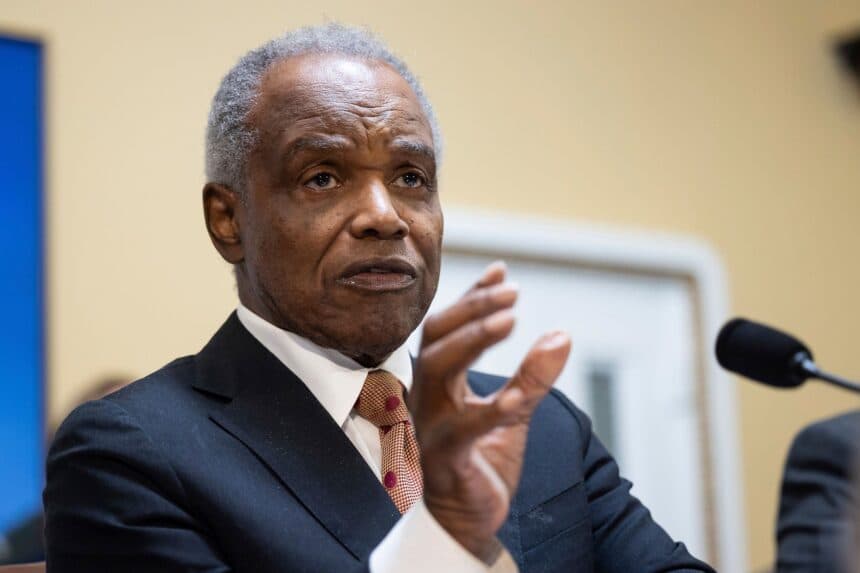
Longtime Georgia Democrat US Rep. David Scott dies at 80
By Veronica Stracqualursi, CNN (CNN) — US Democratic Rep. David Scott, who represented Georgia’s 13th Congressional District, has died at 80 years old. Scott’s death was announced Wednesday on the House floor. The congressman was first elected in 2002 and was running for reelection to a 13th term. Born on a farm in South Carolina, Scott became the first African American to chair the House Agriculture Committee in 2020, when Democrats controlled the chamber. Reflecting on his historic appointment, Scott said in a statement at the time that he was “honored.” “I was born on my grandparents’ farm in rural Aynor, South Carolina, during the days of segregation, and the hardships, of those, on whose shoulders I now stand,” he said. He later served as ranking member on the committee. During his time serving in the US House, the congressman helped secure funding in the 2018 farm bill for agriculture scholarships for students attending historically Black colleges and universities. Before arriving in Washington, Scott was a Georgia state lawmaker and a business owner. Lawmakers on both sides of the aisle praised Scott’s long tenure in Congress and expressed sadness over his death. Speaker Mike Johnson wrote on X, “We are all deeply saddened by the news of Rep. David Scott’s passing. For more than two decades, David faithfully served the people of Georgia’s 13th Congressional District and spent the majority of his life in service to others.” The House Agriculture Committee’s top Democrat, Rep. Angie Craig, remembered Scott as “a strong voice for Georgia’s farmers, hungry veterans and young people.” This story has been updated with additional information. The-CNN-Wire ™ & © 2026 Cable News Network, Inc., a Warner Bros. Discovery Company. All rights reserved. The post Longtime Georgia Democrat US Rep. David Scott dies at 80 appeared first on KTVZ.

Virginia voters to decide on new House map with major midterm implications
CNN By Jeff Zeleny, CNN (CNN) — Virginia is the latest front in an unprecedented coast-to-coast redistricting war, with voters on Tuesday set to determine whether to accept or reject a Democratic plan to dramatically redraw the state’s congressional maps and help shape the midterm elections. Nearly 1.4 million Virginians have already cast early ballots, a sign of remarkable interest for an April special election, ahead of Tuesday’s final day of voting. If enacted, the plan could help Democrats win 10 of the state’s 11 congressional districts – a major shift from the current balance of six seats held by Democrats and five by Republicans. “We didn’t start this fight, but I’m saying to Virginia, we need to finish it,” Delores McQuinn, a Democratic member of the House of Delegates, told CNN at a rally in the final days of the redistricting campaign. “We can help level the playing field.” Virginia is one of the final chapters in a redistricting arms race that President Donald Trump started last year in Texas when he said Republicans were “entitled to five more seats.” California Democrats responded, along with a handful of other states, in a tit-for-tat that has ultimately yielded nine more Republican-friendly seats and six that favor Democrats. “What’s happening now is the most blatant power grab that has ever been demonstrated,” said Glenn Youngkin, a former Virginia governor and a leading Republican voice against the measure, who avoided mention of how Texas kicked off the rare mid-decade redistricting fight. Democrats have raised more than twice as much money than Republicans in the closely watched contest that could help determine which party controls Congress after the fall elections. On advertising alone, Democrats have spent $55 million, according to AdImpact, compared to $23 million for Republicans. Despite the wide disparity, Democrats acknowledge that victory is far from certain, saying turnout on Election Day will be critical. Republicans share that sentiment and believe creating a 10-1 advantage for Democrats is at odds with the electorate in a state former Vice President Kamala Harris won with nearly 52% of the vote in 2024. Here are a few dynamics at play – for Virginia and the nation. High stakes for Democrats For Democrats, the stakes in Virginia are remarkably high. So, too, are the rewards. If the referendum succeeds Tuesday night, the party suddenly has more breathing room in its quest to win control of the US House in the midterm elections. The national political winds already favor Democrats this year, but a Virginia victory would super-charge their prospects. “They thought that Democrats were going to step back,” House Democratic Leader Hakeem Jeffries told supporters during a rally in the final days of the campaign. “Well, we’re making clear we’re not here to step back. We’re here to fight back.” On the eve of the election, Jeffries told reporters: “It’s gonna be close because Virginia is a purple state.” Jeffries has been at the center of the Democratic strategy in Virginia, a plan that has long worried some state party leaders as a potential overreach. His comments Monday underscore how cautiously Democrats are eyeing — and lowering expectations for — the special election, which comes five months after the party swept the Virginia governor’s race by 15 percentage points last fall. But if Democrats win in November, Jeffries stands the most to gain – likely becoming House Speaker, a fact he rarely mentions, but one that his Republican rivals point out again and again. “Do you want to see Speaker Hakeem Jeffries?” Speaker Mike Johnson said as he rallied Republican opposition to the referendum, trying to use Jeffries as a motivating force by sounding the alarm about the prospect of the GOP losing its majority next year. Trump, Obama loom large The president has been a dominating factor in the race, but nearly an absent one. Aside from a tele-rally on the eve of the election, Trump played little hands-on role in the GOP campaign urging Virginians to vote against the referendum. “The whole country is watching it’s so important and so unfair what they’ve done,” Trump said in brief remarks Monday evening. “We need every Virginia patriot to get out and vote no, no, no on the radical Democrats’ unfair ballot referendum.” Yet he played a central part on the Democratic side, with his name repeatedly invoked to raise enthusiasm among Trump critics. “Voting yes will stop Donald Trump’s scheme to rig the midterm elections,” Rep. Jennifer McClellan, a Virginia Democrat, told supporters at a rally in Richmond. “Voting yes will stop the MAGA power grab.” With the midterm elections a little more than six months away, Tuesday’s outcome could offer fresh clues for which side Trump motivates more – Republicans or Democrats. Former President Barack Obama has also been at the center of the Virginia race – featured in ads on both sides – as Democrats have called on him to rally the party’s base even as Republicans have seized on his previous comments speaking against gerrymandering. “By voting yes, you can push back against the Republicans trying to give themselves an unfair advantage in the midterms,” Obama said in a video released Friday, which aides said was intended to clear up any confusion. “By voting yes, you can take a temporary step to level the playing field.” Groups opposing the redistricting effort have featured some of Obama’s past criticisms of gerrymandering, including this sentiment aimed at independent voters in TV ads and mailers: “Because of things like political gerrymandering, our parties have moved further and further apart and it’s harder and harder to find common ground.” National implications, but local elections The national implications of the Virginia referendum are clear, given the narrow GOP majority in the House and the redistricting battle playing out across the country for nearly a year. But the race could also hinge on far more local concerns, including those of rural voters like Tara Bowman of Woodstock. She lives about 90 minutes away from the Washington suburbs of Fairfax and McLean, with whom she has no interest in sharing a member of Congress. “I think the new map is absolutely horrible,” Bowman said. “I do not want my congressman to be from Fairfax. No, no, no, no.” To produce a 10-1 advantage in the state’s congressional delegation, Virginia Democrats are proposing a new map that would carve up deep blue districts in northern Virginia and around Richmond, while creating a new district along the Blue Ridge Mountains that connects several college towns. The constitutional amendment on the ballot Tuesday would allow lawmakers to redraw the state’s congressional map before the November elections, returning the authority of drawing districts to a redistricting commission in 2031 following the next census. If voters reject the referendum, the current map with its 6-to-5 split in favor of Democrats remains in place – and campaigns for those seats will begin in earnest. For all the national implications hanging over the race, including a question of which party should control Congress in November, the decisions voters make on Tuesday will be done far closer to home. CNN’s David Wright contributed to this report. The-CNN-Wire ™ & © 2026 Cable News Network, Inc., a Warner Bros. Discovery Company. All rights reserved. The post Virginia voters to decide on new House map with major midterm implications appeared first on KTVZ.
Virginia voters to decide on new House map with major midterm implications
CNN By Jeff Zeleny, CNN (CNN) — Virginia is the latest front in an unprecedented coast-to-coast redistricting war, with voters on Tuesday set to determine whether to accept or reject a Democratic plan to dramatically redraw the state’s congressional maps and help shape the midterm elections. Nearly 1.4 million Virginians have already cast early ballots, a sign of remarkable interest for an April special election, ahead of Tuesday’s final day of voting. If enacted, the plan could help Democrats win 10 of the state’s 11 congressional districts – a major shift from the current balance of six seats held by Democrats and five by Republicans. “We didn’t start this fight, but I’m saying to Virginia, we need to finish it,” Delores McQuinn, a Democratic member of the House of Delegates, told CNN at a rally in the final days of the redistricting campaign. “We can help level the playing field.” Virginia is one of the final chapters in a redistricting arms race that President Donald Trump started last year in Texas when he said Republicans were “entitled to five more seats.” California Democrats responded, along with a handful of other states, in a tit-for-tat that has ultimately yielded nine more Republican-friendly seats and six that favor Democrats. “What’s happening now is the most blatant power grab that has ever been demonstrated,” said Glenn Youngkin, a former Virginia governor and a leading Republican voice against the measure, who avoided mention of how Texas kicked off the rare mid-decade redistricting fight. Democrats have raised more than twice as much money than Republicans in the closely watched contest that could help determine which party controls Congress after the fall elections. On advertising alone, Democrats have spent $55 million, according to AdImpact, compared to $23 million for Republicans. Despite the wide disparity, Democrats acknowledge that victory is far from certain, saying turnout on Election Day will be critical. Republicans share that sentiment and believe creating a 10-1 advantage for Democrats is at odds with the electorate in a state former Vice President Kamala Harris won with nearly 52% of the vote in 2024. Here are a few dynamics at play – for Virginia and the nation. High stakes for Democrats For Democrats, the stakes in Virginia are remarkably high. So, too, are the rewards. If the referendum succeeds Tuesday night, the party suddenly has more breathing room in its quest to win control of the US House in the midterm elections. The national political winds already favor Democrats this year, but a Virginia victory would super-charge their prospects. “They thought that Democrats were going to step back,” House Democratic Leader Hakeem Jeffries told supporters during a rally in the final days of the campaign. “Well, we’re making clear we’re not here to step back. We’re here to fight back.” On the eve of the election, Jeffries told reporters: “It’s gonna be close because Virginia is a purple state.” Jeffries has been at the center of the Democratic strategy in Virginia, a plan that has long worried some state party leaders as a potential overreach. His comments Monday underscore how cautiously Democrats are eyeing — and lowering expectations for — the special election, which comes five months after the party swept the Virginia governor’s race by 15 percentage points last fall. But if Democrats win in November, Jeffries stands the most to gain – likely becoming House Speaker, a fact he rarely mentions, but one that his Republican rivals point out again and again. “Do you want to see Speaker Hakeem Jeffries?” Speaker Mike Johnson said as he rallied Republican opposition to the referendum, trying to use Jeffries as a motivating force by sounding the alarm about the prospect of the GOP losing its majority next year. Trump, Obama loom large The president has been a dominating factor in the race, but nearly an absent one. Aside from a tele-rally on the eve of the election, Trump played little hands-on role in the GOP campaign urging Virginians to vote against the referendum. “The whole country is watching it’s so important and so unfair what they’ve done,” Trump said in brief remarks Monday evening. “We need every Virginia patriot to get out and vote no, no, no on the radical Democrats’ unfair ballot referendum.” Yet he played a central part on the Democratic side, with his name repeatedly invoked to raise enthusiasm among Trump critics. “Voting yes will stop Donald Trump’s scheme to rig the midterm elections,” Rep. Jennifer McClellan, a Virginia Democrat, told supporters at a rally in Richmond. “Voting yes will stop the MAGA power grab.” With the midterm elections a little more than six months away, Tuesday’s outcome could offer fresh clues for which side Trump motivates more – Republicans or Democrats. Former President Barack Obama has also been at the center of the Virginia race – featured in ads on both sides – as Democrats have called on him to rally the party’s base even as Republicans have seized on his previous comments speaking against gerrymandering. “By voting yes, you can push back against the Republicans trying to give themselves an unfair advantage in the midterms,” Obama said in a video released Friday, which aides said was intended to clear up any confusion. “By voting yes, you can take a temporary step to level the playing field.” Groups opposing the redistricting effort have featured some of Obama’s past criticisms of gerrymandering, including this sentiment aimed at independent voters in TV ads and mailers: “Because of things like political gerrymandering, our parties have moved further and further apart and it’s harder and harder to find common ground.” National implications, but local elections The national implications of the Virginia referendum are clear, given the narrow GOP majority in the House and the redistricting battle playing out across the country for nearly a year. But the race could also hinge on far more local concerns, including those of rural voters like Tara Bowman of Woodstock. She lives about 90 minutes away from the Washington suburbs of Fairfax and McLean, with whom she has no interest in sharing a member of Congress. “I think the new map is absolutely horrible,” Bowman said. “I do not want my congressman to be from Fairfax. No, no, no, no.” To produce a 10-1 advantage in the state’s congressional delegation, Virginia Democrats are proposing a new map that would carve up deep blue districts in northern Virginia and around Richmond, while creating a new district along the Blue Ridge Mountains that connects several college towns. The constitutional amendment on the ballot Tuesday would allow lawmakers to redraw the state’s congressional map before the November elections, returning the authority of drawing districts to a redistricting commission in 2031 following the next census. If voters reject the referendum, the current map with its 6-to-5 split in favor of Democrats remains in place – and campaigns for those seats will begin in earnest. For all the national implications hanging over the race, including a question of which party should control Congress in November, the decisions voters make on Tuesday will be done far closer to home. CNN’s David Wright contributed to this report. The-CNN-Wire ™ & © 2026 Cable News Network, Inc., a Warner Bros. Discovery Company. All rights reserved. The post Virginia voters to decide on new House map with major midterm implications appeared first on KTVZ.
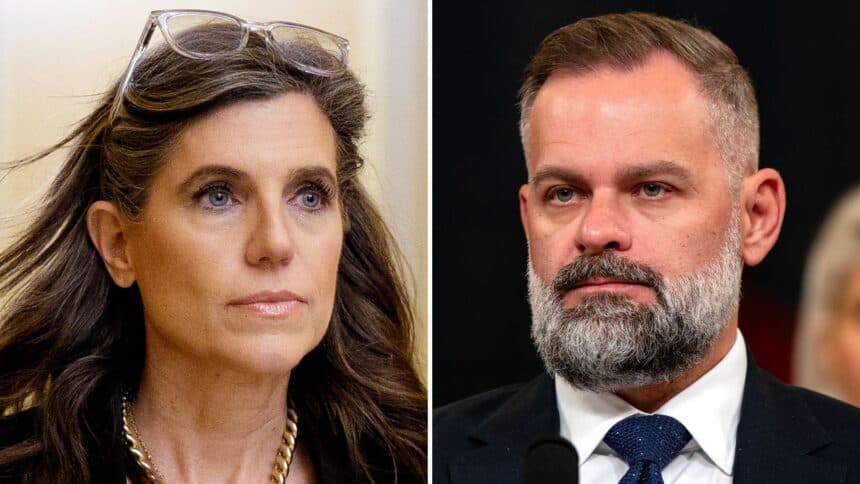
Feud between Mace and Mills flares as the Republicans trade barbs, expulsion threats
By Sarah Ferris, Ellis Kim, CNN (CNN) — A deeply personal grudge between a pair of Republicans — Reps. Cory Mills of Florida and Nancy Mace of South Carolina — has escalated on Capitol Hill, as Mills accused his long-time foe of trying to profit off efforts to oust him. The spat between the two firebrand conservatives is gaining traction in the halls of Congress and online among the MAGA base at a precarious time for President Donald Trump’s party. GOP leadership is already struggling to keep its razor-thin majority on track to advance key priorities — and needs every one of its Republican seats. While Mills and Mace have traded personal barbs for years, some of their more serious threats in recent days could jeopardize the fragile GOP unity in Congress. The two have floated bringing dueling expulsion measures — the most severe consequence possible for a member of Congress — in direct defiance of GOP leaders’ pleas to keep the peace in their party. Speaker Mike Johnson, who governs the House with just a two-vote margin, made clear to reporters Monday evening that he did not support members of his party going after each other. “It is not something I encourage, no. Look, we have a process here,” Johnson said, adding later: “So no, I’m not in favor.” Mills has since backed down from his threat to force an ouster vote against Mace — but Mace has only appeared to embrace the stand-off, telling CNN: “Bring it on.” If a vote takes place, it could cause ugly divisions in the narrowly divided House GOP, with significant implications for Johnson’s tiny majority. Asked about Mace’s expulsion push on Tuesday, Mills dismissed it as “political theatrics for fundraising,” lashing out at Mace for singling him out for allegations that he said have never been proven by a court or an independent watchdog. He went directly after the congresswoman, calling her out for “always creating drama” with the intent of raising money, but then not following through with her threats. Mace is currently threatening to force a vote to expel Mills on the floor, but she has not yet triggered it. “If you’re going to file a resolution, why not call it a privileged motion where you can actually put it on the floor for a vote? Why just fundraise off of it?” Mills said of Mace. CNN has reached out to Mace for comment on the fundraising allegation. A Defiant Mills says he won’t resign Mills told CNN on Tuesday he would not resign from Congress, despite calls from some in his own party to step down amid questions over sexual misconduct and other allegations. “There’s absolutely no reason to resign,” he told CNN, adding that Johnson has told him in conversations not to. “He told me not to resign, and he told me that this is why we have this process.” The speaker would not confirm the exchange directly, but he insisted Mills should be afforded due process. “Cory Mills is going through the same due process that was afforded to Cherfilus-McCormick and anyone else who has allegations made against them,” the speaker said. “I’ve asked and answered this question a thousand times. He is in the middle of an Ethics Committee process and so everyone is due the opportunity to present their defenses and go through that.” He also wouldn’t say directly whether he will support Mills’ reelection bid, though he noted he views himself “in charge” of reelecting GOP incumbents. “He’s an incumbent and I’m in charge of getting all the incumbents — Republican incumbents reelected, and so – of course, that was all done well before any of these allegations were coming out. But he has the right to answer to the allegations, and that’s what they’re doing,” Johnson said. He said he would no longer comment on Mills, telling reporters, “I’m done commenting on it. I can’t. The speaker of the House does not put a thumb on the scale for the Ethics Committee investigation.” The Ethics Committee is currently looking into multiple allegations made against Mills, including campaign finance violations and sexual misconduct. The Florida congressman has also been under investigation by DC police for allegedly assaulting an individual. He was also previously ordered by a judge not to have any contact with an ex-girlfriend, who accused the congressman of having threatened to release sexually explicit images and videos of her after their relationship ended. Mills has repeatedly denied all of the allegations against him, remaining defiant amid renewed scrutiny. “I can tell you that there’s no open criminal or civil case against me, nothing. I’ve never been arrested and/or charged with anything that’s criminal and or civil. I have no federal indictments or anything for alleged federal fraud. … And I’ve never had any type of sexual misconduct or inappropriate behavior that involves staff or Hill and things like this,” the Florida congressman said Tuesday of the myriad allegations he’s facing. It’s not clear yet whether Mace’s push will meet the high bar for expulsion, which requires two-thirds of members to support it. But some key Republicans told CNN on Tuesday they’re not ruling it out. GOP Rep. Lauren Boebert left the door open to voting to expel Mills, one of the remaining lawmakers under review by the House Ethics Committee following a series of resignations in the past week. She told CNN that she would want to weigh the details of a resolution to expel him if it comes to the floor. Mills repeatedly bristled at being lumped together with the three lawmakers who recently resigned from the House in disgrace — former Reps. Eric Swalwell, Tony Gonzales, and Sheila Cherfilus-McCormick — and who faced calls for their expulsion this month before they stepped down. He argued the investigation is different and stressed that he is fully cooperating with the House Ethics Committee. “This is political tit for tat. If one goes, they want another one to go. I’m not in the category of Swalwell, a Gonzales, and or a Cherfilus-McCormick,” he said. He added that he and his lawyers have so far turned over many “documents” to the ethics panel but did not have any insight into how much longer that probe could last. “Whether you’re the speaker, minority leader, whatever, no one has that level of visibility. All I can say is, everything they’ve asked of us, we’ve compiled,” he said. This story has been updated with additional details. The-CNN-Wire ™ & © 2026 Cable News Network, Inc., a Warner Bros. Discovery Company. All rights reserved. CNN’s Manu Raju, Alison Main, Kendall Wright and Arpita Dasika contributed to this report. The post Feud between Mace and Mills flares as the Republicans trade barbs, expulsion threats appeared first on KTVZ.
Feud between Mace and Mills flares as the Republicans trade barbs, expulsion threats
By Sarah Ferris, Ellis Kim, CNN (CNN) — A deeply personal grudge between a pair of Republicans — Reps. Cory Mills of Florida and Nancy Mace of South Carolina — has escalated on Capitol Hill, as Mills accused his long-time foe of trying to profit off efforts to oust him. The spat between the two firebrand conservatives is gaining traction in the halls of Congress and online among the MAGA base at a precarious time for President Donald Trump’s party. GOP leadership is already struggling to keep its razor-thin majority on track to advance key priorities — and needs every one of its Republican seats. While Mills and Mace have traded personal barbs for years, some of their more serious threats in recent days could jeopardize the fragile GOP unity in Congress. The two have floated bringing dueling expulsion measures — the most severe consequence possible for a member of Congress — in direct defiance of GOP leaders’ pleas to keep the peace in their party. Speaker Mike Johnson, who governs the House with just a two-vote margin, made clear to reporters Monday evening that he did not support members of his party going after each other. “It is not something I encourage, no. Look, we have a process here,” Johnson said, adding later: “So no, I’m not in favor.” Mills has since backed down from his threat to force an ouster vote against Mace — but Mace has only appeared to embrace the stand-off, telling CNN: “Bring it on.” If a vote takes place, it could cause ugly divisions in the narrowly divided House GOP, with significant implications for Johnson’s tiny majority. Asked about Mace’s expulsion push on Tuesday, Mills dismissed it as “political theatrics for fundraising,” lashing out at Mace for singling him out for allegations that he said have never been proven by a court or an independent watchdog. He went directly after the congresswoman, calling her out for “always creating drama” with the intent of raising money, but then not following through with her threats. Mace is currently threatening to force a vote to expel Mills on the floor, but she has not yet triggered it. “If you’re going to file a resolution, why not call it a privileged motion where you can actually put it on the floor for a vote? Why just fundraise off of it?” Mills said of Mace. CNN has reached out to Mace for comment on the fundraising allegation. A Defiant Mills says he won’t resign Mills told CNN on Tuesday he would not resign from Congress, despite calls from some in his own party to step down amid questions over sexual misconduct and other allegations. “There’s absolutely no reason to resign,” he told CNN, adding that Johnson has told him in conversations not to. “He told me not to resign, and he told me that this is why we have this process.” The speaker would not confirm the exchange directly, but he insisted Mills should be afforded due process. “Cory Mills is going through the same due process that was afforded to Cherfilus-McCormick and anyone else who has allegations made against them,” the speaker said. “I’ve asked and answered this question a thousand times. He is in the middle of an Ethics Committee process and so everyone is due the opportunity to present their defenses and go through that.” He also wouldn’t say directly whether he will support Mills’ reelection bid, though he noted he views himself “in charge” of reelecting GOP incumbents. “He’s an incumbent and I’m in charge of getting all the incumbents — Republican incumbents reelected, and so – of course, that was all done well before any of these allegations were coming out. But he has the right to answer to the allegations, and that’s what they’re doing,” Johnson said. He said he would no longer comment on Mills, telling reporters, “I’m done commenting on it. I can’t. The speaker of the House does not put a thumb on the scale for the Ethics Committee investigation.” The Ethics Committee is currently looking into multiple allegations made against Mills, including campaign finance violations and sexual misconduct. The Florida congressman has also been under investigation by DC police for allegedly assaulting an individual. He was also previously ordered by a judge not to have any contact with an ex-girlfriend, who accused the congressman of having threatened to release sexually explicit images and videos of her after their relationship ended. Mills has repeatedly denied all of the allegations against him, remaining defiant amid renewed scrutiny. “I can tell you that there’s no open criminal or civil case against me, nothing. I’ve never been arrested and/or charged with anything that’s criminal and or civil. I have no federal indictments or anything for alleged federal fraud. … And I’ve never had any type of sexual misconduct or inappropriate behavior that involves staff or Hill and things like this,” the Florida congressman said Tuesday of the myriad allegations he’s facing. It’s not clear yet whether Mace’s push will meet the high bar for expulsion, which requires two-thirds of members to support it. But some key Republicans told CNN on Tuesday they’re not ruling it out. GOP Rep. Lauren Boebert left the door open to voting to expel Mills, one of the remaining lawmakers under review by the House Ethics Committee following a series of resignations in the past week. She told CNN that she would want to weigh the details of a resolution to expel him if it comes to the floor. Mills repeatedly bristled at being lumped together with the three lawmakers who recently resigned from the House in disgrace — former Reps. Eric Swalwell, Tony Gonzales, and Sheila Cherfilus-McCormick — and who faced calls for their expulsion this month before they stepped down. He argued the investigation is different and stressed that he is fully cooperating with the House Ethics Committee. “This is political tit for tat. If one goes, they want another one to go. I’m not in the category of Swalwell, a Gonzales, and or a Cherfilus-McCormick,” he said. He added that he and his lawyers have so far turned over many “documents” to the ethics panel but did not have any insight into how much longer that probe could last. “Whether you’re the speaker, minority leader, whatever, no one has that level of visibility. All I can say is, everything they’ve asked of us, we’ve compiled,” he said. This story has been updated with additional details. The-CNN-Wire ™ & © 2026 Cable News Network, Inc., a Warner Bros. Discovery Company. All rights reserved. CNN’s Manu Raju, Alison Main, Kendall Wright and Arpita Dasika contributed to this report. The post Feud between Mace and Mills flares as the Republicans trade barbs, expulsion threats appeared first on KTVZ.
Feud between Mace and Mills flares as the Republicans trade barbs, expulsion threats
By Sarah Ferris, Ellis Kim, CNN (CNN) — A deeply personal grudge between a pair of Republicans — Reps. Cory Mills of Florida and Nancy Mace of South Carolina — has escalated on Capitol Hill, as Mills accused his long-time foe of trying to profit off efforts to oust him. The spat between the two firebrand conservatives is gaining traction in the halls of Congress and online among the MAGA base at a precarious time for President Donald Trump’s party. GOP leadership is already struggling to keep its razor-thin majority on track to advance key priorities — and needs every one of its Republican seats. While Mills and Mace have traded personal barbs for years, some of their more serious threats in recent days could jeopardize the fragile GOP unity in Congress. The two have floated bringing dueling expulsion measures — the most severe consequence possible for a member of Congress — in direct defiance of GOP leaders’ pleas to keep the peace in their party. Speaker Mike Johnson, who governs the House with just a two-vote margin, made clear to reporters Monday evening that he did not support members of his party going after each other. “It is not something I encourage, no. Look, we have a process here,” Johnson said, adding later: “So no, I’m not in favor.” Mills has since backed down from his threat to force an ouster vote against Mace — but Mace has only appeared to embrace the stand-off, telling CNN: “Bring it on.” If a vote takes place, it could cause ugly divisions in the narrowly divided House GOP, with significant implications for Johnson’s tiny majority. Asked about Mace’s expulsion push on Tuesday, Mills dismissed it as “political theatrics for fundraising,” lashing out at Mace for singling him out for allegations that he said have never been proven by a court or an independent watchdog. He went directly after the congresswoman, calling her out for “always creating drama” with the intent of raising money, but then not following through with her threats. Mace is currently threatening to force a vote to expel Mills on the floor, but she has not yet triggered it. “If you’re going to file a resolution, why not call it a privileged motion where you can actually put it on the floor for a vote? Why just fundraise off of it?” Mills said of Mace. CNN has reached out to Mace for comment on the fundraising allegation. A Defiant Mills says he won’t resign Mills told CNN on Tuesday he would not resign from Congress, despite calls from some in his own party to step down amid questions over sexual misconduct and other allegations. “There’s absolutely no reason to resign,” he told CNN, adding that Johnson has told him in conversations not to. “He told me not to resign, and he told me that this is why we have this process.” The speaker would not confirm the exchange directly, but he insisted Mills should be afforded due process. “Cory Mills is going through the same due process that was afforded to Cherfilus-McCormick and anyone else who has allegations made against them,” the speaker said. “I’ve asked and answered this question a thousand times. He is in the middle of an Ethics Committee process and so everyone is due the opportunity to present their defenses and go through that.” He also wouldn’t say directly whether he will support Mills’ reelection bid, though he noted he views himself “in charge” of reelecting GOP incumbents. “He’s an incumbent and I’m in charge of getting all the incumbents — Republican incumbents reelected, and so – of course, that was all done well before any of these allegations were coming out. But he has the right to answer to the allegations, and that’s what they’re doing,” Johnson said. He said he would no longer comment on Mills, telling reporters, “I’m done commenting on it. I can’t. The speaker of the House does not put a thumb on the scale for the Ethics Committee investigation.” The Ethics Committee is currently looking into multiple allegations made against Mills, including campaign finance violations and sexual misconduct. The Florida congressman has also been under investigation by DC police for allegedly assaulting an individual. He was also previously ordered by a judge not to have any contact with an ex-girlfriend, who accused the congressman of having threatened to release sexually explicit images and videos of her after their relationship ended. Mills has repeatedly denied all of the allegations against him, remaining defiant amid renewed scrutiny. “I can tell you that there’s no open criminal or civil case against me, nothing. I’ve never been arrested and/or charged with anything that’s criminal and or civil. I have no federal indictments or anything for alleged federal fraud. … And I’ve never had any type of sexual misconduct or inappropriate behavior that involves staff or Hill and things like this,” the Florida congressman said Tuesday of the myriad allegations he’s facing. It’s not clear yet whether Mace’s push will meet the high bar for expulsion, which requires two-thirds of members to support it. But some key Republicans told CNN on Tuesday they’re not ruling it out. GOP Rep. Lauren Boebert left the door open to voting to expel Mills, one of the remaining lawmakers under review by the House Ethics Committee following a series of resignations in the past week. She told CNN that she would want to weigh the details of a resolution to expel him if it comes to the floor. Mills repeatedly bristled at being lumped together with the three lawmakers who recently resigned from the House in disgrace — former Reps. Eric Swalwell, Tony Gonzales, and Sheila Cherfilus-McCormick — and who faced calls for their expulsion this month before they stepped down. He argued the investigation is different and stressed that he is fully cooperating with the House Ethics Committee. “This is political tit for tat. If one goes, they want another one to go. I’m not in the category of Swalwell, a Gonzales, and or a Cherfilus-McCormick,” he said. He added that he and his lawyers have so far turned over many “documents” to the ethics panel but did not have any insight into how much longer that probe could last. “Whether you’re the speaker, minority leader, whatever, no one has that level of visibility. All I can say is, everything they’ve asked of us, we’ve compiled,” he said. This story has been updated with additional details. The-CNN-Wire ™ & © 2026 Cable News Network, Inc., a Warner Bros. Discovery Company. All rights reserved. CNN’s Manu Raju, Alison Main, Kendall Wright and Arpita Dasika contributed to this report. The post Feud between Mace and Mills flares as the Republicans trade barbs, expulsion threats appeared first on KTVZ.

Virginia voters to decide on new House map with major midterm implications
By Jeff Zeleny, CNN (CNN) — Virginia is the latest front in an unprecedented coast-to-coast redistricting war, with voters on Tuesday set to determine whether to accept or reject a Democratic plan to dramatically redraw the state’s congressional maps and help shape the midterm elections. Nearly 1.4 million Virginians have already cast early ballots, a sign of remarkable interest for an April special election. The final day of voting is Tuesday, with polls open from 6 a.m. to 7 p.m. ET, on a plan that could help Democrats win 10 of the state’s 11 congressional districts – a major shift from the current balance of six seats held by Democrats and five by Republicans. “We didn’t start this fight, but I’m saying to Virginia, we need to finish it,” Delores McQuinn, a Democratic member of the House of Delegates, told CNN at a rally in the final days of the redistricting campaign. “We can help level the playing field.” Virginia is one of the final chapters in a redistricting arms race that President Donald Trump started last year in Texas when he said Republicans were “entitled to five more seats.” California Democrats responded, along with a handful of other states, in a tit-for-tat that has ultimately yielded nine more Republican-friendly seats and six that favor Democrats. “What’s happening now is the most blatant power grab that has ever been demonstrated,” said Glenn Youngkin, a former Virginia governor and a leading Republican voice against the measure, who avoided mention of how Texas kicked off the rare mid-decade redistricting fight. Democrats have raised more than twice as much money than Republicans in the closely watched contest that could help determine which party controls Congress after the fall elections. On advertising alone, Democrats have spent $55 million, according to AdImpact, compared to $23 million for Republicans. Despite the wide disparity, Democrats acknowledge that victory is far from certain, saying turnout on Election Day will be critical. Republicans share that sentiment and believe creating a 10-1 advantage for Democrats is at odds with the electorate in a state former Vice President Kamala Harris won with nearly 52% of the vote in 2024. Here are a few dynamics at play – for Virginia and the nation. High stakes for Democrats For Democrats, the stakes in Virginia are remarkably high. So, too, are the rewards. If the referendum succeeds Tuesday night, the party suddenly has more breathing room in its quest to win control of the US House in the midterm elections. The national political winds already favor Democrats this year, but a Virginia victory would super-charge their prospects. “They thought that Democrats were going to step back,” House Democratic Leader Hakeem Jeffries told supporters during a rally in the final days of the campaign. “Well, we’re making clear we’re not here to step back. We’re here to fight back.” On the eve of the election, Jeffries told reporters: “It’s gonna be close because Virginia is a purple state.” Jeffries has been at the center of the Democratic strategy in Virginia, a plan that has long worried some state party leaders as a potential overreach. His comments Monday underscore how cautiously Democrats are eyeing — and lowering expectations for — the special election, which comes five months after the party swept the Virginia governor’s race by 15 percentage points last fall. But if Democrats win in November, Jeffries stands the most to gain – likely becoming House Speaker, a fact he rarely mentions, but one that his Republican rivals point out again and again. “Do you want to see Speaker Hakeem Jeffries?” Speaker Mike Johnson said as he rallied Republican opposition to the referendum, trying to use Jeffries as a motivating force by sounding the alarm about the prospect of the GOP losing its majority next year. Trump, Obama loom large The president has been a dominating factor in the race, but nearly an absent one. Aside from a tele-rally on the eve of the election, Trump played little hands-on role in the GOP campaign urging Virginians to vote against the referendum. “The whole country is watching it’s so important and so unfair what they’ve done,” Trump said in brief remarks Monday evening. “We need every Virginia patriot to get out and vote no, no, no on the radical Democrats’ unfair ballot referendum.” Yet he played a central part on the Democratic side, with his name repeatedly invoked to raise enthusiasm among Trump critics. “Voting yes will stop Donald Trump’s scheme to rig the midterm elections,” Rep. Jennifer McClellan, a Virginia Democrat, told supporters at a rally in Richmond. “Voting yes will stop the MAGA power grab.” With the midterm elections a little more than six months away, Tuesday’s outcome could offer fresh clues for which side Trump motivates more – Republicans or Democrats. Former President Barack Obama has also been at the center of the Virginia race – featured in ads on both sides – as Democrats have called on him to rally the party’s base even as Republicans have seized on his previous comments speaking against gerrymandering. “By voting yes, you can push back against the Republicans trying to give themselves an unfair advantage in the midterms,” Obama said in a video released Friday, which aides said was intended to clear up any confusion. “By voting yes, you can take a temporary step to level the playing field.” Groups opposing the redistricting effort have featured some of Obama’s past criticisms of gerrymandering, including this sentiment aimed at independent voters in TV ads and mailers: “Because of things like political gerrymandering, our parties have moved further and further apart and it’s harder and harder to find common ground.” National implications, but local elections The national implications of the Virginia referendum are clear, given the narrow GOP majority in the House and the redistricting battle playing out across the country for nearly a year. But the race could also hinge on far more local concerns, including those of rural voters like Tara Bowman of Woodstock. She lives about 90 minutes away from the Washington suburbs of Fairfax and McLean, with whom she has no interest in sharing a member of Congress. “I think the new map is absolutely horrible,” Bowman said. “I do not want my congressman to be from Fairfax. No, no, no, no.” To produce a 10-1 advantage in the state’s congressional delegation, Virginia Democrats are proposing a new map that would carve up deep blue districts in northern Virginia and around Richmond, while creating a new district along the Blue Ridge Mountains that connects several college towns. The constitutional amendment on the ballot Tuesday would allow lawmakers to redraw the state’s congressional map before the November elections, returning the authority of drawing districts to a redistricting commission in 2031 following the next census. If voters reject the referendum, the current map with its 6-to-5 split in favor of Democrats remains in place – and campaigns for those seats will begin in earnest. For all the national implications hanging over the race, including a question of which party should control Congress in November, the decisions voters make on Tuesday will be done far closer to home. CNN’s David Wright contributed to this report. The-CNN-Wire ™ & © 2026 Cable News Network, Inc., a Warner Bros. Discovery Company. All rights reserved. The post Virginia voters to decide on new House map with major midterm implications appeared first on KTVZ.
Virginia voters to decide on new House map with major midterm implications
By Jeff Zeleny, CNN (CNN) — Virginia is the latest front in an unprecedented coast-to-coast redistricting war, with voters on Tuesday set to determine whether to accept or reject a Democratic plan to dramatically redraw the state’s congressional maps and help shape the midterm elections. Nearly 1.4 million Virginians have already cast early ballots, a sign of remarkable interest for an April special election. The final day of voting is Tuesday, with polls open from 6 a.m. to 7 p.m. ET, on a plan that could help Democrats win 10 of the state’s 11 congressional districts – a major shift from the current balance of six seats held by Democrats and five by Republicans. “We didn’t start this fight, but I’m saying to Virginia, we need to finish it,” Delores McQuinn, a Democratic member of the House of Delegates, told CNN at a rally in the final days of the redistricting campaign. “We can help level the playing field.” Virginia is one of the final chapters in a redistricting arms race that President Donald Trump started last year in Texas when he said Republicans were “entitled to five more seats.” California Democrats responded, along with a handful of other states, in a tit-for-tat that has ultimately yielded nine more Republican-friendly seats and six that favor Democrats. “What’s happening now is the most blatant power grab that has ever been demonstrated,” said Glenn Youngkin, a former Virginia governor and a leading Republican voice against the measure, who avoided mention of how Texas kicked off the rare mid-decade redistricting fight. Democrats have raised more than twice as much money than Republicans in the closely watched contest that could help determine which party controls Congress after the fall elections. On advertising alone, Democrats have spent $55 million, according to AdImpact, compared to $23 million for Republicans. Despite the wide disparity, Democrats acknowledge that victory is far from certain, saying turnout on Election Day will be critical. Republicans share that sentiment and believe creating a 10-1 advantage for Democrats is at odds with the electorate in a state former Vice President Kamala Harris won with nearly 52% of the vote in 2024. Here are a few dynamics at play – for Virginia and the nation. High stakes for Democrats For Democrats, the stakes in Virginia are remarkably high. So, too, are the rewards. If the referendum succeeds Tuesday night, the party suddenly has more breathing room in its quest to win control of the US House in the midterm elections. The national political winds already favor Democrats this year, but a Virginia victory would super-charge their prospects. “They thought that Democrats were going to step back,” House Democratic Leader Hakeem Jeffries told supporters during a rally in the final days of the campaign. “Well, we’re making clear we’re not here to step back. We’re here to fight back.” On the eve of the election, Jeffries told reporters: “It’s gonna be close because Virginia is a purple state.” Jeffries has been at the center of the Democratic strategy in Virginia, a plan that has long worried some state party leaders as a potential overreach. His comments Monday underscore how cautiously Democrats are eyeing — and lowering expectations for — the special election, which comes five months after the party swept the Virginia governor’s race by 15 percentage points last fall. But if Democrats win in November, Jeffries stands the most to gain – likely becoming House Speaker, a fact he rarely mentions, but one that his Republican rivals point out again and again. “Do you want to see Speaker Hakeem Jeffries?” Speaker Mike Johnson said as he rallied Republican opposition to the referendum, trying to use Jeffries as a motivating force by sounding the alarm about the prospect of the GOP losing its majority next year. Trump, Obama loom large The president has been a dominating factor in the race, but nearly an absent one. Aside from a tele-rally on the eve of the election, Trump played little hands-on role in the GOP campaign urging Virginians to vote against the referendum. “The whole country is watching it’s so important and so unfair what they’ve done,” Trump said in brief remarks Monday evening. “We need every Virginia patriot to get out and vote no, no, no on the radical Democrats’ unfair ballot referendum.” Yet he played a central part on the Democratic side, with his name repeatedly invoked to raise enthusiasm among Trump critics. “Voting yes will stop Donald Trump’s scheme to rig the midterm elections,” Rep. Jennifer McClellan, a Virginia Democrat, told supporters at a rally in Richmond. “Voting yes will stop the MAGA power grab.” With the midterm elections a little more than six months away, Tuesday’s outcome could offer fresh clues for which side Trump motivates more – Republicans or Democrats. Former President Barack Obama has also been at the center of the Virginia race – featured in ads on both sides – as Democrats have called on him to rally the party’s base even as Republicans have seized on his previous comments speaking against gerrymandering. “By voting yes, you can push back against the Republicans trying to give themselves an unfair advantage in the midterms,” Obama said in a video released Friday, which aides said was intended to clear up any confusion. “By voting yes, you can take a temporary step to level the playing field.” Groups opposing the redistricting effort have featured some of Obama’s past criticisms of gerrymandering, including this sentiment aimed at independent voters in TV ads and mailers: “Because of things like political gerrymandering, our parties have moved further and further apart and it’s harder and harder to find common ground.” National implications, but local elections The national implications of the Virginia referendum are clear, given the narrow GOP majority in the House and the redistricting battle playing out across the country for nearly a year. But the race could also hinge on far more local concerns, including those of rural voters like Tara Bowman of Woodstock. She lives about 90 minutes away from the Washington suburbs of Fairfax and McLean, with whom she has no interest in sharing a member of Congress. “I think the new map is absolutely horrible,” Bowman said. “I do not want my congressman to be from Fairfax. No, no, no, no.” To produce a 10-1 advantage in the state’s congressional delegation, Virginia Democrats are proposing a new map that would carve up deep blue districts in northern Virginia and around Richmond, while creating a new district along the Blue Ridge Mountains that connects several college towns. The constitutional amendment on the ballot Tuesday would allow lawmakers to redraw the state’s congressional map before the November elections, returning the authority of drawing districts to a redistricting commission in 2031 following the next census. If voters reject the referendum, the current map with its 6-to-5 split in favor of Democrats remains in place – and campaigns for those seats will begin in earnest. For all the national implications hanging over the race, including a question of which party should control Congress in November, the decisions voters make on Tuesday will be done far closer to home. CNN’s David Wright contributed to this report. The-CNN-Wire ™ & © 2026 Cable News Network, Inc., a Warner Bros. Discovery Company. All rights reserved. The post Virginia voters to decide on new House map with major midterm implications appeared first on KTVZ.
Secretary McMahon tours Crook County schools as part of nationwide education tour
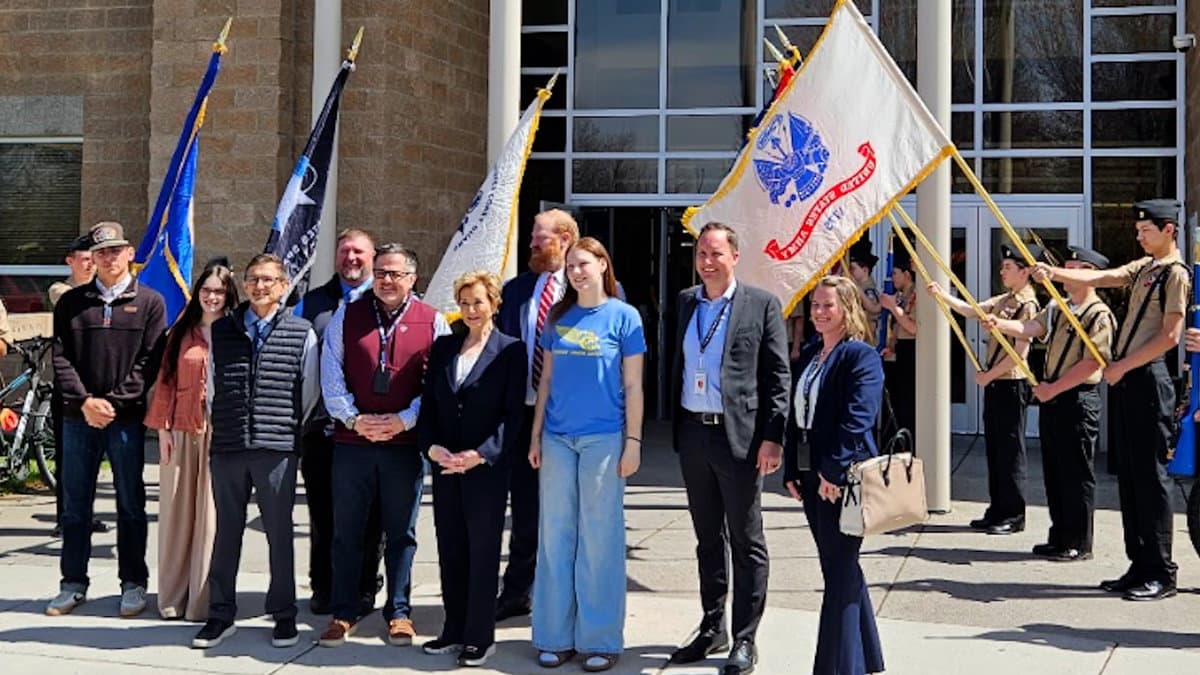
CROOK COUNTY, Ore. (KTVZ) — U.S. Secretary of Education Linda McMahon visited Crook County High School and Crooked River Elementary School in Prineville on Monday, marking the first time a sitting Secretary of Education has visited the county. The visit was part of her 50-state "Returning Education to the States" tour and was facilitated by U.S. Congressman Cliff Bentz and Crook County Commissioner Seth Crawford. Congressman Bentz's Oregon office staff coordinated the visit to Oregon's Second Congressional District, as Bentz was unable to attend due to the U.S. House of Representatives being in session. The tour aimed to provide Secretary McMahon a firsthand look at how the Crook County School District delivers strong educational outcomes and expands opportunities for students in rural Oregon. His team worked with Commissioner Crawford to arrange direct engagement with students, teachers and administrators to inform national policy decisions. The media was not invited due to the event due to "security reasons". At Crook County High School, Secretary McMahon toured Career and Technical Education (CTE) programs, including those for construction, health and business. These hands-on learning environments provide students with real-world experience in areas such as project management, design and skilled trades, allowing them to earn industry-recognized certifications and build leadership skills. The district also highlighted early college opportunities, such as its expansive Advanced Placement and dual-credit offerings. These programs allow students to earn an associate degree by the time they graduate from high school. At the elementary level, Secretary McMahon reviewed the district's science of reading program at Crooked River Elementary. Discussions at the school focused on improving early literacy outcomes and building strong foundational skills that support long-term academic success. Left to right: Rob Booner, Joel Hoff, Bri Vanroekel, Kristie Town, US Secretary of Education Lind McMahon, Chloe Crawford, Seth Crawford, Nick Strader Crook County Crawford expressed his appreciation for the visit, "I was proud to help host Secretary McMahon and showcase the opportunities available to Crook County students. I appreciate Crook County School District for rolling out the red carpet and making the visit a success." Crawford further emphasized the importance of the district's focus on career readiness. "It was an honor working with Congressman Bentz to help bring Secretary McMahon to Crook County," Crawford said. "Our schools play a critical role in preparing the next generation of Crook County residents for high-paying, in-demand careers and it's important to keep our focus on that work." Superintendent Dr. Joel Hoff spoke about the unique nature of coordinating such a high-profile visit. "It's not every day you find yourself coordinating a school visit alongside the Secret Service," Hoff said. "We were honored to host Secretary McMahon in our schools. Regardless of which side of the political aisle you are on, we believe in the importance of meaningful dialogue, building bridges and showcasing the incredible opportunities available to Crook County students." Dr. Bri Van Roekel, Director of School Improvement, affirmed the district's commitment to student education. "We are deeply committed to providing the highest quality educational experience for every Crook County student," Roekel said. "It was an honor to welcome Secretary McMahon and share the work happening in our classrooms, while also learning from the broader conversation about education." Congressman Bentz highlighted how such visits inform policy at the federal level. "Schools are the foundation of our communities, essential to the economic and social survival of the rural parts of our state," Bentz said. "Visits like this provide agencies such as the Department of Education in Washington D.C. with invaluable insight into what is happening in our schools and where improvements are needed. Hearing directly from those on the ground helps better inform national policy decisions and improves opportunities for the success of students in Oregon and across our nation." The Secretary's visit allowed the Crook County School District to showcase the importance of collaboration between federal, state and local leaders. Throughout the day, conversations focused on continuous improvement, celebrating district successes, and identifying opportunities to further strengthen outcomes for all students. The post Secretary McMahon tours Crook County schools as part of nationwide education tour appeared first on KTVZ.
Secretary McMahon tours Crook County schools as part of nationwide education tour
CROOK COUNTY, Ore. (KTVZ) — U.S. Secretary of Education Linda McMahon visited Crook County High School and Crooked River Elementary School in Prineville on Monday, marking the first time a sitting Secretary of Education has visited the county. The visit was part of her 50-state "Returning Education to the States" tour and was facilitated by U.S. Congressman Cliff Bentz and Crook County Commissioner Seth Crawford. Congressman Bentz's Oregon office staff coordinated the visit to Oregon's Second Congressional District, as Bentz was unable to attend due to the U.S. House of Representatives being in session. The tour aimed to provide Secretary McMahon a firsthand look at how the Crook County School District delivers strong educational outcomes and expands opportunities for students in rural Oregon. His team worked with Commissioner Crawford to arrange direct engagement with students, teachers and administrators to inform national policy decisions. The media was not invited due to the event due to "security reasons". At Crook County High School, Secretary McMahon toured Career and Technical Education (CTE) programs, including those for construction, health and business. These hands-on learning environments provide students with real-world experience in areas such as project management, design and skilled trades, allowing them to earn industry-recognized certifications and build leadership skills. The district also highlighted early college opportunities, such as its expansive Advanced Placement and dual-credit offerings. These programs allow students to earn an associate degree by the time they graduate from high school. At the elementary level, Secretary McMahon reviewed the district's science of reading program at Crooked River Elementary. Discussions at the school focused on improving early literacy outcomes and building strong foundational skills that support long-term academic success. Left to right: Rob Booner, Joel Hoff, Bri Vanroekel, Kristie Town, US Secretary of Education Lind McMahon, Chloe Crawford, Seth Crawford, Nick Strader Crook County Crawford expressed his appreciation for the visit, "I was proud to help host Secretary McMahon and showcase the opportunities available to Crook County students. I appreciate Crook County School District for rolling out the red carpet and making the visit a success." Crawford further emphasized the importance of the district's focus on career readiness. "It was an honor working with Congressman Bentz to help bring Secretary McMahon to Crook County," Crawford said. "Our schools play a critical role in preparing the next generation of Crook County residents for high-paying, in-demand careers and it's important to keep our focus on that work." Superintendent Dr. Joel Hoff spoke about the unique nature of coordinating such a high-profile visit. "It's not every day you find yourself coordinating a school visit alongside the Secret Service," Hoff said. "We were honored to host Secretary McMahon in our schools. Regardless of which side of the political aisle you are on, we believe in the importance of meaningful dialogue, building bridges and showcasing the incredible opportunities available to Crook County students." Dr. Bri Van Roekel, Director of School Improvement, affirmed the district's commitment to student education. "We are deeply committed to providing the highest quality educational experience for every Crook County student," Roekel said. "It was an honor to welcome Secretary McMahon and share the work happening in our classrooms, while also learning from the broader conversation about education." Congressman Bentz highlighted how such visits inform policy at the federal level. "Schools are the foundation of our communities, essential to the economic and social survival of the rural parts of our state," Bentz said. "Visits like this provide agencies such as the Department of Education in Washington D.C. with invaluable insight into what is happening in our schools and where improvements are needed. Hearing directly from those on the ground helps better inform national policy decisions and improves opportunities for the success of students in Oregon and across our nation." The Secretary's visit allowed the Crook County School District to showcase the importance of collaboration between federal, state and local leaders. Throughout the day, conversations focused on continuous improvement, celebrating district successes, and identifying opportunities to further strengthen outcomes for all students. The post Secretary McMahon tours Crook County schools as part of nationwide education tour appeared first on KTVZ.
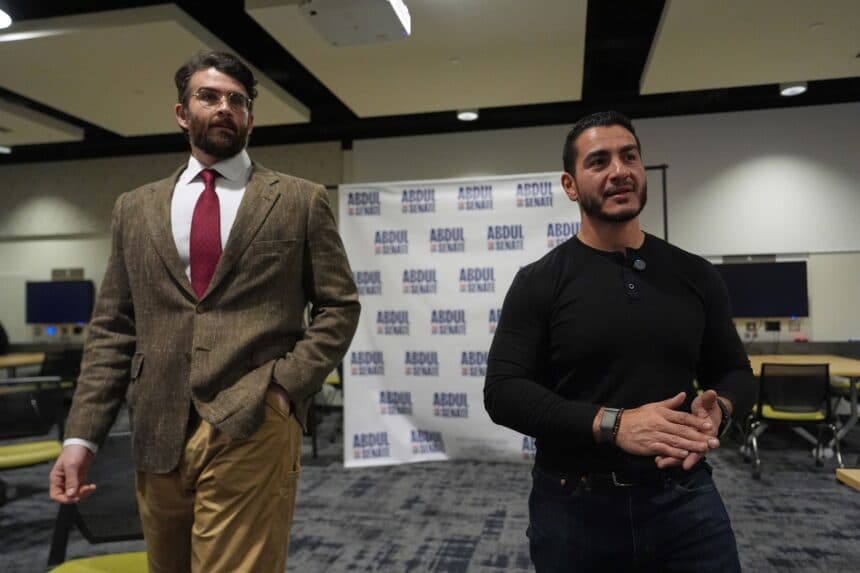
How a must-win Michigan Senate race turned messy for Democrats
By Manu Raju, Alison Main, CNN (CNN) — Sitting in a coffee shop in his hometown of Ann Arbor, Abdul El-Sayed is ready to dispel the notion that he’s unelectable. The 41-year-old son of Egyptian immigrants whose sharply progressive views align with those of Sen. Bernie Sanders, El-Sayed is seen by many Democrats in Washington as the kind of candidate they fear: someone who wins a primary and loses in November, costing them a shot at the Senate majority. El-Sayed scoffs at that. “I think there is this notion that electability is about being the least offensive,” he told CNN. “If that were true, why would Donald Trump have won the presidency twice?” Whether he’s right could have enormous ramifications for control of the Senate. Michigan’s open Senate seat is now emerging as a GOP hedge against a potential takeover for Democrats, who need to net four seats to flip the chamber. Losing Michigan would make the Democrats’ task almost impossible, a major reason why a leading Republican outside group just announced plans to pour $45 million into the state – more than any other pickup opportunity – to boost former Rep. Mike Rogers, the likely GOP nominee. Republicans are hoping that the ultimate Democratic nominee emerging from the August 4 primary emerges battered and cash-strapped, giving Rogers a leg up. “If he wins this seat, if they are successful in trying to buy this seat, then there is no path at all for Democrats to take control of the US Senate,” said state Sen. Mallory McMorrow, one of the three Democrats vying for the party’s nomination. Yet Democrats have to resolve their own internal struggles first. Rep. Haley Stevens, a 42-year-old who represents a district in the Detroit suburbs, is a favorite among many in the party establishment who see her as the most electable. The 39-year-old McMorrow is trying to brand herself as a candidate who can woo both traditional Democrats and progressives hungry for a shakeup of their party’s leadership. El-Sayed, a former public health official who wrote a book on Medicare for All, is pushing to the left on several key issues. The thorny questions facing Democratic voters: Should they back a candidate certain to energize their progressive base? Or should they fall in line behind the party establishment and pick someone who might better woo swing voters? “Anybody committed to shutting down Trump and the MAGA movement,” said Jeff Albright, an undecided Democratic voter in the Detroit suburb of Canton, when asked about his most important issue. “That’s No. 1.” The splits within the party The fight so far has revealed huge splits among Michigan Democrats over major issues – on immigration enforcement, health care, support for Israel and the state of their party’s leadership. El-Sayed has called to abolish US Immigration and Customs Enforcement while Stevens and McMorrow want changes to ICE’s practices instead. El-Sayed has sworn off any corporate PAC money while Stevens continues to accept PAC funding, despite her calls to overturn the Supreme Court’s Citizens United ruling. While McMorrow now bans corporate donations to her campaign, it’s a shift from her position accepting them when running for state Senate, something she says shows she’s “willing to be someone who evolves” and has now learned how to campaign “differently.” “We can’t be Republican-light,” McMorrow said in an interview at a brewery in the Detroit suburbs. El-Sayed attacked McMorrow for “a flip” in positions. “It’s not just your positions, it’s about whether or not you truly and deeply hold on to them,” El-Sayed said before pointing to Sen. John Fetterman, the Pennsylvania Democrat who has broken with his party and become a villain on the left. “I think so many of us are frustrated by the likes of John Fetterman, a guy who campaigned saying that he was going to take on the swamp, only to become the ogre who lives in the swamp.” El-Sayed bashed both his Democratic foes for a “lack of courage.” “It’s just the same lack of courage that Democrats deploy to argue as to why they should be taking money from corporations, or why they should be hedging their bets on clear, obvious policies like abolishing ICE or guaranteeing health care through Medicare for All,” he said. “What you’re seeing in this race right now is that people are sick and tired of the same old Democrats who lack courage.” McMorrow said a lot of El-Sayed’s campaign is just rhetoric. “Rhetoric is nice, but results are better,” said McMorrow, who is the state Senate Democratic whip. “Just doing rounds and talking about issues and having rhetoric without knowing how to actually implement those things is not going to shake it up at all. That’s just lobbing bombs from the outside.” Asked if she thought El-Sayed would get trounced by Republicans in a general election, Stevens instead focused on her own campaign and her economic message, arguing that she’s “the best person or the only person that can beat Mike Rogers.” How they’d work with their party’s Senate leader also is a flashpoint. Stevens, who has praised Sen. Chuck Schumer as a “great leader” in the past, wouldn’t say if she stood by those comments when asked by CNN, calling it “inside baseball.” El-Sayed said Sen. Chris Van Hollen of Maryland should be the next Democratic leader, as he bashed Schumer over his stance of providing aid to Israel. McMorrow also said it’s time for a change. “We need new leadership,” she said. “Because if you look at polling, the only thing less popular than Donald Trump is the Democratic Party,” McMorrow said. “That’s rough. So we need to run very different Democrats.” The Israel divide There’s perhaps no bigger dividing line in Michigan or national Democratic politics than Israel. There are sizable Arab American and Jewish voter blocs in and around Detroit. Trump flipped Michigan in November 2024 in part by appealing to both Muslims and Jews disaffected by former President Joe Biden’s handling of the Israel-Hamas war. El-Sayed makes no bones about his views, attacking the American Israel Public Affairs Committee, calling Israeli Prime Minister Benjamin Netanyahu a “war criminal,” and referring to Israel’s military campaign in Gaza after Hamas’ October 7 attacks as a “genocide.” Asked if he thinks Israel is as evil as Hamas, El-Sayed said: “Yes. Killing tens of thousands of people makes you pretty damn evil,” he said. “It’s not how evil is this one versus that one: Hamas evil, Israeli government evil. You can say both.” Stevens has the backing of AIPAC, something El-Sayed says is “disastrous for our politics.” “We’re running for Senate for Michigan, and as a senator from Michigan, you should be more interested in what’s happening in Michigan than you are interested in what’s happening in Tel Aviv,” El-Sayed said. Stevens wouldn’t say when asked if she embraced AIPAC’s support. “I’m campaigning in a grassroots way alongside a ton of engaged Michiganders,” she said when asked about AIPAC, saying voters were asking her about their high energy costs. Last year, a United Nations inquiry concluded that Israel had committed genocide against Palestinians in Gaza – an accusation the Israeli government firmly rejects, as does Stevens. “I don’t agree with that,” Stevens said when asked if it were a genocide. McMorrow first notably characterized the Israeli military action in Gaza as a “genocide” when pressed on the issue at a campaign event last fall, though she told voters that the definition of the conflict matters less than reaching a “solution.” She also made clear she would not seek the support of AIPAC, as she faced scrutiny for a Drop Site News report saying she had produced a candidate position paper for the pro-Israel group, according to a campaign call with donors. And on Friday, McMorrow posted on X: “I have not, am not, and will not take money from AIPAC.” Asked by CNN if she believes Netanyahu is a war criminal, McMorrow said: “Watching the devastation, I do believe that war crimes were committed.” The Piker rallies Both McMorrow and Stevens criticized El-Sayed for barnstorming college campuses with left-wing streamer Hasan Piker, who has a history of inflammatory comments, including saying Hamas is “a thousand times better” than Israel and saying “America deserved 9/11.” Piker has walked back the remarks about September 11, but Stevens seized upon them. “That’s not someone I’d be campaigning with,” Stevens said. “Because it’s un-American and we shouldn’t say that America deserved 9/11. This is about winning for Michigan.” El-Sayed took umbrage at Stevens’ criticism. “My understanding of America is, it’s a place where we’re willing to have conversations with folks with whom we disagree,” El-Sayed said. El-Sayed added: “It’s that penchant for cancel culture that I think people hate about Democrats. We sit here from on high and then scold people about who they’re allowed to talk to and who they’re not.” One Democratic voter in Lansing says she would not vote for El-Sayed if he became the nominee, citing in particular his position on Israel. “I don’t want somebody who’s going to pander to whatever is the ‘omnicause’ of the day,” said Robin Gillis, a Stevens supporter. “I want someone who is normal about it. I’m a normal Democrat. I want to vote for a normal Democrat.” Are swing voters ‘mythical’? Earlier this month at Michigan State University, hundreds of students lined up for a chance to hear from both Piker and El-Sayed, with many college-age voters citing the candidate’s staunchly progressive and anti-Israel views. Nick Coffin-Callis, a Democratic voter in Lansing, noted El-Sayed’s support for Medicare for All and free childcare as well as his opposition to Israel. Those views, even if they propel him to a primary victory, could give Rogers and his well-funded allies material for attack ads that national Democrats fear. But when asked if El-Sayed’s ideas would put off swing voters in this purple state, Coffin-Callis demurred in a way that captures the progressive base’s current mood. “I think these swing voters in the center are mythical creatures,” Coffin-Callis said. “I don’t think they necessarily exist.” The-CNN-Wire ™ & © 2026 Cable News Network, Inc., a Warner Bros. Discovery Company. All rights reserved. The post How a must-win Michigan Senate race turned messy for Democrats appeared first on KTVZ.
How a must-win Michigan Senate race turned messy for Democrats
By Manu Raju, Alison Main, CNN (CNN) — Sitting in a coffee shop in his hometown of Ann Arbor, Abdul El-Sayed is ready to dispel the notion that he’s unelectable. The 41-year-old son of Egyptian immigrants whose sharply progressive views align with those of Sen. Bernie Sanders, El-Sayed is seen by many Democrats in Washington as the kind of candidate they fear: someone who wins a primary and loses in November, costing them a shot at the Senate majority. El-Sayed scoffs at that. “I think there is this notion that electability is about being the least offensive,” he told CNN. “If that were true, why would Donald Trump have won the presidency twice?” Whether he’s right could have enormous ramifications for control of the Senate. Michigan’s open Senate seat is now emerging as a GOP hedge against a potential takeover for Democrats, who need to net four seats to flip the chamber. Losing Michigan would make the Democrats’ task almost impossible, a major reason why a leading Republican outside group just announced plans to pour $45 million into the state – more than any other pickup opportunity – to boost former Rep. Mike Rogers, the likely GOP nominee. Republicans are hoping that the ultimate Democratic nominee emerging from the August 4 primary emerges battered and cash-strapped, giving Rogers a leg up. “If he wins this seat, if they are successful in trying to buy this seat, then there is no path at all for Democrats to take control of the US Senate,” said state Sen. Mallory McMorrow, one of the three Democrats vying for the party’s nomination. Yet Democrats have to resolve their own internal struggles first. Rep. Haley Stevens, a 42-year-old who represents a district in the Detroit suburbs, is a favorite among many in the party establishment who see her as the most electable. The 39-year-old McMorrow is trying to brand herself as a candidate who can woo both traditional Democrats and progressives hungry for a shakeup of their party’s leadership. El-Sayed, a former public health official who wrote a book on Medicare for All, is pushing to the left on several key issues. The thorny questions facing Democratic voters: Should they back a candidate certain to energize their progressive base? Or should they fall in line behind the party establishment and pick someone who might better woo swing voters? “Anybody committed to shutting down Trump and the MAGA movement,” said Jeff Albright, an undecided Democratic voter in the Detroit suburb of Canton, when asked about his most important issue. “That’s No. 1.” The splits within the party The fight so far has revealed huge splits among Michigan Democrats over major issues – on immigration enforcement, health care, support for Israel and the state of their party’s leadership. El-Sayed has called to abolish US Immigration and Customs Enforcement while Stevens and McMorrow want changes to ICE’s practices instead. El-Sayed has sworn off any corporate PAC money while Stevens continues to accept PAC funding, despite her calls to overturn the Supreme Court’s Citizens United ruling. While McMorrow now bans corporate donations to her campaign, it’s a shift from her position accepting them when running for state Senate, something she says shows she’s “willing to be someone who evolves” and has now learned how to campaign “differently.” “We can’t be Republican-light,” McMorrow said in an interview at a brewery in the Detroit suburbs. El-Sayed attacked McMorrow for “a flip” in positions. “It’s not just your positions, it’s about whether or not you truly and deeply hold on to them,” El-Sayed said before pointing to Sen. John Fetterman, the Pennsylvania Democrat who has broken with his party and become a villain on the left. “I think so many of us are frustrated by the likes of John Fetterman, a guy who campaigned saying that he was going to take on the swamp, only to become the ogre who lives in the swamp.” El-Sayed bashed both his Democratic foes for a “lack of courage.” “It’s just the same lack of courage that Democrats deploy to argue as to why they should be taking money from corporations, or why they should be hedging their bets on clear, obvious policies like abolishing ICE or guaranteeing health care through Medicare for All,” he said. “What you’re seeing in this race right now is that people are sick and tired of the same old Democrats who lack courage.” McMorrow said a lot of El-Sayed’s campaign is just rhetoric. “Rhetoric is nice, but results are better,” said McMorrow, who is the state Senate Democratic whip. “Just doing rounds and talking about issues and having rhetoric without knowing how to actually implement those things is not going to shake it up at all. That’s just lobbing bombs from the outside.” Asked if she thought El-Sayed would get trounced by Republicans in a general election, Stevens instead focused on her own campaign and her economic message, arguing that she’s “the best person or the only person that can beat Mike Rogers.” How they’d work with their party’s Senate leader also is a flashpoint. Stevens, who has praised Sen. Chuck Schumer as a “great leader” in the past, wouldn’t say if she stood by those comments when asked by CNN, calling it “inside baseball.” El-Sayed said Sen. Chris Van Hollen of Maryland should be the next Democratic leader, as he bashed Schumer over his stance of providing aid to Israel. McMorrow also said it’s time for a change. “We need new leadership,” she said. “Because if you look at polling, the only thing less popular than Donald Trump is the Democratic Party,” McMorrow said. “That’s rough. So we need to run very different Democrats.” The Israel divide There’s perhaps no bigger dividing line in Michigan or national Democratic politics than Israel. There are sizable Arab American and Jewish voter blocs in and around Detroit. Trump flipped Michigan in November 2024 in part by appealing to both Muslims and Jews disaffected by former President Joe Biden’s handling of the Israel-Hamas war. El-Sayed makes no bones about his views, attacking the American Israel Public Affairs Committee, calling Israeli Prime Minister Benjamin Netanyahu a “war criminal,” and referring to Israel’s military campaign in Gaza after Hamas’ October 7 attacks as a “genocide.” Asked if he thinks Israel is as evil as Hamas, El-Sayed said: “Yes. Killing tens of thousands of people makes you pretty damn evil,” he said. “It’s not how evil is this one versus that one: Hamas evil, Israeli government evil. You can say both.” Stevens has the backing of AIPAC, something El-Sayed says is “disastrous for our politics.” “We’re running for Senate for Michigan, and as a senator from Michigan, you should be more interested in what’s happening in Michigan than you are interested in what’s happening in Tel Aviv,” El-Sayed said. Stevens wouldn’t say when asked if she embraced AIPAC’s support. “I’m campaigning in a grassroots way alongside a ton of engaged Michiganders,” she said when asked about AIPAC, saying voters were asking her about their high energy costs. Last year, a United Nations inquiry concluded that Israel had committed genocide against Palestinians in Gaza – an accusation the Israeli government firmly rejects, as does Stevens. “I don’t agree with that,” Stevens said when asked if it were a genocide. McMorrow first notably characterized the Israeli military action in Gaza as a “genocide” when pressed on the issue at a campaign event last fall, though she told voters that the definition of the conflict matters less than reaching a “solution.” She also made clear she would not seek the support of AIPAC, as she faced scrutiny for a Drop Site News report saying she had produced a candidate position paper for the pro-Israel group, according to a campaign call with donors. And on Friday, McMorrow posted on X: “I have not, am not, and will not take money from AIPAC.” Asked by CNN if she believes Netanyahu is a war criminal, McMorrow said: “Watching the devastation, I do believe that war crimes were committed.” The Piker rallies Both McMorrow and Stevens criticized El-Sayed for barnstorming college campuses with left-wing streamer Hasan Piker, who has a history of inflammatory comments, including saying Hamas is “a thousand times better” than Israel and saying “America deserved 9/11.” Piker has walked back the remarks about September 11, but Stevens seized upon them. “That’s not someone I’d be campaigning with,” Stevens said. “Because it’s un-American and we shouldn’t say that America deserved 9/11. This is about winning for Michigan.” El-Sayed took umbrage at Stevens’ criticism. “My understanding of America is, it’s a place where we’re willing to have conversations with folks with whom we disagree,” El-Sayed said. El-Sayed added: “It’s that penchant for cancel culture that I think people hate about Democrats. We sit here from on high and then scold people about who they’re allowed to talk to and who they’re not.” One Democratic voter in Lansing says she would not vote for El-Sayed if he became the nominee, citing in particular his position on Israel. “I don’t want somebody who’s going to pander to whatever is the ‘omnicause’ of the day,” said Robin Gillis, a Stevens supporter. “I want someone who is normal about it. I’m a normal Democrat. I want to vote for a normal Democrat.” Are swing voters ‘mythical’? Earlier this month at Michigan State University, hundreds of students lined up for a chance to hear from both Piker and El-Sayed, with many college-age voters citing the candidate’s staunchly progressive and anti-Israel views. Nick Coffin-Callis, a Democratic voter in Lansing, noted El-Sayed’s support for Medicare for All and free childcare as well as his opposition to Israel. Those views, even if they propel him to a primary victory, could give Rogers and his well-funded allies material for attack ads that national Democrats fear. But when asked if El-Sayed’s ideas would put off swing voters in this purple state, Coffin-Callis demurred in a way that captures the progressive base’s current mood. “I think these swing voters in the center are mythical creatures,” Coffin-Callis said. “I don’t think they necessarily exist.” The-CNN-Wire ™ & © 2026 Cable News Network, Inc., a Warner Bros. Discovery Company. All rights reserved. The post How a must-win Michigan Senate race turned messy for Democrats appeared first on KTVZ.
How a must-win Michigan Senate race turned messy for Democrats
By Manu Raju, Alison Main, CNN (CNN) — Sitting in a coffee shop in his hometown of Ann Arbor, Abdul El-Sayed is ready to dispel the notion that he’s unelectable. The 41-year-old son of Egyptian immigrants whose sharply progressive views align with those of Sen. Bernie Sanders, El-Sayed is seen by many Democrats in Washington as the kind of candidate they fear: someone who wins a primary and loses in November, costing them a shot at the Senate majority. El-Sayed scoffs at that. “I think there is this notion that electability is about being the least offensive,” he told CNN. “If that were true, why would Donald Trump have won the presidency twice?” Whether he’s right could have enormous ramifications for control of the Senate. Michigan’s open Senate seat is now emerging as a GOP hedge against a potential takeover for Democrats, who need to net four seats to flip the chamber. Losing Michigan would make the Democrats’ task almost impossible, a major reason why a leading Republican outside group just announced plans to pour $45 million into the state – more than any other pickup opportunity – to boost former Rep. Mike Rogers, the likely GOP nominee. Republicans are hoping that the ultimate Democratic nominee emerging from the August 4 primary emerges battered and cash-strapped, giving Rogers a leg up. “If he wins this seat, if they are successful in trying to buy this seat, then there is no path at all for Democrats to take control of the US Senate,” said state Sen. Mallory McMorrow, one of the three Democrats vying for the party’s nomination. Yet Democrats have to resolve their own internal struggles first. Rep. Haley Stevens, a 42-year-old who represents a district in the Detroit suburbs, is a favorite among many in the party establishment who see her as the most electable. The 39-year-old McMorrow is trying to brand herself as a candidate who can woo both traditional Democrats and progressives hungry for a shakeup of their party’s leadership. El-Sayed, a former public health official who wrote a book on Medicare for All, is pushing to the left on several key issues. The thorny questions facing Democratic voters: Should they back a candidate certain to energize their progressive base? Or should they fall in line behind the party establishment and pick someone who might better woo swing voters? “Anybody committed to shutting down Trump and the MAGA movement,” said Jeff Albright, an undecided Democratic voter in the Detroit suburb of Canton, when asked about his most important issue. “That’s No. 1.” The splits within the party The fight so far has revealed huge splits among Michigan Democrats over major issues – on immigration enforcement, health care, support for Israel and the state of their party’s leadership. El-Sayed has called to abolish US Immigration and Customs Enforcement while Stevens and McMorrow want changes to ICE’s practices instead. El-Sayed has sworn off any corporate PAC money while Stevens continues to accept PAC funding, despite her calls to overturn the Supreme Court’s Citizens United ruling. While McMorrow now bans corporate donations to her campaign, it’s a shift from her position accepting them when running for state Senate, something she says shows she’s “willing to be someone who evolves” and has now learned how to campaign “differently.” “We can’t be Republican-light,” McMorrow said in an interview at a brewery in the Detroit suburbs. El-Sayed attacked McMorrow for “a flip” in positions. “It’s not just your positions, it’s about whether or not you truly and deeply hold on to them,” El-Sayed said before pointing to Sen. John Fetterman, the Pennsylvania Democrat who has broken with his party and become a villain on the left. “I think so many of us are frustrated by the likes of John Fetterman, a guy who campaigned saying that he was going to take on the swamp, only to become the ogre who lives in the swamp.” El-Sayed bashed both his Democratic foes for a “lack of courage.” “It’s just the same lack of courage that Democrats deploy to argue as to why they should be taking money from corporations, or why they should be hedging their bets on clear, obvious policies like abolishing ICE or guaranteeing health care through Medicare for All,” he said. “What you’re seeing in this race right now is that people are sick and tired of the same old Democrats who lack courage.” McMorrow said a lot of El-Sayed’s campaign is just rhetoric. “Rhetoric is nice, but results are better,” said McMorrow, who is the state Senate Democratic whip. “Just doing rounds and talking about issues and having rhetoric without knowing how to actually implement those things is not going to shake it up at all. That’s just lobbing bombs from the outside.” Asked if she thought El-Sayed would get trounced by Republicans in a general election, Stevens instead focused on her own campaign and her economic message, arguing that she’s “the best person or the only person that can beat Mike Rogers.” How they’d work with their party’s Senate leader also is a flashpoint. Stevens, who has praised Sen. Chuck Schumer as a “great leader” in the past, wouldn’t say if she stood by those comments when asked by CNN, calling it “inside baseball.” El-Sayed said Sen. Chris Van Hollen of Maryland should be the next Democratic leader, as he bashed Schumer over his stance of providing aid to Israel. McMorrow also said it’s time for a change. “We need new leadership,” she said. “Because if you look at polling, the only thing less popular than Donald Trump is the Democratic Party,” McMorrow said. “That’s rough. So we need to run very different Democrats.” The Israel divide There’s perhaps no bigger dividing line in Michigan or national Democratic politics than Israel. There are sizable Arab American and Jewish voter blocs in and around Detroit. Trump flipped Michigan in November 2024 in part by appealing to both Muslims and Jews disaffected by former President Joe Biden’s handling of the Israel-Hamas war. El-Sayed makes no bones about his views, attacking the American Israel Public Affairs Committee, calling Israeli Prime Minister Benjamin Netanyahu a “war criminal,” and referring to Israel’s military campaign in Gaza after Hamas’ October 7 attacks as a “genocide.” Asked if he thinks Israel is as evil as Hamas, El-Sayed said: “Yes. Killing tens of thousands of people makes you pretty damn evil,” he said. “It’s not how evil is this one versus that one: Hamas evil, Israeli government evil. You can say both.” Stevens has the backing of AIPAC, something El-Sayed says is “disastrous for our politics.” “We’re running for Senate for Michigan, and as a senator from Michigan, you should be more interested in what’s happening in Michigan than you are interested in what’s happening in Tel Aviv,” El-Sayed said. Stevens wouldn’t say when asked if she embraced AIPAC’s support. “I’m campaigning in a grassroots way alongside a ton of engaged Michiganders,” she said when asked about AIPAC, saying voters were asking her about their high energy costs. Last year, a United Nations inquiry concluded that Israel had committed genocide against Palestinians in Gaza – an accusation the Israeli government firmly rejects, as does Stevens. “I don’t agree with that,” Stevens said when asked if it were a genocide. McMorrow first notably characterized the Israeli military action in Gaza as a “genocide” when pressed on the issue at a campaign event last fall, though she told voters that the definition of the conflict matters less than reaching a “solution.” She also made clear she would not seek the support of AIPAC, as she faced scrutiny for a Drop Site News report saying she had produced a candidate position paper for the pro-Israel group, according to a campaign call with donors. And on Friday, McMorrow posted on X: “I have not, am not, and will not take money from AIPAC.” Asked by CNN if she believes Netanyahu is a war criminal, McMorrow said: “Watching the devastation, I do believe that war crimes were committed.” The Piker rallies Both McMorrow and Stevens criticized El-Sayed for barnstorming college campuses with left-wing streamer Hasan Piker, who has a history of inflammatory comments, including saying Hamas is “a thousand times better” than Israel and saying “America deserved 9/11.” Piker has walked back the remarks about September 11, but Stevens seized upon them. “That’s not someone I’d be campaigning with,” Stevens said. “Because it’s un-American and we shouldn’t say that America deserved 9/11. This is about winning for Michigan.” El-Sayed took umbrage at Stevens’ criticism. “My understanding of America is, it’s a place where we’re willing to have conversations with folks with whom we disagree,” El-Sayed said. El-Sayed added: “It’s that penchant for cancel culture that I think people hate about Democrats. We sit here from on high and then scold people about who they’re allowed to talk to and who they’re not.” One Democratic voter in Lansing says she would not vote for El-Sayed if he became the nominee, citing in particular his position on Israel. “I don’t want somebody who’s going to pander to whatever is the ‘omnicause’ of the day,” said Robin Gillis, a Stevens supporter. “I want someone who is normal about it. I’m a normal Democrat. I want to vote for a normal Democrat.” Are swing voters ‘mythical’? Earlier this month at Michigan State University, hundreds of students lined up for a chance to hear from both Piker and El-Sayed, with many college-age voters citing the candidate’s staunchly progressive and anti-Israel views. Nick Coffin-Callis, a Democratic voter in Lansing, noted El-Sayed’s support for Medicare for All and free childcare as well as his opposition to Israel. Those views, even if they propel him to a primary victory, could give Rogers and his well-funded allies material for attack ads that national Democrats fear. But when asked if El-Sayed’s ideas would put off swing voters in this purple state, Coffin-Callis demurred in a way that captures the progressive base’s current mood. “I think these swing voters in the center are mythical creatures,” Coffin-Callis said. “I don’t think they necessarily exist.” The-CNN-Wire ™ & © 2026 Cable News Network, Inc., a Warner Bros. Discovery Company. All rights reserved. The post How a must-win Michigan Senate race turned messy for Democrats appeared first on KTVZ.
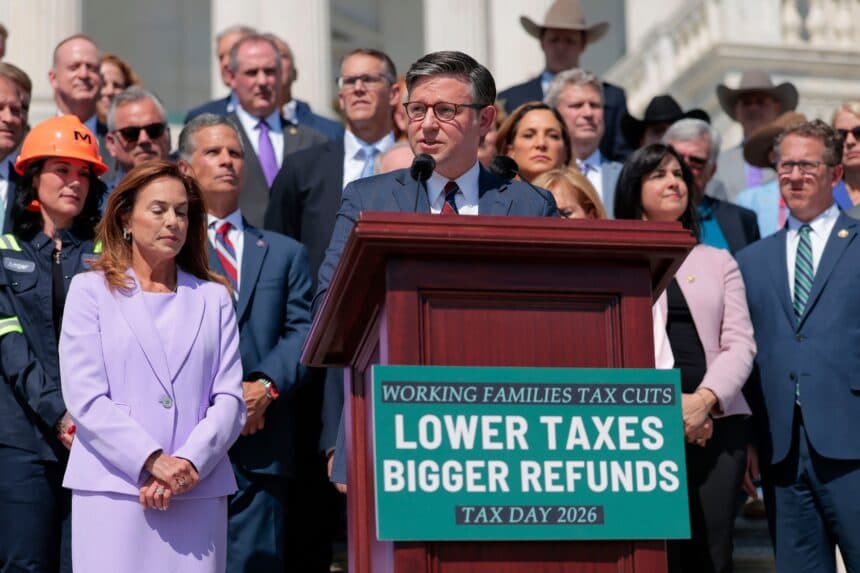
High gas prices become another midterm warning sign for Republicans
By Arit John, CNN (CNN) — In a midterm election that will likely be decided by how voters feel about the economy, Republicans are grappling with how to discuss the war in Iran and its impact on fuel costs. Republicans had spent the weeks before the war touting lower prices under President Donald Trump. Now, with the national average for gas rising above $4 a gallon for the first time since 2022 and Trump’s economic approval ratings hitting a record low, Democrats are seeking to tie the war to their broader affordability message, arguing that Republicans are more focused on foreign affairs than reducing costs at home. The Democratic Congressional Campaign Committee, House Democrats’ campaign arm, started running digital ads last month in all of their 44 target districts blaming congressional Republicans for higher gas prices. Some Democratic candidates like Janelle Stelson, who is seeking a rematch against Rep. Scott Perry, a Pennsylvania Republican, have taken their message directly to the voters at gas stations in the districts they seek to represent. “We should be spending money at home, not $1 billion a day for a war in Iran,” Stelson told CNN in an interview. “Meantime, you have everybody here in central Pennsylvania saying, ‘Look at me. I need help. I could use a little, teeny piece of that money.’” (The Center for Strategic and International Studies, a Washington, DC-based think tank, has estimated the war costs more than $890 million a day.) Perry’s campaign did not respond to requests from CNN. But the congressman told City & State Pennsylvania that he hoped to see gas prices fall soon. “Like so many citizens across our region and nation, I want gas prices to come down, and I understand firsthand the strain these high prices put on families,” Perry said in a statement to the outlet. “It’s everyone’s goal that resolution will be brought to the War in Iran soon, so we can be rid of the threat of a nuclear Iran and energy prices can return to pre-war levels.” Oil prices dropped Friday after Trump and Iran announced the Strait of Hormuz is open to commercial vessels for the remainder of the ceasefire between the two nations. “I think a lot of Republicans are breathing a sigh of relief that this episode is winding down,” said Alex Conant, a Republican strategist. “Trump was elected to tame inflation and create jobs, and if he can show progress on that before the midterms, Republicans will be in much better shape.” Republicans have argued that higher gas prices are temporary – even though gas prices tend to shoot up quickly when oil becomes more expensive and take longer to fall when oil prices decline. Analysts say that high gas prices will linger even after the military conflict ends. The House GOP’s campaign arm also points to policies like tax breaks on tips that it says have boosted incomes. “After years of Democrats’ reckless policies that drove up costs to record levels, voters see the difference and trust Republicans to keep the economy moving in the right direction,” Mike Marinella, a spokesperson for the National Republican Congressional Committee, said in a statement. Searching for the right message Democrats note that lower oil prices don’t necessarily mean voters will feel that at the pump and prices in other sectors are high. “No matter how hard they try, there is absolutely no way for congressional Republicans to outrun the political albatross that their broken promises on affordability have become when the midterms arrive, and voters reject them,” Democratic Congressional Campaign Committee spokesperson Viet Shelton said in a statement. Throughout the war, Democrats have zeroed in on comments their Republican opponents have made seeking to justify the war or urging Americans to endure higher gas prices temporarily. In Minnesota, Republican Senate candidate Michele Tafoya encouraged Americans to “keep a stiff upper lip.” “Maybe you take one less trip to Starbucks and so that gas goes a little further until this thing is over and these gas prices come back down again,” she told radio host Todd Starnes last month. “Let’s just try to be patriots about this.” In San Diego, where Republicans are hoping to hold onto the redrawn House seat being vacated by Rep. Darrell Issa, San Diego County Supervisor Jim Desmond defended the war effort days after he launched his campaign last month, saying it was necessary to prevent Iran from getting nuclear weapons. “No pain, no gain,” Desmond said during an interview on Real America News. “It’s unfortunate that oil prices are going up, but I do believe this is a spike and President Trump is right – once we are able to get rid of their nuclear capabilities, oil prices will come down again.” One of the Democrats running in the open primary for Issa’s old seat, San Diego city councilmember Marni von Wilpert, has referenced the comments throughout her campaign, including at her own recent gas station press conference. Republicans have also compared the current spike in gas costs to the high prices under former President Joe Biden. Gas prices rose to a record high average price of $5 a gallon in 2022, according to AAA, fueled by Russia’s invasion of Ukraine, US and European sanctions on Russia and the slow return of US oil production and refinery capabilities to pre-pandemic levels. Asked how much longer his constituents will need to tolerate gas prices over $4 a gallon, New York Rep. Mike Lawler told Bloomberg News his constituents “suffered greatly” under those prices under Biden and “many of my Democratic colleagues said everything was great.” “But the fact is, this is a short-term fluctuation in the oil markets that we will focus on like a laser to bring down and ensure that gas prices come back below $3 as expeditiously as possible,” Lawler said. In Democratic-led states like California and New York, where costs for gas and other goods were already high compared to the rest of the country, Republicans are urging their candidates to shift some of the attention to Democratic policies they argue have also contributed to high costs. “These Republicans in blue states need to run against their blue-state governance — and pretend they’ve never heard of Donald Trump,” said Rob Stutzman, a California-based Republican strategist. Brent Buchanan, a Republican pollster, advised his party’s candidates to be transparent with voters about the path forward. “People want to know what the plan is,” he said. “Voters are more forgiving when they know what’s ahead, even if that means we’re going to have high gas prices until the end of August.” The-CNN-Wire ™ & © 2026 Cable News Network, Inc., a Warner Bros. Discovery Company. All rights reserved. The post High gas prices become another midterm warning sign for Republicans appeared first on KTVZ.
High gas prices become another midterm warning sign for Republicans
By Arit John, CNN (CNN) — In a midterm election that will likely be decided by how voters feel about the economy, Republicans are grappling with how to discuss the war in Iran and its impact on fuel costs. Republicans had spent the weeks before the war touting lower prices under President Donald Trump. Now, with the national average for gas rising above $4 a gallon for the first time since 2022 and Trump’s economic approval ratings hitting a record low, Democrats are seeking to tie the war to their broader affordability message, arguing that Republicans are more focused on foreign affairs than reducing costs at home. The Democratic Congressional Campaign Committee, House Democrats’ campaign arm, started running digital ads last month in all of their 44 target districts blaming congressional Republicans for higher gas prices. Some Democratic candidates like Janelle Stelson, who is seeking a rematch against Rep. Scott Perry, a Pennsylvania Republican, have taken their message directly to the voters at gas stations in the districts they seek to represent. “We should be spending money at home, not $1 billion a day for a war in Iran,” Stelson told CNN in an interview. “Meantime, you have everybody here in central Pennsylvania saying, ‘Look at me. I need help. I could use a little, teeny piece of that money.’” (The Center for Strategic and International Studies, a Washington, DC-based think tank, has estimated the war costs more than $890 million a day.) Perry’s campaign did not respond to requests from CNN. But the congressman told City & State Pennsylvania that he hoped to see gas prices fall soon. “Like so many citizens across our region and nation, I want gas prices to come down, and I understand firsthand the strain these high prices put on families,” Perry said in a statement to the outlet. “It’s everyone’s goal that resolution will be brought to the War in Iran soon, so we can be rid of the threat of a nuclear Iran and energy prices can return to pre-war levels.” Oil prices dropped Friday after Trump and Iran announced the Strait of Hormuz is open to commercial vessels for the remainder of the ceasefire between the two nations. “I think a lot of Republicans are breathing a sigh of relief that this episode is winding down,” said Alex Conant, a Republican strategist. “Trump was elected to tame inflation and create jobs, and if he can show progress on that before the midterms, Republicans will be in much better shape.” Republicans have argued that higher gas prices are temporary – even though gas prices tend to shoot up quickly when oil becomes more expensive and take longer to fall when oil prices decline. Analysts say that high gas prices will linger even after the military conflict ends. The House GOP’s campaign arm also points to policies like tax breaks on tips that it says have boosted incomes. “After years of Democrats’ reckless policies that drove up costs to record levels, voters see the difference and trust Republicans to keep the economy moving in the right direction,” Mike Marinella, a spokesperson for the National Republican Congressional Committee, said in a statement. Searching for the right message Democrats note that lower oil prices don’t necessarily mean voters will feel that at the pump and prices in other sectors are high. “No matter how hard they try, there is absolutely no way for congressional Republicans to outrun the political albatross that their broken promises on affordability have become when the midterms arrive, and voters reject them,” Democratic Congressional Campaign Committee spokesperson Viet Shelton said in a statement. Throughout the war, Democrats have zeroed in on comments their Republican opponents have made seeking to justify the war or urging Americans to endure higher gas prices temporarily. In Minnesota, Republican Senate candidate Michele Tafoya encouraged Americans to “keep a stiff upper lip.” “Maybe you take one less trip to Starbucks and so that gas goes a little further until this thing is over and these gas prices come back down again,” she told radio host Todd Starnes last month. “Let’s just try to be patriots about this.” In San Diego, where Republicans are hoping to hold onto the redrawn House seat being vacated by Rep. Darrell Issa, San Diego County Supervisor Jim Desmond defended the war effort days after he launched his campaign last month, saying it was necessary to prevent Iran from getting nuclear weapons. “No pain, no gain,” Desmond said during an interview on Real America News. “It’s unfortunate that oil prices are going up, but I do believe this is a spike and President Trump is right – once we are able to get rid of their nuclear capabilities, oil prices will come down again.” One of the Democrats running in the open primary for Issa’s old seat, San Diego city councilmember Marni von Wilpert, has referenced the comments throughout her campaign, including at her own recent gas station press conference. Republicans have also compared the current spike in gas costs to the high prices under former President Joe Biden. Gas prices rose to a record high average price of $5 a gallon in 2022, according to AAA, fueled by Russia’s invasion of Ukraine, US and European sanctions on Russia and the slow return of US oil production and refinery capabilities to pre-pandemic levels. Asked how much longer his constituents will need to tolerate gas prices over $4 a gallon, New York Rep. Mike Lawler told Bloomberg News his constituents “suffered greatly” under those prices under Biden and “many of my Democratic colleagues said everything was great.” “But the fact is, this is a short-term fluctuation in the oil markets that we will focus on like a laser to bring down and ensure that gas prices come back below $3 as expeditiously as possible,” Lawler said. In Democratic-led states like California and New York, where costs for gas and other goods were already high compared to the rest of the country, Republicans are urging their candidates to shift some of the attention to Democratic policies they argue have also contributed to high costs. “These Republicans in blue states need to run against their blue-state governance — and pretend they’ve never heard of Donald Trump,” said Rob Stutzman, a California-based Republican strategist. Brent Buchanan, a Republican pollster, advised his party’s candidates to be transparent with voters about the path forward. “People want to know what the plan is,” he said. “Voters are more forgiving when they know what’s ahead, even if that means we’re going to have high gas prices until the end of August.” The-CNN-Wire ™ & © 2026 Cable News Network, Inc., a Warner Bros. Discovery Company. All rights reserved. The post High gas prices become another midterm warning sign for Republicans appeared first on KTVZ.

Decision 2026: Oregon’s U.S. House races bring in over $2.1 million since January
By Mia Maldonado, Oregon Capital Chronicle SALEM, Ore. -- Candidates running to represent Oregon in the U.S. House of Representatives raised nearly $2.1 million in the first three months of 2026, with the incumbents for Oregon’s three most competitive congressional districts bringing in the most funds, federal campaign finance records show. Congressional candidates on Wednesday filed their quarterly report to the Federal Election Commission detailing fundraising and spending between Jan. 1 and March 31. Only candidates who have raised or spent more than $5,000 are required to report their finances. U.S. Rep. Janelle Bynum, a Democrat representing Oregon’s 5th Congressional District which spans from Bend to the suburbs of Portland, brought in nearly $753,000 this quarter. Her only challenger in the Democratic primary, Zeva Rosenbaum, has not yet reported any campaign fundraising. On the Republican side, Patti Adair, a Deschutes County commissioner running for Bynum’s seat, raised more than $92,000. Adair in the Republican primary will face Jonathan Lockwood, a communications professional and law school student who has not yet reported any fundraising to the federal commission. Behind Bynum, U.S. Rep. Andrea Salinas raised about $282,000 this quarter. Salinas represents Oregon’s 6th Congressional District, which includes Polk and Yamhill counties and parts of Marion, Clackamas and Washington counties. Salinas’ only challenger is David Russ, a Republican and former Dundee mayor. He reported no fundraising this quarter. In third place, U.S. Rep. Val Hoyle raised $220,000 last quarter. Hoyle represents Oregon’s 4th Congressional District, which spans across coastal towns from Lincoln County to the southern tip of Curry County and includes university cities Eugene and Corvallis. Only one of the two Democratic candidates challenging Hoyle in the primary, Corvallis Democrat and small business owner Melissa Bird, reported campaign fundraising, raising nearly $29,000 this quarter. Hoyle’s main Republican challenger, Eugene Air Force veteran Monique DeSpain, raised more than $158,000 this quarter. Oregon’s 4th, 5th and 6th Congressional Districts are the state’s most competitive. All three districts have more non-affiliated voters than registered Democrats, and more registered Democrats than Republicans, according to state records. In Oregon’s 3rd Congressional District, Portland-based U.S. Rep. Maxine Dexter has the stronghold as she’s raised nearly $196,000, while none of her challengers reported raising or spending money last quarter. Candidates running to represent Oregon in the U.S. House of Representatives raised nearly $2.1 million in the first three months of 2026, with the incumbents for Oregon’s three most competitive congressional districts bringing in the most funds, federal campaign finance records show. Congressional candidates on Wednesday filed their quarterly report to the Federal Election Commission detailing fundraising and spending between Jan. 1 and March 31. Only candidates who have raised or spent more than $5,000 are required to report their finances. U.S. Rep. Janelle Bynum, a Democrat representing Oregon’s 5th Congressional District which spans from Bend to the suburbs of Portland, brought in nearly $753,000 this quarter. Her only challenger in the Democratic primary, Zeva Rosenbaum, has not yet reported any campaign fundraising. On the Republican side, Patti Adair, a Deschutes County commissioner running for Bynum’s seat, raised more than $92,000. Adair in the Republican primary will face Jonathan Lockwood, a communications professional and law school student who has not yet reported any fundraising to the federal commission. Behind Bynum, U.S. Rep. Andrea Salinas raised about $282,000 this quarter. Salinas represents Oregon’s 6th Congressional District, which includes Polk and Yamhill counties and parts of Marion, Clackamas and Washington counties. Salinas’ only challenger is David Russ, a Republican and former Dundee mayor. He reported no fundraising this quarter. In third place, U.S. Rep. Val Hoyle raised $220,000 last quarter. Hoyle represents Oregon’s 4th Congressional District, which spans across coastal towns from Lincoln County to the southern tip of Curry County and includes university cities Eugene and Corvallis. Only one of the two Democratic candidates challenging Hoyle in the primary, Corvallis Democrat and small business owner Melissa Bird, reported campaign fundraising, raising nearly $29,000 this quarter. Hoyle’s main Republican challenger, Eugene Air Force veteran Monique DeSpain, raised more than $158,000 this quarter. Oregon’s 4th, 5th and 6th Congressional Districts are the state’s most competitive. All three districts have more non-affiliated voters than registered Democrats, and more registered Democrats than Republicans, according to state records. In Oregon’s 3rd Congressional District, Portland-based U.S. Rep. Maxine Dexter has the stronghold as she’s raised nearly $196,000, while none of her challengers reported raising or spending money last quarter. Oregon’s congressional candidates with millions to spend What do U.S. Sen. Jeff Merkley, U.S. Rep Cliff Bentz and Bynum have in common? They all have millions of dollars left they can spend on their campaigns. Merkley brought in the most out of Oregon’s delegation this quarter, with more than $1 million. He has $6.6 million in cash on hand, far outpacing the two out of seven Republicans trying to unseat him who reported their campaign finances. That includes unsuccessful 2020 U.S. Senate candidate Jo Rae Perkins who raised nearly $5,200, and David Brock Smith, a Republican state senator from Coos Bay who reported raising $24,000 this quarter. In Oregon’s 2nd Congressional District, Bentz raised nearly $145,000 this quarter and has $1.4 million remaining in his campaign account, far ahead of any challengers. And despite spending $227,000 on her campaign this quarter — the most out of any candidate running to represent Oregon in Congress — Bynum still has nearly $2.3 million left in her campaign account. Oregon’s congressional candidates with millions to spend What do U.S. Sen. Jeff Merkley, U.S. Rep Cliff Bentz and Bynum have in common? They all have millions of dollars left they can spend on their campaigns. Merkley brought in the most out of Oregon’s delegation this quarter, with more than $1 million. He has $6.6 million in cash on hand, far outpacing the two out of seven Republicans trying to unseat him who reported their campaign finances. That includes unsuccessful 2020 U.S. Senate candidate Jo Rae Perkins who raised nearly $5,200, and David Brock Smith, a Republican state senator from Coos Bay who reported raising $24,000 this quarter. In Oregon’s 2nd Congressional District, Bentz raised nearly $145,000 this quarter and has $1.4 million remaining in his campaign account, far ahead of any challengers. And despite spending $227,000 on her campaign this quarter — the most out of any candidate running to represent Oregon in Congress — Bynum still has nearly $2.3 million left in her campaign account. The post Decision 2026: Oregon’s U.S. House races bring in over $2.1 million since January appeared first on KTVZ.
Decision 2026: Oregon’s U.S. House races bring in over $2.1 million since January
By Mia Maldonado, Oregon Capital Chronicle SALEM, Ore. -- Candidates running to represent Oregon in the U.S. House of Representatives raised nearly $2.1 million in the first three months of 2026, with the incumbents for Oregon’s three most competitive congressional districts bringing in the most funds, federal campaign finance records show. Congressional candidates on Wednesday filed their quarterly report to the Federal Election Commission detailing fundraising and spending between Jan. 1 and March 31. Only candidates who have raised or spent more than $5,000 are required to report their finances. U.S. Rep. Janelle Bynum, a Democrat representing Oregon’s 5th Congressional District which spans from Bend to the suburbs of Portland, brought in nearly $753,000 this quarter. Her only challenger in the Democratic primary, Zeva Rosenbaum, has not yet reported any campaign fundraising. On the Republican side, Patti Adair, a Deschutes County commissioner running for Bynum’s seat, raised more than $92,000. Adair in the Republican primary will face Jonathan Lockwood, a communications professional and law school student who has not yet reported any fundraising to the federal commission. Behind Bynum, U.S. Rep. Andrea Salinas raised about $282,000 this quarter. Salinas represents Oregon’s 6th Congressional District, which includes Polk and Yamhill counties and parts of Marion, Clackamas and Washington counties. Salinas’ only challenger is David Russ, a Republican and former Dundee mayor. He reported no fundraising this quarter. In third place, U.S. Rep. Val Hoyle raised $220,000 last quarter. Hoyle represents Oregon’s 4th Congressional District, which spans across coastal towns from Lincoln County to the southern tip of Curry County and includes university cities Eugene and Corvallis. Only one of the two Democratic candidates challenging Hoyle in the primary, Corvallis Democrat and small business owner Melissa Bird, reported campaign fundraising, raising nearly $29,000 this quarter. Hoyle’s main Republican challenger, Eugene Air Force veteran Monique DeSpain, raised more than $158,000 this quarter. Oregon’s 4th, 5th and 6th Congressional Districts are the state’s most competitive. All three districts have more non-affiliated voters than registered Democrats, and more registered Democrats than Republicans, according to state records. In Oregon’s 3rd Congressional District, Portland-based U.S. Rep. Maxine Dexter has the stronghold as she’s raised nearly $196,000, while none of her challengers reported raising or spending money last quarter. Candidates running to represent Oregon in the U.S. House of Representatives raised nearly $2.1 million in the first three months of 2026, with the incumbents for Oregon’s three most competitive congressional districts bringing in the most funds, federal campaign finance records show. Congressional candidates on Wednesday filed their quarterly report to the Federal Election Commission detailing fundraising and spending between Jan. 1 and March 31. Only candidates who have raised or spent more than $5,000 are required to report their finances. U.S. Rep. Janelle Bynum, a Democrat representing Oregon’s 5th Congressional District which spans from Bend to the suburbs of Portland, brought in nearly $753,000 this quarter. Her only challenger in the Democratic primary, Zeva Rosenbaum, has not yet reported any campaign fundraising. On the Republican side, Patti Adair, a Deschutes County commissioner running for Bynum’s seat, raised more than $92,000. Adair in the Republican primary will face Jonathan Lockwood, a communications professional and law school student who has not yet reported any fundraising to the federal commission. Behind Bynum, U.S. Rep. Andrea Salinas raised about $282,000 this quarter. Salinas represents Oregon’s 6th Congressional District, which includes Polk and Yamhill counties and parts of Marion, Clackamas and Washington counties. Salinas’ only challenger is David Russ, a Republican and former Dundee mayor. He reported no fundraising this quarter. In third place, U.S. Rep. Val Hoyle raised $220,000 last quarter. Hoyle represents Oregon’s 4th Congressional District, which spans across coastal towns from Lincoln County to the southern tip of Curry County and includes university cities Eugene and Corvallis. Only one of the two Democratic candidates challenging Hoyle in the primary, Corvallis Democrat and small business owner Melissa Bird, reported campaign fundraising, raising nearly $29,000 this quarter. Hoyle’s main Republican challenger, Eugene Air Force veteran Monique DeSpain, raised more than $158,000 this quarter. Oregon’s 4th, 5th and 6th Congressional Districts are the state’s most competitive. All three districts have more non-affiliated voters than registered Democrats, and more registered Democrats than Republicans, according to state records. In Oregon’s 3rd Congressional District, Portland-based U.S. Rep. Maxine Dexter has the stronghold as she’s raised nearly $196,000, while none of her challengers reported raising or spending money last quarter. Oregon’s congressional candidates with millions to spend What do U.S. Sen. Jeff Merkley, U.S. Rep Cliff Bentz and Bynum have in common? They all have millions of dollars left they can spend on their campaigns. Merkley brought in the most out of Oregon’s delegation this quarter, with more than $1 million. He has $6.6 million in cash on hand, far outpacing the two out of seven Republicans trying to unseat him who reported their campaign finances. That includes unsuccessful 2020 U.S. Senate candidate Jo Rae Perkins who raised nearly $5,200, and David Brock Smith, a Republican state senator from Coos Bay who reported raising $24,000 this quarter. In Oregon’s 2nd Congressional District, Bentz raised nearly $145,000 this quarter and has $1.4 million remaining in his campaign account, far ahead of any challengers. And despite spending $227,000 on her campaign this quarter — the most out of any candidate running to represent Oregon in Congress — Bynum still has nearly $2.3 million left in her campaign account. Oregon’s congressional candidates with millions to spend What do U.S. Sen. Jeff Merkley, U.S. Rep Cliff Bentz and Bynum have in common? They all have millions of dollars left they can spend on their campaigns. Merkley brought in the most out of Oregon’s delegation this quarter, with more than $1 million. He has $6.6 million in cash on hand, far outpacing the two out of seven Republicans trying to unseat him who reported their campaign finances. That includes unsuccessful 2020 U.S. Senate candidate Jo Rae Perkins who raised nearly $5,200, and David Brock Smith, a Republican state senator from Coos Bay who reported raising $24,000 this quarter. In Oregon’s 2nd Congressional District, Bentz raised nearly $145,000 this quarter and has $1.4 million remaining in his campaign account, far ahead of any challengers. And despite spending $227,000 on her campaign this quarter — the most out of any candidate running to represent Oregon in Congress — Bynum still has nearly $2.3 million left in her campaign account. The post Decision 2026: Oregon’s U.S. House races bring in over $2.1 million since January appeared first on KTVZ.
Decision 2026: Oregon’s U.S. House races bring in over $2.1 million since January
By Mia Maldonado, Oregon Capital Chronicle SALEM, Ore. -- Candidates running to represent Oregon in the U.S. House of Representatives raised nearly $2.1 million in the first three months of 2026, with the incumbents for Oregon’s three most competitive congressional districts bringing in the most funds, federal campaign finance records show. Congressional candidates on Wednesday filed their quarterly report to the Federal Election Commission detailing fundraising and spending between Jan. 1 and March 31. Only candidates who have raised or spent more than $5,000 are required to report their finances. U.S. Rep. Janelle Bynum, a Democrat representing Oregon’s 5th Congressional District which spans from Bend to the suburbs of Portland, brought in nearly $753,000 this quarter. Her only challenger in the Democratic primary, Zeva Rosenbaum, has not yet reported any campaign fundraising. On the Republican side, Patti Adair, a Deschutes County commissioner running for Bynum’s seat, raised more than $92,000. Adair in the Republican primary will face Jonathan Lockwood, a communications professional and law school student who has not yet reported any fundraising to the federal commission. Behind Bynum, U.S. Rep. Andrea Salinas raised about $282,000 this quarter. Salinas represents Oregon’s 6th Congressional District, which includes Polk and Yamhill counties and parts of Marion, Clackamas and Washington counties. Salinas’ only challenger is David Russ, a Republican and former Dundee mayor. He reported no fundraising this quarter. In third place, U.S. Rep. Val Hoyle raised $220,000 last quarter. Hoyle represents Oregon’s 4th Congressional District, which spans across coastal towns from Lincoln County to the southern tip of Curry County and includes university cities Eugene and Corvallis. Only one of the two Democratic candidates challenging Hoyle in the primary, Corvallis Democrat and small business owner Melissa Bird, reported campaign fundraising, raising nearly $29,000 this quarter. Hoyle’s main Republican challenger, Eugene Air Force veteran Monique DeSpain, raised more than $158,000 this quarter. Oregon’s 4th, 5th and 6th Congressional Districts are the state’s most competitive. All three districts have more non-affiliated voters than registered Democrats, and more registered Democrats than Republicans, according to state records. In Oregon’s 3rd Congressional District, Portland-based U.S. Rep. Maxine Dexter has the stronghold as she’s raised nearly $196,000, while none of her challengers reported raising or spending money last quarter. Candidates running to represent Oregon in the U.S. House of Representatives raised nearly $2.1 million in the first three months of 2026, with the incumbents for Oregon’s three most competitive congressional districts bringing in the most funds, federal campaign finance records show. Congressional candidates on Wednesday filed their quarterly report to the Federal Election Commission detailing fundraising and spending between Jan. 1 and March 31. Only candidates who have raised or spent more than $5,000 are required to report their finances. U.S. Rep. Janelle Bynum, a Democrat representing Oregon’s 5th Congressional District which spans from Bend to the suburbs of Portland, brought in nearly $753,000 this quarter. Her only challenger in the Democratic primary, Zeva Rosenbaum, has not yet reported any campaign fundraising. On the Republican side, Patti Adair, a Deschutes County commissioner running for Bynum’s seat, raised more than $92,000. Adair in the Republican primary will face Jonathan Lockwood, a communications professional and law school student who has not yet reported any fundraising to the federal commission. Behind Bynum, U.S. Rep. Andrea Salinas raised about $282,000 this quarter. Salinas represents Oregon’s 6th Congressional District, which includes Polk and Yamhill counties and parts of Marion, Clackamas and Washington counties. Salinas’ only challenger is David Russ, a Republican and former Dundee mayor. He reported no fundraising this quarter. In third place, U.S. Rep. Val Hoyle raised $220,000 last quarter. Hoyle represents Oregon’s 4th Congressional District, which spans across coastal towns from Lincoln County to the southern tip of Curry County and includes university cities Eugene and Corvallis. Only one of the two Democratic candidates challenging Hoyle in the primary, Corvallis Democrat and small business owner Melissa Bird, reported campaign fundraising, raising nearly $29,000 this quarter. Hoyle’s main Republican challenger, Eugene Air Force veteran Monique DeSpain, raised more than $158,000 this quarter. Oregon’s 4th, 5th and 6th Congressional Districts are the state’s most competitive. All three districts have more non-affiliated voters than registered Democrats, and more registered Democrats than Republicans, according to state records. In Oregon’s 3rd Congressional District, Portland-based U.S. Rep. Maxine Dexter has the stronghold as she’s raised nearly $196,000, while none of her challengers reported raising or spending money last quarter. Oregon’s congressional candidates with millions to spend What do U.S. Sen. Jeff Merkley, U.S. Rep Cliff Bentz and Bynum have in common? They all have millions of dollars left they can spend on their campaigns. Merkley brought in the most out of Oregon’s delegation this quarter, with more than $1 million. He has $6.6 million in cash on hand, far outpacing the two out of seven Republicans trying to unseat him who reported their campaign finances. That includes unsuccessful 2020 U.S. Senate candidate Jo Rae Perkins who raised nearly $5,200, and David Brock Smith, a Republican state senator from Coos Bay who reported raising $24,000 this quarter. In Oregon’s 2nd Congressional District, Bentz raised nearly $145,000 this quarter and has $1.4 million remaining in his campaign account, far ahead of any challengers. And despite spending $227,000 on her campaign this quarter — the most out of any candidate running to represent Oregon in Congress — Bynum still has nearly $2.3 million left in her campaign account. Oregon’s congressional candidates with millions to spend What do U.S. Sen. Jeff Merkley, U.S. Rep Cliff Bentz and Bynum have in common? They all have millions of dollars left they can spend on their campaigns. Merkley brought in the most out of Oregon’s delegation this quarter, with more than $1 million. He has $6.6 million in cash on hand, far outpacing the two out of seven Republicans trying to unseat him who reported their campaign finances. That includes unsuccessful 2020 U.S. Senate candidate Jo Rae Perkins who raised nearly $5,200, and David Brock Smith, a Republican state senator from Coos Bay who reported raising $24,000 this quarter. In Oregon’s 2nd Congressional District, Bentz raised nearly $145,000 this quarter and has $1.4 million remaining in his campaign account, far ahead of any challengers. And despite spending $227,000 on her campaign this quarter — the most out of any candidate running to represent Oregon in Congress — Bynum still has nearly $2.3 million left in her campaign account. The post Decision 2026: Oregon’s U.S. House races bring in over $2.1 million since January appeared first on KTVZ.
Decision 2026: Oregon’s U.S. House races bring in over $2.1 million since January
By Mia Maldonado, Oregon Capital Chronicle SALEM, Ore. -- Candidates running to represent Oregon in the U.S. House of Representatives raised nearly $2.1 million in the first three months of 2026, with the incumbents for Oregon’s three most competitive congressional districts bringing in the most funds, federal campaign finance records show. Congressional candidates on Wednesday filed their quarterly report to the Federal Election Commission detailing fundraising and spending between Jan. 1 and March 31. Only candidates who have raised or spent more than $5,000 are required to report their finances. U.S. Rep. Janelle Bynum, a Democrat representing Oregon’s 5th Congressional District which spans from Bend to the suburbs of Portland, brought in nearly $753,000 this quarter. Her only challenger in the Democratic primary, Zeva Rosenbaum, has not yet reported any campaign fundraising. On the Republican side, Patti Adair, a Deschutes County commissioner running for Bynum’s seat, raised more than $92,000. Adair in the Republican primary will face Jonathan Lockwood, a communications professional and law school student who has not yet reported any fundraising to the federal commission. Behind Bynum, U.S. Rep. Andrea Salinas raised about $282,000 this quarter. Salinas represents Oregon’s 6th Congressional District, which includes Polk and Yamhill counties and parts of Marion, Clackamas and Washington counties. Salinas’ only challenger is David Russ, a Republican and former Dundee mayor. He reported no fundraising this quarter. In third place, U.S. Rep. Val Hoyle raised $220,000 last quarter. Hoyle represents Oregon’s 4th Congressional District, which spans across coastal towns from Lincoln County to the southern tip of Curry County and includes university cities Eugene and Corvallis. Only one of the two Democratic candidates challenging Hoyle in the primary, Corvallis Democrat and small business owner Melissa Bird, reported campaign fundraising, raising nearly $29,000 this quarter. Hoyle’s main Republican challenger, Eugene Air Force veteran Monique DeSpain, raised more than $158,000 this quarter. Oregon’s 4th, 5th and 6th Congressional Districts are the state’s most competitive. All three districts have more non-affiliated voters than registered Democrats, and more registered Democrats than Republicans, according to state records. In Oregon’s 3rd Congressional District, Portland-based U.S. Rep. Maxine Dexter has the stronghold as she’s raised nearly $196,000, while none of her challengers reported raising or spending money last quarter. Candidates running to represent Oregon in the U.S. House of Representatives raised nearly $2.1 million in the first three months of 2026, with the incumbents for Oregon’s three most competitive congressional districts bringing in the most funds, federal campaign finance records show. Congressional candidates on Wednesday filed their quarterly report to the Federal Election Commission detailing fundraising and spending between Jan. 1 and March 31. Only candidates who have raised or spent more than $5,000 are required to report their finances. U.S. Rep. Janelle Bynum, a Democrat representing Oregon’s 5th Congressional District which spans from Bend to the suburbs of Portland, brought in nearly $753,000 this quarter. Her only challenger in the Democratic primary, Zeva Rosenbaum, has not yet reported any campaign fundraising. On the Republican side, Patti Adair, a Deschutes County commissioner running for Bynum’s seat, raised more than $92,000. Adair in the Republican primary will face Jonathan Lockwood, a communications professional and law school student who has not yet reported any fundraising to the federal commission. Behind Bynum, U.S. Rep. Andrea Salinas raised about $282,000 this quarter. Salinas represents Oregon’s 6th Congressional District, which includes Polk and Yamhill counties and parts of Marion, Clackamas and Washington counties. Salinas’ only challenger is David Russ, a Republican and former Dundee mayor. He reported no fundraising this quarter. In third place, U.S. Rep. Val Hoyle raised $220,000 last quarter. Hoyle represents Oregon’s 4th Congressional District, which spans across coastal towns from Lincoln County to the southern tip of Curry County and includes university cities Eugene and Corvallis. Only one of the two Democratic candidates challenging Hoyle in the primary, Corvallis Democrat and small business owner Melissa Bird, reported campaign fundraising, raising nearly $29,000 this quarter. Hoyle’s main Republican challenger, Eugene Air Force veteran Monique DeSpain, raised more than $158,000 this quarter. Oregon’s 4th, 5th and 6th Congressional Districts are the state’s most competitive. All three districts have more non-affiliated voters than registered Democrats, and more registered Democrats than Republicans, according to state records. In Oregon’s 3rd Congressional District, Portland-based U.S. Rep. Maxine Dexter has the stronghold as she’s raised nearly $196,000, while none of her challengers reported raising or spending money last quarter. Oregon’s congressional candidates with millions to spend What do U.S. Sen. Jeff Merkley, U.S. Rep Cliff Bentz and Bynum have in common? They all have millions of dollars left they can spend on their campaigns. Merkley brought in the most out of Oregon’s delegation this quarter, with more than $1 million. He has $6.6 million in cash on hand, far outpacing the two out of seven Republicans trying to unseat him who reported their campaign finances. That includes unsuccessful 2020 U.S. Senate candidate Jo Rae Perkins who raised nearly $5,200, and David Brock Smith, a Republican state senator from Coos Bay who reported raising $24,000 this quarter. In Oregon’s 2nd Congressional District, Bentz raised nearly $145,000 this quarter and has $1.4 million remaining in his campaign account, far ahead of any challengers. And despite spending $227,000 on her campaign this quarter — the most out of any candidate running to represent Oregon in Congress — Bynum still has nearly $2.3 million left in her campaign account. Oregon’s congressional candidates with millions to spend What do U.S. Sen. Jeff Merkley, U.S. Rep Cliff Bentz and Bynum have in common? They all have millions of dollars left they can spend on their campaigns. Merkley brought in the most out of Oregon’s delegation this quarter, with more than $1 million. He has $6.6 million in cash on hand, far outpacing the two out of seven Republicans trying to unseat him who reported their campaign finances. That includes unsuccessful 2020 U.S. Senate candidate Jo Rae Perkins who raised nearly $5,200, and David Brock Smith, a Republican state senator from Coos Bay who reported raising $24,000 this quarter. In Oregon’s 2nd Congressional District, Bentz raised nearly $145,000 this quarter and has $1.4 million remaining in his campaign account, far ahead of any challengers. And despite spending $227,000 on her campaign this quarter — the most out of any candidate running to represent Oregon in Congress — Bynum still has nearly $2.3 million left in her campaign account. The post Decision 2026: Oregon’s U.S. House races bring in over $2.1 million since January appeared first on KTVZ.
Decision 2026: Oregon’s U.S. House races bring in over $2.1 million since January
By Mia Maldonado, Oregon Capital Chronicle SALEM, Ore. -- Candidates running to represent Oregon in the U.S. House of Representatives raised nearly $2.1 million in the first three months of 2026, with the incumbents for Oregon’s three most competitive congressional districts bringing in the most funds, federal campaign finance records show. Congressional candidates on Wednesday filed their quarterly report to the Federal Election Commission detailing fundraising and spending between Jan. 1 and March 31. Only candidates who have raised or spent more than $5,000 are required to report their finances. U.S. Rep. Janelle Bynum, a Democrat representing Oregon’s 5th Congressional District which spans from Bend to the suburbs of Portland, brought in nearly $753,000 this quarter. Her only challenger in the Democratic primary, Zeva Rosenbaum, has not yet reported any campaign fundraising. On the Republican side, Patti Adair, a Deschutes County commissioner running for Bynum’s seat, raised more than $92,000. Adair in the Republican primary will face Jonathan Lockwood, a communications professional and law school student who has not yet reported any fundraising to the federal commission. Behind Bynum, U.S. Rep. Andrea Salinas raised about $282,000 this quarter. Salinas represents Oregon’s 6th Congressional District, which includes Polk and Yamhill counties and parts of Marion, Clackamas and Washington counties. Salinas’ only challenger is David Russ, a Republican and former Dundee mayor. He reported no fundraising this quarter. In third place, U.S. Rep. Val Hoyle raised $220,000 last quarter. Hoyle represents Oregon’s 4th Congressional District, which spans across coastal towns from Lincoln County to the southern tip of Curry County and includes university cities Eugene and Corvallis. Only one of the two Democratic candidates challenging Hoyle in the primary, Corvallis Democrat and small business owner Melissa Bird, reported campaign fundraising, raising nearly $29,000 this quarter. Hoyle’s main Republican challenger, Eugene Air Force veteran Monique DeSpain, raised more than $158,000 this quarter. Oregon’s 4th, 5th and 6th Congressional Districts are the state’s most competitive. All three districts have more non-affiliated voters than registered Democrats, and more registered Democrats than Republicans, according to state records. In Oregon’s 3rd Congressional District, Portland-based U.S. Rep. Maxine Dexter has the stronghold as she’s raised nearly $196,000, while none of her challengers reported raising or spending money last quarter. Candidates running to represent Oregon in the U.S. House of Representatives raised nearly $2.1 million in the first three months of 2026, with the incumbents for Oregon’s three most competitive congressional districts bringing in the most funds, federal campaign finance records show. Congressional candidates on Wednesday filed their quarterly report to the Federal Election Commission detailing fundraising and spending between Jan. 1 and March 31. Only candidates who have raised or spent more than $5,000 are required to report their finances. U.S. Rep. Janelle Bynum, a Democrat representing Oregon’s 5th Congressional District which spans from Bend to the suburbs of Portland, brought in nearly $753,000 this quarter. Her only challenger in the Democratic primary, Zeva Rosenbaum, has not yet reported any campaign fundraising. On the Republican side, Patti Adair, a Deschutes County commissioner running for Bynum’s seat, raised more than $92,000. Adair in the Republican primary will face Jonathan Lockwood, a communications professional and law school student who has not yet reported any fundraising to the federal commission. Behind Bynum, U.S. Rep. Andrea Salinas raised about $282,000 this quarter. Salinas represents Oregon’s 6th Congressional District, which includes Polk and Yamhill counties and parts of Marion, Clackamas and Washington counties. Salinas’ only challenger is David Russ, a Republican and former Dundee mayor. He reported no fundraising this quarter. In third place, U.S. Rep. Val Hoyle raised $220,000 last quarter. Hoyle represents Oregon’s 4th Congressional District, which spans across coastal towns from Lincoln County to the southern tip of Curry County and includes university cities Eugene and Corvallis. Only one of the two Democratic candidates challenging Hoyle in the primary, Corvallis Democrat and small business owner Melissa Bird, reported campaign fundraising, raising nearly $29,000 this quarter. Hoyle’s main Republican challenger, Eugene Air Force veteran Monique DeSpain, raised more than $158,000 this quarter. Oregon’s 4th, 5th and 6th Congressional Districts are the state’s most competitive. All three districts have more non-affiliated voters than registered Democrats, and more registered Democrats than Republicans, according to state records. In Oregon’s 3rd Congressional District, Portland-based U.S. Rep. Maxine Dexter has the stronghold as she’s raised nearly $196,000, while none of her challengers reported raising or spending money last quarter. Oregon’s congressional candidates with millions to spend What do U.S. Sen. Jeff Merkley, U.S. Rep Cliff Bentz and Bynum have in common? They all have millions of dollars left they can spend on their campaigns. Merkley brought in the most out of Oregon’s delegation this quarter, with more than $1 million. He has $6.6 million in cash on hand, far outpacing the two out of seven Republicans trying to unseat him who reported their campaign finances. That includes unsuccessful 2020 U.S. Senate candidate Jo Rae Perkins who raised nearly $5,200, and David Brock Smith, a Republican state senator from Coos Bay who reported raising $24,000 this quarter. In Oregon’s 2nd Congressional District, Bentz raised nearly $145,000 this quarter and has $1.4 million remaining in his campaign account, far ahead of any challengers. And despite spending $227,000 on her campaign this quarter — the most out of any candidate running to represent Oregon in Congress — Bynum still has nearly $2.3 million left in her campaign account. Oregon’s congressional candidates with millions to spend What do U.S. Sen. Jeff Merkley, U.S. Rep Cliff Bentz and Bynum have in common? They all have millions of dollars left they can spend on their campaigns. Merkley brought in the most out of Oregon’s delegation this quarter, with more than $1 million. He has $6.6 million in cash on hand, far outpacing the two out of seven Republicans trying to unseat him who reported their campaign finances. That includes unsuccessful 2020 U.S. Senate candidate Jo Rae Perkins who raised nearly $5,200, and David Brock Smith, a Republican state senator from Coos Bay who reported raising $24,000 this quarter. In Oregon’s 2nd Congressional District, Bentz raised nearly $145,000 this quarter and has $1.4 million remaining in his campaign account, far ahead of any challengers. And despite spending $227,000 on her campaign this quarter — the most out of any candidate running to represent Oregon in Congress — Bynum still has nearly $2.3 million left in her campaign account. The post Decision 2026: Oregon’s U.S. House races bring in over $2.1 million since January appeared first on KTVZ.