11 stories credited to Heatmap News
Latest story Sep 18, 2026 · on ChamberLight since Apr 2026
A story can appear as several articles (copies of the same piece), so counts of stories and of articles differ.
Scores for Heatmap News
Political lean
11 stories · 95% range 40–49 · updated Sep 25, 2026
Originality
11 stories · updated Sep 25, 2026
Writing quality not enough rated stories yet: 8 of 10. How it is measured
Scores last checked Sep 25, 2026.
Stories ChamberLight collected, by month
Stories credited to Heatmap News, by publication date. ChamberLight collects articles that mention the officials it tracks, so this shows its own coverage of this source, not how much the source publishes.
- Stories from Heatmap News
- Shaded: ChamberLight collected no stories, or almost none, from any outlet (a gap in its collection, not in the outlet’s publishing)
Show as a table
| Month | Stories | All outlets |
|---|---|---|
| March 2026 | 4 | 850 |
| April 2026 | 5 | 4,538 |
| May 2026 | 0 | none collected |
| June 2026 | 0 | none collected |
| July 2026 | 0 | none collected |
| August 2026 | 0 | 1 (collection gap) |
| September 2026 | 2 | 1,320 |
Top topics
Share of this source’s stories tagged with each topic. A story can carry several topics, so the shares do not add up to 100%.
- Environment/Climate11
100% of 11 stories · 5% across all outlets
- Economy6
55% of 11 stories · 26% across all outlets
- Infrastructure4
36% of 11 stories · 8% across all outlets
- Technology/Privacy4
36% of 11 stories · 10% across all outlets
- Ethics/Corruption3
27% of 11 stories · 58% across all outlets
- Budget/Spending2
18% of 11 stories · 31% across all outlets
- Foreign Policy1
9% of 11 stories · 29% across all outlets
- Taxes1
9% of 11 stories · 5% across all outlets
The thin mark on each bar is the topic’s share across all outlets.
Who they cover
Party of the officials these stories are mainly about, across all 15 officials named. A story counts once for each official it is mainly about, so the split is over 17 story–official pairs, from 11 stories.
- Democrat47% · 8 pairs
- Republican47% · 8 pairs
- Party not recorded6% · 1 pair
Most covered
Stories mainly about each official, and their share of the source’s 11 stories.
- 1Chris WrightR2 stories · 18%
- 2Donald TrumpR2 stories · 18%
- 3Debbie Wasserman SchultzD1 story · 9%
- 4Doug BurgumR1 story · 9%
- 5Duane J Whitmer–1 story · 9%
- 6Elijah CraneR1 story · 9%
- 7Gabe EvansR1 story · 9%
- 8Joe BidenD1 story · 9%
- 9John HickenlooperD1 story · 9%
- 10Kathy CastorD1 story · 9%
+ 5 other officials (5 story–official pairs)
Article tone
ChamberLight’s article analysis assigns each story a tone toward the official it covers. It describes the coverage of that official, not Heatmap News’s stance, and reader votes do not change it. 11 stories.
- Good Look
- 2 (18%)
- Mixed
- 8 (73%)
- Informational
- 0 (0%)
- Bad Look
- 1 (9%)
Related sources
Lean 95% range 43–46 · updated Sep 25, 2026
Similar lean · 3 shared topics
Lean 95% range 39–49 · updated Sep 25, 2026
Similar lean · 1 shared topic
Lean 95% range 43–47 · updated Sep 25, 2026
Similar lean · 2 shared topics
Lean 95% range 39–50 · updated Sep 25, 2026
Similar lean · 2 shared topics
Lean 95% range 42.1–47.5 · updated Sep 25, 2026
Similar lean · 3 shared topics
Lean 95% range 37–50 · updated Sep 25, 2026
Similar lean · 3 shared topics
Challenges to these scores
No one has challenged a score on this page yet. Anyone can; editors publish every outcome here.
Articles served from heatmap.news
17
The Bipartisan Buddies With a Plan to Fix Transmission
The fate of permitting reform legislation that could smooth the way to all kinds of new and improved energy infrastructure — including transmission lines and renewables — is currently hostage to opaque discussions between Senate committee chairs. Rhode Island Senator Sheldon Whitehouse, the Democratic ranking member of the Senate Environment and Public Works Committee, told a Rhode Island business group earlier this week that “we’re actually in a pretty good place on permitting reform,” and that there was “maybe another week of negotiations.” Whitehouse’s Republican counterpart on the EPW committee, West Virginia Senator Shelly Moore-Capito, told Semafor on Friday that any bill has “got to pop out of here in the next 48 hours.” If that’s going to happen, it will be because Republicans and Democrats have decided it’s worth it to get along. Any deal will eventually have to be voted on by the House, which has already produced several bills on a bipartisan basis, and even passed one — the SPEED Act — late last year. Two of the busier House members on this issue are Scott Peters, a Democratic former environmental lawyer from San Diego, and Gabe Evans, a first term Colorado Republican representing a suburban and rural district north of Denver that includes wind farms and crude oil production. “The district that I represent truly is an all of the above energy district,” Evans told me. Their latest effort is a bill aimed at smoothing out permitting for transmission development, especially interregional transmission. Last week, the two congressmen unveiled the CLEAR Act, seeking to apply a stricter set of standards for lawsuits against transmission projects that aligned with how natural gas and hydropower projects are treated under the Federal Power Act (it’s much harder to sue to stop these projects). Earlier this year, the two also sponsored the CERTAIN Act, a more comprehensive streamlining of federal permitting for energy infrastructure projects. “We’re proud to have
The Bipartisan Buddies With a Plan to Fix Transmission
The fate of permitting reform legislation that could smooth the way to all kinds of new and improved energy infrastructure — including transmission lines and renewables — is currently hostage to opaque discussions between Senate committee chairs. Rhode Island Senator Sheldon Whitehouse, the Democratic ranking member of the Senate Environment and Public Works Committee, told a Rhode Island business group earlier this week that “we’re actually in a pretty good place on permitting reform,” and that there was “maybe another week of negotiations.” Whitehouse’s Republican counterpart on the EPW committee, West Virginia Senator Shelly Moore-Capito, told Semafor on Friday that any bill has “got to pop out of here in the next 48 hours.” If that’s going to happen, it will be because Republicans and Democrats have decided it’s worth it to get along. Any deal will eventually have to be voted on by the House, which has already produced several bills on a bipartisan basis, and even passed one — the SPEED Act — late last year. Two of the busier House members on this issue are Scott Peters, a Democratic former environmental lawyer from San Diego, and Gabe Evans, a first term Colorado Republican representing a suburban and rural district north of Denver that includes wind farms and crude oil production. “The district that I represent truly is an all of the above energy district,” Evans told me. Their latest effort is a bill aimed at smoothing out permitting for transmission development, especially interregional transmission. Last week, the two congressmen unveiled the CLEAR Act, seeking to apply a stricter set of standards for lawsuits against transmission projects that aligned with how natural gas and hydropower projects are treated under the Federal Power Act (it’s much harder to sue to stop these projects). Earlier this year, the two also sponsored the CERTAIN Act, a more comprehensive streamlining of federal permitting for energy infrastructure projects. “We’re proud to have
5 Takeaways From House Democrats’ New Climate Policy Agenda
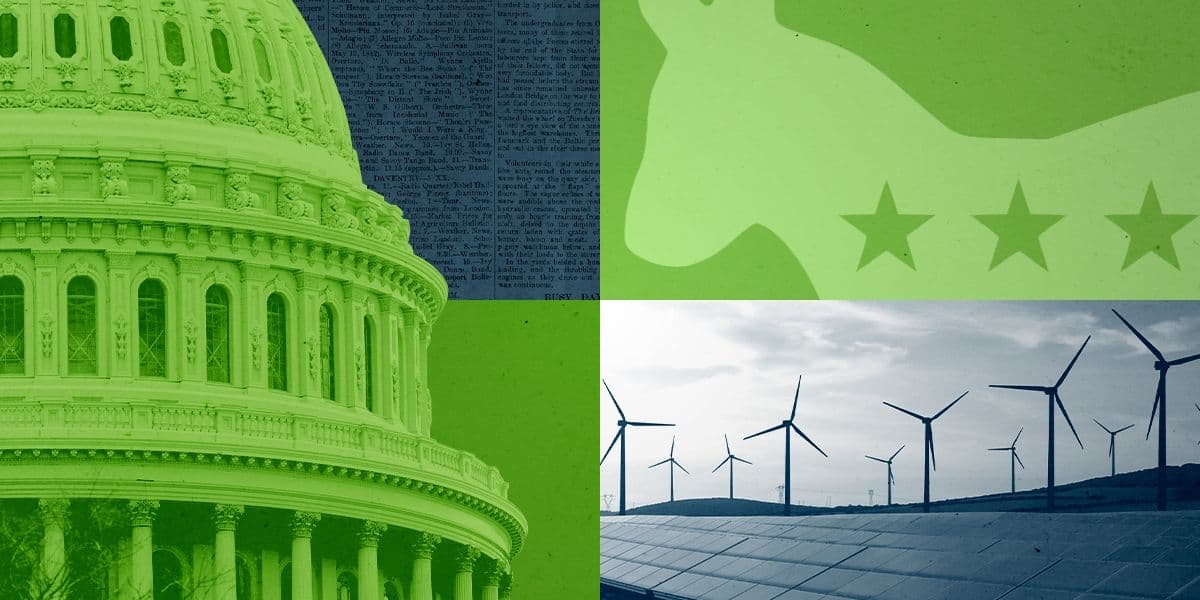
For the first time in six years, House Democrats have put forward a climate platform. Well, sort of. On Tuesday, a subset of nine House Democrats who are part of the Sustainable Energy and Environment Coalition published a menu of hundreds of policy proposals called the Thriving Economy Project. It’s a federal blueprint for the age of AI, surging energy demand, worsening natural disasters, and growing geopolitical uncertainty. Kathy Castor, a representative from Florida who led the project, told me that instead of a platform, I should think of the project as “a workable plan for long term economic and job growth.” “We’re not introducing a bill after this,” she said. “We’re providing it to policymakers in Washington for them to build the bipartisan support you need to get something across the finish line. The Trump administration is going to be there for two more years. What can we get done now that would have bipartisan support?” Nevertheless, this is still the most sweeping environment and energy policy document Democrats have published since 2020, when the House Select Committee on the Climate Crisis — which Castor also chaired — published a nearly 550-page plan to “solve the climate crisis.” Much of that work became a part of the 2021 bipartisan infrastructure law and the 2022 Inflation Reduction Act. Of course, significant chunks of those laws, including tax credits for wind and solar projects, were later dismantled by the Trump administration in the One Big Beautiful Bill Act. The Climate Crisis Committee disbanded in 2023, but the Thriving Economy Project is, in some ways, a continuation of its work. The document itself is the product of an independent nonprofit, which Democrats from the Sustainable Energy and Environment Coalition enlisted to probe experts, local leaders, companies, and advocates around the country for ideas about what Congress should do to create jobs, lower energy costs, foster innovation, and shore up communities. The nonprofit, known
The Data Center Transmission Brawls Are Just Getting Started
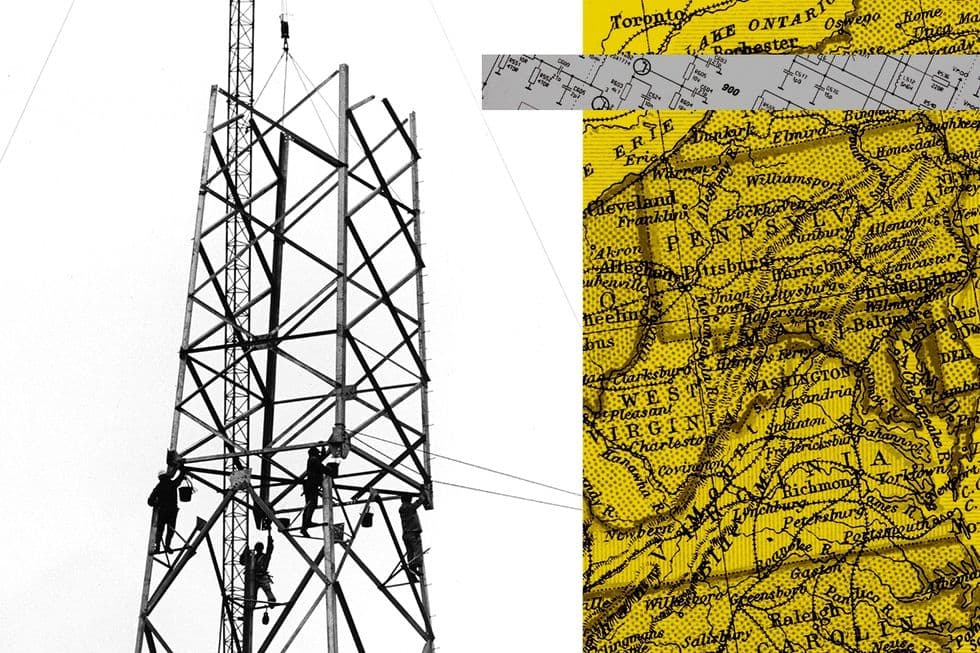
Often the biggest impediment to building renewable energy projects or data center infrastructure isn’t getting government approvals, it’s overcoming local opposition. When it comes to the transmission that connects energy to the grid, however, companies and politicians of all stripes are used to being most concerned about those at the top – the politicians and regulators at every level who can’t seem to get their acts together. What will happen when the fiery fights on each end of the wire meet the broken, unplanned spaghetti monster of grid development our country struggles with today? Nothing great. The transmission fights of the data center boom have only just begun. Utilities will have to spend lots of money on getting energy from Point A to Point B – at least $500 billion over the next five years, to be precise. That’s according to a survey of earnings information published by think tank Power Lines on Tuesday, which found roughly half of all utility infrastructure spending will go toward the grid. But big wires aren’t very popular. When Heatmap polled various types of energy projects last September, we found that self-identified Democrats and Republicans were mostly neutral on large-scale power lines. Independent voters, though? Transmission was their second least preferred technology, ranking below only coal power. Making matters far more complex, grid planning is spread out across decision-makers. At the regional level, governance is split into 10 areas overseen by regional transmission organizations, known as RTOs, or independent system operators, known as ISOs. RTOs and ISOs plan transmission projects, often proposing infrastructure to keep the grid resilient and functional. These bodies are also tasked with planning the future of their own grids, or at least they are supposed to – many observers have decried RTOs and ISOs as outmoded and slow to respond. Utilities and electricity co-ops also do this planning at various scales. And each of these bodies must navigate federal regulators and permitting processes, utility commissions for each state they touch, on top of the usual raft of local authorities. The mid-Atlantic region is overseen by PJM Interconnection, a body now under pressure from state governors in the territory to ensure the data center boom doesn’t unnecessarily drive up costs for consumers. The irony, though, is that these governors are going to be under incredible pressure to have their states act against individual transmission projects in ways that will eventually undercut affordability. Virginia, for instance – known now as Data Center Alley – is flanked by states that are politically diverse. West Virginia is now a Republican stronghold, but was long a Democratic bastion. Maryland had a Republican governor only a few years ago. Virginia and Pennsylvania regularly change party control. These dynamics are among the many drivers behind the opposition against the Piedmont Reliability Project, which would run from a nuclear plant in Pennsylvania to northern Virginia, cutting across spans of Maryland farmland ripe for land use conflict. The timeline for this project is currently unclear due to administrative delays. Another major fight is brewing with NextEra’s Mid-Atlantic Resiliency Link, or MARL project. Spanning four states – and therefore four utility commissions – the MARL was approved by PJM Interconnection to meet rising electricity demand across West Virginia, Virginia, Maryland and Pennsylvania. It still requires approval from each state utility commission, however. Potentially affected residents in West Virginia are hopping mad about the project, and state Democratic lawmakers are urging the utility commission to reject it. In West Virginia, as well as Virginia and Maryland, NextEra has applied for a certificate of public convenience and necessity to build the MARL project, a permit that opponents have claimed would grant it the authority to exercise eminent domain. (NextEra has said it will do what it can to work well with landowners. The company did not respond to a request for comment.) “The biggest problem facing transmission is that there’s so many problems facing transmission,” said Liza Reed, director of climate and energy at the Niskanen Center, a policy think tank. “You have multiple layers of approval you have to go through for a line that is going to provide broader benefits in reliability and resilience across the system.” Hyperlocal fracases certainly do matter. Reed explained to me that “often folks who are approving the line at the state or local level are looking at the benefits they’re receiving – and that’s one of the barriers transmission can have.” That is, when one state utility commission looks at a power line project, they’re essentially forced to evaluate the costs and benefits from just a portion of it. She pointed to the example of a Transource line proposed by PJM almost 10 years ago to send excess capacity from Pennsylvania to Maryland. It wasn’t delayed by protests over the line itself – the Pennsylvania Public Utilities Commission opposed the project because it thought the result would be net higher electricity bills for folks in the Keystone State. That’s despite whatever benefits would come from selling the electricity to Maryland and consumer benefits for their southern neighbors. The lesson: Whoever feels they’re getting the raw end of the line will likely try to stop it, and there’s little to nothing anyone else can do to stop them. These hyperlocal fears about projects with broader regional benefits can be easy targets for conservation-focused environmental advocates. Not only could they take your land, the argument goes, they’re also branching out to states with dirtier forms of energy that could pollute your air. “We do need more energy infrastructure to move renewable energy,” said Julie Bolthouse, director of land use for the Virginia conservation group Piedmont Environmental Council, after I asked her why she’s opposing lots of the transmission in Virginia. “This is pulling away from that investment. This is eating up all of our utility funding. All of our money is going to these massive transmission lines to give this incredible amount of power to data centers in Virginia when it could be used to invest in solar, to invest in transmission for renewables we can use. Instead it’s delivering gas and coal from West Virginia and the Ohio River Valley.” Daniel Palken of Arnold Ventures, who previously worked on major pieces of transmission reform legislation in the U.S. Senate, said when asked if local opposition was a bigger problem than macro permitting issues: “I do not think local opposition is the main thing holding up transmission.” But then he texted me to clarify. “What’s unique about transmission is that in order for local opposition to even matter, there has to be a functional planning process that gets transmission lines to the starting line. And right now, only about half the country has functional regional planning, and none of the country has functional interregional planning.” It’s challenging to fathom a solution to such a fragmented, nauseating puzzle. One solution could be in Congress, where climate hawks and transmission reform champions want to empower the Federal Energy Regulatory Commission to have primacy over transmission line approvals, as it has over gas pipelines. This would at the very least contain any conflicts over transmission lines to one deciding body. “It’s an old saw: Depending on the issue, I’ll tell you that I’m supportive of states’ rights,” Representative Sean Casten told me last December. “[I]t makes no sense that if you want to build a gas pipeline across multiple states in the U.S., you go to FERC and they are the sole permitting authority and they decide whether or not you get a permit. If you go to the same corridor and build an electric transmission that has less to worry about because there’s no chance of leaks, you have a different permitting body every time you cross a state line.” Another solution could come from the tech sector thinking fast on its feet. Google for example is investing in “advanced” transmission projects like reconductoring, which the company says will allow it to increase the capacity of existing power lines. Microsoft is also experimenting with smaller superconductor lines they claim deliver the same amount of power than traditional wires. But this space is evolving and in its infancy. “Getting into the business of transmission development is very complicated and takes a lot of time. That’s why we’ve seen data centers trying a lot of different tactics,” Reed said. “I think there’s a lot of interest, but turning that into specific projects and solutions is still to come. I think it’s also made harder by how highly local these decisions are.”
Wright Said ‘Over 80%’ of DOE Grants Are Moving Forward. That Number Is Misleading.
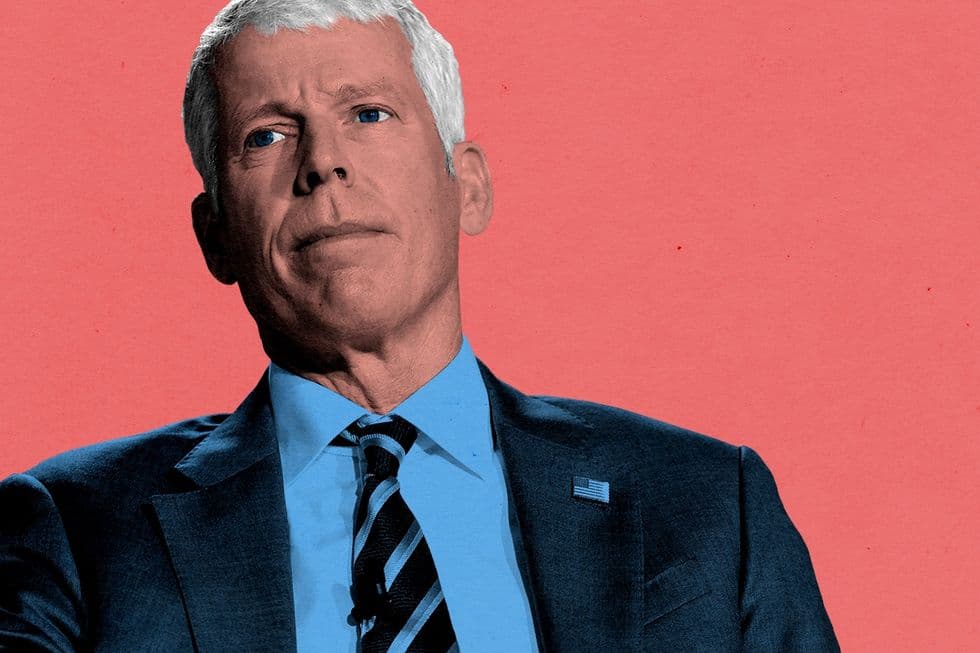
Secretary of Energy Chris Wright testified in front of the House Appropriations Committee on Wednesday to defend his agency’s proposed 2027 budget. Under questioning from Democrats, Wright told the committee that his department’s review of Biden-era funding, announced in May 2025, had “finally come to a completion.” “Well over 80%” of the 2,270 awards reviewed were moving forward, he said. Some would proceed as originally conceived, while others would be modified. “We have finished that effort, and we are keen to move forward with the majority of the projects which did pass, either straight up or through restructuring,” he testified. But that assertion obscures the level of uncertainty that remains about the funding. To back up his statement, Wright sent Congress a list of grants titled “Retain/modify,” which named roughly 1,950 awards — a number consistent with his “well over 80%” of 2,270 number. But there are big holes in the data. As one example, in January, a federal judge ruled that DOE had to reinstate seven awards the agency terminated last year, ruling that the agency’s targeting of awards in blue states violated Constitutional protections against discrimination. But just one of those seven awards — which should all theoretically be “retained” — is on the list sent to Congress this week. (The single retained award is a nearly $20 million grant for Colorado State University’s Methane Emissions Technology Evaluation Center.) Meanwhile, 18 other awards that were terminated as part of that same targeting on blue states, but which were not named in the court case, are on the new list. In other words, 18 awards that had been publicly deemed “terminated” and were not reinstated by a judge have been cleared to progress. Wright’s stats are also misleading in that the new list doesn’t include any of the funding the DOE is statutorily required to pay out to states based on pre-set formulas, such as funding for long-established Weatherization Assistance Programs or the home energy retrofit programs created by the Inflation Reduction Act, which also fell victim to the agency’s review. As I reported last summer, many states were stuck in a holding pattern waiting for the DOE to respond to their applications for the IRA rebate funding. During the hearing, Representative Debbie Wasserman Schultz of Florida asserted that the agency was still withholding more than $345 million in funds for her state’s energy efficiency rebate programs. Representative Rosa DeLauro of Connecticut raised the same issue. Wright told DeLauro that the timing for releasing the funds was “in the near future,” and could be as soon as a few weeks away. Later, when Wasserman Schultz pressed him again, Wright said he didn’t know when the funds would be released. “I do not have a specific answer to that at the tip of my tongue,” Wright said. “I know a lot of these broad scale rebate programs, we’ve gone through to look at carefully, to make sure we get rid of fraud on these things …” “$345 million is a lot of damn money,” Wasserman Schultz said, cutting him off. “And $8,000 to $14,000 grants are the kinds of things that help struggling homeowners dealing with high electric bills to try to reduce those costs. I would think that you would know at least something about what I’m talking about when you are withholding that much money.” In response, Wright argued that there was “an incredible amount of fraud” in the programs and “DEI stuff put in,” referring to diversity, equity, and inclusion programs, against which the Trump administration has mounted a crusade. The rebate programs were specifically designed by Congress, in statute, to help lower- and moderate-income households afford home upgrades like heat pumps. Wright did not provide any information to Congress about which projects were being “modified” versus approved as-is, or describe how the “modified” projects were changing course. He did, however, indicate that the agency was still open to reconsiderating grants that had been terminated. During the hearing, Representative Mike Levin of California brought up his state’s canceled ARCHES hydrogen hub, which had been eligible for up to $1.2 billion in DOE funding. He asked whether Wright would “commit to engage in good faith” with the hub’s leadership, who “want to work collaboratively with you.” “Absolutely,” Wright replied. He said that the ARCHES hub failed to prove it had a viable pathway to meet its cost goals, but that he was “absolutely open for that dialogue.”
Wright Said ‘Over 80%’ of DOE Grants Are Moving Forward. That Number Is Misleading.
Secretary of Energy Chris Wright testified in front of the House Appropriations Committee on Wednesday to defend his agency’s proposed 2027 budget. Under questioning from Democrats, Wright told the committee that his department’s review of Biden-era funding, announced in May 2025, had “finally come to a completion.” “Well over 80%” of the 2,270 awards reviewed were moving forward, he said. Some would proceed as originally conceived, while others would be modified. “We have finished that effort, and we are keen to move forward with the majority of the projects which did pass, either straight up or through restructuring,” he testified. But that assertion obscures the level of uncertainty that remains about the funding. To back up his statement, Wright sent Congress a list of grants titled “Retain/modify,” which named roughly 1,950 awards — a number consistent with his “well over 80%” of 2,270 number. But there are big holes in the data. As one example, in January, a federal judge ruled that DOE had to reinstate seven awards the agency terminated last year, ruling that the agency’s targeting of awards in blue states violated Constitutional protections against discrimination. But just one of those seven awards — which should all theoretically be “retained” — is on the list sent to Congress this week. (The single retained award is a nearly $20 million grant for Colorado State University’s Methane Emissions Technology Evaluation Center.) Meanwhile, 18 other awards that were terminated as part of that same targeting on blue states, but which were not named in the court case, are on the new list. In other words, 18 awards that had been publicly deemed “terminated” and were not reinstated by a judge have been cleared to progress. Wright’s stats are also misleading in that the new list doesn’t include any of the funding the DOE is statutorily required to pay out to states based on pre-set formulas, such as funding for long-established Weatherization Assistance Programs or the home energy retrofit programs created by the Inflation Reduction Act, which also fell victim to the agency’s review. As I reported last summer, many states were stuck in a holding pattern waiting for the DOE to respond to their applications for the IRA rebate funding. During the hearing, Representative Debbie Wasserman Schultz of Florida asserted that the agency was still withholding more than $345 million in funds for her state’s energy efficiency rebate programs. Representative Rosa DeLauro of Connecticut raised the same issue. Wright told DeLauro that the timing for releasing the funds was “in the near future,” and could be as soon as a few weeks away. Later, when Wasserman Schultz pressed him again, Wright said he didn’t know when the funds would be released. “I do not have a specific answer to that at the tip of my tongue,” Wright said. “I know a lot of these broad scale rebate programs, we’ve gone through to look at carefully, to make sure we get rid of fraud on these things …” “$345 million is a lot of damn money,” Wasserman Schultz said, cutting him off. “And $8,000 to $14,000 grants are the kinds of things that help struggling homeowners dealing with high electric bills to try to reduce those costs. I would think that you would know at least something about what I’m talking about when you are withholding that much money.” In response, Wright argued that there was “an incredible amount of fraud” in the programs and “DEI stuff put in,” referring to diversity, equity, and inclusion programs, against which the Trump administration has mounted a crusade. The rebate programs were specifically designed by Congress, in statute, to help lower- and moderate-income households afford home upgrades like heat pumps. Wright did not provide any information to Congress about which projects were being “modified” versus approved as-is, or describe how the “modified” projects were changing course. He did, however, indicate that the agency was still open to reconsiderating grants that had been terminated. During the hearing, Representative Mike Levin of California brought up his state’s canceled ARCHES hydrogen hub, which had been eligible for up to $1.2 billion in DOE funding. He asked whether Wright would “commit to engage in good faith” with the hub’s leadership, who “want to work collaboratively with you.” “Absolutely,” Wright replied. He said that the ARCHES hub failed to prove it had a viable pathway to meet its cost goals, but that he was “absolutely open for that dialogue.”
New Documents Add to Doubt Over Trump’s Deal With TotalEnergies
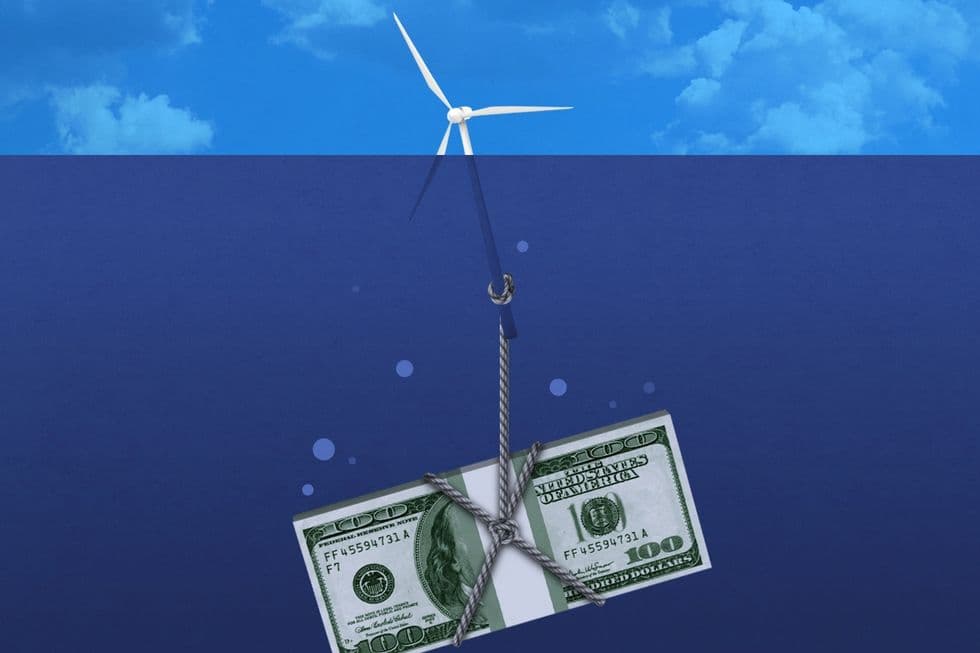
Interior Secretary Doug Burgum's announcement last month that the administration was cancelling two offshore wind leases and reimbursing the lessee, TotalEnergies, nearly $1 billion, raised a host of questions. What authority was he using to do this? Where would the money come from? Was this legal? Could the Trump administration kill the offshore wind industry by paying it exorbitant sums to go away? A newly unearthed copy of one of the agency’s official lease cancellation decisions begins to fill in the picture. It confirms what the Department of the Interior has thus far refused to acknowledge: The agency intends to pay TotalEnergies using the Judgment Fund, a cache of public money overseen by the Department of Justice intended for agency settlements. Tony Irish, a former solicitor in the Department of the Interior, was digging around in a public Bureau of Ocean Energy Management database on Tuesday when he stumbled upon the document, which is dated April 9, 2026 — more than two weeks after Burgum’s lease cancellation announcement. The document is a letter to Jen Banks, the permitting and development director for TotalEnergies’ Carolina Long Bay project, which is the smaller of the two leases that were cancelled. It says the agency reached a settlement agreement with Carolina Long Bay on March 23, in which the Interior Department “determined that cancelling Lease OCS-A 0545 is in the public interest,” and established that Carolina Long Bay “would have asserted claims in litigation against the United States related to the lease.” It ends by saying that, pursuant to the settlement agreement, “DOI will, through the Department of Justice, request payment in the amount of $133,333,333 to Carolina Long Bay from the Judgment Fund Branch at the United States Department of Treasury.” The letter does not include a copy of the settlement agreement or reference the stipulation that TotalEnergies reinvest the money into U.S. oil and gas development, as described in Burgum’s announcement. While the Judgment Fund is essentially bottomless, there are strict rules about when it can be used. Agencies can draw on it to settle litigation that cannot be remedied by injunctive relief and requires monetary compensation. They can also request a payment from the Judgment Fund to settle “imminent litigation” — claims that have not yet been filed in court. As there’s no record of claims filed in court, the TotalEnergies settlement likely falls into the latter category. But Irish, the former solicitor, told me it's hard to see how litigation could have been credibly imminent. TotalEnergies’ lease terms, which the Biden administration updated and the company agreed to in January 2025, explicitly state that the lease cannot be canceled “unless and until” the Interior Secretary has suspended operations for at least five years and extended the company’s lease for an equal amount of time. Given that TotalEnergies’ lease is less than five years old — it was purchased in 2022 — and there’s no evidence that it had been under suspension for any period of time, there appears to be little basis for any claim of imminent litigation. It’s also unclear what claim TotalEnergies could have brought to warrant monetary payment. “It looks like the result of any viable claim TotalEnergies would have brought forth is not monetary damages, but enforcement of this lease provision that requires suspension and extension first,” Irish told me. There is not yet any decision document in the database for TotalEnergies’ second lease, called Attentive Energy, for which the company stands to receive $795 million in reimbursements. Secretary Burgum will appear before the House Appropriations Committee on Monday morning, where Representative Chellie Pingree of Maine has vowed to question him on the deal. “The appropriations process for Fiscal Year 2027 will be getting underway soon with budget hearings, and I intend to press for answers,” she said in a statement shared with me by email in March. “Secretary Burgum should be prepared to provide them.”

New Jersey Legalizes Nuclear
Current conditions: The four-day Masters Tournament in Augusta, Georgia, is set to be the driest in 15 years, putting extra strain on the golf courses’ sprinkler systems • Severe Tropical Cyclone Maila is bearing down on Papua New Guinea and the Solomon Islands, deluging the autonomous island of Bougainville that is poised to vote to become an independent nation next year • A magnitude 6.2 earthquake just shook Indonesia’s Molucca Sea. THE TOP FIVE 1. New Jersey legalizes nuclear The New Jersey governor looks out to a cooling tower on Wednesday.Governor’s Office New Jersey just became the sixth state in the past decade to repeal its moratorium on building new nuclear reactors. The state enacted a de facto ban on atomic power construction in the 1970s, barring any permits for new plants until the federal government came up with a permanent solution for radioactive waste. But soaring electricity demand and a struggling buildout of offshore wind spurred Democratic Governor Mikie Sherrill to campaign last year on building at least a gigawatt of new nuclear capacity. On Wednesday, she signed legislation formally rescinding the waste requirement, authorizing the state to issue permits for new nuclear plants that, like all other atomic stations in the U.S., would temporarily store spent fuel waste on site in dry concrete casks. Speaking in front of a cooling tower at the Hope Creek nuclear generating station, one of two neighboring atomic plants in southwestern New Jersey that supply 40% of the state’s power, Sherrill said modern plants “are designed to be fail safe.” She added: “Across America, a nuclear renaissance is taking place.” Five states — Wisconsin, Kentucky, Montana, West Virginia, and, as of January, Illinois — have fully repealed their statewide bans on nuclear reactors. While five of New England’s states maintain restrictions on atomic energy, all six endorsed a regionwide agreement to encourage construction of new reactors last month, as I previously reported. Virtually every state in that mix will face challenges building new reactors. The short of it, as Heatmap’s Matthew Zeitlin put it last year, is that “electricity markets aren’t working anymore.” The answer, at least for New York, is to rely on semi-socialist entities such as a state-owned utility to finance new reactors. 2. Iran-linked hackers are targeting key U.S. grid infrastructure Hackers “affiliated” with Iran have been targeting programmable logic controllers, or PLCs, the crude industrial computers used to keep power grid operations going. That’s according to an advisory the U.S. Cybersecurity and Infrastructure Security Agency issued on Tuesday to the energy sector as the U.S.-Israeli war against Iran entered its sixth week, in spite of a fragile ceasefire deal. The North American Electric Reliability Corporation, the quasi-governmental grid watchdog, told Utility Dive it was “actively monitoring the grid.” In Saudi Arabia, meanwhile, Iran attacked the country’s key east-west pipeline shipping oil to the Red Sea. A drone struck a pumping station on the 750-mile pipeline around 1 p.m. local time on Wednesday, the Financial Times reported. 3. Brazil adds BYD to its ‘dirty list’ for slave labor BYD is officially on Brazil’s “dirty list.” The Ministry of Labor and Employment added the Chinese auto giant to its registry of employers that have subjected workers to conditions analogous to slavery after an inspection rescued 163 Chinese nationals at a construction site for the company’s new factory in Camaçari, in Bahia state. Auditors found fraud in migration papers and determined the factory was housing workers without mattresses and requiring shifts exceeding 10 hours without rest, according to a report by Folha de São Paulo. In one location, one bathroom served 31 people. The company is set for a lot more scrutiny. BYD is among the top three Chinese automakers racing to set up dealerships in Canada after Prime Minister Mark Carney reduced tariffs, allowing Beijing to set up a beachhead on the continent despite harsh U.S. trade restrictions. Already, BYD has its eyes on 20 locations, as I previously wrote. Sign up to receive Heatmap AM in your inbox every morning: * indicates required Email Address *Our Privacy Policy & Terms Apply. 4. A merger forms a $1 billion deep sea mining giant This is likely going to be the year deep sea mining becomes a thing. The obscure United Nations body in charge of figuring out global regulations for the industry has vowed to complete its task this summer. The Trump administration is charging ahead with plans to unilaterally establish permits for deep sea mining in international waters. Alongside smaller island nations such as the Cook Islands, Japan has been harvesting minerals from its own seafloor, as I wrote in February, and is now pledging to join Washington’s effort. All of that is good news for one of the biggest stocks in the sector, The Metals Company, a Canada-based but U.S.-backed startup racing to win the first American permits to extract mineral-rich nodules from the depths of the Pacific Ocean. Now another company has entered the fray. American Ocean Minerals Corp. is merging with Odyssey Marine Exploration, which is already traded on the Nasdaq, in a reverse takeover that will create a roughly $1 billion deep sea mining company. The all-stock deal includes more than $150 million in private financing and $75 million in money American Ocean Minerals raised prior to the merger. Pending shareholder approval, the combined company will retain American Ocean Minerals’ name and trade under the ticker AOMC. “AOMC will be positioned to be a reliable, long-term supplier for American re-industrialization,” Tom Albanese, the former Rio Tinto chief executive now serving as the startup’s chairman, told Mining.com. “We are taking a differentiated, responsible approach to the research and development of deep-sea resources. The work over the past decade has set a high standard for advancing the industry responsibly, and we are proud to play a role in maintaining that standard.” 5. Just six of California’s 52 hydrogen fuel stations are online If you live in California, you’re one of the few Americans living in a market where a hydrogen-powered vehicle could work. But if you did make the switch to the less popular alternative to battery-powered cars, you aren’t faring much better than your neighbors driving gasoline guzzlers. The Iran War may be driving gas prices up past $7 per gallon in parts of the most populous state in the nation. But at least the gas stations are open. Just six of California’s 52 hydrogen refueling stations are currently in operation, according to data the trade group Hydrogen Fuel Cell Partnership shared with H2 View. “Several hydrogen stations are not available due to a disruption of the gaseous hydrogen supply chain that began in February 2026,” the trade group said. Five stations operated by Iwatani and Chevron are being supplied by low-pressure trailers, significantly reducing the amount of hydrogen they each receive. “You may not receive full fills during this time,” Hydrogen Fuel Cell Partnership said. THE KICKER The planet is flickering. The longstanding assumption has held that the world is getting brighter with artificial light as illuminated neighborhoods blink into existence in growing Asian, African, and Latin American megacities around the world. But a new study in Nature shows that the planet’s brightness is going up and down year to year. As Heatmap’s Jeva Lange wrote: “Though the researchers confirmed a 34% overall increase in brightness during the study’s nine-year scope, it was offset by an 18% dimness, meaning the net increase in brightness was only 16%. Further, nearly half of the portions of land area that experienced at least one change in artificial light also experienced some form of abrupt change — that is, a brightening or dimming event that unfolded over weeks or months rather than years, such as grid failures in Venezuela, load-shedding in South Africa, changes to fossil fuel operations in Texas, and armed conflicts such as the war in Gaza.”
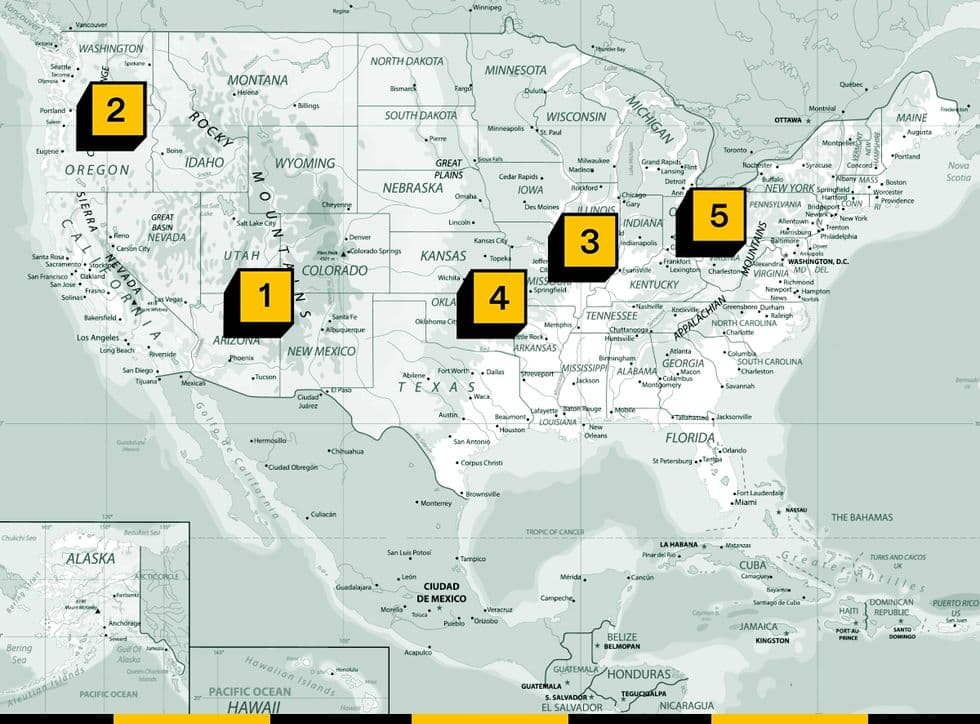
Scoop: This GOP Lawmaker Is Aiming to Stop an Arizona Wind Farm
1. Apache County, Arizona – A Republican member of Congress is now trying to convince the Trump administration to intercede against a large, controversial wind farm in the White Mountains of northern Arizona. Representative Eli Crane, a stalwart supporter of President Trump, is lobbying three separate federal agencies – the Federal Aviation Administration, the Fish and Wildlife Service, and the Federal Communications Commission – to stop Repsol’s Lava Run wind project, according to audio of a tele-town hall from late March posted to social media this Thursday. Per the audio, Crane told attendees he opposes the project and is doing everything he can to get Trump officials to intercede in order to stop future construction. Lava Run is situated entirely on state and county land, which Crane said will make it challenging for him to intercede. But the project is definitely vulnerable to federal intervention — it’ll likely require federal permits for disturbing protected birds, according to court filings we scooped last year. I reached out to the Fish and Wildlife Service to ask about Crane’s letter, and I’ll let you know if I hear back from them. Apache County, a signpost for renewable energy’s struggles in the sunniest state, is in the process of updating its renewable energy ordinance to be more restrictive, including by raising the wind turbine setback to 1.5 times the turbine’s height from properties and roadways. It’s a weird county in terms of renewable energy risk, with only a 49 risk score in the Heatmap Pro database but a significant quantity of protected land that weighs heavily on that score. 2. Morrow County, Oregon – Amazon has settled a lawsuit over its headline-grabbing data center pollution concerns. Last fall, an investigative report published by Rolling Stone alleged that an Oregon data center campus overseen by Amazon Web Services was potentially responsible for poisoning the drinking water for surrounding communities with nitrate chemicals. The story compared the situation to Flint, Michigan, and it became one of the more oft-referenced examples of water impacts I hear from Average Joes about data centers. This week Amazon agreed to pay Oregonians suing the tech company for damages around the alleged contamination. The sum may benefit those affected, but it’s worth noting that the agreed-upon amount – a little over $20 million, is relatively paltry for the company – a little over $20 million, and somewhere from 25% to-30% will go to the plaintiffs’ lawyers, per local media reporting. The company is making no admission of guilt through the settlement agreement. 3. Jefferson County, Missouri – If you’re looking for a data center approved despite frustrations on the ground, look no further than Festus, Missouri. Real estate company CRG Acquisition won big on Monday as the city council in the mid-size town greenlit moving forward with consideration of its data center project, which the company has said will involve more than $6 billion in capital investment. Festus will now ink an infrastructure development deal with CRG, largely because of potential tax revenue, according to local TV news reporting. The company will still need to submit comprehensive plans for the project before it can begin construction. Despite this progress, Festus is also a clear case of transparency troubles. Anti-center advocates have made hay of texts and emails between city officials and CRG, which has in fueled contests for each of the city council’s seats. 4. Wagoner County, Oklahoma – Speaking of feuds with local elected officials, pour one out for the city manager of the small Oklahoma town of Coweta. In Coweta, activists fighting a large Beale Infrastructure data center project requested the text messages of their city manager, Julie Casteen. What they found: Casteen telling a colleague that data center protestors “are just not very smart and can’t accept change.” Casteen wound up issuing an apology, saying that the statement “was inappropriate and hurtful.” Funny enough, the Beale project is already dead. The real estate company withdrew its application for the project right around when the text messages went public. 5. Belmont County, Ohio – Here’s a split-screen with environmental consequences, as thousands of acres of wildlife habitat go to fracking while large solar projects elsewhere in the state stutter. Ohio’s Oil and Gas Land Management Commission approved four different parcels of land for fracking this week in the Egypt Valley Wildlife Area, a refuge previously home to mining before it was quartered off for conservation. Taken together, the parcels total more than 7,000 acres. It’s worth noting that the commission reportedly approved these parcels for sale to fracking interests in a 20-minute meeting. Compare that to the lengthy public comment periods and hearing schedules required for solar projects in areas with opposition – like in Clark County, where Invenergy’s Sloopy Solar project is slowly working its way through public meetings with aggrieved would-be neighbors. Or in Morrow County, where local frustrations vented in public meetings led the Ohio Power Siting Board to reject an Open Road Renewables solar farm in mid-March. This isn’t to say public comment is inherently good or bad. But when you consider how fracking interests have it easy in Ohio … Well, the state continues to look unfriendly for any renewables developer.
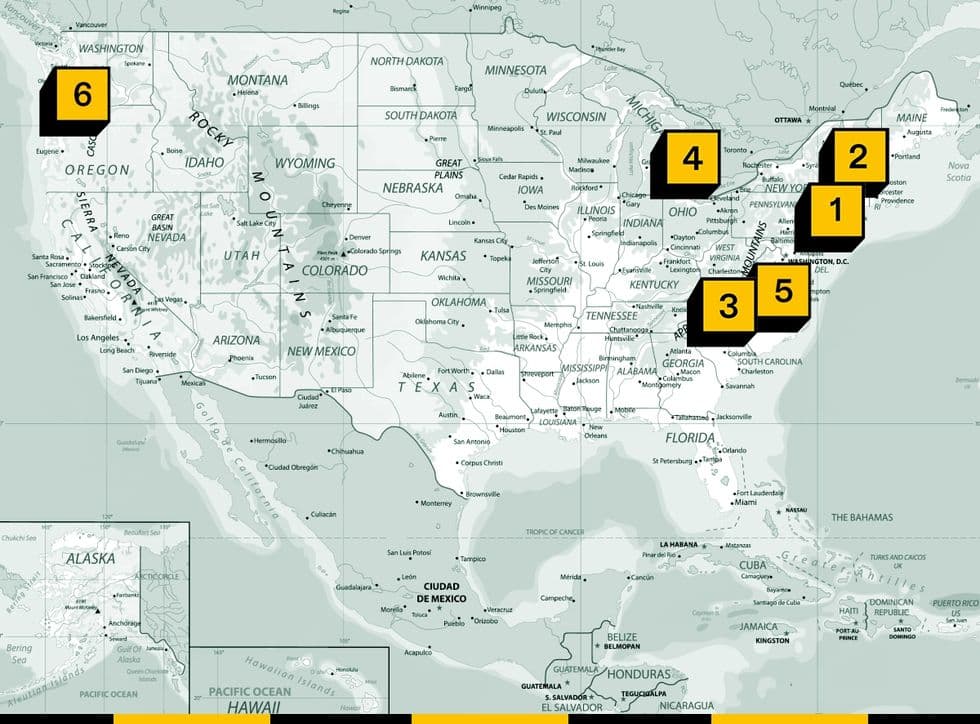
An Anti-Data Center Democrat Is Challenging an Anti-Renewables Republican in New Jersey
1. Cumberland County, New Jersey – A Democratic candidate for Congress is vying to oust one of the most powerful anti-renewable voices in Congress with a surprising maneuver: leading the public fight against a data center complex. Meet Bayly Winder, a former staffer in the U.S. Agency for International Development (or USAID) who is running for office after he lost his job because the Trump administration tore the agency apart. Winder is the frontrunner for the Democratic nomination to try and oust Jeff Van Drew, one of the most influential anti-wind voices in Congress. Though this is a right-leaning community, Van Drew used to represent this area as a Democrat before he switched his party affiliation in 2019. Winder is campaigning for Congress while also helping organize opposition to a large DataOne hyperscaler campus in the suburban community of Vineland. Phase 1 of the gas-powered project is under construction, and grassroots activists are currently fighting municipal approvals for any potential expansions with support from the Sierra Club. Residents say they received little to no public notice of the project and are up in arms about water and noise impacts from construction and operation. (Listen to the humming.) Winder published an op-ed on March 16 claiming Van Drew “championed this data center while taking money from the CEO of one of the non-union construction companies involved” – a serious charge. “How can we trust a representative who lets his conflicts of interest override the concerns of his own voters?” Van Drew’s campaign quickly issued a response saying that Winder was lying and that it is “completely false” to claim Van Drew “had any role whatsoever in approving or advocating for a data center in Vineland.” “Van Drew understands and shares concerns about the rapid growth of artificial intelligence (AI) and the demands that come with it, but it’s important to be clear that unlike offshore wind – which involved FEDERAL permits – there is no federal government component to the Vineland data center project so anyone who tells you otherwise simply isn’t shooting straight,” wrote Ron Filan, Van Drew’s campaign manager and director of political affairs. Could focusing on a single data center help Winder win office? Genuinely, who knows! Clearly Van Drew is scared of the 2026 midterms as the Trump ally recently said his party could be “killed” in the coming elections. For what it’s worth, newly elected governor Mikie Sherill flipped Cumberland County and the city of Vineland from Republican to Democrat in the off-year elections last November. 2. Hampden County, Massachusetts – This Commonwealth just killed an anti-battery storage ordinance. Poor Blandford – all the town wanted was to ban BESS in its backyard. But under state law, zoning proposals like these must be approved by the Massachusetts government, and the Massachusetts attorney general found the moratorium would violate legal restrictions against solar bans. Legal analysis of the decision indicates that municipalities won’t be able to restrict solar or battery storage without a lengthy legal battle. The timing couldn’t be better for solar and storage growth in Massachusetts, where the governor this week signed an executive order setting a 4-gigawatt target for solar power capacity by 2035. 3. York County, South Carolina – The Palmetto state area freaking out about a solar plant chemical spill is now going to regulate data centers. The Silfab Solar plant in the town of Fort Mill is an important and underscrutinized conflict in the U.S. energy transition. We’ve been reporting on the growing frustrations since The Fight started. Now, due to a chemical spill at the plant, the Move Silfab movement has become an issue in the state governor’s race and involves the Trump Environmental Protection Agency. The county’s commission this week wound up hearing from upset residents frustrated about both the Silfab plant and a QTS data center in the works. In classic industrial techlash fashion, this resulted in news coverage conflating the two topics. 4. Wayne County, Michigan – Detroit looks like it could ban data centers. The Detroit city council this week voted to recommend a two-year freeze on any data center approvals as yet another data center proposal – this one from Google – made itself known outside the city. Per public reporting, the moratorium push was driven by city councilor Scott Benson, who represents the northeast side of the city, and rooted in concerns about power bills and water availability. This is a clear blow to any notion the Motor City would embrace data centers as a new industrial boon. But the Heatmap Pro database shows this shouldn’t be a surprise: Wayne County has a higher data center opposition risk score than anything related to renewable energy, a score driven by profoundly negative public polling. 5. Orange County, North Carolina – Expect a data center moratorium in this rural county just outside of the Raleigh-Durham area. The Orange County commission voted this week to hold a hearing on banning data center permits for at least one year. This comes after neighboring Chatham County instituted a similar moratorium, and a data center in nearby Wake County was scrapped under profound grassroots opposition. A wrinkle in the minutiae of state land law is affecting officials’ thinking on a moratorium: North Carolina law precludes cities and counties from de-prioritizing specific kinds of land use. Officials want to pause giving the green light to any more data centers because they will have to be creative in order to, for example, limit data center projects on agricultural land or change what properties are for industrial use. 6. Washington County, Oregon – Environmentalists are fighting a battery storage project outside Portland because they say it poses a risk to a nearby wildlife refuge. You should be paying attention to this BrightNight battery project in Sherwood, a Portland exurb, which is getting all kinds of flack over environmental concerns. The land use application was approved last May, but aggravated residents are writing their members of Congress – all elected Democrats – asking them to intervene against construction. Oregon politicians can quickly turn from climate hawks to willing participants in the industrial techlash. Senator Ron Wyden helped author the Inflation Reduction Act but was also a leading advocate against offshore wind development along Oregon’s coastline, proving instrumental in halting progress under the Biden administration. Washington County is also one of those contradictory areas that has high support for renewable energy and a high opposition risk score in the Heatmap Pro database.

Oklo Gets Its First NRC License
Current conditions: A megastorm is bombarding more than 200 million Americans from the Midwest to the East Coast, blasting dozens of states with wind speeds as high as 80 miles per hour • Eight states — Alabama, Arkansas, Louisiana, Missouri, Oklahoma, Tennessee, and Texas — are bracing for sub-zero temperatures • It’s rainy and just over 50 degrees Fahrenheit in Dublin, Ireland, for St. Patrick’s Day. THE TOP FIVE 1. Exclusive: New bipartisan geothermal bill would give the industry more federal funding When someone writes the definitive history of the Biden-era Inflation Reduction Act, one of the more ironic footnotes will be the fact that the breakthrough that gave rise to a new era for geothermal energy came 11 months after the law passed. As a result, geothermal was little more than a rounding error in the bill, receiving relatively little support compared to the billions of dollars allocated for next-generation nuclear power. Like nuclear power, geothermal is carbon-free, runs 24/7, and loved by both climate hawk Democrats and energy hawk Republicans. That’s exactly what’s behind a new bill to bolster the industry. Legislation set to be introduced in the Senate would boost federal funding and research for geothermal power, I can report exclusively in this newsletter. On Tuesday, Senators John Hickenlooper, the Democrat from Colorado, and Steve Daines, the Montana Republican, plan to propose the GEO Power Act to authorize the Department of Energy to “move beyond limited-scale pilots and unlock the large-scale geothermal electricity generation needed to meet surging demand and drive down costs,” according to the senators’ description of the bill. If passed, the GEO Power Act would allow the Energy Department to offer “innovative financing approaches” to help build up the industry in areas with little existing geothermal power. The bill would also “generate public data to de-risk future geothermal projects” and set milestones to make sure companies that receive funding maintain fiscal accountability. Two of the industry’s top trade groups, Geothermal Rising Action and the Enhanced Geothermal Systems Deployment Coalition, backed the bill, as did companies such as Fervo, Eavor, XGS Energy, and Quaise Energy. “We’re on the verge of harnessing a new wave of geothermal energy to meet surging electricity demand, lower prices, and address the climate crisis,” Hickenlooper said in a statement. “The key will be in scaling up new, next-generation geothermal projects across the country.” Enhanced geothermal, a specific subset of next-generation technologies, could actually come online fairly quickly, too. New research by the Center for Public Enterprise, a think tank that tracks effective government spending on energy, suggests that a commercial-scale project of up to 500 megawatts could enter into commercial production within 36 to 52 months of active development, “with a conservative planning horizon of three to six years from project initiation to in-service,” assuming developers can secure necessary permits and transmission. That timeline “can be compressed even further, to less than three years, if a sufficient number of drill rigs and crews are available.” 2. Exclusive: Oklo receives it first NRC license Oklo has received its first license from the Nuclear Regulatory Commission, allowing the nuclear startup to begin recycling and selling isotopes “across medicine, research, advanced manufacturing, and national security,” I can exclusively report in this newsletter. The approval makes the California-based company the first of the cohort of fourth-generation reactor startups whose technologies use coolants other than water to get the green light to start up a commercial operation of any kind. Once operational, it will also allow Oklo to begin generating revenue for the first time. The NRC has given out permits to rival fourth-generation companies only for construction activities. The Bill Gates-backed TerraPower, for instance, was granted permission just this month to begin construction on its first commercial power plant in Wyoming, as was the Google-backed Kairos Power for its demonstration facility in Oak Ridge, Tennessee. The permit for the facility, dubbed Atomic Alchemy and located at the Idaho Radiochemistry Laboratory, authorizes the company to “receive, possess, use, store, and conduct” chemical and mechanical processing, packing, manufacturing, and distribution of a limited amount of Radium-226, which is used to make advanced cancer treatments, in addition to a handful of other isotopes. “Demand for critical isotopes is rising, but U.S. supply remains limited,” Jacob DeWitte, Oklo’s chief executive and co-founder, said in a statement. “This work helps create a more resilient and dependable domestic supply chain of isotopes and supports the transition from early operations to durable, commercial isotope production in the United States.” The license grants the company a foothold in one of its core businesses. On top of designing liquid sodium-cooled microreactors the startup plans to own and operate for electricity production, Oklo is building out a division to reprocess and recycle nuclear waste into fresh fuel for its power plants. That business, too, would involve extracting and selling high-priced medical isotopes from spent fuel, and Atomic Alchemy lays the groundwork for that future effort. To construct this debut facility, Oklo plans to build four non-power Versatile Isotope Production Reactors systems with a capacity of about 15 megawatts-thermal each. 3. The U.S. is planning its first new coal power plant in Alaska in 13 years The United States could get its first new coal-fired power plant since 2013 as part of a sweeping $56 billion deal the Trump administration announced Monday with 17 Indo-Pacific countries. Terra Energy Center reached a $1 billion deal with South Korea’s Hyundai Industries Power Systems to supply large-scale boilers for a new, more than 1.2-gigawatt coal plant in Alaska. It’s the first order for utility-scale coal boilers in the U.S. since about 2006. KOREIT, one of Korea’s largest private equity firms focused on infrastructure, pledged to make a $500 million equity investment in the Terra Energy Center project. Coal use has collapsed in the U.S. over the past two decades as hydraulic fracturing, or fracking, made natural gas cheap and abundant, the prices of renewables and batteries dropped, and decarbonization policies encouraged the closure of existing stations. Today coal generates about 16% of America’s electricity. But President Donald Trump has sought to stimulate demand for coal by forcing retiring plants across the country to remain open past their closure deadlines and easing regulations such as limits on mercury emissions from existing stations. The policies have delivered mixed results. Coal use has recently seen spikes. But states such as Washington are finding loopholes, as Heatmap’s Emily Pontecorvo reported. Either way, as Heatmap’s Matthew Zeitlin wrote last year, coal plants just keep breaking down. Sign up to receive Heatmap AM in your inbox every morning: * indicates required Email Address *Our Privacy Policy & Terms Apply. 4. In a bid for permitting reform, Trump declines to appeal offshore wind ruling The Trump administration declined to appeal a federal court ruling in favor of the offshore wind project that, as I wrote yesterday, came online this week off the coast of Rhode Island. Last week, the Department of Justice whiffed on filing an appeal before the deadline to challenge a federal judge's injunction blocking a Department of the Interior order meant to stop construction on Revolution Wind over national security concerns. E&E News called the move “a potential sign of the importance of bipartisan permitting negotiations.” In December, the top climate hawks in the Senate told Heatmap’s Jael Holzman that their votes on permitting reform hinged on the legislation barring the Trump administration from continuing its assault on offshore wind and solar. When the SPEED Act passed in the House later that month, right-wing Republicans conditioned their support on a carve-out specifically granting Trump the power to go after renewables. A new bipartisan bill introduced last month, called the FREEDOM Act, rekindled those negotiations by specifically barring the executive branch from yanking already-granted permits, whether it’s an offshore wind farm or an oil pipeline. 5. Anti-nuclear NRDC backs the restart of Iowa’s lone closed plant An anti-nuclear protest in California in June 1979. Getty Images/Bob Riha, Jr. The Natural Resources Defense Council cut its teeth fighting against the expansion of nuclear power. Now the storied conservation group has come out in support of atomic energy for the first time. The NRDC filed comments in support of restarting Iowa’s defunct Duane Arnold nuclear plant, the state’s only atomic power station, which closed in 2020. “This is unprecedented for us because it marks the first time in our history that we have taken action in support of an individual nuclear power plant,” Manish Bapna, president and chief executive of NRDC, told Axios. The move comes just days after the Nuclear Regulatory Commission took its latest step to speed up approvals of new reactors. The rule proposed last week would set fixed, accountable fee caps for new and current licensees and reduce fees for prospective applicants. “We need to cultivate accountability internally, incentivize applicants, and lower barriers for new technologies,” NRC Chairman Ho Nieh said in a statement. “This rule supports innovation and aligns with the NRC’s principles of efficiency and reliability.” THE KICKER Nevada’s biggest utility is putting off launching a new rate structure that critics warn could raise household electricity costs by changing the billing formula. State regulators gave NV Energy permission last year to charge customers in southern Nevada on the 15-minute period each day when they use electricity the most rather than tallying up total usage. The new charge was set to come into effect on April 1. But NV Energy told E&E News it would hold off until October 1 to inform customers of what they should expect. “Postponing the implementation of daily demand is the right decision for our customers,” NV Energy President Brandon Barkhuff said in a statement. “This additional time will allow us to provide customers with personalized information and practical tools so they can better understand how their energy use affects their bill before daily demand takes effect.”
Oklo Gets Its First NRC License
Current conditions: A megastorm is bombarding more than 200 million Americans from the Midwest to the East Coast, blasting dozens of states with wind speeds as high as 80 miles per hour • Eight states — Alabama, Arkansas, Louisiana, Missouri, Oklahoma, Tennessee, and Texas — are bracing for sub-zero temperatures • It’s rainy and just over 50 degrees Fahrenheit in Dublin, Ireland, for St. Patrick’s Day. THE TOP FIVE 1. Exclusive: New bipartisan geothermal bill would give the industry more federal funding When someone writes the definitive history of the Biden-era Inflation Reduction Act, one of the more ironic footnotes will be the fact that the breakthrough that gave rise to a new era for geothermal energy came 11 months after the law passed. As a result, geothermal was little more than a rounding error in the bill, receiving relatively little support compared to the billions of dollars allocated for next-generation nuclear power. Like nuclear power, geothermal is carbon-free, runs 24/7, and loved by both climate hawk Democrats and energy hawk Republicans. That’s exactly what’s behind a new bill to bolster the industry. Legislation set to be introduced in the Senate would boost federal funding and research for geothermal power, I can report exclusively in this newsletter. On Tuesday, Senators John Hickenlooper, the Democrat from Colorado, and Steve Daines, the Montana Republican, plan to propose the GEO Power Act to authorize the Department of Energy to “move beyond limited-scale pilots and unlock the large-scale geothermal electricity generation needed to meet surging demand and drive down costs,” according to the senators’ description of the bill. If passed, the GEO Power Act would allow the Energy Department to offer “innovative financing approaches” to help build up the industry in areas with little existing geothermal power. The bill would also “generate public data to de-risk future geothermal projects” and set milestones to make sure companies that receive funding maintain fiscal accountability. Two of the industry’s top trade groups, Geothermal Rising Action and the Enhanced Geothermal Systems Deployment Coalition, backed the bill, as did companies such as Fervo, Eavor, XGS Energy, and Quaise Energy. “We’re on the verge of harnessing a new wave of geothermal energy to meet surging electricity demand, lower prices, and address the climate crisis,” Hickenlooper said in a statement. “The key will be in scaling up new, next-generation geothermal projects across the country.” Enhanced geothermal, a specific subset of next-generation technologies, could actually come online fairly quickly, too. New research by the Center for Public Enterprise, a think tank that tracks effective government spending on energy, suggests that a commercial-scale project of up to 500 megawatts could enter into commercial production within 36 to 52 months of active development, “with a conservative planning horizon of three to six years from project initiation to in-service,” assuming developers can secure necessary permits and transmission. That timeline “can be compressed even further, to less than three years, if a sufficient number of drill rigs and crews are available.” 2. Exclusive: Oklo receives it first NRC license Oklo has received its first license from the Nuclear Regulatory Commission, allowing the nuclear startup to begin recycling and selling isotopes “across medicine, research, advanced manufacturing, and national security,” I can exclusively report in this newsletter. The approval makes the California-based company the first of the cohort of fourth-generation reactor startups whose technologies use coolants other than water to get the green light to start up a commercial operation of any kind. Once operational, it will also allow Oklo to begin generating revenue for the first time. The NRC has given out permits to rival fourth-generation companies only for construction activities. The Bill Gates-backed TerraPower, for instance, was granted permission just this month to begin construction on its first commercial power plant in Wyoming, as was the Google-backed Kairos Power for its demonstration facility in Oak Ridge, Tennessee. The permit for the facility, dubbed Atomic Alchemy and located at the Idaho Radiochemistry Laboratory, authorizes the company to “receive, possess, use, store, and conduct” chemical and mechanical processing, packing, manufacturing, and distribution of a limited amount of Radium-226, which is used to make advanced cancer treatments, in addition to a handful of other isotopes. “Demand for critical isotopes is rising, but U.S. supply remains limited,” Jacob DeWitte, Oklo’s chief executive and co-founder, said in a statement. “This work helps create a more resilient and dependable domestic supply chain of isotopes and supports the transition from early operations to durable, commercial isotope production in the United States.” The license grants the company a foothold in one of its core businesses. On top of designing liquid sodium-cooled microreactors the startup plans to own and operate for electricity production, Oklo is building out a division to reprocess and recycle nuclear waste into fresh fuel for its power plants. That business, too, would involve extracting and selling high-priced medical isotopes from spent fuel, and Atomic Alchemy lays the groundwork for that future effort. To construct this debut facility, Oklo plans to build four non-power Versatile Isotope Production Reactors systems with a capacity of about 15 megawatts-thermal each. 3. The U.S. is planning its first new coal power plant in Alaska in 13 years The United States could get its first new coal-fired power plant since 2013 as part of a sweeping $56 billion deal the Trump administration announced Monday with 17 Indo-Pacific countries. Terra Energy Center reached a $1 billion deal with South Korea’s Hyundai Industries Power Systems to supply large-scale boilers for a new, more than 1.2-gigawatt coal plant in Alaska. It’s the first order for utility-scale coal boilers in the U.S. since about 2006. KOREIT, one of Korea’s largest private equity firms focused on infrastructure, pledged to make a $500 million equity investment in the Terra Energy Center project. Coal use has collapsed in the U.S. over the past two decades as hydraulic fracturing, or fracking, made natural gas cheap and abundant, the prices of renewables and batteries dropped, and decarbonization policies encouraged the closure of existing stations. Today coal generates about 16% of America’s electricity. But President Donald Trump has sought to stimulate demand for coal by forcing retiring plants across the country to remain open past their closure deadlines and easing regulations such as limits on mercury emissions from existing stations. The policies have delivered mixed results. Coal use has recently seen spikes. But states such as Washington are finding loopholes, as Heatmap’s Emily Pontecorvo reported. Either way, as Heatmap’s Matthew Zeitlin wrote last year, coal plants just keep breaking down. Sign up to receive Heatmap AM in your inbox every morning: * indicates required Email Address *Our Privacy Policy & Terms Apply. 4. In a bid for permitting reform, Trump declines to appeal offshore wind ruling The Trump administration declined to appeal a federal court ruling in favor of the offshore wind project that, as I wrote yesterday, came online this week off the coast of Rhode Island. Last week, the Department of Justice whiffed on filing an appeal before the deadline to challenge a federal judge's injunction blocking a Department of the Interior order meant to stop construction on Revolution Wind over national security concerns. E&E News called the move “a potential sign of the importance of bipartisan permitting negotiations.” In December, the top climate hawks in the Senate told Heatmap’s Jael Holzman that their votes on permitting reform hinged on the legislation barring the Trump administration from continuing its assault on offshore wind and solar. When the SPEED Act passed in the House later that month, right-wing Republicans conditioned their support on a carve-out specifically granting Trump the power to go after renewables. A new bipartisan bill introduced last month, called the FREEDOM Act, rekindled those negotiations by specifically barring the executive branch from yanking already-granted permits, whether it’s an offshore wind farm or an oil pipeline. 5. Anti-nuclear NRDC backs the restart of Iowa’s lone closed plant An anti-nuclear protest in California in June 1979. Getty Images/Bob Riha, Jr. The Natural Resources Defense Council cut its teeth fighting against the expansion of nuclear power. Now the storied conservation group has come out in support of atomic energy for the first time. The NRDC filed comments in support of restarting Iowa’s defunct Duane Arnold nuclear plant, the state’s only atomic power station, which closed in 2020. “This is unprecedented for us because it marks the first time in our history that we have taken action in support of an individual nuclear power plant,” Manish Bapna, president and chief executive of NRDC, told Axios. The move comes just days after the Nuclear Regulatory Commission took its latest step to speed up approvals of new reactors. The rule proposed last week would set fixed, accountable fee caps for new and current licensees and reduce fees for prospective applicants. “We need to cultivate accountability internally, incentivize applicants, and lower barriers for new technologies,” NRC Chairman Ho Nieh said in a statement. “This rule supports innovation and aligns with the NRC’s principles of efficiency and reliability.” THE KICKER Nevada’s biggest utility is putting off launching a new rate structure that critics warn could raise household electricity costs by changing the billing formula. State regulators gave NV Energy permission last year to charge customers in southern Nevada on the 15-minute period each day when they use electricity the most rather than tallying up total usage. The new charge was set to come into effect on April 1. But NV Energy told E&E News it would hold off until October 1 to inform customers of what they should expect. “Postponing the implementation of daily demand is the right decision for our customers,” NV Energy President Brandon Barkhuff said in a statement. “This additional time will allow us to provide customers with personalized information and practical tools so they can better understand how their energy use affects their bill before daily demand takes effect.”
Oklo Gets Its First NRC License
Current conditions: A megastorm is bombarding more than 200 million Americans from the Midwest to the East Coast, blasting dozens of states with wind speeds as high as 80 miles per hour • Eight states — Alabama, Arkansas, Louisiana, Missouri, Oklahoma, Tennessee, and Texas — are bracing for sub-zero temperatures • It’s rainy and just over 50 degrees Fahrenheit in Dublin, Ireland, for St. Patrick’s Day. THE TOP FIVE 1. Exclusive: New bipartisan geothermal bill would give the industry more federal funding When someone writes the definitive history of the Biden-era Inflation Reduction Act, one of the more ironic footnotes will be the fact that the breakthrough that gave rise to a new era for geothermal energy came 11 months after the law passed. As a result, geothermal was little more than a rounding error in the bill, receiving relatively little support compared to the billions of dollars allocated for next-generation nuclear power. Like nuclear power, geothermal is carbon-free, runs 24/7, and loved by both climate hawk Democrats and energy hawk Republicans. That’s exactly what’s behind a new bill to bolster the industry. Legislation set to be introduced in the Senate would boost federal funding and research for geothermal power, I can report exclusively in this newsletter. On Tuesday, Senators John Hickenlooper, the Democrat from Colorado, and Steve Daines, the Montana Republican, plan to propose the GEO Power Act to authorize the Department of Energy to “move beyond limited-scale pilots and unlock the large-scale geothermal electricity generation needed to meet surging demand and drive down costs,” according to the senators’ description of the bill. If passed, the GEO Power Act would allow the Energy Department to offer “innovative financing approaches” to help build up the industry in areas with little existing geothermal power. The bill would also “generate public data to de-risk future geothermal projects” and set milestones to make sure companies that receive funding maintain fiscal accountability. Two of the industry’s top trade groups, Geothermal Rising Action and the Enhanced Geothermal Systems Deployment Coalition, backed the bill, as did companies such as Fervo, Eavor, XGS Energy, and Quaise Energy. “We’re on the verge of harnessing a new wave of geothermal energy to meet surging electricity demand, lower prices, and address the climate crisis,” Hickenlooper said in a statement. “The key will be in scaling up new, next-generation geothermal projects across the country.” Enhanced geothermal, a specific subset of next-generation technologies, could actually come online fairly quickly, too. New research by the Center for Public Enterprise, a think tank that tracks effective government spending on energy, suggests that a commercial-scale project of up to 500 megawatts could enter into commercial production within 36 to 52 months of active development, “with a conservative planning horizon of three to six years from project initiation to in-service,” assuming developers can secure necessary permits and transmission. That timeline “can be compressed even further, to less than three years, if a sufficient number of drill rigs and crews are available.” 2. Exclusive: Oklo receives it first NRC license Oklo has received its first license from the Nuclear Regulatory Commission, allowing the nuclear startup to begin recycling and selling isotopes “across medicine, research, advanced manufacturing, and national security,” I can exclusively report in this newsletter. The approval makes the California-based company the first of the cohort of fourth-generation reactor startups whose technologies use coolants other than water to get the green light to start up a commercial operation of any kind. Once operational, it will also allow Oklo to begin generating revenue for the first time. The NRC has given out permits to rival fourth-generation companies only for construction activities. The Bill Gates-backed TerraPower, for instance, was granted permission just this month to begin construction on its first commercial power plant in Wyoming, as was the Google-backed Kairos Power for its demonstration facility in Oak Ridge, Tennessee. The permit for the facility, dubbed Atomic Alchemy and located at the Idaho Radiochemistry Laboratory, authorizes the company to “receive, possess, use, store, and conduct” chemical and mechanical processing, packing, manufacturing, and distribution of a limited amount of Radium-226, which is used to make advanced cancer treatments, in addition to a handful of other isotopes. “Demand for critical isotopes is rising, but U.S. supply remains limited,” Jacob DeWitte, Oklo’s chief executive and co-founder, said in a statement. “This work helps create a more resilient and dependable domestic supply chain of isotopes and supports the transition from early operations to durable, commercial isotope production in the United States.” The license grants the company a foothold in one of its core businesses. On top of designing liquid sodium-cooled microreactors the startup plans to own and operate for electricity production, Oklo is building out a division to reprocess and recycle nuclear waste into fresh fuel for its power plants. That business, too, would involve extracting and selling high-priced medical isotopes from spent fuel, and Atomic Alchemy lays the groundwork for that future effort. To construct this debut facility, Oklo plans to build four non-power Versatile Isotope Production Reactors systems with a capacity of about 15 megawatts-thermal each. 3. The U.S. is planning its first new coal power plant in Alaska in 13 years The United States could get its first new coal-fired power plant since 2013 as part of a sweeping $56 billion deal the Trump administration announced Monday with 17 Indo-Pacific countries. Terra Energy Center reached a $1 billion deal with South Korea’s Hyundai Industries Power Systems to supply large-scale boilers for a new, more than 1.2-gigawatt coal plant in Alaska. It’s the first order for utility-scale coal boilers in the U.S. since about 2006. KOREIT, one of Korea’s largest private equity firms focused on infrastructure, pledged to make a $500 million equity investment in the Terra Energy Center project. Coal use has collapsed in the U.S. over the past two decades as hydraulic fracturing, or fracking, made natural gas cheap and abundant, the prices of renewables and batteries dropped, and decarbonization policies encouraged the closure of existing stations. Today coal generates about 16% of America’s electricity. But President Donald Trump has sought to stimulate demand for coal by forcing retiring plants across the country to remain open past their closure deadlines and easing regulations such as limits on mercury emissions from existing stations. The policies have delivered mixed results. Coal use has recently seen spikes. But states such as Washington are finding loopholes, as Heatmap’s Emily Pontecorvo reported. Either way, as Heatmap’s Matthew Zeitlin wrote last year, coal plants just keep breaking down. Sign up to receive Heatmap AM in your inbox every morning: * indicates required Email Address *Our Privacy Policy & Terms Apply. 4. In a bid for permitting reform, Trump declines to appeal offshore wind ruling The Trump administration declined to appeal a federal court ruling in favor of the offshore wind project that, as I wrote yesterday, came online this week off the coast of Rhode Island. Last week, the Department of Justice whiffed on filing an appeal before the deadline to challenge a federal judge's injunction blocking a Department of the Interior order meant to stop construction on Revolution Wind over national security concerns. E&E News called the move “a potential sign of the importance of bipartisan permitting negotiations.” In December, the top climate hawks in the Senate told Heatmap’s Jael Holzman that their votes on permitting reform hinged on the legislation barring the Trump administration from continuing its assault on offshore wind and solar. When the SPEED Act passed in the House later that month, right-wing Republicans conditioned their support on a carve-out specifically granting Trump the power to go after renewables. A new bipartisan bill introduced last month, called the FREEDOM Act, rekindled those negotiations by specifically barring the executive branch from yanking already-granted permits, whether it’s an offshore wind farm or an oil pipeline. 5. Anti-nuclear NRDC backs the restart of Iowa’s lone closed plant An anti-nuclear protest in California in June 1979. Getty Images/Bob Riha, Jr. The Natural Resources Defense Council cut its teeth fighting against the expansion of nuclear power. Now the storied conservation group has come out in support of atomic energy for the first time. The NRDC filed comments in support of restarting Iowa’s defunct Duane Arnold nuclear plant, the state’s only atomic power station, which closed in 2020. “This is unprecedented for us because it marks the first time in our history that we have taken action in support of an individual nuclear power plant,” Manish Bapna, president and chief executive of NRDC, told Axios. The move comes just days after the Nuclear Regulatory Commission took its latest step to speed up approvals of new reactors. The rule proposed last week would set fixed, accountable fee caps for new and current licensees and reduce fees for prospective applicants. “We need to cultivate accountability internally, incentivize applicants, and lower barriers for new technologies,” NRC Chairman Ho Nieh said in a statement. “This rule supports innovation and aligns with the NRC’s principles of efficiency and reliability.” THE KICKER Nevada’s biggest utility is putting off launching a new rate structure that critics warn could raise household electricity costs by changing the billing formula. State regulators gave NV Energy permission last year to charge customers in southern Nevada on the 15-minute period each day when they use electricity the most rather than tallying up total usage. The new charge was set to come into effect on April 1. But NV Energy told E&E News it would hold off until October 1 to inform customers of what they should expect. “Postponing the implementation of daily demand is the right decision for our customers,” NV Energy President Brandon Barkhuff said in a statement. “This additional time will allow us to provide customers with personalized information and practical tools so they can better understand how their energy use affects their bill before daily demand takes effect.”
Building 10 Westinghouse AP1000s Could Give the U.S. a Trillion-Dollar Boost
Current conditions: The Central United States is bracing for flooding as soaking storms deluge the region • Arctic air is barreling southward to replace the record warmth in the Midwest and Northeast • Temperatures in the Indian state of Gujarat are hitting 104 degrees Fahrenheit. THE TOP FIVE 1. Westinghouse says building 10 of its AP1000s would give the U.S. economy a trillion-dollar boost If you know anything about America’s flagship nuclear reactor, the Westinghouse AP1000, you know the only two built in the country so far cost around $35 billion total to install, more than double their original cost estimate. While the best projections at the Massachusetts Institute of Technology suggest the next AP1000 will be the cheapest option per megawatt of any reactors currently in development in the U.S., no one really knows exactly how much the project would cost. Westinghouse can now put a number on how much building a bunch of new AP1000s would do for the U.S. economy, however. A study it commissioned by the consultancy PricewaterhouseCoopers found that, assuming an 80-year lifespan, a fleet of 10 new AP1000s would add more than $1 trillion to America’s gross domestic product. Here are some more numbers from PwC’s report: The construction phase alone would generate nearly $93 billion of gross domestic product for the country and support 44,300 jobs every year for the estimated 13 years of work. The labor income from the construction phase would approach $55 billion, and tax revenues would top $20 billion. The labor income from 80 years of operation would reach $329 billion, with tax revenues of $271 billion. The 10 reactors could power at least 7.5 million homes. The 10-reactor target comes from one of President Donald Trump’s four executive orders on nuclear power last May directing the Department of Energy to build a fleet of new large-scale reactors with an already-certified design. The AP1000 is the obvious frontrunner to fulfill that order, and the agency has already begun meeting with utilities and developers, as Heatmap’s Robinson Meyer reported last month. Dan Sumner, Westinghouse’s interim chief executive, said the report “highlights that work to deploy a 10-unit AP1000 fleet can begin immediately” and called the reactor “the only fully licensed, construction-ready advanced reactor available today.” 2. White House admits the Navy hasn’t escorted a ships through the Strait of Hormuz In a Tuesday morning post on X, Secretary of Energy Chris Wright announced that the U.S. Navy had “successfully escorted an oil tanker through the Strait of Hormuz to ensure oil remains flowing to global markets,” crediting President Donald Trump with “maintaining stability of global energy during the military operations against Iran.” Newswires promptly blasted out the story. Oil prices went for what The Wall Street Journal called “another wild ride.” Then, abruptly, Wright deleted the tweet. Hours later, White House Press Secretary Karoline Leavitt corrected the record: “The U.S. Navy has not escorted a tanker or vessel at this time.” The Energy Department ultimately blamed a staffer for incorrectly captioning a video of Wright speaking. That wasn’t the only thing roiling oil markets. The Financial Times blamed “mixed messages” from U.S., Israeli, and Iranian leadership about the nature of the conflict coming to an end. Then, in a separate scoop from the Journal on Tuesday, the International Energy Agency proposed the largest release of oil reserves in its history, exceeding 182 million barrels of oil. Countries that depend heavily on imported fuels are preparing for shortfalls. Thailand and several oil-poor Asian nations this week ordered government bureaucrats to take the stairs and work from home to save energy. In a Tuesday night post on X, Senator Chris Murphy, the Democrat from Connecticut, said administration officials briefed him on classified intelligence about the war and “on the Strait of Hormuz, they had NO PLAN.” He continued: “I can’t go into more detail about how Iran gums up the Strait, but suffice it say [sic], right now, they don’t know how to get it safely back open. Which is unforgiveable, because this part of the disaster was 100% foreseeable.” Sign up to receive Heatmap AM in your inbox every morning: * indicates required Email Address *Our Privacy Policy & Terms Apply. 3. U.S. solar installations dropped by double digits last year The U.S. solar industry installed just over 43 gigawatts of panels last year, a 14% decrease from 2024, according to the latest report from the consultancy Wood Mackenzie and the Solar Energy Industries Association. The utility-scale sector, which depends heavily on cheap imported panels, shrank nearly 40% quarter-over-quarter in the last three months of 2025. Residential solar declined by just 2%. Still, solar accounted for 54% of all new power-generating capacity in the U.S. In every future scenario the report analyzed, solar made up roughly half of all new capacity every year through 2060. The solar manufacturing industry, on the other hand, had what the report called “a monumental year.” New cell capacity continued to expand, while the first new wafer capacity since 2016 came online. If you want a primer on how panels work, Heatmap’s Matthew Zeitlin has a good explainer on what exactly goes on with the different components. 4. New industry coalition launches to advocate smarter use of the existing grid Big companies including Tesla, Google, and the appliance maker Carrier launched a new industry coalition called Utilize on Tuesday “to address the most urgent challenges facing the U.S. energy system: growing electricity demand and rising power bills driven in part by an electrical grid that is built for short periods of peak use but underutilized most of the time.” The companies involved in the group planned to advocate to state governments, utilities, and regulators for “technology-neutral” policies. “For decades, we’ve built the grid to meet peak demand, even though large portions of it sit unused for most hours of the year,” Ian Magruder, the executive director of Utilize, said in a statement. “It’s like building an airplane that only flies with full passengers a few times a year. That excess capacity is hiding in plain sight, and new technologies give us the opportunity to unlock it. Better grid utilization is one of the fastest, most practical levers states can pull to reduce power bills while supporting economic growth.” 5. Trump launches a new effort to fight Asian carp invasion in the Great Lakes The great battle to defend our shores from the invasion of Asian carp has brought together two political foes: President Trump and one of the people widely seen as a candidate for the Democratic nod to replace him in 2028. On Tuesday, Trump posted on Truth Social that he was working with Michigan Governor Gretchen Whitmer “on trying to save the Great Lakes from the rather violent and destructive” invasive species, which dominate some inland rivers in the U.S. to the point that the fish, first brought over from China in the 1970s, now make up 95% of the total biomass. In the post, Trump said he would ask other governors to join the effort, “including those of Illinois, Wisconsin, Minnesota, Pennsylvania, Ohio, Indiana, New York,” as well as Canadian Prime Minister Mark Carney, whom he called “the future Governor of Canada,” a nod to his often-stated desire of annexing Canada as the U.S.’s 51st state. Separately, he said, “I am also working to save The Great Salt Lake, in Utah, which, in a short period of time, if nothing is done, will have no water.” He offered no other details. But last week, the federal government reached a deal with Utah to claim 22,311 acres of the Great Salt Lake that had been disputed with the state, the Utah News Dispatch reported. THE KICKER A conservation ecologist studying macaws in Peru spent his weekends visiting archaeological sites such as 1,000-year-old tombs in the arid north. To his surprise, parrot feathers adorned burial sites on the opposite side of the Andes mountains, in a region nowhere near the birds’ habitat. He spent years trying to find out how the feather got there. The side quest turned into a new study published Tuesday in the journal Nature Communications, in which the scientist, George Olah, concluded that live parrots were traded far and wide across the mountainous region. The feathers pointed to what The New York Times called “a complex trade network that predates the Inca Empire.”
Building 10 Westinghouse AP1000s Could Give the U.S. a Trillion-Dollar Boost
Current conditions: The Central United States is bracing for flooding as soaking storms deluge the region • Arctic air is barreling southward to replace the record warmth in the Midwest and Northeast • Temperatures in the Indian state of Gujarat are hitting 104 degrees Fahrenheit. THE TOP FIVE 1. Westinghouse says building 10 of its AP1000s would give the U.S. economy a trillion-dollar boost If you know anything about America’s flagship nuclear reactor, the Westinghouse AP1000, you know the only two built in the country so far cost around $35 billion total to install, more than double their original cost estimate. While the best projections at the Massachusetts Institute of Technology suggest the next AP1000 will be the cheapest option per megawatt of any reactors currently in development in the U.S., no one really knows exactly how much the project would cost. Westinghouse can now put a number on how much building a bunch of new AP1000s would do for the U.S. economy, however. A study it commissioned by the consultancy PricewaterhouseCoopers found that, assuming an 80-year lifespan, a fleet of 10 new AP1000s would add more than $1 trillion to America’s gross domestic product. Here are some more numbers from PwC’s report: The construction phase alone would generate nearly $93 billion of gross domestic product for the country and support 44,300 jobs every year for the estimated 13 years of work. The labor income from the construction phase would approach $55 billion, and tax revenues would top $20 billion. The labor income from 80 years of operation would reach $329 billion, with tax revenues of $271 billion. The 10 reactors could power at least 7.5 million homes. The 10-reactor target comes from one of President Donald Trump’s four executive orders on nuclear power last May directing the Department of Energy to build a fleet of new large-scale reactors with an already-certified design. The AP1000 is the obvious frontrunner to fulfill that order, and the agency has already begun meeting with utilities and developers, as Heatmap’s Robinson Meyer reported last month. Dan Sumner, Westinghouse’s interim chief executive, said the report “highlights that work to deploy a 10-unit AP1000 fleet can begin immediately” and called the reactor “the only fully licensed, construction-ready advanced reactor available today.” 2. White House admits the Navy hasn’t escorted a ships through the Strait of Hormuz In a Tuesday morning post on X, Secretary of Energy Chris Wright announced that the U.S. Navy had “successfully escorted an oil tanker through the Strait of Hormuz to ensure oil remains flowing to global markets,” crediting President Donald Trump with “maintaining stability of global energy during the military operations against Iran.” Newswires promptly blasted out the story. Oil prices went for what The Wall Street Journal called “another wild ride.” Then, abruptly, Wright deleted the tweet. Hours later, White House Press Secretary Karoline Leavitt corrected the record: “The U.S. Navy has not escorted a tanker or vessel at this time.” The Energy Department ultimately blamed a staffer for incorrectly captioning a video of Wright speaking. That wasn’t the only thing roiling oil markets. The Financial Times blamed “mixed messages” from U.S., Israeli, and Iranian leadership about the nature of the conflict coming to an end. Then, in a separate scoop from the Journal on Tuesday, the International Energy Agency proposed the largest release of oil reserves in its history, exceeding 182 million barrels of oil. Countries that depend heavily on imported fuels are preparing for shortfalls. Thailand and several oil-poor Asian nations this week ordered government bureaucrats to take the stairs and work from home to save energy. In a Tuesday night post on X, Senator Chris Murphy, the Democrat from Connecticut, said administration officials briefed him on classified intelligence about the war and “on the Strait of Hormuz, they had NO PLAN.” He continued: “I can’t go into more detail about how Iran gums up the Strait, but suffice it say [sic], right now, they don’t know how to get it safely back open. Which is unforgiveable, because this part of the disaster was 100% foreseeable.” Sign up to receive Heatmap AM in your inbox every morning: * indicates required Email Address *Our Privacy Policy & Terms Apply. 3. U.S. solar installations dropped by double digits last year The U.S. solar industry installed just over 43 gigawatts of panels last year, a 14% decrease from 2024, according to the latest report from the consultancy Wood Mackenzie and the Solar Energy Industries Association. The utility-scale sector, which depends heavily on cheap imported panels, shrank nearly 40% quarter-over-quarter in the last three months of 2025. Residential solar declined by just 2%. Still, solar accounted for 54% of all new power-generating capacity in the U.S. In every future scenario the report analyzed, solar made up roughly half of all new capacity every year through 2060. The solar manufacturing industry, on the other hand, had what the report called “a monumental year.” New cell capacity continued to expand, while the first new wafer capacity since 2016 came online. If you want a primer on how panels work, Heatmap’s Matthew Zeitlin has a good explainer on what exactly goes on with the different components. 4. New industry coalition launches to advocate smarter use of the existing grid Big companies including Tesla, Google, and the appliance maker Carrier launched a new industry coalition called Utilize on Tuesday “to address the most urgent challenges facing the U.S. energy system: growing electricity demand and rising power bills driven in part by an electrical grid that is built for short periods of peak use but underutilized most of the time.” The companies involved in the group planned to advocate to state governments, utilities, and regulators for “technology-neutral” policies. “For decades, we’ve built the grid to meet peak demand, even though large portions of it sit unused for most hours of the year,” Ian Magruder, the executive director of Utilize, said in a statement. “It’s like building an airplane that only flies with full passengers a few times a year. That excess capacity is hiding in plain sight, and new technologies give us the opportunity to unlock it. Better grid utilization is one of the fastest, most practical levers states can pull to reduce power bills while supporting economic growth.” 5. Trump launches a new effort to fight Asian carp invasion in the Great Lakes The great battle to defend our shores from the invasion of Asian carp has brought together two political foes: President Trump and one of the people widely seen as a candidate for the Democratic nod to replace him in 2028. On Tuesday, Trump posted on Truth Social that he was working with Michigan Governor Gretchen Whitmer “on trying to save the Great Lakes from the rather violent and destructive” invasive species, which dominate some inland rivers in the U.S. to the point that the fish, first brought over from China in the 1970s, now make up 95% of the total biomass. In the post, Trump said he would ask other governors to join the effort, “including those of Illinois, Wisconsin, Minnesota, Pennsylvania, Ohio, Indiana, New York,” as well as Canadian Prime Minister Mark Carney, whom he called “the future Governor of Canada,” a nod to his often-stated desire of annexing Canada as the U.S.’s 51st state. Separately, he said, “I am also working to save The Great Salt Lake, in Utah, which, in a short period of time, if nothing is done, will have no water.” He offered no other details. But last week, the federal government reached a deal with Utah to claim 22,311 acres of the Great Salt Lake that had been disputed with the state, the Utah News Dispatch reported. THE KICKER A conservation ecologist studying macaws in Peru spent his weekends visiting archaeological sites such as 1,000-year-old tombs in the arid north. To his surprise, parrot feathers adorned burial sites on the opposite side of the Andes mountains, in a region nowhere near the birds’ habitat. He spent years trying to find out how the feather got there. The side quest turned into a new study published Tuesday in the journal Nature Communications, in which the scientist, George Olah, concluded that live parrots were traded far and wide across the mountainous region. The feathers pointed to what The New York Times called “a complex trade network that predates the Inca Empire.”
Building 10 Westinghouse AP1000s Could Give the U.S. a Trillion-Dollar Boost
Current conditions: The Central United States is bracing for flooding as soaking storms deluge the region • Arctic air is barreling southward to replace the record warmth in the Midwest and Northeast • Temperatures in the Indian state of Gujarat are hitting 104 degrees Fahrenheit. THE TOP FIVE 1. Westinghouse says building 10 of its AP1000s would give the U.S. economy a trillion-dollar boost If you know anything about America’s flagship nuclear reactor, the Westinghouse AP1000, you know the only two built in the country so far cost around $35 billion total to install, more than double their original cost estimate. While the best projections at the Massachusetts Institute of Technology suggest the next AP1000 will be the cheapest option per megawatt of any reactors currently in development in the U.S., no one really knows exactly how much the project would cost. Westinghouse can now put a number on how much building a bunch of new AP1000s would do for the U.S. economy, however. A study it commissioned by the consultancy PricewaterhouseCoopers found that, assuming an 80-year lifespan, a fleet of 10 new AP1000s would add more than $1 trillion to America’s gross domestic product. Here are some more numbers from PwC’s report: The construction phase alone would generate nearly $93 billion of gross domestic product for the country and support 44,300 jobs every year for the estimated 13 years of work. The labor income from the construction phase would approach $55 billion, and tax revenues would top $20 billion. The labor income from 80 years of operation would reach $329 billion, with tax revenues of $271 billion. The 10 reactors could power at least 7.5 million homes. The 10-reactor target comes from one of President Donald Trump’s four executive orders on nuclear power last May directing the Department of Energy to build a fleet of new large-scale reactors with an already-certified design. The AP1000 is the obvious frontrunner to fulfill that order, and the agency has already begun meeting with utilities and developers, as Heatmap’s Robinson Meyer reported last month. Dan Sumner, Westinghouse’s interim chief executive, said the report “highlights that work to deploy a 10-unit AP1000 fleet can begin immediately” and called the reactor “the only fully licensed, construction-ready advanced reactor available today.” 2. White House admits the Navy hasn’t escorted a ships through the Strait of Hormuz In a Tuesday morning post on X, Secretary of Energy Chris Wright announced that the U.S. Navy had “successfully escorted an oil tanker through the Strait of Hormuz to ensure oil remains flowing to global markets,” crediting President Donald Trump with “maintaining stability of global energy during the military operations against Iran.” Newswires promptly blasted out the story. Oil prices went for what The Wall Street Journal called “another wild ride.” Then, abruptly, Wright deleted the tweet. Hours later, White House Press Secretary Karoline Leavitt corrected the record: “The U.S. Navy has not escorted a tanker or vessel at this time.” The Energy Department ultimately blamed a staffer for incorrectly captioning a video of Wright speaking. That wasn’t the only thing roiling oil markets. The Financial Times blamed “mixed messages” from U.S., Israeli, and Iranian leadership about the nature of the conflict coming to an end. Then, in a separate scoop from the Journal on Tuesday, the International Energy Agency proposed the largest release of oil reserves in its history, exceeding 182 million barrels of oil. Countries that depend heavily on imported fuels are preparing for shortfalls. Thailand and several oil-poor Asian nations this week ordered government bureaucrats to take the stairs and work from home to save energy. In a Tuesday night post on X, Senator Chris Murphy, the Democrat from Connecticut, said administration officials briefed him on classified intelligence about the war and “on the Strait of Hormuz, they had NO PLAN.” He continued: “I can’t go into more detail about how Iran gums up the Strait, but suffice it say [sic], right now, they don’t know how to get it safely back open. Which is unforgiveable, because this part of the disaster was 100% foreseeable.” Sign up to receive Heatmap AM in your inbox every morning: * indicates required Email Address *Our Privacy Policy & Terms Apply. 3. U.S. solar installations dropped by double digits last year The U.S. solar industry installed just over 43 gigawatts of panels last year, a 14% decrease from 2024, according to the latest report from the consultancy Wood Mackenzie and the Solar Energy Industries Association. The utility-scale sector, which depends heavily on cheap imported panels, shrank nearly 40% quarter-over-quarter in the last three months of 2025. Residential solar declined by just 2%. Still, solar accounted for 54% of all new power-generating capacity in the U.S. In every future scenario the report analyzed, solar made up roughly half of all new capacity every year through 2060. The solar manufacturing industry, on the other hand, had what the report called “a monumental year.” New cell capacity continued to expand, while the first new wafer capacity since 2016 came online. If you want a primer on how panels work, Heatmap’s Matthew Zeitlin has a good explainer on what exactly goes on with the different components. 4. New industry coalition launches to advocate smarter use of the existing grid Big companies including Tesla, Google, and the appliance maker Carrier launched a new industry coalition called Utilize on Tuesday “to address the most urgent challenges facing the U.S. energy system: growing electricity demand and rising power bills driven in part by an electrical grid that is built for short periods of peak use but underutilized most of the time.” The companies involved in the group planned to advocate to state governments, utilities, and regulators for “technology-neutral” policies. “For decades, we’ve built the grid to meet peak demand, even though large portions of it sit unused for most hours of the year,” Ian Magruder, the executive director of Utilize, said in a statement. “It’s like building an airplane that only flies with full passengers a few times a year. That excess capacity is hiding in plain sight, and new technologies give us the opportunity to unlock it. Better grid utilization is one of the fastest, most practical levers states can pull to reduce power bills while supporting economic growth.” 5. Trump launches a new effort to fight Asian carp invasion in the Great Lakes The great battle to defend our shores from the invasion of Asian carp has brought together two political foes: President Trump and one of the people widely seen as a candidate for the Democratic nod to replace him in 2028. On Tuesday, Trump posted on Truth Social that he was working with Michigan Governor Gretchen Whitmer “on trying to save the Great Lakes from the rather violent and destructive” invasive species, which dominate some inland rivers in the U.S. to the point that the fish, first brought over from China in the 1970s, now make up 95% of the total biomass. In the post, Trump said he would ask other governors to join the effort, “including those of Illinois, Wisconsin, Minnesota, Pennsylvania, Ohio, Indiana, New York,” as well as Canadian Prime Minister Mark Carney, whom he called “the future Governor of Canada,” a nod to his often-stated desire of annexing Canada as the U.S.’s 51st state. Separately, he said, “I am also working to save The Great Salt Lake, in Utah, which, in a short period of time, if nothing is done, will have no water.” He offered no other details. But last week, the federal government reached a deal with Utah to claim 22,311 acres of the Great Salt Lake that had been disputed with the state, the Utah News Dispatch reported. THE KICKER A conservation ecologist studying macaws in Peru spent his weekends visiting archaeological sites such as 1,000-year-old tombs in the arid north. To his surprise, parrot feathers adorned burial sites on the opposite side of the Andes mountains, in a region nowhere near the birds’ habitat. He spent years trying to find out how the feather got there. The side quest turned into a new study published Tuesday in the journal Nature Communications, in which the scientist, George Olah, concluded that live parrots were traded far and wide across the mountainous region. The feathers pointed to what The New York Times called “a complex trade network that predates the Inca Empire.”

A New Theory About Why Biden’s Big Climate Law Failed
When President Joe Biden signed the Inflation Reduction Act into law in 2022, Democrats imagined he was setting a new policy feedback loop in motion. Voters would see how the law was changing their communities — investing in new factories and solar farms — and then rally to protect it from Republicans. That didn’t happen. Last summer, Republicans in Congress repealed many of the law’s best climate policies. So what broke down? On this episode of Shift Key, Rob is joined by Alexander Gazmararian, a political science professor at the University of Michigan and the co-author of a new paper about why the IRA had limited political returns. Rob and Alex discuss whether voters noticed the climate law, the trade-off between taking credit for policies and de-polarizing them, and why politicians’ credibility matters so much when designing economic policy. Shift Key is hosted by Robinson Meyer, the founding executive editor of Heatmap News. Subscribe to “Shift Key” and find this episode on Apple Podcasts, Spotify, Amazon, or wherever you get your podcasts. You can also add the show’s RSS feed to your podcast app to follow us directly. Here is an excerpt from their conversation: Robinson Meyer: What’s your interpretation of kind of what was missing from the IRA rollout then? Alexander Gazmararian: This is actually something people who listen to this podcast will remember from past discussions, but on the tax incentive side, there was not much mobilization on the community level, helping provide information to community members about the role of the Inflation Reduction Act. Let me give you an example, which actually was part of the reason that I got interested in this study. Back in 2023, I drove out to Weirton, West Virginia, which is the site of a new form energy battery plant. This is an old steel mill town. It’s incredibly symbolic. It’s like, out of the ashes of this steel mill, you have this battery plant rising. And I was interested in going to this town because it’s the sort of prototypical example of IRA investment in a red state. Two reactions I had from going there, talking to people on the street, talking to local officials: Nobody knew the IRA had a role to play. In fact, I pressed local politicians on, who do you think is responsible for this project? And they laughed and they said, “I think Baby Dog is responsible for this project.” I said, “What isBaby Dog?” And that’s the name of then-Governor Jim Justice’s dog, who he would actually even take around to all these sort of ribbon cutting public engagement ceremonies. The dog had its own little seat. And it’s just sort of demonstrative of, these local and state politicians are very good at claiming credit. And, you know, I think there is a misconception — it’s not always credit where credit’s not due. In fact, the state government provided its own set of tax incentive policies that helped form energy locate there. You know, these companies are trying to decide where to locate across the entire United States. And there’s a suite of state and local policy incentives along with federal incentives. So this is just to illustrate, local elected officials can’t tie it back to Biden. People on the street aren’t going to tie it back to Biden. It is just unrealistic to expect there to be political returns. You can find a full transcript of the episode here. Mentioned: The new paper: Why Biden-era clean energy investment policies had limited political returns Rob’s original article about the ‘Green Spiral’ From Heatmap: Does More Renewable Energy Lead to More Political Support? Not in Texas. From Heatmap: Inside Form Energy’s Big Google Data Center Deal This episode of Shift Key is sponsored by … Accelerate your clean energy career with Yale’s online certificate programs. Explore the 10-month Financing and Deploying Clean Energy program or the 5-month Clean and Equitable Energy Development program. Use referral code HeatMap26 and get your application in by the priority deadline for $500 off tuition to one of Yale’s online certificate programs in clean energy. Learn more at cbey.yale.edu/online-learning-opportunities. Music for Shift Key is by Adam Kromelow.