Michigan voters pump brakes on far-left's rise as El-Sayed v Stevens matchup too close to call
Haley Stevens remained hopeful as the close primary count continued, after outperforming recent polling expectations.

SOURCE CHECK
TAP FOR WHYThe New York Post is an established national outlet with attributed reporting, but its tabloid style and strongly framed political coverage warrant a score below the top tier.
- Source type — Established national news publisher, moderated by a tabloid presentation.
- Editorial standards — The article includes attributed quotes and reported vote estimates, though its language is notably evaluative.
- Author attribution — The article names a reporter.
The story gives vote estimates, quotes both leading candidates, and reports several other primary results. Its framing is strongly evaluative, and the account offers limited sourcing and context for some of its political characterizations.
HOW WE SCORE ↗The article reports the close count and includes remarks from both leading candidates, but its loaded descriptions and limited detail about competing interpretations of the race leave the treatment tilted.
- Loaded language — Several labels characterize El-Sayed’s politics in evaluative terms.
- Counterarguments presented — Both leading candidates’ reactions to the incomplete count are included.
- Source diversity — The article relies mainly on the candidates’ remarks, vote figures and polling references.
- Omitted context — The policy and ideological contrasts receive limited independent examination.
The report uses language such as “far-left,” “radical left-wing” and “socialist-leaning” while emphasizing El-Sayed’s progressive policy positions. This gives the coverage a right-leaning frame despite reporting vote figures and quotes from both leading candidates.
- Language tone — Uses evaluative terms including “far-left” and “radical left-wing.”
- Framing — Frames the close result as voters slowing the progressive wing’s rise.
- Source selection — Includes statements from both leading candidates, but gives substantial attention to characterizing El-Sayed’s policies.
Abdul El-Sayed narrowly led Haley Stevens in Michigan’s Democratic Senate primary, but the margin was too close for most outlets to call a winner. The article also reports results and close contests in several Michigan House primaries.
With about 96% of votes counted, El-Sayed led Stevens by fewer than 15,000 votes out of more than 1.5 million ballots, and most outlets had not projected a winner. Mallory McMorrow, who had dropped out but remained on the ballot, received more than 61,000 votes. El-Sayed and Stevens both addressed supporters without declaring the race settled.
The article describes the contest as a proxy battle between the Democratic Party’s establishment and progressive wings. It outlines El-Sayed’s policy proposals and reports that Stevens benefited from outside spending and a late endorsement from Gov. Gretchen Whitmer. Elsewhere, Rashida Tlaib won her nomination, Callie Barr defeated Kyle Blomquist, William Lawrence won his nomination, and Donavan McKinney narrowly led Shri Thanedar with votes still outstanding.
Community verdict
21 VOTES
People in this story
SWIPE →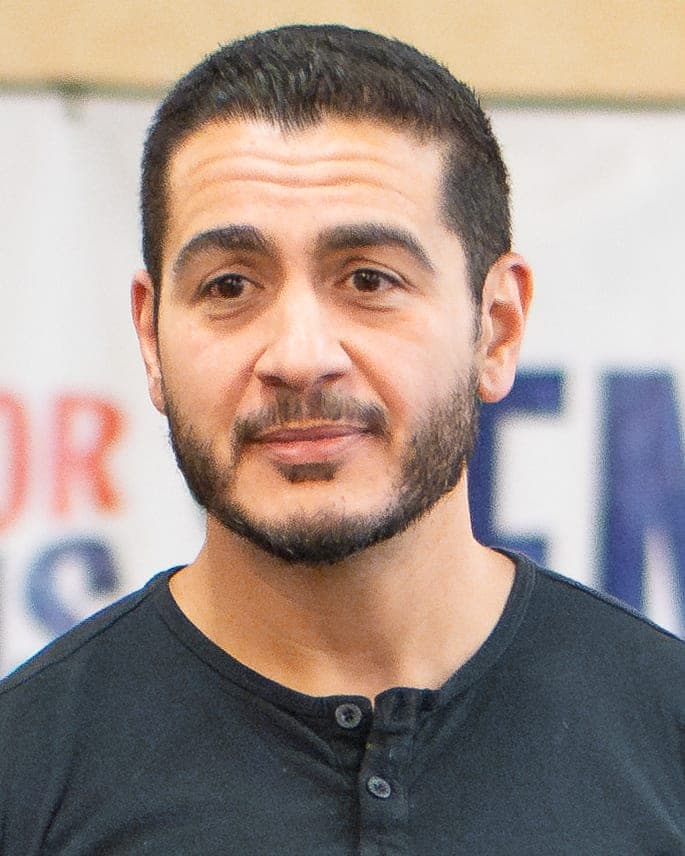
Democratic candidate in Michigan’s Senate primary
El-Sayed's version of this story ↗Democratic House candidate who won the nomination in Michigan’s 7th Congressional District
Senate candidate who dropped out but remained on the primary ballot

President mentioned in reference to Michigan’s past presidential election results

Democratic House candidate who defeated Kyle Blomquist

Senator who endorsed El-Sayed
Republican Senate nominee who will face the Democratic primary winner

Democratic House candidate leading the count in Michigan’s 13th Congressional District
Democratic House candidate defeated by Callie Barr

Incumbent Representative trailing in the count for Michigan’s 13th Congressional District Democratic primary

Representative who won her Democratic nomination for another House term
Part of a bigger story
16 OUTLETSOutlets agree Abdul El-Sayed defeated Rep. Haley Stevens in Michigan’s Democratic Senate primary in a close result. He will face Republican Mike Rogers in November. Left-leaning outlets present the win as progressive momentum and, in some coverage, a challenge to establishment Democrats and outside spending. Center outlets focus on the close result and its implications for electability, party direction, and Senate control. Right-leaning outlets frame it as evidence of a wider progressive or socialist shift within the Democratic Party, while some also focus on media coverage or election details.
- ARTICLES
- 19
- OUTLETS
- 16
- AVG CRED
- 63
Discussion · 0
Loading comments…