How did Abdul El-Sayed win against Haley Stevens? A quick analysis.
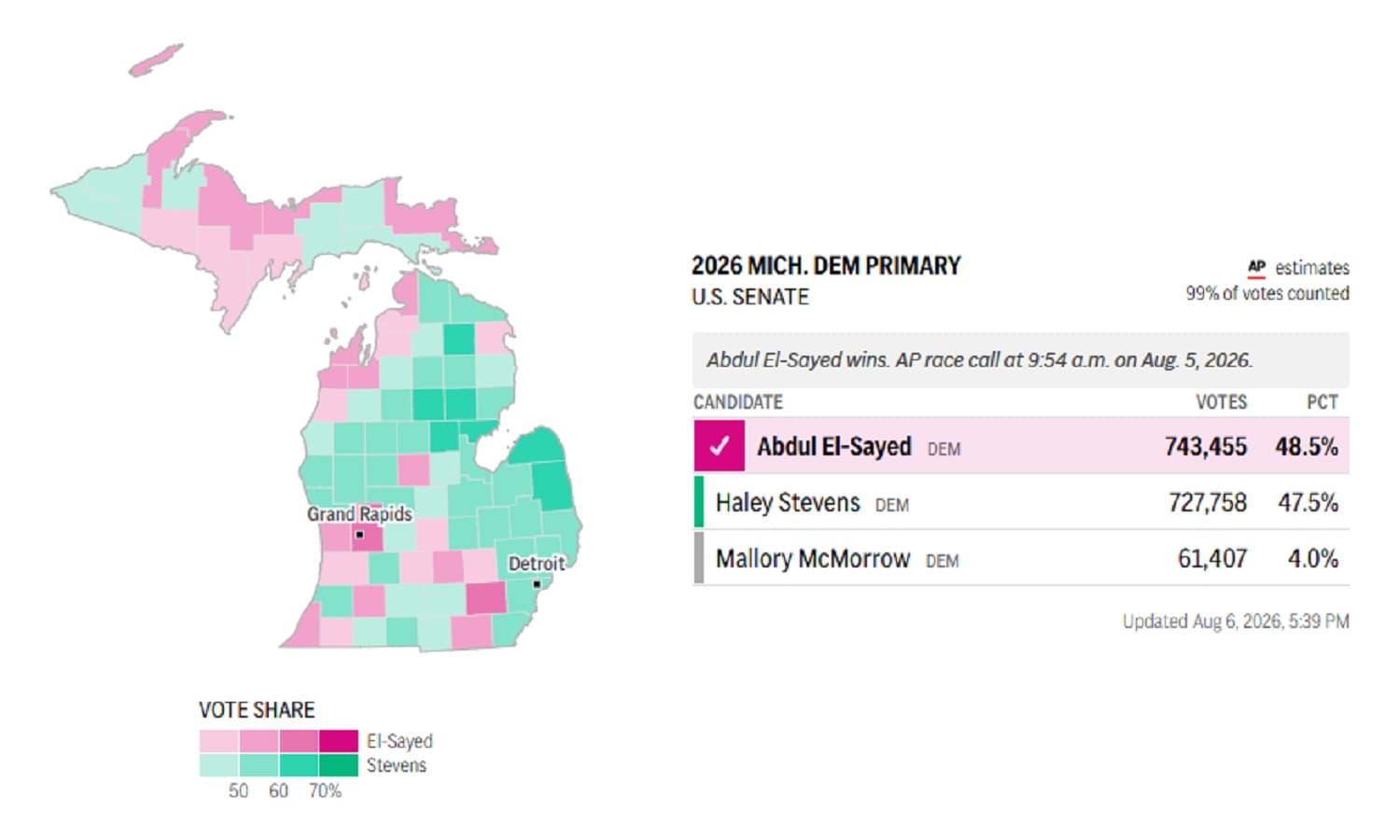
The analysis compares Stevens’s county wins with El-Sayed’s statewide vote advantage.
SOURCE CHECK
TAP FOR WHYDaily Kos is a recognizable, politically oriented blog with attributed authorship, but this post is a community analysis rather than a piece of original, independently sourced reporting. The article offers limited information about editorial review or corrections practices.
- Source type — A blog/community post, which warrants a lower institutional score than an established newsroom.
- Transparency — The post describes the author’s own observations but gives little information about reporting or editorial process.
- Author attribution — The article names an author.
- Editorial standards — The text does not establish the outlet’s corrections practice or the standards applied to this community analysis.
The article gives specific county-level comparisons and explains the author’s interpretation of the reported vote pattern. Its analysis relies largely on personal observation of results, with no quoted sources or supporting records beyond references to Associated Press results.
HOW WE SCORE ↗The analysis discusses the county results for both candidates and explains the arithmetic behind the outcome. It presents the author’s interpretation without outside sources or competing analytical perspectives.
- Source diversity — No outside analysts or campaign representatives are quoted.
- Counterarguments presented — The article compares both candidates’ county wins and vote margins, but does not present competing explanations.
- Opinion vs reporting — Clearly framed as the author’s observations and analysis rather than a fully reported account.
The piece uses an informal, first-person tone but does not make a discernible partisan argument. Its framing centers on explaining how the reported county results produced the statewide outcome.
- Framing — Frames the story as an explanation of the county-level vote pattern.
- Language tone — Informal and animated, but not notably partisan.
- Source selection — Relies on reported election results and the author’s observations rather than a range of quoted political sources.
A Daily Kos analysis says Abdul El-Sayed won Michigan’s Democratic Senate primary despite Haley Stevens carrying more counties, explaining the result through population and vote margins across the state.
The author says the Associated Press called the primary for El-Sayed. The analysis notes that Stevens won 53 counties and El-Sayed won 30, but argues that El-Sayed’s margins in several more-populous counties outweighed Stevens’s wins in rural counties.
The author also says El-Sayed stayed close to Stevens in Wayne, Oakland and Macomb counties, and had a statewide lead of 20,000 to 35,000 votes after about two-thirds of votes had been counted. The piece is based on the author’s observations of the reported results.
Community verdict
9 VOTES
People in this story
SWIPE →Representative and Senate candidate who ran against El-Sayed in the Michigan Democratic primary
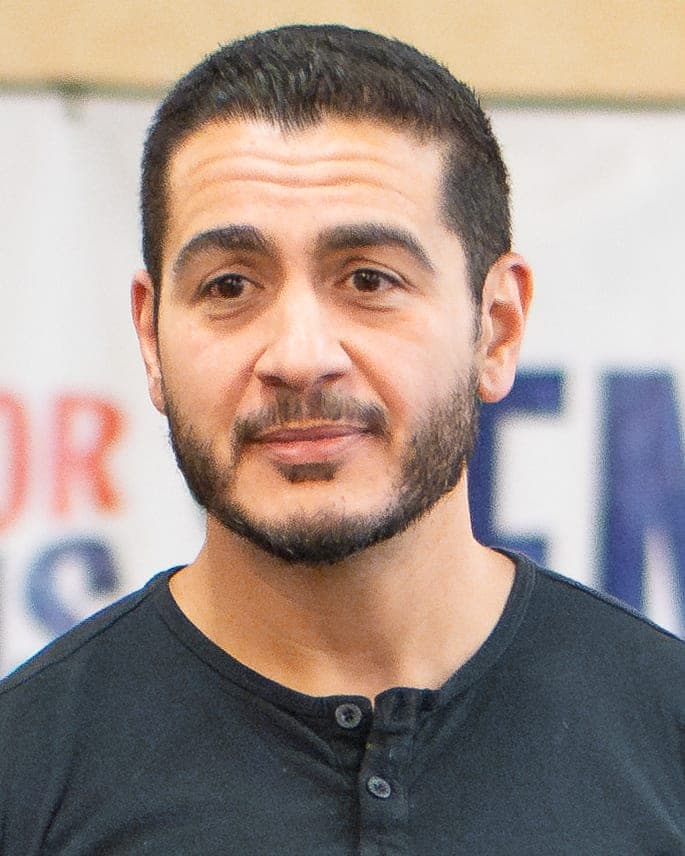
Senate candidate who won the Michigan Democratic primary, according to the article
El-Sayed's version of this story ↗Part of a bigger story
16 OUTLETSOutlets agree Abdul El-Sayed defeated Rep. Haley Stevens in Michigan’s Democratic Senate primary in a close result. He will face Republican Mike Rogers in November. Left-leaning outlets present the win as progressive momentum and, in some coverage, a challenge to establishment Democrats and outside spending. Center outlets focus on the close result and its implications for electability, party direction, and Senate control. Right-leaning outlets frame it as evidence of a wider progressive or socialist shift within the Democratic Party, while some also focus on media coverage or election details.
- ARTICLES
- 19
- OUTLETS
- 16
- AVG CRED
- 63

Discussion · 0
Loading comments…