Donald Trump Condemned For ‘Sick And Vile’ Attack On Abdul El-Sayed
Trump attacked El-Sayed in posts that drew criticism for their references to his name and religion.

SOURCE CHECK
TAP FOR WHYHuffPost is an established national news organization, and the article identifies an author and attributes the central claims to Trump’s posts. The short report relies heavily on those posts and unspecified social media criticism.
- Source type — Established national news outlet with an editorial operation.
- Author attribution — A named author is credited.
- Transparency — The report attributes the main statements to Trump's Truth Social posts.
- Source selection — The reported social media criticism is not identified beyond examples.
The article quotes the primary source directly and distinguishes Trump’s statements from critics’ reactions. Its evidence is narrow, the cited critics are not clearly identified, and it offers little independent context for the polling claim or the attack.
HOW WE SCORE ↗Trump’s statements are quoted at length, and the article includes criticism of them, but the criticism comes from social media and the report gives little context or independent sourcing. El-Sayed has not responded.
- Counterarguments presented — Trump's own words are included, but no defense or further response is presented.
- Source diversity — The story relies on Trump's posts and unspecified social media critics.
- Omitted context — Provides little context for the polling comparison or the critics' claims.
- Loaded language — The headline emphasizes condemnation, while the report attributes critical descriptions to others.
The headline foregrounds condemnation of Trump, and the article includes critical reactions to his post without offering a supportive response or additional context. It still reproduces substantial excerpts of Trump’s own statements.
- Headline — Frames the story around condemnation of Trump's attack.
- Source selection — Includes social media critics' reactions but no supportive reaction.
- Language tone — Uses terms such as “fumed” and foregrounds the accusation of racism.
- Framing — Quotes Trump’s post at length, while presenting the criticism as a response to it.
Donald Trump used Truth Social to attack Michigan Senate candidate Abdul El-Sayed, calling him an extremist and invoking “Jihad.” The article reports that critics called the attack racist and notes that El-Sayed had not responded.
Trump’s posts targeted El-Sayed, a Democratic Senate candidate in Michigan who the article says was narrowly ahead of Republican rival Mike Rogers in polling. Trump referred to him as “Mohammed El-Sayed,” called him a “RADICAL Extremist” and “Terrorist Sympathizer,” and said his values did not match those of Michiganders or the United States. The article says Trump had invoked “Jihad” while targeting El-Sayed on two consecutive days.
The article reports that social media critics called Trump’s remarks bigoted and pointed out that no candidate named Mohammed El-Sayed was running. It says El-Sayed had not yet responded to the latest attack.
Community verdict
19 VOTES
Counts every outlet’s report of this story. See all 9
Votes cast on this page
Votes cast on this page: ▲ 0 · ◆ 0 · ▼ 0
People in this story
SWIPE →President who attacked El-Sayed in Truth Social posts

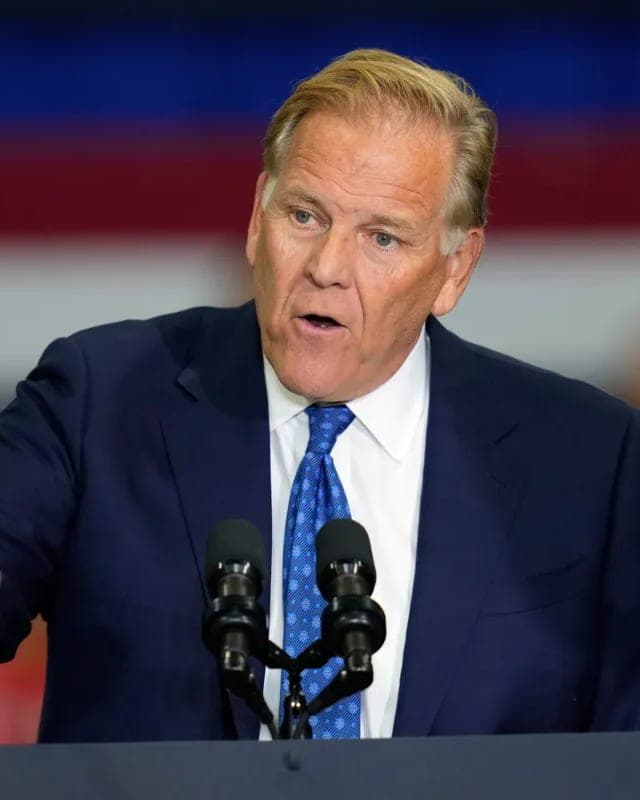
Republican Senate candidate in Michigan and El-Sayed’s rival
Part of a bigger story
9 OUTLETSOutlets report that Trump reaffirmed his endorsement of Texas Senate candidate Ken Paxton after recordings of Paxton’s comments surfaced. The coverage also describes Republican concerns about Paxton’s campaign. Left-leaning outlets emphasize Republican frustration over the audio, while two also focus on Trump’s separate attacks on Abdul El-Sayed. Center outlets focus on Trump’s continued support and the recordings’ political fallout. Right-leaning outlets portray Trump’s backing as justified and the recordings as an effort to divide him from Paxton.
- ARTICLES
- 9
- OUTLETS
- 9
- AVG CRED
- 64

Discussion · 0
Loading comments…