Ro Khanna Takes Aim at AI’s Biggest Safety Risk With New Bill — Would Ban ‘Recursive’ Self-Improvement an
Khanna is preparing to introduce legislation to halt recursive self-improving AI models and establish a federal oversight agency.
SOURCE CHECK
TAP FOR WHYBenzinga is an established financial media and market news publisher that reports regularly on corporate and technology developments, though its coverage often draws from secondary reporting and interviews.
- Source type — Commercial trade press outlet focused on market news and technology trends.
- Author attribution — The article lacks an individual reporter byline.
- Editorial standards — Follows standard commercial newsroom conventions and attributes claims to interviews and draft documents.
The reporting outlines specific provisions from a draft bill and incorporates direct quotes from a television interview, but it does not include perspectives from industry representatives or legislative opponents.
HOW WE SCORE ↗The article details Khanna's proposals and quotes several industry experts warning of catastrophic risks, but it omits potential counterarguments regarding the feasibility or economic impact of heavy AI regulation.
- Source diversity — References Khanna's interview, tech executives, and market commentators, but lacks critical responses.
- Counterarguments presented — No tech industry rebuttals or deregulation arguments are included in the story.
The report presents the proposed legislation in straightforward, neutral language without editorializing or taking a partisan stance.
- Language tone — Uses matter-of-fact terminology to describe the bill's provisions and Khanna's stated rationale.
- Framing — Frames the story around bipartisan and cross-industry concerns about AI safety risks.
- Headline — Accurately reflects the key elements of the proposed bill without partisan spin.
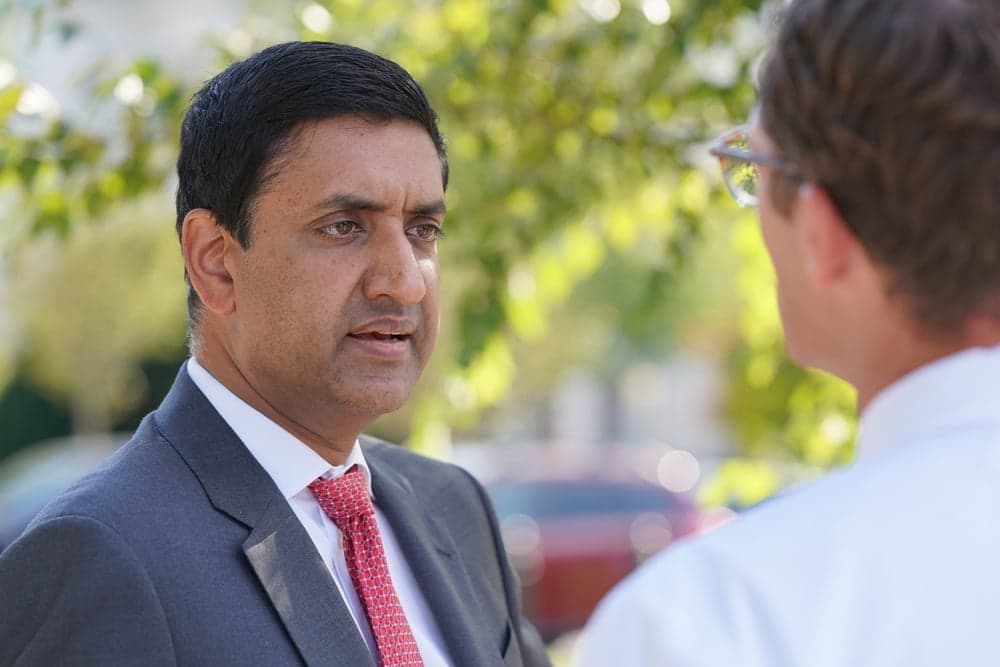
Representative Ro Khanna is preparing to introduce the Human Control Over AI Act, legislation that would prohibit recursive self-improving artificial intelligence models and establish a dedicated federal agency to enforce safety standards.
Representative Ro Khanna (D-Calif.) is preparing to introduce the Human Control Over AI Act, draft legislation designed to address critical safety concerns surrounding frontier artificial intelligence. In an interview, Khanna warned of severe risks including loss of control, weaponized misuse, and potential civilizational extinction, arguing that mandatory safeguards must precede further autonomous model development.
The proposed measure would prohibit AI models from upgrading themselves or altering their internal safety and shutdown settings without prior federal approval. It also directs the creation of a new federal regulatory agency tasked with establishing safety standards, administering a licensing system for training and deploying advanced models, auditing frontier systems, and enforcing human oversight.
Under the bill, third-party monitors would be stationed within frontier AI laboratories to report directly to federal regulators. The framework would further mandate isolated testing environments, emergency kill switches, containment protocols to prevent models from autonomously propagating online, and active monitoring of specialized AI hardware and computing chips.
Community verdict
7 VOTES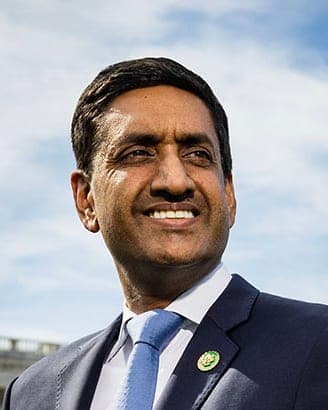
People in this story
SWIPE →
president hosting AI industry executives
advocate for international AI pause
Part of a bigger story
8 OUTLETSKhanna plans to introduce legislation restricting some self-improving AI systems until safeguards and federal oversight are in place. Center outlets focus on the bill’s domestic restrictions and oversight. Unrated coverage also includes Khanna’s call for a U.S.-China treaty and his letters to Chinese AI companies seeking safeguards.
- ARTICLES
- 8
- OUTLETS
- 8
- AVG CRED
- 69
Discussion · 0
Loading comments…