14 stories credited to WorldNetDaily
15 stories on wnd.com credited to other publishers
Latest story Sep 20, 2026 · on ChamberLight since Apr 2026
A story can appear as several articles (copies of the same piece), so counts of stories and of articles differ.
Scores for WorldNetDaily
Originality
All 14 carry an unconfirmed copying flag, which is not evidence either way.
29 stories · updated Sep 24, 2026
Scores last checked Sep 25, 2026.
Republishes without licence
How provenance is decidedReproduces other publishers’ articles without a licence.
From ChamberLight’s own list of known aggregators, syndicators and archives; the entry cites no outside source.
Original publishers of articles on wnd.com
- The Daily Signal· 6 stories
- Dailycallernewsfoundation· 4 stories
- Dailycaller· 2 stories
- Realclearinvestigations· 1 story
- Washington Examiner· 1 story
- Thedailysignal· 1 story
Counted from articles on wnd.com whose original publisher is verified from the page itself or confirmed by an independent signal.
Stories ChamberLight collected, by month
Stories credited to WorldNetDaily, by publication date. ChamberLight collects articles that mention the officials it tracks, so this shows its own coverage of this source, not how much the source publishes.
- Stories from WorldNetDaily
- Shaded: ChamberLight collected no stories, or almost none, from any outlet (a gap in its collection, not in the outlet’s publishing)
Show as a table
| Month | Stories | All outlets |
|---|---|---|
| November 2025 | 1 | 33 |
| December 2025 | 0 | 27 |
| January 2026 | 0 | 87 |
| February 2026 | 1 | 180 |
| March 2026 | 4 | 1,094 |
| April 2026 | 9 | 4,538 |
| May 2026 | 0 | none collected |
| June 2026 | 0 | none collected |
| July 2026 | 0 | none collected |
| August 2026 | 0 | 1 (collection gap) |
| September 2026 | 0 | 1,320 |
Top topics
Share of this source’s stories tagged with each topic. A story can carry several topics, so the shares do not add up to 100%.
- Ethics/Corruption11
79% of 14 stories · 58% across all outlets
- Criminal Justice10
71% of 14 stories · 19% across all outlets
- Foreign Policy5
36% of 14 stories · 29% across all outlets
- Budget/Spending4
29% of 14 stories · 31% across all outlets
- Immigration4
29% of 14 stories · 13% across all outlets
- Economy3
21% of 14 stories · 26% across all outlets
- Voting Rights3
21% of 14 stories · 19% across all outlets
- Defense/Military1
7% of 14 stories · 25% across all outlets
The thin mark on each bar is the topic’s share across all outlets.
Who they cover
Party of the officials these stories are mainly about, across all 21 officials named. A story counts once for each official it is mainly about, so the split is over 26 story–official pairs, from 14 stories.
- Republican69% · 18 pairs
- Democrat15% · 4 pairs
- Party not recorded15% · 4 pairs
Most covered
Stories mainly about each official, and their share of the source’s 14 stories.
- 1John ThuneR3 stories · 21%
- 2Donald TrumpR2 stories · 14%
- 3Mike LeeR2 stories · 14%
- 4Tommy TubervilleR2 stories · 14%
- 5Alexandria Ocasio-CortezD1 story · 7%
- 6Anna Paulina Luna–1 story · 7%
- 7Eric SchmittR1 story · 7%
- 8Eric SwalwellD1 story · 7%
- 9Gabe EvansR1 story · 7%
- 10Hakeem JeffriesD1 story · 7%
+ 11 other officials (11 story–official pairs)
Article tone
ChamberLight’s article analysis assigns each story a tone toward the official it covers. It describes the coverage of that official, not WorldNetDaily’s stance, and reader votes do not change it. 14 stories.
- Good Look
- 4 (29%)
- Mixed
- 7 (50%)
- Informational
- 1 (7%)
- Bad Look
- 2 (14%)
Challenges to these scores
No one has challenged a score on this page yet. Anyone can; editors publish every outcome here.
Articles served from wnd.com
49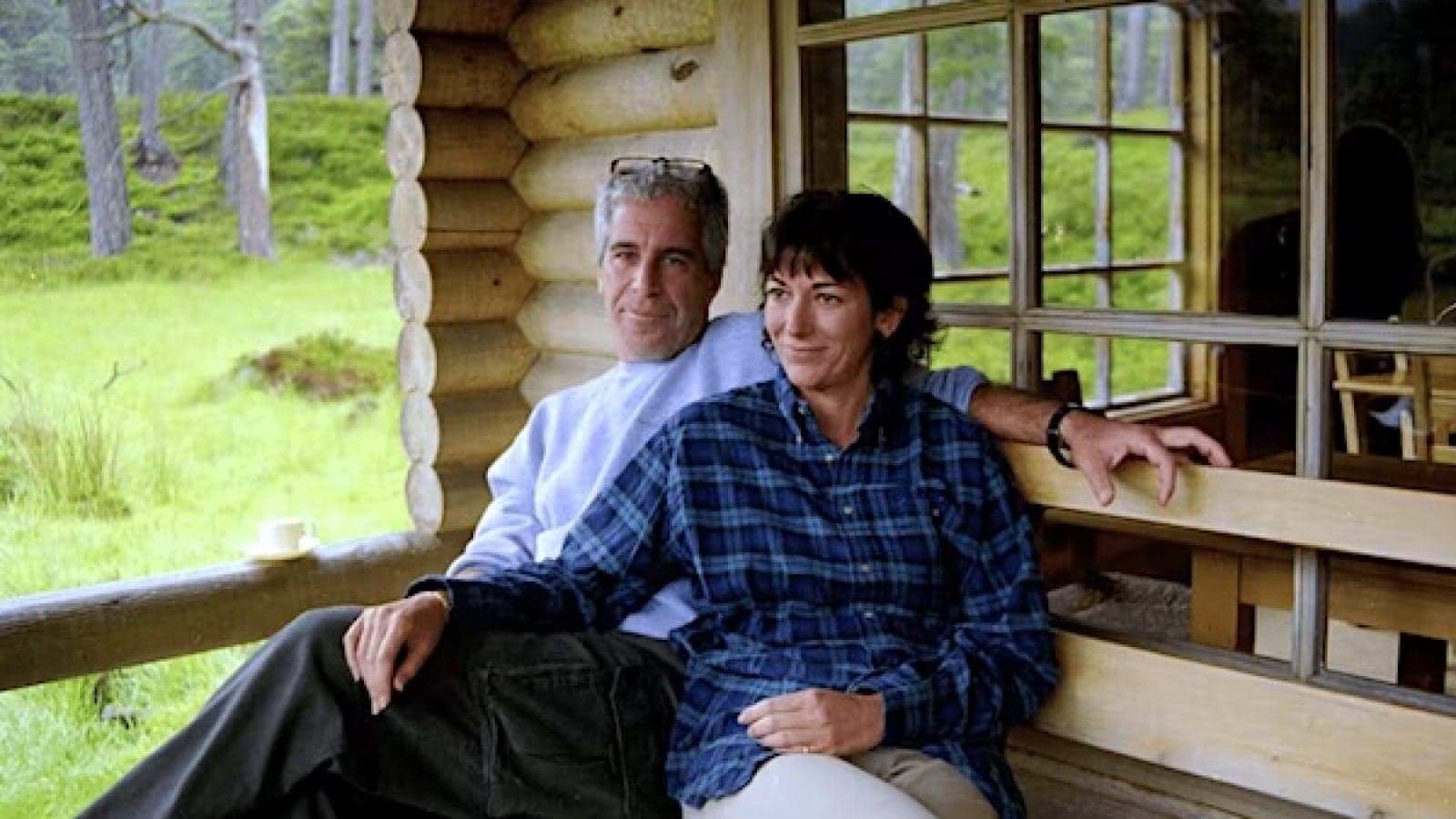
After years of silence, House bill targets tactics used to shield Jeffrey Epstein * WorldNetDaily * by Fred Lucas, The Daily Signal
House Oversight Chairman James Comer, R-Ky., introduced the Survivor's Voice Protection Act on Wednesday based on a monthslong investigation into government failures in the Jeffrey Epstein sex-trafficking operation. The Daily Signal first reported this month the House Oversight and Government Refor
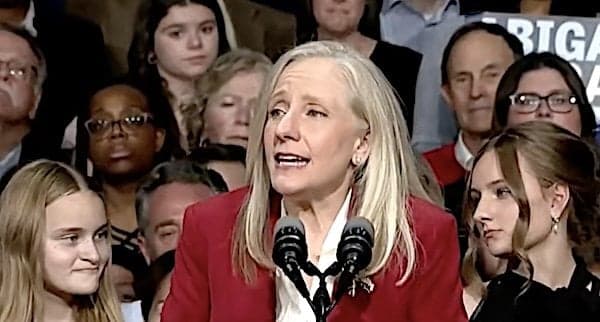
Virginia passes ‘egregiously’ gerrymandered redistricting map favoring Democrats
Gov. Abigail Spanberger, D-Va. Virginians voted in favor of Democrat Gov. Abigail Spanberger and Democrats’ effort to completely overhaul the commonwealth’s congressional map to favor Democrats, the Associated Press reported Tuesday evening. The Associated Press called the race in favor of “yes” at 8:50pm eastern time with an estimated 81% of the votes counted. At the time of the call, 50.3% voted in favor of the redistricting effort, while 49.7% voted against. The AP called “yes” despite the slim margin because the outstanding ballots were in areas breaking hard for “yes.” While 6 Democrats and 5 Republicans currently represent Virginia in Washington, the new Virginia congressional map will likely give Democrats a 10-1 advantage after the midterms. Democrats will hold this massive advantage despite the fact that Virginia went blue by less than 6% in the 2024 presidential election and voted for Spanberger by 15 points in the 2025 gubernatorial election. The new congressional map is expected to result in 10 Democrats and one Republican by stretching congressional districts in Northern Virginia and areas of Charlottesville deep into southern and eastern portions of the state that are rural and reliably red. Even prior to Tuesday night’s election result, voters in Virginia expressed concern with the language on the ballot. The Virginia Supreme Court decided to wait until after the election to hear the case over whether the language was fair. Notably, this is the same court that decided the current map was a fair one to begin with. A recent poll conducted by Heritage Action found that nearly 50% of voters were confused by the term “restore fairness.” VIRGINIA: Language like “restore fairness” is leading language and is there to intentionally mislead voters. The truth is our 6-5 map is fair and an accurate representation of our purple state. If this amendment passes Virginians will lose their representation in Washington. pic.twitter.com/jXtx4gYMOm — Virginia Grace McKinnon (@virginiagmck) April 21, 2026 “It’s misleading,” Rep. Ben Cline, R-Va., told The Daily Signal. “That’s why I’m a plaintiff in a lawsuit to challenge the wording of the ballot.” “We’re optimistic that even the blindest of advocates for justice can see that this wording of this question is unconstitutional,” Cline added. VIRGINIA SCOOP: @Heritage_Action is out with a new poll that shows 70% of Virginia Democrats oppose gerrymandering redistricting efforts happening now! “It’s very possible that this can be defeated.” @StefaniBuhajla told @DailySignal pic.twitter.com/RnTJu2a8Bg — Virginia Grace McKinnon (@virginiagmck) March 25, 2026 Now that the map has passed, the Virginia Supreme Court is expected to take cases challenging the map. The Virginia redistricting effort is a blow to Republicans seeking to hold their slim House majority. The most recent majority is 217-213, as of Tuesday, when Rep. Sheila Cherfilus-McCormick, D-Fla., resigned. Unsurprisingly, Democrats across the country poured resources into the state, including House Minority Leader Hakeem Jeffries, D-N.Y., who poured at least $70 million into the race from his super PAC, the House Majority PAC. Nevertheless, Florida could decide to redistrict in the coming weeks to claw back the potential losses in Virginia. ? IT’S OFFICIAL: Now, FLORIDA has a chance to redistrict exactly 1 week from tonight after Virginia approved their ridiculous 10D-1R map for Congress The special session convenes in 7 days. Rise to the occasion, Florida Reps and Senators! Send a map to Gov. Ron DeSantis that… https://t.co/PU4GNQRFRm pic.twitter.com/pKTHydPHzN — Eric Daugherty (@EricLDaugh) April 22, 2026 [Editor’s note: This story originally was published by The Daily Signal.]

‘Hallelujah’: School where Charlie Kirk was murdered cancels speaker over assassination remarks
Charlie Kirk Utah Valley University announced author Sharon McMahon would not be speaking at its April 29 commencement ceremony following objections from conservative groups, citing safety concerns. The selection of author and podcaster McMahon drew strong objections from students and groups at UVU, where Charlie Kirk was shot and killed last year, over remarks she made after the assassination. In a brief Thursday release, the university said they would proceed without a commencement speaker. “Due to increased safety concerns related to the speaker and in consultation with public safety professionals and Sharon McMahon, Utah Valley University has decided to proceed without a featured commencement speaker for this year’s ceremony,” the university said. “We look forward to coming together as a community to celebrate UVU’s largest graduating class in history, with more than 13,400 graduates, about one third of whom are the first in their families to graduate from college.” Sharon McMahon will no longer be speaking at UVU’s commencement. https://t.co/UPUDrOoBhd pic.twitter.com/ELkn4Vi5f0 — TPUSAatUVU (@TPUSAatUVU) April 16, 2026 “Sharon McMahon was an inappropriate speaker to begin with, and there are still better options available for this year’s commencement speaker,” Caleb Chilcutt, president of the UVU chapter of TPUSA, said in a Thursday statement posted on X. “Sharon McMahon posted a now-deleted series of out-of-context quotes from Charlie in an effort to tarnish his name and minimize the tragedy,” Chilcutt said in a statement posted April 9. On The Charlie Kirk Show on Thursday, producer Blake Neff and TPUSA spox Andrew Kolvet were grateful for the cancellation, but criticized the school’s framing of its decision. WATCH: “So we covered with the chapter leader at Utah Valley, the other day how they got a commencement speaker who had attacked Charlie after his death, tried to explain why people might be celebrating his death, why people might, that why he was a figure of bigotry and hate, and we criticized that, and Utah Valley just announced minutes ago, they will have no commencement speaker for this spring,” Blake Neff said. “Now here’s what’s annoying, they say it’s not because, oh, we picked a terrible speaker and that was our bad, they say they have increased safety concerns about what happened, so of course, basically, you know, it’s our fault, we were engaged in menacing behavior, they say, but regardless, it’s a speaker they shouldn’t have chosen.” “Listen, this was, nobody was making any threats about this, nobody was, not on the show or anywhere else,” Andrew Kolvet responded. “We were just saying it was, it was a bad idea. Well, anyways, hallelujah, good. I’m glad they got the memo and thank you also to, Senator Mike Lee who’s been very loud about that in Utah.” While McMahon condemned the Kirk assassination in a social media post on the day of Kirk’s assassination, she took aim at Kirk in a Sept. 12 Instagram post archived by KSL, a Salt Lake City-area TV station, claiming he pushed “bigoted ideas.” “It’s important to remember that the incredible tragedy of a public assassination does not erase the harm many experienced from his words, and the ensuing actions his followers took,” McMahon posted. Conservatives drew attention to McMahon’s post about Kirk almost immediately. “What if Charlie Kirk had been a beloved figure on the left, rather than among conservatives? And what if Sharon McMahon were a conservative—one who had defamed Charlie Kirk immediately after his horrific assassination at UVU? Would UVU have scheduled her to speak at commencement?” Republican Sen. Mike Lee posted on X. “Not in a million years. Not in ten million years. So why does UVU think this is okay? It’s not.” TPUSA and McMahon did not immediately respond to requests for comment from the Daily Caller News Foundation. Content created by The Daily Caller News Foundation is available without charge to any eligible news publisher that can provide a large audience. For licensing opportunities of our original content, please contact licensing@dailycallernewsfoundation.org.
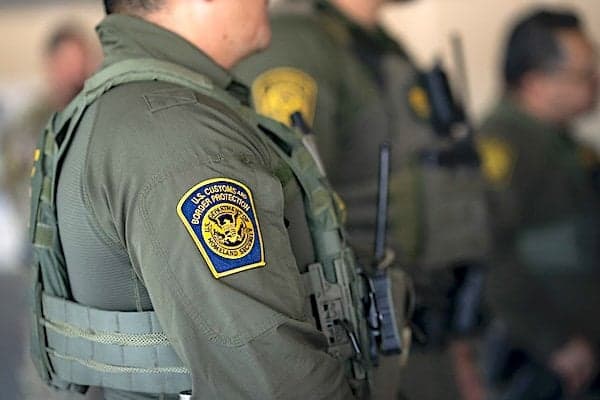
The doubts that cloud the U.S. immigration system
Secretary of Homeland Security Kristi Noem visits with officers from U.S. Immigration and Customs Enforcement, U.S. Customs and Border Protection, and the Federal Protective Service at the ICE facility in Portland, Oregon, to observe enforcement operations, Tuesday, Oct. 7, 2025. (DHS photo by Tia Dufour) In the wee hours of Sunday, March 1, a Senegalese immigrant clad in a sweatshirt bearing the words “Property of Allah” opened fire outside an Austin, Texas beer garden, killing three and leaving 14 others wounded. On March 12, at Old Dominion University, a former Virginia National Guard member from Sierra Leone – released early from an 11-year prison sentence for attempting to provide material support to the ISIL – yelled “Allahu Akbar” before shooting and killing a beloved college professor and wounding two other people. That same day, a Lebanese immigrant plowed a pickup truck filled with fireworks and gasoline into a large synagogue in West Bloomfield, Michigan. After exchanging gunfire with security staff, he killed himself. His brother, it turned out, was a recently eliminated Hezbollah commander in Lebanon. Amidst the emerging threat environment of the Iran war, these and other attacks on U.S. soil have reignited questions about the U.S. immigration system’s vetting and screening standards. Republican leaders are increasingly asking how, for example, foreign nationals like the Afghan evacuee who shot two National Guard members in Washington, D.C. – killing one of them – or the Egyptian national overstaying his tourism visa who firebombed pro-Israel demonstrators in Colorado last year were able to come here and commit such acts. They are also asking how close relatives of top Iranian officials, including avowed supporters of that country’s regime, have been allowed to live and work in the United States. Earlier this month, Secretary of State Marco Rubio announced that he had terminated the legal status of the niece of Iranian Major General Qasem Soleimani, who was killed by the U.S. in a targeted attack in 2020, and her daughter. Rubio described the niece on X as “an outspoken supporter of the Iranian regime who celebrated attacks on Americans and referred to our country as the ‘Great Satan.’ ” While the Trump administration has effectively closed the southern border, the U.S. Citizenship and Immigration Services has concluded that “prior screening and vetting measures” of people who cross the border legally “were wholly inadequate,” creating “significant national security and public safety risks [that] compromise the integrity of the immigration system.” Administration critics argue that fears of foreign-born terrorism are vastly overblown. Alex Nowrasteh of the Cato Institute told RealClearInvestigations that the annual chance of being murdered in a terrorist attack on U.S. soil by a foreign-born attacker is “about one in 165 million per year. All politically motivated violence is a tiny threat,” he said. “Exaggerating the threat does not bring us closer to delivering justice to the victims of every violent or property crime who deserve it.” RCI’s review of congressional testimony and research, and interviews with immigration and national security experts, uncovered long-standing flaws in the system – some of which were exacerbated by the Biden administration’s lax immigration policies. Challenges run the gamut from incomplete information about applicants to inconsistent enforcement of the law. Even if relatively few immigrants commit deadly attacks, the vetting system has routinely permitted people with obscure backgrounds and hostile views to visit and live in the U.S. Robust Design America’s immigration system is complex and multilayered, involving a range of departments and agencies that provide different levels of scrutiny depending on which of the dozens of categories would-be entrants fall into, from tourists to asylum seekers. As with most laws and rules, different administrations vet applicants with varying levels of vigor depending on whether they want to encourage or discourage immigration. Three agencies lead the vetting process. The State Department issues visas; U.S. Citizenship and Immigration Services reviews petitions for immigrants seeking benefits such as citizenship or permanent residency, refugee and asylum claims, and other protections; Customs and Border Protection provides defense at the point at which aliens attempt to enter the country. Across these processes, sometimes with redundancy, authorities conduct biographic and biometric screenings, run name checks across U.S. security databases to search for red flags such as criminal histories or inclusion on terror watchlists, and interview would-be visitors. As designed, the immigration system requires nearly all noncitizens seeking to enter the U.S. to obtain a visa. Nonimmigrant visas cover temporary trips for business or tourism, whereas immigrant visas cover permanent stays that may be family-, employment-, or education-based. Those seeking long-term stays are subject to more rigorous scrutiny. While undergoing detailed background checks, they are generally required to file petitions, secure sponsors, and meet incremental thresholds and standards necessary, for example, to unite with family or work full-time. In 2024, the U.S. issued about 600,000 visas for long-term stay. The vast majority of visas are issued to tourists and other temporary visitors – nearly 11 million in 2024. They are generally subject to less scrutiny. In theory, those millions of temporary visitors will leave before their visas expire. In practice, a reported 40% of illegal aliens currently in the U.S. – amounting to millions of people – are visa overstayers, illustrating one of the myriad security-related issues plaguing the U.S. Homeland Security system. “The vetting system is robust,” former senior INS official and immigration judge Andrew Arthur told RCI. But, he added, it “is only as good as the intelligence that the USG possesses and the access that the individual consular officer or OFO [CBP Office of Field Operations] officer has to that intelligence.” To that end, our “biggest vulnerability,” in the words of the Heritage Foundation’s Simon Hankinson, is that officers often lack access to derogatory information held by foreign countries. As Hankinson, a longtime former foreign service officer, recently detailed, this problem pervades even the U.S. Visa Waiver Program, where the citizens of several dozen generally safe and friendly countries – including most EU countries and Japan – may visit America visa-free for up to 90 days. Those waivers come in exchange for security cooperation, including sharing their citizens’ criminal records. Cracks in the System Critics note that only a few U.S. counterparts automatically check their visiting citizens’ criminal records. The U.S. otherwise must request that home countries run queries. Meanwhile, America lacks information-sharing agreements with many countries altogether. These problems only grow when other nations lack reliable data, or where their authoritative documents may be easily fabricated – one of the justifications for Trump’s travel bans disproportionately hitting the Middle East and Africa. “I worked in India, I worked in Ghana, [where] right outside the consulate, there were stores selling fake degrees, fake passports. I mean, they didn’t even hide it,” Hankinson said. Incomplete data or suspect documents aside, authorities have also highlighted that U.S. databases may not always talk to each other. A June 2024 DHS Inspector General report indicated that “DHS’ biometric system…could not access all data from Federal partners to ensure complete screening and vetting of noncitizens seeking admission into the United States” due to “ongoing technical limitations.” The inspector general also found that border patrol officers lacked the hardware necessary to perform biometric screenings of people arriving by car or truck. Federal authorities have also not always vigorously enforced their own security protocols. A September 2025 DHS IG report detailed that from March 2020 to March 2024, the State Department issued 12 million nonimmigrant visas without conducting in-person interviews or collecting fingerprints. CBP officers encountering foreign nationals at points of entry were unaware that the State had not fully screened some of them. Subpar vetting was common regarding the tens of thousands of Afghans admitted to the U.S. in the wake of the Biden administration’s pullout from the country in 2021. In a January 2026 hearing, DHS Deputy Inspector General for Audits, Craig Adelman, submitted written testimony indicating that under Operation Allies Welcome, in several instances “DHS could not demonstrate that it accurately knew who individuals were, where they were located, whether parole conditions were being met, or whether individuals had unresolved risk indicators.” CBP sometimes lacked “access to critical data to properly screen, vet, or inspect” them. Adelman’s testimony came following the National Guardsman shooting by evacuee Rahmanullah Lakanwal, and the prosecution of Nasir Ahmed Tawhedi, another evacuee who would plead guilty to plotting a mass-casualty attack on behalf of ISIS around Election Day 2024. More broadly, the Government Accountability Office has found that the humanitarian parole processes have generally lacked sufficient anti-fraud measures, making it hard to ensure those fleeing warzones or failed states pose no threat to the U.S. homeland. These findings also come on top of the millions who entered the country illegally during the Biden administration – and related immigrant overstays and backlogs creating security risks all their own. Hundreds of thousands of asylum claimants, for example, have been insufficiently screened historically during prolonged adjudication periods, DHS’ watchdog has found. Hankinson is adamant that “we have not been enforcing our own rules with anything like the tenacity that we should have been. We’ve been really giving the benefit of the doubt to the alien in every circumstance.” Ironically, the president’s opponents also agree that the immigration system is broken. But instead of tweaking the current system, many Democrats and their allies have floated the idea of abolishing the Immigration and Customs Enforcement (ICE) agency. Good Questions, ‘Bad Odor’ Another potential issue that recent security incidents have raised is whether authorities are properly vetting and screening for indicators associated with the actual threats faced. Federal law, drafted in the shadow of World War II and during the Cold War, generally deemed inadmissible immigrant members or affiliates of totalitarian political parties. Laws later expanded to encompass terrorists and their supporters. But records may not exist of terrorist activities or support among those hailing from failed states. Despite this potential vulnerability, those with whom RCI spoke indicated that immigration officers do not tailor questions to unearth whether visitors harbor a terrorist worldview that could suggest future trouble or merit further scrutiny. Authorities are “looking for Communists and Nazis,” Hankinson told RCI, not “Islamic fanatics…people who believe in Sharia law, who want to cut the hands off criminals, or have women dressed in burkas.” Dan Cadman, a retired INS/ICE official now at the Center for Immigration Studies, told RCI that “the vetting procedures have not captured Islamist/ adversarial/ subversive ideologies among family members and close associates.” Were such affiliations known, for example, in the case of the would-be Michigan synagogue attacker Ayman Mohamed Ghazali, whose brother was a Hezbollah commander, immigration authorities likely would have subjected him to heightened scrutiny – and perhaps denied him entry. Cadman attributes the lack of ideological bar to the “bad odor” to which such tests are held, and the fact that they lead to “thorny questions” about when religiously-based views “cross into the arena of politics” and constitutional rights. Progressive groups and others panned the blanket travel restrictions Trump pursued during his first administration sought to impose on myriad Muslim-majority countries as “Muslim bans.” Nevertheless, some analysts have proposed bans of those affiliated with Islamist groups analogous to those of totalitarian political parties already on the books to satisfy such concerns. Several members of Congress appear receptive to this idea as well. Legislation is currently pending before the House and Senate to amend the Immigration and Nationality Act to render “advocates for the imposition of Sharia law” inadmissible, and remove Sharia adherents accordingly. Even if such questions could survive First Amendment challenges, some observers doubt they would provide useful answers. David Bier of the Cato Institute told RCI, “There is no evidence that asking people general questions like whether they support terrorism or Sharia law would be an effective way to prevent attacks in the United States.” Arthur, Cadman’s colleague at the Center for Immigration Studies, added that “identifying those who hold hostile beliefs is a difficult endeavor, and one that even the best adjudication and screening system will struggle to achieve.” Whether a change in standards or their implementation might have prevented the recent attacks on U.S. soil by immigrants who became naturalized citizens remains unclear. Arthur says these incidents show “a decline in assimilation on the part of the naturalized citizen and in integration on the part of the United States” – a transcendent problem all its own. Crackdown and Pushback The Trump administration has sought to significantly enhance vetting standards, mitigate risks, and more vigorously enforce the law. The president kicked off his second term with an executive order directing national security authorities to ensure that all aliens are “vet[ted] and screen[ed] to the maximum degree possible,” including for those threatening national security and bearing “hostile attitudes” toward America, its people, and institutions. In June, the president fully or partially restricted and limited the entry of nationals from 19 countries it deemed to pose security risks, some Muslim-majority, via executive order – a broad measure to mitigate screening and vetting risks. Democrats assailed these efforts as “bigoted” and “Islamophobic.” “This discriminatory policy, which limits legal immigration, not only flies in the face of what our country is supposed to stand for, it will be harmful to our economy and communities that rely on the contributions of people who come to America from this wide range of countries,” Democratic Washington state Rep. Pramila Jayapal has said. “Banning a whole group of people because you disagree with the structure or function of their government not only lays blame in the wrong place, it creates a dangerous precedent.” Later that year, in August, USCIS updated its policy guidance to ensure that when immigration officers are evaluating immigration benefit requests, aliens’ support or espousal of the views of terrorist groups, including anti-Americanism, and Jew-hatred, ought to weigh heavily against applicants. Last December, USCIS paused all pending asylum and benefit applications from the 19 “high-risk countries” identified in the June executive order while conducting a “re-review of approved benefit requests” for all aliens from those countries entering the U.S. on or after the first day of the Biden administration. The administration also extended travel restrictions to 20 additional countries. Among other initiatives, the second Trump administration is also “re-vetting” previously admitted aliens, and engaging in “continuous vetting” of all U.S. visa holders – some 55 million at the time it announced the policy – for violations that could lead to their deportation. It has reportedly revoked 100,000 visas – a 150% increase versus 2024. DHS says that ICE has arrested more than 43,000 potential national security risks, including 1,416 known or suspected terrorists, some 1,392 of which have been removed. It did so in announcing the recent arrest of Salah Salem Sarsour, a Jordanian national who the U.S. asserts was convicted decades ago in Israel of throwing a Molotov cocktail at the homes of Israeli military personnel and illegally attempting to possess weapons. DHS claims Sarsour is “suspected of funding terror organizations and lying on immigration forms” to enter the country, after which he became a green card holder back in 1998. The arrest of the Islamic Society of Milwaukee president generated strong pushback from the ACLU and the Council on American-Islamic Relations, with the former suggesting Sarsour may have been targeted for being “outspoken in his support for Palestinian rights” in violation of the First Amendment – a microcosm of the debates simmering over the president’s immigration policies. Last month, the U.S. Intelligence Community assessed that “increased border security, stricter screening and vetting, and improved international information sharing” have led jihadist groups to focus “more on virtually recruiting U.S.-based aspirants to encourage and enable potential attacks.” With the Trump administration already planning to significantly ramp up denaturalization efforts in response to revelations of fraud perpetrated by immigrants, this assessment and recent attacks from the naturalized population may only further fuel such efforts. This article was originally published by RealClearInvestigations and made available via RealClearWire.
The doubts that cloud the U.S. immigration system
Secretary of Homeland Security Kristi Noem visits with officers from U.S. Immigration and Customs Enforcement, U.S. Customs and Border Protection, and the Federal Protective Service at the ICE facility in Portland, Oregon, to observe enforcement operations, Tuesday, Oct. 7, 2025. (DHS photo by Tia Dufour) In the wee hours of Sunday, March 1, a Senegalese immigrant clad in a sweatshirt bearing the words “Property of Allah” opened fire outside an Austin, Texas beer garden, killing three and leaving 14 others wounded. On March 12, at Old Dominion University, a former Virginia National Guard member from Sierra Leone – released early from an 11-year prison sentence for attempting to provide material support to the ISIL – yelled “Allahu Akbar” before shooting and killing a beloved college professor and wounding two other people. That same day, a Lebanese immigrant plowed a pickup truck filled with fireworks and gasoline into a large synagogue in West Bloomfield, Michigan. After exchanging gunfire with security staff, he killed himself. His brother, it turned out, was a recently eliminated Hezbollah commander in Lebanon. Amidst the emerging threat environment of the Iran war, these and other attacks on U.S. soil have reignited questions about the U.S. immigration system’s vetting and screening standards. Republican leaders are increasingly asking how, for example, foreign nationals like the Afghan evacuee who shot two National Guard members in Washington, D.C. – killing one of them – or the Egyptian national overstaying his tourism visa who firebombed pro-Israel demonstrators in Colorado last year were able to come here and commit such acts. They are also asking how close relatives of top Iranian officials, including avowed supporters of that country’s regime, have been allowed to live and work in the United States. Earlier this month, Secretary of State Marco Rubio announced that he had terminated the legal status of the niece of Iranian Major General Qasem Soleimani, who was killed by the U.S. in a targeted attack in 2020, and her daughter. Rubio described the niece on X as “an outspoken supporter of the Iranian regime who celebrated attacks on Americans and referred to our country as the ‘Great Satan.’ ” While the Trump administration has effectively closed the southern border, the U.S. Citizenship and Immigration Services has concluded that “prior screening and vetting measures” of people who cross the border legally “were wholly inadequate,” creating “significant national security and public safety risks [that] compromise the integrity of the immigration system.” Administration critics argue that fears of foreign-born terrorism are vastly overblown. Alex Nowrasteh of the Cato Institute told RealClearInvestigations that the annual chance of being murdered in a terrorist attack on U.S. soil by a foreign-born attacker is “about one in 165 million per year. All politically motivated violence is a tiny threat,” he said. “Exaggerating the threat does not bring us closer to delivering justice to the victims of every violent or property crime who deserve it.” RCI’s review of congressional testimony and research, and interviews with immigration and national security experts, uncovered long-standing flaws in the system – some of which were exacerbated by the Biden administration’s lax immigration policies. Challenges run the gamut from incomplete information about applicants to inconsistent enforcement of the law. Even if relatively few immigrants commit deadly attacks, the vetting system has routinely permitted people with obscure backgrounds and hostile views to visit and live in the U.S. Robust Design America’s immigration system is complex and multilayered, involving a range of departments and agencies that provide different levels of scrutiny depending on which of the dozens of categories would-be entrants fall into, from tourists to asylum seekers. As with most laws and rules, different administrations vet applicants with varying levels of vigor depending on whether they want to encourage or discourage immigration. Three agencies lead the vetting process. The State Department issues visas; U.S. Citizenship and Immigration Services reviews petitions for immigrants seeking benefits such as citizenship or permanent residency, refugee and asylum claims, and other protections; Customs and Border Protection provides defense at the point at which aliens attempt to enter the country. Across these processes, sometimes with redundancy, authorities conduct biographic and biometric screenings, run name checks across U.S. security databases to search for red flags such as criminal histories or inclusion on terror watchlists, and interview would-be visitors. As designed, the immigration system requires nearly all noncitizens seeking to enter the U.S. to obtain a visa. Nonimmigrant visas cover temporary trips for business or tourism, whereas immigrant visas cover permanent stays that may be family-, employment-, or education-based. Those seeking long-term stays are subject to more rigorous scrutiny. While undergoing detailed background checks, they are generally required to file petitions, secure sponsors, and meet incremental thresholds and standards necessary, for example, to unite with family or work full-time. In 2024, the U.S. issued about 600,000 visas for long-term stay. The vast majority of visas are issued to tourists and other temporary visitors – nearly 11 million in 2024. They are generally subject to less scrutiny. In theory, those millions of temporary visitors will leave before their visas expire. In practice, a reported 40% of illegal aliens currently in the U.S. – amounting to millions of people – are visa overstayers, illustrating one of the myriad security-related issues plaguing the U.S. Homeland Security system. “The vetting system is robust,” former senior INS official and immigration judge Andrew Arthur told RCI. But, he added, it “is only as good as the intelligence that the USG possesses and the access that the individual consular officer or OFO [CBP Office of Field Operations] officer has to that intelligence.” To that end, our “biggest vulnerability,” in the words of the Heritage Foundation’s Simon Hankinson, is that officers often lack access to derogatory information held by foreign countries. As Hankinson, a longtime former foreign service officer, recently detailed, this problem pervades even the U.S. Visa Waiver Program, where the citizens of several dozen generally safe and friendly countries – including most EU countries and Japan – may visit America visa-free for up to 90 days. Those waivers come in exchange for security cooperation, including sharing their citizens’ criminal records. Cracks in the System Critics note that only a few U.S. counterparts automatically check their visiting citizens’ criminal records. The U.S. otherwise must request that home countries run queries. Meanwhile, America lacks information-sharing agreements with many countries altogether. These problems only grow when other nations lack reliable data, or where their authoritative documents may be easily fabricated – one of the justifications for Trump’s travel bans disproportionately hitting the Middle East and Africa. “I worked in India, I worked in Ghana, [where] right outside the consulate, there were stores selling fake degrees, fake passports. I mean, they didn’t even hide it,” Hankinson said. Incomplete data or suspect documents aside, authorities have also highlighted that U.S. databases may not always talk to each other. A June 2024 DHS Inspector General report indicated that “DHS’ biometric system…could not access all data from Federal partners to ensure complete screening and vetting of noncitizens seeking admission into the United States” due to “ongoing technical limitations.” The inspector general also found that border patrol officers lacked the hardware necessary to perform biometric screenings of people arriving by car or truck. Federal authorities have also not always vigorously enforced their own security protocols. A September 2025 DHS IG report detailed that from March 2020 to March 2024, the State Department issued 12 million nonimmigrant visas without conducting in-person interviews or collecting fingerprints. CBP officers encountering foreign nationals at points of entry were unaware that the State had not fully screened some of them. Subpar vetting was common regarding the tens of thousands of Afghans admitted to the U.S. in the wake of the Biden administration’s pullout from the country in 2021. In a January 2026 hearing, DHS Deputy Inspector General for Audits, Craig Adelman, submitted written testimony indicating that under Operation Allies Welcome, in several instances “DHS could not demonstrate that it accurately knew who individuals were, where they were located, whether parole conditions were being met, or whether individuals had unresolved risk indicators.” CBP sometimes lacked “access to critical data to properly screen, vet, or inspect” them. Adelman’s testimony came following the National Guardsman shooting by evacuee Rahmanullah Lakanwal, and the prosecution of Nasir Ahmed Tawhedi, another evacuee who would plead guilty to plotting a mass-casualty attack on behalf of ISIS around Election Day 2024. More broadly, the Government Accountability Office has found that the humanitarian parole processes have generally lacked sufficient anti-fraud measures, making it hard to ensure those fleeing warzones or failed states pose no threat to the U.S. homeland. These findings also come on top of the millions who entered the country illegally during the Biden administration – and related immigrant overstays and backlogs creating security risks all their own. Hundreds of thousands of asylum claimants, for example, have been insufficiently screened historically during prolonged adjudication periods, DHS’ watchdog has found. Hankinson is adamant that “we have not been enforcing our own rules with anything like the tenacity that we should have been. We’ve been really giving the benefit of the doubt to the alien in every circumstance.” Ironically, the president’s opponents also agree that the immigration system is broken. But instead of tweaking the current system, many Democrats and their allies have floated the idea of abolishing the Immigration and Customs Enforcement (ICE) agency. Good Questions, ‘Bad Odor’ Another potential issue that recent security incidents have raised is whether authorities are properly vetting and screening for indicators associated with the actual threats faced. Federal law, drafted in the shadow of World War II and during the Cold War, generally deemed inadmissible immigrant members or affiliates of totalitarian political parties. Laws later expanded to encompass terrorists and their supporters. But records may not exist of terrorist activities or support among those hailing from failed states. Despite this potential vulnerability, those with whom RCI spoke indicated that immigration officers do not tailor questions to unearth whether visitors harbor a terrorist worldview that could suggest future trouble or merit further scrutiny. Authorities are “looking for Communists and Nazis,” Hankinson told RCI, not “Islamic fanatics…people who believe in Sharia law, who want to cut the hands off criminals, or have women dressed in burkas.” Dan Cadman, a retired INS/ICE official now at the Center for Immigration Studies, told RCI that “the vetting procedures have not captured Islamist/ adversarial/ subversive ideologies among family members and close associates.” Were such affiliations known, for example, in the case of the would-be Michigan synagogue attacker Ayman Mohamed Ghazali, whose brother was a Hezbollah commander, immigration authorities likely would have subjected him to heightened scrutiny – and perhaps denied him entry. Cadman attributes the lack of ideological bar to the “bad odor” to which such tests are held, and the fact that they lead to “thorny questions” about when religiously-based views “cross into the arena of politics” and constitutional rights. Progressive groups and others panned the blanket travel restrictions Trump pursued during his first administration sought to impose on myriad Muslim-majority countries as “Muslim bans.” Nevertheless, some analysts have proposed bans of those affiliated with Islamist groups analogous to those of totalitarian political parties already on the books to satisfy such concerns. Several members of Congress appear receptive to this idea as well. Legislation is currently pending before the House and Senate to amend the Immigration and Nationality Act to render “advocates for the imposition of Sharia law” inadmissible, and remove Sharia adherents accordingly. Even if such questions could survive First Amendment challenges, some observers doubt they would provide useful answers. David Bier of the Cato Institute told RCI, “There is no evidence that asking people general questions like whether they support terrorism or Sharia law would be an effective way to prevent attacks in the United States.” Arthur, Cadman’s colleague at the Center for Immigration Studies, added that “identifying those who hold hostile beliefs is a difficult endeavor, and one that even the best adjudication and screening system will struggle to achieve.” Whether a change in standards or their implementation might have prevented the recent attacks on U.S. soil by immigrants who became naturalized citizens remains unclear. Arthur says these incidents show “a decline in assimilation on the part of the naturalized citizen and in integration on the part of the United States” – a transcendent problem all its own. Crackdown and Pushback The Trump administration has sought to significantly enhance vetting standards, mitigate risks, and more vigorously enforce the law. The president kicked off his second term with an executive order directing national security authorities to ensure that all aliens are “vet[ted] and screen[ed] to the maximum degree possible,” including for those threatening national security and bearing “hostile attitudes” toward America, its people, and institutions. In June, the president fully or partially restricted and limited the entry of nationals from 19 countries it deemed to pose security risks, some Muslim-majority, via executive order – a broad measure to mitigate screening and vetting risks. Democrats assailed these efforts as “bigoted” and “Islamophobic.” “This discriminatory policy, which limits legal immigration, not only flies in the face of what our country is supposed to stand for, it will be harmful to our economy and communities that rely on the contributions of people who come to America from this wide range of countries,” Democratic Washington state Rep. Pramila Jayapal has said. “Banning a whole group of people because you disagree with the structure or function of their government not only lays blame in the wrong place, it creates a dangerous precedent.” Later that year, in August, USCIS updated its policy guidance to ensure that when immigration officers are evaluating immigration benefit requests, aliens’ support or espousal of the views of terrorist groups, including anti-Americanism, and Jew-hatred, ought to weigh heavily against applicants. Last December, USCIS paused all pending asylum and benefit applications from the 19 “high-risk countries” identified in the June executive order while conducting a “re-review of approved benefit requests” for all aliens from those countries entering the U.S. on or after the first day of the Biden administration. The administration also extended travel restrictions to 20 additional countries. Among other initiatives, the second Trump administration is also “re-vetting” previously admitted aliens, and engaging in “continuous vetting” of all U.S. visa holders – some 55 million at the time it announced the policy – for violations that could lead to their deportation. It has reportedly revoked 100,000 visas – a 150% increase versus 2024. DHS says that ICE has arrested more than 43,000 potential national security risks, including 1,416 known or suspected terrorists, some 1,392 of which have been removed. It did so in announcing the recent arrest of Salah Salem Sarsour, a Jordanian national who the U.S. asserts was convicted decades ago in Israel of throwing a Molotov cocktail at the homes of Israeli military personnel and illegally attempting to possess weapons. DHS claims Sarsour is “suspected of funding terror organizations and lying on immigration forms” to enter the country, after which he became a green card holder back in 1998. The arrest of the Islamic Society of Milwaukee president generated strong pushback from the ACLU and the Council on American-Islamic Relations, with the former suggesting Sarsour may have been targeted for being “outspoken in his support for Palestinian rights” in violation of the First Amendment – a microcosm of the debates simmering over the president’s immigration policies. Last month, the U.S. Intelligence Community assessed that “increased border security, stricter screening and vetting, and improved international information sharing” have led jihadist groups to focus “more on virtually recruiting U.S.-based aspirants to encourage and enable potential attacks.” With the Trump administration already planning to significantly ramp up denaturalization efforts in response to revelations of fraud perpetrated by immigrants, this assessment and recent attacks from the naturalized population may only further fuel such efforts. This article was originally published by RealClearInvestigations and made available via RealClearWire.

‘I’m scared, I’m tired’: Authorities review death of 11th scientist
(Photo by Joe Kovacs) Authorities in Huntsville, Ala. are reviewing the death of a 34-year-old aerospace researcher who worked on experimental anti-gravity propulsion, adding to a growing list of scientists with ties to advanced physics programs who have died or disappeared in recent years. Over the past 33 months, 10 U.S. researchers and scientists have reportedly died or disappeared, including government contractor Steven Garcia, 48, who allegedly vanished in August 2025 in New Mexico after leaving his home on foot and leaving behind his phone, wallet and keys. The reported total now stands at 11 deaths or disappearances, including Amy Eskridge, who authorities say died on June 11, 2022 from a self-inflicted gunshot wound, though officials have not released a full investigative report or explained why detailed case files remain unavailable, according to the Daily Mail. WATCH: Eskridge focused her research on anti-gravity technology aimed at manipulating or canceling gravitational forces, a field she said could transform space travel and energy systems. She previously warned in public discussions that her work carried personal risk due to its sensitive nature. Before her death, Eskridge co-founded The Institute for Exotic Science with her father, retired NASA engineer Richard Eskridge. She publicly promoted the group as a platform to explore unconventional propulsion theories, including concepts linked to experimental aerospace programs. In a 2020 podcast interview, Eskridge said she planned to move forward with public disclosure of UFO and extraterrestrial research but warned that she felt increasing pressure and intrusion. “I’m scared, I’m tired. I need to disclose soon, man. I need to publish soon because it’s like escalating. It’s getting more and more aggressive. This has been going on for like four or five years, and over the past 12 months it’s been escalating, like more aggressive, more invasive digging through my underwear drawer and sexual threats,” Eskridge said. Eskridge alleged before her death that a Russian operational group targeted her after she became of interest for intelligence surveillance, escalating from passive monitoring to what she described as active physical stalking near her home. She claimed individuals moved into nearby apartments, observed her movements, and coordinated surveillance using vehicles she identified as suspicious, including a dark Lexus with repeatedly changing license plates. Eskridge further alleged that she and her partner witnessed a man exit a nearby apartment, swap the Lexus license plates in front of them, and leave the original plate visible outside as a form of intimidation. She also claimed the same vehicle later followed her across locations and once posed as an Uber driver, matching the license plate in the app but lacking proper identification. Over the past several years, a few prominent U.S. scientists and researchers have died or disappeared, prompting speculation about possible suspicious circumstances in some of the cases. However, U.S. officials have not established any verified link between the incidents, according to an April 9 report from Newsweek. In an interview with The Daily Mail, Republican Rep. Tim Burchett of Tennessee said he believes some missing persons cases across the country may share concerning similarities in how they occurred. He added that lawmakers should take closer notice of these incidents, saying they warrant greater scrutiny. Content created by The Daily Caller News Foundation is available without charge to any eligible news publisher that can provide a large audience. For licensing opportunities of our original content, please contact licensing@dailycallernewsfoundation.org.
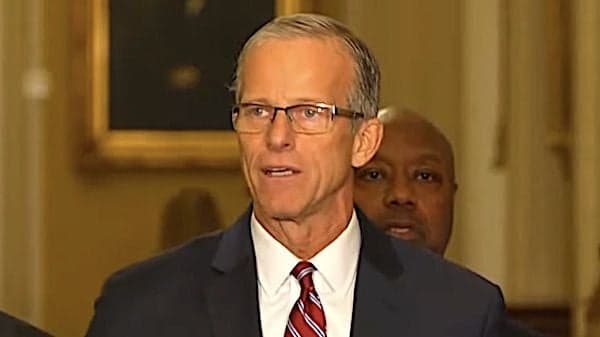
‘The Senate has its own trash to take out’: John Thune confirms sex-scandal allegations against lawmaker
U.S. Sen. John Thune, R-S.D. Senate Majority Leader John Thune, a Republican from South Dakota, has confirmed that the Senate now is being rocked by the sex scandals that have encompassed Congress lately. The highest profile events have surrounded the former Rep. Eric Swalwell, D-Calif., who ended his campaign for governor in his state and resigned from Congress amid multiple investigations into accusations he assaulted women, even raped one. He’s not been charged. But now something is going on in the Senate. Thune said his office got information about a senator on Thursday. “I don’t know what the particulars are about this. I have not — all I know is that we referred it to the proper authorities, which, in this case, would be the Senate Ethics Committee.” According to a report from Fox, it was Rep. Anna Paulina Luna, R-Fla., made an announcement on X about a senator. But the nature of the claims and who they are against are unclear. “[It] seems like the Senate has its own trash to take out,” Luna wrote. “[Senate Majority Leader John Thune] You need to look into the allegations against one of your Senators, it’s very disturbing. My chief will be contacting your chief.” It’s seems like the Senate has its own trash to take out. @LeaderJohnThune You need to look into the allegations against one of your Senators, it’s very disturbing. My chief will be contacting your chief. — Rep. Anna Paulina Luna (@RepLuna) April 15, 2026 Besides Swalwell, Rep. Tony Gonzales, R-Texas, has just resigned over a sex scandal. And now Rep. Sheila Cherfilus-McCormick, D-Fla., is facing resignation or expulsion over her alleged improper handling of federal funds. And Rep. Cory Mills, R-Fla., is accused of misconduct. Luna has been on a campaign to clean up the ethics of Congress: Based on a forensic report I’ve seen, Eric Swalwell could be facing jail soon. He did the right thing by resigning but his troubles aren’t over yet. pic.twitter.com/1TgwscDG4k — Rep. Anna Paulina Luna (@RepLuna) April 14, 2026 It is unacceptable for Swalwell to end his campaign for Governor yet remain in Congress. Eric, either resign now or I will call a vote for expulsion. This type of behavior has no place in the U.S. Capitol. pic.twitter.com/6vb2nGWyGF — Rep. Anna Paulina Luna (@RepLuna) April 11, 2026 Sen. James Lankford, R-Okla., heads the Senate ethics panel and declined to discuss any issues before the members. The report noted Sen. Ruben Gallego, D-Ariz., who was a close friend of Swalwell, has denied any knowledge of the events that have prompted claims against the former congressman.
‘The Senate has its own trash to take out’: John Thune confirms sex-scandal allegations against lawmaker
U.S. Sen. John Thune, R-S.D. Senate Majority Leader John Thune, a Republican from South Dakota, has confirmed that the Senate now is being rocked by the sex scandals that have encompassed Congress lately. The highest profile events have surrounded the former Rep. Eric Swalwell, D-Calif., who ended his campaign for governor in his state and resigned from Congress amid multiple investigations into accusations he assaulted women, even raped one. He’s not been charged. But now something is going on in the Senate. Thune said his office got information about a senator on Thursday. “I don’t know what the particulars are about this. I have not — all I know is that we referred it to the proper authorities, which, in this case, would be the Senate Ethics Committee.” According to a report from Fox, it was Rep. Anna Paulina Luna, R-Fla., made an announcement on X about a senator. But the nature of the claims and who they are against are unclear. “[It] seems like the Senate has its own trash to take out,” Luna wrote. “[Senate Majority Leader John Thune] You need to look into the allegations against one of your Senators, it’s very disturbing. My chief will be contacting your chief.” It’s seems like the Senate has its own trash to take out. @LeaderJohnThune You need to look into the allegations against one of your Senators, it’s very disturbing. My chief will be contacting your chief. — Rep. Anna Paulina Luna (@RepLuna) April 15, 2026 Besides Swalwell, Rep. Tony Gonzales, R-Texas, has just resigned over a sex scandal. And now Rep. Sheila Cherfilus-McCormick, D-Fla., is facing resignation or expulsion over her alleged improper handling of federal funds. And Rep. Cory Mills, R-Fla., is accused of misconduct. Luna has been on a campaign to clean up the ethics of Congress: Based on a forensic report I’ve seen, Eric Swalwell could be facing jail soon. He did the right thing by resigning but his troubles aren’t over yet. pic.twitter.com/1TgwscDG4k — Rep. Anna Paulina Luna (@RepLuna) April 14, 2026 It is unacceptable for Swalwell to end his campaign for Governor yet remain in Congress. Eric, either resign now or I will call a vote for expulsion. This type of behavior has no place in the U.S. Capitol. pic.twitter.com/6vb2nGWyGF — Rep. Anna Paulina Luna (@RepLuna) April 11, 2026 Sen. James Lankford, R-Okla., heads the Senate ethics panel and declined to discuss any issues before the members. The report noted Sen. Ruben Gallego, D-Ariz., who was a close friend of Swalwell, has denied any knowledge of the events that have prompted claims against the former congressman.
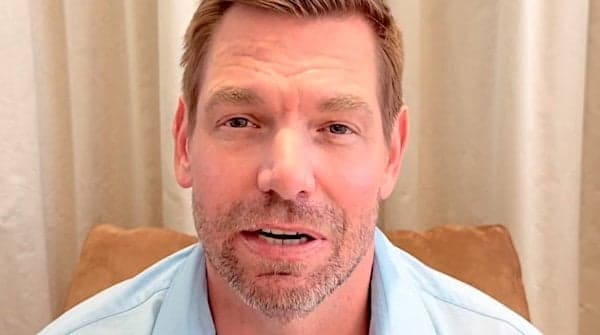
‘Sticking taxpayers with the bill’: SWALWELL Act meant to deliver a ‘blow’ to D.C. corruption
Former U.S. Rep. Eric Swalwell, D-Calif. Rep. Paul Gosar, R-Ariz., introduced legislation on Wednesday he says would end what he calls Washington’s “culture of corruption, secrecy, and self-protection.” The Stopping Wasteful Allowances for Lawmaker Wrongdoing and Ensuring Legal Liability Act would prohibit the use of taxpayer dollars to settle sexual harassment and other misconduct claims involving members of Congress and senior staff. “For decades, the swamp in Washington, D.C., has protected its own—letting corrupt politicians bury misconduct behind closed doors while sticking taxpayers with the bill,” Gosar wrote in a press release. “That ends now. If a member of Congress or professional staff breaks the law or abuses their position, they should pay the price themselves, not the American people, and not in secret.” Gosar introduced the bill after Rep. Eric Swalwell, D-Calif., was accused by multiple former staffers of sexual harassment, and, in one instance, rape. Critics have accused the prevailing Congressional environment of shielding Swalwell from his allegations. The measure is co-sponsored by Reps. Andy Biggs of Arizona, Lauren Boebert of Colorado, Tim Burchett of Tennessee, Buddy Carter of Georgia, Randy Fine of Florida, and Anna Paulina Luna of Florida. It would eliminate what critics have described as a congressional “slush fund” used to resolve misconduct claims with public money. Under the bill, lawmakers and certain congressional staff would be required to certify under oath that they did not use taxpayer funds to settle claims. The legislation would bar the use of federal dollars for such settlements and require those found liable to pay all costs out of pocket, with no reimbursements, campaign funds, or pass-throughs. In February, Rep. Anna Paulina Luna, R-Fla., introduced a similar effort, which would have ended the taxpayer “slush fund.” Her effort overwhelmingly failed. Gosar’s proposal would also create a public, searchable database listing lawmakers and staff who settled claims or were found liable, including the amount paid and the nature of the misconduct, while maintaining protections for victims. In addition, the bill would disclose all taxpayer-funded settlements dating back to 1995. The legislation further requires that allegations involving potential criminal conduct be referred directly to the Department of Justice, prohibiting nondisclosure agreements or internal resolutions that prevent referral. Those who attempt to circumvent the law would face enhanced penalties, including double damages and mandatory ethics investigations enforced by the attorney general. “This is about ending the two-tiered system in Washington, D.C., where politicians play by their own rules,” Gosar said. “The SWALWELL Act restores accountability, enforces transparency, and makes it clear: If you betray the public trust, you will be exposed, and you will pay for it.” [Editor’s note: This story originally was published by The Daily Signal.]
‘Sticking taxpayers with the bill’: SWALWELL Act meant to deliver a ‘blow’ to D.C. corruption
Former U.S. Rep. Eric Swalwell, D-Calif. Rep. Paul Gosar, R-Ariz., introduced legislation on Wednesday he says would end what he calls Washington’s “culture of corruption, secrecy, and self-protection.” The Stopping Wasteful Allowances for Lawmaker Wrongdoing and Ensuring Legal Liability Act would prohibit the use of taxpayer dollars to settle sexual harassment and other misconduct claims involving members of Congress and senior staff. “For decades, the swamp in Washington, D.C., has protected its own—letting corrupt politicians bury misconduct behind closed doors while sticking taxpayers with the bill,” Gosar wrote in a press release. “That ends now. If a member of Congress or professional staff breaks the law or abuses their position, they should pay the price themselves, not the American people, and not in secret.” Gosar introduced the bill after Rep. Eric Swalwell, D-Calif., was accused by multiple former staffers of sexual harassment, and, in one instance, rape. Critics have accused the prevailing Congressional environment of shielding Swalwell from his allegations. The measure is co-sponsored by Reps. Andy Biggs of Arizona, Lauren Boebert of Colorado, Tim Burchett of Tennessee, Buddy Carter of Georgia, Randy Fine of Florida, and Anna Paulina Luna of Florida. It would eliminate what critics have described as a congressional “slush fund” used to resolve misconduct claims with public money. Under the bill, lawmakers and certain congressional staff would be required to certify under oath that they did not use taxpayer funds to settle claims. The legislation would bar the use of federal dollars for such settlements and require those found liable to pay all costs out of pocket, with no reimbursements, campaign funds, or pass-throughs. In February, Rep. Anna Paulina Luna, R-Fla., introduced a similar effort, which would have ended the taxpayer “slush fund.” Her effort overwhelmingly failed. Gosar’s proposal would also create a public, searchable database listing lawmakers and staff who settled claims or were found liable, including the amount paid and the nature of the misconduct, while maintaining protections for victims. In addition, the bill would disclose all taxpayer-funded settlements dating back to 1995. The legislation further requires that allegations involving potential criminal conduct be referred directly to the Department of Justice, prohibiting nondisclosure agreements or internal resolutions that prevent referral. Those who attempt to circumvent the law would face enhanced penalties, including double damages and mandatory ethics investigations enforced by the attorney general. “This is about ending the two-tiered system in Washington, D.C., where politicians play by their own rules,” Gosar said. “The SWALWELL Act restores accountability, enforces transparency, and makes it clear: If you betray the public trust, you will be exposed, and you will pay for it.” [Editor’s note: This story originally was published by The Daily Signal.]
‘Sticking taxpayers with the bill’: SWALWELL Act meant to deliver a ‘blow’ to D.C. corruption
Former U.S. Rep. Eric Swalwell, D-Calif. Rep. Paul Gosar, R-Ariz., introduced legislation on Wednesday he says would end what he calls Washington’s “culture of corruption, secrecy, and self-protection.” The Stopping Wasteful Allowances for Lawmaker Wrongdoing and Ensuring Legal Liability Act would prohibit the use of taxpayer dollars to settle sexual harassment and other misconduct claims involving members of Congress and senior staff. “For decades, the swamp in Washington, D.C., has protected its own—letting corrupt politicians bury misconduct behind closed doors while sticking taxpayers with the bill,” Gosar wrote in a press release. “That ends now. If a member of Congress or professional staff breaks the law or abuses their position, they should pay the price themselves, not the American people, and not in secret.” Gosar introduced the bill after Rep. Eric Swalwell, D-Calif., was accused by multiple former staffers of sexual harassment, and, in one instance, rape. Critics have accused the prevailing Congressional environment of shielding Swalwell from his allegations. The measure is co-sponsored by Reps. Andy Biggs of Arizona, Lauren Boebert of Colorado, Tim Burchett of Tennessee, Buddy Carter of Georgia, Randy Fine of Florida, and Anna Paulina Luna of Florida. It would eliminate what critics have described as a congressional “slush fund” used to resolve misconduct claims with public money. Under the bill, lawmakers and certain congressional staff would be required to certify under oath that they did not use taxpayer funds to settle claims. The legislation would bar the use of federal dollars for such settlements and require those found liable to pay all costs out of pocket, with no reimbursements, campaign funds, or pass-throughs. In February, Rep. Anna Paulina Luna, R-Fla., introduced a similar effort, which would have ended the taxpayer “slush fund.” Her effort overwhelmingly failed. Gosar’s proposal would also create a public, searchable database listing lawmakers and staff who settled claims or were found liable, including the amount paid and the nature of the misconduct, while maintaining protections for victims. In addition, the bill would disclose all taxpayer-funded settlements dating back to 1995. The legislation further requires that allegations involving potential criminal conduct be referred directly to the Department of Justice, prohibiting nondisclosure agreements or internal resolutions that prevent referral. Those who attempt to circumvent the law would face enhanced penalties, including double damages and mandatory ethics investigations enforced by the attorney general. “This is about ending the two-tiered system in Washington, D.C., where politicians play by their own rules,” Gosar said. “The SWALWELL Act restores accountability, enforces transparency, and makes it clear: If you betray the public trust, you will be exposed, and you will pay for it.” [Editor’s note: This story originally was published by The Daily Signal.]

Pay for gas or diapers? Witnesses tell Congress fraud forces hardworking families to pay higher taxes
Two witnesses who testified at a House committee hearing Wednesday said a culture that allows for the widespread defrauding of government programs ultimately causes working people who play by the rules to pay higher taxes. Republican Kentucky Auditor Allison Ball and Dr. OJ Oleka, CEO of the State Financial Officers Foundation (SFOF), were among the four total witnesses who testified at a hearing on “Fraud Prevention: Understanding Fraud in Federally Funded Programs Run by the States,” which the House Oversight Committee’s Subcommittee on Government Operations held Wednesday. Ball and Oleka explained their experience combating such fraud—particularly in their shared home state of Kentucky—and why the issue should concern all taxpaying Americans, in interviews with the DCNF conducted after the hearing. “When you have a culture that defers to fraud and allows it to stand, then you spend more money,” Oleka said as part of his testimony during the hearing, explaining why he thinks fraud is such a “big deal.” “When you spend more money that then mandates, based on your political philosophy, an increase in taxes. So, if you increase taxes on hardworking families, now they’re faced with the choice of putting gas in their car [or] paying [for] diapers for their children.” “There’s a real cost that families have to go through all because fraud wasn’t detected. And it [fraud] also sows distrust, because you have people who are trying to survive on WIC [Women, Infants, and Children] or SNAP [Supplemental Nutrition Assistance Program] or government benefits, and they look to their left and they see one of their neighbors who’s a fraudster riding around in a Benz buying as much food as they can,” he added. “I would hope that nobody’s trying to make fraud a partisan issue. I think it’s really important that you’ve got the American people who feel not only compelled but interested in making sure their money is being spent efficiently,” Oleka told the DCNF. “I’m an American citizen and I pay taxes. I want to make sure my government’s spending it efficiently. So, however you approach that as a government leader, I think really it probably demonstrates the kind of leader that you are.” WATCH: NEW: @OJOleka tells the House Oversight Committee why FRAUD is “such a big deal.” “When you have a culture that defers to fraud … then you spend more money … you increase taxes on hardworking families And it also sows distrust.”@DailyCaller pic.twitter.com/sCqUNt86nv — Anthony Iafrate (@tonyiafratedc) April 15, 2026 Ball told the DCNF that her office found $836 million of wasted taxpayer money after it conducted a massive audit of Medicaid. “It’s because people were listed as living in Kentucky and then listed as living in other states. You have both states, Kentucky and somewhere else, paying for their medical bills,” she said. “So, we did this real deep dive into why this happened, and one of the things we found, it was a cultural issue.” The Republican noted that she found that “leadership at the top of” Democratic Kentucky Gov. Andy Beshear’s administration “actually told them, ‘Hey, this is low priority, you know, just get to it if you can. But it’s just not something that we’re really concerned about.’” “So, if you have that kind of attitude, then obviously it opens the door for all kinds of problems, which is what we saw,” Ball told the DCNF. ” I have been disappointed and frustrated because Governor Beshear, he sees everything as politics. And I say to him, ‘No, some of these real problems must need to be resolved.’” She added that the governor’s response to the finding of the more than $800 million in Medicaid waste was, “Well, other states have the same problem.” Ball said that this was not the only time the Beshear administration was dismissive of one of her office’s findings. “An issue that we just did a report on was foster children in Kentucky have been housed in office buildings and other places, and that’s another one where we really wanted to work for the governor, we really want to work with the cabinet, and they just were not that interested,” she told the DCNF. WATCH: Beshear, who twice won election as a Democrat in a state that voted overwhelmingly for President Donald Trump, is a rumored 2028 presidential candidate and has previously said he will “consider” a potential White House run. “And you can’t help but wonder if his [Beshear’s] presidential ambitions make him — he doesn’t want to talk about it. And that’s just sort of the impression I get,” Ball said. She told the DCNF that she thinks former Kentucky Secretary of Transportation Jim Gray moving to a different position in the Beshear administration Tuesday indicates the governor is gearing up for a White House run. “I think it’s pretty clear he wants to run for that office. And when you’re running for that kind of thing, how you’ve done as a governor becomes all the more relevant, all the more important,” Ball said. During the hearing, Oversight Committee Chair James Comer — who, like Ball, is a Kentucky Republican— asked his home state’s auditor if Beshear had worked with her “any” during her audit and if his administration was “helpful in turning over information or anything to help come to the conclusion that you came to with respect to the amount of fraud.” “I really do believe these are nonpartisan issues, and we should be able to work together. Unfortunately, I have to say it’s not been a great system of cooperation,” Ball said. “Boots on the ground people have been helpful. When it comes to rising levels of leadership, it does get to be more difficult to get information from them, and it’s only gotten more difficult as time has gone by.” “So, the unfortunate answer is no. It’s actually been disappointing that I’ve not had good cooperation from the top level of the Beshear administration,” she said. WATCH: NEW: @KYAuditor @AllisonJoyBall tells the House Oversight Committee that Democrat KY Gov. Andy Beshear has not had “a great system of cooperation” with her office in combatting FRAUD. Beshear has expressed interest in running for president in 2028.@DailyCaller pic.twitter.com/j7Z10oVJgy — Anthony Iafrate (@tonyiafratedc) April 15, 2026 Ball told Comer that the administration’s response that fraud is happening in other states conveys an attitude that makes it less likely for fraud in Kentucky to ultimately be addressed. Moreover, Oleka told the DCNF that Democrats may be less likely to admit fraud takes place in their states because drawing attention to fraud may make the public more skeptical of the expansive government programs their policies favor. “I think sometimes, there can be an ideological interest in expansive government programs. And so, if your interest is [that] we need to expand more government, because if we think that helps people — that’s your position ideologically — then it becomes difficult to admit that expansion, in fact, leads to some fraud occurrences,” Oleka said. “Whereas, if your ideological position is maybe we shouldn’t have government doing everything for everybody. In fact, it’s probably inefficient. Then you’re more apt to look for fraud, and then you can detect it when it’s there.” “I think it’s less partisan in terms of the political parties, more ideological in terms of philosophy,” he said. “If you believe in expansive government, you’re probably more reluctant to go after fraud. If you believe in limited government, you’re probably more likely to.” The SFOF is “a national organization dedicated to advancing fiscally responsible public policy, protecting taxpayer dollars, and promoting economic freedom in a free-market economy,” according to its website. Content created by The Daily Caller News Foundation is available without charge to any eligible news publisher that can provide a large audience. For licensing opportunities of our original content, please contact licensing@dailycallernewsfoundation.org.
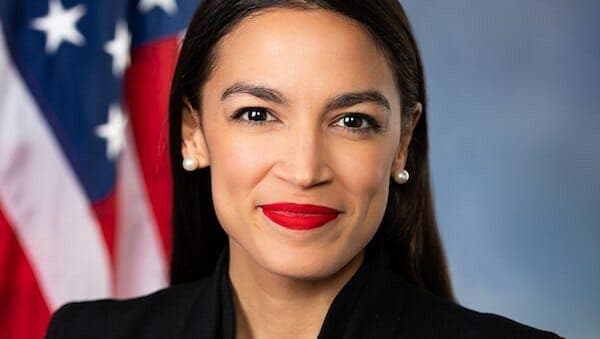
WATCH: AOC confidently claims ‘the president of the United States is a rapist’
U.S. Rep. Alexandria Ocasio-Cortez. D-N.Y. (Official U.S. House portrait) Alexandria Ocasio Cortez, a radical left member of the Democrat party representing part of New York City in Congress, went there. “The president of the United States is a rapist,” she charged. Of course she’s not the first with that statement. George Stephanopoulos was there before her, and eventually reached a legal settlement with the president that involved his network, ABC, paying the president’s foundation and lawyers a sum of $16 million. Not sure what may develop for a member of Congress whose statements are protected absolutely by the Constitution’s Speech or Debate Clause – but only “when they are part of the legislative process.” Online dictionaries explain that courts have determined that “purely political statements in newsletters or press releases are not covered.” Here she is: AOC on Trump: “A judge said he has in fact raped a woman. The president is a rapist. The president is implicated in the Epstein Files. He is convicted in court of 34 counts of fraud, felony fraud” pic.twitter.com/6lByZQAKcD — Marco Foster (@MarcoFoster_) April 14, 2026 Cortez claims that a judge ruled Trump raped a woman, but that is not, in fact, the case. The judge wasn’t making the decision, a jury was. A woman sued Trump in a civil case making that claim and the jury verdict to the question did she prove “by a preponderance of the evidence, that Mr. Trump raped” her, was “No.” **Taps the sign…. Just because a Judge said he did.. Doesnt make it true. The Jury, are the ones who determine that. What did the jury say AOC.. WHAT DID THE JURY SAY pic.twitter.com/xEA6bxsoEf — Signal and Circuit (@Signal_N_Circit) April 14, 2026 And Cortez’s comments came just hours after Rep. Eric Swalwelll, one of her own party members from California, submitted a resignation and fled Congress in the face of a multitude of women charging that he assaulted them, even raped them. She also charges that Trump was convicted of 34 felony counts of fraud, but in that case the half a billion dollar penalty was thrown out by an appeals court, and there’s currently pending an appeal to dismiss the rest of the case entirely. Another commenter said, “Watch your words aoc you are saying things as fact and that is slander. Hope u are next on the list to be sued…” It was a report at Not the Bee that said, “AOC is being AOC again…” A report at BizPacReview suggested, “Scooting AOC may have set herself up for a defamation suit with her latest allegations against the president and what she believes that meant to bad actors in Congress.” The report noted the plaintiff against Trump, E. Jean Carroll, now is asking the Supreme Court to refuse to re-evaluate her claims. “Streaming as she scooted down the street, the congresswoman insisted, ‘But there really are consequences when the president of the United States has been found convicted in court of felony 34 times, has been found liable — a judge said that he has, in fact, raped a woman …” Another member of Congress, Rep. Tony Gonzales, of Texas, also recently resigned over sexual allegations. Cortez earlier had claimed, “Wow who would have thought that electing a rapist would have complicated the release of the Epstein files?” AOC: Whether it’s people in the Epstein files still roaming free, or the president, a known rapist, continuing to occupy the White House, all of this has contributed to the normalization and the idea that incidents of harassment shouldn’t matter. And I think today was an… pic.twitter.com/jIKbjmkcXQ — Acyn (@Acyn) April 15, 2026
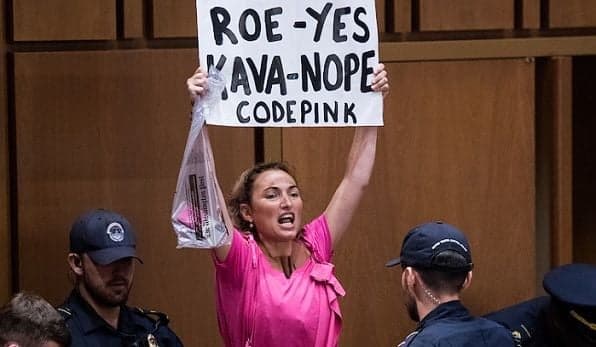
Code Pink should lose tax-exempt status, watchdog group tells IRS
FIRST ON THE DAILY SIGNAL—The leftist activist group Code Pink should lose its tax-exempt status for engaging in potentially illegal activity, violating tax rules against engaging in prohibited political activity and excess lobbying activity, and for supporting the interests of China without properly registering with the Department of Justice, a conservative group said in a letter to the IRS. The Center to Advance Security in America “filed a request for review with the IRS of the tax-exempt status of Code Pink, an extreme organization that regularly engages in potentially illegal activities, including vandalism, blockades of U.S. military facilities, and regularly disrupting federal proceedings,” CASA Director James Fitzpatrick told The Daily Signal in a statement Tuesday. “Code Pink is also intertwined in an opaque global network of nonprofit funding with ties to the Chinese Communist Party,” he added. “They engage in violent antisemitic demonstrations and have even appeared with individuals waving the flag of Hezbollah.” “The American people demand an immediate investigation into this urgent matter,” Fitzpatrick concluded. “Hard-earned tax dollars should not be spent funding organizations that may be refusing to adhere to the law.” The letter, exclusively provided to The Daily Signal, outlines CASA’s “serious concerns about Code Pink’s (non) compliance with federal law.” Illegal Activity? CASA’s complaint notes that Code Pink has “regularly engaged in potentially illegal activity that should negate its tax-exempt status.” Police have repeatedly arrested the group’s members for “disrupting official government proceedings” and for “blockades of military facilities.” Code Pink activists often interrupt congressional hearings, leading police to escort them out and arrest them. The organization has promoted such arrests on its website. Code Pink promoted an allied organization’s use of a “human blockade” to prevent the transit of supplies from Travis Air Force Base last June, among other actions. The CASA complaint cites the IRS’ 1985 explanation for why tax-exempt organizations may lose their status if they engage in illegal activity. “Because benefit to the public is an underlying justification for charitable tax benefits, organizations which increase governmental burdens cannot justify taxation,” the IRS said. “Organizations engaged in illegal activity increase the governmental burden of law enforcement.” Code Pink Lobbying The complaint also claims that Code Pink engages in substantial direct lobbying, in violation of the requirements for tax-exempt status under 501(c)(3). While the IRS code allows such organizations to raise concerns and draw attention to issues, it forbids them from telling people how to vote. Yet, the complaint states that “Code Pink regularly hosts calling parties, events during which members and other attendees are aided and encouraged in reaching out to their elected officials to influence both issues and specific legislation.” Code Pink hosted a “calling party” on April 15, 2025, which CASA claims urged members to tell their representatives to sponsor House Joint Resolution 86. In 2019, Code Pink asked its members to urge their senators to cosponsor a bill blocking any potential war with Iran. A Chinese Foreign Agent? The complaint also raises concerns that Code Pink may have violated the Foreign Agents Registration Act by working with agents of the Chinese Communist Party and on behalf of China’s interests. The report noted that Code Pink co-founder Jodie Evans had criticized China’s authoritarian government, but changed her tune after marrying multimillionaire Neville Roy Singham, a U.S. citizen currently living in Shanghai, in 2017. The New York Times exposed Singham’s global network of nonprofit funding and deep ties to the Chinese Communist Party in 2023. This network has mobilized protests against President Donald Trump’s removal of Venezuelan dictator Nicolás Maduro and Operation Epic Fury in Iran. In January, the House Oversight Committee voted to subpoena Singham. Representatives of this network met with Cuba’s Communist Politburo last month. Evans reportedly took part in a meeting between the International Committee of the Democratic Socialists of America and the Chinese Communist Party, in which the DSA agreed to take pro-China positions. The complaint quotes Sen. Chuck Grassley, R-Iowa, who also urged an investigation into Code Pink. Grassley noted that Code Pink appears to have been “funded and influenced” by Singham and the CCP. He also noted that Code Pink appears to have engaged in “political activities that directly advance the Communist Chinese government’s political and policy interests.” The complaint notes that withdrawing Code Pink’s tax-exempt status would not violate the First Amendment, because it would be a response to Code Pink’s violations of law, not discrimination for its viewpoint. “Social justice activism is a healthy part of this country’s political environment, but to qualify for and retain the congressionally granted privilege of tax-exempt status there are limits, which Code Pink may be intentionally disregarding,” the complaint states. The Daily Signal has reached out to the IRS and to Code Pink for comment, and will update this story with any response. [Editor’s note: This story originally was published by The Daily Signal.]
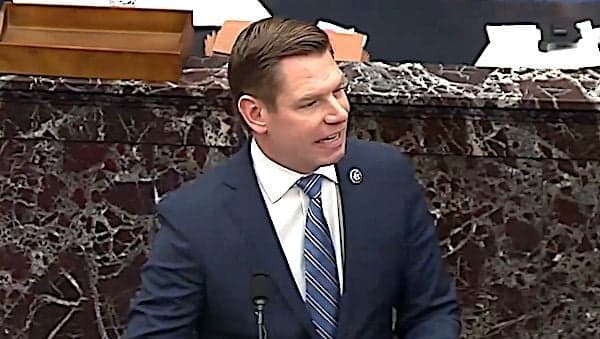
Eric Swalwell faces new stripping: Legislation in works to yank his taxpayer-paid pension
U.S. Rep. Eric Swalwell, D-Calif., as House impeachment manager on Wednesday, Feb. 10, 2021. Former U.S. Rep. Eric Swalwell, D-Calif., has quit the governor’s race in California and has resigned from Congress amid a slew of allegations from a long list of women who say he drugged them, assaulted them, even raped them. He’s under investigation but no charges have been filed yet. But now there is a move in Congress to strip him of his congressional pension, a payment that would obligate taxpayers to continue supporting him. The plan is from U.S. Rep. Lauren Boebert, R-Colo., and is expected even to get bipartisan support. “I think that’s a worthwhile, holistic solution that should be looked into, not just in this context, but I think in any context where the circumstances are similar,” explained Rep. Tim “Sarah” McBride, a Democrat from Delaware, in a statement to the Washington Examiner. He was Tim McBride before joining the transgender agenda and adopting the name Sarah. The Washington Examiner reported in the bull’s-eye for Boebert is the $22,000 annual congressional pension that Swalwell could claim, as he’s resigned from Congress. Those who are expelled lose that benefit. He is scheduled to get the money, despite his departure under a long list of ethics questions, for his nearly 13 years in the House. Boebert, who previously wanted Swalwell expelled, said a law is needed to block Swalwell’s pension. U.S. Rep. Lauren Boebert, R-Colo. She said, to the publication, she is “working on bipartisan legislation to state that Members who are convicted of any felony or crimes for an offense committed while in office … are prohibited from receiving their pensions.” She said that includes sexual assault. And she would strip pensions from those who violate House Rule 18, “which states that, among other things, Members cannot engage in a sexual relationship with any employee of the House who works under the supervision of the Member.” .@RepSwalwell (D-CA) may be resigning under a cloud of scandal, but he is still eligible for a taxpayer-funded congressional pension. https://t.co/W7KJLhqMDU — Washington Examiner (@dcexaminer) April 14, 2026 Rep. Johnny Olszewski, Democrat from Maryland, said the idea is applicable for someone who admits guilt or if the evidence supports that conclusion. “I think certainly anyone who’s convicted of criminal activity should have their pension taken away, if that’s not already the case here,” said Olszewski. “I think if there’s a finding or admission of behavior that’s not acceptable, that’s something we should strongly consider.” The National Taxpayers Union said Swalwell, 45, would be eligible to start collecting the money at age 62. Swalwell has denied all of the allegations, but prosecutors in California and New York are looking into the claims. ‘I thought I died’: Beverly Hills model says Eric Swalwell ‘raped me and he choked me’ Eric Swalwell quitting Congress amid explosive sex scandal he calls ‘false allegation’ ‘I am deeply sorry’: Democrat Congressman Eric Swalwell suspends campaign for California governor amid sex scandal
Eric Swalwell faces new stripping: Legislation in works to yank his taxpayer-paid pension
U.S. Rep. Eric Swalwell, D-Calif., as House impeachment manager on Wednesday, Feb. 10, 2021. Former U.S. Rep. Eric Swalwell, D-Calif., has quit the governor’s race in California and has resigned from Congress amid a slew of allegations from a long list of women who say he drugged them, assaulted them, even raped them. He’s under investigation but no charges have been filed yet. But now there is a move in Congress to strip him of his congressional pension, a payment that would obligate taxpayers to continue supporting him. The plan is from U.S. Rep. Lauren Boebert, R-Colo., and is expected even to get bipartisan support. “I think that’s a worthwhile, holistic solution that should be looked into, not just in this context, but I think in any context where the circumstances are similar,” explained Rep. Tim “Sarah” McBride, a Democrat from Delaware, in a statement to the Washington Examiner. He was Tim McBride before joining the transgender agenda and adopting the name Sarah. The Washington Examiner reported in the bull’s-eye for Boebert is the $22,000 annual congressional pension that Swalwell could claim, as he’s resigned from Congress. Those who are expelled lose that benefit. He is scheduled to get the money, despite his departure under a long list of ethics questions, for his nearly 13 years in the House. Boebert, who previously wanted Swalwell expelled, said a law is needed to block Swalwell’s pension. U.S. Rep. Lauren Boebert, R-Colo. She said, to the publication, she is “working on bipartisan legislation to state that Members who are convicted of any felony or crimes for an offense committed while in office … are prohibited from receiving their pensions.” She said that includes sexual assault. And she would strip pensions from those who violate House Rule 18, “which states that, among other things, Members cannot engage in a sexual relationship with any employee of the House who works under the supervision of the Member.” .@RepSwalwell (D-CA) may be resigning under a cloud of scandal, but he is still eligible for a taxpayer-funded congressional pension. https://t.co/W7KJLhqMDU — Washington Examiner (@dcexaminer) April 14, 2026 Rep. Johnny Olszewski, Democrat from Maryland, said the idea is applicable for someone who admits guilt or if the evidence supports that conclusion. “I think certainly anyone who’s convicted of criminal activity should have their pension taken away, if that’s not already the case here,” said Olszewski. “I think if there’s a finding or admission of behavior that’s not acceptable, that’s something we should strongly consider.” The National Taxpayers Union said Swalwell, 45, would be eligible to start collecting the money at age 62. Swalwell has denied all of the allegations, but prosecutors in California and New York are looking into the claims. ‘I thought I died’: Beverly Hills model says Eric Swalwell ‘raped me and he choked me’ Eric Swalwell quitting Congress amid explosive sex scandal he calls ‘false allegation’ ‘I am deeply sorry’: Democrat Congressman Eric Swalwell suspends campaign for California governor amid sex scandal

U.S. House investigates Colorado rule requiring lawyers to block immigration enforcement
The New York City Fugitive Operations Team and partner agencies conducted targeted enforcement operations on Jan. 28, 2025, resulting in the arrest of an illegal Dominican national. (ICE photo) The House Judiciary Committee is investigating why Colorado lawyers who want to file a case online must abide by the state’s sanctuary law or face perjury charges. In a letter on Monday, House Judiciary Committee Chairman Jim Jordan, R-Ohio, and Rep. Tom McClintock, R-Calif., chairman of the Judiciary Subcommittee on Immigration Integrity, Security, and Enforcement, said they are looking at Colorado’s sanctuary policy. Last year, Colorado’s Democratic Gov. Jared Polis signed the Protect Civil Rights Immigration Status Act into law, which attempts to shield illegal immigrants by extending existing prohibitions on information sharing to state officials and any third party with access through the Colorado Judicial Department. Lawyers who use information from the court filing system to assist with immigration enforcement could be charged with perjury. They must certify online that they will not share personal information from the database with federal immigration officials. “This certification commandeers private attorneys into Colorado’s radical sanctuary policies, handcuffs federal officials from enforcing immigration law in Colorado, and violates fundamental free speech principles,” the members’ letter says. The Colorado courts’ electronic filing policy website implemented this certification on March 30, according to the letter, which gave a deadline of April 27 for the state to respond. “In practice, this means that any attorney logging into Colorado’s state electronic court filing system must certify, ‘under penalty of perjury,’ that the attorney ‘will not use [or disclose] personal identifying information obtained from the database or automated network for the purpose of investigating for, participating in, cooperating with, or assisting in federal immigration enforcement, including enforcement of civil immigration laws’ under federal statute,” the congressmen’s letter says. Jordan and McClintock wrote to Steven Vasconcellos, the Colorado state court administrator, seeking information including the number of private attorneys punished under enforcement of the law. The House Judiciary Committee is conducting oversight of state and local jurisdictions nationwide that are not cooperating with federal immigration officials. The letter references Colorado lawyer Ian Speir, who posted on X: “I cannot log into the state’s official e-filing system without saluting The Resistance. I now cannot represent my clients, file lawsuits, access cases, file documents in existing cases, etc.” He added that if he declines the certification, “it kicks me out of the system. I must click ‘Accept’ to access the system and continue representing my civil clients — again, in cases that have absolutely nothing to do with immigration law or policy.” Colorado is now requiring lawyers in the State, as a condition of logging into its court e-filing system, to promise not to cooperate with federal authorities in enforcing federal immigration law. Please understand: – I do not practice immigration law. – I do not practice… pic.twitter.com/khYDf5TkQd — Ian Speir (@IanSpeir) April 2, 2026 Specifically, the two House chairmen asked the court administrator to provide clarification on the penalties for third parties who violate the certification requirement. They also asked for the number of complaints received by the Colorado Judicial Branch since May 2025, when Polis signed the bill into law. The letter further requested documents and communications among Colorado judicial branch staff, referring or relating to the implementation of the certification. [Editor’s note: This story originally was published by The Daily Signal.]
U.S. House investigates Colorado rule requiring lawyers to block immigration enforcement
The New York City Fugitive Operations Team and partner agencies conducted targeted enforcement operations on Jan. 28, 2025, resulting in the arrest of an illegal Dominican national. (ICE photo) The House Judiciary Committee is investigating why Colorado lawyers who want to file a case online must abide by the state’s sanctuary law or face perjury charges. In a letter on Monday, House Judiciary Committee Chairman Jim Jordan, R-Ohio, and Rep. Tom McClintock, R-Calif., chairman of the Judiciary Subcommittee on Immigration Integrity, Security, and Enforcement, said they are looking at Colorado’s sanctuary policy. Last year, Colorado’s Democratic Gov. Jared Polis signed the Protect Civil Rights Immigration Status Act into law, which attempts to shield illegal immigrants by extending existing prohibitions on information sharing to state officials and any third party with access through the Colorado Judicial Department. Lawyers who use information from the court filing system to assist with immigration enforcement could be charged with perjury. They must certify online that they will not share personal information from the database with federal immigration officials. “This certification commandeers private attorneys into Colorado’s radical sanctuary policies, handcuffs federal officials from enforcing immigration law in Colorado, and violates fundamental free speech principles,” the members’ letter says. The Colorado courts’ electronic filing policy website implemented this certification on March 30, according to the letter, which gave a deadline of April 27 for the state to respond. “In practice, this means that any attorney logging into Colorado’s state electronic court filing system must certify, ‘under penalty of perjury,’ that the attorney ‘will not use [or disclose] personal identifying information obtained from the database or automated network for the purpose of investigating for, participating in, cooperating with, or assisting in federal immigration enforcement, including enforcement of civil immigration laws’ under federal statute,” the congressmen’s letter says. Jordan and McClintock wrote to Steven Vasconcellos, the Colorado state court administrator, seeking information including the number of private attorneys punished under enforcement of the law. The House Judiciary Committee is conducting oversight of state and local jurisdictions nationwide that are not cooperating with federal immigration officials. The letter references Colorado lawyer Ian Speir, who posted on X: “I cannot log into the state’s official e-filing system without saluting The Resistance. I now cannot represent my clients, file lawsuits, access cases, file documents in existing cases, etc.” He added that if he declines the certification, “it kicks me out of the system. I must click ‘Accept’ to access the system and continue representing my civil clients — again, in cases that have absolutely nothing to do with immigration law or policy.” Colorado is now requiring lawyers in the State, as a condition of logging into its court e-filing system, to promise not to cooperate with federal authorities in enforcing federal immigration law. Please understand: – I do not practice immigration law. – I do not practice… pic.twitter.com/khYDf5TkQd — Ian Speir (@IanSpeir) April 2, 2026 Specifically, the two House chairmen asked the court administrator to provide clarification on the penalties for third parties who violate the certification requirement. They also asked for the number of complaints received by the Colorado Judicial Branch since May 2025, when Polis signed the bill into law. The letter further requested documents and communications among Colorado judicial branch staff, referring or relating to the implementation of the certification. [Editor’s note: This story originally was published by The Daily Signal.]
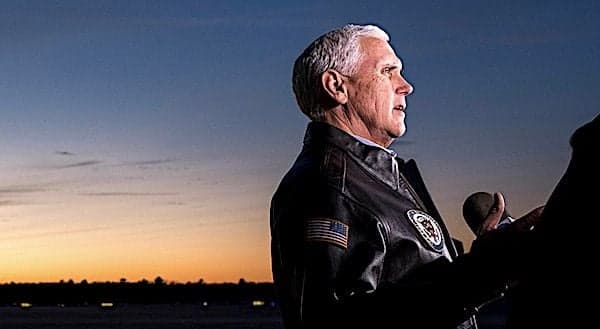
‘Being inside Trump’s White House was terrifying’: Former Mike Pence aide appears to run for Congress as Democrat in lobster-shaped gerrymandered seat
Vice President Mike Pence participates in local interviews with WAVY-TV/NBC Wednesday, Feb. 19, 2020, at Naval Station Oceana in Virginia Beach, Virginia. (Official White House photo by D. Myles Cullen) A prominent Trump detractor who served as a top aide to former Vice President Mike Pence appears to be running for Congress as a Democrat in a new seat the party is seeking to gerrymander in its favor, a Federal Election Commission filing shows. Olivia Troye, 49, who spent time as Pence’s counterterrorism advisor before becoming the top staffer on his COVID task force, appeared to have filed paperwork with the FEC to run in the crowded Democratic primary for Virginia’s Seventh district — which the state party is redrawing pending voter approval on April 21. Troye resigned from President Donald Trump’s first administration in July 2020 and endorsed Joe Biden the following month, then spoke at the 2024 Democratic National Convention (DNC) in support of failed presidential nominee Kamala Harris. The FEC Statement of Candidacy form was listed as being signed by Troye and dated Monday, setting up her campaign committee, Olivia for Virginia. The form lists the candidate’s address as being in Arlington, part of which is included in the redrawn Seventh district. Troye was reported to have lived in nearby Alexandria — which is not in either the current or redrawn Seventh district — as recently as summer 2025. Troye has yet to publicly announce a run and did not immediately respond to the Daily Caller News Foundation’s request to confirm or deny that she is the individual listed on the FEC Form. Olivia Troye The Seventh district is currently held by Democratic Virginia Rep. Eugene Vindman, who succeeded now-Gov. Abigail Spanberger in January 2025. However, Vindman said he will run for reelection in the First district if Virginia voters approve the proposed lopsided Democratic gerrymander on April 21. Assuming the new partisan map passes, Troye will compete in a packed primary that includes former Virginia First Lady Dorothy McAuliffe, Dels. Adele McClure and Dan Helmer and State Sen. Saddam Salim. Both Helmer and Salim sponsored their respective chamber’s versions of a restrictive ban on so-called “assault weapons.” The Seventh district under the proposed gerrymander stretches over 100 miles to combine population-rich, wealthy suburbs of Washington D.C. with heavily Republican rural areas to create a solidly Democratic seat. Its odd shape has been widely likened to that of a lobster. Olivia Troye on preemptive pardons: “I have not done anything wrong. I know that … all we’re doing is speaking the truth. But in today’s environment, in terms of what’s to come under the Trump administration, I think that’s something that we’re all thinking about.” pic.twitter.com/2sIUrTebKl — Aaron Rupar (@atrupar) December 5, 2024 Troye, who grew up in Texas, had described herself as a “John McCain Republican” in an anti-Trump 2020 video. “Being inside Trump’s White House was terrifying, but what keeps me up at night is what will happen if he gets back there,” Troye, who at the time still presented herself as a Republican, said at the 2024 DNC. “The guardrails are gone. The few adults in the room the first time resigned or were fired.” In her DNC plea to her “fellow Republicans” to back Harris, she exhorted them, “You aren’t voting for a Democrat. You’re voting for democracy. You aren’t betraying our party, you’re standing up for our country.” Troye also writes on Substack, where she has 365,000 subscribers. She claims in her bio on her Substack’s homepage, “I had a front-row seat to history during Trump 1.0 – and blew the whistle.” Content created by The Daily Caller News Foundation is available without charge to any eligible news publisher that can provide a large audience. For licensing opportunities of our original content, please contact licensing@dailycallernewsfoundation.org.

Honey, I shrunk the government: Trump quietly downsizes federal bureaucracy, and it’s historic
The days of peak DOGE may be over, but Trump’s quiet transformation of the federal bureaucracy continues. The Trump administration shrank the federal workforce to its smallest number since the launch of LBJ’s Great Society. This incredible stat, little remarked upon by the media, was dredged up by X user Christian Heiens. “Since Trump took office, over 352,000 Federal employees have been fired, resigned, or retired and were not replaced,” Heiens wrote on X. “The Federal workforce is smaller today than at any point since 1966.” Since Trump took office, over 352,000 Federal employees have been fired, resigned, or retired and were not replaced. The Federal workforce is smaller today than at any point since 1966. pic.twitter.com/6YPGxCaCfQ — Christian Heiens ? (@ChristianHeiens) April 9, 2026 Pew Research also noted this considerable decline in the federal workforce in March. “A total of 348,219 people quit, retired, were laid off or otherwise left federal employment last year – an 80.8% increase from 2024,” Pew wrote. “At the same time, 116,912 people started working for the federal government – a 55.6% decrease from the year before.” Pew noted that the biggest cuts hit the Department of Education and the U.S. Agency for International Development. Sen. Mike Lee, R-Utah, celebrated this all-around good news. I voted for this Did you? https://t.co/splW2mrwEm — Mike Lee (@BasedMikeLee) April 9, 2026 A quick look at the numbers provided by the U.S. Bureau of Labor Statistics shows the figures to be correct. Since President Donald Trump retook office, his administration has done more to reduce the federal workforce than pretty much any president ever. That includes Trump 1.0. The only larger drop-off in government personnel occurred at the end of World War II, for obvious reasons. Of course, FDR and Harry Truman were in no way small-government presidents. It was the New Deal in the 1930s that mushroomed the size of the federal government beyond anything the Founders could have imagined. The Great Society in the 1960s grew the government even more and arguably created the far more pernicious federal leviathan that we have today. One could argue this administration marks the first serious curtailment of that governmental transformation. Even the limited-government-minded President Ronald Reagan failed to seriously reduce the size of the federal government despite some considerable tactical victories. This is much more significant. Early on in Trump’s return to the White House I called this Trump’s “Dark New Deal.” His administration isn’t just reducing the federal workforce—a gargantuan task given the level of civil service protections and inertia in its favor—he’s specifically targeting the most noxious parts of the bureaucratic perma-state. My wife Inez Stepman, a policy analyst for the Independent Women’s Forum, correctly noted this fact. This is one of the most important victories in a century for the right, but the losers on here would have you never know it https://t.co/XnYmSuByWL — Inez Stepman ????? (@InezFeltscher) April 10, 2026 This is a historic counterrevolution against the deep state. It’s happening because the administration is fundamentally changing how the bureaucracy functions. Don Devine, Reagan’s “terrible swift sword of the civil service,” explained some of what’s going on in Law & Liberty. Devine wrote in September that Trump is not just “cutting the size of government by firing good civil servants” as the media suggests. Instead, the administration appears to be “fundamentally reforming the federal bureaucracy with the legal support essential to change how government is actually administered.” The changes came as a result of a few Supreme Court decisions, including the reinstatement of the Professional and Administrative Examination test in August, which allows the federal government to bring an element of “merit” back to civil service hiring. Several agencies, including the Department of Justice, are already reviving merit-based hiring. It was blocked by courts since 1981 because they ruled that it caused black and Hispanic applicants to be hired at lower rates. DEI has been in our federal hiring practices for some time. This change is happening while Trump is clearing out the Left’s patronage networks within the federal government, whereby federal bureaucrats shovel money at various left-wing nongovernmental organizations and favorable programs often right under the noses of Republican presidents. There’s a reason Trump’s return to office was met with panic in Washington. While this is perhaps bad for the economy in the nation’s capital, it’s a good thing for the future of limited government and an even better thing for the American people. This is good. The DC economy shrinking is a sign that the federal government and, maybe, the lobbying apparatus is contracting. https://t.co/yjJqTH16gM — John Carney (@carney) April 10, 2026 It’s not often that you can say that our president does anything quietly, but this rarely remarked upon revolution could pay dividends not just today, but in the decades ahead. While the next Democrat administration will undoubtedly try to return things to how they were, this administration is laying down structural changes that will be hard to immediately undo. When you combine that with the Supreme Court’s abandonment of the so-called Chevron doctrine, in which courts deferred to federal agencies, you can see through squinted eyes something that actually resembles republican governance. That’s worth celebrating. [Editor’s note: This story originally was published by The Daily Signal.]