18 stories credited to WLT Report
Latest story Apr 21, 2026 · on ChamberLight since Apr 2026
A story can appear as several articles (copies of the same piece), so counts of stories and of articles differ.
Scores for WLT Report
Political lean
15 stories · 95% range 75–88 · updated Sep 24, 2026
Originality
9 of those 18 carry an unconfirmed copying flag, which is not evidence either way.
18 stories · updated Sep 24, 2026
Writing quality 58 of 100: the average rating of 15 stories, each rated on its own (separate from credibility). How it is measured
Scores last checked Sep 25, 2026.
Stories ChamberLight collected, by month
Stories credited to WLT Report, by publication date. ChamberLight collects articles that mention the officials it tracks, so this shows its own coverage of this source, not how much the source publishes.
- Stories from WLT Report
- Shaded: ChamberLight collected no stories, or almost none, from any outlet (a gap in its collection, not in the outlet’s publishing)
Show as a table
| Month | Stories | All outlets |
|---|---|---|
| April 2026 | 18 | 4,538 |
| May 2026 | 0 | none collected |
| June 2026 | 0 | none collected |
| July 2026 | 0 | none collected |
| August 2026 | 0 | 1 (collection gap) |
| September 2026 | 0 | 1,320 |
Top topics
Share of this source’s stories tagged with each topic. A story can carry several topics, so the shares do not add up to 100%.
- Ethics/Corruption16
89% of 18 stories · 58% across all outlets
- Criminal Justice8
44% of 18 stories · 19% across all outlets
- Voting Rights6
33% of 18 stories · 19% across all outlets
- Budget/Spending5
28% of 18 stories · 31% across all outlets
- Foreign Policy5
28% of 18 stories · 29% across all outlets
- Immigration5
28% of 18 stories · 13% across all outlets
- Defense/Military2
11% of 18 stories · 25% across all outlets
- Economy1
6% of 18 stories · 26% across all outlets
The thin mark on each bar is the topic’s share across all outlets.
Who they cover
Party of the officials these stories are mainly about, across all 31 officials named. A story counts once for each official it is mainly about, so the split is over 41 story–official pairs, from 18 stories.
- Republican66% · 27 pairs
- Democrat29% · 12 pairs
- Party not recorded5% · 2 pairs
Most covered
Stories mainly about each official, and their share of the source’s 18 stories.
- 1Donald TrumpR6 stories · 33%
- 2J. VanceR3 stories · 17%
- 3John FettermanD2 stories · 11%
- 4Mike LeeR2 stories · 11%
- 5Susie LeeD2 stories · 11%
- 6Ayanna PressleyD1 story · 6%
- 7Brandon GillR1 story · 6%
- 8Chuck GrassleyR1 story · 6%
- 9Cory BookerD1 story · 6%
- 10Cory MillsR1 story · 6%
+ 21 other officials (21 story–official pairs)
Article tone
ChamberLight’s article analysis assigns each story a tone toward the official it covers. It describes the coverage of that official, not WLT Report’s stance, and reader votes do not change it. 18 stories.
- Good Look
- 3 (17%)
- Mixed
- 10 (56%)
- Informational
- 1 (6%)
- Bad Look
- 4 (22%)
Related sources
Lean 95% range 75–89 · updated Sep 25, 2026
Similar lean · 3 shared topics
Lean 95% range 76.2–85.2 · updated Sep 25, 2026
Similar lean · 3 shared topics
Lean 95% range 78–83 · updated Sep 25, 2026
Similar lean · 3 shared topics
Lean 95% range 77–82 · updated Sep 25, 2026
Similar lean · 3 shared topics
Lean 95% range 80–87 · updated Sep 25, 2026
Similar lean · 3 shared topics
Lean 95% range 80–88 · updated Sep 25, 2026
Similar lean · 3 shared topics
Challenges to these scores
No one has challenged a score on this page yet. Anyone can; editors publish every outcome here.
Articles served from wltreport.com
41
‘Bring It On’: Rep. Mace Fights Fire With Fire After Fellow Republican Pushes For Her Expulsion
Two Republican lawmakers facing their own unique political pressures are reportedly turning their attention to trying to expel one another from Congress. The latest development in an ongoing saga involving Reps. Nancy Mace (R-SC) and Cory Mills (R-FL) came amid reports that the latter had already drafted a resolution seeking to expel the former. Mace didn’t take the news lightly, as NBC News reported: Mills is being investigated by the House Ethics Committee in connection with allegations of “sexual misconduct and/or dating violence” and campaign finance violations. He has denied any wrongdoing. While some Democrats have called for his expulsion, Mace went further by announcing Monday evening that she had filed a measure that would remove him from office. “The swamp has protected Cory Mills for far too long and we are done letting it slide,” Mace said in a statement. “We tried to censure him and strip him from his committee assignments. Both parties blocked it, but we are not backing down.” Mace offered a resolution to censure Mills in November. The House voted to refer the matter to the Ethics Committee. The South Carolina congresswoman stayed on offense with a series of social media posts: I would expect nothing less from a politician as corrupt as Cory Mills. Bring it on. — Rep. Nancy Mace (@RepNancyMace) April 20, 2026 Cory Mills is coming after me because I am standing up for you. Mills is unfit to serve anywhere, in any capacity. If you’re a conservative exposing corruption, the machine comes after you. And if they can’t find it, they just make it up. So I say bring it on. I was built… pic.twitter.com/Z1KVHKFVm5 — Nancy Mace (@NancyMace) April 20, 2026 Meanwhile, Mills was busy griping about Mace on the same platform: Nancy wants you to believe she’s fighting for you, but she’s not. One minute she’s MAGA, the next she isn’t. Nancy Mace is a hypocrite who abuses her power and is an opportunist. She even attacked @POTUS. Call my vote forward Nancy! https://t.co/9vjZPKey5U pic.twitter.com/qEgdqjTLmB — Cory Mills (@CoryMillsFL) April 21, 2026 The Daily Caller offered some additional context into the controversies surrounding Mills: Mills has faced mounting scrutiny in recent months. In September, he drew attention after being one of four Republicans to oppose a resolution from Mace to censure Democratic Minnesota Rep. Ilhan Omar at a time when he was also facing the possibility of a retaliatory censure from House Democrats. The House Ethics Committee announced a formal investigation into Mills in November, just hours before he was set to face a censure resolution that could have weakened his standing in Congress. He ultimately narrowly avoided a formal rebuke after most House Republicans voted to block a separate effort led by Mace to strip him of his committee assignments. Mace intensified her criticism, forcing a vote in November on a resolution to remove Mills from the House Armed Services and Foreign Affairs committees, citing multiple ethics concerns. The resolution drew on reporting from NOTUS citing soldiers disputing aspects of Mills’ Bronze Star account, as well as a December 2024 Office of Congressional Ethics report suggesting he may have violated House rules by potentially retaining federal contracts while in office. The Florida congressman has also been linked to a range of other controversies — including sextortion allegations, accusations of embellishing his military record, questions surrounding his religious affiliation and claims of financial misconduct — according to The Blaze and Sollenberger. His former girlfriend, Lindsey Langston, the 2024 Miss United States winner, reportedly filed a restraining order alleging he threatened to release explicit videos of her. Former colleagues have accused Mills of overstating aspects of his service in the U.S. Army and as a private contractor, according to The Blaze. He was reportedly married in 2014 by a radical Islamic cleric tied to the Muslim Brotherhood at a Virginia mosque, despite his public alignment with Christianity, the outlet reported. Here’s some more coverage of the latest developments: Any thoughts?
‘Bring It On’: Rep. Mace Fights Fire With Fire After Fellow Republican Pushes For Her Expulsion
Two Republican lawmakers facing their own unique political pressures are reportedly turning their attention to trying to expel one another from Congress. The latest development in an ongoing saga involving Reps. Nancy Mace (R-SC) and Cory Mills (R-FL) came amid reports that the latter had already drafted a resolution seeking to expel the former. Mace didn’t take the news lightly, as NBC News reported: Mills is being investigated by the House Ethics Committee in connection with allegations of “sexual misconduct and/or dating violence” and campaign finance violations. He has denied any wrongdoing. While some Democrats have called for his expulsion, Mace went further by announcing Monday evening that she had filed a measure that would remove him from office. “The swamp has protected Cory Mills for far too long and we are done letting it slide,” Mace said in a statement. “We tried to censure him and strip him from his committee assignments. Both parties blocked it, but we are not backing down.” Mace offered a resolution to censure Mills in November. The House voted to refer the matter to the Ethics Committee. The South Carolina congresswoman stayed on offense with a series of social media posts: I would expect nothing less from a politician as corrupt as Cory Mills. Bring it on. — Rep. Nancy Mace (@RepNancyMace) April 20, 2026 Cory Mills is coming after me because I am standing up for you. Mills is unfit to serve anywhere, in any capacity. If you’re a conservative exposing corruption, the machine comes after you. And if they can’t find it, they just make it up. So I say bring it on. I was built… pic.twitter.com/Z1KVHKFVm5 — Nancy Mace (@NancyMace) April 20, 2026 Meanwhile, Mills was busy griping about Mace on the same platform: Nancy wants you to believe she’s fighting for you, but she’s not. One minute she’s MAGA, the next she isn’t. Nancy Mace is a hypocrite who abuses her power and is an opportunist. She even attacked @POTUS. Call my vote forward Nancy! https://t.co/9vjZPKey5U pic.twitter.com/qEgdqjTLmB — Cory Mills (@CoryMillsFL) April 21, 2026 The Daily Caller offered some additional context into the controversies surrounding Mills: Mills has faced mounting scrutiny in recent months. In September, he drew attention after being one of four Republicans to oppose a resolution from Mace to censure Democratic Minnesota Rep. Ilhan Omar at a time when he was also facing the possibility of a retaliatory censure from House Democrats. The House Ethics Committee announced a formal investigation into Mills in November, just hours before he was set to face a censure resolution that could have weakened his standing in Congress. He ultimately narrowly avoided a formal rebuke after most House Republicans voted to block a separate effort led by Mace to strip him of his committee assignments. Mace intensified her criticism, forcing a vote in November on a resolution to remove Mills from the House Armed Services and Foreign Affairs committees, citing multiple ethics concerns. The resolution drew on reporting from NOTUS citing soldiers disputing aspects of Mills’ Bronze Star account, as well as a December 2024 Office of Congressional Ethics report suggesting he may have violated House rules by potentially retaining federal contracts while in office. The Florida congressman has also been linked to a range of other controversies — including sextortion allegations, accusations of embellishing his military record, questions surrounding his religious affiliation and claims of financial misconduct — according to The Blaze and Sollenberger. His former girlfriend, Lindsey Langston, the 2024 Miss United States winner, reportedly filed a restraining order alleging he threatened to release explicit videos of her. Former colleagues have accused Mills of overstating aspects of his service in the U.S. Army and as a private contractor, according to The Blaze. He was reportedly married in 2014 by a radical Islamic cleric tied to the Muslim Brotherhood at a Virginia mosque, despite his public alignment with Christianity, the outlet reported. Here’s some more coverage of the latest developments: Any thoughts?
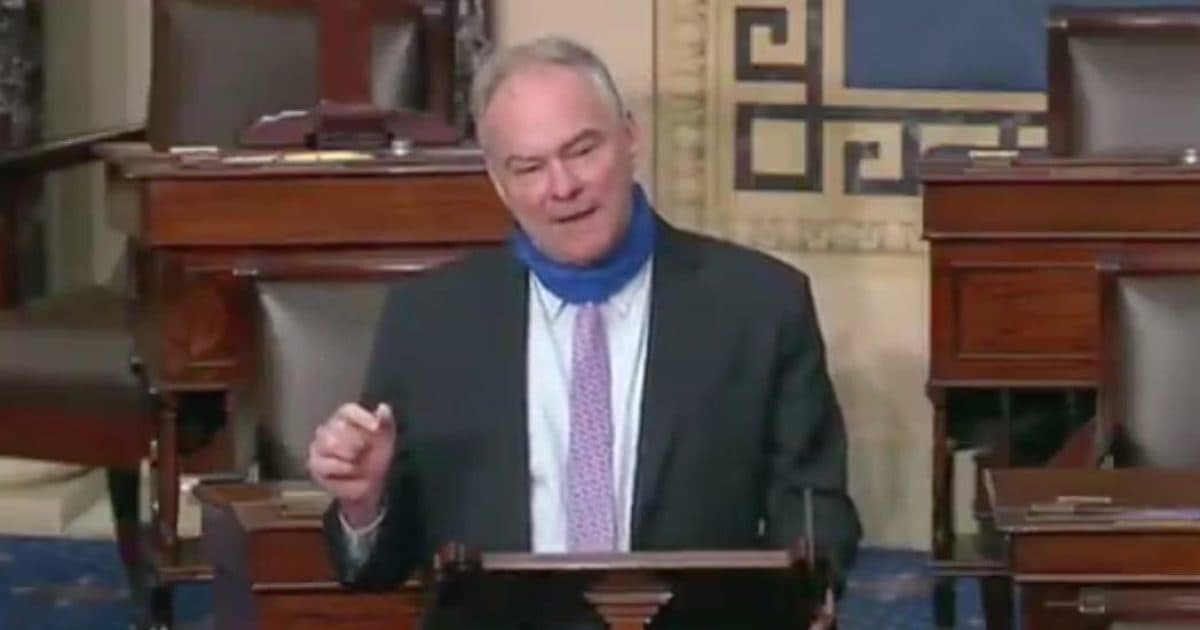
Tim Kaine Admits Virginia’s Redistricting Scheme Is Really About Stopping ‘Trump’s Tyranny’
Virginia voters head to the polls tomorrow for a special election that could reshape the entire state’s congressional delegation. On the ballot: a constitutional amendment that would let the Democrat-controlled legislature redraw the state’s congressional map, flipping it from a 6-5 Democratic edge to a staggering 10-1 Democratic supermajority. Democrats have been selling this as “restoring fairness.” Governor Abigail Spanberger says it’s about giving voters “the power to respond” to Republican redistricting in other states. Barack Obama recorded a video urging Virginians to vote YES. But then Senator Tim Kaine went on Fox News Sunday and accidentally told everyone what this is actually about. Obama was among the biggest names pushing voters toward the April 21 referendum: Virginia, if you haven’t done it already, make a plan to vote YES on the redistricting referendum. You can vote early by April 18 or on Election Day, April 21. Find your polling place at https://t.co/vsawTNnoax. pic.twitter.com/NiCTBpS10I — Barack Obama (@BarackObama) April 17, 2026 When Fox News anchor Shannon Bream confronted Kaine with the math, pointing out that Kamala Harris won Virginia by just 5 points in 2024 and asking why 90 percent of the state’s congressional delegation should then be Democrats, Kaine’s answer was revealing. “90% of Virginians are not Democrats… that’s true,” Kaine admitted. “But about 100 percent of Virginians want election results to be respected.” Then came the real reason: “We’re giving Virginians a chance to vote about whether they want to have a congressional delegation that will stand up against Donald Trump’s tyranny.” There it is. Not “fair maps.” Not “proportional representation.” Not even “leveling the playing field.” The quiet part, out loud: this is about loading Virginia’s congressional delegation with anti-Trump votes. CNN published a detailed breakdown of the proposed maps today, and the designs tell the story just as clearly as Kaine’s words: Virginia Democrats proposed a congressional map designed to secure 10 of 11 House seats in a state won by Kamala Harris with just 52% of the vote in 2024. The plan aimed to flip four Republican districts through aggressive partisan gerrymandering. The map carves heavily Democratic northern Virginia into five districts with “pinwheel” patterns extending outward to capture conservative rural areas. The new 7th District stretches so extensively it splits in half to avoid Democratic areas around Charlottesville, creating a shape likened to “a lobster with a long skinny tail and two wide claws.” A map so aggressively drawn that one district literally looks like a lobster. Five districts shaped like pinwheels, reaching out from Northern Virginia into rural conservative counties to dilute their votes. All of it sold under the banner of “fairness.” Former Virginia Governor Glenn Youngkin has called it “the most gerrymandered map in America” and has personally invested more than $500,000 into the campaign to defeat it. Former Attorney General Jason Miyares, who is co-chairing the Vote No effort, put it bluntly: “self-serving politicians went into a back room and drew a map that serves politicians, not Virginians.” Youngkin has put serious money where his mouth is: Former Gov. Glenn Youngkin gave another $180K to the Vote No campaign yesterday. That puts his total given at more than $500k — Brandon Jarvis (@Jaaavis) April 17, 2026 As Townhall noted today, Kaine’s admission is especially damaging because it contradicts every talking point Democrats have used to justify the referendum: When asked why 90% of Virginia’s congressional delegation should be Democratic when Kamala Harris won the state by only 5 points, Kaine responded: “90% of Virginians are not Democrats…that’s true. But we need a congressional delegation that will stand up” to Trump-related concerns. Critics argued that Kaine’s comments revealed the redistricting scheme was really about opposing Trump rather than achieving fair representation, contradicting the amendment’s stated justification. Here is the part that makes this even more outrageous. Just six years ago, 65.7 percent of Virginia voters approved a constitutional amendment to establish nonpartisan redistricting through an independent commission. Virginians already chose fair maps. They voted for it overwhelmingly. Now Democrats want to override that decision because it didn’t produce the results they wanted. Meanwhile, liberal dark money groups have poured nearly $50 million into backing the YES campaign. Governor Spanberger herself, who in 2019 posted on social media that gerrymandering “weakens the individual voices that form our electorates,” is now the face of the effort to do exactly that. The vote is tomorrow. Virginia voters now get to decide whether they want a congressional map designed by politicians to protect politicians, or whether the bipartisan commission they already voted for gets to do its job. Tim Kaine just made the choice a whole lot clearer. What do you make of it?

Democrat Senator Announces The Death Of His 36-Year-Old Daughter
One of the most painful experiences any parent can have is outliving their child. On Monday, U.S. Senator Mark Warner announced his 36-year-old daughter had died. Warner made the announcement on X and shared that his daughter, Madison, died after suffering a decades-long health battle. The Hill reported on the cause of the death: Sen. Mark Warner (D-Va.) on Monday announced the death of his 36-year-old daughter, who had suffered from juvenile diabetes. “We are heartbroken beyond words by the passing of our beloved daughter, Madison, 36, after a decades-long battle with juvenile diabetes and other health issues. She filled our lives with love and laughter, and her absence leaves an immeasurable void,” Warner and his wife, Lisa Collins, posted in a statement on X. “We are grateful for the loving support of friends and family during this difficult time and ask for privacy as we navigate this profound loss,” he added. Madison is survived by two younger sisters. The three were introduced to the political spotlight in 2001 when Warner was elected governor of Virginia. Here’s Warner’s post on X: pic.twitter.com/sdRJngGXdY — Mark Warner (@MarkWarner) April 20, 2026 Both Republicans and Democrats responded to the news by sending their condolences. Take a look: I’m sorry for your tragic loss, Senator. You and your family are in my prayers. — Alex Bruesewitz (@alexbruesewitz) April 20, 2026 Sorry for your loss. — Gunther Eagleman (@GuntherEagleman) April 20, 2026 Vice President JD Vance also offered his condolences: Our prayers are with Sen. Warner, his daughter, and their whole family. What a terrible loss at such a young age. May God comfort them. https://t.co/7bQ147BmOK — JD Vance (@JDVance) April 20, 2026 People reported more on Senator Warner’s political career and his daughter, Madison: Madison was the eldest of Warner and Collis’ three daughters, whom they welcomed just as Warner began to get involved in politics in the late 1980s and early 1990s. Warner, now 71, served as chairman of the Virginia Democratic Party from 1993 to 1995, before an unsuccessful run for Senate in 1996. In 2002, he was elected governor of the state; Collis became the first-ever first lady of Virginia to go by her maiden name. Warner served until 2006 and then set his sights back on the Senate, running successfully in 2008 and winning reelection in 2014 and 2020. In December 2025, he announced his plans to run once again in 2026, declaring his focus on economic recovery and the impact of artificial intelligence. It’s unclear if Madison’s death will impact that decision.
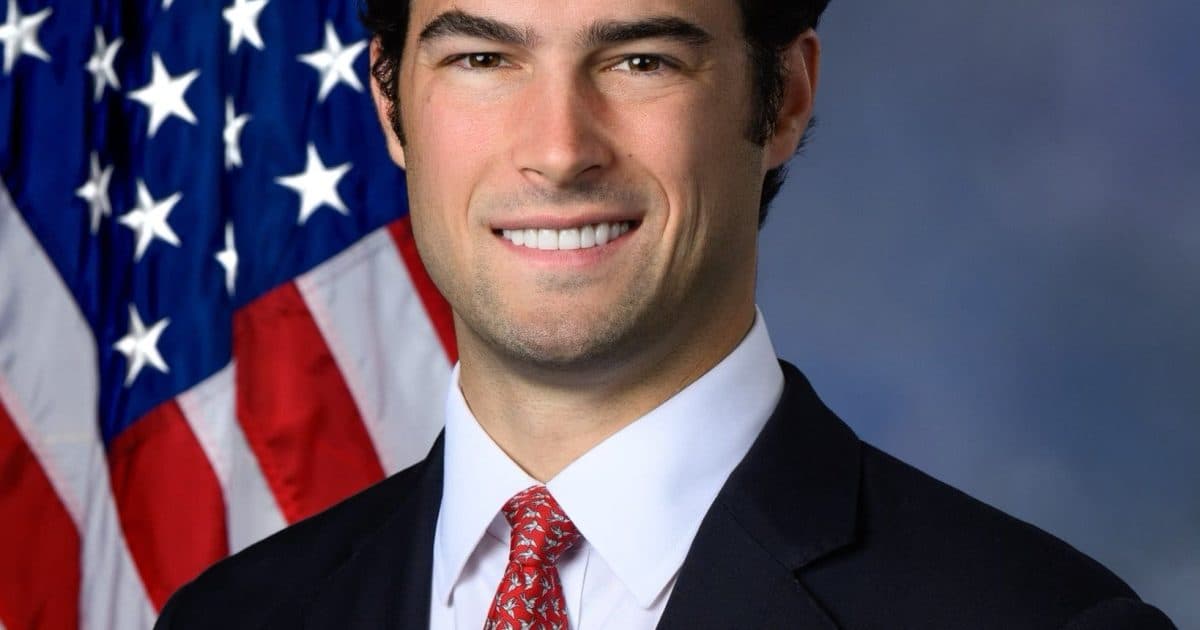
The Youngest Republican In Congress Just Asked A Democrat One Simple Question About Somali Immigrants. She Had No Answer.
A Texas Republican just delivered one of the most devastating one-liners in recent congressional history, and Democrats still haven’t recovered. Rep. Brandon Gill (R-TX), the youngest Republican in Congress, went head-to-head with Rep. Pramila Jayapal (D-WA) during a heated hearing on immigration. The exchange quickly went viral, racking up tens of millions of views across social media and trending nationwide on X with over 47,000 posts. The moment came when Jayapal made the bold claim that immigrants from Somalia have “BUILT this country.” Gill’s response was surgical: “Name one Somali political philosopher who influenced America’s system of government.” She couldn’t. Conservative journalist Eric Daugherty captured the exchange, and it spread like wildfire: 🚨 JUST IN: Rep. Brandon Gill DROPS THE MIC on unhinged Rep. Pramila Jayapal 🫳🏻🎤 JAYAPAL: “Immigrants from Somalia [have] BUILT this country!” GILL: “Name one Somali political philosopher who influenced America’s system of government.” They can’t name ONE. pic.twitter.com/21S0m6ToPe — Eric Daugherty (@EricLDaugh) April 18, 2026 The clip has now been viewed hundreds of thousands of times, with Daugherty’s post alone pulling in over 268,000 views, 15,000 likes, and more than 3,000 retweets. The question Gill posed was simple, direct, and unanswerable. America’s founding was shaped by thinkers like John Locke, Montesquieu, and the writers of the Federalist Papers. None of them were Somali. That’s not a controversial statement. It’s a historical fact. Gill has been one of the loudest voices in Congress pushing back on what he sees as a failed immigration experiment in places like Minnesota. During a January hearing before the House Oversight Committee, Gill cited data showing that 81% of Somali-headed households in Minnesota are on welfare, and that 78% of Somali immigrants who have been in the country for ten years are still receiving government assistance. Even Sen. Mike Lee (R-UT) couldn’t resist piling on. He reposted the clip with a sarcastic caption that captured exactly what millions of Americans were thinking: Montesquieu = obviously Somali https://t.co/iFN0O5awX4 pic.twitter.com/qGHmvoLx1B — Mike Lee (@BasedMikeLee) April 18, 2026 Jayapal’s claim is part of a broader pattern from Democrats who try to rewrite American history to fit their open-borders agenda. The founding of the United States was the product of specific philosophical traditions rooted in Western political thought. Acknowledging that isn’t bigotry. It’s basic civics. Rep. Gill has introduced legislation that would place a 25-year moratorium on Somali immigration to the United States, citing the staggering welfare dependency rates and concerns about assimilation. His bill has gained significant traction among Republican voters who are fed up with being told they can’t ask basic questions about immigration policy. The viral moment is the latest in a string of confrontations where Gill has put Democrats on the spot with straightforward questions they simply cannot answer. And judging by the reaction on social media, millions of Americans are glad someone is finally asking them. How does that sound?
The Youngest Republican In Congress Just Asked A Democrat One Simple Question About Somali Immigrants. She Had No Answer.
A Texas Republican just delivered one of the most devastating one-liners in recent congressional history, and Democrats still haven’t recovered. Rep. Brandon Gill (R-TX), the youngest Republican in Congress, went head-to-head with Rep. Pramila Jayapal (D-WA) during a heated hearing on immigration. The exchange quickly went viral, racking up tens of millions of views across social media and trending nationwide on X with over 47,000 posts. The moment came when Jayapal made the bold claim that immigrants from Somalia have “BUILT this country.” Gill’s response was surgical: “Name one Somali political philosopher who influenced America’s system of government.” She couldn’t. Conservative journalist Eric Daugherty captured the exchange, and it spread like wildfire: 🚨 JUST IN: Rep. Brandon Gill DROPS THE MIC on unhinged Rep. Pramila Jayapal 🫳🏻🎤 JAYAPAL: “Immigrants from Somalia [have] BUILT this country!” GILL: “Name one Somali political philosopher who influenced America’s system of government.” They can’t name ONE. pic.twitter.com/21S0m6ToPe — Eric Daugherty (@EricLDaugh) April 18, 2026 The clip has now been viewed hundreds of thousands of times, with Daugherty’s post alone pulling in over 268,000 views, 15,000 likes, and more than 3,000 retweets. The question Gill posed was simple, direct, and unanswerable. America’s founding was shaped by thinkers like John Locke, Montesquieu, and the writers of the Federalist Papers. None of them were Somali. That’s not a controversial statement. It’s a historical fact. Gill has been one of the loudest voices in Congress pushing back on what he sees as a failed immigration experiment in places like Minnesota. During a January hearing before the House Oversight Committee, Gill cited data showing that 81% of Somali-headed households in Minnesota are on welfare, and that 78% of Somali immigrants who have been in the country for ten years are still receiving government assistance. Even Sen. Mike Lee (R-UT) couldn’t resist piling on. He reposted the clip with a sarcastic caption that captured exactly what millions of Americans were thinking: Montesquieu = obviously Somali https://t.co/iFN0O5awX4 pic.twitter.com/qGHmvoLx1B — Mike Lee (@BasedMikeLee) April 18, 2026 Jayapal’s claim is part of a broader pattern from Democrats who try to rewrite American history to fit their open-borders agenda. The founding of the United States was the product of specific philosophical traditions rooted in Western political thought. Acknowledging that isn’t bigotry. It’s basic civics. Rep. Gill has introduced legislation that would place a 25-year moratorium on Somali immigration to the United States, citing the staggering welfare dependency rates and concerns about assimilation. His bill has gained significant traction among Republican voters who are fed up with being told they can’t ask basic questions about immigration policy. The viral moment is the latest in a string of confrontations where Gill has put Democrats on the spot with straightforward questions they simply cannot answer. And judging by the reaction on social media, millions of Americans are glad someone is finally asking them. How does that sound?

‘A Real Threat’: Democrat Strategist Suggests Fetterman Could Be Close To Switching Parties
Since entering office, U.S. Sen. John Fetterman (D-PA) has made a habit of taking contrarian views and siding with Republicans on a number of pivotal issues. While still retaining many of his far-left talking points, some in the party are starting to publicly worry that he’s warming up to the idea of leaving the Democrats altogether and joining with the GOP caucus. Fox News reported on one such figure, longtime strategist James Carville, who offered his thoughts during a recent interview: “I am not a big Fetterman fan,” Carville said, adding he thinks Fetterman is often motivated by wanting to see his name featured in newspapers. “He may switch because they are going to correctly say if he wants to run again — I don’t know, but most politicians do — he has no chance in a Democratic primary. “If I am the Republicans, I go to Fetterman,” Carville continued. “I said, ‘If you switch your final two years in the Senate, we will give you prime committee assignments. You will be relevant. You will be loved in here.’ “And that’s why I am saying the Democrats need to have a big year in the Senate because picking up four seats may not be enough. That’s a real threat.” The best scenario, Carville argued, was one where Democrats win enough Senate seats a Fetterman defection would not matter. But a potential Fetterman defection may shake up Democratic plans in a closer victory. Of course, Carville isn’t alone in voicing such speculation: Why aren't Democrats trying to run Fetterman outta their party, like they did Manchin and Synema…. I'll tell you why, they think he'll actually leave, and so do i Raise your hand if you would welcome a John Fetterman if he leaves the Democrat party pic.twitter.com/yd9WiVFEbm — @Chicago1Ray (@Chicago1Ray) November 11, 2025 BREAKING: Sen. John Fetterman (D-PA) says he has no plans to leave the Democratic Party despite his moderate views. "If you want a Democrat that’s going to call people Nazis or fascists or all these kinds of things, I’m not going to be that guy," Fetterman said on Fox News. pic.twitter.com/a03sC6TEJm — Off The Press (@OffThePress1) September 29, 2025 Fetterman says he knows and loves Trump voters: 'I'm the only Democrat in my family' Is he seeing the light? Would you welcome him if he decided to leave the Democratic party to come and join the party of common sense?! pic.twitter.com/Kd2ExHI8ve — Jannine.. #MagaMemeQueen (@janninereid1) October 16, 2025 He recently amplified division within the ranks by becoming the deciding vote on a resolution about the ongoing military action in Iran, as The Independent reported: The Senate on Wednesday voted down a Democrat-led effort to restrict President Donald Trump from launching further military operations in Iran without congressional approval, the latest failure of such a measure and a sign of the Republican caucus’ continued loyalty to the White House. One Democrat, Sen. John Fetterman, crossed party lines to defeat the measure, which needed 51 votes to pass the chamber. He announced last week that he would oppose this latest measure. The Pennsylvania Democrat’s defection was not surprising, as he has largely backed the president and his administration through an increasingly volatile and contentious foreign policy atmosphere largely resulting from Trump’s rhetoric and threats of war. That support endured even through last week, as the president vowed to end Iranian “civilization” in a Truth Social post that horrified many Democrats and even some of Trump’s own supporters. Fetterman has consistently shot down rumors that he’s flirting with the Republican Party, though, including in a recent CNN appearance:

10 House Republicans Just Helped Democrats Pass a Bill Shielding 330,000 Haitians From Deportation
Ten House Republicans just crossed the aisle and voted with every single Democrat to pass a bill extending deportation protections for over 330,000 Haitian nationals. The vote was 224-204. President Trump has already signaled he will veto it. Let that sink in. While the Trump administration has been working to end Temporary Protected Status for Haitians, arguing the designation “contradicts U.S. national interests,” a group of GOP members decided to join the progressive wing of the Democrat Party and go around their own leadership to make it happen. The bill, HR 1689, would extend Haitian TPS through 2029. It was forced to the floor through a discharge petition led by Rep. Ayanna Pressley of Massachusetts, the same progressive Democrat who has called for abolishing ICE. She needed 218 signatures to bypass Republican leadership, and she got them. Senator Katie Britt of Alabama was not impressed. She made it clear exactly where this bill is headed next. This is dead on arrival in the Senate. Temporary Protected Status is just that: temporary. Beyond that, 91% of all Haitian TPS holders entered the country illegally. In the last election, the American people rejected mass migration policies that effectively grant amnesty to… https://t.co/eim5EUE3AA — Senator Katie Boyd Britt (@SenKatieBritt) April 17, 2026 Britt is right. The bill has virtually zero chance in the Republican-controlled Senate. And even if it somehow squeaked through, President Trump would veto it in a heartbeat. So who are the 10 House Republicans who voted for this? CBS News reported on the full list of Republican crossovers: Seven Republicans broke ranks across procedural and final votes. Discharge petition signers included Maria Elvira Salazar of Florida, Brian Fitzpatrick of Pennsylvania, Mike Lawler of New York, and Don Bacon of Nebraska. Nicole Malliotakis of New York, Carlos Gimenez of Florida, and Kevin Kiley of California supported the floor procedure. Mike Carey of Ohio, Mario Diaz-Balart of Florida, Rich McCormick of Georgia, and Mike Turner of Ohio voted for final passage. Rep. Mike Lawler highlighted a contradictory policy: “The State Department itself says Haiti is unsafe for Americans to travel to,” creating what he called a logical inconsistency with deportation plans. Three of the ten are from Florida, where large Haitian communities could factor into midterm races. Two are from Ohio. The political calculus is obvious, even if the timing is terrible. And Pressley? She was celebrating like she just won the Super Bowl. WE DID IT! We forced the House to pass our extension of TPS for Haiti. This is a victory in our long-fought battle to protect the dignity & humanity of our Haitian neighbors. To our Haitian family in the MA-7th and across this country, this one’s for you. On to the Senate. https://t.co/HknDUsG7C8 pic.twitter.com/JLtMI0AMkn — Ayanna Pressley (@AyannaPressley) April 16, 2026 Newsweek detailed the arguments some of these Republicans used to justify their votes: Rep. Nicole Malliotakis said nursing homes in her district would lose skilled and dedicated staff if TPS is not renewed. “These are Haitian immigrants who are working, paying taxes and contributing to our economy and fulfilling a healthcare need,” she said. Rep. Don Bacon argued that removing TPS would cost 350,000 healthcare workers their jobs during serious workforce shortages. “Deporting people who are here legally and contributing seems unconscionable,” Bacon said. Here is the full list of Republican members who voted with Democrats: Brian Fitzpatrick (PA), Mike Lawler (NY), Don Bacon (NE), Maria Elvira Salazar (FL), Carlos Gimenez (FL), Nicole Malliotakis (NY), Rich McCormick (GA), Mike Turner (OH), Mike Carey (OH), and Mario Diaz-Balart (FL). California independent Kevin Kiley, who caucuses with Republicans, also voted yes. The irony here is thick. The bill closely mirrors legislation that Secretary of State Marco Rubio himself authored back in 2019 when he was still a senator. But that was a different political moment, and the Trump administration has made it clear that extending TPS for Haitians is not on the table. The bottom line: this bill is going nowhere. Senator Britt called it “dead on arrival” and she is almost certainly correct. But the 10 Republicans who crossed the aisle just handed Democrats a talking point and gave their own voters a reason to question their loyalty. With midterms on the horizon, that is a bet some of them may come to regret.
10 House Republicans Just Helped Democrats Pass a Bill Shielding 330,000 Haitians From Deportation
Ten House Republicans just crossed the aisle and voted with every single Democrat to pass a bill extending deportation protections for over 330,000 Haitian nationals. The vote was 224-204. President Trump has already signaled he will veto it. Let that sink in. While the Trump administration has been working to end Temporary Protected Status for Haitians, arguing the designation “contradicts U.S. national interests,” a group of GOP members decided to join the progressive wing of the Democrat Party and go around their own leadership to make it happen. The bill, HR 1689, would extend Haitian TPS through 2029. It was forced to the floor through a discharge petition led by Rep. Ayanna Pressley of Massachusetts, the same progressive Democrat who has called for abolishing ICE. She needed 218 signatures to bypass Republican leadership, and she got them. Senator Katie Britt of Alabama was not impressed. She made it clear exactly where this bill is headed next. This is dead on arrival in the Senate. Temporary Protected Status is just that: temporary. Beyond that, 91% of all Haitian TPS holders entered the country illegally. In the last election, the American people rejected mass migration policies that effectively grant amnesty to… https://t.co/eim5EUE3AA — Senator Katie Boyd Britt (@SenKatieBritt) April 17, 2026 Britt is right. The bill has virtually zero chance in the Republican-controlled Senate. And even if it somehow squeaked through, President Trump would veto it in a heartbeat. So who are the 10 House Republicans who voted for this? CBS News reported on the full list of Republican crossovers: Seven Republicans broke ranks across procedural and final votes. Discharge petition signers included Maria Elvira Salazar of Florida, Brian Fitzpatrick of Pennsylvania, Mike Lawler of New York, and Don Bacon of Nebraska. Nicole Malliotakis of New York, Carlos Gimenez of Florida, and Kevin Kiley of California supported the floor procedure. Mike Carey of Ohio, Mario Diaz-Balart of Florida, Rich McCormick of Georgia, and Mike Turner of Ohio voted for final passage. Rep. Mike Lawler highlighted a contradictory policy: “The State Department itself says Haiti is unsafe for Americans to travel to,” creating what he called a logical inconsistency with deportation plans. Three of the ten are from Florida, where large Haitian communities could factor into midterm races. Two are from Ohio. The political calculus is obvious, even if the timing is terrible. And Pressley? She was celebrating like she just won the Super Bowl. WE DID IT! We forced the House to pass our extension of TPS for Haiti. This is a victory in our long-fought battle to protect the dignity & humanity of our Haitian neighbors. To our Haitian family in the MA-7th and across this country, this one’s for you. On to the Senate. https://t.co/HknDUsG7C8 pic.twitter.com/JLtMI0AMkn — Ayanna Pressley (@AyannaPressley) April 16, 2026 Newsweek detailed the arguments some of these Republicans used to justify their votes: Rep. Nicole Malliotakis said nursing homes in her district would lose skilled and dedicated staff if TPS is not renewed. “These are Haitian immigrants who are working, paying taxes and contributing to our economy and fulfilling a healthcare need,” she said. Rep. Don Bacon argued that removing TPS would cost 350,000 healthcare workers their jobs during serious workforce shortages. “Deporting people who are here legally and contributing seems unconscionable,” Bacon said. Here is the full list of Republican members who voted with Democrats: Brian Fitzpatrick (PA), Mike Lawler (NY), Don Bacon (NE), Maria Elvira Salazar (FL), Carlos Gimenez (FL), Nicole Malliotakis (NY), Rich McCormick (GA), Mike Turner (OH), Mike Carey (OH), and Mario Diaz-Balart (FL). California independent Kevin Kiley, who caucuses with Republicans, also voted yes. The irony here is thick. The bill closely mirrors legislation that Secretary of State Marco Rubio himself authored back in 2019 when he was still a senator. But that was a different political moment, and the Trump administration has made it clear that extending TPS for Haitians is not on the table. The bottom line: this bill is going nowhere. Senator Britt called it “dead on arrival” and she is almost certainly correct. But the 10 Republicans who crossed the aisle just handed Democrats a talking point and gave their own voters a reason to question their loyalty. With midterms on the horizon, that is a bet some of them may come to regret.

President Trump: I’ve ‘Held Back’ Long Enough — The Fed Chair Has Until May 15
Trump has been patient with Jerome Powell. He’s said so himself, multiple times. But as of Wednesday, that patience officially has a hard deadline — and the deadline is May 15. In a Fox Business interview with Maria Bartiromo, President Trump put Federal Reserve Chair Jerome Powell on notice: leave quietly when your chairman’s term ends next month, or get fired. No more waiting. No more holding back. “I’ve held back firing him,” Trump said. “I’ve wanted to fire him, but I hate to be controversial, you know?” Then the bottom line: “Well then, I’ll have to fire him.” Here’s what he said: https://x.com/CNN/status/2044394017970929693 This has been building for a long time. Trump has been pressing Powell for months to lower interest rates. He’s called him ineffective. He’s said the Fed is out of step with what the American economy needs. And every time, Powell holds the line and does nothing. So now there’s a deadline. Powell’s term as Fed chairman ends May 15. Trump’s pick to replace him — former Fed Governor Kevin Warsh — has his confirmation hearing scheduled for next Tuesday, April 21. The plan was a clean handoff: Warsh comes in, Powell steps out, everyone moves on. Except Powell won’t step out. Wall Street Journal Fed reporter Nick Timiraos broke down the full standoff Wednesday: https://x.com/NickTimiraos/status/2044421630256906698 Here’s the deal. Powell’s chairman term ends May 15 — but his term as a Fed board governor runs to 2028. And Powell says he’s not walking away from that board role because of a DOJ criminal investigation into the Federal Reserve’s $2.5 billion headquarters renovation. He won’t leave until it’s “well and truly over.” The problem? A federal judge already ruled that investigation was a political setup. Judge James Boasberg found the government offered “no evidence whatsoever that Powell committed any crime other than displeasing the President” — and wrote there was “abundant evidence that the subpoenas’ dominant (if not sole) purpose is to harass and pressure Powell either to yield to the President or to resign.” Despite that ruling, DOJ prosecutors showed up at the Fed construction site on Tuesday. They’re not backing down either. NPR had more on what both sides are saying: “He’s doing a bad job,” Trump said of Powell. “He should be lowering interest rates.” Powell told reporters he would stay on the job. “That is what the law calls for,” he said. “And that’s what we’re going to do in this situation.” He also declared: “I have no intention of leaving the board until the investigation is well and truly over, with transparency and finality.” Trump declined to halt the DOJ probe. “Don’t you think we have to find out what happened there?” the president said. Now here’s what makes this whole thing a knot. Sen. Thom Tillis of North Carolina — a Republican and key vote on the Senate Banking Committee — says he won’t confirm Warsh as the new Fed chair until the DOJ investigation against Powell is resolved. So the investigation Trump is using to pressure Powell out is also blocking his replacement from getting in. Trump isn’t backing down. He says Tillis will come around — suggesting the senator “doesn’t want the legacy of having an incompetent guy stay there for longer than is necessary.” And if Tillis doesn’t? Trump says he’ll fire Powell the moment his chair term ends and sort out the confirmation mess later. Spectrum News laid out where the legal battle stands: The investigation concerns Powell’s testimony about the Federal Reserve’s $2.5 billion Washington headquarters renovation. A federal judge quashed government subpoenas last month after prosecutors acknowledged finding no evidence of crime, though U.S. Attorney Jeanine Pirro vowed to appeal the decision. The Supreme Court is separately reviewing Trump’s attempt to remove Fed board member Lisa Cook — a case that could ultimately define just how much authority a president has over the supposedly independent Federal Reserve. So here’s where things stand on the eve of a Senate confirmation hearing that might not go anywhere: Powell is dug in. Trump has issued a deadline. The Senate is gridlocked. The courts are watching. And Jeanine Pirro is appealing. May 15 is less than a month away. Something is going to have to give. What’s your take?
President Trump: I’ve ‘Held Back’ Long Enough — The Fed Chair Has Until May 15
Trump has been patient with Jerome Powell. He’s said so himself, multiple times. But as of Wednesday, that patience officially has a hard deadline — and the deadline is May 15. In a Fox Business interview with Maria Bartiromo, President Trump put Federal Reserve Chair Jerome Powell on notice: leave quietly when your chairman’s term ends next month, or get fired. No more waiting. No more holding back. “I’ve held back firing him,” Trump said. “I’ve wanted to fire him, but I hate to be controversial, you know?” Then the bottom line: “Well then, I’ll have to fire him.” Here’s what he said: https://x.com/CNN/status/2044394017970929693 This has been building for a long time. Trump has been pressing Powell for months to lower interest rates. He’s called him ineffective. He’s said the Fed is out of step with what the American economy needs. And every time, Powell holds the line and does nothing. So now there’s a deadline. Powell’s term as Fed chairman ends May 15. Trump’s pick to replace him — former Fed Governor Kevin Warsh — has his confirmation hearing scheduled for next Tuesday, April 21. The plan was a clean handoff: Warsh comes in, Powell steps out, everyone moves on. Except Powell won’t step out. Wall Street Journal Fed reporter Nick Timiraos broke down the full standoff Wednesday: https://x.com/NickTimiraos/status/2044421630256906698 Here’s the deal. Powell’s chairman term ends May 15 — but his term as a Fed board governor runs to 2028. And Powell says he’s not walking away from that board role because of a DOJ criminal investigation into the Federal Reserve’s $2.5 billion headquarters renovation. He won’t leave until it’s “well and truly over.” The problem? A federal judge already ruled that investigation was a political setup. Judge James Boasberg found the government offered “no evidence whatsoever that Powell committed any crime other than displeasing the President” — and wrote there was “abundant evidence that the subpoenas’ dominant (if not sole) purpose is to harass and pressure Powell either to yield to the President or to resign.” Despite that ruling, DOJ prosecutors showed up at the Fed construction site on Tuesday. They’re not backing down either. NPR had more on what both sides are saying: “He’s doing a bad job,” Trump said of Powell. “He should be lowering interest rates.” Powell told reporters he would stay on the job. “That is what the law calls for,” he said. “And that’s what we’re going to do in this situation.” He also declared: “I have no intention of leaving the board until the investigation is well and truly over, with transparency and finality.” Trump declined to halt the DOJ probe. “Don’t you think we have to find out what happened there?” the president said. Now here’s what makes this whole thing a knot. Sen. Thom Tillis of North Carolina — a Republican and key vote on the Senate Banking Committee — says he won’t confirm Warsh as the new Fed chair until the DOJ investigation against Powell is resolved. So the investigation Trump is using to pressure Powell out is also blocking his replacement from getting in. Trump isn’t backing down. He says Tillis will come around — suggesting the senator “doesn’t want the legacy of having an incompetent guy stay there for longer than is necessary.” And if Tillis doesn’t? Trump says he’ll fire Powell the moment his chair term ends and sort out the confirmation mess later. Spectrum News laid out where the legal battle stands: The investigation concerns Powell’s testimony about the Federal Reserve’s $2.5 billion Washington headquarters renovation. A federal judge quashed government subpoenas last month after prosecutors acknowledged finding no evidence of crime, though U.S. Attorney Jeanine Pirro vowed to appeal the decision. The Supreme Court is separately reviewing Trump’s attempt to remove Fed board member Lisa Cook — a case that could ultimately define just how much authority a president has over the supposedly independent Federal Reserve. So here’s where things stand on the eve of a Senate confirmation hearing that might not go anywhere: Powell is dug in. Trump has issued a deadline. The Senate is gridlocked. The courts are watching. And Jeanine Pirro is appealing. May 15 is less than a month away. Something is going to have to give. What’s your take?
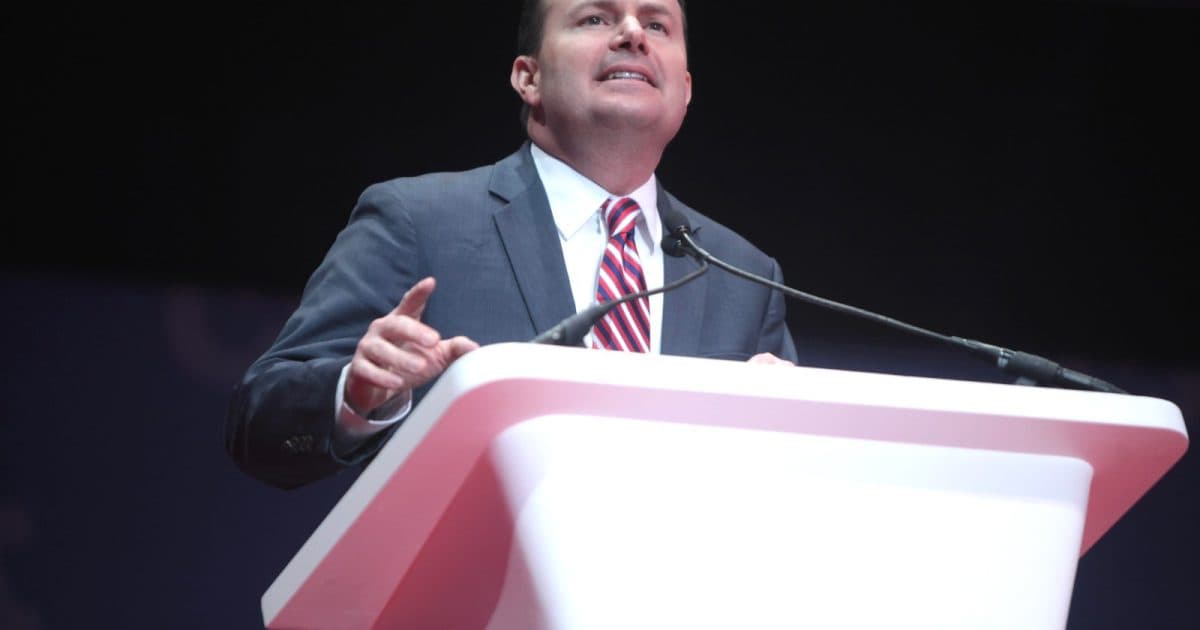
Sen. Mike Lee Urges President Trump To Use RARE Constitutional Power To Pass The SAVE America Act
Sen. Mike Lee isn’t messing around. While most of Congress was off enjoying their spring recess — some reportedly spotted at casinos and resorts — the Utah Republican was making the case that President Trump should dust off one of the most rarely used powers in the entire Constitution. The goal? Force lawmakers back to Washington to fund the Department of Homeland Security and pass the SAVE America Act, the landmark election integrity bill that would require proof of citizenship to vote in federal elections. And honestly, it’s hard to argue with the logic. Lee took to X to lay out his case, and he didn’t hold back: Waiting for a deal to materialize with Chuck Schumer applies no pressure on Senate Democrats to fund DHS Interrupting their recess and forcing them to debate DHS funding on the Senate floor *would* apply pressure We can’t reward unprecedented obstruction with two-week recesses — Mike Lee (@BasedMikeLee) March 29, 2026 He’s right. Sitting around waiting for Chuck Schumer to come to the table has produced exactly nothing. The DHS shutdown stretched on for weeks — the longest single-agency shutdown in American history — while 260,000 federal employees went without paychecks. And yet Congress went home anyway. So what’s this “rare constitutional power” Lee is talking about? It comes from Article II, Section 3 of the Constitution. The exact text says the President “may, on extraordinary Occasions, convene both Houses, or either of them.” It’s one of those powers the Founders built into the system as a kind of emergency lever — a way for the President to pull Congress back to work when the situation demands it. Lee made the constitutional case directly: President Trump has the power to convene the Senate under Article II, Section 3 of the Constitution “on extraordinary Occasions.” If a department with 260,000 employees (DHS) going unfunded isn’t an “extraordinary occasion”—especially while the Senate is out on a two-week recess… https://t.co/V5fuUy4v0w — Mike Lee (@BasedMikeLee) March 30, 2026 It’s a fair point. If a quarter of a million DHS employees going without pay while the border remains a top national concern doesn’t qualify as “extraordinary,” what exactly does? Here’s what makes this so interesting from a historical standpoint. This power has barely been used in the modern era. The last time a President convened Congress in a special session was way back in 1948, when Harry Truman called what became known as the “Turnip Day Session.” Truman, facing a Republican-controlled Congress that had adjourned for the year, used his nomination acceptance speech to call both houses back to Washington. He challenged them to live up to their own party platform on civil rights, Social Security, and healthcare. The nickname came from an old Missouri saying: “On the twenty-sixth of July, sow your turnips, wet or dry.” Truman picked July 26th to make his point. The session itself only lasted about eleven days, and Congress didn’t accomplish much — the Republican leadership essentially blocked everything. But the political move was brilliant. Truman used it to paint Congress as a do-nothing body, and he rode that message all the way to a come-from-behind victory in the 1948 election. Before Truman, presidents had used the power about 27 times going all the way back to John Adams in 1797. But since 1948? Not once. That’s nearly 80 years. Fox News had more details on Lee’s push: Lee, a sponsor of the SAVE Act, argued that requiring proof of citizenship to vote is a vital enough reason for lawmakers to cut their vacation short and get back to work. The constitutional power in question would allow the president to convene one or both chambers of Congress in extraordinary circumstances — a power that has rarely been exercised in American history. “It was made a possibility back in 1787 when they wrote Article II, Section 3 of the Constitution, which gives him this power in extraordinary occasions,” Lee said. “This would give us a chance to get back and get DHS funded, and I hope, next, turn to the SAVE America Act.” Lee has been one of the loudest voices in the Senate pushing for the SAVE America Act. The bill, which he co-sponsored alongside Rep. Chip Roy, would require Americans to show documentary proof of citizenship when registering to vote — things like a birth certificate, U.S. passport, or naturalization certificate. It would also require a photo ID at the time of voting. The House already passed the bill back in February. But the Senate hit a wall. Democrats used the filibuster to block it, meaning Republicans would need 60 votes to move forward — and they don’t have the numbers. That’s part of what makes Lee’s strategy here so compelling. If Trump were to invoke Article II, Section 3 and force the Senate back into session, the pressure to actually hold a vote — on camera, on the record — would be enormous. Senators would have to go on record either supporting or opposing proof-of-citizenship requirements for voting. Deseret News reported on the broader context: The Department of Homeland Security has been closed since February 14, 2026 — the longest shutdown for a single government agency in U.S. history. Both the House and Senate adjourned for a two-week recess without resolving the funding impasse. The DHS shutdown has left approximately 260,000 employees without paychecks. Lee called the situation “insane” and urged lawmakers to return immediately. He emphasized this is the Senate’s second recess since the shutdown began. Two recesses during a shutdown. Let that sink in. Now, there are some who argue there’s a procedural wrinkle that could complicate things. Because Congress has been holding brief “pro forma” sessions every three days, some legal experts say they technically never fully adjourned — which could make it harder for the President to formally convene them. But that feels more like a technicality designed to avoid accountability than a real constitutional argument. President Trump himself said the option was “under consideration,” telling the New York Post he was open to using the power. And Lee made it clear he wasn’t just talking about DHS funding — he wanted the SAVE America Act on the floor too. He later doubled down on the constitutional argument: Article II, Section 3 of the Constitution gives President Trump authority to convene Congress on “extraordinary occasions.” With drone incursions and bombs at American military bases and an ongoing conflict with Iran, this is just such an occasion. pic.twitter.com/PdSjUuHieh — Mike Lee (@SenMikeLee) April 4, 2026 Whether Trump ultimately pulls the trigger on this or not, Lee’s push has done something important. It’s put the spotlight on a constitutional tool that most Americans didn’t even know existed — and reminded Congress that the Founders built in a mechanism for exactly this kind of situation. When 260,000 Americans aren’t getting paid, when the border agency is running on fumes, and when a critical election integrity bill is being blocked by procedural games — yeah, that sounds like an “extraordinary occasion” to most people.
Sen. Mike Lee Urges President Trump To Use RARE Constitutional Power To Pass The SAVE America Act
Sen. Mike Lee isn’t messing around. While most of Congress was off enjoying their spring recess — some reportedly spotted at casinos and resorts — the Utah Republican was making the case that President Trump should dust off one of the most rarely used powers in the entire Constitution. The goal? Force lawmakers back to Washington to fund the Department of Homeland Security and pass the SAVE America Act, the landmark election integrity bill that would require proof of citizenship to vote in federal elections. And honestly, it’s hard to argue with the logic. Lee took to X to lay out his case, and he didn’t hold back: Waiting for a deal to materialize with Chuck Schumer applies no pressure on Senate Democrats to fund DHS Interrupting their recess and forcing them to debate DHS funding on the Senate floor *would* apply pressure We can’t reward unprecedented obstruction with two-week recesses — Mike Lee (@BasedMikeLee) March 29, 2026 He’s right. Sitting around waiting for Chuck Schumer to come to the table has produced exactly nothing. The DHS shutdown stretched on for weeks — the longest single-agency shutdown in American history — while 260,000 federal employees went without paychecks. And yet Congress went home anyway. So what’s this “rare constitutional power” Lee is talking about? It comes from Article II, Section 3 of the Constitution. The exact text says the President “may, on extraordinary Occasions, convene both Houses, or either of them.” It’s one of those powers the Founders built into the system as a kind of emergency lever — a way for the President to pull Congress back to work when the situation demands it. Lee made the constitutional case directly: President Trump has the power to convene the Senate under Article II, Section 3 of the Constitution “on extraordinary Occasions.” If a department with 260,000 employees (DHS) going unfunded isn’t an “extraordinary occasion”—especially while the Senate is out on a two-week recess… https://t.co/V5fuUy4v0w — Mike Lee (@BasedMikeLee) March 30, 2026 It’s a fair point. If a quarter of a million DHS employees going without pay while the border remains a top national concern doesn’t qualify as “extraordinary,” what exactly does? Here’s what makes this so interesting from a historical standpoint. This power has barely been used in the modern era. The last time a President convened Congress in a special session was way back in 1948, when Harry Truman called what became known as the “Turnip Day Session.” Truman, facing a Republican-controlled Congress that had adjourned for the year, used his nomination acceptance speech to call both houses back to Washington. He challenged them to live up to their own party platform on civil rights, Social Security, and healthcare. The nickname came from an old Missouri saying: “On the twenty-sixth of July, sow your turnips, wet or dry.” Truman picked July 26th to make his point. The session itself only lasted about eleven days, and Congress didn’t accomplish much — the Republican leadership essentially blocked everything. But the political move was brilliant. Truman used it to paint Congress as a do-nothing body, and he rode that message all the way to a come-from-behind victory in the 1948 election. Before Truman, presidents had used the power about 27 times going all the way back to John Adams in 1797. But since 1948? Not once. That’s nearly 80 years. Fox News had more details on Lee’s push: Lee, a sponsor of the SAVE Act, argued that requiring proof of citizenship to vote is a vital enough reason for lawmakers to cut their vacation short and get back to work. The constitutional power in question would allow the president to convene one or both chambers of Congress in extraordinary circumstances — a power that has rarely been exercised in American history. “It was made a possibility back in 1787 when they wrote Article II, Section 3 of the Constitution, which gives him this power in extraordinary occasions,” Lee said. “This would give us a chance to get back and get DHS funded, and I hope, next, turn to the SAVE America Act.” Lee has been one of the loudest voices in the Senate pushing for the SAVE America Act. The bill, which he co-sponsored alongside Rep. Chip Roy, would require Americans to show documentary proof of citizenship when registering to vote — things like a birth certificate, U.S. passport, or naturalization certificate. It would also require a photo ID at the time of voting. The House already passed the bill back in February. But the Senate hit a wall. Democrats used the filibuster to block it, meaning Republicans would need 60 votes to move forward — and they don’t have the numbers. That’s part of what makes Lee’s strategy here so compelling. If Trump were to invoke Article II, Section 3 and force the Senate back into session, the pressure to actually hold a vote — on camera, on the record — would be enormous. Senators would have to go on record either supporting or opposing proof-of-citizenship requirements for voting. Deseret News reported on the broader context: The Department of Homeland Security has been closed since February 14, 2026 — the longest shutdown for a single government agency in U.S. history. Both the House and Senate adjourned for a two-week recess without resolving the funding impasse. The DHS shutdown has left approximately 260,000 employees without paychecks. Lee called the situation “insane” and urged lawmakers to return immediately. He emphasized this is the Senate’s second recess since the shutdown began. Two recesses during a shutdown. Let that sink in. Now, there are some who argue there’s a procedural wrinkle that could complicate things. Because Congress has been holding brief “pro forma” sessions every three days, some legal experts say they technically never fully adjourned — which could make it harder for the President to formally convene them. But that feels more like a technicality designed to avoid accountability than a real constitutional argument. President Trump himself said the option was “under consideration,” telling the New York Post he was open to using the power. And Lee made it clear he wasn’t just talking about DHS funding — he wanted the SAVE America Act on the floor too. He later doubled down on the constitutional argument: Article II, Section 3 of the Constitution gives President Trump authority to convene Congress on “extraordinary occasions.” With drone incursions and bombs at American military bases and an ongoing conflict with Iran, this is just such an occasion. pic.twitter.com/PdSjUuHieh — Mike Lee (@SenMikeLee) April 4, 2026 Whether Trump ultimately pulls the trigger on this or not, Lee’s push has done something important. It’s put the spotlight on a constitutional tool that most Americans didn’t even know existed — and reminded Congress that the Founders built in a mechanism for exactly this kind of situation. When 260,000 Americans aren’t getting paid, when the border agency is running on fumes, and when a critical election integrity bill is being blocked by procedural games — yeah, that sounds like an “extraordinary occasion” to most people.

U.S. Senate Votes On Resolution To Limit Trump’s War Powers In Iran, Here Was The Results
The U.S. Senate gathered on Tuesday afternoon to vote on a resolution that attempted to limit President Trump’s war powers in Iran. The resolution aimed to prevent President Trump from issuing any further airstrikes on Iran without Congress’s approval. Ultimately, the Senate voted against the bill, 52-47. NBC News reported more on the vote and which Republicans and Democrats voted against party lines: Senate Republicans voted down a resolution Wednesday pushed by Democrats to prohibit President Donald Trump from taking further military action in Iran. The vote was 47-52, largely along party lines. Once again, Sen. Rand Paul, R-Ky., was the only Republican to vote for the measure and Sen. John Fetterman, D-Pa., was the only Democrat or independent to vote against it. (Sen. Jim Justice, R-W.Va., missed the vote.) It was the latest instance of Republicans rejecting attempts to end the war or rein in Trump’s authority to act without congressional approval. While Trump has said for weeks he wants the war to wrap up soon, there is no clear end in sight. The measure, offered by Sen. Tammy Duckworth, D-Ill., says: “Congress hereby directs the President to remove the United States Armed Forces from hostilities within or against Iran, unless explicitly authorized by a declaration of war or a specific authorization for use of military force.” Despite the vote, some Republicans have indicated they will be less deferential to Trump once the war hits 60 days, which will come at the end of April. The War Powers Resolution of 1973 requires presidents to get congressional approval for military action that goes beyond 60 days. “We’ve got to start answering questions,” Sen. Thom Tillis, R-N.C. “The 60-day target is what I’m looking at.” Sen. John Curtis, R-Utah, who is usually a reliable vote for Trump’s agenda, wrote in his local paper, the Deseret News: “I will not support ongoing military action beyond a 60-day window without congressional approval. I take this position for two reasons — one is historical, and one is constitutional.” Here was Senator Corey Booker advocating for the resolution before it was voted down: Senate Democrats will continue to force debate. We will continue to call on Republicans to hold Donald Trump accountable.@SenBooker on the Iran War Powers Resolution. pic.twitter.com/r7p6REV82p — Senate Democrats (@SenateDems) April 15, 2026 CNN reported the White House is hopeful about a potential peace deal with Iran: The Trump administration feels “good about prospects of a deal” with Iran, the White House said Wednesday, while noting that Pakistan would be the likely location of a potential second round of in-person talks. And in an interview that aired earlier today, US President Donald Trump told Fox Business’ Maria Bartiromo that he sees the war with Iran as “very close to over.” Pakistani Field Marshal Asim Munir, the key interlocutor between the US and Iran, arrived in Tehran on Wednesday for meetings with Iranian diplomats. Iranian Foreign Minister Abbas Araghchi said Tehran remains committed to promoting peace and stability in the region after the meeting. And press secretary Karoline Leavitt told reporters that any US delegation would likely be returning to Islamabad, where Vice President JD Vance led last weekend’s talks with the Iranians.
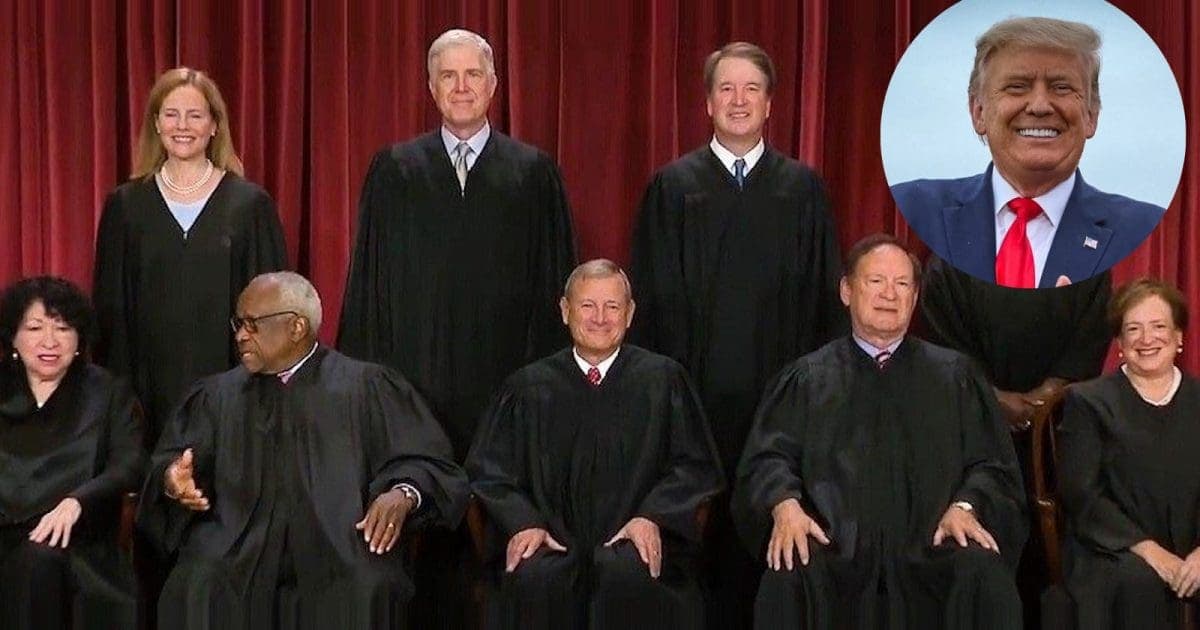
President Trump Says He Has Multi-Pick Supreme Court Plan Ready As Justice Eyes Retirement
Things are heating up at the Supreme Court. And no, we’re not talking about a big ruling. We’re talking about what could be one of the biggest political moves of the year — a retirement that would give President Trump a chance to reshape the highest court in the land yet again. Retirement speculation has been building for weeks now, and President Trump just went on the record saying he’s ready. He told Fox Business he could be looking at “two, could be three, could be one” new Supreme Court picks. That’s a massive statement. And the Senate is already gearing up to move fast if a seat opens. Here’s the latest from Off The Press: Senate GOP ready to rush Alito replacement before midterms https://t.co/XLdXcWRGU1 — Off The Press (@OffThePress1) April 14, 2026 Fox News had the details on Trump’s readiness: President Trump told Fox Business’ Maria Bartiromo that he is “prepared” to appoint up to three Supreme Court justices if vacancies arise during his term. “In theory, it’s two — you just read the statistics — it could be two, could be three, could be one,” Trump said. The focus of retirement speculation centers on Justice Samuel Alito, 76, who has served nearly two decades on the bench. Rumors intensified after he was treated for dehydration at a Federalist Society dinner last month. A Supreme Court spokesperson confirmed he was “thoroughly checked” and returned to work the following Monday. No president since Ronald Reagan has influenced the Supreme Court more than Trump, who appointed three justices during his first term, creating the current 6-3 conservative majority. Three justices in one term was already historic. Adding even one more would cement a conservative majority for an entire generation. Prediction markets currently have the odds of a retirement announcement before year’s end at just over 50%, according to both Kalshi and Polymarket. And with Alito’s upcoming book — So Ordered: An Originalist’s View of the Constitution, the Court, and Our Country — set to drop in October, the speculation is only growing. Mollie Hemingway weighed in on what she called one of the most consequential justices the Court has ever had: Today would be a great day to order ALITO, my new book on one of the most consequential justices our Supreme Court has had. Comes out in just a few days. pic.twitter.com/tWo4oXVZ8u — Mollie (@MZHemingway) April 12, 2026 So who would replace him? The names being floated are big ones. Newsweek reported on who the Senate’s top picks might be: Senate Judiciary Chairman Chuck Grassley recommended either Senator Ted Cruz of Texas or Senator Mike Lee of Utah as potential replacements if a vacancy opens up. “I hope he doesn’t retire \u2026 but if he does retire, I’m going to suggest that either Lee or Cruz be put on the Supreme Court,” Grassley said. Cruz was a firm no, telling reporters he was a “hell no” on a high court seat for himself. “I want to be right in the middle of fighting for 32 million Texans,” Cruz said, adding that Mike Lee “would be a phenomenal Supreme Court justice.” Lee, on the other hand, didn’t rule it out — saying it’s “a bridge I would have to cross, if and when it arrived.” Other names circulating in legal circles include appellate Judge James Ho, Judge Aileen Cannon, and Judge Andrew Oldham of the Fifth Circuit — a former Alito clerk. Meanwhile, Senate Majority Leader John Thune made it clear that Republicans would move fast — confirming any nominee before the November midterm elections. President Trump echoed the urgency in a recent interview, making it clear he’s not going to be caught off guard: El presidente Donald Trump deja claro que está totalmente preparado para nombrar reemplazos a los jueces conservadores Samuel Alito y Clarence Thomas si deciden jubilarse: “Podrían ser dos, podrían ser tres, podría ser uno. No lo sé… ¡pero estoy listo para hacerlo!” Y advierte… https://t.co/5xYGI08R6L pic.twitter.com/RancuTwCzA — Jhonf Fonseca (@Jhonffonseca) April 15, 2026 The clock is ticking. Republicans know they may not hold the Senate after November. And President Trump has already shown he knows how to pick ’em.
U.S. Senate Votes On Resolution To Limit Trump’s War Powers In Iran, Here Was The Results
The U.S. Senate gathered on Tuesday afternoon to vote on a resolution that attempted to limit President Trump’s war powers in Iran. The resolution aimed to prevent President Trump from issuing any further airstrikes on Iran without Congress’s approval. Ultimately, the Senate voted against the bill, 52-47. NBC News reported more on the vote and which Republicans and Democrats voted against party lines: Senate Republicans voted down a resolution Wednesday pushed by Democrats to prohibit President Donald Trump from taking further military action in Iran. The vote was 47-52, largely along party lines. Once again, Sen. Rand Paul, R-Ky., was the only Republican to vote for the measure and Sen. John Fetterman, D-Pa., was the only Democrat or independent to vote against it. (Sen. Jim Justice, R-W.Va., missed the vote.) It was the latest instance of Republicans rejecting attempts to end the war or rein in Trump’s authority to act without congressional approval. While Trump has said for weeks he wants the war to wrap up soon, there is no clear end in sight. The measure, offered by Sen. Tammy Duckworth, D-Ill., says: “Congress hereby directs the President to remove the United States Armed Forces from hostilities within or against Iran, unless explicitly authorized by a declaration of war or a specific authorization for use of military force.” Despite the vote, some Republicans have indicated they will be less deferential to Trump once the war hits 60 days, which will come at the end of April. The War Powers Resolution of 1973 requires presidents to get congressional approval for military action that goes beyond 60 days. “We’ve got to start answering questions,” Sen. Thom Tillis, R-N.C. “The 60-day target is what I’m looking at.” Sen. John Curtis, R-Utah, who is usually a reliable vote for Trump’s agenda, wrote in his local paper, the Deseret News: “I will not support ongoing military action beyond a 60-day window without congressional approval. I take this position for two reasons — one is historical, and one is constitutional.” Here was Senator Corey Booker advocating for the resolution before it was voted down: Senate Democrats will continue to force debate. We will continue to call on Republicans to hold Donald Trump accountable.@SenBooker on the Iran War Powers Resolution. pic.twitter.com/r7p6REV82p — Senate Democrats (@SenateDems) April 15, 2026 CNN reported the White House is hopeful about a potential peace deal with Iran: The Trump administration feels “good about prospects of a deal” with Iran, the White House said Wednesday, while noting that Pakistan would be the likely location of a potential second round of in-person talks. And in an interview that aired earlier today, US President Donald Trump told Fox Business’ Maria Bartiromo that he sees the war with Iran as “very close to over.” Pakistani Field Marshal Asim Munir, the key interlocutor between the US and Iran, arrived in Tehran on Wednesday for meetings with Iranian diplomats. Iranian Foreign Minister Abbas Araghchi said Tehran remains committed to promoting peace and stability in the region after the meeting. And press secretary Karoline Leavitt told reporters that any US delegation would likely be returning to Islamabad, where Vice President JD Vance led last weekend’s talks with the Iranians.
President Trump Says He Has Multi-Pick Supreme Court Plan Ready As Justice Eyes Retirement
Things are heating up at the Supreme Court. And no, we’re not talking about a big ruling. We’re talking about what could be one of the biggest political moves of the year — a retirement that would give President Trump a chance to reshape the highest court in the land yet again. Retirement speculation has been building for weeks now, and President Trump just went on the record saying he’s ready. He told Fox Business he could be looking at “two, could be three, could be one” new Supreme Court picks. That’s a massive statement. And the Senate is already gearing up to move fast if a seat opens. Here’s the latest from Off The Press: Senate GOP ready to rush Alito replacement before midterms https://t.co/XLdXcWRGU1 — Off The Press (@OffThePress1) April 14, 2026 Fox News had the details on Trump’s readiness: President Trump told Fox Business’ Maria Bartiromo that he is “prepared” to appoint up to three Supreme Court justices if vacancies arise during his term. “In theory, it’s two — you just read the statistics — it could be two, could be three, could be one,” Trump said. The focus of retirement speculation centers on Justice Samuel Alito, 76, who has served nearly two decades on the bench. Rumors intensified after he was treated for dehydration at a Federalist Society dinner last month. A Supreme Court spokesperson confirmed he was “thoroughly checked” and returned to work the following Monday. No president since Ronald Reagan has influenced the Supreme Court more than Trump, who appointed three justices during his first term, creating the current 6-3 conservative majority. Three justices in one term was already historic. Adding even one more would cement a conservative majority for an entire generation. Prediction markets currently have the odds of a retirement announcement before year’s end at just over 50%, according to both Kalshi and Polymarket. And with Alito’s upcoming book — So Ordered: An Originalist’s View of the Constitution, the Court, and Our Country — set to drop in October, the speculation is only growing. Mollie Hemingway weighed in on what she called one of the most consequential justices the Court has ever had: Today would be a great day to order ALITO, my new book on one of the most consequential justices our Supreme Court has had. Comes out in just a few days. pic.twitter.com/tWo4oXVZ8u — Mollie (@MZHemingway) April 12, 2026 So who would replace him? The names being floated are big ones. Newsweek reported on who the Senate’s top picks might be: Senate Judiciary Chairman Chuck Grassley recommended either Senator Ted Cruz of Texas or Senator Mike Lee of Utah as potential replacements if a vacancy opens up. “I hope he doesn’t retire \u2026 but if he does retire, I’m going to suggest that either Lee or Cruz be put on the Supreme Court,” Grassley said. Cruz was a firm no, telling reporters he was a “hell no” on a high court seat for himself. “I want to be right in the middle of fighting for 32 million Texans,” Cruz said, adding that Mike Lee “would be a phenomenal Supreme Court justice.” Lee, on the other hand, didn’t rule it out — saying it’s “a bridge I would have to cross, if and when it arrived.” Other names circulating in legal circles include appellate Judge James Ho, Judge Aileen Cannon, and Judge Andrew Oldham of the Fifth Circuit — a former Alito clerk. Meanwhile, Senate Majority Leader John Thune made it clear that Republicans would move fast — confirming any nominee before the November midterm elections. President Trump echoed the urgency in a recent interview, making it clear he’s not going to be caught off guard: El presidente Donald Trump deja claro que está totalmente preparado para nombrar reemplazos a los jueces conservadores Samuel Alito y Clarence Thomas si deciden jubilarse: “Podrían ser dos, podrían ser tres, podría ser uno. No lo sé… ¡pero estoy listo para hacerlo!” Y advierte… https://t.co/5xYGI08R6L pic.twitter.com/RancuTwCzA — Jhonf Fonseca (@Jhonffonseca) April 15, 2026 The clock is ticking. Republicans know they may not hold the Senate after November. And President Trump has already shown he knows how to pick ’em.
U.S. Senate Votes On Resolution To Limit Trump’s War Powers In Iran, Here Was The Results
The U.S. Senate gathered on Tuesday afternoon to vote on a resolution that attempted to limit President Trump’s war powers in Iran. The resolution aimed to prevent President Trump from issuing any further airstrikes on Iran without Congress’s approval. Ultimately, the Senate voted against the bill, 52-47. NBC News reported more on the vote and which Republicans and Democrats voted against party lines: Senate Republicans voted down a resolution Wednesday pushed by Democrats to prohibit President Donald Trump from taking further military action in Iran. The vote was 47-52, largely along party lines. Once again, Sen. Rand Paul, R-Ky., was the only Republican to vote for the measure and Sen. John Fetterman, D-Pa., was the only Democrat or independent to vote against it. (Sen. Jim Justice, R-W.Va., missed the vote.) It was the latest instance of Republicans rejecting attempts to end the war or rein in Trump’s authority to act without congressional approval. While Trump has said for weeks he wants the war to wrap up soon, there is no clear end in sight. The measure, offered by Sen. Tammy Duckworth, D-Ill., says: “Congress hereby directs the President to remove the United States Armed Forces from hostilities within or against Iran, unless explicitly authorized by a declaration of war or a specific authorization for use of military force.” Despite the vote, some Republicans have indicated they will be less deferential to Trump once the war hits 60 days, which will come at the end of April. The War Powers Resolution of 1973 requires presidents to get congressional approval for military action that goes beyond 60 days. “We’ve got to start answering questions,” Sen. Thom Tillis, R-N.C. “The 60-day target is what I’m looking at.” Sen. John Curtis, R-Utah, who is usually a reliable vote for Trump’s agenda, wrote in his local paper, the Deseret News: “I will not support ongoing military action beyond a 60-day window without congressional approval. I take this position for two reasons — one is historical, and one is constitutional.” Here was Senator Corey Booker advocating for the resolution before it was voted down: Senate Democrats will continue to force debate. We will continue to call on Republicans to hold Donald Trump accountable.@SenBooker on the Iran War Powers Resolution. pic.twitter.com/r7p6REV82p — Senate Democrats (@SenateDems) April 15, 2026 CNN reported the White House is hopeful about a potential peace deal with Iran: The Trump administration feels “good about prospects of a deal” with Iran, the White House said Wednesday, while noting that Pakistan would be the likely location of a potential second round of in-person talks. And in an interview that aired earlier today, US President Donald Trump told Fox Business’ Maria Bartiromo that he sees the war with Iran as “very close to over.” Pakistani Field Marshal Asim Munir, the key interlocutor between the US and Iran, arrived in Tehran on Wednesday for meetings with Iranian diplomats. Iranian Foreign Minister Abbas Araghchi said Tehran remains committed to promoting peace and stability in the region after the meeting. And press secretary Karoline Leavitt told reporters that any US delegation would likely be returning to Islamabad, where Vice President JD Vance led last weekend’s talks with the Iranians.
President Trump Says He Has Multi-Pick Supreme Court Plan Ready As Justice Eyes Retirement
Things are heating up at the Supreme Court. And no, we’re not talking about a big ruling. We’re talking about what could be one of the biggest political moves of the year — a retirement that would give President Trump a chance to reshape the highest court in the land yet again. Retirement speculation has been building for weeks now, and President Trump just went on the record saying he’s ready. He told Fox Business he could be looking at “two, could be three, could be one” new Supreme Court picks. That’s a massive statement. And the Senate is already gearing up to move fast if a seat opens. Here’s the latest from Off The Press: Senate GOP ready to rush Alito replacement before midterms https://t.co/XLdXcWRGU1 — Off The Press (@OffThePress1) April 14, 2026 Fox News had the details on Trump’s readiness: President Trump told Fox Business’ Maria Bartiromo that he is “prepared” to appoint up to three Supreme Court justices if vacancies arise during his term. “In theory, it’s two — you just read the statistics — it could be two, could be three, could be one,” Trump said. The focus of retirement speculation centers on Justice Samuel Alito, 76, who has served nearly two decades on the bench. Rumors intensified after he was treated for dehydration at a Federalist Society dinner last month. A Supreme Court spokesperson confirmed he was “thoroughly checked” and returned to work the following Monday. No president since Ronald Reagan has influenced the Supreme Court more than Trump, who appointed three justices during his first term, creating the current 6-3 conservative majority. Three justices in one term was already historic. Adding even one more would cement a conservative majority for an entire generation. Prediction markets currently have the odds of a retirement announcement before year’s end at just over 50%, according to both Kalshi and Polymarket. And with Alito’s upcoming book — So Ordered: An Originalist’s View of the Constitution, the Court, and Our Country — set to drop in October, the speculation is only growing. Mollie Hemingway weighed in on what she called one of the most consequential justices the Court has ever had: Today would be a great day to order ALITO, my new book on one of the most consequential justices our Supreme Court has had. Comes out in just a few days. pic.twitter.com/tWo4oXVZ8u — Mollie (@MZHemingway) April 12, 2026 So who would replace him? The names being floated are big ones. Newsweek reported on who the Senate’s top picks might be: Senate Judiciary Chairman Chuck Grassley recommended either Senator Ted Cruz of Texas or Senator Mike Lee of Utah as potential replacements if a vacancy opens up. “I hope he doesn’t retire \u2026 but if he does retire, I’m going to suggest that either Lee or Cruz be put on the Supreme Court,” Grassley said. Cruz was a firm no, telling reporters he was a “hell no” on a high court seat for himself. “I want to be right in the middle of fighting for 32 million Texans,” Cruz said, adding that Mike Lee “would be a phenomenal Supreme Court justice.” Lee, on the other hand, didn’t rule it out — saying it’s “a bridge I would have to cross, if and when it arrived.” Other names circulating in legal circles include appellate Judge James Ho, Judge Aileen Cannon, and Judge Andrew Oldham of the Fifth Circuit — a former Alito clerk. Meanwhile, Senate Majority Leader John Thune made it clear that Republicans would move fast — confirming any nominee before the November midterm elections. President Trump echoed the urgency in a recent interview, making it clear he’s not going to be caught off guard: El presidente Donald Trump deja claro que está totalmente preparado para nombrar reemplazos a los jueces conservadores Samuel Alito y Clarence Thomas si deciden jubilarse: “Podrían ser dos, podrían ser tres, podría ser uno. No lo sé… ¡pero estoy listo para hacerlo!” Y advierte… https://t.co/5xYGI08R6L pic.twitter.com/RancuTwCzA — Jhonf Fonseca (@Jhonffonseca) April 15, 2026 The clock is ticking. Republicans know they may not hold the Senate after November. And President Trump has already shown he knows how to pick ’em.
U.S. Senate Votes On Resolution To Limit Trump’s War Powers In Iran, Here Was The Results
The U.S. Senate gathered on Tuesday afternoon to vote on a resolution that attempted to limit President Trump’s war powers in Iran. The resolution aimed to prevent President Trump from issuing any further airstrikes on Iran without Congress’s approval. Ultimately, the Senate voted against the bill, 52-47. NBC News reported more on the vote and which Republicans and Democrats voted against party lines: Senate Republicans voted down a resolution Wednesday pushed by Democrats to prohibit President Donald Trump from taking further military action in Iran. The vote was 47-52, largely along party lines. Once again, Sen. Rand Paul, R-Ky., was the only Republican to vote for the measure and Sen. John Fetterman, D-Pa., was the only Democrat or independent to vote against it. (Sen. Jim Justice, R-W.Va., missed the vote.) It was the latest instance of Republicans rejecting attempts to end the war or rein in Trump’s authority to act without congressional approval. While Trump has said for weeks he wants the war to wrap up soon, there is no clear end in sight. The measure, offered by Sen. Tammy Duckworth, D-Ill., says: “Congress hereby directs the President to remove the United States Armed Forces from hostilities within or against Iran, unless explicitly authorized by a declaration of war or a specific authorization for use of military force.” Despite the vote, some Republicans have indicated they will be less deferential to Trump once the war hits 60 days, which will come at the end of April. The War Powers Resolution of 1973 requires presidents to get congressional approval for military action that goes beyond 60 days. “We’ve got to start answering questions,” Sen. Thom Tillis, R-N.C. “The 60-day target is what I’m looking at.” Sen. John Curtis, R-Utah, who is usually a reliable vote for Trump’s agenda, wrote in his local paper, the Deseret News: “I will not support ongoing military action beyond a 60-day window without congressional approval. I take this position for two reasons — one is historical, and one is constitutional.” Here was Senator Corey Booker advocating for the resolution before it was voted down: Senate Democrats will continue to force debate. We will continue to call on Republicans to hold Donald Trump accountable.@SenBooker on the Iran War Powers Resolution. pic.twitter.com/r7p6REV82p — Senate Democrats (@SenateDems) April 15, 2026 CNN reported the White House is hopeful about a potential peace deal with Iran: The Trump administration feels “good about prospects of a deal” with Iran, the White House said Wednesday, while noting that Pakistan would be the likely location of a potential second round of in-person talks. And in an interview that aired earlier today, US President Donald Trump told Fox Business’ Maria Bartiromo that he sees the war with Iran as “very close to over.” Pakistani Field Marshal Asim Munir, the key interlocutor between the US and Iran, arrived in Tehran on Wednesday for meetings with Iranian diplomats. Iranian Foreign Minister Abbas Araghchi said Tehran remains committed to promoting peace and stability in the region after the meeting. And press secretary Karoline Leavitt told reporters that any US delegation would likely be returning to Islamabad, where Vice President JD Vance led last weekend’s talks with the Iranians.