10 stories credited to Iowa Capital Dispatch (8 on iowacapitaldispatch.com, 2 reproduced by other sites)
Latest story Sep 23, 2026 · on ChamberLight since Apr 2026
A story can appear as several articles (copies of the same piece), so counts of stories and of articles differ.
Scores for Iowa Capital Dispatch
Political lean
10 stories · 95% range 47–54 · updated Sep 25, 2026
Writing quality not enough rated stories yet: 8 of 10. How it is measured
Scores last checked Sep 25, 2026.
Stories ChamberLight collected, by month
Stories credited to Iowa Capital Dispatch, by publication date. ChamberLight collects articles that mention the officials it tracks, so this shows its own coverage of this source, not how much the source publishes.
- Stories from Iowa Capital Dispatch
- Shaded: ChamberLight collected no stories, or almost none, from any outlet (a gap in its collection, not in the outlet’s publishing)
Show as a table
| Month | Stories | All outlets |
|---|---|---|
| April 2026 | 1 | 2,577 |
| May 2026 | 0 | none collected |
| June 2026 | 0 | none collected |
| July 2026 | 0 | none collected |
| August 2026 | 0 | 1 (collection gap) |
| September 2026 | 9 | 1,320 |
Top topics
Share of this source’s stories tagged with each topic. A story can carry several topics, so the shares do not add up to 100%.
- Economy6
60% of 10 stories · 26% across all outlets
- Foreign Policy4
40% of 10 stories · 29% across all outlets
- Agriculture3
30% of 10 stories · 2% across all outlets
- Budget/Spending2
20% of 10 stories · 31% across all outlets
- Defense/Military2
20% of 10 stories · 25% across all outlets
- Ethics/Corruption2
20% of 10 stories · 58% across all outlets
- Healthcare2
20% of 10 stories · 8% across all outlets
- Criminal Justice1
10% of 10 stories · 19% across all outlets
The thin mark on each bar is the topic’s share across all outlets.
Who they cover
Party of the officials these stories are mainly about, across all 11 officials named. A story counts once for each official it is mainly about, so the split is over 17 story–official pairs, from 10 stories.
- Republican71% · 12 pairs
- Party not recorded24% · 4 pairs
- Democrat6% · 1 pair
Most covered
Stories mainly about each official, and their share of the source’s 10 stories.
- 1Ashley HinsonR3 stories · 30%
- 2Joshua Turek–3 stories · 30%
- 3Mariannette Miller-MeeksR2 stories · 20%
- 4Zachary NunnR2 stories · 20%
- 5Brendan BoyleD1 story · 10%
- 6John BarrassoR1 story · 10%
- 7John BoozmanR1 story · 10%
- 8John KennedyR1 story · 10%
- 9Mitch McConnellR1 story · 10%
- 10Russell VoughtR1 story · 10%
+ 1 other official (1 story–official pair)
Article tone
ChamberLight’s article analysis assigns each story a tone toward the official it covers. It describes the coverage of that official, not Iowa Capital Dispatch’s stance, and reader votes do not change it. 10 stories.
- Good Look
- 2 (20%)
- Mixed
- 7 (70%)
- Informational
- 1 (10%)
- Bad Look
- 0 (0%)
Related sources
Lean 95% range 48–52 · updated Sep 25, 2026
Similar lean · 2 shared topics
Lean 95% range 42.2–58.7 · updated Sep 25, 2026
Similar lean · 3 shared topics
Lean 95% range 47–54 · updated Sep 25, 2026
Similar lean · 2 shared topics
Lean 95% range 47–53 · updated Sep 25, 2026
Similar lean · 2 shared topics
Lean 95% range 47–53 · updated Sep 25, 2026
Similar lean · 2 shared topics
Lean 95% range 49–50 · updated Sep 25, 2026
Similar lean · 3 shared topics
Challenges to these scores
No one has challenged a score on this page yet. Anyone can; editors publish every outcome here.
Articles served from iowacapitaldispatch.com
13
Nunn introduces bill to suspend Trump’s beef imports, bolster US herd
U.S. Rep. Zach Nunn is calling for the suspension of President Donald Trump’s initiative allowing more foreign beef into the U.S. and for congressional oversight of future beef import decisions from the executive branch. Nunn announced a bipartisan bill Wednesday, with Democratic Rep. Gabe Vasquez of New Mexico, aimed at increasing domestic beef and lowering […]

Trone Garriott tours Epstein files ‘reading room,’ calls for Congress to act
Iowa Sen. Sarah Trone Garriott criticized Congress and the U.S. Department of Justice for not taking action to investigate the crimes of sex offender Jeffrey Epstein and related parties as she visited a “reading room” traveling exhibit on the “Epstein files.” The exhibition, hosted at The Loft DSM, is an event staged by The Institute […]

Turek says he’s ‘happy’ Iowa Republicans joined his push for diesel export pause
Democratic U.S. Senate candidate Josh Turek said Monday he was happy to see Iowa Republicans, including his opponent, Republican Ashley Hinson, join his call to take steps to lower diesel costs. Fuel costs have gone up nationwide because of the U.S. war with Iran and the closure of the Strait of Hormuz, a major trade […]
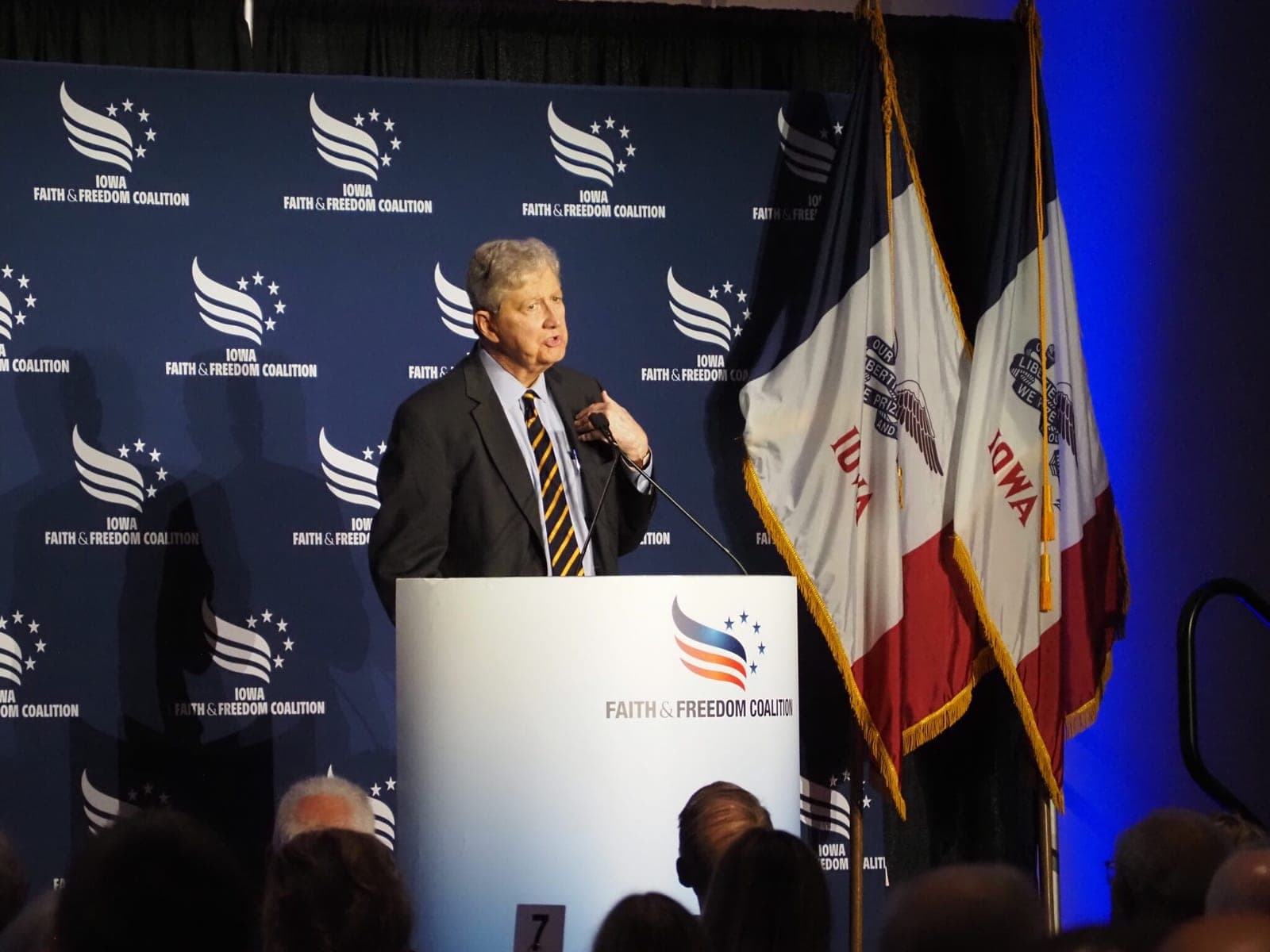
US Sen. John Kennedy, in Iowa, predicts end of Iran war in 6 months
U.S. Sen. John Kennedy of Louisiana told a crowd of Iowa conservatives Saturday he believes current high inflation is being caused by the U.S.-Iran war — but said he sees an end to the conflict within six months. Kennedy was the keynote speaker for the Iowa Faith and Freedom Coalition’s annual fall fundraiser in Des […]
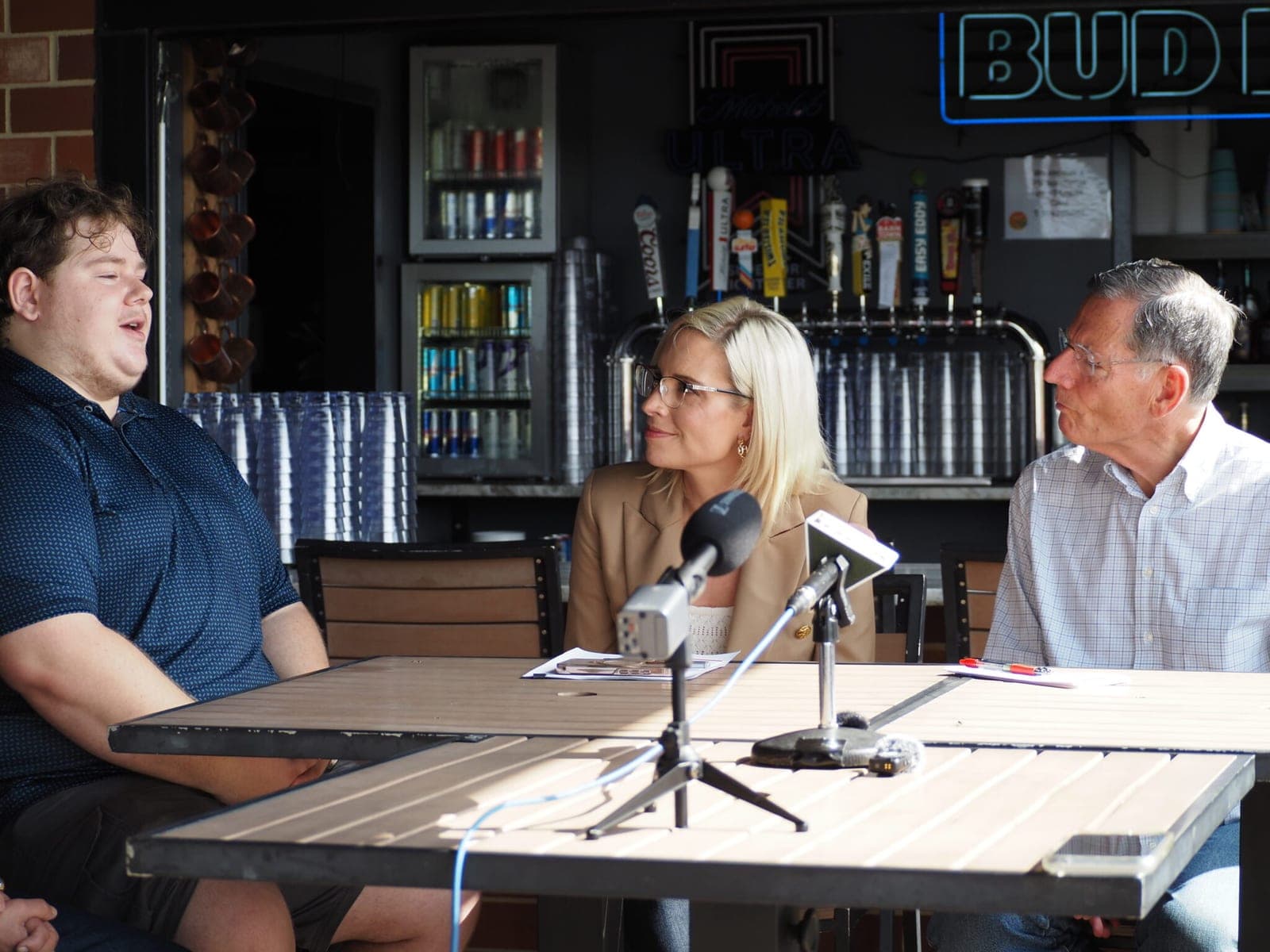
Hinson, Sen. John Barrasso of Wyoming highlight GOP tips, overtime tax cuts
ANKENY — U.S. Rep. Ashley Hinson and U.S. Sen. John Barrasso of Wyoming said Saturday that keeping Republicans in control of Congress was needed to ensure Democrats do not reverse changes made through the 2025 “One Big, Beautiful Bill” Act like tax cuts to tips and overtime. Barrasso joined Hinson, a Republican who is running […]
Hinson, Sen. John Barrasso of Wyoming highlight GOP tips, overtime tax cuts
ANKENY — U.S. Rep. Ashley Hinson and U.S. Sen. John Barrasso of Wyoming said Saturday that keeping Republicans in control of Congress was needed to ensure Democrats do not reverse changes made through the 2025 “One Big, Beautiful Bill” Act like tax cuts to tips and overtime. Barrasso joined Hinson, a Republican who is running […]

End Citizens United group hosts roundtable supporting Turek’s Senate campaign
Iowans supporting Josh Turek’s U.S. Senate campaign said at a Monday roundtable they believe the Democratic candidate would be more effective than Republican U.S. Rep. Ashley Hinson at limiting corporate influence in politics. The event, hosted by End Citizens United in Des Moines, brought in community members and advocates for Turek’s Senate campaign to speak […]
End Citizens United group hosts roundtable supporting Turek’s Senate campaign
Iowans supporting Josh Turek’s U.S. Senate campaign said at a Monday roundtable they believe the Democratic candidate would be more effective than Republican U.S. Rep. Ashley Hinson at limiting corporate influence in politics. The event, hosted by End Citizens United in Des Moines, brought in community members and advocates for Turek’s Senate campaign to speak […]
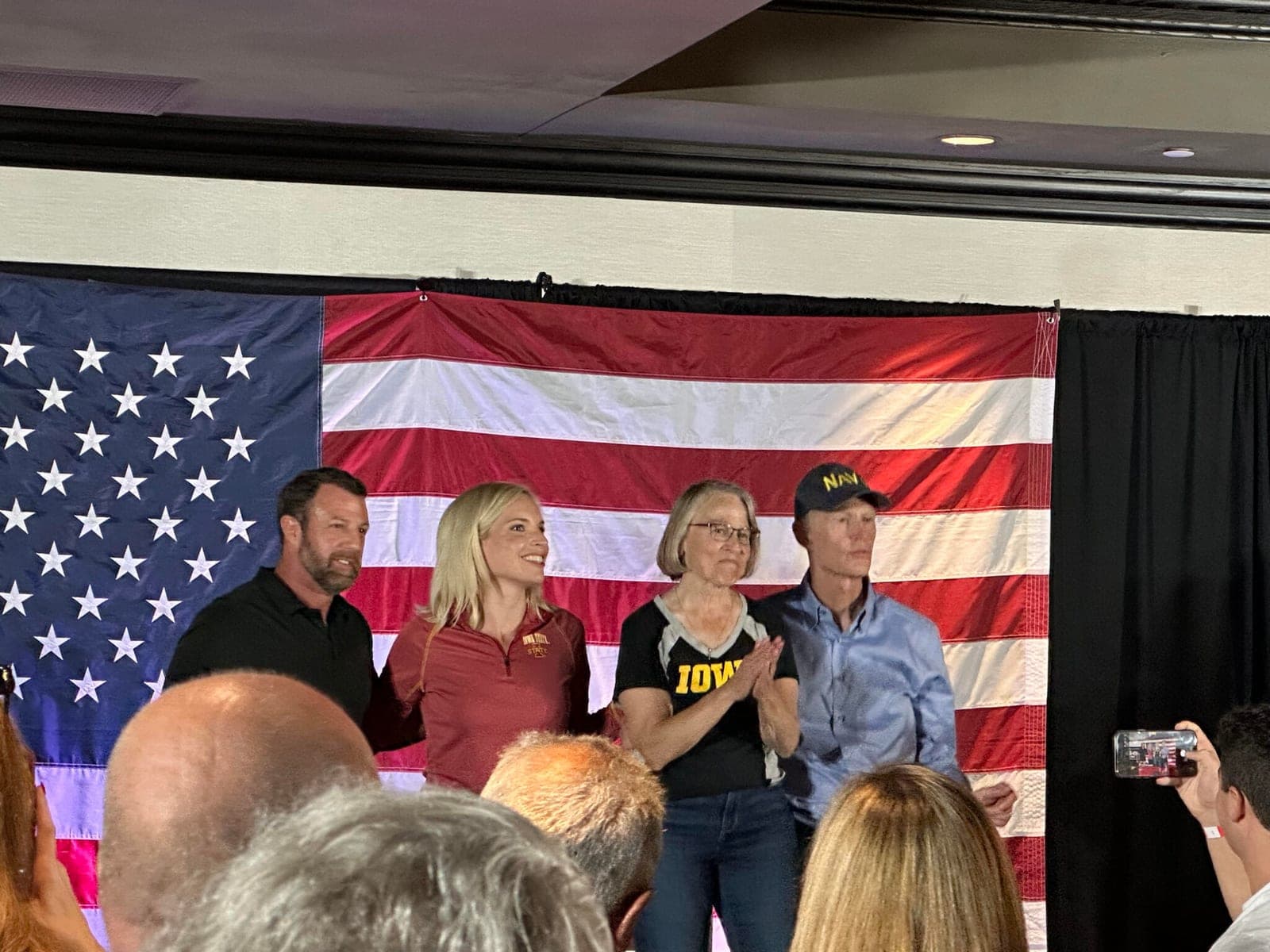
Iowa, national politicians court voters at CyHawk tailgates
IOWA CITY — Candidates vying for Iowa state and federal government positions joined football fans in Iowa City Saturday to engage with supporters before the football game between the Iowa Hawkeyes and Iowa State Cyclones. U.S. Rep. Mariannette Miller-Meeks held her annual Triple-M Tailgate with supporters and several guests, including U.S. Secretary of Homeland Security […]
Iowa, national politicians court voters at CyHawk tailgates
IOWA CITY — Candidates vying for Iowa state and federal government positions joined football fans in Iowa City Saturday to engage with supporters before the football game between the Iowa Hawkeyes and Iowa State Cyclones. U.S. Rep. Mariannette Miller-Meeks held her annual Triple-M Tailgate with supporters and several guests, including U.S. Secretary of Homeland Security […]
Iowa, national politicians court voters at CyHawk tailgates
IOWA CITY — Candidates vying for Iowa state and federal government positions joined football fans in Iowa City Saturday to engage with supporters before the football game between the Iowa Hawkeyes and Iowa State Cyclones. U.S. Rep. Mariannette Miller-Meeks held her annual Triple-M Tailgate with supporters and several guests, including U.S. Secretary of Homeland Security […]
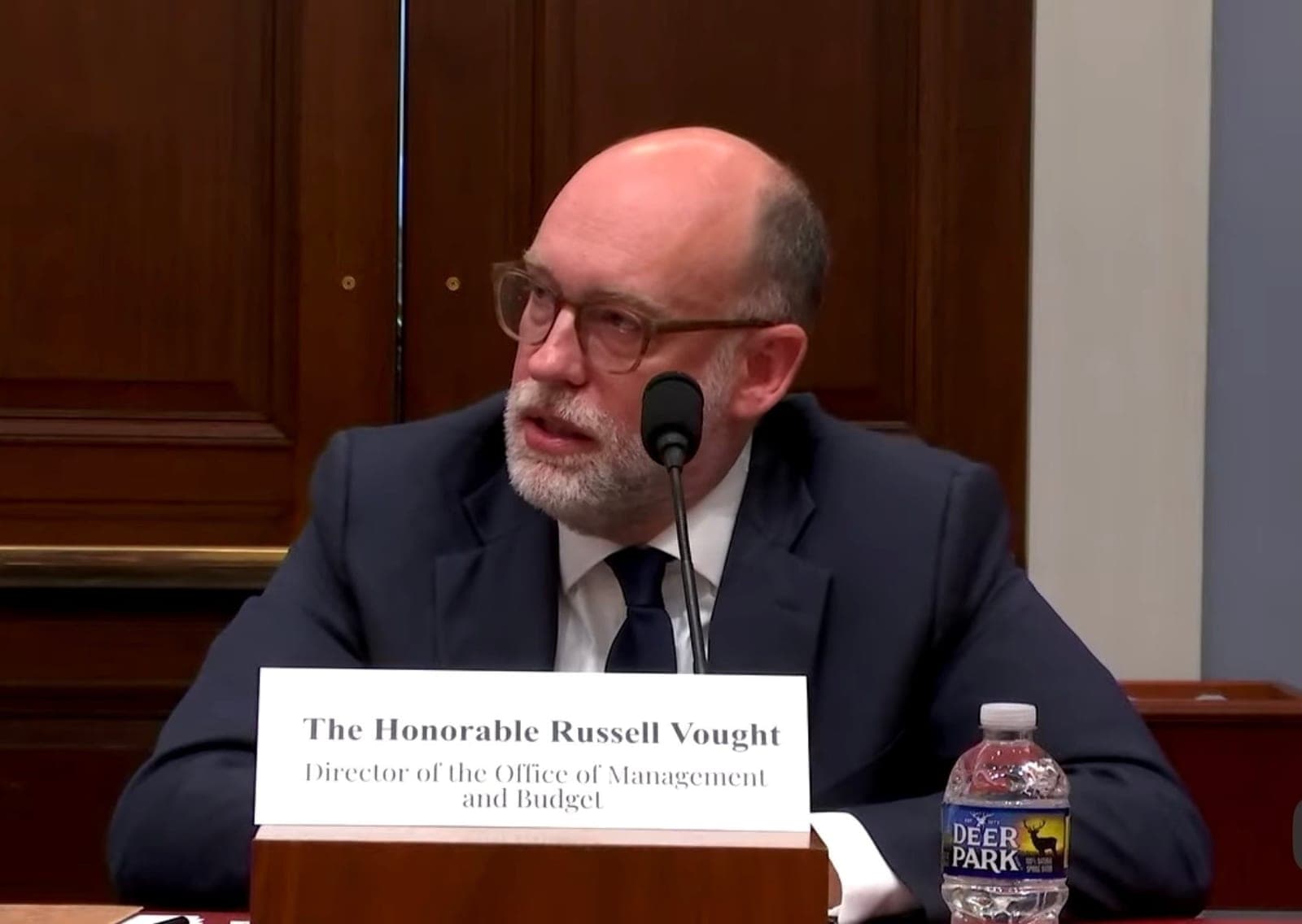
Trump’s budget director defends ‘out of whack’ defense spending boost to skeptical Dems
Office of Management and Budget Director Russ Vought testifies before the U.S. House Budget Committee on April 15, 2026. (Screenshot from committee webcast) WASHINGTON — The White House budget director on Wednesday defended the administration’s latest request for Congress, testifying before the House Budget Committee that a 43% increase in defense spending and a 10% cut to domestic programs is the best path forward. Democrats on the panel were highly critical of that proposal, which lawmakers will debate in the months ahead and is unlikely to be approved in full. Pennsylvania Democratic Rep. Brendan Boyle, ranking member on the committee, said the administration’s request to increase defense spending so significantly while not bolstering health care programs like Medicare and Medicaid or helping people pay for child care “is a reflection of priorities that are out of whack,” with what Americans truly need. Office of Management and Budget Director Russ Vought said during the three-hour hearing that the administration believes a significant boost to defense spending “is meant for significant paradigm-shifting investments.” “For instance, the president and his Department of War are exhibiting tremendous leadership to build ships, planes, drones, munitions and satellites faster without the backlog of status quo,” he said. “For the industrial base to double or triple and build more facilities, not just add shifts, it requires multi-year agreements to purchase into the future. That cost has to be booked in this first year.” Vought said the administration’s preference is that Republicans place about $1.15 trillion in the annual Defense spending bill, which will require bipartisan support to move through the Senate, and put another $350 billion in a budget reconciliation bill, which Republicans can advance on their own. He believes that will avoid Democrats demanding that each $1 increase in defense spending be matched by a $1 increase in domestic spending. “This Congress has changed the way we can spend money through the reconciliation process to avoid the pitfalls that really caused two decades of not being able to accomplish anything,” he said. “And I think you should be commended for that.” Republicans used the complex budget reconciliation process last year to enact their “big, beautiful” law and are looking to advance another reconciliation bill in the coming months that would further bolster spending on immigration enforcement activities. No numbers on Iran war spending Vought testified before the committee that he isn’t yet able to provide a ballpark estimate for how much in additional defense spending the administration plans to ask Congress to provide for the war in Iran. “We’re not ready to come to you with a request. We’re still working on it,” he said. “We’re working through to figure out what’s needed in this fiscal year versus next fiscal year.” The current fiscal year will end on Sept. 30. Both Republicans and Democrats on the committee raised concerns about what such a steep increase in defense funding would mean for a department that has consistently struggled to account for all of its spending during several audits. Washington Democratic Rep. Pramila Jayapal questioned whether the Trump administration was serious about addressing fraud in every department, given its proposal to bolster funding for the Defense Department by more than half a trillion dollars. Vought responded that the “department is making progress towards the audit.” Wisconsin Republican Rep. Glenn Grothman was even more frustrated with leadership in the Defense Department, saying that there “is so much arrogance in that agency.” “I keep holding my nose because defense is the most important thing. And they just say, ‘We don’t have to do an audit. We’re so damn important. We don’t care what Congress thinks,’” Grothman said. “I hope that they dial up this audit and have the guys work around the clock, complete an audit by July 31 or before we eventually have to pass this stuff.” Vought sought to reassure Grothman and other lawmakers on the panel that the Trump administration does want to address how DOD spends money. “The notion that we’re not trying to find any kinds of inefficiencies at the Department of Defense is not true,” Vought said. “Our view is that we would want to plow those into being able to invest in procurement and research.” What’s next The House Budget Committee won’t actually draft the dozen annual government funding bills. That is up to the Appropriations Committee, which will hold hearings with Cabinet secretaries and agency leaders in the coming weeks to hear more about the president’s budget request for the fiscal year set to begin Oct. 1. The Appropriations subcommittees will then draft and debate the spending bills that account for a fraction of the $7 trillion federal budget. A much larger chunk of annual funding, about $4.2 trillion, goes to mandatory programs, like Medicare, Medicaid and Social Security. Another $970 billion goes to interest payments on the debt. While defense spending predominantly goes to the Pentagon, with a bit going to the Energy Department for nuclear security programs, domestic spending that the administration wants to cut overall is allocated among dozens of agencies. The departments of Agriculture, Education, Health and Human Services, Homeland Security, Housing and Urban Development, Interior, Labor, Transportation, State, Veterans Affairs and numerous smaller agencies all share the total spending level for domestic programs. During fiscal year 2025, which ended last September, defense spending totaled $893 billion, while non-defense programs received $980 billion, according to the nonpartisan Congressional Budget Office.
Trump’s budget director defends ‘out of whack’ defense spending boost to skeptical Dems
Office of Management and Budget Director Russ Vought testifies before the U.S. House Budget Committee on April 15, 2026. (Screenshot from committee webcast) WASHINGTON — The White House budget director on Wednesday defended the administration’s latest request for Congress, testifying before the House Budget Committee that a 43% increase in defense spending and a 10% cut to domestic programs is the best path forward. Democrats on the panel were highly critical of that proposal, which lawmakers will debate in the months ahead and is unlikely to be approved in full. Pennsylvania Democratic Rep. Brendan Boyle, ranking member on the committee, said the administration’s request to increase defense spending so significantly while not bolstering health care programs like Medicare and Medicaid or helping people pay for child care “is a reflection of priorities that are out of whack,” with what Americans truly need. Office of Management and Budget Director Russ Vought said during the three-hour hearing that the administration believes a significant boost to defense spending “is meant for significant paradigm-shifting investments.” “For instance, the president and his Department of War are exhibiting tremendous leadership to build ships, planes, drones, munitions and satellites faster without the backlog of status quo,” he said. “For the industrial base to double or triple and build more facilities, not just add shifts, it requires multi-year agreements to purchase into the future. That cost has to be booked in this first year.” Vought said the administration’s preference is that Republicans place about $1.15 trillion in the annual Defense spending bill, which will require bipartisan support to move through the Senate, and put another $350 billion in a budget reconciliation bill, which Republicans can advance on their own. He believes that will avoid Democrats demanding that each $1 increase in defense spending be matched by a $1 increase in domestic spending. “This Congress has changed the way we can spend money through the reconciliation process to avoid the pitfalls that really caused two decades of not being able to accomplish anything,” he said. “And I think you should be commended for that.” Republicans used the complex budget reconciliation process last year to enact their “big, beautiful” law and are looking to advance another reconciliation bill in the coming months that would further bolster spending on immigration enforcement activities. No numbers on Iran war spending Vought testified before the committee that he isn’t yet able to provide a ballpark estimate for how much in additional defense spending the administration plans to ask Congress to provide for the war in Iran. “We’re not ready to come to you with a request. We’re still working on it,” he said. “We’re working through to figure out what’s needed in this fiscal year versus next fiscal year.” The current fiscal year will end on Sept. 30. Both Republicans and Democrats on the committee raised concerns about what such a steep increase in defense funding would mean for a department that has consistently struggled to account for all of its spending during several audits. Washington Democratic Rep. Pramila Jayapal questioned whether the Trump administration was serious about addressing fraud in every department, given its proposal to bolster funding for the Defense Department by more than half a trillion dollars. Vought responded that the “department is making progress towards the audit.” Wisconsin Republican Rep. Glenn Grothman was even more frustrated with leadership in the Defense Department, saying that there “is so much arrogance in that agency.” “I keep holding my nose because defense is the most important thing. And they just say, ‘We don’t have to do an audit. We’re so damn important. We don’t care what Congress thinks,’” Grothman said. “I hope that they dial up this audit and have the guys work around the clock, complete an audit by July 31 or before we eventually have to pass this stuff.” Vought sought to reassure Grothman and other lawmakers on the panel that the Trump administration does want to address how DOD spends money. “The notion that we’re not trying to find any kinds of inefficiencies at the Department of Defense is not true,” Vought said. “Our view is that we would want to plow those into being able to invest in procurement and research.” What’s next The House Budget Committee won’t actually draft the dozen annual government funding bills. That is up to the Appropriations Committee, which will hold hearings with Cabinet secretaries and agency leaders in the coming weeks to hear more about the president’s budget request for the fiscal year set to begin Oct. 1. The Appropriations subcommittees will then draft and debate the spending bills that account for a fraction of the $7 trillion federal budget. A much larger chunk of annual funding, about $4.2 trillion, goes to mandatory programs, like Medicare, Medicaid and Social Security. Another $970 billion goes to interest payments on the debt. While defense spending predominantly goes to the Pentagon, with a bit going to the Energy Department for nuclear security programs, domestic spending that the administration wants to cut overall is allocated among dozens of agencies. The departments of Agriculture, Education, Health and Human Services, Homeland Security, Housing and Urban Development, Interior, Labor, Transportation, State, Veterans Affairs and numerous smaller agencies all share the total spending level for domestic programs. During fiscal year 2025, which ended last September, defense spending totaled $893 billion, while non-defense programs received $980 billion, according to the nonpartisan Congressional Budget Office.