27 stories credited to InForum (19 on inforum.com, 8 reproduced by other sites)
Latest story Sep 22, 2026 · on ChamberLight since Apr 2026
A story can appear as several articles (copies of the same piece), so counts of stories and of articles differ.
Scores for InForum
Political lean
11 stories · 95% range 47–54 · updated Sep 25, 2026
Originality
19 stories · updated Sep 24, 2026
Writing quality 72 of 100: the average rating of 18 stories, each rated on its own (separate from credibility). How it is measured
Scores last checked Sep 25, 2026.
Stories ChamberLight collected, by month
Stories credited to InForum, by publication date. ChamberLight collects articles that mention the officials it tracks, so this shows its own coverage of this source, not how much the source publishes.
- Stories from InForum
- Shaded: ChamberLight collected no stories, or almost none, from any outlet (a gap in its collection, not in the outlet’s publishing)
Show as a table
| Month | Stories | All outlets |
|---|---|---|
| March 2026 | 18 | 814 |
| April 2026 | 8 | 4,538 |
| May 2026 | 0 | none collected |
| June 2026 | 0 | none collected |
| July 2026 | 0 | none collected |
| August 2026 | 0 | 1 (collection gap) |
| September 2026 | 1 | 1,320 |
Top topics
Share of this source’s stories tagged with each topic. A story can carry several topics, so the shares do not add up to 100%.
- Ethics/Corruption17
63% of 27 stories · 58% across all outlets
- Voting Rights11
41% of 27 stories · 19% across all outlets
- Economy9
33% of 27 stories · 26% across all outlets
- Budget/Spending8
30% of 27 stories · 31% across all outlets
- Defense/Military5
19% of 27 stories · 25% across all outlets
- Infrastructure5
19% of 27 stories · 8% across all outlets
- Criminal Justice4
15% of 27 stories · 19% across all outlets
- Technology/Privacy4
15% of 27 stories · 10% across all outlets
The thin mark on each bar is the topic’s share across all outlets.
Who they cover
Party of the officials these stories are mainly about, across all 13 officials named. A story counts once for each official it is mainly about, so the split is over 39 story–official pairs, from 27 stories.
- Republican90% · 35 pairs
- Democrat8% · 3 pairs
- Party not recorded3% · 1 pair
Most covered
Stories mainly about each official, and their share of the source’s 27 stories.
- 1Julie FedorchakR12 stories · 44%
- 2Kevin CramerR8 stories · 30%
- 3John HoevenR6 stories · 22%
- 4Amy KlobucharD2 stories · 7%
- 5Pete HegsethR2 stories · 7%
- 6Pete StauberR2 stories · 7%
- 7Donald TrumpR1 story · 4%
- 8Doug BurgumR1 story · 4%
- 9Kael Weston–1 story · 4%
- 10Kristi NoemR1 story · 4%
+ 3 other officials (3 story–official pairs)
Article tone
ChamberLight’s article analysis assigns each story a tone toward the official it covers. It describes the coverage of that official, not InForum’s stance, and reader votes do not change it. 27 stories.
- Good Look
- 13 (48%)
- Mixed
- 10 (37%)
- Informational
- 0 (0%)
- Bad Look
- 4 (15%)
Related sources
Lean 95% range 42.2–58.7 · updated Sep 25, 2026
Similar lean · 2 shared topics
Lean 95% range 47–54 · updated Sep 25, 2026
Similar lean · 1 shared topic
Lean 95% range 48–52 · updated Sep 25, 2026
Similar lean · 2 shared topics
Lean 95% range 47–53 · updated Sep 25, 2026
Similar lean · 2 shared topics
Lean 95% range 47–53 · updated Sep 25, 2026
Similar lean · 2 shared topics
Lean 95% range 49–50 · updated Sep 25, 2026
Similar lean · 3 shared topics
Challenges to these scores
No one has challenged a score on this page yet. Anyone can; editors publish every outcome here.
Articles served from inforum.com
27
Fedorchak, Scalise tour Fargo battery factory
Congresswoman Julie Fedorchak and House Majority Leader Steve Scalise toured the Badland Batteries facility in Fargo as the company prepares to begin manufacturing battery cells.
Fedorchak, Scalise tour Fargo battery factory
Congresswoman Julie Fedorchak and House Majority Leader Steve Scalise toured the Badland Batteries facility in Fargo as the company prepares to begin manufacturing battery cells.
McFeely: Republicans, including Cramer and Hoeven, sell out Boundary Waters
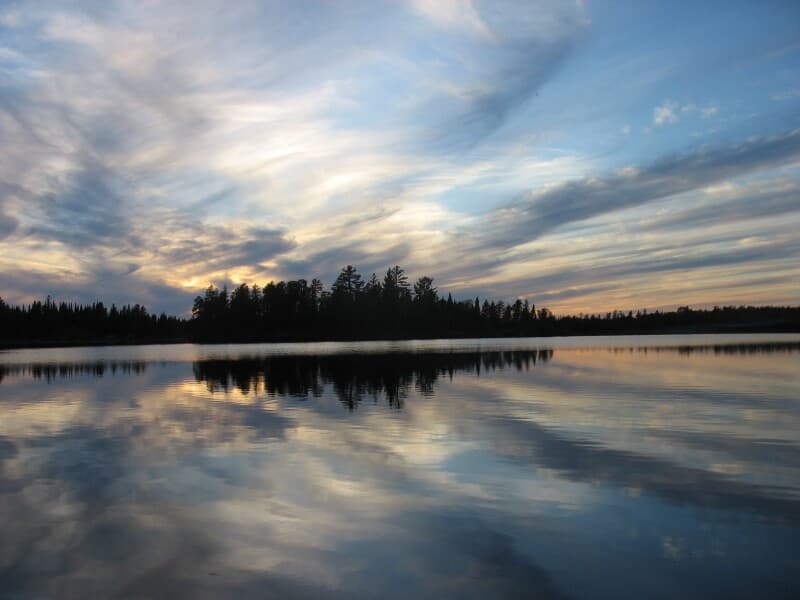
MOORHEAD — Republicans in the U.S. Senate sold out Minnesota’s spectacular Boundary Waters Canoe Area to a foreign mining company, which is not surprising but remains maddening. These Republicans included North Dakota’s Kevin Cramer and John Hoeven, which is even less surprising and more maddening because both are beholden to interests that make billions from resource extraction at any cost, including ruining one of America’s natural treasures. Some neighbors these marionettes are, answering to their overlords in Washington, Texas, Oklahoma and now Chile before constituents. The Senate voted 50-49 on Thursday, April 16, to end a ban on mining near the Boundary Waters Canoe Area Wilderness in northern Minnesota. Twin Metals Minnesota, a subsidiary of Chilean-based mining giant Antofagasta, wants to mine copper, nickel, cobalt and other minerals along Birch Lake south of Ely and within the watershed of the BWCAW. Pollution from mining would flow downstream into the BWCAW and eventually Voyageurs National Park, a pristine area of lakes, rivers and forest that is among the most untouched wilderness remaining in America. The BWCAW covers about 1.1 million acres. It is the most-visited wilderness area in the country and generates an estimated $1.1 billion in economic activity from recreation. Thousands of outdoors enthusiasts, concerned organizations, recreation-based businesses and Minnesota-based politicians (all Democrats) lobbied on behalf of the BWCAW and urged Republican senators to keep the mining ban in place to preserve one of the last great wilderness areas in the country. They refused. Rep. Pete Stauber, a Republican from northeastern Minnesota who introduced the proposal in the House of Representatives, hailed the Senate vote as a “major victory for America and Minnesota’s 8th Congressional District.” It is nothing of the sort. There is little benefit to America or Minnesota. There is great benefit, in the form of profits, to a Chilean mine company. While Stauber and his controllers promise jobs, they don’t tell you about jobs and economic activity lost by poisoning the Boundary Waters. Nor about the despoiling of a wilderness that can never recover. Republicans don’t put a price on that, because it can’t be sold for profit. And this is just the start. The BWCAW is being destroyed by a vote held through what is called the Congressional Review Act, a 1996 law that allows Congress to overturn federal agency regulations with a simple majority vote. Since it doesn’t have a 60-vote threshold, it is filibuster-proof. The poison pill in the CRA is this: The same regulation or anything similar cannot be reinstated without an act of Congress, which would require 60 votes, an almost impossible threshold in modern American politics. In other words, the Boundary Waters are out of luck. It was always the long-term plan for Republicans. “This is a very dark day for public lands. It sets the precedent that any land protection in the United States — any withdrawal, any public land order — can be retroactively reclassified as a ‘rule’ and erased by a simple majority vote. Grand Staircase-Escalante (in Utah) is next. They're already lining it up. Every protected landscape in this country just got less safe,” wrote the More Than Just Parks blog. Cramer is an ideologue who has always been brazen about killing federal regulations that protect the land, water and environment. Hoeven’s never been as open about it, but he’s weak and malleable. He’ll go along to get along. The path of least resistance. The only Republican senators who voted to keep the ban in place were Susan Collins, of Maine, and Thom Tillis, of North Carolina. So Cramer and Hoeven were not alone in their hatred of our wilderness and the environment. We, again, know where they stand, and it’s not with the American people. Not surprising. Continually maddening. Par for the course.
McFeely: Republicans, including Cramer and Hoeven, sell out Boundary Waters
MOORHEAD — Republicans in the U.S. Senate sold out Minnesota’s spectacular Boundary Waters Canoe Area to a foreign mining company, which is not surprising but remains maddening. These Republicans included North Dakota’s Kevin Cramer and John Hoeven, which is even less surprising and more maddening because both are beholden to interests that make billions from resource extraction at any cost, including ruining one of America’s natural treasures. Some neighbors these marionettes are, answering to their overlords in Washington, Texas, Oklahoma and now Chile before constituents. The Senate voted 50-49 on Thursday, April 16, to end a ban on mining near the Boundary Waters Canoe Area Wilderness in northern Minnesota. Twin Metals Minnesota, a subsidiary of Chilean-based mining giant Antofagasta, wants to mine copper, nickel, cobalt and other minerals along Birch Lake south of Ely and within the watershed of the BWCAW. Pollution from mining would flow downstream into the BWCAW and eventually Voyageurs National Park, a pristine area of lakes, rivers and forest that is among the most untouched wilderness remaining in America. The BWCAW covers about 1.1 million acres. It is the most-visited wilderness area in the country and generates an estimated $1.1 billion in economic activity from recreation. Thousands of outdoors enthusiasts, concerned organizations, recreation-based businesses and Minnesota-based politicians (all Democrats) lobbied on behalf of the BWCAW and urged Republican senators to keep the mining ban in place to preserve one of the last great wilderness areas in the country. They refused. Rep. Pete Stauber, a Republican from northeastern Minnesota who introduced the proposal in the House of Representatives, hailed the Senate vote as a “major victory for America and Minnesota’s 8th Congressional District.” It is nothing of the sort. There is little benefit to America or Minnesota. There is great benefit, in the form of profits, to a Chilean mine company. While Stauber and his controllers promise jobs, they don’t tell you about jobs and economic activity lost by poisoning the Boundary Waters. Nor about the despoiling of a wilderness that can never recover. Republicans don’t put a price on that, because it can’t be sold for profit. And this is just the start. The BWCAW is being destroyed by a vote held through what is called the Congressional Review Act, a 1996 law that allows Congress to overturn federal agency regulations with a simple majority vote. Since it doesn’t have a 60-vote threshold, it is filibuster-proof. The poison pill in the CRA is this: The same regulation or anything similar cannot be reinstated without an act of Congress, which would require 60 votes, an almost impossible threshold in modern American politics. In other words, the Boundary Waters are out of luck. It was always the long-term plan for Republicans. “This is a very dark day for public lands. It sets the precedent that any land protection in the United States — any withdrawal, any public land order — can be retroactively reclassified as a ‘rule’ and erased by a simple majority vote. Grand Staircase-Escalante (in Utah) is next. They're already lining it up. Every protected landscape in this country just got less safe,” wrote the More Than Just Parks blog. Cramer is an ideologue who has always been brazen about killing federal regulations that protect the land, water and environment. Hoeven’s never been as open about it, but he’s weak and malleable. He’ll go along to get along. The path of least resistance. The only Republican senators who voted to keep the ban in place were Susan Collins, of Maine, and Thom Tillis, of North Carolina. So Cramer and Hoeven were not alone in their hatred of our wilderness and the environment. We, again, know where they stand, and it’s not with the American people. Not surprising. Continually maddening. Par for the course.
McFeely: Republicans, including Cramer and Hoeven, sell out Boundary Waters
MOORHEAD — Republicans in the U.S. Senate sold out Minnesota’s spectacular Boundary Waters Canoe Area to a foreign mining company, which is not surprising but remains maddening. These Republicans included North Dakota’s Kevin Cramer and John Hoeven, which is even less surprising and more maddening because both are beholden to interests that make billions from resource extraction at any cost, including ruining one of America’s natural treasures. Some neighbors these marionettes are, answering to their overlords in Washington, Texas, Oklahoma and now Chile before constituents. The Senate voted 50-49 on Thursday, April 16, to end a ban on mining near the Boundary Waters Canoe Area Wilderness in northern Minnesota. Twin Metals Minnesota, a subsidiary of Chilean-based mining giant Antofagasta, wants to mine copper, nickel, cobalt and other minerals along Birch Lake south of Ely and within the watershed of the BWCAW. Pollution from mining would flow downstream into the BWCAW and eventually Voyageurs National Park, a pristine area of lakes, rivers and forest that is among the most untouched wilderness remaining in America. The BWCAW covers about 1.1 million acres. It is the most-visited wilderness area in the country and generates an estimated $1.1 billion in economic activity from recreation. Thousands of outdoors enthusiasts, concerned organizations, recreation-based businesses and Minnesota-based politicians (all Democrats) lobbied on behalf of the BWCAW and urged Republican senators to keep the mining ban in place to preserve one of the last great wilderness areas in the country. They refused. Rep. Pete Stauber, a Republican from northeastern Minnesota who introduced the proposal in the House of Representatives, hailed the Senate vote as a “major victory for America and Minnesota’s 8th Congressional District.” It is nothing of the sort. There is little benefit to America or Minnesota. There is great benefit, in the form of profits, to a Chilean mine company. While Stauber and his controllers promise jobs, they don’t tell you about jobs and economic activity lost by poisoning the Boundary Waters. Nor about the despoiling of a wilderness that can never recover. Republicans don’t put a price on that, because it can’t be sold for profit. And this is just the start. The BWCAW is being destroyed by a vote held through what is called the Congressional Review Act, a 1996 law that allows Congress to overturn federal agency regulations with a simple majority vote. Since it doesn’t have a 60-vote threshold, it is filibuster-proof. The poison pill in the CRA is this: The same regulation or anything similar cannot be reinstated without an act of Congress, which would require 60 votes, an almost impossible threshold in modern American politics. In other words, the Boundary Waters are out of luck. It was always the long-term plan for Republicans. “This is a very dark day for public lands. It sets the precedent that any land protection in the United States — any withdrawal, any public land order — can be retroactively reclassified as a ‘rule’ and erased by a simple majority vote. Grand Staircase-Escalante (in Utah) is next. They're already lining it up. Every protected landscape in this country just got less safe,” wrote the More Than Just Parks blog. Cramer is an ideologue who has always been brazen about killing federal regulations that protect the land, water and environment. Hoeven’s never been as open about it, but he’s weak and malleable. He’ll go along to get along. The path of least resistance. The only Republican senators who voted to keep the ban in place were Susan Collins, of Maine, and Thom Tillis, of North Carolina. So Cramer and Hoeven were not alone in their hatred of our wilderness and the environment. We, again, know where they stand, and it’s not with the American people. Not surprising. Continually maddening. Par for the course.
North Dakota officially becomes the first state to access FAA data for drone operations
GRAND FORKS — North Dakota has officially become the first state to access Federal Aviation Administration drone radar. Access to the FAA data is a significant milestone that will support North Dakota's unmanned aircraft operations, according to a release from the North Dakota Information Technology Department. Now Vantis — the state's platform for advanced UAS operations, administered by the Northern Plains UAS Test Site in Grand Forks — will be able to receive continuous radar data on aircraft activity. This will help drones safely operate alongside traditional aircraft, NDIT said. null The development has been in the works for a number of years. Speaking with the Grand Forks Herald in February, Sen. John Hoeven said access to the federal data would cement North Dakota as the most advanced UAS ecosystem in the nation. “It puts us ahead of anyone else in the country in a big way,” Hoeven, R-N.D., said at that time. “For them to catch up and try to do what we’re doing, they’ve got a lot of work to do to get there.” Access to the federal radar will "unlock safer and more efficient drone operations," the release from the NDIT said, and will support drone operations in emergency response and search-and-rescue missions, infrastructure inspection and monitoring, agricultural operations and precision agriculture, and expanded service deliver in rural communities. The announcement is the result of significant work and collaboration between Vantis, federal partners and NDIT teams, the release said. Work to build the secure infrastructure required to meet strict federal security standards included developing protected network pathways, secure computing environments, firewalls and systems capable of processing real-time aviation data. "Behind every major technology milestone is a lot of careful work that most people never see," said Corey Mock, chief information officer for the state. "Our teams were proud to help build the secure infrastructure needed to safely connect federal aviation data with the Vantis system. This is a strong example of how IT drives innovation across North Dakota."

Port: Expansion, not transition, says Rep. Fedorchak
MINOT — America needs a change in our philosophy toward energy. Whether we're talking about power-gobbling data centers or carbon pipelines, we spend a lot of time talking about what we don't want to do. We want to restrict the data centers, because they might drive up energy costs. We fight carbon pipelines because of "not in my backyard" attitudes. We need to talk more about doing stuff, which is why I found a recent interview of Rep. Julie Fedorchak to be very interesting. During a recent discussion at "Energy in Transition," put on by the news service Axios, Fedorchak objected to the very title of the event (Fedorchak's office distributed a link to the Axios livestream). The objection came in response to a question from moderator Hans Nichols, who asked her to explain why North Dakota has managed to maintain some of the lowest rate increases in the country and how the state has performed in its approach to energy compared to Texas. Her response? It's because North Dakota isn't transitioning. We're growing. "We really aren't transitioning, we are expanding," she said, "and we need to expand faster than we ever have in the past." The problem is that Americans want contradictory things. We want our communities to grow. We want to drive electric cars, or big gas-powered trucks and SUVs, and we fill our homes with gadgets, and use AI services to make our holiday cards or animate funny pictures of our cats. We want all that, and reasonably priced power, too. Yet, many Americans also oppose the means to those ends. Right here in North Dakota, we've seen efforts to push coal power off the grid in favor of expensive and intermittent wind power. There is opposition to power transmission lines of the sort needed to meet growing demand and expectations of grid resiliency. There's opposition to carbon capture and carbon pipelines, too, which can help everything from ethanol producers to coal-fired power plants bring themselves in line with modern expectations about carbon emissions. We all want more, and we don't want to pay more for it, and we expect that to be delivered, even as many in the public proscribe the means for getting it. So much of the debate around these things presents us with false equivalences, which is also something Fedorchak points out. She argues that, with proper oversight from regulators and legislators, we can build out power-intensive projects like AI data centers. "This notion that we're going to have rates explode and that the senior citizens in our country who are on fixed incomes are going to have to pay for this is very false, and it doesn't have to be that way," she said, and she's right. It's not one or the other. Certainly, if we take no steps to address the issue, power demand from data centers will drive up power bills, but what if, instead of concluding that the answer is to block the construction of data centers, we found a way to work with those companies to find the right balance? Especially since those data centers are the foundation for all manner of online services we're all using? That's precisely what Fedorchak is talking about. She emphasized her support for "cost allocation," stating the goal is to ensure that those driving the need for transmission investments are the ones paying for them, rather than "postage stamping" those costs onto all American citizens. The answer to the challenge of power-hungry development isn't "no," it's "yes," but under the guidance of prudent legislation and regulation. Throughout the interview, Fedorchak frequently held up North Dakota as an example of this philosophy. She's right to, though our state isn't immune to self-contradicting agendas, as opposition to projects like carbon pipelines, or the JETx power line, demonstrates. If we want to grow, we can't transition. We have to expand. And expanding means accepting certain realities about base load energy, transmission lines, pipelines and data centers.
Plain Talk: Cramer says 'This is not a place where you can burn a lot of bridges'
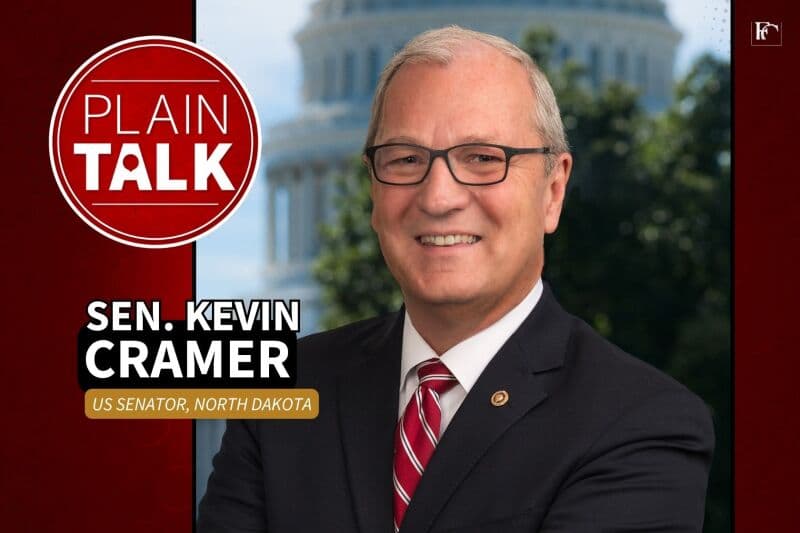
MINOT — Sen. Kevin Cramer and I have had a running dispute over President Donald Trump and his approach to politics. Cramer says media critics like me are too focused on Trump's antics. I say people like Cramer are too muted in their own criticism. "I'm a United States senator from North Dakota who has a really good personal relationship with the president of the United States," Cramer said in defense of his stance on this episode of Plain Talk, "and there is a long list of advantages for the people of North Dakota because of that relationship." "This is not a place where you can burn a lot of bridges," he added. Cramer also accused the news media of not being focused enough on the accomplishments of the Trump era, including tax reform. "My complaint is not just that they aren't covering the tax cuts enough. It's that certain media outlets are so fascinated by the rants and raves of people about the evils of Donald Trump and Republicans, but they don't write about the accomplishments," he said. "In fact, they almost don't publish any of it." He also talked about the war President Trump has launched against Iran, and whether it needs congressional approval. "In the case of the War Powers Act, there's a pretty strong argument -- it's never been tested, mind you, but pretty strong argument -- that the War Powers Act as a piece of legislation, as a power that Congress has passed in law, is not even constitutional," he said. "But having said that, as it stands, the War Powers Act is what requires the president to, when he does enact a kinetic conflict like we're in with Iran right now, he has 60 days in which to either get out of it or inform Congress so he can get an extension." Cramer says he believes Trump should want congressional approval. Also on this episode, Cramer talks about his efforts to improve U.S. relations with Canada, and co-host Chad Oban and I discuss the out of state money funding Together for School Meals, the ballot measure campaign to have the state cover the cost of school meals for parents. If you want to participate in Plain Talk, just give us a call or text at 701-587-3141. It’s super easy — leave your message, tell us your name and where you’re from, and we might feature it on an upcoming episode. To subscribe to Plain Talk, search for the show wherever you get your podcasts or use one of the links below. Apple Podcasts | Spotify | YouTube | Pocket Casts | Episode Archive
Guest column: Thank you to Sen. Hoeven and the USDA for elevating ND's role in ag innovation nationwide
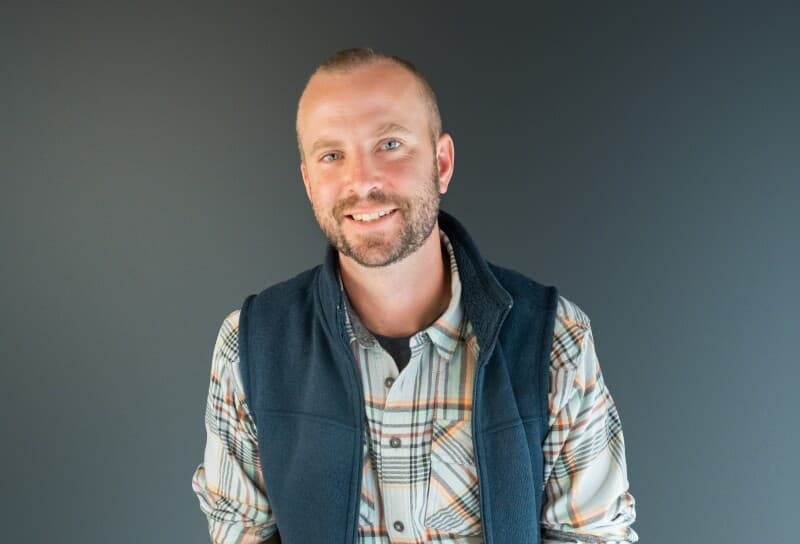
For years, I took our elected officials—including Sen. John Hoeven—for granted. I assumed their work was easy, filled with fancy dinners and handshakes with old friends. Now, as I’m halfway to 82 years old, I see things differently. I now understand why our elected officials are called public servants. At their best, they share their time, energy, and goodwill in service of the greater good. They make personal sacrifices, along with their family and friends, for the greater good. Recently, our team at Grand Farm, alongside Hoeven and leadership from the United States Department of Agriculture, announced the creation of the National Proving Grounds Network for agriculture technology. This strategic initiative supports American farmers and ranchers as they navigate complex technology decisions during challenging markets, aiming to improve profitability and long-term sustainability. More than 200 people joined us from across the region and country to celebrate this milestone. In the days that followed, we heard a common question: how did North Dakota become the starting point for this effort? The answer is that this moment has been years in the making. Grand Farm has built a foundation where agricultural technology can be tested, validated and improved under real-world conditions. That work has been shaped alongside growers, researchers, startups and companies, and public leaders across North Dakota—creating a place where innovation meets the field and ideas are not just discussed, but proven out. That foundation doesn’t happen on its own. It requires alignment between those doing the work on the ground and those willing to listen, engage, and help move it forward. Not every state has a U.S. senator who spends time outside of Washington, D.C., traveling across their state to truly understand local challenges. Hosting roundtables, listening, looking for solutions. Leadership matters. An elected official who builds bridges, advocates consistently, and shows up with genuine engagement is far more likely to bring attention—and opportunity—back home. Hoeven reminded me how important it is to be grateful for the sacrifices many public servants make. Like most people, I sometimes feel frustrated or confused by the pace and outcomes of government decisions, yet it’s worth recognizing the people committed to doing the work thoughtfully and persistently. I am grateful to have a U.S. senator supported by an exceptional staff—both in North Dakota and in Washington—who are curious, engaged, and willing to tackle difficult issues. Our farmers are facing a challenging moment. The businesses that support them are adapting to a rapid pace of change. And yet,hundreds of people came together to celebrate possibility, confront challenges, and take a meaningful step forward. By working together, we can add value, strengthen collaboration, and ensure that technology serves the people who make our country truly special. Greg Tehven is the cofounder and CEO of Emerging Prairie and the cofounder and board chairman of Grand Farm.
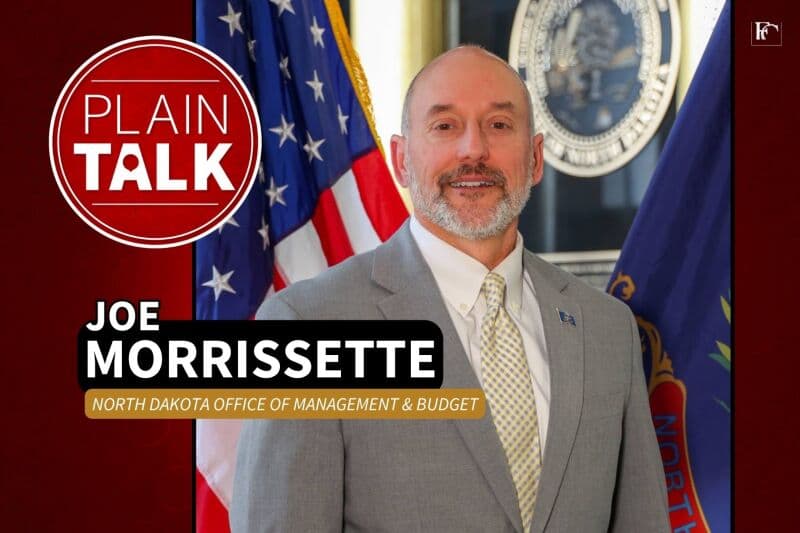
Plain Talk: $36 million in North Dakota revenues for every dollar in oil prices
MINOT — How hard is it to do revenue forecasts for the state of North Dakota, which is heavily dependent on revenues from commodity-driven industries like agriculture and energy? On this Plain Talk, Joe Morrissette, director of the Office of Management and Budget, gave one example: For every dollar that oil prices move, there's a roughly $36 million swing in state revenues. The war in Iran hasn't just driven oil prices $1 over projects. It's as much as $30 over, with no real certainty on where it will level off. "It's a significant, significant swing in the state's financial picture in just a short time," Morrissette said. Still, all that additional revenue isn't expected to change production activity — oil and gas producers aren't going to invest heavily in chasing a price that's probably not going to be sustained — and doesn't change the state's budget picture all that much. "Even though we've got this inflow of oil tax revenues, it's really not changing significantly," he said. "Changing a little bit, but not significantly changing our budget challenge in the next biennium." Also on this episode, co-host Chad Oban and I react to all the controversy stemming from the North Dakota Republican Party's divisive and dismal state convention. The populist activists who now control the party are attacking incumbents for not attending the convention, yet many of them have skipped past conventions and even campaigned against convention-endorsed candidates. Former lawmaker Rick Becker, for instance, participated in a press conference that was critical of incumbents for skipping the convention. Yet Becker skipped the 2026 convention to take a vacation in Belize. In 2024, he campaigned against convention-endorsed candidate Alex Balazs for the U.S. House. In 2022, he campaigned against convention-endorsed Sen. John Hoeven in the U.S. Senate race. Plus, we react to some listener feedback, including one message which argues that Democrats ought to use the votes some Republican lawmakers cast against approving a school meals bill against them this cycle. If you want to participate in Plain Talk, just give us a call or text at 701-587-3141. It’s super easy — leave your message, tell us your name and where you’re from, and we might feature it on an upcoming episode. To subscribe to Plain Talk, search for the show wherever you get your podcasts or use one of the links below. Apple Podcasts | Spotify | YouTube | Pocket Casts | Episode Archive

Sen. Amy Klobuchar touts ethanol during plant visit
WILLMAR, Minn. — U.S. Sen. Amy Klobuchar on Monday spoke about the role that ethanol plays in the energy industry during a visit to Bushmills Ethanol near Atwater. “It was a really good, in-depth conversation about the market, what is happening and the need when we see these high gas prices. You don’t want to be dependent on one fuel. You have jobs right here in Minnesota that have been created by this,” Klobuchar, D-Minn., said on Monday, March 30. According to AAA’s gas price tracking, the national average for gas was at $3.981 at the end of March. This was a rise of 10 cents per gallon from the week before and up a dollar from a month ago when the price averaged $2.983, around the start of the war with Iran. This is the highest average price in the past four years, according to the tracker. With rising gas prices, Klobuchar and others reached out to President Donald Trump to ask that he approve a wider use of ethanol to help lower prices. More than 98% of U.S. gasoline contains ethanol to oxygenate the fuel to reduce air pollution, according to the U.S. Department of Energy, typically at 10%. A waiver was approved by the federal government to allow for the sale of E15 nationwide. E15 is gasoline blended with 15% ethanol. The waiver also removed all federal restrictions on the sale of gasoline blended with 10% ethanol. “The ethanol industry and biodiesel couldn’t be more important right now, all renewable fuels. We can’t just be dependent on one kind of fuel. We are already 10% and we can be even higher. We have been held back by things like the limit on blending for biofuels,” Klobuchar said in an interview. The waiver takes effect on May 1, 2026, according to a release from the Environmental Protection Agency. The waiver will be temporary. There have been past efforts to allow for ethanol blends to be sold nationwide with fewer restrictions. In 2023, Klobuchar, alongside U.S. Sen. Deb Fischer, a Republican from Nebraska, reintroduced legislation to make E15 available year-round. The bill was referred to the Committee on Environment and Public Works but no further action was taken. “I would like to see it baked into law so it is not just each president every year who makes a decision. My Republican counterpart Sen. (John) Boozman has pushed that if we have a farm bill, we will put it in there with me,” Klobuchar said in an interview. Klobuchar was also taken on a tour of the plant where she saw some of the process of producing ethanol including testing and automation systems. The Bushmills Ethanol plant was built in 2005. It produces around 65 million gallons of ethanol each year. The cooperative is made up of around 400 farmers.

After months of uncertainty, homelessness program grants renewed, with assist from Hoeven
FARGO — After months of disruption and uncertainty for organizations working to end homelessness in North Dakota, the federal Department of Housing and Urban Development announced Tuesday that three grants totaling more than $450,000 will be renewed. Erin Prochnow, the executive director of the YWCA Cass-Clay, welcomed the news and credited Sen. John Hoeven, R-N.D., for working to pass legislation that would ensure the funding continued. "We're incredibly grateful to John Hoeven and his team for listening, learning, and making it a priority to help us navigate this bureaucratic mess and advocate for some of the most vulnerable people in our state," Prochnow told The Forum. HUD awarded $225,284 to YWCA Cass-Clay for transitional housing, and another $155,258 for YWCA's supportive housing program through its Continuum of Care program, according to a release from Hoeven's office. The Abused Adult Resource Center of Bismarck will also receive $83,561 for transitional housing. Prochnow said the YWCA has relied on HUD's CoC funding since 1989, but it wasn't until last year that there has ever been any question about the renewal of the grants. That's when HUD announced sweeping changes and deep cuts to the program, citing “long overdue reform” to a system it claimed only “perpetuated homelessness through a self-sustaining slush fund.” But advocates pushed back, and lawmakers from both sides of the aisle joined them in cautioning HUD officials not to destabilize a program that has long been essential in serving at-risk populations such as women and children escaping abuse, and individuals with severe disabilities related to mental illness, chronic health conditions or substance use disorders, as well as seniors with disabilities. Hoeven worked with Prochnow and others to ensure the renewal of the CoC grants for several months, including hosting HUD Secretary Scott Turner and other HUD officials in the state for visits with service providers, his office said. Prochnow said Hoeven was instrumental in getting language included in a recent appropriations bill, which directed HUD to renew the grants. “These Continuum of Care grants are extremely important to combat homelessness, and we appreciate the organizations and leaders that provide those services,” Hoeven said in a statement Tuesday. “That’s why we worked to pass legislation to ensure this funding will be in place for the current Fiscal Year, as we continue working to provide certainty for these providers in future years.” Additional grants for Fraser, Ltd., the Grand Forks Housing Authority and the Domestic Violence and Rape Crisis Center in Dickinson will begin the renewal process on April 1, Hoeven's office said.
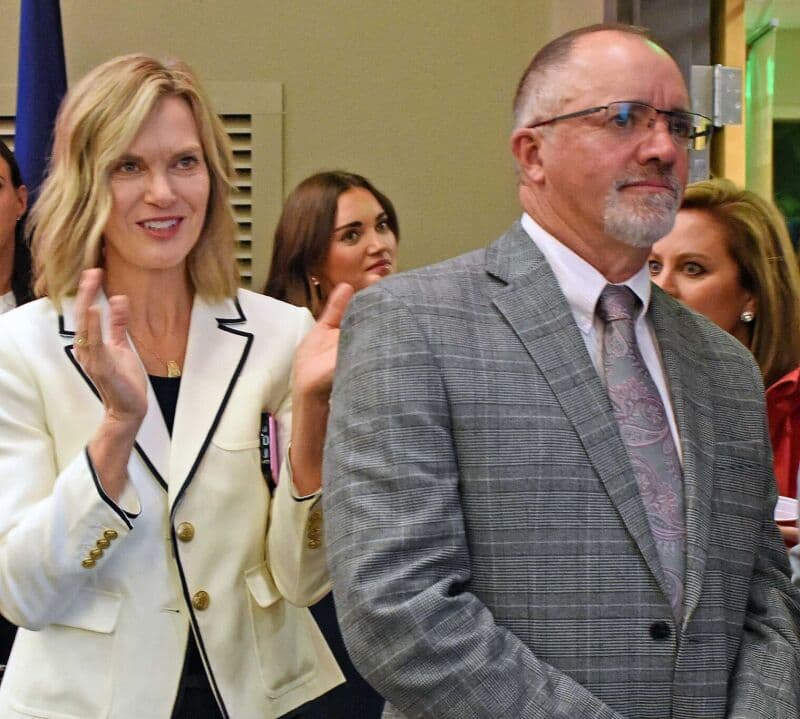
Port: The real reason why Republican candidates are skipping the NDGOP convention this weekend
MINOT — The other day Attorney General Drew Wrigley shared an anecdote with me concerning a conversation he had with what he described as a "senior leader" in the North Dakota Republican Party. Every one of the Republican incumbents on North Dakota's ballot this cycle — Wrigley included — are boycotting the party's state convention. The conversation, as it was related it to me, involved the promise of some "face time on the side" with convention keynote speaker Steve Deace if Wrigley crossed the picket line and attended the event. Wrigley was laughing as he told me about the phone call. "I literally had to Google the frickin' guy," he said. Suffice to say that Wrigley was not persuaded, but the anecdote, as entertaining as it is, does illustrate something very important about the divide in the NDGOP between populist activists, who have seized some leadership positions in the party apparatus, and the traditionally conservative Republicans who have been winning the elections. The former of the two groups is not living in the same reality as the rest of us. The NDGOP is holding its state convention in Minot this weekend, and much will be said about why the statewide incumbents, not to mention most of the party's incumbent lawmakers and legislative candidates, are not in attendance. To hear party chair Matthew Simon put it, as he did in a recent interview, the incumbents are ducking accountability (an odd thing for a guy who consistently ducks my interview requests to say). Simon said it's "shameful" for incumbents to take their case for election "straight to the voters" in the primary because it "disrespects" the party activists. A more straight forward explanation is that the incumbents don't want to risk being seen in the background while convention speaker Royce White using homophobic slurs and rants about Jews, as he is wont to do. But it's not just that the faction that controls the party represents some very extreme and hateful views. They also have a truly perverse notion of what public service is. Simon and others seem to think that elected officials are elected to serve their party. Consider, as evidence, not just the words coming out of Simon's mouth, but the efforts by the party to pass a rule that would fine and excommunicate Republican candidates and elected officials for disobeying the party platform. The tradition of public service in America is rooted in the idea that an elected official serves all of their constituents — the ones who voted for them, ones who voted against them and those who didn't vote at all. Simon believes elected officials should serve him and the party. In 2022, Wrigley received 71% of the vote. Ag Commissioner Doug Goehring and Julie Fedorchak (who was on the ballot for Public Service Commission that year) also received over 70% of the vote. In 2024, Fedorchak received more than 69% of the vote. You don't get vote shares like that without appealing to a constituency that is far larger than the Republican party. You don't get vote totals like that without serving the public well. Why in the world would those incumbents who want to be in the same room with someone like Simon — who demands that their loyalty be to him and other party insiders — and not the broader electorate?
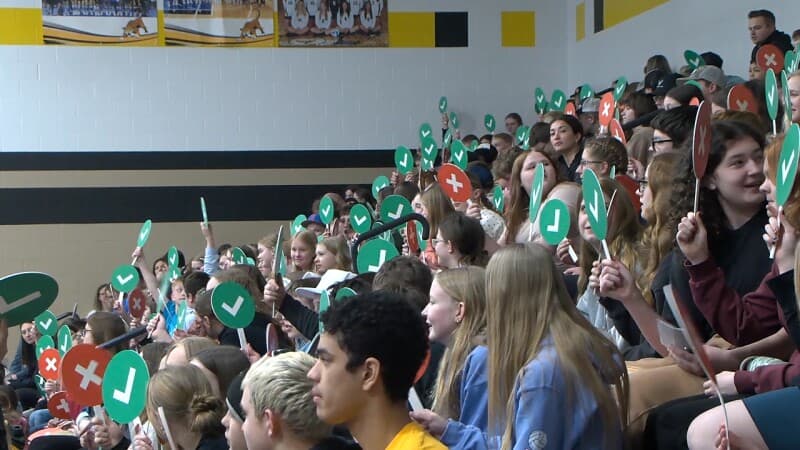
Northern Cass students learn online responsibility
FARGO — Experts say separating fact from fiction online is harder than ever with AI. Middle school students at Northern Cass Public School learned that first hand on Monday, March 23. Google officials joined U.S. Rep. Julie Fedorchak, R-N.D., on Monday afternoon to explain steps to online safety and how the "internet is forever." It’s the era of 'screenagers,' and Fedorchak and Google officials say they are prioritizing education over avoidance. "It's not so much protecting kids from being online. It's protecting kids while they're online," said Don Harbeke, a Google employee who was at the event in Northern Cass. Monday's "Google for Online Safety" assembly broke down appropriate online behavior, including being careful about who they share pictures with, using strong passwords and navigating more advanced AI. The message came in a light-hearted package, but Fedorchak said there is an impactful payoff. "There's plenty of examples of kids committing suicide because of their online experiences, whether it's bullying or being disconnected or too much time online. So I really liked the focus here on being kind and also listening to your own signals that your body is telling you about how you feel," Fedorchak said. Fedorchak said education is even more important as screen time increases. "When I did the research and realized that it's up to four years of their life, like 24-7—four years in front of screens for an 18-year-old, that's a lot of time," she said. Students made their own contributions during the assembly, marking a green check or a big red X for online do’s and don’ts. Fedorchak said changes could come at the federal level, including different age limits for social media or more parental control. "It's really tough to tell what's real and what isn't, and so being alert and on guard and suspicious, I think is going to have to be the norm," she said. The stop at Northern Cass was Google’s only visit to North Dakota this year. Parents can learn more about the online safety initiative on their website: https://beinternetawesome.withgoogle.com/en_us.
North Dakota lawmaker defends federal voting bill, critics raise concerns
FARGO — Elections across the nation and in North Dakota could face major changes if Congress passes the proposed federal voting law known as the "Save America Act." The bill requires new citizenship and photo ID requirements at the polls. Republicans say it will make elections more secure, while Democrats argue it creates new barriers for legal voters, making them less likely to vote. The Safeguard American Voter Eligibility Act passed the House last April. Now, an extension of that bill, the "Save America Act," has also passed the House and is being debated in the Senate. "So that we can ensure that only Americans are voting in American elections," said Rep. Julie Fedorchak, R-N.D., the state's lone representative. Fedorchak said the bill is needed to protect elections. However, members of the League of Women Voters of the Red River Valley say the bill will restrict voter access. "To me, it's all about control and trying to influence the outcome of an election, and would make it not free and not fair," said Sarah King, a league board member. "The League of Women Voters is all about 'We should be making it easier for people to vote, not harder,'" said Lyn Docter-Pinnick, a league member. Docter-Pinnick said she is worried that women in particular will have a harder time voting because they commonly change their last names when they get married. "Potentially 69 million women are impacted because what is required for documenting citizenship is, you know, your birth certificate, your passport, a Real ID. And to get a Real ID, to get a passport, you have to go back originally to a birth certificate," King said. Fedorchak argues the bill will not make voting harder because it is similar to existing voter ID requirements in North Dakota. "I am a woman. I got married, I changed my name. I have voted easily in every election since I've been married in North Dakota. All you need is a Real ID, a U.S. passport, military ID, any of those common forms of identification," Fedorchak said. The bill states that if there is a name discrepancy in the applicant's documentation, states must accept and process it as long as the applicant provides additional documentation. States would also be required to establish an alternative process to demonstrate U.S. citizenship. "The only people that should have trouble with this bill are illegal immigrants who are trying to vote in American elections and are not allowed to by law. Those are the only people that should be burdened by this new bill," Fedorchak said. The Senate has voted to take up the House-passed version of the Save America Act, and the debate could potentially take weeks.

North Dakota water supply project gets $108 million in federal funding
FARGO — A project to supply water to the Red River Valley is getting a $108 million boost in funding from the federal government. According to a press release from Sen. John Hoeven, R-N.D., on Tuesday, March 17, the Eastern North Dakota Alternate Water Supply project will get $108 million from funding included in the “One Big Beautiful Bill,” a federal spending and tax bill passed last year. The Eastern North Dakota Alternate Water Supply project is the eastern part of the Red River Valley Water Supply project, which will bring water to central and eastern North Dakota. The funding includes $100 million for construction of the Eastern North Dakota Alternate Water Supply project and $8 million for the repairs at the existing McClusky Canal and Snake Creek Pumping Plant, which will be used for the project. The funding comes from a pool of $1 billion in funding for Bureau of Reclamation water conveyance and storage projects included in the One Big Beautiful Bill. In the press release, Hoeven said he worked to include language in the legislation to make the project eligible for the pool of funding. “This water project is critical to the future growth and prosperity of eastern North Dakota, and represents a real savings to our state’s taxpayers,” Hoeven said. Tuesday’s announcement comes on the heels of another round of funding for the project. In January, Hoeven announced $50 million for the project, along with an authorization that allows the project to use existing infrastructure, rather than building 40 miles of new pipeline. The authorization is expected to save the project $200 million in construction costs.
Letter: Slow down the SAVE Act
Rep. Fedorchak has said North Dakota will not be affected by the SAVE Act since we have no voter registration and already require photo ID. My research found the special rule for North Dakota says states with no voter registration “establish a system for confirming the citizenship of individuals voting in an election for Federal office” (H.R. 22/H.R. 7296/S. 1383) . We will be affected! The text of the SAVE ACT mentions that REAL ID can be used to document citizenship. Only the Enhanced REAL ID proves citizenship. North Dakota has a standard REAL ID which is given to both citizens and noncitizens. So it does not prove citizenship. Perhaps our DMV can fix this? Did you know it took 20 years for REAL ID to be implemented? So, if this passes before the 2026 election, you would need a passport to vote which only 41% of the North Dakota population has (as of 2024). Furthermore, women are affected disproportionately because most change their name when married. So they need their marriage certificate along with the birth certificate. Maybe more than one. In North Dakota we have to prove residency to vote. We understand the rule of asking voters “Are you a citizen?” This works now but it might need changing. But, not overnight and not under pressure. Recent events have shown that we may have to carry our ID so we can pull it out and prove we are a citizen, even when walking (not just driving). Neither North Dakota or the country is ready for this. Chris Fastnaught lives in West Fargo.

Shaw: Our local leaders oppose free and fair elections
The SAVE America Act is a dangerous bill that will end our system of free and fair elections. North Dakota Rep. Julie Fedorchak and Minnesota Rep. Michelle Fischbach shamefully voted for it. Not surprisingly, North Dakota Sens. John Hoeven and Kevin Cramer support it. This writer believes voters should have to show ID at voting locations, but this legislation goes way beyond that. It would require voters to bring their passports or birth certificates every time they vote. However, half of Americans don’t have passports (they’re not legally required) and tens of millions don’t have their birth certificates. It’s even harder for women whose married names aren’t on their passports or birth certificates. Would the government pay tens of millions of Americans to get passports or birth certificates? I doubt it. It’s all part of a strategy to prevent millions of American citizens from voting. Republicans know they’re going to lose the midterms. This bill will try to prevent that by cheating. On top of all that, this bill federalizes our elections, which is unconstitutional. One frightening provision is that states would be required to send all voter data to the Department of Homeland Security. Nothing good can come from that. The SAVE Act is based on two big lies. The first one is that the 2020 presidential election was rigged and insecure. By supporting this bill, Fedorchak, Fischbach, Hoeven and Cramer are playing along with that lie. We should never forget that in one of her first acts in office, Fischbach obscenely voted to overturn the results of the 2020 presidential election. The facts are that Donald Trump’s election cybersecurity director Chris Krebs said the 2000 election was extremely secure, Trump’s attorney general Bill Barr said there was no widespread fraud, and that Trump lost about 62 lawsuits contesting the legality of the election. Trump knows he lost, but because of his fragile ego, he can’t admit it. The second big lie is that many noncitizens are voting. Actually, it’s extremely rare. The numbers are minuscule. Frankly, noncitizens would be crazy to try to vote because they would likely be deported. Noncitizen voting does not affect election outcomes. Fedorchak said the bill will “restore trust” and that “Nothing in this bill changes…how state elections are run in any state.” Oh, please. Since when do any states require passports or birth certificates to vote? Also, the only reason there's any lack of trust is because people like Fedorchak keep deceiving us about our election security. Cramer wrote, “Elections must be decided by citizens, and citizens alone.” They are. If Cramer has proof of noncitizens deciding elections, let’s hear it. Our elections are extremely safe, secure and fair. There is no significant voter fraud. Shame on Hoeven, Cramer, Fedorchak and Fischbach for pretending otherwise. The SAVE Act is unnecessary and unAmerican. It would disenfranchise millions of voters and destroy our democracy.
Shaw: Our local leaders oppose free and fair elections
The SAVE America Act is a dangerous bill that will end our system of free and fair elections. North Dakota Rep. Julie Fedorchak and Minnesota Rep. Michelle Fischbach shamefully voted for it. Not surprisingly, North Dakota Sens. John Hoeven and Kevin Cramer support it. This writer believes voters should have to show ID at voting locations, but this legislation goes way beyond that. It would require voters to bring their passports or birth certificates every time they vote. However, half of Americans don’t have passports (they’re not legally required) and tens of millions don’t have their birth certificates. It’s even harder for women whose married names aren’t on their passports or birth certificates. Would the government pay tens of millions of Americans to get passports or birth certificates? I doubt it. It’s all part of a strategy to prevent millions of American citizens from voting. Republicans know they’re going to lose the midterms. This bill will try to prevent that by cheating. On top of all that, this bill federalizes our elections, which is unconstitutional. One frightening provision is that states would be required to send all voter data to the Department of Homeland Security. Nothing good can come from that. The SAVE Act is based on two big lies. The first one is that the 2020 presidential election was rigged and insecure. By supporting this bill, Fedorchak, Fischbach, Hoeven and Cramer are playing along with that lie. We should never forget that in one of her first acts in office, Fischbach obscenely voted to overturn the results of the 2020 presidential election. The facts are that Donald Trump’s election cybersecurity director Chris Krebs said the 2000 election was extremely secure, Trump’s attorney general Bill Barr said there was no widespread fraud, and that Trump lost about 62 lawsuits contesting the legality of the election. Trump knows he lost, but because of his fragile ego, he can’t admit it. The second big lie is that many noncitizens are voting. Actually, it’s extremely rare. The numbers are minuscule. Frankly, noncitizens would be crazy to try to vote because they would likely be deported. Noncitizen voting does not affect election outcomes. Fedorchak said the bill will “restore trust” and that “Nothing in this bill changes…how state elections are run in any state.” Oh, please. Since when do any states require passports or birth certificates to vote? Also, the only reason there's any lack of trust is because people like Fedorchak keep deceiving us about our election security. Cramer wrote, “Elections must be decided by citizens, and citizens alone.” They are. If Cramer has proof of noncitizens deciding elections, let’s hear it. Our elections are extremely safe, secure and fair. There is no significant voter fraud. Shame on Hoeven, Cramer, Fedorchak and Fischbach for pretending otherwise. The SAVE Act is unnecessary and unAmerican. It would disenfranchise millions of voters and destroy our democracy.
Shaw: Our local leaders oppose free and fair elections
The SAVE America Act is a dangerous bill that will end our system of free and fair elections. North Dakota Rep. Julie Fedorchak and Minnesota Rep. Michelle Fischbach shamefully voted for it. Not surprisingly, North Dakota Sens. John Hoeven and Kevin Cramer support it. This writer believes voters should have to show ID at voting locations, but this legislation goes way beyond that. It would require voters to bring their passports or birth certificates every time they vote. However, half of Americans don’t have passports (they’re not legally required) and tens of millions don’t have their birth certificates. It’s even harder for women whose married names aren’t on their passports or birth certificates. Would the government pay tens of millions of Americans to get passports or birth certificates? I doubt it. It’s all part of a strategy to prevent millions of American citizens from voting. Republicans know they’re going to lose the midterms. This bill will try to prevent that by cheating. On top of all that, this bill federalizes our elections, which is unconstitutional. One frightening provision is that states would be required to send all voter data to the Department of Homeland Security. Nothing good can come from that. The SAVE Act is based on two big lies. The first one is that the 2020 presidential election was rigged and insecure. By supporting this bill, Fedorchak, Fischbach, Hoeven and Cramer are playing along with that lie. We should never forget that in one of her first acts in office, Fischbach obscenely voted to overturn the results of the 2020 presidential election. The facts are that Donald Trump’s election cybersecurity director Chris Krebs said the 2000 election was extremely secure, Trump’s attorney general Bill Barr said there was no widespread fraud, and that Trump lost about 62 lawsuits contesting the legality of the election. Trump knows he lost, but because of his fragile ego, he can’t admit it. The second big lie is that many noncitizens are voting. Actually, it’s extremely rare. The numbers are minuscule. Frankly, noncitizens would be crazy to try to vote because they would likely be deported. Noncitizen voting does not affect election outcomes. Fedorchak said the bill will “restore trust” and that “Nothing in this bill changes…how state elections are run in any state.” Oh, please. Since when do any states require passports or birth certificates to vote? Also, the only reason there's any lack of trust is because people like Fedorchak keep deceiving us about our election security. Cramer wrote, “Elections must be decided by citizens, and citizens alone.” They are. If Cramer has proof of noncitizens deciding elections, let’s hear it. Our elections are extremely safe, secure and fair. There is no significant voter fraud. Shame on Hoeven, Cramer, Fedorchak and Fischbach for pretending otherwise. The SAVE Act is unnecessary and unAmerican. It would disenfranchise millions of voters and destroy our democracy.