7 stories credited to Grand Forks Herald
1 story on grandforksherald.com credited to other publishers
Latest story Sep 23, 2026 · on ChamberLight since Apr 2026
A story can appear as several articles (copies of the same piece), so counts of stories and of articles differ.
Scores for Grand Forks Herald
Writing quality not enough rated stories yet: 6 of 10. How it is measured
Scores last checked Sep 25, 2026.
Articles this site reproduces
How provenance is decidedOriginal publishers of articles on grandforksherald.com
Counted from articles on grandforksherald.com whose original publisher is verified from the page itself or confirmed by an independent signal.
Stories ChamberLight collected, by month
Stories credited to Grand Forks Herald, by publication date. ChamberLight collects articles that mention the officials it tracks, so this shows its own coverage of this source, not how much the source publishes.
- Stories from Grand Forks Herald
- Shaded: ChamberLight collected no stories, or almost none, from any outlet (a gap in its collection, not in the outlet’s publishing)
Show as a table
| Month | Stories | All outlets |
|---|---|---|
| March 2026 | 3 | 763 |
| April 2026 | 3 | 4,538 |
| May 2026 | 0 | none collected |
| June 2026 | 0 | none collected |
| July 2026 | 0 | none collected |
| August 2026 | 0 | 1 (collection gap) |
| September 2026 | 1 | 1,320 |
Top topics
Share of this source’s stories tagged with each topic. A story can carry several topics, so the shares do not add up to 100%.
- Ethics/Corruption3
43% of 7 stories · 58% across all outlets
- Infrastructure3
43% of 7 stories · 8% across all outlets
- Budget/Spending2
29% of 7 stories · 31% across all outlets
- Defense/Military2
29% of 7 stories · 25% across all outlets
- Taxes2
29% of 7 stories · 5% across all outlets
- Technology/Privacy2
29% of 7 stories · 10% across all outlets
- Voting Rights2
29% of 7 stories · 19% across all outlets
- Agriculture1
14% of 7 stories · 2% across all outlets
The thin mark on each bar is the topic’s share across all outlets.
Who they cover
Party of the officials these stories are mainly about, across all 6 officials named. A story counts once for each official it is mainly about, so the split is over 11 story–official pairs, from 7 stories.
- Republican100% · 11 pairs
Most covered
Stories mainly about each official, and their share of the source’s 7 stories.
Article tone
ChamberLight’s article analysis assigns each story a tone toward the official it covers. It describes the coverage of that official, not Grand Forks Herald’s stance, and reader votes do not change it. 7 stories.
- Good Look
- 5 (71%)
- Mixed
- 1 (14%)
- Informational
- 0 (0%)
- Bad Look
- 1 (14%)
Challenges to these scores
No one has challenged a score on this page yet. Anyone can; editors publish every outcome here.
Articles served from grandforksherald.com
12
Fedorchak, Scalise tour Fargo battery factory
Congresswoman Julie Fedorchak and House Majority Leader Steve Scalise toured the Badland Batteries facility in Fargo as the company prepares to begin manufacturing battery cells.
Fedorchak, Scalise tour Fargo battery factory
Congresswoman Julie Fedorchak and House Majority Leader Steve Scalise toured the Badland Batteries facility in Fargo as the company prepares to begin manufacturing battery cells.
North Dakota officially becomes the first state to access FAA data for drone operations
GRAND FORKS — North Dakota has officially become the first state to access Federal Aviation Administration drone radar. Access to the FAA data is a significant milestone that will support North Dakota's unmanned aircraft operations, according to a release from the North Dakota Information Technology Department. Now Vantis — the state's platform for advanced UAS operations, administered by the Northern Plains UAS Test Site in Grand Forks — will be able to receive continuous radar data on aircraft activity. This will help drones safely operate alongside traditional aircraft, NDIT said. null The development has been in the works for a number of years. Speaking with the Grand Forks Herald in February, Sen. John Hoeven said access to the federal data would cement North Dakota as the most advanced UAS ecosystem in the nation. “It puts us ahead of anyone else in the country in a big way,” Hoeven, R-N.D., said at that time. “For them to catch up and try to do what we’re doing, they’ve got a lot of work to do to get there.” Access to the federal radar will "unlock safer and more efficient drone operations," the release from the NDIT said, and will support drone operations in emergency response and search-and-rescue missions, infrastructure inspection and monitoring, agricultural operations and precision agriculture, and expanded service deliver in rural communities. The announcement is the result of significant work and collaboration between Vantis, federal partners and NDIT teams, the release said. Work to build the secure infrastructure required to meet strict federal security standards included developing protected network pathways, secure computing environments, firewalls and systems capable of processing real-time aviation data. "Behind every major technology milestone is a lot of careful work that most people never see," said Corey Mock, chief information officer for the state. "Our teams were proud to help build the secure infrastructure needed to safely connect federal aviation data with the Vantis system. This is a strong example of how IT drives innovation across North Dakota."
Plain Talk: Cramer says 'This is not a place where you can burn a lot of bridges'
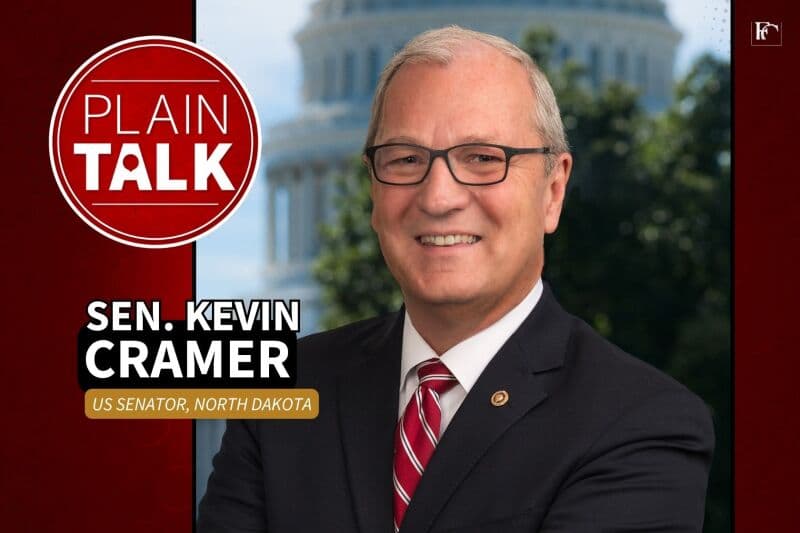
MINOT — Sen. Kevin Cramer and I have had a running dispute over President Donald Trump and his approach to politics. Cramer says media critics like me are too focused on Trump's antics. I say people like Cramer are too muted in their own criticism. "I'm a United States senator from North Dakota who has a really good personal relationship with the president of the United States," Cramer said in defense of his stance on this episode of Plain Talk, "and there is a long list of advantages for the people of North Dakota because of that relationship." "This is not a place where you can burn a lot of bridges," he added. Cramer also accused the news media of not being focused enough on the accomplishments of the Trump era, including tax reform. "My complaint is not just that they aren't covering the tax cuts enough. It's that certain media outlets are so fascinated by the rants and raves of people about the evils of Donald Trump and Republicans, but they don't write about the accomplishments," he said. "In fact, they almost don't publish any of it." He also talked about the war President Trump has launched against Iran, and whether it needs congressional approval. "In the case of the War Powers Act, there's a pretty strong argument -- it's never been tested, mind you, but pretty strong argument -- that the War Powers Act as a piece of legislation, as a power that Congress has passed in law, is not even constitutional," he said. "But having said that, as it stands, the War Powers Act is what requires the president to, when he does enact a kinetic conflict like we're in with Iran right now, he has 60 days in which to either get out of it or inform Congress so he can get an extension." Cramer says he believes Trump should want congressional approval. Also on this episode, Cramer talks about his efforts to improve U.S. relations with Canada, and co-host Chad Oban and I discuss the out of state money funding Together for School Meals, the ballot measure campaign to have the state cover the cost of school meals for parents. If you want to participate in Plain Talk, just give us a call or text at 701-587-3141. It’s super easy — leave your message, tell us your name and where you’re from, and we might feature it on an upcoming episode. To subscribe to Plain Talk, search for the show wherever you get your podcasts or use one of the links below. Apple Podcasts | Spotify | YouTube | Pocket Casts | Episode Archive
Port: Getting to know North Dakota's three political parties
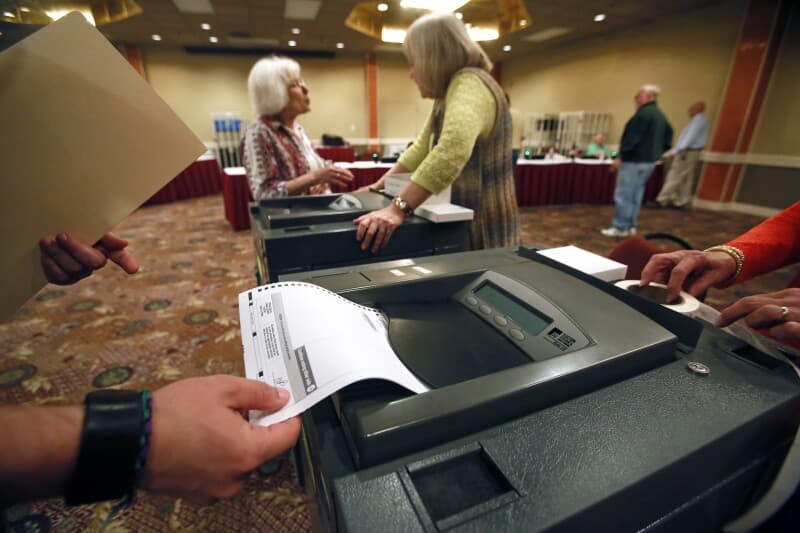
MINOT — One of the most important North Dakota political stories of the 2026 election cycle will be communicating to the voting public that our state now has three political parties. This is a necessary story to tell because our path to this state of affairs has been a subtle one that likely flew under the radar of the average citizen who, understandably, is too busy living life to follow the granular developments of this soap opera. Important, because the voters deserve to understand their choices in the upcoming June primary. One of our state's political parties is the Democratic-NPL. They've marginalized to the point of near dormancy for a while now, but they're showing signs of life. They had a productive and (for them) well-attended state convention, and had a strong season of candidate recruitment. The political winds may still be blowing in their faces, but they're in a better place than they have been in recent cycles. Another party is North Dakota's traditional Republicans. This is the party of Ed Schafer and John Hoeven, and pretty much every Republican elected to the statewide ballot over the last 30 years. These are the people focused on boring-but-vital policy priorities like property taxes, flood control and education — the Republicans who introduced and voted for the school meals legislation during the special session back in January — who you're thinking of when you turn your thoughts to the North Dakota Republican Party. Finally, there are the populist Republicans. These are the folks who have captured control of the North Dakota Republican Party itself, and who now think they can control outcomes at the ballot box by controlling who gets to call themselves Republicans. The traditional Republicans I just mentioned boycotted the state convention that was held by the populists. The populists tried to enact a reprisal for that, passing an impotent resolution stripping the "Republican brand" from the boycotting traditionalists. I call these folks "populists" — a nomenclature that has been picked up on by some others in state media — not because that's an accurate descriptor, but because it's how they think of themselves. They bray about "we the people" and call one another "patriot," but have yet to enjoy any meaningful level of success at the ballot box. They're not all that popular, because they focus obsessively on culture war issues like hanging The Ten Commandments in every classroom, regulating library books, trying to establish Christianity as our state religion, and pursuing policies aimed at making our LGBTQ friends want to live elsewhere. These are the people who think colonoscopies cause cancer and that infertility is a heavenly curse on women. They're the ones who censured Gov. Kelly Armstrong, twice, for passing popular property tax reform and vetoing a book ban bill. Each of these factions will have candidates on the ballot this cycle. The Democrats will be easy to identify — their party affiliation tells the tale — but when it comes to the Republican candidates, voters are going to have to work a little harder to discern what sort of Republican they're voting for. Is the candidate a traditional Republican, or a self-styled populist? It's an important question for voters to answer.

Col. Alfred Rosales outlines Grand Forks Air Force base initiatives during ‘State of the Base’ address
GRAND FORKS — Col. Alfred Rosales, commander of the 319th Reconnaissance Wing at Grand Forks Air Force Base, focused on the sense of mission that pervades the base and the airmen who dedicate themselves to that mission every day. In his first address for the State of the Base event, hosted by The Chamber Grand Forks-East Grand Forks at the Alerus Center on Tuesday, March 31, Rosales said his goal is, “When you walk out of those doors, you feel you are part of Grand Forks Air Force Base.” Following the theme “Accelerating Through Change,” Rosales, who assumed command of the wing last year, shared the stories of three airmen to the near-capacity crowd in the Alerus ballroom. Giving an overview of “a lot of changes” that have impacted the base in the past year, GFAFB “has been running on all cylinders,” not the least of which is the latest “Epic Fury” mission in the Middle East. Along with other operations, such as “Southern Spear” and “Absolute Resolve,” he said, “We are in lockstep with those missions.” Special guest speaker Sen. Kevin Cramer, R-N.D., who serves on the Senate Armed Services Committee and chairs its Subcommittee on Airland, recognized Jim Bradshaw, chairman of the Strata Corporation’s board of directors, as well as UND President Andrew Armacost and UND “for training more pilots for the Air Force than anyplace in the world.” Cramer commented that he’d “been working for years to get the runway fixed” at GFAFB, and that with that upgrade, Gen. Ken Wilsbach, chief of staff of the Air Force, told him, “You’ve made it impossible to close Grand Forks (AFB); I’m going to have to bring more missions there.” During the ceremony, Tim Haddock, who co-chairs the Chamber’s Military Affairs Committee with state Sen. Scott Meyer, R-Grand Forks, presented the Marijo Shide Squadron of the Year Award to the members of the 319th Logistics Readiness Squadron. Introducing the award, Haddock recognized the strong ties the late Marijo Shide built with the base as a resident of Larimore, North Dakota. Shide, an 11th-generation American, headed the largest women’s volunteer organization in the world, he said, and she believed that “volunteerism is the rent we pay to live in a democratic society.” Haddock also recognized Tom Ford, Grand Forks County administrator, and Kim Strom, vice president of operations with The Chamber, as recipients of the local Defense Community Champion Award. The award is part of the American Association of Defense Communities’ Defense Champion Award program and recognizes their contributions in support of the military here. ‘Mission ready’ In his presentation, Rosales said the base aims to be “mission ready.” “The most important thing we do is fly and fix aircraft,” he said, quoting Gen. Wilsbach. “Those are the basics of what we do — and we deter war, because nobody wants to go to war,” Rosales said. “We are pivoting all of us airmen together as a family” to align with the military defense needs of the nation, he said. In a four-point approach, the base is focused on readiness to win; growing ready, resilient airmen and families; bringing the future forward; and building lasting partnerships, he said. He pointed to base missions involving RQ-4 Global Hawk Block 40, a hub for collaboration; the E-11 Battlefield Airborne Communication Node; the High Frequency Global Communication System; and the Point Defense Battle Lab. With a goal of maintaining tactical air superiority, the base looks to partners and startup companies at the HIVE in downtown Grand Forks to help accomplish it. Rosales also outlined several initiatives aimed at enhancing the quality of life for GFAFB airmen and their families, including the $14.2 million renovation of dormitories; the $281,000 in renovations for the fitness center and dining facility; the $3.2 million in construction of the wing’s Welcome Center; and the $55.3 million Twining Elementary School. The school will double the number of children, from 150, that “we can bring on base for elementary school,” he said. “It’s been an absolutely amazing year.” Backgrounds in service In his talk, Rosales also gave the audience a glimpse into the lives and duties of the airmen who serve at GFAFB. They are “your neighbors, they walk by you in grocery stores, and are the fans next to you, cheering at hockey games.” He shared the backgrounds of three airmen, including: Senior Airman Physa Muon, who spent the first eight years of his life laboring with his family in rice fields in Cambodia. After his parents scraped enough money to come to the U.S., he lived in a tough urban neighborhood, where a friend was stabbed to death saving his life. The friend had pointed him to America’s promise of a pursuit of happiness. Muon works with the 319th Operations Support Squadron as a radar, airfield and weather systems technician. Senior Airman Kyle Powell, a materiel support journeyman with the 319th Logistics Readiness Squadron, who informs Rosales where all of the base’s $3.5 billion in assets are located. Powell, who worked in a drug and rehabilitation facility in his hometown before joining the military, has continued a life of service by coaching wrestling in Grand Forks schools and volunteering in a men’s Bible study group, Rosales said. “He instills the warrior method from his time in high school to his time here in Grand Forks.” Senior Airman Jenny Delcid-Faison, who joined the 319th in 2023 after her husband was stationed here. She was inspired to become a medical technician after her sister Ruth died at age 2 from cancer. Delcid-Faison works as a medical professional at GFAFB, “so she can do what she wanted to do for Ruth,” Rosales said.
Viewpoint: The Highway Trust Fund drives our economy
Whether North Dakotans are delivering crops to the local elevator or loading the family into a minivan for a road trip, well-maintained roads are essential. At the center of it all is the National Highway System (NHS), the network which moves people and freight across the nation. Highways are the heartbeat of interstate commerce, a constitutional duty of the federal government. More goods are transported by truck than by rail, air, water and pipelines combined. Our economy is driven by the free flow of goods across our patchwork of roads and highways. However, the Highway Trust Fund faces a structural funding shortfall, threatening the long-term ability of states to maintain and modernize transportation infrastructure. When President Dwight Eisenhower established the interstate system in the 1950s, the Highway Trust Fund was a “pay as you go” model where users of the road system paid for its maintenance and construction through taxes on gasoline, diesel and tires. As a result, the fund is based on the deceptively simple principle of “user pays.” Since 1993, Americans have contributed 18.3 cents to the Highway Trust Fund for every single gallon of gasoline. As cars have become more efficient or drivers switch to hybrid or electric vehicles (EVs), the result is fewer dollars flowing to the fund, all while road use is increasing. More users and less revenue is not sustainable. For over 25 years, expenditures from the Highway Trust Fund have exceeded its revenues. In 2024, there were $57 billion in expenditures, but only $43 billion in incoming revenues. Over the last 15 years, Congress has transferred money from the Treasury General Fund — to the tune of $275 billion — while punting on the source of the problem. Offloading the burden on all taxpayers in the form of federal debt — rather than sticking with the “user pays” model Eisenhower envisioned — is not a solution. How do we stay true to “user pays” and ensure the long-term solvency of the Highway Trust Fund? First, all highway vehicles should contribute. If they drive on it, they pay for it. According to the Argonne National Laboratory, Americans purchased approximately 1.2 million battery electric vehicles in 2024 alone, the vast majority of which were in California. In plain terms, a Fargo mom taking her kids to hockey practice in a Suburban is paying into the highway system while coastal elites who can afford EVs are getting a free ride from the federal government down Sunset Boulevard. The disparity is real. One widely discussed solution is a federal registration fee for EVs dedicated to the Highway Trust Fund. In fact, 39 states have already implemented registration fees for EVs, recognizing these vehicles use the system but do not contribute through gas taxes. At a minimum, this framework would reduce the Highway Trust Fund shortfall and ensure EVs pay their fair share. A $200 annual fee, for each of the 5.7 million EVs in the nation, could add over $1.14 billion to the fund every year. But I think we can — and should — consider broader policy solutions. While some suggest a per-mile fee, tracking mileage is fraught with practicality and privacy concerns. One option could be supplementing or replacing the gas tax with an annual registration fee based on weight. Every vehicle in America, from pickup trucks to EVs to hybrid sedans, pays a fee straight to the Highway Trust Fund based on its weight. Doing nothing is not an option. We have become way too familiar with robbing Peter to pay Paul in Washington, and it’s time to put Highway Trust Fund bailouts in the rearview mirror. As we debate, negotiate and pass a surface transportation reauthorization this year, I am hopeful my colleagues and I can correct course and stabilize the fund. Our ability to repair, update, and build out new roads depends on a sustainable “user pays” system. The American economy is built on the durability of our infrastructure and investments across the NHS is a necessity. Kevin Cramer, a Republican, represents North Dakota in the U.S. Senate. He originally wrote this for The Washington Times.
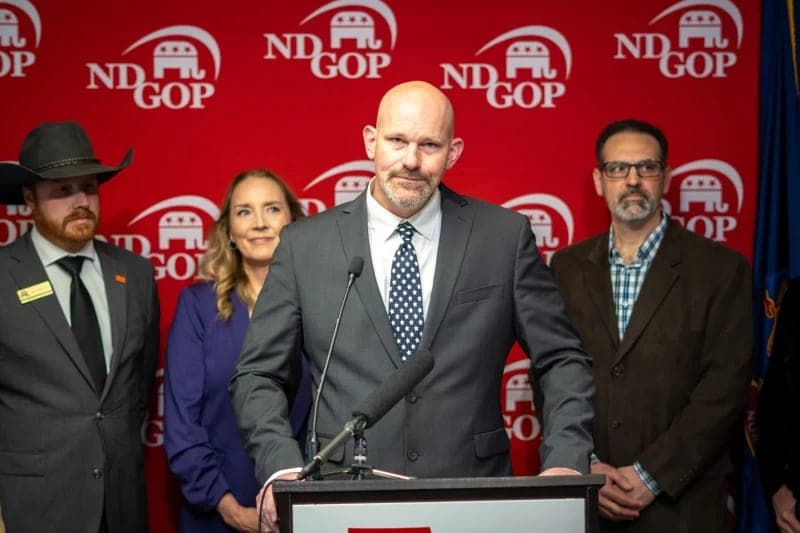
Port: NDGOP turmoil is why we should end ballot access for political parties
MINOT — At their upcoming state convention, the North Dakota Republican Party may endorse a slate of candidates to challenge the Republican incumbents who are boycotting the event. Two candidates have already declared. Alex Balazs, who ran an unsuccessful campaign for the U.S. House last cycle, will be seeking that office again, taking on incumbent Julie Fedorchak. Deven Styczynski, meanwhile, is challenging incumbent Sheri Haugen-Hoffart for a seat on the Public Service Commission. These two have met a March 8 deadline to be considered for the endorsement, but there is an expectation that the party may endorse more statewide candidates nominated from the floor at the event. Not everyone in the party believes that would be kosher. Current party bylaws prohibit it, but some believe the delegates at the convention may vote to suspend those bylaws and do it anyway. The opponents of this say the party can’t do it. If it does happen, the matter could end up before the courts, which brings me to the question I’d like to pose in this column: Should political parties even have automatic ballot access? While you ponder that, consider the position this turmoil puts state election officials in. When the political parties endorse candidates, they send a message to the Secretary of State’s Office identifying them. The secretary of state then places those candidates on the ballot. But what if there is some dispute over whether those candidates were authentically endorsed? It’s not just the divide in the NDGOP in the 2026 cycle that causes me to ask this question. During the 2020 election cycle, amid the COVID-19 pandemic, the NDGOP opted not to hold an in-person convention. A rogue faction within the party tried to go ahead with an in-person convention anyway, which the party leadership at the time condemned. Ultimately, this didn’t result in competing slates of NDGOP-endorsed candidates, but what if it had? How would the Secretary of State’s office determine which slate of candidates were the real candidates? Maybe they shouldn’t have to. Under state law, political parties can get ballot access by submitting 7,000 petition signatures. They maintain that access when their candidates for offices like president, governor, attorney general or secretary of state get at least 5% of the total vote in the last general election. What ballot access means is candidates endorsed by the party are automatically placed on the June primary ballot. They do not have to collect signatures. Maybe state law should be changed so that all candidates, party endorsed or not, must gather signatures to appear on the ballot. During the 2025 legislative session, I argued against legislation proposed by Rep. Mike Nathe which would have done just that. Having observed the decay and corruption of the NDGOP since, I must admit that I was wrong. The populist faction that currently leads the North Dakota Republican Party is fond of saying that the organization is private when they propose rules that would fine and expel members who don’t follow every party position on policy, or ban a critic in the news media — me, specifically — from covering their state convention. If private is what they want, then let’s give it to them. The ballot belongs to the people, not party insiders.

Shaw: Our local leaders oppose free and fair elections
The SAVE America Act is a dangerous bill that will end our system of free and fair elections. North Dakota Rep. Julie Fedorchak and Minnesota Rep. Michelle Fischbach shamefully voted for it. Not surprisingly, North Dakota Sens. John Hoeven and Kevin Cramer support it. This writer believes voters should have to show ID at voting locations, but this legislation goes way beyond that. It would require voters to bring their passports or birth certificates every time they vote. However, half of Americans don’t have passports (they’re not legally required) and tens of millions don’t have their birth certificates. It’s even harder for women whose married names aren’t on their passports or birth certificates. Would the government pay tens of millions of Americans to get passports or birth certificates? I doubt it. It’s all part of a strategy to prevent millions of American citizens from voting. Republicans know they’re going to lose the midterms. This bill will try to prevent that by cheating. On top of all that, this bill federalizes our elections, which is unconstitutional. One frightening provision is that states would be required to send all voter data to the Department of Homeland Security. Nothing good can come from that. The SAVE Act is based on two big lies. The first one is that the 2020 presidential election was rigged and insecure. By supporting this bill, Fedorchak, Fischbach, Hoeven and Cramer are playing along with that lie. We should never forget that in one of her first acts in office, Fischbach obscenely voted to overturn the results of the 2020 presidential election. The facts are that Donald Trump’s election cybersecurity director Chris Krebs said the 2000 election was extremely secure, Trump’s attorney general Bill Barr said there was no widespread fraud, and that Trump lost about 62 lawsuits contesting the legality of the election. Trump knows he lost, but because of his fragile ego, he can’t admit it. The second big lie is that many noncitizens are voting. Actually, it’s extremely rare. The numbers are minuscule. Frankly, noncitizens would be crazy to try to vote because they would likely be deported. Noncitizen voting does not affect election outcomes. Fedorchak said the bill will “restore trust” and that “Nothing in this bill changes…how state elections are run in any state.” Oh, please. Since when do any states require passports or birth certificates to vote? Also, the only reason there's any lack of trust is because people like Fedorchak keep deceiving us about our election security. Cramer wrote, “Elections must be decided by citizens, and citizens alone.” They are. If Cramer has proof of noncitizens deciding elections, let’s hear it. Our elections are extremely safe, secure and fair. There is no significant voter fraud. Shame on Hoeven, Cramer, Fedorchak and Fischbach for pretending otherwise. The SAVE Act is unnecessary and unAmerican. It would disenfranchise millions of voters and destroy our democracy.
Shaw: Our local leaders oppose free and fair elections
The SAVE America Act is a dangerous bill that will end our system of free and fair elections. North Dakota Rep. Julie Fedorchak and Minnesota Rep. Michelle Fischbach shamefully voted for it. Not surprisingly, North Dakota Sens. John Hoeven and Kevin Cramer support it. This writer believes voters should have to show ID at voting locations, but this legislation goes way beyond that. It would require voters to bring their passports or birth certificates every time they vote. However, half of Americans don’t have passports (they’re not legally required) and tens of millions don’t have their birth certificates. It’s even harder for women whose married names aren’t on their passports or birth certificates. Would the government pay tens of millions of Americans to get passports or birth certificates? I doubt it. It’s all part of a strategy to prevent millions of American citizens from voting. Republicans know they’re going to lose the midterms. This bill will try to prevent that by cheating. On top of all that, this bill federalizes our elections, which is unconstitutional. One frightening provision is that states would be required to send all voter data to the Department of Homeland Security. Nothing good can come from that. The SAVE Act is based on two big lies. The first one is that the 2020 presidential election was rigged and insecure. By supporting this bill, Fedorchak, Fischbach, Hoeven and Cramer are playing along with that lie. We should never forget that in one of her first acts in office, Fischbach obscenely voted to overturn the results of the 2020 presidential election. The facts are that Donald Trump’s election cybersecurity director Chris Krebs said the 2000 election was extremely secure, Trump’s attorney general Bill Barr said there was no widespread fraud, and that Trump lost about 62 lawsuits contesting the legality of the election. Trump knows he lost, but because of his fragile ego, he can’t admit it. The second big lie is that many noncitizens are voting. Actually, it’s extremely rare. The numbers are minuscule. Frankly, noncitizens would be crazy to try to vote because they would likely be deported. Noncitizen voting does not affect election outcomes. Fedorchak said the bill will “restore trust” and that “Nothing in this bill changes…how state elections are run in any state.” Oh, please. Since when do any states require passports or birth certificates to vote? Also, the only reason there's any lack of trust is because people like Fedorchak keep deceiving us about our election security. Cramer wrote, “Elections must be decided by citizens, and citizens alone.” They are. If Cramer has proof of noncitizens deciding elections, let’s hear it. Our elections are extremely safe, secure and fair. There is no significant voter fraud. Shame on Hoeven, Cramer, Fedorchak and Fischbach for pretending otherwise. The SAVE Act is unnecessary and unAmerican. It would disenfranchise millions of voters and destroy our democracy.
Shaw: Our local leaders oppose free and fair elections
The SAVE America Act is a dangerous bill that will end our system of free and fair elections. North Dakota Rep. Julie Fedorchak and Minnesota Rep. Michelle Fischbach shamefully voted for it. Not surprisingly, North Dakota Sens. John Hoeven and Kevin Cramer support it. This writer believes voters should have to show ID at voting locations, but this legislation goes way beyond that. It would require voters to bring their passports or birth certificates every time they vote. However, half of Americans don’t have passports (they’re not legally required) and tens of millions don’t have their birth certificates. It’s even harder for women whose married names aren’t on their passports or birth certificates. Would the government pay tens of millions of Americans to get passports or birth certificates? I doubt it. It’s all part of a strategy to prevent millions of American citizens from voting. Republicans know they’re going to lose the midterms. This bill will try to prevent that by cheating. On top of all that, this bill federalizes our elections, which is unconstitutional. One frightening provision is that states would be required to send all voter data to the Department of Homeland Security. Nothing good can come from that. The SAVE Act is based on two big lies. The first one is that the 2020 presidential election was rigged and insecure. By supporting this bill, Fedorchak, Fischbach, Hoeven and Cramer are playing along with that lie. We should never forget that in one of her first acts in office, Fischbach obscenely voted to overturn the results of the 2020 presidential election. The facts are that Donald Trump’s election cybersecurity director Chris Krebs said the 2000 election was extremely secure, Trump’s attorney general Bill Barr said there was no widespread fraud, and that Trump lost about 62 lawsuits contesting the legality of the election. Trump knows he lost, but because of his fragile ego, he can’t admit it. The second big lie is that many noncitizens are voting. Actually, it’s extremely rare. The numbers are minuscule. Frankly, noncitizens would be crazy to try to vote because they would likely be deported. Noncitizen voting does not affect election outcomes. Fedorchak said the bill will “restore trust” and that “Nothing in this bill changes…how state elections are run in any state.” Oh, please. Since when do any states require passports or birth certificates to vote? Also, the only reason there's any lack of trust is because people like Fedorchak keep deceiving us about our election security. Cramer wrote, “Elections must be decided by citizens, and citizens alone.” They are. If Cramer has proof of noncitizens deciding elections, let’s hear it. Our elections are extremely safe, secure and fair. There is no significant voter fraud. Shame on Hoeven, Cramer, Fedorchak and Fischbach for pretending otherwise. The SAVE Act is unnecessary and unAmerican. It would disenfranchise millions of voters and destroy our democracy.
Shaw: Our local leaders oppose free and fair elections
The SAVE America Act is a dangerous bill that will end our system of free and fair elections. North Dakota Rep. Julie Fedorchak and Minnesota Rep. Michelle Fischbach shamefully voted for it. Not surprisingly, North Dakota Sens. John Hoeven and Kevin Cramer support it. This writer believes voters should have to show ID at voting locations, but this legislation goes way beyond that. It would require voters to bring their passports or birth certificates every time they vote. However, half of Americans don’t have passports (they’re not legally required) and tens of millions don’t have their birth certificates. It’s even harder for women whose married names aren’t on their passports or birth certificates. Would the government pay tens of millions of Americans to get passports or birth certificates? I doubt it. It’s all part of a strategy to prevent millions of American citizens from voting. Republicans know they’re going to lose the midterms. This bill will try to prevent that by cheating. On top of all that, this bill federalizes our elections, which is unconstitutional. One frightening provision is that states would be required to send all voter data to the Department of Homeland Security. Nothing good can come from that. The SAVE Act is based on two big lies. The first one is that the 2020 presidential election was rigged and insecure. By supporting this bill, Fedorchak, Fischbach, Hoeven and Cramer are playing along with that lie. We should never forget that in one of her first acts in office, Fischbach obscenely voted to overturn the results of the 2020 presidential election. The facts are that Donald Trump’s election cybersecurity director Chris Krebs said the 2000 election was extremely secure, Trump’s attorney general Bill Barr said there was no widespread fraud, and that Trump lost about 62 lawsuits contesting the legality of the election. Trump knows he lost, but because of his fragile ego, he can’t admit it. The second big lie is that many noncitizens are voting. Actually, it’s extremely rare. The numbers are minuscule. Frankly, noncitizens would be crazy to try to vote because they would likely be deported. Noncitizen voting does not affect election outcomes. Fedorchak said the bill will “restore trust” and that “Nothing in this bill changes…how state elections are run in any state.” Oh, please. Since when do any states require passports or birth certificates to vote? Also, the only reason there's any lack of trust is because people like Fedorchak keep deceiving us about our election security. Cramer wrote, “Elections must be decided by citizens, and citizens alone.” They are. If Cramer has proof of noncitizens deciding elections, let’s hear it. Our elections are extremely safe, secure and fair. There is no significant voter fraud. Shame on Hoeven, Cramer, Fedorchak and Fischbach for pretending otherwise. The SAVE Act is unnecessary and unAmerican. It would disenfranchise millions of voters and destroy our democracy.