Hosts 185 stories, credited to their original publishers
Latest story Apr 22, 2026 · on ChamberLight since Apr 2026
A story can appear as several articles (copies of the same piece), so counts of stories and of articles differ.
Scores for DNYUZ
Originality
185 stories · updated Sep 24, 2026
Scores last checked Sep 25, 2026.
Republishes without licence
How provenance is decidedReproduces other publishers’ articles without a licence.
From ChamberLight’s own list of known aggregators, syndicators and archives; the entry cites no outside source.
Original publishers of articles on dnyuz.com
- The New York Times· 68 stories
- The Washington Post· 48 stories
- Raw Story· 35 stories
- New York Post· 9 stories
- Los Angeles Times· 4 stories
- Politico· 4 stories
- TIME· 4 stories
- Fortune· 4 stories
Counted from articles on dnyuz.com whose original publisher is verified from the page itself or confirmed by an independent signal.
Stories ChamberLight collected, by month
Stories credited to DNYUZ, by publication date. ChamberLight collects articles that mention the officials it tracks, so this shows its own coverage of this source, not how much the source publishes.
No stories on ChamberLight are credited to DNYUZ itself. It hosts 185 stories, credited to their original publishers, so the charts below are empty; the articles are listed at the bottom of the page.
Top topics
Who they cover
Challenges to these scores
No one has challenged a score on this page yet. Anyone can; editors publish every outcome here.
Articles served from dnyuz.com
380
US Senate Candidate Caught Insider Trading on Kalshi Says He Did It on Purpose
Kalshi announced Wednesday that it had taken action against three US politicians for violating the prediction market platform’s rules on insider trading. One of the candidates, Mark Moran, a former investment banker and contestant on the reality dating show FBoy Island, is running a longshot campaign for US Senate in Viriginia against incumbent Mark Warner. According to Moran, getting caught was actually his plan all along: “I bet $100 on myself, not denying that, I did do it,” he tells WIRED. “I wanted to see if they would enforce it.” Moran claims that he was inspired to pull off the stunt after observing what he believed was market manipulation on Polymarket related to the New York mayoral race in 2025. The intended goal, he says, was to raise awareness about how prediction markets are “contributing to the further devolvement of our society.” Describing his decision, Moran framed it as a kind of avant garde campaign tactic that tested the limits of the “all press is good press” credo. “I’ve been waiting for months for attention to come,” Moran says. “Because in politics, money buys attention, but I know how to get it organically. It only cost $100 to get you on the phone, right?” In a notice of disciplinary action against Moran that the company sent to the Commodity Futures Trading Commission, Kalshi claimed that the politician had purchased event contracts in markets related to his own candidacy and promoted them on social media. Kalshi noted that it had fined Moran $6,229.30 and banned him from the platform for five years after he “refused to resolve the matter via settlement.” Moran claims that he stopped speaking to Kalshi because he objected to the company’s settlement terms. “They wanted me to make a public statement,” he says. That was the thing that I pushed back on, that’s a violation of my First Amendment rights, to compel my speech.” (Public statements are often included in the terms of legal settlements.) Kalshi declined to comment. The other two enforcement actions Kalshi announced today, against candidates in congressional races in the Minnesota Democratic Primary and the Texas Republican Primary, were settled after the accused paid smaller fines. In another batch of cases announced in February, Kalshi revealed that it had fined far-right Republican politician and former California gubernatorial candidate Kyle Langford for market manipulation. In an interview with WIRED, Langford described his trades as a “campaign gimmick.” Moran says that if he is elected, he plans to work on legislation to strengthen guardrails around prediction markets. A nationwide political battle is currently underway over what rules the industry should be required to follow. A number of states have filed lawsuits against leading companies in the space alleging that they are running unlicensed gambling operations. There is also growing concern over insider trading on political markets. New York governor Kathy Hochul signed an executive order on Wednesday banning state government employees from insider trading, following similar orders in California and Illinois. Although he switched his affiliation from Democrat to Independent at the beginning of the month, Moran is still listed as a candidate on Kalshi’s market for the Virginia Democratic Primary. His odds are currently at 1 percent. The post US Senate Candidate Caught Insider Trading on Kalshi Says He Did It on Purpose appeared first on Wired.
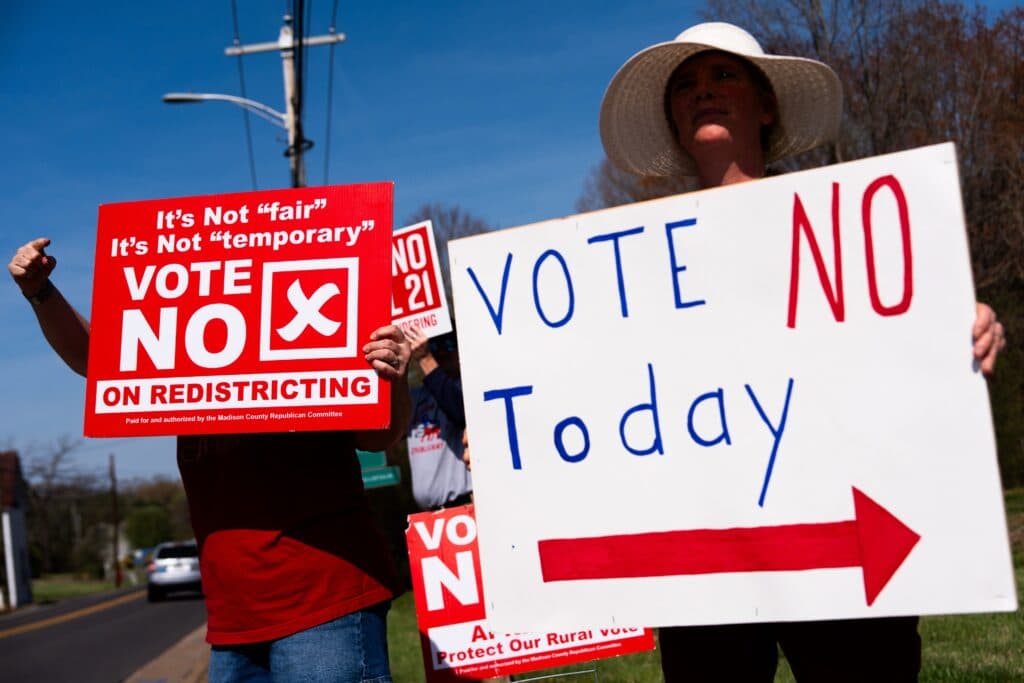
Trump team defends redistricting push as GOP faces limited gains
President Donald Trump’s political team is defending its push to redraw congressional districts mid-decade, a break from historical practice that provoked partisan retaliation, cost hundreds of millions of dollars and, so far, has left Republicans no better positioned to retain the House. Virginia voters set back Trump’s effort on Tuesday by approving a new map that shifts four seats toward Democrats. Some Republicans are now openly questioning the wisdom of opening this new front in partisan trench warfare since Trump pressured the Texas GOP last year to redistrict for a second time since the latest census. The ensuing bouts between blue and red states have improved Democrats’ prospects in nine districts nationwide compared to eight or nine for Republicans, endangering GOP control of Congress as polls show public confidence declining in Trump’s handling of the economy and the war in Iran. “When you go down the path of starting to do these things mid-decade, these are the kinds of outcomes you’re going to run into,” Senate Majority Leader John Thune (R-South Dakota) said Wednesday. “Voters are going to decide, and they did last night, and obviously not in our favor.” Trump’s political team defended the campaign in interviews, insisting the party will still benefit. Court challenges and another new map in Florida could yet yield gains, according to a senior member of Trump’s political operation who spoke on the condition of anonymity to discuss internal deliberations, citing lawsuits over some of the maps. The political team also said Republicans will benefit from trading some expensive races in Southern California and suburban Texas for cheaper districts in Missouri and North Carolina. “What I expect is that when all of this redistricting sort of continues this cycle is that there will be a narrow advantage for Republicans,” James Blair, the White House deputy chief of staff who’s on leave to run Trump’s political operation, said Wednesday on CNN’s “Inside Politics With Dana Bash.” “Democrats started this, like, years ago, and they do it through the courts.” Beyond the effect on this November’s midterms, Trump’s gambit took lawmakers’ efforts to entrench their own power to a new level, establishing a new normal in which parties gerrymander every cycle instead of once a decade. Trump’s political operation denied firing the first shot, arguing that Democrats already were using litigation to win more favorable maps and benefited from the Voting Rights Act’s requirement to have some districts where most voters are minorities. The Supreme Court is widely expected to overturn that requirement this year, which Trump’s team argues will open the door to further Republican gains. “Democrats have done it in so many other states for so long,” John Fredericks, a pro-Trump talk radio host who campaigned against the Virginia maps, said in an interview. “It’s now all-out partisan war. Best we fully engage now and get in the game.” Democrats’ win in Virginia ramps up the pressure on Florida to deliver a counterpunch — but GOP gains there may be more modest than Trump’s team hoped. Florida Gov. Ron DeSantis (R) is working on a proposed redraw of the House map there that could result in one to three more Republican districts, according to a person familiar with the conversations who spoke on the condition of anonymity to describe private planning. Some Republicans had previously floated a four- or five-seat pickup, and right-wing influencers on Wednesday continued to suggest that was possible as a way to counter Virginia. Others worry that such an aggressive effort would jeopardize other districts in a tough election year and make redistricting more vulnerable to court challenges. Leaders in the Florida House have said they will pass whatever map the governor produces, the person added. Another person familiar with the redistricting discussions said the state legislature seems “resigned” to passing DeSantis’s plan, “assuming the White House doesn’t have a concern about whatever the governor comes up with.” Katie Betta, a spokesperson for the Florida Senate, said lawmakers expect the governor’s office will share its proposal by the end of the week. Historically, state legislatures redraw congressional maps once a decade, following the 10-year census. Last year, Blair argued that Republicans could improve their footing in the midterms by drawing fresh maps in GOP-controlled states, arguing that the 2020 census overcounted several blue states and undercounted red states like Florida and Texas. Blair, whose nickname from Trump is “Brilliant James,” became so strongly identified with the mid-decade redistricting campaign that it’s sometimes called “Blairymandering.” “There has been a race to the bottom, but only on one side,” the senior member of Trump’s political team said. “What we set out to do was say, ‘We’re not going to take that anymore.’” At Trump’s instigation, Texas Republicans passed a new map designed to put five more seats into GOP hands. California Gov. Gavin Newsom (D) responded with a ballot initiative to redraw that state’s lines for five more Democratic seats, with more than $129 million spent in favor and $35 million against. Republicans picked up another likely seat in Ohio and made a second one redder. They added two more seats in Missouri and North Carolina, bringing the total to eight. But in Indiana, Republican state senators bucked Trump and refused to adopt a map that would have eliminated the state’s two Democratic-held U.S. House seats. Trump’s team vowed to punish the Republican state senators who voted no. In the state’s primary on May 5, Trump has endorsed challengers for eight of those lawmakers, and his political operation expects to win at least four of those races. The challenges received financial support from allies including Indiana Gov. Mike Braun, Sen. Jim Banks (R-Indiana) and the Club for Growth, but not Trump’s flagship super PAC, MAGA Inc. Maryland Gov. Wes Moore (D) proposed a map that would have eliminated his state’s one Republican-held seat. But the state Senate leader, also a Democrat, refused to go along with the plan, arguing that it could backfire in court and that gerrymandering was unhealthy for democracy. “If you’re going to pick a fight, at least win it,” Ari Fleischer, White House press secretary for George W. Bush, said on X. “The other side will always fight back. All this was foreseeable and avoidable. We should not have started this fight.” Trump adviser Chris LaCivita called Fleischer’s post “old line thinking — wait to get attacked. We don’t operate that way — we initiate contact.” Virginia House Minority Leader Terry Kilgore (R) said national Republicans should have provided more resources. Democrats raised at least $65 million to support the state’s redistricting referendum, versus about $33 million raised by the opposition. The referendum passed with about 51.5 percent support, as the tally was still being finalized Wednesday. “For 10 million or 20 million more dollars we could have been in play,” Kilgore said. “We were able to bring this close without money.” Republicans took some encouragement from the narrow result in a state that Kamala Harris won by 5.8 points in 2024. Blair argued on CNN that if Republicans performed equivalently in November they would keep the House. The senior member of Trump’s political team also said preliminary voting data showed the referendum prevailed by less than a point in three of the new left-leaning districts and failed by less than a point in the fourth — suggesting the new districts are not safe for Democrats. “Virginia Democrats can’t redraw reality,” said Rep. Richard Hudson (R-North Carolina), chairman of the House GOP’s campaign arm, which did not spend money against the referendum. “This close margin reinforces that Virginia is a purple state that shouldn’t be represented by a severe partisan gerrymander.” Democrats have likewise said Republicans may not win all five of the seats they’re counting on in Texas, based on the expectation that voters will reject the unpopular president’s party in November. “Donald Trump and Republicans launched this gerrymandering war,” House Minority Leader Hakeem Jeffries (D-New York) told reporters Wednesday. “And we’ve made clear as Democrats that we’re going to finish it on behalf of the American people.” Jeffries warned Republicans to expect “maximum warfare” if they proceed with redistricting in Florida. Trump responded on Wednesday as he has to other elections he’s lost, calling the voting “RIGGED” and incorrectly calling the 2024 result in Virginia “a 50-50 split.” “Let’s see if the Courts will fix this travesty of ‘Justice,’” he said on social media. Trump’s political team holds out hope that Republicans could still gain the upper hand in court. The Supreme Court of Virginia is set to receive written briefs Thursday in one of three major lawsuits filed by Republicans against the referendum. The court has issued no timeline on when it will hold a hearing or act, but has signaled that it will expedite the case given the tight timelines for upcoming elections. On Wednesday in Virginia, Tazewell County Circuit Judge Jack Hurley Jr., who had ruled against the referendum earlier this year, issued an injunction in another case to prevent the state from certifying the results of Tuesday’s election. Virginia state Attorney General Jay Jones (D) said he would immediately appeal to the state Court of Appeals. Hurley’s previous ruling had been stayed by the Virginia Supreme Court, allowing the vote to take place. Republicans are also appealing a Utah court decision that resulted in another competitive seat for Democrats. And the Justice Department sued California to block its new map, so far without success. Some House Republicans, including Wesley Hunt of Texas and Byron Donalds of Florida, who is running for governor, defended Trump on Wednesday for the redistricting push. Rep. Michael Lawler (R-New York), who holds one of the most hotly contested seats, accused New York Democrats of starting the fight in 2024 when they drew new maps because of a court order. “It’s not beneficial to the American people,” Lawler said. “It should be stopped.” Theodoric Meyer, Patrick Marley, Hannah Knowles, Gregory S. Schneider, Clara Ence Morse, Anna Liss-Roy and Emily Davies contributed to this report. The post Trump team defends redistricting push as GOP faces limited gains appeared first on Washington Post.
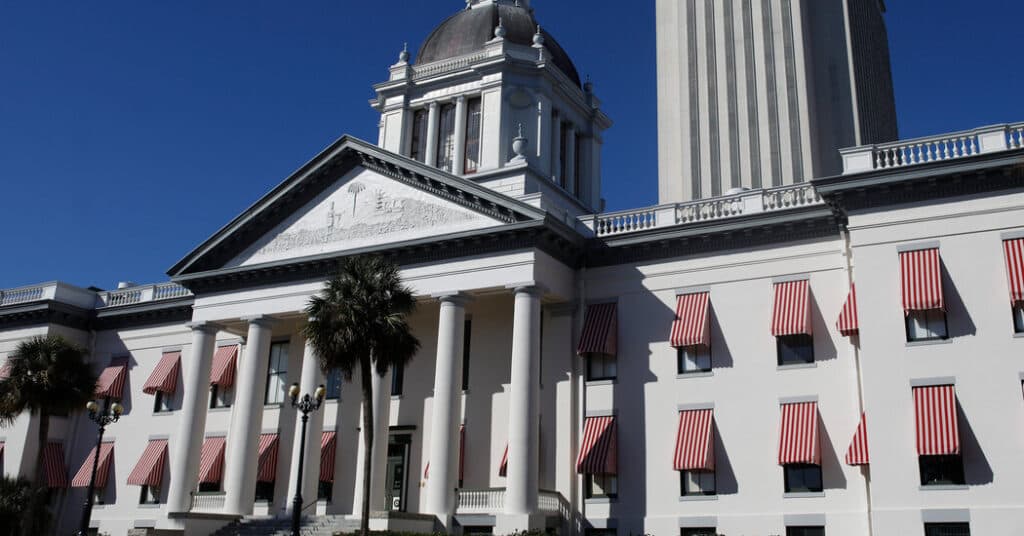
With G.O.P. in Dismay, Redistricting Fight Turns to Florida and the Courtroom
Frustrated Republicans looked Wednesday to rebound from another setback in a nationwide redistricting chess match, as the high-stakes contest turned to Florida and the courtroom. A Democratic victory on Tuesday in Virginia, where voters approved a change to the state’s House map that could give the party up to four more seats in the midterms, left Republicans with little to show for a tit-for-tat they started last year in Texas at the urging of President Trump. Republicans are holding out hope that Virginia’s top court might reverse Tuesday’s result. And they are eying a chance to gain ground by redrawing the House map in Florida, where they control the governor’s office and hold supermajorities in the Legislature. But there is growing doubt in the party about its broader strategy. “The two sides spent hundreds of millions dollars to get back to where they started, and in general, it’s turned out to be a net loser for Republicans,” said C. Stewart Verdery Jr., a Republican consultant. Among the Republicans voicing unhappiness with the Virginia result was Mr. Trump. “Let’s see if the Courts will fix this travesty of ‘Justice,’” the president wrote Wednesday on social media. Mr. Trump sought to discredit the legitimacy of the vote, falsely claiming that Republicans had been winning “until the very end” when there was a “massive ‘Mail In Ballot Drop!’” Mail-in ballots overwhelmingly favored redrawing the map, but the “Yes” side pulled ahead late Tuesday after several populous Democratic strongholds reported their votes, which were mostly cast in person. Democrats were celebrating the outcome, which delivered them a new House map with just one safely Republican seat. The state’s 11-member congressional delegation currently consists of six Democrats and five Republicans. Nationally, Democrats have drawn about even with Republicans in the gerrymandering fight. Representative Hakeem Jeffries of New York, the Democratic minority leader, said in a statement late Tuesday that his party had showed it was not going to “roll over and play dead.” Democrats would instead “hit back hard” against Republican power plays, he said. Speaker Mike Johnson, Republican of Louisiana, argued in a statement that the margin in the Virginia referendum — three percentage points as of Wednesday afternoon — showed that Democrats had carried out an “egregious” gerrymander in a politically split state. He vowed his party would fight the new map in court. The Virginia Supreme Court allowed the referendum to take place after reviewing complaints arguing that the vote was set improperly and that wording in the ballot question was misleading. But the court said it would review the issue after the vote. In an order last month, the court wrote that it had “grave concern” about the redistricting process. If the Virginia result holds, Republicans appear to have dwindling avenues to land another significant blow in the gerrymandering battles. One, in Florida, carries major risks. Although Gov. Ron DeSantis of Florida, a Republican, has pointed to a perceived census undercount as a rationale to draw new maps, any redistricting in the state would be all but certain to face court challenges. And new Republican-leaning districts could spread Republican voters too thinly and put some incumbents in greater danger of losing seats. “It’s risky what the Florida Republicans want to do,” said John Couvillon, a pollster who has worked with Republican candidates. He added that the current political environment posed particular perils for an aggressive gerrymander aimed at securing short-term benefits. Mr. DeSantis has called state lawmakers for a special redistricting session. But, less than a week before the start of the session, which was delayed, he has yet to unveil a new map for legislators to consider. Florida state lawmakers have shown little interest in redistricting and are not expected to propose their own maps. “All of these redistricting initiatives are toxic,” said Carlos Curbelo, a Republican former congressman from South Florida, adding that his party risked both weakening Republicans’ chances in certain districts and eroding faith in American democracy. Although Florida may attract much of the attention in the short term, a case before the U.S. Supreme Court could have a far more significant impact on redistricting. The court is hearing a challenge to a key provision of the Voting Rights Act that effectively prohibits racial gerrymandering. Should the court completely strike down that provision, as it appeared poised to do during oral arguments, multiple states could attempt to quickly redraw their maps. And the Supreme Court’s move could give Mr. DeSantis another justification to draw new maps in Florida. Still, it is unclear when the court will issue a ruling in this term, which ends in late June or early July. A late ruling, after dozens of states have completed their primaries, would make it difficult for many states to draw new maps before the midterms. After Republicans redrew the map in Texas to potentially add five Republican seats, Democrats in California responded by redrawing their state’s map to potentially add five Democratic seats. Three other states — Missouri, North Carolina and Ohio — redrew their maps to potentially add Republicans seats. (Ohio was required under its state Constitution to redraw its map.) As the dust was settling in Virginia, it was not clear how the referendum might affect the plans of the five Republicans in the state’s congressional delegation. Nor was it clear how many of them might run in the state’s one remaining Republican-leaning House district. The district covers territory now represented by Representatives Ben Cline and Morgan Griffith, and neither has signaled what they plan to do next. Some Virginia Republicans may announce their decisions only after the party has exhausted its efforts to counter the redistricting plan in the courts. But Representative Jen Kiggans, a Republican from Virginia Beach, plans to run for re-election in the Second Congressional District, according to her campaign manager, Joe Link. The district now has a Democratic lean. L. Louise Lucas, the Democratic president of the Virginia State Senate, posted an image on social media depicting Ms. Kiggans, Mr. Cline and two other House Republicans from Virginia — John McGuire and Rob Wittman — working at a McDonald’s. “Thank you McDonalds for hiring those facing federal job losses,” Ms. Lucas wrote. Jeff Ryer, chairman of the Virginia Republican Party, said late Tuesday that the Virginia Supreme Court could still erase the Democratic gerrymander. “For the sake of Virginia, we will hope and pray that they do,” he said. But many Republicans appeared exasperated with their party. “If you’re going to pick a fight, at least win it,” said Ari Fleischer, who was a White House press secretary for President George W. Bush, in a social media post. “The other side will always fight back. All this was foreseeable and avoidable. We should not have started this fight.” Nick Corasaniti is a Times reporter covering national politics, with a focus on voting and elections. The post With G.O.P. in Dismay, Redistricting Fight Turns to Florida and the Courtroom appeared first on New York Times.
With G.O.P. in Dismay, Redistricting Fight Turns to Florida and the Courtroom
Frustrated Republicans looked Wednesday to rebound from another setback in a nationwide redistricting chess match, as the high-stakes contest turned to Florida and the courtroom. A Democratic victory on Tuesday in Virginia, where voters approved a change to the state’s House map that could give the party up to four more seats in the midterms, left Republicans with little to show for a tit-for-tat they started last year in Texas at the urging of President Trump. Republicans are holding out hope that Virginia’s top court might reverse Tuesday’s result. And they are eying a chance to gain ground by redrawing the House map in Florida, where they control the governor’s office and hold supermajorities in the Legislature. But there is growing doubt in the party about its broader strategy. “The two sides spent hundreds of millions dollars to get back to where they started, and in general, it’s turned out to be a net loser for Republicans,” said C. Stewart Verdery Jr., a Republican consultant. Among the Republicans voicing unhappiness with the Virginia result was Mr. Trump. “Let’s see if the Courts will fix this travesty of ‘Justice,’” the president wrote Wednesday on social media. Mr. Trump sought to discredit the legitimacy of the vote, falsely claiming that Republicans had been winning “until the very end” when there was a “massive ‘Mail In Ballot Drop!’” Mail-in ballots overwhelmingly favored redrawing the map, but the “Yes” side pulled ahead late Tuesday after several populous Democratic strongholds reported their votes, which were mostly cast in person. Democrats were celebrating the outcome, which delivered them a new House map with just one safely Republican seat. The state’s 11-member congressional delegation currently consists of six Democrats and five Republicans. Nationally, Democrats have drawn about even with Republicans in the gerrymandering fight. Representative Hakeem Jeffries of New York, the Democratic minority leader, said in a statement late Tuesday that his party had showed it was not going to “roll over and play dead.” Democrats would instead “hit back hard” against Republican power plays, he said. Speaker Mike Johnson, Republican of Louisiana, argued in a statement that the margin in the Virginia referendum — three percentage points as of Wednesday afternoon — showed that Democrats had carried out an “egregious” gerrymander in a politically split state. He vowed his party would fight the new map in court. The Virginia Supreme Court allowed the referendum to take place after reviewing complaints arguing that the vote was set improperly and that wording in the ballot question was misleading. But the court said it would review the issue after the vote. In an order last month, the court wrote that it had “grave concern” about the redistricting process. If the Virginia result holds, Republicans appear to have dwindling avenues to land another significant blow in the gerrymandering battles. One, in Florida, carries major risks. Although Gov. Ron DeSantis of Florida, a Republican, has pointed to a perceived census undercount as a rationale to draw new maps, any redistricting in the state would be all but certain to face court challenges. And new Republican-leaning districts could spread Republican voters too thinly and put some incumbents in greater danger of losing seats. “It’s risky what the Florida Republicans want to do,” said John Couvillon, a pollster who has worked with Republican candidates. He added that the current political environment posed particular perils for an aggressive gerrymander aimed at securing short-term benefits. Mr. DeSantis has called state lawmakers for a special redistricting session. But, less than a week before the start of the session, which was delayed, he has yet to unveil a new map for legislators to consider. Florida state lawmakers have shown little interest in redistricting and are not expected to propose their own maps. “All of these redistricting initiatives are toxic,” said Carlos Curbelo, a Republican former congressman from South Florida, adding that his party risked both weakening Republicans’ chances in certain districts and eroding faith in American democracy. Although Florida may attract much of the attention in the short term, a case before the U.S. Supreme Court could have a far more significant impact on redistricting. The court is hearing a challenge to a key provision of the Voting Rights Act that effectively prohibits racial gerrymandering. Should the court completely strike down that provision, as it appeared poised to do during oral arguments, multiple states could attempt to quickly redraw their maps. And the Supreme Court’s move could give Mr. DeSantis another justification to draw new maps in Florida. Still, it is unclear when the court will issue a ruling in this term, which ends in late June or early July. A late ruling, after dozens of states have completed their primaries, would make it difficult for many states to draw new maps before the midterms. After Republicans redrew the map in Texas to potentially add five Republican seats, Democrats in California responded by redrawing their state’s map to potentially add five Democratic seats. Three other states — Missouri, North Carolina and Ohio — redrew their maps to potentially add Republicans seats. (Ohio was required under its state Constitution to redraw its map.) As the dust was settling in Virginia, it was not clear how the referendum might affect the plans of the five Republicans in the state’s congressional delegation. Nor was it clear how many of them might run in the state’s one remaining Republican-leaning House district. The district covers territory now represented by Representatives Ben Cline and Morgan Griffith, and neither has signaled what they plan to do next. Some Virginia Republicans may announce their decisions only after the party has exhausted its efforts to counter the redistricting plan in the courts. But Representative Jen Kiggans, a Republican from Virginia Beach, plans to run for re-election in the Second Congressional District, according to her campaign manager, Joe Link. The district now has a Democratic lean. L. Louise Lucas, the Democratic president of the Virginia State Senate, posted an image on social media depicting Ms. Kiggans, Mr. Cline and two other House Republicans from Virginia — John McGuire and Rob Wittman — working at a McDonald’s. “Thank you McDonalds for hiring those facing federal job losses,” Ms. Lucas wrote. Jeff Ryer, chairman of the Virginia Republican Party, said late Tuesday that the Virginia Supreme Court could still erase the Democratic gerrymander. “For the sake of Virginia, we will hope and pray that they do,” he said. But many Republicans appeared exasperated with their party. “If you’re going to pick a fight, at least win it,” said Ari Fleischer, who was a White House press secretary for President George W. Bush, in a social media post. “The other side will always fight back. All this was foreseeable and avoidable. We should not have started this fight.” Nick Corasaniti is a Times reporter covering national politics, with a focus on voting and elections. The post With G.O.P. in Dismay, Redistricting Fight Turns to Florida and the Courtroom appeared first on New York Times.
Trump team defends redistricting push as GOP faces limited gains
President Donald Trump’s political team is defending its push to redraw congressional districts mid-decade, a break from historical practice that provoked partisan retaliation, cost hundreds of millions of dollars and, so far, has left Republicans no better positioned to retain the House. Virginia voters set back Trump’s effort on Tuesday by approving a new map that shifts four seats toward Democrats. Some Republicans are now openly questioning the wisdom of opening this new front in partisan trench warfare since Trump pressured the Texas GOP last year to redistrict for a second time since the latest census. The ensuing bouts between blue and red states have improved Democrats’ prospects in nine districts nationwide compared to eight or nine for Republicans, endangering GOP control of Congress as polls show public confidence declining in Trump’s handling of the economy and the war in Iran. “When you go down the path of starting to do these things mid-decade, these are the kinds of outcomes you’re going to run into,” Senate Majority Leader John Thune (R-South Dakota) said Wednesday. “Voters are going to decide, and they did last night, and obviously not in our favor.” Trump’s political team defended the campaign in interviews, insisting the party will still benefit. Court challenges and another new map in Florida could yet yield gains, according to a senior member of Trump’s political operation who spoke on the condition of anonymity to discuss internal deliberations, citing lawsuits over some of the maps. The political team also said Republicans will benefit from trading some expensive races in Southern California and suburban Texas for cheaper districts in Missouri and North Carolina. “What I expect is that when all of this redistricting sort of continues this cycle is that there will be a narrow advantage for Republicans,” James Blair, the White House deputy chief of staff who’s on leave to run Trump’s political operation, said Wednesday on CNN’s “Inside Politics With Dana Bash.” “Democrats started this, like, years ago, and they do it through the courts.” Beyond the effect on this November’s midterms, Trump’s gambit took lawmakers’ efforts to entrench their own power to a new level, establishing a new normal in which parties gerrymander every cycle instead of once a decade. Trump’s political operation denied firing the first shot, arguing that Democrats already were using litigation to win more favorable maps and benefited from the Voting Rights Act’s requirement to have some districts where most voters are minorities. The Supreme Court is widely expected to overturn that requirement this year, which Trump’s team argues will open the door to further Republican gains. “Democrats have done it in so many other states for so long,” John Fredericks, a pro-Trump talk radio host who campaigned against the Virginia maps, said in an interview. “It’s now all-out partisan war. Best we fully engage now and get in the game.” Democrats’ win in Virginia ramps up the pressure on Florida to deliver a counterpunch — but GOP gains there may be more modest than Trump’s team hoped. Florida Gov. Ron DeSantis (R) is working on a proposed redraw of the House map there that could result in one to three more Republican districts, according to a person familiar with the conversations who spoke on the condition of anonymity to describe private planning. Some Republicans had previously floated a four- or five-seat pickup, and right-wing influencers on Wednesday continued to suggest that was possible as a way to counter Virginia. Others worry that such an aggressive effort would jeopardize other districts in a tough election year and make redistricting more vulnerable to court challenges. Leaders in the Florida House have said they will pass whatever map the governor produces, the person added. Another person familiar with the redistricting discussions said the state legislature seems “resigned” to passing DeSantis’s plan, “assuming the White House doesn’t have a concern about whatever the governor comes up with.” Katie Betta, a spokesperson for the Florida Senate, said lawmakers expect the governor’s office will share its proposal by the end of the week. Historically, state legislatures redraw congressional maps once a decade, following the 10-year census. Last year, Blair argued that Republicans could improve their footing in the midterms by drawing fresh maps in GOP-controlled states, arguing that the 2020 census overcounted several blue states and undercounted red states like Florida and Texas. Blair, whose nickname from Trump is “Brilliant James,” became so strongly identified with the mid-decade redistricting campaign that it’s sometimes called “Blairymandering.” “There has been a race to the bottom, but only on one side,” the senior member of Trump’s political team said. “What we set out to do was say, ‘We’re not going to take that anymore.’” At Trump’s instigation, Texas Republicans passed a new map designed to put five more seats into GOP hands. California Gov. Gavin Newsom (D) responded with a ballot initiative to redraw that state’s lines for five more Democratic seats, with more than $129 million spent in favor and $35 million against. Republicans picked up another likely seat in Ohio and made a second one redder. They added two more seats in Missouri and North Carolina, bringing the total to eight. But in Indiana, Republican state senators bucked Trump and refused to adopt a map that would have eliminated the state’s two Democratic-held U.S. House seats. Trump’s team vowed to punish the Republican state senators who voted no. In the state’s primary on May 5, Trump has endorsed challengers for eight of those lawmakers, and his political operation expects to win at least four of those races. The challenges received financial support from allies including Indiana Gov. Mike Braun, Sen. Jim Banks (R-Indiana) and the Club for Growth, but not Trump’s flagship super PAC, MAGA Inc. Maryland Gov. Wes Moore (D) proposed a map that would have eliminated his state’s one Republican-held seat. But the state Senate leader, also a Democrat, refused to go along with the plan, arguing that it could backfire in court and that gerrymandering was unhealthy for democracy. “If you’re going to pick a fight, at least win it,” Ari Fleischer, White House press secretary for George W. Bush, said on X. “The other side will always fight back. All this was foreseeable and avoidable. We should not have started this fight.” Trump adviser Chris LaCivita called Fleischer’s post “old line thinking — wait to get attacked. We don’t operate that way — we initiate contact.” Virginia House Minority Leader Terry Kilgore (R) said national Republicans should have provided more resources. Democrats raised at least $65 million to support the state’s redistricting referendum, versus about $33 million raised by the opposition. The referendum passed with about 51.5 percent support, as the tally was still being finalized Wednesday. “For 10 million or 20 million more dollars we could have been in play,” Kilgore said. “We were able to bring this close without money.” Republicans took some encouragement from the narrow result in a state that Kamala Harris won by 5.8 points in 2024. Blair argued on CNN that if Republicans performed equivalently in November they would keep the House. The senior member of Trump’s political team also said preliminary voting data showed the referendum prevailed by less than a point in three of the new left-leaning districts and failed by less than a point in the fourth — suggesting the new districts are not safe for Democrats. “Virginia Democrats can’t redraw reality,” said Rep. Richard Hudson (R-North Carolina), chairman of the House GOP’s campaign arm, which did not spend money against the referendum. “This close margin reinforces that Virginia is a purple state that shouldn’t be represented by a severe partisan gerrymander.” Democrats have likewise said Republicans may not win all five of the seats they’re counting on in Texas, based on the expectation that voters will reject the unpopular president’s party in November. “Donald Trump and Republicans launched this gerrymandering war,” House Minority Leader Hakeem Jeffries (D-New York) told reporters Wednesday. “And we’ve made clear as Democrats that we’re going to finish it on behalf of the American people.” Jeffries warned Republicans to expect “maximum warfare” if they proceed with redistricting in Florida. Trump responded on Wednesday as he has to other elections he’s lost, calling the voting “RIGGED” and incorrectly calling the 2024 result in Virginia “a 50-50 split.” “Let’s see if the Courts will fix this travesty of ‘Justice,’” he said on social media. Trump’s political team holds out hope that Republicans could still gain the upper hand in court. The Supreme Court of Virginia is set to receive written briefs Thursday in one of three major lawsuits filed by Republicans against the referendum. The court has issued no timeline on when it will hold a hearing or act, but has signaled that it will expedite the case given the tight timelines for upcoming elections. On Wednesday in Virginia, Tazewell County Circuit Judge Jack Hurley Jr., who had ruled against the referendum earlier this year, issued an injunction in another case to prevent the state from certifying the results of Tuesday’s election. Virginia state Attorney General Jay Jones (D) said he would immediately appeal to the state Court of Appeals. Hurley’s previous ruling had been stayed by the Virginia Supreme Court, allowing the vote to take place. Republicans are also appealing a Utah court decision that resulted in another competitive seat for Democrats. And the Justice Department sued California to block its new map, so far without success. Some House Republicans, including Wesley Hunt of Texas and Byron Donalds of Florida, who is running for governor, defended Trump on Wednesday for the redistricting push. Rep. Michael Lawler (R-New York), who holds one of the most hotly contested seats, accused New York Democrats of starting the fight in 2024 when they drew new maps because of a court order. “It’s not beneficial to the American people,” Lawler said. “It should be stopped.” Theodoric Meyer, Patrick Marley, Hannah Knowles, Gregory S. Schneider, Clara Ence Morse, Anna Liss-Roy and Emily Davies contributed to this report. The post Trump team defends redistricting push as GOP faces limited gains appeared first on Washington Post.
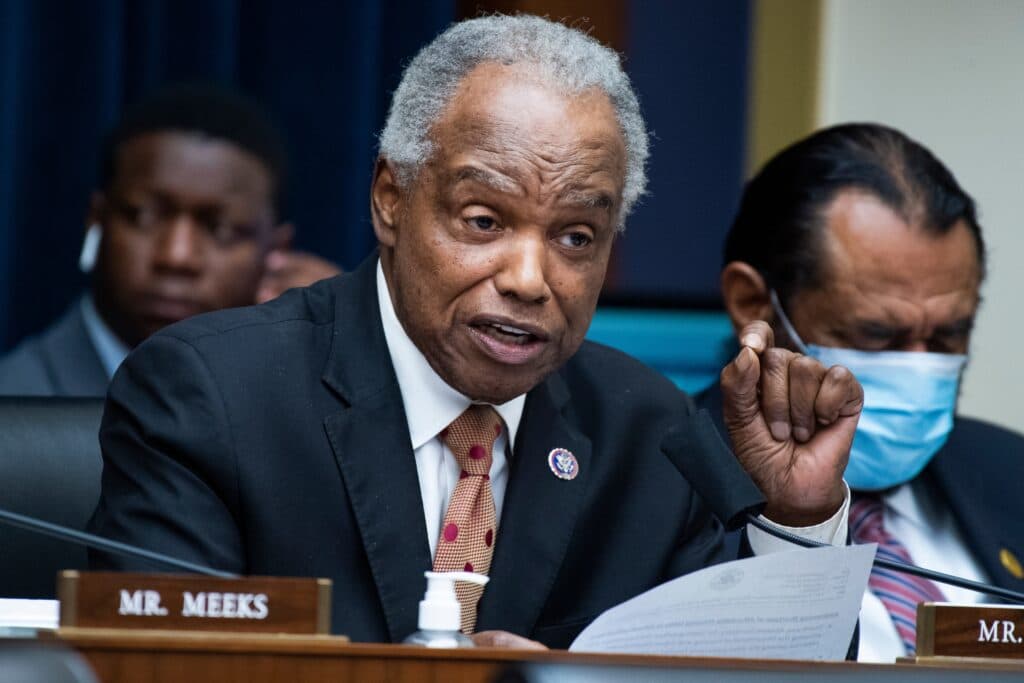
Democratic Rep. David Scott of Georgia dies at 80
Rep. David Scott (D-Georgia) has died at age 80, according to House Democratic leadership, ending a more than two-decade tenure in the House in which he rose to the ranks of a committee chairman. Scott’s office did not immediately provide a cause of death. Scott, who had served in the chamber since 2003, was seeking a 13th term in his safely Democratic district. He had faced calls from some colleagues and other Democrats to step aside to make way for a new generation of Democratic leadership in Georgia. After his previous reelection, colleagues voted Scott out as the top Democrat on the House Agriculture Committee due to various health issues that led to absences. With Scott’s death, Democrats now hold 212 seats and Republicans hold 217. The chamber also includes a former Republican who is now an independent. Scott was born in South Carolina and raised in Pennsylvania, New York and Florida. He moved to Georgia after receiving an MBA from the University of Pennsylvania. He established an advertising firm in Atlanta and launched his political career in 1974, when he was elected to the Georgia legislature. Rep. Katherine Clark (D-Massachusetts), the House Democratic whip, said in a statement Wednesday that Scott “was a stalwart champion for working families and farmers, in his beloved Georgia and across the country.” “Under his leadership, Democrats fought to strengthen our agricultural communities, reduce hunger, and bring the American Dream within reach of everyone,” Clark said. Scott is survived by his wife, Alfredia, two children and grandchildren. The post Democratic Rep. David Scott of Georgia dies at 80 appeared first on Washington Post.

College Where Charlie Kirk Was Killed Revokes Graduation Speaker’s Invite
A controversy over free speech was not how Utah Valley University had hoped to end an academic year that traumatized the campus, and shocked the nation, when the conservative activist Charlie Kirk was assassinated there in September. But that is exactly what happened when it invited Sharon McMahon, a best-selling author of inspirational nonfiction, to be its keynote commencement speaker. After Mr. Kirk’s assassination, she had lamented his death, but also said some of his rhetoric was bigoted. Many of Mr. Kirk’s legions of fans, their grief and anger all too raw, accused the university of callous indifference. Mr. Kirk was killed while making the kind of appearance for which he had become famous — a lively, often tense debate over politics, religion, gender and other touchy topics. He and his followers saw these events as defiant celebrations of free expression in the very place they said they had felt silenced. Ms. McMahon was no stranger to Utah Valley herself, having spoken there before. She had a fan in Astrid Tuminez, the university’s president, who thought Ms. McMahon’s message about unsung heroes in American history would be healing. “She is a force of nature and a force for good,” Ms. Tuminez said in a news release in late March. “Our graduates are very lucky to have her as commencement speaker!” Gratitude was not what many of Mr. Kirk’s fans felt. They demanded a new speaker. Social media lit up over comments that Ms. McMahon had posted two days after the assassination and then deleted, in which she said she understood the reasons some people found it distasteful to exalt Mr. Kirk. She cited and repeated several derogatory statements he had made about Black people, Muslims and gay people. “The murder that was horrific and should never have happened does not magically erase what was said or done,” Ms. McMahon said. “But if you were a Charlie Kirk fan, you might not realize why there is so much backlash to posts eulogizing his death.” The resurfaced posts angered conservative commentators and Republican lawmakers, who rushed to defend Mr. Kirk and urged others to tell the university they felt the same. Senator Mike Lee of Utah led a campaign over several days on X to pressure the university to revoke the invitation. “Raise your hand if you’d like @UVU to reconsider inviting Ms. McMahon,” he wrote in one post. Scores of people — health care workers, lawyers, journalists, waiters and waitresses — had already been fired or faced other repercussions for their comments about Mr. Kirk. Vice President JD Vance urged people to inform the bosses of anyone who might have celebrated the assassination. Ms. McMahon was not an especially polarizing figure before Mr. Kirk’s death. Her first reaction to the killing was one of shock and sadness as someone who had spoken at the campus herself and believed the country was becoming dangerously divided. “I am really so upset that this happened,” she said in a video she posted to Facebook the day of the assassination. “This isn’t the kind of America I want to live in.” In an interview, Ms. McMahon said she had written her posts about Mr. Kirk’s insulting remarks later to explain the polarized response to his death. “I was encountering many people who were saying, ‘I don’t get why this is such a big deal — who was he?’” she said. “And then there were the people who were absolutely devastated.” She said she counted herself among the latter category. “I was gutted.” Ms. McMahon said she felt like the victim of an organized cancellation campaign — the kind, she said, Mr. Kirk probably would have opposed. She defended her deleted post, noting she had used Mr. Kirk’s words. “There’s nothing I said that I believe was incorrect or that I feel I need to apologize for,” she said. But pulsing underneath the outrage was a sense that feelings were too raw for any speaker who had criticized Mr. Kirk after his killing and that the choice showed, at the very least, insensitivity over the trauma on campus that year. The campus chapter of Mr. Kirk’s organization, Turning Point USA, called the invitation “hurtful and callous.” “They’re just laughing in our face,” Andrew Kolvet, a co-host of “The Charlie Kirk Podcast,” said in an episode last week. “Sure, maybe they have the right to make a dumb decision,” he said of the university, adding, “We have our free speech to criticize how stupid that decision is.” Mr. Kolvet said in an interview that he agreed with the university’s decision to cancel the speech: “You can say that’s cancel culture. I call it common decency.” Ms. Tuminez, the Utah Valley president, described the threats and intimidation directed at Ms. McMahon and the university during the last two weeks as anything but decent. The university, she added, had to balance free speech against public safety. “When these things collide,” Ms. Tuminez said, “we need voices of reason and human decency.” Jeremy W. Peters is a Times reporter who covers debates over free expression and how they impact higher education and other vital American institutions. The post College Where Charlie Kirk Was Killed Revokes Graduation Speaker’s Invite appeared first on New York Times.
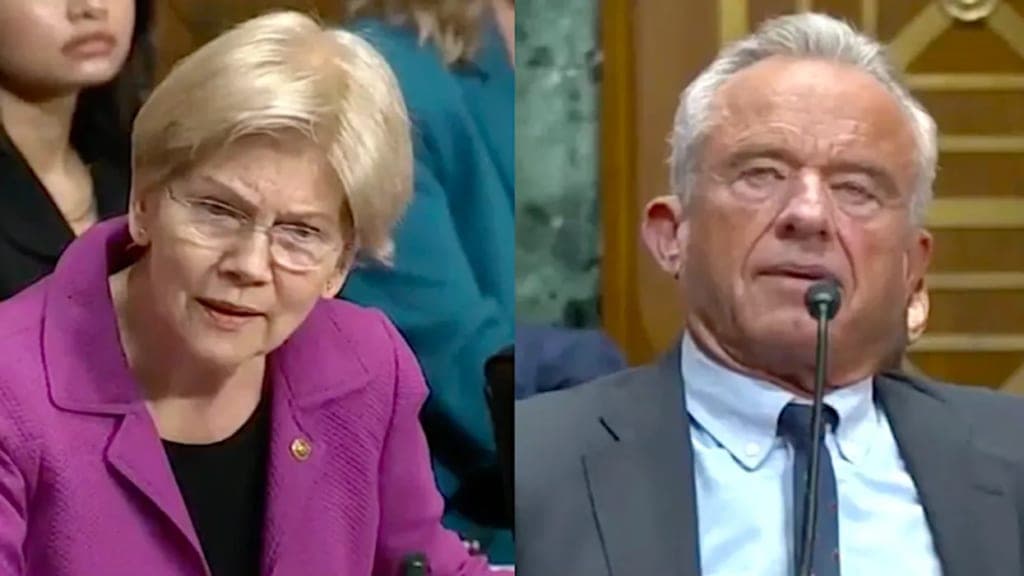
Elizabeth Warren and RFK Jr. engage in ‘fiery exchange’ over Trump’s ‘scam discounts’
CNN’s Wolf Blitzer and Pamela Brown were stunned by a “fiery exchange” between Sen. Elizabeth Warren (D-MA) and Health and Human Services Secretary Robert F. Kennedy Jr. The health and human services head testified Wednesday morning before the Senate Finance Committee, where Warren asked whether Kennedy would release information about tariff reductions for pharmaceutical companies whose products are sold on TrumpRx. “For these scam discounts, President Trump has exempted these drug companies from his 100 percent tariffs,” Warren said. “So think about that. Big Pharma makes billions of dollars in tariff relief by listing their drugs on TrumpRx, and then they don’t even lower the costs on many of these drugs. That is a great deal for Big Pharma. So, Secretary Kennedy, here’s my question: Did you sign off on these sweetheart deals for Big Pharma, or was this all President Trump’s idea?” Kennedy claimed that tariff relief was available only to companies that agreed to produce their drugs in the U.S. within the following year, and Warren asked if he had negotiated those agreement and when he would make those deals available to Congress for review. “I’ve already said this,” Kennedy said. “I’m happy to make the deals available, except for proprietary information and trade secrets.” “I will hold you to that, Mr. Secretary, because if these deals with Big Pharma are so great for Americans, then we should be able to see what promises have been made,” Warren interjected. “You have the power to make this deal yourself,” Kennedy complained. “Why don’t you do that? Why did you – we did this because you refused to do it. You have a lot more power to negotiate than we do. We’ve got the lowest prices in history.” Warren continued her attempt to ask another question about TrumpRx. “Americans are getting crushed by health care costs,” the senator said, “and you and Donald Trump are actually making the problem worse. The American public deserves better.” “Not on branded drugs,” Kennedy insisted. Warren laughed out loud and mocked his reply. “Oh, so your answer is Americans should just not take prescription drugs?” she said. “We will be directing people to the generics, to the cheapest available,” Kennedy shot back. “But a lot of doctors prescribe the brands and we’re giving them massive reductions in the brands.” “So those mass, mass discounts that people can pay,” Warren replied as Kennedy talked over her, “600 percent, they can pay hundreds of dollars on TrumpRx x or they can get it for $12 at Costco.” At that point, Sen. Ron Wyden (D-OR), the ranking Democrat on the finance committee, stepped in. “This is the second instance of the secretary denying the public’s right to know,” Wyden said. “That’s all that the members on this committee have asked for.” CNN’s producers cut away after Wyden’s interruption, and the “Situation Room” hosts reacted to the testimony. “Pretty lively exchange,” Blitzer said. “Yeah, I mean, not surprising in many ways, but certainly fiery,” Brown agreed. “It’s not clearly his first time being under scrutiny and a tough line of questioning from senator.” – YouTube youtu.be The post Elizabeth Warren and RFK Jr. engage in ‘fiery exchange’ over Trump’s ‘scam discounts’ appeared first on Raw Story.
Elizabeth Warren and RFK Jr. engage in ‘fiery exchange’ over Trump’s ‘scam discounts’
CNN’s Wolf Blitzer and Pamela Brown were stunned by a “fiery exchange” between Sen. Elizabeth Warren (D-MA) and Health and Human Services Secretary Robert F. Kennedy Jr. The health and human services head testified Wednesday morning before the Senate Finance Committee, where Warren asked whether Kennedy would release information about tariff reductions for pharmaceutical companies whose products are sold on TrumpRx. “For these scam discounts, President Trump has exempted these drug companies from his 100 percent tariffs,” Warren said. “So think about that. Big Pharma makes billions of dollars in tariff relief by listing their drugs on TrumpRx, and then they don’t even lower the costs on many of these drugs. That is a great deal for Big Pharma. So, Secretary Kennedy, here’s my question: Did you sign off on these sweetheart deals for Big Pharma, or was this all President Trump’s idea?” Kennedy claimed that tariff relief was available only to companies that agreed to produce their drugs in the U.S. within the following year, and Warren asked if he had negotiated those agreement and when he would make those deals available to Congress for review. “I’ve already said this,” Kennedy said. “I’m happy to make the deals available, except for proprietary information and trade secrets.” “I will hold you to that, Mr. Secretary, because if these deals with Big Pharma are so great for Americans, then we should be able to see what promises have been made,” Warren interjected. “You have the power to make this deal yourself,” Kennedy complained. “Why don’t you do that? Why did you – we did this because you refused to do it. You have a lot more power to negotiate than we do. We’ve got the lowest prices in history.” Warren continued her attempt to ask another question about TrumpRx. “Americans are getting crushed by health care costs,” the senator said, “and you and Donald Trump are actually making the problem worse. The American public deserves better.” “Not on branded drugs,” Kennedy insisted. Warren laughed out loud and mocked his reply. “Oh, so your answer is Americans should just not take prescription drugs?” she said. “We will be directing people to the generics, to the cheapest available,” Kennedy shot back. “But a lot of doctors prescribe the brands and we’re giving them massive reductions in the brands.” “So those mass, mass discounts that people can pay,” Warren replied as Kennedy talked over her, “600 percent, they can pay hundreds of dollars on TrumpRx x or they can get it for $12 at Costco.” At that point, Sen. Ron Wyden (D-OR), the ranking Democrat on the finance committee, stepped in. “This is the second instance of the secretary denying the public’s right to know,” Wyden said. “That’s all that the members on this committee have asked for.” CNN’s producers cut away after Wyden’s interruption, and the “Situation Room” hosts reacted to the testimony. “Pretty lively exchange,” Blitzer said. “Yeah, I mean, not surprising in many ways, but certainly fiery,” Brown agreed. “It’s not clearly his first time being under scrutiny and a tough line of questioning from senator.” – YouTube youtu.be The post Elizabeth Warren and RFK Jr. engage in ‘fiery exchange’ over Trump’s ‘scam discounts’ appeared first on Raw Story.
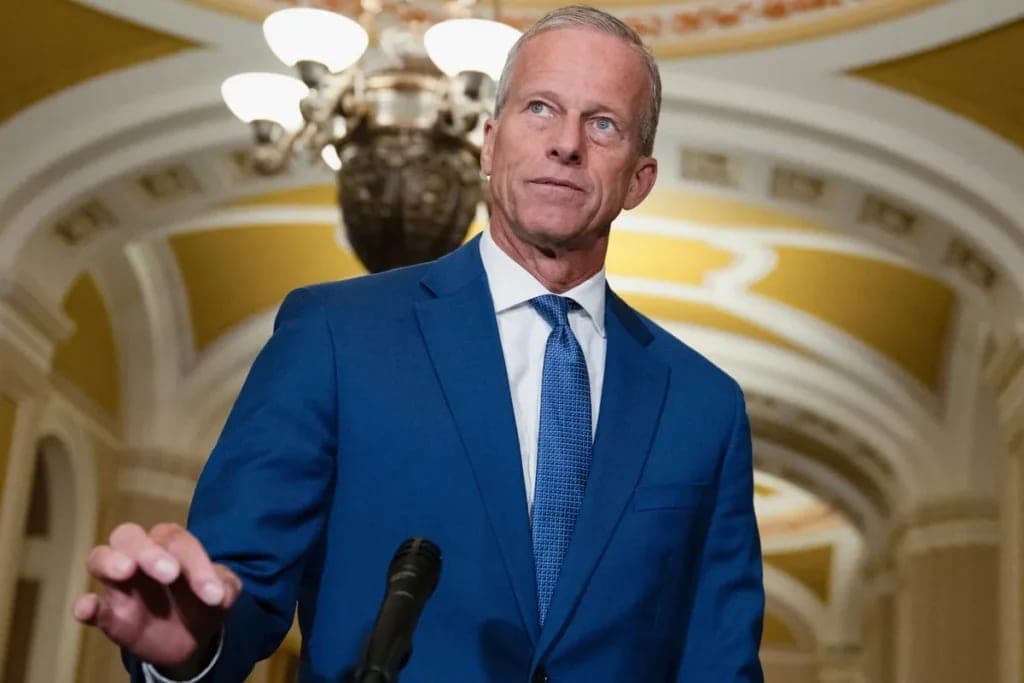
GOP civil war erupts as differences over funding bill fester: report
Republicans in Congress continue to be at odds over how to advance a reconciliation package in the Senate to fund Immigration and Customs Enforcement and Border Patrol, the Washington Examiner reported on Wednesday. At issue is whether the bill, engineered to get around a Democratic filibuster under budget rules to avoid a near-intractable fight over the oversight reforms for immigration officers Democrats are demanding, should remain a “skinny” bill that only funds those two agencies, or be loaded with other Republican priorities that can’t otherwise pass Congress — a process that would drag out passage and potentially alienate needed votes. “House Speaker Mike Johnson (R-LA) has signaled he is willing to accept the narrower approach, even as he blamed Democrats for the DHS funding shortfall,” said the report. ‘Through a targeted and narrow reconciliation process, we will fully fund the agency, including ICE and CPP for three years in the future,’ Johnson said at a Tuesday press conference. Still, some Republicans are reluctant to give up leverage for a more expansive package — particularly as hopes for a third reconciliation bill fade amid slim margins and the approaching November elections.” But others aren’t satisfied with this approach, which comes amid reports that Johnson and Senate GOP Leader John Thune (R-SD) are contradicting each other on certain aspects of the plan. “Now we’re in a position where we’re having to look at this whole reconciliation thing and whether it’s going to be a skinny reconciliation, which is really frustrating to a lot of my colleagues and myself as well, very frustrating, because this is a tool that we as a majority should be able to utilize,” said Rep. Mark Harris (R-NC). This also coincides with a separate headache as Republicans scramble to find the votes to move forward with a reauthorization bill for America’s major espionage programs. The post GOP civil war erupts as differences over funding bill fester: report appeared first on Raw Story.
GOP civil war erupts as differences over funding bill fester: report
Republicans in Congress continue to be at odds over how to advance a reconciliation package in the Senate to fund Immigration and Customs Enforcement and Border Patrol, the Washington Examiner reported on Wednesday. At issue is whether the bill, engineered to get around a Democratic filibuster under budget rules to avoid a near-intractable fight over the oversight reforms for immigration officers Democrats are demanding, should remain a “skinny” bill that only funds those two agencies, or be loaded with other Republican priorities that can’t otherwise pass Congress — a process that would drag out passage and potentially alienate needed votes. “House Speaker Mike Johnson (R-LA) has signaled he is willing to accept the narrower approach, even as he blamed Democrats for the DHS funding shortfall,” said the report. ‘Through a targeted and narrow reconciliation process, we will fully fund the agency, including ICE and CPP for three years in the future,’ Johnson said at a Tuesday press conference. Still, some Republicans are reluctant to give up leverage for a more expansive package — particularly as hopes for a third reconciliation bill fade amid slim margins and the approaching November elections.” But others aren’t satisfied with this approach, which comes amid reports that Johnson and Senate GOP Leader John Thune (R-SD) are contradicting each other on certain aspects of the plan. “Now we’re in a position where we’re having to look at this whole reconciliation thing and whether it’s going to be a skinny reconciliation, which is really frustrating to a lot of my colleagues and myself as well, very frustrating, because this is a tool that we as a majority should be able to utilize,” said Rep. Mark Harris (R-NC). This also coincides with a separate headache as Republicans scramble to find the votes to move forward with a reauthorization bill for America’s major espionage programs. The post GOP civil war erupts as differences over funding bill fester: report appeared first on Raw Story.

A $440,000 Breast Reduction: How Doctors Cashed In on a Consumer Protection Law
Dr. Norman Rowe, a plastic surgeon with offices in New York and Florida, advertises on his website that breast reduction surgery usually costs between $15,000 and $25,000. But these days, his practice sometimes earns $440,000 for the procedure. Dr. Rowe has taken full advantage of a new arbitration system, part of a major consumer protection law Congress passed in 2020 with bipartisan majorities. The No Surprises Act was designed to eliminate surprise medical bills, for patients who showed up in the emergency room and were treated by a doctor who didn’t take their insurance. It bars those out-of-network doctors from billing patients directly. Instead, they can plead their case to a government-approved arbitrator. If they win, the patient’s insurer has to pay their desired amount. By all accounts, the law is successfully protecting patients against bills from doctors they never chose. But it has also generated an expensive unanticipated consequence: Doctors have flooded the arbitration system with millions of claims. Most are winning, often collecting fees hundreds of times higher than what they could negotiate with insurers directly or what they could have earned from patients before the law passed. “I’m still glad we passed the bill, because we got consumers out of it, but we need to rein in this arbitration process,” said Representative Frank Pallone Jr., Democrat of New Jersey, who helped negotiate the law. Some health plans said they have increased premiums this year to cover the extra costs. The United Service Workers health plan, which covers 20,000 trades workers in the New York area, said it boosted premiums by an extra 1.75 percentage points to offset arbitration awards and fees. The system has also enriched a new class of specialized businesses, which assist doctors in navigating the bureaucratic process. “This is a recipe for driving up health care costs,” said Karen Ignagni, the chief executive of EmblemHealth, which sued Dr. Rowe in March, arguing his use of arbitration amounted to fraud. “There are no checks. There are no balances. There’s no oversight.” When the law passed, government officials estimated that about 17,000 cases would go to arbitration a year. Instead, doctors brought 1.2 million such cases in the first half of last year, and won around 88 percent of them. The arbitrators are doing well too. The fees they earn for deciding cases, which range from $425 to $1,150 per case, have added up. They earned $885 million from 2022 to 2024. In arbitration, doctors and insurers each propose a price for the care, along with arguments for why it is appropriate. An arbitrator must pick one of the two numbers, and there is no opportunity to appeal the decision. Arbitrators have repeatedly approved doctors’ submissions of extremely high prices for common medical procedures, according to court filings and a New York Times analysis of a large public data set with basic information on each dispute. A neurosurgery practice outside of Philadelphia went to arbitration after the health plan Highmark offered its standard payment of $2,660 for a diagnostic procedure to measure blood flow to the brain. An arbitrator awarded it $333,000 instead. A New Jersey anesthesiologist was awarded $14,560 in 2025 for an X-ray-guided steroid injection. Many claims that shouldn’t be eligible for arbitration, such as those for patients covered through the government programs Medicare and Medicaid, move through the system anyway. The claim from the New Jersey anesthesiologist involved a patient on a UnitedHealthcare Medicare Advantage plan, according to a lawsuit that UnitedHealth has filed protesting the arbitration decision. The doctor’s billing company recognized the submission was a mistake, and tried to withdraw it before the decision. But his lawyer, Eric Katz, said that the arbitrator clearly thought the award was appropriate. “No one put a gun to anyone’s head,” he said. “If the plans have issues with the way this is being handled, take it up with Congress.” Medical specialties like spinal and plastic surgery, for which surprise bills were rare before the law, now frequently have cases in arbitration, according to the public data. Some practices are using the law to obtain high payments for routine medical care, including gynecologists who have won fees 600 times higher than usual rates for placing intrauterine contraceptive devices, or I.U.D.s. The money does not always end up with the doctors but instead can go to the owners of their practices. The Times interviewed two physicians who show up repeatedly in public data files. Both said they were salaried workers and uninvolved in the claims filed under their names. The government has hired 15 firms, some boutique vendors and others large contractors, to arbitrate billing disputes. Doctors and insurers can select a firm if they agree, or be randomly assigned one if they do not. Health policy experts have been surprised to see such lopsided results that favor doctors. Some argue that because the arbitrators are paid per case, they may have an incentive to render decisions that keep doctors coming back. Arbitrators may also, like the broader public, prefer doctors to insurers, said Matthew Fiedler, a senior fellow at the Brookings Institution who has studied the law. “Arbitrators are people, and the typical person likes physicians.” David Farber, a lawyer for the newly formed Coalition of Independent Dispute Resolution Entities, a trade group representing some of the arbitration firms, disputed the notion that arbitrators acted improperly. “We’re getting the job done,” he said. “And the job is getting done consistent with how Congress set the process up to work.” Doctors contend that they only pursue arbitration when insurers offer unreasonably low payments. “We have very strong preference to be in network at sustainable rates,” said Dr. Richard Heller, a senior vice president at Radiology Partners, which employs over 4,000 radiologists. The company now has 150 staff members working to bring arbitration claims. ‘Eyebrow-raisingly high’ Dr. Rowe has practiced for decades on New York City’s Park Avenue and in New Jersey. Last winter, he opened an office in Palm Beach, a few miles from President Trump’s Mar-a-Lago resort. Just before the inauguration, he told The New York Post the office had been overrun with clients who wanted to look good when they “have face time with the leader of the free world.” Dr. Rowe did not respond to multiple requests for comment from The Times. On social media, he flaunts a lavish lifestyle. An Instagram post in February detailing his 60th birthday party featured a performance from the rapper 50 Cent and a custom-cake recreation of his 1950s vintage Porsche. Health insurers do not cover many of the elective procedures that Dr. Rowe provides, such as penis enlargement. That service became a big enough part of his practice that he has trademarked the nicknames “Dr. Penis” and “Doctor Penis.” Breast reductions, however, are different. They are often treated as medically necessary because they can reduce back and neck pain. Before the No Surprises Act, Dr. Rowe’s practice was out of network with EmblemHealth, but he accepted fees $30,000 or lower for hundreds of breast reduction surgeries, the lawsuit claims. In 2024, the lawsuit says, he started routinely performing surgeries on EmblemHealth patients in hospitals that accepted the insurer’s in-network payments, though he still did not. Under the No Surprises Act, doctors in such situations can provide patients with a waiver that warns of additional costs. If patients sign that form, the doctor has permission to bill them directly. Dr. Rowe does not hand out that waiver. That allows him to take his payment disputes to arbitration. He and his practice have filed more than 6,000 arbitration claims, according to an analysis of public filings from the Georgetown University Center on Health Insurance Reforms. He has won more than 85 percent of his cases. The lawsuit offers details about five of those cases, all for elective breast reduction surgeries. In the first case, in November 2024, Dr. Rowe won a payment of $112,500 that covered his work and the work of an assistant surgeon. In the fifth one, in late December 2025, his practice brought and won separate claims for each surgeon, totaling $440,000. Altogether, the practice won more than $1.4 million from those five surgeries alone. EmblemHealth’s strategy also changed over time. According to the suit, the company started with a low counteroffer, around $6,000. Over time, it tried offering fees as high as $124,000, but continued to lose. The plan’s lawyers also started including language in their briefs stating that Dr. Rowe “has a pattern of exploiting” the process. Dr. Rowe’s briefs to the arbitrator are not public, so it is unclear exactly what arguments he made to justify the much higher rates he was claiming in arbitration. The law directs arbitrators to consider several factors, including the usual price insurers pay, the doctor’s experience and the patient’s complexity. Elevance Health, another insurer, said that breast reduction surgeries are now its most expensive category of arbitration claims. Ariel Bayewitz, the company’s vice president of health economics, said one Connecticut plastic surgery practice has escalated its earnings from the procedure, beginning at $70,000 in 2024 and hitting $440,000 late last year. Michael Gottlieb, the lawyer who handles Dr. Rowe’s arbitration filings, declined to speak about continuing litigation but did broadly defend his clients’ seeking much higher amounts than insurers typically pay. He described the arbitrators as having “reverse sticker shock” at how low the health plan payments were. “When they got wind of three-digit payments for massive, complex surgeries and they know they pay their plumber more to fix a toilet, they just gravitate toward the providers’ offers even if they do seem eyebrow-raisingly high,” he said. Arbitration decisions are supposed to be binding, but Mr. Gottlieb said that health plans often refuse to send payment. He has sued multiple insurers over the issue. In March, one doctor he represents received a letter from the Motion Picture Industry Health Plan, which provides coverage to many film workers. The letter, which The Times reviewed, stated that the plan would not pay the amount an arbitrator selected because it “does not constitute appropriate use of plan assets.” Silence in Congress For years before the No Surprises Act passed, surprise billing was an urgent topic in Congress. Lawmakers from both parties denounced the high bills that ambushed patients. But these days in Washington, the law’s unexpected results are rarely discussed. Instead, many legislators who worked on the law emphasize the success of consumer protections. “My focus is on ensuring everyone can get the care they need without worrying about the cost,” said Patty Murray, Democrat of Washington, who helped craft the bill. Senator Bill Cassidy, Republican of Louisiana and a physician, who helped write the law, said the large awards were a sign that insurers were not making reasonable offers. ”If they’re winning, it’s because the insurance companies are not coming back with a reasonable thing,” he said. In late 2023, the Biden administration proposed changes to the arbitration system, including more scrutiny of ineligible claims. The Trump administration has not yet put into place those reforms. Only one bill has been introduced in Congress to change arbitration, and it would increase penalties on insurers that fail to pay doctors quickly after cases are concluded. Seeing little movement in Washington, health plans have turned to the courts. They have filed at least 20 lawsuits against doctors and the companies they use to submit claims. But this month judges in California and Florida dismissed two such cases, finding that Congress did not intend for judges to review the arbitration awards. If an insurer believes doctors are acting improperly, the Florida judge wrote, it should “raise the issue” in arbitration. Catie Edmondson contributed reporting. Sarah Kliff is an investigative health care reporter for The Times. The post A $440,000 Breast Reduction: How Doctors Cashed In on a Consumer Protection Law appeared first on New York Times.
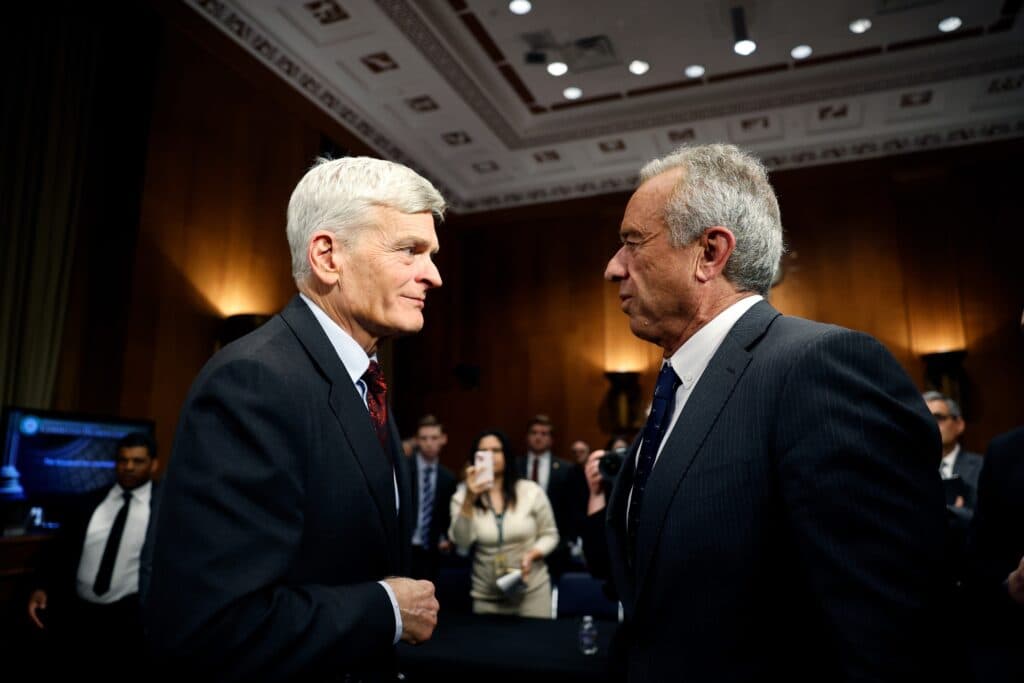
RFK Jr. to face his chief GOP antagonist in final budget hearing blitz
Health Secretary Robert F. Kennedy Jr. will cap off his marathon of congressional hearings Wednesday with his one-time political savior and now adversary Sen. Bill Cassidy (R-Louisiana) scrutinizing his leadership for the first time in over seven months. During his confirmation hearings, Kennedy made a range of commitments to Cassidy, including protecting the nation’s vaccine infrastructure. Since then, Kennedy’s health department has sowed doubt about whether vaccines cause autism (they do not, medical experts say). Kennedy will testify before the Senate Finance Committee, which Cassidy sits on, in the morning and then will discuss the health department’s budget in the Senate health committee chaired by Cassidy in the afternoon. Cassidy and several other Republican senators have stalled the advancement of President Donald Trump’s surgeon general nominee, Casey Means, who wrote the bible of the Make America Healthy Again movement that Kennedy champions. Cassidy has also accused Kennedy of “effectively” denying Americans the coronavirus vaccine and asked top officials to promote vaccination. Since their last face-to-face meeting, several political dynamics have changed as the midterm elections approach. Trump has endorsed one of Cassidy’s primary opponents, Rep. Julia Letlow (R-Louisiana), who the MAHA movement’s political arm has vowed to support with $1 million in funding. Kennedy has stopped talking as much publicly about vaccines amid polling showing skepticism of shots is politically unpopular, and his health department has undergone a leadership shake-up. (In a hearing Tuesday, Kennedy denied that the White House had told him to stop talking about vaccines.) The stakes are high for both men. Kennedy was quizzed by lawmakers Tuesday about whether he had lost favor with the White House for his controversial moves, while any support from Trump if Cassidy were to win his primary could be key. Democratic aides said senators hope to show daylight between Kennedy and the Republican Party and its president. Senators plan on honing in on health care affordability, as well as discussing Kennedy’s previous leadership choices. Kennedy, who was pugilistic in previous congressional appearances, has notably tried to tone down his rhetoric in hearings over the last week, steering conversations toward fraud issues, his popular moves on nutrition and how he believes his department is helping rural health. But fireworks over vaccines, environmental concerns and personal attacks have still ensued, as Kennedy’s push on making the country healthier again runs into the reality of the administration’s funding and staffing cuts. Kennedy notably declined to commit to not interfering with vaccine guidance of the current pick to lead the Centers for Disease Control and Prevention, Erica Schwartz, if she is confirmed — a point of contention after the ouster of previous CDC director Susan Monarez. Rep. Raul Ruiz (D-California), a physician, quizzed Kennedy Tuesday on whether he spoke with Schwartz and vetted her past statements supporting vaccines. Kennedy said he did. “This runs contrary to your dangerous anti-vaccine crusade,” Ruiz said. Throughout the hearings, Kennedy said he is not anti-vaccine, noting he was investing in vaccines, such as a universal flu shot, and his push for vaccine safety, which many medical experts say has the effect of discrediting vaccines. Kennedy will also face questions from Sen. John Barrasso of Wyoming, the No. 2 Republican in the Senate, who previously expressed concern about Kennedy’s vaccine actions. “I’m a doctor. Vaccines work. Secretary Kennedy, in your confirmation hearings, you promised to uphold the highest standards for vaccines. Since then, I’ve grown deeply concerned,” Barrasso said in September. The post RFK Jr. to face his chief GOP antagonist in final budget hearing blitz appeared first on Washington Post.
College Where Charlie Kirk Was Killed Cancels Speech
A controversy over free speech was not how Utah Valley University had hoped to end an academic year that traumatized the campus, and shocked the nation, when the conservative activist Charlie Kirk was assassinated there in September. But that is exactly what happened when it invited Sharon McMahon, a best-selling author of inspirational nonfiction, to be its keynote commencement speaker. After Mr. Kirk’s assassination, she had lamented his death, but also said some of his rhetoric was bigoted. Many of Mr. Kirk’s legions of fans, their grief and anger all too raw, accused the university of callous indifference. Mr. Kirk was killed while making the kind of appearance for which he had become famous — a lively, often tense debate over politics, religion, gender and other touchy topics. He and his followers saw these events as defiant celebrations of free expression in the very place they said they had felt silenced. Ms. McMahon was no stranger to Utah Valley herself, having spoken there before. She had a fan in Astrid Tuminez, the university’s president, who thought Ms. McMahon’s message about unsung heroes in American history would be healing. “She is a force of nature and a force for good,” Ms. Tuminez said in a news release in late March. “Our graduates are very lucky to have her as commencement speaker!” Gratitude was not what many of Mr. Kirk’s fans felt. They demanded a new speaker. Social media lit up over comments that Ms. McMahon had posted two days after the assassination and then deleted, in which she said she understood the reasons some people found it distasteful to exalt Mr. Kirk. She cited and repeated several derogatory statements he had made about Black people, Muslims and gay people. “The murder that was horrific and should never have happened does not magically erase what was said or done,” Ms. McMahon said. “But if you were a Charlie Kirk fan, you might not realize why there is so much backlash to posts eulogizing his death.” The resurfaced posts angered conservative commentators and Republican lawmakers, who rushed to defend Mr. Kirk and urged others to tell the university they felt the same. Senator Mike Lee of Utah led a campaign over several days on X to pressure the university to revoke the invitation. “Raise your hand if you’d like @UVU to reconsider inviting Ms. McMahon,” he wrote in one post. Scores of people — health care workers, lawyers, journalists, waiters and waitresses — had already been fired or faced other repercussions for their comments about Mr. Kirk. Vice President JD Vance urged people to inform the bosses of anyone who might have celebrated the assassination. Ms. McMahon was not an especially polarizing figure before Mr. Kirk’s death. Her first reaction to the killing was one of shock and sadness as someone who had spoken at the campus herself and believed the country was becoming dangerously divided. “I am really so upset that this happened,” she said in a video she posted to Facebook the day of the assassination. “This isn’t the kind of America I want to live in.” In an interview, Ms. McMahon said she had written her posts about Mr. Kirk’s insulting remarks later to explain the polarized response to his death. “I was encountering many people who were saying, ‘I don’t get why this is such a big deal — who was he?’” she said. “And then there were the people who were absolutely devastated.” She said she counted herself among the latter category. “I was gutted.” Ms. McMahon said she felt like the victim of an organized cancellation campaign — the kind, she said, Mr. Kirk probably would have opposed. She defended her deleted post, noting she had used Mr. Kirk’s words. “There’s nothing I said that I believe was incorrect or that I feel I need to apologize for,” she said. But pulsing underneath the outrage was a sense that feelings were too raw for any speaker who had criticized Mr. Kirk after his killing and that the choice showed, at the very least, insensitivity over the trauma on campus that year. The campus chapter of Mr. Kirk’s organization, Turning Point USA, called the invitation “hurtful and callous.” “They’re just laughing in our face,” Andrew Kolvet, a co-host of “The Charlie Kirk Podcast,” said in an episode last week. “Sure, maybe they have the right to make a dumb decision,” he said of the university, adding, “We have our free speech to criticize how stupid that decision is.” Mr. Kolvet said in an interview that he agreed with the university’s decision to cancel the speech: “You can say that’s cancel culture. I call it common decency.” Ms. Tuminez, the Utah Valley president, described the threats and intimidation directed at Ms. McMahon and the university during the last two weeks as anything but decent. The university, she added, had to balance free speech against public safety. “When these things collide,” Ms. Tuminez said, “we need voices of reason and human decency.” Jeremy W. Peters is a Times reporter who covers debates over free expression and how they impact higher education and other vital American institutions. The post College Where Charlie Kirk Was Killed Cancels Speech appeared first on New York Times.
RFK Jr. to face his chief GOP antagonist in final budget hearing blitz
Health Secretary Robert F. Kennedy Jr. will cap off his marathon of congressional hearings Wednesday with his one-time political savior and now adversary Sen. Bill Cassidy (R-Louisiana) scrutinizing his leadership for the first time in over seven months. During his confirmation hearings, Kennedy made a range of commitments to Cassidy, including protecting the nation’s vaccine infrastructure. Since then, Kennedy’s health department has sowed doubt about whether vaccines cause autism (they do not, medical experts say). Kennedy will testify before the Senate Finance Committee, which Cassidy sits on, in the morning and then will discuss the health department’s budget in the Senate health committee chaired by Cassidy in the afternoon. Cassidy and several other Republican senators have stalled the advancement of President Donald Trump’s surgeon general nominee, Casey Means, who wrote the bible of the Make America Healthy Again movement that Kennedy champions. Cassidy has also accused Kennedy of “effectively” denying Americans the coronavirus vaccine and asked top officials to promote vaccination. Since their last face-to-face meeting, several political dynamics have changed as the midterm elections approach. Trump has endorsed one of Cassidy’s primary opponents, Rep. Julia Letlow (R-Louisiana), who the MAHA movement’s political arm has vowed to support with $1 million in funding. Kennedy has stopped talking as much publicly about vaccines amid polling showing skepticism of shots is politically unpopular, and his health department has undergone a leadership shake-up. (In a hearing Tuesday, Kennedy denied that the White House had told him to stop talking about vaccines.) The stakes are high for both men. Kennedy was quizzed by lawmakers Tuesday about whether he had lost favor with the White House for his controversial moves, while any support from Trump if Cassidy were to win his primary could be key. Democratic aides said senators hope to show daylight between Kennedy and the Republican Party and its president. Senators plan on honing in on health care affordability, as well as discussing Kennedy’s previous leadership choices. Kennedy, who was pugilistic in previous congressional appearances, has notably tried to tone down his rhetoric in hearings over the last week, steering conversations toward fraud issues, his popular moves on nutrition and how he believes his department is helping rural health. But fireworks over vaccines, environmental concerns and personal attacks have still ensued, as Kennedy’s push on making the country healthier again runs into the reality of the administration’s funding and staffing cuts. Kennedy notably declined to commit to not interfering with vaccine guidance of the current pick to lead the Centers for Disease Control and Prevention, Erica Schwartz, if she is confirmed — a point of contention after the ouster of previous CDC director Susan Monarez. Rep. Raul Ruiz (D-California), a physician, quizzed Kennedy Tuesday on whether he spoke with Schwartz and vetted her past statements supporting vaccines. Kennedy said he did. “This runs contrary to your dangerous anti-vaccine crusade,” Ruiz said. Throughout the hearings, Kennedy said he is not anti-vaccine, noting he was investing in vaccines, such as a universal flu shot, and his push for vaccine safety, which many medical experts say has the effect of discrediting vaccines. Kennedy will also face questions from Sen. John Barrasso of Wyoming, the No. 2 Republican in the Senate, who previously expressed concern about Kennedy’s vaccine actions. “I’m a doctor. Vaccines work. Secretary Kennedy, in your confirmation hearings, you promised to uphold the highest standards for vaccines. Since then, I’ve grown deeply concerned,” Barrasso said in September. The post RFK Jr. to face his chief GOP antagonist in final budget hearing blitz appeared first on Washington Post.

Here are Virginia’s new congressional districts and who is running
A Virginia referendum to redraw the state’s congressional districts is set to upend House races, turning some contests newly competitive and endangering four Republican incumbents. The redistricting plan approved by voters Tuesday was drawn by Democratic state legislators to help their party secure 10 out of Virginia’s 11 House seats, instead of the six they now hold. Those lawmakers said it was necessary as a temporary measure until 2030 to counter President Donald Trump’s push to protect the GOP House majority by redrawing districts in Texas and other red states to favor Republicans. If the measure survives legal challenges, the new maps will take effect in time for the November election. They split blue, vote-rich Northern Virginia into five districts that stretch further south into rural red territory, favoring Democrats and creating one seat that may not have an incumbent. Some Democratic candidates have shifted the seat in which they’re running to take up a newly blue seat. More campaigns pegged to the new maps are likely to be announced in coming weeks. The state’s Republican incumbents, meanwhile, will be bracing for a political kind of musical chairs. Reps. John McGuire and Rob Wittman will be shifted out of their current districts and into new, far bluer seats, while Rep. Ben Cline has been drawn into the red seat held by another GOP incumbent, Rep. Morgan Griffith. U.S. representatives in Virginia are not required to live within the congressional district they represent, but their new seats could make it much harder to win reelection. The state’s fifth Republican incumbent, Rep. Jen Kiggans, had already been facing a tough reelection battle in her battleground district but could face steeper odds. The nonpartisan Virginia Public Access Project made it possible to type in your address at the bottom of this page to look up your new district. Here’s what to know about the new districts and who is running. District 1: Rob Wittman (R) How it physically changed: A reddish district that included the Richmond suburbs and Northern Neck will become a blue one that stretches along Interstate 95 through the Fredericksburg area and a slice of Northern Virginia. It had been previously been considered “likely Republican” by the nonpartisan elections site Sabato’s Crystal Ball but is now “likely Democratic.” Change in partisan lean: +5 Trump in 2024 to +8 Harris under new map. Who is running: Wittman, whose home is outside the district’s new lines, is fundraising for a reelection bid. His campaign did not respond to a request for comment on his plans under redistricting. On the Democratic side, Rep. Eugene Vindman said he plans to switch to this newly blue seat, which includes his home in eastern Prince William County. He would face a long list of lesser-known candidates who had lined up to challenge Wittman, including business lawyer Mel Tull and former Navy officer Jason Knapp. District 2: Jen Kiggans (R) How it physically changed: One of the country’s most consistently swingy districts — changing hands three times in the last decade — will become a bit more Democratic leaning under the new maps. The seat keeps its anchor in Virginia Beach but takes in some bluer parts of the Hampton Roads area. Sabato’s Crystal Ball has shifted this former “toss-up” seat into the “leans Democratic category.” Change in partisan lean: Even in 2024 to +5 Harris under new map. Who is running: Kiggans is expected to run for reelection. A crowded Democratic field is led by former congresswoman Elaine Luria, who represented the area for two terms before losing to Kiggans in 2022. Other Democratic candidates include Matt Strickler, a former Biden administration official and Virginia secretary of natural resources and physician Nila Devanath. District 3: Bobby Scott (D) How it physically changed: This majority Black district in the Hampton Roads area remains solidly Democratic and keeps much of its current territory in Norfolk, Newport News and Portsmouth, while extending further south into suburban parts of Chesapeake. Change in partisan lean: +35 Harris in 2024 to +26 Harris under new map. Who is running: Scott is expected to run for reelection and does not appear to have a serious challenger so far. District 4: Jennifer McClellan (D) How it physically changed: This district covering Richmond and parts of Southside Virginia will remain solidly blue but less so. It gives up some Richmond suburbs and stretches further west to include more of the rural areas bordering North Carolina — and also inches further east onto the Virginia Peninsula. Change in partisan lean: +33 Harris in 2024 to +16 Harris under new map. Who is running: McClellan is expected to run for reelection, and no other Democrats or Republicans have filed to run so far. District 5: John McGuire (R) How it physically changed: This safe Republican district in Central and Southern Virginia will undergo one of the commonwealth’s most dramatic shifts. It will become a “likely Democratic” seat, according to Sabato’s Crystal Ball, by adding most of the voter-rich suburbs west and north of Richmond. Change in partisan lean: +12 Trump in 2024 to +9 Harris under new map. Who is running: McGuire has said he is running for reelection, but his home in Louisa County has been moved into another blue seat in the 7th Congressional District. Shannon Taylor, the top prosecutor in the Richmond suburb of Henrico County, who unsuccessfully ran for attorney general last year, confirmed Tuesday she switch into this race. She will likely lead the field of Democratic candidates. District 6: Ben Cline (R) How it physically changed: What was once a safe Republican seat covering the Shenandoah Valley was redrawn into a much more competitive — and slightly Democratic-leaning — district that connects many of the state’s biggest college towns, including Harrisonburg (home to James Madison University); Charlottesville (University of Virginia); Lynchburg (Liberty University) and Blacksburg (Virginia Tech). Sabato’s Crystal Ball now says it “leans Democratic.” Change in partisan lean: +24 Trump in 2024 to +3 Harris under new map. Who is running: Cline has said he will run for reelection, though his home has been moved into the much redder 9th District and he could make a bid there instead. Top Democratic candidates are likely to include former congressman, gubernatorial candidate and Obama administration official Tom Perriello and best-selling “Dopesick” author Beth Macy. State Del. Sam Rasoul (Roanoke) has also been exploring a run. District 7: Eugene Vindman (D) How it physically changed: This district in the Fredericksburg area had been considered one of the state’s most competitive congressional seats. It now becomes a more Democratic seat in largely new turf that resembles the shape of a lobster: The district’s “tail” — and its largest concentration of voters — runs through a strip of deep-blue Arlington and Fairfax counties, with one claw reaching towards the West Virginia border and another toward Richmond’s western exurbs. Change in partisan lean: +3 Harris in 2024 to +8 Harris under new map. Who is running: Vindman had previously said he will run in the new 1st District — where he lives — under the new map. A slew of prominent Democrats have jumped at the opportunity to represent this open seat, including former Virginia first lady Dorothy McAuliffe, Olivia Troye, a Trump administration official turned GOP critic, former federal prosecutor JP Cooney, state Sen. Saddam Salim (Falls Church) and state Dels. Dan Helmer (Fairfax) and Adele McClure (Arlington). State Sen. Tara Durant (Stafford) and former Army official Doug Ollivant are among the GOP candidates who had planned to challenge Vindman. District 8: Don Beyer (D) How it physically changed: This district had been among the densest and bluest in Virginia, containing the affluent Northern Virginia suburbs closest to D.C. It will keep some of Arlington County and Alexandria but also extend more than 100 miles along the Potomac River to take in the redder coastal Northern Neck region all the way to Williamsburg. Change in partisan lean: +49 Harris in 2024 to +18 Harris under new map. Who is running: Beyer has announced he will seek reelection. He faces a handful of Democratic challengers, including former CIA officer Adam Dunigan and former Alexandria city council member Mo Seifeldein, as well as a few lesser-known Republicans. District 9: Morgan Griffith (R) How it physically changed: This seat in Southwest Virginia will be the only one in the commonwealth to remain safely Republican, giving up the bluer Roanoke area while taking in more rural territory further north in the Shenandoah Valley. Change in partisan lean: +44 Trump in 2024 to +49 Trump under new map. Who is running: Griffith is expected to seek reelection, though he could see a primary challenge from Cline, who was redrawn into the same district and whose seat has become bluer. At least three Democrats have filed for their party’s nomination. District 10: Suhas Subramanyam (D) How it physically changed: This district will maintain its anchor in Loudoun County but lose some parts of the Virginia Piedmont for populous blue suburbs in western Fairfax County and redder communities in the northern Shenandoah Valley. Change in partisan lean: +8 Harris in 2024 to +12 Harris under new map. Who is running: Subramanyam has announced he will seek reelection. Former Republican state Senate candidate Julie Perry is hoping to challenge him. District 11: James Walkinshaw (D) How it physically changed: This district, which sits almost entirely within Fairfax County, will keep part of that blue stronghold but become less suburban and less solidly Democratic. It will stretch west from Reston in the D.C. suburbs to the West Virginia border, taking in exurbs in Prince William County and rural farmland in the Virginia Piedmont and the Shenandoah Valley. Change in partisan lean: +34 Harris in 2024 to +13 Harris under new map. Who is running: Walkinshaw has announced he will seek reelection. He faces a primary challenge from Bree Fram, a former Space Force colonel who retired amid Trump’s ban on openly transgender service members in the military. The post Here are Virginia’s new congressional districts and who is running appeared first on Washington Post.
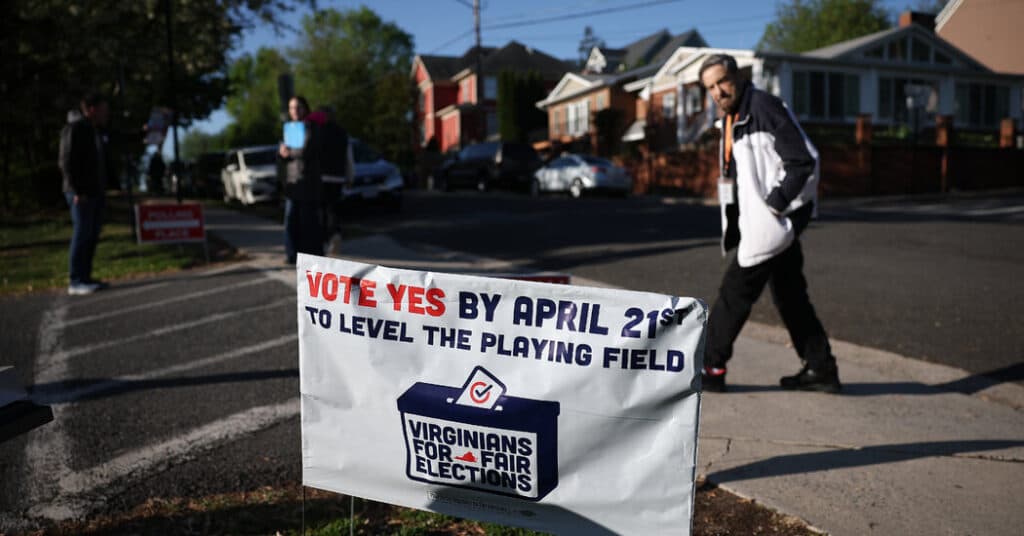
In Virginia Redistricting Win, Democrats Play Hardball to Thwart Trump
Democrats’ success in pushing through one of the country’s most aggressively gerrymandered congressional maps on Tuesday in Virginia represented the latest example of the party’s willingness to take the gloves off as it seeks to win back control of Congress and thwart President Trump’s agenda. It was a stark reversal for a party that has decried partisan gerrymandering for years. But Democrats said that the new map, which could flip as many as four Republican-held seats blue, was necessary to counter similar G.O.P. efforts in Texas and other states. Their new mantra: It’s time to play hardball. “While many expected Democrats to roll over and play dead, we did the opposite,” Hakeem Jeffries, the House Democratic leader from New York, said in a statement after The Associated Press called the race. “Democrats did not step back. We fought back. When they go low, we hit back hard.” The party’s newly combative approach extends beyond redistricting as it has felt a new urgency to regain power in Washington. Despite their qualms over dark money, Democrats are nowadays more reliant on it than Republicans. And on Capitol Hill, they have adopted an uncompromising approach to spending negotiations, forcing a partial government shutdown earlier this year after they refused to fund immigration enforcement operations without new restrictions on federal agents’ tactics. All of it amounts to a new openness among Democrats — spurred on by angry constituents demanding more forceful opposition to Mr. Trump — to reverse their opposition to political tactics they once considered bad governance. And none has been more head-spinning than the Virginia gerrymander, which transforms a nearly evenly divided 11-member congressional delegation into one with only one surefire Republican seat. Proponents framed the initiative as a less than ideal but very necessary rebuttal to a gerrymandering war kicked off by Republicans. The measure allows for the “temporary” adoption of a new map, returning control of the process to an independent commission in 2031. “We cannot bring a stick to a knife fight,” said Kelly Hall, the executive director of the Fairness Project, which spent more than $12 million backing the redistricting referendum. With Republicans “assaulting the integrity of representation in the U.S. Congress, we need to be able to respond with every tool that we have,” she said. Even getting the measure on the Virginia ballot required some parliamentary trickery. Without the two-thirds vote needed in each house to call a special legislative session last year, Democrats instead seized on a budget session called by Glenn Youngkin, then the governor and a Republican, to schedule the referendum. Such tactics represent a dramatic reversal from the recent past. Throughout the Trump era, Democrats have portrayed themselves as the high-minded party focused on preserving democratic institutions. In an ideal world, they say, Citizens United — the 2010 Supreme Court ruling removing limits on independent political spending by corporations — would be overturned, and there would be a nationwide prohibition on partisan gerrymandering. “We would like to get rid of this stuff,” said Tim Persico, a veteran Democratic strategist. “But in a world where one side is still actively, openly, cravenly engaging in it, we cannot afford to not engage by the same rules.” That contrast has opened the party to attacks from Republicans, who have had no trouble finding national Democrats’ past words opposing partisan gerrymandering. Dueling video advertisements from former President Barack Obama in the closing weeks of the Virginia campaign, which attracted more than $80 million in spending, underscored how Democrats have evolved: Republicans ran ads featuring Mr. Obama’s past opposition to partisan gerrymandering, while Democrats highlighted his current support for the measure. “This is all about having a level playing field,” said Representative Eugene Vindman, a Virginia Democrat. Mr. Trump, he said, shouldn’t feel like he could take “vengeance out on Democratic-leaning states and expect Democrats to always take the high ground.” Democrats are hardly alone in showing flexibility when it comes to hewing to past positions. When Mr. Trump campaigned against the Virginia measure on the eve of the vote, he told a local radio host: “I don’t know if you know what gerrymandering is, but it’s not good.” But it was the president who helped kick off the mid-decade gerrymandering battles with his call last year for Texas to draw new maps to benefit Republicans. Some Democrats remain divided over just how far they should go in trying to place a check on Mr. Trump’s administration. The debate has played out in statehouses, federal primaries and national party meetings this spring. A similar effort to flip a Republican-held seat in Maryland by gerrymandering its map failed to advance this month, after the Democratic president of the State Senate refused to bring it to a final vote. The argument against redistricting there was more tactical than ethical — the senate president suggested that a new map could backfire or face legal challenges — but he also noted in a letter that he had “personal concerns with mid-cycle redistricting and its potential long-term effects on the resilience and trust in democracy.” Maryland’s eight-member congressional delegation includes just a single Republican, meaning the new map would have eliminated any Republican representation in the House. Roughly one-third of Marylanders voted for Mr. Trump in 2024. The fault lines are more muddled when it comes to how willingly Democratic candidates should welcome money from groups that accept unlimited corporate contributions, sometimes with no disclosure requirements. Many in the party view so-called “dark money” — money from undisclosed donors — as morally reprehensible. And they decry the influence of corporate interests, in particular groups representing cryptocurrency and artificial intelligence companies, and powerful interest groups funded by major donors such as the American Israel Public Affairs Committee, the hard-line pro-Israel group. That debate was on display this month at a Democratic National Committee meeting in New Orleans, where some Democrats pushed for resolutions condemning dark money. One such resolution moved forward but was stripped of language specifically calling out A.I. and crypto money. Another, targeting AIPAC, failed to pass, partly because the D.N.C. had already resolved to ban dark money from presidential primaries, but also because Democrats are wrestling with how firmly to call out AIPAC and whether they want to discourage candidates from accepting large financial contributions. Melissa Bean, who won a Democratic primary in Illinois last month with the help of millions of dollars from an AIPAC-linked group, echoed the sentiments of other Democrats when she told a local radio station that she did not think “we as Democrats should tie our hands behind our backs” by turning down campaign contributions. “The stakes are incredibly high, and we have to ensure that we have the resources that are required to at least get one branch of government,” said Rusty Hicks, the chair of the California Democratic Party, who was in attendance in New Orleans. Others at the D.N.C. meeting took a harder line. “There is so much public outcry and opposition that I worry if we don’t reject it, or if we don’t show an intent to reject it or a plan to move away from it, we will have more people sit out, because they’re like, ‘They’re all evil,’” said Francesca Hong, a Democratic candidate for governor in Wisconsin. “We should read what the majority of people are saying. There’s bipartisan opposition to AIPAC.” For all such hand-wringing, Democrats continue to benefit from hundreds of millions of dollars from increasingly opaque interest groups and wealthy donors. A big test of Democrats’ newfound appetite to play hardball came last year in California, where Gov. Gavin Newsom persuaded voters to pass Proposition 50, bypassing an independent redistricting panel and gerrymandering California’s map to flip five Republican seats. The effort’s stewards took a cautious approach, knowing how some on the left would feel about unwinding policies seen as good for democracy, said Paul Mitchell, the Democratic strategist tapped to redraw California’s map. They pitched the initiative as a limited action in response to Republican redistricting in Texas, and framed it as a temporary Band-Aid that would sideline the independent panel for only three election cycles. “It wasn’t 10 toes in on this idea of, ‘If they go low, we’re going to go lower,’” Mr. Mitchell said. “It was, ‘If they’re going to go low, we’ll go low for a short period of time and then go right back to going high.’” Kellen Browning is a Times political reporter based in San Francisco. The post In Virginia Redistricting Win, Democrats Play Hardball to Thwart Trump appeared first on New York Times.
Here are Virginia’s new congressional districts and who is running
A Virginia referendum to redraw the state’s congressional districts is set to upend House races, turning some contests newly competitive and endangering four Republican incumbents. The redistricting plan approved by voters Tuesday was drawn by Democratic state legislators to help their party secure 10 out of Virginia’s 11 House seats, instead of the six they now hold. Those lawmakers said it was necessary as a temporary measure until 2030 to counter President Donald Trump’s push to protect the GOP House majority by redrawing districts in Texas and other red states to favor Republicans. If the measure survives legal challenges, the new maps will take effect in time for the November election. They split blue, vote-rich Northern Virginia into five districts that stretch further south into rural red territory, favoring Democrats and creating one seat that may not have an incumbent. Some Democratic candidates have shifted the seat in which they’re running to take up a newly blue seat. More campaigns pegged to the new maps are likely to be announced in coming weeks. The state’s Republican incumbents, meanwhile, will be bracing for a political kind of musical chairs. Reps. John McGuire and Rob Wittman will be shifted out of their current districts and into new, far bluer seats, while Rep. Ben Cline has been drawn into the red seat held by another GOP incumbent, Rep. Morgan Griffith. U.S. representatives in Virginia are not required to live within the congressional district they represent, but their new seats could make it much harder to win reelection. The state’s fifth Republican incumbent, Rep. Jen Kiggans, had already been facing a tough reelection battle in her battleground district but could face steeper odds. The nonpartisan Virginia Public Access Project made it possible to type in your address at the bottom of this page to look up your new district. Here’s what to know about the new districts and who is running. District 1: Rob Wittman (R) How it physically changed: A reddish district that included the Richmond suburbs and Northern Neck will become a blue one that stretches along Interstate 95 through the Fredericksburg area and a slice of Northern Virginia. It had been previously been considered “likely Republican” by the nonpartisan elections site Sabato’s Crystal Ball but is now “likely Democratic.” Change in partisan lean: +5 Trump in 2024 to +8 Harris under new map. Who is running: Wittman, whose home is outside the district’s new lines, is fundraising for a reelection bid. His campaign did not respond to a request for comment on his plans under redistricting. On the Democratic side, Rep. Eugene Vindman said he plans to switch to this newly blue seat, which includes his home in eastern Prince William County. He would face a long list of lesser-known candidates who had lined up to challenge Wittman, including business lawyer Mel Tull and former Navy officer Jason Knapp. District 2: Jen Kiggans (R) How it physically changed: One of the country’s most consistently swingy districts — changing hands three times in the last decade — will become a bit more Democratic leaning under the new maps. The seat keeps its anchor in Virginia Beach but takes in some bluer parts of the Hampton Roads area. Sabato’s Crystal Ball has shifted this former “toss-up” seat into the “leans Democratic category.” Change in partisan lean: Even in 2024 to +5 Harris under new map. Who is running: Kiggans is expected to run for reelection. A crowded Democratic field is led by former congresswoman Elaine Luria, who represented the area for two terms before losing to Kiggans in 2022. Other Democratic candidates include Matt Strickler, a former Biden administration official and Virginia secretary of natural resources and physician Nila Devanath. District 3: Bobby Scott (D) How it physically changed: This majority Black district in the Hampton Roads area remains solidly Democratic and keeps much of its current territory in Norfolk, Newport News and Portsmouth, while extending further south into suburban parts of Chesapeake. Change in partisan lean: +35 Harris in 2024 to +26 Harris under new map. Who is running: Scott is expected to run for reelection and does not appear to have a serious challenger so far. District 4: Jennifer McClellan (D) How it physically changed: This district covering Richmond and parts of Southside Virginia will remain solidly blue but less so. It gives up some Richmond suburbs and stretches further west to include more of the rural areas bordering North Carolina — and also inches further east onto the Virginia Peninsula. Change in partisan lean: +33 Harris in 2024 to +16 Harris under new map. Who is running: McClellan is expected to run for reelection, and no other Democrats or Republicans have filed to run so far. District 5: John McGuire (R) How it physically changed: This safe Republican district in Central and Southern Virginia will undergo one of the commonwealth’s most dramatic shifts. It will become a “likely Democratic” seat, according to Sabato’s Crystal Ball, by adding most of the voter-rich suburbs west and north of Richmond. Change in partisan lean: +12 Trump in 2024 to +9 Harris under new map. Who is running: McGuire has said he is running for reelection, but his home in Louisa County has been moved into another blue seat in the 7th Congressional District. Shannon Taylor, the top prosecutor in the Richmond suburb of Henrico County, who unsuccessfully ran for attorney general last year, confirmed Tuesday she switch into this race. She will likely lead the field of Democratic candidates. District 6: Ben Cline (R) How it physically changed: What was once a safe Republican seat covering the Shenandoah Valley was redrawn into a much more competitive — and slightly Democratic-leaning — district that connects many of the state’s biggest college towns, including Harrisonburg (home to James Madison University); Charlottesville (University of Virginia); Lynchburg (Liberty University) and Blacksburg (Virginia Tech). Sabato’s Crystal Ball now says it “leans Democratic.” Change in partisan lean: +24 Trump in 2024 to +3 Harris under new map. Who is running: Cline has said he will run for reelection, though his home has been moved into the much redder 9th District and he could make a bid there instead. Top Democratic candidates are likely to include former congressman, gubernatorial candidate and Obama administration official Tom Perriello and best-selling “Dopesick” author Beth Macy. State Del. Sam Rasoul (Roanoke) has also been exploring a run. District 7: Eugene Vindman (D) How it physically changed: This district in the Fredericksburg area had been considered one of the state’s most competitive congressional seats. It now becomes a more Democratic seat in largely new turf that resembles the shape of a lobster: The district’s “tail” — and its largest concentration of voters — runs through a strip of deep-blue Arlington and Fairfax counties, with one claw reaching towards the West Virginia border and another toward Richmond’s western exurbs. Change in partisan lean: +3 Harris in 2024 to +8 Harris under new map. Who is running: Vindman had previously said he will run in the new 1st District — where he lives — under the new map. A slew of prominent Democrats have jumped at the opportunity to represent this open seat, including former Virginia first lady Dorothy McAuliffe, Olivia Troye, a Trump administration official turned GOP critic, former federal prosecutor JP Cooney, state Sen. Saddam Salim (Falls Church) and state Dels. Dan Helmer (Fairfax) and Adele McClure (Arlington). State Sen. Tara Durant (Stafford) and former Army official Doug Ollivant are among the GOP candidates who had planned to challenge Vindman. District 8: Don Beyer (D) How it physically changed: This district had been among the densest and bluest in Virginia, containing the affluent Northern Virginia suburbs closest to D.C. It will keep some of Arlington County and Alexandria but also extend more than 100 miles along the Potomac River to take in the redder coastal Northern Neck region all the way to Williamsburg. Change in partisan lean: +49 Harris in 2024 to +18 Harris under new map. Who is running: Beyer has announced he will seek reelection. He faces a handful of Democratic challengers, including former CIA officer Adam Dunigan and former Alexandria city council member Mo Seifeldein, as well as a few lesser-known Republicans. District 9: Morgan Griffith (R) How it physically changed: This seat in Southwest Virginia will be the only one in the commonwealth to remain safely Republican, giving up the bluer Roanoke area while taking in more rural territory further north in the Shenandoah Valley. Change in partisan lean: +44 Trump in 2024 to +49 Trump under new map. Who is running: Griffith is expected to seek reelection, though he could see a primary challenge from Cline, who was redrawn into the same district and whose seat has become bluer. At least three Democrats have filed for their party’s nomination. District 10: Suhas Subramanyam (D) How it physically changed: This district will maintain its anchor in Loudoun County but lose some parts of the Virginia Piedmont for populous blue suburbs in western Fairfax County and redder communities in the northern Shenandoah Valley. Change in partisan lean: +8 Harris in 2024 to +12 Harris under new map. Who is running: Subramanyam has announced he will seek reelection. Former Republican state Senate candidate Julie Perry is hoping to challenge him. District 11: James Walkinshaw (D) How it physically changed: This district, which sits almost entirely within Fairfax County, will keep part of that blue stronghold but become less suburban and less solidly Democratic. It will stretch west from Reston in the D.C. suburbs to the West Virginia border, taking in exurbs in Prince William County and rural farmland in the Virginia Piedmont and the Shenandoah Valley. Change in partisan lean: +34 Harris in 2024 to +13 Harris under new map. Who is running: Walkinshaw has announced he will seek reelection. He faces a primary challenge from Bree Fram, a former Space Force colonel who retired amid Trump’s ban on openly transgender service members in the military. The post Here are Virginia’s new congressional districts and who is running appeared first on Washington Post.
Here are Virginia’s new congressional districts and who is running
A Virginia referendum to redraw the state’s congressional districts is set to upend House races, turning some contests newly competitive and endangering four Republican incumbents. The redistricting plan approved by voters Tuesday was drawn by Democratic state legislators to help their party secure 10 out of Virginia’s 11 House seats, instead of the six they now hold. Those lawmakers said it was necessary as a temporary measure until 2030 to counter President Donald Trump’s push to protect the GOP House majority by redrawing districts in Texas and other red states to favor Republicans. If the measure survives legal challenges, the new maps will take effect in time for the November election. They split blue, vote-rich Northern Virginia into five districts that stretch further south into rural red territory, favoring Democrats and creating one seat that may not have an incumbent. Some Democratic candidates have shifted the seat in which they’re running to take up a newly blue seat. More campaigns pegged to the new maps are likely to be announced in coming weeks. The state’s Republican incumbents, meanwhile, will be bracing for a political kind of musical chairs. Reps. John McGuire and Rob Wittman will be shifted out of their current districts and into new, far bluer seats, while Rep. Ben Cline has been drawn into the red seat held by another GOP incumbent, Rep. Morgan Griffith. U.S. representatives in Virginia are not required to live within the congressional district they represent, but their new seats could make it much harder to win reelection. The state’s fifth Republican incumbent, Rep. Jen Kiggans, had already been facing a tough reelection battle in her battleground district but could face steeper odds. The nonpartisan Virginia Public Access Project made it possible to type in your address at the bottom of this page to look up your new district. Here’s what to know about the new districts and who is running. District 1: Rob Wittman (R) How it physically changed: A reddish district that included the Richmond suburbs and Northern Neck will become a blue one that stretches along Interstate 95 through the Fredericksburg area and a slice of Northern Virginia. It had been previously been considered “likely Republican” by the nonpartisan elections site Sabato’s Crystal Ball but is now “likely Democratic.” Change in partisan lean: +5 Trump in 2024 to +8 Harris under new map. Who is running: Wittman, whose home is outside the district’s new lines, is fundraising for a reelection bid. His campaign did not respond to a request for comment on his plans under redistricting. On the Democratic side, Rep. Eugene Vindman said he plans to switch to this newly blue seat, which includes his home in eastern Prince William County. He would face a long list of lesser-known candidates who had lined up to challenge Wittman, including business lawyer Mel Tull and former Navy officer Jason Knapp. District 2: Jen Kiggans (R) How it physically changed: One of the country’s most consistently swingy districts — changing hands three times in the last decade — will become a bit more Democratic leaning under the new maps. The seat keeps its anchor in Virginia Beach but takes in some bluer parts of the Hampton Roads area. Sabato’s Crystal Ball has shifted this former “toss-up” seat into the “leans Democratic category.” Change in partisan lean: Even in 2024 to +5 Harris under new map. Who is running: Kiggans is expected to run for reelection. A crowded Democratic field is led by former congresswoman Elaine Luria, who represented the area for two terms before losing to Kiggans in 2022. Other Democratic candidates include Matt Strickler, a former Biden administration official and Virginia secretary of natural resources and physician Nila Devanath. District 3: Bobby Scott (D) How it physically changed: This majority Black district in the Hampton Roads area remains solidly Democratic and keeps much of its current territory in Norfolk, Newport News and Portsmouth, while extending further south into suburban parts of Chesapeake. Change in partisan lean: +35 Harris in 2024 to +26 Harris under new map. Who is running: Scott is expected to run for reelection and does not appear to have a serious challenger so far. District 4: Jennifer McClellan (D) How it physically changed: This district covering Richmond and parts of Southside Virginia will remain solidly blue but less so. It gives up some Richmond suburbs and stretches further west to include more of the rural areas bordering North Carolina — and also inches further east onto the Virginia Peninsula. Change in partisan lean: +33 Harris in 2024 to +16 Harris under new map. Who is running: McClellan is expected to run for reelection, and no other Democrats or Republicans have filed to run so far. District 5: John McGuire (R) How it physically changed: This safe Republican district in Central and Southern Virginia will undergo one of the commonwealth’s most dramatic shifts. It will become a “likely Democratic” seat, according to Sabato’s Crystal Ball, by adding most of the voter-rich suburbs west and north of Richmond. Change in partisan lean: +12 Trump in 2024 to +9 Harris under new map. Who is running: McGuire has said he is running for reelection, but his home in Louisa County has been moved into another blue seat in the 7th Congressional District. Shannon Taylor, the top prosecutor in the Richmond suburb of Henrico County, who unsuccessfully ran for attorney general last year, confirmed Tuesday she switch into this race. She will likely lead the field of Democratic candidates. District 6: Ben Cline (R) How it physically changed: What was once a safe Republican seat covering the Shenandoah Valley was redrawn into a much more competitive — and slightly Democratic-leaning — district that connects many of the state’s biggest college towns, including Harrisonburg (home to James Madison University); Charlottesville (University of Virginia); Lynchburg (Liberty University) and Blacksburg (Virginia Tech). Sabato’s Crystal Ball now says it “leans Democratic.” Change in partisan lean: +24 Trump in 2024 to +3 Harris under new map. Who is running: Cline has said he will run for reelection, though his home has been moved into the much redder 9th District and he could make a bid there instead. Top Democratic candidates are likely to include former congressman, gubernatorial candidate and Obama administration official Tom Perriello and best-selling “Dopesick” author Beth Macy. State Del. Sam Rasoul (Roanoke) has also been exploring a run. District 7: Eugene Vindman (D) How it physically changed: This district in the Fredericksburg area had been considered one of the state’s most competitive congressional seats. It now becomes a more Democratic seat in largely new turf that resembles the shape of a lobster: The district’s “tail” — and its largest concentration of voters — runs through a strip of deep-blue Arlington and Fairfax counties, with one claw reaching towards the West Virginia border and another toward Richmond’s western exurbs. Change in partisan lean: +3 Harris in 2024 to +8 Harris under new map. Who is running: Vindman had previously said he will run in the new 1st District — where he lives — under the new map. A slew of prominent Democrats have jumped at the opportunity to represent this open seat, including former Virginia first lady Dorothy McAuliffe, Olivia Troye, a Trump administration official turned GOP critic, former federal prosecutor JP Cooney, state Sen. Saddam Salim (Falls Church) and state Dels. Dan Helmer (Fairfax) and Adele McClure (Arlington). State Sen. Tara Durant (Stafford) and former Army official Doug Ollivant are among the GOP candidates who had planned to challenge Vindman. District 8: Don Beyer (D) How it physically changed: This district had been among the densest and bluest in Virginia, containing the affluent Northern Virginia suburbs closest to D.C. It will keep some of Arlington County and Alexandria but also extend more than 100 miles along the Potomac River to take in the redder coastal Northern Neck region all the way to Williamsburg. Change in partisan lean: +49 Harris in 2024 to +18 Harris under new map. Who is running: Beyer has announced he will seek reelection. He faces a handful of Democratic challengers, including former CIA officer Adam Dunigan and former Alexandria city council member Mo Seifeldein, as well as a few lesser-known Republicans. District 9: Morgan Griffith (R) How it physically changed: This seat in Southwest Virginia will be the only one in the commonwealth to remain safely Republican, giving up the bluer Roanoke area while taking in more rural territory further north in the Shenandoah Valley. Change in partisan lean: +44 Trump in 2024 to +49 Trump under new map. Who is running: Griffith is expected to seek reelection, though he could see a primary challenge from Cline, who was redrawn into the same district and whose seat has become bluer. At least three Democrats have filed for their party’s nomination. District 10: Suhas Subramanyam (D) How it physically changed: This district will maintain its anchor in Loudoun County but lose some parts of the Virginia Piedmont for populous blue suburbs in western Fairfax County and redder communities in the northern Shenandoah Valley. Change in partisan lean: +8 Harris in 2024 to +12 Harris under new map. Who is running: Subramanyam has announced he will seek reelection. Former Republican state Senate candidate Julie Perry is hoping to challenge him. District 11: James Walkinshaw (D) How it physically changed: This district, which sits almost entirely within Fairfax County, will keep part of that blue stronghold but become less suburban and less solidly Democratic. It will stretch west from Reston in the D.C. suburbs to the West Virginia border, taking in exurbs in Prince William County and rural farmland in the Virginia Piedmont and the Shenandoah Valley. Change in partisan lean: +34 Harris in 2024 to +13 Harris under new map. Who is running: Walkinshaw has announced he will seek reelection. He faces a primary challenge from Bree Fram, a former Space Force colonel who retired amid Trump’s ban on openly transgender service members in the military. The post Here are Virginia’s new congressional districts and who is running appeared first on Washington Post.
In Virginia Redistricting Win, Democrats Play Hardball to Thwart Trump
Democrats’ success in pushing through one of the country’s most aggressively gerrymandered congressional maps on Tuesday in Virginia represented the latest example of the party’s willingness to take the gloves off as it seeks to win back control of Congress and thwart President Trump’s agenda. It was a stark reversal for a party that has decried partisan gerrymandering for years. But Democrats said that the new map, which could flip as many as four Republican-held seats blue, was necessary to counter similar G.O.P. efforts in Texas and other states. Their new mantra: It’s time to play hardball. “While many expected Democrats to roll over and play dead, we did the opposite,” Hakeem Jeffries, the House Democratic leader from New York, said in a statement after The Associated Press called the race. “Democrats did not step back. We fought back. When they go low, we hit back hard.” The party’s newly combative approach extends beyond redistricting as it has felt a new urgency to regain power in Washington. Despite their qualms over dark money, Democrats are nowadays more reliant on it than Republicans. And on Capitol Hill, they have adopted an uncompromising approach to spending negotiations, forcing a partial government shutdown earlier this year after they refused to fund immigration enforcement operations without new restrictions on federal agents’ tactics. All of it amounts to a new openness among Democrats — spurred on by angry constituents demanding more forceful opposition to Mr. Trump — to reverse their opposition to political tactics they once considered bad governance. And none has been more head-spinning than the Virginia gerrymander, which transforms a nearly evenly divided 11-member congressional delegation into one with only one surefire Republican seat. Proponents framed the initiative as a less than ideal but very necessary rebuttal to a gerrymandering war kicked off by Republicans. The measure allows for the “temporary” adoption of a new map, returning control of the process to an independent commission in 2031. “We cannot bring a stick to a knife fight,” said Kelly Hall, the executive director of the Fairness Project, which spent more than $12 million backing the redistricting referendum. With Republicans “assaulting the integrity of representation in the U.S. Congress, we need to be able to respond with every tool that we have,” she said. Even getting the measure on the Virginia ballot required some parliamentary trickery. Without the two-thirds vote needed in each house to call a special legislative session last year, Democrats instead seized on a budget session called by Glenn Youngkin, then the governor and a Republican, to schedule the referendum. Such tactics represent a dramatic reversal from the recent past. Throughout the Trump era, Democrats have portrayed themselves as the high-minded party focused on preserving democratic institutions. In an ideal world, they say, Citizens United — the 2010 Supreme Court ruling removing limits on independent political spending by corporations — would be overturned, and there would be a nationwide prohibition on partisan gerrymandering. “We would like to get rid of this stuff,” said Tim Persico, a veteran Democratic strategist. “But in a world where one side is still actively, openly, cravenly engaging in it, we cannot afford to not engage by the same rules.” That contrast has opened the party to attacks from Republicans, who have had no trouble finding national Democrats’ past words opposing partisan gerrymandering. Dueling video advertisements from former President Barack Obama in the closing weeks of the Virginia campaign, which attracted more than $80 million in spending, underscored how Democrats have evolved: Republicans ran ads featuring Mr. Obama’s past opposition to partisan gerrymandering, while Democrats highlighted his current support for the measure. “This is all about having a level playing field,” said Representative Eugene Vindman, a Virginia Democrat. Mr. Trump, he said, shouldn’t feel like he could take “vengeance out on Democratic-leaning states and expect Democrats to always take the high ground.” Democrats are hardly alone in showing flexibility when it comes to hewing to past positions. When Mr. Trump campaigned against the Virginia measure on the eve of the vote, he told a local radio host: “I don’t know if you know what gerrymandering is, but it’s not good.” But it was the president who helped kick off the mid-decade gerrymandering battles with his call last year for Texas to draw new maps to benefit Republicans. Some Democrats remain divided over just how far they should go in trying to place a check on Mr. Trump’s administration. The debate has played out in statehouses, federal primaries and national party meetings this spring. A similar effort to flip a Republican-held seat in Maryland by gerrymandering its map failed to advance this month, after the Democratic president of the State Senate refused to bring it to a final vote. The argument against redistricting there was more tactical than ethical — the senate president suggested that a new map could backfire or face legal challenges — but he also noted in a letter that he had “personal concerns with mid-cycle redistricting and its potential long-term effects on the resilience and trust in democracy.” Maryland’s eight-member congressional delegation includes just a single Republican, meaning the new map would have eliminated any Republican representation in the House. Roughly one-third of Marylanders voted for Mr. Trump in 2024. The fault lines are more muddled when it comes to how willingly Democratic candidates should welcome money from groups that accept unlimited corporate contributions, sometimes with no disclosure requirements. Many in the party view so-called “dark money” — money from undisclosed donors — as morally reprehensible. And they decry the influence of corporate interests, in particular groups representing cryptocurrency and artificial intelligence companies, and powerful interest groups funded by major donors such as the American Israel Public Affairs Committee, the hard-line pro-Israel group. That debate was on display this month at a Democratic National Committee meeting in New Orleans, where some Democrats pushed for resolutions condemning dark money. One such resolution moved forward but was stripped of language specifically calling out A.I. and crypto money. Another, targeting AIPAC, failed to pass, partly because the D.N.C. had already resolved to ban dark money from presidential primaries, but also because Democrats are wrestling with how firmly to call out AIPAC and whether they want to discourage candidates from accepting large financial contributions. Melissa Bean, who won a Democratic primary in Illinois last month with the help of millions of dollars from an AIPAC-linked group, echoed the sentiments of other Democrats when she told a local radio station that she did not think “we as Democrats should tie our hands behind our backs” by turning down campaign contributions. “The stakes are incredibly high, and we have to ensure that we have the resources that are required to at least get one branch of government,” said Rusty Hicks, the chair of the California Democratic Party, who was in attendance in New Orleans. Others at the D.N.C. meeting took a harder line. “There is so much public outcry and opposition that I worry if we don’t reject it, or if we don’t show an intent to reject it or a plan to move away from it, we will have more people sit out, because they’re like, ‘They’re all evil,’” said Francesca Hong, a Democratic candidate for governor in Wisconsin. “We should read what the majority of people are saying. There’s bipartisan opposition to AIPAC.” For all such hand-wringing, Democrats continue to benefit from hundreds of millions of dollars from increasingly opaque interest groups and wealthy donors. A big test of Democrats’ newfound appetite to play hardball came last year in California, where Gov. Gavin Newsom persuaded voters to pass Proposition 50, bypassing an independent redistricting panel and gerrymandering California’s map to flip five Republican seats. The effort’s stewards took a cautious approach, knowing how some on the left would feel about unwinding policies seen as good for democracy, said Paul Mitchell, the Democratic strategist tapped to redraw California’s map. They pitched the initiative as a limited action in response to Republican redistricting in Texas, and framed it as a temporary Band-Aid that would sideline the independent panel for only three election cycles. “It wasn’t 10 toes in on this idea of, ‘If they go low, we’re going to go lower,’” Mr. Mitchell said. “It was, ‘If they’re going to go low, we’ll go low for a short period of time and then go right back to going high.’” Kellen Browning is a Times political reporter based in San Francisco. The post In Virginia Redistricting Win, Democrats Play Hardball to Thwart Trump appeared first on New York Times.