25 stories credited to Deseret News (23 on deseret.com, 2 reproduced by other sites)
2 stories on deseret.com credited to other publishers
Latest story Sep 24, 2026 · on ChamberLight since Apr 2026
A story can appear as several articles (copies of the same piece), so counts of stories and of articles differ.
Scores for Deseret News
Political lean
25 stories · 95% range 51–55 · updated Sep 24, 2026
Originality
25 stories · updated Sep 24, 2026
Writing quality 86 of 100: the average rating of 23 stories, each rated on its own (separate from credibility). How it is measured
Scores last checked Sep 25, 2026.
Articles this site reproduces
How provenance is decidedOriginal publishers of articles on deseret.com
Counted from articles on deseret.com whose original publisher is verified from the page itself or confirmed by an independent signal.
Stories ChamberLight collected, by month
Stories credited to Deseret News, by publication date. ChamberLight collects articles that mention the officials it tracks, so this shows its own coverage of this source, not how much the source publishes.
- Stories from Deseret News
- Shaded: ChamberLight collected no stories, or almost none, from any outlet (a gap in its collection, not in the outlet’s publishing)
Show as a table
| Month | Stories | All outlets |
|---|---|---|
| March 2026 | 1 | 148 |
| April 2026 | 22 | 4,538 |
| May 2026 | 0 | none collected |
| June 2026 | 0 | none collected |
| July 2026 | 0 | none collected |
| August 2026 | 0 | 1 (collection gap) |
| September 2026 | 2 | 1,320 |
Top topics
Share of this source’s stories tagged with each topic. A story can carry several topics, so the shares do not add up to 100%.
- Ethics/Corruption19
76% of 25 stories · 58% across all outlets
- Budget/Spending13
52% of 25 stories · 31% across all outlets
- Voting Rights8
32% of 25 stories · 19% across all outlets
- Defense/Military6
24% of 25 stories · 25% across all outlets
- Foreign Policy5
20% of 25 stories · 29% across all outlets
- Immigration5
20% of 25 stories · 13% across all outlets
- Criminal Justice3
12% of 25 stories · 19% across all outlets
- Economy2
8% of 25 stories · 26% across all outlets
The thin mark on each bar is the topic’s share across all outlets.
Who they cover
Party of the officials these stories are mainly about, across all 27 officials named. A story counts once for each official it is mainly about, so the split is over 50 story–official pairs, from 25 stories.
- Republican86% · 43 pairs
- Democrat12% · 6 pairs
- Party not recorded2% · 1 pair
Most covered
Stories mainly about each official, and their share of the source’s 25 stories.
- 1Donald TrumpR8 stories · 32%
- 2Mike LeeR5 stories · 20%
- 3Blake MooreR4 stories · 16%
- 4Celeste MaloyR3 stories · 12%
- 5John ThuneR3 stories · 12%
- 6Mike JohnsonR3 stories · 12%
- 7Mike KennedyR3 stories · 12%
- 8Burgess OwensR2 stories · 8%
- 9Alex PadillaD1 story · 4%
- 10Alexandria Ocasio-CortezD1 story · 4%
+ 17 other officials (17 story–official pairs)
Article tone
ChamberLight’s article analysis assigns each story a tone toward the official it covers. It describes the coverage of that official, not Deseret News’s stance, and reader votes do not change it. 25 stories.
- Good Look
- 5 (20%)
- Mixed
- 17 (68%)
- Informational
- 1 (4%)
- Bad Look
- 2 (8%)
Related sources
Lean 95% range 47.6–57.3 · updated Sep 25, 2026
Similar lean · 2 shared topics
Lean 95% range 47–57 · updated Sep 25, 2026
Similar lean · 1 shared topic
Lean 95% range 47–61 · updated Sep 25, 2026
Similar lean · 1 shared topic
Lean 95% range 48–61 · updated Sep 25, 2026
Similar lean · 2 shared topics
Lean 95% range 47–54 · updated Sep 25, 2026
Similar lean · 3 shared topics
Lean 95% range 42.2–58.7 · updated Sep 25, 2026
Similar lean · 2 shared topics
Challenges to these scores
No one has challenged a score on this page yet. Anyone can; editors publish every outcome here.
Articles served from deseret.com
49
Senate Republicans split on Curtis’ request to subpoena Trump Jr., Hunter Biden
Utah Sen. John Curtis asked Judiciary Committee Chairman Chuck Grassley to investigate and subpoena Donald Trump Jr. and Hunter Biden. Curtis said the request was intended to help restore confidence in institutions, while Grassley said he would take it seriously and consult staff. The request follow
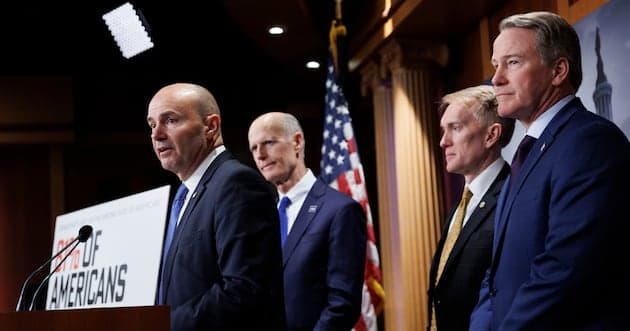
Lee again pushes voter ID on Senate floor, as California senator blocks it
Mike Lee described the SAVE Act as requiring proof of citizenship to register and photo identification to vote, and argued that voter ID laws have broad public support. The article says Republicans have repeatedly tried to advance the bill through floor and procedural efforts without passing it.
Lee again pushes voter ID on Senate floor, as California senator blocks it
Mike Lee described the SAVE Act as requiring proof of citizenship to register and photo identification to vote, and argued that voter ID laws have broad public support. The article says Republicans have repeatedly tried to advance the bill through floor and procedural efforts without passing it.

Sen. Mike Lee vows revival of election bill after Senate pivots away
The Senate is moving away from Sen. Mike Lee’s election bill until further notice as lawmakers scramble to meet a number of deadlines to fund immigration enforcement and renew government surveillance powers. But the Utah senator is not yet ready to surrender. Senate Majority Leader John Thune, R-S.D., confirmed the Senate would “pivot away” from the SAVE America Act, Lee’s sweeping election reform bill to ban noncitizens from voting and implement photo ID requirements in order to vote in federal elections. Lee triggered a floor takeover last month to keep the legislation as the only pending business in the Senate, a move that will now be overturned in order to turn focus to Homeland Security funding and national security talks. Majority Leader John Thune, R-S.D., said the Senate can return to debate on the SAVE America Act once those bills are passed, but Lee confirmed to the Deseret News that they “don’t have a firm timetable.” “Right now, we’re dealing with a number of privileged vehicles,” Lee said. “And I understand there are some things that because of their emergent nature or because of their privileged status, sometimes they have to get put to the front line. But nobody has said we’re not doing (SAVE America Act), and I don’t think anyone should expect that we’re not doing it.” The delay comes as Republicans race to pass a spending bill funding Border Patrol and Immigration and Customs Enforcement for the next three years without needing Democratic approval. President Donald Trump has given the party a deadline of June 1. The fight over U.S. spying powers explained Lawmakers must also come to an agreement on extending Section 702 of the Foreign Intelligence Surveillance Act, an issue that has reignited tense debate and division across Capitol Hill. Congress passed an extension of key government spy powers last week, temporarily punting the deadline until April 30 as lawmakers in both parties disagree on whether to reform the contentious surveillance program. Any legislative action on the SAVE America Act will need to wait until after that, making the likelihood of its eventual passage unclear. However, some Republicans have floated attaching portions of the SAVE America Act to either of those legislative vehicles — a suggestion that Lee said would be easier said than done. While there are some proposals that could be added to the DHS funding bill that adhere to the strict budget rules, Lee said those likely wouldn’t fall under the jurisdiction of the upcoming package. Mike Lee floated as possible contender for Supreme Court “This is a very narrowly focused budget resolution designed to produce a very narrowly focused budget reconciliation bill dealing with the DHS problem,” Lee said of the budget resolution being voted on this week by the Senate. Because of the pivot away from Lee’s election reform bill — which conservative Republicans demanded be passed before anything else — Democrats had begun to declare victory that the legislation had failed. Sen. Alex Padilla, D-Calif., told Politico this week he believed Democrats “won the battle” but acknowledged Republicans were “not giving up on the war.” Lee appeared to agree with the second half of that assessment. “I don’t regard it as dead,” Lee told the Deseret News. “I don’t think most of my colleagues regard it as dead. If we get to the point that it’s dead, it will be dead because Senate Republicans didn’t vote on it. But we have not made a decision not to do that. And Sen. Thune has been saying we’ll get back to it. And I think most of all of us expect that.”
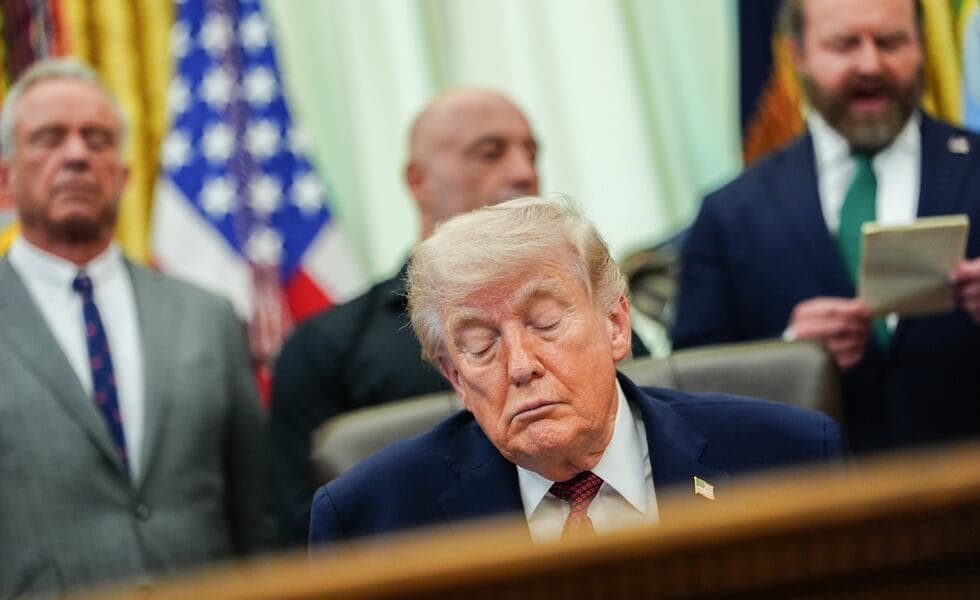
Trump support drops in Utah, driven by religious voters
After months of floating above 50% approval in Utah during his second term, President Donald Trump’s job approval rating dropped underwater in the Beehive State in April, driven largely by flagging support among Republicans and religious voters. A new Deseret News/Hinckley Institute of Politics poll conducted by Morning Consult shows that more than half (54%) of Utah voters disapprove of Trump’s job performance, outweighing the 44% of voters who said they approve. That’s a major swing from last month when it was almost the opposite: In March, 51% of Utah voters said they approved of Trump’s job performance compared to 46% who disapproved. It’s the first time in recent memory the president has had such a pendulum swing in the state. But that swing appears to be unique to Utah as national polling did not show a dramatic shift in either direction among Republicans or religious voters. War in Iran: The latest Both groups, though, had a major drop in Utah. “What’s interesting about this particular poll is, yes (Trump’s) underwater — but it’s where that movement is coming from,” said Jason Perry, director of the Hinckley Institute at the University of Utah. About 83% of Republican voters nationwide approved of Trump’s job performance, holding steady from the last Deseret News/Hinckley Institute national poll in February that found 86% of GOP voters in the same camp. However, only 74% of Utah Republicans said they approved of Trump’s performance in April — a 10-point drop from the month before. Twenty-two percent of Utah GOP voters said they disapproved of his performance. While it’s not clear what exactly caused the dip, there are several likely factors at play such as the Trump administration’s shifting strategy with the war in Iran, its inconsistent messaging on the war’s objectives, and the president’s recent social media posts, including a depiction of Trump as a Christ-like figure and his posts targeting Pope Leo XIV. Iran war emerges as primary factor The prime suspect in the case of Trump’s dwindling approval ratings in Utah is the war in Iran — which would explain why there was such a drastic drop among Utah voters in just the last month. “The important thing to remember is, polls are just snapshots in time. And this poll came at a very interesting time, and one of the key driving forces here is the war in Iran,” Perry said. “In this survey, President Trump’s handling of this war is lower than his overall job approval, which shows that there’s a lot of division and a lack of support on that.” In the last Deseret News/Hinckley Institute poll, the military action had only just begun, and the duration of the conflict and its impacts were still unclear. But now, more than a month later, the picture is vastly different, and Utah voters are increasingly unhappy with how the president is handling the war. “When we ask specifically about Trump’s handling of the conflict, Utah voters give him even worse marks than his overall performance,” said Matt Monday, director of public affairs for Morning Consult, which administered the survey. “Given the war’s salience, we think it’s doing most of the work here.” The numbers reflect that sentiment. When asked specifically about Trump’s handling of the conflict in Iran, only 41% of Utah voters say they approve — 3 percentage points lower than his overall approval rating in the state. A majority of voters (54%) say they disapprove. Those numbers boost the theory of Iran’s influence on Trump’s falling approval in Utah, especially when paired with the fact that the only other Cabinet official who saw a downward turn in approval ratings since March was Defense Secretary Pete Hegseth — the main Trump administration official associated with the war. Sen. John Curtis denounces ‘blasphemous’ Trump post About 40% of Utah voters said they disapprove of Hegseth’s job performance while 39% said they were in favor. Another 21% said they were unsure. Trump loses support among religious voters in Utah Another factor for Trump’s lower approval ratings in Utah stems from a loss of support among religious voters. Those dwindling numbers could be from a “secondary theory,” Monday said: Trump’s social media activity. The most recent poll surveyed respondents between April 15-20 — two weeks after Trump issued an expletive-laden post on Easter Sunday, and just two days after posting a now-deleted AI image that depicted him as a Jesus-like figure. Trump’s approval rating among religious groups took a dip after those posts, particularly in Utah. About 51% of Christians in Utah said they approve of Trump’s performance in the latest poll, a significant drop from the 63% who said the same in March. That’s a far cry from national polling that showed 50% of Christian voters nationwide approved of Trump’s performance in April — a one-point increase from the last national poll in February. The drop in support among Utah’s religious groups was especially prevalent among members of The Church of Jesus Christ of Latter-day Saints. While a majority of the demographic (54%) still approves, that’s a 9-point drop from the month before. About 43% of church members said they disapproved of Trump’s job performance in April, up from the 35% who said the same in March. “Utah voters, they tend to respond not just to policy, but they do respond to tone, particularly when it touches on things like religion or respect for institutions. That’s certainly what we saw in one big month,” Perry said. “You put all of these together into one, into really a small period of time, and it has had a direct impact on his approval rating here in the state of Utah.” “Utah voters are patient,” he added, “but they do have a threshold.” The poll surveyed 815 Utahns between April 15-20 and it has a margin of error of plus or minus 3 percentage points. The national poll surveyed 2,057 U.S. voters with a margin of error of plus or minus 2 percentage points. Correction: An earlier version of this story had incorrect U.S. voter approval numbers for Vice President JD Vance.

Inside the low-profile race that could reveal the future of the Utah GOP
College Republican activist Kai Schwemmer said he plans to run for the vacant Utah GOP treasurer position in May as part of his goal to enter elected office and eventually represent the state in Congress. The low-profile race to maintain the party’s financial records will be the first electoral test for Schwemmer, who has come to represent a generational divide among conservatives over identity, institutions and Israel. It will also be an early indicator of how the party will react to a Gen Z worldview shaped by social media and populist overtones as leaders continue to navigate shifts accelerated by President Donald Trump’s MAGA movement. An election to replace former treasurer Chris Null, who stepped down to run for Salt Lake County Council, will take place at a meeting of the GOP’s State Central Committee. So far, Schwemmer is the only candidate. An ‘America First’ worldview The 23-year-old influencer became a flashpoint for conservative debates over Gen Z political attitudes last month when he was appointed to serve as the political director of College Republicans of America. Gen Z is the generation born between 1997 and 2012. Backlash focused on Schwemmer’s past affiliation with Nick Fuentes, his refusal to disavow the white nationalist commentator and his continued defense of aspects of Fuentes’ aggressive “America First” ideology. In interviews with the Deseret News, Schwemmer did not identify any policy disagreements with Fuentes. He highlighted common ground on social issues, like banning pornography, and overlap on the issue of Israel. Schwemmer said dual citizens should not run for higher office, and he believes it is not discriminatory to ascribe dual loyalty to some American Jews because he believes Judaism has been expanded to include the political project of Zionism. The Horseshoe generation: Where Gen Z’s extremes meet Schwemmer said he also believes legal immigration should be restricted to counter demographic change, the economy should be guided toward nationalist objectives and white Christian men should do more to stand up for themselves Debate erupted among conservatives over whether there was any room to tolerate Fuentes’ views on the American political right after popular podcaster Tucker Carlson hosted Fuentes on his show for a friendly interview in October. Utah GOP chair Rob Axson described his interactions with Schwemmer, who is an intern with the state party, as positive. Axson also said what Fuentes has to say is “completely uninteresting, unhelpful and often disgraceful.” “I have zero desire to see his worldview exist within the Republican Party,” he said of Fuentes. “Frankly, he is antagonistic to the Republican Party, so he’s not even one of us. So, he can go and preach his hate.” Axson said Schwemmer has had his own political evolution, prompted by his church service. Since returning from a mission for The Church of Jesus Christ of Latter-day Saints in 2025, Schwemmer has attempted to distance himself from Fuentes, saying he does not identify as a “groyper,” the name for Fuentes followers. From influencer to insider Schwemmer has succeeded in quickly becoming a familiar face in Beehive State politics. He has received praise from lawmakers for efforts to reverse Utah’s redistricting law. He joined Rep. Burgess Owens at Trump’s State of the Union address. And he has started issuing endorsements to congressional candidates. If he is elected treasurer, Schwemmer told the Deseret News that it will give him an opportunity to strengthen the party, to learn more about state politics and to build relationships with Republican leaders in Utah. “What I think I’m really interested in is showing that I’m not just some snot-nosed kid who does social media, but that I’m interested in helping the party and serving them,” Schwemmer said. “And if they think that I do a good job, then they can add that to their perception of me.” Are young conservatives OK? Where Gen Z is taking the American right Participating in politics, not as a commentator, but as a candidate has been Schwemmer’s dream. In 2021, he told the Highland Rambler he hoped to run for office at 25 and, ultimately, to become president of the United States. As a student at Highland High School, Schwemmer was heavily involved in the debate club, serving as team captain and placing third in a statewide competition. His skill at debate has also earned him attention on internet forums. Last year, Schwemmer appeared on an episode of popular debate program Jubilee featuring 20 “far-right conservatives,” and debated radio personality Steve Deace on Israel for a panel moderated by Daily Wire host Michael Knowles While he has accumulated around 70,000 followers across platforms like TikTok, Instagram and X, Schwemmer, who is studying political science at Brigham Young University, said he is interested in public policy. His preferred career path would be full-time “public service,” he told the Deseret News. He hopes to serve in the state Legislature within the next decade, and to run for the U.S. House of Representatives after that, he said. “Politics nowadays is a really dirty word, where the worst thing you can be is a politician. I don’t think that should be the case,” Schwemmer said. “I want to make sure that that word is no longer pejorative, but describes people who are effective legislators. And I want to be one of those.” How will the GOP respond to Gen Z? Despite the online uproar over Schwemmer, top Utah Republican Party officials have welcomed his involvement. Utah Republican National Committeeman Brad Bonham called Schwemmer “one of the most engaged College Republicans” in the state, who helped get a petition to repeal Proposition 4 across the finish line in February. Bonham, who does not endorse candidates for party positions, said Schwemmer has demonstrated a talent “to market himself in a big way,” which Bonham said is an important ability for any prospective politician. “Kai understands that dynamic and what is involved with actually winning races,” Bonham said. “Kai, with his platform, and it’s growing quickly, should be a very strong candidate for elected office when that time comes.” Voters should be willing to give “lots of grace” to candidates who began participating in politics at a young age so that over time they can clarify their views and change their opinions, Bonham told the Deseret News. Schwemmer’s skeptical view of U.S.-Israel relations reflects a broader “America First attitude” sparked by Trump’s focus on “fixing the problems at home before we try to fix everyone else’s problems,” Bonham said. Is Hasan Piker the Nick Fuentes of the left? Recent surveys find young Americans are less interested in foreign alliances and less trustful of domestic government. A poll released last week found a majority of Gen Z voters agreed with an anti-Israel statement from Fuentes. Axson, who has devoted three years in office to growing College Republicans, told the Deseret News he has spent time pushing back on some of their views because he finds that his stance on Israel “is more nuanced.” The Republican Party must create space for these “difficult conversations” to take place with young people, he said. “That’s what will allow for mentorship and the evolution of ideas,” Axson told the Deseret News. “It also is the space that will allow us to firmly articulate a disdain for any radicalized voices.” Axson praised Schwemmer for contributing to the party with his “jovial” personality and work ethic. Regardless of the outcome, Axson said Schwemmer will be a “valuable candidate” in the GOP treasurer race. But Axson said more conversations are needed to help those born in the internet era to be grounded in principles of “faith, family and freedom” so the GOP can be the party where “strong Christian values” can exist with other groups. “We can have strong views on immigration without being hateful. We can have strong views on international policies dealing with the Middle East without leaning into any type of stereotypical antisemitism or bigotry,” Axson said. “The freedom of the Republican Party is there in a powerful way for anybody that wants to see the Utah and American experience become something even better.”

New Utah congressional map opens door for primary challenge of House Republican leader
Rep. Blake Moore believes his five years in Congress have demonstrated a “promises made, promises kept kind of mentality” as he secured policy outcomes on tax cuts, retirement savings and Utah committee representation. But a new court-ordered congressional district map in Utah has paved the way for a serious Republican primary challenge as Moore comes under fire from some state lawmakers and party activists for his support of a redistricting commission. State Rep. Karianne Lisonbee has launched a campaign in Utah’s new 2nd District to pin the blame on Moore for the state’s map-drawing woes, which resulted in a new Democratic-majority Salt Lake seat to the dismay of GOP legislators who fought to prevent one. Ahead of the nominating convention on April 25, Lisonbee is courting delegates with these criticisms and her reputation as culture warrior, while Moore touts his direct participation in some of President Donald Trump’s biggest legislative wins and his endorsement by the president. McAdams and Moore lead money race in Utah’s redrawn 2026 midterm races Since announcing her candidacy last month after the end of the 2026 legislative session, Lisonbee has already raised $150,000 as she focuses on qualifying for the primary ballot through Utah’s unique party caucus convention system. Meanwhile, Moore has already qualified for the primary by submitting 7,000 signatures, and counts on $2.4 million in cash on hand, after a $500,000 first quarter haul, to reach all GOP voters in his slightly shifted northern Utah district. Beyond debates over redistricting, Moore and Lisonbee also have different messages about the way Utah representatives should lead in Washington, D.C., on budget reform, military investments and relationships with top national leaders. Is leadership a lift or a liability? The way Moore sees it, a higher profile role as one of 435 House members gives northern Utah greater representation. “I’ve got a strong track record getting into leadership positions that we’ve really never seen before in Utah,” Moore told the Deseret News. “I put myself in positions to have an outsized voice for Utah.” Since entering office in 2021, Moore has secured the trust of GOP power players, getting elected to the top tax policy committee in 2023, and becoming the vice chair of the Republican conference overseeing member messaging. As the fifth-ranking House Republican, Moore has had unique influence to shape legislation like the “One Big Beautiful Bill” Act, and to grant positions to other Utah members, like getting Rep. Celeste Maloy a prized appropriations spot. But Lisonbee believes that in seeking a leadership position, Moore has sometimes failed to take bold stands. “Leadership means very little when it’s focused on the wrong priorities,” Lisonbee told the Deseret News. U.S. Rep. Kennedy questions U.S. alliances as Trump threatens NATO over Iran There have been multiple occasions when Moore has acted the part of team player to get leadership priorities across the finish line. There are cases when independence on tough issues matters more than influence, according to Lisonbee. Lisonbee believes she can do both: She spearheaded Utah’s abortion restriction law, which is held up in the courts, and sponsored bills cracking down on immigration and election security all while serving as the state House majority whip. Their different leadership experience is reflected in the battle over endorsements between Moore and Lisonbee. Moore tallies endorsements from U.S. House Speaker Mike Johnson, House Judiciary Chair Jim Jordan, and Trump, who endorsed Moore in November before a judge chose the new congressional map. Moore also has the support of Utah Senate President Stuart Adams. But the state Legislature is split, with House majority leadership and more than 30 other state lawmakers endorsing Lisonbee as a show of disapproval over Utah redistricting. The problem of Prop 4 Republicans at Utah’s Capitol have been engaged in a war over the state’s once-in-a-decade redistricting process since voters narrowly approved Proposition 4 in 2018 to establish guidelines and a commission to recommend maps. Before running for elected office, Moore served as one of the original Republican co-chairs of Better Boundaries in 2017, and as one of the original signatories on the application to gather signatures to put Proposition 4 on the ballot. Prop 4 created a private right of action, which Moore supported, allowing Utahns to sue the state if they thought the Legislature had divided the state in a way that disproportionately benefitted one party or candidate. After Swalwell, can Congress change to make staffers safer? In 2022, activist groups sued lawmakers for replacing Prop 4 with a compromise alternative and approving a map that split Salt Lake County four ways. Last November, a judge sided with the plaintiffs, and selected a map they had submitted. This reduced the number of solid Republican House seats in Utah from four to three, pushing Rep. Burgess Owens to retire, changing Maloy’s and Rep. Mike Kennedy’s districts and creating a Democrat seat covering most of Salt Lake County. Lisonbee has so far focused heavily on making Moore the face of this Democratic victory, despite his public opposition to the court rulings and his call for Better Boundaries to stop its campaign to undo a GOP campaign to repeal Prop 4. “I don’t regret taking a principled position,” Moore said. “I think every state should reckon with this.” Moore still believes there needs to be a process to prevent partisan gerrymandering. But he also intends to be “the most credible voice” on a future amendment to clarify that initiatives cannot override lawmakers’ policy authority. Budgets, bases and brands Moore would rather take a victory lap over Trump’s first year back in office than respond to barbs from Lisonbee. Moore took a leading role in making Trump’s 2017 tax cuts permanent and partially spearheaded drafts for the newly created “Trump Accounts” — a government-funded savings account for kids — earning Moore a shoutout from Trump. From his first campaign, Moore has run on reducing the national debt. He supported creating a bipartisan debt commission to find solutions and forcing Congress to require an annual vote on the biggest mandatory spending programs. But Lisonbee said this approach, when paired with support for piecemeal budget packages every year, is not enough. “We are on a collision course with reality,” Lisonbee said. “I will oppose the status quo omnibus bills and continuing resolutions that do little if nothing to chart a better course toward balanced budgets and more responsible spending.” Lisonbee’s other line of attack focuses on Moore giving up his position on the Armed Services Committee to serve in more prominent roles. This does a disservice to one of the top employers in the district, according to Lisonbee. House Ethics Committee issues rare public plea over sexual misconduct allegations Davis County GOP chair Don Guymon agreed Hill Air Force Base is a priority for 2nd District voters. He has heard delegates argue both sides on whether Moore’s leadership position draws attention to, or distracts from the base. “That’s something delegates, and ultimately primary voters, will have to decide: Has that leadership position for Blake Moore delivered for Davis County residents,” Guymon told the Deseret News. In 2024, Moore lost by 10 percentage points at convention against a political newcomer. He later won by more than 40 points in the primary. Lisonbee’s criticisms of his House GOP role is just “grabbing at straws,” according to Moore. Hill Air Force Base received $250 million for construction in 2025, Moore pointed out. His role, he said, has allowed him to pass more pieces of legislation than anyone else who entered Congress in 2021, and to do what he came to Congress to do. “And I want to keep working on it,” Moore said. Who else is running in CD2? The 2nd District covers much of Moore’s old 1st District boundaries, including all of northern Utah. The new map now includes more of Davis County, but no longer includes Morgan and Summit counties. Here’s who else is running in the district, which favors Republicans by nearly 40 percentage points, according to Inside Elections: Republicans Colton Hatch — National Guard service member, works for the state pension system Democrats Peter Crosby — Works in higher education Tyler Farnsworth — Mental health nurse practitioner Jarom Gillins — Army veteran and infrastructure maintenance Ian Parrish — Works in the auto finance industry Libertarian Daniel Cottam — Bariatric surgeon Independent American Carlton Bowen — Former American Fork city councilman, candidate in multiple elections Neil Hansen — Resident of Bountiful

Trump administration vows to work with Utah officials on these public lands issues
The White House will work with Utah leaders to ensure the state’s public lands and national parks receive the federal assistance they need to thrive, Secretary of the Interior Doug Burgum said on Monday. In a hearing with the House Appropriations Subcommittee on Interior, Environment, and Related Agencies, the department secretary told Utah Rep. Celeste Maloy that he would work with her office as well as other local officials to ensure the state receives the funding it needs as well as other assistance needed to protect its land. That includes federal funding for the Great Salt Lake, which is set to receive $1 billion under the Trump administration’s latest budget request for the next fiscal year. What Trump’s proposed budget would mean for public lands in Utah and beyond “I know it’s early days, and your team is still working on what that’s going to look like, so I just have (a request) that you work with me and my team and our state and make sure that we have a good plan in place,” Maloy said. “If we’re going to be investing in restoring the Great Salt Lake, let’s make sure it’s something that helps us for decades to come.” “Yes, absolutely,” Burgum replied. “We look forward to working with you and the governor and the team and the Bureau of Reclamation to make sure we have that plan.” Maloy asked the secretary for his commitment to work with her office on other matters related to public lands and national parks in the Beehive State. Maloy serves as the vice chair on the Interior and Environment subcommittee that works with the Interior Department in terms of annual appropriations. For example, the Utah congresswoman pressed Burgum on how the Interior Department is addressing reports of lost revenue at national parks due to the increase of online sales for season passes. When national parks sell America the Beautiful passes, which grant pass-holders access to more than 2,000 parks and public lands, the park receives part of the revenue, according to Maloy. But with the rise of digital passes or online purchases, national parks are “losing out on revenue when it gets split evenly between some of the low visitation parks that don’t take the same wear and tear that the high visitation parks do.” Burgum acknowledged those concerns, pointing to the Great American Outdoors Act as one solution. Under that law, approved in 2020, national parks and other public lands can receive federal funds for overdue maintenance needs. Trump carves out $1 billion in budget for Great Salt Lake However, the secretary told Maloy the online passes do pose a new challenge for national parks — and has become something the Trump administration will “have to take a look at” to understand the lost revenue high-visitation parks must grapple with. Finally, Maloy requested assistance from the White House to increase access to public lands through a piece of legislation being led by the Utah delegation to roll back Biden-era environmental regulations in Utah. Maloy has introduced several resolutions of disapproval through the Congressional Review Act to overturn restrictions in certain public areas, particularly the use of off-road vehicles and all-terrain vehicles. As part of those efforts, Burgum agreed to expand efforts to protect road access and review minimization criteria. “I’d be happy to,” Burgum said. “Access matters, and we’re trying to make sure that we’re increasing access as opposed to reducing it. So we’d be happy to specifically review with you any particular sites or locations where we could work together to see if we can come up with a solution.”
Trump administration vows to work with Utah officials on these public lands issues
The White House will work with Utah leaders to ensure the state’s public lands and national parks receive the federal assistance they need to thrive, Secretary of the Interior Doug Burgum said on Monday. In a hearing with the House Appropriations Subcommittee on Interior, Environment, and Related Agencies, the department secretary told Utah Rep. Celeste Maloy that he would work with her office as well as other local officials to ensure the state receives the funding it needs as well as other assistance needed to protect its land. That includes federal funding for the Great Salt Lake, which is set to receive $1 billion under the Trump administration’s latest budget request for the next fiscal year. What Trump’s proposed budget would mean for public lands in Utah and beyond “I know it’s early days, and your team is still working on what that’s going to look like, so I just have (a request) that you work with me and my team and our state and make sure that we have a good plan in place,” Maloy said. “If we’re going to be investing in restoring the Great Salt Lake, let’s make sure it’s something that helps us for decades to come.” “Yes, absolutely,” Burgum replied. “We look forward to working with you and the governor and the team and the Bureau of Reclamation to make sure we have that plan.” Maloy asked the secretary for his commitment to work with her office on other matters related to public lands and national parks in the Beehive State. Maloy serves as the vice chair on the Interior and Environment subcommittee that works with the Interior Department in terms of annual appropriations. For example, the Utah congresswoman pressed Burgum on how the Interior Department is addressing reports of lost revenue at national parks due to the increase of online sales for season passes. When national parks sell America the Beautiful passes, which grant pass-holders access to more than 2,000 parks and public lands, the park receives part of the revenue, according to Maloy. But with the rise of digital passes or online purchases, national parks are “losing out on revenue when it gets split evenly between some of the low visitation parks that don’t take the same wear and tear that the high visitation parks do.” Burgum acknowledged those concerns, pointing to the Great American Outdoors Act as one solution. Under that law, approved in 2020, national parks and other public lands can receive federal funds for overdue maintenance needs. Trump carves out $1 billion in budget for Great Salt Lake However, the secretary told Maloy the online passes do pose a new challenge for national parks — and has become something the Trump administration will “have to take a look at” to understand the lost revenue high-visitation parks must grapple with. Finally, Maloy requested assistance from the White House to increase access to public lands through a piece of legislation being led by the Utah delegation to roll back Biden-era environmental regulations in Utah. Maloy has introduced several resolutions of disapproval through the Congressional Review Act to overturn restrictions in certain public areas, particularly the use of off-road vehicles and all-terrain vehicles. As part of those efforts, Burgum agreed to expand efforts to protect road access and review minimization criteria. “I’d be happy to,” Burgum said. “Access matters, and we’re trying to make sure that we’re increasing access as opposed to reducing it. So we’d be happy to specifically review with you any particular sites or locations where we could work together to see if we can come up with a solution.”

After Swalwell, can Congress change to make staffers safer?
This article was first published in the On the Hill newsletter. Sign up to receive the newsletter in your inbox on Friday mornings here. Two House members resigned from office this week due to alleged sexual misconduct involving their staffers — which has generated a lot of conversations on Capitol Hill about how things need to change to make staffers safer and to increase accountability. Congress doesn’t have a centralized Human Resources department, so those responsibilities are often handled by individual offices. As a result, there isn’t an official reporting process for instances of sexual misconduct. Combine that with the competitive nature of Capitol Hill and a fear of retaliation, there’s a lot of misconduct that can get brushed under the rug or go unreported. That’s led to the situation where we are at now — and some lawmakers want that to change. “There is such a punitive culture here in Washington that silences people who have been victims of abuse,” Rep. Alexandria Ocasio-Cortez, D-N.Y., told a group of us this week. “This is why we have to center survivors of abuse, hear them and protect them, and change our institutions so that it doesn’t happen again.” She added: “There are very concrete changes that we can make right now to the process of coming forward with sexual assault or sexual harassment.” Of course, those changes would need to be made at the leadership level or at least get their sign-off to become reality. Although nothing has gotten started there yet, top House leaders seem open to the discussion. House Speaker Mike Johnson, R-La., this week said that members need to “act in accordance” with federal laws and principles discouraging any sexual misconduct — especially when it involves one’s staffers. “If there needs to be reforms, we’ll be looking at that,” Johnson said. “I think the result of these members resigning is right in light of the horrific things they’ve been accused of and that inherently have been proven to be true.” Other lawmakers have ideas on what those reforms could be. Sen. Ruben Gallego, D-Ariz., huddled with a group of us earlier this week for a long press availability to talk about the allegations — particularly those involving former Rep. Eric Swalwell, who the Arizona Democrat has been close with for years. Swalwell was one of the lawmakers who stepped down this week as well as former Rep. Tony Gonzales of Texas. “Whether it’s here in the Senate or in the House, there needs to be some other independent organization that is not employed by anybody in our office that gives these staff — and it’s not just women — whistleblower protection, as well as the ability to be able to go outside the kind of internal HR circles,” Gallego said. Stories Driving the Week Online footprint: Nate Blouin, the progressive Democrat candidate running in Utah’s newly redrawn 1st Congressional District, has a history of posting offensive posts on internet forums denigrating The Church of Jesus Christ of Latter-day Saints and making crude jokes about women and sexual assault. Justice Lee? Senate Judiciary Chairman Chuck Grassley, who leads the committee responsible for shuffling judiciary nominees through the Senate, named Utah Sen. Mike Lee alongside Texas Sen. Ted Cruz as his top picks if a seat opens up on the high court. Mass resignation: Two House members, one Democrat and one Republican, announced on Monday they would retire from their offices before their term is expired after facing allegations of sexual misconduct. The pair faced bipartisan pressure to either step down or face expulsions. Senate moves forward with funding immigration The Senate is prepared to move forward with voting on a budget resolution sometime next week, the first step in advancing the Republicans’ spending package to fund immigration enforcement for the next three years. Senate Majority Leader John Thune, R-S.D., told a handful of us that the budget resolution is drafted and that senators are working to make sure they are on the same page as the House before they tee it up for a vote. The framework will include instructions for the Judiciary Committee and the Committee on Homeland Security and Governmental Affairs on what to include in the final package, which will be drafted later. But the budget resolution must first be passed by the Senate and the House before they can get started. It’s not yet clear which day the Senate will move on a vote. But Thune told us it would be “by middle-to-the-end of next week.” Included in that: a vote-a-rama. (Remember last year when the Senate voted through the night on President Donald Trump’s big beautiful bill? Yeah, we are getting ready to do that all over again.) That’s because budget reconciliation is subject to unlimited amendments, meaning Democrats have an opportunity to make this as painful as possible. We don’t know how quickly Republicans will be able to draft and pass the final bill, which will include up to $75 billion for ICE and Border Patrol. But Trump has told them he wants it on his desk by June 1. That’s a tall order, but remember: Republicans were able to pass the One Big Beautiful Bill Act by the president’s Fourth of July deadline last summer. Quick Hits From the Hill: Mitt Romney says America will be saved by 1 of 3 things. … Democrats want a medical check on Trump’s fitness for office. … Sen. John Curtis denounces ‘blasphemous’ Trump post. From the White House: Trump administration cuts $11 million in funding to Catholic Charities. … First lady Melania Trump makes rare trip to lobby Congress on foster care reform. … Vice President JD Vance, a Catholic, responds to conflict between Trump and Pope Leo. From the courts: DA declines to file charges against Taylor Frankie Paul. … Unsealed warrants reveal alleged confession letter in Tyler Robinson case. … ‘Deseret Voices’: Everything you know about the U.S. Supreme Court is wrong.
After Swalwell, can Congress change to make staffers safer?
This article was first published in the On the Hill newsletter. Sign up to receive the newsletter in your inbox on Friday mornings here. Two House members resigned from office this week due to alleged sexual misconduct involving their staffers — which has generated a lot of conversations on Capitol Hill about how things need to change to make staffers safer and to increase accountability. Congress doesn’t have a centralized Human Resources department, so those responsibilities are often handled by individual offices. As a result, there isn’t an official reporting process for instances of sexual misconduct. Combine that with the competitive nature of Capitol Hill and a fear of retaliation, there’s a lot of misconduct that can get brushed under the rug or go unreported. That’s led to the situation where we are at now — and some lawmakers want that to change. “There is such a punitive culture here in Washington that silences people who have been victims of abuse,” Rep. Alexandria Ocasio-Cortez, D-N.Y., told a group of us this week. “This is why we have to center survivors of abuse, hear them and protect them, and change our institutions so that it doesn’t happen again.” She added: “There are very concrete changes that we can make right now to the process of coming forward with sexual assault or sexual harassment.” Of course, those changes would need to be made at the leadership level or at least get their sign-off to become reality. Although nothing has gotten started there yet, top House leaders seem open to the discussion. House Speaker Mike Johnson, R-La., this week said that members need to “act in accordance” with federal laws and principles discouraging any sexual misconduct — especially when it involves one’s staffers. “If there needs to be reforms, we’ll be looking at that,” Johnson said. “I think the result of these members resigning is right in light of the horrific things they’ve been accused of and that inherently have been proven to be true.” Other lawmakers have ideas on what those reforms could be. Sen. Ruben Gallego, D-Ariz., huddled with a group of us earlier this week for a long press availability to talk about the allegations — particularly those involving former Rep. Eric Swalwell, who the Arizona Democrat has been close with for years. Swalwell was one of the lawmakers who stepped down this week as well as former Rep. Tony Gonzales of Texas. “Whether it’s here in the Senate or in the House, there needs to be some other independent organization that is not employed by anybody in our office that gives these staff — and it’s not just women — whistleblower protection, as well as the ability to be able to go outside the kind of internal HR circles,” Gallego said. Stories Driving the Week Online footprint: Nate Blouin, the progressive Democrat candidate running in Utah’s newly redrawn 1st Congressional District, has a history of posting offensive posts on internet forums denigrating The Church of Jesus Christ of Latter-day Saints and making crude jokes about women and sexual assault. Justice Lee? Senate Judiciary Chairman Chuck Grassley, who leads the committee responsible for shuffling judiciary nominees through the Senate, named Utah Sen. Mike Lee alongside Texas Sen. Ted Cruz as his top picks if a seat opens up on the high court. Mass resignation: Two House members, one Democrat and one Republican, announced on Monday they would retire from their offices before their term is expired after facing allegations of sexual misconduct. The pair faced bipartisan pressure to either step down or face expulsions. Senate moves forward with funding immigration The Senate is prepared to move forward with voting on a budget resolution sometime next week, the first step in advancing the Republicans’ spending package to fund immigration enforcement for the next three years. Senate Majority Leader John Thune, R-S.D., told a handful of us that the budget resolution is drafted and that senators are working to make sure they are on the same page as the House before they tee it up for a vote. The framework will include instructions for the Judiciary Committee and the Committee on Homeland Security and Governmental Affairs on what to include in the final package, which will be drafted later. But the budget resolution must first be passed by the Senate and the House before they can get started. It’s not yet clear which day the Senate will move on a vote. But Thune told us it would be “by middle-to-the-end of next week.” Included in that: a vote-a-rama. (Remember last year when the Senate voted through the night on President Donald Trump’s big beautiful bill? Yeah, we are getting ready to do that all over again.) That’s because budget reconciliation is subject to unlimited amendments, meaning Democrats have an opportunity to make this as painful as possible. We don’t know how quickly Republicans will be able to draft and pass the final bill, which will include up to $75 billion for ICE and Border Patrol. But Trump has told them he wants it on his desk by June 1. That’s a tall order, but remember: Republicans were able to pass the One Big Beautiful Bill Act by the president’s Fourth of July deadline last summer. Quick Hits From the Hill: Mitt Romney says America will be saved by 1 of 3 things. … Democrats want a medical check on Trump’s fitness for office. … Sen. John Curtis denounces ‘blasphemous’ Trump post. From the White House: Trump administration cuts $11 million in funding to Catholic Charities. … First lady Melania Trump makes rare trip to lobby Congress on foster care reform. … Vice President JD Vance, a Catholic, responds to conflict between Trump and Pope Leo. From the courts: DA declines to file charges against Taylor Frankie Paul. … Unsealed warrants reveal alleged confession letter in Tyler Robinson case. … ‘Deseret Voices’: Everything you know about the U.S. Supreme Court is wrong.
After Swalwell, can Congress change to make staffers safer?
This article was first published in the On the Hill newsletter. Sign up to receive the newsletter in your inbox on Friday mornings here. Two House members resigned from office this week due to alleged sexual misconduct involving their staffers — which has generated a lot of conversations on Capitol Hill about how things need to change to make staffers safer and to increase accountability. Congress doesn’t have a centralized Human Resources department, so those responsibilities are often handled by individual offices. As a result, there isn’t an official reporting process for instances of sexual misconduct. Combine that with the competitive nature of Capitol Hill and a fear of retaliation, there’s a lot of misconduct that can get brushed under the rug or go unreported. That’s led to the situation where we are at now — and some lawmakers want that to change. “There is such a punitive culture here in Washington that silences people who have been victims of abuse,” Rep. Alexandria Ocasio-Cortez, D-N.Y., told a group of us this week. “This is why we have to center survivors of abuse, hear them and protect them, and change our institutions so that it doesn’t happen again.” She added: “There are very concrete changes that we can make right now to the process of coming forward with sexual assault or sexual harassment.” Of course, those changes would need to be made at the leadership level or at least get their sign-off to become reality. Although nothing has gotten started there yet, top House leaders seem open to the discussion. House Speaker Mike Johnson, R-La., this week said that members need to “act in accordance” with federal laws and principles discouraging any sexual misconduct — especially when it involves one’s staffers. “If there needs to be reforms, we’ll be looking at that,” Johnson said. “I think the result of these members resigning is right in light of the horrific things they’ve been accused of and that inherently have been proven to be true.” Other lawmakers have ideas on what those reforms could be. Sen. Ruben Gallego, D-Ariz., huddled with a group of us earlier this week for a long press availability to talk about the allegations — particularly those involving former Rep. Eric Swalwell, who the Arizona Democrat has been close with for years. Swalwell was one of the lawmakers who stepped down this week as well as former Rep. Tony Gonzales of Texas. “Whether it’s here in the Senate or in the House, there needs to be some other independent organization that is not employed by anybody in our office that gives these staff — and it’s not just women — whistleblower protection, as well as the ability to be able to go outside the kind of internal HR circles,” Gallego said. Stories Driving the Week Online footprint: Nate Blouin, the progressive Democrat candidate running in Utah’s newly redrawn 1st Congressional District, has a history of posting offensive posts on internet forums denigrating The Church of Jesus Christ of Latter-day Saints and making crude jokes about women and sexual assault. Justice Lee? Senate Judiciary Chairman Chuck Grassley, who leads the committee responsible for shuffling judiciary nominees through the Senate, named Utah Sen. Mike Lee alongside Texas Sen. Ted Cruz as his top picks if a seat opens up on the high court. Mass resignation: Two House members, one Democrat and one Republican, announced on Monday they would retire from their offices before their term is expired after facing allegations of sexual misconduct. The pair faced bipartisan pressure to either step down or face expulsions. Senate moves forward with funding immigration The Senate is prepared to move forward with voting on a budget resolution sometime next week, the first step in advancing the Republicans’ spending package to fund immigration enforcement for the next three years. Senate Majority Leader John Thune, R-S.D., told a handful of us that the budget resolution is drafted and that senators are working to make sure they are on the same page as the House before they tee it up for a vote. The framework will include instructions for the Judiciary Committee and the Committee on Homeland Security and Governmental Affairs on what to include in the final package, which will be drafted later. But the budget resolution must first be passed by the Senate and the House before they can get started. It’s not yet clear which day the Senate will move on a vote. But Thune told us it would be “by middle-to-the-end of next week.” Included in that: a vote-a-rama. (Remember last year when the Senate voted through the night on President Donald Trump’s big beautiful bill? Yeah, we are getting ready to do that all over again.) That’s because budget reconciliation is subject to unlimited amendments, meaning Democrats have an opportunity to make this as painful as possible. We don’t know how quickly Republicans will be able to draft and pass the final bill, which will include up to $75 billion for ICE and Border Patrol. But Trump has told them he wants it on his desk by June 1. That’s a tall order, but remember: Republicans were able to pass the One Big Beautiful Bill Act by the president’s Fourth of July deadline last summer. Quick Hits From the Hill: Mitt Romney says America will be saved by 1 of 3 things. … Democrats want a medical check on Trump’s fitness for office. … Sen. John Curtis denounces ‘blasphemous’ Trump post. From the White House: Trump administration cuts $11 million in funding to Catholic Charities. … First lady Melania Trump makes rare trip to lobby Congress on foster care reform. … Vice President JD Vance, a Catholic, responds to conflict between Trump and Pope Leo. From the courts: DA declines to file charges against Taylor Frankie Paul. … Unsealed warrants reveal alleged confession letter in Tyler Robinson case. … ‘Deseret Voices’: Everything you know about the U.S. Supreme Court is wrong.

Should Temporary Protected Status be permanent?
After district courts struck down the Department of Homeland Security’s decision to terminate temporary protected status, or TPS, for immigrants from several countries, the Supreme Court will hear oral arguments on the issue later this month. Members of MomsRising, a nonprofit advocacy group, spoke Friday at Utah Capitol’s rotunda, asking U.S. Congress to pass legislation to guarantee protected status for immigrants they worry are at risk. On Friday afternoon, MomsRising senior director Linda Stone, state Senate Minority Leader Luz Escamilla, D–Salt Lake City, state House Minority Leader Angela Romero, D–Salt Lake City, local religious leaders and educators took turns explaining why they believe temporary status should be granted permanently. “I think there is a moral responsibility for us to continue to be a country that opens the doors, and that continues to bring hope for anyone and everyone,” Escamilla said. The issue has been debated in courts throughout President Donald Trump’s second administration. Last June, former DHS Secretary Kristi Noem said that since conditions in Haiti had improved since President Barack Obama issued TPS in 2010, the status would be fully terminated in September 2025. The decision was blocked by U.S. District Judge Brian Cogan. Then last month, Supreme Court justices said they would hear the case. As of last March, approximately 1.3 million people from 17 countries were in the U.S. under the temporary protected status designation, per the Congressional Research Service. Of these 1.3 million, 20,100 live in the state of Utah, per the American Immigration Council. Amy Coney Barrett and Ben Sasse talk kids, faith and the high court Salt Lake City teacher: Immigration issues influence kids’ behavior Emma Metos, a teacher in the Salt Lake City School District, said she believes the political conversation surrounding immigration is hindering her students’ ability to focus in class. “Because of threats to legal status ... like TPS, my students feel as though they must provide for their families and prepare for the day when they come home from school and their parents are not here, having been detained while they were not home,” she said. She said their immigration status leaves them worried about the safety of their loved ones, even as they try to make ends meet under difficult conditions. “Fear makes learning impossible, and it makes school less of a safe place for self-improvement and growth, and more of a prison where students feel they are deprived of precious, potentially limited time with their parents and loved ones,” she said. Since Trump’s inauguration last January, at least 3,040 people in Utah have been arrested for having illegally entered the country. As of last August, about 304,900 foreign-born individuals lived in Utah, accounting for about 8.9% of the state’s population. Mike Lee floated as possible contender for Supreme Court if there’s vacancy this summer Whose duty is it to decide who gets TPS? The section of federal law defining TPS gives deciding authority to the executive branch, under which the Department of Homeland Security operates. If the foreign state no longer continues to meet the conditions for designation, the DHS secretary can give a 60-day notice to terminate the designation. Noem announced the termination for Yemen, Haiti, Somalia, Syria, Afghanistan and Venezuela 60 days in advance. Noem said mid-February, “TPS was never designed to be permanent, yet previous administrations have used it as a de facto amnesty program for decades. Given the improved situation in each of these countries, we are wisely concluding what was intended to be a temporary designation.” Since the beginning of 2026, Trump has also discussed TPS on social media. After evidence of fraud emerged in Minnesota in January, Trump posted to Truth Social, “I am, as President of the United States, hereby terminating, effective immediately, the Temporary Protected Status (TPS Program) for Somalis in Minnesota. Somali gangs are terrorizing the people of that great State, and BILLIONS of Dollars are missing. Send them back to where they came from. It’s OVER!”
Should Temporary Protected Status be permanent?
After district courts struck down the Department of Homeland Security’s decision to terminate temporary protected status, or TPS, for immigrants from several countries, the Supreme Court will hear oral arguments on the issue later this month. Members of MomsRising, a nonprofit advocacy group, spoke Friday at Utah Capitol’s rotunda, asking U.S. Congress to pass legislation to guarantee protected status for immigrants they worry are at risk. On Friday afternoon, MomsRising senior director Linda Stone, state Senate Minority Leader Luz Escamilla, D–Salt Lake City, state House Minority Leader Angela Romero, D–Salt Lake City, local religious leaders and educators took turns explaining why they believe temporary status should be granted permanently. “I think there is a moral responsibility for us to continue to be a country that opens the doors, and that continues to bring hope for anyone and everyone,” Escamilla said. The issue has been debated in courts throughout President Donald Trump’s second administration. Last June, former DHS Secretary Kristi Noem said that since conditions in Haiti had improved since President Barack Obama issued TPS in 2010, the status would be fully terminated in September 2025. The decision was blocked by U.S. District Judge Brian Cogan. Then last month, Supreme Court justices said they would hear the case. As of last March, approximately 1.3 million people from 17 countries were in the U.S. under the temporary protected status designation, per the Congressional Research Service. Of these 1.3 million, 20,100 live in the state of Utah, per the American Immigration Council. Amy Coney Barrett and Ben Sasse talk kids, faith and the high court Salt Lake City teacher: Immigration issues influence kids’ behavior Emma Metos, a teacher in the Salt Lake City School District, said she believes the political conversation surrounding immigration is hindering her students’ ability to focus in class. “Because of threats to legal status ... like TPS, my students feel as though they must provide for their families and prepare for the day when they come home from school and their parents are not here, having been detained while they were not home,” she said. She said their immigration status leaves them worried about the safety of their loved ones, even as they try to make ends meet under difficult conditions. “Fear makes learning impossible, and it makes school less of a safe place for self-improvement and growth, and more of a prison where students feel they are deprived of precious, potentially limited time with their parents and loved ones,” she said. Since Trump’s inauguration last January, at least 3,040 people in Utah have been arrested for having illegally entered the country. As of last August, about 304,900 foreign-born individuals lived in Utah, accounting for about 8.9% of the state’s population. Mike Lee floated as possible contender for Supreme Court if there’s vacancy this summer Whose duty is it to decide who gets TPS? The section of federal law defining TPS gives deciding authority to the executive branch, under which the Department of Homeland Security operates. If the foreign state no longer continues to meet the conditions for designation, the DHS secretary can give a 60-day notice to terminate the designation. Noem announced the termination for Yemen, Haiti, Somalia, Syria, Afghanistan and Venezuela 60 days in advance. Noem said mid-February, “TPS was never designed to be permanent, yet previous administrations have used it as a de facto amnesty program for decades. Given the improved situation in each of these countries, we are wisely concluding what was intended to be a temporary designation.” Since the beginning of 2026, Trump has also discussed TPS on social media. After evidence of fraud emerged in Minnesota in January, Trump posted to Truth Social, “I am, as President of the United States, hereby terminating, effective immediately, the Temporary Protected Status (TPS Program) for Somalis in Minnesota. Somali gangs are terrorizing the people of that great State, and BILLIONS of Dollars are missing. Send them back to where they came from. It’s OVER!”

The FISA fight explained
Congress passed an extension of key government spy powers, temporarily punting the deadline until April 30 as lawmakers in both parties disagree on whether to reform the contentious surveillance program. The House and Senate both approved the two-week extension in unanimous voice votes on Friday after weeks of debate and tense political infighting. But the debate over the reauthorizing Section 702 of the Foreign Intelligence Surveillance Act, or FISA, isn’t necessarily new. And it’s likely not going to end any time soon. “We were very close tonight. There’s some nuances with the language, and some questions need to be answered, and we’ll get it done,” Speaker Mike Johnson, R-La., told reporters after the House approved the extension in a rare overnight voting session. “The extension allows us the time to do that.” Meanwhile, Majority Leader John Thune, R-S.D., seemed ready to take the reins on the FISA debate and let the Senate take the lead. Sen. Mike Lee slams ‘fig leaf’ proposals that would extend government surveillance tool “We just got to have optionality here,” Thune said on Friday. “I don’t know what the House is going to be able to do, and so we’ll be preparing accordingly.” Here’s a breakdown of the fight over FISA and where key lawmakers stand on the issue. What is Section 702 of FISA? Section 702 of FISA is an intelligence collection authority that allows the intelligence community to “collect, analyze, and appropriately share foreign intelligence information about national security threats,” according to the Office of the Director of National Intelligence. Congress first enacted that authority in 2008. Section 702 specifically allows intelligence agencies, particularly the National Security Agency, to collect communications of foreign targets located outside the United States without needing a traditional warrant. In doing so, the authority allows the U.S. to track potential terrorist threats, espionage, and more. But Section 702 has periodical expiration dates, meaning Congress must routinely reauthorize the spying powers. Under the latest iteration, the section was set to expire on April 20, but lawmakers passed the temporary 10-day extension on Friday letting the program last until April 30. If the program were to go dark, intelligence agencies would lose their authority to collect foreign intelligence, which officials say would cause a major intelligence gap. What are the two opposing sides at play? While some national security hawks pushed for a clean extension, meaning the program would be extended without any changes, there are some members of Congress who believe the program needs substantial reforms before it can be reauthorized. Those competing views pose a rare fight that is not beholden to party lines. In fact, it has united conservative Republicans with progressive Democrats in a way that has made it hard for top congressional leaders to get anyone on the same page. The main disagreement is over the sweeping authority Section 702 gives intelligence officials when it comes to collecting communications without needing a warrant. While the section only allows the targeting of non-U.S. citizens abroad, it can sometimes sweep up communications from Americans living inside the country. As a result, some lawmakers have pushed for reforms and language that would require warrants before the FBI can search 702 databases for U.S. citizens’ data, but intelligence officials warn those requirements could slow investigations. Other lawmakers have also pointed to reports that show the FBI has misused the Section 702 authority in the past to search for communications of protesters, members of Congress, political staffers, a state court judge, journalists, and political donors. President Donald Trump himself has suggested that Section 702 has been used against him to collect his communications, but the president also encouraged lawmakers to pass a clean extension in the latest round of negotiations. Sen. Mike Lee weighs in Utah Sen. Mike Lee has long been vocal about his stance on FISA Section 702 reauthorization, and he has pushed for sweeping reforms. Mike Lee floated as possible contender for Supreme Court As the Senate passed the temporary extension on Friday, Lee published a joint op-ed with Sen. Dick Durbin, D-Ill., in The New York Times calling for passage of his bill that would require government agencies to obtain a FISA Title 1 order or warrant before accessing Americans’ communications that were collected through Section 702 spying powers. “We write as Senators with opposing views on many issues. One of us is a longtime Democrat, the other a conservative Republican. But today, we join together to call on our congressional colleagues to safeguard the American people from warrantless government surveillance,” they wrote. “Two hundred and fifty years ago, the Founders of this nation understood that protection from unreasonable government searches is essential to a society grounded in liberty rather than tyranny. We owe it to the American people to meet this moment and do our jobs to protect both national security and civil liberties. Our bill offers a bipartisan solution to do just that.” Their bill, called the Security and Freedom Enhancement Act, would not require warrants for searches of foreign communications and would only apply to cases of U.S. citizens. In doing so, the senators argue it would limit the number of cases the government would need to seek a warrant while also ensuring American citizens are not spied on without cause. The proposal, among other things, would also require increased internal supervision when it comes to queries on U.S. citizens “to increase accountability, compliance, and oversight.” “For too long, Congress has habitually reauthorized Section 702 without significant reforms,” the senators wrote. “Congress should not needlessly rush to extend this authority without the American people and their elected representatives knowing the full truth about the extent of ongoing abuses and compliance failures.”
The FISA fight explained
Congress passed an extension of key government spy powers, temporarily punting the deadline until April 30 as lawmakers in both parties disagree on whether to reform the contentious surveillance program. The House and Senate both approved the two-week extension in unanimous voice votes on Friday after weeks of debate and tense political infighting. But the debate over the reauthorizing Section 702 of the Foreign Intelligence Surveillance Act, or FISA, isn’t necessarily new. And it’s likely not going to end any time soon. “We were very close tonight. There’s some nuances with the language, and some questions need to be answered, and we’ll get it done,” Speaker Mike Johnson, R-La., told reporters after the House approved the extension in a rare overnight voting session. “The extension allows us the time to do that.” Meanwhile, Majority Leader John Thune, R-S.D., seemed ready to take the reins on the FISA debate and let the Senate take the lead. Sen. Mike Lee slams ‘fig leaf’ proposals that would extend government surveillance tool “We just got to have optionality here,” Thune said on Friday. “I don’t know what the House is going to be able to do, and so we’ll be preparing accordingly.” Here’s a breakdown of the fight over FISA and where key lawmakers stand on the issue. What is Section 702 of FISA? Section 702 of FISA is an intelligence collection authority that allows the intelligence community to “collect, analyze, and appropriately share foreign intelligence information about national security threats,” according to the Office of the Director of National Intelligence. Congress first enacted that authority in 2008. Section 702 specifically allows intelligence agencies, particularly the National Security Agency, to collect communications of foreign targets located outside the United States without needing a traditional warrant. In doing so, the authority allows the U.S. to track potential terrorist threats, espionage, and more. But Section 702 has periodical expiration dates, meaning Congress must routinely reauthorize the spying powers. Under the latest iteration, the section was set to expire on April 20, but lawmakers passed the temporary 10-day extension on Friday letting the program last until April 30. If the program were to go dark, intelligence agencies would lose their authority to collect foreign intelligence, which officials say would cause a major intelligence gap. What are the two opposing sides at play? While some national security hawks pushed for a clean extension, meaning the program would be extended without any changes, there are some members of Congress who believe the program needs substantial reforms before it can be reauthorized. Those competing views pose a rare fight that is not beholden to party lines. In fact, it has united conservative Republicans with progressive Democrats in a way that has made it hard for top congressional leaders to get anyone on the same page. The main disagreement is over the sweeping authority Section 702 gives intelligence officials when it comes to collecting communications without needing a warrant. While the section only allows the targeting of non-U.S. citizens abroad, it can sometimes sweep up communications from Americans living inside the country. As a result, some lawmakers have pushed for reforms and language that would require warrants before the FBI can search 702 databases for U.S. citizens’ data, but intelligence officials warn those requirements could slow investigations. Other lawmakers have also pointed to reports that show the FBI has misused the Section 702 authority in the past to search for communications of protesters, members of Congress, political staffers, a state court judge, journalists, and political donors. President Donald Trump himself has suggested that Section 702 has been used against him to collect his communications, but the president also encouraged lawmakers to pass a clean extension in the latest round of negotiations. Sen. Mike Lee weighs in Utah Sen. Mike Lee has long been vocal about his stance on FISA Section 702 reauthorization, and he has pushed for sweeping reforms. Mike Lee floated as possible contender for Supreme Court As the Senate passed the temporary extension on Friday, Lee published a joint op-ed with Sen. Dick Durbin, D-Ill., in The New York Times calling for passage of his bill that would require government agencies to obtain a FISA Title 1 order or warrant before accessing Americans’ communications that were collected through Section 702 spying powers. “We write as Senators with opposing views on many issues. One of us is a longtime Democrat, the other a conservative Republican. But today, we join together to call on our congressional colleagues to safeguard the American people from warrantless government surveillance,” they wrote. “Two hundred and fifty years ago, the Founders of this nation understood that protection from unreasonable government searches is essential to a society grounded in liberty rather than tyranny. We owe it to the American people to meet this moment and do our jobs to protect both national security and civil liberties. Our bill offers a bipartisan solution to do just that.” Their bill, called the Security and Freedom Enhancement Act, would not require warrants for searches of foreign communications and would only apply to cases of U.S. citizens. In doing so, the senators argue it would limit the number of cases the government would need to seek a warrant while also ensuring American citizens are not spied on without cause. The proposal, among other things, would also require increased internal supervision when it comes to queries on U.S. citizens “to increase accountability, compliance, and oversight.” “For too long, Congress has habitually reauthorized Section 702 without significant reforms,” the senators wrote. “Congress should not needlessly rush to extend this authority without the American people and their elected representatives knowing the full truth about the extent of ongoing abuses and compliance failures.”

Key takeaways from RFK Jr.’s HHS budget hearings
During congressional budget hearings this week, Health and Human Services Secretary Robert F. Kennedy rebuffed suggestions that his vaccine skepticism is at least partly responsible for a measles outbreak that threatens the U.S. status as a country where measles has been eliminated. While he appeared to be trying to shift the conversation away from vaccines, he has softened his stance, acknowledging that the best way to prevent measles is by being vaccinated with the measles, mumps and rubella (MMR) vaccine, which has been used since the 1970s. During the hearing, Kennedy said, “It’s safe for most people.” The secretary was appearing before committees Thursday to address the president’s budget, which proposes a 12.5% decrease to HHS spending for the coming fiscal year — a nearly $16 billion decrease from last year. The hearings came amid news that President Donald Trump plans to nominate Dr. Erica Schwartz, a pro-vaccine physician, as director of the Centers for Disease Control and Prevention. Though she will have to be confirmed, The New York Times called the nomination “the clearest signal yet that the White House is veering away from (Kennedy’s) vaccine skepticism in the lead-up to the midterm elections.” Utah is now the state with the most measles cases — 602 as of April 14 — in the outbreak. While cases have spread throughout the state, the largest number are in the southern part of the state near the Utah-Arizona border. The Utah Department of Health and Human Services reports that 75 of those cases were reported in the last three weeks. But while measles and vaccines were a hot — or rather heated — topic, those weren’t the only issues that surfaced in Kennedy’s budget hearing appearances. Autism linked to Tylenol? Utah Republican Rep. Blake Moore said he is “underwhelmed” by research efforts into autism, including work that underpins an earlier announcement that the Trump administration believes autism and use of Tylenol during pregnancy could be a cause. A new Danish study is among a growing body of research that has found no link between autism and using acetaminophen, the active ingredient in Tylenol, during pregnancy. Kennedy dismissed it as a “garbage study.” Moore, whose son is neurodivergent, was quoted by BBC and other media saying, “My wife was hurt, and she felt for a split-second until we came to our senses and we talked about this, that there was any way she was responsible. We don’t even know if she took Tylenol during her pregnancy, but that was a hurtful moment for her.” Reducing food and other aid Asked separately about cuts to aid like food stamps and the Women, Infants and Children (WIC) supplemental nutrition program, Kennedy said that “nobody wants to make the cuts,” but he noted the president’s budget included them because of a $39 trillion debt. The president’s budget proposal cuts $1.4 billion from WIC, which is under the purview of the U.S. Department of Agriculture, not HHS. How has RFK Jr. influenced U.S. vaccine policy? State sues Trump administration over vaccine policy In the hearing with the House Ways and Means Committee, Politico reported that Kennedy said “that $2 billion in cuts to substance use and mental health grants his department issued and quickly reversed earlier this year, before the White House released its fiscal 2027 budget plan, had been a ‘mistake.’" And he reiterated that he was working to protect the Head Start program, the federal nutrition and education program for low-income preschoolers. “It’s getting no cuts,” Kennedy said. Per NBC News, Rep. Joe Courtney, D-Conn., asked Kennedy about the comments Trump made recently “floating the idea to let states control Medicare, Medicaid and day care subsidies because the federal government has ‘to take care of one thing: military protection. We have to guard the country.” Kennedy said he and the president had not talked about that. When Courtney accused him of dodging the question, Kennedy responded, “My answer has to begin with correcting a lot of the misstatements that you made in your introduction” Kennedy added, “I’m telling you: The president’s policy is to save Medicare. That’s what he’s always said.” Changes are coming Kennedy also said he is altering the makeup of the U.S. Preventive Services Task Force, which recommends how — and how often — people should be screened for diseases. Insurance companies typically follow the task force’s guidance to determine coverage. NBC reported that “the medical community has long suspected that Kennedy would overhaul the task force, given that its last several meetings were postponed and it has not convened in more than a year. The American Medical Association urged him in a letter last year not to fire the current members.” Kennedy also urged lawmakers to confirm Dr. Casey Means as surgeon general, calling her an “evangelist” for the Make American Healthy Again movement. Her nomination has been held up since February, without a vote by the Senate Health, Education, Labor and Pensions Committee on whether to approve her. She has been criticized for what NBC called “controversial stances on vaccines, birth control and pesticides.”

Retirement rumors for Justice Samuel Alito spark debates on term limits, partisan influence on the court
The biggest story this week out of the Supreme Court isn’t about a landmark decision or fiery oral arguments. It’s instead about the possibility of retirement of a longtime justice: Samuel Alito. After President Donald Trump was reelected, questions have loomed about whether the court’s more conservative older justices would retire, leaving an open spot for the president to appoint someone like-minded. This has put a spotlight on the possible retirements of 76-year-old Alito or 77-year-old Justice Clarence Thomas, which would allow Trump to make an additional pick after appointing three justices during his first term. Alito hasn’t made any sort of retirement announcement yet, but rumors swirl it could happen at the end of the court’s current term, which wraps up around late June or early July. However, with the 2026 midterm elections around the corner, this brings up a partisan battle that’s already about a decade old. Court sees years of partisan drama A month after Justice Antonin Scalia died in February 2016, former President Barack Obama nominated Merrick Garland to the Supreme Court. As it was the final year of Obama’s presidency, Senate Majority Leader Mitch McConnell said he would consider any appointment to be null and void and the new justice would have to be chosen by whoever won the general election that fall, which turned out to be Trump. Senate Democrats pushed back on McConnell and said there was plenty of time before the November election to confirm a new justice. Republicans refused and Garland’s nomination expired in January 2017. Trump then assumed office and nominated Justice Neil Gorsuch. Just over a year later, Trump nominated Justice Brett Kavanaugh after Anthony Kennedy retired from the court. Then, after Justice Ruth Bader Ginsburg died in September 2020, Trump nominated Amy Coney Barrett to succeed her. Barrett’s nomination was supported by Republicans who wanted to quickly confirm her ahead of the 2020 presidential election. Many Democrats were upset that her nomination was moved forward just four months before Trump’s first term was set to end after the McConnell-Garland fight from just a few years earlier. She was confirmed to the Supreme Court just eight days before the 2020 election. Justice Stephen Breyer retired from the Supreme Court in June 2022, leaving former President Joe Biden to appoint Ketanji Brown Jackson. She became the first Black woman to serve on the high court after Sens. Mitt Romney, Lisa Murkowski and Susan Collins joined all Democrats in voting her forward. In the four years since, the court’s makeup has remained stable even as the retirement rumors have not faded. Trump administration drives rise in Supreme Court emergency filings Mike Lee floated as possible contender for Supreme Court if there’s vacancy this summer So … Alito? Thomas? Earlier this week, Senate Majority Leader John Thune said that Republicans would quickly fill a Supreme Court vacancy if one opens up before the midterm elections this fall. “That’s a contingency I think around here you always have to be prepared for,” he told reporters Tuesday. “And if that were to happen, yes, we would be prepared to confirm.” It’s been floated that should Alito or Thomas retire, Trump has been eyeing Texas Sen. Ted Cruz as a replacement. The president previously joked that Cruz would get unanimous consent from his fellow senators because “they want to get him out of there.” Utah Sen. Mike Lee has also been floated for the position. Last month, attendees gathered for a formal dinner honoring Alito’s 20th year serving on the Supreme Court. An unspoken topic of the night was whether he’d serve a 21st, The New York Times reported. Thomas, the court’s oldest sitting justice, has ruled out retiring in recent years and indicated that he intends to serve for a history-breaking amount of time. Should he stay working through spring 2028, he would be the longest-serving justice in the Supreme Court’s history after starting in 1991. That’s put the spotlight on Alito. Even as speculation mounts, some experts say that a retirement won’t happen. Ilya Shapiro, a senior fellow at the Manhattan Institute, told the Deseret News last summer that both Alito and Thomas are enjoying their comfortable positions on the court. “They’ve never had more influence, more power, so why would they leave at the top of their game?” Shapiro said. Shapiro noted that there’s plenty of time before the 2028 general election for a retirement to take place. “If it looks like the Republican brand is really low and there’s much more likely than not a Democrat that wins the White House in 2028, at that point I could see Thomas retiring … in June ’28,” he said. “We would have another election year confirmation battle,” Shapiro said. Lifetime appointments or term limits? Over the past decade or so, it appears that Supreme Court nominations have become more attuned to the political calendar, with both parties anticipating the right time for retirements. After Ginsburg died at 87 while still serving on the court, some in the Democratic Party criticized her for not retiring and allowing Obama the chance to nominate someone to replace her. Alito allies have indicated that the conservative justice is well aware of the political calendar and would prefer to have a Republican president choose his successor. Still, they are unsure about his plans, the Times reported. Stephen Spaulding, a Supreme Court expert at the Brennan Center for Justice, compiled an online thread this week detailing how “it doesn’t have to be this way.” The retirement season frenzy is beginning as the court nears the end of its 2026 term, but Spaulding argues that the Alito rumors show “the system needs reform.” The season of frenzy about a new SCOTUS justice is starting. If Justice Alito or anyone else retires, it means President Trump could appoint a fourth justice—well on his way to a SCOTUS majority. It doesn’t have to be this way. This moment tells us the system needs reform. 1/ https://t.co/6lahkl4gah — Stephen Spaulding (@SteveESpaulding) April 14, 2026 Spaulding said Congress could stop justices from “strategic, calculated retirements” by enacting term limits for justices and putting a cap on how many Supreme Court appointments a president can make in a single term. He highlighted how if Alito, Thomas or 71-year-old Chief Justice John Roberts were to retire, Trump would be on his way to appoint his fourth, fifth and even sixth justice to the court. Biden made one appointment, Obama and former President George W. Bush made two each, and former President Jimmy Carter did not make any. Spaulding argued that justices timing their departure undermines trust Americans have in the high court. He pointed to the reintroduced bill by Rep. Hank Johnson, D-Ga., that would cap justices at 18 years of service on the court. “Enough is enough. We can get things back on track in a way that would give presidents an equal impact on the court, while bringing in new voices and viewpoints to the bench,” Spaulding said. “Congress has the power to make this the law, and it should.” Ilya Shapiro, during an interview with the Deseret News on Thursday, said while term limits may be popular with the public, it would take an amendment to the Constitution to institute them, and the logistics of an 18-year cap are complicated. “What would you do with the current court? Are they grandfathered in? Are the five of them who served longer than 18 years instantly retired? What happens with the Senate that doesn’t confirm someone every two years?” he asked. Shapiro noted that the Alito retirement rumors have intensified because Republicans’ chance of political success in the midterm elections are in limbo. While unlikely, should Democrats flip the Senate in November, it would make it way more difficult for Trump to push through a conservative-leaning justice. He noted that the most recent example of a divided White House and Senate confirming a justice was Thomas in 1991. Today’s political environment is “very different” than it was in the ’90s, Shapiro said. We are now at a point in time where “the parties are more ideologically sorted and polarized than they’ve been since the start of the Civil War,” he said, adding that changing the Constitution to create term limits won’t fix the polarization. So, in Shapiro’s point of view, it’s still up in the air, but he still doesn’t think a retirement announcement is coming any time soon. “Unless you hear something from a justice or maybe his wife, I would discount it,” he said. “It’s just rumors based on rumors based on speculation.” Trump’s Supreme Court appointees have again sided with liberals Amy Coney Barrett and Ben Sasse talk kids, faith and the high court
Retirement rumors for Justice Samuel Alito spark debates on term limits, partisan influence on the court
The biggest story this week out of the Supreme Court isn’t about a landmark decision or fiery oral arguments. It’s instead about the possibility of retirement of a longtime justice: Samuel Alito. After President Donald Trump was reelected, questions have loomed about whether the court’s more conservative older justices would retire, leaving an open spot for the president to appoint someone like-minded. This has put a spotlight on the possible retirements of 76-year-old Alito or 77-year-old Justice Clarence Thomas, which would allow Trump to make an additional pick after appointing three justices during his first term. Alito hasn’t made any sort of retirement announcement yet, but rumors swirl it could happen at the end of the court’s current term, which wraps up around late June or early July. However, with the 2026 midterm elections around the corner, this brings up a partisan battle that’s already about a decade old. Court sees years of partisan drama A month after Justice Antonin Scalia died in February 2016, former President Barack Obama nominated Merrick Garland to the Supreme Court. As it was the final year of Obama’s presidency, Senate Majority Leader Mitch McConnell said he would consider any appointment to be null and void and the new justice would have to be chosen by whoever won the general election that fall, which turned out to be Trump. Senate Democrats pushed back on McConnell and said there was plenty of time before the November election to confirm a new justice. Republicans refused and Garland’s nomination expired in January 2017. Trump then assumed office and nominated Justice Neil Gorsuch. Just over a year later, Trump nominated Justice Brett Kavanaugh after Anthony Kennedy retired from the court. Then, after Justice Ruth Bader Ginsburg died in September 2020, Trump nominated Amy Coney Barrett to succeed her. Barrett’s nomination was supported by Republicans who wanted to quickly confirm her ahead of the 2020 presidential election. Many Democrats were upset that her nomination was moved forward just four months before Trump’s first term was set to end after the McConnell-Garland fight from just a few years earlier. She was confirmed to the Supreme Court just eight days before the 2020 election. Justice Stephen Breyer retired from the Supreme Court in June 2022, leaving former President Joe Biden to appoint Ketanji Brown Jackson. She became the first Black woman to serve on the high court after Sens. Mitt Romney, Lisa Murkowski and Susan Collins joined all Democrats in voting her forward. In the four years since, the court’s makeup has remained stable even as the retirement rumors have not faded. Trump administration drives rise in Supreme Court emergency filings Mike Lee floated as possible contender for Supreme Court if there’s vacancy this summer So … Alito? Thomas? Earlier this week, Senate Majority Leader John Thune said that Republicans would quickly fill a Supreme Court vacancy if one opens up before the midterm elections this fall. “That’s a contingency I think around here you always have to be prepared for,” he told reporters Tuesday. “And if that were to happen, yes, we would be prepared to confirm.” It’s been floated that should Alito or Thomas retire, Trump has been eyeing Texas Sen. Ted Cruz as a replacement. The president previously joked that Cruz would get unanimous consent from his fellow senators because “they want to get him out of there.” Utah Sen. Mike Lee has also been floated for the position. Last month, attendees gathered for a formal dinner honoring Alito’s 20th year serving on the Supreme Court. An unspoken topic of the night was whether he’d serve a 21st, The New York Times reported. Thomas, the court’s oldest sitting justice, has ruled out retiring in recent years and indicated that he intends to serve for a history-breaking amount of time. Should he stay working through spring 2028, he would be the longest-serving justice in the Supreme Court’s history after starting in 1991. That’s put the spotlight on Alito. Even as speculation mounts, some experts say that a retirement won’t happen. Ilya Shapiro, a senior fellow at the Manhattan Institute, told the Deseret News last summer that both Alito and Thomas are enjoying their comfortable positions on the court. “They’ve never had more influence, more power, so why would they leave at the top of their game?” Shapiro said. Shapiro noted that there’s plenty of time before the 2028 general election for a retirement to take place. “If it looks like the Republican brand is really low and there’s much more likely than not a Democrat that wins the White House in 2028, at that point I could see Thomas retiring … in June ’28,” he said. “We would have another election year confirmation battle,” Shapiro said. Lifetime appointments or term limits? Over the past decade or so, it appears that Supreme Court nominations have become more attuned to the political calendar, with both parties anticipating the right time for retirements. After Ginsburg died at 87 while still serving on the court, some in the Democratic Party criticized her for not retiring and allowing Obama the chance to nominate someone to replace her. Alito allies have indicated that the conservative justice is well aware of the political calendar and would prefer to have a Republican president choose his successor. Still, they are unsure about his plans, the Times reported. Stephen Spaulding, a Supreme Court expert at the Brennan Center for Justice, compiled an online thread this week detailing how “it doesn’t have to be this way.” The retirement season frenzy is beginning as the court nears the end of its 2026 term, but Spaulding argues that the Alito rumors show “the system needs reform.” The season of frenzy about a new SCOTUS justice is starting. If Justice Alito or anyone else retires, it means President Trump could appoint a fourth justice—well on his way to a SCOTUS majority. It doesn’t have to be this way. This moment tells us the system needs reform. 1/ https://t.co/6lahkl4gah — Stephen Spaulding (@SteveESpaulding) April 14, 2026 Spaulding said Congress could stop justices from “strategic, calculated retirements” by enacting term limits for justices and putting a cap on how many Supreme Court appointments a president can make in a single term. He highlighted how if Alito, Thomas or 71-year-old Chief Justice John Roberts were to retire, Trump would be on his way to appoint his fourth, fifth and even sixth justice to the court. Biden made one appointment, Obama and former President George W. Bush made two each, and former President Jimmy Carter did not make any. Spaulding argued that justices timing their departure undermines trust Americans have in the high court. He pointed to the reintroduced bill by Rep. Hank Johnson, D-Ga., that would cap justices at 18 years of service on the court. “Enough is enough. We can get things back on track in a way that would give presidents an equal impact on the court, while bringing in new voices and viewpoints to the bench,” Spaulding said. “Congress has the power to make this the law, and it should.” Ilya Shapiro, during an interview with the Deseret News on Thursday, said while term limits may be popular with the public, it would take an amendment to the Constitution to institute them, and the logistics of an 18-year cap are complicated. “What would you do with the current court? Are they grandfathered in? Are the five of them who served longer than 18 years instantly retired? What happens with the Senate that doesn’t confirm someone every two years?” he asked. Shapiro noted that the Alito retirement rumors have intensified because Republicans’ chance of political success in the midterm elections are in limbo. While unlikely, should Democrats flip the Senate in November, it would make it way more difficult for Trump to push through a conservative-leaning justice. He noted that the most recent example of a divided White House and Senate confirming a justice was Thomas in 1991. Today’s political environment is “very different” than it was in the ’90s, Shapiro said. We are now at a point in time where “the parties are more ideologically sorted and polarized than they’ve been since the start of the Civil War,” he said, adding that changing the Constitution to create term limits won’t fix the polarization. So, in Shapiro’s point of view, it’s still up in the air, but he still doesn’t think a retirement announcement is coming any time soon. “Unless you hear something from a justice or maybe his wife, I would discount it,” he said. “It’s just rumors based on rumors based on speculation.” Trump’s Supreme Court appointees have again sided with liberals Amy Coney Barrett and Ben Sasse talk kids, faith and the high court
Backlash grows over UVU speaker Sharon McMahon as she defends record
After Utah Valley University named “America’s Government Teacher” Sharon McMahon as its 2026 commencement speaker, criticism surged last week across social media. The controversy centers around comments she made about conservative activist and Turning Point USA founder Charlie Kirk just days after thousands witnessed his assassination on the campus grounds. On Sept. 12, 2025, two days after Kirk’s death, in a since-deleted post, McMahon shared multiple quotes of Kirk’s — with little context — with the caption, “These aren’t sound bites taken out of context. Millions of people feel they were harmed, and the murder that was horrific and should never have happened does not magically erase what was said or done.” Last Friday Deseret News reported on the backlash. According to a statement shared with the Deseret News, McMahon said she “believes what we need most is more bridge-building and more people willing to show up for one another.” “Sharon unequivocally condemned the murder of Charlie Kirk, repeatedly and publicly calling his death a tragedy and stressing that public debate must never be met with violence,” her spokesperson said. “Sharon’s goal is to unpack what is happening in society and help people understand how government works.” Many, including UVU’s Turning Point USA chapter president Caleb Chilcutt, described her comments last September as “tone deaf” amid a time of mourning for those grieving the death and the 3,000 who witnessed the tragedy. “While universities should welcome diverse viewpoints, platforming someone who treated a historic and tragic political assassination, not as a moment to grieve, but as an opportunity to create content, is tone-deaf and disrespectful to those still affected, especially on this campus,” Chilcutt previously told the Deseret News. ‘Morally bankrupt’: Utah GOP erupts over UVU decision Utah’s GOP congressional leadership has sharply criticized Utah Valley University’s decision to invite McMahon. Though both her website and a UVU spokesperson labeled McMahon as “nonpartisan,” many, including Utah state leaders, do not see her that way. “Utah Valley University is disrespecting the tens of millions of Americans who are still mourning Charlie Kirk’s death by scheduling Sharon McMahon—who defamed Charlie within hours after he was murdered on UVU’s campus—as its commencement speaker,“ Utah Sen. Mike Lee posted on X. Utah Valley University is disrespecting the tens of millions of Americans who are still mourning Charlie Kirk’s death by scheduling Sharon McMahon—who defamed Charlie within hours after he was murdered on UVU’s campus—as its commencement speaker Should UVU find another speaker? — Mike Lee (@BasedMikeLee) April 15, 2026 Sen. Mike Kennedy said in a post on Wednesday, “This isn’t some abstract issue to debate online; it’s real for the students here. It shows a lack of judgment in its timing and a callous disregard for what this community has gone through,” and that UVU still has time to change courses. UVU made a tone deaf decision with its choice of commencement speaker. The students who witnessed the horrific assassination of Charlie Kirk on their campus deserve better. Inviting a commencement speaker who publicly dismissed Charlie Kirk after the tragic events on campus is a… pic.twitter.com/dFhku7Mqx8 — Dr. Mike Kennedy (@KennedyForUtah) April 15, 2026 Rep. Celeste Maloy called the decision by the University “tone deaf” and said UVU should “reverse course and choose a speaker who will unite the student body and reflect the mood of students and faculty.” I am disappointed in UVU’s tone-deaf decision. A commencement should bring a campus together, and UVU needs that more than ever. With the tragedy from this past year in the minds of faculty and students alike, our focus should be on providing an opportunity for students of all… — Celeste Maloy (@CelesteMaloyUT) April 14, 2026 Rep. Burgess Owens also called for a reversal of the decision and dug into UVU for choosing McMahon. He said the decision was “morally bankrupt.” “Charlie Kirk was a husband, a patriot, and a man who inspired millions of young Americans to stand up and engage. His life deserves respect. His wife deserves compassion. What UVU is offering instead is contempt. This decision is an insult to every student, every family, and every decent person who expects more from a university,” he added in his post on Tuesday. Utah Valley University’s decision to hand its commencement stage to Sharon McMahon is not just wrong. It is morally bankrupt. On a campus still scarred by the murder of Charlie Kirk, UVU has chosen a speaker who, in that moment of national grief, could not muster the basic… — Rep. Burgess Owens (@RepBurgessOwens) April 14, 2026 But Owens didn’t finish there. The Utah Republican posted a public letter on X Wednesday morning to McMahon, calling on her to withdraw from speaking. He argued that if she were to move forward with speaking, she would diminish the graduation for the “students who deserve a commencement ceremony centered on their achievement, not overshadowed by controversy.” “In the immediate aftermath of his killing, when emotions were raw and the nation was processing a senseless act of violence, you chose to publicly criticize him. You did so at a moment when the most basic expectation of public figures is to show restraint and respect for the dead and for those who loved them. Whatever your views, that timing reflected a lack of judgment that cannot simply be set aside now. That decision is not abstract. It is directly relevant to your presence at this commencement. This is not about silencing dissent,” Owens said. He added that if she were to withdraw, it “would not be an admission of wrongdoing. It would be an act of judgment. It would signal that you recognize the uniqueness of this moment and the responsibility that comes with it. It would demonstrate that you are capable of placing the well-being of students and the dignity of the occasion above your own platform.” Utah House Speaker Mike Schultz said on the KUTV “Take 2″ podcast that he doesn’t believe UVU’s decision was intentional, but a mistake was made, and he doesn’t think McMahon should speak at the ceremony. He isn’t opposed to her returning to campus another time, but for graduation, he said UVU should pick someone “uplifting and noncontroversial.” UVU calls Sharon McMahon a force for good. Critics call the choice ‘tone deaf’ The reality for UVU students after a high-profile assassination: Finding their ‘new normal’