13 stories credited to Bangor Daily News (12 on bangordailynews.com, 1 reproduced by other sites)
2 stories on bangordailynews.com credited to other publishers
Latest story Sep 24, 2026 · on ChamberLight since Apr 2026
A story can appear as several articles (copies of the same piece), so counts of stories and of articles differ.
Scores for Bangor Daily News
Political lean
12 stories · 95% range 46–52 · updated Sep 24, 2026
Originality
2 of those 12 carry an unconfirmed copying flag, which is not evidence either way.
14 stories · updated Sep 24, 2026
Writing quality 77 of 100: the average rating of 11 stories, each rated on its own (separate from credibility). How it is measured
Scores last checked Sep 25, 2026.
Articles this site reproduces
How provenance is decidedOriginal publishers of articles on bangordailynews.com
Counted from articles on bangordailynews.com whose original publisher is verified from the page itself or confirmed by an independent signal.
Stories ChamberLight collected, by month
Stories credited to Bangor Daily News, by publication date. ChamberLight collects articles that mention the officials it tracks, so this shows its own coverage of this source, not how much the source publishes.
- Stories from Bangor Daily News
- Shaded: ChamberLight collected no stories, or almost none, from any outlet (a gap in its collection, not in the outlet’s publishing)
Show as a table
| Month | Stories | All outlets |
|---|---|---|
| April 2026 | 5 | 3,898 |
| May 2026 | 0 | none collected |
| June 2026 | 0 | none collected |
| July 2026 | 0 | none collected |
| August 2026 | 0 | 1 (collection gap) |
| September 2026 | 8 | 1,320 |
Top topics
Share of this source’s stories tagged with each topic. A story can carry several topics, so the shares do not add up to 100%.
- Ethics/Corruption9
69% of 13 stories · 58% across all outlets
- Defense/Military3
23% of 13 stories · 25% across all outlets
- Healthcare3
23% of 13 stories · 8% across all outlets
- Budget/Spending2
15% of 13 stories · 31% across all outlets
- Economy2
15% of 13 stories · 26% across all outlets
- Foreign Policy2
15% of 13 stories · 29% across all outlets
- Labor/Unions2
15% of 13 stories · 4% across all outlets
- Education1
8% of 13 stories · 3% across all outlets
The thin mark on each bar is the topic’s share across all outlets.
Who they cover
Party of the officials these stories are mainly about, across all 10 officials named. A story counts once for each official it is mainly about, so the split is over 22 story–official pairs, from 13 stories.
- Republican50% · 11 pairs
- Party not recorded27% · 6 pairs
- Democrat23% · 5 pairs
Most covered
Stories mainly about each official, and their share of the source’s 13 stories.
Article tone
ChamberLight’s article analysis assigns each story a tone toward the official it covers. It describes the coverage of that official, not Bangor Daily News’s stance, and reader votes do not change it. 13 stories.
- Good Look
- 1 (8%)
- Mixed
- 9 (69%)
- Informational
- 1 (8%)
- Bad Look
- 2 (15%)
Related sources
Lean 95% range 46–51 · updated Sep 25, 2026
Similar lean · 2 shared topics
Lean 95% range 47–50 · updated Sep 25, 2026
Similar lean · 3 shared topics
Lean 95% range 48.9–49.4 · updated Sep 25, 2026
Similar lean · 3 shared topics
Lean 95% range 49–50 · updated Sep 24, 2026
Similar lean · 3 shared topics
Lean 95% range 49–50 · updated Sep 25, 2026
Similar lean · 3 shared topics
Lean 95% range 45–52 · updated Sep 25, 2026
Similar lean · 2 shared topics
Challenges to these scores
No one has challenged a score on this page yet. Anyone can; editors publish every outcome here.
Articles served from bangordailynews.com
25
Troy Jackson was apparently kicked out of his supporters’ Facebook group
The U.S. Senate candidate's personal account was removed after members of the group argued over whether it was really him.

Troy Jackson leads Susan Collins in 2 new polls, countering a survey showing her ahead
The race is a true toss up, with Decision Desk HQ giving both candidates roughly 50-50 chances of winning.
Troy Jackson leads Susan Collins in 2 new polls, countering a survey showing her ahead
The race is a true toss up, with Decision Desk HQ giving both candidates roughly 50-50 chances of winning.
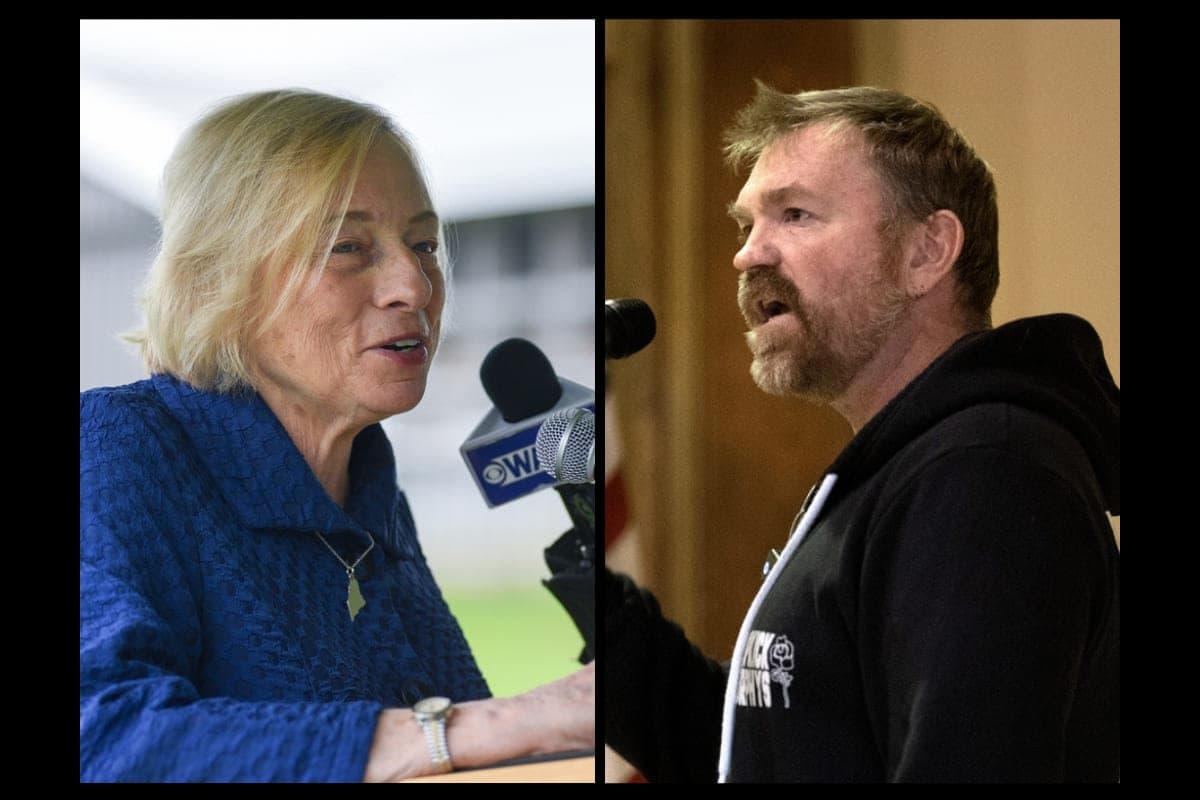
Graham Platner and Janet Mills are running radically different campaigns
Democratic U.S. Senate primary rivals Graham Platner and Gov. Janet Mills are running starkly different campaigns, with the front-running newcomer spending heavily on ads and digital content while the governor pulls back on ads while keeping a big staff. Campaign finance reports released this week show Platner’s team making more than two dozen combined media, digital advertising and video production purchases during the first half the year. Advertising and outreach has made up nearly three-quarters of his spending to date, while Mills has put more than a quarter of her haul into staffing and consultants. The divergent campaign styles put the spotlight on an uphill battle for Mills ahead of the June 9 primary. Her campaign has no ads booked through the June primary after a blitz last month highlighted Platner’s vulnerabilities that Mills says the five-term Collins could exploit in one of the most pivotal and likely costly Senate races this year. But targeting the military veteran’s old social media posts and a tattoo of a Nazi-linked skull and crossbones long after it was reported in October has shown no signs of reversing Mills’ underdog status. Recent polls show Platner with a large advantage over the 78-year-old governor, the only Democrat to win statewide office in Maine in 20 years. “A total newbie has overtaken the Senate race,” Pennsylvania-based Republican consultant Christopher Nicholas, who has worked on several Senate campaigns, said. Platner’s campaign reported $4 million in fundraising through the first three months of 2026. After announcing $2.6 million for Mills last week, the governor’s campaign manager, Chelsea Brossard, said the team was heading “into the final quarter of the primary in a strong position to earn the Democratic nomination.” With debates and forums still to come, Mills released a reform-based policy platform and launched a statewide tour, so far including visits in Bangor and a town hall at Bowdoin College. Platner has done more than 50 town hall-style events across the state. His campaign is working hard to tell that story. It has ramped up video and digital ads and spent at least $111,000 on video projects with Workers Productions, LLC. Leaders for the Philadelphia-based firm previously worked on ads for the successful campaigns of U.S. Sen. John Fetterman of Pennsylvania, New York City Mayor Zohran Mamdani, Gov. Wes Moore of Maryland and several other prominent Democrats. The populist Platner has called for drastic overhauls of the political system and shunned corporate political action committee donations, as has Mills. He has also invested in fundraising consultants, strategists and admakers based in New York, Washington and elsewhere. For example, his campaign spent about $175,000 on direct mail fundraising in the first quarter. In an Instagram video last week, he railed against glossy “mailing garbage” from a PAC supporting Collins. His campaign said Thursday that his direct mail efforts do not include glossy fliers that “you can’t even burn in your woodstove.” Platner has also hosted Washington and other out-of-state fundraisers, and some have included lobbyists that have counted major health and pharmaceutical companies as clients. But he notes his Medicare for All messaging has remained consistent no matter where he campaigns. Mills has also relied on digital consulting, advertising and research from outfits based in Washington such as Liftoff Campaigns LLC, and New York City-based Global Strategy Group, one of the country’s top Democratic polling firms. The Collins campaign on Thursday shrugged off the Platner camp’s confidence, saying it’s right where it wants to be. Collins’ team noted that Platner and Mills combined raised less than the $7.1 million of former state House Speaker Sara Gideon in the first quarter of 2020. Outside Republican groups have heavily outspent Democratic ones so far in a costly ad war over defining Collins, who stockpiled cash to the tune of $10 million on hand as of the end of last month. Catching up will be difficult for either Platner — at $2.7 million — or Mills — at $1 million — once the primary finishes. “We have the resources we need at this point — not more, not less,” Collins spokesperson Shawn Roderick said.
Graham Platner and Janet Mills are running radically different campaigns
Democratic U.S. Senate primary rivals Graham Platner and Gov. Janet Mills are running starkly different campaigns, with the front-running newcomer spending heavily on ads and digital content while the governor pulls back on ads while keeping a big staff. Campaign finance reports released this week show Platner’s team making more than two dozen combined media, digital advertising and video production purchases during the first half the year. Advertising and outreach has made up nearly three-quarters of his spending to date, while Mills has put more than a quarter of her haul into staffing and consultants. The divergent campaign styles put the spotlight on an uphill battle for Mills ahead of the June 9 primary. Her campaign has no ads booked through the June primary after a blitz last month highlighted Platner’s vulnerabilities that Mills says the five-term Collins could exploit in one of the most pivotal and likely costly Senate races this year. But targeting the military veteran’s old social media posts and a tattoo of a Nazi-linked skull and crossbones long after it was reported in October has shown no signs of reversing Mills’ underdog status. Recent polls show Platner with a large advantage over the 78-year-old governor, the only Democrat to win statewide office in Maine in 20 years. “A total newbie has overtaken the Senate race,” Pennsylvania-based Republican consultant Christopher Nicholas, who has worked on several Senate campaigns, said. Platner’s campaign reported $4 million in fundraising through the first three months of 2026. After announcing $2.6 million for Mills last week, the governor’s campaign manager, Chelsea Brossard, said the team was heading “into the final quarter of the primary in a strong position to earn the Democratic nomination.” With debates and forums still to come, Mills released a reform-based policy platform and launched a statewide tour, so far including visits in Bangor and a town hall at Bowdoin College. Platner has done more than 50 town hall-style events across the state. His campaign is working hard to tell that story. It has ramped up video and digital ads and spent at least $111,000 on video projects with Workers Productions, LLC. Leaders for the Philadelphia-based firm previously worked on ads for the successful campaigns of U.S. Sen. John Fetterman of Pennsylvania, New York City Mayor Zohran Mamdani, Gov. Wes Moore of Maryland and several other prominent Democrats. The populist Platner has called for drastic overhauls of the political system and shunned corporate political action committee donations, as has Mills. He has also invested in fundraising consultants, strategists and admakers based in New York, Washington and elsewhere. For example, his campaign spent about $175,000 on direct mail fundraising in the first quarter. In an Instagram video last week, he railed against glossy “mailing garbage” from a PAC supporting Collins. His campaign said Thursday that his direct mail efforts do not include glossy fliers that “you can’t even burn in your woodstove.” Platner has also hosted Washington and other out-of-state fundraisers, and some have included lobbyists that have counted major health and pharmaceutical companies as clients. But he notes his Medicare for All messaging has remained consistent no matter where he campaigns. Mills has also relied on digital consulting, advertising and research from outfits based in Washington such as Liftoff Campaigns LLC, and New York City-based Global Strategy Group, one of the country’s top Democratic polling firms. The Collins campaign on Thursday shrugged off the Platner camp’s confidence, saying it’s right where it wants to be. Collins’ team noted that Platner and Mills combined raised less than the $7.1 million of former state House Speaker Sara Gideon in the first quarter of 2020. Outside Republican groups have heavily outspent Democratic ones so far in a costly ad war over defining Collins, who stockpiled cash to the tune of $10 million on hand as of the end of last month. Catching up will be difficult for either Platner — at $2.7 million — or Mills — at $1 million — once the primary finishes. “We have the resources we need at this point — not more, not less,” Collins spokesperson Shawn Roderick said.

Jared Golden and Republicans kill latest bid to rein in Donald Trump’s Iran powers
WASHINGTON — U.S. Rep. Jared Golden and House Republicans narrowly voted Thursday to defeat a Democratic-led resolution aiming to stop the war until hostilities are authorized by Congress. The war powers resolution was defeated by 214 to 213 in the Republican-majority chamber, a day after a similar measure was blocked in the Senate. The vote was virtually along party lines. Golden, a Democrat from Maine’s 2nd District who dropped a bid for a fifth term in November, was the only member of his party to oppose it, and only one Republican voted in favor of it. The vote underscored the continuing support among Trump’s fellow Republicans for the president’s war policy, more than six weeks after the U.S. and Israel launched strikes on Iran. Democrats have called on the president to come to Congress for authorization for the use of military force, noting that the Constitution says only that branch can declare war. Golden also voted with Republicans on a war-powers resolution in March, backing a middle-ground measure that would have given Trump a month to end military action and prohibit the use of ground troops without congressional authority. In a Thursday statement, he noted the current ceasefire between and ongoing negotiations around Iran’s nuclear program and access to the crucial Strait of Hormuz, saying the congressional effort is ill timed. “At this moment, a resolution like this would weaken our hand,” he said. Presidents from both parties have long held that the restriction does not apply for short-term operations or if the country is under immediate threat. The White House, and almost all of Trump’s fellow Republicans in Congress, say Trump’s actions are legal and within his rights as commander-in-chief to protect the U.S. by ordering limited military operations. Story by Patricia Zengerle. BDN writer Michael Shepherd contributed to this report.

RFK Jr. touts new food policies but avoids vaccines in remarks to Congress
WASHINGTON — U.S. Health Secretary Robert F. Kennedy Jr. highlighted nutrition and food safety in remarks before lawmakers Thursday but largely avoided questions about his efforts to overhaul the nationwide vaccination policy. Kennedy also omitted mention of his work to identify the causes of autism from remarks at the first of his two congressional hearings Thursday, the latest sign that the nation’s top health official is sidestepping some of his most controversial positions ahead of November’s midterm elections. Two sources familiar with the matter told Reuters the White House recently urged health officials to redirect policy discussions toward more popular topics, as President Donald Trump and his Republican Party seek to shore up support for their slim majorities in Congress. Kennedy, a longtime anti-vaccine activist, faced a setback last month after a court ruling derailed key elements of his efforts to rewrite U.S. vaccine policy and revamp a CDC advisory panel on immunizations. He appeared Thursday before the U.S. House of Representatives Ways and Means Committee and is scheduled to appear later in the day before the House Appropriations Committee’s health subcommittee to discuss the health component of the Trump administration’s 2027 budget proposal. Next week he faces five more hearings before House and Senate panels. Budget and vaccine policy pushback The budget requests $111 billion for the Department of Health and Human Services run by Kennedy, a 12.5% cut from current levels, including a $5 billion cut to the National Institutes of Health and elimination of a low-income energy assistance program. Several key Republicans, including Senate Appropriations Committee Chair Susan Collins of Maine, have criticized the cuts as unnecessary. Ahead of Kennedy’s Thursday hearings, Democratic lawmakers rallied at the U.S. Capitol against the proposed budget cuts. Democrats on the Ways and Means panel pressed Kennedy on rising health care costs, his undermining of confidence in vaccines, management of fraud and his stewardship of the nation’s largest measles outbreak in decades. Mike Thompson of California asked Kennedy if he has a medical or public health degree, to which Kennedy responded he does not. “Yet you are overruling doctors, scientists and public health experts across our country. Your dangerous conspiracy theories are undermining safe and effective vaccines,” Thompson said. “Mr. Secretary, you shouldn’t be in this office,” he added. Kennedy got into a heated exchange with California’s Linda Sánchez over the spread of measles, during which he acknowledged that vaccination could have saved the life of an unvaccinated child who died from the disease in Texas last year. He did not answer questions from Sánchez about ending a CDC campaign encouraging vaccination. Children’s health emphasis In his opening remarks before the committee, Kennedy emphasized achievements under his “Make America Healthy Again” initiative and other administration priorities, including efforts on nutrition, food safety, drug prices, fraud prevention and cutting children’s access to gender-affirming care. “We stand at a generational turning point, our children of the sickest generation in modern history, and decades of failed policy captured agencies and profit-driven systems have caused it. Parents across the country demanded change, and we are delivering it,” Kennedy said. Navigating competing constituencies The Trump administration faces a delicate balancing act, standing by millions of MAHA supporters who helped reelect the president in 2024 but are now upset by Trump’s order to boost pesticide production, while managing low support among the wider public for Kennedy’s anti-vaccine platform. Kennedy, who co-founded the anti-vaccine group Children’s Health Defense, has during his tenure pushed to reduce the number of recommended childhood vaccines, overhauled the Centers for Disease Control and Prevention panel of independent vaccine experts, and pledged to identify the cause of autism. Kennedy and his supporters have repeatedly linked autism to vaccines, a theory long debunked by science, at times with Trump’s explicit backing. Pollsters and strategists expect health care costs to be a primary issue for voters, who will decide control of Congress in November. Story by Ahmed Aboulenein and Leah Douglas.
RFK Jr. touts new food policies but avoids vaccines in remarks to Congress
WASHINGTON — U.S. Health Secretary Robert F. Kennedy Jr. highlighted nutrition and food safety in remarks before lawmakers Thursday but largely avoided questions about his efforts to overhaul the nationwide vaccination policy. Kennedy also omitted mention of his work to identify the causes of autism from remarks at the first of his two congressional hearings Thursday, the latest sign that the nation’s top health official is sidestepping some of his most controversial positions ahead of November’s midterm elections. Two sources familiar with the matter told Reuters the White House recently urged health officials to redirect policy discussions toward more popular topics, as President Donald Trump and his Republican Party seek to shore up support for their slim majorities in Congress. Kennedy, a longtime anti-vaccine activist, faced a setback last month after a court ruling derailed key elements of his efforts to rewrite U.S. vaccine policy and revamp a CDC advisory panel on immunizations. He appeared Thursday before the U.S. House of Representatives Ways and Means Committee and is scheduled to appear later in the day before the House Appropriations Committee’s health subcommittee to discuss the health component of the Trump administration’s 2027 budget proposal. Next week he faces five more hearings before House and Senate panels. Budget and vaccine policy pushback The budget requests $111 billion for the Department of Health and Human Services run by Kennedy, a 12.5% cut from current levels, including a $5 billion cut to the National Institutes of Health and elimination of a low-income energy assistance program. Several key Republicans, including Senate Appropriations Committee Chair Susan Collins of Maine, have criticized the cuts as unnecessary. Ahead of Kennedy’s Thursday hearings, Democratic lawmakers rallied at the U.S. Capitol against the proposed budget cuts. Democrats on the Ways and Means panel pressed Kennedy on rising health care costs, his undermining of confidence in vaccines, management of fraud and his stewardship of the nation’s largest measles outbreak in decades. Mike Thompson of California asked Kennedy if he has a medical or public health degree, to which Kennedy responded he does not. “Yet you are overruling doctors, scientists and public health experts across our country. Your dangerous conspiracy theories are undermining safe and effective vaccines,” Thompson said. “Mr. Secretary, you shouldn’t be in this office,” he added. Kennedy got into a heated exchange with California’s Linda Sánchez over the spread of measles, during which he acknowledged that vaccination could have saved the life of an unvaccinated child who died from the disease in Texas last year. He did not answer questions from Sánchez about ending a CDC campaign encouraging vaccination. Children’s health emphasis In his opening remarks before the committee, Kennedy emphasized achievements under his “Make America Healthy Again” initiative and other administration priorities, including efforts on nutrition, food safety, drug prices, fraud prevention and cutting children’s access to gender-affirming care. “We stand at a generational turning point, our children of the sickest generation in modern history, and decades of failed policy captured agencies and profit-driven systems have caused it. Parents across the country demanded change, and we are delivering it,” Kennedy said. Navigating competing constituencies The Trump administration faces a delicate balancing act, standing by millions of MAHA supporters who helped reelect the president in 2024 but are now upset by Trump’s order to boost pesticide production, while managing low support among the wider public for Kennedy’s anti-vaccine platform. Kennedy, who co-founded the anti-vaccine group Children’s Health Defense, has during his tenure pushed to reduce the number of recommended childhood vaccines, overhauled the Centers for Disease Control and Prevention panel of independent vaccine experts, and pledged to identify the cause of autism. Kennedy and his supporters have repeatedly linked autism to vaccines, a theory long debunked by science, at times with Trump’s explicit backing. Pollsters and strategists expect health care costs to be a primary issue for voters, who will decide control of Congress in November. Story by Ahmed Aboulenein and Leah Douglas.
RFK Jr. touts new food policies but avoids vaccines in remarks to Congress
WASHINGTON — U.S. Health Secretary Robert F. Kennedy Jr. highlighted nutrition and food safety in remarks before lawmakers Thursday but largely avoided questions about his efforts to overhaul the nationwide vaccination policy. Kennedy also omitted mention of his work to identify the causes of autism from remarks at the first of his two congressional hearings Thursday, the latest sign that the nation’s top health official is sidestepping some of his most controversial positions ahead of November’s midterm elections. Two sources familiar with the matter told Reuters the White House recently urged health officials to redirect policy discussions toward more popular topics, as President Donald Trump and his Republican Party seek to shore up support for their slim majorities in Congress. Kennedy, a longtime anti-vaccine activist, faced a setback last month after a court ruling derailed key elements of his efforts to rewrite U.S. vaccine policy and revamp a CDC advisory panel on immunizations. He appeared Thursday before the U.S. House of Representatives Ways and Means Committee and is scheduled to appear later in the day before the House Appropriations Committee’s health subcommittee to discuss the health component of the Trump administration’s 2027 budget proposal. Next week he faces five more hearings before House and Senate panels. Budget and vaccine policy pushback The budget requests $111 billion for the Department of Health and Human Services run by Kennedy, a 12.5% cut from current levels, including a $5 billion cut to the National Institutes of Health and elimination of a low-income energy assistance program. Several key Republicans, including Senate Appropriations Committee Chair Susan Collins of Maine, have criticized the cuts as unnecessary. Ahead of Kennedy’s Thursday hearings, Democratic lawmakers rallied at the U.S. Capitol against the proposed budget cuts. Democrats on the Ways and Means panel pressed Kennedy on rising health care costs, his undermining of confidence in vaccines, management of fraud and his stewardship of the nation’s largest measles outbreak in decades. Mike Thompson of California asked Kennedy if he has a medical or public health degree, to which Kennedy responded he does not. “Yet you are overruling doctors, scientists and public health experts across our country. Your dangerous conspiracy theories are undermining safe and effective vaccines,” Thompson said. “Mr. Secretary, you shouldn’t be in this office,” he added. Kennedy got into a heated exchange with California’s Linda Sánchez over the spread of measles, during which he acknowledged that vaccination could have saved the life of an unvaccinated child who died from the disease in Texas last year. He did not answer questions from Sánchez about ending a CDC campaign encouraging vaccination. Children’s health emphasis In his opening remarks before the committee, Kennedy emphasized achievements under his “Make America Healthy Again” initiative and other administration priorities, including efforts on nutrition, food safety, drug prices, fraud prevention and cutting children’s access to gender-affirming care. “We stand at a generational turning point, our children of the sickest generation in modern history, and decades of failed policy captured agencies and profit-driven systems have caused it. Parents across the country demanded change, and we are delivering it,” Kennedy said. Navigating competing constituencies The Trump administration faces a delicate balancing act, standing by millions of MAHA supporters who helped reelect the president in 2024 but are now upset by Trump’s order to boost pesticide production, while managing low support among the wider public for Kennedy’s anti-vaccine platform. Kennedy, who co-founded the anti-vaccine group Children’s Health Defense, has during his tenure pushed to reduce the number of recommended childhood vaccines, overhauled the Centers for Disease Control and Prevention panel of independent vaccine experts, and pledged to identify the cause of autism. Kennedy and his supporters have repeatedly linked autism to vaccines, a theory long debunked by science, at times with Trump’s explicit backing. Pollsters and strategists expect health care costs to be a primary issue for voters, who will decide control of Congress in November. Story by Ahmed Aboulenein and Leah Douglas.

Janet Mills holds low-key town hall at Bowdoin College as questions surround Senate bid
As her U.S. Senate campaign faces questions about strategy and viability, Gov. Janet Mills used a town hall at Bowdoin College Tuesday to make the case that she’s still Democrats’ best chance to defeat Republican Sen. Susan Collins in November. “I know there are liabilities on the part of my opponent that would make him a difficult candidate in the fall, let me put it that way,” she said. “I’ve never said things like all white, rural Americans, or Mainers, are racist and stupid. I’ve never said things like that. Mills’ comment, which came at the tail end of the event hosted by Bowdoin College Democrats, was the one and only time that she referenced her primary rival Graham Platner. But Platner, who will speak at the same venue on Wednesday night, loomed large nevertheless. Polls show that the combat veteran turned oyster farmer holds a significant lead over Mills despite a history of offensive social media posts and a tattoo of Nazi iconography that he’s since covered. The political newcomer has repeatedly addressed those controversies via social media, paid advertising and a dizzying schedule of public events — including more than 50 town halls so far. Mills’ effort to highlight his musings in her own advertising have seemingly not boosted her standing. Last week her campaign did not book any television ads, which have included two criticizing him over his posts about sexual assault. Those developments have prompted pundits to speculate whether Mills, a top recruit for Senate minority leader Chuck Schumer, will stay in the race. Mills didn’t face those questions directly on Tuesday, but she sought to frame her candidacy as a way to fight the existential threat posed by President Donald Trump and an obedient Republican Congress. “The point is, I can win this race,” she said. “And I need to win this race.” Still, questions surround Mills’ ability to rally with eight weeks left before the June 9 primary election, prompting scrutiny over a campaign that’s in stark contrast to the ubiquity of Platner’s. While the governor is maintaining a robust schedule of campaign events, many have been smaller, controlled gatherings. The Bowdoin College event was a departure from that approach, although the event was not promoted by her campaign beforehand. Maine Public, which discovered the town hall incidentally, appeared to be the only media outlet that covered it. Mills spoke for about 20 minutes before fielding questions from an audience featuring a mix of college students and older residents. The governor spoke at length about her decision to challenge Collins, calling the Republican a Trump enabler whose influence as the Senate budget committee’s lead appropriator has been diminished by a White House that’s seizing control over congressional spending decisions. Mills also talked up her electoral success, specifically the two statewide gubernatorial elections she’s won — and that made her a top Schumer recruit. While she did not mention Platner in that context, the inference was clear: She’s battle tested, he isn’t. “I’ve done it. I know how to do it. I know how to get through it. They throw everything but the kitchen sink at you,” she said. “That’s happened to me. I don’t care. I’m too old to care, frankly.” Mills spoke for about 20 minutes before fielding audience questions, many of which provided a clear contrast to Platner’s strident positions on foreign affairs. Students repeatedly questioned whether Mills would halt military aid to Israel over its prosecution of the conflict in Gaza. Mills said she would have to evaluate the specifics of any bill that would halt arms shipments to Israel. While she criticized Israel Prime Minister Benjamin Netanyahu’s military response to the 2023 terrorist attacks that ignited the conflict, she stopped short of calling it a genocide when pressed by an audience member. “The things happening in Gaza are also horrific and unnecessary and cruel. I think bombing civilian facilities of any sort is a violation of international law,” she said, adding, “There’s genocide going on right now in Sudan. Rwanda has genocide. There’s genocide going on in Somalia. I’m concerned about those countries as well as the Middle East, OK? There’s a lot we have to be concerned about, a lot on our plate.” Her response quickly made its way on social media, prompting a post from Platner. “Unlike the governor, I believe that Israel is committing a genocide in Gaza,” he said. The event was attended by roughly 200 people and came as the three Democrats vying to challenge Collins — Platner, Mills and David Costello — were set to post their latest campaign finance reports. Platner has maintained an edge in that category as well. Collins, meanwhile, has had to spend little of her campaign cash as the Democrats duke it out. This story appears through a media partnership with Maine Public.
Janet Mills holds low-key town hall at Bowdoin College as questions surround Senate bid
As her U.S. Senate campaign faces questions about strategy and viability, Gov. Janet Mills used a town hall at Bowdoin College Tuesday to make the case that she’s still Democrats’ best chance to defeat Republican Sen. Susan Collins in November. “I know there are liabilities on the part of my opponent that would make him a difficult candidate in the fall, let me put it that way,” she said. “I’ve never said things like all white, rural Americans, or Mainers, are racist and stupid. I’ve never said things like that. Mills’ comment, which came at the tail end of the event hosted by Bowdoin College Democrats, was the one and only time that she referenced her primary rival Graham Platner. But Platner, who will speak at the same venue on Wednesday night, loomed large nevertheless. Polls show that the combat veteran turned oyster farmer holds a significant lead over Mills despite a history of offensive social media posts and a tattoo of Nazi iconography that he’s since covered. The political newcomer has repeatedly addressed those controversies via social media, paid advertising and a dizzying schedule of public events — including more than 50 town halls so far. Mills’ effort to highlight his musings in her own advertising have seemingly not boosted her standing. Last week her campaign did not book any television ads, which have included two criticizing him over his posts about sexual assault. Those developments have prompted pundits to speculate whether Mills, a top recruit for Senate minority leader Chuck Schumer, will stay in the race. Mills didn’t face those questions directly on Tuesday, but she sought to frame her candidacy as a way to fight the existential threat posed by President Donald Trump and an obedient Republican Congress. “The point is, I can win this race,” she said. “And I need to win this race.” Still, questions surround Mills’ ability to rally with eight weeks left before the June 9 primary election, prompting scrutiny over a campaign that’s in stark contrast to the ubiquity of Platner’s. While the governor is maintaining a robust schedule of campaign events, many have been smaller, controlled gatherings. The Bowdoin College event was a departure from that approach, although the event was not promoted by her campaign beforehand. Maine Public, which discovered the town hall incidentally, appeared to be the only media outlet that covered it. Mills spoke for about 20 minutes before fielding questions from an audience featuring a mix of college students and older residents. The governor spoke at length about her decision to challenge Collins, calling the Republican a Trump enabler whose influence as the Senate budget committee’s lead appropriator has been diminished by a White House that’s seizing control over congressional spending decisions. Mills also talked up her electoral success, specifically the two statewide gubernatorial elections she’s won — and that made her a top Schumer recruit. While she did not mention Platner in that context, the inference was clear: She’s battle tested, he isn’t. “I’ve done it. I know how to do it. I know how to get through it. They throw everything but the kitchen sink at you,” she said. “That’s happened to me. I don’t care. I’m too old to care, frankly.” Mills spoke for about 20 minutes before fielding audience questions, many of which provided a clear contrast to Platner’s strident positions on foreign affairs. Students repeatedly questioned whether Mills would halt military aid to Israel over its prosecution of the conflict in Gaza. Mills said she would have to evaluate the specifics of any bill that would halt arms shipments to Israel. While she criticized Israel Prime Minister Benjamin Netanyahu’s military response to the 2023 terrorist attacks that ignited the conflict, she stopped short of calling it a genocide when pressed by an audience member. “The things happening in Gaza are also horrific and unnecessary and cruel. I think bombing civilian facilities of any sort is a violation of international law,” she said, adding, “There’s genocide going on right now in Sudan. Rwanda has genocide. There’s genocide going on in Somalia. I’m concerned about those countries as well as the Middle East, OK? There’s a lot we have to be concerned about, a lot on our plate.” Her response quickly made its way on social media, prompting a post from Platner. “Unlike the governor, I believe that Israel is committing a genocide in Gaza,” he said. The event was attended by roughly 200 people and came as the three Democrats vying to challenge Collins — Platner, Mills and David Costello — were set to post their latest campaign finance reports. Platner has maintained an edge in that category as well. Collins, meanwhile, has had to spend little of her campaign cash as the Democrats duke it out. This story appears through a media partnership with Maine Public.