Stop Spam Calls Act
Directs the FCC to align its definition of written consent with wording in a 2024 final rule.
In the House Energy and Commerce Committee since Sept. 24, 2026, 11 days after it was introduced. Most bills never leave committee.
- INTRODUCEDINTROSEP 24, 2026
- COMMITTEECOMM.IN COMMITTEE
- HOUSEHOUSE—
- SENATESENATE—
- LAWLAW—
What the bill would do, and why it matters
Rules about permission help determine when businesses can make certain calls or send messages. The bill would direct the FCC to revise its definition of written consent to match wording in its 2024 final rule. The revised definition would take effect 18 months after enactment.
- INTRODUCED ONLY This bill has been introduced and possibly referred to a committee, but it has not passed any vote. Most introduced bills never become law — they die in committee without a hearing.
- DATA NOTE No Congressional Research Service summary was available.
- Aligns the consent definition
The bill would direct the Federal Communications Commission (FCC) to revise its regulation defining “prior express written consent” so it matches the wording in the agency’s final rule published January 26, 2024. The revised definition would take effect 18 months after enactment.
- Preserves FCC authority
The bill says its changes should not be read to mean the FCC lacked authority, before enactment, to require written consent under the regulation.
The definition of written consent helps determine when a caller or sender has permission under the FCC regulation. Aligning it with the wording in the agency’s 2024 final rule would change which regulatory definition applies once the revision takes effect.
Written from the bill text.
The path it took, step by step
- IntroducedSEP 24, 2026HOUSESEP 24, 2026By Rep. Subramanyam with 5 original cosponsorsReferred to Energy and Commerce
- SAME DAYNOWHouse committeeSEP 24, 2026ENERGY & COMMERCE NOWSEP 24, 2026In committee for 11 daysNo hearing yet
- 11 DAYS SO FARPassed the House—HOUSE FLOOR—Not scheduled
- Senate committee—SENATE—
- Passed the Senate—SENATE FLOOR—Not scheduled
- Resolve differencesONLY IF NEEDEDBOTH CHAMBERSONLY IF NEEDEDSkipped if the other chamber passes the same text
- Signed into law—PRESIDENT—10 days to sign or veto
- SEP 242026SEP 24, 2026REFERREDHOUSEReferred to the House Committee on Energy and Commerce.
- SEP 242026SEP 24, 2026INTRODUCEDHOUSEIntroduced in House
At day 11, this bill is already older than 3% of the laws passed this Congress were when they were signed.
Where your members stand on it
A coalition from 5 states
Plus the sponsor, a Democrat. The smaller side has 2 members.
Plus the sponsor, a Democrat. The smaller side has 2 members.
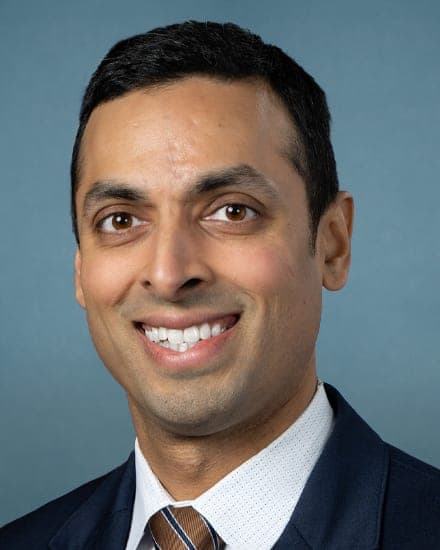
Rep. Subramanyam’s record: sponsored 49 bills this Congress. 2 passed the House; 0 became law.
- André CarsonD-IN-7ORIGINAL
- Raja KrishnamoorthiD-IL-8ORIGINAL
- John W. MannionD-NY-22ORIGINAL
- Jefferson ShreveR-IN-6ORIGINAL
- George WhitesidesD-CA-27ORIGINAL
- Daniel MeuserR-PA-9SEP 28, 2026
What readers think
Discussion
Get an alert when it changes stage, gets a floor vote in the House, or is signed into law.