Abdul El-Sayed Just Admitted Medicare for All Requires Massive Tax Increases on Everyone
El-Sayed defended funding Medicare for All with higher taxes instead of health insurance premiums.
SOURCE CHECK
TAP FOR WHYTownhall is an opinion-oriented publisher, and this piece is a strongly framed commentary rather than independent, multi-source reporting. The named author and excerpts from an interview provide some transparency, but the article offers little support for its cost and tax-rate claims.
- Source type — Opinion-oriented publisher and an explicitly argumentative article.
- Editorial standards — The article relies heavily on commentary and social-media posts, with limited independent verification of key estimates.
- Author attribution — A named author is identified.
- Transparency — The interview exchange is quoted, but the article does not identify the sources behind its tax-rate claims.
The article includes substantial excerpts from El-Sayed’s interview, but relies largely on the author’s assertions and social-media reactions. It gives numerical cost and tax estimates without identifying their underlying sources and offers little context or competing analysis.
HOW WE SCORE ↗The candidate’s comments are quoted at length, but the article’s narrative and reactions are overwhelmingly critical. It provides no substantive independent assessment of the proposal or its supporters’ case.
- Counterarguments presented — El-Sayed’s explanation is included, but the article does not develop a broader case for the proposal or its financing.
- Source diversity — The piece relies on one interview excerpt and critical social-media posts, without independent expert or policy analysis.
- Loaded language — The author uses strongly judgmental terms and presents disputed consequences as certain.
- Omitted context — The tax and cost estimates are not accompanied by their sources or methodological context.
The article frames El-Sayed’s proposal as a costly and harmful scheme, uses loaded language, and foregrounds criticism while providing little supportive context. Its presentation strongly favors a right-leaning critique of the policy.
- Language tone — Uses dismissive and alarmed language to characterize the proposal and its consequences.
- Framing — Frames the tax change as a damaging increase rather than neutrally explaining the proposed financing.
- Source selection — Includes the candidate’s interview statements but also several critical social-media reactions, with no comparable supportive analysis.
- Headline — The headline presents the candidate’s statement as an admission and emphasizes tax increases.
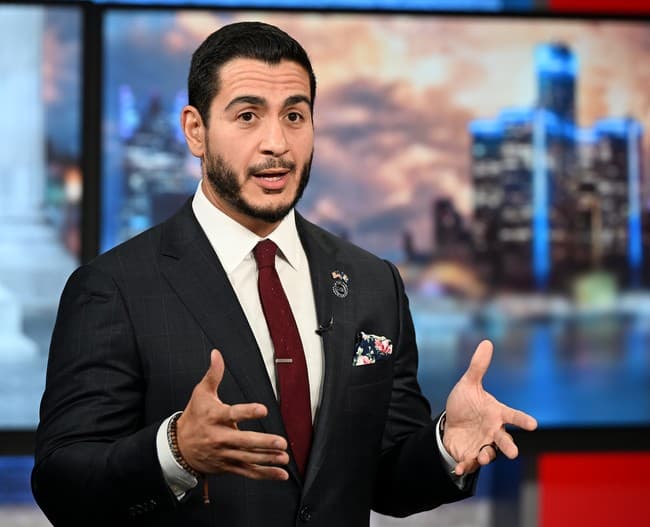
Senate candidate Abdul El-Sayed defended replacing health insurance premiums with higher taxes to fund Medicare for All. Amy Curtis argues the plan would substantially raise taxes and features social-media criticism of it.
The article recounts El-Sayed’s exchange with Kristen Welker about how Medicare for All would be funded. El-Sayed said people could pay more in taxes, including through FICA, instead of paying health insurance companies, and argued that coverage would not be tied to employment or life changes. He also said he supports taxing billionaires’ wealth.
Curtis characterizes the proposal as requiring large tax increases. The article cites an estimate of $25–35 trillion over 10 years and claims it could require a 32% payroll tax or doubled federal income tax rates; it also includes social-media posts opposing the plan.
Community verdict
2 VOTES
People in this story
Part of a bigger story
5 OUTLETSIn a televised interview, Michigan Senate candidate Abdul El-Sayed defended Medicare for All and described funding it through taxes rather than insurance premiums. Right-leaning outlets largely frame his comments as an admission of higher taxes and a political vulnerability, while some also focus on his ties to Hasan Piker or his challenge to Mike Rogers.
- ARTICLES
- 6
- OUTLETS
- 5
- AVG CRED
- 53
Discussion · 0
Loading comments…