The Electability of Abdul El-Sayed
El-Sayed won Michigan’s Democratic Senate primary and faces questions about his prospects in the general election.
SOURCE CHECK
TAP FOR WHYThe New Yorker is an established national publication, and this article has a named author and original reporting, including an interview with El-Sayed. Its analysis relies partly on campaign claims and interpretation, but it attributes key statements and figures.
- Source type — Established national publication with a substantial editorial operation.
- Transparency — The article identifies interviewees and attributes quotations and campaign claims.
- Author attribution — A named reporter is credited.
- Track record — A well-established magazine with a record of original reporting.
The article includes an interview, attributed remarks from El-Sayed and Hillary Scholten, and specific campaign details. It presents concerns about his general-election prospects but is primarily an interpretive account and offers limited direct response from Stevens.
HOW WE SCORE ↗The article reports both El-Sayed’s case for his electability and Democrats’ concerns about his positions and campaign style. Its focus remains largely on interpreting his victory, with limited direct representation from Stevens or her campaign.
- Counterarguments presented — Reports establishment Democrats’ concerns about El-Sayed’s general-election prospects.
- Source diversity — Includes an interview with El-Sayed and a comment from Scholten, but few direct opposing voices.
- Opinion vs reporting — Clearly interpretive analysis that combines reported details with the author’s assessments.
- Loaded language — Some evaluative descriptions shape the portrayal of El-Sayed and Stevens’s campaigns.
The article portrays El-Sayed as politically talented and his victory as a rebuke to the Democratic establishment, giving the analysis a mild left-leaning frame. It also details concerns about his positions and campaign style.
- Framing — Frames El-Sayed’s win as an important progressive challenge to the Democratic establishment.
- Language tone — Uses favorable descriptions of El-Sayed’s political talents while also noting criticisms of his style.
- Source selection — Includes El-Sayed’s views and a skeptical Democratic voice, but does not provide an extensive Stevens response.
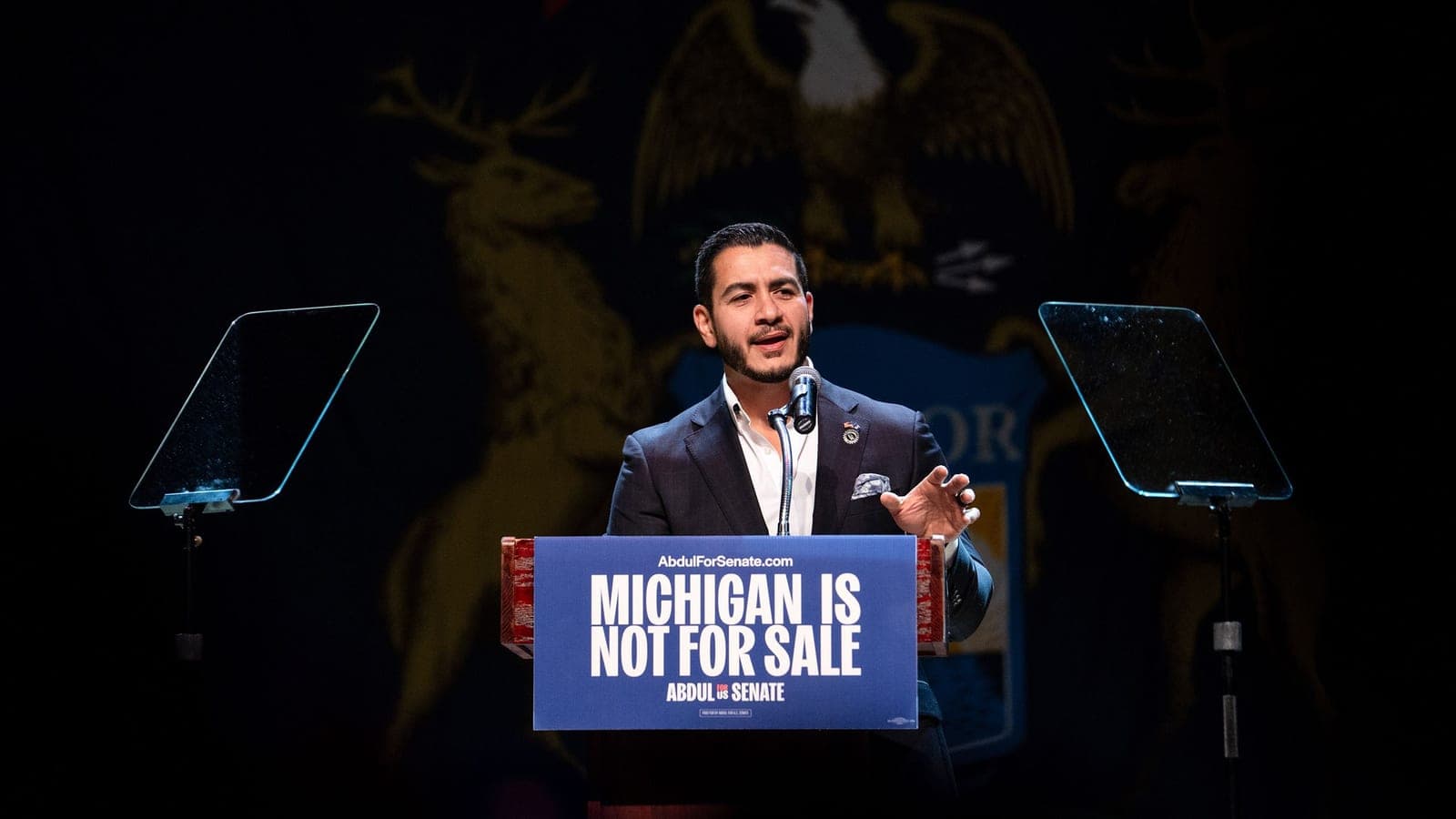
Abdul El-Sayed won Michigan’s Democratic Senate primary, defeating Haley Stevens, and now faces a competitive general election against Republican nominee Mike Rogers. The article examines whether El-Sayed’s progressive politics and combative campaign style can succeed in a purple state.
El-Sayed’s victory followed a grassroots campaign that the article says held nearly five hundred events across more than a hundred towns and cities, despite Stevens’s large television-spending advantage. It contrasts his campaign with Stevens’s emphasis on her past work in the Obama Administration and notes her outside-group support, including spending reportedly tied to AIPAC.
The article describes concerns among establishment Democrats that El-Sayed’s positions on Medicare for All, ICE and Israel could hurt him in the general election, where he will face Republican nominee Mike Rogers. El-Sayed argues that his campaign can mobilize younger voters, and he says Michigan voters want alternatives to the established political choices.
Community verdict
17 VOTES
People in this story
SWIPE →
Democratic Senate primary candidate defeated by El-Sayed

President cited in discussion of Michigan’s political climate
Republican Senate nominee in Michigan and El-Sayed’s general-election opponent
New York House candidate mentioned as a comparison to El-Sayed

Michigan representative who endorsed Stevens

Maine Democratic Senate candidate mentioned as a comparison to El-Sayed
Part of a bigger story
45 OUTLETSOutlets agree Abdul El-Sayed won Michigan’s Democratic Senate primary over Haley Stevens and will face Republican Mike Rogers in November. Left-leaning outlets present the win as a progressive challenge to party leaders and a marker of movement momentum, while also weighing its reach in November. Center outlets emphasize the close result, party direction and the general-election contest. Right-leaning outlets often frame the result as a leftward shift or establishment setback and stress questions about El-Sayed’s general-election appeal, with some focusing on ethical or policy criticism.
- ARTICLES
- 51
- OUTLETS
- 45
- AVG CRED
- 69
Discussion · 0
Loading comments…