Michigan’s Senate Race Is a Testing Ground
The authors argue that attacks on El-Sayed’s identity are being used to divide voters in Michigan’s Senate race.
SOURCE CHECK
TAP FOR WHYThe Nation is an established publication, and the authors are identified, but this is an explicitly persuasive opinion piece rather than original, independently sourced reporting. Its advocacy framing and limited sourcing reduce its value as a factual news account.
- Source type — Published as opinion, so it presents an argument rather than independent news reporting.
- Author attribution — Both authors are named and their organizational roles are provided.
- Track record — The Nation is an established publication, though this article is not a reported news story.
The article clearly states its argument and attributes prominent claims, but it relies largely on the authors’ characterization, offers little documentation for the allegations, and does not include responses from the criticized figures.
HOW WE SCORE ↗This opinion article presents a clear case against El-Sayed’s opponents’ tactics but gives no direct response from Rogers or Vance and does not develop their rationale.
- Counterarguments presented — No counterargument or response from the criticized candidates is presented.
- Loaded language — The article uses emphatic evaluative language to condemn the attacks.
- Opinion vs reporting — The authors openly argue for solidarity and against the campaign tactics they describe.
- Source diversity — The piece relies principally on the authors’ perspective and selected quotations.
The authors explicitly advocate for a progressive, anti-Trump coalition and frame Republican campaign tactics as fear-based and bigoted. The article does not present a competing account from the candidates it criticizes.
- Framing — Frames the race as a test of solidarity against tactics attributed to administration allies and El-Sayed’s opponents.
- Language tone — Uses strongly condemnatory terms including “hate,” “xenophobia,” and “bigoted demonization.”
- Source selection — The authors speak from an explicitly pro-solidarity perspective and include no response from the criticized candidates.
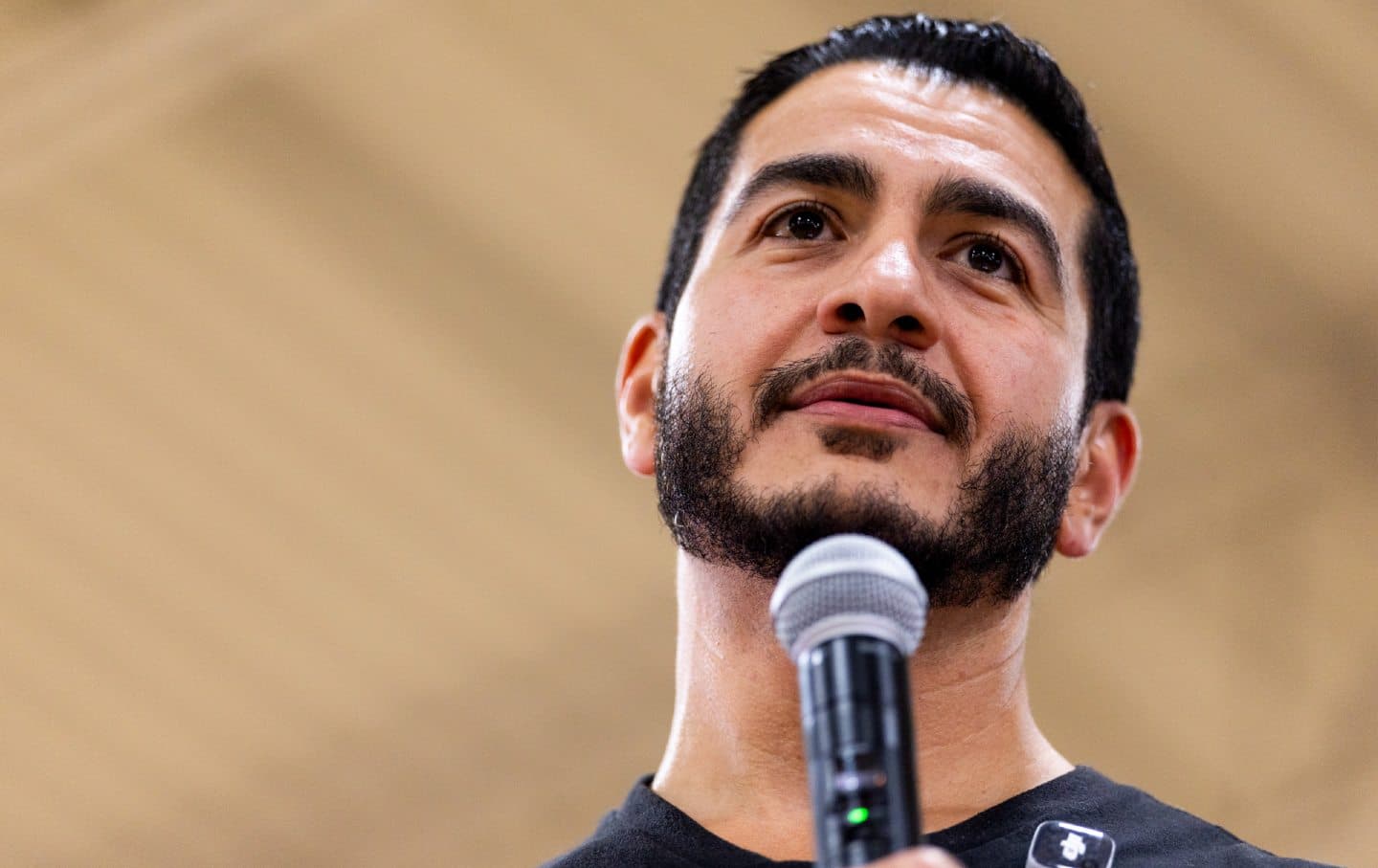
An opinion article argues that attacks on Michigan Senate candidate Abdul El-Sayed are exploiting anti-Muslim and antisemitic fears, and calls for solidarity across communities. It highlights false claims by his opponent, Mike Rogers, and a rally insult by Vice President J.D. Vance.
The authors describe El-Sayed’s Michigan Senate race as a test of whether political attacks can divide Muslim and Jewish voters. They say El-Sayed won his primary with a diverse movement and that opponents have attacked his identity rather than debated his policy proposals. The article says Rogers falsely claimed El-Sayed supported the Muslim Brotherhood and said America deserved 9/11, and reports that Vance called him “very, very evil.”
The authors argue that anti-Muslim and antisemitic bigotry reinforce one another and urge Muslim, Jewish and other communities to resist efforts to divide them. They also cite El-Sayed’s stated commitment to Jewish safety.
Community verdict
VOTING CLOSED
No good or bad look here
This story reports what happened without casting El-Sayed in a good or bad light, so readers don’t rate it and it doesn’t count toward El-Sayed’s record.
People in this story
SWIPE →
Republican Michigan Senate candidate and El-Sayed’s opponent

Vice President who criticized El-Sayed at a campaign rally
Discussion · 0
Loading comments…