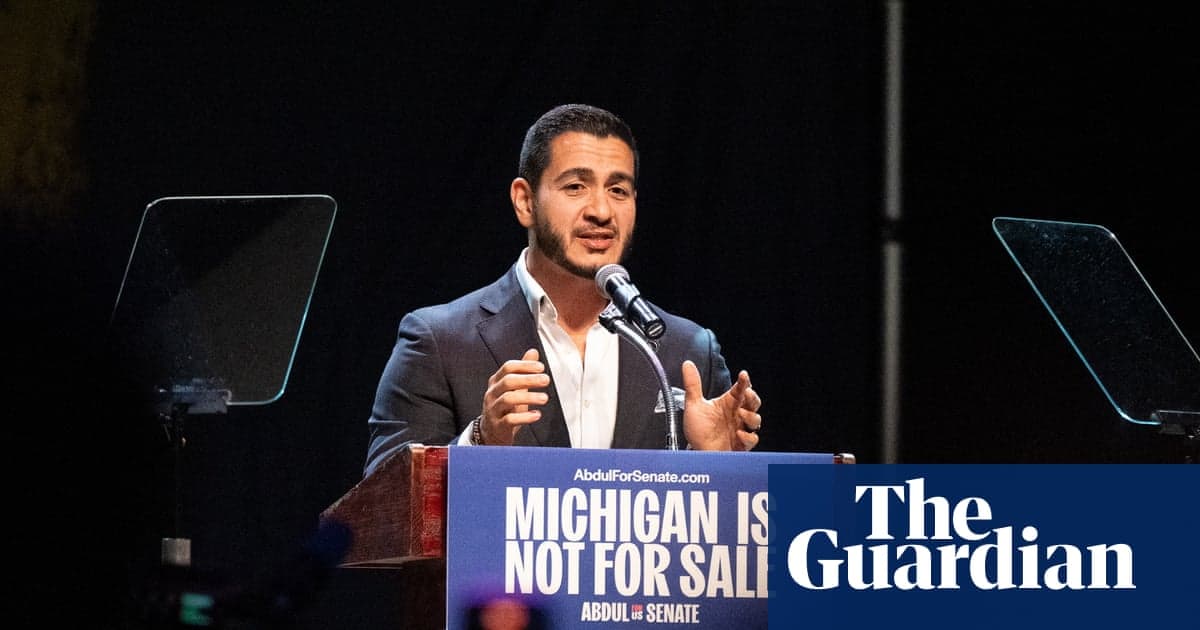
Abdul El-Sayed's win proves change is possible for Democrats. His next fight may determine their future | US politics
El-Sayed’s primary victory is presented as a test of progressive politics and a consequential step toward the general election.
SOURCE CHECK
TAP FOR WHYThe Guardian is an established national news organization with named reporters and an identifiable editorial operation. The article includes original reporting and attributed sources, though no specific corrections or editorial-policy details are established here.
- Source type — Established national news organization with a substantial record of reporting.
- Author attribution — Two reporters are named.
- Transparency — The article attributes remarks to named voters and political figures and identifies the outlet.
The article uses attributed comments from voters and political figures and provides election figures and campaign details. Its interpretation is supported by reporting, but the framing favors the progressive movement’s account of the result, and the opposing campaign’s perspective is limited.
HOW WE SCORE ↗The article includes the close result, the general-election challenge, and an attack from Rogers and the Republican National Committee. However, most of its interpretation and quoted perspectives support the progressive case for El-Sayed, with limited detail on Stevens’s or Rogers’s arguments.
- Counterarguments presented — Notes the challenge of uniting the party and appealing to swing voters, but gives little substantive space to the opposing candidates’ views.
- Source diversity — Includes voter perspectives, a former Democratic congressman, and Republican campaign messaging.
- Framing — The explanatory narrative largely develops the progressive movement’s interpretation of the result.
The article frames El-Sayed’s win sympathetically as evidence for progressive, anti-establishment politics and emphasizes criticism of centrist Democratic strategy. It includes a Republican attack on him but offers little substantive counterargument from moderates or Republicans.
- Framing — Presents the result as a potential validation of progressive, anti-establishment politics.
- Source selection — Quotes supportive voters and a former Democratic congressman; opposing perspectives receive less space.
- Language tone — Uses favorable descriptions of El-Sayed’s campaign and presents its approach as a possible model.
Abdul El-Sayed won Michigan’s Democratic Senate primary over Haley Stevens, a result the article presents as a test of the party’s progressive, anti-establishment direction. He now faces Republican Mike Rogers in a general election that could affect Democrats’ hopes of retaking the Senate.
El-Sayed won the Democratic primary over Stevens, leading 48.5% to 47.5% when the race was called. The article says his campaign centered on universal healthcare and argues that his victory could challenge the idea that Democrats in swing states must run from the center. It also notes that he will need to unite Democrats and appeal to independent and right-leaning voters in the general election.
The article describes the contest as a possible bellwether for the Democratic Party’s future and its prospects for retaking the Senate. It reports that Republican candidate Mike Rogers posted an AI-generated video depicting El-Sayed as part of a Trojan horse and warning against communism.
Community verdict
19 VOTES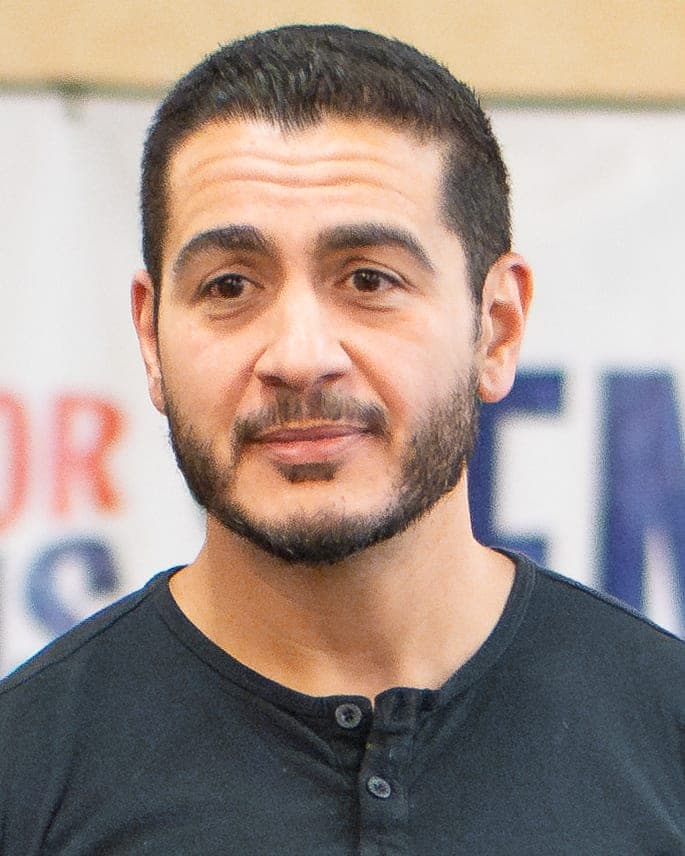
People in this story
SWIPE →Progressive candidate for a Pennsylvania congressional seat

Democratic representative whose primary result is cited as a contrast

Democratic Senate primary opponent

Former representative and primary challenger to Wesley Bell

Former president mentioned in Michigan’s presidential election history
Republican Senate candidate in Michigan

Former Michigan congressman commenting on the primary result

Democratic representative whose primary result is cited as a contrast
Part of a bigger story
45 OUTLETSOutlets agree Abdul El-Sayed won Michigan’s Democratic Senate primary over Haley Stevens and will face Republican Mike Rogers in November. Left-leaning outlets present the win as a progressive challenge to party leaders and a marker of movement momentum, while also weighing its reach in November. Center outlets emphasize the close result, party direction and the general-election contest. Right-leaning outlets often frame the result as a leftward shift or establishment setback and stress questions about El-Sayed’s general-election appeal, with some focusing on ethical or policy criticism.
- ARTICLES
- 51
- OUTLETS
- 45
- AVG CRED
- 69
Discussion · 0
Loading comments…