Rep. Val Hoyle Scores Win with Bipartisan Columbia River Cleanup Bill
Hoyle’s Columbia River cleanup measure passed the House as part of a broader water stewardship bill.

SOURCE CHECK
TAP FOR WHYThe publisher is identified as a local news outlet, but the short byline and article provide little information about editorial standards or corrections practices. The piece is straightforward but offers limited sourcing beyond Hoyle’s statement and program background.
- Source type — A local-news publisher, a generally useful but variable source category.
- Transparency — The article does not provide much information about its reporting process or sourcing.
- Author attribution — A byline is present, but it identifies the author only as Steve.
- Editorial standards — No corrections or editorial standards information is evident in the article text.
The article gives a clear account of the measure and includes Hoyle’s remarks and background on the program. It relies heavily on her perspective and provides no independent analysis, opposing viewpoint or detailed account of the bill’s legislative provisions.
HOW WE SCORE ↗The article reports the bill’s passage and includes Hoyle’s explanation, but provides no independent voices or discussion of possible objections. It does note bipartisan support, without examining the range of views on the measure.
- Source diversity — Hoyle is the only quoted source; other claims are presented without outside attribution.
- Counterarguments presented — No objections or competing views are included.
- Loaded language — The headline and opening use favorable language about Hoyle’s success.
- Opinion vs reporting — The article reports an event but uses some promotional framing.
The report is mostly factual but uses approving language about Hoyle and the bill, including calling the passage a win. Its framing does not otherwise make a strong ideological argument.
- Headline — Describes Hoyle as scoring a win, giving the story a positive frame around her achievement.
- Language tone — The opening calls Hoyle “our very own” representative and uses approving language.
- Source selection — The story quotes Hoyle and includes no critical or opposing perspective.
The House passed the Columbia River Clean-Up Act as part of H.R. 6422, a bipartisan measure that Rep. Val Hoyle said would protect and fund restoration work in the Columbia River Basin.
The article reports that Hoyle’s Columbia River Clean-Up Act passed the House as part of the American Water Stewardship Act, H.R. 6422. It says the measure extends the Columbia River Basin Restoration program, which funds projects to reduce toxic pollutants and improve water quality. Hoyle called passage an important step toward protecting the basin and said she was proud to help pass a bipartisan measure.
The article says Sen. Jeff Merkley introduced a Senate version, with Sens. Ron Wyden and Patty Murray as cosponsors. It describes the basin as home to more than 8 million people and more than 15 tribal nations, and lists past program awards for stormwater work, pollution reduction and mercury-risk monitoring.
Community verdict
22 VOTES
People in this story
SWIPE →Representative whose Columbia River Clean-Up Act passed the House as part of H.R. 6422

Senator and cosponsor of the Senate version

Senator and cosponsor of the Senate version
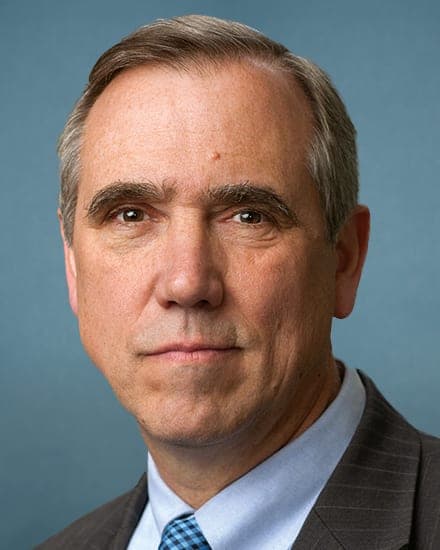
Senator who introduced the Senate version of the cleanup bill
Discussion · 0
Loading comments…