5 stories credited to The Corvallis Advocate
Latest story Sep 18, 2026 · on ChamberLight since Apr 2026
A story can appear as several articles (copies of the same piece), so counts of stories and of articles differ.
Scores for The Corvallis Advocate
Writing quality not enough rated stories yet: 5 of 10. How it is measured
Scores last checked Sep 25, 2026.
Stories ChamberLight collected, by month
Stories credited to The Corvallis Advocate, by publication date. ChamberLight collects articles that mention the officials it tracks, so this shows its own coverage of this source, not how much the source publishes.
- Stories from The Corvallis Advocate
- Shaded: ChamberLight collected no stories, or almost none, from any outlet (a gap in its collection, not in the outlet’s publishing)
Show as a table
| Month | Stories | All outlets |
|---|---|---|
| March 2026 | 2 | 148 |
| April 2026 | 2 | 4,538 |
| May 2026 | 0 | none collected |
| June 2026 | 0 | none collected |
| July 2026 | 0 | none collected |
| August 2026 | 0 | 1 (collection gap) |
| September 2026 | 1 | 1,320 |
Top topics
Share of this source’s stories tagged with each topic. A story can carry several topics, so the shares do not add up to 100%.
- Ethics/Corruption3
60% of 5 stories · 58% across all outlets
- Economy2
40% of 5 stories · 26% across all outlets
- Healthcare2
40% of 5 stories · 8% across all outlets
- Voting Rights2
40% of 5 stories · 19% across all outlets
- Abortion/Reproductive Rights1
20% of 5 stories · 1% across all outlets
- Agriculture1
20% of 5 stories · 2% across all outlets
- Criminal Justice1
20% of 5 stories · 19% across all outlets
- Environment/Climate1
20% of 5 stories · 5% across all outlets
The thin mark on each bar is the topic’s share across all outlets.
Who they cover
Party of the officials these stories are mainly about, across all 8 officials named. A story counts once for each official it is mainly about, so the split is over 15 story–official pairs, from 5 stories.
- Democrat87% · 13 pairs
- Republican13% · 2 pairs
Most covered
Stories mainly about each official, and their share of the source’s 5 stories.
Article tone
ChamberLight’s article analysis assigns each story a tone toward the official it covers. It describes the coverage of that official, not The Corvallis Advocate’s stance, and reader votes do not change it. 5 stories.
- Good Look
- 2 (40%)
- Mixed
- 2 (40%)
- Informational
- 1 (20%)
- Bad Look
- 0 (0%)
Challenges to these scores
No one has challenged a score on this page yet. Anyone can; editors publish every outcome here.
Articles served from corvallisadvocate.com
15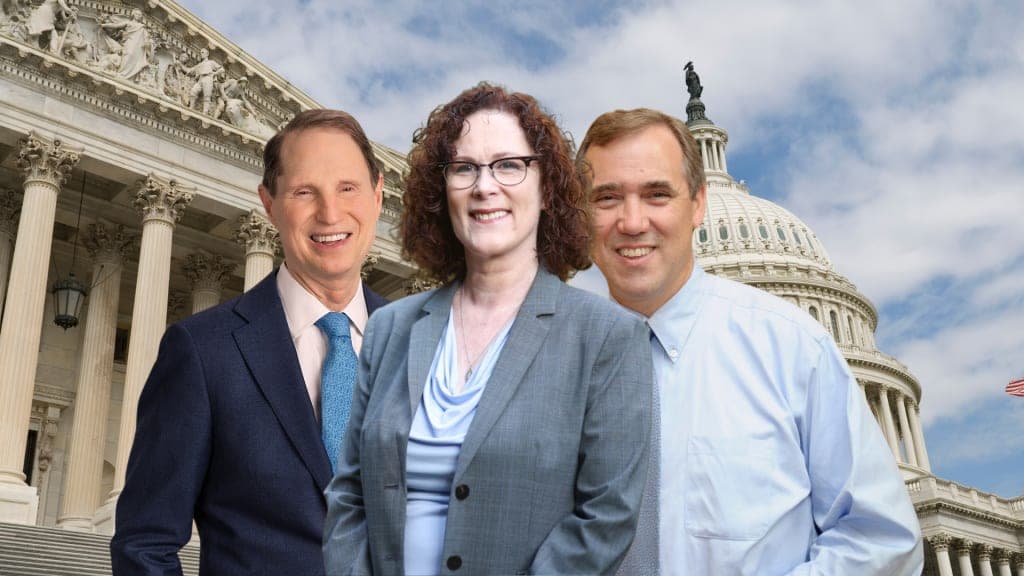
Doctors Should Practice Medicine, Not Corporations; Hoyle, Merkley and Wyden Intro a New Bill
This week, Oregon's Congressional Rep. Val Hoyle and Senators Ron Wyden and Jeff Merkley introduced a bill to ban corporations from taking over the practice of actual medicine. They're modeling it on a landmark Oregon law that physicians have already used to successfully challenge corporate takeover
Doctors Should Practice Medicine, Not Corporations; Hoyle, Merkley and Wyden Intro a New Bill
This week, Oregon's Congressional Rep. Val Hoyle and Senators Ron Wyden and Jeff Merkley introduced a bill to ban corporations from taking over the practice of actual medicine. They're modeling it on a landmark Oregon law that physicians have already used to successfully challenge corporate takeover
Doctors Should Practice Medicine, Not Corporations; Hoyle, Merkley and Wyden Intro a New Bill
This week, Oregon's Congressional Rep. Val Hoyle and Senators Ron Wyden and Jeff Merkley introduced a bill to ban corporations from taking over the practice of actual medicine. They're modeling it on a landmark Oregon law that physicians have already used to successfully challenge corporate takeover

$2.1 Million, That’s How Much Oregon’s House Races have Raised Since January
Candidates running to represent Oregon in the U.S. House of Representatives raised nearly $2.1 million in the first three months of 2026, with the incumbents for Oregon’s three most competitive congressional districts bringing in the most funds, federal campaign finance records show. Congressional candidates on Wednesday filed their quarterly report to the Federal Election Commission detailing fundraising and spending between Jan. 1 and March 31. Only candidates who have raised or spent more than $5,000 are required to report their finances. U.S. Rep. Janelle Bynum, a Democrat representing Oregon’s 5th Congressional District which spans from Bend to the suburbs of Portland, brought in nearly $753,000 this quarter. Her only challenger in the Democratic primary, Zeva Rosenbaum, has not yet reported any campaign fundraising. On the Republican side, Patti Adair, a Deschutes County commissioner running for Bynum’s seat, raised more than $92,000. Adair in the Republican primary will face Jonathan Lockwood, a communications professional and law school student who has not yet reported any fundraising to the federal commission. Behind Bynum, U.S. Rep. Andrea Salinas raised about $282,000 this quarter. Salinas represents Oregon’s 6th Congressional District, which includes Polk and Yamhill counties and parts of Marion, Clackamas and Washington counties. Salinas’ only challenger is David Russ, a Republican and former Dundee mayor. He reported no fundraising this quarter. In third place, U.S. Rep. Val Hoyle raised $220,000 last quarter. Hoyle represents Oregon’s 4th Congressional District, which spans across coastal towns from Lincoln County to the southern tip of Curry County and includes university cities Eugene and Corvallis. Only one of the two Democratic candidates challenging Hoyle in the primary, Corvallis Democrat and small business owner Melissa Bird, reported campaign fundraising, raising nearly $29,000 this quarter. Hoyle’s main Republican challenger, Eugene Air Force veteran Monique DeSpain, raised more than $158,000 this quarter. Oregon’s 4th, 5th and 6th Congressional Districts are the state’s most competitive. All three districts have more non-affiliated voters than registered Democrats, and more registered Democrats than Republicans, according to state records. In Oregon’s 3rd Congressional District, Portland-based U.S. Rep. Maxine Dexter has the stronghold as she’s raised nearly $196,000, while none of her challengers reported raising or spending money last quarter. Oregon’s congressional candidates with millions to spend What do U.S. Sen. Jeff Merkley, U.S. Rep Cliff Bentz and Bynum have in common? They all have millions of dollars left they can spend on their campaigns. Merkley brought in the most out of Oregon’s delegation this quarter, with more than $1 million. He has $6.6 million in cash on hand, far outpacing the two out of seven Republicans trying to unseat him who reported their campaign finances. That includes unsuccessful 2020 U.S. Senate candidate Jo Rae Perkins who raised nearly $5,200, and David Brock Smith, a Republican state senator from Coos Bay who reported raising $24,000 this quarter. In Oregon’s 2nd Congressional District, Bentz raised nearly $145,000 this quarter and has $1.4 million remaining in his campaign account, far ahead of any challengers. And despite spending $227,000 on her campaign this quarter — the most out of any candidate running to represent Oregon in Congress — Bynum still has nearly $2.3 million left in her campaign account. By Mia Maldonado of news partner Oregon Capital Chronicle
$2.1 Million, That’s How Much Oregon’s House Races have Raised Since January
Candidates running to represent Oregon in the U.S. House of Representatives raised nearly $2.1 million in the first three months of 2026, with the incumbents for Oregon’s three most competitive congressional districts bringing in the most funds, federal campaign finance records show. Congressional candidates on Wednesday filed their quarterly report to the Federal Election Commission detailing fundraising and spending between Jan. 1 and March 31. Only candidates who have raised or spent more than $5,000 are required to report their finances. U.S. Rep. Janelle Bynum, a Democrat representing Oregon’s 5th Congressional District which spans from Bend to the suburbs of Portland, brought in nearly $753,000 this quarter. Her only challenger in the Democratic primary, Zeva Rosenbaum, has not yet reported any campaign fundraising. On the Republican side, Patti Adair, a Deschutes County commissioner running for Bynum’s seat, raised more than $92,000. Adair in the Republican primary will face Jonathan Lockwood, a communications professional and law school student who has not yet reported any fundraising to the federal commission. Behind Bynum, U.S. Rep. Andrea Salinas raised about $282,000 this quarter. Salinas represents Oregon’s 6th Congressional District, which includes Polk and Yamhill counties and parts of Marion, Clackamas and Washington counties. Salinas’ only challenger is David Russ, a Republican and former Dundee mayor. He reported no fundraising this quarter. In third place, U.S. Rep. Val Hoyle raised $220,000 last quarter. Hoyle represents Oregon’s 4th Congressional District, which spans across coastal towns from Lincoln County to the southern tip of Curry County and includes university cities Eugene and Corvallis. Only one of the two Democratic candidates challenging Hoyle in the primary, Corvallis Democrat and small business owner Melissa Bird, reported campaign fundraising, raising nearly $29,000 this quarter. Hoyle’s main Republican challenger, Eugene Air Force veteran Monique DeSpain, raised more than $158,000 this quarter. Oregon’s 4th, 5th and 6th Congressional Districts are the state’s most competitive. All three districts have more non-affiliated voters than registered Democrats, and more registered Democrats than Republicans, according to state records. In Oregon’s 3rd Congressional District, Portland-based U.S. Rep. Maxine Dexter has the stronghold as she’s raised nearly $196,000, while none of her challengers reported raising or spending money last quarter. Oregon’s congressional candidates with millions to spend What do U.S. Sen. Jeff Merkley, U.S. Rep Cliff Bentz and Bynum have in common? They all have millions of dollars left they can spend on their campaigns. Merkley brought in the most out of Oregon’s delegation this quarter, with more than $1 million. He has $6.6 million in cash on hand, far outpacing the two out of seven Republicans trying to unseat him who reported their campaign finances. That includes unsuccessful 2020 U.S. Senate candidate Jo Rae Perkins who raised nearly $5,200, and David Brock Smith, a Republican state senator from Coos Bay who reported raising $24,000 this quarter. In Oregon’s 2nd Congressional District, Bentz raised nearly $145,000 this quarter and has $1.4 million remaining in his campaign account, far ahead of any challengers. And despite spending $227,000 on her campaign this quarter — the most out of any candidate running to represent Oregon in Congress — Bynum still has nearly $2.3 million left in her campaign account. By Mia Maldonado of news partner Oregon Capital Chronicle
$2.1 Million, That’s How Much Oregon’s House Races have Raised Since January
Candidates running to represent Oregon in the U.S. House of Representatives raised nearly $2.1 million in the first three months of 2026, with the incumbents for Oregon’s three most competitive congressional districts bringing in the most funds, federal campaign finance records show. Congressional candidates on Wednesday filed their quarterly report to the Federal Election Commission detailing fundraising and spending between Jan. 1 and March 31. Only candidates who have raised or spent more than $5,000 are required to report their finances. U.S. Rep. Janelle Bynum, a Democrat representing Oregon’s 5th Congressional District which spans from Bend to the suburbs of Portland, brought in nearly $753,000 this quarter. Her only challenger in the Democratic primary, Zeva Rosenbaum, has not yet reported any campaign fundraising. On the Republican side, Patti Adair, a Deschutes County commissioner running for Bynum’s seat, raised more than $92,000. Adair in the Republican primary will face Jonathan Lockwood, a communications professional and law school student who has not yet reported any fundraising to the federal commission. Behind Bynum, U.S. Rep. Andrea Salinas raised about $282,000 this quarter. Salinas represents Oregon’s 6th Congressional District, which includes Polk and Yamhill counties and parts of Marion, Clackamas and Washington counties. Salinas’ only challenger is David Russ, a Republican and former Dundee mayor. He reported no fundraising this quarter. In third place, U.S. Rep. Val Hoyle raised $220,000 last quarter. Hoyle represents Oregon’s 4th Congressional District, which spans across coastal towns from Lincoln County to the southern tip of Curry County and includes university cities Eugene and Corvallis. Only one of the two Democratic candidates challenging Hoyle in the primary, Corvallis Democrat and small business owner Melissa Bird, reported campaign fundraising, raising nearly $29,000 this quarter. Hoyle’s main Republican challenger, Eugene Air Force veteran Monique DeSpain, raised more than $158,000 this quarter. Oregon’s 4th, 5th and 6th Congressional Districts are the state’s most competitive. All three districts have more non-affiliated voters than registered Democrats, and more registered Democrats than Republicans, according to state records. In Oregon’s 3rd Congressional District, Portland-based U.S. Rep. Maxine Dexter has the stronghold as she’s raised nearly $196,000, while none of her challengers reported raising or spending money last quarter. Oregon’s congressional candidates with millions to spend What do U.S. Sen. Jeff Merkley, U.S. Rep Cliff Bentz and Bynum have in common? They all have millions of dollars left they can spend on their campaigns. Merkley brought in the most out of Oregon’s delegation this quarter, with more than $1 million. He has $6.6 million in cash on hand, far outpacing the two out of seven Republicans trying to unseat him who reported their campaign finances. That includes unsuccessful 2020 U.S. Senate candidate Jo Rae Perkins who raised nearly $5,200, and David Brock Smith, a Republican state senator from Coos Bay who reported raising $24,000 this quarter. In Oregon’s 2nd Congressional District, Bentz raised nearly $145,000 this quarter and has $1.4 million remaining in his campaign account, far ahead of any challengers. And despite spending $227,000 on her campaign this quarter — the most out of any candidate running to represent Oregon in Congress — Bynum still has nearly $2.3 million left in her campaign account. By Mia Maldonado of news partner Oregon Capital Chronicle
$2.1 Million, That’s How Much Oregon’s House Races have Raised Since January
Candidates running to represent Oregon in the U.S. House of Representatives raised nearly $2.1 million in the first three months of 2026, with the incumbents for Oregon’s three most competitive congressional districts bringing in the most funds, federal campaign finance records show. Congressional candidates on Wednesday filed their quarterly report to the Federal Election Commission detailing fundraising and spending between Jan. 1 and March 31. Only candidates who have raised or spent more than $5,000 are required to report their finances. U.S. Rep. Janelle Bynum, a Democrat representing Oregon’s 5th Congressional District which spans from Bend to the suburbs of Portland, brought in nearly $753,000 this quarter. Her only challenger in the Democratic primary, Zeva Rosenbaum, has not yet reported any campaign fundraising. On the Republican side, Patti Adair, a Deschutes County commissioner running for Bynum’s seat, raised more than $92,000. Adair in the Republican primary will face Jonathan Lockwood, a communications professional and law school student who has not yet reported any fundraising to the federal commission. Behind Bynum, U.S. Rep. Andrea Salinas raised about $282,000 this quarter. Salinas represents Oregon’s 6th Congressional District, which includes Polk and Yamhill counties and parts of Marion, Clackamas and Washington counties. Salinas’ only challenger is David Russ, a Republican and former Dundee mayor. He reported no fundraising this quarter. In third place, U.S. Rep. Val Hoyle raised $220,000 last quarter. Hoyle represents Oregon’s 4th Congressional District, which spans across coastal towns from Lincoln County to the southern tip of Curry County and includes university cities Eugene and Corvallis. Only one of the two Democratic candidates challenging Hoyle in the primary, Corvallis Democrat and small business owner Melissa Bird, reported campaign fundraising, raising nearly $29,000 this quarter. Hoyle’s main Republican challenger, Eugene Air Force veteran Monique DeSpain, raised more than $158,000 this quarter. Oregon’s 4th, 5th and 6th Congressional Districts are the state’s most competitive. All three districts have more non-affiliated voters than registered Democrats, and more registered Democrats than Republicans, according to state records. In Oregon’s 3rd Congressional District, Portland-based U.S. Rep. Maxine Dexter has the stronghold as she’s raised nearly $196,000, while none of her challengers reported raising or spending money last quarter. Oregon’s congressional candidates with millions to spend What do U.S. Sen. Jeff Merkley, U.S. Rep Cliff Bentz and Bynum have in common? They all have millions of dollars left they can spend on their campaigns. Merkley brought in the most out of Oregon’s delegation this quarter, with more than $1 million. He has $6.6 million in cash on hand, far outpacing the two out of seven Republicans trying to unseat him who reported their campaign finances. That includes unsuccessful 2020 U.S. Senate candidate Jo Rae Perkins who raised nearly $5,200, and David Brock Smith, a Republican state senator from Coos Bay who reported raising $24,000 this quarter. In Oregon’s 2nd Congressional District, Bentz raised nearly $145,000 this quarter and has $1.4 million remaining in his campaign account, far ahead of any challengers. And despite spending $227,000 on her campaign this quarter — the most out of any candidate running to represent Oregon in Congress — Bynum still has nearly $2.3 million left in her campaign account. By Mia Maldonado of news partner Oregon Capital Chronicle
$2.1 Million, That’s How Much Oregon’s House Races have Raised Since January
Candidates running to represent Oregon in the U.S. House of Representatives raised nearly $2.1 million in the first three months of 2026, with the incumbents for Oregon’s three most competitive congressional districts bringing in the most funds, federal campaign finance records show. Congressional candidates on Wednesday filed their quarterly report to the Federal Election Commission detailing fundraising and spending between Jan. 1 and March 31. Only candidates who have raised or spent more than $5,000 are required to report their finances. U.S. Rep. Janelle Bynum, a Democrat representing Oregon’s 5th Congressional District which spans from Bend to the suburbs of Portland, brought in nearly $753,000 this quarter. Her only challenger in the Democratic primary, Zeva Rosenbaum, has not yet reported any campaign fundraising. On the Republican side, Patti Adair, a Deschutes County commissioner running for Bynum’s seat, raised more than $92,000. Adair in the Republican primary will face Jonathan Lockwood, a communications professional and law school student who has not yet reported any fundraising to the federal commission. Behind Bynum, U.S. Rep. Andrea Salinas raised about $282,000 this quarter. Salinas represents Oregon’s 6th Congressional District, which includes Polk and Yamhill counties and parts of Marion, Clackamas and Washington counties. Salinas’ only challenger is David Russ, a Republican and former Dundee mayor. He reported no fundraising this quarter. In third place, U.S. Rep. Val Hoyle raised $220,000 last quarter. Hoyle represents Oregon’s 4th Congressional District, which spans across coastal towns from Lincoln County to the southern tip of Curry County and includes university cities Eugene and Corvallis. Only one of the two Democratic candidates challenging Hoyle in the primary, Corvallis Democrat and small business owner Melissa Bird, reported campaign fundraising, raising nearly $29,000 this quarter. Hoyle’s main Republican challenger, Eugene Air Force veteran Monique DeSpain, raised more than $158,000 this quarter. Oregon’s 4th, 5th and 6th Congressional Districts are the state’s most competitive. All three districts have more non-affiliated voters than registered Democrats, and more registered Democrats than Republicans, according to state records. In Oregon’s 3rd Congressional District, Portland-based U.S. Rep. Maxine Dexter has the stronghold as she’s raised nearly $196,000, while none of her challengers reported raising or spending money last quarter. Oregon’s congressional candidates with millions to spend What do U.S. Sen. Jeff Merkley, U.S. Rep Cliff Bentz and Bynum have in common? They all have millions of dollars left they can spend on their campaigns. Merkley brought in the most out of Oregon’s delegation this quarter, with more than $1 million. He has $6.6 million in cash on hand, far outpacing the two out of seven Republicans trying to unseat him who reported their campaign finances. That includes unsuccessful 2020 U.S. Senate candidate Jo Rae Perkins who raised nearly $5,200, and David Brock Smith, a Republican state senator from Coos Bay who reported raising $24,000 this quarter. In Oregon’s 2nd Congressional District, Bentz raised nearly $145,000 this quarter and has $1.4 million remaining in his campaign account, far ahead of any challengers. And despite spending $227,000 on her campaign this quarter — the most out of any candidate running to represent Oregon in Congress — Bynum still has nearly $2.3 million left in her campaign account. By Mia Maldonado of news partner Oregon Capital Chronicle
$2.1 Million, That’s How Much Oregon’s House Races have Raised Since January
Candidates running to represent Oregon in the U.S. House of Representatives raised nearly $2.1 million in the first three months of 2026, with the incumbents for Oregon’s three most competitive congressional districts bringing in the most funds, federal campaign finance records show. Congressional candidates on Wednesday filed their quarterly report to the Federal Election Commission detailing fundraising and spending between Jan. 1 and March 31. Only candidates who have raised or spent more than $5,000 are required to report their finances. U.S. Rep. Janelle Bynum, a Democrat representing Oregon’s 5th Congressional District which spans from Bend to the suburbs of Portland, brought in nearly $753,000 this quarter. Her only challenger in the Democratic primary, Zeva Rosenbaum, has not yet reported any campaign fundraising. On the Republican side, Patti Adair, a Deschutes County commissioner running for Bynum’s seat, raised more than $92,000. Adair in the Republican primary will face Jonathan Lockwood, a communications professional and law school student who has not yet reported any fundraising to the federal commission. Behind Bynum, U.S. Rep. Andrea Salinas raised about $282,000 this quarter. Salinas represents Oregon’s 6th Congressional District, which includes Polk and Yamhill counties and parts of Marion, Clackamas and Washington counties. Salinas’ only challenger is David Russ, a Republican and former Dundee mayor. He reported no fundraising this quarter. In third place, U.S. Rep. Val Hoyle raised $220,000 last quarter. Hoyle represents Oregon’s 4th Congressional District, which spans across coastal towns from Lincoln County to the southern tip of Curry County and includes university cities Eugene and Corvallis. Only one of the two Democratic candidates challenging Hoyle in the primary, Corvallis Democrat and small business owner Melissa Bird, reported campaign fundraising, raising nearly $29,000 this quarter. Hoyle’s main Republican challenger, Eugene Air Force veteran Monique DeSpain, raised more than $158,000 this quarter. Oregon’s 4th, 5th and 6th Congressional Districts are the state’s most competitive. All three districts have more non-affiliated voters than registered Democrats, and more registered Democrats than Republicans, according to state records. In Oregon’s 3rd Congressional District, Portland-based U.S. Rep. Maxine Dexter has the stronghold as she’s raised nearly $196,000, while none of her challengers reported raising or spending money last quarter. Oregon’s congressional candidates with millions to spend What do U.S. Sen. Jeff Merkley, U.S. Rep Cliff Bentz and Bynum have in common? They all have millions of dollars left they can spend on their campaigns. Merkley brought in the most out of Oregon’s delegation this quarter, with more than $1 million. He has $6.6 million in cash on hand, far outpacing the two out of seven Republicans trying to unseat him who reported their campaign finances. That includes unsuccessful 2020 U.S. Senate candidate Jo Rae Perkins who raised nearly $5,200, and David Brock Smith, a Republican state senator from Coos Bay who reported raising $24,000 this quarter. In Oregon’s 2nd Congressional District, Bentz raised nearly $145,000 this quarter and has $1.4 million remaining in his campaign account, far ahead of any challengers. And despite spending $227,000 on her campaign this quarter — the most out of any candidate running to represent Oregon in Congress — Bynum still has nearly $2.3 million left in her campaign account. By Mia Maldonado of news partner Oregon Capital Chronicle

Oregon’s Congressional Dems Seek More Time for Public Input on Logging Plan that Includes Marys Peak
Oregon’s congressional Democrats are asking federal officials to give the public more time to learn about and comment on new plans that would open up millions of acres of federal forests in Oregon to logging activity not seen since the 1960s. The Bureau of Land Management in late February announced it would change the Western Oregon Resource Management Plans that have governed logging and conservation on 2.5 million acres of forests in 17 Oregon counties for decades. The stated goals were “maximum” timber production to “advance Trump administration priorities,” including logging in areas that are home to federally protected, vulnerable species. The announcement kicked off a month-long public comment period that ended March 23, but the agency did not hold any public meetings. Officials said in the announcement they would not hold any meetings before releasing a draft proposal for new logging. Oregon’s U.S. Sens. Jeff Merkley and Ron Wyden and Reps. Suzanne Bonamici, Janelle Bynum, Maxine Dexter, Val Hoyle and Andrea Salinas, all Democrats, said such generational change in logging practices deserves far more public scrutiny. In a letter to Kim Prill, the acting director for the region at the Bureau of Land Management, they asked for a pause and more public comment. Specifically, they want 60 more days of public comment and for bureau officials to hold at least one in-person public meeting in each of the land management bureau districts that would be affected by the increased logging. The lawmakers wrote they had received “significant outreach” from constituents concerned about whether the bureau’s environmental analysis will be adequate, and asking for more time and opportunities to engage with officials on plans, impacts and concerns. “More robust engagement at this stage will help ensure the agency does not overlook critical information necessary to reach a socially and legally acceptable decision,” the lawmakers wrote. A draft analysis of environmental impacts is expected in June, according to the bureau’s site page for the project. Officials did not immediately respond to the Capital Chronicle’s questions Friday about the letter and whether they’d do more public engagement. Hank Stern, a spokesperson for Wyden, said on Friday that land management bureau officials have acknowledged receipt of the letter and told the lawmakers they are working on a response. About three-quarters of the 2.5 million federal acres, known as O&C lands for having once belonged to the Oregon and California Railroad, are currently protected from regular logging. But in its notice of intent, the land management bureau indicated it could return those acres to 1960s harvest levels, at times more than 10 times average harvest levels over the last two decades. Conservationists have called it a plan to return to a time when the agency and the U.S. Forest Service clear cut roughly 3 square miles of old-growth forests per week, and an attempt to override years of court precedent protecting vulnerable species that depend on the stands. That level of logging nearly drove the federally protected northern spotted owl and the marbled murrelet, a small seabird that nests in old-growth forests, to extinction. By Alex Baumhardt of news partner Oregon Capital Chronicle
Oregon’s Congressional Dems Seek More Time for Public Input on Logging Plan that Includes Marys Peak
Oregon’s congressional Democrats are asking federal officials to give the public more time to learn about and comment on new plans that would open up millions of acres of federal forests in Oregon to logging activity not seen since the 1960s. The Bureau of Land Management in late February announced it would change the Western Oregon Resource Management Plans that have governed logging and conservation on 2.5 million acres of forests in 17 Oregon counties for decades. The stated goals were “maximum” timber production to “advance Trump administration priorities,” including logging in areas that are home to federally protected, vulnerable species. The announcement kicked off a month-long public comment period that ended March 23, but the agency did not hold any public meetings. Officials said in the announcement they would not hold any meetings before releasing a draft proposal for new logging. Oregon’s U.S. Sens. Jeff Merkley and Ron Wyden and Reps. Suzanne Bonamici, Janelle Bynum, Maxine Dexter, Val Hoyle and Andrea Salinas, all Democrats, said such generational change in logging practices deserves far more public scrutiny. In a letter to Kim Prill, the acting director for the region at the Bureau of Land Management, they asked for a pause and more public comment. Specifically, they want 60 more days of public comment and for bureau officials to hold at least one in-person public meeting in each of the land management bureau districts that would be affected by the increased logging. The lawmakers wrote they had received “significant outreach” from constituents concerned about whether the bureau’s environmental analysis will be adequate, and asking for more time and opportunities to engage with officials on plans, impacts and concerns. “More robust engagement at this stage will help ensure the agency does not overlook critical information necessary to reach a socially and legally acceptable decision,” the lawmakers wrote. A draft analysis of environmental impacts is expected in June, according to the bureau’s site page for the project. Officials did not immediately respond to the Capital Chronicle’s questions Friday about the letter and whether they’d do more public engagement. Hank Stern, a spokesperson for Wyden, said on Friday that land management bureau officials have acknowledged receipt of the letter and told the lawmakers they are working on a response. About three-quarters of the 2.5 million federal acres, known as O&C lands for having once belonged to the Oregon and California Railroad, are currently protected from regular logging. But in its notice of intent, the land management bureau indicated it could return those acres to 1960s harvest levels, at times more than 10 times average harvest levels over the last two decades. Conservationists have called it a plan to return to a time when the agency and the U.S. Forest Service clear cut roughly 3 square miles of old-growth forests per week, and an attempt to override years of court precedent protecting vulnerable species that depend on the stands. That level of logging nearly drove the federally protected northern spotted owl and the marbled murrelet, a small seabird that nests in old-growth forests, to extinction. By Alex Baumhardt of news partner Oregon Capital Chronicle
Here’s What No Kings was Like Around the State
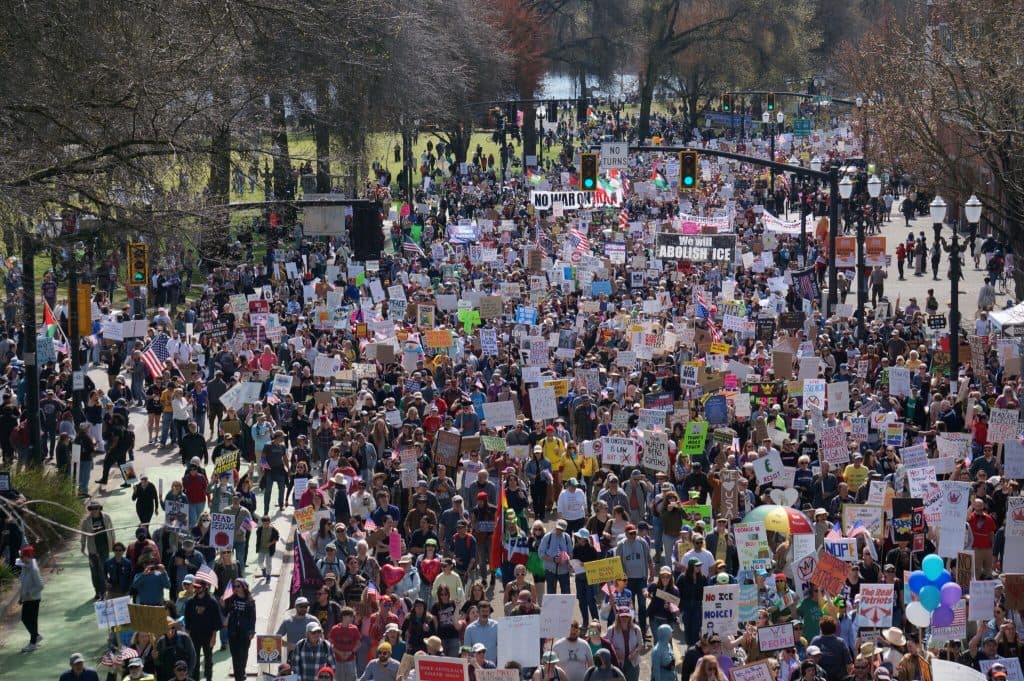
An estimated 30,000 people marched through Portland’s Tom McCall Waterfront Park on Saturday. (Photo by Alex Baumhardt/Oregon Capital Chronicle) Tens of thousands of Oregonians turned out to protest Saturday as part of a national wave of rallies against President Donald Trump and his administration. The third coordinated national day of No Kings protests drew Oregonians with signs and plenty to say to Portland’s Tom McCall Waterfront Park and Salem’s Oregon State Capitol Mall, both springtime destinations for cherry blossom viewing. Across the state, Oregonians gathered on street corners and in parks to make their voices heard. An estimated 30,000 people — down from the 40,000 who turned out in Portland for the second No Kings protest in October — were in the Tom McCall park along the Willamette River. Satellite protests on street corners and a morning event with labor leaders and Gov. Tina Kotek also drew attendees. Matthew Gottula, 37, donned an inflatable frog costume to join about a dozen other members of the “frog brigade” at the waterfront park. The frog costumes, which gained nationwide attention after Portlanders wore them to protest at the city’s ICE facility, are a tool for “tactical frivolity” and to puncture the idea that Portland is a war-torn city, Gottula said. “We’re not,” Gottula said. “We are a lovely, wonderful people. We care about our neighbors. And we know how to have a good time and be joyful, but also make a point that we do not accept what’s happening at a federal level.” Grace Mitchell, a 56-year old legal assistant, rode a motorized scooter to protest in Portland and carried a sign that said “All of my outrage can’t fit on this sign.” “The way our education is being treated, the money that’s being taken away from science and programs, those are all things that really hurt me,” she said. An evening protest, not affiliated with No Kings, had drawn more than hundreds pf people to the Immigration and Customs Enforcement facility south of downtown by 6 p.m. Saturday. Among them was Jack Dickinson, commonly known as “the Portland chicken” and the lead plaintiff in a lawsuit against the Department of Homeland Security over excessive force against protesters. The 9th Circuit Court of Appeals this week paused a lower court’s rulings limiting federal agents’ use of tear gas, pepper balls and other crowd control weapons against protesters at the facility. Despite the court reversing those rulings and federal agents’ frequent use of chemical munitions at prior events, federal officers avoided using those methods Saturday evening even when some protesters shook damaged the gate of the ICE building. Oregon State Police and Portland Police joined to keep the crowd out of the driveway. U.S. Sen. Jeff Merkley and Oregon Attorney General Dan Rayfield, both Democrats, spoke to the crowd gathered in Salem. “I never thought in a million years we would have an authoritarian this close to turning us into an enduring strongman state,” Merkley said. The Salem crowd included nearly 20 members of the Bennette family, many of whom walked almost three miles from Lancaster Drive NE to the Capitol Mall to make their voices heard. “It’s really turned into a family affair,” Wende Bennette-Kirkland said. “We need to end the policing of our First Amendment rights, and we also need to fight for equality for all of our neighbors.” Bennette-Kirkland toted a sign calling to end Citizens United, the U.S. Supreme Court ruling that cleared the way for more political spending, while sister Elizabeth carried a sign depicting a pig styled to look like Trump. Cameron and Annmarie Jones were registered Republicans until 2015, when they left the party over Trump. Now, they’ve been to more than 10 protests since Trump’s return to office, including Saturday’s No Kings event in Salem. “In 2015, my party elected Donald Trump in their primary as the Republican candidate, and I said, ‘There’s no way I can be in a party that would bring that clown as their representative,’” Cameron Jones said. “I think we need to do everything as citizens to lawfully resist all the horrible things he’s doing.” An estimated 4,000 people joined a No Kings protest Saturday in downtown Corvallis, according to local organizers. Demonstrators there listened to a musical performance from the newly formed Corvallis Resistance Singers and participated in a parade that included a marching band and a giant puppet of President Donald Trump in handcuffs. “It’s important now more than ever to continue resisting and to continue fighting for human rights,” Benton County resident Konnie May said. “It’s easy to be overwhelmed by the intensity and craziness of everything that happens day after day, week after week.” In Cannon Beach, the northwest coastal city of about 1,500 known for its sandy beach and Haystack Rock, a crowd including a person in an inflatable axolotl costume gathered to protest. Capital Chronicle editor-in-chief Julia Shumway, reporter Mia Maldonado and Aubrey Lee, a staff writer for The Collegian student newspaper at Willamette University, contributed reporting. By Alex Baumhardt of news partner Oregon Capital Chronicle
Wyden, Merkley Slam Federal Investigation into Oregon Abortion Coverage Requirement
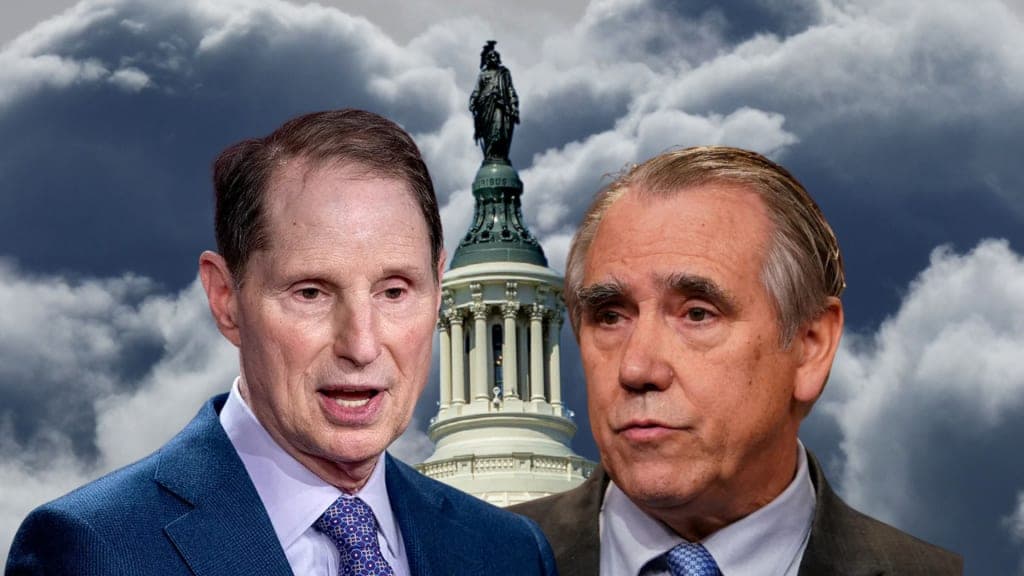
Oregon’s U.S. senators are calling on the U.S. Department of Health and Human Services to drop a “needless and wasteful” investigation into Oregon and other states that require health insurers to cover abortion. In a letter sent Friday to Health and Human Services Secretary Robert F. Kennedy Jr. and shared with the Capital Chronicle, Democratic Sens. Ron Wyden and Jeff Merkley responded to the agency’s recent announcement that officials planned to investigate 13 states that require health insurers to cover abortion. “Upon reviewing this alarming inquiry, we must ask why the Trump administration is meddling in state laws regarding health care, especially when Oregonians have been abundantly clear on a matter that should have no interaction with the federal government,” the pair wrote. Oregon’s 2017 Reproductive Health Equity Act requires most insurance plans to cover reproductive care, including abortion, at no out-of-pocket cost for patients. One of the state’s largest insurers, Providence, is exempt from that requirement because it didn’t cover abortion in 2017, as are health insurance plans purchased by religious employers that choose not to include abortion coverage because of their religious beliefs. People covered by those plans can use the Oregon Health Authority’s Abortion Access Plan. Oregonians have long supported reproductive health care, including by electing legislative majorities who support abortion rights and rejecting every ballot measure that attempts to limit abortion access. Nearly two-thirds of voters rejected the most recent, a 2018 proposed constitutional amendment to ban the use of public funds to pay for abortion. The federal investigation announced last week relies on the Weldon Amendment, a federal law enacted annually since 2005 that bars funding for federal, state or local agencies that “discriminate” against health insurance plans, health care institutions or health care professionals that refuse to provide, pay for or cover abortions. The Heritage Foundation, the conservative think tank behind the Project 2025 blueprint, floated the idea of withholding Medicaid funding from states because of the Weldon Amendment. The senators wrote that the investigation undermines states’ rights in Oregon and the 12 other states that require abortion coverage: California, Colorado, Delaware, Illinois, Maine, Maryland, Massachusetts, Minnesota, New Jersey, New York, Vermont and Washington. “Oregon will not be bullied by a federal department attempting to impose its ideological agenda on our local health care system,” they wrote. “We will fiercely defend our laws, our health care providers and our residents’ right to access essential medical care with the utmost privacy and respect.” By Julia Shumway of news partner Oregon Capital Chronicle
Wyden, Merkley Slam Federal Investigation into Oregon Abortion Coverage Requirement
Oregon’s U.S. senators are calling on the U.S. Department of Health and Human Services to drop a “needless and wasteful” investigation into Oregon and other states that require health insurers to cover abortion. In a letter sent Friday to Health and Human Services Secretary Robert F. Kennedy Jr. and shared with the Capital Chronicle, Democratic Sens. Ron Wyden and Jeff Merkley responded to the agency’s recent announcement that officials planned to investigate 13 states that require health insurers to cover abortion. “Upon reviewing this alarming inquiry, we must ask why the Trump administration is meddling in state laws regarding health care, especially when Oregonians have been abundantly clear on a matter that should have no interaction with the federal government,” the pair wrote. Oregon’s 2017 Reproductive Health Equity Act requires most insurance plans to cover reproductive care, including abortion, at no out-of-pocket cost for patients. One of the state’s largest insurers, Providence, is exempt from that requirement because it didn’t cover abortion in 2017, as are health insurance plans purchased by religious employers that choose not to include abortion coverage because of their religious beliefs. People covered by those plans can use the Oregon Health Authority’s Abortion Access Plan. Oregonians have long supported reproductive health care, including by electing legislative majorities who support abortion rights and rejecting every ballot measure that attempts to limit abortion access. Nearly two-thirds of voters rejected the most recent, a 2018 proposed constitutional amendment to ban the use of public funds to pay for abortion. The federal investigation announced last week relies on the Weldon Amendment, a federal law enacted annually since 2005 that bars funding for federal, state or local agencies that “discriminate” against health insurance plans, health care institutions or health care professionals that refuse to provide, pay for or cover abortions. The Heritage Foundation, the conservative think tank behind the Project 2025 blueprint, floated the idea of withholding Medicaid funding from states because of the Weldon Amendment. The senators wrote that the investigation undermines states’ rights in Oregon and the 12 other states that require abortion coverage: California, Colorado, Delaware, Illinois, Maine, Maryland, Massachusetts, Minnesota, New Jersey, New York, Vermont and Washington. “Oregon will not be bullied by a federal department attempting to impose its ideological agenda on our local health care system,” they wrote. “We will fiercely defend our laws, our health care providers and our residents’ right to access essential medical care with the utmost privacy and respect.” By Julia Shumway of news partner Oregon Capital Chronicle
Wyden, Merkley Slam Federal Investigation into Oregon Abortion Coverage Requirement
Oregon’s U.S. senators are calling on the U.S. Department of Health and Human Services to drop a “needless and wasteful” investigation into Oregon and other states that require health insurers to cover abortion. In a letter sent Friday to Health and Human Services Secretary Robert F. Kennedy Jr. and shared with the Capital Chronicle, Democratic Sens. Ron Wyden and Jeff Merkley responded to the agency’s recent announcement that officials planned to investigate 13 states that require health insurers to cover abortion. “Upon reviewing this alarming inquiry, we must ask why the Trump administration is meddling in state laws regarding health care, especially when Oregonians have been abundantly clear on a matter that should have no interaction with the federal government,” the pair wrote. Oregon’s 2017 Reproductive Health Equity Act requires most insurance plans to cover reproductive care, including abortion, at no out-of-pocket cost for patients. One of the state’s largest insurers, Providence, is exempt from that requirement because it didn’t cover abortion in 2017, as are health insurance plans purchased by religious employers that choose not to include abortion coverage because of their religious beliefs. People covered by those plans can use the Oregon Health Authority’s Abortion Access Plan. Oregonians have long supported reproductive health care, including by electing legislative majorities who support abortion rights and rejecting every ballot measure that attempts to limit abortion access. Nearly two-thirds of voters rejected the most recent, a 2018 proposed constitutional amendment to ban the use of public funds to pay for abortion. The federal investigation announced last week relies on the Weldon Amendment, a federal law enacted annually since 2005 that bars funding for federal, state or local agencies that “discriminate” against health insurance plans, health care institutions or health care professionals that refuse to provide, pay for or cover abortions. The Heritage Foundation, the conservative think tank behind the Project 2025 blueprint, floated the idea of withholding Medicaid funding from states because of the Weldon Amendment. The senators wrote that the investigation undermines states’ rights in Oregon and the 12 other states that require abortion coverage: California, Colorado, Delaware, Illinois, Maine, Maryland, Massachusetts, Minnesota, New Jersey, New York, Vermont and Washington. “Oregon will not be bullied by a federal department attempting to impose its ideological agenda on our local health care system,” they wrote. “We will fiercely defend our laws, our health care providers and our residents’ right to access essential medical care with the utmost privacy and respect.” By Julia Shumway of news partner Oregon Capital Chronicle