South Texas Rep. Henry Cuellar votes to merge U.S. and Israeli militaries
Cuellar backed the House defense bill and said it would strengthen national defense and improve support for service members.

SOURCE CHECK
TAP FOR WHYThe San Antonio Current is an established regional news outlet, and this article identifies its author and attributes important claims to named sources. Its local-news classification supports a solid institutional score, though the article also relies on outside reporting for some details.
- Source type — Established regional publication, consistent with a credible local-news source.
- Editorial standards — Presents reported claims and attributed statements, but the text does not establish its corrections practices.
- Author attribution — The article names its author.
- Source transparency — Quotes Cuellar and Jackson and identifies Military.com and Brown University's Costs of War Project for supporting material.
The article gives the bill's stated mechanism, quotes Cuellar's explanation for his vote, and includes both support for the measure and criticism of its provisions. Its framing of the provision as merging the militaries is stronger than the described direction to coordinate defense cooperation, and the article offers limited independent context on the provision's likely effects.
HOW WE SCORE ↗The article includes Cuellar's rationale for supporting the bill and Jackson's praise, as well as Massie's opposition and criticism of the voter provisions. It gives limited detail on arguments for the U.S.-Israel initiative or on the practical effects of the provisions.
- Counterarguments presented — Includes statements from lawmakers supporting and opposing the measure, along with criticism of the SAVE Act.
- Source diversity — Uses lawmaker statements and cites outside reporting and research, but offers few independent perspectives on the bill's effects.
- Omitted context — Provides limited context about the rationale and consequences of the U.S.-Israel initiative.
- Loaded language — The headline's description of the provision is more dramatic than the coordination mechanism described in the article.
The article foregrounds the controversial U.S.-Israel provision and voter-restriction criticism, and its headline characterizes the bill as merging the militaries. It also includes statements from Cuellar and Jackson supporting the measure, so the framing is not wholly one-sided.
- Headline — Describes the vote as one to merge the two militaries, a forceful characterization of the provision.
- Framing — Emphasizes controversy around defense cooperation and the SAVE Act.
- Source selection — Includes supporting statements from Cuellar and Jackson alongside criticism, but does not include independent defense-policy sources.
- Language tone — Mostly reports claims with attribution, while using some pointed framing.
Rep. Henry Cuellar was among six Democrats who voted for the House-passed 2027 defense authorization bill, which includes a provision to coordinate U.S.-Israeli defense cooperation. Cuellar said he supported the bill for its national-defense and service-member provisions, while critics objected to the partnership language.
The House passed the 2027 National Defense Authorization Act with support from six Democrats, including Henry Cuellar, and 209 Republicans. The bill includes a provision directing the Defense Department to create a U.S.-Israel initiative for coordinating defense research, development, testing and industrial cooperation. The House did not adopt an amendment from Thomas Massie and Ro Khanna that would have removed the provision.
Cuellar said he voted for the bill to strengthen national defense and improve pay, housing and childcare for service members, and called the vote one step in the legislative process. The article says the provision originated in the United States-Israel FUTURES Act. It also reports that the bill included the SAVE Act, which would require proof of citizenship to register and vote; critics argue the requirements could disenfranchise people who lack easy access to birth certificates or passports.
Community verdict
29 VOTES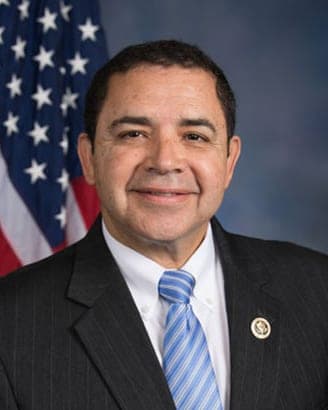
- Readers of left-leaning coverage: 52% good look
- Readers of right-leaning coverage: not enough votes yet
People in this story
SWIPE →Texas representative who voted for the 2027 National Defense Authorization Act

New York senator identified as a Senate co-sponsor of the United States-Israel FUTURES Act

Texas representative who co-introduced the United States-Israel FUTURES Act and praised the defense bill

Texas representative who voted for the defense bill

President whose America First agenda Jackson invoked

Maine representative who voted for the defense bill

Kentucky representative who opposed the bill and proposed an amendment to remove its U.S.-Israel provision

Indiana representative who received a letter from Netanyahu about the defense proposal
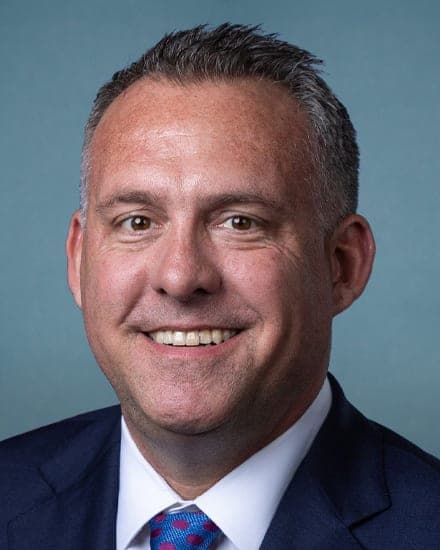
California representative who voted for the defense bill

Washington representative who voted for the defense bill

North Carolina representative who voted for the bill and co-introduced the United States-Israel FUTURES Act

California representative who proposed an amendment to remove the U.S.-Israel provision

North Carolina senator identified as a Senate co-sponsor of the United States-Israel FUTURES Act
Discussion · 0
Loading comments…