This Very Ugly Exchange Between El-Sayed and Stevens in MI Senate Race Is Likely to Help the GOP
El-Sayed criticized AIPAC’s support for Stevens and exchanged attacks with her in the Michigan Senate primary.

SOURCE CHECK
TAP FOR WHYRedState is an identifiable, opinion-oriented publisher, and the article names its author. Its partisan framing and limited evidence beyond social-media posts and polling claims lower confidence in its institutional reliability.
- Source type — Opinion-first outlet; its partisan editorial orientation is evident in the article.
- Transparency — The article links or reproduces social-media statements, but gives limited detail about the polling it cites.
- Author attribution — The article identifies Nick Arama as its author.
The piece includes direct quotations from both candidates and identifies the exchange’s timing, but relies heavily on social-media posts and gives little independent verification or broader context for its polling and claims.
HOW WE SCORE ↗The article reproduces statements from both candidates, but its narration takes a clear critical stance toward the Democrats and does not provide independent context or responses from other relevant parties.
- Loaded language — The article uses strongly disparaging language about one side and its supporters.
- Source diversity — The account relies mainly on the candidates’ posts and polling references, without independent interviews or documentation.
- Counterarguments presented — Both candidates’ statements appear, but there is little neutral examination of their competing claims.
The article uses strongly negative language about the Democratic candidates and frames El-Sayed’s criticism in terms of left-wing and anti-Israel politics. Its commentary is favorable to the argument that the dispute could help Republicans.
- Language tone — Uses pejorative descriptions such as “far-leftists” and “radical leftist” while characterizing the candidates and their supporters.
- Framing — Emphasizes the exchange as harmful to Democrats and beneficial to the Republican candidate.
- Source selection — Relies on candidates’ social-media posts and a polling account, without other independent voices.
Abdul El-Sayed and Rep. Haley Stevens exchanged attacks in Michigan’s Democratic Senate primary, including disputes over AIPAC and El-Sayed’s past election loss. The author argues the acrimony could benefit Republican candidate Mike Rogers.
The article describes El-Sayed criticizing AIPAC’s support for Stevens and calling her “the least capable candidate in America.” Stevens responded by citing her own election wins, El-Sayed’s past loss to Gretchen Whitmer, and his comments about Jewish Americans; she also outlined campaign promises on grocery costs, stock trading by elected officials, Trump and Michigan manufacturing.
The author says the exchange could deepen divisions among Democrats and benefit Republican candidate Mike Rogers. The article cites polling indicating El-Sayed leads the primary, that Rogers would perform better against him, and that 57% of Stevens voters said they would support El-Sayed if he wins the nomination.
Community verdict
2 VOTES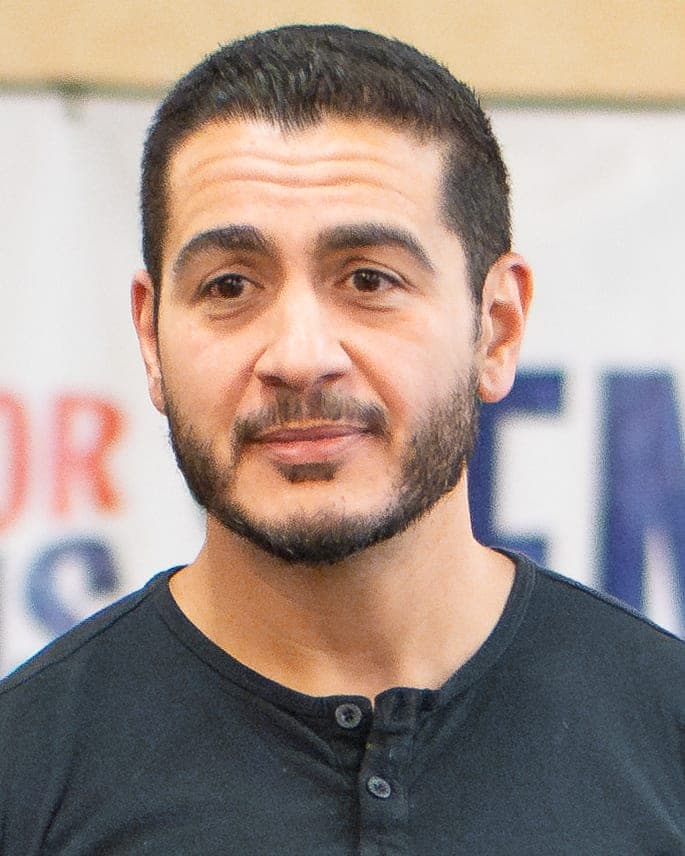
People in this story
SWIPE →
Representative and Democratic Senate candidate in Michigan
Stevens's version of this story ↗
President of the United States
Republican Senate candidate in Michigan
Part of a bigger story
5 OUTLETSAbdul El-Sayed and Haley Stevens debated in Michigan's Democratic Senate primary campaign ahead of the Aug. 4 primary. Left-leaning outlets portray both candidates as serving corporate interests and present working-class politics as an alternative. Center outlets focus on policy and campaign-finance clashes and assess claims made by both candidates. Right-leaning outlets emphasize divisions within the Democratic primary, including the possibility that the candidates’ acrimony could benefit Republicans.
- ARTICLES
- 5
- OUTLETS
- 5
- AVG CRED
- 51
Discussion · 0
Loading comments…