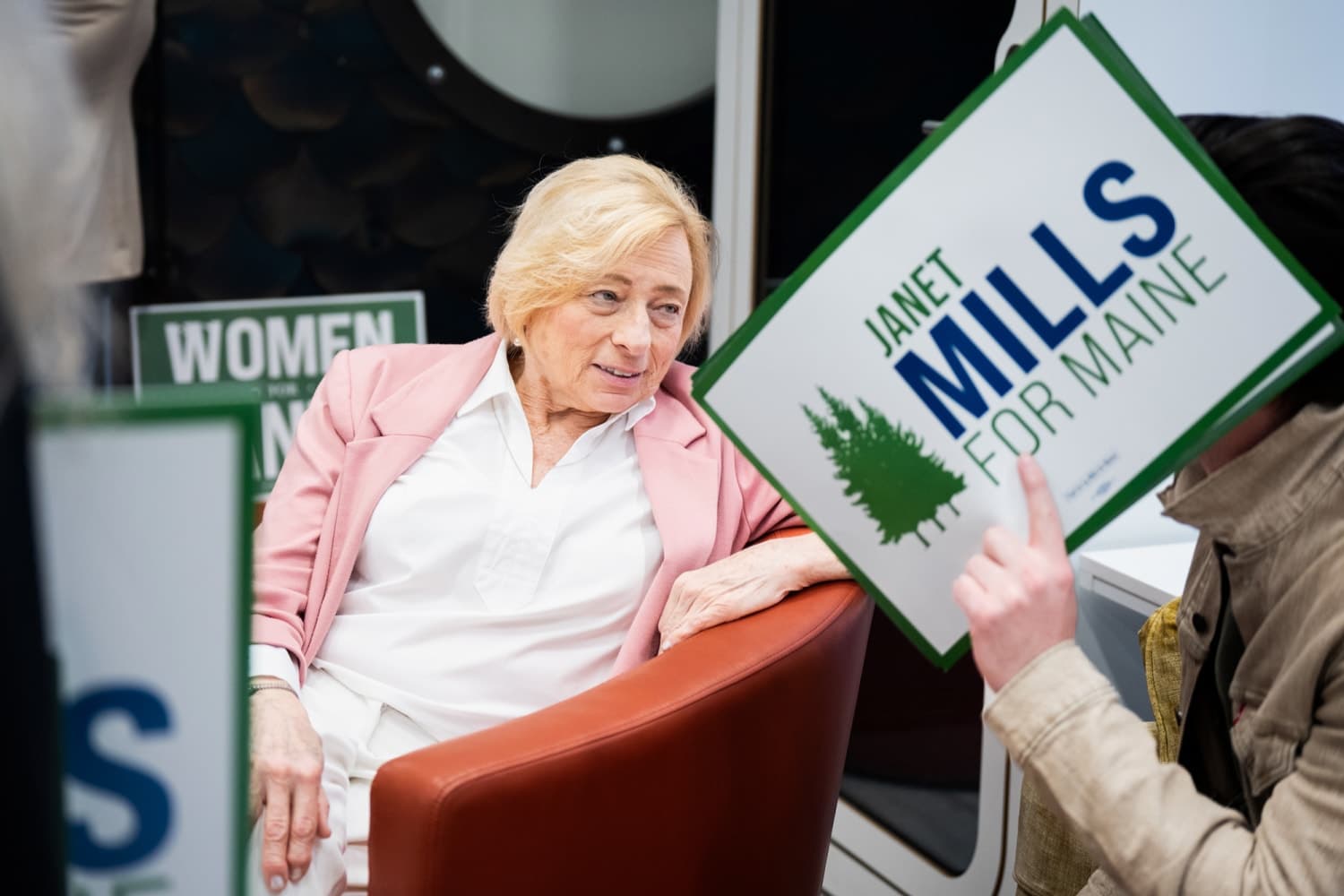
What Janet Mills' fall signals for the Democratic Party's future: From the Politics Desk
Mills left the Senate primary after facing a difficult contest against Graham Platner.
SOURCE CHECK
TAP FOR WHYNBC News is an established national newsroom with identifiable editorial staff and a substantial record of original reporting. This is clearly labeled analysis, so its interpretations should be distinguished from reported facts.
- Source type — Established national news organization with a substantial original-reporting operation.
- Editorial standards — A recognizable newsroom with professional editorial oversight.
- Author attribution — The piece identifies the Politics Desk and names Jonathan Allen as its analyst.
The analysis gives specific fundraising figures and explains competing views of Platner, but relies mainly on broad political characterizations and provides limited direct sourcing or supporting evidence.
HOW WE SCORE ↗The analysis lays out opposing Democratic views of Platner, including concerns about his controversies and electability, but it offers few directly quoted or independently sourced perspectives.
- Source diversity — The article summarizes factions’ views but includes little direct attribution to people representing them.
- Counterarguments presented — Both the establishment critique and the case made by Platner’s supporters are described.
- Loaded language — Some vivid characterizations sharpen the piece’s framing of Mills and Platner.
The analysis gives substantial space to the argument that an insurgent progressive could help the party, while also presenting concerns about Platner. Its language and framing tilt somewhat toward the party’s left, but do not amount to a one-sided endorsement.
- Framing — The piece presents Mills’ exit as a rejection of establishment-style candidates and a victory for the Sanders wing.
- Language tone — Phrases such as “paper tiger” and “slayed a political Goliath” add pointed, dramatic framing.
- Source selection — It describes both supporters’ hopes for Platner and critics’ concerns about his history and politics.
Janet Mills withdrew from Maine’s Democratic Senate primary as challenger Graham Platner gained ground, turning the race into a test of the party’s competing political factions. The analysis says the contest could shape Democrats’ thinking about future candidates.
The analysis reports that Mills left the race after struggling to raise money against Platner, who had raised $12 million through the end of March. It describes Platner as drawing sharply different reactions: some Democrats worry about his past controversies and progressive politics, while others see him as a candidate who could broaden the party’s appeal and defeat Susan Collins.
Community verdict
VOTING CLOSED
No good or bad look here
This story reports what happened without casting Mills in a good or bad light, so readers don’t rate it and it doesn’t count toward Mills’s record.
People in this story
SWIPE →
Maine Senate candidate challenging Mills in the Democratic primary
Platner's version of this story ↗
Maine senator and potential general-election opponent

Senator associated with the progressive wing of the Democratic Party

Senate Minority Leader and example of the party establishment
Part of a bigger story
45 OUTLETSJanet Mills suspended her Senate campaign, citing a lack of financial resources. Her withdrawal left Graham Platner better positioned to win the Democratic nomination. Left-leaning outlets cast Mills’s exit as a setback for party centrists and an opening for Platner. Center outlets mainly describe the reshaped race, with some examining its implications for Democratic strategy. Right-leaning outlets emphasize controversies around Platner and portray his likely nomination as a risk or setback for Democrats.
- ARTICLES
- 99
- OUTLETS
- 45
- AVG CRED
- 70
Discussion · 0
Loading comments…