Michigan Senate Contest Emerges as November's Most Consequential Race
El-Sayed won the Democratic Senate primary and now faces Republican Mike Rogers in November.

SOURCE CHECK
TAP FOR WHYThe publisher is an opinion-focused outlet, and this article is explicitly opinionated rather than a piece of straight reporting. The author is identified, but the page offers limited evidence of independent verification for several of its claims.
- Source type — Opinion publisher; this is a strong prior for a perspective-driven presentation.
- Editorial standards — The text relies on assertive characterization and provides limited supporting documentation for some claims.
- Author attribution — The article names an author.
- Transparency — The page identifies its publisher and author.
The article includes a reported primary result and quotes from candidates and an activist, but its framing is strongly evaluative and it relies heavily on social-media posts and unsupported assertions. It does not offer substantial counterarguments or independent evidence for several claims.
HOW WE SCORE ↗The article advances a critical case against El-Sayed and socialism, with limited space for his conciliatory statement but little broader response or context from supporters. Its loaded descriptions and one-sided framing make it largely unbalanced.
- Loaded language — Repeatedly uses strongly negative characterizations of El-Sayed and his associates.
- Counterarguments presented — Includes El-Sayed's appeal to Jewish voters but gives little space to a fuller response to the article's criticisms.
- Source diversity — Relies on a narrow set of critical commentary and social-media material.
- Opinion vs reporting — Opinion framing is explicit and shapes the presentation of the race.
The article uses strongly critical language about El-Sayed and socialism, while emphasizing arguments against his candidacy. Its framing and source selection present the race largely through a conservative critique.
- Language tone — Uses charged descriptions, including calling El-Sayed's remarks and views vile or radical.
- Framing — Frames the result chiefly as a warning about socialism and a potential liability for Democrats.
- Source selection — Features criticism and social-media commentary while offering little opposing analysis.
Abdul El-Sayed narrowly defeated Haley Stevens in Michigan’s Democratic Senate primary, setting up a November contest with Republican Mike Rogers. The article argues that El-Sayed’s win and the debate over socialism could affect the party’s prospects in a closely watched Senate race.
The article reports that El-Sayed defeated Stevens by one percentage point, 48.5% to 47.5%, and says some Stevens supporters indicated they would vote for Rogers in November. It describes the Democratic primary as a close contest whose outcome could matter to efforts to control the Senate.
The author argues that El-Sayed’s positions and associations could make it difficult to unite Democratic voters, and presents his post-primary appeal to Jewish voters as an effort to address accusations of antisemitism. The article also argues that socialism could become an electoral liability for Democrats in the midterms.
Community verdict
4 VOTES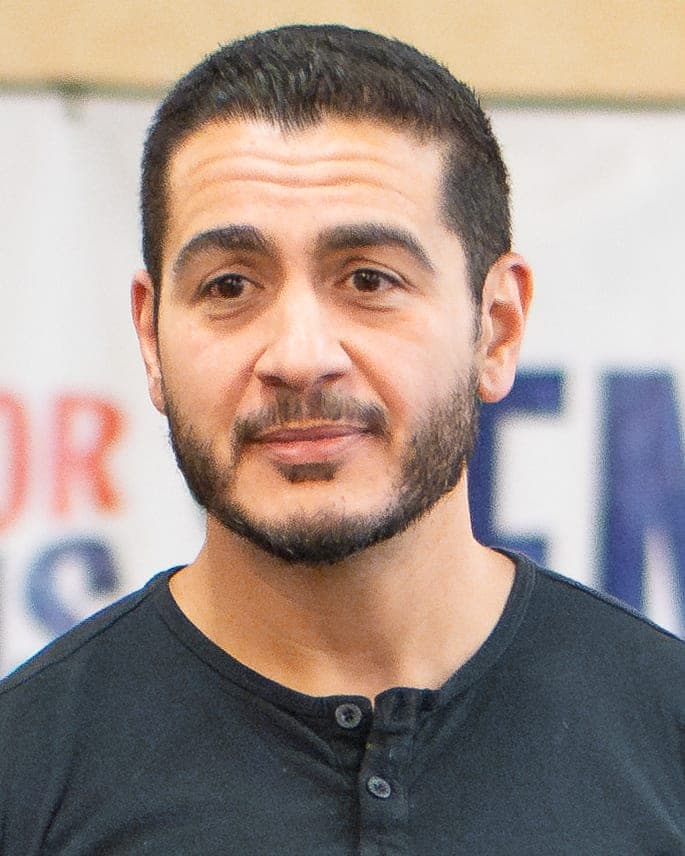
People in this story
SWIPE →
Democratic Senate candidate who lost the primary
Republican Senate candidate in Michigan
Part of a bigger story
23 OUTLETSOutlets agree Abdul El-Sayed won Michigan’s Democratic Senate primary, defeating Rep. Haley Stevens, and will face Republican Mike Rogers in November. Left-leaning outlets largely present the win as a progressive challenge to Democratic establishment influence, while also covering Republican attacks on El-Sayed. Center outlets connect the result to debate over the party’s direction, unity behind El-Sayed, and the November race. Right-leaning outlets more often present his progressive politics as a potential general-election liability, though some focus on endorsements or election results.
- ARTICLES
- 23
- OUTLETS
- 23
- AVG CRED
- 69
Discussion · 0
Loading comments…