'Categorially untrue': UF responds to Sen. Rick Scott's criticism of university president search process
Scott criticized the search process in a letter, arguing that it failed to meet state law and limited transparency.

SOURCE CHECK
TAP FOR WHYCredibility rates Wctv, which republished this story. The other scores rate the article itself.
WCTV is a local news outlet, and the article attributes its central claims to the university and to Scott’s letter. A copyright notice credits another local station, so this page appears to carry attributed material rather than entirely original reporting.
- Source type — Established local-news outlet; a credible but not national-level institutional source.
- Editorial standards — The article attributes the opposing positions to their sources, but offers limited independent verification.
- Author attribution — A reporter is named.
- Transparency — A copyright notice identifies WCJB as the credited publisher of the material.
The story explains the dispute and presents the university’s response alongside Scott’s criticism, with basic context about the search process. It relies mainly on the university statement and a summary of Scott’s letter, without independent sources or further examination of the legal dispute.
HOW WE SCORE ↗The article gives both sides’ positions, but the university’s response receives direct quotations while Scott’s argument is mainly summarized. It provides little independent legal analysis or additional context.
- Counterarguments presented — Both Scott’s criticism and the university’s defense are included.
- Source diversity — The dispute is presented through the university statement and a summary of Scott’s letter, without independent sources.
- Omitted context — The article gives limited detail about the legal requirements or how the search committee applied them.
- Loaded language — The article largely attributes evaluative language to the parties rather than adopting it.
The article reports Scott’s criticism and the university’s contrary account in restrained language, without clearly endorsing either position.
- Language tone — Mostly factual wording, with disputed claims attributed to their sources.
- Source selection — Includes Scott’s criticism and the university’s response.
- Framing — Frames the story as a disagreement over the search process and its legal requirements.
Republished with credit
Republished from Wcjb, with credit to the original publisher.
Not enough stories yet: 3 of 10.
The University of Florida defended its presidential search process after Sen. Rick Scott criticized the selection of a sole finalist. Scott argued that the process failed to meet state law and lacked transparency; university officials said it complied with the law and defended confidentiality in early stages.
University of Florida officials said the search committee complied with Florida law and Board of Governors regulations. They disputed Scott’s suggestion that the university circumvented the law or violated transparency requirements, and said confidentiality helps attract strong candidates. Scott’s letter argued that the law is flawed because it limits public transparency and can leave only one finalist.
Community verdict
17 VOTES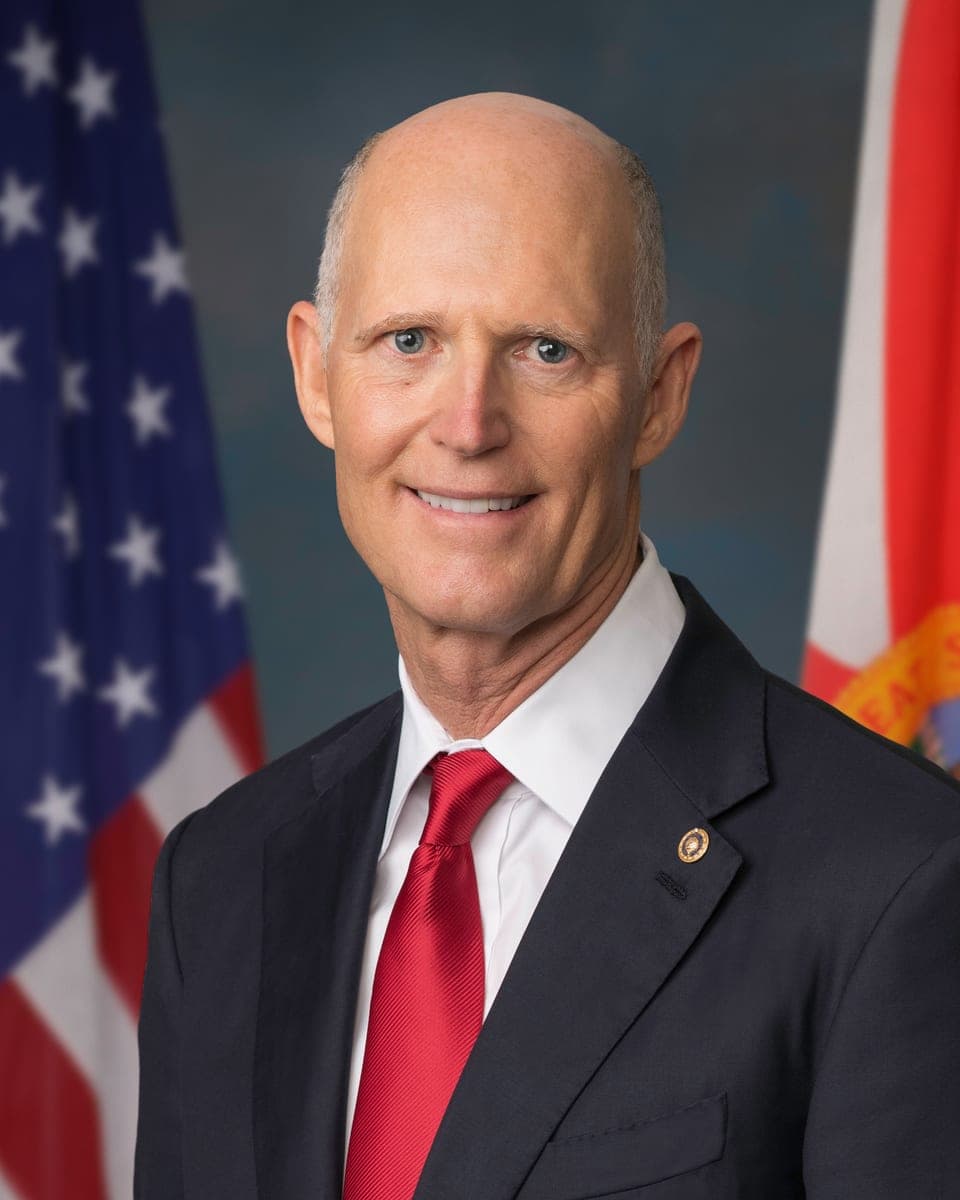
Counts every outlet’s report of this story. See all 6
Votes cast on this page
Votes cast on this page: ▲ 0 · ◆ 0 · ▼ 0
People in this story
U.S. senator criticizing the university’s presidential search process
Part of a bigger story
4 OUTLETSRick Scott criticized the University of Florida’s presidential search and called for greater transparency. The university defended its process, while Gov. Ron DeSantis defended the sole finalist. Center outlets present the story as a public dispute over the search process, pairing Scott’s criticism of UF decisions with DeSantis’s defense of the finalist.
- ARTICLES
- 6
- OUTLETS
- 4
- AVG CRED
- 79
Discussion · 0
Loading comments…