Bad News for Democrats in Michigan
Strom argues that many Stevens voters were motivated by opposition to El-Sayed rather than support for her.

SOURCE CHECK
TAP FOR WHYHotAir is an identifiable, opinion-oriented political blog, and this article has a named author. Its partisan commentary format and limited evidence of independent verification support a lower institutional credibility score than established newsrooms.
- Source type — A political blog with an opinion-oriented format.
- Author attribution — The article identifies David Strom as its author.
- Editorial standards — The page does not provide evidence here of newsroom reporting or verification standards.
- Transparency — The publisher and author are identifiable.
The article gives turnout and spending figures and includes voter and social-media statements, but much of its case is speculation about voter motives and broad claims about demographic groups. It presents little countervailing evidence or independent corroboration.
HOW WE SCORE ↗This is a strongly one-sided opinion piece. It briefly describes a more favorable interpretation of turnout but argues against it without presenting a developed counterargument or response from the candidates.
- Counterarguments presented — The article mentions the view that turnout could signal enthusiasm, then dismisses it without developing the opposing case.
- Loaded language — Repeatedly uses charged language about candidates and political groups.
- Opinion vs reporting — The piece is written as an argument interpreting the primary rather than as neutral reporting.
- Source diversity — Most supporting material consists of selected posts and a quoted voter; candidate responses are absent.
The article uses strongly partisan, dismissive language about Democrats and left-wing politics, while framing El-Sayed’s candidacy as a liability. Its framing and word choice signal a strong rightward lean.
- Language tone — Uses pejorative and inflammatory descriptions of Democratic factions and candidates.
- Framing — Frames Democratic primary turnout primarily as evidence of internal party conflict and risk.
- Source selection — Relies on selected social-media posts and a voter’s stated intention to support its argument.
David Strom argues that high turnout in Michigan’s Democratic Senate primary reflected strong opposition to Abdul El-Sayed as well as support for Haley Stevens, potentially making party unity difficult in the general election against Mike Rogers.
Strom disputes a New York Times reporter’s interpretation that high Democratic primary turnout indicates enthusiasm that could help the party in the general election. He argues that many Stevens voters were motivated by opposition to El-Sayed, and says nearly $81 million was spent in the primary, with far more aimed at defeating El-Sayed than electing him.
The article contends that El-Sayed’s apparent primary win could expose divisions among Democrats and make it hard to unite his supporters with other Democratic voters against Republican candidate Mike Rogers. It supports that argument with social-media posts and a quoted account from a Stevens voter who said he would vote for Rogers if El-Sayed won.
Community verdict
2 VOTES
People in this story
SWIPE →Democratic Senate candidate whose voters’ motivations are central to the article’s argument
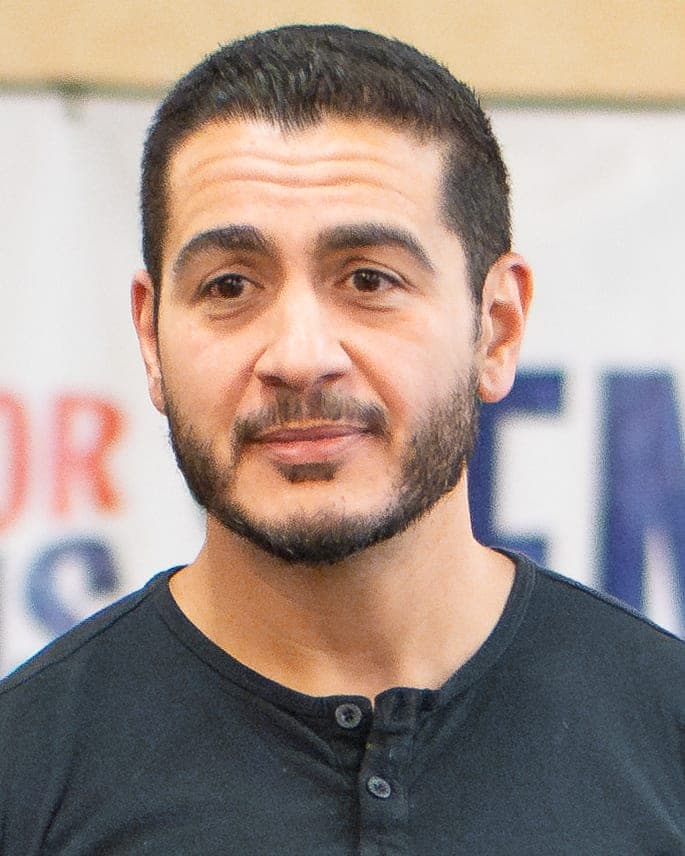
Democratic Senate candidate at the center of the article’s analysis of the Michigan primary
El-Sayed's version of this story ↗House candidate mentioned in a social-media post about El-Sayed’s political associations
Republican Senate candidate discussed as the potential general-election opponent
Part of a bigger story
2 OUTLETS- ARTICLES
- 2
- OUTLETS
- 2
- AVG CRED
- 56
Discussion · 0
Loading comments…