U.S. Senator Josh Hawley to Introduce Stop Flock Abuse Act, Establishing Safeguards for AI-Powered Cameras - Sierra Sun Times
Hawley announced plans to introduce a bill setting safeguards for AI-powered license-plate camera networks.
SOURCE CHECK
TAP FOR WHYCredibility rates goldrushcam.com, where this article appeared. The other scores rate the article itself.
The page is attributed to a local-news publisher, but the article identifies Senator Josh Hawley as its source and reads as a statement promoting his proposal rather than independently reported coverage. The text provides little basis for assessing the publisher’s reporting or correction practices.
- Source type — Recorded as local news, but this page is a senator-sourced announcement rather than evident independent reporting.
- Transparency — The article identifies Senator Josh Hawley as its source; no independent reporting process is apparent.
- Editorial standards — The article provides no visible information about editorial standards or corrections.
The article gives concrete details about the proposed safeguards and attributes Hawley’s claims, but it relies on his office’s account, offers no independent sourcing, and includes no opposing or outside perspective.
HOW WE SCORE ↗The article is built around Hawley’s case for the bill and provides no substantive counterargument or independent assessment of its effects.
- Source diversity — Hawley’s office supplies the announcement and the main argument; the company’s written response is the only other perspective mentioned.
- Counterarguments presented — No opposing view or discussion of possible costs or tradeoffs appears.
- Opinion vs reporting — The text presents a proposal in promotional terms, including calling its provisions “commonsense guardrails.”
The piece promotes the proposal with favorable language but does not use discernibly partisan framing; its presentation is advocacy for the bill rather than an argument for a party.
- Language tone — Uses favorable wording such as “commonsense guardrails” and quotes Hawley’s warning that the cameras are a “nightmare” for individual liberties.
- Source selection — Relies on Hawley and the company’s written response, without other independent or opposing voices.
- Framing — Frames the proposed safeguards as protections for privacy and constitutional rights, without explicit party-based framing.
Original publisher not identified
This article credits another publisher, which ChamberLight has not identified, so the scores are goldrushcam.com's own.
Sen. Josh Hawley says he plans to introduce the Stop Flock Abuse Act, which would set limits on how agencies use and retain data from AI-powered license-plate camera networks. The proposal follows his investigation and a Senate hearing on the technology’s privacy and security risks.
Hawley announced that he plans to introduce the Stop Flock Abuse Act after launching an investigation into AI-powered surveillance cameras and chairing a Senate subcommittee hearing on Flock cameras. He said the technology threatens privacy and national security. Flock Safety’s CEO declined to testify, but the company sent Hawley a letter agreeing that Congress should create a federal framework and describing guardrails it had instituted after public scrutiny.
The proposed safeguards would bar the sale or sharing of vehicle-location data with non-governmental third parties, require approval and audit logs for searches, require encryption and domestic storage, and generally require deletion of driver data after ten days. The bill would also bar technology from foreign adversaries and facial recognition in automatic license-plate-reader networks.
Community verdict
15 VOTES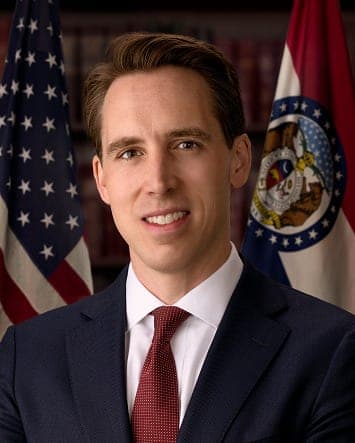
Counts every outlet’s report of this story. See all 5
Votes cast on this page
Votes cast on this page: ▲ 0 · ◆ 0 · ▼ 0
People in this story
Part of a bigger story
5 OUTLETSJosh Hawley says he plans to introduce legislation imposing safeguards and limits on Flock’s automated license-plate camera systems, including rules for data use or retention. Left-leaning outlets place Hawley’s proposal among competing approaches and stress that it would regulate camera use rather than end federal support for the technology. Right-leaning outlets present it as a response to surveillance and accountability risks, also noting the company’s position that customer agencies control the data.
- ARTICLES
- 5
- OUTLETS
- 5
- AVG CRED
- 55
Discussion · 0
Loading comments…