Social Security Changes Clear Congress: What To Know
Beyer said the bill's terminology changes are meant to help older workers make more informed Social Security claiming decisions.

SOURCE CHECK
TAP FOR WHYThe article identifies the lawmakers behind the legislation and uses information attributed to the Social Security Administration, but the author is not identified and the publisher's source type is unclassified. The short report offers limited evidence about the publisher's broader editorial and corrections practices.
- Transparency — The article attributes benefit information to the Social Security Administration and identifies the lawmakers' offices as the source of some claims.
- Source type — The publisher is recorded as unclassified, so there is limited basis for applying a strong institutional prior.
- Author attribution — No author is identified.
The report gives specific details about the terminology changes, distinguishes them from changes to benefits, and attributes factual claims to the Social Security Administration and sponsors. It relies heavily on the sponsors and includes little independent discussion of the legislation.
HOW WE SCORE ↗The article explains what the measure changes and what it leaves unchanged, and includes information from the Social Security Administration. Its account of the bill's purpose and support comes principally from the sponsors and does not include opposing or independent perspectives.
- Source diversity — The report includes sponsor statements and agency information, but few distinct perspectives.
- Counterarguments presented — No opposing views or reservations are presented.
- Loaded language — The article's descriptions are generally neutral, with promotional terms attributed to the sponsors.
The article uses largely neutral language and describes the bill's provisions and sponsors' stated purpose without adopting an evident partisan frame.
- Language tone — The wording is mostly descriptive; favorable characterizations are attributed to the sponsors.
- Framing — The article explains the terminology changes and their stated purpose without overt partisan framing.
- Source selection — It uses sponsor statements and agency information, with limited source diversity.
Congress passed the bipartisan Claiming Age Clarity Act, which changes Social Security claiming-age terminology without changing eligibility ages or benefit formulas. Reps. Lloyd Smucker and Don Beyer said the new labels are intended to help workers understand how claiming age affects monthly benefits.
The article reports that the Claiming Age Clarity Act cleared both chambers and was headed to President Donald Trump for his signature. It would rename the early eligibility age as the “minimum monthly benefit age,” and full or normal retirement age as the “standard monthly benefit age.” The age 70 threshold for delayed retirement credits would be called the “maximum monthly benefit age.” The legislation would not change eligibility ages or benefit formulas.
Community verdict
5 VOTES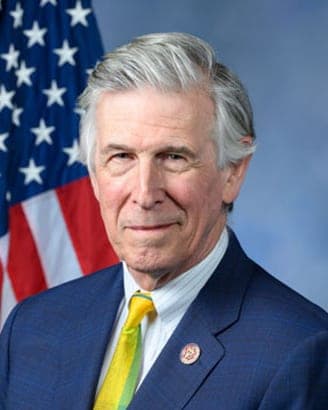
People in this story
SWIPE →Virginia representative and co-sponsor of the Claiming Age Clarity Act

Pennsylvania representative and co-sponsor of the Claiming Age Clarity Act
Smucker's version of this story ↗
President to whom the passed bill was sent for signature
Part of a bigger story
2 OUTLETS- ARTICLES
- 2
- OUTLETS
- 2
- AVG CRED
- 62
Discussion · 0
Loading comments…