At the end of subtitle G of title X, add the following:SEC. 1094. BORDER TRAVEL SAFETY.
(a) Short Title.--This section may be cited as the “Nicholas Douglas Quets Border Travel Safety Act”.
(b) Findings.--Congress finds the following:
(1) On October 18, 2024, while traveling from Arizona along the southern border in the Mexican state of Sonora near Puerto Penasco, Nicholas Quets was attacked and shot by armed criminals associated with the Sinaloa Cartel at an unauthorized cartel-controlled highway checkpoint, which resulted in the tragic death of the 31-year-old American.
(2) The brutal murder of Nicholas Quets reflects the ongoing threat posed by transnational criminal organizations and cartel violence in the region.
(3) Nicholas Quets was shot while traveling along the Altar-Caborca highway (Federal Highway 2) in Sonora, which is frequently listed under a “Reconsider Travel” advisory due to cartel activity in the area.
(4) The Department of State issues Travel Advisories to inform United States citizens and other travelers of safety and security risks in foreign countries and regions.
(5) Department of State Travel Advisories identify certain foreign regions, including areas near United States land borders, that present elevated safety or security risks due to criminal activity, violence, kidnapping, or other threats.
(6) Individuals entering or departing the United States through land ports of entry may not be aware that nearby areas identified in Department of State Travel Advisories pose heightened safety or security risks.
(7) Clear and visible signage at land ports of entry and surrounding areas would improve traveler awareness of such risks and promote public safety.
(c) Sense of Congress.--It is the sense of Congress that clear and visible signage displaying travel advisories at land ports of entry along the land boundary between the United States and Mexico are necessary to improve traveler awareness of safety or security risks due to criminal activity, violence, kidnapping, or other threats.
(d) Definitions.--In this section:
(1) Appropriate congressional committees.--The term “appropriate congressional committees” means--
(A) the Committee on Homeland Security and Governmental Affairs of the Senate;
(B) the Committee on Foreign Relations of the Senate;
(C) the Committee on Homeland Security of the House of Representatives; and
(D) the Committee on Foreign Affairs of the House of Representatives.
(2) Travel advisory.--The term “Travel Advisory” means the country-specific or region-specific safety advisory issued by the Department of State to inform travelers of security risks abroad.
(e) Warning Signage for Travelers Near Land Ports of Entry Along the Southern Border.--
(1) Establishment.--The Secretary of Homeland Security, acting through the Commissioner of U.S. Customs and Border Protection, in consultation with the Secretary of State and the Administrator of the General Services Administration, shall establish and carry out a program to install and maintain warning signage informing travelers of dangerous areas or routes near the southern border of the United States that have been identified in relevant Department of State Travel Advisories.
(2) Responsibilities of secretary of state.--The Secretary of State shall--
(A) identify areas or routes near the United States land border with Mexico that are designated as dangerous in any Department of State Travel Advisory;
(B) provide the Commissioner of U.S. Customs and Border Protection with updated advisory information necessary for the content of warning signage; and
(C) provide the Secretary of Homeland Security with the appropriate content and messaging of such signage.
(3) Coordination.--In carrying out this section, the Secretary of Homeland Security, acting through the Commissioner of U.S. Customs and Border Protection, shall coordinate with the Secretary of State, appropriate State transportation and public safety agencies, and relevant State, local, and tribal government officials.
(f) Placement of Signage.--
(1) In general.--The Secretary of Homeland Security, acting through the Commissioner of U.S. Customs and Border Protection, shall, to the maximum extent practicable, install, maintain, and update warning signage described in this section.
(2) Locations.--Warning signage developed pursuant to this section shall--
(A) be placed--
(i) at appropriate land ports of entry along the United States international boundary with Mexico;
(ii) on appropriate roadways and routes approaching, and in areas immediately adjacent to, such ports of entry where travelers are likely to cross the international boundary;
(iii) at any additional locations determined appropriate by the Secretary of Homeland Security, in consultation with State and local transportation authorities, to ensure adequate traveler awareness;
(iv) in locations that are clearly visible to motorists and pedestrians; and
(v) in sufficient proximity to allow travelers to make informed travel decisions; and
(B) include the words “pursuant to the Nicholas Douglas Quets Border Travel Safety Act”.
(3) Coordination with state and local authorities.--In placing signage pursuant to this subsection, the Secretary of Homeland Security shall coordinate with, and may enter into agreements, as may be necessary, with--
(A) State departments of transportation;
(B) local government officials; and
(C) other appropriate authorities responsible for roadway infrastructure near the international border of the United States.
(4) Content of signage.--Signage required under this section shall, to the maximum extent practicable--
(A) clearly warn travelers of nearby areas or routes identified as dangerous in Department of State Travel Advisories;
(B) provide a reference to additional safety information, including the Department of State travel advisory website or a QR code linking to such information;
(C) be displayed in a format that can be swiftly and easily updated to reflect changes to applicable Department of State Travel Advisories, and may include risk indicators and incident alerts from the Department of State;
(D) be displayed in English and Spanish, and any additional languages the Secretary, in consultation with the Department of State, determines appropriate; and
(E) include any other safety information the Secretary of State determines appropriate.
(g) Reviews and Updates.--
(1) In general.--The Secretary of Homeland Security, in consultation with the Secretary of State, shall--
(A) annually review warning signage to ensure accuracy and visibility; and
(B) update such signage as necessary to reflect changes in Department of State Travel Advisories.
(2) Identification of critical changes.--The Secretary of State shall notify the Secretary of Homeland Security whenever critical changes have occurred that require warning signage to be updated.
(h) Reports to Congress.--
(1) Implementation report.--Not later than 1 year after the date of the enactment of this Act, the Secretary of Homeland Security, in consultation with the Secretary of State and the Commissioner of U.S. Customs and Border Protection, shall submit a report to the appropriate congressional committees that describes--
(A) the implementation of the signage program required under this section;
(B) the locations where signage has been installed;
(C) plans for updating such signage; and
(D) any recommendations for improving traveler awareness of dangerous areas identified in Travel Advisories.
(2) GAO report.--The Comptroller General of the United States shall submit a report to the appropriate congressional committees that--
(A) describes the efficacy of the travel advisory warnings for travelers; and
(B) indicates whether there are modernizations to warning delivery that the Department of State or the Department of Homeland Security could undertake to ensure travelers have adequate awareness to potential travel-related dangers.
(i) No Additional Appropriations.--
(1) No additional funds authorized.--No additional funds are authorized to be appropriated to carry out this section.
(2) Use of existing resources.--The Secretary of Homeland Security and the Secretary of State shall carry out their respective responsibilities under this section using amounts otherwise appropriated or made available to their respective departments.
(j) Rule of Construction.--Nothing in this Act may be construed as authorizing the use of force against Mexico or any entity or individual within Mexico.
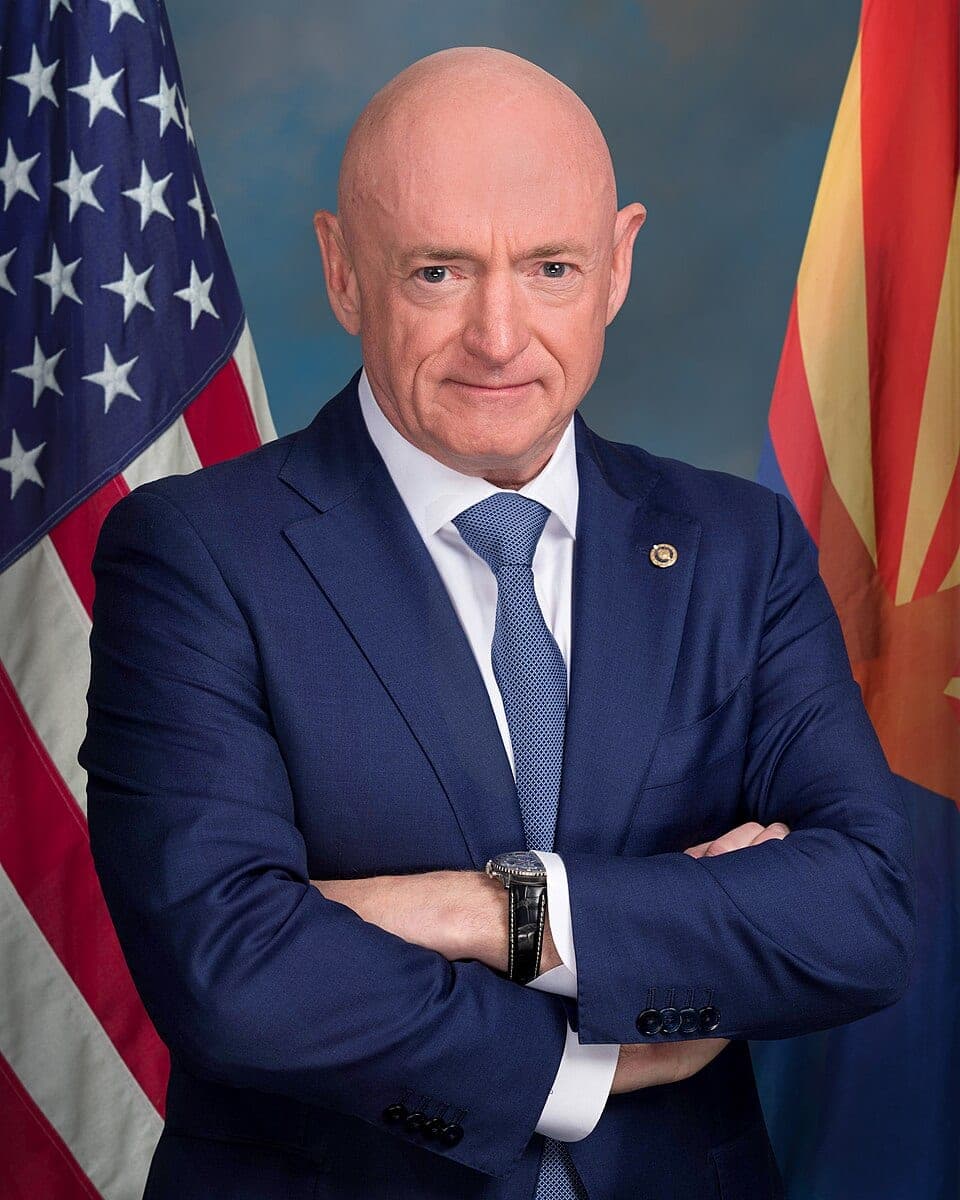 SPONSORSen. Mark KellyDEMOCRAT · AZ