2 stories credited to WTVQ
Latest story Sep 2, 2026 · on ChamberLight since Apr 2026
Scores for WTVQ
Writing quality not enough rated stories yet: 1 of 10. How it is measured
Scores last checked Sep 28, 2026.
Stories ChamberLight collected, by month
Stories credited to WTVQ, by publication date. ChamberLight collects articles that mention the officials it tracks, so this shows its own coverage of this source, not how much the source publishes.
- Stories from WTVQ
- Shaded: ChamberLight collected no stories, or almost none, from any outlet (a gap in its collection, not in the outlet’s publishing)
Show as a table
| Month | Stories | All outlets |
|---|---|---|
| April 2026 | 1 | 399 |
| May 2026 | 0 | none collected |
| June 2026 | 0 | none collected |
| July 2026 | 0 | none collected |
| August 2026 | 0 | 1 (collection gap) |
| September 2026 | 0 | 4,567 |
Top topics
Who they cover
Article tone
ChamberLight’s article analysis assigns each story a tone toward the official it covers. It describes the coverage of that official, not WTVQ’s stance, and reader votes do not change it. 2 stories.
- Good Look
- 0 (0%)
- Mixed
- 1 (50%)
- Informational
- 1 (50%)
- Bad Look
- 0 (0%)
Challenges to these scores
No one has challenged a score on this page yet. Anyone can; editors publish every outcome here.
Articles served from wtvq.com
2
Gov. Beshear defends rural hospital funding after scathing letter from Rep. Barr
Beshear responded to a letter from Barr seeking clarification about Beshear’s claims that 35 Kentucky hospitals were at risk after H.R. 1 passed. Barr said Beshear had repeatedly predicted facilities would close and argued that the governor’s research did not account for changes in the final bill. H
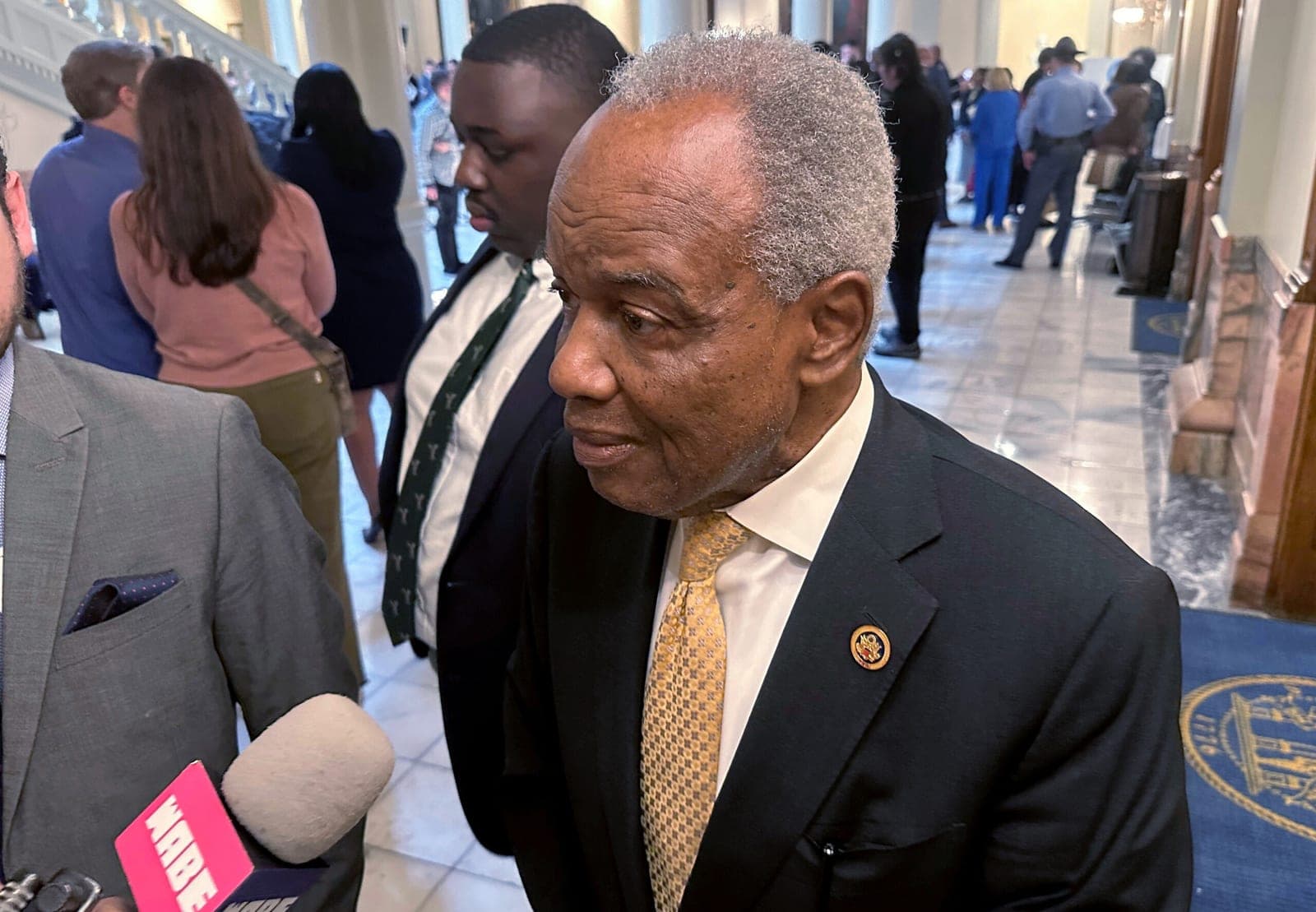
Rep. David Scott, a Georgia Democrat seeking his 13th term in Congress, dies at age 80
ATLANTA (AP) — U.S. Rep. David Scott, a Georgia Democrat and the first Black chairman of the House Agriculture Committee, has died. He was 80. Scott, who was seeking his 13th term in Congress despite challenges from within his party, was once a leading voice for Democrats on issues related to farm aid policy and food aid for consumers and a prominent Black member of the party’s moderate Blue Dog caucus. But he faced criticism and concerns in recent years because of declining health, enduring a primary challenge in 2024 and facing another one at the time of his death. Democrats on Capitol Hill praised the longtime lawmaker. “The news of Congressman Scott’s passing is deeply sad,” House Minority Leader Hakeem Jeffries told reporters on Wednesday. “David Scott was a trailblazer who served the district that he represented admirably, rose up from humble beginnings to become the first African American ever to chair the House Ag Committee,” Jeffries said. “He cared about the people that he represented. He was fiercely committed to getting things done for the people of the great state of Georgia, and he’ll be deeply missed.” News of Scott’s death came during the Congressional Black Caucus’ weekly luncheon on Capitol Hill. The Black Caucus’ chair, Rep. Yvette Clarke, told lawmakers at the outset of the meeting. The White House lowered its flags to half-staff after Scott’s death. Death creates another vacancy Scott’s death slightly widens Republicans’ narrow House majority going into the thick of this midterm election year The GOP began the current Congress with a 220-215 advantage, but the margin has fluctuated. Scott is the fourth House Democrat to die in office during this Congress. Scott had been mostly absent from the campaign trail in 2024 and 2026 and had become a noted example of Democrats’ aging leadership targeted by younger generations of the left. He dodged questions from reporters when he qualified for another term in March, but he earlier dismissed pressure to retire. “Thank God I’m in good health, moving and doing the people’s work,” the congressman said in 2024. His wife and campaign adviser Alfredia Scott was even more direct. “When the congressman decides to leave, he won’t be pushed out,” she said in 2024. “He will bow out.” State officials will have to schedule a special election to fill out the rest of Scott’s term, which could overlap with elections to choose a representative for the next two-year term. Early in-person voting starts Monday for May 19 party primaries for the next full term. Scott was a pioneering Black lawmaker David Albert Scott was born in rural Aynor, South Carolina, on June 27, 1945, in the era of Jim Crow segregation. He spent part of his childhood in Scranton, Pennsylvania, along with stints New York and Florida. Scott graduated from Florida A&M University, one of the nation’s largest historically Black college campuses — and in office he was an outspoken advocate for federal support of HBCUs. Scott also earned an MBA from the University of Pennsylvania’s Wharton School in 1969. He settled in Atlanta, opened his own advertising business and got his start in politics as a staffer on Andrew Young’s 1972 congressional campaign. Young would go on to be Atlanta mayor and United Nations ambassador under President Jimmy Carter, another Georgian. The support of Young and baseball legend Henry “Hank” Aaron, who was the older brother of Scott’s wife, helped launch Scott into Congress in 2002, said Democratic state Sen. Emanuel Jones. He was opposing Scott in the May 19 primary, although he called Scott “a good friend.” Scott was one of a pioneering generation of Black state lawmakers in Georgia, winning election to the state House in 1974 and the state Senate in 1982 before being elected to Congress. Once identifying as a moderate “Blue Dog” — Scott had sponsored a law mandating a moment of silent school prayer in the state Senate — he evolved into a more mainstream liberal. An advocate for historically Black schools Scott served decades in Congress while living outside his district after maps were redrawn. He maintained support, focusing intently on constituent service including hosting job and health fairs. Among his notable achievements on Capitol Hill, Scott secured $80 million for historically Black land-grant schools as part of the 2018 Farm Bill. The money was steered to agriculture-related scholarships at 19 campuses. He helped author various housing and mortgage aid measures, and he pushed for better health care and other benefits for veterans and their families. On foreign policy, Scott was an outspoken advocate for NATO and post-World War II American alliances. Scott’s fellow Democrats ousted him from his post as ranking minority member on the Agriculture Committee in 2024 amid concerns about his age and health. Scott is survived by Alfredia Scott, the couple’s two adult daughters and grandchildren. Categories: National News, News Tags: georgia, Lawmaker, Rep. David Scott