3 stories credited to WDEF
2 stories on wdef.com credited to other publishers
Latest story Apr 15, 2026 · on ChamberLight since Apr 2026
A story can appear as several articles (copies of the same piece), so counts of stories and of articles differ.
Scores for WDEF
Writing quality not enough rated stories yet: 3 of 10. How it is measured
Scores last checked Sep 25, 2026.
Articles this site reproduces
How provenance is decidedOriginal publishers of articles on wdef.com
Counted from articles on wdef.com whose original publisher is verified from the page itself or confirmed by an independent signal.
Stories ChamberLight collected, by month
Stories credited to WDEF, by publication date. ChamberLight collects articles that mention the officials it tracks, so this shows its own coverage of this source, not how much the source publishes.
- Stories from WDEF
- Shaded: ChamberLight collected no stories, or almost none, from any outlet (a gap in its collection, not in the outlet’s publishing)
Show as a table
| Month | Stories | All outlets |
|---|---|---|
| March 2026 | 1 | 850 |
| April 2026 | 2 | 4,538 |
| May 2026 | 0 | none collected |
| June 2026 | 0 | none collected |
| July 2026 | 0 | none collected |
| August 2026 | 0 | 1 (collection gap) |
| September 2026 | 0 | 1,320 |
Top topics
Share of this source’s stories tagged with each topic. A story can carry several topics, so the shares do not add up to 100%.
- Criminal Justice2
67% of 3 stories · 19% across all outlets
- Economy2
67% of 3 stories · 26% across all outlets
- Ethics/Corruption2
67% of 3 stories · 58% across all outlets
- Defense/Military1
33% of 3 stories · 25% across all outlets
- Foreign Policy1
33% of 3 stories · 29% across all outlets
- Voting Rights1
33% of 3 stories · 19% across all outlets
The thin mark on each bar is the topic’s share across all outlets.
Who they cover
Party of the officials these stories are mainly about, across all 4 officials named. A story counts once for each official it is mainly about, so the split is over 5 story–official pairs, from 3 stories.
- Republican60% · 3 pairs
- Democrat20% · 1 pair
- Party not recorded20% · 1 pair
Most covered
Stories mainly about each official, and their share of the source’s 3 stories.
Article tone
ChamberLight’s article analysis assigns each story a tone toward the official it covers. It describes the coverage of that official, not WDEF’s stance, and reader votes do not change it. 3 stories.
- Good Look
- 0 (0%)
- Mixed
- 2 (67%)
- Informational
- 0 (0%)
- Bad Look
- 1 (33%)
Challenges to these scores
No one has challenged a score on this page yet. Anyone can; editors publish every outcome here.
Articles served from wdef.com
8
Trump threatens to fire Powell if the Fed Chair remains with central bank after his term ends
Federal prosecutors made an unannounced visit this week to a construction site at Federal Reserve headquarters that is the focus of an investigation into a $2.5 billion renovation project, according to two people familiar with the visit. Two prosecutors and an investigator from U.S. Attorney Jeanine Pirro’s office were turned away on Tuesday by a building contractor and referred to Fed attorneys, one of the people said. The two people familiar with the visit spoke on condition of anonymity because they weren’t authorized to publicly discuss an ongoing investigation. Last month, during a closed-door hearing before a federal judge, a top deputy from Pirro’s office conceded that they hadn’t found any evidence of a crime in their investigation of the headquarters project. The investigation has faced bipartisan opposition in Congress. It also has delayed Senate consideration of Kevin Warsh, President Donald Trump’s pick to replace Fed chairman Jerome Powell when his term ends May 15. THIS IS A BREAKING NEWS UPDATE. AP’s earlier story follows below. Federal prosecutors made an unannounced visit this week to a construction site at Federal Reserve headquarters that is the focus of an investigation into a $2.5 billion renovation project, according to two people familiar with the visit. Two prosecutors and an investigator from U.S. Attorney Jeanine Pirro’s office were turned away on Tuesday by a building contractor and referred to Fed attorneys, one of the people said. The two people familiar with the visit spoke on condition of anonymity because they weren’t authorized to publicly discuss an ongoing investigation. Last month, during a closed-door hearing before a federal judge, a top deputy from Pirro’s office conceded that they hadn’t found any evidence of a crime in their investigation of the headquarters project. President Donald Trump has again threatened to fire Jerome Powell if the Federal Reserve Chair decides to stay on the central bank’s governing board after his term as chair expires next month. “Well then I’ll have to fire him, OK?” Trump told Fox Business in an interview that aired Wednesday when reminded that Powell has said he won’t leave the Fed while the Justice Department investigates a $2.5 billion renovation project at the bank. Trump has for months wanted to remove Powell as chair of the Fed, saying he has been too slow in orchestrating interest rate cuts that would give the U.S. economy a quick boost. Powell has said the investigation is a pretext to undermine the Fed’s independence to set rates. A federal prosecutor last month admitted that the investigation into the renovations had turned up no evidence of a crime. Powell’s term as Fed governor expires May 15, but his term as a Fed board member lasts until January 2028. Trump has nominated former Fed official Kevin Warsh to succeed Powell. Yet Warsh’s confirmation has been delayed. Sen. Thom Tillis, a North Carolina Republican, has said he won’t vote to confirm any Fed nominees until the investigation is dropped. (Copyright 2026 The Associated Press. All rights reserved. This material may not be published, broadcast, rewritten or redistributed without permission.) Categories: Government & Politics Tags: Congress, Donald Trump, Federal Reserve, Investigation, Jerome Powell, renovation
Trump threatens to fire Powell if the Fed Chair remains with central bank after his term ends
Federal prosecutors made an unannounced visit this week to a construction site at Federal Reserve headquarters that is the focus of an investigation into a $2.5 billion renovation project, according to two people familiar with the visit. Two prosecutors and an investigator from U.S. Attorney Jeanine Pirro’s office were turned away on Tuesday by a building contractor and referred to Fed attorneys, one of the people said. The two people familiar with the visit spoke on condition of anonymity because they weren’t authorized to publicly discuss an ongoing investigation. Last month, during a closed-door hearing before a federal judge, a top deputy from Pirro’s office conceded that they hadn’t found any evidence of a crime in their investigation of the headquarters project. The investigation has faced bipartisan opposition in Congress. It also has delayed Senate consideration of Kevin Warsh, President Donald Trump’s pick to replace Fed chairman Jerome Powell when his term ends May 15. THIS IS A BREAKING NEWS UPDATE. AP’s earlier story follows below. Federal prosecutors made an unannounced visit this week to a construction site at Federal Reserve headquarters that is the focus of an investigation into a $2.5 billion renovation project, according to two people familiar with the visit. Two prosecutors and an investigator from U.S. Attorney Jeanine Pirro’s office were turned away on Tuesday by a building contractor and referred to Fed attorneys, one of the people said. The two people familiar with the visit spoke on condition of anonymity because they weren’t authorized to publicly discuss an ongoing investigation. Last month, during a closed-door hearing before a federal judge, a top deputy from Pirro’s office conceded that they hadn’t found any evidence of a crime in their investigation of the headquarters project. President Donald Trump has again threatened to fire Jerome Powell if the Federal Reserve Chair decides to stay on the central bank’s governing board after his term as chair expires next month. “Well then I’ll have to fire him, OK?” Trump told Fox Business in an interview that aired Wednesday when reminded that Powell has said he won’t leave the Fed while the Justice Department investigates a $2.5 billion renovation project at the bank. Trump has for months wanted to remove Powell as chair of the Fed, saying he has been too slow in orchestrating interest rate cuts that would give the U.S. economy a quick boost. Powell has said the investigation is a pretext to undermine the Fed’s independence to set rates. A federal prosecutor last month admitted that the investigation into the renovations had turned up no evidence of a crime. Powell’s term as Fed governor expires May 15, but his term as a Fed board member lasts until January 2028. Trump has nominated former Fed official Kevin Warsh to succeed Powell. Yet Warsh’s confirmation has been delayed. Sen. Thom Tillis, a North Carolina Republican, has said he won’t vote to confirm any Fed nominees until the investigation is dropped. (Copyright 2026 The Associated Press. All rights reserved. This material may not be published, broadcast, rewritten or redistributed without permission.) Categories: Government & Politics Tags: Congress, Donald Trump, Federal Reserve, Investigation, Jerome Powell, renovation

ICE detained fewer non-criminals since Minnesota crackdown, driving a decline in detention population, data shows
The number of people in Immigration and Customs Enforcement custody declined by 12% from a record-high in January to the end of March, data released by the agency on Thursday shows, driven largely by a decline in detentions of those without criminal records. The drop follows the nationwide, bipartisan backlash to the massive immigration enforcement operation in the Minneapolis area; the killings of two American citizens at the hands of federal agents there; and a shakeup in Department of Homeland Security leadership. It also marks the first major decline since President Trump returned to office and began an unprecedented deportation crackdown that has made anyone in the U.S. without lawful status subject to arrest and detention. Data for the first week of April indicates the detention population’s decline is continuing. Despite the decline, the average daily detention population remains at historic high levels, above levels seen during the Biden administration and the first Trump administration. An average of about 63,000 people were detained each day in March, ICE reported, compared to about 72,000 in January. Those detained by ICE are accused of civil immigration violations, such as crossing the border illegally or overstaying a visa. Non-criminal detainees accused of civil violations of U.S. immigration law were previously the fastest-growing group in ICE custody, compared to those with pending criminal charges or prior convictions. But from January to March, the average number of detainees without criminal records dropped by 21%, although they are still the largest group in detention. Over the same timeframe, the number of detainees with pending charges and convictions declined by 5% and 4%, respectively. Administration officials have signaled, both publicly and privately, that their immigration enforcement strategy has shifted to some degree following Operation Metro Surge, the operation in Minnesota. In February, Mr. Trump told NBC News that the administration could “use a little bit of a softer touch” in enforcement operations after ICE and Border Patrol killed U.S. citizens Renee Good and Alex Pretti during the Twin Cities operation. Following the deaths, the president removed Gregory Bovino from his post as Commander at Large of sweeping and controversial Border Patrol operations in major cities far away from the U.S.-Mexico border. He has since retired from federal service. Last month, Mr. Trump replaced former DHS Secretary Kristi Noem with then-Sen. Markwayne Mullin, a Republican from Oklahoma. Administration officials previously told CBS News that some of the aggressive tactics used by ICE and Border Patrol agents had become politically problematic. Mr. Trump tapped White House border czar Tom Homan — instead of Noem — with winding down Operation Metro Surge, and officials told CBS News that under his direction, the administration had moved away from broad immigration sweeps in major cities and renewed focus on arresting immigrants with criminal records. At his confirmation hearing in March, Mullin signaled he plans to move in a similar direction. “Working with municipalities, I would love to see ICE become a transport more than the front line,” he said. “If we get back into simply working with law enforcement, we’re going to them, we’re picking up criminals from their jail.” Mullin also said that ICE would be using judicial warrants before entering homes or businesses, unless they are actively pursuing someone who enters those places. Earlier this year, a whistleblower revealed ICE had empowered agents to forcibly enter homes, without judicial warrants, in operations targeting individuals with deportation orders, a marked departure from longstanding policy and practice. ICE acting director Todd Lyons also suggested arrests would be carried out differently under Mullin in an interview with the Boston Globe last month. “Not like Minneapolis,” he said of enforcement operations under new leadership. “Not like before.” Still, it may be too early to tell whether there has been a permanent shift in strategy, said Colleen Putzel-Kavanaugh, an associate analyst at the Migration Policy Institute. “It may be part of just a transitory time, following Minneapolis and following the public outcry of ICE tactics,” she told CBS News. “There has been a shift in rhetoric, but we do know that these arrests continue, they’re just not necessarily happening in sort of the high-profile, very flashy public ways like in Minneapolis.” Nationwide, ICE arrested an average of about 1,040 people each day between mid-February, when the Minnesota operation ended, to early March, according to ICE data released in response to a Freedom of Information Act request lawsuit by the Deportation Data Project. About 40% did not have criminal records. When asked whether the decline in the detention population represents a systematic change, a DHS spokesperson told CBS News on Sunday that “since Day One, DHS law enforcement has been delivering on President Trump’s promise to the American people to arrest and deport criminal illegal aliens including murderers, rapists, pedophiles, gang members, and terrorists.” ICE data indicate the agency has been recording fewer “collateral” arrests in recent months. “Collateral” arrests refer to arrests of those who aren’t the original targets of an operation but found to be living in the U.S. illegally in the process of an enforcement operation. More than a quarter of arrests at the start of the year were labeled “collateral,” compared to fewer than one-fifth by early March, the data show. ICE began recording this distinction consistently in August 2025. The vast majority of arrests since then were marked as targeted, although it is not always clear how ICE determines who to target. Roughly one-third of those arrested in targeted operations lacked criminal records, the data show. ICE has previously argued that some immigrants without U.S. criminal records may have committed crimes in their native countries or may otherwise be public safety threats, like gang members. “It remains to be seen what the new strategy is exactly,” Putzel-Kavanaugh said. “The real test will be what the next couple of months look like as Secretary Mullin settles in, as DHS sort of regroups and decides what that strategy is.” Categories: Consumer News, Government & Politics Tags: criminal, Criminal record, custody, Decline, Detention, enforcement, ice, Immigration and Customs Enforcement
ICE detained fewer non-criminals since Minnesota crackdown, driving a decline in detention population, data shows
The number of people in Immigration and Customs Enforcement custody declined by 12% from a record-high in January to the end of March, data released by the agency on Thursday shows, driven largely by a decline in detentions of those without criminal records. The drop follows the nationwide, bipartisan backlash to the massive immigration enforcement operation in the Minneapolis area; the killings of two American citizens at the hands of federal agents there; and a shakeup in Department of Homeland Security leadership. It also marks the first major decline since President Trump returned to office and began an unprecedented deportation crackdown that has made anyone in the U.S. without lawful status subject to arrest and detention. Data for the first week of April indicates the detention population’s decline is continuing. Despite the decline, the average daily detention population remains at historic high levels, above levels seen during the Biden administration and the first Trump administration. An average of about 63,000 people were detained each day in March, ICE reported, compared to about 72,000 in January. Those detained by ICE are accused of civil immigration violations, such as crossing the border illegally or overstaying a visa. Non-criminal detainees accused of civil violations of U.S. immigration law were previously the fastest-growing group in ICE custody, compared to those with pending criminal charges or prior convictions. But from January to March, the average number of detainees without criminal records dropped by 21%, although they are still the largest group in detention. Over the same timeframe, the number of detainees with pending charges and convictions declined by 5% and 4%, respectively. Administration officials have signaled, both publicly and privately, that their immigration enforcement strategy has shifted to some degree following Operation Metro Surge, the operation in Minnesota. In February, Mr. Trump told NBC News that the administration could “use a little bit of a softer touch” in enforcement operations after ICE and Border Patrol killed U.S. citizens Renee Good and Alex Pretti during the Twin Cities operation. Following the deaths, the president removed Gregory Bovino from his post as Commander at Large of sweeping and controversial Border Patrol operations in major cities far away from the U.S.-Mexico border. He has since retired from federal service. Last month, Mr. Trump replaced former DHS Secretary Kristi Noem with then-Sen. Markwayne Mullin, a Republican from Oklahoma. Administration officials previously told CBS News that some of the aggressive tactics used by ICE and Border Patrol agents had become politically problematic. Mr. Trump tapped White House border czar Tom Homan — instead of Noem — with winding down Operation Metro Surge, and officials told CBS News that under his direction, the administration had moved away from broad immigration sweeps in major cities and renewed focus on arresting immigrants with criminal records. At his confirmation hearing in March, Mullin signaled he plans to move in a similar direction. “Working with municipalities, I would love to see ICE become a transport more than the front line,” he said. “If we get back into simply working with law enforcement, we’re going to them, we’re picking up criminals from their jail.” Mullin also said that ICE would be using judicial warrants before entering homes or businesses, unless they are actively pursuing someone who enters those places. Earlier this year, a whistleblower revealed ICE had empowered agents to forcibly enter homes, without judicial warrants, in operations targeting individuals with deportation orders, a marked departure from longstanding policy and practice. ICE acting director Todd Lyons also suggested arrests would be carried out differently under Mullin in an interview with the Boston Globe last month. “Not like Minneapolis,” he said of enforcement operations under new leadership. “Not like before.” Still, it may be too early to tell whether there has been a permanent shift in strategy, said Colleen Putzel-Kavanaugh, an associate analyst at the Migration Policy Institute. “It may be part of just a transitory time, following Minneapolis and following the public outcry of ICE tactics,” she told CBS News. “There has been a shift in rhetoric, but we do know that these arrests continue, they’re just not necessarily happening in sort of the high-profile, very flashy public ways like in Minneapolis.” Nationwide, ICE arrested an average of about 1,040 people each day between mid-February, when the Minnesota operation ended, to early March, according to ICE data released in response to a Freedom of Information Act request lawsuit by the Deportation Data Project. About 40% did not have criminal records. When asked whether the decline in the detention population represents a systematic change, a DHS spokesperson told CBS News on Sunday that “since Day One, DHS law enforcement has been delivering on President Trump’s promise to the American people to arrest and deport criminal illegal aliens including murderers, rapists, pedophiles, gang members, and terrorists.” ICE data indicate the agency has been recording fewer “collateral” arrests in recent months. “Collateral” arrests refer to arrests of those who aren’t the original targets of an operation but found to be living in the U.S. illegally in the process of an enforcement operation. More than a quarter of arrests at the start of the year were labeled “collateral,” compared to fewer than one-fifth by early March, the data show. ICE began recording this distinction consistently in August 2025. The vast majority of arrests since then were marked as targeted, although it is not always clear how ICE determines who to target. Roughly one-third of those arrested in targeted operations lacked criminal records, the data show. ICE has previously argued that some immigrants without U.S. criminal records may have committed crimes in their native countries or may otherwise be public safety threats, like gang members. “It remains to be seen what the new strategy is exactly,” Putzel-Kavanaugh said. “The real test will be what the next couple of months look like as Secretary Mullin settles in, as DHS sort of regroups and decides what that strategy is.” Categories: Consumer News, Government & Politics Tags: criminal, Criminal record, custody, Decline, Detention, enforcement, ice, Immigration and Customs Enforcement

Swalwell exits California governor’s race after assault allegations as rivals seek his supporters
LOS ANGELES (AP) — Democratic Rep. Eric Swalwell’s abrupt exit from the race for California governor left his rivals scrambling to lock down his former supporters in a crowded contest with no clear leader, injecting more turmoil into the campaign to lead the nation’s most populous state. Swalwell’s decision to suspend his campaign Sunday followed allegations that he sexually assaulted a woman twice, including when she worked for him, that were published Friday in the San Francisco Chronicle and later by CNN. While pulling out of the race he remained defiant in a post on the social platform X, saying, “I will fight the serious, false allegations that have been made — but that’s my fight, not a campaign’s.” For rival candidates in a wide-open race, the key issue is where Swalwell’s supporters will go. He was among the most prominent Democrats in the contest, with mail ballots scheduled to go to voters in early May in advance of the June 2 primary election. Katie Porter, one of the leading Democrats, posted a line from a San Francisco Chronicle column on X, “Democrats can pull victory from the jaws of defeat by coalescing around Porter.” Billionaire hedge fund manager-turned-liberal activist Tom Steyer said he secured the support of Rep. Jared Huffman, a Democrat whose coastal district runs north of San Francisco, not far from Swalwell’s home turf. Antonio Villaraigosa, the former Los Angeles mayor, pitched a new ad promising to lower gas and grocery costs in a state known for its punishing cost of living. “As governor, I’ll do everything I can to bring costs down,” he said. With seven established Democrats and two leading Republicans on a primary ballot with more than 50 candidates, the race remains fluid. While Swalwell has suspended his campaign, his name cannot be removed from the ballot. “Nobody has really caught fire,” said Democratic consultant Andrew Acosta, who is not involved in the campaign. Swalwell’s supporters “will scatter out to other candidates.” Many voters remain distant from governor’s race Swalwell is perhaps best known nationally as a House manager in President Donald Trump’s second impeachment trial during his first term in early 2021. But in a media environment dominated by Trump, the race remains distant from many California voters. After the publicity about sexual misconduct allegations, “I think there are probably more people who know who Eric Swalwell is than can articulate a Tom Steyer position paper,” Acosta added. Swalwell was considered a leading contender along with fellow Democrats Steyer and Porter and two Republicans, Riverside County Sheriff Chad Bianco and conservative commentator Steve Hilton, who landed Trump’s endorsement. The 48-hour period marked a rapid reversal for a candidate who appeared to be gaining momentum in the packed field to replace outgoing Democratic Gov. Gavin Newsom, who is barred by law from seeking a third term. Though Swalwell has denied the allegations, he has appeared to reference infidelity in multiple statements. “To my family, staff, friends, and supporters, I am deeply sorry for mistakes in judgment I’ve made in my past,” he wrote. That followed a video post on Friday where he apologized to his wife. Swalwell’s exit shakes up campaign The accusations reordered a wide-open gubernatorial race that had Democrats fretting the party’s large number of candidates could lead to them getting shut out of the general election in November. That’s because California has a top-two primary system in which two candidates advance to the general election, regardless of party. Swalwell had become a clear target for his Democratic rivals as he began to lock up institutional support. Some had seized on rumors of sexual misconduct that circulated on social media for weeks before the Chronicle’s report. The San Francisco Chronicle spoke to a woman who alleged Swalwell sexually assaulted her in 2019, when she worked for him, and again in 2024. The woman said she did not go to police at the time of the assaults because she was afraid she would not be believed. In both cases the woman said she was too intoxicated to consent to sex. CNN reported on allegations that appeared to come from the same woman, and spoke to several other women who accused Swalwell of other sexual misconduct. Neither outlet named the woman, and The Associated Press has not been able to independently verify her account and identity. Her lawyer declined to comment. The alleged 2024 incident occurred in New York, and the Manhattan District Attorney’s Office said it’s investigating. That office urged anyone with knowledge to contact its special victims division. House colleagues call for Swalwell to resign As Swalwell’s campaign flailed over the weekend, fellow California Reps. Jared Huffman, Ro Khanna and Sam Liccardo said Swalwell should resign, as did Reps. Teresa Leger Fernández of New Mexico and Pramila Jayapal of Washington state. “This is not a partisan issue,” Jayapal said Sunday. “This cuts across party lines. And it is depravity of the way that women have been treated.” Some representatives said they would support the rare step of expelling him from the U.S. House should he refuse to step aside. It all added to the mounting political pressure on Swalwell, which began with allies like Sen. Adam Schiff and Rep. Jimmy Gomez cutting their support. Gomez had helped run Swalwell’s campaign and said he was immediately ending his role. With the House returning to session Tuesday, the question of whether to expel Swalwell could come to a head quickly. Rep. Anna Paulina Luna, R-Fla., said Saturday that she would be filing a motion to start the process. Expulsion votes in the House are rare and require a two-thirds majority, but there is recent precedent for taking the step. Republican George Santos of New York in 2023 became just the sixth member in House history to be ousted by colleagues for his conduct. Huffman, Jayapal and Leger Fernández said they would vote to expel Swalwell from the House, though they said they also support expelling Rep. Tony Gonzales, R-Texas, who admitted to an affair with a former staff member who later died by suicide. Swalwell, who is originally from Iowa, was elected in 2012 and represents a House district east of San Francisco. He launched a presidential run in April 2019 but shuttered it a few months later after failing to catch on with voters. (Copyright 2026 The Associated Press. All rights reserved. This material may not be published, broadcast, rewritten or redistributed without permission.) Categories: Government & Politics Tags: allegations, California, Campaign, eric swalwell, Governor’s Race
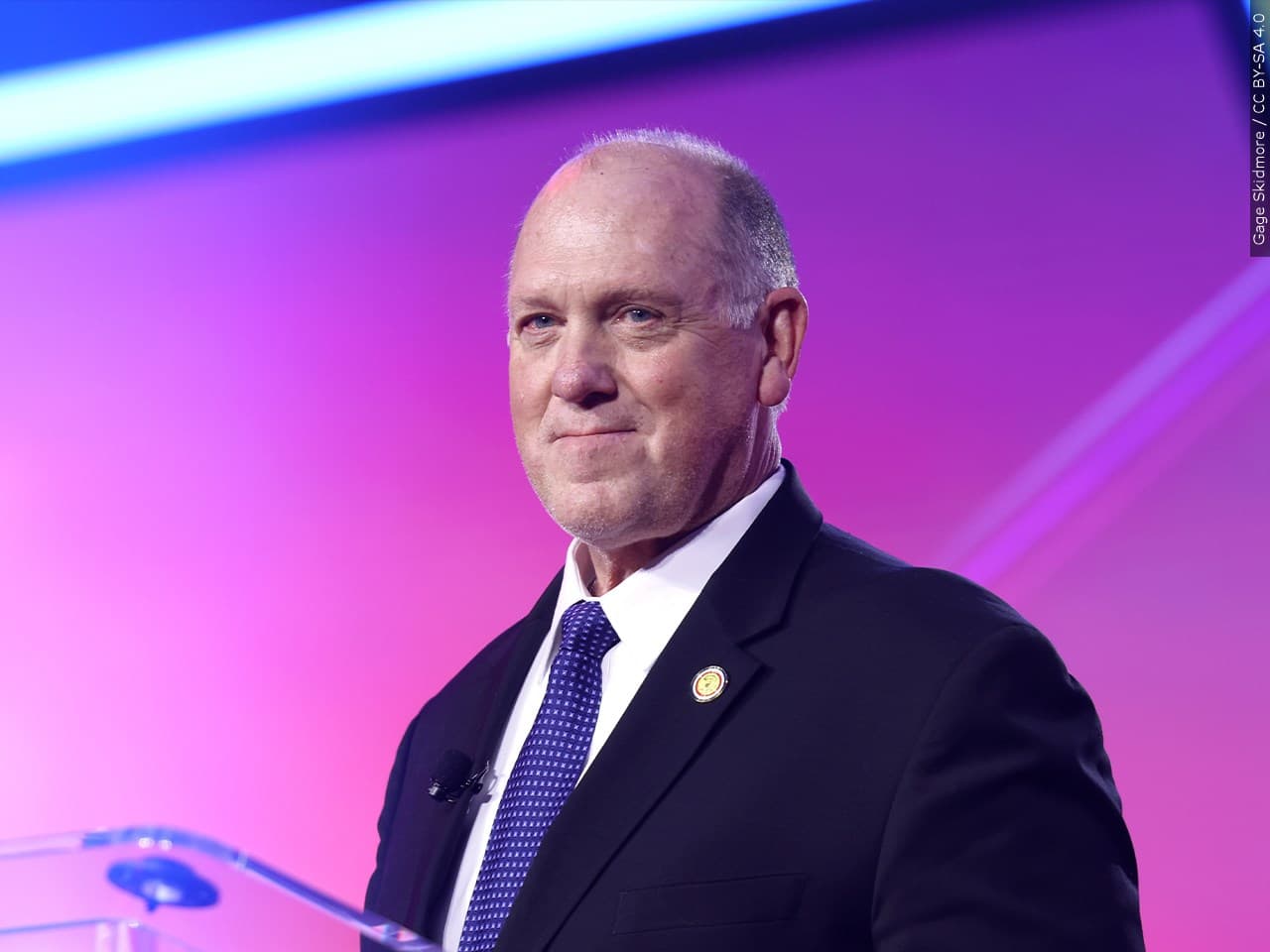
Tom Homan says ICE will keep assisting TSA “until the airports feel like they are 100%”
Tom Homan, the Trump administration border czar, said Sunday that although President Trump signed an order to pay Transportation Security Administration workers, Immigration and Customs Enforcement agents will continue to assist “until the airports feel like they are 100%.” “Look, we’re going to continue a nice presence there, and until the airports feel like they’re 100%, you know, in a posture where they can do no normal operations,” Homan said Sunday on “Face the Nation with Margaret Brennan.” Congress has yet to approve funding for the Department of Homeland Security, which has been shut down for more than 40 days. Early Friday morning, the Senate passed a bill to fund DHS that did not include money for ICE and other immigration removal. The House rejected that bill and instead passed its own version, which would extend funding for the entire department, including ICE, for 60 days. The dueling bills leave the shutdown without an end in sight. Mr. Trump announced Thursday that he would be redirecting funds to pay TSA agents, who have not gotten a paycheck in over a month since the shutdown began. But the TSA said last week that 500 agentshad quit since the shutdown began. “If less TSA agents come back, that means we’ll keep more ICE agents there,” Homan said Sunday. “The president has been clear. He wants to secure those airports, especially, as I said earlier, in an increased threat posture, we need to secure those airports. ICE is there to help our brothers and sisters in TSA. We’ll be there as long as they need us, until they get back to normal operations and feel like those airports are secure.” ICE and Customs and Border Protection both received an influx of funds from Mr. Trump’s 2025 One Big, Beautiful Bill, meaning they are both operating during the shutdown despite other parts of DHS being shut down. Secret Service personnel are also being paid during the shutdown. Other agencies within DHS that have not been funded include FEMA, CISA and the U.S. Coast Guard, although active-duty Coast Guard members are currently being paid with discretionary funds. While immigration removal operations have been criticized since the beginning of the Trump administration, ICE and CBP tactics have come under further scrutiny this year amid the crackdown in Minneapolis, where immigration officers from those agencies shot and killed two U.S. citizens, Renee Good and Alex Pretti, in two separate incidents in January. Homan took over control of the Minneapolis operation in the wake of the shootings. In the weeks afterward, embattled DHS Secretary Kristi Noem, an internal rival of his, departed at the helm of the departmentearlier this month amid questions about ad contracts under her watch. Former Sen. Markwayne Mullin of Oklahoma was sworn in as her replacement last week. Democrats have refused to pass any budget for DHS that does not include reforms for immigration enforcement. The Senate-passed deal did not include these reforms, but Democrats hailed it as a victory since it would not fund ICE and would instead allow for further negotiations. Homan on Sunday rejected the Democrats’ demands, saying that “we already made those changes” and that Democrats are holding up any reforms, including body cameras for ICE agents. “The bill they’re holding up right now actually gives $120 million to buy more cameras,” Homan said. “I’ve already talked to them. They want to, you know, talk about policy and legislative policy. Look, if they want to change the law, change the law. We’re enforcing laws they enacted.” Homan also said that another one of the Democrats’ demands — for ICE to stop detaining undocumented immigrants in hospitals, houses of worship or schools — was not currently happening, although the Trump administration did announce a policy shift in Jan. 2025 to allow arrests at those locations. “You can’t point to one instance when we actually went into a church and school because we try very hard to wait for people to leave places,” Homan said. “We wait for them. We arrest them in their home or arrest them in their community. We try very hard not to go into those sensitive locations because we know there’s an issue there.” Categories: Government & Politics Tags: airport, Border czar, ice, shutdown, Tom Homan, Transportation Security Administration, Travel

US says it destroyed 16 mine-laying vessels as Iran threatens to block Gulf oil exports
DUBAI, United Arab Emirates (AP) – The U.S. said it took out more than a dozen mine-laying Iranian vessels Tuesday, and the Islamic Republic vowed to block the region’s oil exports, saying it would not allow “even a single liter” to be shipped to its enemies. As concerns grew about the war’s effect on a strategic waterway, the American military said it destroyed 16 minelayers, though President Donald Trump said in social media posts that there were no reports of Iran planting explosives in the Strait of Hormuz, through which 20% of the world’s oil is shipped. The American military released the figure, along with unclassified footage of some of the vessels, after Trump threatened to hit Iran at “a level never seen before” if the country failed to immediately remove any mines it might have deployed in the channel. Both sides sharpened their rhetoric as the war entered its 11th day. U.S. Defense Secretary Pete Hegseth promised the most intense strikes yet while the Pentagon detailed the broader toll of injuries sustained by U.S. troops. The conflict’s effects rippled across the Middle East and beyond. Iranian leaders ruled out talks, threatened Trump and launched new attacks against Israel and Gulf Arab countries. In Iran, residents of Tehran said they experienced some of the war’s heaviest strikes. A woman said she saw a residential building get hit. She and others reached by The Associated Press spoke on condition of anonymity to prevent reprisals. Tens of thousands of Iranians have sought shelter in the countryside. Multiple Israeli strikes across southern Lebanon killed seven people, the Lebanese Health Ministry said early Wednesday. Other deaths included a Red Cross member who died early Wednesday after an Israeli strike targeted his team Monday while they were rescuing people following an earlier attack, the health ministry said. On Tuesday, Israeli airstrikes killed four people, including a paramedic who worked for the Hezbollah-affiliated Islamic Health Authority who was treating the wounded. Also Tuesday, an Israeli strike killed a Lebanese soldier, the Lebanese army said, bringing the number of troops killed there to five since the conflict began. Israel said it was working to intercept missiles from Iran and Hezbollah, which began firing on Israel after the start of the war. Saudi Arabia’s Defense Ministry said early Wednesday that it intercepted multiple missiles launched toward several sites, including Prince Sultan Air Base, a major U.S.- and Saudi-operated air facility. The ministry said it also destroyed drones near two major cities. In Iraq, drones targeted military bases inside Baghdad International Airport late Tuesday, two security officials told AP on condition of anonymity because they were not authorized to speak to the press. Some drones fell near Iraqi security positions, while others landed near logistical support sites used by U.S.-led coalition forces, one official said. The United Arab Emirates said early Wednesday that its air defenses were firing at incoming Iranian fire. The wealthy Gulf nation – home to the business and travel hub of Dubai – said Iranian attacks have killed six people and wounded 122 others. Bahrain sounded sirens early Wednesday, warning of an incoming Iranian attack. The warnings came a day after an Iranian attack hit a residential building in the capital, Manama, and killed a 29-year-old woman and wounding eight people. Gen. Dan Caine, chairman of the Joint Chiefs of Staff, said U.S. forces hit more than 5,000 targets. The Pentagon separately said Tuesday that about 140 U.S. service members have been wounded in the war, and the “vast majority” of the injuries were minor, with 108 service members already back on duty. Eight U.S. service members suffered severe injuries, and seven have been killed. In Iran, at least 1,230 people have been killed, while the death toll is more than 480 in Lebanon and 12 in Israel, according to officials. Iran’s leaders have remained defiant after days of heavy strikes targeting the country’s leadership, military, ballistic missiles and its disputed nuclear program. Iran’s parliament speaker, Mohammad Bagher Qalibaf, said on X that Iran was “definitely not looking for a ceasefire.” “We believe that the aggressor should be punched in the mouth so that he learns a lesson so that he will never think of attacking our beloved Iran again,” he said. A top Iranian security official, Ali Larijani, posted a warning to Trump, writing on X that “Even those bigger than you couldn’t eliminate Iran. Be careful not to get eliminated yourself.” Iran has been accused of plotting attempts to kill Trump in the past. The Trump administration, meanwhile, faced growing scrutiny at home about the war. “I’m not sure what the end game is, or what their plans are,” Democratic Sen. Jacky Rosen of Nevada said after a classified briefing that the Trump administration held Tuesday for some lawmakers. Iran has repeatedly targeted energy infrastructure with attacks that appear aimed at generating enough global economic pain to pressure the U.S. and Israel to end their strikes. It has also fired on Israel and U.S. military bases in the region. The U.S. stock market held steadier Tuesday as Wall Street waited for the next clue on when the war with Iran may end. Oil prices, meanwhile, remained well below their peaks hit on Monday. Such spikes have been rocking financial markets worldwide because of worries that the war could block the global flow of oil and natural gas for a long time. Iran’s paramilitary Revolutionary Guard said it “will not allow the export of even a single liter of oil from the region to the hostile side and its partners until further notice.” Amin Nasser, the president and CEO of Saudi Arabia’s oil giant Aramco, said tankers were being rerouted to avoid the strait, and that the company’s east-west pipeline would reach its full capacity this week of 7 million barrels a day being brought to the Red Sea port of the Yanbu. “The situation at the Strait of Hormuz is blocking sizable volumes of oil from the whole region,” he said. “If this takes a long time, that will have serious impact on the global economy.” The U.N. refugee agency said Tuesday that more than 667,000 people in Lebanon had registered as displaced – an increase of over 100,000 since a day earlier – and more than 85,000 people from Lebanon, mostly Syrians, had entered neighboring Syria. The British government said the number of commercial flights from the UAE to the U.K. is returning to normal levels, with 32 flights operated Monday from Dubai to Britain and another 36 scheduled Tuesday. British Airways, however, said it suspended flights to and from Jordan, Bahrain, Qatar, Dubai and Tel Aviv until later this month. Many foreign nationals have been getting out of the Persian Gulf region since the war began, including over 45,000 U.K. citizens, the British Foreign Office said. Some 40,000 people returned to the United States, according to the State Department. ___ Magdy reported from Cairo, and Watson reported from San Diego. Associated Press writers Sally Abou AIJoud in Beirut, Giovanna Dell’Orto in Miami, Qassim Abdul-Zahra in Baghdad, Melanie Lidman in Tel Aviv, Israel, and Aamer Madhani, Michelle L. Price, Stephen Groves and Lisa Mascaro in Washington contributed to this story. Lebanon reports more deaths Pentagon says 140 US troops wounded since war began Saudi Arabia’s oil giant says tankers being rerouted to avoid Strait of Hormuz Foreign nationals get out of region (Copyright 2026 The Associated Press. All rights reserved. This material may not be published, broadcast, rewritten or redistributed without permission.) Categories: Government & Politics, International News
US says it destroyed 16 mine-laying vessels as Iran threatens to block Gulf oil exports
DUBAI, United Arab Emirates (AP) – The U.S. said it took out more than a dozen mine-laying Iranian vessels Tuesday, and the Islamic Republic vowed to block the region’s oil exports, saying it would not allow “even a single liter” to be shipped to its enemies. As concerns grew about the war’s effect on a strategic waterway, the American military said it destroyed 16 minelayers, though President Donald Trump said in social media posts that there were no reports of Iran planting explosives in the Strait of Hormuz, through which 20% of the world’s oil is shipped. The American military released the figure, along with unclassified footage of some of the vessels, after Trump threatened to hit Iran at “a level never seen before” if the country failed to immediately remove any mines it might have deployed in the channel. Both sides sharpened their rhetoric as the war entered its 11th day. U.S. Defense Secretary Pete Hegseth promised the most intense strikes yet while the Pentagon detailed the broader toll of injuries sustained by U.S. troops. The conflict’s effects rippled across the Middle East and beyond. Iranian leaders ruled out talks, threatened Trump and launched new attacks against Israel and Gulf Arab countries. In Iran, residents of Tehran said they experienced some of the war’s heaviest strikes. A woman said she saw a residential building get hit. She and others reached by The Associated Press spoke on condition of anonymity to prevent reprisals. Tens of thousands of Iranians have sought shelter in the countryside. Multiple Israeli strikes across southern Lebanon killed seven people, the Lebanese Health Ministry said early Wednesday. Other deaths included a Red Cross member who died early Wednesday after an Israeli strike targeted his team Monday while they were rescuing people following an earlier attack, the health ministry said. On Tuesday, Israeli airstrikes killed four people, including a paramedic who worked for the Hezbollah-affiliated Islamic Health Authority who was treating the wounded. Also Tuesday, an Israeli strike killed a Lebanese soldier, the Lebanese army said, bringing the number of troops killed there to five since the conflict began. Israel said it was working to intercept missiles from Iran and Hezbollah, which began firing on Israel after the start of the war. Saudi Arabia’s Defense Ministry said early Wednesday that it intercepted multiple missiles launched toward several sites, including Prince Sultan Air Base, a major U.S.- and Saudi-operated air facility. The ministry said it also destroyed drones near two major cities. In Iraq, drones targeted military bases inside Baghdad International Airport late Tuesday, two security officials told AP on condition of anonymity because they were not authorized to speak to the press. Some drones fell near Iraqi security positions, while others landed near logistical support sites used by U.S.-led coalition forces, one official said. The United Arab Emirates said early Wednesday that its air defenses were firing at incoming Iranian fire. The wealthy Gulf nation – home to the business and travel hub of Dubai – said Iranian attacks have killed six people and wounded 122 others. Bahrain sounded sirens early Wednesday, warning of an incoming Iranian attack. The warnings came a day after an Iranian attack hit a residential building in the capital, Manama, and killed a 29-year-old woman and wounding eight people. Gen. Dan Caine, chairman of the Joint Chiefs of Staff, said U.S. forces hit more than 5,000 targets. The Pentagon separately said Tuesday that about 140 U.S. service members have been wounded in the war, and the “vast majority” of the injuries were minor, with 108 service members already back on duty. Eight U.S. service members suffered severe injuries, and seven have been killed. In Iran, at least 1,230 people have been killed, while the death toll is more than 480 in Lebanon and 12 in Israel, according to officials. Iran’s leaders have remained defiant after days of heavy strikes targeting the country’s leadership, military, ballistic missiles and its disputed nuclear program. Iran’s parliament speaker, Mohammad Bagher Qalibaf, said on X that Iran was “definitely not looking for a ceasefire.” “We believe that the aggressor should be punched in the mouth so that he learns a lesson so that he will never think of attacking our beloved Iran again,” he said. A top Iranian security official, Ali Larijani, posted a warning to Trump, writing on X that “Even those bigger than you couldn’t eliminate Iran. Be careful not to get eliminated yourself.” Iran has been accused of plotting attempts to kill Trump in the past. The Trump administration, meanwhile, faced growing scrutiny at home about the war. “I’m not sure what the end game is, or what their plans are,” Democratic Sen. Jacky Rosen of Nevada said after a classified briefing that the Trump administration held Tuesday for some lawmakers. Iran has repeatedly targeted energy infrastructure with attacks that appear aimed at generating enough global economic pain to pressure the U.S. and Israel to end their strikes. It has also fired on Israel and U.S. military bases in the region. The U.S. stock market held steadier Tuesday as Wall Street waited for the next clue on when the war with Iran may end. Oil prices, meanwhile, remained well below their peaks hit on Monday. Such spikes have been rocking financial markets worldwide because of worries that the war could block the global flow of oil and natural gas for a long time. Iran’s paramilitary Revolutionary Guard said it “will not allow the export of even a single liter of oil from the region to the hostile side and its partners until further notice.” Amin Nasser, the president and CEO of Saudi Arabia’s oil giant Aramco, said tankers were being rerouted to avoid the strait, and that the company’s east-west pipeline would reach its full capacity this week of 7 million barrels a day being brought to the Red Sea port of the Yanbu. “The situation at the Strait of Hormuz is blocking sizable volumes of oil from the whole region,” he said. “If this takes a long time, that will have serious impact on the global economy.” The U.N. refugee agency said Tuesday that more than 667,000 people in Lebanon had registered as displaced – an increase of over 100,000 since a day earlier – and more than 85,000 people from Lebanon, mostly Syrians, had entered neighboring Syria. The British government said the number of commercial flights from the UAE to the U.K. is returning to normal levels, with 32 flights operated Monday from Dubai to Britain and another 36 scheduled Tuesday. British Airways, however, said it suspended flights to and from Jordan, Bahrain, Qatar, Dubai and Tel Aviv until later this month. Many foreign nationals have been getting out of the Persian Gulf region since the war began, including over 45,000 U.K. citizens, the British Foreign Office said. Some 40,000 people returned to the United States, according to the State Department. ___ Magdy reported from Cairo, and Watson reported from San Diego. Associated Press writers Sally Abou AIJoud in Beirut, Giovanna Dell’Orto in Miami, Qassim Abdul-Zahra in Baghdad, Melanie Lidman in Tel Aviv, Israel, and Aamer Madhani, Michelle L. Price, Stephen Groves and Lisa Mascaro in Washington contributed to this story. Lebanon reports more deaths Pentagon says 140 US troops wounded since war began Saudi Arabia’s oil giant says tankers being rerouted to avoid Strait of Hormuz Foreign nationals get out of region (Copyright 2026 The Associated Press. All rights reserved. This material may not be published, broadcast, rewritten or redistributed without permission.) Categories: Government & Politics, International News