The Express Tribune
tribune.com.pk
3 stories credited to The Express Tribune
3 stories on tribune.com.pk credited to other publishers
Latest story Apr 16, 2026 · on ChamberLight since Apr 2026
A story can appear as several articles (copies of the same piece), so counts of stories and of articles differ.
Scores for The Express Tribune
Writing quality not enough rated stories yet: 1 of 10. How it is measured
Scores last checked Sep 25, 2026.
Articles this site reproduces
How provenance is decidedOriginal publishers of articles on tribune.com.pk
Counted from articles on tribune.com.pk whose original publisher is verified from the page itself or confirmed by an independent signal.
Stories ChamberLight collected, by month
Stories credited to The Express Tribune, by publication date. ChamberLight collects articles that mention the officials it tracks, so this shows its own coverage of this source, not how much the source publishes.
- Stories from The Express Tribune
- Shaded: ChamberLight collected no stories, or almost none, from any outlet (a gap in its collection, not in the outlet’s publishing)
Show as a table
| Month | Stories | All outlets |
|---|---|---|
| March 2026 | 1 | 653 |
| April 2026 | 2 | 4,538 |
| May 2026 | 0 | none collected |
| June 2026 | 0 | none collected |
| July 2026 | 0 | none collected |
| August 2026 | 0 | 1 (collection gap) |
| September 2026 | 0 | 1,320 |
Top topics
Share of this source’s stories tagged with each topic. A story can carry several topics, so the shares do not add up to 100%.
- Defense/Military3
100% of 3 stories · 25% across all outlets
- Foreign Policy2
67% of 3 stories · 29% across all outlets
- Budget/Spending1
33% of 3 stories · 31% across all outlets
- Criminal Justice1
33% of 3 stories · 19% across all outlets
- Economy1
33% of 3 stories · 26% across all outlets
- Ethics/Corruption1
33% of 3 stories · 58% across all outlets
The thin mark on each bar is the topic’s share across all outlets.
Who they cover
Party of the officials these stories are mainly about, across all 4 officials named. A story counts once for each official it is mainly about, so the split is over 5 story–official pairs, from 3 stories.
- Republican60% · 3 pairs
- Democrat40% · 2 pairs
Most covered
Stories mainly about each official, and their share of the source’s 3 stories.
Article tone
ChamberLight’s article analysis assigns each story a tone toward the official it covers. It describes the coverage of that official, not The Express Tribune’s stance, and reader votes do not change it. 3 stories.
- Good Look
- 0 (0%)
- Mixed
- 2 (67%)
- Informational
- 0 (0%)
- Bad Look
- 1 (33%)
Challenges to these scores
No one has challenged a score on this page yet. Anyone can; editors publish every outcome here.
Articles served from tribune.com.pk
11
US lawmakers reject bid to block Trump's Iran strikes
The Republican-led House narrowly rejected a Democratic push Thursday to block President Donald Trump from ordering further strikes on Iran, a day after the Senate turned back a similar measure seeking to rein in the president as the unpopular war approaches the two-month mark. The House war powers resolution, which failed in a tight vote of 213-214, was largely symbolic, as it faced little chance of overcoming an expected presidential veto even if it had passed. Most Republicans opposed the resolution in both chambers, though some lawmakers have signalled they could reconsider their position if the war extended beyond this month. Trump has offered shifting timelines on the duration of the conflict, most recently saying the war was "close to over." In the House vote on Thursday, Representative Thomas Massie of Kentucky was the only Republican to side with Democrats in support of the measure, while Jared Golden of Maine was the lone Democrat to oppose it. Warren Davidson of Ohio, who previously supported Democrats' effort in March, voted present, a form of abstention. Democrat Gregory Meeks, of New York, who introduced the resolution, told reporters after the vote that he would lobby Golden and others to support the legislation. Meeks also indicated he would introduce another war powers resolution, continuing Democratic efforts to reassert congressional authority over military action.
US lawmakers reject bid to block Trump's Iran strikes
The Republican-led House narrowly rejected a Democratic push Thursday to block President Donald Trump from ordering further strikes on Iran, a day after the Senate turned back a similar measure seeking to rein in the president as the unpopular war approaches the two-month mark. The House war powers resolution, which failed in a tight vote of 213-214, was largely symbolic, as it faced little chance of overcoming an expected presidential veto even if it had passed. Most Republicans opposed the resolution in both chambers, though some lawmakers have signalled they could reconsider their position if the war extended beyond this month. Trump has offered shifting timelines on the duration of the conflict, most recently saying the war was "close to over." In the House vote on Thursday, Representative Thomas Massie of Kentucky was the only Republican to side with Democrats in support of the measure, while Jared Golden of Maine was the lone Democrat to oppose it. Warren Davidson of Ohio, who previously supported Democrats' effort in March, voted present, a form of abstention. Democrat Gregory Meeks, of New York, who introduced the resolution, told reporters after the vote that he would lobby Golden and others to support the legislation. Meeks also indicated he would introduce another war powers resolution, continuing Democratic efforts to reassert congressional authority over military action.
World Cup security planning delayed
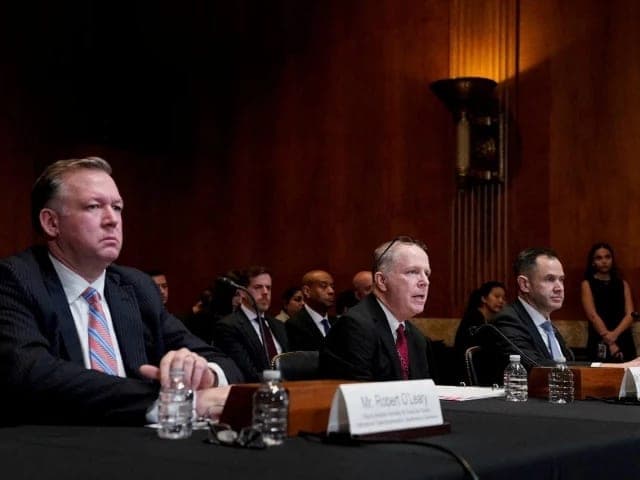
The U.S. government has released all funds allocated for security at the soccer World Cup, but the ongoing shutdown of the Department of Homeland Security has affected planning and coordination, a department official told a Senate hearing on Wednesday. "A lot of the planning efforts underway for the World Cup have been slowed down, have been delayed due to the lapse in appropriations, individuals being furloughed," Christopher Tomney, director of the DHS Office of Homeland Security Situational Awareness, told the Senate Appropriations Committee. Intelligence briefings reviewed by Reuters last month warned of the potential for extremists and criminals to target the World Cup, with officials working on preparations for the soccer tournament sounding the alarm on a delay in allocation of approved security funds. Tomney said the Federal Emergency Management Agency has now distributed the $625 million earmarked for security. The 48-team tournament, one of the world's biggest sporting events, will be held in June and July across the U.S., Canada and Mexico. "All the funding has been released now. FEMA GO is up and operational," he said, referring to the disaster agency's grants management system. The DHS shutdown has crossed the two-month mark, with lawmakers in Congress unable to agree on legislation to fund the agency in the wake of President Donald Trump's immigration crackdown. Trump signed an order earlier this month to pay every DHS employee. When asked how specifically the shutdown has hampered the agency's ability to organize the event, Tomney pointed to the departure of hundreds of transportation security officers from the Transportation Security Administration. "We just can't replace that expertise overnight. It has hindered our coordination with state and locals," he said. World Cup transportation costs With public transit costs for getting to and from World Cup games repeatedly reaching or exceeding $100 each way, New Jersey Governor Mikie Sherrill is asking FIFA to help subsidize the expense. According to The Athletic, train tickets from New York's Penn Station to MetLife Stadium in East Rutherford, N.J., will top $100 for World Cup games. The standard fare for that route is $12.90. "I won't stick N.J. commuters with that tab for years to come, that's not fair," Sherrill posted on X. "FIFA should pay for the rides, but if they don't, I'm not going to let N.J. commuters be taken for one." The official train ticket cost has yet to be announced, but The Athletic reported that Sherrill, the local World Cup host committee and NJ Transit all declined to deny that it would be above $100. Sherrill tweeted, "We have inherited an agreement in which FIFA doesn't contribute a single dollar toward transportation for the World Cup. And while NJ Transit is left with a $48 million bill to safely transport 40,000 fans from the stadium to wherever they're headed, FIFA is generating $11 billion from this World Cup. "I'm not going to burden New Jersey taxpayers with that bill for years." A day earlier, New York Gov. Kathy Hochul tweeted, "The World Cup should be as affordable and accessible as possible. Charging over $100 for a short train ride sounds awfully high to me." A day earlier, New York Gov. Kathy Hochul tweeted, "The World Cup should be as affordable and accessible as possible. Charging over $100 for a short train ride sounds awfully high to me." The backlash about New York's transportation pricing comes in the wake of news regarding similar costs in Massachusetts. Train tickets from Boston to Foxborough, Mass., for World Cup games will cost $80, and bus rides will be priced at up to $95.
World Cup security planning delayed
The U.S. government has released all funds allocated for security at the soccer World Cup, but the ongoing shutdown of the Department of Homeland Security has affected planning and coordination, a department official told a Senate hearing on Wednesday. "A lot of the planning efforts underway for the World Cup have been slowed down, have been delayed due to the lapse in appropriations, individuals being furloughed," Christopher Tomney, director of the DHS Office of Homeland Security Situational Awareness, told the Senate Appropriations Committee. Intelligence briefings reviewed by Reuters last month warned of the potential for extremists and criminals to target the World Cup, with officials working on preparations for the soccer tournament sounding the alarm on a delay in allocation of approved security funds. Tomney said the Federal Emergency Management Agency has now distributed the $625 million earmarked for security. The 48-team tournament, one of the world's biggest sporting events, will be held in June and July across the U.S., Canada and Mexico. "All the funding has been released now. FEMA GO is up and operational," he said, referring to the disaster agency's grants management system. The DHS shutdown has crossed the two-month mark, with lawmakers in Congress unable to agree on legislation to fund the agency in the wake of President Donald Trump's immigration crackdown. Trump signed an order earlier this month to pay every DHS employee. When asked how specifically the shutdown has hampered the agency's ability to organize the event, Tomney pointed to the departure of hundreds of transportation security officers from the Transportation Security Administration. "We just can't replace that expertise overnight. It has hindered our coordination with state and locals," he said. World Cup transportation costs With public transit costs for getting to and from World Cup games repeatedly reaching or exceeding $100 each way, New Jersey Governor Mikie Sherrill is asking FIFA to help subsidize the expense. According to The Athletic, train tickets from New York's Penn Station to MetLife Stadium in East Rutherford, N.J., will top $100 for World Cup games. The standard fare for that route is $12.90. "I won't stick N.J. commuters with that tab for years to come, that's not fair," Sherrill posted on X. "FIFA should pay for the rides, but if they don't, I'm not going to let N.J. commuters be taken for one." The official train ticket cost has yet to be announced, but The Athletic reported that Sherrill, the local World Cup host committee and NJ Transit all declined to deny that it would be above $100. Sherrill tweeted, "We have inherited an agreement in which FIFA doesn't contribute a single dollar toward transportation for the World Cup. And while NJ Transit is left with a $48 million bill to safely transport 40,000 fans from the stadium to wherever they're headed, FIFA is generating $11 billion from this World Cup. "I'm not going to burden New Jersey taxpayers with that bill for years." A day earlier, New York Gov. Kathy Hochul tweeted, "The World Cup should be as affordable and accessible as possible. Charging over $100 for a short train ride sounds awfully high to me." A day earlier, New York Gov. Kathy Hochul tweeted, "The World Cup should be as affordable and accessible as possible. Charging over $100 for a short train ride sounds awfully high to me." The backlash about New York's transportation pricing comes in the wake of news regarding similar costs in Massachusetts. Train tickets from Boston to Foxborough, Mass., for World Cup games will cost $80, and bus rides will be priced at up to $95.

Dozens detained in New York City protest over US arms sales to Israel
Dozens of protesters were detained by police in New York City on Monday during demonstrations calling for the blocking of arms sales to Israel and an end to US military support for its ally. Demonstrators included anti-war group Jewish Voice for Peace, which said around 90 people were detained. Among those detained was whistleblower Chelsea Manning, a former US Army soldier and WikiLeaks source. The New York City Police Department said there were "multiple" arrests but did not provide a number. Clips from the protests showed a crowd gathering near the offices of US Senate Minority Leader Chuck Schumer and his Democratic colleague, Senator Kirsten Gillibrand. Protesters chanted slogans like "stop the bombs," "end the killings", and "free Palestine" while expressing opposition to the US-Israeli strikes on Iran, Israel's attacks in Lebanon and Israel's assault on Gaza. The protesters also chanted "let Gaza live," "let Iran live", and "let Lebanon live." Also Read: Gaza aid flotilla aims to break Israeli blockade The US and Israel attacked Iran on February 28. Iran responded with its own strikes on Israel and the Gulf states that host US bases. US-Israeli strikes on Iran and Israeli attacks in Lebanon have killed thousands and displaced millions. President Donald Trump's administration has cracked down on protests by attempting to deport foreign students, threatening to freeze funding for universities where protests were held and ordering screening of immigrants' online comments. The crackdown has faced judicial obstacles. New York City was at the heart of pro-Palestinian protests in 2024. US military support for Israel has faced particular scrutiny from rights groups during Israel's genocide in Gaza that killed tens of thousands, caused a hunger crisis, and internally displaced Gaza's entire population.
US blockade of Iran will be major military endeavor, experts say
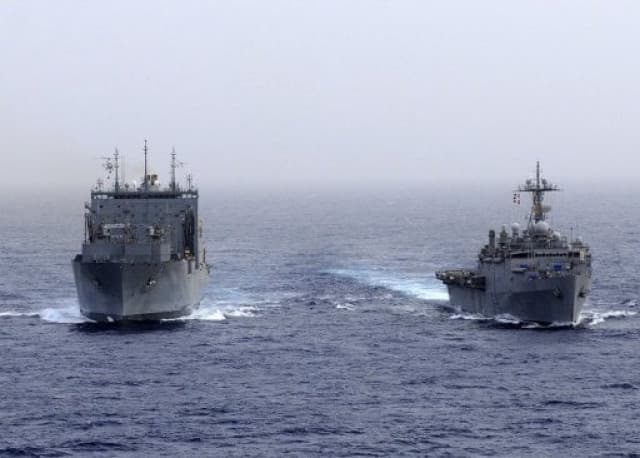
A US naval blockade of Iran is a major, open-ended military endeavour that could trigger fresh retaliation from Tehran and put tremendous strain on an already fragile ceasefire, experts say. President Donald Trump, in a social media post after no deal emerged from peace talks this weekend in Islamabad, said the US Navy "will begin the process of BLOCKADING any and all Ships trying to enter, or leave, the Strait of Hormuz." The US military's Central Command later said the blockade will only apply to ships going to or from Iran, including all Iranian ports on the Arabian Gulf and Gulf of Oman. It will take effect on Monday at 10am in Washington (7pm PKT), CENTCOM said. https://t.co/YAFhMBm7hA — U.S. Central Command (@CENTCOM) April 12, 2026 Trump also said US forces would interdict vessels that have paid tolls to Iran, even if those ships are now in international waters. "No one who pays an illegal toll will have safe passage on the high seas," Trump wrote on Truth Social. The ultimate goal, Trump said, would be to pressure Iran to end its effective closure of the strait, a choke point for about 20% of the world's oil, to all but the countries that secure safe passage from Tehran. If Trump's strategy succeeds, he would eliminate Iran's greatest point of leverage in negotiations with the United States and clear the strait again for global trade, potentially lowering oil prices. But a blockade, experts say, is an act of war that requires an open-ended commitment of a significant number of warships. "Trump wants a quick fix. The reality is, this mission is difficult to execute alone and likely unsustainable over the medium to long-term," said Dana Stroul, a former senior Pentagon official during the Biden administration now at The Washington Institute for Near East Policy. Iranian retaliation The US military has not offered basic details yet about the blockade, including how many US warships will enforce it, whether warplanes will be used and whether any Gulf allies will assist in the effort. Central Command declined to respond to requests for comment. With enough warships, the US Navy could set up a blockade that intimidates many commercial tankers from trying to power through with Iranian oil, experts say. But would the United States be prepared to board and seize — or even damage or sink — ships that try to break the blockade? What if they carry oil for China, a major power, or US partners such as India or South Korea? And what would Iran do? Retired Admiral Gary Roughead, a former chief of US naval operations, cautioned that Iran could fire on ships in the Gulf or attack the infrastructure of the Gulf states that host US forces. "I honestly believe that if we begin to do it, Iran will have some kind of a reaction," Roughead said. Iran's threats to shipping have caused global oil prices to skyrocket about 50% since the US and Israel launched the war on February 28. Trump said on Sunday that the price of oil and gasoline may remain high in the United States through November's US midterm elections, which could see Trump's Republicans lose control of the US Congress if there is a public backlash. The war has already been unpopular. Gas price problem Frustrated by Iran's refusal to end the war on his terms, Trump on Sunday also floated the possibility of a resumption of US strikes inside Iran, citing missile factories as one possibility. US Senator Mark Warner of Virginia, the ranking Democrat on the Senate Intelligence Committee, questioned the strategy, noting Iran could send speedboats to mine the strait or put bombs against tankers. "How is that going ever to bring down gas prices?" Warner asked on CBS's "Face the Nation." Also Read: Trump weighing limited Iran strikes alongside Hormuz blockade after Islamabad talks fail: WSJ Thousands of US military strikes have severely weakened Iran's military. But analysts say Tehran has emerged from the conflict as a vexing problem for Washington, with a more hardline leadership and a buried stockpile of highly enriched uranium. Trump threatened on Sunday that "any Iranian who fires at us, or at peaceful vessels, will be BLOWN TO HELL!" Iran's Revolutionary Guards responded with a statement warning that military vessels approaching the strait will be considered a ceasefire breach and dealt with harshly and decisively, underlining the risk of a dangerous escalation. Stroul said the crisis will require a long-term, international effort to resolve. "Over the long run, this will need to be resolved through diplomacy and international political will," she said.
US proposes record $1.5 trillion defence budget, highest in history
United States President Donald Trump on Friday proposed a record $1.5 trillion in defence resources for fiscal year 2027, marking the highest defence budget request in US history, while also calling for sharp cuts to domestic spending. According to budget fact sheets released by the White House ahead of the annual budget proposal, the plan includes $1.15 trillion in discretionary defence spending and an additional $350 billion in mandatory resources, bringing the total defence budget to $1.5 trillion. At the same time, the administration is seeking a 10% reduction in discretionary non-defence spending, equal to about $73b, as Trump renews his push to scale back domestic programs while expanding military outlays. The proposed increase comes as the administration faces growing political pressure over the ongoing war with Iran. Read More: Iran's Pezeshkian says Trump's 'Stone Age' threat amounts to war crime The 2027 budget request comes as the president faces risky choices abroad, with the administration sending US servicemembers to the Middle East, and a weary public at home feeling the economic crunch of skyrocketing gas prices due to the conflict. The request ultimately requires approval by the US Congress, where disagreement over Trump's spending decisions recently led to the longest government shutdown in US history. The huge proposed surge in defence spending to $1.5 trillion, up from about $1 trillion in 2026, includes a 5% to 7% pay raise for military personnel at a time when thousands of servicemembers are actively deployed. The White House boasted that this defence funding approaches the “historic increases just prior to World War II”. The hefty ask contrasts with the more sceptical view Trump took towards military spending in his first term, when he even once called the level of funding “crazy”. Trump came into office vowing to cut federal spending and rein in the nation’s growing budget deficit, bringing in the world’s richest person, Elon Musk, to lead an effort that pushed about 300,000 people off the federal payroll. Despite that, the nation’s deficit, the gap between the amount of money the federal government takes in and how much it spends, has continued to widen, with the nonpartisan Congressional Budget Office forecasting a $1.853 trillion shortfall in the fiscal year that ends on September 30, deeper than last year’s $1.775 trillion. The nation’s $39.016 trillion debt has continued to grow under Republican and Democratic governments in part because most of the political battles around spending revolve around the relatively small amount that Congress directly controls, the roughly one-quarter of the budget known as “discretionary spending”. The 2027 budget request did not grapple with the most expensive part of mandatory federal spending — Social Security retirement and Medicare health spending for senior citizens — where suggesting cuts is considered politically perilous. If enacted, total federal spending would reach $2.2 trillion in 2027, compared with the roughly $1.8 trillion spent for the current fiscal year. Defence cost The military request will please defence hawks on Capitol Hill, but also highlights how Trump is trying to pay for doubling down on military pursuits, even after Republicans boosted defence spending last year in party-line legislation. The Pentagon already requested $200b in extra funding to pay for the Iran war, but the White House has not yet officially made that request to Congress, where it is also likely to face scrutiny from lawmakers in both parties. Other specific funding increases proposed by Trump include his controversial Golden Dome missile defence shield, money to build up critical mineral supplies for the defence industry and $65.8b to build 34 new combat and support ships. Funds for shipbuilding, a priority for Trump since his first term, include initial funding for the so-called Trump-class battleship as well as submarines. “Fiscal futility is ending,” White House budget director Russell Vought said in a letter to Congress, adding that “our fiscal ship has turned to face in the right direction". Messaging in a mid-year The president's budget also reflects the administration's political priorities ahead of the 2026 midterm elections in November, when Trump's Republicans hope to maintain their small majorities in both the US Senate and House of Representatives. Lawmakers on Capitol Hill often treat White House budget requests as suggestive, as appropriators try to negotiate behind the scenes to maintain their own legislative priorities. Also Read: Hegseth removes Army chief, two generals in sweeping shake-up Top congressional Democrats said Trump’s defence-heavy proposal was “dead on arrival”. “It’s just an out-of-touch plea for more money for guns and bombs, and less for the things people need, like housing, health care, education, roads, scientific research, and environmental protection,” Oregon Senator Jeff Merkley, the top Democrat on the budget committee, said in a statement. It was unclear how this new spending would affect the US budget deficit because the projections were not included by the White House. In a Friday social media post, Trump asserted that his administration’s pursuit against fraud could "balance our American Budget”, a claim that met with scepticism from budget experts. However, the president and his team relish more funding fights with lawmakers, arguing in the documents that savings will be found "by reducing or eliminating woke, weaponised, and wasteful programs, and by returning state and local responsibilities to their respective governments". Some proposed cuts follow the Trump administration's pursuit against "green energy" spending, as well as eliminating nearly 30 Justice Department programs that they deem "weaponised" against the American people, along with other initiatives, like cutting the $315 million National Endowment for Democracy. NASA cuts after Artemis launch There are also big cuts proposed to many major federal departments, including a 19% decrease for the US agriculture department, a 12.5% cut for the US health department and a 52% cut for the Environmental Protection Agency. Elsewhere, Trump's budget requests a 13% increase to "maximise" the Justice Department's "capacity to bring violent criminals to justice", as well as maintaining high spending for homeland security and immigration enforcement at $2.2b, which the administration said will pay for US Immigration and Customs Enforcement operations, 41,500 detention beds, and 30,000 "family unit beds". Two days after NASA launched its most ambitious mission in decades, sending four astronauts on a mission around the moon under its Artemis program, the White House asked for a 23% decrease for that agency, including a $3.6b cut to the agency's science unit that would cancel roughly 40 programmes. The Trump budget also includes $481m to increase hiring of air traffic controllers to bulk up staffing in airport towers across the country amid rising concerns about understaffing and air safety. Pet projects for Trump are also funded, like a $10b mandatory fund to establish the "Presidential Capital Stewardship Programme" within the National Park Service "to coordinate, plan, and execute targeted, priority construction and beautification projects in and around Washington, DC".
US proposes record $1.5 trillion defence budget, highest in history
United States President Donald Trump on Friday proposed a record $1.5 trillion in defence resources for fiscal year 2027, marking the highest defence budget request in US history, while also calling for sharp cuts to domestic spending. According to budget fact sheets released by the White House ahead of the annual budget proposal, the plan includes $1.15 trillion in discretionary defence spending and an additional $350 billion in mandatory resources, bringing the total defence budget to $1.5 trillion. At the same time, the administration is seeking a 10% reduction in discretionary non-defence spending, equal to about $73b, as Trump renews his push to scale back domestic programs while expanding military outlays. The proposed increase comes as the administration faces growing political pressure over the ongoing war with Iran. Read More: Iran's Pezeshkian says Trump's 'Stone Age' threat amounts to war crime The 2027 budget request comes as the president faces risky choices abroad, with the administration sending US servicemembers to the Middle East, and a weary public at home feeling the economic crunch of skyrocketing gas prices due to the conflict. The request ultimately requires approval by the US Congress, where disagreement over Trump's spending decisions recently led to the longest government shutdown in US history. The huge proposed surge in defence spending to $1.5 trillion, up from about $1 trillion in 2026, includes a 5% to 7% pay raise for military personnel at a time when thousands of servicemembers are actively deployed. The White House boasted that this defence funding approaches the “historic increases just prior to World War II”. The hefty ask contrasts with the more sceptical view Trump took towards military spending in his first term, when he even once called the level of funding “crazy”. Trump came into office vowing to cut federal spending and rein in the nation’s growing budget deficit, bringing in the world’s richest person, Elon Musk, to lead an effort that pushed about 300,000 people off the federal payroll. Despite that, the nation’s deficit, the gap between the amount of money the federal government takes in and how much it spends, has continued to widen, with the nonpartisan Congressional Budget Office forecasting a $1.853 trillion shortfall in the fiscal year that ends on September 30, deeper than last year’s $1.775 trillion. The nation’s $39.016 trillion debt has continued to grow under Republican and Democratic governments in part because most of the political battles around spending revolve around the relatively small amount that Congress directly controls, the roughly one-quarter of the budget known as “discretionary spending”. The 2027 budget request did not grapple with the most expensive part of mandatory federal spending — Social Security retirement and Medicare health spending for senior citizens — where suggesting cuts is considered politically perilous. If enacted, total federal spending would reach $2.2 trillion in 2027, compared with the roughly $1.8 trillion spent for the current fiscal year. Defence cost The military request will please defence hawks on Capitol Hill, but also highlights how Trump is trying to pay for doubling down on military pursuits, even after Republicans boosted defence spending last year in party-line legislation. The Pentagon already requested $200b in extra funding to pay for the Iran war, but the White House has not yet officially made that request to Congress, where it is also likely to face scrutiny from lawmakers in both parties. Other specific funding increases proposed by Trump include his controversial Golden Dome missile defence shield, money to build up critical mineral supplies for the defence industry and $65.8b to build 34 new combat and support ships. Funds for shipbuilding, a priority for Trump since his first term, include initial funding for the so-called Trump-class battleship as well as submarines. “Fiscal futility is ending,” White House budget director Russell Vought said in a letter to Congress, adding that “our fiscal ship has turned to face in the right direction". Messaging in a mid-year The president's budget also reflects the administration's political priorities ahead of the 2026 midterm elections in November, when Trump's Republicans hope to maintain their small majorities in both the US Senate and House of Representatives. Lawmakers on Capitol Hill often treat White House budget requests as suggestive, as appropriators try to negotiate behind the scenes to maintain their own legislative priorities. Also Read: Hegseth removes Army chief, two generals in sweeping shake-up Top congressional Democrats said Trump’s defence-heavy proposal was “dead on arrival”. “It’s just an out-of-touch plea for more money for guns and bombs, and less for the things people need, like housing, health care, education, roads, scientific research, and environmental protection,” Oregon Senator Jeff Merkley, the top Democrat on the budget committee, said in a statement. It was unclear how this new spending would affect the US budget deficit because the projections were not included by the White House. In a Friday social media post, Trump asserted that his administration’s pursuit against fraud could "balance our American Budget”, a claim that met with scepticism from budget experts. However, the president and his team relish more funding fights with lawmakers, arguing in the documents that savings will be found "by reducing or eliminating woke, weaponised, and wasteful programs, and by returning state and local responsibilities to their respective governments". Some proposed cuts follow the Trump administration's pursuit against "green energy" spending, as well as eliminating nearly 30 Justice Department programs that they deem "weaponised" against the American people, along with other initiatives, like cutting the $315 million National Endowment for Democracy. NASA cuts after Artemis launch There are also big cuts proposed to many major federal departments, including a 19% decrease for the US agriculture department, a 12.5% cut for the US health department and a 52% cut for the Environmental Protection Agency. Elsewhere, Trump's budget requests a 13% increase to "maximise" the Justice Department's "capacity to bring violent criminals to justice", as well as maintaining high spending for homeland security and immigration enforcement at $2.2b, which the administration said will pay for US Immigration and Customs Enforcement operations, 41,500 detention beds, and 30,000 "family unit beds". Two days after NASA launched its most ambitious mission in decades, sending four astronauts on a mission around the moon under its Artemis program, the White House asked for a 23% decrease for that agency, including a $3.6b cut to the agency's science unit that would cancel roughly 40 programmes. The Trump budget also includes $481m to increase hiring of air traffic controllers to bulk up staffing in airport towers across the country amid rising concerns about understaffing and air safety. Pet projects for Trump are also funded, like a $10b mandatory fund to establish the "Presidential Capital Stewardship Programme" within the National Park Service "to coordinate, plan, and execute targeted, priority construction and beautification projects in and around Washington, DC".
US proposes record $1.5 trillion defence budget, highest in history
United States President Donald Trump on Friday proposed a record $1.5 trillion in defence resources for fiscal year 2027, marking the highest defence budget request in US history, while also calling for sharp cuts to domestic spending. According to budget fact sheets released by the White House ahead of the annual budget proposal, the plan includes $1.15 trillion in discretionary defence spending and an additional $350 billion in mandatory resources, bringing the total defence budget to $1.5 trillion. At the same time, the administration is seeking a 10% reduction in discretionary non-defence spending, equal to about $73b, as Trump renews his push to scale back domestic programs while expanding military outlays. The proposed increase comes as the administration faces growing political pressure over the ongoing war with Iran. Read More: Iran's Pezeshkian says Trump's 'Stone Age' threat amounts to war crime The 2027 budget request comes as the president faces risky choices abroad, with the administration sending US servicemembers to the Middle East, and a weary public at home feeling the economic crunch of skyrocketing gas prices due to the conflict. The request ultimately requires approval by the US Congress, where disagreement over Trump's spending decisions recently led to the longest government shutdown in US history. The huge proposed surge in defence spending to $1.5 trillion, up from about $1 trillion in 2026, includes a 5% to 7% pay raise for military personnel at a time when thousands of servicemembers are actively deployed. The White House boasted that this defence funding approaches the “historic increases just prior to World War II”. The hefty ask contrasts with the more sceptical view Trump took towards military spending in his first term, when he even once called the level of funding “crazy”. Trump came into office vowing to cut federal spending and rein in the nation’s growing budget deficit, bringing in the world’s richest person, Elon Musk, to lead an effort that pushed about 300,000 people off the federal payroll. Despite that, the nation’s deficit, the gap between the amount of money the federal government takes in and how much it spends, has continued to widen, with the nonpartisan Congressional Budget Office forecasting a $1.853 trillion shortfall in the fiscal year that ends on September 30, deeper than last year’s $1.775 trillion. The nation’s $39.016 trillion debt has continued to grow under Republican and Democratic governments in part because most of the political battles around spending revolve around the relatively small amount that Congress directly controls, the roughly one-quarter of the budget known as “discretionary spending”. The 2027 budget request did not grapple with the most expensive part of mandatory federal spending — Social Security retirement and Medicare health spending for senior citizens — where suggesting cuts is considered politically perilous. If enacted, total federal spending would reach $2.2 trillion in 2027, compared with the roughly $1.8 trillion spent for the current fiscal year. Defence cost The military request will please defence hawks on Capitol Hill, but also highlights how Trump is trying to pay for doubling down on military pursuits, even after Republicans boosted defence spending last year in party-line legislation. The Pentagon already requested $200b in extra funding to pay for the Iran war, but the White House has not yet officially made that request to Congress, where it is also likely to face scrutiny from lawmakers in both parties. Other specific funding increases proposed by Trump include his controversial Golden Dome missile defence shield, money to build up critical mineral supplies for the defence industry and $65.8b to build 34 new combat and support ships. Funds for shipbuilding, a priority for Trump since his first term, include initial funding for the so-called Trump-class battleship as well as submarines. “Fiscal futility is ending,” White House budget director Russell Vought said in a letter to Congress, adding that “our fiscal ship has turned to face in the right direction". Messaging in a mid-year The president's budget also reflects the administration's political priorities ahead of the 2026 midterm elections in November, when Trump's Republicans hope to maintain their small majorities in both the US Senate and House of Representatives. Lawmakers on Capitol Hill often treat White House budget requests as suggestive, as appropriators try to negotiate behind the scenes to maintain their own legislative priorities. Also Read: Hegseth removes Army chief, two generals in sweeping shake-up Top congressional Democrats said Trump’s defence-heavy proposal was “dead on arrival”. “It’s just an out-of-touch plea for more money for guns and bombs, and less for the things people need, like housing, health care, education, roads, scientific research, and environmental protection,” Oregon Senator Jeff Merkley, the top Democrat on the budget committee, said in a statement. It was unclear how this new spending would affect the US budget deficit because the projections were not included by the White House. In a Friday social media post, Trump asserted that his administration’s pursuit against fraud could "balance our American Budget”, a claim that met with scepticism from budget experts. However, the president and his team relish more funding fights with lawmakers, arguing in the documents that savings will be found "by reducing or eliminating woke, weaponised, and wasteful programs, and by returning state and local responsibilities to their respective governments". Some proposed cuts follow the Trump administration's pursuit against "green energy" spending, as well as eliminating nearly 30 Justice Department programs that they deem "weaponised" against the American people, along with other initiatives, like cutting the $315 million National Endowment for Democracy. NASA cuts after Artemis launch There are also big cuts proposed to many major federal departments, including a 19% decrease for the US agriculture department, a 12.5% cut for the US health department and a 52% cut for the Environmental Protection Agency. Elsewhere, Trump's budget requests a 13% increase to "maximise" the Justice Department's "capacity to bring violent criminals to justice", as well as maintaining high spending for homeland security and immigration enforcement at $2.2b, which the administration said will pay for US Immigration and Customs Enforcement operations, 41,500 detention beds, and 30,000 "family unit beds". Two days after NASA launched its most ambitious mission in decades, sending four astronauts on a mission around the moon under its Artemis program, the White House asked for a 23% decrease for that agency, including a $3.6b cut to the agency's science unit that would cancel roughly 40 programmes. The Trump budget also includes $481m to increase hiring of air traffic controllers to bulk up staffing in airport towers across the country amid rising concerns about understaffing and air safety. Pet projects for Trump are also funded, like a $10b mandatory fund to establish the "Presidential Capital Stewardship Programme" within the National Park Service "to coordinate, plan, and execute targeted, priority construction and beautification projects in and around Washington, DC".

Iran vows revenge as intel chief assassinated
Israel killed another top Iranian official, intelligence minister Esmail Khatib, and declared on Wednesday that its military is authorised to kill any senior Islamic republic figure it gets in its sights as new supreme leader Mojtaba Khamenei said in a written message that the killers of security chief Ali Larijani, who died in an Israeli strike, "will have to pay for it". Iran's president Masoud Pezeshkian branded Khatib's death a "cowardly assassination". "Without a doubt, the assassination of such a figure attests to his importance and to the hatred that the enemies of Islam harbour toward him," Mojtaba Khamenei said, in a message published on his official Telegram channel on the day of Larijani's funeral in Tehran. "Every drop of spilled blood comes at a price, and the criminal murderers of these martyrs will soon have to pay it," added Mojtaba Khamenei, who has yet to appear in public after taking office following the killing of his father, ex-supreme leader Ali Khamenei at the start of the war. The war erupted on February 28 when US and Israeli forces attacked Iran, killing supreme leader Ayatollah Ali Khamenei, and has since been marked by several high-profile killings. News of Khatib's death came the day after Iranian security chief Ali Larijani was confirmed killed in an Israeli strike. "Prime Minister Benjamin Netanyahu and I have authorised the IDF to eliminate any senior Iranian official for whom the intelligence and operational circle has been closed, without the need for additional approval," Israel's Defence Minister Israel Katz announced "We will continue to thwart them and to hunt them all down." Israel has also vowed to hunt down Iran's new supreme leader, Mojtaba Khamenei, who has not appeared in public since he succeeded his father. Large crowds gathered in central Tehran for the funerals of Larijani and Gholamreza Soleimani, the head of the Basij paramilitary force who was also killed in a strike in Iran this week, according to images broadcast by Iranian state television. They were held alongside the funerals of more than 80 Iranian sailors killed in a US torpedoing of their frigate off Sri Lanka earlier this month. Trucks carrying coffins draped in Iranian flags moved through the procession, as mourners walked alongside carrying portraits of the slain supreme leader and beating their chests, a sign of mourning in Shia culture. In contrast to Mojtaba Khamenei, Larijani, 68, had walked openly with crowds at a pro-government rally last week in Tehran. He had "effectively been the figure in charge of the regime's survival, its regional policy and its defence strategy," David Khalfa, co-founder of the Atlantic Middle East Forum, told AFP. US intelligence chief Tulsi Gabbard to a senate hearing that Washington "assesses the regime in Iran to be intact but largely degraded due to attacks on its leadership and military capabilities". The Guards, the ideological arm of the military, said they had launched missiles at central Israel in retaliation for Larijani's death and warned of more to come. The "pure blood of this great martyr... will be a source of honour, power and national awakening against the front of global arrogance," they said. An Iranian missile barrage killed two people near Israel's commercial hub of Tel Aviv, medics said on Wednesday, while authorities said falling munitions hit multiple sites in central Israel overnight. Police said a cluster bomb hit a residential building in Ramat Gan, a city just outside Tel Aviv, and the roof collapsed on an elderly couple. Iranian media meanwhile said Israel and the United States had launched fresh strikes across several areas of the country, including Tehran. Tasnim news agency said "seven people were killed and 56 were injured in an American-Zionist attack on residential areas in Dorud town" in Lorestan province. Tulsi Gabbard US intelligence concluded that Iran was not rebuilding nuclear enrichment capacities destroyed last year by the United States and Israel, contradicting a key justification by President Donald Trump for his ongoing war. Tulsi Gabbard, a Trump ally who is director of national intelligence, offered mixed signals on the backdrop and outcomes of three weeks of war as she and other officials appeared before Congress She also assessed that Iran's leadership remained intact. "As a result of Operation Midnight Hammer, Iran's nuclear enrichment program was obliterated," Gabbard said in prepared testimony to the Senate intelligence committee, referring to the June 2025 US attack. "There has been no efforts since then to try to rebuild their enrichment capability," Gabbard wrote. She did not repeat the conclusion before cameras. Pressed by a Democratic senator, Gabbard said that she did not have enough time to read the full testimony at the hearing but did not refute the assessment. Gabbard herself had been an outspoken opponent of war with Iran as a Democratic congresswoman. One of her senior aides, Joseph Kent, resigned in protest Tuesday as director of the National Counterterrorism Center, saying that Iran posed no "imminent threat" and that Trump was misled by Israel and media outlets. Democrats attacked Gabbard over the war, saying she had not proven that Iran posed any threat beyond what it has since the 1979 Islamic revolution. "President Trump said, we are not the policemen of the world. He ran on that," Democratic Senator Michael Bennet said. "Now he's turned us into the world's policeman, into its jury, into its judge, into its executioner," he said. In her remarks to senators, Gabbard said Iran had been suffering heavy blows in the weeks of attackswhich included the killing of the longtime supreme leader, Ayatollah Ali Khameneibut that the Islamic republic was still functioning. The US intelligence community "assesses the regime in Iran to be intact but largely degraded due to attacks on its leadership and military capabilities," Gabbard said. "If a hostile regime survives, it will likely seek to begin a years-long effort to rebuild its military, missiles and UAV forces," Gabbard said, referring to unmanned aerial vehicles, or drones. In other findings, Gabbard predicted that Russia would keep pressing its four-year invasion of Ukraine, a war that Trump had vowed to end upon taking office, largely by pressing Kyiv to compromise. US intelligence "assesses that Russia has maintained the upper hand in the war against Ukraine," Gabbard said. "US-led negotiations between Moscow and Kiev are ongoing. Until such an agreement is met, Moscow is likely to continue fighting a slow war," she said. Gabbard said the United States faced a threat if there were an "escalatory spiral" in Ukraine or elsewhere, which could potentially lead to the use of nuclear weapons. She said that China was "rapidly" modernizing its military with a goal of being able to seize Taiwan, the self-governing democracy claimed by Beijing. However, US intelligence "assesses that China likely prefers to set the conditions for an eventual peaceful reunification with Taiwan short of conflict." Trump plans to travel in the coming weeks to China, a trip he delayed due to the war in the Mideast. Saudi gas plant Saudi Arabia said it destroyed a drone headed towards a gas plant on Wednesday, as Iran threatened to attack Gulf energy infrastructure in retaliation for a US-Israeli strike on its own facilities. "A drone attempting to approach a gas factory in the Eastern Province was intercepted and destroyed; the interception and destruction operation resulted in no damage," the Saudi defence ministry said. Ben Gurion airport The Israeli military told AFP on Wednesday that "debris" had hit Ben Gurion international airport following Iranian missile fire, without specifying when the incident had occurred. Israeli media reported that private planes parked at the airport near Tel Aviv had sustained damage. The army lifted the censorship order regarding the incident on Wednesday but did not authorise the disclosure of the date. Israeli news site Ynet published a photo appearing to show the charred and damaged interior of a small private plane. It is the first time the army has announced that Ben GurionIsrael's main international airporthas been hit since the start of the Middle East war, triggered by the US-Israeli attacks against Iran launched on February 28. On March 5, Iran's Revolutionary Guards said they had targeted Ben Gurion airport and an air force base in the area. Missile or interceptor debris has fallen in areas near the airport several times since the start of the war. Flag carrier El Al said on Wednesday it was suspending round-trip flights to nearly 30 destinations including Barcelona, Berlin and Budapest from March 22 until March 28. It said this was "in line with the reduced operational framework and current limitations". Israel had closed its airspace on the first day of the war, with El Al and other Israeli airlines subsequently resuming some of their flights under strict security conditions. Israel's transport ministry on Monday announced it wanted to increase the number of passengers allowed to travel from Ben Gurion, depending on security guidelines.
Iran vows revenge as intel chief assassinated
Israel killed another top Iranian official, intelligence minister Esmail Khatib, and declared on Wednesday that its military is authorised to kill any senior Islamic republic figure it gets in its sights as new supreme leader Mojtaba Khamenei said in a written message that the killers of security chief Ali Larijani, who died in an Israeli strike, "will have to pay for it". Iran's president Masoud Pezeshkian branded Khatib's death a "cowardly assassination". "Without a doubt, the assassination of such a figure attests to his importance and to the hatred that the enemies of Islam harbour toward him," Mojtaba Khamenei said, in a message published on his official Telegram channel on the day of Larijani's funeral in Tehran. "Every drop of spilled blood comes at a price, and the criminal murderers of these martyrs will soon have to pay it," added Mojtaba Khamenei, who has yet to appear in public after taking office following the killing of his father, ex-supreme leader Ali Khamenei at the start of the war. The war erupted on February 28 when US and Israeli forces attacked Iran, killing supreme leader Ayatollah Ali Khamenei, and has since been marked by several high-profile killings. News of Khatib's death came the day after Iranian security chief Ali Larijani was confirmed killed in an Israeli strike. "Prime Minister Benjamin Netanyahu and I have authorised the IDF to eliminate any senior Iranian official for whom the intelligence and operational circle has been closed, without the need for additional approval," Israel's Defence Minister Israel Katz announced "We will continue to thwart them and to hunt them all down." Israel has also vowed to hunt down Iran's new supreme leader, Mojtaba Khamenei, who has not appeared in public since he succeeded his father. Large crowds gathered in central Tehran for the funerals of Larijani and Gholamreza Soleimani, the head of the Basij paramilitary force who was also killed in a strike in Iran this week, according to images broadcast by Iranian state television. They were held alongside the funerals of more than 80 Iranian sailors killed in a US torpedoing of their frigate off Sri Lanka earlier this month. Trucks carrying coffins draped in Iranian flags moved through the procession, as mourners walked alongside carrying portraits of the slain supreme leader and beating their chests, a sign of mourning in Shia culture. In contrast to Mojtaba Khamenei, Larijani, 68, had walked openly with crowds at a pro-government rally last week in Tehran. He had "effectively been the figure in charge of the regime's survival, its regional policy and its defence strategy," David Khalfa, co-founder of the Atlantic Middle East Forum, told AFP. US intelligence chief Tulsi Gabbard to a senate hearing that Washington "assesses the regime in Iran to be intact but largely degraded due to attacks on its leadership and military capabilities". The Guards, the ideological arm of the military, said they had launched missiles at central Israel in retaliation for Larijani's death and warned of more to come. The "pure blood of this great martyr... will be a source of honour, power and national awakening against the front of global arrogance," they said. An Iranian missile barrage killed two people near Israel's commercial hub of Tel Aviv, medics said on Wednesday, while authorities said falling munitions hit multiple sites in central Israel overnight. Police said a cluster bomb hit a residential building in Ramat Gan, a city just outside Tel Aviv, and the roof collapsed on an elderly couple. Iranian media meanwhile said Israel and the United States had launched fresh strikes across several areas of the country, including Tehran. Tasnim news agency said "seven people were killed and 56 were injured in an American-Zionist attack on residential areas in Dorud town" in Lorestan province. Tulsi Gabbard US intelligence concluded that Iran was not rebuilding nuclear enrichment capacities destroyed last year by the United States and Israel, contradicting a key justification by President Donald Trump for his ongoing war. Tulsi Gabbard, a Trump ally who is director of national intelligence, offered mixed signals on the backdrop and outcomes of three weeks of war as she and other officials appeared before Congress She also assessed that Iran's leadership remained intact. "As a result of Operation Midnight Hammer, Iran's nuclear enrichment program was obliterated," Gabbard said in prepared testimony to the Senate intelligence committee, referring to the June 2025 US attack. "There has been no efforts since then to try to rebuild their enrichment capability," Gabbard wrote. She did not repeat the conclusion before cameras. Pressed by a Democratic senator, Gabbard said that she did not have enough time to read the full testimony at the hearing but did not refute the assessment. Gabbard herself had been an outspoken opponent of war with Iran as a Democratic congresswoman. One of her senior aides, Joseph Kent, resigned in protest Tuesday as director of the National Counterterrorism Center, saying that Iran posed no "imminent threat" and that Trump was misled by Israel and media outlets. Democrats attacked Gabbard over the war, saying she had not proven that Iran posed any threat beyond what it has since the 1979 Islamic revolution. "President Trump said, we are not the policemen of the world. He ran on that," Democratic Senator Michael Bennet said. "Now he's turned us into the world's policeman, into its jury, into its judge, into its executioner," he said. In her remarks to senators, Gabbard said Iran had been suffering heavy blows in the weeks of attackswhich included the killing of the longtime supreme leader, Ayatollah Ali Khameneibut that the Islamic republic was still functioning. The US intelligence community "assesses the regime in Iran to be intact but largely degraded due to attacks on its leadership and military capabilities," Gabbard said. "If a hostile regime survives, it will likely seek to begin a years-long effort to rebuild its military, missiles and UAV forces," Gabbard said, referring to unmanned aerial vehicles, or drones. In other findings, Gabbard predicted that Russia would keep pressing its four-year invasion of Ukraine, a war that Trump had vowed to end upon taking office, largely by pressing Kyiv to compromise. US intelligence "assesses that Russia has maintained the upper hand in the war against Ukraine," Gabbard said. "US-led negotiations between Moscow and Kiev are ongoing. Until such an agreement is met, Moscow is likely to continue fighting a slow war," she said. Gabbard said the United States faced a threat if there were an "escalatory spiral" in Ukraine or elsewhere, which could potentially lead to the use of nuclear weapons. She said that China was "rapidly" modernizing its military with a goal of being able to seize Taiwan, the self-governing democracy claimed by Beijing. However, US intelligence "assesses that China likely prefers to set the conditions for an eventual peaceful reunification with Taiwan short of conflict." Trump plans to travel in the coming weeks to China, a trip he delayed due to the war in the Mideast. Saudi gas plant Saudi Arabia said it destroyed a drone headed towards a gas plant on Wednesday, as Iran threatened to attack Gulf energy infrastructure in retaliation for a US-Israeli strike on its own facilities. "A drone attempting to approach a gas factory in the Eastern Province was intercepted and destroyed; the interception and destruction operation resulted in no damage," the Saudi defence ministry said. Ben Gurion airport The Israeli military told AFP on Wednesday that "debris" had hit Ben Gurion international airport following Iranian missile fire, without specifying when the incident had occurred. Israeli media reported that private planes parked at the airport near Tel Aviv had sustained damage. The army lifted the censorship order regarding the incident on Wednesday but did not authorise the disclosure of the date. Israeli news site Ynet published a photo appearing to show the charred and damaged interior of a small private plane. It is the first time the army has announced that Ben GurionIsrael's main international airporthas been hit since the start of the Middle East war, triggered by the US-Israeli attacks against Iran launched on February 28. On March 5, Iran's Revolutionary Guards said they had targeted Ben Gurion airport and an air force base in the area. Missile or interceptor debris has fallen in areas near the airport several times since the start of the war. Flag carrier El Al said on Wednesday it was suspending round-trip flights to nearly 30 destinations including Barcelona, Berlin and Budapest from March 22 until March 28. It said this was "in line with the reduced operational framework and current limitations". Israel had closed its airspace on the first day of the war, with El Al and other Israeli airlines subsequently resuming some of their flights under strict security conditions. Israel's transport ministry on Monday announced it wanted to increase the number of passengers allowed to travel from Ben Gurion, depending on security guidelines.