13 stories credited to Times Now
Latest story Apr 20, 2026 · on ChamberLight since Apr 2026
A story can appear as several articles (copies of the same piece), so counts of stories and of articles differ.
Scores for Times Now
Originality
3 of those 13 carry an unconfirmed copying flag, which is not evidence either way.
13 stories · updated Sep 24, 2026
Writing quality 76 of 100: the average rating of 11 stories, each rated on its own (separate from credibility). How it is measured
Scores last checked Sep 25, 2026.
Stories ChamberLight collected, by month
Stories credited to Times Now, by publication date. ChamberLight collects articles that mention the officials it tracks, so this shows its own coverage of this source, not how much the source publishes.
- Stories from Times Now
- Shaded: ChamberLight collected no stories, or almost none, from any outlet (a gap in its collection, not in the outlet’s publishing)
Show as a table
| Month | Stories | All outlets |
|---|---|---|
| March 2026 | 1 | 215 |
| April 2026 | 12 | 4,538 |
| May 2026 | 0 | none collected |
| June 2026 | 0 | none collected |
| July 2026 | 0 | none collected |
| August 2026 | 0 | 1 (collection gap) |
| September 2026 | 0 | 1,320 |
Top topics
Share of this source’s stories tagged with each topic. A story can carry several topics, so the shares do not add up to 100%.
- Budget/Spending8
62% of 13 stories · 31% across all outlets
- Ethics/Corruption8
62% of 13 stories · 58% across all outlets
- Foreign Policy5
39% of 13 stories · 29% across all outlets
- Defense/Military4
31% of 13 stories · 25% across all outlets
- Economy4
31% of 13 stories · 26% across all outlets
- Criminal Justice3
23% of 13 stories · 19% across all outlets
- Technology/Privacy2
15% of 13 stories · 10% across all outlets
- Immigration1
8% of 13 stories · 13% across all outlets
The thin mark on each bar is the topic’s share across all outlets.
Who they cover
Party of the officials these stories are mainly about, across all 22 officials named. A story counts once for each official it is mainly about, so the split is over 30 story–official pairs, from 13 stories.
- Republican57% · 17 pairs
- Democrat37% · 11 pairs
- Party not recorded7% · 2 pairs
Most covered
Stories mainly about each official, and their share of the source’s 13 stories.
- 1Donald TrumpR6 stories · 46%
- 2Charles SchumerD3 stories · 23%
- 3Nancy MaceR2 stories · 15%
- 4Ayanna PressleyD1 story · 8%
- 5Blake MooreR1 story · 8%
- 6Cory MillsR1 story · 8%
- 7Don BaconR1 story · 8%
- 8Elizabeth WarrenD1 story · 8%
- 9Eric BurlisonR1 story · 8%
- 10Eric SwalwellD1 story · 8%
+ 12 other officials (12 story–official pairs)
Article tone
ChamberLight’s article analysis assigns each story a tone toward the official it covers. It describes the coverage of that official, not Times Now’s stance, and reader votes do not change it. 13 stories.
- Good Look
- 3 (23%)
- Mixed
- 8 (62%)
- Informational
- 0 (0%)
- Bad Look
- 2 (15%)
Challenges to these scores
No one has challenged a score on this page yet. Anyone can; editors publish every outcome here.
Articles served from timesnownews.com
30
Full List Of House Members Investigated for Sexual Misconduct- One Is Currently Serving
The House Ethics Committee on Monday published a list of every publicly disclosed sexual misconduct investigation involving House members dating back to 1976.The list names 28 investigations — 14 involving Democrats and 12 involving Republicans. At least half of the cases happened in the past 10 years. The release comes just days after two lawmakers, Rep. Eric Swalwell (D-Calif.) and Rep. Tony Gonzales (R-Texas), resigned amid serious allegations against them. The Ethics Committee said it has long investigated claims of sexual misconduct by members and staff, ranging from criminal acts to violations of workplace rules. It now makes its findings public when allegations are substantiated. The list includes a wide range of accusations such as sexual harassment, improper relationships with staffers or interns, sexual assault, misconduct with minors, and solicitation of prostitution. Notable recent cases on the list: Eric Swalwell (D-CA) — accused of sexual assault; resigned last week. Tony Gonzales (R-TX) — accused of sexual misconduct with staffers, including one who later died by suicide; resigned last week. Cory Mills (R-FL) — current ongoing investigation into sexual misconduct and/or dating violence. Matt Gaetz (R-FL) — investigated for sexual misconduct with a minor and solicitation of prostitution. Others include former members like Katie Hill, Madison Cawthorn, George Santos, Blake Farenthold, John Conyers, and historical cases going back to the 1970s and 1980s, such as the 1983 House page scandal involving Gerry Studds and Dan Crane. In seven of the cases, the committee found sexual misconduct violations. In another seven, it found no violations. It lost jurisdiction in 13 cases (often because the member resigned), and one probe is still active. Separately, the House Oversight Committee issued a subpoena for records on settlement payments made to victims of workplace violations, including sexual misconduct, before 2018. Since 2019, several offices have paid out settlements ranging from $24,500 to nearly $100,000 for various claims. Rep. Nancy Mace (R-SC) criticized Congress for what she sees as slow action in some cases, particularly regarding Rep. Mills. She said, “The fact Congress keeps protecting him says everything about who we are as an institution.” The Ethics Committee encouraged anyone experiencing misconduct to come forward and report it. The release is being viewed as an attempt at greater transparency after years of criticism that Congress has protected its own.
Full List Of House Members Investigated for Sexual Misconduct- One Is Currently Serving
The House Ethics Committee on Monday published a list of every publicly disclosed sexual misconduct investigation involving House members dating back to 1976.The list names 28 investigations — 14 involving Democrats and 12 involving Republicans. At least half of the cases happened in the past 10 years. The release comes just days after two lawmakers, Rep. Eric Swalwell (D-Calif.) and Rep. Tony Gonzales (R-Texas), resigned amid serious allegations against them. The Ethics Committee said it has long investigated claims of sexual misconduct by members and staff, ranging from criminal acts to violations of workplace rules. It now makes its findings public when allegations are substantiated. The list includes a wide range of accusations such as sexual harassment, improper relationships with staffers or interns, sexual assault, misconduct with minors, and solicitation of prostitution. Notable recent cases on the list: Eric Swalwell (D-CA) — accused of sexual assault; resigned last week. Tony Gonzales (R-TX) — accused of sexual misconduct with staffers, including one who later died by suicide; resigned last week. Cory Mills (R-FL) — current ongoing investigation into sexual misconduct and/or dating violence. Matt Gaetz (R-FL) — investigated for sexual misconduct with a minor and solicitation of prostitution. Others include former members like Katie Hill, Madison Cawthorn, George Santos, Blake Farenthold, John Conyers, and historical cases going back to the 1970s and 1980s, such as the 1983 House page scandal involving Gerry Studds and Dan Crane. In seven of the cases, the committee found sexual misconduct violations. In another seven, it found no violations. It lost jurisdiction in 13 cases (often because the member resigned), and one probe is still active. Separately, the House Oversight Committee issued a subpoena for records on settlement payments made to victims of workplace violations, including sexual misconduct, before 2018. Since 2019, several offices have paid out settlements ranging from $24,500 to nearly $100,000 for various claims. Rep. Nancy Mace (R-SC) criticized Congress for what she sees as slow action in some cases, particularly regarding Rep. Mills. She said, “The fact Congress keeps protecting him says everything about who we are as an institution.” The Ethics Committee encouraged anyone experiencing misconduct to come forward and report it. The release is being viewed as an attempt at greater transparency after years of criticism that Congress has protected its own.

10 US Scientists Researching UFOs Dead or Missing Since 2023 - White House to Investigate
The Trump administration is looking into reports that at least 10 American scientists involved in UFO and nuclear power research have either died or gone missing since mid-2023, according to the Washington Examiner. White House Press Secretary Karoline Leavitt told reporters on Wednesday that she had not yet discussed the issue with relevant agencies but promised to do so and provide answers. “I haven’t spoken to our relevant agencies about it. I will certainly do that, and we’ll get you an answer,” Leavitt said. “If true, of course, that’s definitely something I think this government and its administration would deem worth looking into.”The cases have raised concerns in Washington, with some lawmakers calling for the FBI to get involved. Among those reported missing or deceased: Steven Garcia, a government contractor at the Kansas City National Security Campus in Albuquerque, went missing on August 28, 2025. Frank Maiwald, a scientist at NASA’s Jet Propulsion Laboratory, died with no public cause of death announced. Anthony Chavez, who worked at Los Alamos National Laboratory, mysteriously disappeared. Michael David Hicks, a NASA Jet Propulsion Laboratory research scientist who worked on the DART asteroid defense project and published over 80 scientific papers, died on July 30, 2023, at age 59. No cause of death was made public. Monica Reza, director of materials processing at NASA’s Jet Propulsion Laboratory, went missing in January 2025. Rep. Eric Burlison (R-MO), had been asking FBI investigations into the disappearances of several scientists and military personnel associated with cutting-edge research, and he wrote on X in March about this issue. He stated, “There’s a major problem with regard to missing scientists and military personnel connected to many leading-edge research that has been made through the FBI.” Representatives Jared Moskowitz, among others, have also pressed the Pentagon for transparency surrounding UFO data; and other representatives and senators have urged investigations to uncover the cause, and who is responsible for it. The White House has been unable to give us any additional information regarding how they are going to conduct their investigation, but according to Leavitt, they are taking the matter seriously.
10 US Scientists Researching UFOs Dead or Missing Since 2023 - White House to Investigate
The Trump administration is looking into reports that at least 10 American scientists involved in UFO and nuclear power research have either died or gone missing since mid-2023, according to the Washington Examiner. White House Press Secretary Karoline Leavitt told reporters on Wednesday that she had not yet discussed the issue with relevant agencies but promised to do so and provide answers. “I haven’t spoken to our relevant agencies about it. I will certainly do that, and we’ll get you an answer,” Leavitt said. “If true, of course, that’s definitely something I think this government and its administration would deem worth looking into.”The cases have raised concerns in Washington, with some lawmakers calling for the FBI to get involved. Among those reported missing or deceased: Steven Garcia, a government contractor at the Kansas City National Security Campus in Albuquerque, went missing on August 28, 2025. Frank Maiwald, a scientist at NASA’s Jet Propulsion Laboratory, died with no public cause of death announced. Anthony Chavez, who worked at Los Alamos National Laboratory, mysteriously disappeared. Michael David Hicks, a NASA Jet Propulsion Laboratory research scientist who worked on the DART asteroid defense project and published over 80 scientific papers, died on July 30, 2023, at age 59. No cause of death was made public. Monica Reza, director of materials processing at NASA’s Jet Propulsion Laboratory, went missing in January 2025. Rep. Eric Burlison (R-MO), had been asking FBI investigations into the disappearances of several scientists and military personnel associated with cutting-edge research, and he wrote on X in March about this issue. He stated, “There’s a major problem with regard to missing scientists and military personnel connected to many leading-edge research that has been made through the FBI.” Representatives Jared Moskowitz, among others, have also pressed the Pentagon for transparency surrounding UFO data; and other representatives and senators have urged investigations to uncover the cause, and who is responsible for it. The White House has been unable to give us any additional information regarding how they are going to conduct their investigation, but according to Leavitt, they are taking the matter seriously.

6 Republicans Vote With Democrats to Extend TPS for Haitians
Six House Republicans joined Democrats on Tuesday to help advance a bill that would grant Temporary Protected Status (TPS) to Haitians living in the United States for the next three years. The procedural vote on Rep. Ayanna Pressley’s bill passed 219-209. The measure now heads to a final House vote on Wednesday. The Republicans who voted to move the bill forward were: Rep. Don Bacon (R-Nebraska) Rep. Maria Salazar (R-Florida) Rep. Carlos Gimenez (R-Florida) Rep. Brian Fitzpatrick (R-Pennsylvania) Rep. Mike Lawler (R-New York) Rep. Nicole Malliotakis (R-New York) Independent Rep. Kevin Kiley of California, who usually caucuses with Republicans, also supported the motion. The bill would extend TPS protections for Haitians already in the US , shielding them from deportation amid ongoing violence and instability in Haiti. TPS allows eligible individuals to live and work legally in the United States on a temporary basis. The vote immediately drew sharp criticism from conservative lawmakers and immigration hardliners, who see TPS for Haiti as a program that rarely ends and often leads to permanent residency. Many Republicans campaigned on strict border enforcement and mass deportations, making Tuesday’s defections particularly notable. This is not the first time these lawmakers have broken with their party on immigration issues. Several represent districts with significant immigrant communities or have long taken more moderate positions on the topic. The final House vote is expected Wednesday. Even if the bill passes the House, it faces steep odds in the Senate and would almost certainly be vetoed by President Trump. The Trump administration has moved quickly since taking office to tighten immigration enforcement, including efforts to end or restrict TPS programs for several countries. The six Republican votes highlight the ongoing divide within the GOP between hardline conservatives and more moderate members when it comes to immigration policy.
6 Republicans Vote With Democrats to Extend TPS for Haitians
Six House Republicans joined Democrats on Tuesday to help advance a bill that would grant Temporary Protected Status (TPS) to Haitians living in the United States for the next three years. The procedural vote on Rep. Ayanna Pressley’s bill passed 219-209. The measure now heads to a final House vote on Wednesday. The Republicans who voted to move the bill forward were: Rep. Don Bacon (R-Nebraska) Rep. Maria Salazar (R-Florida) Rep. Carlos Gimenez (R-Florida) Rep. Brian Fitzpatrick (R-Pennsylvania) Rep. Mike Lawler (R-New York) Rep. Nicole Malliotakis (R-New York) Independent Rep. Kevin Kiley of California, who usually caucuses with Republicans, also supported the motion. The bill would extend TPS protections for Haitians already in the US , shielding them from deportation amid ongoing violence and instability in Haiti. TPS allows eligible individuals to live and work legally in the United States on a temporary basis. The vote immediately drew sharp criticism from conservative lawmakers and immigration hardliners, who see TPS for Haiti as a program that rarely ends and often leads to permanent residency. Many Republicans campaigned on strict border enforcement and mass deportations, making Tuesday’s defections particularly notable. This is not the first time these lawmakers have broken with their party on immigration issues. Several represent districts with significant immigrant communities or have long taken more moderate positions on the topic. The final House vote is expected Wednesday. Even if the bill passes the House, it faces steep odds in the Senate and would almost certainly be vetoed by President Trump. The Trump administration has moved quickly since taking office to tighten immigration enforcement, including efforts to end or restrict TPS programs for several countries. The six Republican votes highlight the ongoing divide within the GOP between hardline conservatives and more moderate members when it comes to immigration policy.
6 Republicans Vote With Democrats to Extend TPS for Haitians
Six House Republicans joined Democrats on Tuesday to help advance a bill that would grant Temporary Protected Status (TPS) to Haitians living in the United States for the next three years. The procedural vote on Rep. Ayanna Pressley’s bill passed 219-209. The measure now heads to a final House vote on Wednesday. The Republicans who voted to move the bill forward were: Rep. Don Bacon (R-Nebraska) Rep. Maria Salazar (R-Florida) Rep. Carlos Gimenez (R-Florida) Rep. Brian Fitzpatrick (R-Pennsylvania) Rep. Mike Lawler (R-New York) Rep. Nicole Malliotakis (R-New York) Independent Rep. Kevin Kiley of California, who usually caucuses with Republicans, also supported the motion. The bill would extend TPS protections for Haitians already in the US , shielding them from deportation amid ongoing violence and instability in Haiti. TPS allows eligible individuals to live and work legally in the United States on a temporary basis. The vote immediately drew sharp criticism from conservative lawmakers and immigration hardliners, who see TPS for Haiti as a program that rarely ends and often leads to permanent residency. Many Republicans campaigned on strict border enforcement and mass deportations, making Tuesday’s defections particularly notable. This is not the first time these lawmakers have broken with their party on immigration issues. Several represent districts with significant immigrant communities or have long taken more moderate positions on the topic. The final House vote is expected Wednesday. Even if the bill passes the House, it faces steep odds in the Senate and would almost certainly be vetoed by President Trump. The Trump administration has moved quickly since taking office to tighten immigration enforcement, including efforts to end or restrict TPS programs for several countries. The six Republican votes highlight the ongoing divide within the GOP between hardline conservatives and more moderate members when it comes to immigration policy.
6 Republicans Vote With Democrats to Extend TPS for Haitians
Six House Republicans joined Democrats on Tuesday to help advance a bill that would grant Temporary Protected Status (TPS) to Haitians living in the United States for the next three years. The procedural vote on Rep. Ayanna Pressley’s bill passed 219-209. The measure now heads to a final House vote on Wednesday. The Republicans who voted to move the bill forward were: Rep. Don Bacon (R-Nebraska) Rep. Maria Salazar (R-Florida) Rep. Carlos Gimenez (R-Florida) Rep. Brian Fitzpatrick (R-Pennsylvania) Rep. Mike Lawler (R-New York) Rep. Nicole Malliotakis (R-New York) Independent Rep. Kevin Kiley of California, who usually caucuses with Republicans, also supported the motion. The bill would extend TPS protections for Haitians already in the US , shielding them from deportation amid ongoing violence and instability in Haiti. TPS allows eligible individuals to live and work legally in the United States on a temporary basis. The vote immediately drew sharp criticism from conservative lawmakers and immigration hardliners, who see TPS for Haiti as a program that rarely ends and often leads to permanent residency. Many Republicans campaigned on strict border enforcement and mass deportations, making Tuesday’s defections particularly notable. This is not the first time these lawmakers have broken with their party on immigration issues. Several represent districts with significant immigrant communities or have long taken more moderate positions on the topic. The final House vote is expected Wednesday. Even if the bill passes the House, it faces steep odds in the Senate and would almost certainly be vetoed by President Trump. The Trump administration has moved quickly since taking office to tighten immigration enforcement, including efforts to end or restrict TPS programs for several countries. The six Republican votes highlight the ongoing divide within the GOP between hardline conservatives and more moderate members when it comes to immigration policy.

Senate Republicans Back Trump's Iran War Again As Democrats’ War Powers Resolution Fails
WASHINGTON (AP) — The Republican-led Senate on Wednesday rejected the latest Democratic attempt to halt President Donald Trump’s war in Iran, turning aside a resolution that would require the U.S. to withdraw forces from the conflict until Congress authorizes further action. The 47-52 vote was the fourth time this year that the Senate has voted to cede its war powers to the president in a conflict that Democrats say is illegal and unjustified. Republicans say they will keep faith in Trump’s wartime leadership, for now, citing Iran’s nuclear capabilities and the high stakes of withdrawal. But GOP lawmakers are also anxious for the conflict to end — and they may not defer to the executive branch indefinitely. Some Republicans have already made clear that they are eyeing future votes that could become an important test for the president if the war drags on. Under the War Powers Act of 1973, Congress must declare war or authorize use of force within 60 days of its start — a deadline that will arrive at the end of this month. The law provides for a potential 30-day extension of that deadline, but lawmakers have made clear that they want the administration to soon lay out a plan for the end of the conflict. After the 60-day or 90-day deadline, “it’s time to fish or cut bait,” said Republican Sen. Thom Tillis of North Carolina. “I think that the administration would be wise to put together what would look like a well-founded authorization of military force and a funding strategy,” Tillis said. Sen. Lisa Murkowski, R-Alaska, has been talking to colleagues about putting together a resolution that would authorize the war beyond that time period. Republican Sens. John Curtis of Utah and Susan Collins of Maine have also said they would like to see congressional action. “I have been clear from the beginning of this military operation that the President’s power is not unlimited as Commander in Chief, as the Constitution gives Congress an essential role in matters of war and peace,” Collins said in a statement. “If this conflict exceeds the 60 days specified in the War Powers Act, or if the President deploys troops on the ground, I believe that Congress should have to authorize those actions.” Democrats Say War Is Illegal, Unnecessary Democrats have vowed to force votes on the Senate floor as long as the war continues. “As our troops continue to sacrifice whatever is asked of them, we senators need to do the absolute minimum required of us,” said Democratic Sen. Tammy Duckworth of Illinois, an Iraq war veteran who lost both legs in combat, before Wednesday’s vote. Senate Majority Leader Chuck Schumer said that with gas prices climbing “the American people literally cannot afford for Republicans to forgo another opportunity to work with Democrats to end Trump’s disastrous war.” War Votes Are Still Uncertain Even as several Republicans are calling for eventual congressional action, it remains unclear if Republican leaders will go along. Senate Majority Leader John Thune said this week that “at this point most of us I think feel pretty good about what the military has achieved there.” Thune would not commit to a vote. But he did say that “they do need a plan for how to wind this down, how to get an outcome that actually leads to a safer, more secure Middle East and, by extension, a stronger national security position for the United States.” Sen. John Kennedy, R-La., said that at the 60-day deadline, Congress isn’t going to “jump up and say that’s it, it’s one second past 60 days, everybody come home.” Some of the people who want a vote just want to embarrass Trump, Kennedy said. “I want to see us achieve our objective in Iran,” Kennedy said. “And then I want to see us get out.”
Senate Republicans Back Trump's Iran War Again As Democrats’ War Powers Resolution Fails
WASHINGTON (AP) — The Republican-led Senate on Wednesday rejected the latest Democratic attempt to halt President Donald Trump’s war in Iran, turning aside a resolution that would require the U.S. to withdraw forces from the conflict until Congress authorizes further action. The 47-52 vote was the fourth time this year that the Senate has voted to cede its war powers to the president in a conflict that Democrats say is illegal and unjustified. Republicans say they will keep faith in Trump’s wartime leadership, for now, citing Iran’s nuclear capabilities and the high stakes of withdrawal. But GOP lawmakers are also anxious for the conflict to end — and they may not defer to the executive branch indefinitely. Some Republicans have already made clear that they are eyeing future votes that could become an important test for the president if the war drags on. Under the War Powers Act of 1973, Congress must declare war or authorize use of force within 60 days of its start — a deadline that will arrive at the end of this month. The law provides for a potential 30-day extension of that deadline, but lawmakers have made clear that they want the administration to soon lay out a plan for the end of the conflict. After the 60-day or 90-day deadline, “it’s time to fish or cut bait,” said Republican Sen. Thom Tillis of North Carolina. “I think that the administration would be wise to put together what would look like a well-founded authorization of military force and a funding strategy,” Tillis said. Sen. Lisa Murkowski, R-Alaska, has been talking to colleagues about putting together a resolution that would authorize the war beyond that time period. Republican Sens. John Curtis of Utah and Susan Collins of Maine have also said they would like to see congressional action. “I have been clear from the beginning of this military operation that the President’s power is not unlimited as Commander in Chief, as the Constitution gives Congress an essential role in matters of war and peace,” Collins said in a statement. “If this conflict exceeds the 60 days specified in the War Powers Act, or if the President deploys troops on the ground, I believe that Congress should have to authorize those actions.” Democrats Say War Is Illegal, Unnecessary Democrats have vowed to force votes on the Senate floor as long as the war continues. “As our troops continue to sacrifice whatever is asked of them, we senators need to do the absolute minimum required of us,” said Democratic Sen. Tammy Duckworth of Illinois, an Iraq war veteran who lost both legs in combat, before Wednesday’s vote. Senate Majority Leader Chuck Schumer said that with gas prices climbing “the American people literally cannot afford for Republicans to forgo another opportunity to work with Democrats to end Trump’s disastrous war.” War Votes Are Still Uncertain Even as several Republicans are calling for eventual congressional action, it remains unclear if Republican leaders will go along. Senate Majority Leader John Thune said this week that “at this point most of us I think feel pretty good about what the military has achieved there.” Thune would not commit to a vote. But he did say that “they do need a plan for how to wind this down, how to get an outcome that actually leads to a safer, more secure Middle East and, by extension, a stronger national security position for the United States.” Sen. John Kennedy, R-La., said that at the 60-day deadline, Congress isn’t going to “jump up and say that’s it, it’s one second past 60 days, everybody come home.” Some of the people who want a vote just want to embarrass Trump, Kennedy said. “I want to see us achieve our objective in Iran,” Kennedy said. “And then I want to see us get out.”
Senate Republicans Back Trump's Iran War Again As Democrats’ War Powers Resolution Fails
WASHINGTON (AP) — The Republican-led Senate on Wednesday rejected the latest Democratic attempt to halt President Donald Trump’s war in Iran, turning aside a resolution that would require the U.S. to withdraw forces from the conflict until Congress authorizes further action. The 47-52 vote was the fourth time this year that the Senate has voted to cede its war powers to the president in a conflict that Democrats say is illegal and unjustified. Republicans say they will keep faith in Trump’s wartime leadership, for now, citing Iran’s nuclear capabilities and the high stakes of withdrawal. But GOP lawmakers are also anxious for the conflict to end — and they may not defer to the executive branch indefinitely. Some Republicans have already made clear that they are eyeing future votes that could become an important test for the president if the war drags on. Under the War Powers Act of 1973, Congress must declare war or authorize use of force within 60 days of its start — a deadline that will arrive at the end of this month. The law provides for a potential 30-day extension of that deadline, but lawmakers have made clear that they want the administration to soon lay out a plan for the end of the conflict. After the 60-day or 90-day deadline, “it’s time to fish or cut bait,” said Republican Sen. Thom Tillis of North Carolina. “I think that the administration would be wise to put together what would look like a well-founded authorization of military force and a funding strategy,” Tillis said. Sen. Lisa Murkowski, R-Alaska, has been talking to colleagues about putting together a resolution that would authorize the war beyond that time period. Republican Sens. John Curtis of Utah and Susan Collins of Maine have also said they would like to see congressional action. “I have been clear from the beginning of this military operation that the President’s power is not unlimited as Commander in Chief, as the Constitution gives Congress an essential role in matters of war and peace,” Collins said in a statement. “If this conflict exceeds the 60 days specified in the War Powers Act, or if the President deploys troops on the ground, I believe that Congress should have to authorize those actions.” Democrats Say War Is Illegal, Unnecessary Democrats have vowed to force votes on the Senate floor as long as the war continues. “As our troops continue to sacrifice whatever is asked of them, we senators need to do the absolute minimum required of us,” said Democratic Sen. Tammy Duckworth of Illinois, an Iraq war veteran who lost both legs in combat, before Wednesday’s vote. Senate Majority Leader Chuck Schumer said that with gas prices climbing “the American people literally cannot afford for Republicans to forgo another opportunity to work with Democrats to end Trump’s disastrous war.” War Votes Are Still Uncertain Even as several Republicans are calling for eventual congressional action, it remains unclear if Republican leaders will go along. Senate Majority Leader John Thune said this week that “at this point most of us I think feel pretty good about what the military has achieved there.” Thune would not commit to a vote. But he did say that “they do need a plan for how to wind this down, how to get an outcome that actually leads to a safer, more secure Middle East and, by extension, a stronger national security position for the United States.” Sen. John Kennedy, R-La., said that at the 60-day deadline, Congress isn’t going to “jump up and say that’s it, it’s one second past 60 days, everybody come home.” Some of the people who want a vote just want to embarrass Trump, Kennedy said. “I want to see us achieve our objective in Iran,” Kennedy said. “And then I want to see us get out.”
Senate Republicans Back Trump's Iran War Again As Democrats’ War Powers Resolution Fails
WASHINGTON (AP) — The Republican-led Senate on Wednesday rejected the latest Democratic attempt to halt President Donald Trump’s war in Iran, turning aside a resolution that would require the U.S. to withdraw forces from the conflict until Congress authorizes further action. The 47-52 vote was the fourth time this year that the Senate has voted to cede its war powers to the president in a conflict that Democrats say is illegal and unjustified. Republicans say they will keep faith in Trump’s wartime leadership, for now, citing Iran’s nuclear capabilities and the high stakes of withdrawal. But GOP lawmakers are also anxious for the conflict to end — and they may not defer to the executive branch indefinitely. Some Republicans have already made clear that they are eyeing future votes that could become an important test for the president if the war drags on. Under the War Powers Act of 1973, Congress must declare war or authorize use of force within 60 days of its start — a deadline that will arrive at the end of this month. The law provides for a potential 30-day extension of that deadline, but lawmakers have made clear that they want the administration to soon lay out a plan for the end of the conflict. After the 60-day or 90-day deadline, “it’s time to fish or cut bait,” said Republican Sen. Thom Tillis of North Carolina. “I think that the administration would be wise to put together what would look like a well-founded authorization of military force and a funding strategy,” Tillis said. Sen. Lisa Murkowski, R-Alaska, has been talking to colleagues about putting together a resolution that would authorize the war beyond that time period. Republican Sens. John Curtis of Utah and Susan Collins of Maine have also said they would like to see congressional action. “I have been clear from the beginning of this military operation that the President’s power is not unlimited as Commander in Chief, as the Constitution gives Congress an essential role in matters of war and peace,” Collins said in a statement. “If this conflict exceeds the 60 days specified in the War Powers Act, or if the President deploys troops on the ground, I believe that Congress should have to authorize those actions.” Democrats Say War Is Illegal, Unnecessary Democrats have vowed to force votes on the Senate floor as long as the war continues. “As our troops continue to sacrifice whatever is asked of them, we senators need to do the absolute minimum required of us,” said Democratic Sen. Tammy Duckworth of Illinois, an Iraq war veteran who lost both legs in combat, before Wednesday’s vote. Senate Majority Leader Chuck Schumer said that with gas prices climbing “the American people literally cannot afford for Republicans to forgo another opportunity to work with Democrats to end Trump’s disastrous war.” War Votes Are Still Uncertain Even as several Republicans are calling for eventual congressional action, it remains unclear if Republican leaders will go along. Senate Majority Leader John Thune said this week that “at this point most of us I think feel pretty good about what the military has achieved there.” Thune would not commit to a vote. But he did say that “they do need a plan for how to wind this down, how to get an outcome that actually leads to a safer, more secure Middle East and, by extension, a stronger national security position for the United States.” Sen. John Kennedy, R-La., said that at the 60-day deadline, Congress isn’t going to “jump up and say that’s it, it’s one second past 60 days, everybody come home.” Some of the people who want a vote just want to embarrass Trump, Kennedy said. “I want to see us achieve our objective in Iran,” Kennedy said. “And then I want to see us get out.”

Trump's Ultimatum To Fed Chair Jerome Powell: 'I Will Have To Fire Him If...'
United States President Donald Trump has threatened to fire Federal Reserve Chair Jerome Powell if he stays on the central bank's governing board after his term as chair expires next month. Responding to Fox News in an interview when asked that Powell has said he won’t leave the Fed while the Justice Department investigates a $2.5 billion renovation project at the bank, Trump said, "Well then I’ll have to fire him, OK?” Trump has for months wanted to remove Powell as chair of the Fed, saying he has been too slow in orchestrating interest rate cuts that would give the US economy a quick boost. Powell has said the investigation is a pretext to undermine the Fed's independence to set rates. A federal prosecutor last month admitted that the investigation into the renovations had turned up no evidence of a crime. Powell's term as Fed governor expires May 15, but his term as a Fed board member lasts until January 2028. Trump Has Already Nominated Kevin Warsh As Next Fed Chair Trump has nominated former Fed official Kevin Warsh to succeed Powell. Yet Warsh’s confirmation has been delayed. Sen. Thom Tillis, a North Carolina Republican, has said he won’t vote to confirm any Fed nominees until the investigation is dropped. The fresh escalation between US President and Fed Chair adds to the existing feud over interest rates amid disruption in oil and commodities prices and expensive headquarters renovation. Meanwhile, according to AP, federal prosecutors made an unannounced visit this week to a construction site at Federal Reserve headquarters that is the focus of an investigation into a $2.5 billion renovation project, according to two people familiar with the visit. Two prosecutors and an investigator from US Attorney Jeanine Pirro’s office were turned away on Tuesday by a building contractor and referred to Fed attorneys, one of the people said. The two people familiar with the visit spoke on condition of anonymity because they weren’t authorised to publicly discuss an ongoing investigation. Last month, during a closed-door hearing before a federal judge, a top deputy from Pirro’s office conceded that they hadn’t found any evidence of a crime in their investigation of the headquarters project. The investigation has faced bipartisan opposition in Congress. It also has delayed Senate consideration of Kevin Warsh, President Donald Trump’s pick to replace Fed chairman Jerome Powell when his term ends May 15. With inputs from AP
Trump's Ultimatum To Fed Chair Jerome Powell: 'I Will Have To Fire Him If...'
United States President Donald Trump has threatened to fire Federal Reserve Chair Jerome Powell if he stays on the central bank's governing board after his term as chair expires next month. Responding to Fox News in an interview when asked that Powell has said he won’t leave the Fed while the Justice Department investigates a $2.5 billion renovation project at the bank, Trump said, "Well then I’ll have to fire him, OK?” Trump has for months wanted to remove Powell as chair of the Fed, saying he has been too slow in orchestrating interest rate cuts that would give the US economy a quick boost. Powell has said the investigation is a pretext to undermine the Fed's independence to set rates. A federal prosecutor last month admitted that the investigation into the renovations had turned up no evidence of a crime. Powell's term as Fed governor expires May 15, but his term as a Fed board member lasts until January 2028. Trump Has Already Nominated Kevin Warsh As Next Fed Chair Trump has nominated former Fed official Kevin Warsh to succeed Powell. Yet Warsh’s confirmation has been delayed. Sen. Thom Tillis, a North Carolina Republican, has said he won’t vote to confirm any Fed nominees until the investigation is dropped. The fresh escalation between US President and Fed Chair adds to the existing feud over interest rates amid disruption in oil and commodities prices and expensive headquarters renovation. Meanwhile, according to AP, federal prosecutors made an unannounced visit this week to a construction site at Federal Reserve headquarters that is the focus of an investigation into a $2.5 billion renovation project, according to two people familiar with the visit. Two prosecutors and an investigator from US Attorney Jeanine Pirro’s office were turned away on Tuesday by a building contractor and referred to Fed attorneys, one of the people said. The two people familiar with the visit spoke on condition of anonymity because they weren’t authorised to publicly discuss an ongoing investigation. Last month, during a closed-door hearing before a federal judge, a top deputy from Pirro’s office conceded that they hadn’t found any evidence of a crime in their investigation of the headquarters project. The investigation has faced bipartisan opposition in Congress. It also has delayed Senate consideration of Kevin Warsh, President Donald Trump’s pick to replace Fed chairman Jerome Powell when his term ends May 15. With inputs from AP

FIFA or Fans: Who Will Bear the Cost? US Lawmakers Raise Question
With the FIFA World Cup 2026 still months away, concerns over affordability are no longer limited to match tickets. Transport costs are rapidly emerging as a new pressure point, particularly in major host cities across the United States, where ticket and transport fare increases have drawn political scrutiny and public unease. At the centre of the debate is the sharp rise in projected train fares on match days. A report has suggested that travel from Manhattan to MetLife Stadium could cost more than $100 during the tournament - far above the usual $12.90 fare. In Boston, too, similar concerns have surfaced, with special matchday services expected to cost $80 compared to the standard $20. Also Read: Injury Scare Rocks France Ahead of World Cup as Hugo Ekitike Stretchered Off In the wake of the reported surge in transport fares during the World Cup, US lawmakers have raised the question: who should bear the cost - FIFA or the fans? Chuck Schumer, Minority Leader of the United States Senate, has publicly called on FIFA to take responsibility for transportation costs linked to the tournament. He argued that local residents should not be burdened with inflated prices tied to a global sporting event. Echoing similar concerns, Kathy Hochul questioned the steep pricing and stressed the need to ensure affordability and accessibility for both residents and visiting fans. The issue, for many, goes beyond pricing and touches on fairness, particularly given the scale of public investment already committed by host cities. The broader argument hinges on the financial dynamics of the tournament. FIFA is projected to generate around $11 billion from the World Cup, a figure that has intensified calls for the organisation to absorb operational costs associated with hosting. Critics argue that cities are already committing significant resources toward infrastructure, security, and logistics, and that passing additional transport costs onto commuters risks alienating local communities. Transport authorities, however, have urged caution. Officials from NJ Transit have said that pricing structures are not final and that reports of $100 fares remain speculative at this stage. Even so, internal estimates suggest that operating services for matches at MetLife Stadium alone could cost around $48 million, underlining the financial strain on local systems. The question of who ultimately pays remains unresolved. Mikie Sherrill has made it clear that taxpayers will not shoulder these expenses, a stance that could create a funding gap if fare increases are capped or rolled back under political pressure. Also Read: Neymar Selection Drama: Ancelotti Seeks Advice from Brazil’s President Importantly, the issue is not confined to the New York-New Jersey region. In Boston, the Massachusetts Bay Transportation Authority has already indicated that matchday travel to Gillette Stadium could see fares quadruple. This points to a wider trend across host cities, where the challenge of balancing operational costs with public affordability is becoming increasingly difficult. As preparations for the 2026 tournament continue, transport pricing is shaping up to be a critical test of coordination between organisers, local governments, and transit agencies. For fans and residents alike, the outcome could determine whether attending or simply navigating host cities during the World Cup remains accessible - or becomes another costly hurdle tied to the global spectacle.
FIFA or Fans: Who Will Bear the Cost? US Lawmakers Raise Question
With the FIFA World Cup 2026 still months away, concerns over affordability are no longer limited to match tickets. Transport costs are rapidly emerging as a new pressure point, particularly in major host cities across the United States, where ticket and transport fare increases have drawn political scrutiny and public unease. At the centre of the debate is the sharp rise in projected train fares on match days. A report has suggested that travel from Manhattan to MetLife Stadium could cost more than $100 during the tournament - far above the usual $12.90 fare. In Boston, too, similar concerns have surfaced, with special matchday services expected to cost $80 compared to the standard $20. Also Read: Injury Scare Rocks France Ahead of World Cup as Hugo Ekitike Stretchered Off In the wake of the reported surge in transport fares during the World Cup, US lawmakers have raised the question: who should bear the cost - FIFA or the fans? Chuck Schumer, Minority Leader of the United States Senate, has publicly called on FIFA to take responsibility for transportation costs linked to the tournament. He argued that local residents should not be burdened with inflated prices tied to a global sporting event. Echoing similar concerns, Kathy Hochul questioned the steep pricing and stressed the need to ensure affordability and accessibility for both residents and visiting fans. The issue, for many, goes beyond pricing and touches on fairness, particularly given the scale of public investment already committed by host cities. The broader argument hinges on the financial dynamics of the tournament. FIFA is projected to generate around $11 billion from the World Cup, a figure that has intensified calls for the organisation to absorb operational costs associated with hosting. Critics argue that cities are already committing significant resources toward infrastructure, security, and logistics, and that passing additional transport costs onto commuters risks alienating local communities. Transport authorities, however, have urged caution. Officials from NJ Transit have said that pricing structures are not final and that reports of $100 fares remain speculative at this stage. Even so, internal estimates suggest that operating services for matches at MetLife Stadium alone could cost around $48 million, underlining the financial strain on local systems. The question of who ultimately pays remains unresolved. Mikie Sherrill has made it clear that taxpayers will not shoulder these expenses, a stance that could create a funding gap if fare increases are capped or rolled back under political pressure. Also Read: Neymar Selection Drama: Ancelotti Seeks Advice from Brazil’s President Importantly, the issue is not confined to the New York-New Jersey region. In Boston, the Massachusetts Bay Transportation Authority has already indicated that matchday travel to Gillette Stadium could see fares quadruple. This points to a wider trend across host cities, where the challenge of balancing operational costs with public affordability is becoming increasingly difficult. As preparations for the 2026 tournament continue, transport pricing is shaping up to be a critical test of coordination between organisers, local governments, and transit agencies. For fans and residents alike, the outcome could determine whether attending or simply navigating host cities during the World Cup remains accessible - or becomes another costly hurdle tied to the global spectacle.

Chelsea Manning and Actress Hari Nef Arrested at NYC Protest Against US Arms Sales to Israel
Political whistleblower Chelsea Manning and actress Hari Nef were among more than 100 protesters arrested during a demonstration in New York City calling on Senators Chuck Schumer and Kirsten Gillibrand to block US weapons sales to Israel. A protest was organized by the New York chapter of Jewish Voice for Peace in front of Schumer’s office on Monday with more than 300 attendees, including Hacks star Hannah Einbinder. Protesters blocked traffic and chanted slogans including “fund people, not bombs" as they were not allowed to enter the building, with some being arrested by police and carried away on buses. The protesters were there to encourage both New York senators to support a Joint Resolution of Disapproval to stop the proposed sale of $658.8 million worth of arms to Israel. The protest is taking place in light of the growing criticism toward Israel's military actions in Gaza, Lebanon, and Iran, and the ongoing humanitarian crisis in Gaza. A recent Pew Research Center poll showed that 60% of Americans now hold an unfavorable view of Israel, up significantly from 42% in 2022. What the Protesters Want Jewish Voice for Peace said the arrests happened “just before a likely Senate vote” on blocking weapons to Israel.“The US-Israel war machine is threatening the lives of millions across Iran, Lebanon, and Palestine, while millions in the US can’t access healthcare and SNAP benefits,” the group said in a statement. They called on Schumer and Gillibrand to “listen to their constituents and vote to stop arming Israel.”Both senators have previously supported US military aid to Israel. In February, Schumer said one of his key responsibilities as Senate Minority Leader was to “fight for aid to Israel.” Last June, both he and Gillibrand voted in favor of continuing arms sales. Senator Bernie Sanders has put forth multiple resolutions preventing the U.S. from sending more than $600 million worth of military equipment to Israel at the present time due to their excessive bombing of Gaza. However, he has been unsuccessful at blocking all previous attempts with the support of only a minority of Senate Democrats. His most recent attempt last August received the support of over half of Senate Democrats. Chelsea Manning’s Statement After her arrest, Chelsea Manning — who was previously convicted under the Espionage Act for leaking classified documents to WikiLeaks — told Newsweek: “The cruelties of war are not inevitable. Our actions matter in shaping the course of history.” She added that Schumer and Gillibrand have repeatedly backed weapons sales “being used to commit atrocities across Palestine, Lebanon, and Iran,” and urged them to “follow the will of New Yorkers” by voting to block the sales.The demonstration reflects deepening divisions in the US over America’s military support for Israel amid the ongoing conflicts in the region.
Chelsea Manning and Actress Hari Nef Arrested at NYC Protest Against US Arms Sales to Israel
Political whistleblower Chelsea Manning and actress Hari Nef were among more than 100 protesters arrested during a demonstration in New York City calling on Senators Chuck Schumer and Kirsten Gillibrand to block US weapons sales to Israel. A protest was organized by the New York chapter of Jewish Voice for Peace in front of Schumer’s office on Monday with more than 300 attendees, including Hacks star Hannah Einbinder. Protesters blocked traffic and chanted slogans including “fund people, not bombs" as they were not allowed to enter the building, with some being arrested by police and carried away on buses. The protesters were there to encourage both New York senators to support a Joint Resolution of Disapproval to stop the proposed sale of $658.8 million worth of arms to Israel. The protest is taking place in light of the growing criticism toward Israel's military actions in Gaza, Lebanon, and Iran, and the ongoing humanitarian crisis in Gaza. A recent Pew Research Center poll showed that 60% of Americans now hold an unfavorable view of Israel, up significantly from 42% in 2022. What the Protesters Want Jewish Voice for Peace said the arrests happened “just before a likely Senate vote” on blocking weapons to Israel.“The US-Israel war machine is threatening the lives of millions across Iran, Lebanon, and Palestine, while millions in the US can’t access healthcare and SNAP benefits,” the group said in a statement. They called on Schumer and Gillibrand to “listen to their constituents and vote to stop arming Israel.”Both senators have previously supported US military aid to Israel. In February, Schumer said one of his key responsibilities as Senate Minority Leader was to “fight for aid to Israel.” Last June, both he and Gillibrand voted in favor of continuing arms sales. Senator Bernie Sanders has put forth multiple resolutions preventing the U.S. from sending more than $600 million worth of military equipment to Israel at the present time due to their excessive bombing of Gaza. However, he has been unsuccessful at blocking all previous attempts with the support of only a minority of Senate Democrats. His most recent attempt last August received the support of over half of Senate Democrats. Chelsea Manning’s Statement After her arrest, Chelsea Manning — who was previously convicted under the Espionage Act for leaking classified documents to WikiLeaks — told Newsweek: “The cruelties of war are not inevitable. Our actions matter in shaping the course of history.” She added that Schumer and Gillibrand have repeatedly backed weapons sales “being used to commit atrocities across Palestine, Lebanon, and Iran,” and urged them to “follow the will of New Yorkers” by voting to block the sales.The demonstration reflects deepening divisions in the US over America’s military support for Israel amid the ongoing conflicts in the region.
Eric Swalwell to Resign from Congress After Multiple Women Accuse Him of Sexual Misconduct
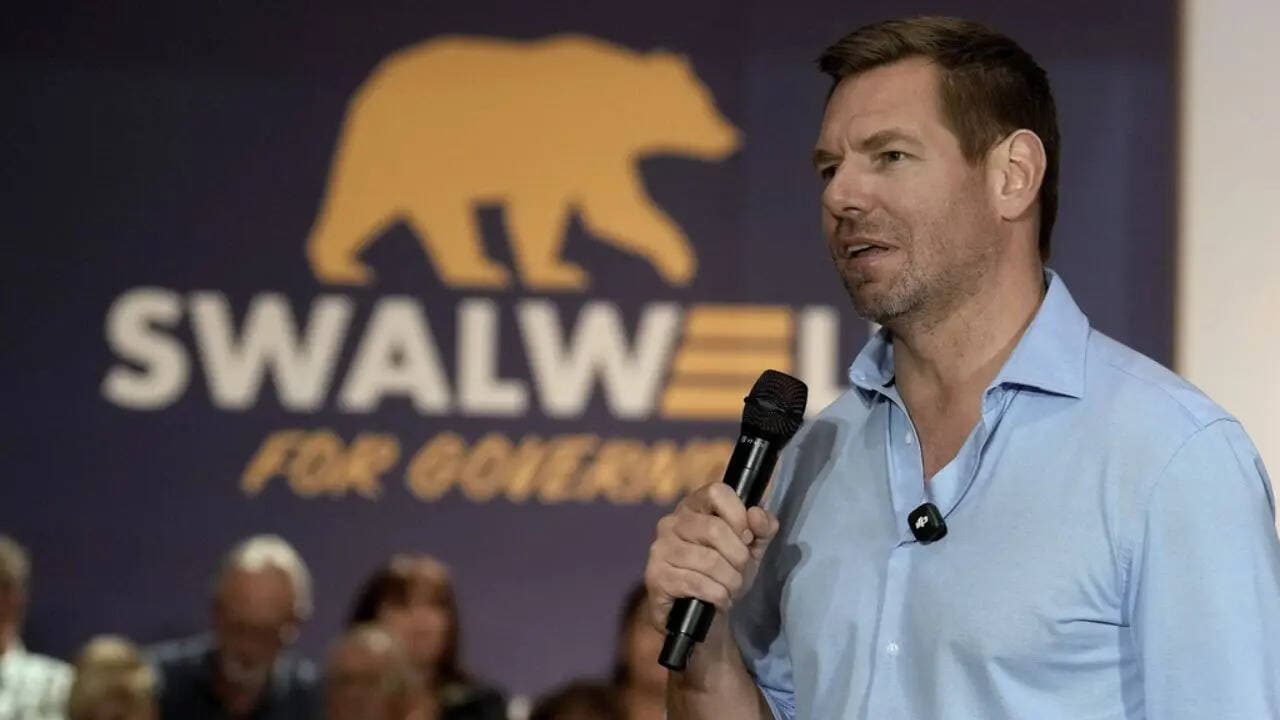
Eric Swalwell on Monday said he plans to resign from Congress following a series of sexual misconduct allegations, including claims involving former congressional staff members. In a statement, Swalwell apologised for what he described as "mistakes in judgement" but said he would contest what he called a "serious, false allegation". "I am deeply sorry to my family, staff, and constituents for mistakes in judgment I've made in my past. I will fight the serious, false allegation made against me," he said. He added that while he opposed efforts to remove lawmakers without due process, he believed stepping down was necessary to avoid distracting from his duties. "It’s also wrong for my constituents to have me distracted from my duties. Therefore, I plan to resign my seat in Congress," he said, adding that he would work with his staff to ensure continuity of service in California’s 14th congressional district. The announcement comes after a growing number of Democrats called on Swalwell to resign or face possible expulsion. Andrea Salinas said the allegations were "serious, credible, and demand accountability". "The halls of power must not be a place where predators are shielded by inaction," she said in a statement. A congressional ethics committee confirmed it has opened an investigation into whether Swalwell violated rules in the US House of Representatives. According to reports, four women have accused him of sexual misconduct. One former staff member told CNN she had been sexually assaulted, while others alleged behaviour ranging from sending unsolicited images to non-consensual sexual contact. Swalwell suspended his campaign for governor of California a day earlier, again apologising for past conduct while maintaining that some allegations are untrue. He is one of four members of Congress — two Democrats and two Republicans — currently facing mounting pressure over separate controversies. Among them is Tony Gonzales, who recently ended his re-election campaign amid allegations of an affair with a former staff member who later died by suicide.
What Is the JCPOA and Why Are Democrats Slamming Trump for Walking Away From It?
As U.S. and Iranian officials sat across from each other in peace talks that produced no agreement, a old wound reopened in Washington. Democrats are pointing fingers at the Trump administration, arguing that the very crisis it is now trying to negotiate its way out of was created when Trump tore up a nuclear deal that was already working. The Political Firestorm House Foreign Affairs Committee Democrats fired off a pointed post on X this weekend, targeting Vice President JD Vance after he stated that the goal of current negotiations is getting Iran to commit to not building a nuclear weapon. Their response was blunt: Iran already made that commitment, back in 2015, under the Joint Comprehensive Plan of Action, a deal the Trump administration scrapped in 2018. "Now this admin has dragged the country into a pointless war to recover ground it gave away — and American families are paying the price," the committee wrote. Senator Tim Kaine of Virginia was equally direct, appearing on ABC's "This Week" with host Martha Raddatz. He called Trump's decision to exit the nuclear deal one of the worst foreign policy calls ever made by an American president. "If you make diplomacy impossible, you tend to make war inevitable," Kaine said. Meanwhile, talks held in Islamabad this weekend, led by Vance, U.S. envoy Steve Witkoff, and Jared Kushner, ended without a peace agreement. Vance told reporters the discussions were "substantive" but acknowledged the two sides had not closed the gap. Iranian parliament speaker Mohammad Bagher Qalibaf added that U.S. officials had "failed to gain the trust" of their Iranian counterparts during the negotiations. So What Exactly Is the JCPOA? JCPOA stands for Joint Comprehensive Plan of Action. Most people simply call it the Iran nuclear deal. It was signed in July 2015 under President Barack Obama, between Iran and six world powers - the United States, United Kingdom, France, Germany, Russia, and China. The premise was simple: Iran would agree to strict limits on its nuclear program, and in return, the crippling economic sanctions that had been strangling its economy would be lifted. Why Was Iran Under Sanctions to Begin With? For years, Iran had been quietly expanding its nuclear capabilities, and the West had strong reasons to believe Tehran was working toward a nuclear weapon. Iran maintained the program was purely for peaceful energy purposes, a claim most Western governments found unconvincing. The response was economic isolation. Sanctions cut Iran off from international banking, gutted its oil exports, and sent its currency into freefall, inflicting real hardship on ordinary Iranians. What Did the Deal Actually Require? The JCPOA placed specific and verifiable limits on Iran's nuclear activities. Iran was required to reduce its uranium enrichment to levels far too low to produce a weapon, eliminate 97% of its enriched uranium stockpile, and halt enrichment entirely at its Fordow facility. International inspectors from the International Atomic Energy Agency were granted regular access to Iranian nuclear sites to verify that Tehran was holding up its end. The Obama administration confirmed in January 2016 that Iran had shipped 25,000 pounds of enriched uranium out of the country, dismantled and removed two-thirds of its centrifuges, removed the calandria from its heavy water reactor and filled it with concrete, and provided what officials described as "unprecedented access" to its nuclear facilities and supply chain. Most nuclear experts concluded at the time that the deal extended Iran's so-called "breakout time", the window needed to actually build a bomb, from a matter of months to roughly a year. Non-nuclear sanctions, including those targeting Iran's missile program and its designation as a state sponsor of terror, remained fully in place. Why Did Trump Walk Away? Trump had been dismissing the JCPOA as "the worst deal ever negotiated" long before he took office. In May 2018, he made it official. His reasons were numerous. The deal's sunset clauses were perhaps the sharpest point of criticism. Several core restrictions on Iran were set to expire after 10 to 15 years, meaning the agreement delayed Iran's nuclear ambitions rather than permanently dismantling them. Critics called it kicking the problem down the road. Iran's ballistic missile program was another sticking point. The JCPOA said nothing about the missiles Iran was developing, missiles capable of carrying nuclear warheads. From Washington's perspective, limiting a nuclear program while leaving its delivery system completely untouched was a fundamental flaw. The agreement didn't touch Iran's actions in the region, either. Tehran's backing of militant groups throughout the Middle East – Hezbollah in Lebanon, the Houthis in Yemen, and multiple militias in Iraq and Syria – went on without interruption. Detractors contended that the easing of sanctions merely provided Iran with additional means to sow discord throughout the area. The inspection protocols also faced criticism. While the JCPOA included monitoring mechanisms, Iran could delay inspector access to certain military sites by up to 24 days, long enough, skeptics argued, to conceal prohibited activity. Trump's broader argument was that the Obama administration had negotiated from weakness. His team believed that by walking away and reimposing maximum economic pressure, they could compel Iran back to the table for a stronger deal - one that addressed missiles, sunset clauses, and regional conduct all at once. Where Things Stand Now That stronger deal never materialized. Instead, after Trump's withdrawal, Iran steadily rolled back its commitments under the JCPOA, advancing its nuclear program far beyond the limits it had previously accepted. The result, Democrats now argue, is a conflict that did not have to happen. Whether the original deal was worth preserving, flawed as it was, or whether Trump was right to demand more, comes down to a fundamental question: is an imperfect agreement more dangerous than no agreement at all? Right now, with peace talks stalled and no deal in sight, that question does not have a comfortable answer.