2 stories credited to The Points Guy
Latest story Apr 22, 2026 · on ChamberLight since Apr 2026
A story can appear as several articles (copies of the same piece), so counts of stories and of articles differ.
Scores for The Points Guy
Writing quality not enough rated stories yet: 2 of 10. How it is measured
Scores last checked Sep 25, 2026.
Stories ChamberLight collected, by month
Stories credited to The Points Guy, by publication date. ChamberLight collects articles that mention the officials it tracks, so this shows its own coverage of this source, not how much the source publishes.
- Stories from The Points Guy
- Shaded: ChamberLight collected no stories, or almost none, from any outlet (a gap in its collection, not in the outlet’s publishing)
Show as a table
| Month | Stories | All outlets |
|---|---|---|
| April 2026 | 2 | 2,577 |
| May 2026 | 0 | none collected |
| June 2026 | 0 | none collected |
| July 2026 | 0 | none collected |
| August 2026 | 0 | 1 (collection gap) |
| September 2026 | 0 | 1,320 |
Top topics
Share of this source’s stories tagged with each topic. A story can carry several topics, so the shares do not add up to 100%.
- Economy2
100% of 2 stories · 26% across all outlets
- Ethics/Corruption2
100% of 2 stories · 58% across all outlets
- Infrastructure2
100% of 2 stories · 8% across all outlets
The thin mark on each bar is the topic’s share across all outlets.
Who they cover
Party of the officials these stories are mainly about, across all 4 officials named. A story counts once for each official it is mainly about, so the split is over 5 story–official pairs, from 2 stories.
- Republican80% · 4 pairs
- Democrat20% · 1 pair
Most covered
Stories mainly about each official, and their share of the source’s 2 stories.
Article tone
ChamberLight’s article analysis assigns each story a tone toward the official it covers. It describes the coverage of that official, not The Points Guy’s stance, and reader votes do not change it. 2 stories.
- Good Look
- 0 (0%)
- Mixed
- 2 (100%)
- Informational
- 0 (0%)
- Bad Look
- 0 (0%)
Challenges to these scores
No one has challenged a score on this page yet. Anyone can; editors publish every outcome here.
Articles served from thepointsguy.com
5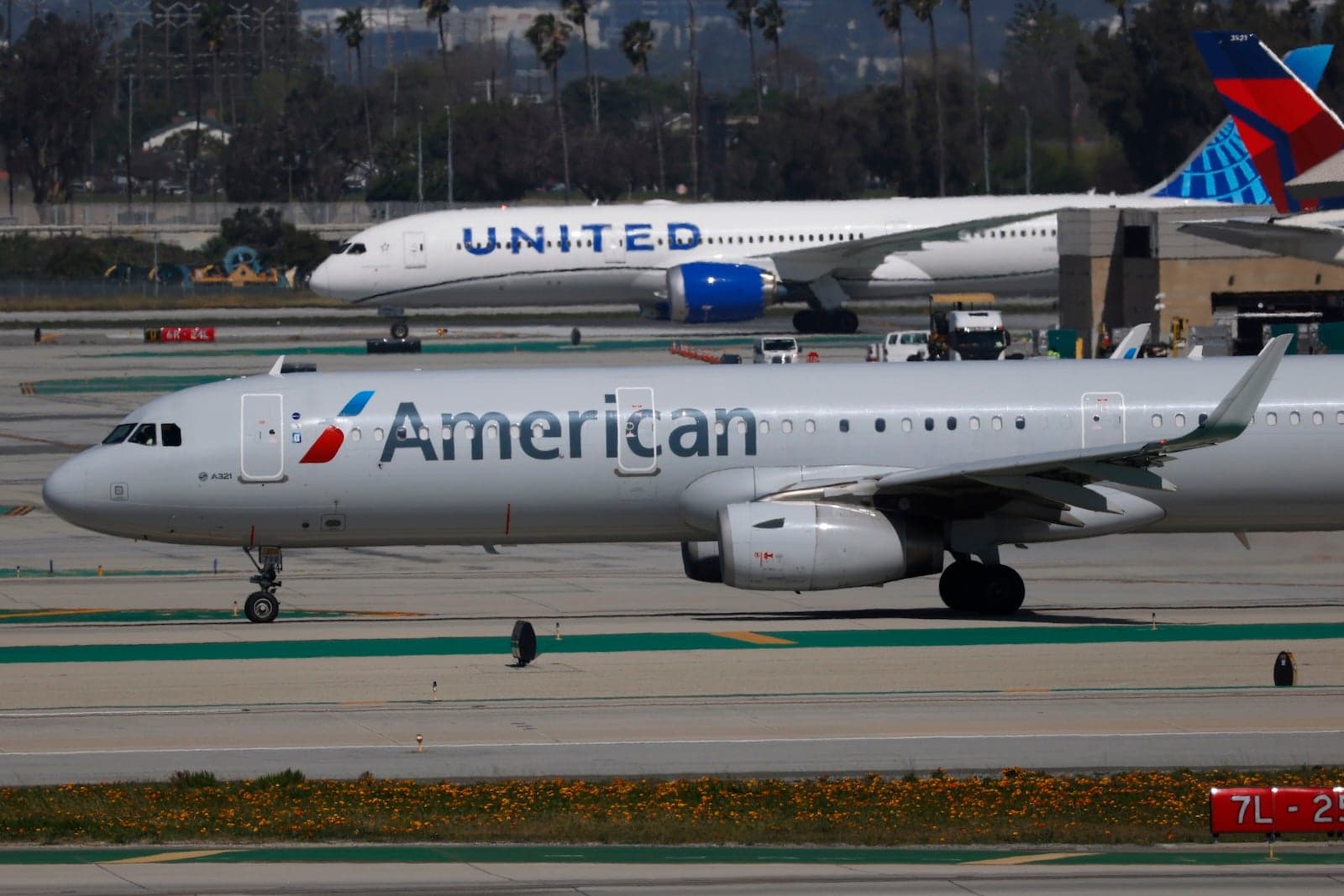
American-United merger buzz fades, but could another big airline deal be coming?
It has been just over a week since rumors began to swirl about American Airlines, United Airlines and what would have been an industry-altering merger between two top rivals. For now, at least, it appears those talks have been put to rest. That's after American Airlines effectively said "no thanks," and President Donald Trump appeared to throw cold water on the idea on Tuesday. But some lawmakers still have questions. We suspect you do, too. Allow us to catch you up and explain why the next big airline merger may still be coming, even if it doesn't involve two of the U.S.' Big Three carriers joining forces. Why are we even talking about an American-United merger? The head-turning talk about combining American and United bubbled up last week, when Bloomberg and others reported that United CEO Scott Kirby had floated the idea of a merger to top lawmakers in Washington, D.C. Immediately, antitrust experts and consumer advocates bristled at the idea, which would have created a massive airline that would have dwarfed even the world's second-largest carrier. TPG founder Brian Kelly said the move would be "catastrophic" for flyers. United Airlines and American Airlines aircraft in San Jose, Costa Rica. DANIEL SLIM/AFP/GETTY IMAGES "Outlandish" was the word used by Florian Ederer, professor at Boston University's Questrom School of Business, when we talked last week. He said a merger between two of the country's largest airlines would likely be blocked — even in the more relaxed regulatory environment currently seen in Washington, D.C. "Even in the Trump administration," Ederer said, "this would be looked upon as being absurd." American: 'No thanks' In any event, it takes two to tango. And late last week, American made it clear where it stands. "American Airlines is not engaged with or interested in any discussions regarding a merger with United Airlines," the Fort Worth-based carrier said in a statement late Friday, which essentially acknowledged such a deal would be a net-negative for consumers. United declined to comment. A letter from Washington, D.C. Lawmakers still weren't convinced. Over the weekend, American and United received a sternly worded letter from a bipartisan duo of senators who demanded to know whether the two airlines have, in fact, discussed a merger. The U.S. Capitol in Washington. PENNY ROGERS PHOTOGRAPHY/MOMENT/GETTY IMAGES Such a deal "could lead to increased prices for consumers, at a time when airlines are already squeezing flyers through higher fares and fees," Sens. Elizabeth Warren, D-Mass., and Mike Lee, R-Utah, wrote Sunday. White House weighs in Then came the White House, which looms large in determining whether any big airline merger ultimately gets the green light. Speaking Tuesday morning in a live interview on CNBC's Squawk Box, Trump was asked about an American-United deal. "I don't like it," he quickly said. "American, it's doing fine and United is doing very well," Trump added. "I don't like having them merge." A merger may be coming, though But even if American and United don't actually pair up (the merger seems unlikely at this point), there does seem to be growing momentum toward some sort of airline industry merger in the U.S. SEAN CUDAHY/THE POINTS GUY Could history repeat itself? Skyrocketing jet fuel costs have eaten into airlines' bottom lines, adding particular pressure to a handful of low-cost carriers that had already been struggling to turn a profit. This month, Delta Air Lines CEO Ed Bastian noted that a similar situation in the past led to a wave of corporate deals that created today's airline industry, which is dominated by a small number of very large carriers. "What drove consolidation was higher fuel prices back in 2009, 2010, 2011," Bastian told analysts on this month's earnings call. "So I anticipate higher fuel prices will cause much more significant structural reform than we've seen over this period." Spirit's struggles front and center Delta isn't alone in that prediction. In rebuffing United on Friday, American seemed to foreshadow future merger activity, acknowledging that "changes in the broader airline marketplace may be necessary." A key factor in all of this: beleaguered Spirit Airlines, which is currently in Chapter 11 bankruptcy for the second time. Reports say it could be on the brink of liquidation. Although Trump was dismissive of an American-United tie-up on CNBC Tuesday, he was far more bullish on a deal involving the Florida-based budget airline. "I don't mind mergers," Trump said, echoing past comments by Transportation Secretary Sean Duffy. (Last month, Duffy noted that Trump "loves to see big deals happen.") ZACH GRIFF/THE POINTS GUY "I'd love somebody to buy Spirit, as an example," Trump added Tuesday, while suggesting the administration might be open to providing federal aid to the budget airline. "Maybe the federal government should help that one out," he said. A fifth large airline? Even the passenger advocacy group Flyers Rights, which seldom supports airline industry consolidation (since it tends to drive up fares) acknowledged there's one type of deal it would support: A merger that creates a fifth large airline to go toe-to-toe with the industry's four titans — perhaps an acquisition by Alaska Airlines, the organization said. Alaska Airlines plane pushes back in Seattle. SEAN CUDAHY/THE POINTS GUY Alaska solidified itself as America's fifth-largest carrier with its acquisition of Hawaiian, which closed in 2024. However, it still remains far smaller than American, Delta, United and Southwest Airlines. Looking ahead We expect to hear a lot more talk on Wednesday, when United holds its first-quarter earnings call. Related reading: When is the best time to book flights for the cheapest airfare? The best airline credit cards Which US airline is best? TPG's latest rankings Flight delayed or canceled? Here's what to do The best credit cards to reach elite status What are points and miles worth? TPG's monthly valuations Summer sticker shock: Airfare up 15% as high jet fuel costs take hold Editorial disclaimer: Opinions expressed here are the author’s alone, not those of any bank, credit card issuer, airline or hotel chain, and have not been reviewed, approved or otherwise endorsed by any of these entities.
American-United merger buzz fades, but could another big airline deal be coming?
It has been just over a week since rumors began to swirl about American Airlines, United Airlines and what would have been an industry-altering merger between two top rivals. For now, at least, it appears those talks have been put to rest. That's after American Airlines effectively said "no thanks," and President Donald Trump appeared to throw cold water on the idea on Tuesday. But some lawmakers still have questions. We suspect you do, too. Allow us to catch you up and explain why the next big airline merger may still be coming, even if it doesn't involve two of the U.S.' Big Three carriers joining forces. Why are we even talking about an American-United merger? The head-turning talk about combining American and United bubbled up last week, when Bloomberg and others reported that United CEO Scott Kirby had floated the idea of a merger to top lawmakers in Washington, D.C. Immediately, antitrust experts and consumer advocates bristled at the idea, which would have created a massive airline that would have dwarfed even the world's second-largest carrier. TPG founder Brian Kelly said the move would be "catastrophic" for flyers. United Airlines and American Airlines aircraft in San Jose, Costa Rica. DANIEL SLIM/AFP/GETTY IMAGES "Outlandish" was the word used by Florian Ederer, professor at Boston University's Questrom School of Business, when we talked last week. He said a merger between two of the country's largest airlines would likely be blocked — even in the more relaxed regulatory environment currently seen in Washington, D.C. "Even in the Trump administration," Ederer said, "this would be looked upon as being absurd." American: 'No thanks' In any event, it takes two to tango. And late last week, American made it clear where it stands. "American Airlines is not engaged with or interested in any discussions regarding a merger with United Airlines," the Fort Worth-based carrier said in a statement late Friday, which essentially acknowledged such a deal would be a net-negative for consumers. United declined to comment. A letter from Washington, D.C. Lawmakers still weren't convinced. Over the weekend, American and United received a sternly worded letter from a bipartisan duo of senators who demanded to know whether the two airlines have, in fact, discussed a merger. The U.S. Capitol in Washington. PENNY ROGERS PHOTOGRAPHY/MOMENT/GETTY IMAGES Such a deal "could lead to increased prices for consumers, at a time when airlines are already squeezing flyers through higher fares and fees," Sens. Elizabeth Warren, D-Mass., and Mike Lee, R-Utah, wrote Sunday. White House weighs in Then came the White House, which looms large in determining whether any big airline merger ultimately gets the green light. Speaking Tuesday morning in a live interview on CNBC's Squawk Box, Trump was asked about an American-United deal. "I don't like it," he quickly said. "American, it's doing fine and United is doing very well," Trump added. "I don't like having them merge." A merger may be coming, though But even if American and United don't actually pair up (the merger seems unlikely at this point), there does seem to be growing momentum toward some sort of airline industry merger in the U.S. SEAN CUDAHY/THE POINTS GUY Could history repeat itself? Skyrocketing jet fuel costs have eaten into airlines' bottom lines, adding particular pressure to a handful of low-cost carriers that had already been struggling to turn a profit. This month, Delta Air Lines CEO Ed Bastian noted that a similar situation in the past led to a wave of corporate deals that created today's airline industry, which is dominated by a small number of very large carriers. "What drove consolidation was higher fuel prices back in 2009, 2010, 2011," Bastian told analysts on this month's earnings call. "So I anticipate higher fuel prices will cause much more significant structural reform than we've seen over this period." Spirit's struggles front and center Delta isn't alone in that prediction. In rebuffing United on Friday, American seemed to foreshadow future merger activity, acknowledging that "changes in the broader airline marketplace may be necessary." A key factor in all of this: beleaguered Spirit Airlines, which is currently in Chapter 11 bankruptcy for the second time. Reports say it could be on the brink of liquidation. Although Trump was dismissive of an American-United tie-up on CNBC Tuesday, he was far more bullish on a deal involving the Florida-based budget airline. "I don't mind mergers," Trump said, echoing past comments by Transportation Secretary Sean Duffy. (Last month, Duffy noted that Trump "loves to see big deals happen.") ZACH GRIFF/THE POINTS GUY "I'd love somebody to buy Spirit, as an example," Trump added Tuesday, while suggesting the administration might be open to providing federal aid to the budget airline. "Maybe the federal government should help that one out," he said. A fifth large airline? Even the passenger advocacy group Flyers Rights, which seldom supports airline industry consolidation (since it tends to drive up fares) acknowledged there's one type of deal it would support: A merger that creates a fifth large airline to go toe-to-toe with the industry's four titans — perhaps an acquisition by Alaska Airlines, the organization said. Alaska Airlines plane pushes back in Seattle. SEAN CUDAHY/THE POINTS GUY Alaska solidified itself as America's fifth-largest carrier with its acquisition of Hawaiian, which closed in 2024. However, it still remains far smaller than American, Delta, United and Southwest Airlines. Looking ahead We expect to hear a lot more talk on Wednesday, when United holds its first-quarter earnings call. Related reading: When is the best time to book flights for the cheapest airfare? The best airline credit cards Which US airline is best? TPG's latest rankings Flight delayed or canceled? Here's what to do The best credit cards to reach elite status What are points and miles worth? TPG's monthly valuations Summer sticker shock: Airfare up 15% as high jet fuel costs take hold Editorial disclaimer: Opinions expressed here are the author’s alone, not those of any bank, credit card issuer, airline or hotel chain, and have not been reviewed, approved or otherwise endorsed by any of these entities.
American-United merger buzz fades, but could another big airline deal be coming?
It has been just over a week since rumors began to swirl about American Airlines, United Airlines and what would have been an industry-altering merger between two top rivals. For now, at least, it appears those talks have been put to rest. That's after American Airlines effectively said "no thanks," and President Donald Trump appeared to throw cold water on the idea on Tuesday. But some lawmakers still have questions. We suspect you do, too. Allow us to catch you up and explain why the next big airline merger may still be coming, even if it doesn't involve two of the U.S.' Big Three carriers joining forces. Why are we even talking about an American-United merger? The head-turning talk about combining American and United bubbled up last week, when Bloomberg and others reported that United CEO Scott Kirby had floated the idea of a merger to top lawmakers in Washington, D.C. Immediately, antitrust experts and consumer advocates bristled at the idea, which would have created a massive airline that would have dwarfed even the world's second-largest carrier. TPG founder Brian Kelly said the move would be "catastrophic" for flyers. United Airlines and American Airlines aircraft in San Jose, Costa Rica. DANIEL SLIM/AFP/GETTY IMAGES "Outlandish" was the word used by Florian Ederer, professor at Boston University's Questrom School of Business, when we talked last week. He said a merger between two of the country's largest airlines would likely be blocked — even in the more relaxed regulatory environment currently seen in Washington, D.C. "Even in the Trump administration," Ederer said, "this would be looked upon as being absurd." American: 'No thanks' In any event, it takes two to tango. And late last week, American made it clear where it stands. "American Airlines is not engaged with or interested in any discussions regarding a merger with United Airlines," the Fort Worth-based carrier said in a statement late Friday, which essentially acknowledged such a deal would be a net-negative for consumers. United declined to comment. A letter from Washington, D.C. Lawmakers still weren't convinced. Over the weekend, American and United received a sternly worded letter from a bipartisan duo of senators who demanded to know whether the two airlines have, in fact, discussed a merger. The U.S. Capitol in Washington. PENNY ROGERS PHOTOGRAPHY/MOMENT/GETTY IMAGES Such a deal "could lead to increased prices for consumers, at a time when airlines are already squeezing flyers through higher fares and fees," Sens. Elizabeth Warren, D-Mass., and Mike Lee, R-Utah, wrote Sunday. White House weighs in Then came the White House, which looms large in determining whether any big airline merger ultimately gets the green light. Speaking Tuesday morning in a live interview on CNBC's Squawk Box, Trump was asked about an American-United deal. "I don't like it," he quickly said. "American, it's doing fine and United is doing very well," Trump added. "I don't like having them merge." A merger may be coming, though But even if American and United don't actually pair up (the merger seems unlikely at this point), there does seem to be growing momentum toward some sort of airline industry merger in the U.S. SEAN CUDAHY/THE POINTS GUY Could history repeat itself? Skyrocketing jet fuel costs have eaten into airlines' bottom lines, adding particular pressure to a handful of low-cost carriers that had already been struggling to turn a profit. This month, Delta Air Lines CEO Ed Bastian noted that a similar situation in the past led to a wave of corporate deals that created today's airline industry, which is dominated by a small number of very large carriers. "What drove consolidation was higher fuel prices back in 2009, 2010, 2011," Bastian told analysts on this month's earnings call. "So I anticipate higher fuel prices will cause much more significant structural reform than we've seen over this period." Spirit's struggles front and center Delta isn't alone in that prediction. In rebuffing United on Friday, American seemed to foreshadow future merger activity, acknowledging that "changes in the broader airline marketplace may be necessary." A key factor in all of this: beleaguered Spirit Airlines, which is currently in Chapter 11 bankruptcy for the second time. Reports say it could be on the brink of liquidation. Although Trump was dismissive of an American-United tie-up on CNBC Tuesday, he was far more bullish on a deal involving the Florida-based budget airline. "I don't mind mergers," Trump said, echoing past comments by Transportation Secretary Sean Duffy. (Last month, Duffy noted that Trump "loves to see big deals happen.") ZACH GRIFF/THE POINTS GUY "I'd love somebody to buy Spirit, as an example," Trump added Tuesday, while suggesting the administration might be open to providing federal aid to the budget airline. "Maybe the federal government should help that one out," he said. A fifth large airline? Even the passenger advocacy group Flyers Rights, which seldom supports airline industry consolidation (since it tends to drive up fares) acknowledged there's one type of deal it would support: A merger that creates a fifth large airline to go toe-to-toe with the industry's four titans — perhaps an acquisition by Alaska Airlines, the organization said. Alaska Airlines plane pushes back in Seattle. SEAN CUDAHY/THE POINTS GUY Alaska solidified itself as America's fifth-largest carrier with its acquisition of Hawaiian, which closed in 2024. However, it still remains far smaller than American, Delta, United and Southwest Airlines. Looking ahead We expect to hear a lot more talk on Wednesday, when United holds its first-quarter earnings call. Related reading: When is the best time to book flights for the cheapest airfare? The best airline credit cards Which US airline is best? TPG's latest rankings Flight delayed or canceled? Here's what to do The best credit cards to reach elite status What are points and miles worth? TPG's monthly valuations Summer sticker shock: Airfare up 15% as high jet fuel costs take hold Editorial disclaimer: Opinions expressed here are the author’s alone, not those of any bank, credit card issuer, airline or hotel chain, and have not been reviewed, approved or otherwise endorsed by any of these entities.

‘Outlandish’ United-American merger talk raises consumer concerns ... but will it actually happen?
When the Trump administration took office last year, plenty of airline industry insiders thought the next wave of mergers could be coming. Few, however, had a marriage of American Airlines and United Airlines — two of the nation's largest carriers — on their bingo card. But then came Monday evening, when Bloomberg reported United CEO Scott Kirby had at least floated the idea to top lawmakers in Washington, D.C. Could it actually happen? It would certainly be a long shot, since any such tie-up would — at least under normal circumstances — draw regulatory scrutiny of the highest order. "I wouldn't put all that much credence into this actually happening, because it is so outlandish," Florian Ederer, an antitrust expert studying the airline industry, told TPG. Still, the headlines this week have rightly left frequent flyers wondering what a merger between two of America's biggest airlines could look like, and what it would mean for consumers. TAYFUN COSKUN/ANDALOU AGENCY/GETTY IMAGES American and United merger? It's a long shot To be clear, we may already be getting ahead of ourselves. At present, no merger deal between United and American has been formally announced, and neither airline is commenting on the rumors. There could be financial incentive, to be sure: American certainly has trailed United in financial performance, of late. United and Delta Air Lines have accounted for the bulk of the industry's profits in recent years. But even if the two carriers reached a deal to combine forces, there would be huge obstacles to overcome. Read more: Is airline merger mania back? That's the question as United-American rumors swirl Steep regulatory hurdles Any major airline merger requires regulatory approval, and a merger of two of the nation's largest airlines would raise significant antitrust concerns. After all, the U.S. airline industry has already gone through waves of consolidation that have left our airports dominated by four major carriers: American, Delta, United and Southwest Airlines. ZACH GRIFF/THE POINTS GUY Four in 10 flights that took off in America last year were operated by American or United (and their regional subsidiaries), according to data from aviation analytics firm Cirium. The dominance of a combined United and American could be a tough sell even in the more relaxed regulatory landscape ushered in by President Donald Trump's return to office, some experts believe. "I think this is a non-starter," Ederer, who serves on the faculty at Boston University's Questrom School of Business, said. "Even in the Trump administration, this would be looked upon as being absurd." Lawmakers react Already, too, we've seen bipartisan backlash on Capitol Hill. "That's gonna be a no," Sen. Ruben Gallego, D-Ariz., posted on social media, reacting to this week's reports. "This is one of the most tone-deaf acts of corporate aggression I've ever seen," Sen. Mike Lee, R-Utah, added. Ok ... but what if it did happen? But — suspend your disbelief if you must — let's say this blockbuster merger did happen. The tie-up of two of the nation's legacy carriers would raise a myriad of concerns for frequent flyers. In a video posted Tuesday, TPG founder Brian Kelly warned any such deal would be "catastrophic" to consumers. Consumer concerns Historically, less competition among airlines has led to higher airfares. We should also note, in a world where airline loyalty programs are front and center for consumers, it's a likely bet you'd eventually see mileage devaluations, too. Beyond that, the competitive nature of today's airline industry has fueled a proverbial arms race among major carriers: They have raced, in recent years, to upgrade seats, technology and airport amenities like lounges — all in a push to woo and keep loyal customers. Among those going tit for tat? American and United. "They compete aggressively for consumers … they have overlap of the various routes, they tend to be similar in terms of pricing, and it would eliminate two very obvious head-to-head competitors," Ederer said. "So I think this would be really a loss for consumers." Major impacts likely at big hub airports On a more practical level, any approved tie-up between the carriers would likely lead to asset divestitures, with some of the most visible likely to involve gate space or takeoff and landing rights at some of the most congested U.S. airports. American and United both operate hubs (and compete relentlessly) at Chicago's O'Hare International Airport. They also both call Los Angeles International Airport (LAX) a hub. Plus, both carriers have cross-town hubs in the New York City and Washington, D.C., areas. In the Washington, D.C. area, United Airlines has a hub at Dulles International Airport (IAD). SEAN CUDAHY/THE POINTS GUY Would some hubs have to be shut down in a merger deal? Speaking last week on CNBC, Transportation Secretary Sean Duffy acknowledged that any major airline merger may require carriers to "peel off" some larger assets, while also acknowledging the administration would have to "look at" any deal. A merger like this could also conceivably draw legal action at the state level, and draw scrutiny in some international markets the airlines serve, too. Could the next big wave of airline mergers be here? Of course, in that same CNBC interview, Duffy also said Trump "loves to see big deals happen." At the time, many industry pundits suspected that it could open the door to a United merger with JetBlue, which is reportedly exploring tie-ups with a variety of carriers. TAYFUN COSKUN/ANDALOU AGENCY/GETTY IMAGES Or, perhaps, it could lead budget rivals Frontier Airlines and Spirit Airlines to ink a deal after years of merger discussions. But even after decades of consolidation have left the U.S. airline industry with a small handful of dominant carriers, an American-United deal would be the merger of all mergers — and result in a mega-carrier roughly twice the size of Delta. Do you think Atlanta would take that sitting down? It's not hard to envision such a move triggering additional corporate deals that would, in the end, leave consumers with a far shorter list of airlines to choose from when booking flights. JOE RAEDLE/GETTY IMAGES Bottom line Again, though, we're getting ahead of ourselves. For now, it remains wholly unclear whether United will actually attempt to acquire American — or whether it'll instead make a run at acquiring a smaller competitor. Even more uncertain is whether a merger of this magnitude would have support in Washington, D.C. Then again, this is 2026. Related reading: When is the best time to book flights for the cheapest airfare? The best airline credit cards What exactly are airline miles, anyway? 6 real-life strategies you can use when your flight is canceled or delayed Maximize your airfare: The best credit cards for booking flights The best credit cards to reach elite status What are points and miles worth? TPG's monthly valuations Editorial disclaimer: Opinions expressed here are the author’s alone, not those of any bank, credit card issuer, airline or hotel chain, and have not been reviewed, approved or otherwise endorsed by any of these entities.
‘Outlandish’ United-American merger talk raises consumer concerns ... but will it actually happen?
When the Trump administration took office last year, plenty of airline industry insiders thought the next wave of mergers could be coming. Few, however, had a marriage of American Airlines and United Airlines — two of the nation's largest carriers — on their bingo card. But then came Monday evening, when Bloomberg reported United CEO Scott Kirby had at least floated the idea to top lawmakers in Washington, D.C. Could it actually happen? It would certainly be a long shot, since any such tie-up would — at least under normal circumstances — draw regulatory scrutiny of the highest order. "I wouldn't put all that much credence into this actually happening, because it is so outlandish," Florian Ederer, an antitrust expert studying the airline industry, told TPG. Still, the headlines this week have rightly left frequent flyers wondering what a merger between two of America's biggest airlines could look like, and what it would mean for consumers. TAYFUN COSKUN/ANDALOU AGENCY/GETTY IMAGES American and United merger? It's a long shot To be clear, we may already be getting ahead of ourselves. At present, no merger deal between United and American has been formally announced, and neither airline is commenting on the rumors. There could be financial incentive, to be sure: American certainly has trailed United in financial performance, of late. United and Delta Air Lines have accounted for the bulk of the industry's profits in recent years. But even if the two carriers reached a deal to combine forces, there would be huge obstacles to overcome. Read more: Is airline merger mania back? That's the question as United-American rumors swirl Steep regulatory hurdles Any major airline merger requires regulatory approval, and a merger of two of the nation's largest airlines would raise significant antitrust concerns. After all, the U.S. airline industry has already gone through waves of consolidation that have left our airports dominated by four major carriers: American, Delta, United and Southwest Airlines. ZACH GRIFF/THE POINTS GUY Four in 10 flights that took off in America last year were operated by American or United (and their regional subsidiaries), according to data from aviation analytics firm Cirium. The dominance of a combined United and American could be a tough sell even in the more relaxed regulatory landscape ushered in by President Donald Trump's return to office, some experts believe. "I think this is a non-starter," Ederer, who serves on the faculty at Boston University's Questrom School of Business, said. "Even in the Trump administration, this would be looked upon as being absurd." Lawmakers react Already, too, we've seen bipartisan backlash on Capitol Hill. "That's gonna be a no," Sen. Ruben Gallego, D-Ariz., posted on social media, reacting to this week's reports. "This is one of the most tone-deaf acts of corporate aggression I've ever seen," Sen. Mike Lee, R-Utah, added. Ok ... but what if it did happen? But — suspend your disbelief if you must — let's say this blockbuster merger did happen. The tie-up of two of the nation's legacy carriers would raise a myriad of concerns for frequent flyers. In a video posted Tuesday, TPG founder Brian Kelly warned any such deal would be "catastrophic" to consumers. Consumer concerns Historically, less competition among airlines has led to higher airfares. We should also note, in a world where airline loyalty programs are front and center for consumers, it's a likely bet you'd eventually see mileage devaluations, too. Beyond that, the competitive nature of today's airline industry has fueled a proverbial arms race among major carriers: They have raced, in recent years, to upgrade seats, technology and airport amenities like lounges — all in a push to woo and keep loyal customers. Among those going tit for tat? American and United. "They compete aggressively for consumers … they have overlap of the various routes, they tend to be similar in terms of pricing, and it would eliminate two very obvious head-to-head competitors," Ederer said. "So I think this would be really a loss for consumers." Major impacts likely at big hub airports On a more practical level, any approved tie-up between the carriers would likely lead to asset divestitures, with some of the most visible likely to involve gate space or takeoff and landing rights at some of the most congested U.S. airports. American and United both operate hubs (and compete relentlessly) at Chicago's O'Hare International Airport. They also both call Los Angeles International Airport (LAX) a hub. Plus, both carriers have cross-town hubs in the New York City and Washington, D.C., areas. In the Washington, D.C. area, United Airlines has a hub at Dulles International Airport (IAD). SEAN CUDAHY/THE POINTS GUY Would some hubs have to be shut down in a merger deal? Speaking last week on CNBC, Transportation Secretary Sean Duffy acknowledged that any major airline merger may require carriers to "peel off" some larger assets, while also acknowledging the administration would have to "look at" any deal. A merger like this could also conceivably draw legal action at the state level, and draw scrutiny in some international markets the airlines serve, too. Could the next big wave of airline mergers be here? Of course, in that same CNBC interview, Duffy also said Trump "loves to see big deals happen." At the time, many industry pundits suspected that it could open the door to a United merger with JetBlue, which is reportedly exploring tie-ups with a variety of carriers. TAYFUN COSKUN/ANDALOU AGENCY/GETTY IMAGES Or, perhaps, it could lead budget rivals Frontier Airlines and Spirit Airlines to ink a deal after years of merger discussions. But even after decades of consolidation have left the U.S. airline industry with a small handful of dominant carriers, an American-United deal would be the merger of all mergers — and result in a mega-carrier roughly twice the size of Delta. Do you think Atlanta would take that sitting down? It's not hard to envision such a move triggering additional corporate deals that would, in the end, leave consumers with a far shorter list of airlines to choose from when booking flights. JOE RAEDLE/GETTY IMAGES Bottom line Again, though, we're getting ahead of ourselves. For now, it remains wholly unclear whether United will actually attempt to acquire American — or whether it'll instead make a run at acquiring a smaller competitor. Even more uncertain is whether a merger of this magnitude would have support in Washington, D.C. Then again, this is 2026. Related reading: When is the best time to book flights for the cheapest airfare? The best airline credit cards What exactly are airline miles, anyway? 6 real-life strategies you can use when your flight is canceled or delayed Maximize your airfare: The best credit cards for booking flights The best credit cards to reach elite status What are points and miles worth? TPG's monthly valuations Editorial disclaimer: Opinions expressed here are the author’s alone, not those of any bank, credit card issuer, airline or hotel chain, and have not been reviewed, approved or otherwise endorsed by any of these entities.