4 stories credited to The Fulcrum
Latest story Sep 18, 2026 · on ChamberLight since Apr 2026
A story can appear as several articles (copies of the same piece), so counts of stories and of articles differ.
Scores for The Fulcrum
Writing quality not enough rated stories yet: 3 of 10. How it is measured
Scores last checked Sep 25, 2026.
Stories ChamberLight collected, by month
Stories credited to The Fulcrum, by publication date. ChamberLight collects articles that mention the officials it tracks, so this shows its own coverage of this source, not how much the source publishes.
- Stories from The Fulcrum
- Shaded: ChamberLight collected no stories, or almost none, from any outlet (a gap in its collection, not in the outlet’s publishing)
Show as a table
| Month | Stories | All outlets |
|---|---|---|
| April 2026 | 2 | 732 |
| May 2026 | 0 | none collected |
| June 2026 | 0 | none collected |
| July 2026 | 0 | none collected |
| August 2026 | 0 | 1 (collection gap) |
| September 2026 | 2 | 1,320 |
Top topics
Share of this source’s stories tagged with each topic. A story can carry several topics, so the shares do not add up to 100%.
- Budget/Spending2
50% of 4 stories · 31% across all outlets
- Immigration2
50% of 4 stories · 13% across all outlets
- Environment/Climate1
25% of 4 stories · 5% across all outlets
- Ethics/Corruption1
25% of 4 stories · 58% across all outlets
- Foreign Policy1
25% of 4 stories · 29% across all outlets
- Healthcare1
25% of 4 stories · 8% across all outlets
- Voting Rights1
25% of 4 stories · 19% across all outlets
The thin mark on each bar is the topic’s share across all outlets.
Who they cover
Party of the officials these stories are mainly about, across all 7 officials named. A story counts once for each official it is mainly about, so the split is over 7 story–official pairs, from 4 stories.
- Democrat71% · 5 pairs
- Republican29% · 2 pairs
Most covered
Stories mainly about each official, and their share of the source’s 4 stories.
Article tone
ChamberLight’s article analysis assigns each story a tone toward the official it covers. It describes the coverage of that official, not The Fulcrum’s stance, and reader votes do not change it. 4 stories.
- Good Look
- 1 (25%)
- Mixed
- 2 (50%)
- Informational
- 1 (25%)
- Bad Look
- 0 (0%)
Challenges to these scores
No one has challenged a score on this page yet. Anyone can; editors publish every outcome here.
Articles served from thefulcrum.us
7
We Will Not Let This Destroy Our Sacred Sites": Indigenous Leaders Fight Trump Administration's Border Wall
Stephanie Casanova is a contributor for The Fulcrum, a nonpartisan publication dedicated to strengthening democracy by fostering informed civic engagement and elevating diverse perspectives. Standing near the pond at Quitobaquito Springs, Lorraine Marquez Eiler, a Hia-Ced O'odham elder, shared how
A domestic violence shelter is borrowing money to keep its doors open -- because the government it's contracted with won't pay on time
Rafael Gonzalez is a contributor for The Fulcrum, a nonpartisan publication dedicated to strengthening democracy by fostering informed civic engagement and elevating diverse perspectives. Politics nerds have many ideas about how to strengthen American democracy; however, few directly address silent
Protestors, Representatives Raise Concerns about the President’s FY 2027 Budget Cuts to Healthcare
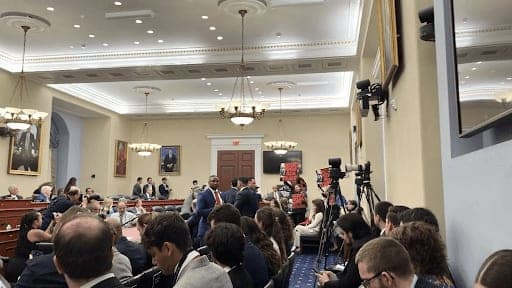
WASHINGTON — Tensions erupted during Wednesday’s House hearing on President Donald Trump’s budget, as several representatives and protestors pressured a top White House official about their healthcare concerns. The hearing featured Russell Vought, the director of the White House Office of Management and Budget, to discuss the president’s plans to defund many programs and move money to fight the war abroad. Within the first half hour, protesters began chanting about their discontent with Trump’s plans to cut the President’s Emergency Plan for AIDS Relief program. “PEPFAR saves lives, spend the money,” several people repeated. Some of their signs read, “PROTECT PEPFAR FROM VOUGHT” and “VOUGHT’S CUTS KILL PEOPLE WITH AIDS.” U.S. President’s Emergency Plan for AIDS Relief, also referred to as PEPFAR, was created in 2003 by Republican President George W. Bush. According to the U.S. Department of State, PEPFAR is credited with saving 26 million lives. Congress provided over $4.6 billion in FY 2026. The administration, in its budget request, declared that 60% of PEPFAR funds were misused and announced its plans to “eliminate disease-specific accounts.” Congress has authority over spending, according to the Constitution, and can accept parts of the budget request, none, or all of it. Members of Congress questioned Vought about cuts to health care. He often redirected the conversation to fraud when Democrats questioned him about the pain deep cuts could cause. For example, Rep. Brendan Boyle, D-PA, referred to the Congressional Budget Office’s estimate that 16 million Americans would lose healthcare because of the “One Big Beautiful Act” and two other policies under the second Trump administration. “Are they really all, according to you, really, you’re going to sit here with a straight face and say, ‘They’re all illegals. They’re all defrauding the system.’ That’s actually your position?” Vought responded by saying, “Yes, with regard to people who—” Boyle interjected by saying, “That’s laughable.” Vought clarified that he does not think all 16 million who will lose health care are illegal, but he thought that the rest are able-bodied and should not receive subsidized health care. Boyle later asked, “Okay, so they’re all either illegals or defrauding the system?” “Well, that’s certainly not a provocative statement that we got fraud all over the country,” Vought said. Rep. Bonnie Watson Coleman, D-NJ, asked Vought if he would apologize to the people who died because of cuts to international aid. Worldwide, over 300,000 people have died due to USAID cuts, according to a tracker created by Brooke Nichols, an associate professor of global health at Boston University and an infectious disease mathematical modeler. She also pressed Vought about children in poor countries who lack health care because the U.S. government stopped providing it. “If a mother came before you, and told you that her child died because she didn’t have access to healthcare or medicine that usually would be available because of the kindness of the United States of America, that you and this administration have eliminated, would you have anything of empathy, compassion, and humanity to say to her?” Coleman asked. “Would you say to her, ‘I am sorry that was a mistake?’” Vought responded with, “I always have empathy for individuals, including those that get improper and false information from the media that pumps this false and ignorant information out to the American people.” Rep. Josh Brecheen, R-OK, asked if Vought had any suggestions on how Congress can address healthcare fraud. “Are there further reforms that Congress should consider to help reduce fraud in the healthcare system?” Brecheen said. Vought said that a review should be done to check “whether agencies have enough resources to do the fraud hunting.” He also said there are obstacles to consider that make it “impossible” to identify fraud. The example he provided states withholding information about the recipients on their “roles” He did not clarify which roles he was referring to. Rep. Pramila Jayapal, D-WA, said the “One Big Beautiful Bill” was unpopular because of its impact on healthcare and the national budget. “Congratulations, Mr. Vought, both you and Donald Trump have managed to successfully take the futures of millions of Americans. It is not beautiful to strip healthcare for millions of Americans,” Jayapal said. Amy L. Wong is a graduate student in journalism with Northwestern University’s Medill School of Journalism.
Protestors, Representatives Raise Concerns about the President’s FY 2027 Budget Cuts to Healthcare
WASHINGTON — Tensions erupted during Wednesday’s House hearing on President Donald Trump’s budget, as several representatives and protestors pressured a top White House official about their healthcare concerns. The hearing featured Russell Vought, the director of the White House Office of Management and Budget, to discuss the president’s plans to defund many programs and move money to fight the war abroad. Within the first half hour, protesters began chanting about their discontent with Trump’s plans to cut the President’s Emergency Plan for AIDS Relief program. “PEPFAR saves lives, spend the money,” several people repeated. Some of their signs read, “PROTECT PEPFAR FROM VOUGHT” and “VOUGHT’S CUTS KILL PEOPLE WITH AIDS.” U.S. President’s Emergency Plan for AIDS Relief, also referred to as PEPFAR, was created in 2003 by Republican President George W. Bush. According to the U.S. Department of State, PEPFAR is credited with saving 26 million lives. Congress provided over $4.6 billion in FY 2026. The administration, in its budget request, declared that 60% of PEPFAR funds were misused and announced its plans to “eliminate disease-specific accounts.” Congress has authority over spending, according to the Constitution, and can accept parts of the budget request, none, or all of it. Members of Congress questioned Vought about cuts to health care. He often redirected the conversation to fraud when Democrats questioned him about the pain deep cuts could cause. For example, Rep. Brendan Boyle, D-PA, referred to the Congressional Budget Office’s estimate that 16 million Americans would lose healthcare because of the “One Big Beautiful Act” and two other policies under the second Trump administration. “Are they really all, according to you, really, you’re going to sit here with a straight face and say, ‘They’re all illegals. They’re all defrauding the system.’ That’s actually your position?” Vought responded by saying, “Yes, with regard to people who—” Boyle interjected by saying, “That’s laughable.” Vought clarified that he does not think all 16 million who will lose health care are illegal, but he thought that the rest are able-bodied and should not receive subsidized health care. Boyle later asked, “Okay, so they’re all either illegals or defrauding the system?” “Well, that’s certainly not a provocative statement that we got fraud all over the country,” Vought said. Rep. Bonnie Watson Coleman, D-NJ, asked Vought if he would apologize to the people who died because of cuts to international aid. Worldwide, over 300,000 people have died due to USAID cuts, according to a tracker created by Brooke Nichols, an associate professor of global health at Boston University and an infectious disease mathematical modeler. She also pressed Vought about children in poor countries who lack health care because the U.S. government stopped providing it. “If a mother came before you, and told you that her child died because she didn’t have access to healthcare or medicine that usually would be available because of the kindness of the United States of America, that you and this administration have eliminated, would you have anything of empathy, compassion, and humanity to say to her?” Coleman asked. “Would you say to her, ‘I am sorry that was a mistake?’” Vought responded with, “I always have empathy for individuals, including those that get improper and false information from the media that pumps this false and ignorant information out to the American people.” Rep. Josh Brecheen, R-OK, asked if Vought had any suggestions on how Congress can address healthcare fraud. “Are there further reforms that Congress should consider to help reduce fraud in the healthcare system?” Brecheen said. Vought said that a review should be done to check “whether agencies have enough resources to do the fraud hunting.” He also said there are obstacles to consider that make it “impossible” to identify fraud. The example he provided states withholding information about the recipients on their “roles” He did not clarify which roles he was referring to. Rep. Pramila Jayapal, D-WA, said the “One Big Beautiful Bill” was unpopular because of its impact on healthcare and the national budget. “Congratulations, Mr. Vought, both you and Donald Trump have managed to successfully take the futures of millions of Americans. It is not beautiful to strip healthcare for millions of Americans,” Jayapal said. Amy L. Wong is a graduate student in journalism with Northwestern University’s Medill School of Journalism.
Protestors, Representatives Raise Concerns about the President’s FY 2027 Budget Cuts to Healthcare
WASHINGTON — Tensions erupted during Wednesday’s House hearing on President Donald Trump’s budget, as several representatives and protestors pressured a top White House official about their healthcare concerns. The hearing featured Russell Vought, the director of the White House Office of Management and Budget, to discuss the president’s plans to defund many programs and move money to fight the war abroad. Within the first half hour, protesters began chanting about their discontent with Trump’s plans to cut the President’s Emergency Plan for AIDS Relief program. “PEPFAR saves lives, spend the money,” several people repeated. Some of their signs read, “PROTECT PEPFAR FROM VOUGHT” and “VOUGHT’S CUTS KILL PEOPLE WITH AIDS.” U.S. President’s Emergency Plan for AIDS Relief, also referred to as PEPFAR, was created in 2003 by Republican President George W. Bush. According to the U.S. Department of State, PEPFAR is credited with saving 26 million lives. Congress provided over $4.6 billion in FY 2026. The administration, in its budget request, declared that 60% of PEPFAR funds were misused and announced its plans to “eliminate disease-specific accounts.” Congress has authority over spending, according to the Constitution, and can accept parts of the budget request, none, or all of it. Members of Congress questioned Vought about cuts to health care. He often redirected the conversation to fraud when Democrats questioned him about the pain deep cuts could cause. For example, Rep. Brendan Boyle, D-PA, referred to the Congressional Budget Office’s estimate that 16 million Americans would lose healthcare because of the “One Big Beautiful Act” and two other policies under the second Trump administration. “Are they really all, according to you, really, you’re going to sit here with a straight face and say, ‘They’re all illegals. They’re all defrauding the system.’ That’s actually your position?” Vought responded by saying, “Yes, with regard to people who—” Boyle interjected by saying, “That’s laughable.” Vought clarified that he does not think all 16 million who will lose health care are illegal, but he thought that the rest are able-bodied and should not receive subsidized health care. Boyle later asked, “Okay, so they’re all either illegals or defrauding the system?” “Well, that’s certainly not a provocative statement that we got fraud all over the country,” Vought said. Rep. Bonnie Watson Coleman, D-NJ, asked Vought if he would apologize to the people who died because of cuts to international aid. Worldwide, over 300,000 people have died due to USAID cuts, according to a tracker created by Brooke Nichols, an associate professor of global health at Boston University and an infectious disease mathematical modeler. She also pressed Vought about children in poor countries who lack health care because the U.S. government stopped providing it. “If a mother came before you, and told you that her child died because she didn’t have access to healthcare or medicine that usually would be available because of the kindness of the United States of America, that you and this administration have eliminated, would you have anything of empathy, compassion, and humanity to say to her?” Coleman asked. “Would you say to her, ‘I am sorry that was a mistake?’” Vought responded with, “I always have empathy for individuals, including those that get improper and false information from the media that pumps this false and ignorant information out to the American people.” Rep. Josh Brecheen, R-OK, asked if Vought had any suggestions on how Congress can address healthcare fraud. “Are there further reforms that Congress should consider to help reduce fraud in the healthcare system?” Brecheen said. Vought said that a review should be done to check “whether agencies have enough resources to do the fraud hunting.” He also said there are obstacles to consider that make it “impossible” to identify fraud. The example he provided states withholding information about the recipients on their “roles” He did not clarify which roles he was referring to. Rep. Pramila Jayapal, D-WA, said the “One Big Beautiful Bill” was unpopular because of its impact on healthcare and the national budget. “Congratulations, Mr. Vought, both you and Donald Trump have managed to successfully take the futures of millions of Americans. It is not beautiful to strip healthcare for millions of Americans,” Jayapal said. Amy L. Wong is a graduate student in journalism with Northwestern University’s Medill School of Journalism.
Protestors, Representatives Raise Concerns about the President’s FY 2027 Budget Cuts to Healthcare
WASHINGTON — Tensions erupted during Wednesday’s House hearing on President Donald Trump’s budget, as several representatives and protestors pressured a top White House official about their healthcare concerns. The hearing featured Russell Vought, the director of the White House Office of Management and Budget, to discuss the president’s plans to defund many programs and move money to fight the war abroad. Within the first half hour, protesters began chanting about their discontent with Trump’s plans to cut the President’s Emergency Plan for AIDS Relief program. “PEPFAR saves lives, spend the money,” several people repeated. Some of their signs read, “PROTECT PEPFAR FROM VOUGHT” and “VOUGHT’S CUTS KILL PEOPLE WITH AIDS.” U.S. President’s Emergency Plan for AIDS Relief, also referred to as PEPFAR, was created in 2003 by Republican President George W. Bush. According to the U.S. Department of State, PEPFAR is credited with saving 26 million lives. Congress provided over $4.6 billion in FY 2026. The administration, in its budget request, declared that 60% of PEPFAR funds were misused and announced its plans to “eliminate disease-specific accounts.” Congress has authority over spending, according to the Constitution, and can accept parts of the budget request, none, or all of it. Members of Congress questioned Vought about cuts to health care. He often redirected the conversation to fraud when Democrats questioned him about the pain deep cuts could cause. For example, Rep. Brendan Boyle, D-PA, referred to the Congressional Budget Office’s estimate that 16 million Americans would lose healthcare because of the “One Big Beautiful Act” and two other policies under the second Trump administration. “Are they really all, according to you, really, you’re going to sit here with a straight face and say, ‘They’re all illegals. They’re all defrauding the system.’ That’s actually your position?” Vought responded by saying, “Yes, with regard to people who—” Boyle interjected by saying, “That’s laughable.” Vought clarified that he does not think all 16 million who will lose health care are illegal, but he thought that the rest are able-bodied and should not receive subsidized health care. Boyle later asked, “Okay, so they’re all either illegals or defrauding the system?” “Well, that’s certainly not a provocative statement that we got fraud all over the country,” Vought said. Rep. Bonnie Watson Coleman, D-NJ, asked Vought if he would apologize to the people who died because of cuts to international aid. Worldwide, over 300,000 people have died due to USAID cuts, according to a tracker created by Brooke Nichols, an associate professor of global health at Boston University and an infectious disease mathematical modeler. She also pressed Vought about children in poor countries who lack health care because the U.S. government stopped providing it. “If a mother came before you, and told you that her child died because she didn’t have access to healthcare or medicine that usually would be available because of the kindness of the United States of America, that you and this administration have eliminated, would you have anything of empathy, compassion, and humanity to say to her?” Coleman asked. “Would you say to her, ‘I am sorry that was a mistake?’” Vought responded with, “I always have empathy for individuals, including those that get improper and false information from the media that pumps this false and ignorant information out to the American people.” Rep. Josh Brecheen, R-OK, asked if Vought had any suggestions on how Congress can address healthcare fraud. “Are there further reforms that Congress should consider to help reduce fraud in the healthcare system?” Brecheen said. Vought said that a review should be done to check “whether agencies have enough resources to do the fraud hunting.” He also said there are obstacles to consider that make it “impossible” to identify fraud. The example he provided states withholding information about the recipients on their “roles” He did not clarify which roles he was referring to. Rep. Pramila Jayapal, D-WA, said the “One Big Beautiful Bill” was unpopular because of its impact on healthcare and the national budget. “Congratulations, Mr. Vought, both you and Donald Trump have managed to successfully take the futures of millions of Americans. It is not beautiful to strip healthcare for millions of Americans,” Jayapal said. Amy L. Wong is a graduate student in journalism with Northwestern University’s Medill School of Journalism.
House Bill Pushes Bipartisan Effort to Tackle Federal Benefits Fraud, Refocusing from Immigration
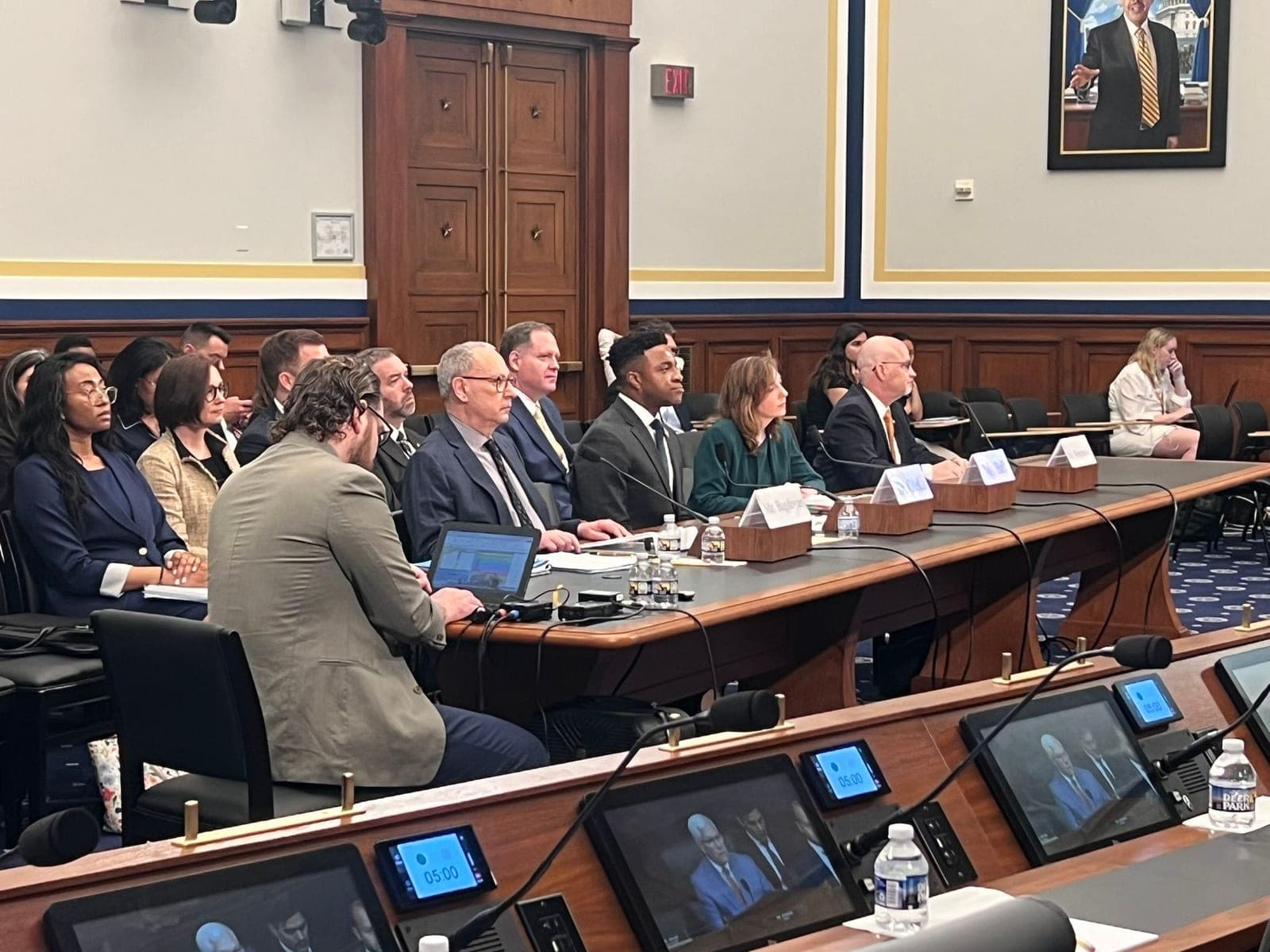
WASHINGTON — Rep. Pete Sessions, R-Texas, introduced a bill Wednesday morning that would create a permanent U.S. Treasury Inspector General position for fraud accountability as part of a broader effort to crack down on the misuse of federal benefits. The bill would offer an alternative, bipartisan way to prevent federal benefits fraud, after several months of politically charged congressional hearings. The bill, titled the “Fraud Prevention and Accountability Act,” was introduced at a House Subcommittee on Government Operations hearing. This hearing follows larger, committee-wide hearings investigating the misuse of federal funds in Minnesota after a scandal involving Somali immigrants, which broke late last year. However, Sessions stressed that his bill addresses a nationwide problem that isn’t limited to immigration. “While we are fresh off the heels of the full committee’s investigation and hearings into fraud, this isn’t about one state,” he said. “This is not about Minnesota, it is not about any one particular area.” In 2025, the government estimated nearly $29 billion in improper Medicaid payments, but it was unclear how much of that was fraud rather than paperwork errors and administrative mistakes. For similar reasons, the government does not have clear estimates of fraud in other benefit programs. But Rep. Emily Randall, D-W.A., worried that the crackdown on fraud could result in eligible people receiving delayed or missing benefits. “I had a sister with really complex disabilities who relied on Washington State's Medicaid program, and I can think of a number of times where my mom didn't submit paperwork in time,” she said. “Maybe Olivia was in the hospital, or had any number of health complications that meant her stack of paperwork kept getting bigger and bigger. Those improper payments sometimes are just a struggling family trying to keep their kid or family member alive and healthy.” Subcommittee member Rep. Eleanor Norton, D-D.C., criticized President Trump for contributing to the fraud problem by firing or demoting over 20 inspectors general since the beginning of his term. “Inspectors general are a key part of detecting and preventing fraud,” she said. The bill focused on the many issues plaguing Medicaid, the Supplemental Nutrition Assistance Program, and Temporary Assistance for Needy Families disbursements at the state level. For instance, states often do not share eligibility data across assistance programs or with the federal government. States also use outdated user interface systems to track eligibility. To combat this, the bill would make the Pandemic Response Accountability Committee's operations a permanent part of the Treasury. The committee was created in 2020 to track how states were spending pandemic relief funds, but Sessions’ bill would expand its responsibilities to all federal awards over $50,000. Sessions’ legislation marks a shift away from previous fraud accountability efforts focused on immigration. Last month, an executive order created a Task Force to Eliminate Fraud led by Vice President J.D. Vance. The order blamed many of the benefits issues on “lax immigration policy and immigration fraud.” Soon after, the House passed “Deporting Fraudsters Act,” which would make benefits fraud a deportable offense. While Sessions voted for the Deporting Fraudsters Act, he said his new bill would be a separate, preventive effort. “What we're trying to do is to take the mechanisms of data and information and make them permanent,” Sessions said. “[The Deporting Fraudsters Act] deals with when you're caught, and you've committed fraud, that you can be deported.” O.J. Oleka, a witness from the State Financial Officers Foundation, suggested an “instant verification system” that would cross-check applicants’ income, residency, and citizenship status before payments are issued. However, experts said this would not be feasible, at least for Medicaid, given the current distribution of those funds. “It’s completely infeasible to implement,” Andy Schneider, a Georgetown professor who has written extensively on Medicaid policy, said in an interview. “The data systems are not in place, and the effect of a rule like that would be to disenfranchise millions of Americans from access to health insurance coverage.” The bill would add the responsibility of negotiating data-sharing agreements with states to the Treasury Secretary’s role. However, this raised concerns about privacy, especially in the current political climate. “When it comes to providing information to the federal government, in an ideal world, you would want sharing of information to make systems flow better,” said Valerie Lacarte, a senior policy analyst at the Migration Policy Institute, in an interview. Non-citizens do not qualify for many benefits, and those who do use benefits do so at lower rates than citizens. Unfortunately, she said, many immigrants fear that if they provide their personal information to states, the federal government will use that information for immigration enforcement. “Because of the use of federal agencies basically using information from different agencies for the purposes of immigration enforcement, that is now putting a lot of states and local governments in an awkward position with their communities,” she said. Naisha Roy is a graduate journalism student at Northwestern University reporting on the immigration beat on Capitol Hill.