3 stories credited to The Coin Republic (2 on thecoinrepublic.com, 1 reproduced by other sites)
Latest story Apr 12, 2026 · on ChamberLight since Apr 2026
A story can appear as several articles (copies of the same piece), so counts of stories and of articles differ.
Scores for The Coin Republic
Scores last checked Sep 25, 2026.
Stories ChamberLight collected, by month
Stories credited to The Coin Republic, by publication date. ChamberLight collects articles that mention the officials it tracks, so this shows its own coverage of this source, not how much the source publishes.
- Stories from The Coin Republic
- Shaded: ChamberLight collected no stories, or almost none, from any outlet (a gap in its collection, not in the outlet’s publishing)
Show as a table
| Month | Stories | All outlets |
|---|---|---|
| March 2026 | 1 | 544 |
| April 2026 | 1 | 4,538 |
| May 2026 | 0 | none collected |
| June 2026 | 0 | none collected |
| July 2026 | 0 | none collected |
| August 2026 | 0 | 1 (collection gap) |
| September 2026 | 0 | 1,320 |
Top topics
Share of this source’s stories tagged with each topic. A story can carry several topics, so the shares do not add up to 100%.
- Budget/Spending2
67% of 3 stories · 31% across all outlets
- Economy2
67% of 3 stories · 26% across all outlets
- Technology/Privacy2
67% of 3 stories · 10% across all outlets
The thin mark on each bar is the topic’s share across all outlets.
Who they cover
Party of the officials these stories are mainly about, across all 4 officials named. A story counts once for each official it is mainly about, so the split is over 5 story–official pairs, from 3 stories.
- Republican80% · 4 pairs
- Democrat20% · 1 pair
Most covered
Stories mainly about each official, and their share of the source’s 3 stories.
Article tone
ChamberLight’s article analysis assigns each story a tone toward the official it covers. It describes the coverage of that official, not The Coin Republic’s stance, and reader votes do not change it. 3 stories.
- Good Look
- 2 (67%)
- Mixed
- 1 (33%)
- Informational
- 0 (0%)
- Bad Look
- 0 (0%)
Challenges to these scores
No one has challenged a score on this page yet. Anyone can; editors publish every outcome here.
Articles served from thecoinrepublic.com
5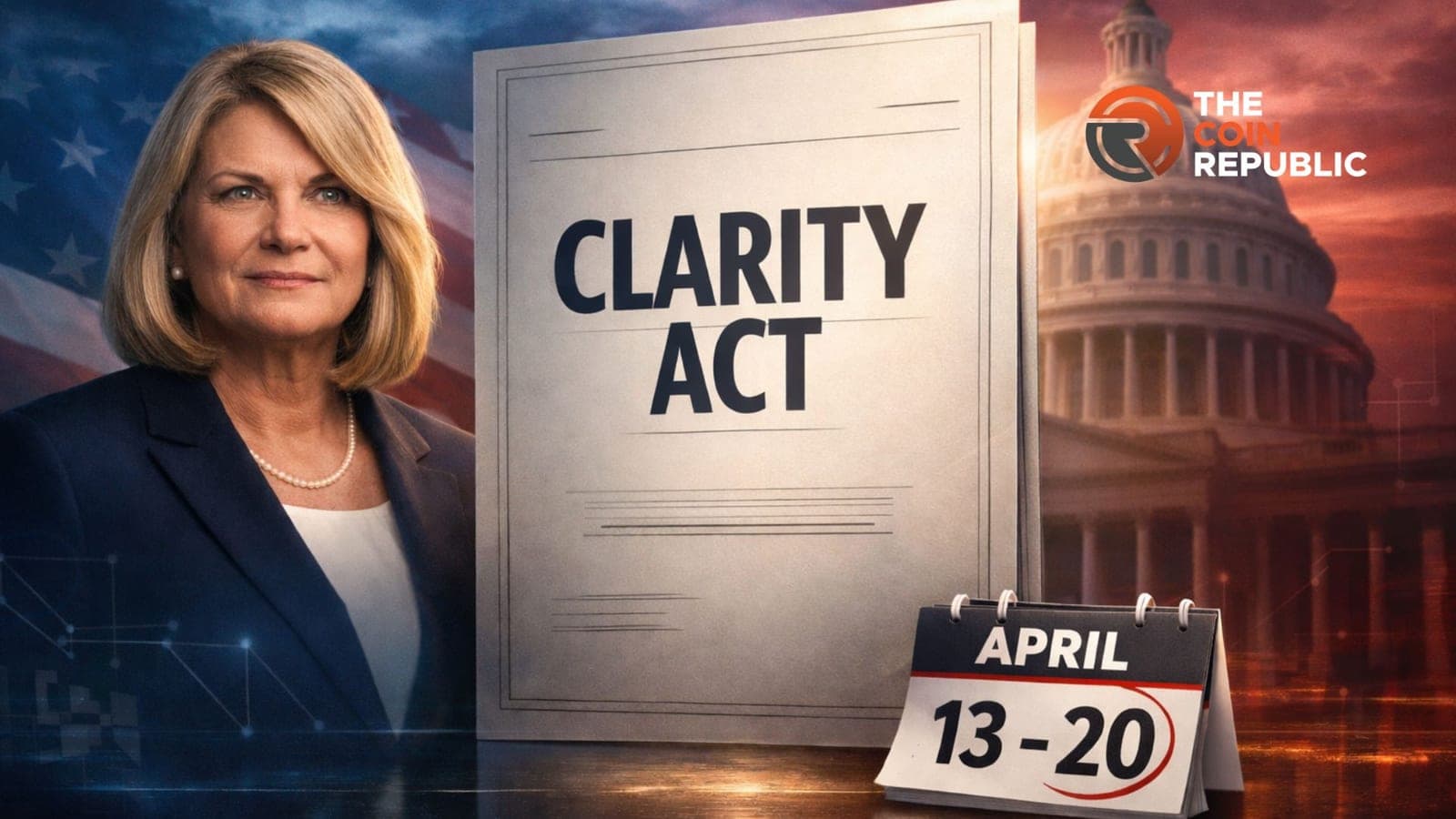
Sen. Lummis Urges CLARITY Act Approval as April 13-20 Deadline Looms
Key Insights: Cynthia Lummis urges Senate action, says April timeline is critical to CLARITY Act. Critical Banking Committee hearing (April 13–20) viewed as pivotal point in advancing crypto legislation. Scott Bessent supports quick passage, citing minimal floor time and the increasing need for digital asset regulation. Senator Cynthia Lummis reiterated that the Senate should approve the CLARITY Act on an urgent basis. The statement comes as a crucial deadline around April 13-20 is approaching. If the timing is missed, the approval of the bill could take longer and even extend into the next year. Senator Cynthia Lummis Urges Senate to Approve CLARITY Act Flashing urgency on Capitol Hill, Lummis said, “It’s time Congress passes the Clarity Act. It’s now or never.” Earlier on, she had cautioned legislators that we cannot afford to postpone the initiative. She stated, “This is our last chance to pass the Clarity Act until at least 2030. We can’t afford to surrender America’s financial future.” Senator Cynthia Lummis Advocates to Pass the CLARITY Act | Source: X For context, the bill aims to establish a comprehensive legal framework for digital assets. It has already gotten approval from the House of Representatives with a strong bipartisan majority. The focus has now shifted to the Senate, where procedural obstacles and time limits are providing a very small road ahead. At the heart of the timeline is the Senate Banking Committee, which is expected to take up the measure between April 13 and April 20. Analysts view this phase as a crucial one since it will reveal whether or not the CLARITY Act will pass to further stages. Any further postponement after this may disrupt the momentum and make it difficult to push the bill through the rest of the legislative process. After committee action, the proposal is then subjected to reconciliation procedures, a vote of the entire Senate, chamber coordination, and ultimate executive branch approval. Finally, U.S. President Donald Trump will have to approve the bill so the CLARITY Act could become legislation. The challenges in each stage are unique, especially when the lawmakers have conflicting priorities and a schedule that is tightening. Policymakers Urge to Speed Up the CLARITY Act Process The wider congressional calendar is also putting a strain. Lawmakers have less time to get floor debate and voting with the Memorial Day recess starting on May 21. A lack of that window may drive deliberations into a time dominated by electoral politics, making it less likely to pass quickly. There have been other complexities that have arisen in negotiations. Policymakers are still discussing the yield on the stablecoins. The debate has attracted conflicting opinions on the matter from both financial institutions and players in the crypto industry. Traditional banking institutions have warned of possible effects on deposits and lending ability. Meanwhile, proponents of digital property declare that stablecoin yield serves as a requirement for user adoption and innovation. On the other hand, Senate Republicans are discussing other draft bills, such as those related to wider financial oversight reforms. Such parallel discussions may impact the course and timing of the CLARITY Act, further complicating the process. Treasury Secretary Scott Bessent is no exception, as he is calling on the lawmakers to move on it since there is little legislative capacity. He stressed that it was time to act now, noting: “Senate floor time is scarce, and now is the time to act.” The post Sen. Lummis Urges CLARITY Act Approval as April 13-20 Deadline Looms appeared first on The Coin Republic.
Sen. Lummis Urges CLARITY Act Approval as April 13-20 Deadline Looms
Key Insights: Cynthia Lummis urges Senate action, says April timeline is critical to CLARITY Act. Critical Banking Committee hearing (April 13–20) viewed as pivotal point in advancing crypto legislation. Scott Bessent supports quick passage, citing minimal floor time and the increasing need for digital asset regulation. Senator Cynthia Lummis reiterated that the Senate should approve the CLARITY Act on an urgent basis. The statement comes as a crucial deadline around April 13-20 is approaching. If the timing is missed, the approval of the bill could take longer and even extend into the next year. Senator Cynthia Lummis Urges Senate to Approve CLARITY Act Flashing urgency on Capitol Hill, Lummis said, “It’s time Congress passes the Clarity Act. It’s now or never.” Earlier on, she had cautioned legislators that we cannot afford to postpone the initiative. She stated, “This is our last chance to pass the Clarity Act until at least 2030. We can’t afford to surrender America’s financial future.” Senator Cynthia Lummis Advocates to Pass the CLARITY Act | Source: X For context, the bill aims to establish a comprehensive legal framework for digital assets. It has already gotten approval from the House of Representatives with a strong bipartisan majority. The focus has now shifted to the Senate, where procedural obstacles and time limits are providing a very small road ahead. At the heart of the timeline is the Senate Banking Committee, which is expected to take up the measure between April 13 and April 20. Analysts view this phase as a crucial one since it will reveal whether or not the CLARITY Act will pass to further stages. Any further postponement after this may disrupt the momentum and make it difficult to push the bill through the rest of the legislative process. After committee action, the proposal is then subjected to reconciliation procedures, a vote of the entire Senate, chamber coordination, and ultimate executive branch approval. Finally, U.S. President Donald Trump will have to approve the bill so the CLARITY Act could become legislation. The challenges in each stage are unique, especially when the lawmakers have conflicting priorities and a schedule that is tightening. Policymakers Urge to Speed Up the CLARITY Act Process The wider congressional calendar is also putting a strain. Lawmakers have less time to get floor debate and voting with the Memorial Day recess starting on May 21. A lack of that window may drive deliberations into a time dominated by electoral politics, making it less likely to pass quickly. There have been other complexities that have arisen in negotiations. Policymakers are still discussing the yield on the stablecoins. The debate has attracted conflicting opinions on the matter from both financial institutions and players in the crypto industry. Traditional banking institutions have warned of possible effects on deposits and lending ability. Meanwhile, proponents of digital property declare that stablecoin yield serves as a requirement for user adoption and innovation. On the other hand, Senate Republicans are discussing other draft bills, such as those related to wider financial oversight reforms. Such parallel discussions may impact the course and timing of the CLARITY Act, further complicating the process. Treasury Secretary Scott Bessent is no exception, as he is calling on the lawmakers to move on it since there is little legislative capacity. He stressed that it was time to act now, noting: “Senate floor time is scarce, and now is the time to act.” The post Sen. Lummis Urges CLARITY Act Approval as April 13-20 Deadline Looms appeared first on The Coin Republic.

Crypto Bill: CLARITY Act Moves Forward Amid Stablecoin Yield Agreement
Key Insights: White House, Senators Tillis and Alsobrooks reach a tentative deal in the CLARITY Act. The markup could happen as early as April, aiming for year-end passage. Deal balances crypto innovation with banking safety, addressing deposit flight concerns. The long-anticipated crypto bill, the CLARITY Act, is finally moving closer to becoming law. The latest development reveals that the White House and Key Senate leaders have reached a tentative agreement on stablecoin yields. This agreement marks a key step toward resolving tensions between banks and the crypto industry, paving the way for the imminent passage of the market structure bill. Stablecoin Yield Agreement Clears Path for CLARITY Act According to the latest reports, senators have reached a tentative agreement with the White House on the CLARITY Act. This brings a possible settlement in the dispute between banks and the crypto industry over stablecoin yields. The deal between Senator Thom Tillis and Senator Angela Alsobrooks could clear the way for the crypto bill markup in the coming weeks. Alsobrooks stated that the yield prohibits stablecoin yield on “passive balances.” She noted, “I think what it will do is to allow us to protect innovation, but also gives us the opportunity to prevent widespread deposit flight.” CLARITY Act Idea | Source: X However, the specific details of the proposed deal haven’t been disclosed yet. As noted by Senator Tillis, the details should be reviewed by the crypto industry before the deal is finalized. Speaking at the DC Blockchain Summit on Wednesday, Wyoming Senator Cynthia Lummis, a leading advocate for digital asset policy, said, “We are so close” to passing a comprehensive crypto regulatory framework. A spokesperson for Senator Lummis also recently said that a deal is expected in “the next few days” and that the senator is working on including ethics provisions in the bill. CLARITY Act: When Will the Markup Happen? As the White House and US Senate have reached a strategic agreement on stablecoin yields, the crypto industry is keenly awaiting the next markup meeting. This meeting could possibly mark the passage of the CLARITY Act. According to Senator Cynthia Lummis, the crypto bill’s markup could happen as early as April. She also suggested lawmakers are aiming for a year-end passage. That said, other issues, including ethics and DeFi regulations, may come into focus once the stablecoin yield matter is settled. Following news of the deal, optimism around the CLARITY Act has surged. Polymarket now shows a 69% chance that President Donald Trump will sign the market structure bill into law this year. Stablecoin Deal Aims to Balance Innovation and Banking Safety Earlier, bankers had raised concerns that stablecoin rewards could resemble interest on bank deposits. According to them, this is risky, as it would prompt customers to move away from banks. However, Senators Angela Alsobrooks and Thom Tillis stated that the latest stablecoin agreement addresses these concerns without threatening the banking industry. The ultimate aim is to pass the CLARITY Act without disrupting the traditional financial system.t “Sen. Tillis and I do have an agreement in principle,” stated Alsobrooks. She added, “We’ve come a long way. And I think what it will do is protect innovation while preventing widespread deposit flight.” The White House has been reviewing updated legislative text, though officials did not immediately comment on the latest development. Industry insiders are aware of a new compromise but have yet to see the final legislative details. The post Crypto Bill: CLARITY Act Moves Forward Amid Stablecoin Yield Agreement appeared first on The Coin Republic.
Crypto Bill: CLARITY Act Moves Forward Amid Stablecoin Yield Agreement
Key Insights: White House, Senators Tillis and Alsobrooks reach a tentative deal in the CLARITY Act. The markup could happen as early as April, aiming for year-end passage. Deal balances crypto innovation with banking safety, addressing deposit flight concerns. The long-anticipated crypto bill, the CLARITY Act, is finally moving closer to becoming law. The latest development reveals that the White House and Key Senate leaders have reached a tentative agreement on stablecoin yields. This agreement marks a key step toward resolving tensions between banks and the crypto industry, paving the way for the imminent passage of the market structure bill. Stablecoin Yield Agreement Clears Path for CLARITY Act According to the latest reports, senators have reached a tentative agreement with the White House on the CLARITY Act. This brings a possible settlement in the dispute between banks and the crypto industry over stablecoin yields. The deal between Senator Thom Tillis and Senator Angela Alsobrooks could clear the way for the crypto bill markup in the coming weeks. Alsobrooks stated that the yield prohibits stablecoin yield on “passive balances.” She noted, “I think what it will do is to allow us to protect innovation, but also gives us the opportunity to prevent widespread deposit flight.” CLARITY Act Idea | Source: X However, the specific details of the proposed deal haven’t been disclosed yet. As noted by Senator Tillis, the details should be reviewed by the crypto industry before the deal is finalized. Speaking at the DC Blockchain Summit on Wednesday, Wyoming Senator Cynthia Lummis, a leading advocate for digital asset policy, said, “We are so close” to passing a comprehensive crypto regulatory framework. A spokesperson for Senator Lummis also recently said that a deal is expected in “the next few days” and that the senator is working on including ethics provisions in the bill. CLARITY Act: When Will the Markup Happen? As the White House and US Senate have reached a strategic agreement on stablecoin yields, the crypto industry is keenly awaiting the next markup meeting. This meeting could possibly mark the passage of the CLARITY Act. According to Senator Cynthia Lummis, the crypto bill’s markup could happen as early as April. She also suggested lawmakers are aiming for a year-end passage. That said, other issues, including ethics and DeFi regulations, may come into focus once the stablecoin yield matter is settled. Following news of the deal, optimism around the CLARITY Act has surged. Polymarket now shows a 69% chance that President Donald Trump will sign the market structure bill into law this year. Stablecoin Deal Aims to Balance Innovation and Banking Safety Earlier, bankers had raised concerns that stablecoin rewards could resemble interest on bank deposits. According to them, this is risky, as it would prompt customers to move away from banks. However, Senators Angela Alsobrooks and Thom Tillis stated that the latest stablecoin agreement addresses these concerns without threatening the banking industry. The ultimate aim is to pass the CLARITY Act without disrupting the traditional financial system.t “Sen. Tillis and I do have an agreement in principle,” stated Alsobrooks. She added, “We’ve come a long way. And I think what it will do is protect innovation while preventing widespread deposit flight.” The White House has been reviewing updated legislative text, though officials did not immediately comment on the latest development. Industry insiders are aware of a new compromise but have yet to see the final legislative details. The post Crypto Bill: CLARITY Act Moves Forward Amid Stablecoin Yield Agreement appeared first on The Coin Republic.
Crypto Bill: CLARITY Act Moves Forward Amid Stablecoin Yield Agreement
Key Insights: White House, Senators Tillis and Alsobrooks reach a tentative deal in the CLARITY Act. The markup could happen as early as April, aiming for year-end passage. Deal balances crypto innovation with banking safety, addressing deposit flight concerns. The long-anticipated crypto bill, the CLARITY Act, is finally moving closer to becoming law. The latest development reveals that the White House and Key Senate leaders have reached a tentative agreement on stablecoin yields. This agreement marks a key step toward resolving tensions between banks and the crypto industry, paving the way for the imminent passage of the market structure bill. Stablecoin Yield Agreement Clears Path for CLARITY Act According to the latest reports, senators have reached a tentative agreement with the White House on the CLARITY Act. This brings a possible settlement in the dispute between banks and the crypto industry over stablecoin yields. The deal between Senator Thom Tillis and Senator Angela Alsobrooks could clear the way for the crypto bill markup in the coming weeks. Alsobrooks stated that the yield prohibits stablecoin yield on “passive balances.” She noted, “I think what it will do is to allow us to protect innovation, but also gives us the opportunity to prevent widespread deposit flight.” CLARITY Act Idea | Source: X However, the specific details of the proposed deal haven’t been disclosed yet. As noted by Senator Tillis, the details should be reviewed by the crypto industry before the deal is finalized. Speaking at the DC Blockchain Summit on Wednesday, Wyoming Senator Cynthia Lummis, a leading advocate for digital asset policy, said, “We are so close” to passing a comprehensive crypto regulatory framework. A spokesperson for Senator Lummis also recently said that a deal is expected in “the next few days” and that the senator is working on including ethics provisions in the bill. CLARITY Act: When Will the Markup Happen? As the White House and US Senate have reached a strategic agreement on stablecoin yields, the crypto industry is keenly awaiting the next markup meeting. This meeting could possibly mark the passage of the CLARITY Act. According to Senator Cynthia Lummis, the crypto bill’s markup could happen as early as April. She also suggested lawmakers are aiming for a year-end passage. That said, other issues, including ethics and DeFi regulations, may come into focus once the stablecoin yield matter is settled. Following news of the deal, optimism around the CLARITY Act has surged. Polymarket now shows a 69% chance that President Donald Trump will sign the market structure bill into law this year. Stablecoin Deal Aims to Balance Innovation and Banking Safety Earlier, bankers had raised concerns that stablecoin rewards could resemble interest on bank deposits. According to them, this is risky, as it would prompt customers to move away from banks. However, Senators Angela Alsobrooks and Thom Tillis stated that the latest stablecoin agreement addresses these concerns without threatening the banking industry. The ultimate aim is to pass the CLARITY Act without disrupting the traditional financial system.t “Sen. Tillis and I do have an agreement in principle,” stated Alsobrooks. She added, “We’ve come a long way. And I think what it will do is protect innovation while preventing widespread deposit flight.” The White House has been reviewing updated legislative text, though officials did not immediately comment on the latest development. Industry insiders are aware of a new compromise but have yet to see the final legislative details. The post Crypto Bill: CLARITY Act Moves Forward Amid Stablecoin Yield Agreement appeared first on The Coin Republic.