1 story credited to theabundantfuture.substack.com
Latest story Apr 9, 2026 · on ChamberLight since Apr 2026 · on substack.com
A story can appear as several articles (copies of the same piece), so counts of stories and of articles differ.
Scores for theabundantfuture.substack.com
Credibility
An individual writer or an online community, not a news organization, so the newsroom rating does not apply.
Political lean
An individual writer or an online community, not a news organization, so the newsroom rating does not apply.
Scores last checked Sep 25, 2026.
Stories ChamberLight collected, by month
Stories credited to theabundantfuture.substack.com, by publication date. ChamberLight collects articles that mention the officials it tracks, so this shows its own coverage of this source, not how much the source publishes.
- Stories from theabundantfuture.substack.com
- Shaded: ChamberLight collected no stories, or almost none, from any outlet (a gap in its collection, not in the outlet’s publishing)
Show as a table
| Month | Stories | All outlets |
|---|---|---|
| April 2026 | 1 | 3,898 |
| May 2026 | 0 | none collected |
| June 2026 | 0 | none collected |
| July 2026 | 0 | none collected |
| August 2026 | 0 | 1 (collection gap) |
| September 2026 | 0 | 1,320 |
Top topics
Share of this source’s stories tagged with each topic. A story can carry several topics, so the shares do not add up to 100%.
- Housing1
100% of 1 stories · 1% across all outlets
- Infrastructure1
100% of 1 stories · 8% across all outlets
The thin mark on each bar is the topic’s share across all outlets.
Who they cover
Party of the officials these stories are mainly about, across all 3 officials named. A story counts once for each official it is mainly about, so the split is over 3 story–official pairs, from 1 story.
- Democrat67% · 2 pairs
- Republican33% · 1 pair
Most covered
Stories mainly about each official, and their share of the source’s 1 story.
Article tone
ChamberLight’s article analysis assigns each story a tone toward the official it covers. It describes the coverage of that official, not theabundantfuture.substack.com’s stance, and reader votes do not change it. 1 story.
- Good Look
- 1 (100%)
- Mixed
- 0 (0%)
- Informational
- 0 (0%)
- Bad Look
- 0 (0%)
Challenges to these scores
No one has challenged a score on this page yet. Anyone can; editors publish every outcome here.
Articles served from theabundantfuture.substack.com
3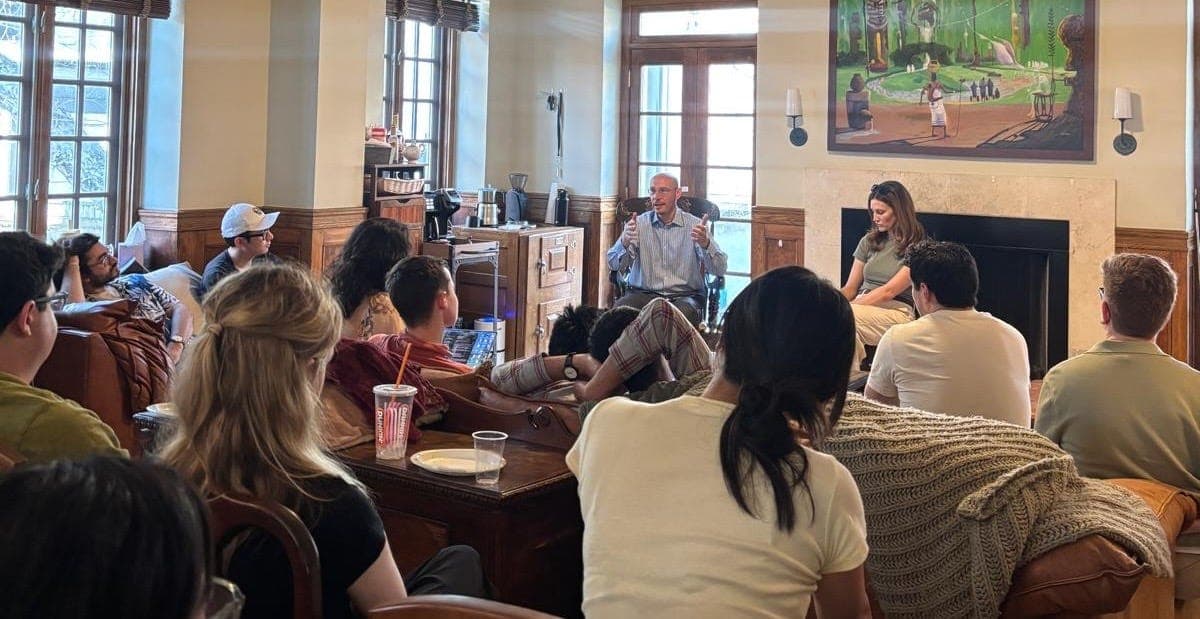
April Updates
One year ago, Ezra Klein and Derek Thompson published Abundance, and what had been a niche policy conversation exploded into a full-blown movement. In the ensuing twelve months, abundance has reshaped how candidates campaign, what governors are signing into law, and how Congress legislates on housing and energy. And we’ve been right in the middle of it. This spring has been a particularly intense stretch for us. Congress is deep in debates over two of our core issues – housing and energy – and we’ve been on the Hill every week pushing them forward. And after comprehensive strategic planning last fall, we’re spinning up longer-term projects that will expand our impact well beyond D.C. Here’s what’s happening. What We’re Doing On the Hill Big news for the bipartisan Congressional Build America Caucus: Rep. Celeste Maloy (R-UT) has joined Rep. Josh Harder (D-CA) as co-chair – a pairing that underscores what makes this caucus effective in a divided Congress. The BAC continues to lead on geothermal energy and housing, hosting focused member and staff briefings and building the kind of bipartisan coalitions that actually move legislation. Senator Schatz citing statements we helped coordinate on the Senate floor The push for a landmark housing package hit some speed bumps last month when anti-supply measures were added to the Senate bill. We helped coordinate more than 100 pro-housing organizations to sign two coalition statements backing targeted changes to the bill – statements that were cited by Senator Brian Schatz on the Senate floor and got coverage in the Washington Post, the New York Times, and NOTUS. For more on the complicated dynamics and the path forward, check out our head of government and external affairs Baillee Brown’s take in The Abundant Future. On energy, permitting reform talks are back after we signed on to a letter encouraging Senate leaders to move forward on comprehensive permitting legislation. This is a huge step closer to Congress reaching a deal that could unlock faster, cheaper building for energy projects across the country. And on government effectiveness, we released a new report and explainer on AI and the federal workforce, followed by a Congressional staff briefing featuring experts from Google, Accenture Federal Services, and the Partnership for Public Service. Expanding the Agenda As Matt Yglesias notes, abundance is a bit like the half-drawn horse meme: the housing and energy agenda is fleshed-out but the rest of the policy agenda is still just a sketch. Inclusive Abundance is changing that – more on our larger project soon! – and one of the first areas we’re focusing on is child care. With funding from the Consensus Fund, we’re bringing the supply-side, outcomes-oriented abundance lens to child care policy. If you know policy experts or thought leaders in this space, we want to hear from you. We’re building a community around child care abundance and could use your help connecting us to the right people. Making the Case We’ve also been busy spreading the news of abundance far and wide. In January, our head of policy Joshua Seawell moderated a conversation with Build America Caucus members Reps. Scott Peters and Laura Friedman at the Festival of Progressive Abundance in Los Angeles. Baillee spoke at the Democracy Journal conference in February, and in March, Derek and Baillee spoke with DC Abundance about our work to build a larger abundance movement. Derek and Baillee speak to a packed room at Abundance DC Last month at an NYC summit on next-generation leadership, Derek also moderated a conversation with Governor Mikie Sherrill about the ways in which abundance can be part of how Democrats fix the party’s brand and deliver more for voters. (As she’s been modeling!) Meanwhile, our Substack, The Abundant Future, is continuing to ramp up. We’ve published several pieces worth checking out, including: Catherine Vaughan of Abundance New York on how Gov. Hochul and Mayor Mamdani are finding common ground through abundance Rep. Josh Harder on how abundance will help build a politics of hope, ambition, and growth Sonja Trauss of YIMBY Law on what the next big housing plan should look like And our own Joshua Seawell on whether abundance’s quest for growth leads to happiness We’re also making the abundance case to Congressional candidates and their staff behind the scenes. If you’re connected to a candidate or staff member and think they’d benefit from issue education and support on housing, energy, or government effectiveness policy or messaging, let us know. That’s what we’re here for. What We’re Thinking From housing to energy, it’s clear that abundance thinking is shaping the policy debates about how to lower prices. But it’s also been promising that abundance is increasingly influencing the 2028 conversation. Illinois Gov. JB Pritzker is saying “it’s time to build,” Pennsylvania Gov. Shapiro has made “Get Shit Done” his slogan, and California Gov. Newsom is telling Los Angeles that dragging their feet on housing goals is UNACCEPTABLE (his emphasis, not ours). Meanwhile, we’re seeing this from New York: Some may still doubt whether abundance has “juice” with voters, but clearly the elected officials leading states and looking to lead the country are all in. What We’re Reading, Watching, and Listening to Joshua and the Metropolitan Abundance Project’s Ed Mendoza explain in the LA Times how to foster YIMBYism through more beautiful development Baillee on the Statecraft podcast, giving the inside scoop on how a Congressional office works Derek sharing how he’s used his theory of “policy philanthropy” to advance abundance at the Roots of Progress conference last fall (the video is finally out!) Two great pieces from The Argument: Jerusalem Demsas pushes back on the idea that abundance advocates aren’t sincere about our criticism of bad regulation, and Kelsey Piper goes after Democrats for delivering reports instead of action And two more in The Atlantic: one about why we should let government workers use their judgment more, another about why California has failed to build the housing it needs What We’re Looking Forward to We’ll be speaking at WelcomeFest 2026, the largest annual public gathering of centrists, on Wednesday, June 3, in Washington, DC. If you’re interested in attending, register HERE. Hope to see you there! This newsletter is a product of Inclusive Abundance Action, our 501(c)(4).
April Updates
One year ago, Ezra Klein and Derek Thompson published Abundance, and what had been a niche policy conversation exploded into a full-blown movement. In the ensuing twelve months, abundance has reshaped how candidates campaign, what governors are signing into law, and how Congress legislates on housing and energy. And we’ve been right in the middle of it. This spring has been a particularly intense stretch for us. Congress is deep in debates over two of our core issues – housing and energy – and we’ve been on the Hill every week pushing them forward. And after comprehensive strategic planning last fall, we’re spinning up longer-term projects that will expand our impact well beyond D.C. Here’s what’s happening. What We’re Doing On the Hill Big news for the bipartisan Congressional Build America Caucus: Rep. Celeste Maloy (R-UT) has joined Rep. Josh Harder (D-CA) as co-chair – a pairing that underscores what makes this caucus effective in a divided Congress. The BAC continues to lead on geothermal energy and housing, hosting focused member and staff briefings and building the kind of bipartisan coalitions that actually move legislation. Senator Schatz citing statements we helped coordinate on the Senate floor The push for a landmark housing package hit some speed bumps last month when anti-supply measures were added to the Senate bill. We helped coordinate more than 100 pro-housing organizations to sign two coalition statements backing targeted changes to the bill – statements that were cited by Senator Brian Schatz on the Senate floor and got coverage in the Washington Post, the New York Times, and NOTUS. For more on the complicated dynamics and the path forward, check out our head of government and external affairs Baillee Brown’s take in The Abundant Future. On energy, permitting reform talks are back after we signed on to a letter encouraging Senate leaders to move forward on comprehensive permitting legislation. This is a huge step closer to Congress reaching a deal that could unlock faster, cheaper building for energy projects across the country. And on government effectiveness, we released a new report and explainer on AI and the federal workforce, followed by a Congressional staff briefing featuring experts from Google, Accenture Federal Services, and the Partnership for Public Service. Expanding the Agenda As Matt Yglesias notes, abundance is a bit like the half-drawn horse meme: the housing and energy agenda is fleshed-out but the rest of the policy agenda is still just a sketch. Inclusive Abundance is changing that – more on our larger project soon! – and one of the first areas we’re focusing on is child care. With funding from the Consensus Fund, we’re bringing the supply-side, outcomes-oriented abundance lens to child care policy. If you know policy experts or thought leaders in this space, we want to hear from you. We’re building a community around child care abundance and could use your help connecting us to the right people. Making the Case We’ve also been busy spreading the news of abundance far and wide. In January, our head of policy Joshua Seawell moderated a conversation with Build America Caucus members Reps. Scott Peters and Laura Friedman at the Festival of Progressive Abundance in Los Angeles. Baillee spoke at the Democracy Journal conference in February, and in March, Derek and Baillee spoke with DC Abundance about our work to build a larger abundance movement. Derek and Baillee speak to a packed room at Abundance DC Last month at an NYC summit on next-generation leadership, Derek also moderated a conversation with Governor Mikie Sherrill about the ways in which abundance can be part of how Democrats fix the party’s brand and deliver more for voters. (As she’s been modeling!) Meanwhile, our Substack, The Abundant Future, is continuing to ramp up. We’ve published several pieces worth checking out, including: Catherine Vaughan of Abundance New York on how Gov. Hochul and Mayor Mamdani are finding common ground through abundance Rep. Josh Harder on how abundance will help build a politics of hope, ambition, and growth Sonja Trauss of YIMBY Law on what the next big housing plan should look like And our own Joshua Seawell on whether abundance’s quest for growth leads to happiness We’re also making the abundance case to Congressional candidates and their staff behind the scenes. If you’re connected to a candidate or staff member and think they’d benefit from issue education and support on housing, energy, or government effectiveness policy or messaging, let us know. That’s what we’re here for. What We’re Thinking From housing to energy, it’s clear that abundance thinking is shaping the policy debates about how to lower prices. But it’s also been promising that abundance is increasingly influencing the 2028 conversation. Illinois Gov. JB Pritzker is saying “it’s time to build,” Pennsylvania Gov. Shapiro has made “Get Shit Done” his slogan, and California Gov. Newsom is telling Los Angeles that dragging their feet on housing goals is UNACCEPTABLE (his emphasis, not ours). Meanwhile, we’re seeing this from New York: Some may still doubt whether abundance has “juice” with voters, but clearly the elected officials leading states and looking to lead the country are all in. What We’re Reading, Watching, and Listening to Joshua and the Metropolitan Abundance Project’s Ed Mendoza explain in the LA Times how to foster YIMBYism through more beautiful development Baillee on the Statecraft podcast, giving the inside scoop on how a Congressional office works Derek sharing how he’s used his theory of “policy philanthropy” to advance abundance at the Roots of Progress conference last fall (the video is finally out!) Two great pieces from The Argument: Jerusalem Demsas pushes back on the idea that abundance advocates aren’t sincere about our criticism of bad regulation, and Kelsey Piper goes after Democrats for delivering reports instead of action And two more in The Atlantic: one about why we should let government workers use their judgment more, another about why California has failed to build the housing it needs What We’re Looking Forward to We’ll be speaking at WelcomeFest 2026, the largest annual public gathering of centrists, on Wednesday, June 3, in Washington, DC. If you’re interested in attending, register HERE. Hope to see you there! This newsletter is a product of Inclusive Abundance Action, our 501(c)(4).
April Updates
One year ago, Ezra Klein and Derek Thompson published Abundance, and what had been a niche policy conversation exploded into a full-blown movement. In the ensuing twelve months, abundance has reshaped how candidates campaign, what governors are signing into law, and how Congress legislates on housing and energy. And we’ve been right in the middle of it. This spring has been a particularly intense stretch for us. Congress is deep in debates over two of our core issues – housing and energy – and we’ve been on the Hill every week pushing them forward. And after comprehensive strategic planning last fall, we’re spinning up longer-term projects that will expand our impact well beyond D.C. Here’s what’s happening. What We’re Doing On the Hill Big news for the bipartisan Congressional Build America Caucus: Rep. Celeste Maloy (R-UT) has joined Rep. Josh Harder (D-CA) as co-chair – a pairing that underscores what makes this caucus effective in a divided Congress. The BAC continues to lead on geothermal energy and housing, hosting focused member and staff briefings and building the kind of bipartisan coalitions that actually move legislation. Senator Schatz citing statements we helped coordinate on the Senate floor The push for a landmark housing package hit some speed bumps last month when anti-supply measures were added to the Senate bill. We helped coordinate more than 100 pro-housing organizations to sign two coalition statements backing targeted changes to the bill – statements that were cited by Senator Brian Schatz on the Senate floor and got coverage in the Washington Post, the New York Times, and NOTUS. For more on the complicated dynamics and the path forward, check out our head of government and external affairs Baillee Brown’s take in The Abundant Future. On energy, permitting reform talks are back after we signed on to a letter encouraging Senate leaders to move forward on comprehensive permitting legislation. This is a huge step closer to Congress reaching a deal that could unlock faster, cheaper building for energy projects across the country. And on government effectiveness, we released a new report and explainer on AI and the federal workforce, followed by a Congressional staff briefing featuring experts from Google, Accenture Federal Services, and the Partnership for Public Service. Expanding the Agenda As Matt Yglesias notes, abundance is a bit like the half-drawn horse meme: the housing and energy agenda is fleshed-out but the rest of the policy agenda is still just a sketch. Inclusive Abundance is changing that – more on our larger project soon! – and one of the first areas we’re focusing on is child care. With funding from the Consensus Fund, we’re bringing the supply-side, outcomes-oriented abundance lens to child care policy. If you know policy experts or thought leaders in this space, we want to hear from you. We’re building a community around child care abundance and could use your help connecting us to the right people. Making the Case We’ve also been busy spreading the news of abundance far and wide. In January, our head of policy Joshua Seawell moderated a conversation with Build America Caucus members Reps. Scott Peters and Laura Friedman at the Festival of Progressive Abundance in Los Angeles. Baillee spoke at the Democracy Journal conference in February, and in March, Derek and Baillee spoke with DC Abundance about our work to build a larger abundance movement. Derek and Baillee speak to a packed room at Abundance DC Last month at an NYC summit on next-generation leadership, Derek also moderated a conversation with Governor Mikie Sherrill about the ways in which abundance can be part of how Democrats fix the party’s brand and deliver more for voters. (As she’s been modeling!) Meanwhile, our Substack, The Abundant Future, is continuing to ramp up. We’ve published several pieces worth checking out, including: Catherine Vaughan of Abundance New York on how Gov. Hochul and Mayor Mamdani are finding common ground through abundance Rep. Josh Harder on how abundance will help build a politics of hope, ambition, and growth Sonja Trauss of YIMBY Law on what the next big housing plan should look like And our own Joshua Seawell on whether abundance’s quest for growth leads to happiness We’re also making the abundance case to Congressional candidates and their staff behind the scenes. If you’re connected to a candidate or staff member and think they’d benefit from issue education and support on housing, energy, or government effectiveness policy or messaging, let us know. That’s what we’re here for. What We’re Thinking From housing to energy, it’s clear that abundance thinking is shaping the policy debates about how to lower prices. But it’s also been promising that abundance is increasingly influencing the 2028 conversation. Illinois Gov. JB Pritzker is saying “it’s time to build,” Pennsylvania Gov. Shapiro has made “Get Shit Done” his slogan, and California Gov. Newsom is telling Los Angeles that dragging their feet on housing goals is UNACCEPTABLE (his emphasis, not ours). Meanwhile, we’re seeing this from New York: Some may still doubt whether abundance has “juice” with voters, but clearly the elected officials leading states and looking to lead the country are all in. What We’re Reading, Watching, and Listening to Joshua and the Metropolitan Abundance Project’s Ed Mendoza explain in the LA Times how to foster YIMBYism through more beautiful development Baillee on the Statecraft podcast, giving the inside scoop on how a Congressional office works Derek sharing how he’s used his theory of “policy philanthropy” to advance abundance at the Roots of Progress conference last fall (the video is finally out!) Two great pieces from The Argument: Jerusalem Demsas pushes back on the idea that abundance advocates aren’t sincere about our criticism of bad regulation, and Kelsey Piper goes after Democrats for delivering reports instead of action And two more in The Atlantic: one about why we should let government workers use their judgment more, another about why California has failed to build the housing it needs What We’re Looking Forward to We’ll be speaking at WelcomeFest 2026, the largest annual public gathering of centrists, on Wednesday, June 3, in Washington, DC. If you’re interested in attending, register HERE. Hope to see you there! This newsletter is a product of Inclusive Abundance Action, our 501(c)(4).