9 stories credited to The-downballot
Latest story Sep 18, 2026 · on ChamberLight since Apr 2026
A story can appear as several articles (copies of the same piece), so counts of stories and of articles differ.
Scores for The-downballot
Writing quality not enough rated stories yet: 8 of 10. How it is measured
Scores last checked Sep 25, 2026.
Stories ChamberLight collected, by month
Stories credited to The-downballot, by publication date. ChamberLight collects articles that mention the officials it tracks, so this shows its own coverage of this source, not how much the source publishes.
- Stories from The-downballot
- Shaded: ChamberLight collected no stories, or almost none, from any outlet (a gap in its collection, not in the outlet’s publishing)
Show as a table
| Month | Stories | All outlets |
|---|---|---|
| March 2026 | 1 | 653 |
| April 2026 | 5 | 4,538 |
| May 2026 | 0 | none collected |
| June 2026 | 0 | none collected |
| July 2026 | 0 | none collected |
| August 2026 | 0 | 1 (collection gap) |
| September 2026 | 3 | 1,320 |
Top topics
Share of this source’s stories tagged with each topic. A story can carry several topics, so the shares do not add up to 100%.
- Voting Rights7
78% of 9 stories · 19% across all outlets
- Ethics/Corruption5
56% of 9 stories · 58% across all outlets
- Budget/Spending4
44% of 9 stories · 31% across all outlets
- Economy2
22% of 9 stories · 26% across all outlets
- Criminal Justice1
11% of 9 stories · 19% across all outlets
- Environment/Climate1
11% of 9 stories · 5% across all outlets
- Immigration1
11% of 9 stories · 13% across all outlets
- Infrastructure1
11% of 9 stories · 8% across all outlets
The thin mark on each bar is the topic’s share across all outlets.
Who they cover
Party of the officials these stories are mainly about, across all 18 officials named. A story counts once for each official it is mainly about, so the split is over 18 story–official pairs, from 9 stories.
- Republican44% · 8 pairs
- Democrat28% · 5 pairs
- Party not recorded28% · 5 pairs
Most covered
Stories mainly about each official, and their share of the source’s 9 stories.
- 1Anthony D’EspositoR1 story · 11%
- 2Bill CassidyR1 story · 11%
- 3Cindy Hyde-SmithR1 story · 11%
- 4Dan Osborn–1 story · 11%
- 5Eric SwalwellD1 story · 11%
- 6Eugene VindmanD1 story · 11%
- 7Isabel GuzmanD1 story · 11%
- 8Janet Mills–1 story · 11%
- 9John CornynR1 story · 11%
- 10Ken CalvertR1 story · 11%
+ 8 other officials (8 story–official pairs)
Article tone
ChamberLight’s article analysis assigns each story a tone toward the official it covers. It describes the coverage of that official, not The-downballot’s stance, and reader votes do not change it. 9 stories.
- Good Look
- 2 (22%)
- Mixed
- 5 (56%)
- Informational
- 1 (11%)
- Bad Look
- 1 (11%)
Challenges to these scores
No one has challenged a score on this page yet. Anyone can; editors publish every outcome here.
Articles served from the-downballot.com
18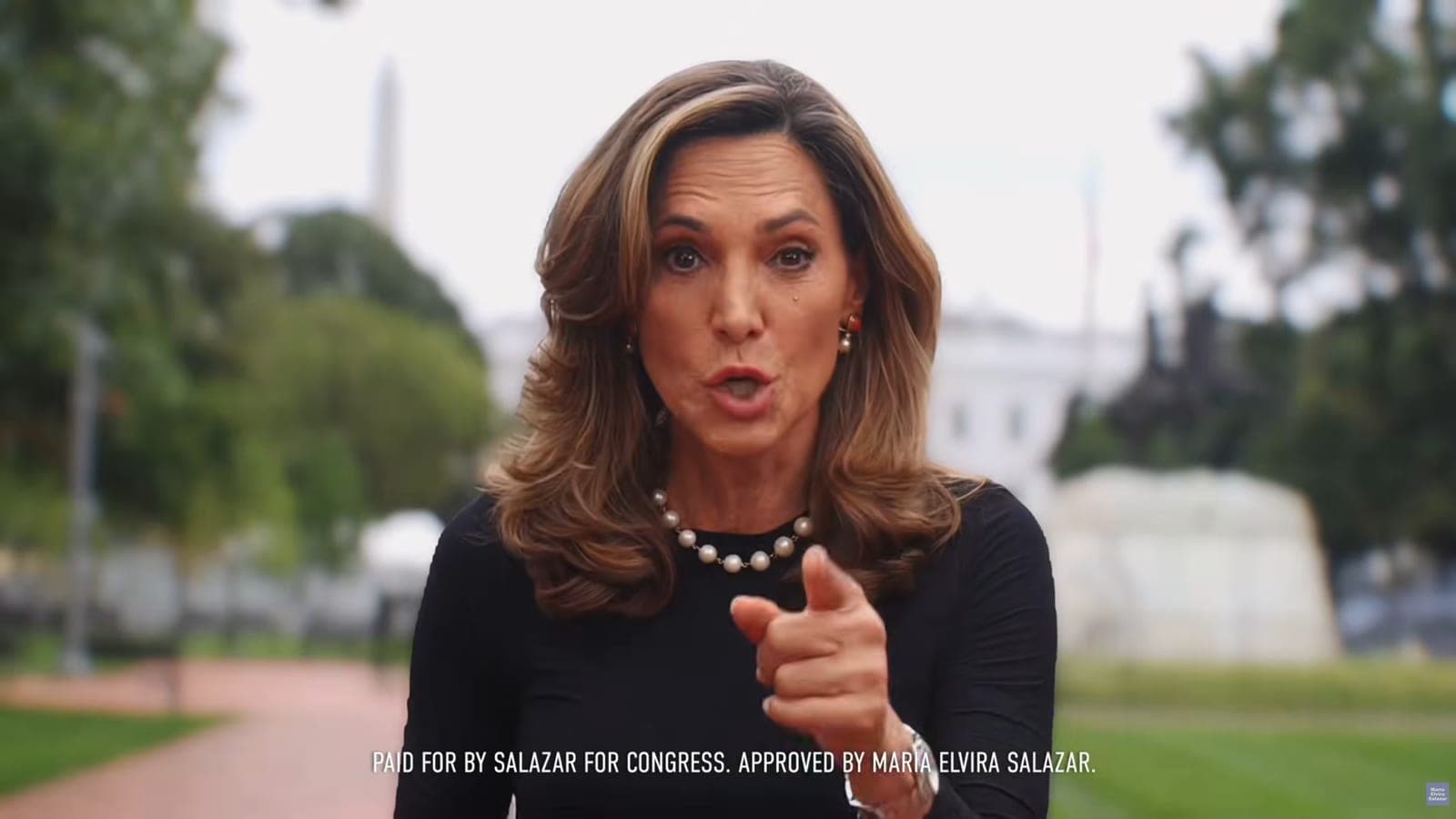
Morning Digest, sponsored by Oath: Vulnerable Republican pleads with Trump to dial back hardline immigration policies
But Maria Elvira Salazar has been a reliable GOP vote—and faces the wrath of Latino voters

Morning Digest, sponsored by Oath: Republicans steer cash to Nebraska's Senate race
The GOP is trying to label independent Dan Osborn a Democrat

Morning Digest: Why Mississippi's Senate race won't go to a runoff—no matter what
The contest will end in November, even if no one wins a majority of the vote

Morning Digest: Virginia voters approve new map that could elect four more Democrats
Former Rep. Tom Perriello is one of the many Virginia Democrats running under the new map voters just approved. (Credit: Tom Perriello Facebook) Leading Off VA Redistricting Virginia voters approved a constitutional amendment by a 51.4 to 48.6 margin to allow the state to adopt a new congressional map designed to give Democrats control of 10 of the 11 congressional districts. Republicans are still waging a legal battle to stop the new map, and the state Supreme Court is set to hear arguments next week. But if Republicans lose in court after losing at the ballot box, conservative candidates—including members of the Old Dominion’s five-member GOP delegation—will need to decide where, or if, they’ll run this fall. But while Republicans hoped to make this problem moot by defeating the referendum, Democrats began launching campaigns for the redrawn districts soon after lawmakers unveiled the new boundaries in February. The victory for the “yes” side on Tuesday is also sure to spur a new wave of campaign kickoffs from Democrats ahead of the May 26 candidate filing deadline. Del. Elizabeth Guzman, for instance, announced Wednesday morning that she would seek the Democratic nomination in the new 7th District, which already features a large roster of candidates. Whoever wins the Aug. 4 Democratic primary for the 7th, as well as in several other revamped seats, will be in a strong position to prevail in the general election. Below, we go seat-by-seat to assess where candidates are already running. We also include how each district would have voted in the 2024 presidential election, based on data from the Redistricting Data Hub uploaded to Dave’s Redistricting App. You can also find a summary in this chart. Credit: Stephen Wolf/The Downballot VA-01 (52-45 Harris) Democratic Rep. Eugene Vindman announced in February that he would seek reelection in the new 1st District, which would be the natural successor to his current 7th District. Vindman will be favored against any Republican opponents in this new constituency, which extends from Northern Virginia south to Richmond’s suburbs. VA-02 (52-47 Harris) While Republican Rep. Jen Kiggans’ 2nd District is still based in the Virginia Beach area, mapmakers transformed it from a seat Donald Trump narrowly carried into one Kamala Harris would have taken by 5 percentage points. Former Rep. Elaine Luria, who Kiggans unseated in a close 2022 general election, launched her rematch campaign last year just as Democrats were planning the remap. A few other Democrats are also running, but they’ve all struggled to raise the kind of money necessary to wage a strong campaign against the well-known and well-funded Luria. VA-05 (53-45 Harris) Democrat Shannon Taylor, the commonwealth’s attorney for Henrico County, had been waging a challenge against Republican Rep. Rob Wittman in the 1st District, but she said in February she’d instead run in the 5th. Taylor currently faces no serious intraparty opposition in the 5th, which now includes part of the Richmond suburbs, as she waits to learn if Republicans will field a strong candidate against her. GOP Rep. John McGuire could run here, though his home was drawn into the 7th. Upgrade to support The Downballot VA-06 (51-48 Harris) Two prominent Democrats have already converged on the new 6th, which now includes Staunton, Charlottesville, and Lynchburg. Former Rep. Tom Perriello, who scored a major upset victory in 2008 before losing a close reelection contest two years later, says he’ll wage a comeback campaign here. Journalist Beth Macy, who wrote the 2018 nonfiction bestseller “Dopesick” about the opioid crisis, also will seek the Democratic nod. Republican Rep. Ben Cline, a four-term incumbent who has represented safely red versions of the 6th during his entire tenure, will need to decide if he’ll try to defend what’s now a light blue seat. Cline could instead switch over to the heavily Republican 9th, though he’d be in for a tough primary battle against Rep. Morgan Griffith. VA-07 (53-45 Harris) Del. Elizabeth Guzman, who would be the first Hispanic person to represent Virginia in Congress, announced Wednesday that she was entering an already packed Democratic primary for the 7th, which includes part of Northern Virginia and communities to the south like Culpeper. Guzman, who lost to Eugene Vindman in the 2024 primary for the old 7th, joins fellow Dels. Dan Helmer and Adele McClure. The field also includes former federal prosecutor J.P. Cooney; attorney Dorothy McAuliffe, the wife of former Gov. Terry McAuliffe; state Sen. Saddam Salim; and Olivia Troye, a former national security adviser to Mike Pence who left the White House in 2020 to advocate against Trump’s reelection. McGuire, as noted above, could potentially run here, though this district is considerably different from the conservative constituency he won in 2024. VA-08 (58-40 Harris) Democratic Rep. Don Beyer remains well-positioned to win reelection in the revamped 8th, which now sprawls from Arlington and Alexandria to just south of Yorktown. His most serious intraparty opponent appears to be Navy veteran Jason Knapp, who initially planned to oppose Wittman but reiterated Tuesday evening that he’d take on Beyer. Beyer finished March with a $755,000 to $265,000 cash-on-hand lead against Knapp, who has self-funded a large portion of his campaign. A few other Democrats are also opposing Beyer, but none have brought in much money. It’s possible that Beyer, who has represented a safely blue seat since he was first elected in 2014, will face opposition from one of his colleagues from the other side of the aisle. If Wittman, who was left with no good places to run, decides not to retire and instead wages a long-shot bid to remain in Congress, he’d likely do so in the 8th, which includes his residence. VA-09 (74-25 Trump) The 9th, in the southwestern corner of the state, would become Virginia’s only GOP safe haven, and longtime Republican Rep. Morgan Griffith would be sure to run here. It remains to be seen if Cline will try to remain in Congress by taking on his colleague in the primary, or if Griffith will be the only Republican in the state’s delegation to have an easy reelection campaign. VA-11 (55-42 Harris) Democratic Rep. James Walkinshaw, who was elected last year in a special election, faces a notable primary opponent, but he remains the favorite. Retired Space Force Col. Bree Fram, who was ousted from the military last year because of Donald Trump’s ban on trans service members, said in January she’d “run in the district where my house is.” Fram, who has since confirmed she’d take on Walkinshaw, was the subject of a recent profile in Politico detailing what she acknowledged would be a difficult campaign. Walkinshaw ended March with close to $800,000 banked to defend himself in the new 11th, which is situated in Northern Virginia. Fram, for her part, had a little less than $140,000 available. The 3rd, 4th, and 10th districts would all remain solidly Democratic, and their current incumbents are all likely to seek reelection, without much in the way of GOP opposition. House FL-20 Democratic Rep. Sheila Cherfilus-McCormick resigned from Congress Tuesday afternoon just before the House Ethics Committee was scheduled to announce whether it would recommend her expulsion. Federal authorities indicted Cherfilus-McCormick last year for allegedly using stolen taxpayer funds to finance her victorious 2021 primary campaign for Florida’s safely blue 20th Congressional District. While Cherfilus-McCormick’s trial has been delayed until February, the Ethics Committee last month found her guilty of 25 counts of misconduct related to the same affair. But Cherfilus-McCormick, who was facing multiple primary opponents in her South Florida constituency, decided to quit before she could be forced out. “This was not a fair process,” Cherfilus-McCormick wrote in her statement announcing her resignation, which took effect immediately. “By going forward with this process while a criminal indictment is pending, the Committee prevented me from defending myself.” Cherfilus-McCormick’s departure both removes her from the Committee’s jurisdiction and leaves the 20th District, which includes inland areas around Fort Lauderdale and Palm Beach, without a representative for the second time in half a decade. Cherfilus-McCormick herself was elected in January of 2022 to replace Democratic Rep. Alcee Hastings, a veteran congressman who died the previous April. Republican Gov. Ron DeSantis, who chose to keep the seat vacant for nearly a year after Hastings’ death, has yet to say when, or even if, there will be a special election for the remainder of Cherfilus-McCormick’s term. There will, however, be a busy race to succeed Cherfilus-McCormick in the next Congress. Former Broward County Commissioner Dale Holness, who lost the 2021 special primary to Cherfilus-McCormick by all of five votes before badly losing their rematch the next year, and perennial candidate Elijah Manley each began challenging the incumbent last year. They were joined in February by Luther Campbell, the famed rapper who co-founded the hip-hop group 2 Live Crew, and physician Rudy Moise, who unsuccessfully ran for the House in both 2010 and 2012. The deadline for U.S. House candidates to file to run isn’t until June 12, so other prospective candidates have several weeks to decide whether to join them in the Aug. 18 primary. Cherfilus-McCormick’s resignation, which came the week after Democrat Eric Swalwell of California and Republican Tony Gonzales of Texas each stepped down following separate scandals involving sexual misconduct, leaves the GOP caucus with a 218-213 majority. The final vacant seat was held by Rep. Doug LaMalfa, a California Republican who died in January. While California Gov. Gavin Newsom has scheduled special elections to replace LaMalfa and Swalwell, Texas Gov. Greg Abbott has yet to act. Upgrade to support The Downballot NY-04 Former Assemblywoman Taylor Darling said this week she was ending her longshot primary campaign against Democratic Rep. Laura Gillen in New York’s 4th District. Gillen will likely face Republican Jeanine Driscoll, who serves as receiver of taxes for the Town of Hempstead, in the general election for this competitive constituency on Long Island. Driscoll only entered the race last week after local GOP leaders spent over a year waiting in vain for former Rep. Anthony D’Esposito to seek a rematch against Gillen. NY-21 Donald Trump has backed Anthony Constantino, a wealthy sticker magnate whom New York Republicans fear could jeopardize their prospects of holding Rep. Elise Stefanik’s House seat. Constantino faces Assemblyman Robert Smullen, who has the endorsement of the state Republican Party, in the June 23 primary for the 21st District in the northernmost part of the state. Smullen, though, is already assured a spot in the general election thanks to his support from the New York Conservative Party, and there’s reason to think he’d use it to continue his campaign if he loses the primary to Constantino. The Watertown Daily Times’ Alex Gault wrote earlier this month that Conservative leaders “specifically asked that Smullen keep their party line no matter what happens with the GOP primary.” Smullen himself also responded to Trump’s decision to endorse Constantino by telling reporters, “I’ll be on the ballot in November on the Conservative line and I’m confident that I’m going to win the Republican primary.” Democrats, meanwhile, have largely consolidated behind dairy farmer Blake Gendebien. Gendebien, who began raising money in late 2024 for a special election to replace Stefanik that never ended up taking place, finished March with close to $2.5 million stockpiled for this fall’s general election. All of this has given Republicans an unwelcome flashback to the 2009 special election for a previous incarnation of this seat, when Republicans and Conservatives fielded rival candidates, paving the way for a historic Democratic flip. State law required local GOP leaders, rather than primary voters, to choose their nominee in the contest to replace John McHugh, a moderate Republican who resigned to become Barack Obama’s secretary of the Army, in what was then numbered the 23rd District. They opted for Assemblywoman Dede Scozzafava, another centrist who initially seemed well-positioned to defend a historically Republican seat that Obama carried the previous year. One important organization, though, was unwilling to fall into line. While the Conservative Party almost always nominates the same candidate as the Republicans—something it’s able to do because of New York’s unusual fusion voting system—its leadership decided instead to give its spot on the ballot to accountant Doug Hoffman. What followed was a strange three-way general election between Scozzafava, Hoffman, and Democrat Bill Owens. Things became even more chaotic during the final weekend when Scozzafava suspended her campaign and endorsed Owens. Owens ended up beating Hoffman 48-46 as Scozzafava secured the remaining 6%, a win that made him the first Democrat to represent this area in the House since the 19th century. But while Owens would go on to win two full terms, his decision to retire ahead of the 2014 elections helped propel Stefanik to an easy victory in the general election for what was now the 21st District. Trump’s strength in rural areas helped rapidly transform Stefanik’s constituency into solidly red turf for the next decade. Trump in 2024 carried this district in a 60-39 blowout, while Stefanik had no trouble winning what would turn out to be her final term. Trump soon announced that he was nominating Stefanik to become his ambassador to the United Nations, and several Republicans stepped forward to run in what they believed was an imminent special election to replace her in a solidly red seat. One of those Republicans was Constantino, who was the subject of a 2024 New York Times story detailing his feud with city leaders in his sticker company’s hometown of Amsterdam over a giant illuminated pro-Trump sign he placed atop his headquarters that the mayor said violated municipal codes. But Constantino, who told Republican leaders that he’d run in 2026 whether or not they nominated him for the special, quickly made more enemies on the right. Constantino would later post audio of what he said was a call with Conservative Party head Gerard Kassar where Kassar was heard saying, “Telling us that you’re going to run in November is just a bigger reason why we intend to kill you … If you get knocked out of the special, then you tell us you’re going to run in November, then we’re going to do everything in our power to make sure you’re destroyed before you get to November.” “Was it hyperbole? I don’t know,” Constantino said last summer after sharing the recording. “My aide’s brake lines were subsequently cut.” Kassar subsequently filed a defamation lawsuit against Constantino that has yet to be resolved. Upgrade to support The Downballot Constantino made those comments well after Trump pulled Stefanik’s nomination amid escalating Republican worries about their ability to win special elections in red districts. Stefanik went on to announce last November that she would challenge Democratic Gov. Kathy Hochul, and while she ended her campaign the next month, Stefanik stuck to her plan to leave the House. Smullen and Constantino are now facing off in a nasty and expensive primary where Constantino has continued to antagonize just about everyone. Constantino was ejected from a local Republican meeting in February after he repeatedly heckled his rival, and he responded to the state GOP’s subsequent decision to endorse Smullen by promising to “clean out the Republican committees because they are losers.” Constantino’s vast wealth, though, has given him a huge financial advantage. Constantino, who is self-funding virtually his entire campaign, ended March with a roughly $3.5 million to $960,000 cash-on-hand advantage over Smullen. Constantino got an even bigger boost Tuesday when Trump told his Truth Social followers, “Anthony is strongly supported by many of the most Highly Respected MAGA Warriors in our Movement, including Mayor Rudy Giuliani and Roger Stone!” Smullen, though, believes that Constantino’s deep pockets and endorsement from Trump will only take him so far. Smullen told reporters that Trump only snubbed him because of Stone, whom he called a “consultant [who] got to the president, somebody who is being paid by my opponent.” “Anthony Constantino is not the candidate voters in NY-21 support,” Smullen also said in a statement. “He has proven he is mentally unfit to serve in Congress.” WI-07 Wealthy attorney Paul Wassgren announced Tuesday that he was dropping out of the August Republican primary for Wisconsin’s open 7th District, a conservative constituency in the northwestern corner of the state. The GOP frontrunner is Michael Alfonso, a podcaster producer whose main qualification is that he’s the son-in-law of Transportation Secretary Sean Duffy and Fox host Rachel Campos-Duffy. Donald Trump endorsed Alfonso in a January Truth Social post that gushed about Alfonso’s in-laws but said little about the actual candidate. The Republican field also includes investment adviser Kevin Hermening, who has self-funded much of his campaign, and public relations professional Jessi Ebben, who lost a primary in 2020 for the neighboring 3rd District. The eventual nominee will be favored to replace Republican Rep. Tom Tiffany, who is running for governor. Other Races AZ Corporation Commission Republican state Rep. David Marshall has ended his campaign for a seat on the Arizona Corporation Commission and resigned from the legislature to accept an appointment as Navajo County recorder. Marshall and fellow state Rep. Ralph Heap, who are each allied with the state’s branch of the far-right Freedom Caucus, were running as a team for seats on the powerful body that regulates utilities across the state. The pair were hoping to defeat Commissioners Nick Myer and Kevin Thompson, whom they argued failed to do enough to advance Donald Trump’s pro-coal agenda, in the July GOP primary. But while there are serious questions about whether Marshall is allowed to become Navajo County recorder— the state constitution prohibits lawmakers from holding state or county posts “during the term for which he shall have been elected”—he didn’t wait for them to be answered before filing paperwork to end his campaign for the commission. Heap is now running solo against Myer and Thompson. The trio will compete on one statewide ballot, and voters can vote for up to two options. The two contenders with the most votes will advance to the November general election, making it possible that any mixed-and-matched set will move forward. The winners will take on Democrats Jonathon Hill and Clara Pratte, who face no intraparty opposition, in the fall. Upgrade to support The Downballot Poll Pile FL-Sen: Echelon Insights for NetChoice: Ashley Moody (R-inc): 50, Alex Vindman (D): 43. NetChoice is a trade association whose membership includes major companies like Amazon and Google. GA-Sen: Echelon: Jon Ossoff (D-inc): 52, Buddy Carter (R): 43. Ossoff (D-inc): 51, Mike Collins (R): 44. The poll did not test Derek Dooley, the third major Republican candidate. IA-Sen: Echelon: Zach Wahls (D): 46, Ashley Hinson (R): 44. Josh Turek (D): 46, Hinson (R): 45. ME-Sen: Echelon: Graham Platner (D): 51, Susan Collins (R-inc): 45. Janet Mills (D): 48, Collins (R-inc): 46. OH-Sen: Echelon: Jon Husted (R-inc): 51, Sherrod Brown (D): 45. FL-Gov: Echelon: Byron Donalds (R): 49, David Jolly (D): 43. Donalds (R): 48, Jerry Demings (D): 44. GA-Gov: Echelon: Keisha Lance Bottoms (D): 49, Burt Jones (R): 43. Bottoms (D): 49, Rick Jackson (R): 43. Bottoms (D): 46, Brad Raffensperger (R): 44. The poll did not test any other potential Democratic candidates. IA-Gov (R): Victory Enterprises for Randy Feenstra: Randy Feenstra: 41, Adam Steen: 9, Zach Lahn: 8, Brad Sherman: 5, Eddie Andrews: 5. IA-Gov: Echelon: Rob Sand (D): 51, Feenstra (R): 39. OH-Gov: Echelon: Vivek Ramaswamy (R): 49, Amy Acton (D): 44. OR-Gov (R): Nelson Research: Christine Drazan: 37, Chris Dudley: 18, Ed Diehl: 18, David Medina: 7, Danielle Bethell: 2. Nelson Research says it did not conduct this poll for a client. CA-14 (top-two primary): David Binder Research for the Working Families Party (pro-Aisha Wahab): Aisha Wahab (D): 29, Wendy Huang (R): 9, Melissa Hernandez (D): 9, Dena Maldonado (R): 8, Matt Ortega (D): 2, Rakhi Israni (D): 2, other candidates 1% or less, undecided: 35. The poll was conducted April 1-4. CA-48 (top-two primary): SurveyUSA for KGTV and the San Diego Union-Tribune: Jim Desmond (R): 25, Kevin Patrick O’Neil (R): 13, Ammar Campa-Najjar (D): 12, Marni Von Wilpert (D): 6, Mike Schaefer (D): 6, Corinna Contreras (D): 4, Brandon Riker (D): 4, Abel Chavez (D): 3, other candidates 2% or less, undecided: 24. NJ-08 (D): Center for Strategic Politics for Mussab Ali: Rob Menendez (inc): 42, Mussab Ali: 27. Editor’s Note: In our last Digest we incorrectly identified businesswoman Holly Adams as a businessman. It also incorrectly identified Betty Yee’s former position: Yee served as California’s controller, not comptroller.
Morning Digest: Virginia voters approve new map that could elect four more Democrats
Former Rep. Tom Perriello is one of the many Virginia Democrats running under the new map voters just approved. (Credit: Tom Perriello Facebook) Leading Off VA Redistricting Virginia voters approved a constitutional amendment by a 51.4 to 48.6 margin to allow the state to adopt a new congressional map designed to give Democrats control of 10 of the 11 congressional districts. Republicans are still waging a legal battle to stop the new map, and the state Supreme Court is set to hear arguments next week. But if Republicans lose in court after losing at the ballot box, conservative candidates—including members of the Old Dominion’s five-member GOP delegation—will need to decide where, or if, they’ll run this fall. But while Republicans hoped to make this problem moot by defeating the referendum, Democrats began launching campaigns for the redrawn districts soon after lawmakers unveiled the new boundaries in February. The victory for the “yes” side on Tuesday is also sure to spur a new wave of campaign kickoffs from Democrats ahead of the May 26 candidate filing deadline. Del. Elizabeth Guzman, for instance, announced Wednesday morning that she would seek the Democratic nomination in the new 7th District, which already features a large roster of candidates. Whoever wins the Aug. 4 Democratic primary for the 7th, as well as in several other revamped seats, will be in a strong position to prevail in the general election. Below, we go seat-by-seat to assess where candidates are already running. We also include how each district would have voted in the 2024 presidential election, based on data from the Redistricting Data Hub uploaded to Dave’s Redistricting App. You can also find a summary in this chart. Credit: Stephen Wolf/The Downballot VA-01 (52-45 Harris) Democratic Rep. Eugene Vindman announced in February that he would seek reelection in the new 1st District, which would be the natural successor to his current 7th District. Vindman will be favored against any Republican opponents in this new constituency, which extends from Northern Virginia south to Richmond’s suburbs. VA-02 (52-47 Harris) While Republican Rep. Jen Kiggans’ 2nd District is still based in the Virginia Beach area, mapmakers transformed it from a seat Donald Trump narrowly carried into one Kamala Harris would have taken by 5 percentage points. Former Rep. Elaine Luria, who Kiggans unseated in a close 2022 general election, launched her rematch campaign last year just as Democrats were planning the remap. A few other Democrats are also running, but they’ve all struggled to raise the kind of money necessary to wage a strong campaign against the well-known and well-funded Luria. VA-05 (53-45 Harris) Democrat Shannon Taylor, the commonwealth’s attorney for Henrico County, had been waging a challenge against Republican Rep. Rob Wittman in the 1st District, but she said in February she’d instead run in the 5th. Taylor currently faces no serious intraparty opposition in the 5th, which now includes part of the Richmond suburbs, as she waits to learn if Republicans will field a strong candidate against her. GOP Rep. John McGuire could run here, though his home was drawn into the 7th. Upgrade to support The Downballot VA-06 (51-48 Harris) Two prominent Democrats have already converged on the new 6th, which now includes Staunton, Charlottesville, and Lynchburg. Former Rep. Tom Perriello, who scored a major upset victory in 2008 before losing a close reelection contest two years later, says he’ll wage a comeback campaign here. Journalist Beth Macy, who wrote the 2018 nonfiction bestseller “Dopesick” about the opioid crisis, also will seek the Democratic nod. Republican Rep. Ben Cline, a four-term incumbent who has represented safely red versions of the 6th during his entire tenure, will need to decide if he’ll try to defend what’s now a light blue seat. Cline could instead switch over to the heavily Republican 9th, though he’d be in for a tough primary battle against Rep. Morgan Griffith. VA-07 (53-45 Harris) Del. Elizabeth Guzman, who would be the first Hispanic person to represent Virginia in Congress, announced Wednesday that she was entering an already packed Democratic primary for the 7th, which includes part of Northern Virginia and communities to the south like Culpeper. Guzman, who lost to Eugene Vindman in the 2024 primary for the old 7th, joins fellow Dels. Dan Helmer and Adele McClure. The field also includes former federal prosecutor J.P. Cooney; attorney Dorothy McAuliffe, the wife of former Gov. Terry McAuliffe; state Sen. Saddam Salim; and Olivia Troye, a former national security adviser to Mike Pence who left the White House in 2020 to advocate against Trump’s reelection. McGuire, as noted above, could potentially run here, though this district is considerably different from the conservative constituency he won in 2024. VA-08 (58-40 Harris) Democratic Rep. Don Beyer remains well-positioned to win reelection in the revamped 8th, which now sprawls from Arlington and Alexandria to just south of Yorktown. His most serious intraparty opponent appears to be Navy veteran Jason Knapp, who initially planned to oppose Wittman but reiterated Tuesday evening that he’d take on Beyer. Beyer finished March with a $755,000 to $265,000 cash-on-hand lead against Knapp, who has self-funded a large portion of his campaign. A few other Democrats are also opposing Beyer, but none have brought in much money. It’s possible that Beyer, who has represented a safely blue seat since he was first elected in 2014, will face opposition from one of his colleagues from the other side of the aisle. If Wittman, who was left with no good places to run, decides not to retire and instead wages a long-shot bid to remain in Congress, he’d likely do so in the 8th, which includes his residence. VA-09 (74-25 Trump) The 9th, in the southwestern corner of the state, would become Virginia’s only GOP safe haven, and longtime Republican Rep. Morgan Griffith would be sure to run here. It remains to be seen if Cline will try to remain in Congress by taking on his colleague in the primary, or if Griffith will be the only Republican in the state’s delegation to have an easy reelection campaign. VA-11 (55-42 Harris) Democratic Rep. James Walkinshaw, who was elected last year in a special election, faces a notable primary opponent, but he remains the favorite. Retired Space Force Col. Bree Fram, who was ousted from the military last year because of Donald Trump’s ban on trans service members, said in January she’d “run in the district where my house is.” Fram, who has since confirmed she’d take on Walkinshaw, was the subject of a recent profile in Politico detailing what she acknowledged would be a difficult campaign. Walkinshaw ended March with close to $800,000 banked to defend himself in the new 11th, which is situated in Northern Virginia. Fram, for her part, had a little less than $140,000 available. The 3rd, 4th, and 10th districts would all remain solidly Democratic, and their current incumbents are all likely to seek reelection, without much in the way of GOP opposition. House FL-20 Democratic Rep. Sheila Cherfilus-McCormick resigned from Congress Tuesday afternoon just before the House Ethics Committee was scheduled to announce whether it would recommend her expulsion. Federal authorities indicted Cherfilus-McCormick last year for allegedly using stolen taxpayer funds to finance her victorious 2021 primary campaign for Florida’s safely blue 20th Congressional District. While Cherfilus-McCormick’s trial has been delayed until February, the Ethics Committee last month found her guilty of 25 counts of misconduct related to the same affair. But Cherfilus-McCormick, who was facing multiple primary opponents in her South Florida constituency, decided to quit before she could be forced out. “This was not a fair process,” Cherfilus-McCormick wrote in her statement announcing her resignation, which took effect immediately. “By going forward with this process while a criminal indictment is pending, the Committee prevented me from defending myself.” Cherfilus-McCormick’s departure both removes her from the Committee’s jurisdiction and leaves the 20th District, which includes inland areas around Fort Lauderdale and Palm Beach, without a representative for the second time in half a decade. Cherfilus-McCormick herself was elected in January of 2022 to replace Democratic Rep. Alcee Hastings, a veteran congressman who died the previous April. Republican Gov. Ron DeSantis, who chose to keep the seat vacant for nearly a year after Hastings’ death, has yet to say when, or even if, there will be a special election for the remainder of Cherfilus-McCormick’s term. There will, however, be a busy race to succeed Cherfilus-McCormick in the next Congress. Former Broward County Commissioner Dale Holness, who lost the 2021 special primary to Cherfilus-McCormick by all of five votes before badly losing their rematch the next year, and perennial candidate Elijah Manley each began challenging the incumbent last year. They were joined in February by Luther Campbell, the famed rapper who co-founded the hip-hop group 2 Live Crew, and physician Rudy Moise, who unsuccessfully ran for the House in both 2010 and 2012. The deadline for U.S. House candidates to file to run isn’t until June 12, so other prospective candidates have several weeks to decide whether to join them in the Aug. 18 primary. Cherfilus-McCormick’s resignation, which came the week after Democrat Eric Swalwell of California and Republican Tony Gonzales of Texas each stepped down following separate scandals involving sexual misconduct, leaves the GOP caucus with a 218-213 majority. The final vacant seat was held by Rep. Doug LaMalfa, a California Republican who died in January. While California Gov. Gavin Newsom has scheduled special elections to replace LaMalfa and Swalwell, Texas Gov. Greg Abbott has yet to act. Upgrade to support The Downballot NY-04 Former Assemblywoman Taylor Darling said this week she was ending her longshot primary campaign against Democratic Rep. Laura Gillen in New York’s 4th District. Gillen will likely face Republican Jeanine Driscoll, who serves as receiver of taxes for the Town of Hempstead, in the general election for this competitive constituency on Long Island. Driscoll only entered the race last week after local GOP leaders spent over a year waiting in vain for former Rep. Anthony D’Esposito to seek a rematch against Gillen. NY-21 Donald Trump has backed Anthony Constantino, a wealthy sticker magnate whom New York Republicans fear could jeopardize their prospects of holding Rep. Elise Stefanik’s House seat. Constantino faces Assemblyman Robert Smullen, who has the endorsement of the state Republican Party, in the June 23 primary for the 21st District in the northernmost part of the state. Smullen, though, is already assured a spot in the general election thanks to his support from the New York Conservative Party, and there’s reason to think he’d use it to continue his campaign if he loses the primary to Constantino. The Watertown Daily Times’ Alex Gault wrote earlier this month that Conservative leaders “specifically asked that Smullen keep their party line no matter what happens with the GOP primary.” Smullen himself also responded to Trump’s decision to endorse Constantino by telling reporters, “I’ll be on the ballot in November on the Conservative line and I’m confident that I’m going to win the Republican primary.” Democrats, meanwhile, have largely consolidated behind dairy farmer Blake Gendebien. Gendebien, who began raising money in late 2024 for a special election to replace Stefanik that never ended up taking place, finished March with close to $2.5 million stockpiled for this fall’s general election. All of this has given Republicans an unwelcome flashback to the 2009 special election for a previous incarnation of this seat, when Republicans and Conservatives fielded rival candidates, paving the way for a historic Democratic flip. State law required local GOP leaders, rather than primary voters, to choose their nominee in the contest to replace John McHugh, a moderate Republican who resigned to become Barack Obama’s secretary of the Army, in what was then numbered the 23rd District. They opted for Assemblywoman Dede Scozzafava, another centrist who initially seemed well-positioned to defend a historically Republican seat that Obama carried the previous year. One important organization, though, was unwilling to fall into line. While the Conservative Party almost always nominates the same candidate as the Republicans—something it’s able to do because of New York’s unusual fusion voting system—its leadership decided instead to give its spot on the ballot to accountant Doug Hoffman. What followed was a strange three-way general election between Scozzafava, Hoffman, and Democrat Bill Owens. Things became even more chaotic during the final weekend when Scozzafava suspended her campaign and endorsed Owens. Owens ended up beating Hoffman 48-46 as Scozzafava secured the remaining 6%, a win that made him the first Democrat to represent this area in the House since the 19th century. But while Owens would go on to win two full terms, his decision to retire ahead of the 2014 elections helped propel Stefanik to an easy victory in the general election for what was now the 21st District. Trump’s strength in rural areas helped rapidly transform Stefanik’s constituency into solidly red turf for the next decade. Trump in 2024 carried this district in a 60-39 blowout, while Stefanik had no trouble winning what would turn out to be her final term. Trump soon announced that he was nominating Stefanik to become his ambassador to the United Nations, and several Republicans stepped forward to run in what they believed was an imminent special election to replace her in a solidly red seat. One of those Republicans was Constantino, who was the subject of a 2024 New York Times story detailing his feud with city leaders in his sticker company’s hometown of Amsterdam over a giant illuminated pro-Trump sign he placed atop his headquarters that the mayor said violated municipal codes. But Constantino, who told Republican leaders that he’d run in 2026 whether or not they nominated him for the special, quickly made more enemies on the right. Constantino would later post audio of what he said was a call with Conservative Party head Gerard Kassar where Kassar was heard saying, “Telling us that you’re going to run in November is just a bigger reason why we intend to kill you … If you get knocked out of the special, then you tell us you’re going to run in November, then we’re going to do everything in our power to make sure you’re destroyed before you get to November.” “Was it hyperbole? I don’t know,” Constantino said last summer after sharing the recording. “My aide’s brake lines were subsequently cut.” Kassar subsequently filed a defamation lawsuit against Constantino that has yet to be resolved. Upgrade to support The Downballot Constantino made those comments well after Trump pulled Stefanik’s nomination amid escalating Republican worries about their ability to win special elections in red districts. Stefanik went on to announce last November that she would challenge Democratic Gov. Kathy Hochul, and while she ended her campaign the next month, Stefanik stuck to her plan to leave the House. Smullen and Constantino are now facing off in a nasty and expensive primary where Constantino has continued to antagonize just about everyone. Constantino was ejected from a local Republican meeting in February after he repeatedly heckled his rival, and he responded to the state GOP’s subsequent decision to endorse Smullen by promising to “clean out the Republican committees because they are losers.” Constantino’s vast wealth, though, has given him a huge financial advantage. Constantino, who is self-funding virtually his entire campaign, ended March with a roughly $3.5 million to $960,000 cash-on-hand advantage over Smullen. Constantino got an even bigger boost Tuesday when Trump told his Truth Social followers, “Anthony is strongly supported by many of the most Highly Respected MAGA Warriors in our Movement, including Mayor Rudy Giuliani and Roger Stone!” Smullen, though, believes that Constantino’s deep pockets and endorsement from Trump will only take him so far. Smullen told reporters that Trump only snubbed him because of Stone, whom he called a “consultant [who] got to the president, somebody who is being paid by my opponent.” “Anthony Constantino is not the candidate voters in NY-21 support,” Smullen also said in a statement. “He has proven he is mentally unfit to serve in Congress.” WI-07 Wealthy attorney Paul Wassgren announced Tuesday that he was dropping out of the August Republican primary for Wisconsin’s open 7th District, a conservative constituency in the northwestern corner of the state. The GOP frontrunner is Michael Alfonso, a podcaster producer whose main qualification is that he’s the son-in-law of Transportation Secretary Sean Duffy and Fox host Rachel Campos-Duffy. Donald Trump endorsed Alfonso in a January Truth Social post that gushed about Alfonso’s in-laws but said little about the actual candidate. The Republican field also includes investment adviser Kevin Hermening, who has self-funded much of his campaign, and public relations professional Jessi Ebben, who lost a primary in 2020 for the neighboring 3rd District. The eventual nominee will be favored to replace Republican Rep. Tom Tiffany, who is running for governor. Other Races AZ Corporation Commission Republican state Rep. David Marshall has ended his campaign for a seat on the Arizona Corporation Commission and resigned from the legislature to accept an appointment as Navajo County recorder. Marshall and fellow state Rep. Ralph Heap, who are each allied with the state’s branch of the far-right Freedom Caucus, were running as a team for seats on the powerful body that regulates utilities across the state. The pair were hoping to defeat Commissioners Nick Myer and Kevin Thompson, whom they argued failed to do enough to advance Donald Trump’s pro-coal agenda, in the July GOP primary. But while there are serious questions about whether Marshall is allowed to become Navajo County recorder— the state constitution prohibits lawmakers from holding state or county posts “during the term for which he shall have been elected”—he didn’t wait for them to be answered before filing paperwork to end his campaign for the commission. Heap is now running solo against Myer and Thompson. The trio will compete on one statewide ballot, and voters can vote for up to two options. The two contenders with the most votes will advance to the November general election, making it possible that any mixed-and-matched set will move forward. The winners will take on Democrats Jonathon Hill and Clara Pratte, who face no intraparty opposition, in the fall. Upgrade to support The Downballot Poll Pile FL-Sen: Echelon Insights for NetChoice: Ashley Moody (R-inc): 50, Alex Vindman (D): 43. NetChoice is a trade association whose membership includes major companies like Amazon and Google. GA-Sen: Echelon: Jon Ossoff (D-inc): 52, Buddy Carter (R): 43. Ossoff (D-inc): 51, Mike Collins (R): 44. The poll did not test Derek Dooley, the third major Republican candidate. IA-Sen: Echelon: Zach Wahls (D): 46, Ashley Hinson (R): 44. Josh Turek (D): 46, Hinson (R): 45. ME-Sen: Echelon: Graham Platner (D): 51, Susan Collins (R-inc): 45. Janet Mills (D): 48, Collins (R-inc): 46. OH-Sen: Echelon: Jon Husted (R-inc): 51, Sherrod Brown (D): 45. FL-Gov: Echelon: Byron Donalds (R): 49, David Jolly (D): 43. Donalds (R): 48, Jerry Demings (D): 44. GA-Gov: Echelon: Keisha Lance Bottoms (D): 49, Burt Jones (R): 43. Bottoms (D): 49, Rick Jackson (R): 43. Bottoms (D): 46, Brad Raffensperger (R): 44. The poll did not test any other potential Democratic candidates. IA-Gov (R): Victory Enterprises for Randy Feenstra: Randy Feenstra: 41, Adam Steen: 9, Zach Lahn: 8, Brad Sherman: 5, Eddie Andrews: 5. IA-Gov: Echelon: Rob Sand (D): 51, Feenstra (R): 39. OH-Gov: Echelon: Vivek Ramaswamy (R): 49, Amy Acton (D): 44. OR-Gov (R): Nelson Research: Christine Drazan: 37, Chris Dudley: 18, Ed Diehl: 18, David Medina: 7, Danielle Bethell: 2. Nelson Research says it did not conduct this poll for a client. CA-14 (top-two primary): David Binder Research for the Working Families Party (pro-Aisha Wahab): Aisha Wahab (D): 29, Wendy Huang (R): 9, Melissa Hernandez (D): 9, Dena Maldonado (R): 8, Matt Ortega (D): 2, Rakhi Israni (D): 2, other candidates 1% or less, undecided: 35. The poll was conducted April 1-4. CA-48 (top-two primary): SurveyUSA for KGTV and the San Diego Union-Tribune: Jim Desmond (R): 25, Kevin Patrick O’Neil (R): 13, Ammar Campa-Najjar (D): 12, Marni Von Wilpert (D): 6, Mike Schaefer (D): 6, Corinna Contreras (D): 4, Brandon Riker (D): 4, Abel Chavez (D): 3, other candidates 2% or less, undecided: 24. NJ-08 (D): Center for Strategic Politics for Mussab Ali: Rob Menendez (inc): 42, Mussab Ali: 27. Editor’s Note: In our last Digest we incorrectly identified businesswoman Holly Adams as a businessman. It also incorrectly identified Betty Yee’s former position: Yee served as California’s controller, not comptroller.
Morning Digest: Virginia voters approve new map that could elect four more Democrats
Former Rep. Tom Perriello is one of the many Virginia Democrats running under the new map voters just approved. (Credit: Tom Perriello Facebook) Leading Off VA Redistricting Virginia voters approved a constitutional amendment by a 51.4 to 48.6 margin to allow the state to adopt a new congressional map designed to give Democrats control of 10 of the 11 congressional districts. Republicans are still waging a legal battle to stop the new map, and the state Supreme Court is set to hear arguments next week. But if Republicans lose in court after losing at the ballot box, conservative candidates—including members of the Old Dominion’s five-member GOP delegation—will need to decide where, or if, they’ll run this fall. But while Republicans hoped to make this problem moot by defeating the referendum, Democrats began launching campaigns for the redrawn districts soon after lawmakers unveiled the new boundaries in February. The victory for the “yes” side on Tuesday is also sure to spur a new wave of campaign kickoffs from Democrats ahead of the May 26 candidate filing deadline. Del. Elizabeth Guzman, for instance, announced Wednesday morning that she would seek the Democratic nomination in the new 7th District, which already features a large roster of candidates. Whoever wins the Aug. 4 Democratic primary for the 7th, as well as in several other revamped seats, will be in a strong position to prevail in the general election. Below, we go seat-by-seat to assess where candidates are already running. We also include how each district would have voted in the 2024 presidential election, based on data from the Redistricting Data Hub uploaded to Dave’s Redistricting App. You can also find a summary in this chart. Credit: Stephen Wolf/The Downballot VA-01 (52-45 Harris) Democratic Rep. Eugene Vindman announced in February that he would seek reelection in the new 1st District, which would be the natural successor to his current 7th District. Vindman will be favored against any Republican opponents in this new constituency, which extends from Northern Virginia south to Richmond’s suburbs. VA-02 (52-47 Harris) While Republican Rep. Jen Kiggans’ 2nd District is still based in the Virginia Beach area, mapmakers transformed it from a seat Donald Trump narrowly carried into one Kamala Harris would have taken by 5 percentage points. Former Rep. Elaine Luria, who Kiggans unseated in a close 2022 general election, launched her rematch campaign last year just as Democrats were planning the remap. A few other Democrats are also running, but they’ve all struggled to raise the kind of money necessary to wage a strong campaign against the well-known and well-funded Luria. VA-05 (53-45 Harris) Democrat Shannon Taylor, the commonwealth’s attorney for Henrico County, had been waging a challenge against Republican Rep. Rob Wittman in the 1st District, but she said in February she’d instead run in the 5th. Taylor currently faces no serious intraparty opposition in the 5th, which now includes part of the Richmond suburbs, as she waits to learn if Republicans will field a strong candidate against her. GOP Rep. John McGuire could run here, though his home was drawn into the 7th. Upgrade to support The Downballot VA-06 (51-48 Harris) Two prominent Democrats have already converged on the new 6th, which now includes Staunton, Charlottesville, and Lynchburg. Former Rep. Tom Perriello, who scored a major upset victory in 2008 before losing a close reelection contest two years later, says he’ll wage a comeback campaign here. Journalist Beth Macy, who wrote the 2018 nonfiction bestseller “Dopesick” about the opioid crisis, also will seek the Democratic nod. Republican Rep. Ben Cline, a four-term incumbent who has represented safely red versions of the 6th during his entire tenure, will need to decide if he’ll try to defend what’s now a light blue seat. Cline could instead switch over to the heavily Republican 9th, though he’d be in for a tough primary battle against Rep. Morgan Griffith. VA-07 (53-45 Harris) Del. Elizabeth Guzman, who would be the first Hispanic person to represent Virginia in Congress, announced Wednesday that she was entering an already packed Democratic primary for the 7th, which includes part of Northern Virginia and communities to the south like Culpeper. Guzman, who lost to Eugene Vindman in the 2024 primary for the old 7th, joins fellow Dels. Dan Helmer and Adele McClure. The field also includes former federal prosecutor J.P. Cooney; attorney Dorothy McAuliffe, the wife of former Gov. Terry McAuliffe; state Sen. Saddam Salim; and Olivia Troye, a former national security adviser to Mike Pence who left the White House in 2020 to advocate against Trump’s reelection. McGuire, as noted above, could potentially run here, though this district is considerably different from the conservative constituency he won in 2024. VA-08 (58-40 Harris) Democratic Rep. Don Beyer remains well-positioned to win reelection in the revamped 8th, which now sprawls from Arlington and Alexandria to just south of Yorktown. His most serious intraparty opponent appears to be Navy veteran Jason Knapp, who initially planned to oppose Wittman but reiterated Tuesday evening that he’d take on Beyer. Beyer finished March with a $755,000 to $265,000 cash-on-hand lead against Knapp, who has self-funded a large portion of his campaign. A few other Democrats are also opposing Beyer, but none have brought in much money. It’s possible that Beyer, who has represented a safely blue seat since he was first elected in 2014, will face opposition from one of his colleagues from the other side of the aisle. If Wittman, who was left with no good places to run, decides not to retire and instead wages a long-shot bid to remain in Congress, he’d likely do so in the 8th, which includes his residence. VA-09 (74-25 Trump) The 9th, in the southwestern corner of the state, would become Virginia’s only GOP safe haven, and longtime Republican Rep. Morgan Griffith would be sure to run here. It remains to be seen if Cline will try to remain in Congress by taking on his colleague in the primary, or if Griffith will be the only Republican in the state’s delegation to have an easy reelection campaign. VA-11 (55-42 Harris) Democratic Rep. James Walkinshaw, who was elected last year in a special election, faces a notable primary opponent, but he remains the favorite. Retired Space Force Col. Bree Fram, who was ousted from the military last year because of Donald Trump’s ban on trans service members, said in January she’d “run in the district where my house is.” Fram, who has since confirmed she’d take on Walkinshaw, was the subject of a recent profile in Politico detailing what she acknowledged would be a difficult campaign. Walkinshaw ended March with close to $800,000 banked to defend himself in the new 11th, which is situated in Northern Virginia. Fram, for her part, had a little less than $140,000 available. The 3rd, 4th, and 10th districts would all remain solidly Democratic, and their current incumbents are all likely to seek reelection, without much in the way of GOP opposition. House FL-20 Democratic Rep. Sheila Cherfilus-McCormick resigned from Congress Tuesday afternoon just before the House Ethics Committee was scheduled to announce whether it would recommend her expulsion. Federal authorities indicted Cherfilus-McCormick last year for allegedly using stolen taxpayer funds to finance her victorious 2021 primary campaign for Florida’s safely blue 20th Congressional District. While Cherfilus-McCormick’s trial has been delayed until February, the Ethics Committee last month found her guilty of 25 counts of misconduct related to the same affair. But Cherfilus-McCormick, who was facing multiple primary opponents in her South Florida constituency, decided to quit before she could be forced out. “This was not a fair process,” Cherfilus-McCormick wrote in her statement announcing her resignation, which took effect immediately. “By going forward with this process while a criminal indictment is pending, the Committee prevented me from defending myself.” Cherfilus-McCormick’s departure both removes her from the Committee’s jurisdiction and leaves the 20th District, which includes inland areas around Fort Lauderdale and Palm Beach, without a representative for the second time in half a decade. Cherfilus-McCormick herself was elected in January of 2022 to replace Democratic Rep. Alcee Hastings, a veteran congressman who died the previous April. Republican Gov. Ron DeSantis, who chose to keep the seat vacant for nearly a year after Hastings’ death, has yet to say when, or even if, there will be a special election for the remainder of Cherfilus-McCormick’s term. There will, however, be a busy race to succeed Cherfilus-McCormick in the next Congress. Former Broward County Commissioner Dale Holness, who lost the 2021 special primary to Cherfilus-McCormick by all of five votes before badly losing their rematch the next year, and perennial candidate Elijah Manley each began challenging the incumbent last year. They were joined in February by Luther Campbell, the famed rapper who co-founded the hip-hop group 2 Live Crew, and physician Rudy Moise, who unsuccessfully ran for the House in both 2010 and 2012. The deadline for U.S. House candidates to file to run isn’t until June 12, so other prospective candidates have several weeks to decide whether to join them in the Aug. 18 primary. Cherfilus-McCormick’s resignation, which came the week after Democrat Eric Swalwell of California and Republican Tony Gonzales of Texas each stepped down following separate scandals involving sexual misconduct, leaves the GOP caucus with a 218-213 majority. The final vacant seat was held by Rep. Doug LaMalfa, a California Republican who died in January. While California Gov. Gavin Newsom has scheduled special elections to replace LaMalfa and Swalwell, Texas Gov. Greg Abbott has yet to act. Upgrade to support The Downballot NY-04 Former Assemblywoman Taylor Darling said this week she was ending her longshot primary campaign against Democratic Rep. Laura Gillen in New York’s 4th District. Gillen will likely face Republican Jeanine Driscoll, who serves as receiver of taxes for the Town of Hempstead, in the general election for this competitive constituency on Long Island. Driscoll only entered the race last week after local GOP leaders spent over a year waiting in vain for former Rep. Anthony D’Esposito to seek a rematch against Gillen. NY-21 Donald Trump has backed Anthony Constantino, a wealthy sticker magnate whom New York Republicans fear could jeopardize their prospects of holding Rep. Elise Stefanik’s House seat. Constantino faces Assemblyman Robert Smullen, who has the endorsement of the state Republican Party, in the June 23 primary for the 21st District in the northernmost part of the state. Smullen, though, is already assured a spot in the general election thanks to his support from the New York Conservative Party, and there’s reason to think he’d use it to continue his campaign if he loses the primary to Constantino. The Watertown Daily Times’ Alex Gault wrote earlier this month that Conservative leaders “specifically asked that Smullen keep their party line no matter what happens with the GOP primary.” Smullen himself also responded to Trump’s decision to endorse Constantino by telling reporters, “I’ll be on the ballot in November on the Conservative line and I’m confident that I’m going to win the Republican primary.” Democrats, meanwhile, have largely consolidated behind dairy farmer Blake Gendebien. Gendebien, who began raising money in late 2024 for a special election to replace Stefanik that never ended up taking place, finished March with close to $2.5 million stockpiled for this fall’s general election. All of this has given Republicans an unwelcome flashback to the 2009 special election for a previous incarnation of this seat, when Republicans and Conservatives fielded rival candidates, paving the way for a historic Democratic flip. State law required local GOP leaders, rather than primary voters, to choose their nominee in the contest to replace John McHugh, a moderate Republican who resigned to become Barack Obama’s secretary of the Army, in what was then numbered the 23rd District. They opted for Assemblywoman Dede Scozzafava, another centrist who initially seemed well-positioned to defend a historically Republican seat that Obama carried the previous year. One important organization, though, was unwilling to fall into line. While the Conservative Party almost always nominates the same candidate as the Republicans—something it’s able to do because of New York’s unusual fusion voting system—its leadership decided instead to give its spot on the ballot to accountant Doug Hoffman. What followed was a strange three-way general election between Scozzafava, Hoffman, and Democrat Bill Owens. Things became even more chaotic during the final weekend when Scozzafava suspended her campaign and endorsed Owens. Owens ended up beating Hoffman 48-46 as Scozzafava secured the remaining 6%, a win that made him the first Democrat to represent this area in the House since the 19th century. But while Owens would go on to win two full terms, his decision to retire ahead of the 2014 elections helped propel Stefanik to an easy victory in the general election for what was now the 21st District. Trump’s strength in rural areas helped rapidly transform Stefanik’s constituency into solidly red turf for the next decade. Trump in 2024 carried this district in a 60-39 blowout, while Stefanik had no trouble winning what would turn out to be her final term. Trump soon announced that he was nominating Stefanik to become his ambassador to the United Nations, and several Republicans stepped forward to run in what they believed was an imminent special election to replace her in a solidly red seat. One of those Republicans was Constantino, who was the subject of a 2024 New York Times story detailing his feud with city leaders in his sticker company’s hometown of Amsterdam over a giant illuminated pro-Trump sign he placed atop his headquarters that the mayor said violated municipal codes. But Constantino, who told Republican leaders that he’d run in 2026 whether or not they nominated him for the special, quickly made more enemies on the right. Constantino would later post audio of what he said was a call with Conservative Party head Gerard Kassar where Kassar was heard saying, “Telling us that you’re going to run in November is just a bigger reason why we intend to kill you … If you get knocked out of the special, then you tell us you’re going to run in November, then we’re going to do everything in our power to make sure you’re destroyed before you get to November.” “Was it hyperbole? I don’t know,” Constantino said last summer after sharing the recording. “My aide’s brake lines were subsequently cut.” Kassar subsequently filed a defamation lawsuit against Constantino that has yet to be resolved. Upgrade to support The Downballot Constantino made those comments well after Trump pulled Stefanik’s nomination amid escalating Republican worries about their ability to win special elections in red districts. Stefanik went on to announce last November that she would challenge Democratic Gov. Kathy Hochul, and while she ended her campaign the next month, Stefanik stuck to her plan to leave the House. Smullen and Constantino are now facing off in a nasty and expensive primary where Constantino has continued to antagonize just about everyone. Constantino was ejected from a local Republican meeting in February after he repeatedly heckled his rival, and he responded to the state GOP’s subsequent decision to endorse Smullen by promising to “clean out the Republican committees because they are losers.” Constantino’s vast wealth, though, has given him a huge financial advantage. Constantino, who is self-funding virtually his entire campaign, ended March with a roughly $3.5 million to $960,000 cash-on-hand advantage over Smullen. Constantino got an even bigger boost Tuesday when Trump told his Truth Social followers, “Anthony is strongly supported by many of the most Highly Respected MAGA Warriors in our Movement, including Mayor Rudy Giuliani and Roger Stone!” Smullen, though, believes that Constantino’s deep pockets and endorsement from Trump will only take him so far. Smullen told reporters that Trump only snubbed him because of Stone, whom he called a “consultant [who] got to the president, somebody who is being paid by my opponent.” “Anthony Constantino is not the candidate voters in NY-21 support,” Smullen also said in a statement. “He has proven he is mentally unfit to serve in Congress.” WI-07 Wealthy attorney Paul Wassgren announced Tuesday that he was dropping out of the August Republican primary for Wisconsin’s open 7th District, a conservative constituency in the northwestern corner of the state. The GOP frontrunner is Michael Alfonso, a podcaster producer whose main qualification is that he’s the son-in-law of Transportation Secretary Sean Duffy and Fox host Rachel Campos-Duffy. Donald Trump endorsed Alfonso in a January Truth Social post that gushed about Alfonso’s in-laws but said little about the actual candidate. The Republican field also includes investment adviser Kevin Hermening, who has self-funded much of his campaign, and public relations professional Jessi Ebben, who lost a primary in 2020 for the neighboring 3rd District. The eventual nominee will be favored to replace Republican Rep. Tom Tiffany, who is running for governor. Other Races AZ Corporation Commission Republican state Rep. David Marshall has ended his campaign for a seat on the Arizona Corporation Commission and resigned from the legislature to accept an appointment as Navajo County recorder. Marshall and fellow state Rep. Ralph Heap, who are each allied with the state’s branch of the far-right Freedom Caucus, were running as a team for seats on the powerful body that regulates utilities across the state. The pair were hoping to defeat Commissioners Nick Myer and Kevin Thompson, whom they argued failed to do enough to advance Donald Trump’s pro-coal agenda, in the July GOP primary. But while there are serious questions about whether Marshall is allowed to become Navajo County recorder— the state constitution prohibits lawmakers from holding state or county posts “during the term for which he shall have been elected”—he didn’t wait for them to be answered before filing paperwork to end his campaign for the commission. Heap is now running solo against Myer and Thompson. The trio will compete on one statewide ballot, and voters can vote for up to two options. The two contenders with the most votes will advance to the November general election, making it possible that any mixed-and-matched set will move forward. The winners will take on Democrats Jonathon Hill and Clara Pratte, who face no intraparty opposition, in the fall. Upgrade to support The Downballot Poll Pile FL-Sen: Echelon Insights for NetChoice: Ashley Moody (R-inc): 50, Alex Vindman (D): 43. NetChoice is a trade association whose membership includes major companies like Amazon and Google. GA-Sen: Echelon: Jon Ossoff (D-inc): 52, Buddy Carter (R): 43. Ossoff (D-inc): 51, Mike Collins (R): 44. The poll did not test Derek Dooley, the third major Republican candidate. IA-Sen: Echelon: Zach Wahls (D): 46, Ashley Hinson (R): 44. Josh Turek (D): 46, Hinson (R): 45. ME-Sen: Echelon: Graham Platner (D): 51, Susan Collins (R-inc): 45. Janet Mills (D): 48, Collins (R-inc): 46. OH-Sen: Echelon: Jon Husted (R-inc): 51, Sherrod Brown (D): 45. FL-Gov: Echelon: Byron Donalds (R): 49, David Jolly (D): 43. Donalds (R): 48, Jerry Demings (D): 44. GA-Gov: Echelon: Keisha Lance Bottoms (D): 49, Burt Jones (R): 43. Bottoms (D): 49, Rick Jackson (R): 43. Bottoms (D): 46, Brad Raffensperger (R): 44. The poll did not test any other potential Democratic candidates. IA-Gov (R): Victory Enterprises for Randy Feenstra: Randy Feenstra: 41, Adam Steen: 9, Zach Lahn: 8, Brad Sherman: 5, Eddie Andrews: 5. IA-Gov: Echelon: Rob Sand (D): 51, Feenstra (R): 39. OH-Gov: Echelon: Vivek Ramaswamy (R): 49, Amy Acton (D): 44. OR-Gov (R): Nelson Research: Christine Drazan: 37, Chris Dudley: 18, Ed Diehl: 18, David Medina: 7, Danielle Bethell: 2. Nelson Research says it did not conduct this poll for a client. CA-14 (top-two primary): David Binder Research for the Working Families Party (pro-Aisha Wahab): Aisha Wahab (D): 29, Wendy Huang (R): 9, Melissa Hernandez (D): 9, Dena Maldonado (R): 8, Matt Ortega (D): 2, Rakhi Israni (D): 2, other candidates 1% or less, undecided: 35. The poll was conducted April 1-4. CA-48 (top-two primary): SurveyUSA for KGTV and the San Diego Union-Tribune: Jim Desmond (R): 25, Kevin Patrick O’Neil (R): 13, Ammar Campa-Najjar (D): 12, Marni Von Wilpert (D): 6, Mike Schaefer (D): 6, Corinna Contreras (D): 4, Brandon Riker (D): 4, Abel Chavez (D): 3, other candidates 2% or less, undecided: 24. NJ-08 (D): Center for Strategic Politics for Mussab Ali: Rob Menendez (inc): 42, Mussab Ali: 27. Editor’s Note: In our last Digest we incorrectly identified businesswoman Holly Adams as a businessman. It also incorrectly identified Betty Yee’s former position: Yee served as California’s controller, not comptroller.
Morning Digest: Virginia voters approve new map that could elect four more Democrats
Former Rep. Tom Perriello is one of the many Virginia Democrats running under the new map voters just approved. (Credit: Tom Perriello Facebook) Leading Off VA Redistricting Virginia voters approved a constitutional amendment by a 51.4 to 48.6 margin to allow the state to adopt a new congressional map designed to give Democrats control of 10 of the 11 congressional districts. Republicans are still waging a legal battle to stop the new map, and the state Supreme Court is set to hear arguments next week. But if Republicans lose in court after losing at the ballot box, conservative candidates—including members of the Old Dominion’s five-member GOP delegation—will need to decide where, or if, they’ll run this fall. But while Republicans hoped to make this problem moot by defeating the referendum, Democrats began launching campaigns for the redrawn districts soon after lawmakers unveiled the new boundaries in February. The victory for the “yes” side on Tuesday is also sure to spur a new wave of campaign kickoffs from Democrats ahead of the May 26 candidate filing deadline. Del. Elizabeth Guzman, for instance, announced Wednesday morning that she would seek the Democratic nomination in the new 7th District, which already features a large roster of candidates. Whoever wins the Aug. 4 Democratic primary for the 7th, as well as in several other revamped seats, will be in a strong position to prevail in the general election. Below, we go seat-by-seat to assess where candidates are already running. We also include how each district would have voted in the 2024 presidential election, based on data from the Redistricting Data Hub uploaded to Dave’s Redistricting App. You can also find a summary in this chart. Credit: Stephen Wolf/The Downballot VA-01 (52-45 Harris) Democratic Rep. Eugene Vindman announced in February that he would seek reelection in the new 1st District, which would be the natural successor to his current 7th District. Vindman will be favored against any Republican opponents in this new constituency, which extends from Northern Virginia south to Richmond’s suburbs. VA-02 (52-47 Harris) While Republican Rep. Jen Kiggans’ 2nd District is still based in the Virginia Beach area, mapmakers transformed it from a seat Donald Trump narrowly carried into one Kamala Harris would have taken by 5 percentage points. Former Rep. Elaine Luria, who Kiggans unseated in a close 2022 general election, launched her rematch campaign last year just as Democrats were planning the remap. A few other Democrats are also running, but they’ve all struggled to raise the kind of money necessary to wage a strong campaign against the well-known and well-funded Luria. VA-05 (53-45 Harris) Democrat Shannon Taylor, the commonwealth’s attorney for Henrico County, had been waging a challenge against Republican Rep. Rob Wittman in the 1st District, but she said in February she’d instead run in the 5th. Taylor currently faces no serious intraparty opposition in the 5th, which now includes part of the Richmond suburbs, as she waits to learn if Republicans will field a strong candidate against her. GOP Rep. John McGuire could run here, though his home was drawn into the 7th. Upgrade to support The Downballot VA-06 (51-48 Harris) Two prominent Democrats have already converged on the new 6th, which now includes Staunton, Charlottesville, and Lynchburg. Former Rep. Tom Perriello, who scored a major upset victory in 2008 before losing a close reelection contest two years later, says he’ll wage a comeback campaign here. Journalist Beth Macy, who wrote the 2018 nonfiction bestseller “Dopesick” about the opioid crisis, also will seek the Democratic nod. Republican Rep. Ben Cline, a four-term incumbent who has represented safely red versions of the 6th during his entire tenure, will need to decide if he’ll try to defend what’s now a light blue seat. Cline could instead switch over to the heavily Republican 9th, though he’d be in for a tough primary battle against Rep. Morgan Griffith. VA-07 (53-45 Harris) Del. Elizabeth Guzman, who would be the first Hispanic person to represent Virginia in Congress, announced Wednesday that she was entering an already packed Democratic primary for the 7th, which includes part of Northern Virginia and communities to the south like Culpeper. Guzman, who lost to Eugene Vindman in the 2024 primary for the old 7th, joins fellow Dels. Dan Helmer and Adele McClure. The field also includes former federal prosecutor J.P. Cooney; attorney Dorothy McAuliffe, the wife of former Gov. Terry McAuliffe; state Sen. Saddam Salim; and Olivia Troye, a former national security adviser to Mike Pence who left the White House in 2020 to advocate against Trump’s reelection. McGuire, as noted above, could potentially run here, though this district is considerably different from the conservative constituency he won in 2024. VA-08 (58-40 Harris) Democratic Rep. Don Beyer remains well-positioned to win reelection in the revamped 8th, which now sprawls from Arlington and Alexandria to just south of Yorktown. His most serious intraparty opponent appears to be Navy veteran Jason Knapp, who initially planned to oppose Wittman but reiterated Tuesday evening that he’d take on Beyer. Beyer finished March with a $755,000 to $265,000 cash-on-hand lead against Knapp, who has self-funded a large portion of his campaign. A few other Democrats are also opposing Beyer, but none have brought in much money. It’s possible that Beyer, who has represented a safely blue seat since he was first elected in 2014, will face opposition from one of his colleagues from the other side of the aisle. If Wittman, who was left with no good places to run, decides not to retire and instead wages a long-shot bid to remain in Congress, he’d likely do so in the 8th, which includes his residence. VA-09 (74-25 Trump) The 9th, in the southwestern corner of the state, would become Virginia’s only GOP safe haven, and longtime Republican Rep. Morgan Griffith would be sure to run here. It remains to be seen if Cline will try to remain in Congress by taking on his colleague in the primary, or if Griffith will be the only Republican in the state’s delegation to have an easy reelection campaign. VA-11 (55-42 Harris) Democratic Rep. James Walkinshaw, who was elected last year in a special election, faces a notable primary opponent, but he remains the favorite. Retired Space Force Col. Bree Fram, who was ousted from the military last year because of Donald Trump’s ban on trans service members, said in January she’d “run in the district where my house is.” Fram, who has since confirmed she’d take on Walkinshaw, was the subject of a recent profile in Politico detailing what she acknowledged would be a difficult campaign. Walkinshaw ended March with close to $800,000 banked to defend himself in the new 11th, which is situated in Northern Virginia. Fram, for her part, had a little less than $140,000 available. The 3rd, 4th, and 10th districts would all remain solidly Democratic, and their current incumbents are all likely to seek reelection, without much in the way of GOP opposition. House FL-20 Democratic Rep. Sheila Cherfilus-McCormick resigned from Congress Tuesday afternoon just before the House Ethics Committee was scheduled to announce whether it would recommend her expulsion. Federal authorities indicted Cherfilus-McCormick last year for allegedly using stolen taxpayer funds to finance her victorious 2021 primary campaign for Florida’s safely blue 20th Congressional District. While Cherfilus-McCormick’s trial has been delayed until February, the Ethics Committee last month found her guilty of 25 counts of misconduct related to the same affair. But Cherfilus-McCormick, who was facing multiple primary opponents in her South Florida constituency, decided to quit before she could be forced out. “This was not a fair process,” Cherfilus-McCormick wrote in her statement announcing her resignation, which took effect immediately. “By going forward with this process while a criminal indictment is pending, the Committee prevented me from defending myself.” Cherfilus-McCormick’s departure both removes her from the Committee’s jurisdiction and leaves the 20th District, which includes inland areas around Fort Lauderdale and Palm Beach, without a representative for the second time in half a decade. Cherfilus-McCormick herself was elected in January of 2022 to replace Democratic Rep. Alcee Hastings, a veteran congressman who died the previous April. Republican Gov. Ron DeSantis, who chose to keep the seat vacant for nearly a year after Hastings’ death, has yet to say when, or even if, there will be a special election for the remainder of Cherfilus-McCormick’s term. There will, however, be a busy race to succeed Cherfilus-McCormick in the next Congress. Former Broward County Commissioner Dale Holness, who lost the 2021 special primary to Cherfilus-McCormick by all of five votes before badly losing their rematch the next year, and perennial candidate Elijah Manley each began challenging the incumbent last year. They were joined in February by Luther Campbell, the famed rapper who co-founded the hip-hop group 2 Live Crew, and physician Rudy Moise, who unsuccessfully ran for the House in both 2010 and 2012. The deadline for U.S. House candidates to file to run isn’t until June 12, so other prospective candidates have several weeks to decide whether to join them in the Aug. 18 primary. Cherfilus-McCormick’s resignation, which came the week after Democrat Eric Swalwell of California and Republican Tony Gonzales of Texas each stepped down following separate scandals involving sexual misconduct, leaves the GOP caucus with a 218-213 majority. The final vacant seat was held by Rep. Doug LaMalfa, a California Republican who died in January. While California Gov. Gavin Newsom has scheduled special elections to replace LaMalfa and Swalwell, Texas Gov. Greg Abbott has yet to act. Upgrade to support The Downballot NY-04 Former Assemblywoman Taylor Darling said this week she was ending her longshot primary campaign against Democratic Rep. Laura Gillen in New York’s 4th District. Gillen will likely face Republican Jeanine Driscoll, who serves as receiver of taxes for the Town of Hempstead, in the general election for this competitive constituency on Long Island. Driscoll only entered the race last week after local GOP leaders spent over a year waiting in vain for former Rep. Anthony D’Esposito to seek a rematch against Gillen. NY-21 Donald Trump has backed Anthony Constantino, a wealthy sticker magnate whom New York Republicans fear could jeopardize their prospects of holding Rep. Elise Stefanik’s House seat. Constantino faces Assemblyman Robert Smullen, who has the endorsement of the state Republican Party, in the June 23 primary for the 21st District in the northernmost part of the state. Smullen, though, is already assured a spot in the general election thanks to his support from the New York Conservative Party, and there’s reason to think he’d use it to continue his campaign if he loses the primary to Constantino. The Watertown Daily Times’ Alex Gault wrote earlier this month that Conservative leaders “specifically asked that Smullen keep their party line no matter what happens with the GOP primary.” Smullen himself also responded to Trump’s decision to endorse Constantino by telling reporters, “I’ll be on the ballot in November on the Conservative line and I’m confident that I’m going to win the Republican primary.” Democrats, meanwhile, have largely consolidated behind dairy farmer Blake Gendebien. Gendebien, who began raising money in late 2024 for a special election to replace Stefanik that never ended up taking place, finished March with close to $2.5 million stockpiled for this fall’s general election. All of this has given Republicans an unwelcome flashback to the 2009 special election for a previous incarnation of this seat, when Republicans and Conservatives fielded rival candidates, paving the way for a historic Democratic flip. State law required local GOP leaders, rather than primary voters, to choose their nominee in the contest to replace John McHugh, a moderate Republican who resigned to become Barack Obama’s secretary of the Army, in what was then numbered the 23rd District. They opted for Assemblywoman Dede Scozzafava, another centrist who initially seemed well-positioned to defend a historically Republican seat that Obama carried the previous year. One important organization, though, was unwilling to fall into line. While the Conservative Party almost always nominates the same candidate as the Republicans—something it’s able to do because of New York’s unusual fusion voting system—its leadership decided instead to give its spot on the ballot to accountant Doug Hoffman. What followed was a strange three-way general election between Scozzafava, Hoffman, and Democrat Bill Owens. Things became even more chaotic during the final weekend when Scozzafava suspended her campaign and endorsed Owens. Owens ended up beating Hoffman 48-46 as Scozzafava secured the remaining 6%, a win that made him the first Democrat to represent this area in the House since the 19th century. But while Owens would go on to win two full terms, his decision to retire ahead of the 2014 elections helped propel Stefanik to an easy victory in the general election for what was now the 21st District. Trump’s strength in rural areas helped rapidly transform Stefanik’s constituency into solidly red turf for the next decade. Trump in 2024 carried this district in a 60-39 blowout, while Stefanik had no trouble winning what would turn out to be her final term. Trump soon announced that he was nominating Stefanik to become his ambassador to the United Nations, and several Republicans stepped forward to run in what they believed was an imminent special election to replace her in a solidly red seat. One of those Republicans was Constantino, who was the subject of a 2024 New York Times story detailing his feud with city leaders in his sticker company’s hometown of Amsterdam over a giant illuminated pro-Trump sign he placed atop his headquarters that the mayor said violated municipal codes. But Constantino, who told Republican leaders that he’d run in 2026 whether or not they nominated him for the special, quickly made more enemies on the right. Constantino would later post audio of what he said was a call with Conservative Party head Gerard Kassar where Kassar was heard saying, “Telling us that you’re going to run in November is just a bigger reason why we intend to kill you … If you get knocked out of the special, then you tell us you’re going to run in November, then we’re going to do everything in our power to make sure you’re destroyed before you get to November.” “Was it hyperbole? I don’t know,” Constantino said last summer after sharing the recording. “My aide’s brake lines were subsequently cut.” Kassar subsequently filed a defamation lawsuit against Constantino that has yet to be resolved. Upgrade to support The Downballot Constantino made those comments well after Trump pulled Stefanik’s nomination amid escalating Republican worries about their ability to win special elections in red districts. Stefanik went on to announce last November that she would challenge Democratic Gov. Kathy Hochul, and while she ended her campaign the next month, Stefanik stuck to her plan to leave the House. Smullen and Constantino are now facing off in a nasty and expensive primary where Constantino has continued to antagonize just about everyone. Constantino was ejected from a local Republican meeting in February after he repeatedly heckled his rival, and he responded to the state GOP’s subsequent decision to endorse Smullen by promising to “clean out the Republican committees because they are losers.” Constantino’s vast wealth, though, has given him a huge financial advantage. Constantino, who is self-funding virtually his entire campaign, ended March with a roughly $3.5 million to $960,000 cash-on-hand advantage over Smullen. Constantino got an even bigger boost Tuesday when Trump told his Truth Social followers, “Anthony is strongly supported by many of the most Highly Respected MAGA Warriors in our Movement, including Mayor Rudy Giuliani and Roger Stone!” Smullen, though, believes that Constantino’s deep pockets and endorsement from Trump will only take him so far. Smullen told reporters that Trump only snubbed him because of Stone, whom he called a “consultant [who] got to the president, somebody who is being paid by my opponent.” “Anthony Constantino is not the candidate voters in NY-21 support,” Smullen also said in a statement. “He has proven he is mentally unfit to serve in Congress.” WI-07 Wealthy attorney Paul Wassgren announced Tuesday that he was dropping out of the August Republican primary for Wisconsin’s open 7th District, a conservative constituency in the northwestern corner of the state. The GOP frontrunner is Michael Alfonso, a podcaster producer whose main qualification is that he’s the son-in-law of Transportation Secretary Sean Duffy and Fox host Rachel Campos-Duffy. Donald Trump endorsed Alfonso in a January Truth Social post that gushed about Alfonso’s in-laws but said little about the actual candidate. The Republican field also includes investment adviser Kevin Hermening, who has self-funded much of his campaign, and public relations professional Jessi Ebben, who lost a primary in 2020 for the neighboring 3rd District. The eventual nominee will be favored to replace Republican Rep. Tom Tiffany, who is running for governor. Other Races AZ Corporation Commission Republican state Rep. David Marshall has ended his campaign for a seat on the Arizona Corporation Commission and resigned from the legislature to accept an appointment as Navajo County recorder. Marshall and fellow state Rep. Ralph Heap, who are each allied with the state’s branch of the far-right Freedom Caucus, were running as a team for seats on the powerful body that regulates utilities across the state. The pair were hoping to defeat Commissioners Nick Myer and Kevin Thompson, whom they argued failed to do enough to advance Donald Trump’s pro-coal agenda, in the July GOP primary. But while there are serious questions about whether Marshall is allowed to become Navajo County recorder— the state constitution prohibits lawmakers from holding state or county posts “during the term for which he shall have been elected”—he didn’t wait for them to be answered before filing paperwork to end his campaign for the commission. Heap is now running solo against Myer and Thompson. The trio will compete on one statewide ballot, and voters can vote for up to two options. The two contenders with the most votes will advance to the November general election, making it possible that any mixed-and-matched set will move forward. The winners will take on Democrats Jonathon Hill and Clara Pratte, who face no intraparty opposition, in the fall. Upgrade to support The Downballot Poll Pile FL-Sen: Echelon Insights for NetChoice: Ashley Moody (R-inc): 50, Alex Vindman (D): 43. NetChoice is a trade association whose membership includes major companies like Amazon and Google. GA-Sen: Echelon: Jon Ossoff (D-inc): 52, Buddy Carter (R): 43. Ossoff (D-inc): 51, Mike Collins (R): 44. The poll did not test Derek Dooley, the third major Republican candidate. IA-Sen: Echelon: Zach Wahls (D): 46, Ashley Hinson (R): 44. Josh Turek (D): 46, Hinson (R): 45. ME-Sen: Echelon: Graham Platner (D): 51, Susan Collins (R-inc): 45. Janet Mills (D): 48, Collins (R-inc): 46. OH-Sen: Echelon: Jon Husted (R-inc): 51, Sherrod Brown (D): 45. FL-Gov: Echelon: Byron Donalds (R): 49, David Jolly (D): 43. Donalds (R): 48, Jerry Demings (D): 44. GA-Gov: Echelon: Keisha Lance Bottoms (D): 49, Burt Jones (R): 43. Bottoms (D): 49, Rick Jackson (R): 43. Bottoms (D): 46, Brad Raffensperger (R): 44. The poll did not test any other potential Democratic candidates. IA-Gov (R): Victory Enterprises for Randy Feenstra: Randy Feenstra: 41, Adam Steen: 9, Zach Lahn: 8, Brad Sherman: 5, Eddie Andrews: 5. IA-Gov: Echelon: Rob Sand (D): 51, Feenstra (R): 39. OH-Gov: Echelon: Vivek Ramaswamy (R): 49, Amy Acton (D): 44. OR-Gov (R): Nelson Research: Christine Drazan: 37, Chris Dudley: 18, Ed Diehl: 18, David Medina: 7, Danielle Bethell: 2. Nelson Research says it did not conduct this poll for a client. CA-14 (top-two primary): David Binder Research for the Working Families Party (pro-Aisha Wahab): Aisha Wahab (D): 29, Wendy Huang (R): 9, Melissa Hernandez (D): 9, Dena Maldonado (R): 8, Matt Ortega (D): 2, Rakhi Israni (D): 2, other candidates 1% or less, undecided: 35. The poll was conducted April 1-4. CA-48 (top-two primary): SurveyUSA for KGTV and the San Diego Union-Tribune: Jim Desmond (R): 25, Kevin Patrick O’Neil (R): 13, Ammar Campa-Najjar (D): 12, Marni Von Wilpert (D): 6, Mike Schaefer (D): 6, Corinna Contreras (D): 4, Brandon Riker (D): 4, Abel Chavez (D): 3, other candidates 2% or less, undecided: 24. NJ-08 (D): Center for Strategic Politics for Mussab Ali: Rob Menendez (inc): 42, Mussab Ali: 27. Editor’s Note: In our last Digest we incorrectly identified businesswoman Holly Adams as a businessman. It also incorrectly identified Betty Yee’s former position: Yee served as California’s controller, not comptroller.
Morning Digest: Long Island GOP pulls off switcheroo, but not for the candidate it wanted
Jeanine Driscoll, Republican candidate for New York’s 4th Congressional District. (Credit: Jeanine Driscoll Facebook) Leading Off NY-04 GOP leaders in Nassau County announced Tuesday that they would field Jeanine Driscoll, who serves as receiver of taxes for the Town of Hempstead, against Democratic Rep. Laura Gillen—a decision that comes after more than a year of confusion and paralysis for Republicans. Until recently, just about everyone anticipated that New York’s 4th Congressional District, a competitive constituency on Long Island, would play host to a third bout between Gillen and former Republican Rep. Anthony D’Esposito. D’Esposito narrowly defeated Gillen in a 2022 race to replace retiring Democrat Kathleen Rice, a win that made him the first Republican to hold the seat in 16 years. Two years later, however, Gillen scored a 51-49 victory over D’Esposito, who was the subject of a New York Times story late in the campaign reporting that he gave a part-time job in his congressional office to a woman he was having an affair with. Despite his loss and the bad press, Semafor reported in March of last year that D’Esposito was “expected” to try to reclaim the 4th District, which had backed Kamala Harris by a slim 50-49 spread four years after Joe Biden carried it by a much wider 57-42 margin. That story, though, only marked the start of a long will-he-or-won’t-he saga that only concluded this week. Last April, Donald Trump nominated D’Esposito to serve as inspector general for the Labor Department, a move that initially seemed to signal that the ex-congressman had decided against a rematch. D’Esposito, though, drew attention at his Senate confirmation hearing in October—a full six months after Trump tapped him—when he refused to answer questions about whether he might run for office again. He was finally confirmed in December and sworn in the following month, putting him in charge of the investigation into misconduct allegations surrounding Labor Secretary Lori Chavez-DeRemer, his former House colleague from Oregon. D’Esposito, though, continued to send confusing signals about his interest in another campaign for Congress. Other prominent Long Island Republicans stayed on the sidelines, waiting to see what he’d do. The former lawmaker seemed to finally make up his mind in early March when Newsday reported that a campaign launch was imminent. But what followed was just more uncertainty—and more obfuscation from D’Esposito—as the April 6 candidate filing deadline approached. Nassau County GOP chair Joe Cairo and his allies gave themselves some extra time to settle on a standard-bearer by nominally tapping former Valley Stream Mayor John DeGrace. Politicos understood, though, that DeGrace would drop out so that they could give his spot on the June 23 primary ballot to someone else, under a New York law allowing for precisely such a switcheroo. DeGrace did indeed depart the race on Thursday evening, meaning Cairo finally faced a drop-dead date to pick an alternative. Driscoll, who was elected as Hempstead’s receiver of taxes in 2023, finally emerged as that alternative on Tuesday, the last possible day, and launched her bid with D’Esposito’s endorsement. Driscoll should have little trouble winning the GOP primary, but she now has less than seven months to organize a campaign to take on Gillen in what’s shaping up to be a tough year for Republicans. Gillen, however, could still face a difficult campaign to keep the seat she flipped two years ago. The congresswoman faces intraparty opposition from former Assemblymember Taylor Darling, who has faulted Gillen for being one of just seven Democrats to support a bill early this year that gave billions more to ICE. It remains to be seen, though, whether Darling, who began running in February, can put together a strong effort against the incumbent. Driscoll also has reason to hope that Trump’s weak nationwide approval ratings won’t doom her. Nassau County Executive Bruce Blakeman and the rest of the Republican ticket decisively prevailed in last November’s countywide elections in what proved to be a rare bright spot for the GOP on an otherwise disastrous night. Soon after he won a second term, Blakeman kicked off a bid for governor, and he’s now the presumptive GOP nominee to take on Democratic incumbent Kathy Hochul. Despite his comfortable victory, Blakeman faces long odds in his quest to win in this heavily Democratic state, but he could prove to be an asset back home to Republicans like Driscoll. Gillen’s team, though, thinks that voters won’t look so kindly on Driscoll’s connections to Cairo and the rest of the county GOP. “Jeanine Driscoll has emerged from the shadows as the handpicked candidate of the Nassau GOP chair — not the voters,” her campaign said in a statement to Newsday. “Her participation in this sleazy and corrupt bait and switch is a clear indicator that Driscoll will continue to do the bidding of the bosses who anointed her.” We publish the Morning Digest 240 times a year. If you subscribe at our annual rate of $60, that’s just 25¢ per issue! There aren’t many things you can get for a quarter these days, but top-notch coverage of overlooked elections is one of ‘em. Support The Downballot’s unique work: Support The Downballot The Downballot The progressive landslide in Wisconsin It was a massive blowout for progressives up and down the ticket in Wisconsin on Tuesday night, capped by a rout in the race for the Supreme Court that saw liberals expand their hard-won majority. On this week’s episode of The Downballot podcast, co-host David Beard and guest host Joe Sudbay break down all of the top contests, as well as the special ele… Listen now 6 days ago · 9 likes · 3 comments · David Beard and Joe Sudbay House CA-14, TX-23 Both Democratic Rep. Eric Swalwell and Republican Rep. Tony Gonzales submitted their resignations on Tuesday, with both taking effect that same day. Later that same day, California Gov. Gavin Newsom scheduled the special election to replace Swalwell in the safely blue 14th District for Aug. 18, the soonest he could have called it. That means a first round of voting will take place on June 16—two weeks after the June 2 top-two primary for a full two-year term. Unlike with regularly scheduled elections in California, it’s possible to avert a second round in a special election if the winning candidate takes a majority of the vote in the first round. However, nine candidates are currently running for a full term, so if all of them pile into the special, it’s unlikely anyone will clear 50% of the vote. Should this happen, the two candidates with the most votes, regardless of party, would advance to the second round. Texas Gov. Greg Abbott, meanwhile, has yet to set an election to fill Gonzales’ vacant 23rd District. State law gives him great leeway, but if he refuses to act, a lawsuit could compel him to do so. CA-40 Republican Reps. Young Kim and Ken Calvert, who are facing off in an incumbent vs. incumbent battle thanks to redistricting, are fighting over—what else?—which one of them truly loves Donald Trump the most. Kim, according to Politico, is spending a hefty $3.7 million to make her case on the airwaves ahead of June’s top-two primary. In one new ad, a narrator touts her as “100% pro-Trump—the only candidate with a 100% voting record to prove it.” (No citations are offered on-screen.) The other blasts Calvert, saying he “voted with Pelosi over 5,000 times, sabotaging Trump’s agenda.” The barrage comes in response to a campaign on behalf of Calvert by a group called Americans 4 Security PAC, which has so far spent $1.5 million on ads and mailers attacking Kim. In one spot, a voice-over calls her a “Trump-hating liberal” who “voted to censure Donald Trump, but voted against censoring Adam Schiff.” (We listened to the ad several times, and yes, the narrator saying “censoring.”) CA-48 Outside groups are ramping up their spending in California’s open 48th District, a San Diego-area constituency that Democrats are keen to flip after redrawing it last year. VoteVets, which supports progressive veterans, said on Tuesday that it would spend $225,000 to boost Democrat Ammar Campa-Najjar, touting his background as a Navy Reserve officer in a new ad. The move comes in response to a $750,000 outlay from Democratic Majority for Israel, which began airing an ad last week accusing Campa-Najjar of flip-flopping on his views on Donald Trump and abortion, featuring clips of the candidate offering contradictory statements. Meanwhile, another Democrat, San Diego City Councilmember Marni von Wilpert, is getting help from Elect Democratic Women, a group founded by several women who currently serve or previously served in the House. The organization said on Tuesday it’s spending $290,000 on an ad that highlights von Wilpert’s background as an attorney and her work to protect abortion rights. Several other Democrats are vying in June’s top-two primary, but none have been the target of any major third-party efforts so far. The main Republican running is San Diego County Supervisor Jim Desmond, who just earned Trump’s endorsement over minor GOP opposition on Tuesday. Support The Downballot GA-01, GA-10, NV-03, OH-01 Donald Trump issued a boatload of endorsements in House races on Tuesday, though only four of his newly blessed candidates have serious opposition in upcoming GOP primaries: GA-01: Insurance executive Jim Kingston, the son of former Rep. Jack Kingston, is squaring off against several other Republicans in the May 19 primary for Georgia’s open 1st District, including Chatham County Commissioner Patrick Farrell, Army veteran Brian Montgomery, far-right activist Kandiss Taylor. The race would go to a June 16 runoff if no one wins a majority. GA-10: State Rep. Houston Gaines faces just one major rival, wealthy businessman Ryan Millsap, as he seeks Georgia’s open 10th District. NV-03: Video game composer Marty O’Donnell, who’s back for a second try against Democratic Rep. Susie Lee in Nevada’s 3rd District, has three notable opponents in the June 9 primary: real estate agent Tera Anderson, former Ambassador to Iceland Jeff Gunter, and neurosurgeon Aury Nagy. OH-01: Air Force veteran Eric Conroy must first get past dentist Steven Erbeck before he can take on Democratic Rep. Greg Landsman in Ohio’s 1st District. VA-07 Olivia Troye, a former national security advisor to Mike Pence who left the White House in 2020 to advocate against Donald Trump’s reelection, announced on Tuesday that she’d join the crowded Democratic primary for Virginia’s proposed 7th Congressional District. Voting is already underway in the April 21 special election for a constitutional amendment that would allow the legislature to implement a new, Democratic-drawn congressional map. Among other things, that map would establish a blue-tilting 7th District without any incumbent, a prospect that has drawn a large number of notable Democrats to run for this prospective seat. Legislatures WI State Senate The GOP’s already narrow path to holding its majority in the Wisconsin Senate grew even narrower on Tuesday when Sen. Jesse James announced that he would retire rather than continue his campaign against a fellow senator, Democrat Jeff Smith, for the redrawn constituency that includes both of their hometowns. The 31st District in the Eau Claire area backed Kamala Harris by a tight 50-48 margin, making it one of four seats that both parties recognize as pivotal for control of the Senate. The party that wins three of these races is all but certain to win a majority in the chamber, which the GOP controls 18-15. Three of these battleground districts, which were redrawn in 2024 after the state Supreme Court struck down the old GOP-drawn map, are held by Republicans, but now, just one will be defended by an incumbent. The departures began in January, when Sen. Rob Hutton said that he wouldn’t seek a new four-year term in the 5th District, which is based in Waukesha County. The next month, another Republican, Sen. Van Wanggaard, announced he, too, would not run again for the 21st District in the southeastern part of the state. By contrast, James, who was elected to a four-year term representing the old 23rd District in 2022, had initially announced last October that he’d take on Smith, who won the previous incarnation of the 31st that year. The Republican issued a defiant statement at the time, saying, “I’ve been through uphill battles my whole life, and I’m willing to take on challenges.” That willingness had evidently faded by Tuesday, when James told his colleagues he wouldn’t seek reelection. Since Wisconsin’s candidate filing deadline isn’t until June 1, Republicans do have some time to recruit another candidate to take on Smith, though now he’s the only incumbent running. One at-risk Republican is still standing firm—at least for now. On Monday, Sen. Howard Marklein said that he’d run once more in the 17th District, a constituency in the southwestern corner of the state that Harris carried by a single percentage point. Three Democrats are competing in the Aug. 11 primary for the right to take on Marklein. The most prominent of the trio is state Rep. Jenna Jacobson, who has the Senate Democrats’ official campaign arm on her side. The battle for the Senate is taking place amid a larger struggle this year in which total control of state government is up for grabs. Democrats are also working to flip the Assembly, where the GOP is sitting on a 54-45 advantage, while both sides are determined to win the race to replace Democratic Gov. Tony Evers, who is retiring. No matter what happens, though, the Badger State will have a completely different set of legislative leaders next year. Assembly Speaker Robin Vos said in February that he would not run again, while Senate Majority Leader Devin LeMahieu, a fellow Republican, said the next month that he also wouldn’t seek another term. Poll Pile TX-Sen (R): co/efficient: John Cornyn (inc): 44, Ken Paxton: 43. Co/efficient says this poll was “[n]ot sponsored by any candidate or candidate’s committee.” NE-Gov: Public Policy Polling for Lynne Walz: Jim Pillen (R-inc): 38, Lynne Walz (D): 33, Rick Beard (Legal Marijuana Now): 12. LA-05 (R): Bedrock Polling for the Rainey Center Freedom Project: Blake Miguez: 23, Michael Echols: 20, Rick Edmonds: 10, other candidates 3% or less, undecided: 42. The Rainey Center does not appear to have endorsed a candidate, but the writeup for the poll is favorable to Echols.
Morning Digest: Long Island GOP pulls off switcheroo, but not for the candidate it wanted
Jeanine Driscoll, Republican candidate for New York’s 4th Congressional District. (Credit: Jeanine Driscoll Facebook) Leading Off NY-04 GOP leaders in Nassau County announced Tuesday that they would field Jeanine Driscoll, who serves as receiver of taxes for the Town of Hempstead, against Democratic Rep. Laura Gillen—a decision that comes after more than a year of confusion and paralysis for Republicans. Until recently, just about everyone anticipated that New York’s 4th Congressional District, a competitive constituency on Long Island, would play host to a third bout between Gillen and former Republican Rep. Anthony D’Esposito. D’Esposito narrowly defeated Gillen in a 2022 race to replace retiring Democrat Kathleen Rice, a win that made him the first Republican to hold the seat in 16 years. Two years later, however, Gillen scored a 51-49 victory over D’Esposito, who was the subject of a New York Times story late in the campaign reporting that he gave a part-time job in his congressional office to a woman he was having an affair with. Despite his loss and the bad press, Semafor reported in March of last year that D’Esposito was “expected” to try to reclaim the 4th District, which had backed Kamala Harris by a slim 50-49 spread four years after Joe Biden carried it by a much wider 57-42 margin. That story, though, only marked the start of a long will-he-or-won’t-he saga that only concluded this week. Last April, Donald Trump nominated D’Esposito to serve as inspector general for the Labor Department, a move that initially seemed to signal that the ex-congressman had decided against a rematch. D’Esposito, though, drew attention at his Senate confirmation hearing in October—a full six months after Trump tapped him—when he refused to answer questions about whether he might run for office again. He was finally confirmed in December and sworn in the following month, putting him in charge of the investigation into misconduct allegations surrounding Labor Secretary Lori Chavez-DeRemer, his former House colleague from Oregon. D’Esposito, though, continued to send confusing signals about his interest in another campaign for Congress. Other prominent Long Island Republicans stayed on the sidelines, waiting to see what he’d do. The former lawmaker seemed to finally make up his mind in early March when Newsday reported that a campaign launch was imminent. But what followed was just more uncertainty—and more obfuscation from D’Esposito—as the April 6 candidate filing deadline approached. Nassau County GOP chair Joe Cairo and his allies gave themselves some extra time to settle on a standard-bearer by nominally tapping former Valley Stream Mayor John DeGrace. Politicos understood, though, that DeGrace would drop out so that they could give his spot on the June 23 primary ballot to someone else, under a New York law allowing for precisely such a switcheroo. DeGrace did indeed depart the race on Thursday evening, meaning Cairo finally faced a drop-dead date to pick an alternative. Driscoll, who was elected as Hempstead’s receiver of taxes in 2023, finally emerged as that alternative on Tuesday, the last possible day, and launched her bid with D’Esposito’s endorsement. Driscoll should have little trouble winning the GOP primary, but she now has less than seven months to organize a campaign to take on Gillen in what’s shaping up to be a tough year for Republicans. Gillen, however, could still face a difficult campaign to keep the seat she flipped two years ago. The congresswoman faces intraparty opposition from former Assemblymember Taylor Darling, who has faulted Gillen for being one of just seven Democrats to support a bill early this year that gave billions more to ICE. It remains to be seen, though, whether Darling, who began running in February, can put together a strong effort against the incumbent. Driscoll also has reason to hope that Trump’s weak nationwide approval ratings won’t doom her. Nassau County Executive Bruce Blakeman and the rest of the Republican ticket decisively prevailed in last November’s countywide elections in what proved to be a rare bright spot for the GOP on an otherwise disastrous night. Soon after he won a second term, Blakeman kicked off a bid for governor, and he’s now the presumptive GOP nominee to take on Democratic incumbent Kathy Hochul. Despite his comfortable victory, Blakeman faces long odds in his quest to win in this heavily Democratic state, but he could prove to be an asset back home to Republicans like Driscoll. Gillen’s team, though, thinks that voters won’t look so kindly on Driscoll’s connections to Cairo and the rest of the county GOP. “Jeanine Driscoll has emerged from the shadows as the handpicked candidate of the Nassau GOP chair — not the voters,” her campaign said in a statement to Newsday. “Her participation in this sleazy and corrupt bait and switch is a clear indicator that Driscoll will continue to do the bidding of the bosses who anointed her.” We publish the Morning Digest 240 times a year. If you subscribe at our annual rate of $60, that’s just 25¢ per issue! There aren’t many things you can get for a quarter these days, but top-notch coverage of overlooked elections is one of ‘em. Support The Downballot’s unique work: Support The Downballot The Downballot The progressive landslide in Wisconsin It was a massive blowout for progressives up and down the ticket in Wisconsin on Tuesday night, capped by a rout in the race for the Supreme Court that saw liberals expand their hard-won majority. On this week’s episode of The Downballot podcast, co-host David Beard and guest host Joe Sudbay break down all of the top contests, as well as the special ele… Listen now 6 days ago · 9 likes · 3 comments · David Beard and Joe Sudbay House CA-14, TX-23 Both Democratic Rep. Eric Swalwell and Republican Rep. Tony Gonzales submitted their resignations on Tuesday, with both taking effect that same day. Later that same day, California Gov. Gavin Newsom scheduled the special election to replace Swalwell in the safely blue 14th District for Aug. 18, the soonest he could have called it. That means a first round of voting will take place on June 16—two weeks after the June 2 top-two primary for a full two-year term. Unlike with regularly scheduled elections in California, it’s possible to avert a second round in a special election if the winning candidate takes a majority of the vote in the first round. However, nine candidates are currently running for a full term, so if all of them pile into the special, it’s unlikely anyone will clear 50% of the vote. Should this happen, the two candidates with the most votes, regardless of party, would advance to the second round. Texas Gov. Greg Abbott, meanwhile, has yet to set an election to fill Gonzales’ vacant 23rd District. State law gives him great leeway, but if he refuses to act, a lawsuit could compel him to do so. CA-40 Republican Reps. Young Kim and Ken Calvert, who are facing off in an incumbent vs. incumbent battle thanks to redistricting, are fighting over—what else?—which one of them truly loves Donald Trump the most. Kim, according to Politico, is spending a hefty $3.7 million to make her case on the airwaves ahead of June’s top-two primary. In one new ad, a narrator touts her as “100% pro-Trump—the only candidate with a 100% voting record to prove it.” (No citations are offered on-screen.) The other blasts Calvert, saying he “voted with Pelosi over 5,000 times, sabotaging Trump’s agenda.” The barrage comes in response to a campaign on behalf of Calvert by a group called Americans 4 Security PAC, which has so far spent $1.5 million on ads and mailers attacking Kim. In one spot, a voice-over calls her a “Trump-hating liberal” who “voted to censure Donald Trump, but voted against censoring Adam Schiff.” (We listened to the ad several times, and yes, the narrator saying “censoring.”) CA-48 Outside groups are ramping up their spending in California’s open 48th District, a San Diego-area constituency that Democrats are keen to flip after redrawing it last year. VoteVets, which supports progressive veterans, said on Tuesday that it would spend $225,000 to boost Democrat Ammar Campa-Najjar, touting his background as a Navy Reserve officer in a new ad. The move comes in response to a $750,000 outlay from Democratic Majority for Israel, which began airing an ad last week accusing Campa-Najjar of flip-flopping on his views on Donald Trump and abortion, featuring clips of the candidate offering contradictory statements. Meanwhile, another Democrat, San Diego City Councilmember Marni von Wilpert, is getting help from Elect Democratic Women, a group founded by several women who currently serve or previously served in the House. The organization said on Tuesday it’s spending $290,000 on an ad that highlights von Wilpert’s background as an attorney and her work to protect abortion rights. Several other Democrats are vying in June’s top-two primary, but none have been the target of any major third-party efforts so far. The main Republican running is San Diego County Supervisor Jim Desmond, who just earned Trump’s endorsement over minor GOP opposition on Tuesday. Support The Downballot GA-01, GA-10, NV-03, OH-01 Donald Trump issued a boatload of endorsements in House races on Tuesday, though only four of his newly blessed candidates have serious opposition in upcoming GOP primaries: GA-01: Insurance executive Jim Kingston, the son of former Rep. Jack Kingston, is squaring off against several other Republicans in the May 19 primary for Georgia’s open 1st District, including Chatham County Commissioner Patrick Farrell, Army veteran Brian Montgomery, far-right activist Kandiss Taylor. The race would go to a June 16 runoff if no one wins a majority. GA-10: State Rep. Houston Gaines faces just one major rival, wealthy businessman Ryan Millsap, as he seeks Georgia’s open 10th District. NV-03: Video game composer Marty O’Donnell, who’s back for a second try against Democratic Rep. Susie Lee in Nevada’s 3rd District, has three notable opponents in the June 9 primary: real estate agent Tera Anderson, former Ambassador to Iceland Jeff Gunter, and neurosurgeon Aury Nagy. OH-01: Air Force veteran Eric Conroy must first get past dentist Steven Erbeck before he can take on Democratic Rep. Greg Landsman in Ohio’s 1st District. VA-07 Olivia Troye, a former national security advisor to Mike Pence who left the White House in 2020 to advocate against Donald Trump’s reelection, announced on Tuesday that she’d join the crowded Democratic primary for Virginia’s proposed 7th Congressional District. Voting is already underway in the April 21 special election for a constitutional amendment that would allow the legislature to implement a new, Democratic-drawn congressional map. Among other things, that map would establish a blue-tilting 7th District without any incumbent, a prospect that has drawn a large number of notable Democrats to run for this prospective seat. Legislatures WI State Senate The GOP’s already narrow path to holding its majority in the Wisconsin Senate grew even narrower on Tuesday when Sen. Jesse James announced that he would retire rather than continue his campaign against a fellow senator, Democrat Jeff Smith, for the redrawn constituency that includes both of their hometowns. The 31st District in the Eau Claire area backed Kamala Harris by a tight 50-48 margin, making it one of four seats that both parties recognize as pivotal for control of the Senate. The party that wins three of these races is all but certain to win a majority in the chamber, which the GOP controls 18-15. Three of these battleground districts, which were redrawn in 2024 after the state Supreme Court struck down the old GOP-drawn map, are held by Republicans, but now, just one will be defended by an incumbent. The departures began in January, when Sen. Rob Hutton said that he wouldn’t seek a new four-year term in the 5th District, which is based in Waukesha County. The next month, another Republican, Sen. Van Wanggaard, announced he, too, would not run again for the 21st District in the southeastern part of the state. By contrast, James, who was elected to a four-year term representing the old 23rd District in 2022, had initially announced last October that he’d take on Smith, who won the previous incarnation of the 31st that year. The Republican issued a defiant statement at the time, saying, “I’ve been through uphill battles my whole life, and I’m willing to take on challenges.” That willingness had evidently faded by Tuesday, when James told his colleagues he wouldn’t seek reelection. Since Wisconsin’s candidate filing deadline isn’t until June 1, Republicans do have some time to recruit another candidate to take on Smith, though now he’s the only incumbent running. One at-risk Republican is still standing firm—at least for now. On Monday, Sen. Howard Marklein said that he’d run once more in the 17th District, a constituency in the southwestern corner of the state that Harris carried by a single percentage point. Three Democrats are competing in the Aug. 11 primary for the right to take on Marklein. The most prominent of the trio is state Rep. Jenna Jacobson, who has the Senate Democrats’ official campaign arm on her side. The battle for the Senate is taking place amid a larger struggle this year in which total control of state government is up for grabs. Democrats are also working to flip the Assembly, where the GOP is sitting on a 54-45 advantage, while both sides are determined to win the race to replace Democratic Gov. Tony Evers, who is retiring. No matter what happens, though, the Badger State will have a completely different set of legislative leaders next year. Assembly Speaker Robin Vos said in February that he would not run again, while Senate Majority Leader Devin LeMahieu, a fellow Republican, said the next month that he also wouldn’t seek another term. Poll Pile TX-Sen (R): co/efficient: John Cornyn (inc): 44, Ken Paxton: 43. Co/efficient says this poll was “[n]ot sponsored by any candidate or candidate’s committee.” NE-Gov: Public Policy Polling for Lynne Walz: Jim Pillen (R-inc): 38, Lynne Walz (D): 33, Rick Beard (Legal Marijuana Now): 12. LA-05 (R): Bedrock Polling for the Rainey Center Freedom Project: Blake Miguez: 23, Michael Echols: 20, Rick Edmonds: 10, other candidates 3% or less, undecided: 42. The Rainey Center does not appear to have endorsed a candidate, but the writeup for the poll is favorable to Echols.
Morning Digest: Long Island GOP pulls off switcheroo, but not for the candidate it wanted
Jeanine Driscoll, Republican candidate for New York’s 4th Congressional District. (Credit: Jeanine Driscoll Facebook) Leading Off NY-04 GOP leaders in Nassau County announced Tuesday that they would field Jeanine Driscoll, who serves as receiver of taxes for the Town of Hempstead, against Democratic Rep. Laura Gillen—a decision that comes after more than a year of confusion and paralysis for Republicans. Until recently, just about everyone anticipated that New York’s 4th Congressional District, a competitive constituency on Long Island, would play host to a third bout between Gillen and former Republican Rep. Anthony D’Esposito. D’Esposito narrowly defeated Gillen in a 2022 race to replace retiring Democrat Kathleen Rice, a win that made him the first Republican to hold the seat in 16 years. Two years later, however, Gillen scored a 51-49 victory over D’Esposito, who was the subject of a New York Times story late in the campaign reporting that he gave a part-time job in his congressional office to a woman he was having an affair with. Despite his loss and the bad press, Semafor reported in March of last year that D’Esposito was “expected” to try to reclaim the 4th District, which had backed Kamala Harris by a slim 50-49 spread four years after Joe Biden carried it by a much wider 57-42 margin. That story, though, only marked the start of a long will-he-or-won’t-he saga that only concluded this week. Last April, Donald Trump nominated D’Esposito to serve as inspector general for the Labor Department, a move that initially seemed to signal that the ex-congressman had decided against a rematch. D’Esposito, though, drew attention at his Senate confirmation hearing in October—a full six months after Trump tapped him—when he refused to answer questions about whether he might run for office again. He was finally confirmed in December and sworn in the following month, putting him in charge of the investigation into misconduct allegations surrounding Labor Secretary Lori Chavez-DeRemer, his former House colleague from Oregon. D’Esposito, though, continued to send confusing signals about his interest in another campaign for Congress. Other prominent Long Island Republicans stayed on the sidelines, waiting to see what he’d do. The former lawmaker seemed to finally make up his mind in early March when Newsday reported that a campaign launch was imminent. But what followed was just more uncertainty—and more obfuscation from D’Esposito—as the April 6 candidate filing deadline approached. Nassau County GOP chair Joe Cairo and his allies gave themselves some extra time to settle on a standard-bearer by nominally tapping former Valley Stream Mayor John DeGrace. Politicos understood, though, that DeGrace would drop out so that they could give his spot on the June 23 primary ballot to someone else, under a New York law allowing for precisely such a switcheroo. DeGrace did indeed depart the race on Thursday evening, meaning Cairo finally faced a drop-dead date to pick an alternative. Driscoll, who was elected as Hempstead’s receiver of taxes in 2023, finally emerged as that alternative on Tuesday, the last possible day, and launched her bid with D’Esposito’s endorsement. Driscoll should have little trouble winning the GOP primary, but she now has less than seven months to organize a campaign to take on Gillen in what’s shaping up to be a tough year for Republicans. Gillen, however, could still face a difficult campaign to keep the seat she flipped two years ago. The congresswoman faces intraparty opposition from former Assemblymember Taylor Darling, who has faulted Gillen for being one of just seven Democrats to support a bill early this year that gave billions more to ICE. It remains to be seen, though, whether Darling, who began running in February, can put together a strong effort against the incumbent. Driscoll also has reason to hope that Trump’s weak nationwide approval ratings won’t doom her. Nassau County Executive Bruce Blakeman and the rest of the Republican ticket decisively prevailed in last November’s countywide elections in what proved to be a rare bright spot for the GOP on an otherwise disastrous night. Soon after he won a second term, Blakeman kicked off a bid for governor, and he’s now the presumptive GOP nominee to take on Democratic incumbent Kathy Hochul. Despite his comfortable victory, Blakeman faces long odds in his quest to win in this heavily Democratic state, but he could prove to be an asset back home to Republicans like Driscoll. Gillen’s team, though, thinks that voters won’t look so kindly on Driscoll’s connections to Cairo and the rest of the county GOP. “Jeanine Driscoll has emerged from the shadows as the handpicked candidate of the Nassau GOP chair — not the voters,” her campaign said in a statement to Newsday. “Her participation in this sleazy and corrupt bait and switch is a clear indicator that Driscoll will continue to do the bidding of the bosses who anointed her.” We publish the Morning Digest 240 times a year. If you subscribe at our annual rate of $60, that’s just 25¢ per issue! There aren’t many things you can get for a quarter these days, but top-notch coverage of overlooked elections is one of ‘em. Support The Downballot’s unique work: Support The Downballot The Downballot The progressive landslide in Wisconsin It was a massive blowout for progressives up and down the ticket in Wisconsin on Tuesday night, capped by a rout in the race for the Supreme Court that saw liberals expand their hard-won majority. On this week’s episode of The Downballot podcast, co-host David Beard and guest host Joe Sudbay break down all of the top contests, as well as the special ele… Listen now 6 days ago · 9 likes · 3 comments · David Beard and Joe Sudbay House CA-14, TX-23 Both Democratic Rep. Eric Swalwell and Republican Rep. Tony Gonzales submitted their resignations on Tuesday, with both taking effect that same day. Later that same day, California Gov. Gavin Newsom scheduled the special election to replace Swalwell in the safely blue 14th District for Aug. 18, the soonest he could have called it. That means a first round of voting will take place on June 16—two weeks after the June 2 top-two primary for a full two-year term. Unlike with regularly scheduled elections in California, it’s possible to avert a second round in a special election if the winning candidate takes a majority of the vote in the first round. However, nine candidates are currently running for a full term, so if all of them pile into the special, it’s unlikely anyone will clear 50% of the vote. Should this happen, the two candidates with the most votes, regardless of party, would advance to the second round. Texas Gov. Greg Abbott, meanwhile, has yet to set an election to fill Gonzales’ vacant 23rd District. State law gives him great leeway, but if he refuses to act, a lawsuit could compel him to do so. CA-40 Republican Reps. Young Kim and Ken Calvert, who are facing off in an incumbent vs. incumbent battle thanks to redistricting, are fighting over—what else?—which one of them truly loves Donald Trump the most. Kim, according to Politico, is spending a hefty $3.7 million to make her case on the airwaves ahead of June’s top-two primary. In one new ad, a narrator touts her as “100% pro-Trump—the only candidate with a 100% voting record to prove it.” (No citations are offered on-screen.) The other blasts Calvert, saying he “voted with Pelosi over 5,000 times, sabotaging Trump’s agenda.” The barrage comes in response to a campaign on behalf of Calvert by a group called Americans 4 Security PAC, which has so far spent $1.5 million on ads and mailers attacking Kim. In one spot, a voice-over calls her a “Trump-hating liberal” who “voted to censure Donald Trump, but voted against censoring Adam Schiff.” (We listened to the ad several times, and yes, the narrator saying “censoring.”) CA-48 Outside groups are ramping up their spending in California’s open 48th District, a San Diego-area constituency that Democrats are keen to flip after redrawing it last year. VoteVets, which supports progressive veterans, said on Tuesday that it would spend $225,000 to boost Democrat Ammar Campa-Najjar, touting his background as a Navy Reserve officer in a new ad. The move comes in response to a $750,000 outlay from Democratic Majority for Israel, which began airing an ad last week accusing Campa-Najjar of flip-flopping on his views on Donald Trump and abortion, featuring clips of the candidate offering contradictory statements. Meanwhile, another Democrat, San Diego City Councilmember Marni von Wilpert, is getting help from Elect Democratic Women, a group founded by several women who currently serve or previously served in the House. The organization said on Tuesday it’s spending $290,000 on an ad that highlights von Wilpert’s background as an attorney and her work to protect abortion rights. Several other Democrats are vying in June’s top-two primary, but none have been the target of any major third-party efforts so far. The main Republican running is San Diego County Supervisor Jim Desmond, who just earned Trump’s endorsement over minor GOP opposition on Tuesday. Support The Downballot GA-01, GA-10, NV-03, OH-01 Donald Trump issued a boatload of endorsements in House races on Tuesday, though only four of his newly blessed candidates have serious opposition in upcoming GOP primaries: GA-01: Insurance executive Jim Kingston, the son of former Rep. Jack Kingston, is squaring off against several other Republicans in the May 19 primary for Georgia’s open 1st District, including Chatham County Commissioner Patrick Farrell, Army veteran Brian Montgomery, far-right activist Kandiss Taylor. The race would go to a June 16 runoff if no one wins a majority. GA-10: State Rep. Houston Gaines faces just one major rival, wealthy businessman Ryan Millsap, as he seeks Georgia’s open 10th District. NV-03: Video game composer Marty O’Donnell, who’s back for a second try against Democratic Rep. Susie Lee in Nevada’s 3rd District, has three notable opponents in the June 9 primary: real estate agent Tera Anderson, former Ambassador to Iceland Jeff Gunter, and neurosurgeon Aury Nagy. OH-01: Air Force veteran Eric Conroy must first get past dentist Steven Erbeck before he can take on Democratic Rep. Greg Landsman in Ohio’s 1st District. VA-07 Olivia Troye, a former national security advisor to Mike Pence who left the White House in 2020 to advocate against Donald Trump’s reelection, announced on Tuesday that she’d join the crowded Democratic primary for Virginia’s proposed 7th Congressional District. Voting is already underway in the April 21 special election for a constitutional amendment that would allow the legislature to implement a new, Democratic-drawn congressional map. Among other things, that map would establish a blue-tilting 7th District without any incumbent, a prospect that has drawn a large number of notable Democrats to run for this prospective seat. Legislatures WI State Senate The GOP’s already narrow path to holding its majority in the Wisconsin Senate grew even narrower on Tuesday when Sen. Jesse James announced that he would retire rather than continue his campaign against a fellow senator, Democrat Jeff Smith, for the redrawn constituency that includes both of their hometowns. The 31st District in the Eau Claire area backed Kamala Harris by a tight 50-48 margin, making it one of four seats that both parties recognize as pivotal for control of the Senate. The party that wins three of these races is all but certain to win a majority in the chamber, which the GOP controls 18-15. Three of these battleground districts, which were redrawn in 2024 after the state Supreme Court struck down the old GOP-drawn map, are held by Republicans, but now, just one will be defended by an incumbent. The departures began in January, when Sen. Rob Hutton said that he wouldn’t seek a new four-year term in the 5th District, which is based in Waukesha County. The next month, another Republican, Sen. Van Wanggaard, announced he, too, would not run again for the 21st District in the southeastern part of the state. By contrast, James, who was elected to a four-year term representing the old 23rd District in 2022, had initially announced last October that he’d take on Smith, who won the previous incarnation of the 31st that year. The Republican issued a defiant statement at the time, saying, “I’ve been through uphill battles my whole life, and I’m willing to take on challenges.” That willingness had evidently faded by Tuesday, when James told his colleagues he wouldn’t seek reelection. Since Wisconsin’s candidate filing deadline isn’t until June 1, Republicans do have some time to recruit another candidate to take on Smith, though now he’s the only incumbent running. One at-risk Republican is still standing firm—at least for now. On Monday, Sen. Howard Marklein said that he’d run once more in the 17th District, a constituency in the southwestern corner of the state that Harris carried by a single percentage point. Three Democrats are competing in the Aug. 11 primary for the right to take on Marklein. The most prominent of the trio is state Rep. Jenna Jacobson, who has the Senate Democrats’ official campaign arm on her side. The battle for the Senate is taking place amid a larger struggle this year in which total control of state government is up for grabs. Democrats are also working to flip the Assembly, where the GOP is sitting on a 54-45 advantage, while both sides are determined to win the race to replace Democratic Gov. Tony Evers, who is retiring. No matter what happens, though, the Badger State will have a completely different set of legislative leaders next year. Assembly Speaker Robin Vos said in February that he would not run again, while Senate Majority Leader Devin LeMahieu, a fellow Republican, said the next month that he also wouldn’t seek another term. Poll Pile TX-Sen (R): co/efficient: John Cornyn (inc): 44, Ken Paxton: 43. Co/efficient says this poll was “[n]ot sponsored by any candidate or candidate’s committee.” NE-Gov: Public Policy Polling for Lynne Walz: Jim Pillen (R-inc): 38, Lynne Walz (D): 33, Rick Beard (Legal Marijuana Now): 12. LA-05 (R): Bedrock Polling for the Rainey Center Freedom Project: Blake Miguez: 23, Michael Echols: 20, Rick Edmonds: 10, other candidates 3% or less, undecided: 42. The Rainey Center does not appear to have endorsed a candidate, but the writeup for the poll is favorable to Echols.
Morning Digest: Long Island GOP pulls off switcheroo, but not for the candidate it wanted
Jeanine Driscoll, Republican candidate for New York’s 4th Congressional District. (Credit: Jeanine Driscoll Facebook) Leading Off NY-04 GOP leaders in Nassau County announced Tuesday that they would field Jeanine Driscoll, who serves as receiver of taxes for the Town of Hempstead, against Democratic Rep. Laura Gillen—a decision that comes after more than a year of confusion and paralysis for Republicans. Until recently, just about everyone anticipated that New York’s 4th Congressional District, a competitive constituency on Long Island, would play host to a third bout between Gillen and former Republican Rep. Anthony D’Esposito. D’Esposito narrowly defeated Gillen in a 2022 race to replace retiring Democrat Kathleen Rice, a win that made him the first Republican to hold the seat in 16 years. Two years later, however, Gillen scored a 51-49 victory over D’Esposito, who was the subject of a New York Times story late in the campaign reporting that he gave a part-time job in his congressional office to a woman he was having an affair with. Despite his loss and the bad press, Semafor reported in March of last year that D’Esposito was “expected” to try to reclaim the 4th District, which had backed Kamala Harris by a slim 50-49 spread four years after Joe Biden carried it by a much wider 57-42 margin. That story, though, only marked the start of a long will-he-or-won’t-he saga that only concluded this week. Last April, Donald Trump nominated D’Esposito to serve as inspector general for the Labor Department, a move that initially seemed to signal that the ex-congressman had decided against a rematch. D’Esposito, though, drew attention at his Senate confirmation hearing in October—a full six months after Trump tapped him—when he refused to answer questions about whether he might run for office again. He was finally confirmed in December and sworn in the following month, putting him in charge of the investigation into misconduct allegations surrounding Labor Secretary Lori Chavez-DeRemer, his former House colleague from Oregon. D’Esposito, though, continued to send confusing signals about his interest in another campaign for Congress. Other prominent Long Island Republicans stayed on the sidelines, waiting to see what he’d do. The former lawmaker seemed to finally make up his mind in early March when Newsday reported that a campaign launch was imminent. But what followed was just more uncertainty—and more obfuscation from D’Esposito—as the April 6 candidate filing deadline approached. Nassau County GOP chair Joe Cairo and his allies gave themselves some extra time to settle on a standard-bearer by nominally tapping former Valley Stream Mayor John DeGrace. Politicos understood, though, that DeGrace would drop out so that they could give his spot on the June 23 primary ballot to someone else, under a New York law allowing for precisely such a switcheroo. DeGrace did indeed depart the race on Thursday evening, meaning Cairo finally faced a drop-dead date to pick an alternative. Driscoll, who was elected as Hempstead’s receiver of taxes in 2023, finally emerged as that alternative on Tuesday, the last possible day, and launched her bid with D’Esposito’s endorsement. Driscoll should have little trouble winning the GOP primary, but she now has less than seven months to organize a campaign to take on Gillen in what’s shaping up to be a tough year for Republicans. Gillen, however, could still face a difficult campaign to keep the seat she flipped two years ago. The congresswoman faces intraparty opposition from former Assemblymember Taylor Darling, who has faulted Gillen for being one of just seven Democrats to support a bill early this year that gave billions more to ICE. It remains to be seen, though, whether Darling, who began running in February, can put together a strong effort against the incumbent. Driscoll also has reason to hope that Trump’s weak nationwide approval ratings won’t doom her. Nassau County Executive Bruce Blakeman and the rest of the Republican ticket decisively prevailed in last November’s countywide elections in what proved to be a rare bright spot for the GOP on an otherwise disastrous night. Soon after he won a second term, Blakeman kicked off a bid for governor, and he’s now the presumptive GOP nominee to take on Democratic incumbent Kathy Hochul. Despite his comfortable victory, Blakeman faces long odds in his quest to win in this heavily Democratic state, but he could prove to be an asset back home to Republicans like Driscoll. Gillen’s team, though, thinks that voters won’t look so kindly on Driscoll’s connections to Cairo and the rest of the county GOP. “Jeanine Driscoll has emerged from the shadows as the handpicked candidate of the Nassau GOP chair — not the voters,” her campaign said in a statement to Newsday. “Her participation in this sleazy and corrupt bait and switch is a clear indicator that Driscoll will continue to do the bidding of the bosses who anointed her.” We publish the Morning Digest 240 times a year. If you subscribe at our annual rate of $60, that’s just 25¢ per issue! There aren’t many things you can get for a quarter these days, but top-notch coverage of overlooked elections is one of ‘em. Support The Downballot’s unique work: Support The Downballot The Downballot The progressive landslide in Wisconsin It was a massive blowout for progressives up and down the ticket in Wisconsin on Tuesday night, capped by a rout in the race for the Supreme Court that saw liberals expand their hard-won majority. On this week’s episode of The Downballot podcast, co-host David Beard and guest host Joe Sudbay break down all of the top contests, as well as the special ele… Listen now 6 days ago · 9 likes · 3 comments · David Beard and Joe Sudbay House CA-14, TX-23 Both Democratic Rep. Eric Swalwell and Republican Rep. Tony Gonzales submitted their resignations on Tuesday, with both taking effect that same day. Later that same day, California Gov. Gavin Newsom scheduled the special election to replace Swalwell in the safely blue 14th District for Aug. 18, the soonest he could have called it. That means a first round of voting will take place on June 16—two weeks after the June 2 top-two primary for a full two-year term. Unlike with regularly scheduled elections in California, it’s possible to avert a second round in a special election if the winning candidate takes a majority of the vote in the first round. However, nine candidates are currently running for a full term, so if all of them pile into the special, it’s unlikely anyone will clear 50% of the vote. Should this happen, the two candidates with the most votes, regardless of party, would advance to the second round. Texas Gov. Greg Abbott, meanwhile, has yet to set an election to fill Gonzales’ vacant 23rd District. State law gives him great leeway, but if he refuses to act, a lawsuit could compel him to do so. CA-40 Republican Reps. Young Kim and Ken Calvert, who are facing off in an incumbent vs. incumbent battle thanks to redistricting, are fighting over—what else?—which one of them truly loves Donald Trump the most. Kim, according to Politico, is spending a hefty $3.7 million to make her case on the airwaves ahead of June’s top-two primary. In one new ad, a narrator touts her as “100% pro-Trump—the only candidate with a 100% voting record to prove it.” (No citations are offered on-screen.) The other blasts Calvert, saying he “voted with Pelosi over 5,000 times, sabotaging Trump’s agenda.” The barrage comes in response to a campaign on behalf of Calvert by a group called Americans 4 Security PAC, which has so far spent $1.5 million on ads and mailers attacking Kim. In one spot, a voice-over calls her a “Trump-hating liberal” who “voted to censure Donald Trump, but voted against censoring Adam Schiff.” (We listened to the ad several times, and yes, the narrator saying “censoring.”) CA-48 Outside groups are ramping up their spending in California’s open 48th District, a San Diego-area constituency that Democrats are keen to flip after redrawing it last year. VoteVets, which supports progressive veterans, said on Tuesday that it would spend $225,000 to boost Democrat Ammar Campa-Najjar, touting his background as a Navy Reserve officer in a new ad. The move comes in response to a $750,000 outlay from Democratic Majority for Israel, which began airing an ad last week accusing Campa-Najjar of flip-flopping on his views on Donald Trump and abortion, featuring clips of the candidate offering contradictory statements. Meanwhile, another Democrat, San Diego City Councilmember Marni von Wilpert, is getting help from Elect Democratic Women, a group founded by several women who currently serve or previously served in the House. The organization said on Tuesday it’s spending $290,000 on an ad that highlights von Wilpert’s background as an attorney and her work to protect abortion rights. Several other Democrats are vying in June’s top-two primary, but none have been the target of any major third-party efforts so far. The main Republican running is San Diego County Supervisor Jim Desmond, who just earned Trump’s endorsement over minor GOP opposition on Tuesday. Support The Downballot GA-01, GA-10, NV-03, OH-01 Donald Trump issued a boatload of endorsements in House races on Tuesday, though only four of his newly blessed candidates have serious opposition in upcoming GOP primaries: GA-01: Insurance executive Jim Kingston, the son of former Rep. Jack Kingston, is squaring off against several other Republicans in the May 19 primary for Georgia’s open 1st District, including Chatham County Commissioner Patrick Farrell, Army veteran Brian Montgomery, far-right activist Kandiss Taylor. The race would go to a June 16 runoff if no one wins a majority. GA-10: State Rep. Houston Gaines faces just one major rival, wealthy businessman Ryan Millsap, as he seeks Georgia’s open 10th District. NV-03: Video game composer Marty O’Donnell, who’s back for a second try against Democratic Rep. Susie Lee in Nevada’s 3rd District, has three notable opponents in the June 9 primary: real estate agent Tera Anderson, former Ambassador to Iceland Jeff Gunter, and neurosurgeon Aury Nagy. OH-01: Air Force veteran Eric Conroy must first get past dentist Steven Erbeck before he can take on Democratic Rep. Greg Landsman in Ohio’s 1st District. VA-07 Olivia Troye, a former national security advisor to Mike Pence who left the White House in 2020 to advocate against Donald Trump’s reelection, announced on Tuesday that she’d join the crowded Democratic primary for Virginia’s proposed 7th Congressional District. Voting is already underway in the April 21 special election for a constitutional amendment that would allow the legislature to implement a new, Democratic-drawn congressional map. Among other things, that map would establish a blue-tilting 7th District without any incumbent, a prospect that has drawn a large number of notable Democrats to run for this prospective seat. Legislatures WI State Senate The GOP’s already narrow path to holding its majority in the Wisconsin Senate grew even narrower on Tuesday when Sen. Jesse James announced that he would retire rather than continue his campaign against a fellow senator, Democrat Jeff Smith, for the redrawn constituency that includes both of their hometowns. The 31st District in the Eau Claire area backed Kamala Harris by a tight 50-48 margin, making it one of four seats that both parties recognize as pivotal for control of the Senate. The party that wins three of these races is all but certain to win a majority in the chamber, which the GOP controls 18-15. Three of these battleground districts, which were redrawn in 2024 after the state Supreme Court struck down the old GOP-drawn map, are held by Republicans, but now, just one will be defended by an incumbent. The departures began in January, when Sen. Rob Hutton said that he wouldn’t seek a new four-year term in the 5th District, which is based in Waukesha County. The next month, another Republican, Sen. Van Wanggaard, announced he, too, would not run again for the 21st District in the southeastern part of the state. By contrast, James, who was elected to a four-year term representing the old 23rd District in 2022, had initially announced last October that he’d take on Smith, who won the previous incarnation of the 31st that year. The Republican issued a defiant statement at the time, saying, “I’ve been through uphill battles my whole life, and I’m willing to take on challenges.” That willingness had evidently faded by Tuesday, when James told his colleagues he wouldn’t seek reelection. Since Wisconsin’s candidate filing deadline isn’t until June 1, Republicans do have some time to recruit another candidate to take on Smith, though now he’s the only incumbent running. One at-risk Republican is still standing firm—at least for now. On Monday, Sen. Howard Marklein said that he’d run once more in the 17th District, a constituency in the southwestern corner of the state that Harris carried by a single percentage point. Three Democrats are competing in the Aug. 11 primary for the right to take on Marklein. The most prominent of the trio is state Rep. Jenna Jacobson, who has the Senate Democrats’ official campaign arm on her side. The battle for the Senate is taking place amid a larger struggle this year in which total control of state government is up for grabs. Democrats are also working to flip the Assembly, where the GOP is sitting on a 54-45 advantage, while both sides are determined to win the race to replace Democratic Gov. Tony Evers, who is retiring. No matter what happens, though, the Badger State will have a completely different set of legislative leaders next year. Assembly Speaker Robin Vos said in February that he would not run again, while Senate Majority Leader Devin LeMahieu, a fellow Republican, said the next month that he also wouldn’t seek another term. Poll Pile TX-Sen (R): co/efficient: John Cornyn (inc): 44, Ken Paxton: 43. Co/efficient says this poll was “[n]ot sponsored by any candidate or candidate’s committee.” NE-Gov: Public Policy Polling for Lynne Walz: Jim Pillen (R-inc): 38, Lynne Walz (D): 33, Rick Beard (Legal Marijuana Now): 12. LA-05 (R): Bedrock Polling for the Rainey Center Freedom Project: Blake Miguez: 23, Michael Echols: 20, Rick Edmonds: 10, other candidates 3% or less, undecided: 42. The Rainey Center does not appear to have endorsed a candidate, but the writeup for the poll is favorable to Echols.

Morning Digest: Swalwell and Gonzales both say they'll resign from Congress
Texas Rep. Tony Gonzales (R), at left, and California Rep. Eric Swalwell (D) (Tony Gonzales/Eric Swalwell Facebook pages) Leading Off CA-14, TX-23 Two members of Congress who’d been facing possible expulsion votes this week both announced their resignations just over an hour apart on Monday evening: Democratic Rep. Eric Swalwell of California and Republican Rep. Tony Gonzales of Texas. Swalwell’s announcement came a day after he abandoned his campaign for governor following accusations from multiple women that he had sexually assaulted them. “I am deeply sorry to my family, staff, and constituents for mistakes in judgment I’ve made in my past,” Swalwell said in a brief statement. “I will fight the serious, false allegation made against me. However, I must take responsibility and ownership for the mistakes I did make.” “I am aware of efforts to bring an immediate expulsion vote against me and other members,” he continued. “Expelling anyone in Congress without due process, within days of an allegation being made, is wrong. But it’s also wrong for my constituents to have me distracted from my duties. Therefore, I plan to resign my seat in Congress.” Gonzales, who admitted to an affair with a former staffer last month, was even terser. “There is a season for everything and God has a plan for us all,” he tweeted. “When Congress returns tomorrow, I will file my retirement from office. It has been my privilege to serve the great people of Texas.” Gonzales presumably meant that he would resign rather than retire, since he dropped his bid for reelection the day after acknowledging his affair with his former aide, who died by suicide last year. He was facing a probe by the House Ethics Committee, which also revealed it would investigate Swalwell earlier on Monday. In addition, the Manhattan district attorney’s office said over the weekend that it would look into the accusations against Swalwell. Just before the twin resignation announcements, the Washington Post reported that members of the House had planned to introduce resolutions to expel both Swalwell and Gonzales when Congress returns from its recess on Tuesday, with a possible vote on Wednesday. Two other incumbents facing ethics inquiries and legal travails, Democrat Sheila Cherfilus-McCormick and Republican Cory Mills, both of Florida, have also been the subject of expulsion talks. It’s not clear, though, whether the departures of Swalwell and Gonzales will derail any such plans. In addition, neither man specified when their resignation would take effect. That prompted one representative leading the charge to oust Gonzales, New Mexico Democrat Teresa Leger Fernandez, to issue a stern warning. “He has until 2PM tomorrow—when we will file his expulsion,” she posted on X on Monday night. “He better write that resignation ‘effective immediately.’” Swalwell, a former prosecutor and member of the Dublin City Council, first joined Congress following the 2012 elections, when he unseated Democratic Rep. Pete Stark in a safely blue district in the Bay Area. In 2019, he waged a short-lived bid for president, withdrawing from the race after just three months. It’s not yet clear when a special election to replace Swalwell might be held. Under California law, Democratic Gov. Gavin Newsom has 14 days following the creation of a vacancy to schedule the contest, which normally must then be held between 126 and 140 days later. However, a special election can wait up to 200 days if it can be consolidated with a regularly scheduled election. Therefore, regardless of when Swalwell formally quits, a special election could take place simultaneously with the November general election. Several Democrats were already vying to succeed Swalwell in the 14th Congressional District, including San Leandro City Councilman Victor Aguilar, BART board president Melissa Hernandez, businesswoman Rakhi Israni, Democratic operative Matt Ortega, and state Sen. Aisha Wahab. Republican Gov. Greg Abbott has even more leeway to decide when to hold a special election in Texas’ 23rd District. While the Constitution requires states to hold elections to fill vacant seats in the House, it doesn’t specify any sort of timetable, and Texas law is similarly lax. Should Abbott delay, however, he could be vulnerable to a lawsuit seeking to compel him to call a special election. In last month’s GOP primary, Gonzales trailed far-right gun manufacturer Brandon Herrera by a 43-42 margin, triggering a late May runoff. Two days later, though, Gonzales withdrew from the race, handing the nomination to Herrera. Despite the district’s conservative bent—it voted for Trump by a 57-42 margin in 2024—Democrats believe that Herrera’s extremist rhetoric and a backlash among Latino voters could put the seat in play. To that end, they’ve shown new interest in attorney Katy Padilla Stout, whose campaign faces an important test when first-quarter fundraising reports are due on Wednesday. The Downballot’s Morning Digest is free to read, but it’s not free to produce. Our goal since day one has been to avoid putting up a paywall, because we want to share our coverage of overlooked elections with as many people as possible. But we can only afford to do so if folks who are in a position to support our work choose to become paid subscribers. If that describes you, then we hope you’ll sign up today. We ask for just $7 a month or $60 a year. At our annual rate, that works out to just 25¢ per newsletter! Please support our work if you're able The Downballot The progressive landslide in Wisconsin It was a massive blowout for progressives up and down the ticket in Wisconsin on Tuesday night, capped by a rout in the race for the Supreme Court that saw liberals expand their hard-won majority. On this week’s episode of The Downballot podcast, co-host David Beard and guest host Joe Sudbay break down all of the top contests, as well as the special ele… Listen now 6 days ago · 9 likes · 3 comments · David Beard and Joe Sudbay 1Q Fundraising Federal candidates are required to file financial disclosures for the first quarter of the year with the FEC by Wednesday night. As soon as those reports are available, The Downballot will bring you complete charts of fundraising data for all notable Senate and House candidates across the country. OH-Gov: Amy Acton (D): $4.8 million raised GA-13: Jasmine Clark (D): $620,000 raised NJ-07: Tina Shah (D): $310,000 raised, additional $650,000 self-funded, $1.4 million cash on hand PA-08: Paige Cognetti (D): $1.4 million raised, $2 million cash on hand PA-10: Janelle Stelson (D): $2.1 million raised, $3 million cash on hand Governors CO-Gov Two Republicans vying for Colorado’s open governorship earned spots on the June 30 primary ballot by securing sufficient support from delegates at the GOP’s statewide convention on Saturday: state Rep. Scott Bottoms and pastor Victor Marx. As a result, several candidates saw their campaigns come to an end, including Teller County Sheriff Jason Mikesell. It’s possible one other contender could join Bottoms and Marx in the primary: state Sen. Barbara Kirkmeyer, who submitted signatures rather than participate in the convention process. According to the secretary of state, those signatures are still under review. Two Democrats will also face off in their party’s primary: Sen. Michael Bennet and state Attorney General Phil Weiser. Bennet did not compete at last month’s Democratic convention, which Weiser won in a landslide, but instead chose the signature route. His submissions have already passed muster. FL-Gov Wealthy attorney John Morgan said Monday that he would not wage a third-party campaign for Florida’s open governorship. Morgan, the founder of the personal injury giant Morgan & Morgan, is a former Democrat who has flirted with running for office in the past only to remain on the sidelines. OH-Gov NBC reported Saturday that police were dispatched in 2019 to the home of Amy Acton to respond to what a police report called a “domestic dispute” between her and her husband. Responders concluded that Acton, who at the time was serving as Ohio’s state health director, had a “verbal argument over her extended work hours.” Acton, according to the document, had told responders she had been drinking and had taken prescription drugs. Campaign staff for Acton, who is the presumptive Democratic nominee in the race for Ohio’s open governorship, told NBC that she had had only one drink in the evening in question and had gone to bed before the police arrived. House CO-03 Republican Rep. Jeff Hurd learned on Friday that he’ll face a far-right primary challenger who’s unfazed about Donald Trump’s bizarre decision to re-endorse the incumbent after ditching him just a month earlier. “The voters were first disappointed, now furious,” former state Rep. Ron Hanks, a vocal election conspiracy theorist who lost to Hurd in 2024, told Colorado Politics’ Ernest Luning. “Jeff Hurd preferred to hide from the voters, and they did not learn he was just another anti-Trump New York lawyer until his votes to protect Ilhan Omar and oppose Trump’s use of tariffs as a foreign policy tool showed who he was,” he added. Hanks launched his second campaign for Colorado’s 3rd Congressional District, a conservative-leaning constituency in the western part of the state, on the very day that GOP delegates were set to gather for the party’s district-level convention, known locally as an assembly. Upgrade to support The Downballot Despite his last-second start, though, Hanks had reason to be confident he’d find a receptive audience among the delegates whose support he needed to secure a spot on the primary ballot. Luning notes that many convention-goers had planned to back former state GOP official Hope Scheppelman, who had launched a challenge to Hurd last June. To that end, Hurd’s enemies received an unexpected boost in February after the congressman sided with Democrats to pass a resolution aimed at rolling back tariffs Trump imposed on Canada. Trump fired off a Truth Social post declaring he was “WITHDRAWING my Endorsement of RINO Congressman Jeff Hurd” and instead bestowing it on Scheppelman. Just four weeks later, though, Trump unexpectedly announced that he had returned to Hurd’s corner, saying he’d “do a fantastic job as your Congressman.” Scheppelman, meanwhile, would leave the race to take a post in his administration, he said. But while Trump’s reverse-reversal and Scheppelman’s departure appeared to put Hurd on a glide path to renomination, Hanks emerged exactly three weeks later to try to wrest the GOP nomination from the incumbent. Candidates in Colorado can make the primary ballot either by submitting signatures or by taking at least 30% of the vote at their party assembly. There was little question that hardline delegates would easily give Hanks, who had performed well at assemblies during two prior bids for federal office, the support he needed to move forward. But Hurd, who had collected signatures, avoided putting his name before this hostile gathering. He had good reason to simply side-step the convention: Had he taken less than 10% of the vote at the assembly, his campaign would have been over no matter how many signatures he turned in. (State election authorities are still verifying his signatures, though there’s no indication he’s in danger of falling short of the required 1,500.) The congressman, though, still appeared at the event to warn the audience that Democrats “are already trying to influence this primary again” to promote Hanks. But the intervention fell flat. After booing the congressman, delegates proceeded to back Hanks in a voice vote. As yet, there’s been no sign that Democrats plan to meddle in the June 30 GOP primary, though the race has only just taken shape. And recent evidence suggests they might: In each of the last two election cycles, deep-pocketed Democratic groups spent heavily in the hopes of persuading Republican voters to nominate Hanks in two different races. Allies of Democratic Sen. Michael Bennet spent more than $4 million in 2022 to boost Hanks against wealthy businessman Joe O’Dea, whom Democrats believed would put up a stronger fight against Bennet. That advertising campaign, which ostensibly attacked Hanks for being “too conservative for Colorado,” didn’t stop O’Dea from winning the primary, though Bennet went on to decisively prevail in the fall. Democrats deployed that very same line again in 2024 when Hanks and Hurd both ran to replace Rep. Lauren Boebert, who responded to her surprisingly weak 2022 victory against Democrat Adam Frisch by leaving the 3rd District behind to seek the more conservative 4th District on the other side of the state. Frisch, who saw the benefit of facing another toxic opponent, also ran ads questioning whether Hurd genuinely supported Trump. But the Congressional Leadership Fund, the top Republican super PAC devoted to House races, responded in kind, lest Hanks advance and give the GOP a new problem to worry about in the fall. The group ran its own commercials charging that it was Hanks who was insufficiently pro-Trump and warning that Democrats were supporting him to “elect another liberal to Congress.” CLF came out on top, as Hurd ended up defeating Hanks 41-28. But even Hurd struggled in the fall: He fended off Frisch by a relatively close 51-46 margin, a considerably closer win than Trump’s 54-44 victory in the district. Hanks is eager to remind conservatives about the campaign to sink him two years ago and Hurd’s appointments in office. “Jeff, you and Speaker Mike Johnson spent a million dollars last election calling me a BABY KILLER and a Gun Grabber - you didn’t think you’d have a fight on your hands?” he tweeted Saturday. “This is Conservative Colorado, Jeff. We support President Trump and America First.... and you threatened DJT you’d ruin it all.” Democrats, meanwhile, are hoping that Trump’s nationwide unpopularity will end up dragging down whoever emerges with the GOP nod in June. Two Democrats are facing off in this summer’s primary: private equity investor Alex Kelloff, who’s been running for almost a year, and Army veteran Dwayne Romero, who entered the race last month with the support of Frisch. NE-02 An outside group supporting political strategist Denise Powell is airing ads warning that a victory for state Sen. John Cavanaugh in the Democratic primary for Nebraska’s open 2nd Congressional District would result in a dangerous “MAGA supermajority” in the state’s unicameral legislature—one that could cost Democrats a crucial vote in the Electoral College. Republicans occupy 33 of the Senate’s 49 seats in the officially nonpartisan chamber, which is the exact number required to overcome a filibuster. Thanks to its supermajority, the GOP has passed much of its agenda unimpeded. But last year, two Republicans provided the crucial votes to block a plan by Republican Gov. Jim Pillen to undo a state law that awards presidential candidates an electoral vote for each congressional district they carry. Powell’s allies insist that Democrats need Cavanaugh to remain exactly where he is if they want to protect the law that allowed both Joe Biden and Kamala Harris to win the 2nd District’s electoral vote, even as Donald Trump decisively won the state as a whole. (Maine is the only other state that uses such a system.) Fight for Nebraska, which has spent close to $900,000 so far, is running ads explaining that Pillen would appoint Cavanaugh’s replacement should the senator resign midway through his current four-year term to join Congress. “That means MAGA Republicans will have the votes to eliminate the ‘blue dot,’” says the narrator. “It means more restrictions on abortion and defunding public schools.” The entire argument could become moot after November if Democrats manage to flip enough seats in the state Senate to break the GOP’s supermajority (half of the chamber will be up, but not Cavanaugh’s seat). Nonetheless, this line of attack has been circulating for some time. The Nebraska Examiner’s Juan Salinas called attention to it in an article last November, in which Cavanaugh slammed his critics for harboring a “loser mentality.” “I am confident that I’m going to win this House seat,” the legislator said of his campaign to replace retiring GOP Rep. Don Bacon, “and I’m confident that I’m going to do it in a way as a leader that will help Democrats win more seats at the state level.” That response, though, did not persuade his opponents, including both Douglas County District Court Clerk Crystal Rhoades and Powell, who is the founder of an organization that helps women candidates. At a debate on Sunday, both argued that Democrats would be badly hurt if Cavanaugh leaves the Senate. (Navy veteran Kishla Askins, the fourth and final notable Democrat in the race, does not appear to have brought the matter up.) Cavanaugh pushed back by charging that his rivals were “picking up a Republican talking point” meant to harm his campaign. But an undeterred Powell told the Examiner after the event, “I’ll be frank, I’m sort of surprised that he didn’t realize how big an issue that was going to be.” Fight for Nebraska, though, believes it’s a very big issue with Democrats. The outfit, as of Monday, is responsible for all of the third-party spending in the primary to date. It’s going to get some backup soon, however. On Monday, EMILYs List, Elect Democratic Women, and the Congressional Hispanic Caucus’ BOLD PAC jointly announced they would spend $1 million to help Powell win the Democratic nod. Republicans, however, have sent mixed messages about whether they believe Cavanaugh would be the strongest or the weakest Democrat to take on Omaha City Councilman Brinker Harding, who has the GOP side to himself. American Action Network, which has close ties to House GOP leaders, began running earlier ads this month ostensibly praising Cavanaugh for “working to enact Trump’s policy”—a line no Democrat would ever want uttered about them ahead of a primary. (Because AAN is registered as a nonprofit, its commercials are considered issue ads, a loophole that allows it to avoid filing independent expenditure reports with the FEC.) A January article from the conservative Washington Examiner, however, said that unnamed GOP strategists wanted Cavanaugh to be the Democratic nominee in the fall. That piece, though, did not mention the possibility that Pillen could fill Cavanaugh’s seat if he’s elected to Congress. It instead argued that Cavanaugh, by virtue of his progressive stances and association with liberal organizations, would be the easiest candidate for Republicans to defeat in November. Such a loss would, of course, allow him to remain in the legislature. Harding, though, will be in for a difficult campaign no matter who the Democrats ultimately nominate. Kamala Harris carried the 2nd District 52-47, and Bacon’s departure and Trump’s unpopularity make it one of the best pickup opportunities for Democrats anywhere in the country. NY-12 Democratic Gov. Kathy Hochul has endorsed Assemblyman Micah Lasher, who once served as her policy advisor, in his bid for New York’s open 12th District. Lasher is one of many candidates seeking the Democratic nod in the race to replace retiring Rep. Jerry Nadler. UT-01 State Sen. Kathleen Riebe dropped her bid for Utah’s redrawn 1st District at a gathering of Salt Lake County Democrats on Saturday and endorsed former Rep. Ben McAdams—while also taking a shot at another contender, state Sen. Nate Blouin. “He’s been too inflammatory and, in this world today, we need healing, and we need cohesiveness,” Riebe told The Salt Lake Tribune. “We can’t squander this opportunity and put some loose cannon in there.” Late last month, Blouin released an internal poll of the primary showing McAdams with a 36-23 lead. Riebe was tied at 7% with another contender, Salt Lake City Councilwoman Eva Lopez Chavez, while three others took 2% or less. Defend independent journalism Poll Pile FL-Sen: EDGE Communications and MDW Communications: Ashley Moody (R-inc): 43, Alex Vindman (D): 42. EDGE and MDW are Democratic firms. The release did not include numbers testing state Rep. Angie Nixon, the other notable Democrat in the race. IA-Sen: GBAO for ModSquad (pro-Turek): Ashley Hinson (R): 47, Josh Turek (D): 43. Hinson (R): 47, Zach Wahls (D): 44. The poll was conducted March 10-16. TX-Sen: Peak Insights for Texans for a Conservative Majority (pro-Cornyn) John Cornyn (inc): 44, Ken Paxton: 43. (March: 45-45 tie.) FL-Gov: EDGE and MDW: Byron Donalds (R): 41, David Jolly (D): 41. The release did not include any other potential matchups. IA-Gov: GBAO for ModSquad: Rob Sand (D): 50, Randy Feenstra (R): 42. The release did not include numbers testing any of the other Republican candidates. MI-Gov: Impact Research for Jocelyn Benson: Jocelyn Benson (D): 40, John James (R): 36, Mike Duggan (I): 20. Feb.: Benson (D): 39, James (R): 36, Duggan (I): 20. The release did not include any other potential matchups. CA-11 (top-two primary): Data for Progress for Saikat Chakrabarti: Scott Wiener (D): 33, Saikat Chakrabarti (D): 28, Connie Chan (D): 13, David Ganezer (R): 7, Marie Hurabiell (D): 5, others 2% or less. March: Wiener: 32, Chakrabarti: 20, Chan: 17. FL-AG: EDGE and MDW: Jose Javier Rodríguez (D): 43, James Uthmeier (R-inc): 40.
Morning Digest: Swalwell and Gonzales both say they'll resign from Congress
Texas Rep. Tony Gonzales (R), at left, and California Rep. Eric Swalwell (D) (Tony Gonzales/Eric Swalwell Facebook pages) Leading Off CA-14, TX-23 Two members of Congress who’d been facing possible expulsion votes this week both announced their resignations just over an hour apart on Monday evening: Democratic Rep. Eric Swalwell of California and Republican Rep. Tony Gonzales of Texas. Swalwell’s announcement came a day after he abandoned his campaign for governor following accusations from multiple women that he had sexually assaulted them. “I am deeply sorry to my family, staff, and constituents for mistakes in judgment I’ve made in my past,” Swalwell said in a brief statement. “I will fight the serious, false allegation made against me. However, I must take responsibility and ownership for the mistakes I did make.” “I am aware of efforts to bring an immediate expulsion vote against me and other members,” he continued. “Expelling anyone in Congress without due process, within days of an allegation being made, is wrong. But it’s also wrong for my constituents to have me distracted from my duties. Therefore, I plan to resign my seat in Congress.” Gonzales, who admitted to an affair with a former staffer last month, was even terser. “There is a season for everything and God has a plan for us all,” he tweeted. “When Congress returns tomorrow, I will file my retirement from office. It has been my privilege to serve the great people of Texas.” Gonzales presumably meant that he would resign rather than retire, since he dropped his bid for reelection the day after acknowledging his affair with his former aide, who died by suicide last year. He was facing a probe by the House Ethics Committee, which also revealed it would investigate Swalwell earlier on Monday. In addition, the Manhattan district attorney’s office said over the weekend that it would look into the accusations against Swalwell. Just before the twin resignation announcements, the Washington Post reported that members of the House had planned to introduce resolutions to expel both Swalwell and Gonzales when Congress returns from its recess on Tuesday, with a possible vote on Wednesday. Two other incumbents facing ethics inquiries and legal travails, Democrat Sheila Cherfilus-McCormick and Republican Cory Mills, both of Florida, have also been the subject of expulsion talks. It’s not clear, though, whether the departures of Swalwell and Gonzales will derail any such plans. In addition, neither man specified when their resignation would take effect. That prompted one representative leading the charge to oust Gonzales, New Mexico Democrat Teresa Leger Fernandez, to issue a stern warning. “He has until 2PM tomorrow—when we will file his expulsion,” she posted on X on Monday night. “He better write that resignation ‘effective immediately.’” Swalwell, a former prosecutor and member of the Dublin City Council, first joined Congress following the 2012 elections, when he unseated Democratic Rep. Pete Stark in a safely blue district in the Bay Area. In 2019, he waged a short-lived bid for president, withdrawing from the race after just three months. It’s not yet clear when a special election to replace Swalwell might be held. Under California law, Democratic Gov. Gavin Newsom has 14 days following the creation of a vacancy to schedule the contest, which normally must then be held between 126 and 140 days later. However, a special election can wait up to 200 days if it can be consolidated with a regularly scheduled election. Therefore, regardless of when Swalwell formally quits, a special election could take place simultaneously with the November general election. Several Democrats were already vying to succeed Swalwell in the 14th Congressional District, including San Leandro City Councilman Victor Aguilar, BART board president Melissa Hernandez, businesswoman Rakhi Israni, Democratic operative Matt Ortega, and state Sen. Aisha Wahab. Republican Gov. Greg Abbott has even more leeway to decide when to hold a special election in Texas’ 23rd District. While the Constitution requires states to hold elections to fill vacant seats in the House, it doesn’t specify any sort of timetable, and Texas law is similarly lax. Should Abbott delay, however, he could be vulnerable to a lawsuit seeking to compel him to call a special election. In last month’s GOP primary, Gonzales trailed far-right gun manufacturer Brandon Herrera by a 43-42 margin, triggering a late May runoff. Two days later, though, Gonzales withdrew from the race, handing the nomination to Herrera. Despite the district’s conservative bent—it voted for Trump by a 57-42 margin in 2024—Democrats believe that Herrera’s extremist rhetoric and a backlash among Latino voters could put the seat in play. To that end, they’ve shown new interest in attorney Katy Padilla Stout, whose campaign faces an important test when first-quarter fundraising reports are due on Wednesday. The Downballot’s Morning Digest is free to read, but it’s not free to produce. Our goal since day one has been to avoid putting up a paywall, because we want to share our coverage of overlooked elections with as many people as possible. But we can only afford to do so if folks who are in a position to support our work choose to become paid subscribers. If that describes you, then we hope you’ll sign up today. We ask for just $7 a month or $60 a year. At our annual rate, that works out to just 25¢ per newsletter! Please support our work if you're able The Downballot The progressive landslide in Wisconsin It was a massive blowout for progressives up and down the ticket in Wisconsin on Tuesday night, capped by a rout in the race for the Supreme Court that saw liberals expand their hard-won majority. On this week’s episode of The Downballot podcast, co-host David Beard and guest host Joe Sudbay break down all of the top contests, as well as the special ele… Listen now 6 days ago · 9 likes · 3 comments · David Beard and Joe Sudbay 1Q Fundraising Federal candidates are required to file financial disclosures for the first quarter of the year with the FEC by Wednesday night. As soon as those reports are available, The Downballot will bring you complete charts of fundraising data for all notable Senate and House candidates across the country. OH-Gov: Amy Acton (D): $4.8 million raised GA-13: Jasmine Clark (D): $620,000 raised NJ-07: Tina Shah (D): $310,000 raised, additional $650,000 self-funded, $1.4 million cash on hand PA-08: Paige Cognetti (D): $1.4 million raised, $2 million cash on hand PA-10: Janelle Stelson (D): $2.1 million raised, $3 million cash on hand Governors CO-Gov Two Republicans vying for Colorado’s open governorship earned spots on the June 30 primary ballot by securing sufficient support from delegates at the GOP’s statewide convention on Saturday: state Rep. Scott Bottoms and pastor Victor Marx. As a result, several candidates saw their campaigns come to an end, including Teller County Sheriff Jason Mikesell. It’s possible one other contender could join Bottoms and Marx in the primary: state Sen. Barbara Kirkmeyer, who submitted signatures rather than participate in the convention process. According to the secretary of state, those signatures are still under review. Two Democrats will also face off in their party’s primary: Sen. Michael Bennet and state Attorney General Phil Weiser. Bennet did not compete at last month’s Democratic convention, which Weiser won in a landslide, but instead chose the signature route. His submissions have already passed muster. FL-Gov Wealthy attorney John Morgan said Monday that he would not wage a third-party campaign for Florida’s open governorship. Morgan, the founder of the personal injury giant Morgan & Morgan, is a former Democrat who has flirted with running for office in the past only to remain on the sidelines. OH-Gov NBC reported Saturday that police were dispatched in 2019 to the home of Amy Acton to respond to what a police report called a “domestic dispute” between her and her husband. Responders concluded that Acton, who at the time was serving as Ohio’s state health director, had a “verbal argument over her extended work hours.” Acton, according to the document, had told responders she had been drinking and had taken prescription drugs. Campaign staff for Acton, who is the presumptive Democratic nominee in the race for Ohio’s open governorship, told NBC that she had had only one drink in the evening in question and had gone to bed before the police arrived. House CO-03 Republican Rep. Jeff Hurd learned on Friday that he’ll face a far-right primary challenger who’s unfazed about Donald Trump’s bizarre decision to re-endorse the incumbent after ditching him just a month earlier. “The voters were first disappointed, now furious,” former state Rep. Ron Hanks, a vocal election conspiracy theorist who lost to Hurd in 2024, told Colorado Politics’ Ernest Luning. “Jeff Hurd preferred to hide from the voters, and they did not learn he was just another anti-Trump New York lawyer until his votes to protect Ilhan Omar and oppose Trump’s use of tariffs as a foreign policy tool showed who he was,” he added. Hanks launched his second campaign for Colorado’s 3rd Congressional District, a conservative-leaning constituency in the western part of the state, on the very day that GOP delegates were set to gather for the party’s district-level convention, known locally as an assembly. Upgrade to support The Downballot Despite his last-second start, though, Hanks had reason to be confident he’d find a receptive audience among the delegates whose support he needed to secure a spot on the primary ballot. Luning notes that many convention-goers had planned to back former state GOP official Hope Scheppelman, who had launched a challenge to Hurd last June. To that end, Hurd’s enemies received an unexpected boost in February after the congressman sided with Democrats to pass a resolution aimed at rolling back tariffs Trump imposed on Canada. Trump fired off a Truth Social post declaring he was “WITHDRAWING my Endorsement of RINO Congressman Jeff Hurd” and instead bestowing it on Scheppelman. Just four weeks later, though, Trump unexpectedly announced that he had returned to Hurd’s corner, saying he’d “do a fantastic job as your Congressman.” Scheppelman, meanwhile, would leave the race to take a post in his administration, he said. But while Trump’s reverse-reversal and Scheppelman’s departure appeared to put Hurd on a glide path to renomination, Hanks emerged exactly three weeks later to try to wrest the GOP nomination from the incumbent. Candidates in Colorado can make the primary ballot either by submitting signatures or by taking at least 30% of the vote at their party assembly. There was little question that hardline delegates would easily give Hanks, who had performed well at assemblies during two prior bids for federal office, the support he needed to move forward. But Hurd, who had collected signatures, avoided putting his name before this hostile gathering. He had good reason to simply side-step the convention: Had he taken less than 10% of the vote at the assembly, his campaign would have been over no matter how many signatures he turned in. (State election authorities are still verifying his signatures, though there’s no indication he’s in danger of falling short of the required 1,500.) The congressman, though, still appeared at the event to warn the audience that Democrats “are already trying to influence this primary again” to promote Hanks. But the intervention fell flat. After booing the congressman, delegates proceeded to back Hanks in a voice vote. As yet, there’s been no sign that Democrats plan to meddle in the June 30 GOP primary, though the race has only just taken shape. And recent evidence suggests they might: In each of the last two election cycles, deep-pocketed Democratic groups spent heavily in the hopes of persuading Republican voters to nominate Hanks in two different races. Allies of Democratic Sen. Michael Bennet spent more than $4 million in 2022 to boost Hanks against wealthy businessman Joe O’Dea, whom Democrats believed would put up a stronger fight against Bennet. That advertising campaign, which ostensibly attacked Hanks for being “too conservative for Colorado,” didn’t stop O’Dea from winning the primary, though Bennet went on to decisively prevail in the fall. Democrats deployed that very same line again in 2024 when Hanks and Hurd both ran to replace Rep. Lauren Boebert, who responded to her surprisingly weak 2022 victory against Democrat Adam Frisch by leaving the 3rd District behind to seek the more conservative 4th District on the other side of the state. Frisch, who saw the benefit of facing another toxic opponent, also ran ads questioning whether Hurd genuinely supported Trump. But the Congressional Leadership Fund, the top Republican super PAC devoted to House races, responded in kind, lest Hanks advance and give the GOP a new problem to worry about in the fall. The group ran its own commercials charging that it was Hanks who was insufficiently pro-Trump and warning that Democrats were supporting him to “elect another liberal to Congress.” CLF came out on top, as Hurd ended up defeating Hanks 41-28. But even Hurd struggled in the fall: He fended off Frisch by a relatively close 51-46 margin, a considerably closer win than Trump’s 54-44 victory in the district. Hanks is eager to remind conservatives about the campaign to sink him two years ago and Hurd’s appointments in office. “Jeff, you and Speaker Mike Johnson spent a million dollars last election calling me a BABY KILLER and a Gun Grabber - you didn’t think you’d have a fight on your hands?” he tweeted Saturday. “This is Conservative Colorado, Jeff. We support President Trump and America First.... and you threatened DJT you’d ruin it all.” Democrats, meanwhile, are hoping that Trump’s nationwide unpopularity will end up dragging down whoever emerges with the GOP nod in June. Two Democrats are facing off in this summer’s primary: private equity investor Alex Kelloff, who’s been running for almost a year, and Army veteran Dwayne Romero, who entered the race last month with the support of Frisch. NE-02 An outside group supporting political strategist Denise Powell is airing ads warning that a victory for state Sen. John Cavanaugh in the Democratic primary for Nebraska’s open 2nd Congressional District would result in a dangerous “MAGA supermajority” in the state’s unicameral legislature—one that could cost Democrats a crucial vote in the Electoral College. Republicans occupy 33 of the Senate’s 49 seats in the officially nonpartisan chamber, which is the exact number required to overcome a filibuster. Thanks to its supermajority, the GOP has passed much of its agenda unimpeded. But last year, two Republicans provided the crucial votes to block a plan by Republican Gov. Jim Pillen to undo a state law that awards presidential candidates an electoral vote for each congressional district they carry. Powell’s allies insist that Democrats need Cavanaugh to remain exactly where he is if they want to protect the law that allowed both Joe Biden and Kamala Harris to win the 2nd District’s electoral vote, even as Donald Trump decisively won the state as a whole. (Maine is the only other state that uses such a system.) Fight for Nebraska, which has spent close to $900,000 so far, is running ads explaining that Pillen would appoint Cavanaugh’s replacement should the senator resign midway through his current four-year term to join Congress. “That means MAGA Republicans will have the votes to eliminate the ‘blue dot,’” says the narrator. “It means more restrictions on abortion and defunding public schools.” The entire argument could become moot after November if Democrats manage to flip enough seats in the state Senate to break the GOP’s supermajority (half of the chamber will be up, but not Cavanaugh’s seat). Nonetheless, this line of attack has been circulating for some time. The Nebraska Examiner’s Juan Salinas called attention to it in an article last November, in which Cavanaugh slammed his critics for harboring a “loser mentality.” “I am confident that I’m going to win this House seat,” the legislator said of his campaign to replace retiring GOP Rep. Don Bacon, “and I’m confident that I’m going to do it in a way as a leader that will help Democrats win more seats at the state level.” That response, though, did not persuade his opponents, including both Douglas County District Court Clerk Crystal Rhoades and Powell, who is the founder of an organization that helps women candidates. At a debate on Sunday, both argued that Democrats would be badly hurt if Cavanaugh leaves the Senate. (Navy veteran Kishla Askins, the fourth and final notable Democrat in the race, does not appear to have brought the matter up.) Cavanaugh pushed back by charging that his rivals were “picking up a Republican talking point” meant to harm his campaign. But an undeterred Powell told the Examiner after the event, “I’ll be frank, I’m sort of surprised that he didn’t realize how big an issue that was going to be.” Fight for Nebraska, though, believes it’s a very big issue with Democrats. The outfit, as of Monday, is responsible for all of the third-party spending in the primary to date. It’s going to get some backup soon, however. On Monday, EMILYs List, Elect Democratic Women, and the Congressional Hispanic Caucus’ BOLD PAC jointly announced they would spend $1 million to help Powell win the Democratic nod. Republicans, however, have sent mixed messages about whether they believe Cavanaugh would be the strongest or the weakest Democrat to take on Omaha City Councilman Brinker Harding, who has the GOP side to himself. American Action Network, which has close ties to House GOP leaders, began running earlier ads this month ostensibly praising Cavanaugh for “working to enact Trump’s policy”—a line no Democrat would ever want uttered about them ahead of a primary. (Because AAN is registered as a nonprofit, its commercials are considered issue ads, a loophole that allows it to avoid filing independent expenditure reports with the FEC.) A January article from the conservative Washington Examiner, however, said that unnamed GOP strategists wanted Cavanaugh to be the Democratic nominee in the fall. That piece, though, did not mention the possibility that Pillen could fill Cavanaugh’s seat if he’s elected to Congress. It instead argued that Cavanaugh, by virtue of his progressive stances and association with liberal organizations, would be the easiest candidate for Republicans to defeat in November. Such a loss would, of course, allow him to remain in the legislature. Harding, though, will be in for a difficult campaign no matter who the Democrats ultimately nominate. Kamala Harris carried the 2nd District 52-47, and Bacon’s departure and Trump’s unpopularity make it one of the best pickup opportunities for Democrats anywhere in the country. NY-12 Democratic Gov. Kathy Hochul has endorsed Assemblyman Micah Lasher, who once served as her policy advisor, in his bid for New York’s open 12th District. Lasher is one of many candidates seeking the Democratic nod in the race to replace retiring Rep. Jerry Nadler. UT-01 State Sen. Kathleen Riebe dropped her bid for Utah’s redrawn 1st District at a gathering of Salt Lake County Democrats on Saturday and endorsed former Rep. Ben McAdams—while also taking a shot at another contender, state Sen. Nate Blouin. “He’s been too inflammatory and, in this world today, we need healing, and we need cohesiveness,” Riebe told The Salt Lake Tribune. “We can’t squander this opportunity and put some loose cannon in there.” Late last month, Blouin released an internal poll of the primary showing McAdams with a 36-23 lead. Riebe was tied at 7% with another contender, Salt Lake City Councilwoman Eva Lopez Chavez, while three others took 2% or less. Defend independent journalism Poll Pile FL-Sen: EDGE Communications and MDW Communications: Ashley Moody (R-inc): 43, Alex Vindman (D): 42. EDGE and MDW are Democratic firms. The release did not include numbers testing state Rep. Angie Nixon, the other notable Democrat in the race. IA-Sen: GBAO for ModSquad (pro-Turek): Ashley Hinson (R): 47, Josh Turek (D): 43. Hinson (R): 47, Zach Wahls (D): 44. The poll was conducted March 10-16. TX-Sen: Peak Insights for Texans for a Conservative Majority (pro-Cornyn) John Cornyn (inc): 44, Ken Paxton: 43. (March: 45-45 tie.) FL-Gov: EDGE and MDW: Byron Donalds (R): 41, David Jolly (D): 41. The release did not include any other potential matchups. IA-Gov: GBAO for ModSquad: Rob Sand (D): 50, Randy Feenstra (R): 42. The release did not include numbers testing any of the other Republican candidates. MI-Gov: Impact Research for Jocelyn Benson: Jocelyn Benson (D): 40, John James (R): 36, Mike Duggan (I): 20. Feb.: Benson (D): 39, James (R): 36, Duggan (I): 20. The release did not include any other potential matchups. CA-11 (top-two primary): Data for Progress for Saikat Chakrabarti: Scott Wiener (D): 33, Saikat Chakrabarti (D): 28, Connie Chan (D): 13, David Ganezer (R): 7, Marie Hurabiell (D): 5, others 2% or less. March: Wiener: 32, Chakrabarti: 20, Chan: 17. FL-AG: EDGE and MDW: Jose Javier Rodríguez (D): 43, James Uthmeier (R-inc): 40.

Morning Digest: Clean energy just won big in Phoenix. Advocates now want to go statewide.
Jonathon Hill and Clara Pratte, Democratic candidates for the Arizona Corporation Commission. (Credit: Clara Pratte Facebook.) Leading Off AZ Corporation Commission After renewable energy supporters won an election to take charge of a major electrical utility company in Phoenix for the first time ever this week, Arizona Democrats are newly enthused about a pair of races this fall for the body that regulates utilities across the state. Democrats Jonathon Hill and Clara Pratte are campaigning to flip two Republican-held seats on the Arizona Corporation Commission, an entity that, due to its unusual power, has often been nicknamed the state’s “fourth branch of government.” (A huffy state Supreme Court made sure to specify in a footnote to a 2021 ruling that “our Constitution is clear that we have only three branches of government.”) Republicans hold all five seats on the board, and, because only two of them are on the ballot this year, they aren’t in danger of losing control of the commission this cycle. A strong year for Democrats, though, would set them up for more success in 2028 when the other three seats will go before voters. Incumbents Nick Myer and Kevin Thompson, however, can’t focus on the general election yet. State Reps. Ralph Heap and David Marshall, who are both allied with the state’s branch of the far-right Freedom Caucus, announced last year that they would challenge Myer and Thompson in the GOP primary. The four Republicans will compete on one statewide ballot on July 21, and voters can vote for up to two options. The two contenders with the most votes will advance to the November general election, making it possible that any mixed-and-matched pair will move forward. Hill and Pratte, by contrast, have the Democratic side to themselves, so they’re guaranteed to proceed to the general election. In that race, voters will again be allowed to vote for up to two candidates, and the top two will earn seats on the commission. The two Democrats, who are campaigning as a ticket, argue they can make a difference on the commission even with Republicans still in control. “I think without having any sort of opposition voice on the commission, they’ve just started becoming in an echo chamber,” Hill, a former NASA scientist who unsuccessfully ran for the body in 2024, told KJZZ last year. Pratte, a member of the Navajo Nation who chairs the Democratic National Committee’s Native American Caucus, also says she’d bring a perspective that the current members lack. “I grew up without electricity or water,” she told the station. “So you know, the need to invest in our rural communities has been a lifelong passion for me.” Pratte specifically faulted the commission for scrapping a mandate that required utilities to get at least 15% of their energy from renewable resources, saying, “We should be leading the country when it comes to renewable mandates, because we have abundant wind and we have abundant sun, and we know that they are reliable and affordable.” Heap and Marshall also believe the commission needs to change, though for very different reasons. The two lawmakers launched their campaigns after both the Freedom Caucus and the Arizona-based Turning Point USA attacked the commission for not doing enough to advance Donald Trump’s pro-coal agenda. They specifically attacked the body for not stepping in to prevent the closure of the Cholla Power Plant, a coal facility in the northern part of the state. Marshall, whose House district includes the now-decommissioned plant, was the lead signatory on a letter from several GOP lawmakers calling for the federal government to reopen Cholla. (Heap did not sign it.) Trump himself called for Secretary of Energy Chris Wright to “save” Cholla a few days later, but the facility remains shuttered. Thompson has defended the closure. While touting his support for “Trump’s Energy-Dominance Agenda,” he insisted in a statement last year that “certain elected officials” were “promot[ing] financially reckless solutions” that would cost ratepayers nearly $2 billion. Thompson and Myer have also blasted their primary opponents as “special interest proxies who have been recruited to return politics into ratemaking.” Myer told the Arizona Republic that he believed Turning Point USA and the Arizona Free Enterprise Club, another prominent conservative organization, wanted the challengers to win because they would be “good puppets.” While neither Turning Point nor the Free Enterprise Club has endorsed Heap or Marshall, both organizations made their antipathy for the incumbents known back in June. A Turning Point spokesperson responded to Myer’s comments by telling the Republic, “We have no idea what the commissioner means by ‘puppet,’ as we have had zero contact with any current commissioners since they have taken office.” The president of the Free Enterprise Club, meanwhile, countered that Myer and Thompson’s charges were “pretty on brand.” “They always resort to attacks and attacking whoever they can to avoid having to address the substance of what’s being brought to them,” Scot Mussi told the paper. Campaigns for bodies like the Corporation Commission have long been low-profile affairs, but they’ve drawn considerably more interest in recent years as energy rates have skyrocketed and voters have grown increasingly concerned with the spread of resource-hungry data centers—and not just in Arizona. In Georgia, Democrats Peter Hubbard and Alicia Johnson scored landslide victories last year in special elections for their state’s Public Service Commission, and Democrats now have the opportunity to flip the third seat they need to win control of the body this fall. While those contests attracted outsized attention in part because they represented a major breakthrough for Peach State Democrats, the issues the candidates ran on also drew notice far outside Georgia. Hubbard told Wired that when he spoke to voters, “The number one issue was affordability. But a very close second was data centers and the concern around them just sucking up the water, the electricity, the land—and not really paying any taxes.” The impact of data centers on the cost of living was also a key issue in last week’s election for the board of the Salt River Project, Arizona’s largest public utility. The unusual—and typically obscure—contest, which was open only to property owners, this time drew national attention. The New York Times, in a story published nearly a month before Election Day, highlighted the role Turning Point was playing in an effort to defeat a slate of candidates who supported clean energy. One prominent Republican in the Phoenix area, though, was not at all happy with the results of Turning Point’s intervention. “Complete botch job by Turning Point Action, losing majority of SRP board seats to leftists,” Maricopa County Supervisor Thomas Galvin tweeted Wednesday night after the winners were announced. Hill and Pratte, meanwhile, saw promise in the outcome of the Salt River elections, in which proponents of renewable energy won an 8-6 majority on the utility’s governing board. “Arizona voters are clearly frustrated with high utility bills and the red carpet being rolled out for data centers,” they said in a joint statement. “They’re ready for change - both now and what we’ll bring to the Corporation Commission.” The two Democrats, though, warned that Turning Point still posed a threat to their campaigns—though one that could be overcome. “[O]utside interests led by Turning Point still poured massive amounts of money into the SRP Board race and several of their hand-picked candidates were elected,” they said. “Massive amounts of money can still influence our elections. But, even with our limited resources, we can beat them.” Just as important as what we include in the Morning Digest is what we leave out. Every day, we encounter all sorts of stuff—sketchy polls, trumped-up “scandals,” old endorsements masquerading as new ones, and lord knows what else—that’s noise at best and misleading at worst. Because we’ve been covering elections for more than two decades, we have the finely honed judgment to know what actually matters. Those are the stories we summarize and analyze, because we want our readers to have access to the best information and nothing else. If you appreciate our rigor in separating the wheat from the all-too-plentiful chaff, then we hope you’ll consider supporting our work by becoming a paid subscriber. Support honest & accurate election news The Downballot The progressive landslide in Wisconsin It was a massive blowout for progressives up and down the ticket in Wisconsin on Tuesday night, capped by a rout in the race for the Supreme Court that saw liberals expand their hard-won majority. On this week’s episode of The Downballot podcast, co-host David Beard and guest host Joe Sudbay break down all of the top contests, as well as the special ele… Listen now 2 days ago · 5 likes · 3 comments · David Beard and Joe Sudbay Senate ME-Sen Maine Gov. Janet Mills is in the unhappy position of having to deny rumors that she might abandon her bid for the Senate after her campaign went dark on the airwaves following a month-long spending blitz. After spending $1 million since the start of March on ads attacking her opponent in the June Democratic primary, oyster farmer Graham Platner, Mills has virtually stopped advertising on TV, the Bangor Daily News reported this week. Platner, by contrast, spent nearly $3 million during the same timeframe and is continuing to run ads. The Portland Press Herald in turn observed that “[s]peculation online” about Mills possibly quitting the race had “mounted this week,” though it noted that such chatter was “fueled primarily by supporters of her competitor.” In response, Mills’ campaign released a statement saying she wasn’t going anywhere. “As the only Democrat elected statewide in Maine in the past 20 years, Janet Mills knows how to win tough battles and deliver results — and that’s why she’s the best candidate to beat Susan Collins in November and is running full steam ahead to defeat her,” it read. Recent polls of the race have all shown Platner leading, sometimes by very large margins. In a memo to donors first shared by Axios, Platner’s campaign argued that he’d already all but won the primary and was “shifting gears and going full steam ahead into the general.” House NM-02 Former DEA contractor Jose Orozco has dropped his bid for the GOP nomination in New Mexico’s potentially competitive 2nd Congressional District and endorsed Marine veteran Greg Cunningham, who is now the only Republican seeking to take on Democratic Rep. Gabe Vasquez. NY-17 Tech company CEO Peter Chatzky, who put at least $5 million of his own money into his campaign for Congress, announced on Thursday that he was dropping out of the Democratic primary for New York’s competitive 17th District. Chatzky, one of half a dozen notable candidates seeking to take on Republican Rep. Mike Lawler, blamed the Democratic “establishment” for his exit, saying, “I’ve seen time and time again the machinery of the Democratic party place their heavy weight on the scale of this election.” “Were I to continue my campaign,” he went on, “the party establishment and my competitors would need to spend significant effort and money to defeat me, resources that would be better used to defeat Mike Lawler.” He did not endorse any of his now-former rivals, who include Rockland County Legislator Beth Davidson, former National Security Council official Cait Conley, Tarrytown Trustee Effie Phillips-Staley, Air Force veteran John Cappello, and attorney Mike Sacks. Legislatures IN State Senate Donald Trump expanded his crusade to punish Republican state senators who scuttled his plans to re-gerrymander Indiana’s congressional districts on Tuesday when he endorsed two more primary challengers. Trump took to Truth Social to bash incumbents Linda Rogers and Dan Dernulc and back their respective opponents, Brian Schmutzler and Trevor De Vries. MAGA’s master previously endorsed five other Republicans who are challenging Indiana senators for renomination on May 5. The Indiana Capital Chronicle notes that Trump has now come out against seven of the eight GOP senators seeking reelection this year after opposing him on redistricting. Trump, however, has not yet weighed in on the primary between state Sen. Rick Niemeyer, who also voted “no” on redistricting, and his opponent, conservative activist Jay Starkey. Trump’s allies are devoting millions of dollars to ousting the dissidents, though their interests don’t always completely align with his. While U.S. Sen. Jim Banks called for state Sen. Liz Brown to “be primaried” last June after she used her influence to kill an anti-immigration bill, Brown’s support for the failed gerrymandering plan earned her Trump’s “complete and total endorsement” last month. Upgrade to support The Downballot 1Q Fundraising NE-Sen: Dan Osborn (I): $1.25 million raised, $930,000 cash on hand NJ-08: Mussab Ali (D): $183,000 raised NY-17: Mike Lawler (R-inc): $1.5 million raised, $4.2 million cash on hand NY-22: Kailee Buller (R): $200,000 raised (in four weeks) VA-07/VA-01: Eugene Vindman (D-inc): $2.6 million raised, $5.2 million cash on hand Vindman represents the 7th District but says he would run in the proposed 1st District if voters approve an amendment to allow a new congressional map.
Morning Digest: Liberals expand majority on Wisconsin Supreme Court
Wisconsin Supreme Court Justice-elect Chris Taylor. (Credit: Chris Taylor campaign.) Leading Off WI Supreme Court Progressive Judge Chris Taylor won Tuesday’s election for the Wisconsin Supreme Court by a 60-40 margin against conservative Judge Maria Lazar, an outcome that expands the body’s liberal majority from 4-3 to 5-2. Taylor’s landslide victory over Lazar in the officially nonpartisan race to succeed retiring conservative Justice Rebecca Bradley means the earliest conservatives can win back control of this swing state’s highest court is 2030. The timeline, though, could get even worse for conservatives if they lose next year’s race to replace Justice Annette Ziegler, another conservative who has announced that she will not run again. If liberals score another pickup in April of 2027, the soonest that conservatives, who were in the majority from 2008 until 2023, could win back control would be 2033. Taylor’s win, though, doesn’t give Badger State conservatives much reason to be optimistic they can win their first Supreme Court race since 2019, when Brian Hagedorn narrowly prevailed. Right-wing donors all but conceded months ago that Lazar wouldn’t break what’s now a four-election losing streak for conservative Supreme Court candidates: AdImpact reports that Taylor and her allies spent $5.8 million on advertising, compared to just over $630,000 for Lazar’s side. While Wisconsin, which narrowly backed Donald Trump in 2024 four years after it supported Joe Biden, remains one of the most closely divided states in the nation, every conservative since Hagedorn has fallen far short in spring Supreme Court races. Indeed, liberal candidates Jill Karofsky, Janet Protasiewicz, and Susan Crawford each won by the same 55-45 margin in 2020, 2023, and 2025, respectively. Those identical showings came even though each of the three women ran during very different political climates. Karofsky was on the ballot during the first weeks of the COVID pandemic, Protasiewicz ran during the mid-point of Biden’s presidency, and Crawford went before voters less than three months after Trump reoccupied the White House. Right-wing contenders didn’t fall short because of a lack of outside interest. Elon Musk, whose network spent $25 million last year, memorably proclaimed that the 2025 race was crucial for “the course of Western civilization” and would “affect the entire destiny of humanity.” The victorious progressive candidates, though, were boosted by strong turnout from liberal voters in off-year elections, a trend that’s helped Democrats nationwide in special elections ever since Trump began his first term in 2017. Support the Downballot! Protasiewicz and Crawford, who were on the ballot after the U.S. Supreme Court overturned Roe v. Wade, also made support for abortion rights a centerpiece of their campaigns. Taylor adopted the same strategy and framed the contest between her and Lazar as a choice between a supporter of abortion rights and an ardent opponent. The next progressive standard-bearer will likely adopt a similar message in 2027 and continue to inspire strong turnout from liberal voters. It remains to be seen if well-heeled conservatives will spend to help their eventual candidate counter this, or if they’ll receive the same frosty reception that Lazar did. The Downballot 10 of the hottest races for governor There are 36 races for governor in 2026, and many are shaping up to be highly competitive. On this week’s episode of The Downballot podcast, co-hosts David Nir and David Beard run through 10 of the most interesting races for governor across the country. They explain how the blue-leaning environment could help Democrats compete in red states and how rank… Listen now 8 days ago · 3 likes · 5 comments · David Nir and David Beard Election Recaps Special Elections Republican Clayton Fuller defeated Democrat Shawn Harris 56-44 in the special election for Georgia’s 14th Congressional District, which Donald Trump carried 68-31 in 2024. While Fuller didn’t come close to losing, his 12-point win represented a huge 25-point underperformance from Trump’s margin of victory 19 months ago. Once Fuller, who was elected to replace former Rep. Marjorie Taylor Greene, is sworn in, the GOP’s small majority in the U.S. House will return to 219-214. Two seats remain vacant: New Jersey’s 11th District, which Democrat Mikie Sherill resigned after being elected governor last year, and California’s 1st District, which Republican Doug LaMalfa represented until his death in January. Democrat Analilia Mejia is favored to win the April 16 special election to replace Sherill, while Republican James Gallagher is the frontrunner to succeed LaMalfa. Gallagher, though, needs to win a majority of the vote on June 2 in order to avoid a runoff on Aug. 4. Republican Lanny Thomas also defended Georgia’s 53rd Senate District for his party by a 69-31 margin, a win that nonetheless represented a big drop from Trump’s 79-21 victory here. Finally, Democrat Sheila Clark Nelson prevailed 71-29 in Georgia’s 130th House District, a small overperformance from Kamala Harris’ 68-32 win. 1Q Fundraising MI-Sen: Abdul El-Sayed (D): $2.25 million raised OH-Sen: Sherrod Brown (D): $10 million raised, $16.5 million cash on hand SC-Sen: Annie Andrews (D): $2.1 million raised TX-Sen: John Cornyn (R-inc): $9 million raised PA-Gov: Stacy Garrity (R): $1 million raised, $1.5 million cash on hand FL-23: Scott Singer (R): $1.3 million raised (includes $424,000 self-funded) FL-27: Eliott Rodriguez (D): $312,000 raised (in three weeks) MD-05: Harry Dunn (D): $2 million raised (in two months) NV-03: Susie Lee (D-inc): $1 million raised, $3 million cash on hand NY-03: Mike LiPetri (R): $850,000 raised (in two months) NY-12: George Conway (D): $3.2 million raised NY-18: Pat Ryan (D-inc): $700,000 raised, $2.9 million cash on hand Senate LA-Sen A pair of outside groups has launched ads to prevent Louisiana Treasurer John Fleming from advancing out of the May 16 Republican primary for Senate and into the likely runoff. The Times-Picayune’s Tyler Bridges writes that these are the first commercials attacking Fleming in a nomination battle where two other candidates have attracted most of the attention: incumbent Bill Cassidy, who infuriated the GOP base by voting to convict Donald Trump after the Jan. 6 riots, and Rep. Julia Letlow, who has Trump and Gov. Jeff Landry’s endorsement. A pro-Letlow group called the Accountability Project uses its ad to accuse Fleming of failing to combat undocumented immigration when he served in the House almost a decade ago. A commercial from a separate outfit called MAGA Energy declares that Fleming previously voted in favor of programs for carbon capture, a process that involves capturing carbon dioxide and other emissions before they enter the atmosphere and storing them underground. While Fleming has railed against such projects, MAGA Energy’s narrator accuses him of “lying about his record” and betraying Trump by “scheming with environmentalists who want to destroy oil and gas.” Bridges writes that there’s no word yet on who is behind this group or which candidate it supports. Fleming, though, is accusing Landry of being connected to MAGA Energy. The governor posted a video last month where he declared that Fleming was “flip-flopping” after voting for carbon capture projects. Landry, though, tells Bridges that he has no ties to the anti-Fleming outfit. Cassidy, for his part, is continuing to focus his attacks on Letlow. The senator debuted a new commercial this week where the narrator opens, “In Congress, liberal Julia Letlow got rich trading stocks while Bill Cassidy stopped Biden’s war on energy.” This is far from the first pro-Cassidy spot that Louisiana viewers have been treated to. AdImpact reported Monday that the senator and his allies have spent or reserved over $15 million on ads, compared to over $4 million for Letlow’s side. Fleming, by contrast, has deployed less than $500,000. A trio of polls conducted last month found none of the candidates anywhere close to the majority of the vote they’d need to avert a June 27 runoff. There was no consensus, however, about which two Republicans would advance to the second round. Governors VT-Gov Aly Richards, who chairs the board of the University of Vermont Medical Center, announced Monday that she would seek the Democratic nomination to challenge Republican Gov. Phil Scott. Richards, who is the former CEO of the influential childcare advocacy organization Let’s Grow Kids, joins economist Amanda Janoo in the Aug. 11 primary. Scott has yet to announce if he’ll seek a sixth two-year term leading Vermont, though the news site Seven Days says he’s “widely considered to be running.” The governor likely won’t announce one way or the other until the legislature wraps up its current session, which will probably be sometime next month: The state’s candidate filing deadline is May 28. Scott is one of the few elected officials anywhere in the country who has continued to secure significant cross-party support in an era when ticket-splitting is on the line: The incumbent claimed his most recent term in a 73-22 landslide even as Kamala Harris was carrying the state 64-32. Richards, though, believes that Scott, who was first elected in 2016, has overstayed his welcome. She told the crowd at her announcement rally, “When people can’t afford to live here, you know we’ve got a problem, OK? It’s not working. It’s time for a new approach.” Support the Downballot! House CA-48 Democratic Majority for Israel PAC has launched a negative TV ad against Navy Reserve officer Ammar Campa-Najjar, who is one of several Democrats competing in the June 2 top-two primary for California’s open 48th District. The commercial accuses Campa-Najjar, who unsuccessfully ran for Congress in 2018 and 2020, of walking back his past anti-abortion stances. It also plays a clip from his 2020 campaign where Campa-Najjar says, “I ran for Congress to work with Trump.” The spot does not touch on Israel or any other related topics. San Diego City Councilmember Marni von Wilpert, whom DMFI supports, is also not mentioned in this commercial. Campa-Najjar’s team responded to the offensive by telling Politico, “DMFI will say or do anything to keep the son of a Palestinian immigrant out of Congress, including lying about his support for abortion rights when they know Ammar is campaigning on codifying Roe V. Wade.” Campa-Najjar and von Wilpert are both campaigning to replace Republican Rep. Darrell Issa, who abruptly ended his reelection campaign last month. The Democratic side also features businessman Brandon Riker, school board member Abel Chavez, Vista City Council member Corinna Contreras, and four other candidates who haven’t gained much traction. Issa is supporting San Diego County Supervisor Jim Desmond, who had been running in a neighboring district until the congressman announced his retirement. One little-known Republican and a non-aligned candidate round out the field. The 48th District was reliably red turf when Issa won his final term in 2024, but the map that statewide voters approved last year transformed it into a constituency Kamala Harris would have carried 50-47. The new-look 48th now includes Palm Springs and other communities of the Inland Empire, as well as Escondido, San Marcos, and Vista in northern San Diego County. FL-27 Businessman Richard Lamondin said Tuesday that he was ending his campaign against Republican Rep. Maria Elvira Salazar and would instead seek the Democratic nomination to oppose GOP state Sen. Alexis Calatayud. Lamondin’s departure leaves three noteworthy Democrats running in the Aug. 18 primary for Florida’s 27th Congressional District: attorney Robin Peguero, retired journalist Eliott Rodriguez, and Lev Parnas, a former fixer for Rudy Giuliani who reinvented himself as a critic of Donald Trump. Support the Downballot! MA-04 Former Wall Street regulator Ihssane Leckey ended her primary campaign against Democratic Rep. Jake Auchincloss on Tuesday in Massachusetts’ 4th District. Leckey was the only notable candidate opposing Auchincloss for renomination in this reliably blue constituency, though potential opponents still have until May 5 to file paperwork. Poll Pile ME-Sen (D): Maine People’s Resource Center (pro-Platner): Graham Platner: 61, Janet Mills: 28. (Oct.: 41-39 Platner.) ME-Sen: Maine People’s Resource Center: Platner (D): 48, Susan Collins (R-inc): 39. (Oct.: 45-41 Platner.) Collins (R-inc): 45, Mills (D): 42. (Oct.: 46-42 Collins.) CA-Gov (top-two primary): Kreate Strategies: Steve Hilton (R): 19, Tom Steyer (D): 13, Eric Swalwell (D): 13, Chad Bianco (R): 10, Katie Porter (D): 8, other candidates 4% or less, undecided: 20. Kreate says this poll “was not sponsored by any campaign or outside organization.” CA-Gov (top-two primary): Evitarus for the California Democratic Party: Hilton (R): 14, Bianco (R): 14, Swalwell (D): 12, Steyer (D): 11, Porter (D): 7, other candidates 4% or less, undecided: 24. Late March: Hilton: 16, Bianco: 14, Swalwell: 10, Steyer: 10, Porter: 10. Both the Kreate and Evitarus polls were completed before Donald Trump endorsed Hilton. UT-02 (R): The Tarrance Group for Blake Moore: Blake Moore (inc): 61, Karianne Lisonbee: 14, Colton Hatch: 14.
Morning Digest: Liberals expand majority on Wisconsin Supreme Court
Wisconsin Supreme Court Justice-elect Chris Taylor. (Credit: Chris Taylor campaign.) Leading Off WI Supreme Court Progressive Judge Chris Taylor won Tuesday’s election for the Wisconsin Supreme Court by a 60-40 margin against conservative Judge Maria Lazar, an outcome that expands the body’s liberal majority from 4-3 to 5-2. Taylor’s landslide victory over Lazar in the officially nonpartisan race to succeed retiring conservative Justice Rebecca Bradley means the earliest conservatives can win back control of this swing state’s highest court is 2030. The timeline, though, could get even worse for conservatives if they lose next year’s race to replace Justice Annette Ziegler, another conservative who has announced that she will not run again. If liberals score another pickup in April of 2027, the soonest that conservatives, who were in the majority from 2008 until 2023, could win back control would be 2033. Taylor’s win, though, doesn’t give Badger State conservatives much reason to be optimistic they can win their first Supreme Court race since 2019, when Brian Hagedorn narrowly prevailed. Right-wing donors all but conceded months ago that Lazar wouldn’t break what’s now a four-election losing streak for conservative Supreme Court candidates: AdImpact reports that Taylor and her allies spent $5.8 million on advertising, compared to just over $630,000 for Lazar’s side. While Wisconsin, which narrowly backed Donald Trump in 2024 four years after it supported Joe Biden, remains one of the most closely divided states in the nation, every conservative since Hagedorn has fallen far short in spring Supreme Court races. Indeed, liberal candidates Jill Karofsky, Janet Protasiewicz, and Susan Crawford each won by the same 55-45 margin in 2020, 2023, and 2025, respectively. Those identical showings came even though each of the three women ran during very different political climates. Karofsky was on the ballot during the first weeks of the COVID pandemic, Protasiewicz ran during the mid-point of Biden’s presidency, and Crawford went before voters less than three months after Trump reoccupied the White House. Right-wing contenders didn’t fall short because of a lack of outside interest. Elon Musk, whose network spent $25 million last year, memorably proclaimed that the 2025 race was crucial for “the course of Western civilization” and would “affect the entire destiny of humanity.” The victorious progressive candidates, though, were boosted by strong turnout from liberal voters in off-year elections, a trend that’s helped Democrats nationwide in special elections ever since Trump began his first term in 2017. Support the Downballot! Protasiewicz and Crawford, who were on the ballot after the U.S. Supreme Court overturned Roe v. Wade, also made support for abortion rights a centerpiece of their campaigns. Taylor adopted the same strategy and framed the contest between her and Lazar as a choice between a supporter of abortion rights and an ardent opponent. The next progressive standard-bearer will likely adopt a similar message in 2027 and continue to inspire strong turnout from liberal voters. It remains to be seen if well-heeled conservatives will spend to help their eventual candidate counter this, or if they’ll receive the same frosty reception that Lazar did. The Downballot 10 of the hottest races for governor There are 36 races for governor in 2026, and many are shaping up to be highly competitive. On this week’s episode of The Downballot podcast, co-hosts David Nir and David Beard run through 10 of the most interesting races for governor across the country. They explain how the blue-leaning environment could help Democrats compete in red states and how rank… Listen now 8 days ago · 3 likes · 5 comments · David Nir and David Beard Election Recaps Special Elections Republican Clayton Fuller defeated Democrat Shawn Harris 56-44 in the special election for Georgia’s 14th Congressional District, which Donald Trump carried 68-31 in 2024. While Fuller didn’t come close to losing, his 12-point win represented a huge 25-point underperformance from Trump’s margin of victory 19 months ago. Once Fuller, who was elected to replace former Rep. Marjorie Taylor Greene, is sworn in, the GOP’s small majority in the U.S. House will return to 219-214. Two seats remain vacant: New Jersey’s 11th District, which Democrat Mikie Sherill resigned after being elected governor last year, and California’s 1st District, which Republican Doug LaMalfa represented until his death in January. Democrat Analilia Mejia is favored to win the April 16 special election to replace Sherill, while Republican James Gallagher is the frontrunner to succeed LaMalfa. Gallagher, though, needs to win a majority of the vote on June 2 in order to avoid a runoff on Aug. 4. Republican Lanny Thomas also defended Georgia’s 53rd Senate District for his party by a 69-31 margin, a win that nonetheless represented a big drop from Trump’s 79-21 victory here. Finally, Democrat Sheila Clark Nelson prevailed 71-29 in Georgia’s 130th House District, a small overperformance from Kamala Harris’ 68-32 win. 1Q Fundraising MI-Sen: Abdul El-Sayed (D): $2.25 million raised OH-Sen: Sherrod Brown (D): $10 million raised, $16.5 million cash on hand SC-Sen: Annie Andrews (D): $2.1 million raised TX-Sen: John Cornyn (R-inc): $9 million raised PA-Gov: Stacy Garrity (R): $1 million raised, $1.5 million cash on hand FL-23: Scott Singer (R): $1.3 million raised (includes $424,000 self-funded) FL-27: Eliott Rodriguez (D): $312,000 raised (in three weeks) MD-05: Harry Dunn (D): $2 million raised (in two months) NV-03: Susie Lee (D-inc): $1 million raised, $3 million cash on hand NY-03: Mike LiPetri (R): $850,000 raised (in two months) NY-12: George Conway (D): $3.2 million raised NY-18: Pat Ryan (D-inc): $700,000 raised, $2.9 million cash on hand Senate LA-Sen A pair of outside groups has launched ads to prevent Louisiana Treasurer John Fleming from advancing out of the May 16 Republican primary for Senate and into the likely runoff. The Times-Picayune’s Tyler Bridges writes that these are the first commercials attacking Fleming in a nomination battle where two other candidates have attracted most of the attention: incumbent Bill Cassidy, who infuriated the GOP base by voting to convict Donald Trump after the Jan. 6 riots, and Rep. Julia Letlow, who has Trump and Gov. Jeff Landry’s endorsement. A pro-Letlow group called the Accountability Project uses its ad to accuse Fleming of failing to combat undocumented immigration when he served in the House almost a decade ago. A commercial from a separate outfit called MAGA Energy declares that Fleming previously voted in favor of programs for carbon capture, a process that involves capturing carbon dioxide and other emissions before they enter the atmosphere and storing them underground. While Fleming has railed against such projects, MAGA Energy’s narrator accuses him of “lying about his record” and betraying Trump by “scheming with environmentalists who want to destroy oil and gas.” Bridges writes that there’s no word yet on who is behind this group or which candidate it supports. Fleming, though, is accusing Landry of being connected to MAGA Energy. The governor posted a video last month where he declared that Fleming was “flip-flopping” after voting for carbon capture projects. Landry, though, tells Bridges that he has no ties to the anti-Fleming outfit. Cassidy, for his part, is continuing to focus his attacks on Letlow. The senator debuted a new commercial this week where the narrator opens, “In Congress, liberal Julia Letlow got rich trading stocks while Bill Cassidy stopped Biden’s war on energy.” This is far from the first pro-Cassidy spot that Louisiana viewers have been treated to. AdImpact reported Monday that the senator and his allies have spent or reserved over $15 million on ads, compared to over $4 million for Letlow’s side. Fleming, by contrast, has deployed less than $500,000. A trio of polls conducted last month found none of the candidates anywhere close to the majority of the vote they’d need to avert a June 27 runoff. There was no consensus, however, about which two Republicans would advance to the second round. Governors VT-Gov Aly Richards, who chairs the board of the University of Vermont Medical Center, announced Monday that she would seek the Democratic nomination to challenge Republican Gov. Phil Scott. Richards, who is the former CEO of the influential childcare advocacy organization Let’s Grow Kids, joins economist Amanda Janoo in the Aug. 11 primary. Scott has yet to announce if he’ll seek a sixth two-year term leading Vermont, though the news site Seven Days says he’s “widely considered to be running.” The governor likely won’t announce one way or the other until the legislature wraps up its current session, which will probably be sometime next month: The state’s candidate filing deadline is May 28. Scott is one of the few elected officials anywhere in the country who has continued to secure significant cross-party support in an era when ticket-splitting is on the line: The incumbent claimed his most recent term in a 73-22 landslide even as Kamala Harris was carrying the state 64-32. Richards, though, believes that Scott, who was first elected in 2016, has overstayed his welcome. She told the crowd at her announcement rally, “When people can’t afford to live here, you know we’ve got a problem, OK? It’s not working. It’s time for a new approach.” Support the Downballot! House CA-48 Democratic Majority for Israel PAC has launched a negative TV ad against Navy Reserve officer Ammar Campa-Najjar, who is one of several Democrats competing in the June 2 top-two primary for California’s open 48th District. The commercial accuses Campa-Najjar, who unsuccessfully ran for Congress in 2018 and 2020, of walking back his past anti-abortion stances. It also plays a clip from his 2020 campaign where Campa-Najjar says, “I ran for Congress to work with Trump.” The spot does not touch on Israel or any other related topics. San Diego City Councilmember Marni von Wilpert, whom DMFI supports, is also not mentioned in this commercial. Campa-Najjar’s team responded to the offensive by telling Politico, “DMFI will say or do anything to keep the son of a Palestinian immigrant out of Congress, including lying about his support for abortion rights when they know Ammar is campaigning on codifying Roe V. Wade.” Campa-Najjar and von Wilpert are both campaigning to replace Republican Rep. Darrell Issa, who abruptly ended his reelection campaign last month. The Democratic side also features businessman Brandon Riker, school board member Abel Chavez, Vista City Council member Corinna Contreras, and four other candidates who haven’t gained much traction. Issa is supporting San Diego County Supervisor Jim Desmond, who had been running in a neighboring district until the congressman announced his retirement. One little-known Republican and a non-aligned candidate round out the field. The 48th District was reliably red turf when Issa won his final term in 2024, but the map that statewide voters approved last year transformed it into a constituency Kamala Harris would have carried 50-47. The new-look 48th now includes Palm Springs and other communities of the Inland Empire, as well as Escondido, San Marcos, and Vista in northern San Diego County. FL-27 Businessman Richard Lamondin said Tuesday that he was ending his campaign against Republican Rep. Maria Elvira Salazar and would instead seek the Democratic nomination to oppose GOP state Sen. Alexis Calatayud. Lamondin’s departure leaves three noteworthy Democrats running in the Aug. 18 primary for Florida’s 27th Congressional District: attorney Robin Peguero, retired journalist Eliott Rodriguez, and Lev Parnas, a former fixer for Rudy Giuliani who reinvented himself as a critic of Donald Trump. Support the Downballot! MA-04 Former Wall Street regulator Ihssane Leckey ended her primary campaign against Democratic Rep. Jake Auchincloss on Tuesday in Massachusetts’ 4th District. Leckey was the only notable candidate opposing Auchincloss for renomination in this reliably blue constituency, though potential opponents still have until May 5 to file paperwork. Poll Pile ME-Sen (D): Maine People’s Resource Center (pro-Platner): Graham Platner: 61, Janet Mills: 28. (Oct.: 41-39 Platner.) ME-Sen: Maine People’s Resource Center: Platner (D): 48, Susan Collins (R-inc): 39. (Oct.: 45-41 Platner.) Collins (R-inc): 45, Mills (D): 42. (Oct.: 46-42 Collins.) CA-Gov (top-two primary): Kreate Strategies: Steve Hilton (R): 19, Tom Steyer (D): 13, Eric Swalwell (D): 13, Chad Bianco (R): 10, Katie Porter (D): 8, other candidates 4% or less, undecided: 20. Kreate says this poll “was not sponsored by any campaign or outside organization.” CA-Gov (top-two primary): Evitarus for the California Democratic Party: Hilton (R): 14, Bianco (R): 14, Swalwell (D): 12, Steyer (D): 11, Porter (D): 7, other candidates 4% or less, undecided: 24. Late March: Hilton: 16, Bianco: 14, Swalwell: 10, Steyer: 10, Porter: 10. Both the Kreate and Evitarus polls were completed before Donald Trump endorsed Hilton. UT-02 (R): The Tarrance Group for Blake Moore: Blake Moore (inc): 61, Karianne Lisonbee: 14, Colton Hatch: 14.
Morning Digest: Liberals expand majority on Wisconsin Supreme Court
Wisconsin Supreme Court Justice-elect Chris Taylor. (Credit: Chris Taylor campaign.) Leading Off WI Supreme Court Progressive Judge Chris Taylor won Tuesday’s election for the Wisconsin Supreme Court by a 60-40 margin against conservative Judge Maria Lazar, an outcome that expands the body’s liberal majority from 4-3 to 5-2. Taylor’s landslide victory over Lazar in the officially nonpartisan race to succeed retiring conservative Justice Rebecca Bradley means the earliest conservatives can win back control of this swing state’s highest court is 2030. The timeline, though, could get even worse for conservatives if they lose next year’s race to replace Justice Annette Ziegler, another conservative who has announced that she will not run again. If liberals score another pickup in April of 2027, the soonest that conservatives, who were in the majority from 2008 until 2023, could win back control would be 2033. Taylor’s win, though, doesn’t give Badger State conservatives much reason to be optimistic they can win their first Supreme Court race since 2019, when Brian Hagedorn narrowly prevailed. Right-wing donors all but conceded months ago that Lazar wouldn’t break what’s now a four-election losing streak for conservative Supreme Court candidates: AdImpact reports that Taylor and her allies spent $5.8 million on advertising, compared to just over $630,000 for Lazar’s side. While Wisconsin, which narrowly backed Donald Trump in 2024 four years after it supported Joe Biden, remains one of the most closely divided states in the nation, every conservative since Hagedorn has fallen far short in spring Supreme Court races. Indeed, liberal candidates Jill Karofsky, Janet Protasiewicz, and Susan Crawford each won by the same 55-45 margin in 2020, 2023, and 2025, respectively. Those identical showings came even though each of the three women ran during very different political climates. Karofsky was on the ballot during the first weeks of the COVID pandemic, Protasiewicz ran during the mid-point of Biden’s presidency, and Crawford went before voters less than three months after Trump reoccupied the White House. Right-wing contenders didn’t fall short because of a lack of outside interest. Elon Musk, whose network spent $25 million last year, memorably proclaimed that the 2025 race was crucial for “the course of Western civilization” and would “affect the entire destiny of humanity.” The victorious progressive candidates, though, were boosted by strong turnout from liberal voters in off-year elections, a trend that’s helped Democrats nationwide in special elections ever since Trump began his first term in 2017. Support the Downballot! Protasiewicz and Crawford, who were on the ballot after the U.S. Supreme Court overturned Roe v. Wade, also made support for abortion rights a centerpiece of their campaigns. Taylor adopted the same strategy and framed the contest between her and Lazar as a choice between a supporter of abortion rights and an ardent opponent. The next progressive standard-bearer will likely adopt a similar message in 2027 and continue to inspire strong turnout from liberal voters. It remains to be seen if well-heeled conservatives will spend to help their eventual candidate counter this, or if they’ll receive the same frosty reception that Lazar did. The Downballot 10 of the hottest races for governor There are 36 races for governor in 2026, and many are shaping up to be highly competitive. On this week’s episode of The Downballot podcast, co-hosts David Nir and David Beard run through 10 of the most interesting races for governor across the country. They explain how the blue-leaning environment could help Democrats compete in red states and how rank… Listen now 8 days ago · 3 likes · 5 comments · David Nir and David Beard Election Recaps Special Elections Republican Clayton Fuller defeated Democrat Shawn Harris 56-44 in the special election for Georgia’s 14th Congressional District, which Donald Trump carried 68-31 in 2024. While Fuller didn’t come close to losing, his 12-point win represented a huge 25-point underperformance from Trump’s margin of victory 19 months ago. Once Fuller, who was elected to replace former Rep. Marjorie Taylor Greene, is sworn in, the GOP’s small majority in the U.S. House will return to 219-214. Two seats remain vacant: New Jersey’s 11th District, which Democrat Mikie Sherill resigned after being elected governor last year, and California’s 1st District, which Republican Doug LaMalfa represented until his death in January. Democrat Analilia Mejia is favored to win the April 16 special election to replace Sherill, while Republican James Gallagher is the frontrunner to succeed LaMalfa. Gallagher, though, needs to win a majority of the vote on June 2 in order to avoid a runoff on Aug. 4. Republican Lanny Thomas also defended Georgia’s 53rd Senate District for his party by a 69-31 margin, a win that nonetheless represented a big drop from Trump’s 79-21 victory here. Finally, Democrat Sheila Clark Nelson prevailed 71-29 in Georgia’s 130th House District, a small overperformance from Kamala Harris’ 68-32 win. 1Q Fundraising MI-Sen: Abdul El-Sayed (D): $2.25 million raised OH-Sen: Sherrod Brown (D): $10 million raised, $16.5 million cash on hand SC-Sen: Annie Andrews (D): $2.1 million raised TX-Sen: John Cornyn (R-inc): $9 million raised PA-Gov: Stacy Garrity (R): $1 million raised, $1.5 million cash on hand FL-23: Scott Singer (R): $1.3 million raised (includes $424,000 self-funded) FL-27: Eliott Rodriguez (D): $312,000 raised (in three weeks) MD-05: Harry Dunn (D): $2 million raised (in two months) NV-03: Susie Lee (D-inc): $1 million raised, $3 million cash on hand NY-03: Mike LiPetri (R): $850,000 raised (in two months) NY-12: George Conway (D): $3.2 million raised NY-18: Pat Ryan (D-inc): $700,000 raised, $2.9 million cash on hand Senate LA-Sen A pair of outside groups has launched ads to prevent Louisiana Treasurer John Fleming from advancing out of the May 16 Republican primary for Senate and into the likely runoff. The Times-Picayune’s Tyler Bridges writes that these are the first commercials attacking Fleming in a nomination battle where two other candidates have attracted most of the attention: incumbent Bill Cassidy, who infuriated the GOP base by voting to convict Donald Trump after the Jan. 6 riots, and Rep. Julia Letlow, who has Trump and Gov. Jeff Landry’s endorsement. A pro-Letlow group called the Accountability Project uses its ad to accuse Fleming of failing to combat undocumented immigration when he served in the House almost a decade ago. A commercial from a separate outfit called MAGA Energy declares that Fleming previously voted in favor of programs for carbon capture, a process that involves capturing carbon dioxide and other emissions before they enter the atmosphere and storing them underground. While Fleming has railed against such projects, MAGA Energy’s narrator accuses him of “lying about his record” and betraying Trump by “scheming with environmentalists who want to destroy oil and gas.” Bridges writes that there’s no word yet on who is behind this group or which candidate it supports. Fleming, though, is accusing Landry of being connected to MAGA Energy. The governor posted a video last month where he declared that Fleming was “flip-flopping” after voting for carbon capture projects. Landry, though, tells Bridges that he has no ties to the anti-Fleming outfit. Cassidy, for his part, is continuing to focus his attacks on Letlow. The senator debuted a new commercial this week where the narrator opens, “In Congress, liberal Julia Letlow got rich trading stocks while Bill Cassidy stopped Biden’s war on energy.” This is far from the first pro-Cassidy spot that Louisiana viewers have been treated to. AdImpact reported Monday that the senator and his allies have spent or reserved over $15 million on ads, compared to over $4 million for Letlow’s side. Fleming, by contrast, has deployed less than $500,000. A trio of polls conducted last month found none of the candidates anywhere close to the majority of the vote they’d need to avert a June 27 runoff. There was no consensus, however, about which two Republicans would advance to the second round. Governors VT-Gov Aly Richards, who chairs the board of the University of Vermont Medical Center, announced Monday that she would seek the Democratic nomination to challenge Republican Gov. Phil Scott. Richards, who is the former CEO of the influential childcare advocacy organization Let’s Grow Kids, joins economist Amanda Janoo in the Aug. 11 primary. Scott has yet to announce if he’ll seek a sixth two-year term leading Vermont, though the news site Seven Days says he’s “widely considered to be running.” The governor likely won’t announce one way or the other until the legislature wraps up its current session, which will probably be sometime next month: The state’s candidate filing deadline is May 28. Scott is one of the few elected officials anywhere in the country who has continued to secure significant cross-party support in an era when ticket-splitting is on the line: The incumbent claimed his most recent term in a 73-22 landslide even as Kamala Harris was carrying the state 64-32. Richards, though, believes that Scott, who was first elected in 2016, has overstayed his welcome. She told the crowd at her announcement rally, “When people can’t afford to live here, you know we’ve got a problem, OK? It’s not working. It’s time for a new approach.” Support the Downballot! House CA-48 Democratic Majority for Israel PAC has launched a negative TV ad against Navy Reserve officer Ammar Campa-Najjar, who is one of several Democrats competing in the June 2 top-two primary for California’s open 48th District. The commercial accuses Campa-Najjar, who unsuccessfully ran for Congress in 2018 and 2020, of walking back his past anti-abortion stances. It also plays a clip from his 2020 campaign where Campa-Najjar says, “I ran for Congress to work with Trump.” The spot does not touch on Israel or any other related topics. San Diego City Councilmember Marni von Wilpert, whom DMFI supports, is also not mentioned in this commercial. Campa-Najjar’s team responded to the offensive by telling Politico, “DMFI will say or do anything to keep the son of a Palestinian immigrant out of Congress, including lying about his support for abortion rights when they know Ammar is campaigning on codifying Roe V. Wade.” Campa-Najjar and von Wilpert are both campaigning to replace Republican Rep. Darrell Issa, who abruptly ended his reelection campaign last month. The Democratic side also features businessman Brandon Riker, school board member Abel Chavez, Vista City Council member Corinna Contreras, and four other candidates who haven’t gained much traction. Issa is supporting San Diego County Supervisor Jim Desmond, who had been running in a neighboring district until the congressman announced his retirement. One little-known Republican and a non-aligned candidate round out the field. The 48th District was reliably red turf when Issa won his final term in 2024, but the map that statewide voters approved last year transformed it into a constituency Kamala Harris would have carried 50-47. The new-look 48th now includes Palm Springs and other communities of the Inland Empire, as well as Escondido, San Marcos, and Vista in northern San Diego County. FL-27 Businessman Richard Lamondin said Tuesday that he was ending his campaign against Republican Rep. Maria Elvira Salazar and would instead seek the Democratic nomination to oppose GOP state Sen. Alexis Calatayud. Lamondin’s departure leaves three noteworthy Democrats running in the Aug. 18 primary for Florida’s 27th Congressional District: attorney Robin Peguero, retired journalist Eliott Rodriguez, and Lev Parnas, a former fixer for Rudy Giuliani who reinvented himself as a critic of Donald Trump. Support the Downballot! MA-04 Former Wall Street regulator Ihssane Leckey ended her primary campaign against Democratic Rep. Jake Auchincloss on Tuesday in Massachusetts’ 4th District. Leckey was the only notable candidate opposing Auchincloss for renomination in this reliably blue constituency, though potential opponents still have until May 5 to file paperwork. Poll Pile ME-Sen (D): Maine People’s Resource Center (pro-Platner): Graham Platner: 61, Janet Mills: 28. (Oct.: 41-39 Platner.) ME-Sen: Maine People’s Resource Center: Platner (D): 48, Susan Collins (R-inc): 39. (Oct.: 45-41 Platner.) Collins (R-inc): 45, Mills (D): 42. (Oct.: 46-42 Collins.) CA-Gov (top-two primary): Kreate Strategies: Steve Hilton (R): 19, Tom Steyer (D): 13, Eric Swalwell (D): 13, Chad Bianco (R): 10, Katie Porter (D): 8, other candidates 4% or less, undecided: 20. Kreate says this poll “was not sponsored by any campaign or outside organization.” CA-Gov (top-two primary): Evitarus for the California Democratic Party: Hilton (R): 14, Bianco (R): 14, Swalwell (D): 12, Steyer (D): 11, Porter (D): 7, other candidates 4% or less, undecided: 24. Late March: Hilton: 16, Bianco: 14, Swalwell: 10, Steyer: 10, Porter: 10. Both the Kreate and Evitarus polls were completed before Donald Trump endorsed Hilton. UT-02 (R): The Tarrance Group for Blake Moore: Blake Moore (inc): 61, Karianne Lisonbee: 14, Colton Hatch: 14.
Morning Digest: Nevada's top Republican is trying to thwart far-right throwbacks
Nevada Republican Sharron Angle, during her unsuccessful bid for the U.S. Senate in 2010 (credit: AmericanSolutions / CC-BY-2.0) Leading Off NV-SoS Democrat Cisco Aguilar flipped the office of Nevada secretary of state in 2022 following a tight race, but now Republicans want to retake this important election post in this perennial swing state. Just a few days after candidate filing closed last week, Republican Gov. Joe Lombardo endorsed Shirley Folkins-Roberts, a nonprofit co-founder whom journalist Jon Ralston says was recruited to run against Aguilar by the governor. Folkins-Roberts, though, faces a contested primary against three other candidates. One is former Assemblyman Jim Marchant, a notorious election conspiracist whom Aguilar beat four years ago. Republicans who dread the idea of nominating Marchant again may be in luck, though, because the presence of a far-right blast from the past could make it tougher for him to win another primary. That throwback is none other than former Assemblywoman Sharron Angle, who is best known for her disastrous 2010 Senate campaign against the late Harry Reid. Angle is likely to appeal to the same cohort of conspiracy-obsessed primary voters as Marchant, who insisted four years ago that anyone who had won an election in Nevada since 2006 was “installed by the deep-state cabal.” A fourth candidate, Socorro Keenan, is also running, but she’s unlikely to be much of a factor. Keenan took less than 2% of the vote in the 2022 primary for this office after she, too, spread lies about the 2020 election. Keenan has never been a major figure in Silver State politics, but Angle and Marchant were both once stars on the far right. The two ex-lawmakers, though, have struggled to remain relevant since losing high-profile statewide elections. Angle became a conservative sensation in 2010 when she appeared poised to unseat Reid, whose position as Senate majority leader made him a bogeyman for Republicans both nationally and at home. But Angle’s extreme rhetoric, numerous gaffes, and what Ralston called Reid’s “Terminator-like single-mindedness” to win helped propel the incumbent to a surprise 50-45 victory on an otherwise dreary night for his party. While Angle talked about running for president soon after that upset loss, she instead kept a relatively low profile for the next few years. She finally reemerged in 2016 after Reid announced he would not seek reelection, but there was little appetite on the right for her return. Rep. Joe Heck easily beat her 65-23 in the primary before narrowly losing to Democrat Catherine Cortez Masto. An undeterred Angle went on to challenge Rep. Mark Amodei for renomination two years later, but she ended up on the wrong side of a 72-18 landslide. After another break, Angle then campaigned for a Democratic-friendly state Senate around Reno in 2024, but she lost that primary 51-42. Marchant’s career has been on a similar downward trajectory. The former legislator also built a following among hardliners in 2022 when he assembled an “America First” slate of conspiracy theorists who were running for the post of secretary of state across the country. Marchant himself won a contested primary to replace termed-out incumbent Barbara Cegavske, a fellow Republican whom the state party censured in 2020 for “put[ing] the reliability of our elections in Nevada in question.” National Democrats recognized the threat posed by Marchant, who had repeatedly addressed QAnon gatherings, and his counterparts. The New York Times reported in late October that Democratic candidates for secretary of state and their allies outspent the Republican side on TV by an astonishing 57-to-1 spread. That massive outlay may have made all the difference. Aguilar defeated Marchant 49-47, while his slate likewise fell short in Arizona, Michigan, and New Mexico. Their only win came in deep-red Indiana, where Diego Morales came out on top. Marchant, like Angle before him, tried to rebound by running for the Senate, but he also discovered the hard way that his 15 minutes of fame were up. His campaign to take on Democratic Sen. Jacky Rosen ended when he took a meager 7% of the vote in the primary. Marchant announced last April that he’d oppose Democratic Rep. Dina Titus, but he raised less than $5,000 through the rest of the year to finance his newest venture. He abandoned that campaign shortly before last week’s filing deadline and instead put his name forward for secretary of state again. Folkins-Roberts, who founded a children’s cancer foundation in Reno, lacks the same kind of electoral baggage that accompanies her opponents. She also enjoys the support of Lombardo, the state’s most prominent Republican elected official. The governor hopes his endorsement will help primary voters avoid the mistakes they made when they selected Angle and later Marchant. And Lombardo isn’t only concerned with ensuring his party has a strong contender against Aguilar. He has his own competitive reelection campaign to worry about, and he’s unlikely to want to share a ticket with either loser from yesteryear. We wanted to make sure you’d bookmarked one of our most valuable resources that we share publicly every election cycle: The Downballot’s complete calendar of every candidate filing deadline, primary, and runoff. As you might imagine, compiling this data—and keeping it up to date, because things are always shifting—takes a ton of work. If you value having access to tools like these, then we hope you’ll support our small but mighty site by becoming a paid subscriber. It would make a world of difference to us. Thank you. Support The Downballot's unique work The Downballot Podcast The big takeaways from the Illinois primaries Illinois’ high-profile, high-dollar primaries are finally in the rearview, and oh man have the hot takes come fast and furious. On this week’s episode of The Downballot podcast, co-hosts David Nir and David Beard dial down the temperature to understand what really happened, with a special emphasis on the races for Senate and the 9th Congressional District. And no, Kat Abughazaleh did not run a “too online” campaign, as the Davids explain. The hosts also speak with Torey Dolan, a professor at the University of Wisconsin Law School and an expert on how election law intersects with the lives of Native voters. Because Native citizenship is guaranteed by federal law while elections are governed by state law, major gaps between the two exist, especially for those living on reservations. Dolan details the challenges many Native voters face, and how they can be remedied. Senate ME-Sen Oyster farmer Graham Platner released a responsive TV ad one day after Gov. Janet Mills’ first negative spot of the Democratic primary that attacked him for misogynistic comments he made online. Gesturing to a digitally inserted version of a short clip from Mills’ ad, Platner begins, “If I saw these ads, I’d have questions.” “These are words and statements I abhor from a time in my life when I was struggling deeply after returning from war. These words are not who I am,” he continues. “So Maine, I’m asking you not to judge me for the worst thing I said on the internet on my worst day 14 years ago, but who I am today and the kind of senator I promise to be.” Mills’ ad features a narrator quoting a Reddit post Platner wrote in 2013 saying that women who fear getting raped shouldn’t drink so much that “they wind up having sex with someone they don’t mean to.” The commercial goes on to feature several women saying that Platner “blamed the victim” and that he “gives off a vibe.” NE-Sen & Douglas County, NE Sheriff One Nebraska Democrat who was tossed off the ballot learned on Wednesday that he’d gotten back on, while another still awaits her fate. Democrat Cindy Burbank filed a lawsuit before a state trial court on Tuesday evening challenging Republican Secretary of State Bob Evnen’s decision to bar her from running for the Senate. A judge heard her case the following day, but he had not issued a ruling as of Wednesday evening. Separately, Mark Martinez got welcome news when state Supreme Court Justice William Cassel ordered him back onto the ballot in the race for Douglas County sheriff. Martinez, who served as Nebraska’s former U.S. marshal after a career in the Omaha Police Department, is the only candidate challenging Republican Sheriff Aaron Hanson in the state’s largest and bluest county. The local GOP filed a complaint last week saying that Martinez could not run because of a 2024 law requiring that candidates for sheriff have a certificate or diploma from the Nebraska Law Enforcement Training Center. Martinez has such a certificate, but because it’s currently inactive, Republicans argued that he’s ineligible to serve. The county’s election commissioner agreed and ordered Martinez off the ballot on Friday, but the candidate quickly sued. Cassel ruled in Martinez’s favor on Wednesday, writing that the law “does not distinguish between an active and inactive certificate.” Martinez and Hanson are now set to face off in the November general election. Hanson narrowly won his first term in 2022 in a 50.1 to 49.5 squeaker, while Kamala Harris carried Douglas County 54-44 two years later. A separate complaint, this one from the state GOP, argued that Burbank shouldn’t be allowed to run for Senate because she was merely a “proxy” for independent Dan Osborn in his bid to unseat Republican Sen. Pete Ricketts. Evnen agreed and said that, by expressing her support for Osborn’s campaign, Burbank would violate an oath candidates take in which they promise to “serve if elected.” Burbank’s legal team said in legal filings that she would indeed serve if she were elected. They also argued that Evnen wasn’t applying the same set of standards to the only other candidate in the Democratic primary, Bill Forbes, an anti-abortion activist whom Osborn has accused of being a “stooge” for Ricketts. TX-Sen Texas’ Tuesday deadline for candidates to formally withdraw from primary runoffs came and went without either Sen. John Cornyn or state Attorney General Ken Paxton dropping their bids for the GOP nomination for Senate. Cornyn was never going to quit, of course, but his backers had hoped Paxton would bail after reports emerged immediately following the primary earlier this month that Donald Trump would endorse the incumbent. That, however, didn’t happen—and may never. Though Trump told NBC on Saturday that he’d issue an endorsement “over the next week or so,” he still seems uninterested. According to unnamed White House aides who spoke with CNN on Tuesday, “The decision hasn’t been on the president’s mind for days” because he’s been “preoccupied by the war with Iran.” Support independent media like us! Governors IA-Gov Former Iowa Gov. Terry Branstad, the longest-serving governor in American history, has endorsed Republican Rep. Randy Feenstra for the job he held for more than 22 years. Feenstra is running to replace Branstad’s successor, Gov. Kim Reynolds, who announced last year that she would not seek reelection. He faces several opponents in the GOP primary, including self-funding investor Zach Lahn and businessman Adam Steen, a former Reynolds Cabinet official with close ties to Christian conservatives. On the Democratic side, state Auditor Rob Sand has the field to himself. House NY-21 The New York Republican Party has endorsed Assemblyman Robert Smullen in the June 23 primary for the open 21st Congressional District, a move Politico characterizes as “rare.” Party leaders, though, have little affection for Anthony Constantino, a wealthy businessman who has antagonized just about everyone in his quest for the GOP nod. “The Republican state committee, which hasn’t won a statewide election in 23 years, wants to dictate to Republican voters in my district who they can nominate,” Constantino wrote on social media in response. “Once I’m elected to Congress, I have no choice but to clean out the Republican committees because they are losers.” WY-AL State House Speaker Chip Neiman, who had told Cowboy State Daily he was “praying a lot” about a possible bid for Wyoming’s open U.S. House seat, instead endorsed Secretary of State Chuck Gray for the GOP nod this week. Gray is one of several Republicans seeking the seat held by Rep. Harriet Hageman, who is running for Senate. Other notable names include state Senate President Bo Biteman, former Superintendent of Public Instruction Jillian Balow, and billionaire businessman Reid Rasner. Ballot Measures OK Ballot Oklahoma election officials said earlier this month that the campaign to bring the top-two primary to the state had failed to submit enough valid signatures to place its proposal on this year’s ballot. Republicans in the legislature, though, want to make it tougher to make such a change in the future. A committee in the state House has advanced a proposed constitutional amendment that would enshrine the current party primary system. Legislatures IN State Senate A group tied to U.S. Sen. Jim Banks has launched TV, radio, and digital commercials attacking five Republican state senators in Indiana who defied Donald Trump on congressional redistricting. This ad campaign from Hoosier Leadership for America is the first from anyone ahead of the state’s May 5 primaries, when state Sens. Jim Buck, Spencer Deery, Greg Goode, Travis Holdman, and Greg Walker will all face Trump-backed challengers. Redistricting, though, is just one of the grievances Banks’ outfit is leveling against this group. Its opening commercial against Goode, for example, first accuses him of voting to “let a Chinese company own farmland right here in Indiana” before the narrator takes him to task for opposing Trump’s desire to further gerrymander the congressional map. None of the ads mentions any of the challengers. Politico reported last week that Hoosier Leadership plans to spend a total of $3 million in these five contests as well as in two additional Senate primaries. Trump is also backing former state Rep. Jeff Ellington’s campaign to replace retiring Sen. Eric Bassler, who also opposed mid-decade redistricting. Bassler, who faces two opponents, joined the five challengers on a recent trip to the White House that Banks also attended. Politico didn’t identify the seventh primary Hoosier Leadership plans to get involved in, but Banks himself called for state Sen. Liz Brown to “be primaried” last June after she used her influence to kill an anti-immigration bill. Brown, unlike the majority of her caucus, was an ardent supporter of Trump’s gerrymander and claimed that state Senate President Pro Tem Rodric Bray ousted her as chair of the powerful Judiciary Committee as a result. But Banks, who was elected to the U.S. House in 2016 after defeating none other than Brown in the primary, is apparently not one to forgive. Instead, he’s backing Darren Vogt, who works for him as an aide, in the May primary. Trump, for his part, has yet to take sides in this particular race. Big media's broken. We're the solution. Mayors & County Leaders Chicago, IL Mayor Democratic Rep. Mike Quigley said in January that he’d wait to launch his planned bid for mayor of Chicago until after Illinois’ primaries, but he’d start his next campaign after a wobbly performance in his last one. Quigley won renomination 65-24 on Tuesday against Matthew Conroy, an opponent who never reported raising any money, with the balance going to two other unheralded candidates. While Quigley, who has represented the safely blue 5th Congressional District since 2009, didn’t come anywhere close to losing, his showing was unimpressive for a longtime incumbent, especially ahead of what would likely be a more challenging race for mayor. Quigley is one of several candidates who might challenge first-term incumbent Brandon Johnson next year. The congressman, whose constituency includes the neighborhoods of Lake View and Lincoln Park, told WGN Radio 720 two months ago that he planned to run but was waiting to make a formal announcement. “I am, but we’ll have a formal announcement to talk about that after the March primary,” Quigley responded when asked if he intended to campaign for mayor. “I’ve filed again for reelection, I’ve got another year to serve.” He continued, “The primary for mayor is in February of 2027. Look, what I’m trying to do is show proper respect for the March 17th primary. I don’t want the voters to get too far ahead of ourselves. I want to focus on the issues of the day. You asked me a question and I wanted to answer honestly. I’m not equivocating, I’m just prioritizing the here and now and that is the issues of the day and the primary, March of just next year.” At a candidate forum last month, Conroy suggested that Quigley was already concentrating on his next race instead of doing his job in Congress. Block Club Chicago reported that Quigley countered that he remained attentive to his duties in the House and his constituents but otherwise “did not offer a direct rebuttal to Conroy’s critique.” Poll Pile KY-Sen (R): Public Opinion Strategies for Keep America Great (pro-Barr): Daniel Cameron: 31, Andy Barr: 29, Nate Morris: 13. (Sept.: Cameron: 37, Barr: 29, Morris: 8.) CA-Gov (top-two primary): UC Berkeley for the Los Angeles Times: Steve Hilton (R): 17, Chad Bianco (R): 16, Eric Swalwell (D): 13, Katie Porter (D): 13, Tom Steyer (D): 10, Xavier Becerra (D): 5, Antonio Villaraigosa (D): 4, Matt Mahan (D): 4, Betty Yee (D): 1, Tony Thurmond (D): 1, undecided: 16. AL-01 (R): The Alabama Poll: Jerry Carl: 28, Rhett Marques: 19, Joshua McKee: 9. (Jan.: Carl: 25, Marques: 9, McKee: 9.) The pollster tells The Downballot that the poll was taken for an unspecified client. The write-up indicates opposition to Carl. GA-13 (D): Z to A Research for Jasmine Clark: David Scott (inc): 31, Jasmine Clark: 30, Heavenly Kimes: 10, Emanuel Jones: 8. Everton Blair: 6, others 1% each. MI-10 (R): Strategic National: Michael Bouchard: 29, Robert Lulgjuraj: 11, Some Other candidate: 12, undecided: 48. Strategic National did not identify a client. The firm, which works for Perry Johnson in the Republican primary for governor, emphasized a portion of the poll showing that Republican voters in the 10th District would prefer GOP Rep. John James to seek reelection or retire rather than continue his campaign for governor. NJ-11: GBAO for Analilia Mejia: Analilia Mejia (D): 53, Joe Hathaway (R): 36.