6 stories credited to South Florida Sun Sentinel
1 story on sun-sentinel.com credited to other publishers
Latest story Sep 16, 2026 · on ChamberLight since Apr 2026
A story can appear as several articles (copies of the same piece), so counts of stories and of articles differ.
Scores for South Florida Sun Sentinel
Scores last checked Sep 25, 2026.
Articles this site reproduces
How provenance is decidedOriginal publishers of articles on sun-sentinel.com
Counted from articles on sun-sentinel.com whose original publisher is verified from the page itself or confirmed by an independent signal.
Stories ChamberLight collected, by month
Stories credited to South Florida Sun Sentinel, by publication date. ChamberLight collects articles that mention the officials it tracks, so this shows its own coverage of this source, not how much the source publishes.
- Stories from South Florida Sun Sentinel
- Shaded: ChamberLight collected no stories, or almost none, from any outlet (a gap in its collection, not in the outlet’s publishing)
Show as a table
| Month | Stories | All outlets |
|---|---|---|
| September 2025 | 1 | 42 |
| October 2025 | 0 | 50 |
| November 2025 | 3 | 79 |
| December 2025 | 0 | 27 |
| January 2026 | 0 | 87 |
| February 2026 | 1 | 180 |
| March 2026 | 1 | 1,094 |
| April 2026 | 0 | 4,538 |
| May 2026 | 0 | none collected |
| June 2026 | 0 | none collected |
| July 2026 | 0 | none collected |
| August 2026 | 0 | 1 (collection gap) |
| September 2026 | 0 | 1,320 |
Top topics
Share of this source’s stories tagged with each topic. A story can carry several topics, so the shares do not add up to 100%.
- Criminal Justice3
50% of 6 stories · 19% across all outlets
- Ethics/Corruption3
50% of 6 stories · 58% across all outlets
- Defense/Military2
33% of 6 stories · 25% across all outlets
- Immigration2
33% of 6 stories · 13% across all outlets
- Voting Rights2
33% of 6 stories · 19% across all outlets
- Budget/Spending1
17% of 6 stories · 31% across all outlets
- Economy1
17% of 6 stories · 26% across all outlets
- Foreign Policy1
17% of 6 stories · 29% across all outlets
The thin mark on each bar is the topic’s share across all outlets.
Who they cover
Party of the officials these stories are mainly about, across all 10 officials named. A story counts once for each official it is mainly about, so the split is over 12 story–official pairs, from 6 stories.
- Democrat50% · 6 pairs
- Republican42% · 5 pairs
- Party not recorded8% · 1 pair
Most covered
Stories mainly about each official, and their share of the source’s 6 stories.
Article tone
ChamberLight’s article analysis assigns each story a tone toward the official it covers. It describes the coverage of that official, not South Florida Sun Sentinel’s stance, and reader votes do not change it. 6 stories.
- Good Look
- 0 (0%)
- Mixed
- 5 (83%)
- Informational
- 0 (0%)
- Bad Look
- 1 (17%)
Challenges to these scores
No one has challenged a score on this page yet. Anyone can; editors publish every outcome here.
Articles served from sun-sentinel.com
19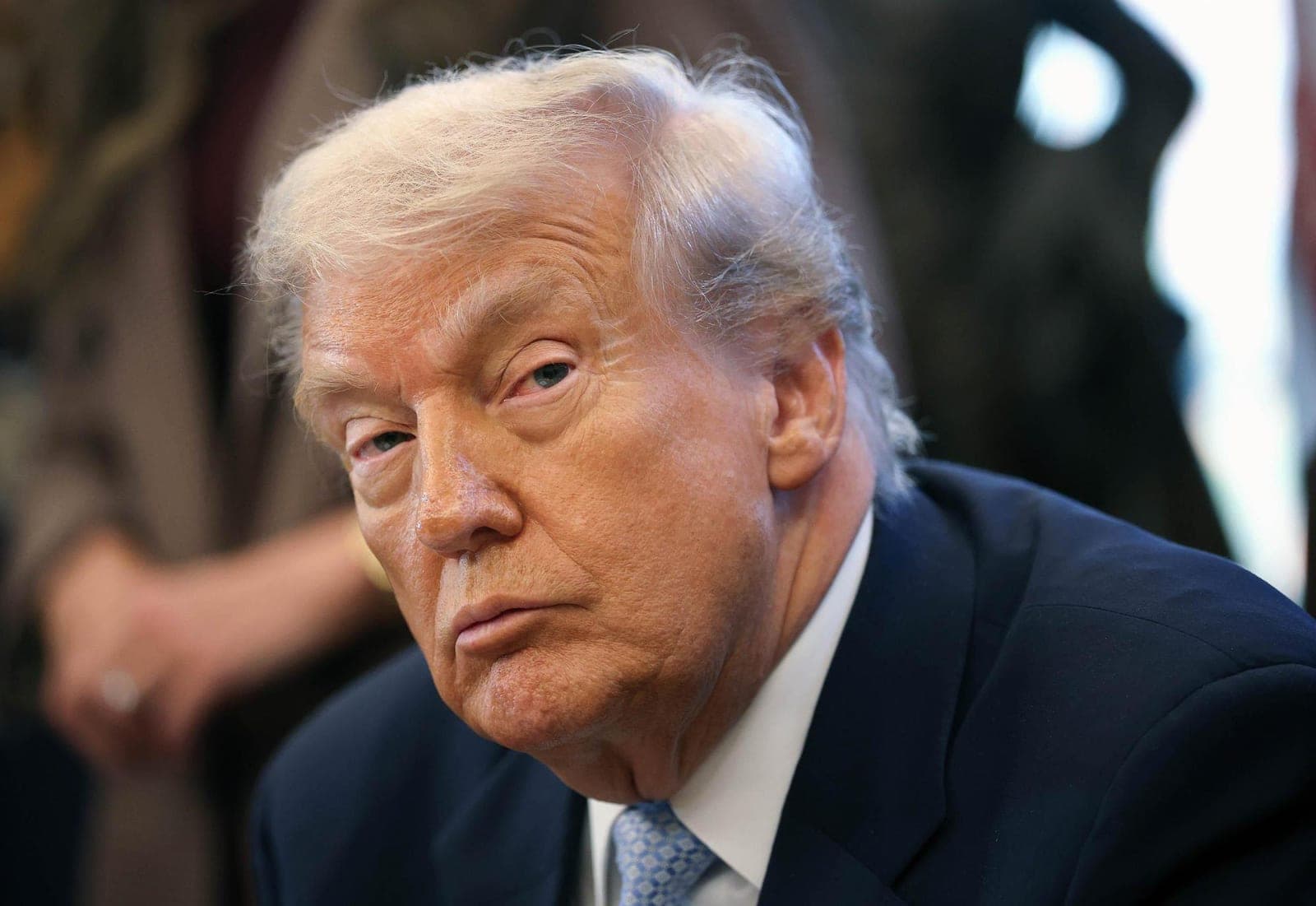
Trump money comes to Florida's elections, new data shows
By Ashley Borja, Tampa Bay Times TAMPA, Fla. -- As the midterm election season enters its home stretch, President Donald Trump is throwing a financial lifeline to Republican congressional candidates across the country. That includes two in Florida, seeking to defeat Democratic incumbents Kathy Cast
Trump money comes to Florida's elections, new data shows
By Ashley Borja, Tampa Bay Times TAMPA, Fla. -- As the midterm election season enters its home stretch, President Donald Trump is throwing a financial lifeline to Republican congressional candidates across the country. That includes two in Florida, seeking to defeat Democratic incumbents Kathy Cast
Trump money comes to Florida's elections, new data shows
By Ashley Borja, Tampa Bay Times TAMPA, Fla. -- As the midterm election season enters its home stretch, President Donald Trump is throwing a financial lifeline to Republican congressional candidates across the country. That includes two in Florida, seeking to defeat Democratic incumbents Kathy Cast
Trump money comes to Florida's elections, new data shows
By Ashley Borja, Tampa Bay Times TAMPA, Fla. -- As the midterm election season enters its home stretch, President Donald Trump is throwing a financial lifeline to Republican congressional candidates across the country. That includes two in Florida, seeking to defeat Democratic incumbents Kathy Cast

A new war revives some old tropes about Jewish and Israeli influence
As the U.S. and Israel engage in a joint assault on Iran, accusations that Israel or Jewish influence drove America to war are resurfacing, reviving the uncomfortable narratives, conspiratorial rhetoric and fears of an antisemitic backlash that shadowed the Iraq conflict of the early 2000s. On March 1, the Anti-Defamation League warned on X that “antisemitic and anti-Zionist groups are framing the U.S.-Israel operation against the Iranian regime as the latest evidence of the so-called ‘Zionist war-machine’s’ efforts to co-opt American foreign policy to advance Israeli and/or Jewish interests.” The ADL added that “Influencers who regularly traffic in antisemitic or anti-Zionist rhetoric are leveraging the U.S.-Israel operation… to promote longstanding conspiracy theories about Israel, such as blaming Israel for 9/11.” These accusations are coming from far-right and far-left accounts as well as anti-Israel groups, such as Students for Justice in Palestine, that are inclined to discredit Israel. An SJP Instagram post read: “Imperialism and Zionism are one enemy — the common enemy of the entire region, and indeed, the people of the world.” Such accusations are building on statements by both Democrats and Republicans that the war serves Israel’s interest more than America’s. “A war between Israel and Iran may be good for Netanyahu’s domestic politics, but it will likely be disastrous for both the security of Israel, the United States, and the rest of the region,” said Sen. Chris Murphy, a Connecticut Democrat, in a statement. “We have no obligation to follow Israel into a war we did not ask for and will make us less safe.” Republican influencer Tucker Carlson, who reportedly met with President Donald Trump three times in the weeks preceding the war, implied in a recent interview with US Ambassador to Israel Mike Huckabee that Trump was threatening to strike Iran at the behest of Israel — a sentiment Huckabee slammed as “offensive.” The New York Times later reported that in one of his meetings with Trump, Carlson urged Trump to “restrain” Israeli Prime Minister Benjamin Netanyahu, and that Israel’s desire to attack Iran “was the only reason the United States was even considering a strike.” Pop culture is also picking up on the theme. On the “Weekend Update” segment of “Saturday Night Live,” comedian Michael Che joked that while critics argued Trump lacked authorization for the war on Iran, “he actually did: Netanyahu said it was OK.” Those accusations have gotten under Israel’s skin. On Feb. 27, Michael Leiter, Israeli Ambassador to the U.S, slammed Carlson as “disgusting” and “antisemitic” for, among other things, suggesting that Israel had maneuvered Trump into the war. “It’s just such nonsense to say that Netanyahu is dragging President Trump. And it’s just bordering on pornography. It’s so disgusting,” Leiter told the New York Post. “It’s an old antisemitic trope: the Jews are in control,” he continued. “America acts in its own best interest … It’s so insulting. He’s insulting to the president and downright antisemitic to the Jews and Jewish state.” The echoes of history are striking. In the mid-2000s, controversy erupted around the claim that the “Israel lobby” and neoconservatives — a hawkish wing of the Republican Party seen as pro-Israel and dedicated to using American military might to aggressively spread democratic values — played a pivotal role in pushing the U.S. into the Iraq war. The charge gained credibility — or at least plausibility — because some of the highest profile neocons were Jewish. They included government officials Paul Wolfowitz, Richard Perle, Douglas Feith and Elliott Abrams and pundits like William Kristol, Charles Krauthammer and Norman Podhoretz. The debate reached academic heights in 2007 when political scientists Stephen Walt and John Mearsheimer published a paper, which became a book, arguing that pro-Israel voices were “a critical element” in leading the U.S. to war in Iraq. Around the same time, Rep. Jim Moran of Virginia accused the American Israel Public Affairs Committee of having “pushed” the war. Jewish groups quickly denounced these claims, warning that they risked feeding dangerous stereotypes about Jewish power. Yet there were key differences between Iraq then and Iran now. Israel did not directly fight as a combatant in the 2003 Iraq War. While the government officially offered its support, especially for the removal of Saddam Hussein, its leadership was wary of the war, fearing it would destabilize the region and put Israel at risk of retaliatory attacks. Moreover, during the Iraq war, the Jewish community could effectively argue that framing the conflict as a Jewish neocon conspiracy was baseless, even as some neoconservatives influenced policy. Other influential figures in the Bush administration were not Jewish, including Vice President Dick Cheney and Secretary of Defense Donald Rumsfeld. And President Bush and his circle articulated a number of reasons why war was in America’s interests – most famously, in order to neutralize Saddam Hussein’s alleged intent to manufacture “weapons of mass destruction.” America, still reeling from the 9/11 attacks, was also understandably concerned about a repeat. As Bush said in a 2002 speech in Cincinnati, “The Iraqi regime has plotted to develop anthrax and nerve gas and nuclear weapons for over a decade. … This is a regime that has already used poison gas to murder thousands of its citizens.” The administration made a compelling case that such concerns, if true, were directly in America’s interest, and Congress voted overwhelmingly in Oct. 2022 to authorize Bush to use military force against Saddam’s regime. By contrast, Israel and the United States are partners in combat in the current fighting, while reports suggest Israel played a direct advocacy and operational role in the lead-up to the Iran strikes. Israeli Prime Minister Benjamin Netanyahu openly indicated that he had urged Trump — who tends not to put decision-making through a team of advisers and policy experts — to act. “Alone among U.S. presidents that I’ve worked with,” Netanyahu said of Trump, he “took action” against the Iranian regime. At the same Trump has offered a patchwork of justifications for the war — ranging from preventing an unnamed imminent threat to countering nuclear weapons to supporting Iranian freedom — without presenting a single, compelling case framed entirely around U.S. interests. Moreover, Secretary of State Marco Rubio inflamed the isolationist wing of the MAGA movement when he suggested that the United States joined the fight because Israel was about to attack Iran (remarks he later walked back). The close U.S.-Israel coordination has fueled concern among analysts that conspiracy narratives, indistinguishable from traditional antisemitic tropes, could gain traction without a clearly articulated U.S. mission. New York Times columnist Ezra Klein spoke recently with Ben Rhodes, a former deputy national security advisor in the Obama administration, about the risks. “The centrality of Israel in the operation has raised some concerns for me about what this is going to mean for antisemitism,” Klein, who is Jewish, said on his podcast. “You see the amount of talk… about Israel’s leverage over Donald Trump or that this is all just some kind of Israeli plot.” Rhodes, whose mother is Jewish, echoed the concern, noting that even absent allegations of manipulation, the perception that the war serves Israeli interests could stoke resentment. “A lot of what we’re doing is removing threats to Israel. If it goes poorly, who is going to get blamed?” he asked. Israel, for its part, has been vocal in rejecting such narratives. Netanyahu dismissed the claims that he pushed Trump into the war in a Fox News interview, stating: “Donald Trump is the strongest leader in the world. He does what he thinks is right for America.” Trump has taken a similar approach. Asked on March 3 in the Oval Office if Israel had pushed the U.S. into the strikes, he said, “No, I might have forced their hands,” referring to Israel. The Iranians, he asserted, “were going to attack. If we didn’t do it, they were going to attack first. I felt strongly about that.” Despite such denials, the narrative is gaining traction in digital media, at a time when Jewish groups are deeply concerned about Carlson’s growing influence on the right, particularly among young voters and several outsider GOP candidates and popular right-wing influencers who have pushed the “Israel First” trope. Like the anti-Israel left, such groups seemed primed to pin the war on Israel, especially if it goes badly. Between late December 2025 and mid‑January 2026, according to an analysis by the Institute for Strategic Dialogue, Iranian state media and allied Western far‑right and conspiracy accounts aggressively amplified claims that Israel was manipulating the United States into striking Iran. ”The accounts circulated antisemitic tropes asserting covert Israeli influence over American military action,” the ISD found. The debate over the Iran operation illustrates a recurring challenge: distinguishing legitimate criticism of Israeli policy or U.S. foreign policy from conspiracy theories that echo age-old antisemitic stereotypes. It also comes with a twist unseen during the Iraq war: Global bad actors who exploit social media platforms as tools of digital warfare, using a combination of bots, spoof accounts and coordinated networks to amplify divisive narratives, spread misinformation and stoke political or social discord. In both the Iraq war and the current Iran conflict, mainstream Jewish groups tended to support the war. In the case of Iraq, polling among Jews suggested that a majority came to oppose the war even as Jewish leaders continued to voice support. It’s too early to know where the Jewish public is on this current war. For some Jews, no matter what they feel about the war, the unease is palpable: The historic pattern of blaming Jews or Israel for American military action is resurfacing, this time against the backdrop of a real war involving Israel at its very center, and a social media landscape where hate spreads faster than facts. For more info, go to JTA.org.
A new war revives some old tropes about Jewish and Israeli influence
As the U.S. and Israel engage in a joint assault on Iran, accusations that Israel or Jewish influence drove America to war are resurfacing, reviving the uncomfortable narratives, conspiratorial rhetoric and fears of an antisemitic backlash that shadowed the Iraq conflict of the early 2000s. On March 1, the Anti-Defamation League warned on X that “antisemitic and anti-Zionist groups are framing the U.S.-Israel operation against the Iranian regime as the latest evidence of the so-called ‘Zionist war-machine’s’ efforts to co-opt American foreign policy to advance Israeli and/or Jewish interests.” The ADL added that “Influencers who regularly traffic in antisemitic or anti-Zionist rhetoric are leveraging the U.S.-Israel operation… to promote longstanding conspiracy theories about Israel, such as blaming Israel for 9/11.” These accusations are coming from far-right and far-left accounts as well as anti-Israel groups, such as Students for Justice in Palestine, that are inclined to discredit Israel. An SJP Instagram post read: “Imperialism and Zionism are one enemy — the common enemy of the entire region, and indeed, the people of the world.” Such accusations are building on statements by both Democrats and Republicans that the war serves Israel’s interest more than America’s. “A war between Israel and Iran may be good for Netanyahu’s domestic politics, but it will likely be disastrous for both the security of Israel, the United States, and the rest of the region,” said Sen. Chris Murphy, a Connecticut Democrat, in a statement. “We have no obligation to follow Israel into a war we did not ask for and will make us less safe.” Republican influencer Tucker Carlson, who reportedly met with President Donald Trump three times in the weeks preceding the war, implied in a recent interview with US Ambassador to Israel Mike Huckabee that Trump was threatening to strike Iran at the behest of Israel — a sentiment Huckabee slammed as “offensive.” The New York Times later reported that in one of his meetings with Trump, Carlson urged Trump to “restrain” Israeli Prime Minister Benjamin Netanyahu, and that Israel’s desire to attack Iran “was the only reason the United States was even considering a strike.” Pop culture is also picking up on the theme. On the “Weekend Update” segment of “Saturday Night Live,” comedian Michael Che joked that while critics argued Trump lacked authorization for the war on Iran, “he actually did: Netanyahu said it was OK.” Those accusations have gotten under Israel’s skin. On Feb. 27, Michael Leiter, Israeli Ambassador to the U.S, slammed Carlson as “disgusting” and “antisemitic” for, among other things, suggesting that Israel had maneuvered Trump into the war. “It’s just such nonsense to say that Netanyahu is dragging President Trump. And it’s just bordering on pornography. It’s so disgusting,” Leiter told the New York Post. “It’s an old antisemitic trope: the Jews are in control,” he continued. “America acts in its own best interest … It’s so insulting. He’s insulting to the president and downright antisemitic to the Jews and Jewish state.” The echoes of history are striking. In the mid-2000s, controversy erupted around the claim that the “Israel lobby” and neoconservatives — a hawkish wing of the Republican Party seen as pro-Israel and dedicated to using American military might to aggressively spread democratic values — played a pivotal role in pushing the U.S. into the Iraq war. The charge gained credibility — or at least plausibility — because some of the highest profile neocons were Jewish. They included government officials Paul Wolfowitz, Richard Perle, Douglas Feith and Elliott Abrams and pundits like William Kristol, Charles Krauthammer and Norman Podhoretz. The debate reached academic heights in 2007 when political scientists Stephen Walt and John Mearsheimer published a paper, which became a book, arguing that pro-Israel voices were “a critical element” in leading the U.S. to war in Iraq. Around the same time, Rep. Jim Moran of Virginia accused the American Israel Public Affairs Committee of having “pushed” the war. Jewish groups quickly denounced these claims, warning that they risked feeding dangerous stereotypes about Jewish power. Yet there were key differences between Iraq then and Iran now. Israel did not directly fight as a combatant in the 2003 Iraq War. While the government officially offered its support, especially for the removal of Saddam Hussein, its leadership was wary of the war, fearing it would destabilize the region and put Israel at risk of retaliatory attacks. Moreover, during the Iraq war, the Jewish community could effectively argue that framing the conflict as a Jewish neocon conspiracy was baseless, even as some neoconservatives influenced policy. Other influential figures in the Bush administration were not Jewish, including Vice President Dick Cheney and Secretary of Defense Donald Rumsfeld. And President Bush and his circle articulated a number of reasons why war was in America’s interests – most famously, in order to neutralize Saddam Hussein’s alleged intent to manufacture “weapons of mass destruction.” America, still reeling from the 9/11 attacks, was also understandably concerned about a repeat. As Bush said in a 2002 speech in Cincinnati, “The Iraqi regime has plotted to develop anthrax and nerve gas and nuclear weapons for over a decade. … This is a regime that has already used poison gas to murder thousands of its citizens.” The administration made a compelling case that such concerns, if true, were directly in America’s interest, and Congress voted overwhelmingly in Oct. 2022 to authorize Bush to use military force against Saddam’s regime. By contrast, Israel and the United States are partners in combat in the current fighting, while reports suggest Israel played a direct advocacy and operational role in the lead-up to the Iran strikes. Israeli Prime Minister Benjamin Netanyahu openly indicated that he had urged Trump — who tends not to put decision-making through a team of advisers and policy experts — to act. “Alone among U.S. presidents that I’ve worked with,” Netanyahu said of Trump, he “took action” against the Iranian regime. At the same Trump has offered a patchwork of justifications for the war — ranging from preventing an unnamed imminent threat to countering nuclear weapons to supporting Iranian freedom — without presenting a single, compelling case framed entirely around U.S. interests. Moreover, Secretary of State Marco Rubio inflamed the isolationist wing of the MAGA movement when he suggested that the United States joined the fight because Israel was about to attack Iran (remarks he later walked back). The close U.S.-Israel coordination has fueled concern among analysts that conspiracy narratives, indistinguishable from traditional antisemitic tropes, could gain traction without a clearly articulated U.S. mission. New York Times columnist Ezra Klein spoke recently with Ben Rhodes, a former deputy national security advisor in the Obama administration, about the risks. “The centrality of Israel in the operation has raised some concerns for me about what this is going to mean for antisemitism,” Klein, who is Jewish, said on his podcast. “You see the amount of talk… about Israel’s leverage over Donald Trump or that this is all just some kind of Israeli plot.” Rhodes, whose mother is Jewish, echoed the concern, noting that even absent allegations of manipulation, the perception that the war serves Israeli interests could stoke resentment. “A lot of what we’re doing is removing threats to Israel. If it goes poorly, who is going to get blamed?” he asked. Israel, for its part, has been vocal in rejecting such narratives. Netanyahu dismissed the claims that he pushed Trump into the war in a Fox News interview, stating: “Donald Trump is the strongest leader in the world. He does what he thinks is right for America.” Trump has taken a similar approach. Asked on March 3 in the Oval Office if Israel had pushed the U.S. into the strikes, he said, “No, I might have forced their hands,” referring to Israel. The Iranians, he asserted, “were going to attack. If we didn’t do it, they were going to attack first. I felt strongly about that.” Despite such denials, the narrative is gaining traction in digital media, at a time when Jewish groups are deeply concerned about Carlson’s growing influence on the right, particularly among young voters and several outsider GOP candidates and popular right-wing influencers who have pushed the “Israel First” trope. Like the anti-Israel left, such groups seemed primed to pin the war on Israel, especially if it goes badly. Between late December 2025 and mid‑January 2026, according to an analysis by the Institute for Strategic Dialogue, Iranian state media and allied Western far‑right and conspiracy accounts aggressively amplified claims that Israel was manipulating the United States into striking Iran. ”The accounts circulated antisemitic tropes asserting covert Israeli influence over American military action,” the ISD found. The debate over the Iran operation illustrates a recurring challenge: distinguishing legitimate criticism of Israeli policy or U.S. foreign policy from conspiracy theories that echo age-old antisemitic stereotypes. It also comes with a twist unseen during the Iraq war: Global bad actors who exploit social media platforms as tools of digital warfare, using a combination of bots, spoof accounts and coordinated networks to amplify divisive narratives, spread misinformation and stoke political or social discord. In both the Iraq war and the current Iran conflict, mainstream Jewish groups tended to support the war. In the case of Iraq, polling among Jews suggested that a majority came to oppose the war even as Jewish leaders continued to voice support. It’s too early to know where the Jewish public is on this current war. For some Jews, no matter what they feel about the war, the unease is palpable: The historic pattern of blaming Jews or Israel for American military action is resurfacing, this time against the backdrop of a real war involving Israel at its very center, and a social media landscape where hate spreads faster than facts. For more info, go to JTA.org.
A new war revives some old tropes about Jewish and Israeli influence
As the U.S. and Israel engage in a joint assault on Iran, accusations that Israel or Jewish influence drove America to war are resurfacing, reviving the uncomfortable narratives, conspiratorial rhetoric and fears of an antisemitic backlash that shadowed the Iraq conflict of the early 2000s. On March 1, the Anti-Defamation League warned on X that “antisemitic and anti-Zionist groups are framing the U.S.-Israel operation against the Iranian regime as the latest evidence of the so-called ‘Zionist war-machine’s’ efforts to co-opt American foreign policy to advance Israeli and/or Jewish interests.” The ADL added that “Influencers who regularly traffic in antisemitic or anti-Zionist rhetoric are leveraging the U.S.-Israel operation… to promote longstanding conspiracy theories about Israel, such as blaming Israel for 9/11.” These accusations are coming from far-right and far-left accounts as well as anti-Israel groups, such as Students for Justice in Palestine, that are inclined to discredit Israel. An SJP Instagram post read: “Imperialism and Zionism are one enemy — the common enemy of the entire region, and indeed, the people of the world.” Such accusations are building on statements by both Democrats and Republicans that the war serves Israel’s interest more than America’s. “A war between Israel and Iran may be good for Netanyahu’s domestic politics, but it will likely be disastrous for both the security of Israel, the United States, and the rest of the region,” said Sen. Chris Murphy, a Connecticut Democrat, in a statement. “We have no obligation to follow Israel into a war we did not ask for and will make us less safe.” Republican influencer Tucker Carlson, who reportedly met with President Donald Trump three times in the weeks preceding the war, implied in a recent interview with US Ambassador to Israel Mike Huckabee that Trump was threatening to strike Iran at the behest of Israel — a sentiment Huckabee slammed as “offensive.” The New York Times later reported that in one of his meetings with Trump, Carlson urged Trump to “restrain” Israeli Prime Minister Benjamin Netanyahu, and that Israel’s desire to attack Iran “was the only reason the United States was even considering a strike.” Pop culture is also picking up on the theme. On the “Weekend Update” segment of “Saturday Night Live,” comedian Michael Che joked that while critics argued Trump lacked authorization for the war on Iran, “he actually did: Netanyahu said it was OK.” Those accusations have gotten under Israel’s skin. On Feb. 27, Michael Leiter, Israeli Ambassador to the U.S, slammed Carlson as “disgusting” and “antisemitic” for, among other things, suggesting that Israel had maneuvered Trump into the war. “It’s just such nonsense to say that Netanyahu is dragging President Trump. And it’s just bordering on pornography. It’s so disgusting,” Leiter told the New York Post. “It’s an old antisemitic trope: the Jews are in control,” he continued. “America acts in its own best interest … It’s so insulting. He’s insulting to the president and downright antisemitic to the Jews and Jewish state.” The echoes of history are striking. In the mid-2000s, controversy erupted around the claim that the “Israel lobby” and neoconservatives — a hawkish wing of the Republican Party seen as pro-Israel and dedicated to using American military might to aggressively spread democratic values — played a pivotal role in pushing the U.S. into the Iraq war. The charge gained credibility — or at least plausibility — because some of the highest profile neocons were Jewish. They included government officials Paul Wolfowitz, Richard Perle, Douglas Feith and Elliott Abrams and pundits like William Kristol, Charles Krauthammer and Norman Podhoretz. The debate reached academic heights in 2007 when political scientists Stephen Walt and John Mearsheimer published a paper, which became a book, arguing that pro-Israel voices were “a critical element” in leading the U.S. to war in Iraq. Around the same time, Rep. Jim Moran of Virginia accused the American Israel Public Affairs Committee of having “pushed” the war. Jewish groups quickly denounced these claims, warning that they risked feeding dangerous stereotypes about Jewish power. Yet there were key differences between Iraq then and Iran now. Israel did not directly fight as a combatant in the 2003 Iraq War. While the government officially offered its support, especially for the removal of Saddam Hussein, its leadership was wary of the war, fearing it would destabilize the region and put Israel at risk of retaliatory attacks. Moreover, during the Iraq war, the Jewish community could effectively argue that framing the conflict as a Jewish neocon conspiracy was baseless, even as some neoconservatives influenced policy. Other influential figures in the Bush administration were not Jewish, including Vice President Dick Cheney and Secretary of Defense Donald Rumsfeld. And President Bush and his circle articulated a number of reasons why war was in America’s interests – most famously, in order to neutralize Saddam Hussein’s alleged intent to manufacture “weapons of mass destruction.” America, still reeling from the 9/11 attacks, was also understandably concerned about a repeat. As Bush said in a 2002 speech in Cincinnati, “The Iraqi regime has plotted to develop anthrax and nerve gas and nuclear weapons for over a decade. … This is a regime that has already used poison gas to murder thousands of its citizens.” The administration made a compelling case that such concerns, if true, were directly in America’s interest, and Congress voted overwhelmingly in Oct. 2022 to authorize Bush to use military force against Saddam’s regime. By contrast, Israel and the United States are partners in combat in the current fighting, while reports suggest Israel played a direct advocacy and operational role in the lead-up to the Iran strikes. Israeli Prime Minister Benjamin Netanyahu openly indicated that he had urged Trump — who tends not to put decision-making through a team of advisers and policy experts — to act. “Alone among U.S. presidents that I’ve worked with,” Netanyahu said of Trump, he “took action” against the Iranian regime. At the same Trump has offered a patchwork of justifications for the war — ranging from preventing an unnamed imminent threat to countering nuclear weapons to supporting Iranian freedom — without presenting a single, compelling case framed entirely around U.S. interests. Moreover, Secretary of State Marco Rubio inflamed the isolationist wing of the MAGA movement when he suggested that the United States joined the fight because Israel was about to attack Iran (remarks he later walked back). The close U.S.-Israel coordination has fueled concern among analysts that conspiracy narratives, indistinguishable from traditional antisemitic tropes, could gain traction without a clearly articulated U.S. mission. New York Times columnist Ezra Klein spoke recently with Ben Rhodes, a former deputy national security advisor in the Obama administration, about the risks. “The centrality of Israel in the operation has raised some concerns for me about what this is going to mean for antisemitism,” Klein, who is Jewish, said on his podcast. “You see the amount of talk… about Israel’s leverage over Donald Trump or that this is all just some kind of Israeli plot.” Rhodes, whose mother is Jewish, echoed the concern, noting that even absent allegations of manipulation, the perception that the war serves Israeli interests could stoke resentment. “A lot of what we’re doing is removing threats to Israel. If it goes poorly, who is going to get blamed?” he asked. Israel, for its part, has been vocal in rejecting such narratives. Netanyahu dismissed the claims that he pushed Trump into the war in a Fox News interview, stating: “Donald Trump is the strongest leader in the world. He does what he thinks is right for America.” Trump has taken a similar approach. Asked on March 3 in the Oval Office if Israel had pushed the U.S. into the strikes, he said, “No, I might have forced their hands,” referring to Israel. The Iranians, he asserted, “were going to attack. If we didn’t do it, they were going to attack first. I felt strongly about that.” Despite such denials, the narrative is gaining traction in digital media, at a time when Jewish groups are deeply concerned about Carlson’s growing influence on the right, particularly among young voters and several outsider GOP candidates and popular right-wing influencers who have pushed the “Israel First” trope. Like the anti-Israel left, such groups seemed primed to pin the war on Israel, especially if it goes badly. Between late December 2025 and mid‑January 2026, according to an analysis by the Institute for Strategic Dialogue, Iranian state media and allied Western far‑right and conspiracy accounts aggressively amplified claims that Israel was manipulating the United States into striking Iran. ”The accounts circulated antisemitic tropes asserting covert Israeli influence over American military action,” the ISD found. The debate over the Iran operation illustrates a recurring challenge: distinguishing legitimate criticism of Israeli policy or U.S. foreign policy from conspiracy theories that echo age-old antisemitic stereotypes. It also comes with a twist unseen during the Iraq war: Global bad actors who exploit social media platforms as tools of digital warfare, using a combination of bots, spoof accounts and coordinated networks to amplify divisive narratives, spread misinformation and stoke political or social discord. In both the Iraq war and the current Iran conflict, mainstream Jewish groups tended to support the war. In the case of Iraq, polling among Jews suggested that a majority came to oppose the war even as Jewish leaders continued to voice support. It’s too early to know where the Jewish public is on this current war. For some Jews, no matter what they feel about the war, the unease is palpable: The historic pattern of blaming Jews or Israel for American military action is resurfacing, this time against the backdrop of a real war involving Israel at its very center, and a social media landscape where hate spreads faster than facts. For more info, go to JTA.org.
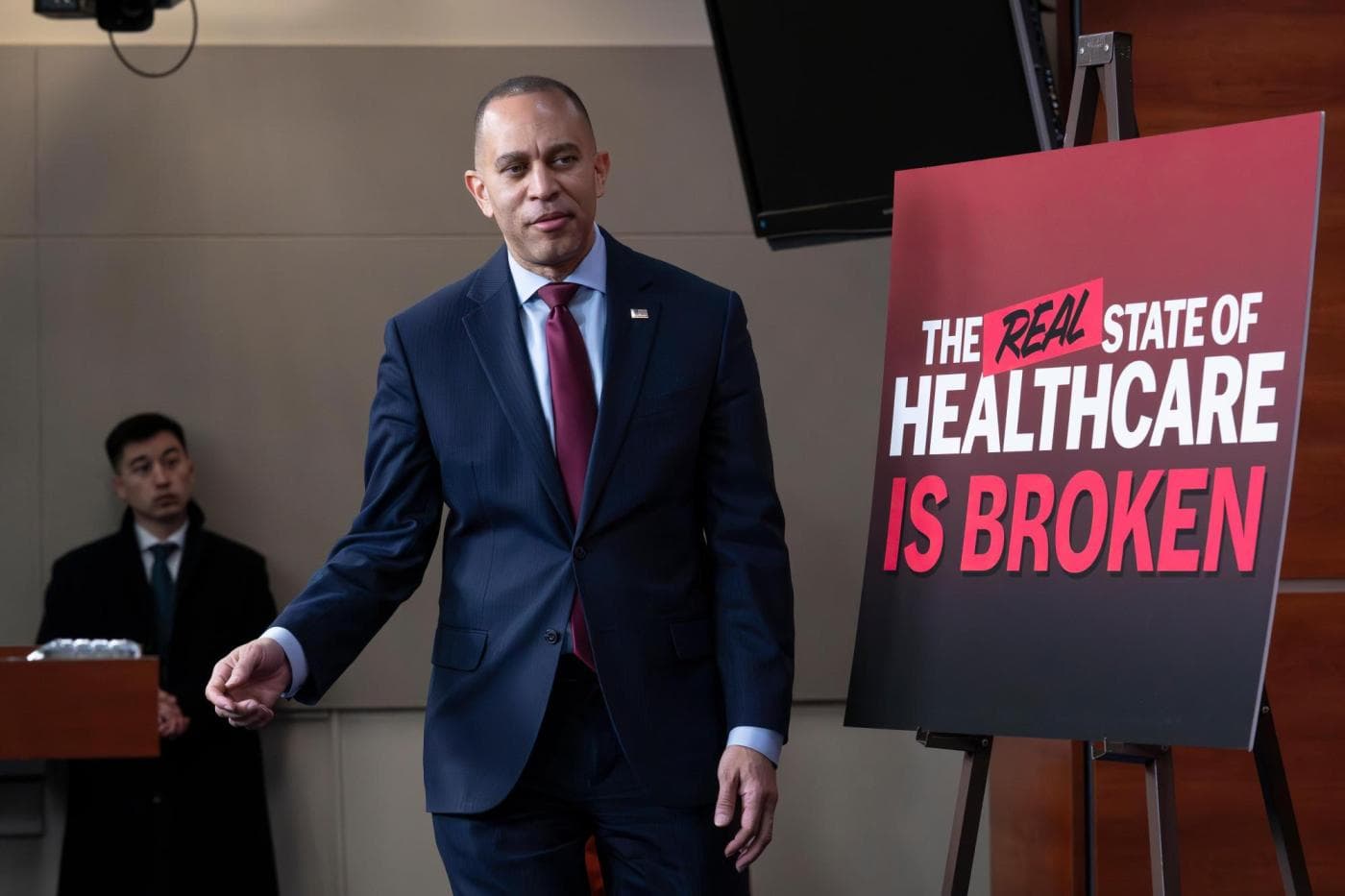
House Democrats say they’re headed back to power. Their agenda is a work in progress
By JOEY CAPPELLETTI LEESBURG, Va. (AP) — Gathered at a resort in suburban Virginia, House Democrats this week were acting like a party on the verge of reclaiming power as they drafted policy blueprints and spoke confidently about election victories in November. Related Articles The Trump administration is detaining and questioning refugees already admitted to the US US moves to legally control tanker and 2M barrels of oil seized off Venezuela’s coast in December Bill Clinton faces grilling from lawmakers over his connections to Jeffrey Epstein Rubio to visit Israel next week as US-Iran tensions soar Deposed Venezuelan President Nicolas Maduro asks judge to toss out indictment against him “We’re here at this issues conference to talk amongst each other and with outside stakeholders and experts about a bold, meaningful, transformational path forward,” said House Democratic leader Hakeem Jeffries of New York. After a punishing 2024 cycle, many Democrats believe the high cost of living as well as voter frustration with President Donald Trump’s second term have put the majority in the House well within their reach. But beneath the confidence is a quieter uncertainty: Beyond opposing Trump, Democrats face the defining challenge of developing a unifying policy agenda capable of holding together a party undergoing generational and ideological change. Any Democratic majority would immediately use subpoena power against the Republican administration, something they have been unable to do in the minority. But beyond that, while members agree on the problems facing voters — affordability, immigration enforcement and countering Trump — fissures remain between the party’s progressive left and its more centrist wing. “We can’t be just anti-Trump,” said Michigan Rep. Debbie Dingell, the caucus’ policy leader. “We have to have an agenda.” Rep. Joe Neguse D-Colo. Speaks as Attorney General Pam Bondi testifies before a House Judiciary Committee oversight hearing on Capitol Hill in Washington, Wednesday, Feb. 11, 2026, in Washington. (AP Photo/Tom Brenner) Unity in opposition The party’s internal tensions were laid bare during the 2024 election and in the months afterward as Democrats argued over messaging on immigration, the economy and foreign policy. But when Trump returned to power and moved quickly to implement his agenda, those disagreements receded as Democrats moved to an opposition footing. In the House, Democrats have rallied together to challenge Trump’s policies, forcing — and succeeding on — votes opposing tariffs and requiring the release of Department of Justice files related to Jeffrey Epstein. “We have become the most effective minority party in U.S. history,” said California Rep. Ted Lieu, vice chair of the House Democratic Caucus. But after more than three years as the minority party in the House, Democrats say the political environment is shifting. Looking back to November, they point to the ballot initiative in California to redraw congressional maps, along with strong gubernatorial performances in Virginia and New Jersey. Since then, Democrats say there have been other overperformances to show their momentum, such as flipping a state Senate district in Texas this month in an area that Trump had won by 17 percentage points in 2024. “It’s going to be a sprint” to Nov, 3, Election Day, Jeffries said. “House Democrats are on the verge of a takeover.” Rep. Pete Aguilar, D-Calif., speaks at a Democratic Steering and Policy Committee hearing on Immigration and Customs Enforcement at the Capitol, Thursday, Feb. 12, 2026, in Washington. (AP Photo/Allison Robbert) The harder task is governing If Democrats reclaim the House, their most immediate power would be oversight. Committee chairs would gain subpoena authority and the ability to compel testimony — tools that leaders say would be used aggressively to scrutinize the administration. “Make no mistake, oversight will be muscular and significant,” said Colorado Rep. Joe Neguse, a member of the House Judiciary Committee. House Democratic Caucus leader Pete Aguilar of California said that “when it comes to oversight and accountability, it is a target-rich environment.” But he also said Democrats cannot rely on investigations alone. The standoff over funding for the Department of Homeland Security has illustrated how resistance can unify the caucus. Democrats have largely held together in opposition, using their leverage to outline demands for accountability. Yet divisions remain. Some high-profile progressives, including Reps. Alexandria Ocasio-Cortez of New York, Ilhan Omar of Minnesota and Ayanna Pressley of Massachusetts, have called for abolishing U.S. Immigration and Customs Enforcement. Party leaders and more centrist members, wary of overreach, have instead advocated major changes, raising questions about whether resolving the shutdown could expose deeper splits. “We cannot allow a federal agency — one that was created for one purpose to terrorize — to function as an occupying force in our communities,” Omar, whose district includes Minneapolis and surrounding suburbs, said on the House floor this month. “Real accountability starts with abolishing ICE.” A previous shutdown fight underscored how compromise can strain that cohesion. When some Democratic senators agreed to reopen the government without securing an extension of key health care subsidies, backlash from the party’s left flank was intense. “The American people asked us over and over to fight for health care and to lower our costs overall,” Sen. Elizabeth Warren, D-Mass., said at the time. “Obviously that broke apart at the end.” ‘A closing argument’ The week’s policy conference came and went with few specifics attached to the “bold, meaningful, transformational path forward” that Jeffries previewed at the outset. Instead, members coalesced around broad themes — lowering costs, protecting health care and drawing contrasts with Trump — while leaving the details for later. “That’s the work that we’re still to do,” said Illinois Rep. Nikki Budzinski when asked about what House Democrats’ first bill would be in a new majority. “We’ve rolled out nine different frameworks. All of them are equally important, I think, to address affordability, which is our coalition’s goal. It’s hard to say that there’s one silver bullet.” Democrats’ “Six for ’06” agenda was not unveiled until the fall of 2006, weeks before voters handed them the majority. In 2018, the party campaigned under the “For the People” banner months before translating it into legislation once Democrats were in power. “I expect to refresh our core message frame ahead of a closing argument for this fall,” said Illinois Rep. Lauren Underwood. “The closing argument was 6 for ‘06. Closing argument in 2018 was ‘For the People,’ right? So, we’re going to have a closing argument message frame that you all be delighted and wowed by as we head into the fall election season.” Still, the closer Democrats believe they are to reclaiming the majority, the more pressing the agenda becomes. Oversight may be the most immediate tool of a new majority. Sustaining power and shaping the party’s direction beyond a single election cycle will require more than subpoenas. “What we tell our members and what we tell candidates who are running is we have to do all of the things,” Aguilar said. “We have to do oversight and accountability, and we have to talk about the affordability agenda and how we’re going to make life better for people if we are given the opportunity to lead.” AP Congressional Correspondent Lisa Mascaro contributed to this report.
House Democrats say they’re headed back to power. Their agenda is a work in progress
By JOEY CAPPELLETTI LEESBURG, Va. (AP) — Gathered at a resort in suburban Virginia, House Democrats this week were acting like a party on the verge of reclaiming power as they drafted policy blueprints and spoke confidently about election victories in November. Related Articles The Trump administration is detaining and questioning refugees already admitted to the US US moves to legally control tanker and 2M barrels of oil seized off Venezuela’s coast in December Bill Clinton faces grilling from lawmakers over his connections to Jeffrey Epstein Rubio to visit Israel next week as US-Iran tensions soar Deposed Venezuelan President Nicolas Maduro asks judge to toss out indictment against him “We’re here at this issues conference to talk amongst each other and with outside stakeholders and experts about a bold, meaningful, transformational path forward,” said House Democratic leader Hakeem Jeffries of New York. After a punishing 2024 cycle, many Democrats believe the high cost of living as well as voter frustration with President Donald Trump’s second term have put the majority in the House well within their reach. But beneath the confidence is a quieter uncertainty: Beyond opposing Trump, Democrats face the defining challenge of developing a unifying policy agenda capable of holding together a party undergoing generational and ideological change. Any Democratic majority would immediately use subpoena power against the Republican administration, something they have been unable to do in the minority. But beyond that, while members agree on the problems facing voters — affordability, immigration enforcement and countering Trump — fissures remain between the party’s progressive left and its more centrist wing. “We can’t be just anti-Trump,” said Michigan Rep. Debbie Dingell, the caucus’ policy leader. “We have to have an agenda.” Rep. Joe Neguse D-Colo. Speaks as Attorney General Pam Bondi testifies before a House Judiciary Committee oversight hearing on Capitol Hill in Washington, Wednesday, Feb. 11, 2026, in Washington. (AP Photo/Tom Brenner) Unity in opposition The party’s internal tensions were laid bare during the 2024 election and in the months afterward as Democrats argued over messaging on immigration, the economy and foreign policy. But when Trump returned to power and moved quickly to implement his agenda, those disagreements receded as Democrats moved to an opposition footing. In the House, Democrats have rallied together to challenge Trump’s policies, forcing — and succeeding on — votes opposing tariffs and requiring the release of Department of Justice files related to Jeffrey Epstein. “We have become the most effective minority party in U.S. history,” said California Rep. Ted Lieu, vice chair of the House Democratic Caucus. But after more than three years as the minority party in the House, Democrats say the political environment is shifting. Looking back to November, they point to the ballot initiative in California to redraw congressional maps, along with strong gubernatorial performances in Virginia and New Jersey. Since then, Democrats say there have been other overperformances to show their momentum, such as flipping a state Senate district in Texas this month in an area that Trump had won by 17 percentage points in 2024. “It’s going to be a sprint” to Nov, 3, Election Day, Jeffries said. “House Democrats are on the verge of a takeover.” Rep. Pete Aguilar, D-Calif., speaks at a Democratic Steering and Policy Committee hearing on Immigration and Customs Enforcement at the Capitol, Thursday, Feb. 12, 2026, in Washington. (AP Photo/Allison Robbert) The harder task is governing If Democrats reclaim the House, their most immediate power would be oversight. Committee chairs would gain subpoena authority and the ability to compel testimony — tools that leaders say would be used aggressively to scrutinize the administration. “Make no mistake, oversight will be muscular and significant,” said Colorado Rep. Joe Neguse, a member of the House Judiciary Committee. House Democratic Caucus leader Pete Aguilar of California said that “when it comes to oversight and accountability, it is a target-rich environment.” But he also said Democrats cannot rely on investigations alone. The standoff over funding for the Department of Homeland Security has illustrated how resistance can unify the caucus. Democrats have largely held together in opposition, using their leverage to outline demands for accountability. Yet divisions remain. Some high-profile progressives, including Reps. Alexandria Ocasio-Cortez of New York, Ilhan Omar of Minnesota and Ayanna Pressley of Massachusetts, have called for abolishing U.S. Immigration and Customs Enforcement. Party leaders and more centrist members, wary of overreach, have instead advocated major changes, raising questions about whether resolving the shutdown could expose deeper splits. “We cannot allow a federal agency — one that was created for one purpose to terrorize — to function as an occupying force in our communities,” Omar, whose district includes Minneapolis and surrounding suburbs, said on the House floor this month. “Real accountability starts with abolishing ICE.” A previous shutdown fight underscored how compromise can strain that cohesion. When some Democratic senators agreed to reopen the government without securing an extension of key health care subsidies, backlash from the party’s left flank was intense. “The American people asked us over and over to fight for health care and to lower our costs overall,” Sen. Elizabeth Warren, D-Mass., said at the time. “Obviously that broke apart at the end.” ‘A closing argument’ The week’s policy conference came and went with few specifics attached to the “bold, meaningful, transformational path forward” that Jeffries previewed at the outset. Instead, members coalesced around broad themes — lowering costs, protecting health care and drawing contrasts with Trump — while leaving the details for later. “That’s the work that we’re still to do,” said Illinois Rep. Nikki Budzinski when asked about what House Democrats’ first bill would be in a new majority. “We’ve rolled out nine different frameworks. All of them are equally important, I think, to address affordability, which is our coalition’s goal. It’s hard to say that there’s one silver bullet.” Democrats’ “Six for ’06” agenda was not unveiled until the fall of 2006, weeks before voters handed them the majority. In 2018, the party campaigned under the “For the People” banner months before translating it into legislation once Democrats were in power. “I expect to refresh our core message frame ahead of a closing argument for this fall,” said Illinois Rep. Lauren Underwood. “The closing argument was 6 for ‘06. Closing argument in 2018 was ‘For the People,’ right? So, we’re going to have a closing argument message frame that you all be delighted and wowed by as we head into the fall election season.” Still, the closer Democrats believe they are to reclaiming the majority, the more pressing the agenda becomes. Oversight may be the most immediate tool of a new majority. Sustaining power and shaping the party’s direction beyond a single election cycle will require more than subpoenas. “What we tell our members and what we tell candidates who are running is we have to do all of the things,” Aguilar said. “We have to do oversight and accountability, and we have to talk about the affordability agenda and how we’re going to make life better for people if we are given the opportunity to lead.” AP Congressional Correspondent Lisa Mascaro contributed to this report.
House Democrats say they’re headed back to power. Their agenda is a work in progress
By JOEY CAPPELLETTI LEESBURG, Va. (AP) — Gathered at a resort in suburban Virginia, House Democrats this week were acting like a party on the verge of reclaiming power as they drafted policy blueprints and spoke confidently about election victories in November. Related Articles The Trump administration is detaining and questioning refugees already admitted to the US US moves to legally control tanker and 2M barrels of oil seized off Venezuela’s coast in December Bill Clinton faces grilling from lawmakers over his connections to Jeffrey Epstein Rubio to visit Israel next week as US-Iran tensions soar Deposed Venezuelan President Nicolas Maduro asks judge to toss out indictment against him “We’re here at this issues conference to talk amongst each other and with outside stakeholders and experts about a bold, meaningful, transformational path forward,” said House Democratic leader Hakeem Jeffries of New York. After a punishing 2024 cycle, many Democrats believe the high cost of living as well as voter frustration with President Donald Trump’s second term have put the majority in the House well within their reach. But beneath the confidence is a quieter uncertainty: Beyond opposing Trump, Democrats face the defining challenge of developing a unifying policy agenda capable of holding together a party undergoing generational and ideological change. Any Democratic majority would immediately use subpoena power against the Republican administration, something they have been unable to do in the minority. But beyond that, while members agree on the problems facing voters — affordability, immigration enforcement and countering Trump — fissures remain between the party’s progressive left and its more centrist wing. “We can’t be just anti-Trump,” said Michigan Rep. Debbie Dingell, the caucus’ policy leader. “We have to have an agenda.” Rep. Joe Neguse D-Colo. Speaks as Attorney General Pam Bondi testifies before a House Judiciary Committee oversight hearing on Capitol Hill in Washington, Wednesday, Feb. 11, 2026, in Washington. (AP Photo/Tom Brenner) Unity in opposition The party’s internal tensions were laid bare during the 2024 election and in the months afterward as Democrats argued over messaging on immigration, the economy and foreign policy. But when Trump returned to power and moved quickly to implement his agenda, those disagreements receded as Democrats moved to an opposition footing. In the House, Democrats have rallied together to challenge Trump’s policies, forcing — and succeeding on — votes opposing tariffs and requiring the release of Department of Justice files related to Jeffrey Epstein. “We have become the most effective minority party in U.S. history,” said California Rep. Ted Lieu, vice chair of the House Democratic Caucus. But after more than three years as the minority party in the House, Democrats say the political environment is shifting. Looking back to November, they point to the ballot initiative in California to redraw congressional maps, along with strong gubernatorial performances in Virginia and New Jersey. Since then, Democrats say there have been other overperformances to show their momentum, such as flipping a state Senate district in Texas this month in an area that Trump had won by 17 percentage points in 2024. “It’s going to be a sprint” to Nov, 3, Election Day, Jeffries said. “House Democrats are on the verge of a takeover.” Rep. Pete Aguilar, D-Calif., speaks at a Democratic Steering and Policy Committee hearing on Immigration and Customs Enforcement at the Capitol, Thursday, Feb. 12, 2026, in Washington. (AP Photo/Allison Robbert) The harder task is governing If Democrats reclaim the House, their most immediate power would be oversight. Committee chairs would gain subpoena authority and the ability to compel testimony — tools that leaders say would be used aggressively to scrutinize the administration. “Make no mistake, oversight will be muscular and significant,” said Colorado Rep. Joe Neguse, a member of the House Judiciary Committee. House Democratic Caucus leader Pete Aguilar of California said that “when it comes to oversight and accountability, it is a target-rich environment.” But he also said Democrats cannot rely on investigations alone. The standoff over funding for the Department of Homeland Security has illustrated how resistance can unify the caucus. Democrats have largely held together in opposition, using their leverage to outline demands for accountability. Yet divisions remain. Some high-profile progressives, including Reps. Alexandria Ocasio-Cortez of New York, Ilhan Omar of Minnesota and Ayanna Pressley of Massachusetts, have called for abolishing U.S. Immigration and Customs Enforcement. Party leaders and more centrist members, wary of overreach, have instead advocated major changes, raising questions about whether resolving the shutdown could expose deeper splits. “We cannot allow a federal agency — one that was created for one purpose to terrorize — to function as an occupying force in our communities,” Omar, whose district includes Minneapolis and surrounding suburbs, said on the House floor this month. “Real accountability starts with abolishing ICE.” A previous shutdown fight underscored how compromise can strain that cohesion. When some Democratic senators agreed to reopen the government without securing an extension of key health care subsidies, backlash from the party’s left flank was intense. “The American people asked us over and over to fight for health care and to lower our costs overall,” Sen. Elizabeth Warren, D-Mass., said at the time. “Obviously that broke apart at the end.” ‘A closing argument’ The week’s policy conference came and went with few specifics attached to the “bold, meaningful, transformational path forward” that Jeffries previewed at the outset. Instead, members coalesced around broad themes — lowering costs, protecting health care and drawing contrasts with Trump — while leaving the details for later. “That’s the work that we’re still to do,” said Illinois Rep. Nikki Budzinski when asked about what House Democrats’ first bill would be in a new majority. “We’ve rolled out nine different frameworks. All of them are equally important, I think, to address affordability, which is our coalition’s goal. It’s hard to say that there’s one silver bullet.” Democrats’ “Six for ’06” agenda was not unveiled until the fall of 2006, weeks before voters handed them the majority. In 2018, the party campaigned under the “For the People” banner months before translating it into legislation once Democrats were in power. “I expect to refresh our core message frame ahead of a closing argument for this fall,” said Illinois Rep. Lauren Underwood. “The closing argument was 6 for ‘06. Closing argument in 2018 was ‘For the People,’ right? So, we’re going to have a closing argument message frame that you all be delighted and wowed by as we head into the fall election season.” Still, the closer Democrats believe they are to reclaiming the majority, the more pressing the agenda becomes. Oversight may be the most immediate tool of a new majority. Sustaining power and shaping the party’s direction beyond a single election cycle will require more than subpoenas. “What we tell our members and what we tell candidates who are running is we have to do all of the things,” Aguilar said. “We have to do oversight and accountability, and we have to talk about the affordability agenda and how we’re going to make life better for people if we are given the opportunity to lead.” AP Congressional Correspondent Lisa Mascaro contributed to this report.
House Democrats say they’re headed back to power. Their agenda is a work in progress
By JOEY CAPPELLETTI LEESBURG, Va. (AP) — Gathered at a resort in suburban Virginia, House Democrats this week were acting like a party on the verge of reclaiming power as they drafted policy blueprints and spoke confidently about election victories in November. Related Articles The Trump administration is detaining and questioning refugees already admitted to the US US moves to legally control tanker and 2M barrels of oil seized off Venezuela’s coast in December Bill Clinton faces grilling from lawmakers over his connections to Jeffrey Epstein Rubio to visit Israel next week as US-Iran tensions soar Deposed Venezuelan President Nicolas Maduro asks judge to toss out indictment against him “We’re here at this issues conference to talk amongst each other and with outside stakeholders and experts about a bold, meaningful, transformational path forward,” said House Democratic leader Hakeem Jeffries of New York. After a punishing 2024 cycle, many Democrats believe the high cost of living as well as voter frustration with President Donald Trump’s second term have put the majority in the House well within their reach. But beneath the confidence is a quieter uncertainty: Beyond opposing Trump, Democrats face the defining challenge of developing a unifying policy agenda capable of holding together a party undergoing generational and ideological change. Any Democratic majority would immediately use subpoena power against the Republican administration, something they have been unable to do in the minority. But beyond that, while members agree on the problems facing voters — affordability, immigration enforcement and countering Trump — fissures remain between the party’s progressive left and its more centrist wing. “We can’t be just anti-Trump,” said Michigan Rep. Debbie Dingell, the caucus’ policy leader. “We have to have an agenda.” Rep. Joe Neguse D-Colo. Speaks as Attorney General Pam Bondi testifies before a House Judiciary Committee oversight hearing on Capitol Hill in Washington, Wednesday, Feb. 11, 2026, in Washington. (AP Photo/Tom Brenner) Unity in opposition The party’s internal tensions were laid bare during the 2024 election and in the months afterward as Democrats argued over messaging on immigration, the economy and foreign policy. But when Trump returned to power and moved quickly to implement his agenda, those disagreements receded as Democrats moved to an opposition footing. In the House, Democrats have rallied together to challenge Trump’s policies, forcing — and succeeding on — votes opposing tariffs and requiring the release of Department of Justice files related to Jeffrey Epstein. “We have become the most effective minority party in U.S. history,” said California Rep. Ted Lieu, vice chair of the House Democratic Caucus. But after more than three years as the minority party in the House, Democrats say the political environment is shifting. Looking back to November, they point to the ballot initiative in California to redraw congressional maps, along with strong gubernatorial performances in Virginia and New Jersey. Since then, Democrats say there have been other overperformances to show their momentum, such as flipping a state Senate district in Texas this month in an area that Trump had won by 17 percentage points in 2024. “It’s going to be a sprint” to Nov, 3, Election Day, Jeffries said. “House Democrats are on the verge of a takeover.” Rep. Pete Aguilar, D-Calif., speaks at a Democratic Steering and Policy Committee hearing on Immigration and Customs Enforcement at the Capitol, Thursday, Feb. 12, 2026, in Washington. (AP Photo/Allison Robbert) The harder task is governing If Democrats reclaim the House, their most immediate power would be oversight. Committee chairs would gain subpoena authority and the ability to compel testimony — tools that leaders say would be used aggressively to scrutinize the administration. “Make no mistake, oversight will be muscular and significant,” said Colorado Rep. Joe Neguse, a member of the House Judiciary Committee. House Democratic Caucus leader Pete Aguilar of California said that “when it comes to oversight and accountability, it is a target-rich environment.” But he also said Democrats cannot rely on investigations alone. The standoff over funding for the Department of Homeland Security has illustrated how resistance can unify the caucus. Democrats have largely held together in opposition, using their leverage to outline demands for accountability. Yet divisions remain. Some high-profile progressives, including Reps. Alexandria Ocasio-Cortez of New York, Ilhan Omar of Minnesota and Ayanna Pressley of Massachusetts, have called for abolishing U.S. Immigration and Customs Enforcement. Party leaders and more centrist members, wary of overreach, have instead advocated major changes, raising questions about whether resolving the shutdown could expose deeper splits. “We cannot allow a federal agency — one that was created for one purpose to terrorize — to function as an occupying force in our communities,” Omar, whose district includes Minneapolis and surrounding suburbs, said on the House floor this month. “Real accountability starts with abolishing ICE.” A previous shutdown fight underscored how compromise can strain that cohesion. When some Democratic senators agreed to reopen the government without securing an extension of key health care subsidies, backlash from the party’s left flank was intense. “The American people asked us over and over to fight for health care and to lower our costs overall,” Sen. Elizabeth Warren, D-Mass., said at the time. “Obviously that broke apart at the end.” ‘A closing argument’ The week’s policy conference came and went with few specifics attached to the “bold, meaningful, transformational path forward” that Jeffries previewed at the outset. Instead, members coalesced around broad themes — lowering costs, protecting health care and drawing contrasts with Trump — while leaving the details for later. “That’s the work that we’re still to do,” said Illinois Rep. Nikki Budzinski when asked about what House Democrats’ first bill would be in a new majority. “We’ve rolled out nine different frameworks. All of them are equally important, I think, to address affordability, which is our coalition’s goal. It’s hard to say that there’s one silver bullet.” Democrats’ “Six for ’06” agenda was not unveiled until the fall of 2006, weeks before voters handed them the majority. In 2018, the party campaigned under the “For the People” banner months before translating it into legislation once Democrats were in power. “I expect to refresh our core message frame ahead of a closing argument for this fall,” said Illinois Rep. Lauren Underwood. “The closing argument was 6 for ‘06. Closing argument in 2018 was ‘For the People,’ right? So, we’re going to have a closing argument message frame that you all be delighted and wowed by as we head into the fall election season.” Still, the closer Democrats believe they are to reclaiming the majority, the more pressing the agenda becomes. Oversight may be the most immediate tool of a new majority. Sustaining power and shaping the party’s direction beyond a single election cycle will require more than subpoenas. “What we tell our members and what we tell candidates who are running is we have to do all of the things,” Aguilar said. “We have to do oversight and accountability, and we have to talk about the affordability agenda and how we’re going to make life better for people if we are given the opportunity to lead.” AP Congressional Correspondent Lisa Mascaro contributed to this report.
House Democrats say they’re headed back to power. Their agenda is a work in progress
By JOEY CAPPELLETTI LEESBURG, Va. (AP) — Gathered at a resort in suburban Virginia, House Democrats this week were acting like a party on the verge of reclaiming power as they drafted policy blueprints and spoke confidently about election victories in November. Related Articles The Trump administration is detaining and questioning refugees already admitted to the US US moves to legally control tanker and 2M barrels of oil seized off Venezuela’s coast in December Bill Clinton faces grilling from lawmakers over his connections to Jeffrey Epstein Rubio to visit Israel next week as US-Iran tensions soar Deposed Venezuelan President Nicolas Maduro asks judge to toss out indictment against him “We’re here at this issues conference to talk amongst each other and with outside stakeholders and experts about a bold, meaningful, transformational path forward,” said House Democratic leader Hakeem Jeffries of New York. After a punishing 2024 cycle, many Democrats believe the high cost of living as well as voter frustration with President Donald Trump’s second term have put the majority in the House well within their reach. But beneath the confidence is a quieter uncertainty: Beyond opposing Trump, Democrats face the defining challenge of developing a unifying policy agenda capable of holding together a party undergoing generational and ideological change. Any Democratic majority would immediately use subpoena power against the Republican administration, something they have been unable to do in the minority. But beyond that, while members agree on the problems facing voters — affordability, immigration enforcement and countering Trump — fissures remain between the party’s progressive left and its more centrist wing. “We can’t be just anti-Trump,” said Michigan Rep. Debbie Dingell, the caucus’ policy leader. “We have to have an agenda.” Rep. Joe Neguse D-Colo. Speaks as Attorney General Pam Bondi testifies before a House Judiciary Committee oversight hearing on Capitol Hill in Washington, Wednesday, Feb. 11, 2026, in Washington. (AP Photo/Tom Brenner) Unity in opposition The party’s internal tensions were laid bare during the 2024 election and in the months afterward as Democrats argued over messaging on immigration, the economy and foreign policy. But when Trump returned to power and moved quickly to implement his agenda, those disagreements receded as Democrats moved to an opposition footing. In the House, Democrats have rallied together to challenge Trump’s policies, forcing — and succeeding on — votes opposing tariffs and requiring the release of Department of Justice files related to Jeffrey Epstein. “We have become the most effective minority party in U.S. history,” said California Rep. Ted Lieu, vice chair of the House Democratic Caucus. But after more than three years as the minority party in the House, Democrats say the political environment is shifting. Looking back to November, they point to the ballot initiative in California to redraw congressional maps, along with strong gubernatorial performances in Virginia and New Jersey. Since then, Democrats say there have been other overperformances to show their momentum, such as flipping a state Senate district in Texas this month in an area that Trump had won by 17 percentage points in 2024. “It’s going to be a sprint” to Nov, 3, Election Day, Jeffries said. “House Democrats are on the verge of a takeover.” Rep. Pete Aguilar, D-Calif., speaks at a Democratic Steering and Policy Committee hearing on Immigration and Customs Enforcement at the Capitol, Thursday, Feb. 12, 2026, in Washington. (AP Photo/Allison Robbert) The harder task is governing If Democrats reclaim the House, their most immediate power would be oversight. Committee chairs would gain subpoena authority and the ability to compel testimony — tools that leaders say would be used aggressively to scrutinize the administration. “Make no mistake, oversight will be muscular and significant,” said Colorado Rep. Joe Neguse, a member of the House Judiciary Committee. House Democratic Caucus leader Pete Aguilar of California said that “when it comes to oversight and accountability, it is a target-rich environment.” But he also said Democrats cannot rely on investigations alone. The standoff over funding for the Department of Homeland Security has illustrated how resistance can unify the caucus. Democrats have largely held together in opposition, using their leverage to outline demands for accountability. Yet divisions remain. Some high-profile progressives, including Reps. Alexandria Ocasio-Cortez of New York, Ilhan Omar of Minnesota and Ayanna Pressley of Massachusetts, have called for abolishing U.S. Immigration and Customs Enforcement. Party leaders and more centrist members, wary of overreach, have instead advocated major changes, raising questions about whether resolving the shutdown could expose deeper splits. “We cannot allow a federal agency — one that was created for one purpose to terrorize — to function as an occupying force in our communities,” Omar, whose district includes Minneapolis and surrounding suburbs, said on the House floor this month. “Real accountability starts with abolishing ICE.” A previous shutdown fight underscored how compromise can strain that cohesion. When some Democratic senators agreed to reopen the government without securing an extension of key health care subsidies, backlash from the party’s left flank was intense. “The American people asked us over and over to fight for health care and to lower our costs overall,” Sen. Elizabeth Warren, D-Mass., said at the time. “Obviously that broke apart at the end.” ‘A closing argument’ The week’s policy conference came and went with few specifics attached to the “bold, meaningful, transformational path forward” that Jeffries previewed at the outset. Instead, members coalesced around broad themes — lowering costs, protecting health care and drawing contrasts with Trump — while leaving the details for later. “That’s the work that we’re still to do,” said Illinois Rep. Nikki Budzinski when asked about what House Democrats’ first bill would be in a new majority. “We’ve rolled out nine different frameworks. All of them are equally important, I think, to address affordability, which is our coalition’s goal. It’s hard to say that there’s one silver bullet.” Democrats’ “Six for ’06” agenda was not unveiled until the fall of 2006, weeks before voters handed them the majority. In 2018, the party campaigned under the “For the People” banner months before translating it into legislation once Democrats were in power. “I expect to refresh our core message frame ahead of a closing argument for this fall,” said Illinois Rep. Lauren Underwood. “The closing argument was 6 for ‘06. Closing argument in 2018 was ‘For the People,’ right? So, we’re going to have a closing argument message frame that you all be delighted and wowed by as we head into the fall election season.” Still, the closer Democrats believe they are to reclaiming the majority, the more pressing the agenda becomes. Oversight may be the most immediate tool of a new majority. Sustaining power and shaping the party’s direction beyond a single election cycle will require more than subpoenas. “What we tell our members and what we tell candidates who are running is we have to do all of the things,” Aguilar said. “We have to do oversight and accountability, and we have to talk about the affordability agenda and how we’re going to make life better for people if we are given the opportunity to lead.” AP Congressional Correspondent Lisa Mascaro contributed to this report.
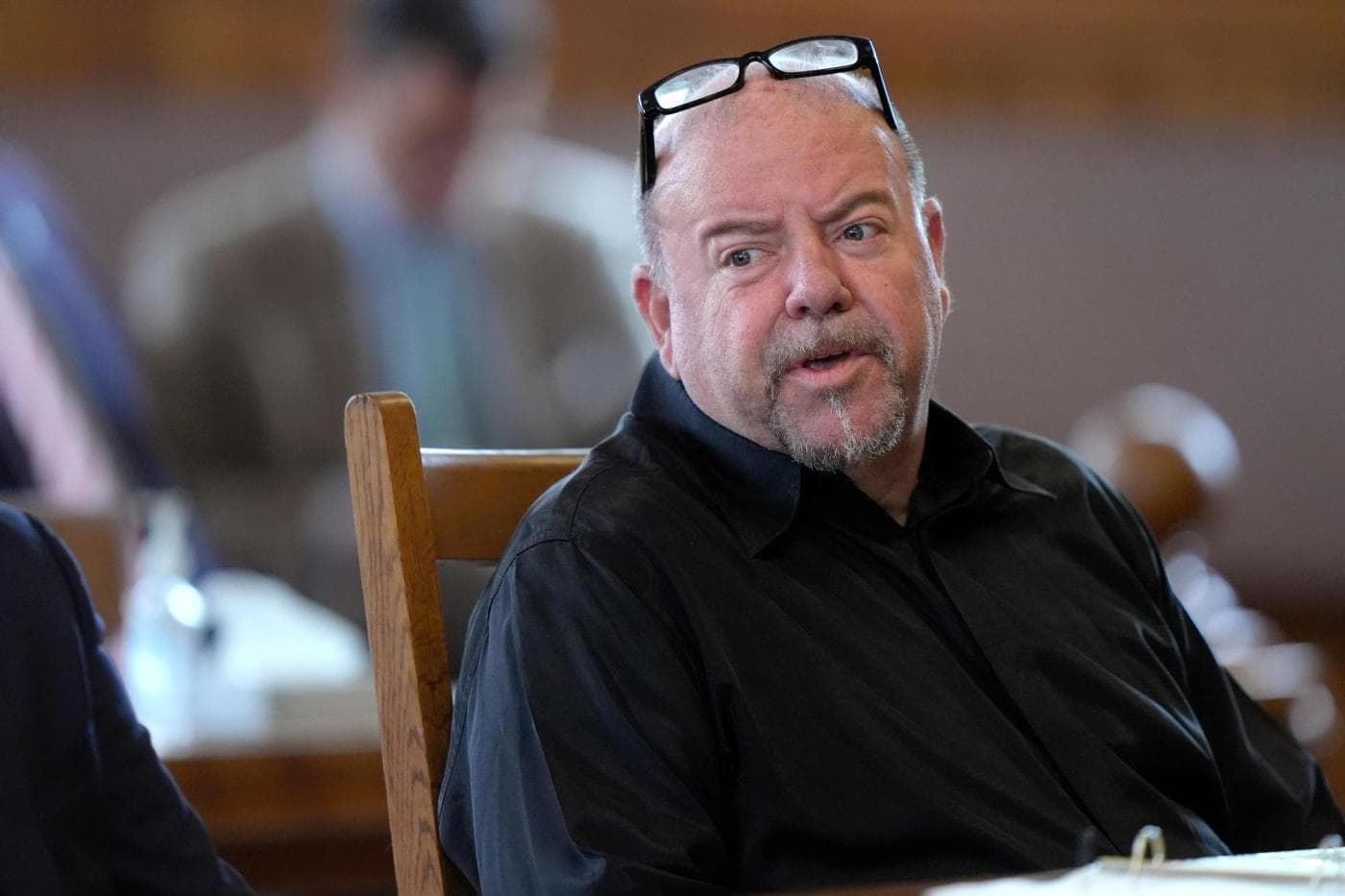
Political consultant defies court order in lawsuit over AI robocalls that mimicked Biden
By HOLLY RAMER, Associated Press CONCORD, N.H. (AP) — A political consultant who sent artificial intelligence-generated robocalls mimicking former President Joe Biden to New Hampshire Democrats said Tuesday he will not pay $22,500 to three voters despite a recent federal court order. The order, issued Friday in a lawsuit brought by the League of Women Voters, came five months after a jury acquitted Steven Kramer of voter suppression and impersonating a candidate. In the civil case, the judge entered a default judgement after Kramer failed to appear in court. “I never responded to them because I was already acquitted on 22 counts,” Kramer said in an email, insisting that the lawsuit was a publicity stunt that wasted the court’s time. He also has refused to pay a $6 million fine issued by the Federal Communications Commission. Related Articles Trump EPA moves to abandon rule that sets tough standards for deadly soot pollution FBI seeks interviews with Democratic lawmakers who urged US troops to defy illegal orders Dismissal of Comey, James cases won’t be the final word. Here’s what the path ahead may look like Some DACA recipients have been arrested in the Trump’s immigration crackdown Senator Jim Justice of West Virginia agrees to pay nearly $5.2M in overdue personal taxes Though jurors sided with Kramer in the criminal trial, the judge in the civil case not only ordered him to pay $7,500 to each voter who sued but banned him from engaging in the same conduct nationwide. Caren Short, director of legal and research at the League of Women Voters, described the decision as a “critical precedent against the weaponization of artificial intelligence in elections.” Plaintiffs will explore further action if Kramer doesn’t pay up, said Courtney Hostetler of Free Speech for People, which provided the League with legal assistance. “Mr. Kramer has shown a consistent disregard for the law and the rights of voters,” she said. “His plan to defy the court’s order continues this pattern, and reinforces the importance of the injunction and the damages award.” Kramer, 56, of New Orleans, admitted orchestrating a message sent to thousands of voters two days before the state’s Jan. 23, 2024, presidential primary. Recipients heard an AI-generated voice similar to Biden’s that suggested that voting in the primary would preclude voters from casting ballots in November. “It’s important that you save your vote for the November election,” voters were told. “Your votes make a difference in November, not this Tuesday.” Kramer, who would have faced decades in prison if convicted, testified that he wanted to send a wake-up call about the potential dangers of AI when he paid a New Orleans magician $150 to create the recording. He said he was getting frequent calls from people using AI in campaigns, and, worried about the lack of regulations, made it his New Year’s resolution to take action. “This is going to be my one good deed this year,” he recalled while testifying in Belknap County Superior Court in June. Kramer argued that the primary was a meaningless straw poll, and therefore the state’s voter suppression law didn’t apply. The primary was held in defiance of the Democratic National Committee, which had dislodged New Hampshire from its traditional spot in the nominating calendar, though the state’s delegates were still seated at the national convention. Biden did not put his name on the ballot or campaign there but won as a write-in. Lingo Telecom, the company that transmitted the calls, agreed to pay $1 million in a settlement with the FCC in August 2024. The agency, which did not respond to requests for comment, was developing AI-related rules when Donald Trump won the presidency, but it has since shown signs of a shift toward loosening regulations. And though multiple states have enacted legislation targeting the use of video or audio content that mimics candidates in political campaigns, Trump is considering pressuring states to stop regulating artificial intelligence. Trump and some Republicans argue that such regulation will dampen innovation, while critics worry about allowing big AI companies to operate with little oversight.

Some DACA recipients have been arrested in the Trump’s immigration crackdown
By VALERIE GONZALEZ, Associated Press McALLEN, Texas (AP) — Yaakub Vijandre was preparing to go to work as a mechanic when six vehicles appeared outside his Dallas-area home. Federal agents jumped out, one pointed a weapon at him, and they took him into custody. Related Articles Senator Jim Justice of West Virginia agrees to pay nearly $5.2M in overdue personal taxes Turkey pardons offer holiday ritual during precarious moment for Trump Rights groups slam Trump administration for ending Myanmar deportation protection as civil war rages Trump is considering push to extend Obamacare subsidies Trump moves toward labeling parts of Muslim Brotherhood as terrorists Vijandre is a recipient of Deferred Action for Childhood Arrivals, the Obama-era program that has shielded hundreds of thousands of people from deportation since 2012 if they were brought to the United States as children and generally stayed out of trouble. The Trump administration said it targeted Vijandre over social media posts. The freelance videographer and pro-Palestinian activist described his early October arrest to his attorneys, who relayed the information to reporters. His arrest and several others this year signal a change in how the U.S. is handling DACA recipients as President Donald Trump’s administration reshapes immigration policy more broadly. The change comes as immigrants have face increased vetting, including of their social media, when they apply for visas, green cards, citizenship, or to request the release of their children from federal custody. The administration also has sought to deport foreign students for participating in pro-Palestinian activism. DACA was created to shield recipients, commonly referred to as “Dreamers,” from immigration arrests and deportation. It also allows them to legally work in the U.S. Recipients reapply every two years. Previously if their status was in jeopardy, they would receive a warning and would still have a chance to fight it before immigration officers detained them and began efforts to deport them. In response to questions about any changes, Homeland Security Assistant Secretary Tricia McLaughlin issued a statement saying that people “who claim to be recipients of Deferred Action for Childhood Arrivals (DACA) are not automatically protected from deportations. DACA does not confer any form of legal status in this country.” DACA recipients can lose status “for a number of reasons, including if they’ve committed a crime,” she said. McLaughlin also claimed in a statement that Vijandre made social media posts “glorifying terrorism,” including one she said celebrated Abu Musab al-Zarqawi, al-Qaida’s leader in Iraq who was killed in a U.S. strike in 2006. An attorney for Vijandre, Chris Godshall-Bennett, said Vijandre’s social media activity is “clearly” protected speech. He also said the government has not provided details about the specific posts in court documents. Vijandre is among about 20 DACA recipients who have been arrested or detained by immigration authorities since Trump took office in January, according to Home is Here, a campaign created by pro-DACA advocacy groups. The administration is seeking to end his DACA status, which could result in him being deported to the Philippines, a home he has not visited since his family came to the U.S. in 2001, when he was 14. FILE – Susana Lujano, left, a dreamer from Mexico who lives in Houston, joins other activists to rally in support of the Deferred Action for Childhood Arrivals program, also known as DACA, at the U.S. Capitol in Washington on June 15, 2022. (AP Photo/J. Scott Applewhite, File) DACA has faced legal challenges DACA survived the first Trump administration’s attempt to rescind the program when the Supreme Court ruled in 2020 that the administration did not take the proper steps to end it. There have been other attempts to end the program or place restrictions on recipients. This year, the 5th Circuit Court of Appeals issued a ruling that would deny work permits for DACA recipients who live in Texas. The Trump administration recently presented its plans to a federal judge who is determining how it will work. The administration also has issued new restrictions on commercial driver’s licenses that would prevent DACA recipients and some other immigrants from getting them. Last year, 19 Republican states stripped DACA recipients’ access to health insurance under the Affordable Care Act. And the number of states where immigrant students can qualify for in-state tuition has dwindled since the Justice Department began suing states this year. “This administration might not be trying to end DACA altogether the way that they did the first time around, but they are chipping away at it,” said Juliana Macedo do Nascimento, spokesperson for United We Dream, which is part of Home is Here, the coalition keeping track of public cases of DACA recipients who have been detained. Detained DACA recipients question their arrests Catalina “Xóchitl” Santiago Santiago, a 28-year-old activist from El Paso, Texas, was arrested in August despite showing immigration officers a valid work permit obtained through DACA. Days later, federal officers arrested Paulo Cesar Gamez Lira as the 28-year-old father was arriving at his El Paso home with his children following a doctor’s appointment. Agents dislocated his shoulder, according to his attorneys. Both Santiago and Gamez Lira were held for over a month while their attorneys petitioned for their release. Marisa Ong, an attorney for Santiago and Gamez Lira, said the government failed to notify either of her clients of any intention to terminate their DACA status. “DACA recipients have a constitutionally protected interest in their continued liberty,” Ong said, adding that “the government cannot take away that liberty without providing some valid reason.” DACA recipients can lose their status if they are convicted of a felony, significant misdemeanors like those involving harming others, driving under the influence or drug distribution, or three or more misdemeanors. They can also lose their status if they pose a threat to national security or public safety. DHS claimed in a statement that Santiago was previously charged with trespassing, possession of narcotics and drug paraphernalia and that Gamez Lira was previously arrested for marijuana possession. Ong said that when attorneys sought their release “the government presented no evidence of any past misconduct by either individual.” Vijandre, the Dallas-area man who was arrested in October, remains in a Georgia detention facility. His attorneys say he received notice two weeks before his arrest that the government planned to terminate his DACA status but that he wasn’t given a chance to fight it. “I think that the administration has drawn a very clear line and at least for right now, between citizen and noncitizens, and their goal is to remove as many noncitizens from the country as possible and to make it as difficult as possible for noncitizens to enter the country,” Godshall-Bennett, Vijandre’s attorney, said.
Some DACA recipients have been arrested in the Trump’s immigration crackdown
By VALERIE GONZALEZ, Associated Press McALLEN, Texas (AP) — Yaakub Vijandre was preparing to go to work as a mechanic when six vehicles appeared outside his Dallas-area home. Federal agents jumped out, one pointed a weapon at him, and they took him into custody. Related Articles Senator Jim Justice of West Virginia agrees to pay nearly $5.2M in overdue personal taxes Turkey pardons offer holiday ritual during precarious moment for Trump Rights groups slam Trump administration for ending Myanmar deportation protection as civil war rages Trump is considering push to extend Obamacare subsidies Trump moves toward labeling parts of Muslim Brotherhood as terrorists Vijandre is a recipient of Deferred Action for Childhood Arrivals, the Obama-era program that has shielded hundreds of thousands of people from deportation since 2012 if they were brought to the United States as children and generally stayed out of trouble. The Trump administration said it targeted Vijandre over social media posts. The freelance videographer and pro-Palestinian activist described his early October arrest to his attorneys, who relayed the information to reporters. His arrest and several others this year signal a change in how the U.S. is handling DACA recipients as President Donald Trump’s administration reshapes immigration policy more broadly. The change comes as immigrants have face increased vetting, including of their social media, when they apply for visas, green cards, citizenship, or to request the release of their children from federal custody. The administration also has sought to deport foreign students for participating in pro-Palestinian activism. DACA was created to shield recipients, commonly referred to as “Dreamers,” from immigration arrests and deportation. It also allows them to legally work in the U.S. Recipients reapply every two years. Previously if their status was in jeopardy, they would receive a warning and would still have a chance to fight it before immigration officers detained them and began efforts to deport them. In response to questions about any changes, Homeland Security Assistant Secretary Tricia McLaughlin issued a statement saying that people “who claim to be recipients of Deferred Action for Childhood Arrivals (DACA) are not automatically protected from deportations. DACA does not confer any form of legal status in this country.” DACA recipients can lose status “for a number of reasons, including if they’ve committed a crime,” she said. McLaughlin also claimed in a statement that Vijandre made social media posts “glorifying terrorism,” including one she said celebrated Abu Musab al-Zarqawi, al-Qaida’s leader in Iraq who was killed in a U.S. strike in 2006. An attorney for Vijandre, Chris Godshall-Bennett, said Vijandre’s social media activity is “clearly” protected speech. He also said the government has not provided details about the specific posts in court documents. Vijandre is among about 20 DACA recipients who have been arrested or detained by immigration authorities since Trump took office in January, according to Home is Here, a campaign created by pro-DACA advocacy groups. The administration is seeking to end his DACA status, which could result in him being deported to the Philippines, a home he has not visited since his family came to the U.S. in 2001, when he was 14. FILE – Susana Lujano, left, a dreamer from Mexico who lives in Houston, joins other activists to rally in support of the Deferred Action for Childhood Arrivals program, also known as DACA, at the U.S. Capitol in Washington on June 15, 2022. (AP Photo/J. Scott Applewhite, File) DACA has faced legal challenges DACA survived the first Trump administration’s attempt to rescind the program when the Supreme Court ruled in 2020 that the administration did not take the proper steps to end it. There have been other attempts to end the program or place restrictions on recipients. This year, the 5th Circuit Court of Appeals issued a ruling that would deny work permits for DACA recipients who live in Texas. The Trump administration recently presented its plans to a federal judge who is determining how it will work. The administration also has issued new restrictions on commercial driver’s licenses that would prevent DACA recipients and some other immigrants from getting them. Last year, 19 Republican states stripped DACA recipients’ access to health insurance under the Affordable Care Act. And the number of states where immigrant students can qualify for in-state tuition has dwindled since the Justice Department began suing states this year. “This administration might not be trying to end DACA altogether the way that they did the first time around, but they are chipping away at it,” said Juliana Macedo do Nascimento, spokesperson for United We Dream, which is part of Home is Here, the coalition keeping track of public cases of DACA recipients who have been detained. Detained DACA recipients question their arrests Catalina “Xóchitl” Santiago Santiago, a 28-year-old activist from El Paso, Texas, was arrested in August despite showing immigration officers a valid work permit obtained through DACA. Days later, federal officers arrested Paulo Cesar Gamez Lira as the 28-year-old father was arriving at his El Paso home with his children following a doctor’s appointment. Agents dislocated his shoulder, according to his attorneys. Both Santiago and Gamez Lira were held for over a month while their attorneys petitioned for their release. Marisa Ong, an attorney for Santiago and Gamez Lira, said the government failed to notify either of her clients of any intention to terminate their DACA status. “DACA recipients have a constitutionally protected interest in their continued liberty,” Ong said, adding that “the government cannot take away that liberty without providing some valid reason.” DACA recipients can lose their status if they are convicted of a felony, significant misdemeanors like those involving harming others, driving under the influence or drug distribution, or three or more misdemeanors. They can also lose their status if they pose a threat to national security or public safety. DHS claimed in a statement that Santiago was previously charged with trespassing, possession of narcotics and drug paraphernalia and that Gamez Lira was previously arrested for marijuana possession. Ong said that when attorneys sought their release “the government presented no evidence of any past misconduct by either individual.” Vijandre, the Dallas-area man who was arrested in October, remains in a Georgia detention facility. His attorneys say he received notice two weeks before his arrest that the government planned to terminate his DACA status but that he wasn’t given a chance to fight it. “I think that the administration has drawn a very clear line and at least for right now, between citizen and noncitizens, and their goal is to remove as many noncitizens from the country as possible and to make it as difficult as possible for noncitizens to enter the country,” Godshall-Bennett, Vijandre’s attorney, said.

Dismissal of Comey, James cases won’t be the final word. Here’s what the path ahead may look like
By ERIC TUCKER and ALANNA DURKIN RICHER, Associated Press WASHINGTON (AP) — A federal judge’s dismissal of criminal cases against former FBI Director James Comey and New York Attorney Letitia James, two political foes of President Donald Trump, won’t be the final word on the matter. The Justice Department says it plans to immediately appeal a pair of rulings that held that Lindsey Halligan was illegally appointed interim U.S. attorney for the Eastern District of Virginia. It also has the ability to try to refile the cases, though whether it can successfully secure fresh indictments through a different prosecutor is unclear, as is whether any new indictments could survive the crush of legal challenges that would invariably follow. A look at the possible next steps: What exactly did the rulings say? At issue is the slapdash way the Trump administration raced to put Halligan in charge of one of the Justice Department’s most elite offices. A White House aide with no prior experience as a federal prosecutor, Halligan was named interim U.S. attorney in September after the veteran prosecutor who held the job, Erik Siebert, was effectively forced out amid Trump administration pressure to charge Comey and James. U.S. attorneys, top federal prosecutors who oversee regional Justice Department outposts across the country, are typically nominated by the president and confirmed by the Senate, though attorneys general do have the authority to directly appoint interim U.S. attorneys who can serve in the job for 120 days. But lawyers for Comey and James argued that the law empowers only one such temporary appointment and that, after that, federal judges in the district have say over who fills the vacancy until a Senate-confirmed U.S. attorney can be installed. Since Halligan replaced an interim U.S. attorney who had already served for more than 120 days, the lawyers said, her appointment was invalid and the indictments she secured must be dismissed as a result. U.S. District Judge Cameron McGowan Currie overwhelmingly agreed. Currie, an appointee of President Bill Clinton who was assigned to hear the dispute despite serving in South Carolina, not only dismissed the cases but also concluded that Halligan had been serving illegally in her position since the day she was sworn in. Could the Justice Department appeal? Yes, and Attorney General Pam Bondi indicated that the department would do exactly that. Any appeal would first be considered by the Richmond, Virginia-based 4th U.S. Circuit Court of Appeals, but theoretically could go all the way up to the Supreme Court and present a fresh constitutional test about the Justice Department’s appointment authority. Interestingly, Currie implied that her interpretation of the law might be well-received by at least one current conservative member of the Supreme Court. In a footnote, she cited a 1986 legal memo from Samuel Alito, then a deputy assistant attorney general in the Justice Department’s Office of Legal Counsel, that concluded that the Justice Department could not make another temporary appointment after a first 120-day period expired. Can the cases be filed again? Since the cases were dismissed “without prejudice,” the Justice Department is clearly able to seek a new indictment against James using a different prosecutor with lawful authority to present to the grand jury. The question, however, is much trickier in Comey’s case. It’s complicated by the fact that the five-year statute of limitations — or the limited time in which charges can be filed — expired at the end of the September, just days after Halligan raced to present to the grand jury. Federal law allows prosecutors to return a new indictment within six months of dismissal even after the statute of limitations has passed. But Comey’s lawyers said they will argue the judge’s ruling makes the indictment “void,” and therefore “the statute of limitations has run and there can be no further indictment.” The judge noted in her ruling that the deadline had passed and suggested that the statute of limitations is not tolled — or paused — in the case of an “invalid indictment.” Quoting from an earlier ruling, the judge wrote that “if the earlier indictment is void, there is no legitimate peg on which” to extend the deadline. Regardless, the Justice Department in either case would have to convince a new grand jury to return new indictments, and that may be harder given the intense publicity around the cases. Widespread media coverage of the allegations and the defense claims of improper conduct by prosecutors could make it more difficult to find grand jurors who can view the cases impartially. What happens to the other challenges to the indictments? For now, those arguments are all moot as the Justice Department labors to salvage the indictments. But in the event prosecutors do succeed in getting new indictments, they’ll likely have to fend off some of the same challenges that Comey and James had already raised and that remain pending as of Monday’s rulings. Related Articles Some DACA recipients have been arrested in the Trump’s immigration crackdown Senator Jim Justice of West Virginia agrees to pay nearly $5.2M in overdue personal taxes Turkey pardons offer holiday ritual during precarious moment for Trump Rights groups slam Trump administration for ending Myanmar deportation protection as civil war rages Trump is considering push to extend Obamacare subsidies Comey is charged with lying to Congress about whether he authorized an associate to serve as an anonymous source for the news media. James was charged with bank fraud and making false statements to a financial institution in connection with a home purchase in Norfolk, Virginia, in 2020. Both have pleaded not guilty and had urged judges to throw out their indictments on grounds that the prosecutions were illegally vindictive and emblematic of a Justice Department that’s been weaponized to pursue the president’s adversaries. Those arguments would presumably be revived in the event of any new indictments. Comey, for his part, has challenged a series of irregularities in Halligan’s presentation to the grand jury after a different judge who reviewed a record of the proceedings said he had identified a series of flaws — including the fact that the prosecutor apparently suggested to the panel that Comey did not have a Fifth Amendment right to not testify at trial. He has also said that the testimony he gave to the Senate Judiciary Committee that underpins his criminal case was truthful and that, in any event, the question he was responding to was so vague and ambiguous as to make a false statement prosecution a legal impossibility.
Thune says a shutdown can still be avoided if Democrats ‘dial back’ their demands
By MARY CLARE JALONICK, Associated Press WASHINGTON (AP) — Senate Majority Leader John Thune is rejecting Democratic demands on health care as unserious but says a government shutdown is still “avoidable” despite sharp divisions ahead of Wednesday’s funding deadline. “I’m a big believer that there’s always a way out,” the South Dakota Republican said in an interview with The Associated Press on Thursday. “And I think there are off-ramps here, but I don’t think that the negotiating position, at least at the moment, that the Democrats are trying to exert here is going to get you there.” Sen. Majority Leader John Thune, R-S.D., speaks during a news conference after a policy luncheon at the Capitol, Tuesday, Sept. 16, 2025, in Washington. (AP Photo/Mariam Zuhaib) Thune said Democrats are going to have to “dial back” their demands, which include immediately extending health insurance subsidies and reversing the health care policies in the massive tax bill that Republicans passed over the summer. Absent that, Thune said, “we’re probably plunging forward toward the shutdown.” It’s just the latest standoff in Washington over government funding, stretching back through several administrations. President Donald Trump was the driving force behind the longest shutdown ever during his first term, as he sought money for a U.S.-Mexico border wall. This time it is Democrats who are making demands as they face intense pressure from their core supporters to stand up to the Republican president and his policies. Democrats have shown little signs of relenting, just before spending runs out Wednesday. Their position remained the same even after the White House Office of Management and Budget on Wednesday released a memo that said agencies should consider a “reduction in force” for many federal programs if the government closes — meaning thousands of federal workers could be permanently laid off. Senate Democratic Leader Chuck Schumer of New York said the OMB memo was simply an “attempt at intimidation” and predicted the “unnecessary firings will either be overturned in court or the administration will end up hiring the workers back.” Thune stopped short of criticizing the White House threat of mass layoffs, saying the situation remains “a hypothetical.” Still, he said no one should be surprised by the memo as “everyone knows Russ Vought,” the head of the Office of Management and Budget, and his longtime advocacy for slashing government. “But it’s all avoidable,” Thune said. “And so if they don’t want to go down that path, there’s a way to avoid going down that path.” One way to avoid a shutdown, Thune said, would be for enough Democrats to vote with Republicans for a stripped-down “clean” bill to keep the government open for the next seven weeks while negotiations on spending continue. That’s how Republicans avoided a shutdown in March, when Schumer and several other Democrats decided at the last minute to vote with Republicans — to great political cost when Schumer’s party then revolted. Related Articles Trump holds talks with Pakistan’s prime minister in the latest sign of warming relations Trump to put import taxes on pharmaceutical drugs, kitchen cabinets, furniture and heavy trucks Ex-FBI Director James Comey charged with making false statement, obstruction, AP source says Ex-FBI Director James Comey indicted on charges of lying to Congress and obstruction Trump says he will not allow Israel to annex the West Bank A seven-week funding bill has already passed the House. “What would eight Democrats be willing to support?” Thune asked. “In terms of a path forward, or at least understanding what that path forward looks like.” Republicans in the 100-member Senate need at least seven Democrats to vote with them to get the 60 votes necessary for a short-term funding package, and they may lose up to two of their own — Republican Sens. Lisa Murkowski of Alaska and Rand Paul of Kentucky both opposed it in preliminary votes last week. A competing bill from Democrats also fell well short of 60 votes. Thune suggested some individual bipartisan bills to fund parts of the government for the next year could be part of a compromise, “but that requires cooperation from both sides,” he said. Democrats say they are frustrated that Thune hasn’t approached them to negotiate — and that Trump abruptly canceled a meeting with Schumer and House Democratic Leader Hakeem Jeffries of New York that had been scheduled for this week. Trump wrote on social media, “I have decided that no meeting with their Congressional Leaders could possibly be productive.” Thune said he “did have a conversation with the president” and offered his opinion on the meeting, which he declined to disclose. “But I think the president speaks for himself, and I think he came to the conclusion that that meeting would not be productive,” Thune said. Still, he says he thinks Trump could be open to a negotiation on the expanded health care subsidies that expire at the end of the year if Democrats weren’t threatening a shutdown. Many people who receive the subsidies through the marketplaces set up by the Affordable Care Act are expected to see a sharp rise in premiums if Congress doesn’t extend them. Some Republicans have agreed with Democrats that keeping the subsidies is necessary, but Thune says “reform is going to have to be a big part of it.” Democrats are likely to oppose such changes. By Monday, when the Senate returns to session, lawmakers will have just over 24 hours to avoid federal closures. Thune said he intends to bring up the bills that were rejected last week. “They’ll get multiple chances to vote,” he said, before a government shutdown begins at midnight Wednesday. He said he hopes “cooler heads will prevail.” “I don’t think shutdowns benefit anybody, least of all the American people,” Thune said.
Thune says a shutdown can still be avoided if Democrats ‘dial back’ their demands
By MARY CLARE JALONICK, Associated Press WASHINGTON (AP) — Senate Majority Leader John Thune is rejecting Democratic demands on health care as unserious but says a government shutdown is still “avoidable” despite sharp divisions ahead of Wednesday’s funding deadline. “I’m a big believer that there’s always a way out,” the South Dakota Republican said in an interview with The Associated Press on Thursday. “And I think there are off-ramps here, but I don’t think that the negotiating position, at least at the moment, that the Democrats are trying to exert here is going to get you there.” Sen. Majority Leader John Thune, R-S.D., speaks during a news conference after a policy luncheon at the Capitol, Tuesday, Sept. 16, 2025, in Washington. (AP Photo/Mariam Zuhaib) Thune said Democrats are going to have to “dial back” their demands, which include immediately extending health insurance subsidies and reversing the health care policies in the massive tax bill that Republicans passed over the summer. Absent that, Thune said, “we’re probably plunging forward toward the shutdown.” It’s just the latest standoff in Washington over government funding, stretching back through several administrations. President Donald Trump was the driving force behind the longest shutdown ever during his first term, as he sought money for a U.S.-Mexico border wall. This time it is Democrats who are making demands as they face intense pressure from their core supporters to stand up to the Republican president and his policies. Democrats have shown little signs of relenting, just before spending runs out Wednesday. Their position remained the same even after the White House Office of Management and Budget on Wednesday released a memo that said agencies should consider a “reduction in force” for many federal programs if the government closes — meaning thousands of federal workers could be permanently laid off. Senate Democratic Leader Chuck Schumer of New York said the OMB memo was simply an “attempt at intimidation” and predicted the “unnecessary firings will either be overturned in court or the administration will end up hiring the workers back.” Thune stopped short of criticizing the White House threat of mass layoffs, saying the situation remains “a hypothetical.” Still, he said no one should be surprised by the memo as “everyone knows Russ Vought,” the head of the Office of Management and Budget, and his longtime advocacy for slashing government. “But it’s all avoidable,” Thune said. “And so if they don’t want to go down that path, there’s a way to avoid going down that path.” One way to avoid a shutdown, Thune said, would be for enough Democrats to vote with Republicans for a stripped-down “clean” bill to keep the government open for the next seven weeks while negotiations on spending continue. That’s how Republicans avoided a shutdown in March, when Schumer and several other Democrats decided at the last minute to vote with Republicans — to great political cost when Schumer’s party then revolted. Related Articles Trump holds talks with Pakistan’s prime minister in the latest sign of warming relations Trump to put import taxes on pharmaceutical drugs, kitchen cabinets, furniture and heavy trucks Ex-FBI Director James Comey charged with making false statement, obstruction, AP source says Ex-FBI Director James Comey indicted on charges of lying to Congress and obstruction Trump says he will not allow Israel to annex the West Bank A seven-week funding bill has already passed the House. “What would eight Democrats be willing to support?” Thune asked. “In terms of a path forward, or at least understanding what that path forward looks like.” Republicans in the 100-member Senate need at least seven Democrats to vote with them to get the 60 votes necessary for a short-term funding package, and they may lose up to two of their own — Republican Sens. Lisa Murkowski of Alaska and Rand Paul of Kentucky both opposed it in preliminary votes last week. A competing bill from Democrats also fell well short of 60 votes. Thune suggested some individual bipartisan bills to fund parts of the government for the next year could be part of a compromise, “but that requires cooperation from both sides,” he said. Democrats say they are frustrated that Thune hasn’t approached them to negotiate — and that Trump abruptly canceled a meeting with Schumer and House Democratic Leader Hakeem Jeffries of New York that had been scheduled for this week. Trump wrote on social media, “I have decided that no meeting with their Congressional Leaders could possibly be productive.” Thune said he “did have a conversation with the president” and offered his opinion on the meeting, which he declined to disclose. “But I think the president speaks for himself, and I think he came to the conclusion that that meeting would not be productive,” Thune said. Still, he says he thinks Trump could be open to a negotiation on the expanded health care subsidies that expire at the end of the year if Democrats weren’t threatening a shutdown. Many people who receive the subsidies through the marketplaces set up by the Affordable Care Act are expected to see a sharp rise in premiums if Congress doesn’t extend them. Some Republicans have agreed with Democrats that keeping the subsidies is necessary, but Thune says “reform is going to have to be a big part of it.” Democrats are likely to oppose such changes. By Monday, when the Senate returns to session, lawmakers will have just over 24 hours to avoid federal closures. Thune said he intends to bring up the bills that were rejected last week. “They’ll get multiple chances to vote,” he said, before a government shutdown begins at midnight Wednesday. He said he hopes “cooler heads will prevail.” “I don’t think shutdowns benefit anybody, least of all the American people,” Thune said.
Thune says a shutdown can still be avoided if Democrats ‘dial back’ their demands
By MARY CLARE JALONICK, Associated Press WASHINGTON (AP) — Senate Majority Leader John Thune is rejecting Democratic demands on health care as unserious but says a government shutdown is still “avoidable” despite sharp divisions ahead of Wednesday’s funding deadline. “I’m a big believer that there’s always a way out,” the South Dakota Republican said in an interview with The Associated Press on Thursday. “And I think there are off-ramps here, but I don’t think that the negotiating position, at least at the moment, that the Democrats are trying to exert here is going to get you there.” Sen. Majority Leader John Thune, R-S.D., speaks during a news conference after a policy luncheon at the Capitol, Tuesday, Sept. 16, 2025, in Washington. (AP Photo/Mariam Zuhaib) Thune said Democrats are going to have to “dial back” their demands, which include immediately extending health insurance subsidies and reversing the health care policies in the massive tax bill that Republicans passed over the summer. Absent that, Thune said, “we’re probably plunging forward toward the shutdown.” It’s just the latest standoff in Washington over government funding, stretching back through several administrations. President Donald Trump was the driving force behind the longest shutdown ever during his first term, as he sought money for a U.S.-Mexico border wall. This time it is Democrats who are making demands as they face intense pressure from their core supporters to stand up to the Republican president and his policies. Democrats have shown little signs of relenting, just before spending runs out Wednesday. Their position remained the same even after the White House Office of Management and Budget on Wednesday released a memo that said agencies should consider a “reduction in force” for many federal programs if the government closes — meaning thousands of federal workers could be permanently laid off. Senate Democratic Leader Chuck Schumer of New York said the OMB memo was simply an “attempt at intimidation” and predicted the “unnecessary firings will either be overturned in court or the administration will end up hiring the workers back.” Thune stopped short of criticizing the White House threat of mass layoffs, saying the situation remains “a hypothetical.” Still, he said no one should be surprised by the memo as “everyone knows Russ Vought,” the head of the Office of Management and Budget, and his longtime advocacy for slashing government. “But it’s all avoidable,” Thune said. “And so if they don’t want to go down that path, there’s a way to avoid going down that path.” One way to avoid a shutdown, Thune said, would be for enough Democrats to vote with Republicans for a stripped-down “clean” bill to keep the government open for the next seven weeks while negotiations on spending continue. That’s how Republicans avoided a shutdown in March, when Schumer and several other Democrats decided at the last minute to vote with Republicans — to great political cost when Schumer’s party then revolted. Related Articles Trump holds talks with Pakistan’s prime minister in the latest sign of warming relations Trump to put import taxes on pharmaceutical drugs, kitchen cabinets, furniture and heavy trucks Ex-FBI Director James Comey charged with making false statement, obstruction, AP source says Ex-FBI Director James Comey indicted on charges of lying to Congress and obstruction Trump says he will not allow Israel to annex the West Bank A seven-week funding bill has already passed the House. “What would eight Democrats be willing to support?” Thune asked. “In terms of a path forward, or at least understanding what that path forward looks like.” Republicans in the 100-member Senate need at least seven Democrats to vote with them to get the 60 votes necessary for a short-term funding package, and they may lose up to two of their own — Republican Sens. Lisa Murkowski of Alaska and Rand Paul of Kentucky both opposed it in preliminary votes last week. A competing bill from Democrats also fell well short of 60 votes. Thune suggested some individual bipartisan bills to fund parts of the government for the next year could be part of a compromise, “but that requires cooperation from both sides,” he said. Democrats say they are frustrated that Thune hasn’t approached them to negotiate — and that Trump abruptly canceled a meeting with Schumer and House Democratic Leader Hakeem Jeffries of New York that had been scheduled for this week. Trump wrote on social media, “I have decided that no meeting with their Congressional Leaders could possibly be productive.” Thune said he “did have a conversation with the president” and offered his opinion on the meeting, which he declined to disclose. “But I think the president speaks for himself, and I think he came to the conclusion that that meeting would not be productive,” Thune said. Still, he says he thinks Trump could be open to a negotiation on the expanded health care subsidies that expire at the end of the year if Democrats weren’t threatening a shutdown. Many people who receive the subsidies through the marketplaces set up by the Affordable Care Act are expected to see a sharp rise in premiums if Congress doesn’t extend them. Some Republicans have agreed with Democrats that keeping the subsidies is necessary, but Thune says “reform is going to have to be a big part of it.” Democrats are likely to oppose such changes. By Monday, when the Senate returns to session, lawmakers will have just over 24 hours to avoid federal closures. Thune said he intends to bring up the bills that were rejected last week. “They’ll get multiple chances to vote,” he said, before a government shutdown begins at midnight Wednesday. He said he hopes “cooler heads will prevail.” “I don’t think shutdowns benefit anybody, least of all the American people,” Thune said.