3 stories credited to South Florida Reporter
Latest story Apr 17, 2026 · on ChamberLight since Apr 2026
A story can appear as several articles (copies of the same piece), so counts of stories and of articles differ.
Scores for South Florida Reporter
Writing quality not enough rated stories yet: 3 of 10. How it is measured
Scores last checked Sep 25, 2026.
Stories ChamberLight collected, by month
Stories credited to South Florida Reporter, by publication date. ChamberLight collects articles that mention the officials it tracks, so this shows its own coverage of this source, not how much the source publishes.
- Stories from South Florida Reporter
- Shaded: ChamberLight collected no stories, or almost none, from any outlet (a gap in its collection, not in the outlet’s publishing)
Show as a table
| Month | Stories | All outlets |
|---|---|---|
| April 2026 | 3 | 3,220 |
| May 2026 | 0 | none collected |
| June 2026 | 0 | none collected |
| July 2026 | 0 | none collected |
| August 2026 | 0 | 1 (collection gap) |
| September 2026 | 0 | 1,320 |
Top topics
Share of this source’s stories tagged with each topic. A story can carry several topics, so the shares do not add up to 100%.
- Criminal Justice2
67% of 3 stories · 19% across all outlets
- Ethics/Corruption2
67% of 3 stories · 58% across all outlets
- Economy1
33% of 3 stories · 26% across all outlets
- Foreign Policy1
33% of 3 stories · 29% across all outlets
- Immigration1
33% of 3 stories · 13% across all outlets
- Taxes1
33% of 3 stories · 5% across all outlets
The thin mark on each bar is the topic’s share across all outlets.
Who they cover
Party of the officials these stories are mainly about, across all 5 officials named. A story counts once for each official it is mainly about, so the split is over 5 story–official pairs, from 3 stories.
- Republican60% · 3 pairs
- Democrat20% · 1 pair
- Party not recorded20% · 1 pair
Most covered
Stories mainly about each official, and their share of the source’s 3 stories.
Article tone
ChamberLight’s article analysis assigns each story a tone toward the official it covers. It describes the coverage of that official, not South Florida Reporter’s stance, and reader votes do not change it. 3 stories.
- Good Look
- 0 (0%)
- Mixed
- 2 (67%)
- Informational
- 0 (0%)
- Bad Look
- 1 (33%)
Challenges to these scores
No one has challenged a score on this page yet. Anyone can; editors publish every outcome here.
Articles served from southfloridareporter.com
5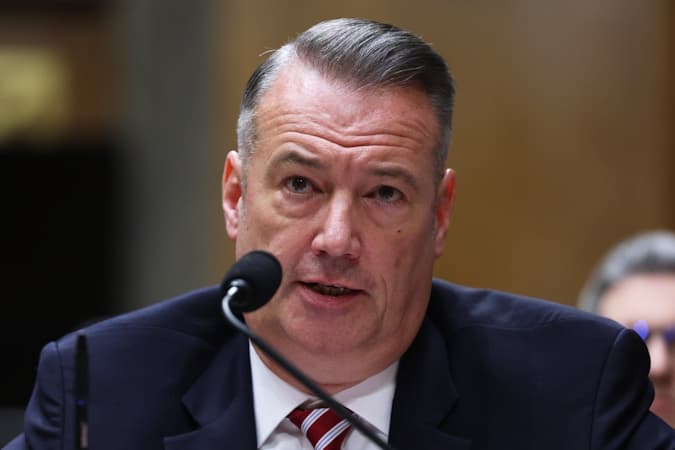
Acting ICE Director Todd Lyons Announces Resignation Amid Tenure of Unprecedented Enforcement and Controversy
On April 16, 2026, the Department of Homeland Security (DHS) confirmed that Todd Lyons, the acting director of U.S. Immigration and Customs Enforcement (ICE), will step down from his post effective May 31, 2026. The departure marks the end of a turbulent 14-month tenure defined by a radical shift in federal immigration enforcement, constitutional legal battles, and mounting personal strain on the agency’s leadership. Lyons, a veteran of both the U.S. Air Force and the federal law enforcement community, has been a central figure in President Donald Trump’s second-term agenda to execute the largest mass deportation operation in American history. DHS Secretary Markwayne Mullin, who himself took office recently following the high-profile ouster of Kristi Noem, praised Lyons in a formal statement, describing him as a “great leader” who “jumpstarted an agency that had not been allowed to do its job for four years.” Mullin credited Lyons with the removal of “murderers, rapists, pedophiles, terrorists, and gang members,” asserting that American communities are safer as a result of his leadership. Lyons’ stated reason for departure is a desire to spend more time with his family and pursue opportunities in the private sector, yet his resignation comes on the heels of reports indicating severe internal pressure and health-related issues. A Career Built on Enforcement Todd Lyons’ trajectory to the top of ICE began in the military and local law enforcement. Born around 1973, Lyons served in the United States Air Force from 1993 to 2006, seeing deployments in South Korea and Europe. Following the September 11 attacks, he was recalled to active duty, serving as an antiterrorism and force protection liaison for the Special Operations Command Central. This background in security and tactical operations would later become the hallmark of his approach to immigration enforcement. Lyons joined ICE’s Enforcement and Removal Operations (ERO) division in 2007, starting as an immigration enforcement agent in Dallas, Texas. Over the next two decades, he climbed the ranks, serving as Chief of Staff in Dallas and later as the Field Office Director in Boston, where he oversaw operations across six New England states. His reputation as an efficient, mission-focused administrator caught the attention of the Trump transition team following the 2024 election. Though initially bypassed for the acting directorship in favor of Caleb Vitello, Lyons was named the new acting director of ICE on March 9, 2025, after Vitello was reassigned. The “Amazon Prime” Vision for Deportation Upon taking the helm, Lyons immediately signaled a shift toward what he described as a “business-like” approach to removals. At the Border Security Expo in April 2025, Lyons articulated a vision that shocked civil rights advocates but galvanized the administration’s base. He argued that the mass deportation operation should function with the logistical precision of a global tech giant. “We need to get better at treating this like a business,” Lyons stated, “where this mass deportation operation is something like you would see and say, like Amazon trying to get your Prime delivery within 24 hours. So trying to figure out how to do that with human beings.” This analogy became the foundational philosophy of his leadership. Under Lyons, ICE sought to industrialize the process of tracking, detaining, and removing noncitizens. This included the pursuit of the “Detention Reengineering Initiative,” a massive project aimed at retrofitting warehouses into detention centers to accommodate a rapidly growing population of detainees. Funded by the “One Big Beautiful Act”—a legislative package providing nearly $75 billion in supplemental funding—Lyons oversaw plans to add over 90,000 “beds” to the system, a move critics described as the creation of “Amazon-style human warehouses.” Constitutional Challenges and the “Secret Memo” The most significant legal controversy of Lyons’ tenure emerged in May 2025, when a whistleblower leaked a confidential memorandum authored by Lyons. The document authorized ICE officers to use administrative warrants—internal agency documents signed by ICE supervisors rather than judicial warrants signed by a judge—to enter private residences. Historically, the Fourth Amendment has been interpreted to require a judicial warrant or consent for federal agents to enter a private home. Lyons’ memo, however, asserted that the DHS Office of General Counsel had determined that administrative warrants alone were sufficient for arrests subject to final orders of removal. The policy was reportedly distributed through verbal briefings rather than written training manuals to avoid a paper trail. The memo prompted immediate backlash from members of Congress and civil liberties groups. Representative Luz Rivas and Senator Richard Blumenthal were among those who condemned the policy as a “blunt disregard for constitutional rights.” Legal challenges argued that the policy transformed ICE into a “spearhead to our democracy’s decline,” shifting the nation toward a state of “rule by force.” Despite the outcry, Lyons defended the practice as a necessary tool for the “intelligence-driven targeted enforcement” required by the administration’s quotas. The Minneapolis Tragedy: Renee Good and Alex Pretti The human cost of this aggressive enforcement strategy came into sharp focus in January 2026. During a series of immigration raids in Minneapolis, Minnesota, two U.S. citizens were fatally shot by federal agents in separate incidents within weeks of each other. On January 7, 37-year-old Renee Nicole Macklin Good was shot in the head by an ICE officer after she stopped her car to witness an enforcement action. While the administration claimed she had attempted to strike an officer with her vehicle, video footage later surfaced suggesting she was stationary and non-threatening at the time of the shooting. Further reports indicated that ICE officers blocked a nearby physician from administering life-saving care to Good, who still had a pulse for several minutes after being shot. Weeks later, on January 24, Alex Jeffrey Pretti, an ICU nurse, was killed by CBP and ICE agents while attempting to help a civilian who had been pepper-sprayed. Witnesses reported that Pretti was disarmed and restrained when he was shot multiple times in the back. The deaths of two American citizens at the hands of immigration agents triggered a “public health emergency” declaration in the city and intensified the national debate over the “culture of impunity” within the agency under Lyons’ direction. Internal Pressures and Health Issues Beneath the veneer of aggressive efficiency, Lyons reportedly struggled with the immense weight of the administration’s demands. In March 2026, Politico published a report detailing that Lyons had been hospitalized at least twice for stress-related issues over a seven-month period. One incident described Lyons becoming so distressed during a high-stakes enforcement operation that bodyguards were forced to bring a portable defibrillator to his side. Sources within the administration alleged that Stephen Miller, a senior advisor to the President, exerted relentless pressure on Lyons through daily 10 a.m. phone calls. Miller was reported to frequently yell at Lyons for failing to meet the “insanely high” deportation quotas set by the White House. While the White House dismissed these reports as “inaccurate trash” and Lyons himself attributed his health visits to “military deployment VA issues,” the image of an agency head under siege persisted. A Leadership Void in a Polarized Era Lyons’ departure leaves a massive leadership vacuum at ICE at a time when the agency is central to the country’s political identity. His tenure coincided with a period where ICE agents were even deployed to bolster TSA security at airports amid a congressional budget impasse, a move that brought the realities of immigration enforcement to every traveler in America. As of April 16, no successor has been named. Finding a replacement will be one of the first major challenges for Secretary Mullin, who must find a leader capable of sustaining the administration’s “Amazon Prime” efficiency while navigating the minefield of constitutional litigation and public outcry. Lyons’ resignation effective May 31 represents not just the end of a personal chapter for a career officer, but a potential turning point for an agency that has become the most visible and controversial arm of the federal government. Sources Used and Links: MS NOW: Acting ICE Director Todd Lyons resigns Associated Press / WKMG: ICE acting director Todd Lyons will resign at end of May, DHS says Wikipedia: Todd Lyons – Wikipedia U.S. Immigration and Customs Enforcement (ICE): ICE Leadership – Todd M. Lyons House of Representatives (Bio): Todd M. Lyons Senior Official Bio First Coast News: Acting ICE Director Todd Lyons to leave Homeland Security National Immigration Law Center (NILC): ICE Wants to Stash People in Amazon-style Warehouses House Oversight Democrats: MN Oversight Report – Shooting of Renee Good and Alex Pretti The New Republic: ICE Chief Hospitalized as Stephen Miller Keeps Yelling at Him WFMD / Fox News: White House blasts POLITICO report on acting ICE chief hospitalizations Congresswoman Luz Rivas (Official Letter): February 19, 2025 The Honorable Todd Lyons Letter regarding “Secret Memo” The post by SouthFloridaReporter.com appears on South Florida Reporter.
Acting ICE Director Todd Lyons Announces Resignation Amid Tenure of Unprecedented Enforcement and Controversy
On April 16, 2026, the Department of Homeland Security (DHS) confirmed that Todd Lyons, the acting director of U.S. Immigration and Customs Enforcement (ICE), will step down from his post effective May 31, 2026. The departure marks the end of a turbulent 14-month tenure defined by a radical shift in federal immigration enforcement, constitutional legal battles, and mounting personal strain on the agency’s leadership. Lyons, a veteran of both the U.S. Air Force and the federal law enforcement community, has been a central figure in President Donald Trump’s second-term agenda to execute the largest mass deportation operation in American history. DHS Secretary Markwayne Mullin, who himself took office recently following the high-profile ouster of Kristi Noem, praised Lyons in a formal statement, describing him as a “great leader” who “jumpstarted an agency that had not been allowed to do its job for four years.” Mullin credited Lyons with the removal of “murderers, rapists, pedophiles, terrorists, and gang members,” asserting that American communities are safer as a result of his leadership. Lyons’ stated reason for departure is a desire to spend more time with his family and pursue opportunities in the private sector, yet his resignation comes on the heels of reports indicating severe internal pressure and health-related issues. A Career Built on Enforcement Todd Lyons’ trajectory to the top of ICE began in the military and local law enforcement. Born around 1973, Lyons served in the United States Air Force from 1993 to 2006, seeing deployments in South Korea and Europe. Following the September 11 attacks, he was recalled to active duty, serving as an antiterrorism and force protection liaison for the Special Operations Command Central. This background in security and tactical operations would later become the hallmark of his approach to immigration enforcement. Lyons joined ICE’s Enforcement and Removal Operations (ERO) division in 2007, starting as an immigration enforcement agent in Dallas, Texas. Over the next two decades, he climbed the ranks, serving as Chief of Staff in Dallas and later as the Field Office Director in Boston, where he oversaw operations across six New England states. His reputation as an efficient, mission-focused administrator caught the attention of the Trump transition team following the 2024 election. Though initially bypassed for the acting directorship in favor of Caleb Vitello, Lyons was named the new acting director of ICE on March 9, 2025, after Vitello was reassigned. The “Amazon Prime” Vision for Deportation Upon taking the helm, Lyons immediately signaled a shift toward what he described as a “business-like” approach to removals. At the Border Security Expo in April 2025, Lyons articulated a vision that shocked civil rights advocates but galvanized the administration’s base. He argued that the mass deportation operation should function with the logistical precision of a global tech giant. “We need to get better at treating this like a business,” Lyons stated, “where this mass deportation operation is something like you would see and say, like Amazon trying to get your Prime delivery within 24 hours. So trying to figure out how to do that with human beings.” This analogy became the foundational philosophy of his leadership. Under Lyons, ICE sought to industrialize the process of tracking, detaining, and removing noncitizens. This included the pursuit of the “Detention Reengineering Initiative,” a massive project aimed at retrofitting warehouses into detention centers to accommodate a rapidly growing population of detainees. Funded by the “One Big Beautiful Act”—a legislative package providing nearly $75 billion in supplemental funding—Lyons oversaw plans to add over 90,000 “beds” to the system, a move critics described as the creation of “Amazon-style human warehouses.” Constitutional Challenges and the “Secret Memo” The most significant legal controversy of Lyons’ tenure emerged in May 2025, when a whistleblower leaked a confidential memorandum authored by Lyons. The document authorized ICE officers to use administrative warrants—internal agency documents signed by ICE supervisors rather than judicial warrants signed by a judge—to enter private residences. Historically, the Fourth Amendment has been interpreted to require a judicial warrant or consent for federal agents to enter a private home. Lyons’ memo, however, asserted that the DHS Office of General Counsel had determined that administrative warrants alone were sufficient for arrests subject to final orders of removal. The policy was reportedly distributed through verbal briefings rather than written training manuals to avoid a paper trail. The memo prompted immediate backlash from members of Congress and civil liberties groups. Representative Luz Rivas and Senator Richard Blumenthal were among those who condemned the policy as a “blunt disregard for constitutional rights.” Legal challenges argued that the policy transformed ICE into a “spearhead to our democracy’s decline,” shifting the nation toward a state of “rule by force.” Despite the outcry, Lyons defended the practice as a necessary tool for the “intelligence-driven targeted enforcement” required by the administration’s quotas. The Minneapolis Tragedy: Renee Good and Alex Pretti The human cost of this aggressive enforcement strategy came into sharp focus in January 2026. During a series of immigration raids in Minneapolis, Minnesota, two U.S. citizens were fatally shot by federal agents in separate incidents within weeks of each other. On January 7, 37-year-old Renee Nicole Macklin Good was shot in the head by an ICE officer after she stopped her car to witness an enforcement action. While the administration claimed she had attempted to strike an officer with her vehicle, video footage later surfaced suggesting she was stationary and non-threatening at the time of the shooting. Further reports indicated that ICE officers blocked a nearby physician from administering life-saving care to Good, who still had a pulse for several minutes after being shot. Weeks later, on January 24, Alex Jeffrey Pretti, an ICU nurse, was killed by CBP and ICE agents while attempting to help a civilian who had been pepper-sprayed. Witnesses reported that Pretti was disarmed and restrained when he was shot multiple times in the back. The deaths of two American citizens at the hands of immigration agents triggered a “public health emergency” declaration in the city and intensified the national debate over the “culture of impunity” within the agency under Lyons’ direction. Internal Pressures and Health Issues Beneath the veneer of aggressive efficiency, Lyons reportedly struggled with the immense weight of the administration’s demands. In March 2026, Politico published a report detailing that Lyons had been hospitalized at least twice for stress-related issues over a seven-month period. One incident described Lyons becoming so distressed during a high-stakes enforcement operation that bodyguards were forced to bring a portable defibrillator to his side. Sources within the administration alleged that Stephen Miller, a senior advisor to the President, exerted relentless pressure on Lyons through daily 10 a.m. phone calls. Miller was reported to frequently yell at Lyons for failing to meet the “insanely high” deportation quotas set by the White House. While the White House dismissed these reports as “inaccurate trash” and Lyons himself attributed his health visits to “military deployment VA issues,” the image of an agency head under siege persisted. A Leadership Void in a Polarized Era Lyons’ departure leaves a massive leadership vacuum at ICE at a time when the agency is central to the country’s political identity. His tenure coincided with a period where ICE agents were even deployed to bolster TSA security at airports amid a congressional budget impasse, a move that brought the realities of immigration enforcement to every traveler in America. As of April 16, no successor has been named. Finding a replacement will be one of the first major challenges for Secretary Mullin, who must find a leader capable of sustaining the administration’s “Amazon Prime” efficiency while navigating the minefield of constitutional litigation and public outcry. Lyons’ resignation effective May 31 represents not just the end of a personal chapter for a career officer, but a potential turning point for an agency that has become the most visible and controversial arm of the federal government. Sources Used and Links: MS NOW: Acting ICE Director Todd Lyons resigns Associated Press / WKMG: ICE acting director Todd Lyons will resign at end of May, DHS says Wikipedia: Todd Lyons – Wikipedia U.S. Immigration and Customs Enforcement (ICE): ICE Leadership – Todd M. Lyons House of Representatives (Bio): Todd M. Lyons Senior Official Bio First Coast News: Acting ICE Director Todd Lyons to leave Homeland Security National Immigration Law Center (NILC): ICE Wants to Stash People in Amazon-style Warehouses House Oversight Democrats: MN Oversight Report – Shooting of Renee Good and Alex Pretti The New Republic: ICE Chief Hospitalized as Stephen Miller Keeps Yelling at Him WFMD / Fox News: White House blasts POLITICO report on acting ICE chief hospitalizations Congresswoman Luz Rivas (Official Letter): February 19, 2025 The Honorable Todd Lyons Letter regarding “Secret Memo” The post by SouthFloridaReporter.com appears on South Florida Reporter.
Reps. Swalwell, Gonzales To Quit Congress As 2 More US House Members May Face Expulsion Votes
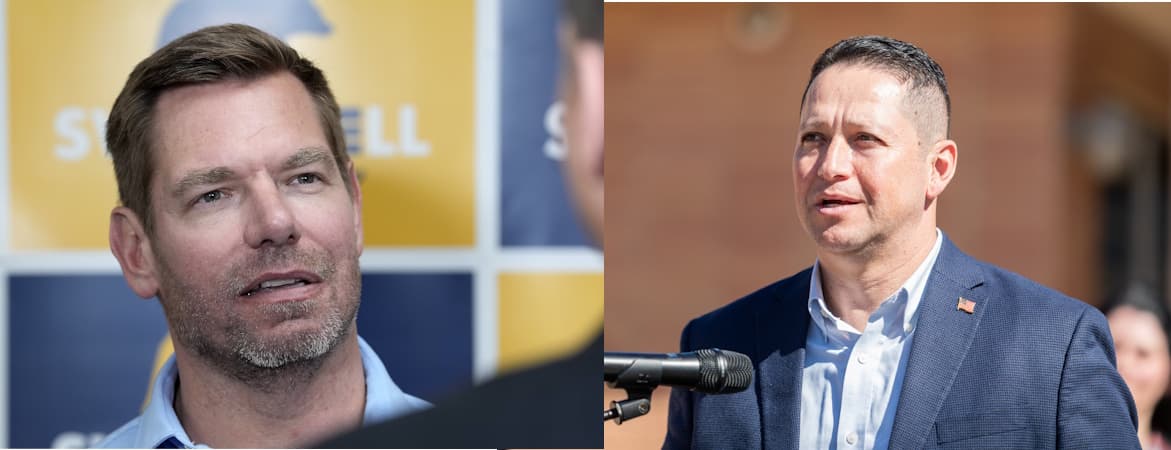
by Jennifer Shutt, Florida Phoenix WASHINGTON — California Democratic Rep. Eric Swalwell and Texas Republican Rep. Tony Gonzales both announced Monday evening that they would resign from Congress amid sexual misconduct allegations. Swalwell’s announcement came just one day after he suspended his campaign for governor over allegations of sexual assault. “I am aware of efforts to bring an immediate expulsion vote against me and other members,” he wrote in a statement on X. “Expelling anyone in Congress without due process, within days of an allegation being made, is wrong. But it’s also wrong for my constituents to have me distracted from my duties. Therefore, I plan to resign my seat in Congress.” Just over an hour later, Gonzales posted his plans to resign on social media. “There is a season for everything and God has a plan for us all,” he wrote. “When Congress returns tomorrow, I will file my retirement from office. It has been my privilege to serve the great people of Texas.” Debate about whether to expel four House members, which would require the support of two-thirds of the chamber, resurfaced this weekend when Swalwell dropped out of the gubernatorial election. New Mexico Rep. Teresa Leger Fernández, chair of the Democratic Women’s Caucus, wrote in a statement that the reports regarding Swalwell were “horrific.” “Rep. Swalwell’s actions would not be tolerated in any place of work, and the United States Congress should be no different,” she wrote. “We must believe and support survivors, and hold perpetrators accountable.” Fernández called for an immediate investigation that ensures the “staffers and interns who courageously came forward must be listened to and kept safe.” Fernández wrote in a separate statement that Swalwell and Gonzales, who is under investigation by the House Ethics Committee for allegations he engaged “in sexual misconduct towards an individual employed in his congressional office,” should immediately leave Congress. “Reps. Gonzales and Swalwell are not fit to serve. They must resign. If they do not, I will vote to expel them,” she wrote. Florida Republican Rep. Anna Paulina Luna wrote in a social media post that she “will be supporting this resolution!” The House Ethics Committee announced Monday afternoon its members had opened an investigation into Swalwell “with respect to allegations that he may have engaged in sexual misconduct, including towards an employee working under his supervision.” Florida lawmakers There is also the possibility that an expulsion resolution would include Florida Democratic Rep. Sheila Cherfilus-McCormick and Florida Republican Rep. Cory Mills. The House Ethics Committee voted to find Cherfilus-McCormick guilty on more than two dozen ethics charges in late March after holding a public hearing. The panel plans to hold another hearing on April 21 to decide “what, if any, sanction would be appropriate for the Committee to recommend to the House of Representatives.” Mills has been under investigation by the Ethics Committee for months over allegations he “engaged in misconduct with respect to allegations of sexual misconduct and/or dating violence,” among several other possible violations. Few expulsions in history The House has rarely expelled its members, voting just six times to force lawmakers out. New York Republican Rep. George Santos was the most recent member removed from the House, following a 311-114 vote in December 2023 to approve an expulsion resolution sponsored by Mississippi Republican Rep. Michael Guest, chairman of the Ethics Committee. The resolution noted that in May 2023 “Santos was charged in Federal court in the Eastern District of New York with wire fraud in connection with a fraudulent political contribution scheme, unlawful monetary transactions in connection with the wire fraud allegations, theft of public money in connection with his alleged receipt of unemployment benefits, fraudulent application for and receipt of unemployment benefits, and false statements in connection with his 2020 and 2022 House of Representatives Financial Disclosure Statements.” The next most recent expulsion came in 2002, when Ohio Democratic Rep. James A. Traficant was expelled for conspiracy, defrauding the government, illegal gratuity, obstruction of justice, racketeering and tax evasion violations, according to a report from the nonpartisan Congressional Research Service. Pennsylvania Democratic Rep. Michael J. Myers was expelled in 1980 for bribery, conspiracy and Travel Act violations. In 1861, during the Civil War, Kentucky Rep. Henry C. Burnett along with Missouri Reps. John B. Clark and John W. Reid were expelled for “disloyalty to the Union.” Jacob Fischler contributed to this report. Florida Phoenix is part of States Newsroom, a nonprofit news network supported by grants and a coalition of donors as a 501c(3) public charity. Florida Phoenix maintains editorial independence. Contact Editor Michael Moline for questions: info@floridaphoenix.com. The post by Florida Phoenix appears on South Florida Reporter.
Reps. Swalwell, Gonzales To Quit Congress As 2 More US House Members May Face Expulsion Votes
by Jennifer Shutt, Florida Phoenix WASHINGTON — California Democratic Rep. Eric Swalwell and Texas Republican Rep. Tony Gonzales both announced Monday evening that they would resign from Congress amid sexual misconduct allegations. Swalwell’s announcement came just one day after he suspended his campaign for governor over allegations of sexual assault. “I am aware of efforts to bring an immediate expulsion vote against me and other members,” he wrote in a statement on X. “Expelling anyone in Congress without due process, within days of an allegation being made, is wrong. But it’s also wrong for my constituents to have me distracted from my duties. Therefore, I plan to resign my seat in Congress.” Just over an hour later, Gonzales posted his plans to resign on social media. “There is a season for everything and God has a plan for us all,” he wrote. “When Congress returns tomorrow, I will file my retirement from office. It has been my privilege to serve the great people of Texas.” Debate about whether to expel four House members, which would require the support of two-thirds of the chamber, resurfaced this weekend when Swalwell dropped out of the gubernatorial election. New Mexico Rep. Teresa Leger Fernández, chair of the Democratic Women’s Caucus, wrote in a statement that the reports regarding Swalwell were “horrific.” “Rep. Swalwell’s actions would not be tolerated in any place of work, and the United States Congress should be no different,” she wrote. “We must believe and support survivors, and hold perpetrators accountable.” Fernández called for an immediate investigation that ensures the “staffers and interns who courageously came forward must be listened to and kept safe.” Fernández wrote in a separate statement that Swalwell and Gonzales, who is under investigation by the House Ethics Committee for allegations he engaged “in sexual misconduct towards an individual employed in his congressional office,” should immediately leave Congress. “Reps. Gonzales and Swalwell are not fit to serve. They must resign. If they do not, I will vote to expel them,” she wrote. Florida Republican Rep. Anna Paulina Luna wrote in a social media post that she “will be supporting this resolution!” The House Ethics Committee announced Monday afternoon its members had opened an investigation into Swalwell “with respect to allegations that he may have engaged in sexual misconduct, including towards an employee working under his supervision.” Florida lawmakers There is also the possibility that an expulsion resolution would include Florida Democratic Rep. Sheila Cherfilus-McCormick and Florida Republican Rep. Cory Mills. The House Ethics Committee voted to find Cherfilus-McCormick guilty on more than two dozen ethics charges in late March after holding a public hearing. The panel plans to hold another hearing on April 21 to decide “what, if any, sanction would be appropriate for the Committee to recommend to the House of Representatives.” Mills has been under investigation by the Ethics Committee for months over allegations he “engaged in misconduct with respect to allegations of sexual misconduct and/or dating violence,” among several other possible violations. Few expulsions in history The House has rarely expelled its members, voting just six times to force lawmakers out. New York Republican Rep. George Santos was the most recent member removed from the House, following a 311-114 vote in December 2023 to approve an expulsion resolution sponsored by Mississippi Republican Rep. Michael Guest, chairman of the Ethics Committee. The resolution noted that in May 2023 “Santos was charged in Federal court in the Eastern District of New York with wire fraud in connection with a fraudulent political contribution scheme, unlawful monetary transactions in connection with the wire fraud allegations, theft of public money in connection with his alleged receipt of unemployment benefits, fraudulent application for and receipt of unemployment benefits, and false statements in connection with his 2020 and 2022 House of Representatives Financial Disclosure Statements.” The next most recent expulsion came in 2002, when Ohio Democratic Rep. James A. Traficant was expelled for conspiracy, defrauding the government, illegal gratuity, obstruction of justice, racketeering and tax evasion violations, according to a report from the nonpartisan Congressional Research Service. Pennsylvania Democratic Rep. Michael J. Myers was expelled in 1980 for bribery, conspiracy and Travel Act violations. In 1861, during the Civil War, Kentucky Rep. Henry C. Burnett along with Missouri Reps. John B. Clark and John W. Reid were expelled for “disloyalty to the Union.” Jacob Fischler contributed to this report. Florida Phoenix is part of States Newsroom, a nonprofit news network supported by grants and a coalition of donors as a 501c(3) public charity. Florida Phoenix maintains editorial independence. Contact Editor Michael Moline for questions: info@floridaphoenix.com. The post by Florida Phoenix appears on South Florida Reporter.

The Burger and the Blockade: Trump Navigates Middle East Crisis While Hosting “DoorDash Grandma” at White House (Video)
A Delivery Like No Other: McDonald’s in the Oval Office On a breezy Monday afternoon, April 13, 2026, the heavy gates of the White House opened for a silver sedan driven by 70-year-old Sharon Simmons. Known to her local community in Northern Virginia as the “DoorDash Grandma,” Simmons wasn’t there for a tour; she was there to fulfill an order of two Quarter Pounders with Cheese, a Filet-O-Fish, and several large fries. President Donald Trump met Simmons at the door of the Oval Office, a scene that immediately went viral across social media. The President, wearing his signature red tie, appeared in high spirits despite the mounting pressure of a global energy crisis. “This is the best-looking delivery I’ve seen in a long time,” Trump remarked as he took the bags. “Sharon, you’re a star. Everyone is talking about you.” Simmons, who began dashing to help cover her husband’s rising medical costs, didn’t shy away from the spotlight. “Mr. President, I just want to say thank you for the ‘No Tax on Tips’ law,” she said, referring to the landmark legislation passed earlier in the term. “It’s put an extra $11,000 in my pocket this year. That’s more than just money; that’s peace of mind for my family.” The President used the moment to pivot to his economic platform, emphasizing that the “One, Big Beautiful Bill” was designed specifically for people like Simmons. “The radical left wanted to tax her into poverty,” Trump told the gathered press. “We said no. We said if you work hard and you’re serving people, you keep what you earn. Sharon is the backbone of this country.” The Blockade: “Peace Through Strength” at the Strait of Hormuz While the atmosphere inside the White House was one of casual populism, the situation 7,000 miles away in the Persian Gulf was anything but lighthearted. At 10:00 AM ET that same morning, the United States officially implemented a naval blockade of the Strait of Hormuz. The objective is clear: to halt the “illegal enrichment” of the Iranian regime by intercepting any vessel attempting to pay transit fees to Tehran. President Trump, between bites of his Filet-O-Fish, addressed the escalating tension with characteristic bluntness. “We are not looking for war, but we are also not going to be robbed,” Trump stated. “Iran has been taking billions in ‘protection money’ from every ship that passes through that water. Those days are over. The blockade stays until they realize that the United States is back in charge of global security.” Despite the aggressive posture, the President hinted that a diplomatic off-ramp remains possible. He confirmed reports that Tehran had reached out through intermediaries to discuss a “Grand Bargain.” “They’d like to make a deal very badly,” Trump claimed. “They’re feeling the squeeze. They see the ships, they see the power, and they know I’m not playing games. We can talk, but the blockade won’t budge until the enrichment stops and the threats end. We’ll see what happens.” The “Holy Source” and the Divine Image The conversation took a surreal turn when a reporter asked the President about a viral AI-generated image circulating on Truth Social and X. The image depicts President Trump in celestial robes, surrounded by light and ancient scrolls, and is often called the “Holy Source” or “The Protector.” The President laughed, but his response carried a note of appreciation for the sentiment. “It’s a very beautiful picture,” Trump said. “I don’t know about the ‘God’ part—I’m a very humble person, maybe the most humble person you’ve ever met—but I think people see me as a protector. They see the chaos in the world, the wars, the high prices, and they look at that image and see someone who can bring order. It’s about strength. People want a leader who looks like he can handle the weight of the world.” The image has sparked a firestorm of debate between secular critics and the President’s more devout supporters, with some religious leaders expressing concern over the “messianic” overtones. However, the President dismissed the controversy, focusing instead on the “artistry” and the message of hope it conveys to his base. Invoking Pope Leo: The Moral Economy In a surprising intellectual turn, the President referenced Pope Leo XIII, specifically citing the 19th-century pontiff’s teachings on the rights of labor and the dignity of the working class. “I was reading about Pope Leo,” Trump noted, likely referring to Rerum Novarum. “He understood that you can’t have a great country if the workers are being destroyed. He talked about the ‘misery and wretchedness’ of the working class back then. Well, we’re fixing that. Whether it’s ‘No Tax on Tips’ or bringing the factories back from China, we are following that path of making sure the person doing the work—like Sharon here—is respected by the government.” The invocation of Pope Leo is seen by analysts as an attempt to further solidify the President’s “blue-collar” Catholic vote, particularly in swing states like Pennsylvania and Michigan, by framing his economic policies as a moral imperative rather than just fiscal strategy. The Pain at the Pump: A Forecast for the Midterms The most immediate impact of the blockade, however, is being felt by American drivers. Gas prices have surged, with the national average hitting $4.16 per gallon and oil flirting with the $100-per-barrel mark. The President was candid about the economic turbulence. “Look, when you stand up to bullies, sometimes there’s a cost,” Trump admitted. “Gas prices might stay high for a while. They might stay high through the November elections. But I’d rather have a slightly higher price at the pump now than a nuclear Iran later. We’re going to open up the pipelines, we’re going to ‘drill, baby, drill,’ and we’ll bring it down. But right now, we’re in a fight for the future of the world’s energy.” Critics argue that the blockade is a self-inflicted wound that could jeopardize the Republican majority in the upcoming midterms. Senator Mark Warner (D-VA) warned that the move could trigger a global recession, stating, “You cannot blockade the world’s most important oil artery and expect the economy to remain stable.” A Long-Term Project As the “DoorDash Grandma” finished her visit and headed back to her silver sedan, the President returned to the maps in the Oval Office. The blockade of the Strait of Hormuz is, in the words of administration officials, a “long-term project.” It is a high-stakes gamble that leverages American naval supremacy against a volatile global market. Between the fast-food deliveries, the AI-generated divinity, and the historical references to 19th-century popes, the Trump presidency in 2026 remains a blend of the populist, the pugnacious, and the unpredictable. Whether this “Grand Bargain” with Iran will manifest—and whether the American consumer can withstand $4.00 gas—remains the defining question of the year. Sources Used and Links: PBS NewsHour: WATCH: Trump speaks about ‘no tax on tips’ with a ‘DoorDash grandma’ Washington Examiner: Trump gets McDonalds delivered by ‘DoorDash grandma’ to tout tax refunds The Guardian: Oil price tops $100 a barrel as US blockades strait of Hormuz; Goldman Sachs posts rise in profits – as it happened The Guardian: Oil price dips below $100 a barrel after Trump claims Iran wants deal Maaal News: Trump: Gasoline Prices Could Remain High Until Congressional Elections National Today / Miami Today: Trump Warns Gas Prices May Remain High Through Midterm Elections CBS News: Stocks edge up, oil hovers around $100 a barrel after U.S. begins partial blockade Strait of Hormuz Wikipedia: 2026 Strait of Hormuz crisis Vatican Archive: Rerum Novarum – Encyclical of Pope Leo XIII on Capital and Labor The post by SouthFloridaReporter.com appears on South Florida Reporter.