2 stories credited to Signal Ohio
Latest story Apr 14, 2026 · on ChamberLight since Apr 2026
A story can appear as several articles (copies of the same piece), so counts of stories and of articles differ.
Scores for Signal Ohio
Writing quality not enough rated stories yet: 2 of 10. How it is measured
Scores last checked Sep 25, 2026.
Stories ChamberLight collected, by month
Stories credited to Signal Ohio, by publication date. ChamberLight collects articles that mention the officials it tracks, so this shows its own coverage of this source, not how much the source publishes.
- Stories from Signal Ohio
- Shaded: ChamberLight collected no stories, or almost none, from any outlet (a gap in its collection, not in the outlet’s publishing)
Show as a table
| Month | Stories | All outlets |
|---|---|---|
| April 2026 | 2 | 4,234 |
| May 2026 | 0 | none collected |
| June 2026 | 0 | none collected |
| July 2026 | 0 | none collected |
| August 2026 | 0 | 1 (collection gap) |
| September 2026 | 0 | 1,320 |
Top topics
Share of this source’s stories tagged with each topic. A story can carry several topics, so the shares do not add up to 100%.
- Budget/Spending2
100% of 2 stories · 31% across all outlets
- Ethics/Corruption2
100% of 2 stories · 58% across all outlets
- Economy1
50% of 2 stories · 26% across all outlets
- Taxes1
50% of 2 stories · 5% across all outlets
The thin mark on each bar is the topic’s share across all outlets.
Who they cover
Party of the officials these stories are mainly about, across all 3 officials named. A story counts once for each official it is mainly about, so the split is over 3 story–official pairs, from 2 stories.
- Republican100% · 3 pairs
Most covered
Stories mainly about each official, and their share of the source’s 2 stories.
Article tone
ChamberLight’s article analysis assigns each story a tone toward the official it covers. It describes the coverage of that official, not Signal Ohio’s stance, and reader votes do not change it. 2 stories.
- Good Look
- 0 (0%)
- Mixed
- 2 (100%)
- Informational
- 0 (0%)
- Bad Look
- 0 (0%)
Challenges to these scores
No one has challenged a score on this page yet. Anyone can; editors publish every outcome here.
Articles served from signalohio.org
3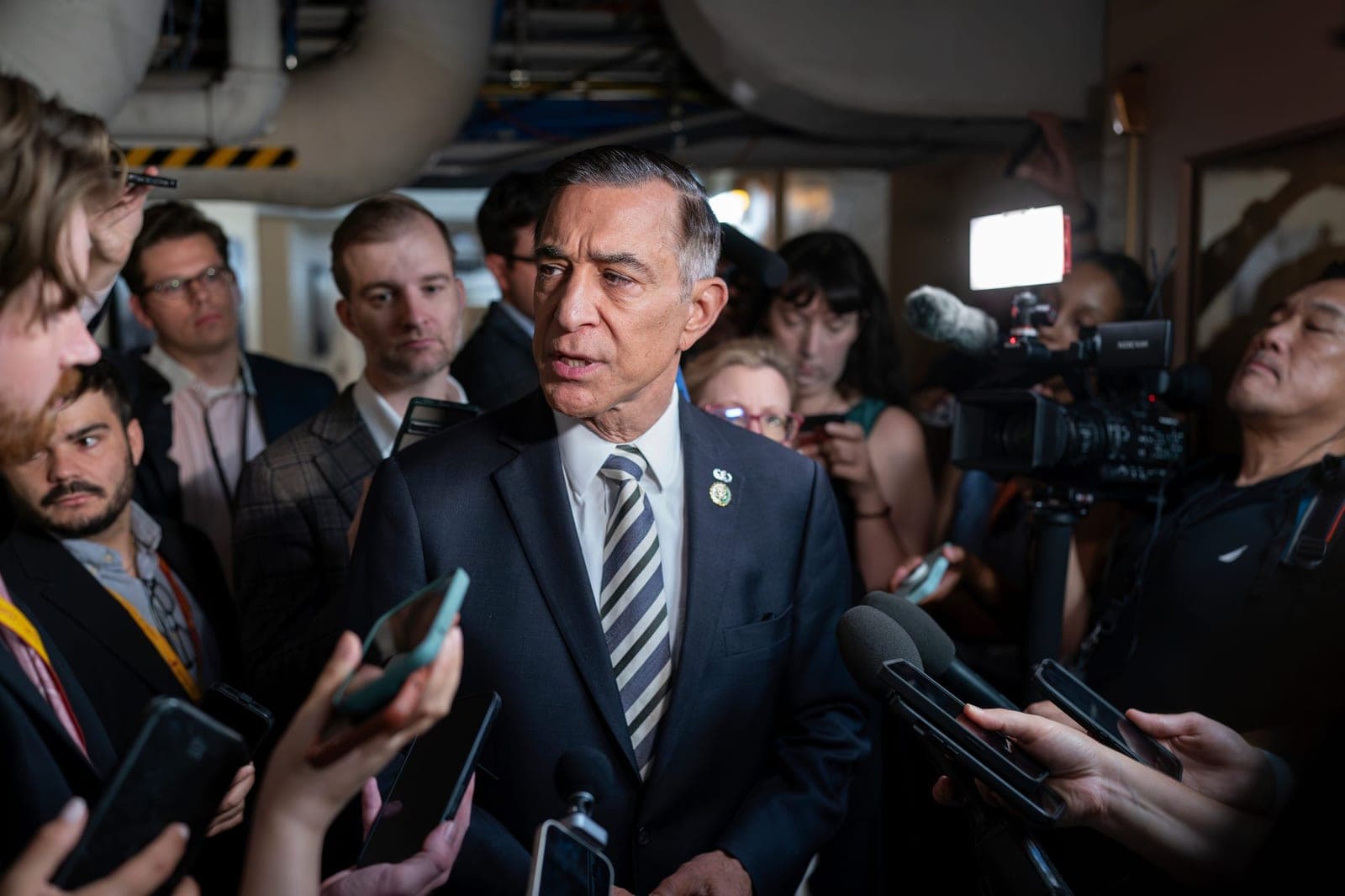
Congress’ ultrarich think they can sell an affordability agenda
By Emily Kennard Editor’s note: This story is part of the NOTUS Washington Bureau Initiative, which seeks to help readers in local communities understand what their elected representatives are doing in Congress — and how the actions taken by Congress, the White House and federal agencies are impacting their lives. Much of the responsibility for making the Republican Party’s case for President Donald Trump’s economy falls to members of Congress. That comes with an awkward complication: Many of the highest-profile Republican members are unimaginably rich. Members tasked with translating broad economic promises about affordability into law, while defending the results back home, are often many tax brackets removed from their constituents. The last time many of them had to skip a meal to pay the bills might have been long ago, if ever, and that can make leveling with struggling people more difficult. “How many lawyers would you hire that were penniless? How many doctors would you hire that didn’t go to medical school?” said Rep. Darrell Issa, a retiring Republican from California who has been one of the House’s wealthiest members for years. “The selection of members of Congress is made based on wanting to pick somebody from your community that, appropriately, doesn’t represent you as a failure but represents you as a success.” Issa said NOTUS should note in this story that he was “offended” by the suggestion that millionaires, who are overrepresented in Congress when compared to America’s broader population, are overrepresented in Congress. “Being in touch with the voters is not insulated simply because you have some wealth,” Issa continued. “If you have to fly these shitty airlines back and forth in coach every week, getting upgraded when you’re lucky and waiting in long lines, you’re not out of touch with voters.” Issa’s argument that Americans often view a politician’s wealth as a measure of competence is not new. Trump took up a similar tactic to reach office. And this year, his administration signaled repeatedly that it would approach economic issues with laser-eyed focus, even deploying Trump on a cross-country tour to talk about his party’s affordability agenda. But his penchant for tariffs and a war that’s disrupted the global oil supply has created market volatility and raised the cost of living at a time when voters’ economic frustrations have reached a fever pitch. America’s attention toward the affordability crisis arrives at a time when Congress is in a decades-long PR crisis. Only a quarter of Americans held a favorable view of Congress as of 2023, a figure that has tumbled since the mid-2000s, when the institution saw 53% favorability, according to the Pew Research Center. Those negative perceptions are largely driven by the idea that politicians are bought and paid for and only look out for their own, Navigator Research, a progressive research firm, found in a poll conducted early this year. Working-class voters in battleground states largely echoed these sentiments in focus groups the firm ran late last year. A whopping 80% of Americans, according to Navigator’s polling, said they believe their elected officials are unable to get anything done because they’re too focused on enriching themselves and their donors. And 77% said elected officials are too out of touch with, and don’t understand, the struggles of average people. “Americans don’t feel like any politicians really ‘get it.’ Americans are living paycheck to paycheck and can no longer afford basic necessities like gas and groceries — and they can tell that politicians as a whole aren’t experiencing the same day-to-day struggles they are,” said Maryann Cousens, Navigator’s senior manager of polling and analytics, in an email. “If someone can show they have an understanding of the daily struggles of normal people, then they’ll have significantly more credibility when promoting an affordability agenda,” Cousens continued. Anat Shenker-Osorio, a progressive consultant who attends panels with disaffected voters, said Americans are becoming more conscious of the class differences between them and their representation in Congress: “If we’re not at pitchforks, we’re kind of close to that,” Shenker-Osorio said. “We see over and over again, this desire among politicians and electeds to present themselves as ‘the dude you can have a beer with,’ and when they live in a gated mansion and belong to a country club and so on, it’s a little hard to pull that off,” Shenker-Osorio said. “The other piece of it is that [voters] don’t like the idea — and they increasingly are very aware — that money buys influence and buys decision-making that goes against working people.” The counterargument is that a politician’s wealth can work in their favor on the campaign trail — depending on how they got it. One Republican campaign operative told NOTUS that many wealthy politicians with business backgrounds have found success connecting with working-class voters and unions by leaning into that while campaigning, arguing that they created jobs in their districts or states. Still, as the midterms inch closer and gas prices reach higher, messaging about the economy in a way that doesn’t further anger America’s already-peeved consumers might get even harder for wealthy politicians. Pain at the pump, which Trump has said may not let up or even get worse this year, usually spells panic for elected officials because it hands the out-of-power party an opportunity for political attacks. Many Democrats have already taken to holding press conferences at gas stations to highlight gas prices hitting $4 a gallon due to the Iran war’s oil-market disruptions. While Democrats can point to the numbers and note that they’re not the ones running the ship, Republicans have to message around the disruptions and offer solutions. Americans’ frustrations have forced the wealthiest Republican senator to admit that many view the institution his party leads as out of touch. “This place is starving, and I don’t mean this egotistically, but it is starving for somebody that will talk to the people like I talk to the people,” said Sen. Jim Justice, the Republican. “What this place needs, so badly, are people with just a lot of everyday people that are grounded in what they do, common sense, logic and reason. We need that really bad.” Justice said, despite his wealth, there’s “nothing hoity-toity” about his lifestyle. He does still fly his private jet home nearly every day — because finding a place in the District of Columbia, he said, was “really, really, really expensive.” He added that he “downgraded” the jet to save some money. For other wealthy politicians, addressing people’s economic concerns has led to some faux pas this year. Sen. Jon Husted of Ohio said that impoverished people are “not very experienced at navigating the real world,” and that “you literally have to teach people how to budget.” Sen. Cindy Hyde-Smith drew fire for suggesting that Americans who can’t afford beef “have so many proteins to choose from.” The Democratic Senatorial Campaign Committee is ready to use comments like those to portray Republicans as “out of touch” ahead of the midterms, spokesperson Maeve Coyle told NOTUS in an email. “Republican Senate candidates are mocking voters over their concerns about rising costs,” Coyle said. “In November, voters will hold them accountable.” Meanwhile, the National Republican Senatorial Committee blamed Democrats and touted Republicans’ reconciliation package as an improvement to the status quo. “The Democrat Party drove costs of living up across every sector of the economy under Joe Biden and poured fuel on the fire time and again,” spokesperson Joanna Rodriguez said in a statement. “Republicans gave American working families the largest tax cut in history and has gone after the waste, fraud and abuse of taxpayer dollars that happened on Democrats’ watch.” Some of the lawmakers leading the Republicans’ charge to focus on working families inhabit an entirely different financial reality: Rep. Kevin Hern of Oklahoma entered the House in 2018 with a median net worth of $61 million, and that figure has ballooned since he took office. He announced his candidacy for Senate in March — and if successful, he would be one of the chamber’s many millionaires. He didn’t think that wealthy lawmakers are at odds with Americans’ economic frustrations. “There are very wealthy Democrats up here, too. And so I’m not critical of them either. I think that if they had done something illegal, they’d be in jail. They worked hard. There are some who have inherited it, obviously, but that’s very few as well,” Hern told NOTUS. “People want to see everyday Americans up here. They don’t want to see über-wealthy people up here. We all get elected. Nobody puts themselves here.” “I think people need to respect the idea that it’s the greatest nation that’s ever existed for people to take advantage of the opportunity — the guaranteed opportunity, not the guaranteed outcomes,” Hern added. Some rich Democrats on the campaign trail have found ways to neutralize wealth-related criticism by setting themselves apart from their economic class. Take Tom Steyer, a billionaire largely bankrolling his own campaign to be California’s next governor. He’s positioned himself as “the billionaire who will take on the billionaires.” And Illinois Gov. JB Pritzker, a billionaire, often repeats that “people like me should pay more and people like you should pay less.” Both frame their wealth as a tool for political independence because they don’t have to rely on money from corporate PACs or wealthy donors. Some wealthy Democrats in Congress said they work to navigate the optics of their affluence, like Rep. April McClain Delaney of Maryland, who is personally wealthy but represents impoverished communities in the outstretch of Appalachia that reaches into her district. “The hardest part is that people feel like the system is rigged against them. Unless you have access to capital, it’s rigged against them. And so, I say, listen, we can refashion and remake America fit for purpose,” McClain Delaney said. “I don’t say ‘fit for purpose’ to them, but I say we can make it work for people.” The post Congress’ ultrarich think they can sell an affordability agenda appeared first on Signal Ohio.
Congress’ ultrarich think they can sell an affordability agenda
By Emily Kennard Editor’s note: This story is part of the NOTUS Washington Bureau Initiative, which seeks to help readers in local communities understand what their elected representatives are doing in Congress — and how the actions taken by Congress, the White House and federal agencies are impacting their lives. Much of the responsibility for making the Republican Party’s case for President Donald Trump’s economy falls to members of Congress. That comes with an awkward complication: Many of the highest-profile Republican members are unimaginably rich. Members tasked with translating broad economic promises about affordability into law, while defending the results back home, are often many tax brackets removed from their constituents. The last time many of them had to skip a meal to pay the bills might have been long ago, if ever, and that can make leveling with struggling people more difficult. “How many lawyers would you hire that were penniless? How many doctors would you hire that didn’t go to medical school?” said Rep. Darrell Issa, a retiring Republican from California who has been one of the House’s wealthiest members for years. “The selection of members of Congress is made based on wanting to pick somebody from your community that, appropriately, doesn’t represent you as a failure but represents you as a success.” Issa said NOTUS should note in this story that he was “offended” by the suggestion that millionaires, who are overrepresented in Congress when compared to America’s broader population, are overrepresented in Congress. “Being in touch with the voters is not insulated simply because you have some wealth,” Issa continued. “If you have to fly these shitty airlines back and forth in coach every week, getting upgraded when you’re lucky and waiting in long lines, you’re not out of touch with voters.” Issa’s argument that Americans often view a politician’s wealth as a measure of competence is not new. Trump took up a similar tactic to reach office. And this year, his administration signaled repeatedly that it would approach economic issues with laser-eyed focus, even deploying Trump on a cross-country tour to talk about his party’s affordability agenda. But his penchant for tariffs and a war that’s disrupted the global oil supply has created market volatility and raised the cost of living at a time when voters’ economic frustrations have reached a fever pitch. America’s attention toward the affordability crisis arrives at a time when Congress is in a decades-long PR crisis. Only a quarter of Americans held a favorable view of Congress as of 2023, a figure that has tumbled since the mid-2000s, when the institution saw 53% favorability, according to the Pew Research Center. Those negative perceptions are largely driven by the idea that politicians are bought and paid for and only look out for their own, Navigator Research, a progressive research firm, found in a poll conducted early this year. Working-class voters in battleground states largely echoed these sentiments in focus groups the firm ran late last year. A whopping 80% of Americans, according to Navigator’s polling, said they believe their elected officials are unable to get anything done because they’re too focused on enriching themselves and their donors. And 77% said elected officials are too out of touch with, and don’t understand, the struggles of average people. “Americans don’t feel like any politicians really ‘get it.’ Americans are living paycheck to paycheck and can no longer afford basic necessities like gas and groceries — and they can tell that politicians as a whole aren’t experiencing the same day-to-day struggles they are,” said Maryann Cousens, Navigator’s senior manager of polling and analytics, in an email. “If someone can show they have an understanding of the daily struggles of normal people, then they’ll have significantly more credibility when promoting an affordability agenda,” Cousens continued. Anat Shenker-Osorio, a progressive consultant who attends panels with disaffected voters, said Americans are becoming more conscious of the class differences between them and their representation in Congress: “If we’re not at pitchforks, we’re kind of close to that,” Shenker-Osorio said. “We see over and over again, this desire among politicians and electeds to present themselves as ‘the dude you can have a beer with,’ and when they live in a gated mansion and belong to a country club and so on, it’s a little hard to pull that off,” Shenker-Osorio said. “The other piece of it is that [voters] don’t like the idea — and they increasingly are very aware — that money buys influence and buys decision-making that goes against working people.” The counterargument is that a politician’s wealth can work in their favor on the campaign trail — depending on how they got it. One Republican campaign operative told NOTUS that many wealthy politicians with business backgrounds have found success connecting with working-class voters and unions by leaning into that while campaigning, arguing that they created jobs in their districts or states. Still, as the midterms inch closer and gas prices reach higher, messaging about the economy in a way that doesn’t further anger America’s already-peeved consumers might get even harder for wealthy politicians. Pain at the pump, which Trump has said may not let up or even get worse this year, usually spells panic for elected officials because it hands the out-of-power party an opportunity for political attacks. Many Democrats have already taken to holding press conferences at gas stations to highlight gas prices hitting $4 a gallon due to the Iran war’s oil-market disruptions. While Democrats can point to the numbers and note that they’re not the ones running the ship, Republicans have to message around the disruptions and offer solutions. Americans’ frustrations have forced the wealthiest Republican senator to admit that many view the institution his party leads as out of touch. “This place is starving, and I don’t mean this egotistically, but it is starving for somebody that will talk to the people like I talk to the people,” said Sen. Jim Justice, the Republican. “What this place needs, so badly, are people with just a lot of everyday people that are grounded in what they do, common sense, logic and reason. We need that really bad.” Justice said, despite his wealth, there’s “nothing hoity-toity” about his lifestyle. He does still fly his private jet home nearly every day — because finding a place in the District of Columbia, he said, was “really, really, really expensive.” He added that he “downgraded” the jet to save some money. For other wealthy politicians, addressing people’s economic concerns has led to some faux pas this year. Sen. Jon Husted of Ohio said that impoverished people are “not very experienced at navigating the real world,” and that “you literally have to teach people how to budget.” Sen. Cindy Hyde-Smith drew fire for suggesting that Americans who can’t afford beef “have so many proteins to choose from.” The Democratic Senatorial Campaign Committee is ready to use comments like those to portray Republicans as “out of touch” ahead of the midterms, spokesperson Maeve Coyle told NOTUS in an email. “Republican Senate candidates are mocking voters over their concerns about rising costs,” Coyle said. “In November, voters will hold them accountable.” Meanwhile, the National Republican Senatorial Committee blamed Democrats and touted Republicans’ reconciliation package as an improvement to the status quo. “The Democrat Party drove costs of living up across every sector of the economy under Joe Biden and poured fuel on the fire time and again,” spokesperson Joanna Rodriguez said in a statement. “Republicans gave American working families the largest tax cut in history and has gone after the waste, fraud and abuse of taxpayer dollars that happened on Democrats’ watch.” Some of the lawmakers leading the Republicans’ charge to focus on working families inhabit an entirely different financial reality: Rep. Kevin Hern of Oklahoma entered the House in 2018 with a median net worth of $61 million, and that figure has ballooned since he took office. He announced his candidacy for Senate in March — and if successful, he would be one of the chamber’s many millionaires. He didn’t think that wealthy lawmakers are at odds with Americans’ economic frustrations. “There are very wealthy Democrats up here, too. And so I’m not critical of them either. I think that if they had done something illegal, they’d be in jail. They worked hard. There are some who have inherited it, obviously, but that’s very few as well,” Hern told NOTUS. “People want to see everyday Americans up here. They don’t want to see über-wealthy people up here. We all get elected. Nobody puts themselves here.” “I think people need to respect the idea that it’s the greatest nation that’s ever existed for people to take advantage of the opportunity — the guaranteed opportunity, not the guaranteed outcomes,” Hern added. Some rich Democrats on the campaign trail have found ways to neutralize wealth-related criticism by setting themselves apart from their economic class. Take Tom Steyer, a billionaire largely bankrolling his own campaign to be California’s next governor. He’s positioned himself as “the billionaire who will take on the billionaires.” And Illinois Gov. JB Pritzker, a billionaire, often repeats that “people like me should pay more and people like you should pay less.” Both frame their wealth as a tool for political independence because they don’t have to rely on money from corporate PACs or wealthy donors. Some wealthy Democrats in Congress said they work to navigate the optics of their affluence, like Rep. April McClain Delaney of Maryland, who is personally wealthy but represents impoverished communities in the outstretch of Appalachia that reaches into her district. “The hardest part is that people feel like the system is rigged against them. Unless you have access to capital, it’s rigged against them. And so, I say, listen, we can refashion and remake America fit for purpose,” McClain Delaney said. “I don’t say ‘fit for purpose’ to them, but I say we can make it work for people.” The post Congress’ ultrarich think they can sell an affordability agenda appeared first on Signal Ohio.
Notice Anything Different About Jim Jordan? That’s Because He’s Probably Angling for Leadership
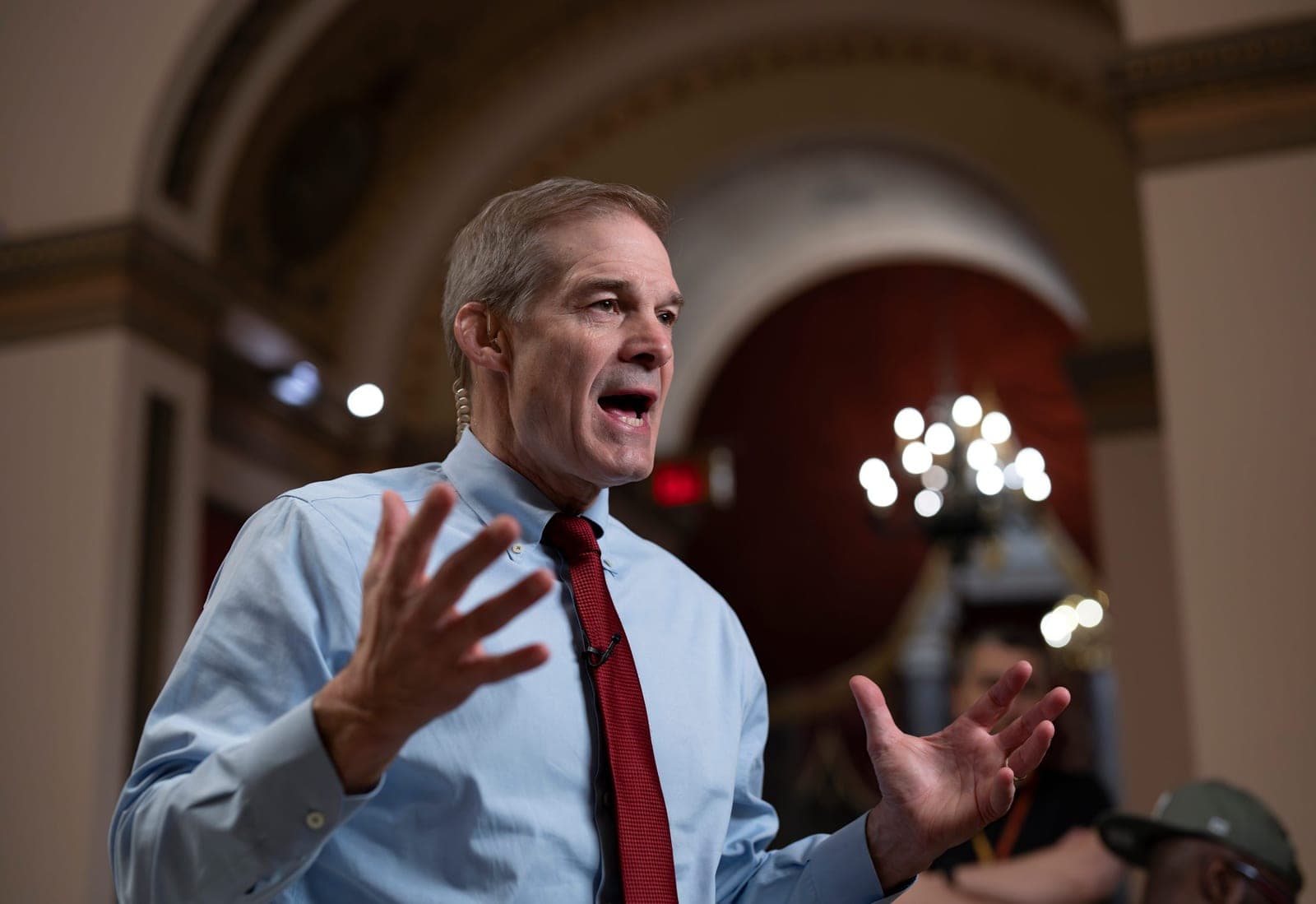
By Reese Gorman Editor’s note: This story is part of the NOTUS Washington Bureau Initiative, which seeks to help readers in local communities understand what their elected representatives are doing in Congress — and how the actions taken by Congress, the White House and federal agencies are impacting their lives. If Republicans lose their majority in November — and it’s widely expected they will — Speaker Mike Johnson will likely step away from leadership, and many members believe that House Judiciary Chair Jim Jordan is laying the groundwork to take Johnson’s place. Jordan ran for the speaker’s gavel in 2023 as a conservative firebrand, with a brash, unapologetic style — and rubbed many of his colleagues the wrong way. NOTUS spoke with over two dozen lawmakers, congressional aides, outside advisers and lobbyists — who were granted anonymity to speak candidly about Jordan — and nearly all of them said there are signs Jordan is preparing for a potential leadership bid by making inroads with the moderate and establishment wings of the party. “He’s done a really good job kind of broadening his base of support,” said one moderate Republican. “He’s gone out of his way to help people and build relationships.” Jordan has undertaken a near-total rebrand in the past three years. He has traveled the country from coast to coast campaigning for members and candidates who don’t align with him. After former Speaker Kevin McCarthy’s ouster in 2023, when Jordan became Republicans’ nominee for a time, his colleagues had hundreds of questions for him. But one in particular got to the heart of why a handful of members would take issue with him leading their conference — and why, after three failed votes, Jordan dropped out of the race. A member asked Jordan at the time why the conference should believe — after years of refusing to help or fundraise for members who did not agree with him — that he would suddenly be helpful. “It wasn’t my job to help you then,” Jordan responded, according to two sources in the room. His response epitomized why so many were reluctant to support his bid for any leadership position at all. They didn’t see Jordan as a team player. For years after he first came to Congress in 2007, Jordan made a name for himself by leading efforts to stifle leadership and, at one point, famously refused to help anybody who wasn’t aligned with the hardline Freedom Caucus that he founded. One source close to Jordan pushed back on this characterization, saying that “while Jordan was out on the campaign trail much of the time, his main focus was defending the President against the bogus impeachments.” Now, members acknowledge, he’s been working to change the perception he isn’t a real team player. Still, any bid by Jordan for the top Republican spot wouldn’t be unchallenged. Majority Leader Steve Scalise is viewed as a top choice for the job, and House Majority Whip Tom Emmer is also believed to be a serious contender. A spokesperson for Scalise declined to comment and a spokesperson for Johnson did not respond to a request for comment. Emmer said in a statement that the idea he was thinking about running for minority leader was “an absolutely ridiculous question.” But members believe that Jordan wouldn’t second-guess jumping into the race. While Jordan hasn’t spoken publicly about his leadership ambitions, sources point to several key indicators that back up the idea that he’s planning to make a bid. These include upping his fundraising game, campaigning for a more ideologically diverse group of members of the conference and taking leadership-friendly policy stances. This effort has caused a swell of support from the more pragmatic wing of the party, while it’s hurting him with his longtime base, conservatives. Four of the GOP members who spoke to NOTUS said there are active conversations taking place about how they could elevate Jordan should Republicans lose the majority. “There are certainly a lot of people who would like to see Jim over the course of the next few years serving in an even bigger role,” one of these members told NOTUS. “It wouldn’t be very smart to not think about” the possibility of losing the majority, another member said. When asked about a potential leadership bid in an interview with NOTUS, Jordan demurred. Instead, he emphasized that he is solely “focused on helping our team keep the majority,” and he is “not at all” focused on any leadership bid if Republicans were to go into the minority. “If the Democrats win, it’s going to be more of what they did a few years ago,” Jordan said. “We all know what they’re going to do. And my job is to go around and help us raise money, help candidates, help colleagues, and help turn out, hopefully, Republican voters, so that we don’t have that happen. That’s what I’m focused on.” A run for minority leader might be an easier hill to climb for Jordan than running for speaker ever was. There is no need for a floor vote — you only need 50% of the conference plus one to become minority leader. And secondly, it’s a private ballot. Allies of Jordan hope the inroads he’s made since 2023 will pay off. Shortly after he was blocked from becoming speaker, Jordan worked to build bridges with the same members who torpedoed his bid. In 2024, he went to New York and fundraised for the likes of Rep. Mike Lawler, who voted against him every time during the speakership bid, and that same year, he held a telephone town hall for Rep. Tony Gonzales, who also opposed him. In the past three years, Jordan has crisscrossed the country to fundraise and help his colleagues and candidates in their elections. Perhaps most surprisingly, Jordan — who at one point refused to donate to the National Republican Congressional Committee — now ranks third among the group’s benefactors outside of those in leadership. He’s raised over $1.3 million for the committee, according to internal numbers reviewed by NOTUS. “I just help everyone, that’s always been my mindset,” Jordan said. “I said this on the day I nominated Kevin McCarthy for speaker, back during the 15 rounds of voting. I said, ‘Any differences that exist between Republicans, any differences between Jordan and [Dave] Joyce, are pretty darn small compared to the differences between Republicans and the radical left.” “That is truly what I believe,” he continued. “And that’s why I try to bring our team together.” Jordan has also taken on different policy stances. He is backing a clean reauthorization of Section 702 of the Foreign Intelligence Surveillance Act, a staunch departure from two years ago, when he led the charge for a warrant requirement to be a part of any reauthorization. During a closed-door conference meeting in December, Jordan said that Republicans need to extend the Affordable Care Act subsidies along with conservative reforms, a striking reversal from his previous support of a full repeal of Obamacare. “Jim completely changed his tack,” said one senior Republican who opposed Jordan for speaker in 2023. “He knew that for any chance for him to ascend to a top leadership role, or any leadership role for that matter, he was going to have to shed the wrestler Jim and become a little bit more congenial, workable, friendly and civil.” At least a few members of the Freedom Caucus, however, are less appreciative of Jordan’s overtures to the middle. “Some of his angling is frustrating to some on the right,” one Freedom Caucus member told NOTUS. Another Freedom Caucus member said that “Jordan has become milquetoast.” “It’s disappointing to have watched him water himself down and not take up any kind of real fights. The FISA bill is a perfect example,” this member said. “That’s not the Jim Jordan that a lot of people remember. He’s basically watering himself down, changing his views, in order to move himself in the middle. I hope that this is just a temporary thing, but he’s not the fighter that he once was.” In the interview, Jordan argued that he isn’t flip-flopping on his policy stances, saying that FISA is now an “entirely different program,” and with Trump in power, he doesn’t believe a warrant requirement is necessary at the moment. “We’re in a war with Iran and the commander in chief, who’s been more abused by the Title 1 section of FISA than anyone, says, ‘Just give me a short-term extension on a program that’s dramatically different at a time when we’re in war.’ I don’t think that’s too much to ask,” Jordan said. “And we’ll keep watching this program, and the idea is we will do more reform, if, in fact, they are necessary, in 18 months.” While many newer members of the conference weren’t around for Jordan’s burn-it–all-down days, there’s a significant number of members who were, and they haven’t forgotten what the old Jordan was like. “His challenge is how does he overcome that,” one senior Republican said. A handful of members still hold a grudge over how Jordan’s outside supporters treated them during his bid for speaker, they told NOTUS. From threats to harassing text messages sent to family members, many were inundated with menacing outreach during the speaker vote. While Jordan condemned the harassing messages on multiple occasions, saying that “no American should accost another for their beliefs,” and that it was “just wrong,” what happened still echoes in the minds of some. Then there’s the elections issue. Some Republicans fear that if Jordan becomes leader, Democrats would force vulnerable Republicans to own every stance Jordan has ever taken. Still, even those who opposed him in 2023 admit that while they don’t want to see him become speaker, becoming minority leader is a different beast. “In my heart of hearts, I think he would be a much better minority leader than a speaker,” said one such Republican. “That’s just how I view it. Because he’s an attack dog and that’s what you want in your minority leader.” The issue for many, is that if Republicans return to the majority afterward, he would be the obvious choice for a promotion. And there’s still a significant subset of members who don’t want to see him with the gavel. “When you flip and you win the majority, he gets promoted, and then he becomes a speaker candidate,” this member said. “I personally don’t like the thought of him being a speaker.” The post Notice Anything Different About Jim Jordan? That’s Because He’s Probably Angling for Leadership appeared first on Signal Ohio.