4 stories credited to Sentinel Colorado
5 stories on sentinelcolorado.com credited to other publishers
Latest story Apr 16, 2026 · on ChamberLight since Apr 2026
A story can appear as several articles (copies of the same piece), so counts of stories and of articles differ.
Scores for Sentinel Colorado
Writing quality not enough rated stories yet: 3 of 10. How it is measured
Scores last checked Sep 25, 2026.
Articles this site reproduces
How provenance is decidedOriginal publishers of articles on sentinelcolorado.com
Counted from articles on sentinelcolorado.com whose original publisher is verified from the page itself or confirmed by an independent signal.
Stories ChamberLight collected, by month
Stories credited to Sentinel Colorado, by publication date. ChamberLight collects articles that mention the officials it tracks, so this shows its own coverage of this source, not how much the source publishes.
- Stories from Sentinel Colorado
- Shaded: ChamberLight collected no stories, or almost none, from any outlet (a gap in its collection, not in the outlet’s publishing)
Show as a table
| Month | Stories | All outlets |
|---|---|---|
| March 2026 | 1 | 296 |
| April 2026 | 3 | 4,538 |
| May 2026 | 0 | none collected |
| June 2026 | 0 | none collected |
| July 2026 | 0 | none collected |
| August 2026 | 0 | 1 (collection gap) |
| September 2026 | 0 | 1,320 |
Top topics
Share of this source’s stories tagged with each topic. A story can carry several topics, so the shares do not add up to 100%.
- Criminal Justice3
75% of 4 stories · 19% across all outlets
- Ethics/Corruption3
75% of 4 stories · 58% across all outlets
- Economy2
50% of 4 stories · 26% across all outlets
- Housing1
25% of 4 stories · 1% across all outlets
- Infrastructure1
25% of 4 stories · 8% across all outlets
- Labor/Unions1
25% of 4 stories · 4% across all outlets
The thin mark on each bar is the topic’s share across all outlets.
Who they cover
Party of the officials these stories are mainly about, across all 7 officials named. A story counts once for each official it is mainly about, so the split is over 8 story–official pairs, from 4 stories.
- Republican50% · 4 pairs
- Democrat38% · 3 pairs
- Party not recorded13% · 1 pair
Most covered
Stories mainly about each official, and their share of the source’s 4 stories.
Article tone
ChamberLight’s article analysis assigns each story a tone toward the official it covers. It describes the coverage of that official, not Sentinel Colorado’s stance, and reader votes do not change it. 4 stories.
- Good Look
- 0 (0%)
- Mixed
- 3 (75%)
- Informational
- 0 (0%)
- Bad Look
- 1 (25%)
Challenges to these scores
No one has challenged a score on this page yet. Anyone can; editors publish every outcome here.
Articles served from sentinelcolorado.com
19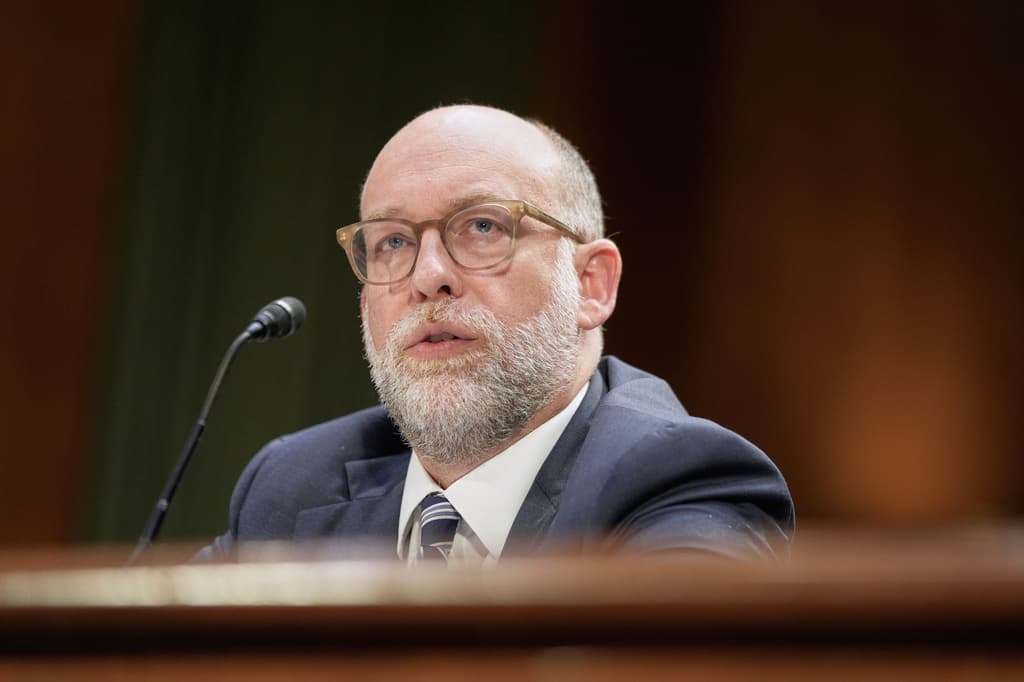
Trump’s budget director defends White House plan for massive boost in military spending
WASHINGTON | An effort to ramp up U.S. weapons production and build more ships, planes and drones will require a massive upfront investment, President Donald Trump’s budget director told a House committee Wednesday. The testimony from Russell Vought jump-starts the White House’s push to increase defense spending to nearly $1.5 trillion in the next budget year, up from nearly $1 trillion this year, while cutting health research, heating assistance and scores of other domestic programs by about 10% overall. Such cuts do not cover mandatory spending, which includes such programs as Social Security and Medicare. The debate over Trump’s proposal underscored the sharp divide that will shape some of the most significant policy debates going into a midterm election that will give voters the ultimate say on the direction of the country. “For the industrial base to double or triple and build more facilities, not just add shifts, it requires multiyear agreements to purchase into the future,” Vought told lawmakers. “That cost has to be booked in this first year.” The White House is calling for about $1.1 trillion for defense through the regular appropriations process, which typically requires support from both parties for approval. An additional $350 billion would come through a separate bill that Republicans can accomplish on their own, through party-line majority votes. Rep. Brendan Boyle of Pennsylvania, the ranking Democratic member of the committee, said he believes in a strong national defense. But he said the idea of increasing defense by more than 40% while cutting programs that people need shows that the Republican administration’s priorities are “out of whack.” The committee chairman, Rep. Jodey Arrington predicted the hearing would be more “amped up” than usual, and that proved to be true, beginning with his opening statement focused on criticizing Democrat Joe Biden’s presidency. Arrington, R-Texas, said he did not know of any president in his lifetime who “inherited such a complete and utter mess as President Trump did in January of last year.” Since then, Arrington said, Trump has secured the border, cut taxes and constrained nondefense spending. It was the beginning of several back-and-forths at the hearing. “You know how bad this economy is when we hear Joe Biden being invoked, we hear trans people being invoked. I was waiting for Jimmy Carter to be blamed next,” Boyle said in response to Arrington’s opening remarks. Boyle said consumer confidence is plummeting under Trump and noted a gas station he passed in Philadelphia recently was selling gas at $4.11 a gallon versus less than $3 a gallon some six weeks ago because of Trump’s “war of choice in Iran.” Rep. Becca Balint, D-Vt., called the proposed defense spending increase shocking. “We’ve never in the history of this country seen spending like this, paid for by slashing health care, education and housing,” Balint said. “Mr. Vought, yes or no, is $350 billion for the war in Iran lowering costs for Americans?” “It is certainly not defunding child care. We fully fund child care in this budget,” Vought said, not directly answering the question. Balint went on to incorporate Trump’s “America First” mantra in her questioning. She said $350 billion could pay for an enhanced health insurance tax credit for 10 years and that her constituents are asking how the country can continue to spend money on wars and not find a solution to helping people afford health care. Vought said the president has made clear he was not going to let Iran have a nuclear weapons, missiles and a navy that affect U.S. national security. “He is doing what is necessary to keep us safe, while at the same time trying to pursue diplomacy so that we can get out of wars and lower those costs over time,” Vought said. Vought said it was unclear how much the administration would seek to fund the war during the current budget year, which ends Sept. 30. That money would be part of an emergency supplemental spending bill and would be on top of the funds the White House is seeking to boost defense spending next year. “Would it be more than $50 billion?” asked Rep. Veronica Escobar, D-Texas. “We’re still working on it,” Vought said. “I don’t have a ballpark for you.”
Trump’s budget director defends White House plan for massive boost in military spending
WASHINGTON | An effort to ramp up U.S. weapons production and build more ships, planes and drones will require a massive upfront investment, President Donald Trump’s budget director told a House committee Wednesday. The testimony from Russell Vought jump-starts the White House’s push to increase defense spending to nearly $1.5 trillion in the next budget year, up from nearly $1 trillion this year, while cutting health research, heating assistance and scores of other domestic programs by about 10% overall. Such cuts do not cover mandatory spending, which includes such programs as Social Security and Medicare. The debate over Trump’s proposal underscored the sharp divide that will shape some of the most significant policy debates going into a midterm election that will give voters the ultimate say on the direction of the country. “For the industrial base to double or triple and build more facilities, not just add shifts, it requires multiyear agreements to purchase into the future,” Vought told lawmakers. “That cost has to be booked in this first year.” The White House is calling for about $1.1 trillion for defense through the regular appropriations process, which typically requires support from both parties for approval. An additional $350 billion would come through a separate bill that Republicans can accomplish on their own, through party-line majority votes. Rep. Brendan Boyle of Pennsylvania, the ranking Democratic member of the committee, said he believes in a strong national defense. But he said the idea of increasing defense by more than 40% while cutting programs that people need shows that the Republican administration’s priorities are “out of whack.” The committee chairman, Rep. Jodey Arrington predicted the hearing would be more “amped up” than usual, and that proved to be true, beginning with his opening statement focused on criticizing Democrat Joe Biden’s presidency. Arrington, R-Texas, said he did not know of any president in his lifetime who “inherited such a complete and utter mess as President Trump did in January of last year.” Since then, Arrington said, Trump has secured the border, cut taxes and constrained nondefense spending. It was the beginning of several back-and-forths at the hearing. “You know how bad this economy is when we hear Joe Biden being invoked, we hear trans people being invoked. I was waiting for Jimmy Carter to be blamed next,” Boyle said in response to Arrington’s opening remarks. Boyle said consumer confidence is plummeting under Trump and noted a gas station he passed in Philadelphia recently was selling gas at $4.11 a gallon versus less than $3 a gallon some six weeks ago because of Trump’s “war of choice in Iran.” Rep. Becca Balint, D-Vt., called the proposed defense spending increase shocking. “We’ve never in the history of this country seen spending like this, paid for by slashing health care, education and housing,” Balint said. “Mr. Vought, yes or no, is $350 billion for the war in Iran lowering costs for Americans?” “It is certainly not defunding child care. We fully fund child care in this budget,” Vought said, not directly answering the question. Balint went on to incorporate Trump’s “America First” mantra in her questioning. She said $350 billion could pay for an enhanced health insurance tax credit for 10 years and that her constituents are asking how the country can continue to spend money on wars and not find a solution to helping people afford health care. Vought said the president has made clear he was not going to let Iran have a nuclear weapons, missiles and a navy that affect U.S. national security. “He is doing what is necessary to keep us safe, while at the same time trying to pursue diplomacy so that we can get out of wars and lower those costs over time,” Vought said. Vought said it was unclear how much the administration would seek to fund the war during the current budget year, which ends Sept. 30. That money would be part of an emergency supplemental spending bill and would be on top of the funds the White House is seeking to boost defense spending next year. “Would it be more than $50 billion?” asked Rep. Veronica Escobar, D-Texas. “We’re still working on it,” Vought said. “I don’t have a ballpark for you.”
Trump’s budget director defends White House plan for massive boost in military spending
WASHINGTON | An effort to ramp up U.S. weapons production and build more ships, planes and drones will require a massive upfront investment, President Donald Trump’s budget director told a House committee Wednesday. The testimony from Russell Vought jump-starts the White House’s push to increase defense spending to nearly $1.5 trillion in the next budget year, up from nearly $1 trillion this year, while cutting health research, heating assistance and scores of other domestic programs by about 10% overall. Such cuts do not cover mandatory spending, which includes such programs as Social Security and Medicare. The debate over Trump’s proposal underscored the sharp divide that will shape some of the most significant policy debates going into a midterm election that will give voters the ultimate say on the direction of the country. “For the industrial base to double or triple and build more facilities, not just add shifts, it requires multiyear agreements to purchase into the future,” Vought told lawmakers. “That cost has to be booked in this first year.” The White House is calling for about $1.1 trillion for defense through the regular appropriations process, which typically requires support from both parties for approval. An additional $350 billion would come through a separate bill that Republicans can accomplish on their own, through party-line majority votes. Rep. Brendan Boyle of Pennsylvania, the ranking Democratic member of the committee, said he believes in a strong national defense. But he said the idea of increasing defense by more than 40% while cutting programs that people need shows that the Republican administration’s priorities are “out of whack.” The committee chairman, Rep. Jodey Arrington predicted the hearing would be more “amped up” than usual, and that proved to be true, beginning with his opening statement focused on criticizing Democrat Joe Biden’s presidency. Arrington, R-Texas, said he did not know of any president in his lifetime who “inherited such a complete and utter mess as President Trump did in January of last year.” Since then, Arrington said, Trump has secured the border, cut taxes and constrained nondefense spending. It was the beginning of several back-and-forths at the hearing. “You know how bad this economy is when we hear Joe Biden being invoked, we hear trans people being invoked. I was waiting for Jimmy Carter to be blamed next,” Boyle said in response to Arrington’s opening remarks. Boyle said consumer confidence is plummeting under Trump and noted a gas station he passed in Philadelphia recently was selling gas at $4.11 a gallon versus less than $3 a gallon some six weeks ago because of Trump’s “war of choice in Iran.” Rep. Becca Balint, D-Vt., called the proposed defense spending increase shocking. “We’ve never in the history of this country seen spending like this, paid for by slashing health care, education and housing,” Balint said. “Mr. Vought, yes or no, is $350 billion for the war in Iran lowering costs for Americans?” “It is certainly not defunding child care. We fully fund child care in this budget,” Vought said, not directly answering the question. Balint went on to incorporate Trump’s “America First” mantra in her questioning. She said $350 billion could pay for an enhanced health insurance tax credit for 10 years and that her constituents are asking how the country can continue to spend money on wars and not find a solution to helping people afford health care. Vought said the president has made clear he was not going to let Iran have a nuclear weapons, missiles and a navy that affect U.S. national security. “He is doing what is necessary to keep us safe, while at the same time trying to pursue diplomacy so that we can get out of wars and lower those costs over time,” Vought said. Vought said it was unclear how much the administration would seek to fund the war during the current budget year, which ends Sept. 30. That money would be part of an emergency supplemental spending bill and would be on top of the funds the White House is seeking to boost defense spending next year. “Would it be more than $50 billion?” asked Rep. Veronica Escobar, D-Texas. “We’re still working on it,” Vought said. “I don’t have a ballpark for you.”

Trump threatens to fire Powell if the Fed Chair remains with central bank after his term ends
Federal prosecutors made an unannounced visit this week to a construction site at Federal Reserve headquarters that is the focus of an investigation into a $2.5 billion renovation project, according to two people familiar with the visit. Two prosecutors and an investigator from U.S. Attorney Jeanine Pirro’s office were turned away on Tuesday by a building contractor and referred to Fed attorneys, one of the people said. The two people familiar with the visit spoke on condition of anonymity because they weren’t authorized to publicly discuss an ongoing investigation. Last month, during a closed-door hearing before a federal judge, a top deputy from Pirro’s office conceded that they hadn’t found any evidence of a crime in their investigation of the headquarters project. The investigation has faced bipartisan opposition in Congress. It also has delayed Senate consideration of Kevin Warsh, President Donald Trump’s pick to replace Fed chairman Jerome Powell when his term ends May 15. THIS IS A BREAKING NEWS UPDATE. AP’s earlier story follows below. Federal prosecutors made an unannounced visit this week to a construction site at Federal Reserve headquarters that is the focus of an investigation into a $2.5 billion renovation project, according to two people familiar with the visit. Two prosecutors and an investigator from U.S. Attorney Jeanine Pirro’s office were turned away on Tuesday by a building contractor and referred to Fed attorneys, one of the people said. The two people familiar with the visit spoke on condition of anonymity because they weren’t authorized to publicly discuss an ongoing investigation. Last month, during a closed-door hearing before a federal judge, a top deputy from Pirro’s office conceded that they hadn’t found any evidence of a crime in their investigation of the headquarters project. President Donald Trump has again threatened to fire Jerome Powell if the Federal Reserve Chair decides to stay on the central bank’s governing board after his term as chair expires next month. “Well then I’ll have to fire him, OK?” Trump told Fox Business in an interview that aired Wednesday when reminded that Powell has said he won’t leave the Fed while the Justice Department investigates a $2.5 billion renovation project at the bank. Trump has for months wanted to remove Powell as chair of the Fed, saying he has been too slow in orchestrating interest rate cuts that would give the U.S. economy a quick boost. Powell has said the investigation is a pretext to undermine the Fed’s independence to set rates. A federal prosecutor last month admitted that the investigation into the renovations had turned up no evidence of a crime. Powell’s term as Fed governor expires May 15, but his term as a Fed board member lasts until January 2028. Trump has nominated former Fed official Kevin Warsh to succeed Powell. Yet Warsh’s confirmation has been delayed. Sen. Thom Tillis, a North Carolina Republican, has said he won’t vote to confirm any Fed nominees until the investigation is dropped.
Trump threatens to fire Powell if the Fed Chair remains with central bank after his term ends
Federal prosecutors made an unannounced visit this week to a construction site at Federal Reserve headquarters that is the focus of an investigation into a $2.5 billion renovation project, according to two people familiar with the visit. Two prosecutors and an investigator from U.S. Attorney Jeanine Pirro’s office were turned away on Tuesday by a building contractor and referred to Fed attorneys, one of the people said. The two people familiar with the visit spoke on condition of anonymity because they weren’t authorized to publicly discuss an ongoing investigation. Last month, during a closed-door hearing before a federal judge, a top deputy from Pirro’s office conceded that they hadn’t found any evidence of a crime in their investigation of the headquarters project. The investigation has faced bipartisan opposition in Congress. It also has delayed Senate consideration of Kevin Warsh, President Donald Trump’s pick to replace Fed chairman Jerome Powell when his term ends May 15. THIS IS A BREAKING NEWS UPDATE. AP’s earlier story follows below. Federal prosecutors made an unannounced visit this week to a construction site at Federal Reserve headquarters that is the focus of an investigation into a $2.5 billion renovation project, according to two people familiar with the visit. Two prosecutors and an investigator from U.S. Attorney Jeanine Pirro’s office were turned away on Tuesday by a building contractor and referred to Fed attorneys, one of the people said. The two people familiar with the visit spoke on condition of anonymity because they weren’t authorized to publicly discuss an ongoing investigation. Last month, during a closed-door hearing before a federal judge, a top deputy from Pirro’s office conceded that they hadn’t found any evidence of a crime in their investigation of the headquarters project. President Donald Trump has again threatened to fire Jerome Powell if the Federal Reserve Chair decides to stay on the central bank’s governing board after his term as chair expires next month. “Well then I’ll have to fire him, OK?” Trump told Fox Business in an interview that aired Wednesday when reminded that Powell has said he won’t leave the Fed while the Justice Department investigates a $2.5 billion renovation project at the bank. Trump has for months wanted to remove Powell as chair of the Fed, saying he has been too slow in orchestrating interest rate cuts that would give the U.S. economy a quick boost. Powell has said the investigation is a pretext to undermine the Fed’s independence to set rates. A federal prosecutor last month admitted that the investigation into the renovations had turned up no evidence of a crime. Powell’s term as Fed governor expires May 15, but his term as a Fed board member lasts until January 2028. Trump has nominated former Fed official Kevin Warsh to succeed Powell. Yet Warsh’s confirmation has been delayed. Sen. Thom Tillis, a North Carolina Republican, has said he won’t vote to confirm any Fed nominees until the investigation is dropped.
Trump urges extending foreign surveillance program as some lawmakers push for US privacy protections
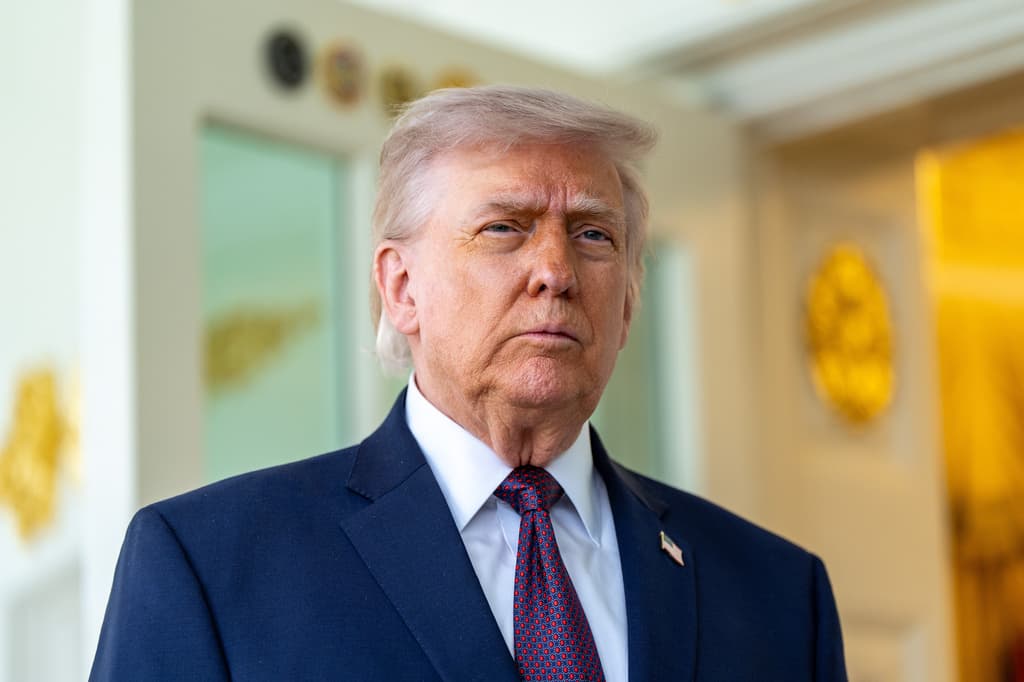
President Donald Trump speaks with reporters outside the Oval Office of the White House, Monday, April 13, 2026, in Washington. (AP Photo/Alex Brandon) WASHINGTON | Congress is set to take up the reauthorization of a divisive program that lets U.S. spy agencies pore over foreigners’ calls, texts and emails, with supporters like President Donald Trump saying it has saved lives while critics point to longstanding concerns about warrantless surveillance of Americans. A key provision of the Foreign Intelligence Surveillance Act permits the CIA, National Security Agency, FBI and other agencies to collect and analyze vast amounts of overseas communications without a warrant. It incidentally sweeps up the conversations of any Americans who interact with those foreigners targeted for surveillance. The program expires Monday, and critics want changes, including a requirement for warrants before authorities can access the emails, phone calls or text messages of Americans. They also want limits on the government’s use of internet data brokers, who sell large volumes of personal information gleaned online, offering the government what critics say amounts to an end-run around the Constitution. Despite bipartisan criticism, the chances of significant reforms dropped when Trump announced his support for the program’s renewal, saying it had proven its worth in supplying information vital to recent U.S. actions in Venezuela and Iran. “The fact is, whether you like FISA or not, it is extremely important to our military,” Trump said on social media Tuesday. Trump calls for another extension of the program U.S. authorities say the program, known as Section 702 of the law, is vital to national security and has saved lives by uncovering terror plots. Critics question what they call a dangerous infringement on civil liberties and privacy. In a Truth Social post, Trump said a different FISA provision was used to spy on his 2016 campaign but that he supported Section 702’s renewal despite misgivings that political adversaries could use parts of the law against him in the future. He called on lawmakers to extend the foreign surveillance program for another 18 months. “My administration has worked tirelessly to ensure these FISA reforms are being aggressively executed at every level of the Executive Branch to keep Americans safe, while protecting our sacred Civil Liberties guaranteed by our Great Constitution,” Trump wrote. Trump is a longtime critic of the nation’s intelligence services and was once opposed to Section 702 before he reversed himself. “KILL FISA” Trump posted on social media in 2024, when the provision was last reauthorized. Trump isn’t the only one-time critic to change their mind: Director of National Intelligence Tulsi Gabbard sponsored legislation to repeal Section 702 as a Hawaii congresswoman but now supports it after being tapped to coordinate the nation’s 18 intelligence agencies. Gabbard says new protections added since her time in Congress helped change her mind. Greater protections are sought for Americans’ communications In addition to a requirement for a warrant to access Americans’ data, critics also want greater protections on how the FBI or other agencies can search communications and how that is reported to the public. “Journalists, foreign aid workers, people with family overseas, all could have their communications swept up in this surveillance merely because they talked to someone outside of this country,” said Sen. Ron Wyden, D-Ore. The longtime critic of the law is pushing for changes that he said will ensure the government isn’t violating civil rights in secret. Several Republicans also have suggested changes, such as the warrant requirement. “National security and civil liberties are not mutually exclusive,” said Rep. Andy Biggs, R-Ariz. “We can give our intelligence professionals the tools they need to target foreign threats while ensuring that Americans are not subjected to unconstitutional surveillance.” Gabbard’s office releases an annual report showing the number of foreign surveillance targets and number of searches likely to identify an American. For 2025, the number of foreign surveillance targets increased to nearly 350,000 from almost 292,000 in 2024. Searches using terms likely to identify an American decreased slightly to 7,724 from 7,845 in 2024. The totals are incomplete because agencies like the FBI have found ways to access the data without reporting the searches publicly, said Elizabeth Goitein, senior director of the Liberty and National Security Program at the Brennan Center for Justice at New York University. FBI officials repeatedly violated their own standards when searching for intelligence related to the Jan. 6, 2021, insurrection at the U.S. Capitol and racial justice protests in 2020, according to a 2024 court order. “It’s reminiscent of J. Edgar Hoover’s tenure at the FBI,” Goitein said, referring to the FBI’s founding director who used illegal surveillance to harass and spy on Americans. “They can pretty much target anyone.” There’s little time to make changes to the law Despite bipartisan concerns about the law and its implications for civil liberties, time is running out for Congress to make any changes before Monday’s expiration. Trump’s support also reduces the odds that enough Republicans will break ranks and join Democrats to push for reforms. Wyden said Section 702 votes are routinely delayed until the last minute, then lawmakers are told that national security demands they vote yes. Lawmakers are told, he said, that “if they vote for any amendments, the program will die and terrible things will happen and it will be all their fault.” The best chance for inserting changes likely is the House, where a large number of lawmakers from both parties have expressed concerns. But Rep. Rick Crawford, an Arkansas Republican who chairs the House Intelligence Committee, is backing Trump’s call for an 18-month renewal. Crawford has taken aim in the past at what he calls the weaponization of intelligence but said last month that he believes the government can empower spy agencies while also holding them accountable. “We can walk and chew gum at the same time,” Crawford said.
Sexual abuse allegations are spurring calls for a broader reckoning in Congress
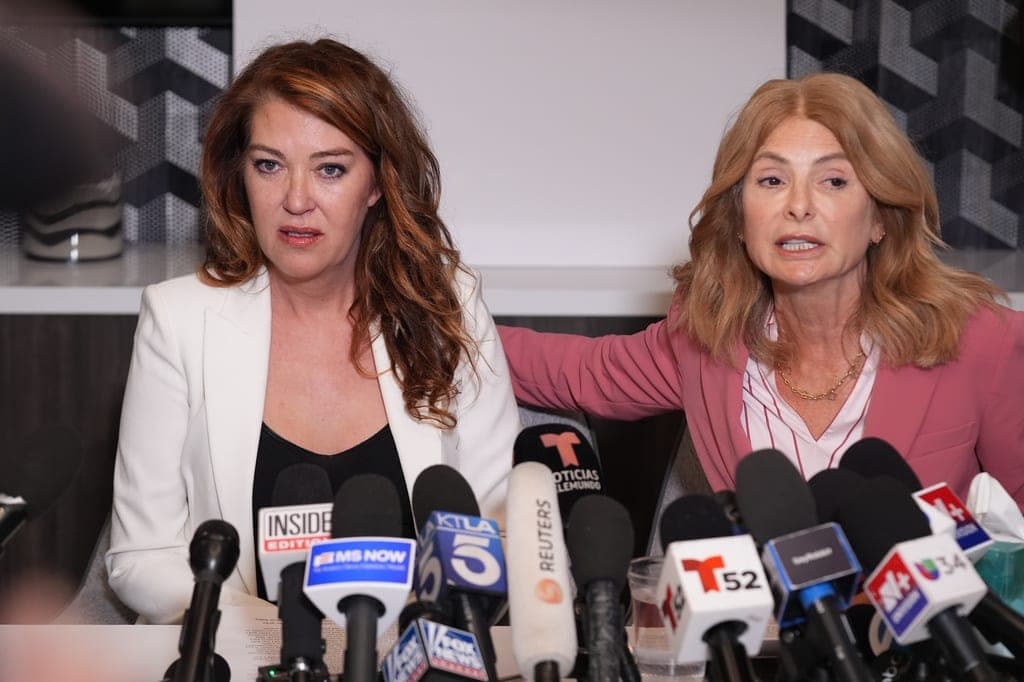
The entrance to the office of Rep. Eric Swalwell, D-Calif., is seen on Capitol Hill in Washington, Monday, April 13, 2026. (AP Photo/J. Scott Applewhite) A view of the U.S. Capitol dome on Capitol Hill in Washington, Monday, April 13, 2026. (AP Photo/J. Scott Applewhite) FILE – Rep. Tony Gonzales, R-Texas, is seen before the flag-draped casket bearing the remains of Hershel W. “Woody” Williams lies in honor in the U.S. Capitol, July 14, 2022, in Washington. (Tom Williams/Pool photo via AP, File) Lonna Drewes joins her lawyer Lisa Bloom at a news conference in Beverly Hills, Calif., Tuesday, April 14, 2026, to detail allegations of sexual misconduct by Rep. Eric Swalwell, after Swalwell exited the California governor’s race and said he’ll resign his seat in Congress. The AP typically does not identify people who say they are victims of sexual assault unless they identify themselves publicly. (AP Photo/Damian Dovarganes) WASHINGTON | Resignations came quickly this week from two congressmen accused of sexual misconduct toward staff members. Yet for many of the women of Capitol Hill, the moment of accountability was years in the making — and far from enough. Reps. Eric Swalwell, a California Democrat, and Tony Gonzales, a Texas Republican, both announced within hours of each other Monday that they were leaving Congress. Their decisions came the day before the House returned to Washington and as both faced the prospect of being expelled from the chamber by their colleagues. It was a reckoning of sorts for Capitol Hill, the most striking since the careers of roughly a dozen male politicians were toppled during the heights of the #MeToo movement. Yet some congresswomen said that the pair of resignations took too long and proved what they’ve long been saying: that more must be done to rid Capitol Hill of sexual predation. “Today was an important turning point,” said Democratic Rep. Alexandria Ocasio-Cortez of New York. “That it should — that abuse of power — should never be accepted, and above all, in public office. And so, I think this is an important resetting point for the institution.” A bipartisan group of congresswomen had threatened on Tuesday to file resolutions that could have forced votes on expelling Swalwell and Gonzales. Their moves forced the two men to act and came swiftly after the San Francisco Chronicle and CNN had reported Friday that a woman said Swalwell sexually assaulted her. The initial allegations against Swalwell date back to 2019 and 2024; they were followed with other allegations of inappropriate behavior made by other women. Swalwell has denied engaging in any sexual misconduct but acknowledged mistakes in judgment. Gonzales for months had resisted calls for his resignation after he admitted to a 2024 affair with a staff member who later died by suicide. “Accountability can happen. We can hold men accountable when they abuse women, and we’re going to do more of it,” said Rep. Teresa Leger Fernández, who chairs the Democratic Women’s Caucus. House rules forbid relationships with staff It is against the House Code of Conduct for any member to have a sexual relationship with their staff members. Following the #MeToo movement, the House changed its rules to require annual trainings on sexual harassment and discrimination for members. The House also approved legislation to speed the slow-moving process for harassment complaints, require more disclosure of settlements and force lawmakers to personally pay any penalties they’re required to make. Former Rep. Jackie Speier, a California Democrat who led the movement for reforms around sexual assault, told The Associated Press that problems still persist after those reforms. “What we do in Congress is basically look the other way,” she said, adding that she was calling on House Speaker Mike Johnson and House Democratic leader Hakeem Jeffries to “really tighten the rules and create a safe environment for these women to report.” While Johnson said he did not talk with the lawmakers before they announced their resignations, he told reporters that the episode had played out “appropriately.” “This is the right thing for the institution,” he said. How the push for accountability has grown Sexual abuse has been top of mind for lawmakers as they investigate the actions of the late financier Jeffrey Epstein. A handful of Republican women, mostly hailing from the right wing of their party, played crucial roles in forcing Congress to take up the issue. Republican Rep. Nancy Mace, alongside Rep. Lauren Boebert and then-Rep. Marjorie Taylor Greene, rebuffed pressure from President Donald Trump and Johnson last year as they joined with Democrats and forced a vote on a bill mandating the release of many of the case files on Epstein. Mace, who in 2019 shared her own account of surviving rape, has continued an outspoken campaign advocating for victims of sexual assault. She and Republican Rep. Anna Paulina Luna had repeatedly called for Swalwell and Gonzales to resign. Mace has also extended that demand to Republican Rep. Cory Mills, who is facing an ethics investigation on allegations of sexual misconduct and violence against an ex-girlfriend. Mills has said he will disprove the allegations. Meanwhile, Mace and Luna are also calling for the resignation of Rep. Sheila Cherfilus-McCormick, a Florida Democrat. The House Ethics Committee found evidence that she broke campaign finance law related to a mistaken overpayment of $5 million from the state of Florida to her family’s health care business. She has said she did nothing wrong. “Clean house. Expel them. Hold every last one accountable,” Mace said on social media. “The American people are watching.” At the same time, Mace herself is under investigation by the ethics panel for allegations she improperly claimed housing reimbursements. She has denied wrongdoing. Swalwell allies are facing close scrutiny As accusations of sexual abuse continued to land against Swalwell, some Democrats found themselves in a moment of reflection and contrition, especially those who kept close company with him. Arizona Sen. Ruben Gallego, a close friend of Swalwell’s who chaired his presidential campaign, called reporters to his office on Tuesday for an emotional press conference. “I messed up. I’m human. I trusted this man,” a teary-eyed Gallego said. Under intense questioning from reporters, Gallego acknowledged that he had heard rumors about Swalwell being “flirty,” but contended that he trusted him as a close family friend. “I definitely look at the world in a different way now,” Gallego said. “I personally am going to make sure that I’m going to take personal steps and office steps to make sure that we don’t even get close to a gray line.” Policing behavior in Congress presents challenges Speier, who entered politics by first working as a congressional aide and experienced harassment from a supervisor, said that part of the problem in Congress is that members are given wide latitude to run their offices. All 535 lawmakers are bosses of their own hand-selected staff. “There’s really no one overseeing you,” Speier said. “There’s a sense of entitlement that kind of overtakes many of these members.” Speier, alongside then-Rep. Bradley Byrne, led the effort to pass legislation to make it easier to report sexual harassment and discrimination, including banning nondisclosure agreements to protect members of Congress. Since the 2018 reforms began requiring the Office of Congressional Workplace Rights to report awards and settlements related to formal complaints, there have been eight payments made by House members’ offices, totaling just over $400,000. Those payments cover all types of violations of workplace rights, not just sexual harassment, and the violations could have been committed by other congressional staff in the office. Speier said that it was crucial to keep making it easier for survivors to report sexual abuse. “Unless someone comes forward, you know the conduct continues,” she said. Associated Press Chief Congressional Correspondent Lisa Mascaro contributed to this report.
Sexual abuse allegations are spurring calls for a broader reckoning in Congress
The entrance to the office of Rep. Eric Swalwell, D-Calif., is seen on Capitol Hill in Washington, Monday, April 13, 2026. (AP Photo/J. Scott Applewhite) A view of the U.S. Capitol dome on Capitol Hill in Washington, Monday, April 13, 2026. (AP Photo/J. Scott Applewhite) FILE – Rep. Tony Gonzales, R-Texas, is seen before the flag-draped casket bearing the remains of Hershel W. “Woody” Williams lies in honor in the U.S. Capitol, July 14, 2022, in Washington. (Tom Williams/Pool photo via AP, File) Lonna Drewes joins her lawyer Lisa Bloom at a news conference in Beverly Hills, Calif., Tuesday, April 14, 2026, to detail allegations of sexual misconduct by Rep. Eric Swalwell, after Swalwell exited the California governor’s race and said he’ll resign his seat in Congress. The AP typically does not identify people who say they are victims of sexual assault unless they identify themselves publicly. (AP Photo/Damian Dovarganes) WASHINGTON | Resignations came quickly this week from two congressmen accused of sexual misconduct toward staff members. Yet for many of the women of Capitol Hill, the moment of accountability was years in the making — and far from enough. Reps. Eric Swalwell, a California Democrat, and Tony Gonzales, a Texas Republican, both announced within hours of each other Monday that they were leaving Congress. Their decisions came the day before the House returned to Washington and as both faced the prospect of being expelled from the chamber by their colleagues. It was a reckoning of sorts for Capitol Hill, the most striking since the careers of roughly a dozen male politicians were toppled during the heights of the #MeToo movement. Yet some congresswomen said that the pair of resignations took too long and proved what they’ve long been saying: that more must be done to rid Capitol Hill of sexual predation. “Today was an important turning point,” said Democratic Rep. Alexandria Ocasio-Cortez of New York. “That it should — that abuse of power — should never be accepted, and above all, in public office. And so, I think this is an important resetting point for the institution.” A bipartisan group of congresswomen had threatened on Tuesday to file resolutions that could have forced votes on expelling Swalwell and Gonzales. Their moves forced the two men to act and came swiftly after the San Francisco Chronicle and CNN had reported Friday that a woman said Swalwell sexually assaulted her. The initial allegations against Swalwell date back to 2019 and 2024; they were followed with other allegations of inappropriate behavior made by other women. Swalwell has denied engaging in any sexual misconduct but acknowledged mistakes in judgment. Gonzales for months had resisted calls for his resignation after he admitted to a 2024 affair with a staff member who later died by suicide. “Accountability can happen. We can hold men accountable when they abuse women, and we’re going to do more of it,” said Rep. Teresa Leger Fernández, who chairs the Democratic Women’s Caucus. House rules forbid relationships with staff It is against the House Code of Conduct for any member to have a sexual relationship with their staff members. Following the #MeToo movement, the House changed its rules to require annual trainings on sexual harassment and discrimination for members. The House also approved legislation to speed the slow-moving process for harassment complaints, require more disclosure of settlements and force lawmakers to personally pay any penalties they’re required to make. Former Rep. Jackie Speier, a California Democrat who led the movement for reforms around sexual assault, told The Associated Press that problems still persist after those reforms. “What we do in Congress is basically look the other way,” she said, adding that she was calling on House Speaker Mike Johnson and House Democratic leader Hakeem Jeffries to “really tighten the rules and create a safe environment for these women to report.” While Johnson said he did not talk with the lawmakers before they announced their resignations, he told reporters that the episode had played out “appropriately.” “This is the right thing for the institution,” he said. How the push for accountability has grown Sexual abuse has been top of mind for lawmakers as they investigate the actions of the late financier Jeffrey Epstein. A handful of Republican women, mostly hailing from the right wing of their party, played crucial roles in forcing Congress to take up the issue. Republican Rep. Nancy Mace, alongside Rep. Lauren Boebert and then-Rep. Marjorie Taylor Greene, rebuffed pressure from President Donald Trump and Johnson last year as they joined with Democrats and forced a vote on a bill mandating the release of many of the case files on Epstein. Mace, who in 2019 shared her own account of surviving rape, has continued an outspoken campaign advocating for victims of sexual assault. She and Republican Rep. Anna Paulina Luna had repeatedly called for Swalwell and Gonzales to resign. Mace has also extended that demand to Republican Rep. Cory Mills, who is facing an ethics investigation on allegations of sexual misconduct and violence against an ex-girlfriend. Mills has said he will disprove the allegations. Meanwhile, Mace and Luna are also calling for the resignation of Rep. Sheila Cherfilus-McCormick, a Florida Democrat. The House Ethics Committee found evidence that she broke campaign finance law related to a mistaken overpayment of $5 million from the state of Florida to her family’s health care business. She has said she did nothing wrong. “Clean house. Expel them. Hold every last one accountable,” Mace said on social media. “The American people are watching.” At the same time, Mace herself is under investigation by the ethics panel for allegations she improperly claimed housing reimbursements. She has denied wrongdoing. Swalwell allies are facing close scrutiny As accusations of sexual abuse continued to land against Swalwell, some Democrats found themselves in a moment of reflection and contrition, especially those who kept close company with him. Arizona Sen. Ruben Gallego, a close friend of Swalwell’s who chaired his presidential campaign, called reporters to his office on Tuesday for an emotional press conference. “I messed up. I’m human. I trusted this man,” a teary-eyed Gallego said. Under intense questioning from reporters, Gallego acknowledged that he had heard rumors about Swalwell being “flirty,” but contended that he trusted him as a close family friend. “I definitely look at the world in a different way now,” Gallego said. “I personally am going to make sure that I’m going to take personal steps and office steps to make sure that we don’t even get close to a gray line.” Policing behavior in Congress presents challenges Speier, who entered politics by first working as a congressional aide and experienced harassment from a supervisor, said that part of the problem in Congress is that members are given wide latitude to run their offices. All 535 lawmakers are bosses of their own hand-selected staff. “There’s really no one overseeing you,” Speier said. “There’s a sense of entitlement that kind of overtakes many of these members.” Speier, alongside then-Rep. Bradley Byrne, led the effort to pass legislation to make it easier to report sexual harassment and discrimination, including banning nondisclosure agreements to protect members of Congress. Since the 2018 reforms began requiring the Office of Congressional Workplace Rights to report awards and settlements related to formal complaints, there have been eight payments made by House members’ offices, totaling just over $400,000. Those payments cover all types of violations of workplace rights, not just sexual harassment, and the violations could have been committed by other congressional staff in the office. Speier said that it was crucial to keep making it easier for survivors to report sexual abuse. “Unless someone comes forward, you know the conduct continues,” she said. Associated Press Chief Congressional Correspondent Lisa Mascaro contributed to this report.
Trump urges extending foreign surveillance program as some lawmakers push for US privacy protections
President Donald Trump speaks with reporters outside the Oval Office of the White House, Monday, April 13, 2026, in Washington. (AP Photo/Alex Brandon) WASHINGTON | Congress is set to take up the reauthorization of a divisive program that lets U.S. spy agencies pore over foreigners’ calls, texts and emails, with supporters like President Donald Trump saying it has saved lives while critics point to longstanding concerns about warrantless surveillance of Americans. A key provision of the Foreign Intelligence Surveillance Act permits the CIA, National Security Agency, FBI and other agencies to collect and analyze vast amounts of overseas communications without a warrant. It incidentally sweeps up the conversations of any Americans who interact with those foreigners targeted for surveillance. The program expires Monday, and critics want changes, including a requirement for warrants before authorities can access the emails, phone calls or text messages of Americans. They also want limits on the government’s use of internet data brokers, who sell large volumes of personal information gleaned online, offering the government what critics say amounts to an end-run around the Constitution. Despite bipartisan criticism, the chances of significant reforms dropped when Trump announced his support for the program’s renewal, saying it had proven its worth in supplying information vital to recent U.S. actions in Venezuela and Iran. “The fact is, whether you like FISA or not, it is extremely important to our military,” Trump said on social media Tuesday. Trump calls for another extension of the program U.S. authorities say the program, known as Section 702 of the law, is vital to national security and has saved lives by uncovering terror plots. Critics question what they call a dangerous infringement on civil liberties and privacy. In a Truth Social post, Trump said a different FISA provision was used to spy on his 2016 campaign but that he supported Section 702’s renewal despite misgivings that political adversaries could use parts of the law against him in the future. He called on lawmakers to extend the foreign surveillance program for another 18 months. “My administration has worked tirelessly to ensure these FISA reforms are being aggressively executed at every level of the Executive Branch to keep Americans safe, while protecting our sacred Civil Liberties guaranteed by our Great Constitution,” Trump wrote. Trump is a longtime critic of the nation’s intelligence services and was once opposed to Section 702 before he reversed himself. “KILL FISA” Trump posted on social media in 2024, when the provision was last reauthorized. Trump isn’t the only one-time critic to change their mind: Director of National Intelligence Tulsi Gabbard sponsored legislation to repeal Section 702 as a Hawaii congresswoman but now supports it after being tapped to coordinate the nation’s 18 intelligence agencies. Gabbard says new protections added since her time in Congress helped change her mind. Greater protections are sought for Americans’ communications In addition to a requirement for a warrant to access Americans’ data, critics also want greater protections on how the FBI or other agencies can search communications and how that is reported to the public. “Journalists, foreign aid workers, people with family overseas, all could have their communications swept up in this surveillance merely because they talked to someone outside of this country,” said Sen. Ron Wyden, D-Ore. The longtime critic of the law is pushing for changes that he said will ensure the government isn’t violating civil rights in secret. Several Republicans also have suggested changes, such as the warrant requirement. “National security and civil liberties are not mutually exclusive,” said Rep. Andy Biggs, R-Ariz. “We can give our intelligence professionals the tools they need to target foreign threats while ensuring that Americans are not subjected to unconstitutional surveillance.” Gabbard’s office releases an annual report showing the number of foreign surveillance targets and number of searches likely to identify an American. For 2025, the number of foreign surveillance targets increased to nearly 350,000 from almost 292,000 in 2024. Searches using terms likely to identify an American decreased slightly to 7,724 from 7,845 in 2024. The totals are incomplete because agencies like the FBI have found ways to access the data without reporting the searches publicly, said Elizabeth Goitein, senior director of the Liberty and National Security Program at the Brennan Center for Justice at New York University. FBI officials repeatedly violated their own standards when searching for intelligence related to the Jan. 6, 2021, insurrection at the U.S. Capitol and racial justice protests in 2020, according to a 2024 court order. “It’s reminiscent of J. Edgar Hoover’s tenure at the FBI,” Goitein said, referring to the FBI’s founding director who used illegal surveillance to harass and spy on Americans. “They can pretty much target anyone.” There’s little time to make changes to the law Despite bipartisan concerns about the law and its implications for civil liberties, time is running out for Congress to make any changes before Monday’s expiration. Trump’s support also reduces the odds that enough Republicans will break ranks and join Democrats to push for reforms. Wyden said Section 702 votes are routinely delayed until the last minute, then lawmakers are told that national security demands they vote yes. Lawmakers are told, he said, that “if they vote for any amendments, the program will die and terrible things will happen and it will be all their fault.” The best chance for inserting changes likely is the House, where a large number of lawmakers from both parties have expressed concerns. But Rep. Rick Crawford, an Arkansas Republican who chairs the House Intelligence Committee, is backing Trump’s call for an 18-month renewal. Crawford has taken aim in the past at what he calls the weaponization of intelligence but said last month that he believes the government can empower spy agencies while also holding them accountable. “We can walk and chew gum at the same time,” Crawford said.
Trump urges extending foreign surveillance program as some lawmakers push for US privacy protections
President Donald Trump speaks with reporters outside the Oval Office of the White House, Monday, April 13, 2026, in Washington. (AP Photo/Alex Brandon) WASHINGTON | Congress is set to take up the reauthorization of a divisive program that lets U.S. spy agencies pore over foreigners’ calls, texts and emails, with supporters like President Donald Trump saying it has saved lives while critics point to longstanding concerns about warrantless surveillance of Americans. A key provision of the Foreign Intelligence Surveillance Act permits the CIA, National Security Agency, FBI and other agencies to collect and analyze vast amounts of overseas communications without a warrant. It incidentally sweeps up the conversations of any Americans who interact with those foreigners targeted for surveillance. The program expires Monday, and critics want changes, including a requirement for warrants before authorities can access the emails, phone calls or text messages of Americans. They also want limits on the government’s use of internet data brokers, who sell large volumes of personal information gleaned online, offering the government what critics say amounts to an end-run around the Constitution. Despite bipartisan criticism, the chances of significant reforms dropped when Trump announced his support for the program’s renewal, saying it had proven its worth in supplying information vital to recent U.S. actions in Venezuela and Iran. “The fact is, whether you like FISA or not, it is extremely important to our military,” Trump said on social media Tuesday. Trump calls for another extension of the program U.S. authorities say the program, known as Section 702 of the law, is vital to national security and has saved lives by uncovering terror plots. Critics question what they call a dangerous infringement on civil liberties and privacy. In a Truth Social post, Trump said a different FISA provision was used to spy on his 2016 campaign but that he supported Section 702’s renewal despite misgivings that political adversaries could use parts of the law against him in the future. He called on lawmakers to extend the foreign surveillance program for another 18 months. “My administration has worked tirelessly to ensure these FISA reforms are being aggressively executed at every level of the Executive Branch to keep Americans safe, while protecting our sacred Civil Liberties guaranteed by our Great Constitution,” Trump wrote. Trump is a longtime critic of the nation’s intelligence services and was once opposed to Section 702 before he reversed himself. “KILL FISA” Trump posted on social media in 2024, when the provision was last reauthorized. Trump isn’t the only one-time critic to change their mind: Director of National Intelligence Tulsi Gabbard sponsored legislation to repeal Section 702 as a Hawaii congresswoman but now supports it after being tapped to coordinate the nation’s 18 intelligence agencies. Gabbard says new protections added since her time in Congress helped change her mind. Greater protections are sought for Americans’ communications In addition to a requirement for a warrant to access Americans’ data, critics also want greater protections on how the FBI or other agencies can search communications and how that is reported to the public. “Journalists, foreign aid workers, people with family overseas, all could have their communications swept up in this surveillance merely because they talked to someone outside of this country,” said Sen. Ron Wyden, D-Ore. The longtime critic of the law is pushing for changes that he said will ensure the government isn’t violating civil rights in secret. Several Republicans also have suggested changes, such as the warrant requirement. “National security and civil liberties are not mutually exclusive,” said Rep. Andy Biggs, R-Ariz. “We can give our intelligence professionals the tools they need to target foreign threats while ensuring that Americans are not subjected to unconstitutional surveillance.” Gabbard’s office releases an annual report showing the number of foreign surveillance targets and number of searches likely to identify an American. For 2025, the number of foreign surveillance targets increased to nearly 350,000 from almost 292,000 in 2024. Searches using terms likely to identify an American decreased slightly to 7,724 from 7,845 in 2024. The totals are incomplete because agencies like the FBI have found ways to access the data without reporting the searches publicly, said Elizabeth Goitein, senior director of the Liberty and National Security Program at the Brennan Center for Justice at New York University. FBI officials repeatedly violated their own standards when searching for intelligence related to the Jan. 6, 2021, insurrection at the U.S. Capitol and racial justice protests in 2020, according to a 2024 court order. “It’s reminiscent of J. Edgar Hoover’s tenure at the FBI,” Goitein said, referring to the FBI’s founding director who used illegal surveillance to harass and spy on Americans. “They can pretty much target anyone.” There’s little time to make changes to the law Despite bipartisan concerns about the law and its implications for civil liberties, time is running out for Congress to make any changes before Monday’s expiration. Trump’s support also reduces the odds that enough Republicans will break ranks and join Democrats to push for reforms. Wyden said Section 702 votes are routinely delayed until the last minute, then lawmakers are told that national security demands they vote yes. Lawmakers are told, he said, that “if they vote for any amendments, the program will die and terrible things will happen and it will be all their fault.” The best chance for inserting changes likely is the House, where a large number of lawmakers from both parties have expressed concerns. But Rep. Rick Crawford, an Arkansas Republican who chairs the House Intelligence Committee, is backing Trump’s call for an 18-month renewal. Crawford has taken aim in the past at what he calls the weaponization of intelligence but said last month that he believes the government can empower spy agencies while also holding them accountable. “We can walk and chew gum at the same time,” Crawford said.
Sexual abuse allegations are spurring calls for a broader reckoning in Congress
The entrance to the office of Rep. Eric Swalwell, D-Calif., is seen on Capitol Hill in Washington, Monday, April 13, 2026. (AP Photo/J. Scott Applewhite) A view of the U.S. Capitol dome on Capitol Hill in Washington, Monday, April 13, 2026. (AP Photo/J. Scott Applewhite) FILE – Rep. Tony Gonzales, R-Texas, is seen before the flag-draped casket bearing the remains of Hershel W. “Woody” Williams lies in honor in the U.S. Capitol, July 14, 2022, in Washington. (Tom Williams/Pool photo via AP, File) Lonna Drewes joins her lawyer Lisa Bloom at a news conference in Beverly Hills, Calif., Tuesday, April 14, 2026, to detail allegations of sexual misconduct by Rep. Eric Swalwell, after Swalwell exited the California governor’s race and said he’ll resign his seat in Congress. The AP typically does not identify people who say they are victims of sexual assault unless they identify themselves publicly. (AP Photo/Damian Dovarganes) WASHINGTON | Resignations came quickly this week from two congressmen accused of sexual misconduct toward staff members. Yet for many of the women of Capitol Hill, the moment of accountability was years in the making — and far from enough. Reps. Eric Swalwell, a California Democrat, and Tony Gonzales, a Texas Republican, both announced within hours of each other Monday that they were leaving Congress. Their decisions came the day before the House returned to Washington and as both faced the prospect of being expelled from the chamber by their colleagues. It was a reckoning of sorts for Capitol Hill, the most striking since the careers of roughly a dozen male politicians were toppled during the heights of the #MeToo movement. Yet some congresswomen said that the pair of resignations took too long and proved what they’ve long been saying: that more must be done to rid Capitol Hill of sexual predation. “Today was an important turning point,” said Democratic Rep. Alexandria Ocasio-Cortez of New York. “That it should — that abuse of power — should never be accepted, and above all, in public office. And so, I think this is an important resetting point for the institution.” A bipartisan group of congresswomen had threatened on Tuesday to file resolutions that could have forced votes on expelling Swalwell and Gonzales. Their moves forced the two men to act and came swiftly after the San Francisco Chronicle and CNN had reported Friday that a woman said Swalwell sexually assaulted her. The initial allegations against Swalwell date back to 2019 and 2024; they were followed with other allegations of inappropriate behavior made by other women. Swalwell has denied engaging in any sexual misconduct but acknowledged mistakes in judgment. Gonzales for months had resisted calls for his resignation after he admitted to a 2024 affair with a staff member who later died by suicide. “Accountability can happen. We can hold men accountable when they abuse women, and we’re going to do more of it,” said Rep. Teresa Leger Fernández, who chairs the Democratic Women’s Caucus. House rules forbid relationships with staff It is against the House Code of Conduct for any member to have a sexual relationship with their staff members. Following the #MeToo movement, the House changed its rules to require annual trainings on sexual harassment and discrimination for members. The House also approved legislation to speed the slow-moving process for harassment complaints, require more disclosure of settlements and force lawmakers to personally pay any penalties they’re required to make. Former Rep. Jackie Speier, a California Democrat who led the movement for reforms around sexual assault, told The Associated Press that problems still persist after those reforms. “What we do in Congress is basically look the other way,” she said, adding that she was calling on House Speaker Mike Johnson and House Democratic leader Hakeem Jeffries to “really tighten the rules and create a safe environment for these women to report.” While Johnson said he did not talk with the lawmakers before they announced their resignations, he told reporters that the episode had played out “appropriately.” “This is the right thing for the institution,” he said. How the push for accountability has grown Sexual abuse has been top of mind for lawmakers as they investigate the actions of the late financier Jeffrey Epstein. A handful of Republican women, mostly hailing from the right wing of their party, played crucial roles in forcing Congress to take up the issue. Republican Rep. Nancy Mace, alongside Rep. Lauren Boebert and then-Rep. Marjorie Taylor Greene, rebuffed pressure from President Donald Trump and Johnson last year as they joined with Democrats and forced a vote on a bill mandating the release of many of the case files on Epstein. Mace, who in 2019 shared her own account of surviving rape, has continued an outspoken campaign advocating for victims of sexual assault. She and Republican Rep. Anna Paulina Luna had repeatedly called for Swalwell and Gonzales to resign. Mace has also extended that demand to Republican Rep. Cory Mills, who is facing an ethics investigation on allegations of sexual misconduct and violence against an ex-girlfriend. Mills has said he will disprove the allegations. Meanwhile, Mace and Luna are also calling for the resignation of Rep. Sheila Cherfilus-McCormick, a Florida Democrat. The House Ethics Committee found evidence that she broke campaign finance law related to a mistaken overpayment of $5 million from the state of Florida to her family’s health care business. She has said she did nothing wrong. “Clean house. Expel them. Hold every last one accountable,” Mace said on social media. “The American people are watching.” At the same time, Mace herself is under investigation by the ethics panel for allegations she improperly claimed housing reimbursements. She has denied wrongdoing. Swalwell allies are facing close scrutiny As accusations of sexual abuse continued to land against Swalwell, some Democrats found themselves in a moment of reflection and contrition, especially those who kept close company with him. Arizona Sen. Ruben Gallego, a close friend of Swalwell’s who chaired his presidential campaign, called reporters to his office on Tuesday for an emotional press conference. “I messed up. I’m human. I trusted this man,” a teary-eyed Gallego said. Under intense questioning from reporters, Gallego acknowledged that he had heard rumors about Swalwell being “flirty,” but contended that he trusted him as a close family friend. “I definitely look at the world in a different way now,” Gallego said. “I personally am going to make sure that I’m going to take personal steps and office steps to make sure that we don’t even get close to a gray line.” Policing behavior in Congress presents challenges Speier, who entered politics by first working as a congressional aide and experienced harassment from a supervisor, said that part of the problem in Congress is that members are given wide latitude to run their offices. All 535 lawmakers are bosses of their own hand-selected staff. “There’s really no one overseeing you,” Speier said. “There’s a sense of entitlement that kind of overtakes many of these members.” Speier, alongside then-Rep. Bradley Byrne, led the effort to pass legislation to make it easier to report sexual harassment and discrimination, including banning nondisclosure agreements to protect members of Congress. Since the 2018 reforms began requiring the Office of Congressional Workplace Rights to report awards and settlements related to formal complaints, there have been eight payments made by House members’ offices, totaling just over $400,000. Those payments cover all types of violations of workplace rights, not just sexual harassment, and the violations could have been committed by other congressional staff in the office. Speier said that it was crucial to keep making it easier for survivors to report sexual abuse. “Unless someone comes forward, you know the conduct continues,” she said. Associated Press Chief Congressional Correspondent Lisa Mascaro contributed to this report.
Sexual abuse allegations are spurring calls for a broader reckoning in Congress
The entrance to the office of Rep. Eric Swalwell, D-Calif., is seen on Capitol Hill in Washington, Monday, April 13, 2026. (AP Photo/J. Scott Applewhite) A view of the U.S. Capitol dome on Capitol Hill in Washington, Monday, April 13, 2026. (AP Photo/J. Scott Applewhite) FILE – Rep. Tony Gonzales, R-Texas, is seen before the flag-draped casket bearing the remains of Hershel W. “Woody” Williams lies in honor in the U.S. Capitol, July 14, 2022, in Washington. (Tom Williams/Pool photo via AP, File) Lonna Drewes joins her lawyer Lisa Bloom at a news conference in Beverly Hills, Calif., Tuesday, April 14, 2026, to detail allegations of sexual misconduct by Rep. Eric Swalwell, after Swalwell exited the California governor’s race and said he’ll resign his seat in Congress. The AP typically does not identify people who say they are victims of sexual assault unless they identify themselves publicly. (AP Photo/Damian Dovarganes) WASHINGTON | Resignations came quickly this week from two congressmen accused of sexual misconduct toward staff members. Yet for many of the women of Capitol Hill, the moment of accountability was years in the making — and far from enough. Reps. Eric Swalwell, a California Democrat, and Tony Gonzales, a Texas Republican, both announced within hours of each other Monday that they were leaving Congress. Their decisions came the day before the House returned to Washington and as both faced the prospect of being expelled from the chamber by their colleagues. It was a reckoning of sorts for Capitol Hill, the most striking since the careers of roughly a dozen male politicians were toppled during the heights of the #MeToo movement. Yet some congresswomen said that the pair of resignations took too long and proved what they’ve long been saying: that more must be done to rid Capitol Hill of sexual predation. “Today was an important turning point,” said Democratic Rep. Alexandria Ocasio-Cortez of New York. “That it should — that abuse of power — should never be accepted, and above all, in public office. And so, I think this is an important resetting point for the institution.” A bipartisan group of congresswomen had threatened on Tuesday to file resolutions that could have forced votes on expelling Swalwell and Gonzales. Their moves forced the two men to act and came swiftly after the San Francisco Chronicle and CNN had reported Friday that a woman said Swalwell sexually assaulted her. The initial allegations against Swalwell date back to 2019 and 2024; they were followed with other allegations of inappropriate behavior made by other women. Swalwell has denied engaging in any sexual misconduct but acknowledged mistakes in judgment. Gonzales for months had resisted calls for his resignation after he admitted to a 2024 affair with a staff member who later died by suicide. “Accountability can happen. We can hold men accountable when they abuse women, and we’re going to do more of it,” said Rep. Teresa Leger Fernández, who chairs the Democratic Women’s Caucus. House rules forbid relationships with staff It is against the House Code of Conduct for any member to have a sexual relationship with their staff members. Following the #MeToo movement, the House changed its rules to require annual trainings on sexual harassment and discrimination for members. The House also approved legislation to speed the slow-moving process for harassment complaints, require more disclosure of settlements and force lawmakers to personally pay any penalties they’re required to make. Former Rep. Jackie Speier, a California Democrat who led the movement for reforms around sexual assault, told The Associated Press that problems still persist after those reforms. “What we do in Congress is basically look the other way,” she said, adding that she was calling on House Speaker Mike Johnson and House Democratic leader Hakeem Jeffries to “really tighten the rules and create a safe environment for these women to report.” While Johnson said he did not talk with the lawmakers before they announced their resignations, he told reporters that the episode had played out “appropriately.” “This is the right thing for the institution,” he said. How the push for accountability has grown Sexual abuse has been top of mind for lawmakers as they investigate the actions of the late financier Jeffrey Epstein. A handful of Republican women, mostly hailing from the right wing of their party, played crucial roles in forcing Congress to take up the issue. Republican Rep. Nancy Mace, alongside Rep. Lauren Boebert and then-Rep. Marjorie Taylor Greene, rebuffed pressure from President Donald Trump and Johnson last year as they joined with Democrats and forced a vote on a bill mandating the release of many of the case files on Epstein. Mace, who in 2019 shared her own account of surviving rape, has continued an outspoken campaign advocating for victims of sexual assault. She and Republican Rep. Anna Paulina Luna had repeatedly called for Swalwell and Gonzales to resign. Mace has also extended that demand to Republican Rep. Cory Mills, who is facing an ethics investigation on allegations of sexual misconduct and violence against an ex-girlfriend. Mills has said he will disprove the allegations. Meanwhile, Mace and Luna are also calling for the resignation of Rep. Sheila Cherfilus-McCormick, a Florida Democrat. The House Ethics Committee found evidence that she broke campaign finance law related to a mistaken overpayment of $5 million from the state of Florida to her family’s health care business. She has said she did nothing wrong. “Clean house. Expel them. Hold every last one accountable,” Mace said on social media. “The American people are watching.” At the same time, Mace herself is under investigation by the ethics panel for allegations she improperly claimed housing reimbursements. She has denied wrongdoing. Swalwell allies are facing close scrutiny As accusations of sexual abuse continued to land against Swalwell, some Democrats found themselves in a moment of reflection and contrition, especially those who kept close company with him. Arizona Sen. Ruben Gallego, a close friend of Swalwell’s who chaired his presidential campaign, called reporters to his office on Tuesday for an emotional press conference. “I messed up. I’m human. I trusted this man,” a teary-eyed Gallego said. Under intense questioning from reporters, Gallego acknowledged that he had heard rumors about Swalwell being “flirty,” but contended that he trusted him as a close family friend. “I definitely look at the world in a different way now,” Gallego said. “I personally am going to make sure that I’m going to take personal steps and office steps to make sure that we don’t even get close to a gray line.” Policing behavior in Congress presents challenges Speier, who entered politics by first working as a congressional aide and experienced harassment from a supervisor, said that part of the problem in Congress is that members are given wide latitude to run their offices. All 535 lawmakers are bosses of their own hand-selected staff. “There’s really no one overseeing you,” Speier said. “There’s a sense of entitlement that kind of overtakes many of these members.” Speier, alongside then-Rep. Bradley Byrne, led the effort to pass legislation to make it easier to report sexual harassment and discrimination, including banning nondisclosure agreements to protect members of Congress. Since the 2018 reforms began requiring the Office of Congressional Workplace Rights to report awards and settlements related to formal complaints, there have been eight payments made by House members’ offices, totaling just over $400,000. Those payments cover all types of violations of workplace rights, not just sexual harassment, and the violations could have been committed by other congressional staff in the office. Speier said that it was crucial to keep making it easier for survivors to report sexual abuse. “Unless someone comes forward, you know the conduct continues,” she said. Associated Press Chief Congressional Correspondent Lisa Mascaro contributed to this report.

Aviation safety bill based on deadly midair collision near Washington faces a House vote
FILE – Salvage crews work on recovering wreckage near the site in the Potomac River of a mid-air collision between an American Airlines jet and a Black Hawk helicopter at Ronald Reagan Washington National Airport, Feb. 6, 2025, in Arlington, Va. (AP Photo/Jose Luis Magana, File) FILE – A crane offloads a piece of wreckage from a salvage vessel onto a flatbed truck, near the wreckage site in the Potomac River of a mid-air collision between an American Airlines jet and a Black Hawk helicopter, at Ronald Reagan Washington National Airport, Feb. 5, 2025, in Arlington, Va. (AP Photo/Ben Curtis, File) FILE – Family members of the victims of American Airlines flight 5342 who perished in a collision with a U.S. military helicopter, comfort each other while listening to the audio of the flight radio transmissions during the NTSB fact-finding hearing on the DCA midair collision accident at the National Transportation and Safety Board boardroom, July 30, 2025, in Washington. (AP Photo/Rod Lamkey, Jr., File) An aviation safety bill seeking to address lessons learned from last year’s midair collision of a jet with an Army helicopter near the nation’s capital is up for a vote Tuesday evening in the House, but key senators and the families of the 67 victims think the bill needs to be strengthened. The House bill, called the Alert Act, has the backing of key industry groups. The National Transportation Safety Board said recently that the legislation, since amended, now addresses its recommendation to require all aircraft flying around busy airports to have key locator systems that let pilots know more precisely where other aircraft are flying around them. The NTSB has been recommending the new technology systems since 2008, and Chairwoman Jennifer Homendy has said such a system would have prevented the collision of the American Airlines jet and Army Black Hawk helicopter that sent both aircraft plunging into the icy Potomac River. Two key House committees unanimously advanced the bill last month. The bill is now being brought up for a full House vote under rules that won’t allow any amendments. But victims’ families said they want to make sure the bill has strict timelines to guarantee the reforms will be completed. And they worry the House bill would allow military flights to continue flying without broadcasting their locations on routine training flights and not just secret missions. “January 29, 2025 made clear what is at stake. The 67 lives lost that day should be honored with an improved system that prevents this from happening again,” the main families group said Tuesday in a new statement. “And the flying public should not have to wait longer than necessary for those protections to be in place.” Sponsored by Republican Sam Graves and Democrat Rick Larens, the legislation needs to secure two thirds of House support to advance to the Senate. Separate legislation called the ROTOR Act that the Senate crafted came up one vote short in the House. Senators Ted Cruz and Maria Cantwell have also said the Alert Act still needs to be improved. Earlier this year, the NTSB’s Homendy sharply criticized the original version of the bill as a “watered down” measure that wouldn’t do enough to prevent future tragedies. But the board said the revised version would now address the shortcomings their investigation identified and require the Federal Aviation Administration, Transportation Department and the military to take needed actions. National Transportation Safety Board members at a hearing in late January were deeply troubled over years of ignored warnings about helicopter traffic dangers and other problems, long before the collision. Everyone aboard the American Airlines jet, flying from Wichita, Kansas, and the helicopter died when the two aircraft collided. It was the deadliest plane crash on U.S. soil since 2001, and the victims included 28 members of the figure skating community. A helicopter route in the approach path of a Reagan National Airport runway didn’t ensure enough separation between helicopters and planes landing on the airport’s secondary runway, and the route wasn’t reviewed regularly, the board said. The poor design of that route was a key factor in the crash along with air traffic controllers relying too much on pilots seeing and avoiding other aircraft. The bill now requires planes to have Automatic Dependent Surveillance-Broadcast In systems that can receive data about the locations of other aircraft. Proponents of the use of such systems said they would have alerted the pilots of an American Airlines jet sooner about the impending collision with the Black Hawk helicopter. Most planes already have the complementary ADS-B Out systems that broadcast their locations. The NTSB cited systemic weaknesses and years of ignored warnings as the main causes of the crash, but Homendy has said that if both the plane and the Black Hawk had been equipped with ADS-B In and the systems had been turned on, the collision would have been prevented. The Army’s policy at the time of the crash mandated that its helicopters fly without that system on to conceal their locations, although the helicopter involved in this crash was on a training flight, not a sensitive mission.
Aviation safety bill based on deadly midair collision near Washington faces a House vote
FILE – Salvage crews work on recovering wreckage near the site in the Potomac River of a mid-air collision between an American Airlines jet and a Black Hawk helicopter at Ronald Reagan Washington National Airport, Feb. 6, 2025, in Arlington, Va. (AP Photo/Jose Luis Magana, File) FILE – A crane offloads a piece of wreckage from a salvage vessel onto a flatbed truck, near the wreckage site in the Potomac River of a mid-air collision between an American Airlines jet and a Black Hawk helicopter, at Ronald Reagan Washington National Airport, Feb. 5, 2025, in Arlington, Va. (AP Photo/Ben Curtis, File) FILE – Family members of the victims of American Airlines flight 5342 who perished in a collision with a U.S. military helicopter, comfort each other while listening to the audio of the flight radio transmissions during the NTSB fact-finding hearing on the DCA midair collision accident at the National Transportation and Safety Board boardroom, July 30, 2025, in Washington. (AP Photo/Rod Lamkey, Jr., File) An aviation safety bill seeking to address lessons learned from last year’s midair collision of a jet with an Army helicopter near the nation’s capital is up for a vote Tuesday evening in the House, but key senators and the families of the 67 victims think the bill needs to be strengthened. The House bill, called the Alert Act, has the backing of key industry groups. The National Transportation Safety Board said recently that the legislation, since amended, now addresses its recommendation to require all aircraft flying around busy airports to have key locator systems that let pilots know more precisely where other aircraft are flying around them. The NTSB has been recommending the new technology systems since 2008, and Chairwoman Jennifer Homendy has said such a system would have prevented the collision of the American Airlines jet and Army Black Hawk helicopter that sent both aircraft plunging into the icy Potomac River. Two key House committees unanimously advanced the bill last month. The bill is now being brought up for a full House vote under rules that won’t allow any amendments. But victims’ families said they want to make sure the bill has strict timelines to guarantee the reforms will be completed. And they worry the House bill would allow military flights to continue flying without broadcasting their locations on routine training flights and not just secret missions. “January 29, 2025 made clear what is at stake. The 67 lives lost that day should be honored with an improved system that prevents this from happening again,” the main families group said Tuesday in a new statement. “And the flying public should not have to wait longer than necessary for those protections to be in place.” Sponsored by Republican Sam Graves and Democrat Rick Larens, the legislation needs to secure two thirds of House support to advance to the Senate. Separate legislation called the ROTOR Act that the Senate crafted came up one vote short in the House. Senators Ted Cruz and Maria Cantwell have also said the Alert Act still needs to be improved. Earlier this year, the NTSB’s Homendy sharply criticized the original version of the bill as a “watered down” measure that wouldn’t do enough to prevent future tragedies. But the board said the revised version would now address the shortcomings their investigation identified and require the Federal Aviation Administration, Transportation Department and the military to take needed actions. National Transportation Safety Board members at a hearing in late January were deeply troubled over years of ignored warnings about helicopter traffic dangers and other problems, long before the collision. Everyone aboard the American Airlines jet, flying from Wichita, Kansas, and the helicopter died when the two aircraft collided. It was the deadliest plane crash on U.S. soil since 2001, and the victims included 28 members of the figure skating community. A helicopter route in the approach path of a Reagan National Airport runway didn’t ensure enough separation between helicopters and planes landing on the airport’s secondary runway, and the route wasn’t reviewed regularly, the board said. The poor design of that route was a key factor in the crash along with air traffic controllers relying too much on pilots seeing and avoiding other aircraft. The bill now requires planes to have Automatic Dependent Surveillance-Broadcast In systems that can receive data about the locations of other aircraft. Proponents of the use of such systems said they would have alerted the pilots of an American Airlines jet sooner about the impending collision with the Black Hawk helicopter. Most planes already have the complementary ADS-B Out systems that broadcast their locations. The NTSB cited systemic weaknesses and years of ignored warnings as the main causes of the crash, but Homendy has said that if both the plane and the Black Hawk had been equipped with ADS-B In and the systems had been turned on, the collision would have been prevented. The Army’s policy at the time of the crash mandated that its helicopters fly without that system on to conceal their locations, although the helicopter involved in this crash was on a training flight, not a sensitive mission.
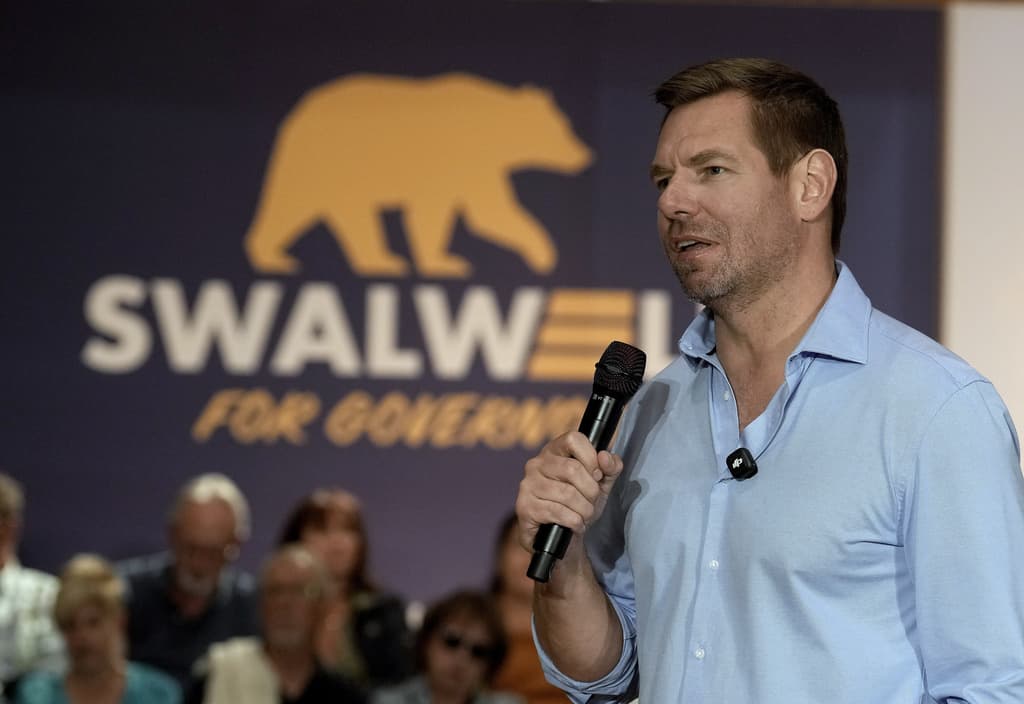
House Ethics panel opens investigation into sexual misconduct allegations against Rep. Eric Swalwell
WASHINGTON | The House Ethics Committee has begun an investigation into whether Rep. Eric Swalwell, D-Calif., engaged in sexual misconduct toward an employee working under his supervision, the panel announced Monday. The announcement comes one day after Swalwell suspended his campaign for California governor after the emergence of allegations that he continues to deny. Democrats quickly abandoned support for Swalwell after allegations that he sexually assaulted a woman twice, including when she worked for him. The reports published in the San Francisco Chronicle and later by CNN came as Swalwell began to emerge as a leading contender in the crowded race. “I will fight the serious, false allegations that have been made — but that’s my fight, not a campaign’s,” Swalwell said in a social media post. The Ethics Committee said the mere fact that it is investigating these allegations, and publicly disclosing its review, does not itself indicate that any violation has occurred. A growing number of lawmakers, from both political parties, have called on Swalwell to resign from Congress. Conversations have even moved toward a potential House vote to expel the congressman, but no floor action has been scheduled. The Ethics panel’s decision to launch its own probe could potentially stall, for now, any other immediate action in Congress. Rep. Anna Paulina Luna, R-Fla., said over the weekend that she would be filing a motion to expel Swalwell from Congress, but that could prompt Democrats to force similar votes against Republicans. The most likely target would be Republican Rep. Tony Gonzales of Texas, who acknowledged an affair with a former staff member who later died by suicide. Many Democrats sought to distance themselves from Swalwell after the San Francisco Chronicle reported Friday that a woman said Swalwell sexually assaulted her in 2019 and 2024. The newspaper reviewed text messages about the alleged 2024 assault and spoke to people whom she had told about it. She told the newspaper she did not go to police because she was afraid she would not be believed. The woman worked for Swalwell in 2019 when the first alleged assault occurred, and the 2024 assault allegedly occurred after a charity gala, the newspaper reported. She said in both cases she was too intoxicated to consent to sex. Rep. Pramila Jayapal, D-Wash., said she believes both Gonzales and Swalwell should resign from Congress. “I think that this is very important that we believe women, and that we show people across the Capitol and across the country that we will not accept this kind of behavior,” Jayapal said on NBC’s “Meet The Press.” On the same show, Rep. Byron Donalds, R-Fla., said he would vote to expel Swalwell and Gonzales if such a vote were presented on the House floor. “These things are just completely unacceptable. And as far as I’m concerned, both gentlemen need to go home,” Donalds said.

Swalwell suspends campaign for California governor after being accused of sexual assault
SACRAMENTO, Calif. | Democratic Rep. Eric Swalwell suspended his campaign for California governor on Sunday following sexual assault allegations that he continues to deny. “I will fight the serious, false allegations that have been made — but that’s my fight, not a campaign’s,” Swalwell said in a social media post. Democrats quickly abandoned him after allegations that he sexually assaulted a woman twice, including when she worked for him, were published Friday in the San Francisco Chronicle and later by CNN. The reports came as Swalwell began to emerge as a leader contender in the crowded race. His exit from the race comes less than a month before ballots go out in advance of the June 2 primary and as Democrats have been engaged in a messy primary campaign. Swalwell’s Democratic rivals were among those who swiftly urged him to exit the race, but his support also cratered among allies in Congress and labor unions who had endorsed him. Some Democrats also urged Swalwell to resign his seat in Congress, but he made no mention of that Sunday. The 48-hour period marked a rapid reversal for a candidate who appeared to be gaining momentum in the packed field to replace Democratic Gov. Gavin Newsom, who can’t seek a third term. Though Swalwell has denied the allegations, he has seemingly referenced infidelity in multiple statements. “To my family, staff, friends, and supporters, I am deeply sorry for mistakes in judgment I’ve made in my past,” he wrote. That followed a video post on Friday where he apologized to his wife. Swalwell’s exit shakes up campaign The accusations reordered a wide-open gubernatorial race that had Democrats fretting the party’s large number of candidates could lead to them getting shut out of the general election in November. That’s because California has a top-two primary system in which two candidates advance regardless of party. Swalwell had become a clear target for his Democratic rivals as he began to lock up institutional support. Some had seized on rumors of sexual misconduct that circulated on social media for weeks before the Chronicle’s report. His departure from the race will leave his rivals scrambling to win over his supporters and donors. Other prominent Democrats in the race include billionaire climate activist Tom Steyer and former U.S. Rep. Katie Porter. The major Republican contenders are former Fox News host Steve Hilton, who has Trump’s backing, and Riverside County Sheriff Chad Bianco. The San Francisco Chronicle spoke to a woman who alleged Swalwell sexually assaulted her in 2019, when she worked for him, and again in 2024. The woman said she did not go to police at the time of the assaults because she was afraid she would not be believed. In both cases the woman said she was too intoxicated to consent to sex. CNN reported on allegations that appeared to come from the same woman, and spoke to several other women who accused Swalwell of other sexual misconduct. Neither outlet named the woman, and The Associated Press has not been able to independently verify her account and identity. Her lawyer declined to comment. The alleged 2024 incident occurred in New York, and the Manhattan District Attorney’s Office said it’s investigating. That office urged anyone with knowledge to contact its special victims division. House colleagues call for Swalwell to resign As Swalwell’s campaign flailed over the weekend, fellow California Reps. Jared Huffman, Ro Khanna and Sam Liccardo said Swalwell should resign, as did Reps. Teresa Leger Fernández of New Mexico and Pramila Jayapal of Washington state. “This is not a partisan issue,” Jayapal said Sunday. “This cuts across party lines. And it is depravity of the way that women have been treated.” Some representative said they would support the rare step of expelling him should he refuse to step aside. It all added to the mounting political pressure on Swalwell, which began with allies like Sen. Adam Schiff and Rep. Jimmy Gomez cutting their support. Gomez had helped run Swalwell’s campaign and said he was immediately ending his role. With the House returning to session Tuesday, the question of whether to expel Swalwell could come to a head quickly. Rep. Anna Paulina Luna, R-Fla., said Saturday that she would be filing a motion to start the process. Expulsion votes in the House are rare and require a two-thirds majority, but there is recent precedent for taking the step. Republican George Santos of New York in 2023 became just the sixth member in House history to be ousted by colleagues for his conduct. Huffman, Jayapal and Leger Fernández said they would vote to expel Swalwell from the House, though they said they also support expelling Rep. Tony Gonzales, R-Texas, who admitted to an affair with a former staff member who later died by suicide. Swalwell, who is originally from Iowa, was elected in 2012 and represents a House district east of San Francisco. He launched a presidential run in April 2019 but shuttered it a few months later after failing to catch on with voters. He is perhaps best known nationally as a House manager in President Donald Trump’s second impeachment trial during his first term in early 2021. __ Associated Press journalists Sophie Austin in Sacramento, Calif., and Michael R. Blood in Los Angeles contributed to this report. Finley reported from Washington.
Trump’s tenuous Iran exit plan isn’t healing Republican rifts exposed by the war
President Donald Trump walks through Statuary Hall with House Speaker Mike Johnson of La., as he departs Capitol Hill, Tuesday, March 17, 2026, in Washington. (AP Photo/Jacquelyn Martin) Senate Majority Leader John Thune, R-S.D., speaks to reporters outside the chamber after passing a measure by unanimous consent that would fund most of the Department of Homeland Security, if the House agrees, at the Capitol in Washington, Thursday, April 2, 2026. (AP Photo/J. Scott Applewhite) FILE – Rep. Marjorie Taylor Greene, R-Ga., speaks during a news conference on the Epstein Files Transparency Act, Nov. 18, 2025, outside the U.S. Capitol in Washington. (AP Photo/Julia Demaree Nikhinson, File) President Donald Trump speaks with reporters in the James Brady Press Briefing Room at the White House, Monday, April 6, 2026, in Washington. (AP Photo/Julia Demaree Nikhinson) White House press secretary Karoline Leavitt speaks with reporters in the James Brady Press Briefing Room at the White House, Wednesday, April 8, 2026, in Washington. (AP Photo/Alex Brandon) WASHINGTON | President Donald Trump’s search for an off-ramp from the war with Iran is getting bumpy inside his Republican Party. In the decade since Trump’s “America First” movement rose to power by rejecting military intervention, his coalition has rarely been tested the way it is now. Trump’s exit efforts — first through threats of annihilation, then with a ceasefire that is proving precarious — are doing little to paper over tensions that have festered since the war began six weeks ago. Laura Loomer, a conservative activist close to the president and often one of his top boosters, rejected the notion of brokering a deal with Iran. In an interview, she knocked Vice President JD Vance for being “in charge” of talks expected to start Saturday in Pakistan, as he takes on a larger diplomatic role ahead of a potential 2028 White House run. “I support President Trump,” Loomer said in an interview. “I just don’t believe in negotiating with Islamic terrorists.” Vance’s office did not respond to a request for comment. Former Rep. Marjorie Taylor Greene of Georgia, a Trump supporter-turned-critic, called for the president to be removed from office through the Constitution’s 25th Amendment after he said earlier this week that a “whole civilization will die tonight” unless Iran made a deal. Megyn Kelly, the former Fox News anchor who now hosts a podcast, unloaded on Trump with a profane critique and asked, “Can’t he just behave like a normal human?” During a recent taping of “The Charlie Kirk Show,” the host wondered what would end first, their episode or the ceasefire deal. Despite the growing criticism, Republican leaders in Congress were largely silent. Many were privately uncomfortable with Trump’s threats on social media and were concerned about how the war would play out, especially in an election year. But with Congress on recess for the opening two weeks of April, House Speaker Mike Johnson, R-La., and Senate Majority Leader John Thune, R-S.D., have offered little public reaction to Trump’s moves. Some said the developments were simply unfolding too quickly. “How do you go up and give a presentation or speech in a situation where every 12 hours, the baseline story has a new gradient?” Rep. Dave Schweikert, an Arizona Republican who is running for governor, said in an interview. “In many ways, it is the sin of arrogance thinking you can go out and talk about something when the story is still unfolding.” A factor in the midterms? That leaves Republicans in an uncertain position, much like the state of the war. The party already faces fierce headwinds ahead of the November midterms, and some say its best bet is for voters to forget about Iran by then. “My hope is that it will be long behind us by the time votes are cast,” said Chris Wilson, a veteran Republican strategist. “Fortunately for the GOP, foreign policy flare-ups rarely decide midterm elections on their own, especially when voters are far more focused on the economy and prices at home.” For now, Trump and his White House are expressing confidence. Trump hailed a “big day for World Peace” after the ceasefire was first announced. White House press secretary Karoline Leavitt heralded a “victory for the United States of America that the president and our incredible military made happen.” In a social media post, Trump dismissed his detractors, including podcasters such as Kelly, as “stupid people” who will “say anything necessary for some ‘free’ and cheap publicity.” Some of the president’s supporters in Congress are pushing back at the suggestion that Trump has become too entangled overseas at the expense of domestic priorities. “Part of America First is making sure that the homeland stays safe and Iran is a factor in our safety,” Rep. David Kustoff, R-Tenn., said in an interview. “We are all hopeful that the ceasefire does hold and that Iran lives up to their side of the agreement. Recent elections are cause for GOP concern Any president’s party typically loses seats in Congress during a midterm election year and races this week offered a fresh reason for concern for Republicans. Republican Clay Fuller won Greene’s district by about 12 percentage points. She had a 29-percentage-point win two years earlier, and Trump carried the district by almost 37 percentage points. In Wisconsin, the liberal majority on the state Supreme Court grew this week when a Democratic-backed candidate won by a double-digit margin. That follows strong performances for Democrats in other recent races, including the Florida state legislative district that is home to Trump’s Mar-a-Lago resort. Only about 4 in 10 U.S. adults approved of how Trump was handling his job as president, according to Associated Press-NORC Center for Public Affairs Research polling last month. That share is largely unchanged since he returned to office in January 2025. But it is also roughly where Trump was at this point in his first term, when Democrats went on to gain 40 House seats in the 2018 midterms. While Trump still has deep support from Republicans, there are signs that he risks frustrating his supporters if the U.S. becomes involved in a prolonged war. Although 63% of Republicans back airstrikes against Iranian military targets, the March survey found, only 20% back deploying American ground troops. Rising gas prices could pose a problem, with about 6 in 10 Republicans saying they are at least “somewhat” concerned about affording gas in the next few months, though they are less worried than the rest of the country. ‘People are willing to endure some short-term pain’ Republicans who have spent time with voters over the recess say they believe the party has political breathing room to navigate the war. Kustoff said constituents across his rural northwestern Tennessee district seemed “generally supportive” of Trump’s actions in Iran, even when they have been accompanied by higher prices at the pump. “My takeaway is that people are willing to endure some short-term pain as it relates to gas prices if the situation with Iran is resolved,” he said. But as they return to Washington next week, Republicans face a series of difficult choices. At the outset of the war, some GOP lawmakers said Trump would need to seek approval from Congress if the conflict lasted longer than 60 days, a deadline that would approach near the end of April if the ceasefire did not hold. The administration is seeking billions of dollars in additional spending for the war, setting up a vote that could put budget-conscious Republicans in a difficult spot before the fall campaigns. Democrats are also moving to force another vote on a war powers resolution that would curb Trump’s options in Iran. A similar effort failed last month, but another vote could add pressure on Republicans, depending on how the ceasefire plays out. Schweikert described the war powers vote as the “dance of parties.” “Their job is to try to embarrass us and our job as the majority is to try to make things work,” he said. “It’s just the job.” Peoples reported from New York and Kinnard from Columbia, S.C. Associated Press writer Mary Clare Jalonick contributed to this report.
Trump’s tenuous Iran exit plan isn’t healing Republican rifts exposed by the war
President Donald Trump walks through Statuary Hall with House Speaker Mike Johnson of La., as he departs Capitol Hill, Tuesday, March 17, 2026, in Washington. (AP Photo/Jacquelyn Martin) Senate Majority Leader John Thune, R-S.D., speaks to reporters outside the chamber after passing a measure by unanimous consent that would fund most of the Department of Homeland Security, if the House agrees, at the Capitol in Washington, Thursday, April 2, 2026. (AP Photo/J. Scott Applewhite) FILE – Rep. Marjorie Taylor Greene, R-Ga., speaks during a news conference on the Epstein Files Transparency Act, Nov. 18, 2025, outside the U.S. Capitol in Washington. (AP Photo/Julia Demaree Nikhinson, File) President Donald Trump speaks with reporters in the James Brady Press Briefing Room at the White House, Monday, April 6, 2026, in Washington. (AP Photo/Julia Demaree Nikhinson) White House press secretary Karoline Leavitt speaks with reporters in the James Brady Press Briefing Room at the White House, Wednesday, April 8, 2026, in Washington. (AP Photo/Alex Brandon) WASHINGTON | President Donald Trump’s search for an off-ramp from the war with Iran is getting bumpy inside his Republican Party. In the decade since Trump’s “America First” movement rose to power by rejecting military intervention, his coalition has rarely been tested the way it is now. Trump’s exit efforts — first through threats of annihilation, then with a ceasefire that is proving precarious — are doing little to paper over tensions that have festered since the war began six weeks ago. Laura Loomer, a conservative activist close to the president and often one of his top boosters, rejected the notion of brokering a deal with Iran. In an interview, she knocked Vice President JD Vance for being “in charge” of talks expected to start Saturday in Pakistan, as he takes on a larger diplomatic role ahead of a potential 2028 White House run. “I support President Trump,” Loomer said in an interview. “I just don’t believe in negotiating with Islamic terrorists.” Vance’s office did not respond to a request for comment. Former Rep. Marjorie Taylor Greene of Georgia, a Trump supporter-turned-critic, called for the president to be removed from office through the Constitution’s 25th Amendment after he said earlier this week that a “whole civilization will die tonight” unless Iran made a deal. Megyn Kelly, the former Fox News anchor who now hosts a podcast, unloaded on Trump with a profane critique and asked, “Can’t he just behave like a normal human?” During a recent taping of “The Charlie Kirk Show,” the host wondered what would end first, their episode or the ceasefire deal. Despite the growing criticism, Republican leaders in Congress were largely silent. Many were privately uncomfortable with Trump’s threats on social media and were concerned about how the war would play out, especially in an election year. But with Congress on recess for the opening two weeks of April, House Speaker Mike Johnson, R-La., and Senate Majority Leader John Thune, R-S.D., have offered little public reaction to Trump’s moves. Some said the developments were simply unfolding too quickly. “How do you go up and give a presentation or speech in a situation where every 12 hours, the baseline story has a new gradient?” Rep. Dave Schweikert, an Arizona Republican who is running for governor, said in an interview. “In many ways, it is the sin of arrogance thinking you can go out and talk about something when the story is still unfolding.” A factor in the midterms? That leaves Republicans in an uncertain position, much like the state of the war. The party already faces fierce headwinds ahead of the November midterms, and some say its best bet is for voters to forget about Iran by then. “My hope is that it will be long behind us by the time votes are cast,” said Chris Wilson, a veteran Republican strategist. “Fortunately for the GOP, foreign policy flare-ups rarely decide midterm elections on their own, especially when voters are far more focused on the economy and prices at home.” For now, Trump and his White House are expressing confidence. Trump hailed a “big day for World Peace” after the ceasefire was first announced. White House press secretary Karoline Leavitt heralded a “victory for the United States of America that the president and our incredible military made happen.” In a social media post, Trump dismissed his detractors, including podcasters such as Kelly, as “stupid people” who will “say anything necessary for some ‘free’ and cheap publicity.” Some of the president’s supporters in Congress are pushing back at the suggestion that Trump has become too entangled overseas at the expense of domestic priorities. “Part of America First is making sure that the homeland stays safe and Iran is a factor in our safety,” Rep. David Kustoff, R-Tenn., said in an interview. “We are all hopeful that the ceasefire does hold and that Iran lives up to their side of the agreement. Recent elections are cause for GOP concern Any president’s party typically loses seats in Congress during a midterm election year and races this week offered a fresh reason for concern for Republicans. Republican Clay Fuller won Greene’s district by about 12 percentage points. She had a 29-percentage-point win two years earlier, and Trump carried the district by almost 37 percentage points. In Wisconsin, the liberal majority on the state Supreme Court grew this week when a Democratic-backed candidate won by a double-digit margin. That follows strong performances for Democrats in other recent races, including the Florida state legislative district that is home to Trump’s Mar-a-Lago resort. Only about 4 in 10 U.S. adults approved of how Trump was handling his job as president, according to Associated Press-NORC Center for Public Affairs Research polling last month. That share is largely unchanged since he returned to office in January 2025. But it is also roughly where Trump was at this point in his first term, when Democrats went on to gain 40 House seats in the 2018 midterms. While Trump still has deep support from Republicans, there are signs that he risks frustrating his supporters if the U.S. becomes involved in a prolonged war. Although 63% of Republicans back airstrikes against Iranian military targets, the March survey found, only 20% back deploying American ground troops. Rising gas prices could pose a problem, with about 6 in 10 Republicans saying they are at least “somewhat” concerned about affording gas in the next few months, though they are less worried than the rest of the country. ‘People are willing to endure some short-term pain’ Republicans who have spent time with voters over the recess say they believe the party has political breathing room to navigate the war. Kustoff said constituents across his rural northwestern Tennessee district seemed “generally supportive” of Trump’s actions in Iran, even when they have been accompanied by higher prices at the pump. “My takeaway is that people are willing to endure some short-term pain as it relates to gas prices if the situation with Iran is resolved,” he said. But as they return to Washington next week, Republicans face a series of difficult choices. At the outset of the war, some GOP lawmakers said Trump would need to seek approval from Congress if the conflict lasted longer than 60 days, a deadline that would approach near the end of April if the ceasefire did not hold. The administration is seeking billions of dollars in additional spending for the war, setting up a vote that could put budget-conscious Republicans in a difficult spot before the fall campaigns. Democrats are also moving to force another vote on a war powers resolution that would curb Trump’s options in Iran. A similar effort failed last month, but another vote could add pressure on Republicans, depending on how the ceasefire plays out. Schweikert described the war powers vote as the “dance of parties.” “Their job is to try to embarrass us and our job as the majority is to try to make things work,” he said. “It’s just the job.” Peoples reported from New York and Kinnard from Columbia, S.C. Associated Press writer Mary Clare Jalonick contributed to this report.

From Aurora to Biddeford, ‘Build America’ causes construction delays amid a housing crisis
Vehicles pass by the Sapling Grove Apartments, an affordable housing complex, in Aurora, Colo., Friday, March 20, 2026. (AP Photo/Thomas Peipert) It has a catchy name — Build America, Buy America — and the lauded goal of bringing manufacturing jobs back to the United States. But the law has spurred a bottleneck for affordable housing from Aurora to Biddeford, Maine and across the nation. Nearly everything from HVACs and lighting to sink hooks and ceiling fans in affordable housing projects that get federal dollars must carry the Made in the USA label. But, developers say, numerous products do not, as they have long been imported from overseas markets with cheaper labor costs. Although builders can apply for waivers, the process has been at a near standstill as the Department of Housing and Urban Development, which has had its staff slashed by the Trump administration, has only greenlit a handful of projects. The waiver process has caused construction delays and hundreds of thousands of dollars in extra costs as the country faces an affordable housing crisis. “They need to be treating this like the fire that it is,” said Tyler Norod, president of Westbrook Development Corporation, which builds affordable housing in Maine. “We’ve sort of resigned ourselves that we’re just gonna build less units across the entire country during a housing crisis.” Tyler Norod, from the Westbrook Development Corporation, stands for a photo at a development site Tuesday, March 17, 2026, in Biddeford, Maine. (AP Photo/Patrick Whittle) Facing a standstill Diana Lene has been on affordable housing waitlists for the past five years. The 76-year-old loves living close to her daughter and grandchildren in Fargo, North Dakota, but her apartment is too expensive on her Social Security income. “It’s just maxing my budget down to pennies,” she said. To save money, she avoids driving often and buys food on sale. “I’m just trying to keep a roof over my head, but it’s getting more and more difficult,” Lene said. “I don’t like to live in fear, and yet sometimes it jumps in there.” Lene is on a waitlist for one of nonprofit developer Beyond Shelter’s apartments. CEO Dan Madler is building a 36-unit building for people like Lene, but he had to postpone lumber orders to verify they comply with the law and can’t find ceiling fans made in America. He doesn’t know when HUD will approve a waiver. U.S. President Joe Biden signed the Build America, Buy America Act as part of the Infrastructure Investment and Jobs Act in 2021, building on longstanding efforts to boost American manufacturing at a time when the U.S. economy was emerging from a pandemic-era recession. Known as BABA, it applies to infrastructure projects funded by federal agencies, not just affordable housing. Aurora developer Julie Hoebel says she has spent over $60,000 just on a consultant to comb through websites and call suppliers to try to find American-made materials, not to mention the additional labor costs involved. But the waivers she submitted to HUD in November for around 125 materials in an 85-unit building haven’t been approved. “If they take much longer then we’ll come to a standstill,” she said. Julie Hoebel, director of development and real estate assets for Grovewood Community Development, poses for a portrait in the courtyard of the Sapling Grove Apartments, an affordable housing complex, in Aurora, Colo., on Friday, March 20, 2026. (AP Photo/Thomas Peipert) A cumbersome process HUD is taking at least six months to approve many waivers. Even BABA advocates agree HUD must grant waivers more quickly and give the industry clearer instructions on how to prepare them, which they note other federal agencies are doing. HUD did not address questions from The Associated Press about waiver approval delays developers say increase costs, as well as concerns about making the process more transparent. In a statement it said it’s committed to “ensuring that federal spending supports America’s industrial base” while “closely monitoring how compliance with these policies impact costs for builders.” Asked in January about whether the delays and cost increases mean affordable housing should be exempt from BABA rules, HUD Secretary Scott Turner said the agency was looking into the issue, but did not provide details. “We are looking at this … with BABA as it pertains to HUD to provide flexibility to certain projects in certain places around our country,” Turner said, adding that HUD is committed to assuring developers get “the flexibility they need as it pertains to building.” The law itself isn’t the problem, supporters say. Unions representing the steel and manufacturing industries say taxpayer dollars should fund American-made materials and suppliers will adjust to meet demand for products that aren’t available. “You’ve got a system in place that leans heavily on using imported materials to make a better profit,” said Scott Paul, president of the Alliance for American Manufacturing. “I don’t know if that serves the public good.” Jennifer Schwartz, director of tax and housing advocacy at the National Council of State Housing Agencies, said there’s no national data on how much BABA is increasing costs. But the waiver process is “failing,” she said, because requirements were put in place before assessment of domestic manufacturing capacity. It won’t be as challenging for suppliers to produce more raw materials in the U.S., but it will take time for manufactured products — such as appliances and elevators — to become available, said Kaitlyn Snyder, managing director of the National Housing and Rehabilitation Association, an affordable housing industry group. “I don’t know that it economically, financially makes sense for people to be producing door hinges,” Snyder said. “We are an advanced country and we’ve outsourced a lot of that stuff.” The housing bill that passed the Senate in March did not require HUD to address problems with implementing BABA. “The process isn’t working for affordable housing,” said Jessie Handforth Kome, who spent nearly 40 years working at HUD until 2024. “People want to comply, but it’s unclear how to.” Vermont-based Developer Jessica Neubelt estimates she spent an additional $150,000 just to verify iron and steel she used in a project was American-made. She’s just as frustrated over the hundreds of hours that takes, which, she said, could be spent on another project. “I would like every member of Congress to sit in on a construction meeting,” Neubelt said. “The amount of detail that goes into figuring out if a specific thing is compliant or not is enormous.” Schematics for an affordable housing project are posted Tuesday, March 17, 2026, in Biddeford, Maine. (AP Photo/Patrick Whittle) Debates over solutions U.S. Rep. Mike Flood, a Nebraska Republican, has advocated to exempt some HUD funding from BABA. “Owning a home is the American dream, but it’s out of reach in a very big way and anything that adds cost to that isn’t allowing hardworking Americans to achieve the dream,” Flood told the AP. Roy Houseman, legislative director at United Steelworkers, said complaints about cost increases are overblown. “A lot of developers seem to have tried to throw things in and make statutory changes to policies that have been in place for basically five years now instead of making a good-faith effort to really push HUD,” Houseman said. Union leaders note the law offers some leeway. Developers can get exemptions for an American-made product if it increases the project’s overall cost by more than 25%. A very small percentage of a project’s total material cost is also exempt. But most developers say that percentage isn’t enough to cover all items not made in the U.S. Some developers are looking for ways to avoid federal funds altogether. But that is challenging. Even though federal dollars often make up a small portion of funding for affordable housing projects, that sliver can make or break whether there’s enough money to build them. Kentucky developer Scott McReynolds says that instead of applying for a federal grant to build 20 to 30 affordable homes, he plans to build two four-unit projects, small enough so that they aren’t subject to BABA. American-made materials are especially hard to find near the rural areas McReynolds serves. “It’s a nightmare,” he said. Kramon is a corps member for The Associated Press/Report for America Statehouse News Initiative. Report for America is a nonprofit national service program that places journalists in local newsrooms to report on undercovered issues.